15 Desk in Living Room Ideas Layout Plans for Small Homes
Working from home doesn't have to mean sacrificing your living room's cozy vibe. With a little planning, you can tuck a desk into even the smallest space without making it feel like an office.
These 15 layout ideas focus on keeping things warm and lived-in, so your workspace blends naturally with the rest of the room.
From clever corners to multi-purpose furniture, each plan is designed to feel practical and stylish—not cramped or cold.
1. Corner Desk Nook with Floating Shelves
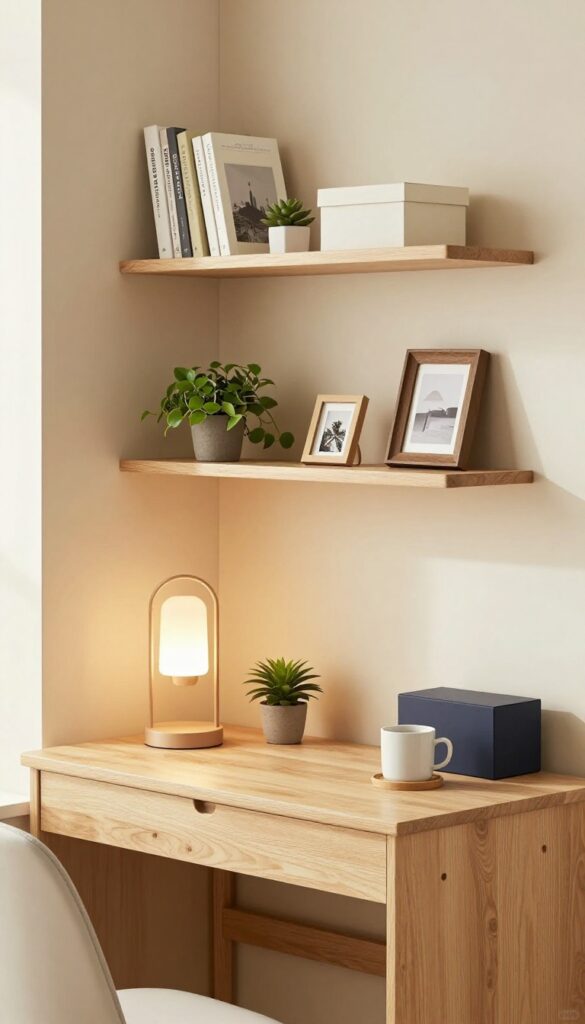
That awkward corner near the window or beside the sofa? It's prime real estate for a compact work zone. A corner desk nook turns dead space into a functional spot without eating into your living room's footprint.
By adding floating shelves above, you keep the desktop clutter-free while displaying books, plants, or decorative boxes that blend with the room's warm, lived-in vibe.
Start with a slim L-shaped or triangular desk that fits snugly into the corner. Look for one with a light wood finish to keep the area airy. Mount two or three floating shelves at staggered heights—these become your go-to for storing daily essentials like a notebook, a small tray for pens, and a framed photo.
Keep the desk surface minimal: a slim task lamp with a warm bulb, a tiny succulent or pothos, and a coaster for your coffee mug. This setup feels intentional and cozy, not cramped.
Best Colors
Stick with warm neutrals to maintain that inviting feel. A white or pale oak desk paired with soft beige or warm gray walls creates a calm backdrop. Add a touch of contrast with a dark navy or forest green shelf—this grounds the nook and adds depth without overwhelming the space.
Layout Tip
Position the desk so the user faces the room, not the wall. This opens up the corner visually and lets you keep an eye on the living area. If the corner is near a window, angle the desk slightly to catch natural light without glare on the screen.
Shelf Styling Tip
- Mix functional and decorative items on the shelves. Stack a couple of hardcover books horizontally as a bookend, then lean a small art print or postcard against them. Add a ceramic vase or a trailing plant like string of pearls to soften the edges.
- Leave some breathing room between objects so the shelves don't look crowded.
2. Sofa-Backed Desk for Open Layouts
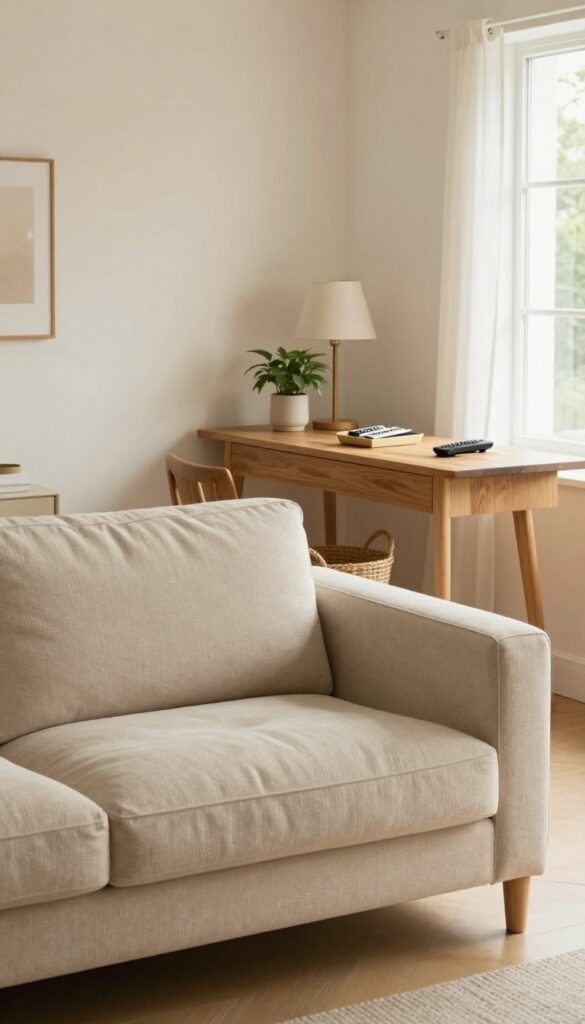
In an open-plan living room, carving out a dedicated workspace can feel tricky without blocking the flow. That's where the sofa-backed desk comes in. By placing a narrow console desk directly behind your sofa, you create a functional work zone that also acts as a catchall for decor and drinks.
It's a clever way to double your square footage without adding visual clutter.
This setup works especially well in long, narrow living rooms where the sofa naturally floats in the middle. Choose a console that's slightly shorter than the sofa's length so it doesn't stick out awkwardly. Keep the depth around 12 to 16 inches so you can still walk past comfortably.
Style the surface with a lamp, a small plant, and a tray for remotes or reading glasses. When you're not working, it just looks like a stylish sofa table.
Best Materials
A wooden console in a warm oak or walnut finish pairs nicely with most sofa fabrics and adds a lived-in feel. For a lighter look, go with a white or cream lacquered top that reflects light. Metal legs keep the piece airy and prevent the room from feeling heavy.
Layout Tip
Leave at least 24 inches between the back of the sofa and the desk so you can easily pull out a chair. If your sofa is against a wall, pull it forward a few inches to create that gap. This also gives you room to run cords behind the desk without them showing.
Finishing Touch
Add a small task lamp with a warm bulb to keep the workspace cozy without overpowering the living room lighting. A woven basket under the desk can hide extra cables or store a throw blanket for chilly evenings.
3. Window-Facing Desk with Curtains
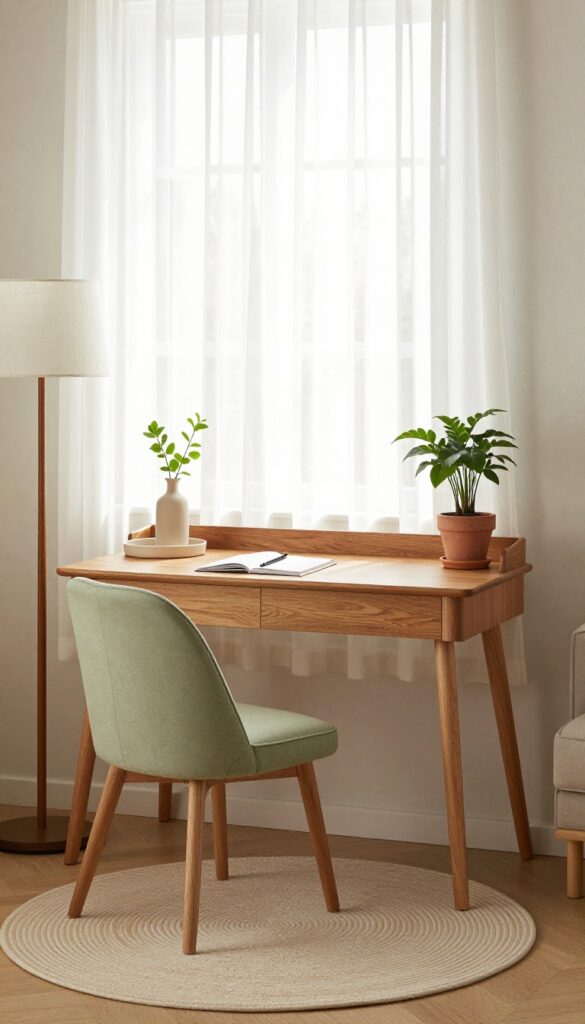
There's something naturally calming about placing your desk right in front of a window. You get natural light, a view, and a built-in sense of openness—even in a small living room. The trick is to soften that light with sheer curtains so it doesn't feel harsh or glare-prone.
Pair it with a cozy chair and a small rug, and you've got a work zone that feels like a little retreat within your main space.
This layout works best when your window isn't the main focal point of the room—or if you have a secondary window that's not competing with a TV or sofa. The desk should be narrow enough to leave some floor space on either side, and the chair should be comfortable enough for long work sessions but still look like part of the living room. Sheer curtains in a light neutral tone filter the light beautifully and add a soft, lived-in feel.
A small rug under the desk anchors the area and adds warmth underfoot.
Best Colors
Stick with soft, airy colors for the curtains and rug—think white, cream, or pale beige. The desk itself can be a warm wood tone or a light painted finish like sage green or dusty blue. Keep the chair in a similar color family to avoid visual clutter.
Layout Tip
If your window is off-center, place the desk slightly to one side instead of dead center. This leaves room for a small plant or a floor lamp on the other side, balancing the look without making the desk feel cramped.
Finishing Touch
Add a small tray on the desk for daily essentials like a notebook and pen. A single small vase with a fresh stem or a tiny succulent brings life to the setup without taking up much space.
4. Bookshelf Desk Combo Unit
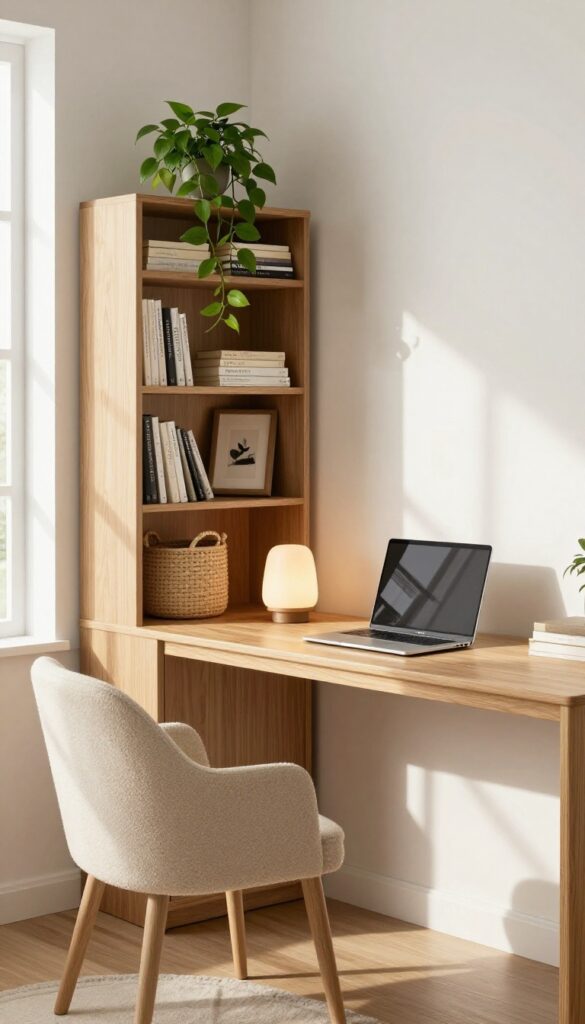
A tall bookshelf with a built-in desk is a brilliant way to carve out a workspace without sacrificing valuable square footage. This combo piece feels intentional and curated, especially when you style the shelves with a mix of books, ceramics, and personal photos. The result is a cozy nook that blends work and living seamlessly.
A bookshelf desk combo works best when you treat the shelves as an extension of your living room decor. Keep the desk surface clear for your laptop and a small lamp, then layer the shelves with items that tell a story. Think stacked books, a trailing plant, a framed print, and a few textured baskets for hidden storage.
This setup anchors the corner of the room and makes the desk feel like part of the furniture, not an afterthought.
Best Placement
Tuck this unit into an unused corner or against a wall that doesn't get heavy foot traffic. It works especially well in a living room that doubles as a home office, since the vertical storage keeps the floor clear. Avoid placing it directly opposite the TV to minimize distraction.
Shelf Styling Tip
- Mix horizontal and vertical book stacks to create visual rhythm. Add a small plant or a sculptural object every few shelves to break up the books. Keep the desk zone minimal—just a lamp, a coaster, and maybe a small tray for pens.
- This keeps the whole piece feeling airy and intentional.
Cozy Detail
Hang a warm-toned sconce or place a small table lamp on the desk to create a soft glow in the evening. A textured chair, like one in bouclé or velvet, adds comfort and invites you to sit down. This turns the desk into a spot you actually want to use.
5. Fold-Down Wall Desk with Art Above
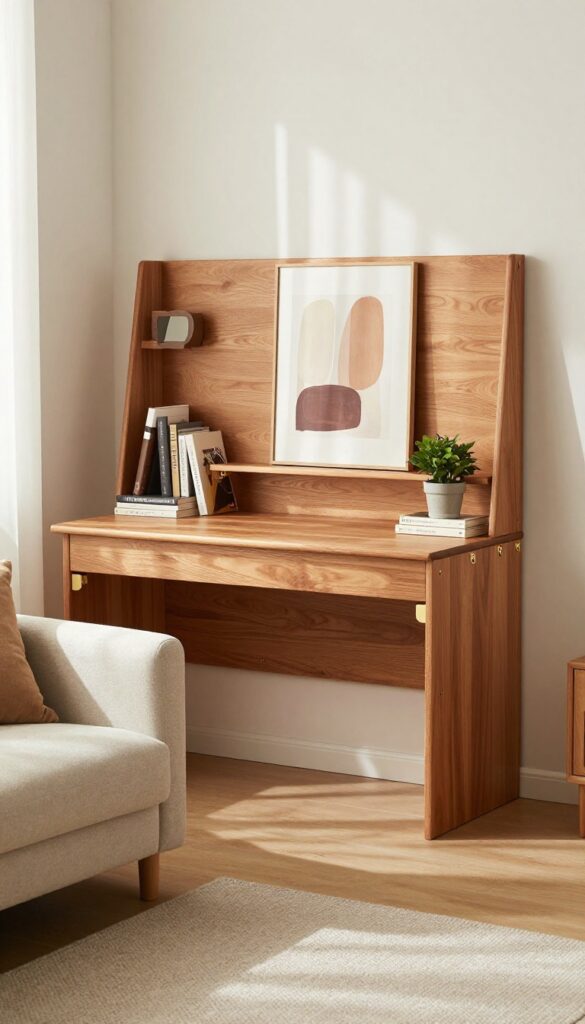
A fold-down desk is the ultimate space-saving trick for a living room that doubles as a workspace. When closed, it disappears into the wall, leaving your floor plan open and uncluttered. By hanging a bold piece of art above it, you turn that wall into a mini gallery—functional by day, decorative by night.
This setup feels especially warm and lived-in when you choose a wooden desktop and a piece of art that speaks to your personality.
This idea works best in a narrow corner or an unused wall section near a window. The desk should be mounted at standard desk height (around 29 inches) so it's comfortable to use. When folded down, it provides a stable surface for a laptop and a notebook.
When folded up, it's just a slim cabinet door. The art above draws the eye upward, making the wall feel intentional rather than like a forgotten spot.
Best Materials
- Go for a solid wood or plywood desktop with a warm stain—oak or walnut adds that cozy, lived-in feel. The hinge mechanism should be sturdy, preferably with a locking support arm. For the art, choose a framed print or a canvas piece with colors that tie into your living room's palette.
- A matte black or brass frame works well with most wood tones.
Layout Tip
- Position the desk so the chair can be easily tucked away when not in use. A slim, backless stool or a folding chair is ideal. Leave at least 30 inches of clearance in front of the desk for comfortable seating.
- If possible, place it near a power outlet so you don't have cords trailing across the floor.
Finishing Touch
Add a small shelf above the art to hold a plant or a few books—this makes the gallery corner feel more layered and intentional. A warm desk lamp with a fabric shade softens the workspace and keeps the living room vibe intact.
6. Desk Inside a Closet (Cloffice
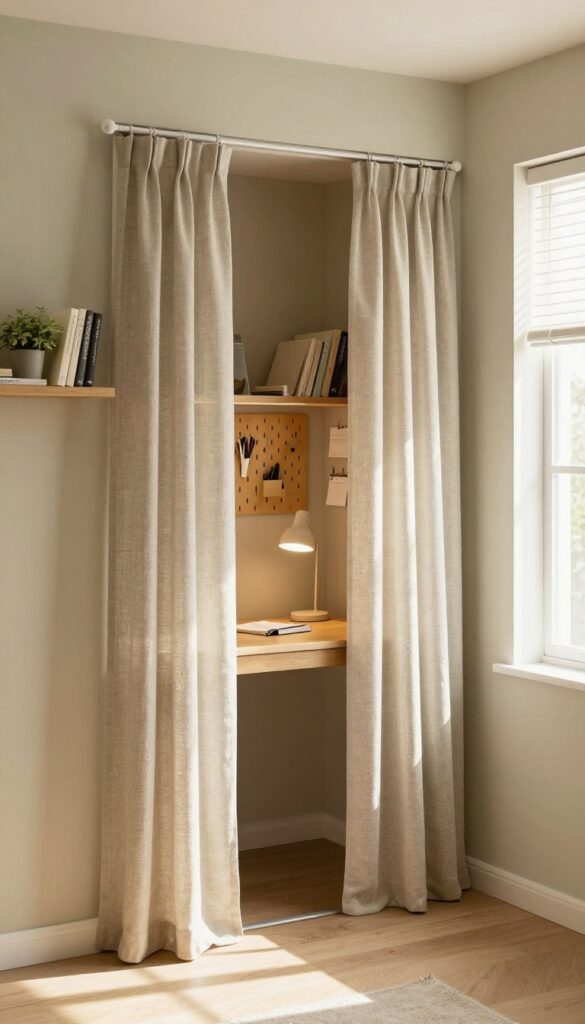
That awkward shallow closet in your living room? It might be the best home office you never knew you had. By pulling the doors off and sliding in a slim desk, you turn wasted space into a dedicated work nook that disappears when not in use.
A soft curtain instead of doors keeps it feeling warm and intentional—not like a forgotten storage spot.
A cloffice is the ultimate small-space hack because it gives you a defined work zone without eating into your living area. The key is to treat it like a mini room: paint the inside a calming color, add good task lighting, and keep surfaces clutter-free so it feels like a retreat, not a catch-all. When you're done, just draw the curtain and your living room looks unbroken.
Best Colors
Stick with light, airy tones inside the closet to keep it from feeling like a cave. Soft white, pale sage, or warm beige reflect light and make the small space feel bigger. If you want a pop of personality, paint the back wall a slightly deeper shade—like dusty blue or terracotta—to create depth without overwhelming the room.
Storage Tip
Use vertical space wisely. Install a narrow shelf above the desk for a few books or a small plant, and add a pegboard or magnetic strip on the side wall for pens, scissors, and notes. Keep the desk surface mostly clear—just a lamp and a notebook—so the cloffice feels like a calm workspace, not a junk drawer.
Finishing Touch
A curtain is what makes this idea work. Choose a fabric that complements your living room—linen or cotton in a neutral tone keeps it relaxed. Mount the rod close to the ceiling so the curtain hangs floor-to-ceiling, which visually raises the height of the closet and makes the whole setup feel intentional and polished.
7. Low Console Desk Behind a Sectional
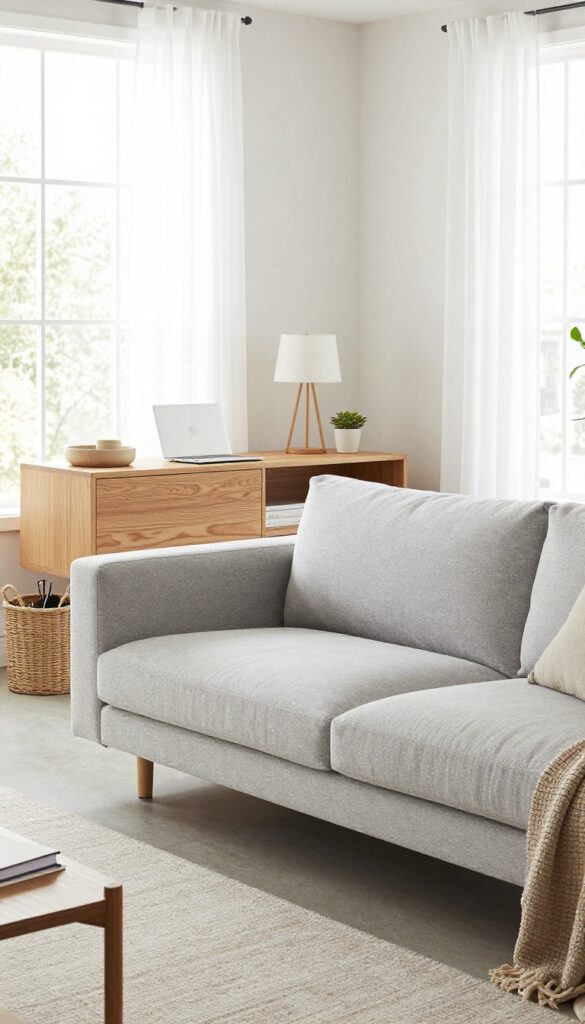
Not every living room has a spare corner for a desk. But if your sectional floats away from the wall, that empty strip behind it is prime real estate. A low console table tucked right behind the sofa creates a slim workspace that feels like part of the furniture—not an afterthought.
The beauty of this setup is that it keeps the room open and airy. Because the desk sits low and behind the sofa, it doesn't block sightlines or make the space feel cramped. Plus, those baskets underneath?
They hide chargers, notebooks, and random odds and ends so the room stays tidy without you having to be perfect.
A low console desk behind a sectional is a smart way to carve out a workspace in a small living room without sacrificing style or square footage. The key is choosing a console that's roughly the same height as the sofa back—or slightly lower—so it doesn't visually tower over the seating area. Look for a piece that's at least as long as the sofa is wide, so it spans the entire back and feels intentional.
Baskets or bins tucked underneath catch the overflow: extra cables, a laptop sleeve, or a stack of magazines. On top, keep only the essentials—a slim lamp, a small tray for your phone and keys, maybe a tiny plant. This isn't the spot for a full monitor setup, but it works beautifully for a laptop and a notebook.
The whole arrangement reads as part of the room's decor, not a clunky office shoved into a corner.
Best Colors And Materials
- Stick with light or medium wood tones to keep the console from feeling heavy. A warm oak or a soft whitewashed finish blends into most living rooms without competing with the sofa. If your sectional is dark, a lighter console creates contrast and keeps the desk area from turning into a black hole.
- For a more modern look, try a slim metal frame with a wood top—it adds an industrial touch without being bulky. Avoid dark, chunky pieces that eat up visual space.
Storage Tip: Baskets And Bins
- Baskets are your best friend here. They slide right under the console and hide everything from power strips to spare throw blankets. Woven seagrass or natural rattan adds warmth and texture, while fabric bins in a neutral tone keep things quiet.
- Use two or three baskets and label them if you're organized that way—one for tech accessories, one for mail and notepads, and one for random living room overflow. The baskets also make it easy to clear the desk surface in seconds when guests come over.
Finishing Touch: Lamp And Decor
- A slim, low-profile lamp is essential for task lighting without overwhelming the console. Look for a lamp with a curved neck or a small shade that directs light onto your workspace. Add a small tray to corral loose items, and a tiny succulent or trailing pothos for life.
- Keep the decor minimal—this is a workspace, not a shelf display. A single framed photo or a small stack of coffee table books can add personality without clutter.
8. Desk as a Room Divider
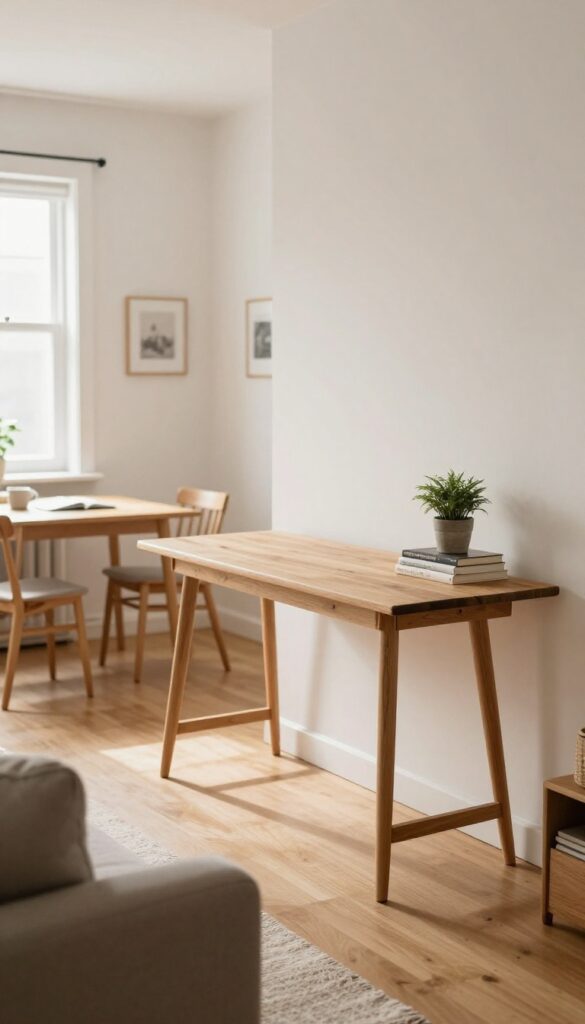
In an open-plan living space, a desk can pull double duty as a subtle room divider. By placing it perpendicular to a wall, you create a natural boundary between the living area and dining zone without blocking light or making the room feel smaller. The key is choosing a desk that feels airy—think an open back or a slim profile—so it defines the space without closing it off.
This setup works especially well in studio apartments or long, narrow living rooms where you need to carve out a dedicated work corner without losing the open feel.
A desk used as a room divider is a clever way to add function while keeping your layout flexible. It doesn't require any construction, and you can easily move it if your needs change. To make it work, position the desk so its back faces the dining area, creating a visual screen.
Add a small plant or a stack of books on the desk to reinforce the separation without making it feel like a wall. The result is a cozy, defined workspace that blends seamlessly into the living room.
Best Desk Styles For This Setup
Look for desks with an open back or a simple trestle design—solid-front desks can feel bulky and block too much light. A slim metal frame with a wood top keeps things light and modern, while a mid-century style with tapered legs adds character without weight. If you need more privacy, attach a small folding screen or a tall plant behind the desk to soften the division.
Layout And Flow Tips
- Place the desk about 3 to 4 feet from the wall so there's enough room to walk behind it. Angle it slightly if you want a more dynamic look. Keep the desk surface tidy—a few essentials and a small lamp are enough.
- On the living room side, a cozy armchair or a small sofa can face the desk, making the workspace feel like part of the seating area rather than an afterthought.
Styling The Divide
- Use the desk as a display surface for a small tray, a ceramic vase, or a stack of coffee table books. On the dining side, a low console table or a bench can mirror the desk's height, creating a balanced visual line. Stick to a cohesive color palette—warm wood tones and soft neutrals keep the look inviting.
- A woven rug under the desk can anchor the zone and add texture.
9. Tiny Desk with a Stool and Floor Lamp
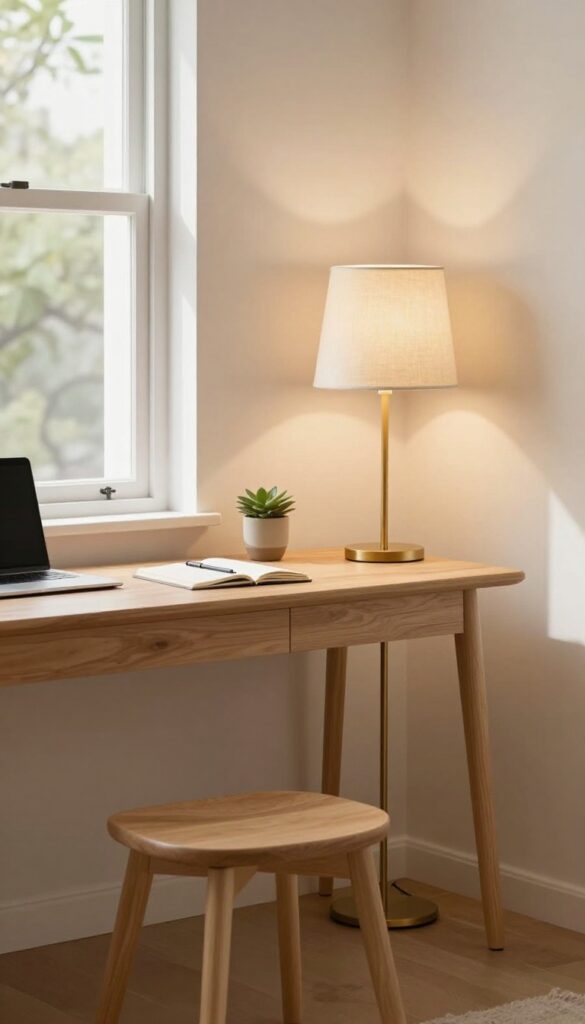
A small desk doesn't have to feel like an afterthought. Pairing it with a backless stool and a warm floor lamp turns a tight corner into a cozy, functional spot that blends right into your living room. The key is keeping the proportions light so the setup doesn't crowd the space.
This combination works especially well near a window or beside a sofa, where the lamp can double as ambient lighting for the whole room.
A compact desk—think slim, no wider than a standard chair—paired with a backless stool keeps the visual footprint minimal. The stool tucks neatly under the desk when not in use, freeing up floor space. A floor lamp with a warm bulb (2700K to 3000K) adds a soft glow that makes the nook feel intentional, not cramped.
Choose a lamp with a slim base or an arched arm to avoid adding bulk. This setup is perfect for a narrow wall, an alcove, or even behind a sofa if you need a quick landing spot for a laptop and a notebook.
Best Colors
Stick with light, airy tones for the desk and stool to keep the area open. A white or pale wood desk blends into the wall, while a black or dark wood one adds contrast if you want the nook to stand out. The floor lamp can be a neutral metallic like brushed brass or matte black—just keep the shade light (cream or linen) to diffuse the glow softly.
Layout Tip
Position the desk so the lamp sits on the side opposite your dominant hand—if you're right-handed, place the lamp on the left to avoid casting a shadow on your work. Leave at least 12 inches of clearance behind the stool so you can slide in and out easily. If the desk is against a wall, mount a small shelf above for a plant or a few books, but keep it shallow so it doesn't feel top-heavy.
Cozy Detail
Add a small textured cushion to the stool for a hint of comfort and warmth—think a woven cotton or a soft wool pad in a neutral tone. A tiny ceramic dish for paper clips or a single dried flower in a bud vase on the desk adds personality without clutter. The floor lamp's bulb should be dimmable if possible, so you can adjust the mood from work mode to evening relaxation.
10. Desk Under a Staircase
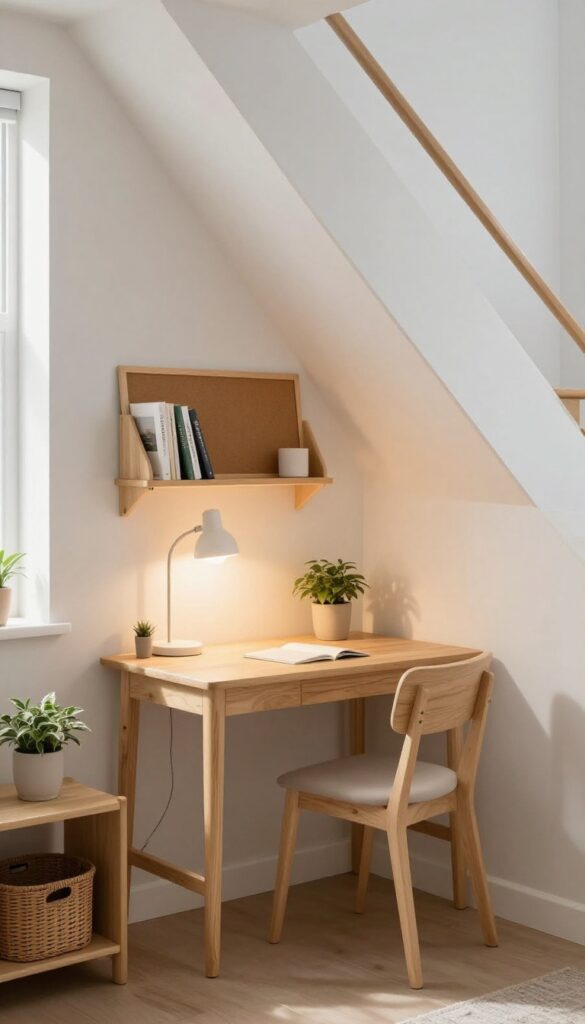
That awkward nook under the stairs often becomes a dumping ground for shoes and bags. But with a slim desk and a chair, it can transform into a cozy workspace that feels like a secret hideaway. The angled ceiling creates a natural enclosure, making it perfect for focused work without taking up valuable floor space elsewhere.
Fitting a desk under the stairs is all about measuring carefully and choosing furniture that complements the slope. A wall-mounted desk or a narrow console works best, paired with a compact chair that slides in easily. Add a small lamp and a plant, and you've got a warm, lived-in corner that's both practical and stylish.
Best Colors
Stick with light, airy colors to keep the space from feeling cramped. White or pale gray walls reflect light, while a wooden desk adds warmth. If you want contrast, paint the back wall a soft sage or dusty blue—it adds depth without darkening the nook.
Storage Tip
Use the vertical space above the desk. A wall-mounted organizer with shelves and a corkboard keeps supplies tidy and within reach. Baskets on the lower shelves can hide chargers and notebooks, maintaining a clean look.
Lighting Tip
Since under-stair areas often lack natural light, add a slim LED desk lamp or a clip-on light. A warm bulb (2700K) creates a cozy glow, making the workspace inviting even on gray days.
11. Desk with a Built-In Banquette
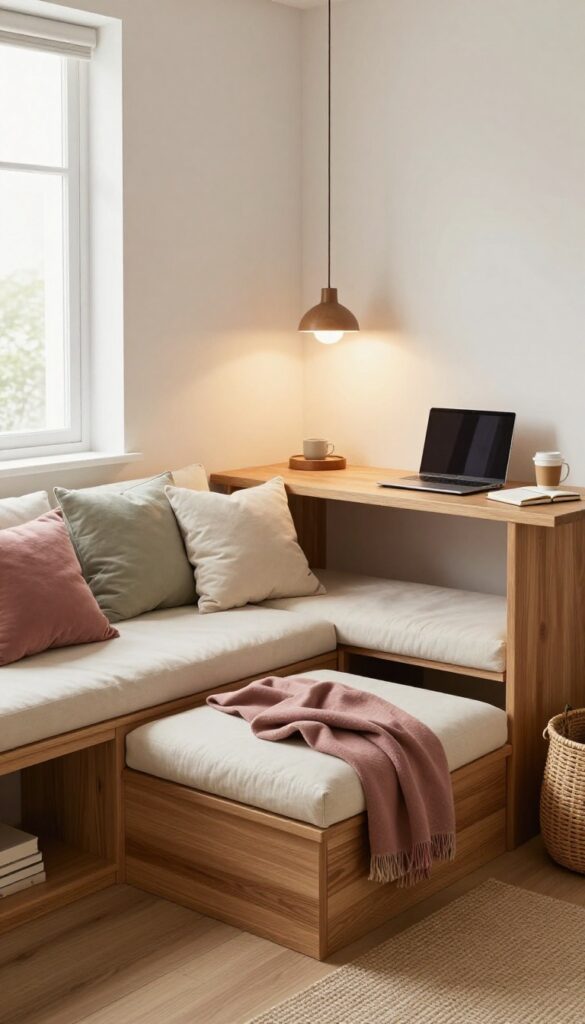
A corner banquette paired with a desk extension creates a cozy work-and-read nook that feels more like a retreat than a home office. The built-in seating saves space by eliminating the need for a separate chair, while the desk surface provides a dedicated spot for your laptop or journal. Cushions and throw pillows add warmth, making this setup inviting enough for both focused work and leisurely coffee breaks.
This layout works especially well in a corner of the living room that might otherwise go unused. By building a banquette with storage underneath, you gain a place to stash books, office supplies, or extra blankets. The desk extension can be a simple shelf or a narrow table that connects to the banquette, creating a seamless L-shaped workspace.
Choose warm wood tones for the built-ins to keep the space feeling grounded and lived-in.
Best Colors
Stick with soft, warm neutrals like cream, taupe, or light gray for the banquette cushions and throw pillows. These shades keep the nook feeling airy while allowing the wood desk to stand out. If you want a pop of color, try a muted sage or dusty rose in the pillows—it adds personality without overwhelming the small space.
Layout Tip
Position the banquette in a corner where it won't block traffic flow. Leave at least 36 inches in front of the desk so you can pull out a stool or chair if needed. For maximum coziness, add a small pendant light or wall sconce directly above the desk to create a focused pool of light.
Storage Idea
Incorporate pull-out drawers or lift-up seats in the banquette for hidden storage. Use baskets inside to organize cords, notebooks, and stationery. A shallow shelf above the desk can hold a few framed photos or a small plant, keeping the surface clutter-free.
12. Desk Tucked Behind a Large Plant
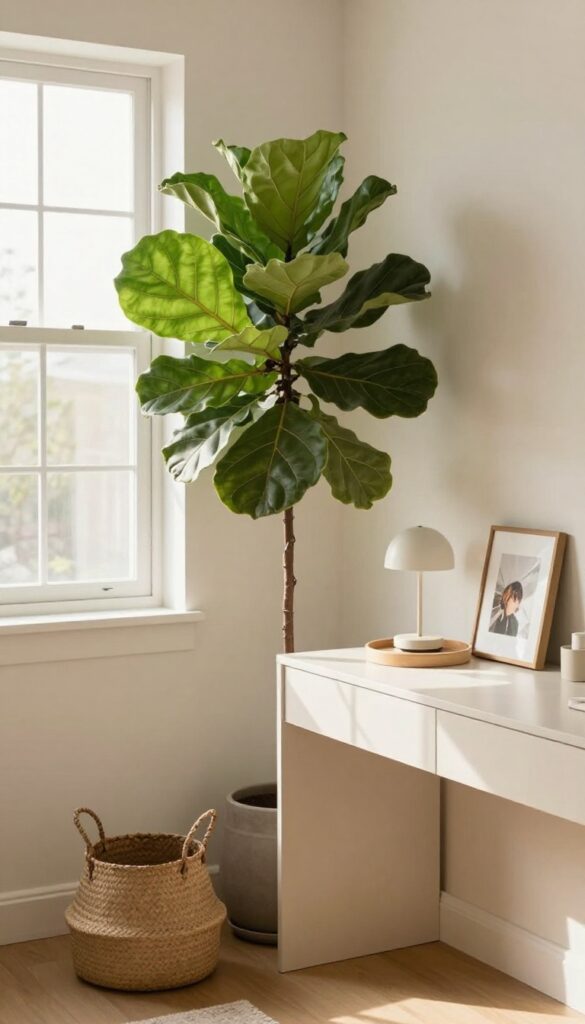
A tall potted plant can do more than just fill an empty corner—it can turn a tiny desk into a cozy little nook. By placing the plant in front of or beside the desk, you create a natural screen that hides clutter and softens the transition between work and living space. It feels like your own secret spot, even if the rest of the room is wide open.
This setup works best in a corner that might otherwise feel awkward or wasted. The plant doesn't have to completely hide the desk—just enough to create a sense of privacy. A fiddle-leaf fig, monstera, or tall snake plant in a woven basket adds texture and life without overwhelming the area.
The desk itself can be a simple floating shelf or a slim writing table, painted in a neutral tone that blends with the wall. Keep the desk surface minimal: a lamp, a small tray for essentials, and maybe a single framed photo. The plant becomes the main visual anchor, drawing the eye away from the work zone and into the greenery.
Best Plant Choices
- Go for plants with broad, upright leaves that create a screen effect. Fiddle-leaf figs, rubber plants, and tall snake plants work beautifully. Avoid bushy or trailing varieties that might crowd the desk or drop leaves on your paperwork.
- Use a sturdy pot that complements your room's style—terracotta for a warm look, or a sleek ceramic planter for a modern touch.
Layout Tip
- Position the plant slightly in front of the desk, not directly beside it. This way, the leaves overlap the desk edge without blocking your chair. If your corner is tight, try a plant stand to elevate the greenery, giving the desk more breathing room.
- Leave enough space to pull out the chair easily—about 2 feet of clearance is ideal.
Finishing Touch
Add a small task lamp with a warm bulb to highlight the plant and desk area. A soft glow through the leaves creates a cozy, lived-in feel. If the corner feels dark, paint the wall behind the desk a light, earthy tone like pale sage or warm white to keep the space airy.
13. Desk with a Rolling Cart for Storage
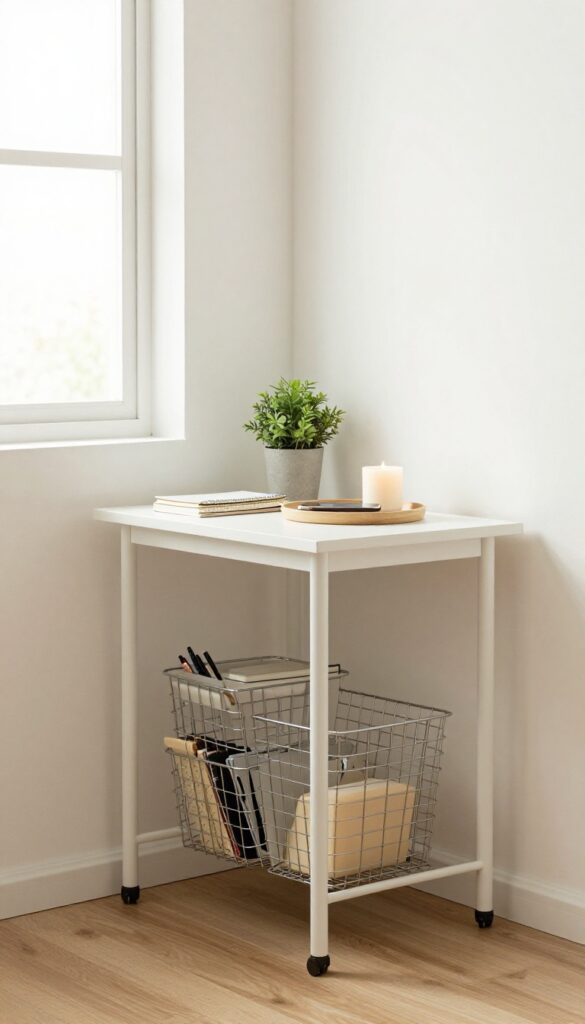
A rolling cart parked under your desk is one of those ideas that feels obvious once you see it. It gives you a place to stash notebooks, chargers, and office supplies without committing to a bulky filing cabinet. When you need to clear the floor for yoga or guests, the cart glides right out of the way.
Pairing a slim desk with a rolling cart is a smart move for small living rooms where every inch counts. The cart sits neatly underneath when not in use, keeping your workspace clutter-free. Choose a cart with baskets or shelves so you can sort items by category—pens in one bin, cables in another.
This setup works especially well in corners or against a wall where a traditional drawer unit would feel cramped.
Best Cart Styles
Look for a rolling cart with a slim profile and a finish that complements your desk. A metal cart with wire baskets adds an industrial touch, while a wooden cart with solid shelves feels warmer. If your desk is white, a black or natural wood cart creates contrast without clashing.
Layout Tip
Place the desk so the cart can slide out from either side. If your desk is against a wall, leave a gap of at least 12 inches on one end so the cart can roll out freely. For a corner desk, angle the cart to tuck under the shorter side.
Finishing Touch
Top the cart with a small tray to hold daily essentials like your phone, glasses, or a coaster. This keeps the cart looking intentional rather than just a catch-all. A tiny plant or a candle on the tray adds a lived-in feel.
14. Desk as Part of a Gallery Wall
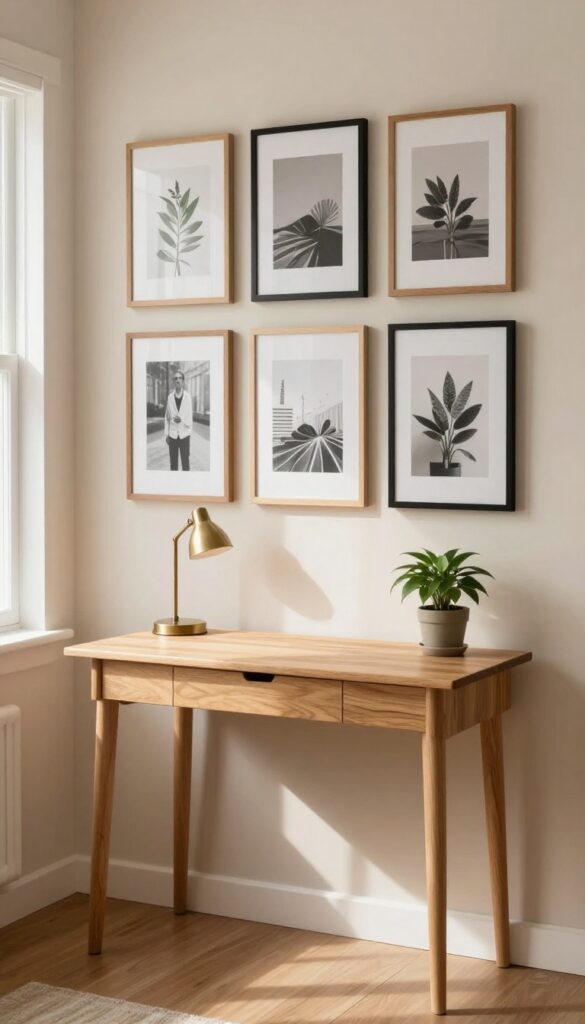
A gallery wall usually feels like a purely decorative feature, but it can double as a smart work zone when you slide a slim desk into the mix. The desk becomes just another framed element in the arrangement, blending function with art. This idea works especially well in small living rooms where every inch needs to earn its keep, and it adds a warm, curated feel that makes the workspace feel intentional rather than tacked on.
Mount a slim desk against a wall and surround it with framed photos and art. The desk becomes a functional part of the display, not an afterthought. Choose a narrow profile—no deeper than 16 inches—so it doesn't jut out too far.
Keep the desktop mostly clear except for a small lamp or a single plant, letting the gallery wall remain the star. This setup feels collected over time, not staged, and it turns your work corner into a conversation piece.
Best Colors
- Stick with a cohesive palette for the frames to keep the wall from feeling chaotic. Black, white, or natural wood tones work well. If your desk is wood, echo that finish in a few frames.
- For a warmer vibe, mix in soft neutrals like beige or muted green in the artwork itself.
Layout Tip
Map out the arrangement on the floor first, or use paper templates taped to the wall. Leave a gap where the desk will sit, and let the frames wrap slightly above and around it. The desk should feel like it belongs in the grid, not like it's interrupting it.
Finishing Touch
Add a small task lamp with an adjustable arm that complements the frame style—maybe brass or matte black. A tiny vase with a single stem or a stack of books on the desk adds life without clutter. Keep the color of these accents in the same family as the gallery frames.
15. Desk with a Bench Seat for Two
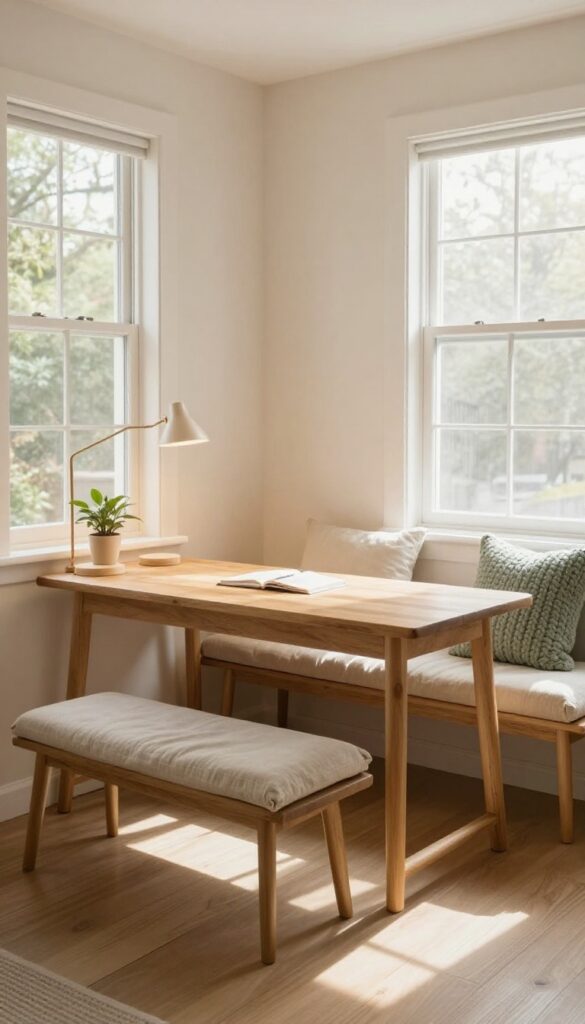
When two people need a workspace in the living room, a long desk paired with a bench seat is a smart, space-saving solution. Instead of bulky chairs that crowd the room, a bench keeps the visual line clean and invites you to sit side by side. It feels more like a casual café nook than a formal office, which fits right into a warm, lived-in home.
Place a sturdy, long desk—at least 48 inches—against a wall or under a window. Choose a bench that matches the desk's length or is slightly shorter for a layered look. Add two separate task lamps or one long linear light to define each person's zone.
The bench can double as extra seating when guests come over, making it a practical multitasker for small living rooms.
Best Colors & Materials
Stick with warm wood tones like oak or walnut for the desk and bench to keep the space inviting. Pair with a soft neutral cushion on the bench—think linen or cotton in beige or sage green—for comfort. If your living room leans modern, try a white oak desk with a black metal bench frame for contrast.
Layout Tip
Center the desk on the wall and flank it with floating shelves or a small plant on each side. This creates a balanced focal point without adding floor clutter. Leave at least 36 inches of clearance behind the bench so you can easily slide in and out.
Cozy Detail
Toss a couple of textured throw pillows on the bench for back support and a relaxed feel. A chunky knit or velvet pillow adds warmth and makes the workspace feel like part of the living room, not an afterthought.
FAQ
How do I make a desk in my living room feel less like an office?
Use warm materials like wood, add personal decor such as plants and art, and choose a desk that matches your living room furniture. Soft lighting and a cozy chair also help blend the workspace into the room.
What is the best desk size for a small living room?
A desk around 30 to 40 inches wide works well for most small spaces. Look for slim profiles or corner desks that fit snugly without dominating the room.
Can I put a desk in front of a window?
Yes, but use sheer curtains or blinds to control glare. Position the desk slightly off-center if the window is the main light source, and keep the view clear by avoiding tall monitors.
How do I hide desk clutter in a living room?
Use desk organizers, trays, and small baskets. A desk with drawers or a hutch can conceal supplies, and a rolling cart or decorative box can store items out of sight.
What chair works best for a living room desk?
Choose a chair that complements your decor, like a wooden dining chair with a cushion or a sleek upholstered task chair. Avoid bulky office chairs that clash with the room's style.
Conclusion
Bringing a desk into your living room doesn't have to feel like a compromise. With the right layout and a few warm touches, you can create a workspace that feels like a natural part of your home.
Whether you choose a corner nook or a fold-down wall desk, the key is to keep it personal and practical. Let these ideas inspire you to design a space that works for both living and working—without losing the cozy, lived-in feel you love.