13 Men’s Living Room Ideas for Sleek Relaxed Details
A living room should feel like a place to unwind, but that doesn't mean it has to look boring. For guys who want a space that's both sharp and comfortable, the trick is balancing clean lines with warm, inviting details.
Think leather and wool, dark woods and soft lighting—a room that feels put together without trying too hard.
These 13 ideas will help you create a living room that's sleek, relaxed, and totally yours.
1. Start with a Neutral Base and Add Depth
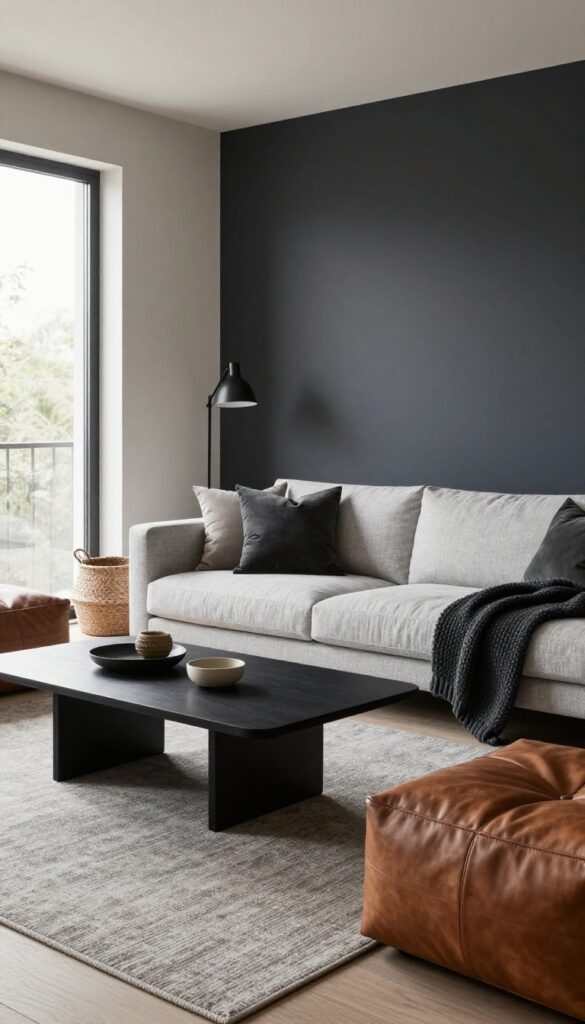
A neutral foundation doesn't have to be boring. Think of it as a blank canvas that lets you layer in personality without overwhelming the space. By starting with soft grays, warm beiges, or deep navies on your walls and larger furniture, you create a calm backdrop that feels both grounded and inviting.
Then, the magic happens when you introduce darker accents—like charcoal throw pillows, a black coffee table, or matte black frames—that add visual weight and a sense of depth. This approach keeps the room looking sleek and intentional, not cluttered.
The key is balance. A light gray sofa paired with a dark navy accent wall gives the room structure, while a few black accessories—like a floor lamp or side table—anchor the space and prevent it from feeling washed out. Stick to a cohesive palette of two to three neutral shades, then layer in textures like linen, wool, and leather to keep things interesting.
This strategy works especially well in open-concept living rooms, where a neutral base helps define the seating area without blocking sightlines. For a cozy touch, add a chunky knit throw in charcoal or a woven basket for extra storage.
Best Colors
Stick to warm grays (like greige), soft beiges, or deep navy for walls and large furniture. These shades feel sophisticated and pair well with darker accents. Avoid pure white—it can feel stark—and opt for off-white or cream instead to keep the room cozy.
Texture Mix
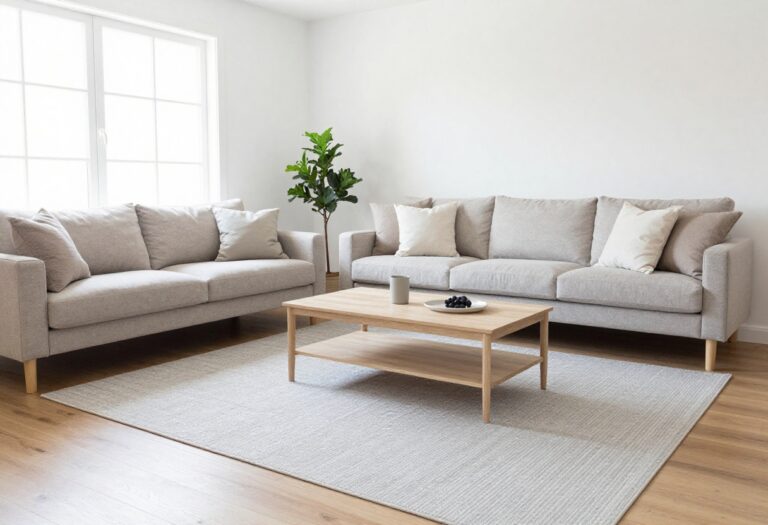
Layer different textures to add depth without color. Think a linen sofa, a wool rug, leather poufs, and velvet pillows. The contrast between smooth and rough surfaces makes the neutral palette feel rich and lived-in.
Finishing Touch
Add one statement piece in a darker neutral, like a black coffee table or a charcoal media console. This creates a focal point that grounds the room and ties the whole look together.
2. Choose a Low-Profile Sofa for Clean Lines
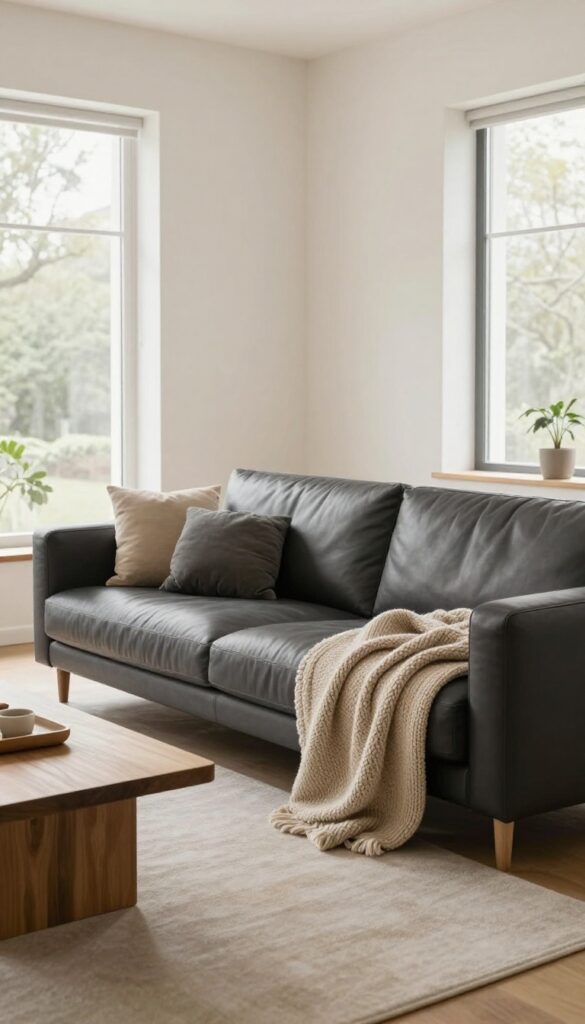
A low-profile sofa instantly changes the energy of a room. By sitting closer to the ground, it keeps the visual weight low and makes the ceiling feel higher. That alone opens up a space, especially in smaller living rooms where every inch matters.
The clean silhouette also gives you a modern foundation to build on, whether you lean industrial, Scandinavian, or mid-century. Leather or a textured weave adds just enough character without clutter.
A low-slung sofa in leather or textured fabric keeps the room feeling open and modern. Pair it with a chunky knit throw to soften the look. The key is balancing that sleek base with cozy layers so the space doesn't feel cold or sparse.
Think of it as the anchor—everything else, from pillows to side tables, works around that low horizon.
Best Materials For Longevity
Full-grain leather develops a patina over time and fits the smart, space-aware vibe perfectly. If you prefer fabric, look for a tight-weave linen or a heavy-duty performance textile that resists stains and fading. Both options keep the sofa looking sharp for years without much fuss.
Layout Tip For Open Flow
Because the sofa sits low, avoid pairing it with a tall coffee table. A low, wide ottoman or a slim wooden tray table keeps the sightline clean. Float the sofa away from the wall by about six inches to create breathing room and let the floor plan feel more intentional.
Cozy Detail That Softens The Look
A chunky knit throw in oatmeal or charcoal draped over one arm adds texture without breaking the clean lines. Add one or two rounded pillows in a contrasting fabric—like velvet or faux fur—to introduce softness and warmth. This keeps the space from feeling too minimalist or stiff.
3. Incorporate Natural Textures for Warmth
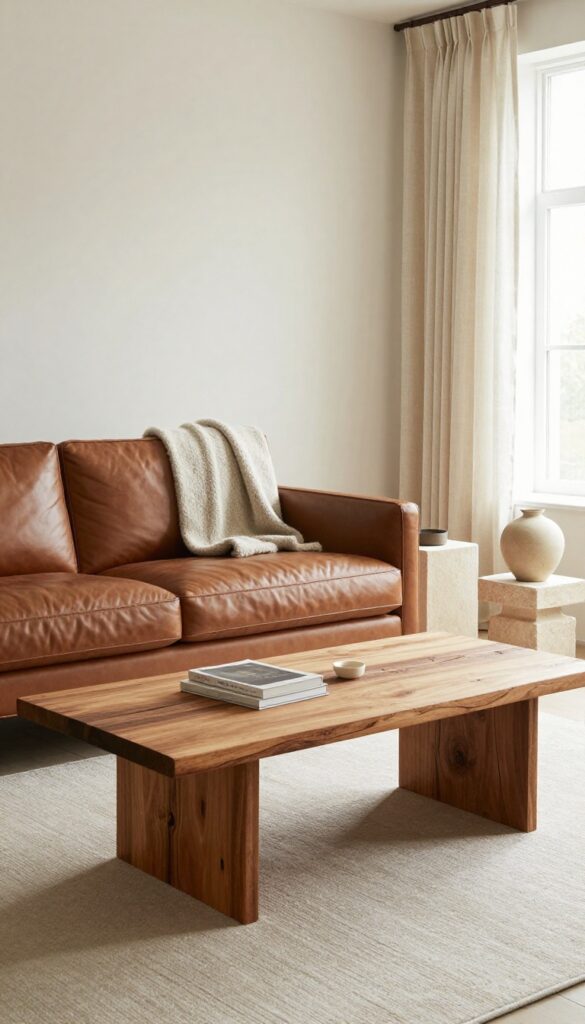
A living room that leans too hard on smooth surfaces can feel cold, even if the colors are warm. Natural textures like wood, stone, and wool break up that sleekness and add a grounded, lived-in feel. The trick is choosing pieces that feel rugged but refined—think a chunky wool throw over a leather sofa or a live-edge coffee table anchoring the seating area.
These materials bring a tactile quality that makes a space feel cozy without sacrificing the smart, edited look you're going for.
Start with a statement piece like a reclaimed wood coffee table or a stone-topped side table. The imperfections in the wood grain or the natural veining in stone add character and prevent the room from feeling too polished. Then layer in softer textures: a wool area rug underfoot, linen curtains at the windows, or a chunky knit throw draped over the arm of the sofa.
The contrast between rough and soft creates visual interest and makes the room feel more inviting. Just keep the color palette neutral—earthy browns, warm grays, and off-whites—so the textures do the talking.
Best Materials To Mix
- Stick with three main textures: wood, stone, and wool. Reclaimed wood brings warmth and history, while stone (like slate or limestone) adds a cool, grounding counterpoint. Wool offers softness and durability.
- Avoid glossy finishes—matte or raw surfaces feel more natural. If you want to add a fourth texture, go with linen or cotton for upholstery or curtains.
Layout Tip For Balance
- Place your textured anchor piece—like a chunky wool rug or a stone coffee table—in the center of the seating area. Then balance it with smoother elements, like a leather sofa or metal floor lamp. This prevents the room from feeling too heavy or too sparse.
- Keep walkways clear so the textures are visible but not overwhelming.
Cozy Detail That Ties It Together
Add a woven basket filled with extra throws or firewood next to the fireplace or sofa. It's a small touch that reinforces the natural theme and adds a layer of practicality. The basket itself becomes a texture element, and it keeps the room feeling organized and intentional.
4. Use Statement Lighting as Sculpture
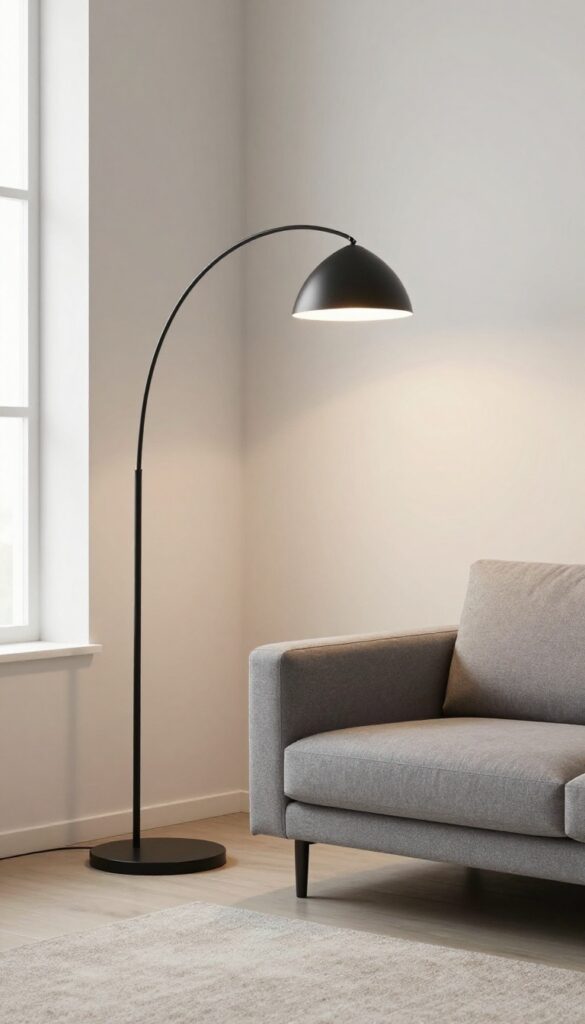
Lighting does more than just brighten a room—it can anchor the whole space. In a men's living room, a bold floor lamp or a geometric pendant becomes a sculptural element that draws the eye and sets the mood. Go for black metal or brass finishes to tie into that sleek, relaxed vibe without feeling cold or stark.
Think of your lighting as art. A tall arc lamp leaning over the sofa or a cluster of matte black pendants above the coffee table adds vertical interest and a touch of drama. The key is choosing pieces with clean lines and a bit of presence—something that stands out even when turned off.
This approach works especially well in rooms with neutral walls and simple furniture, where the light fixture becomes the conversation starter.
Best Materials
- Black metal and brushed brass are your go-tos for that smart, space-aware look. Black adds contrast and grounds the room, while brass brings warmth without being flashy. For a softer edge, try a matte bronze or gunmetal finish.
- Avoid shiny chrome or overly ornate details—they can feel busy and break the relaxed mood.
Placement Tip
Position your statement light where it naturally draws attention—above a side table, next to an armchair, or over a console. In a small living room, a floor lamp with a slim profile and a wide shade can double as a reading light and a visual anchor. Make sure the scale fits: a huge pendant in a tiny room feels overwhelming, while a tiny lamp in a large space gets lost.
Cozy Detail
- To keep the look cozy and layered, add a dimmer switch. That way you can dial down the brightness for movie nights or turn it up when you need to see. Pair the statement light with a warm-toned bulb (2700K–3000K) and soft textiles like a chunky knit throw or a wool rug.
- The contrast between the sleek metal and the soft fabrics makes the room feel both polished and lived-in.
5. Layer Rugs for a Casual, Cozy Feel
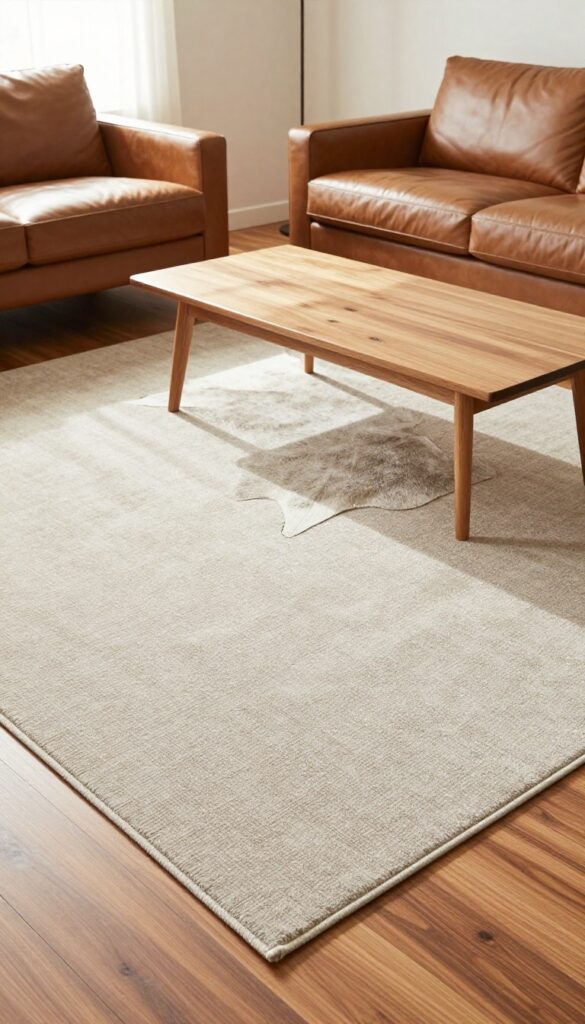
Rug layering is one of those tricks that instantly makes a room feel more collected and lived-in. Instead of one flat carpet, you stack a smaller, textured rug—like cowhide or jute—over a larger neutral base. The contrast in materials and sizes breaks up the floor visually, adding warmth without looking overly styled.
It’s a smart way to define a seating area in an open plan or add a soft landing zone next to the sofa.
Start with a large, low-pile wool or sisal rug in a solid tone—think beige, gray, or charcoal. Then place a smaller cowhide, flat-weave kilim, or braided jute rug on top, angled slightly or centered under the coffee table. The key is to keep the base rug neutral so the top rug can bring the texture.
This combo works especially well in masculine living rooms where you want comfort without sacrificing a clean, tailored look. Plus, it’s easy to swap out the top rug seasonally or when you want a refresh.
Best Materials For Layering
- Stick with natural fibers for the base: wool, sisal, or seagrass. These are durable and provide a subtle backdrop. For the top layer, cowhide adds a rugged, organic feel, while jute or a flat-weave cotton rug brings in softness.
- Avoid thick shag on shag—it’ll look messy and be a tripping hazard.
Layout Tip
Place the layered rugs so the top rug sits at least 6 inches from the edges of the bottom rug. This creates a deliberate border. Center the combo under the front legs of your sofa and coffee table, leaving enough floor exposed around the perimeter to keep the room feeling open.
Cozy Detail
Add a sheepskin or faux fur throw on the top rug near the sofa. It breaks up the geometry and invites you to sit on the floor. This little touch makes the layered look feel intentional and extra inviting.
6. Add a Touch of Green with Low-Maintenance Plants
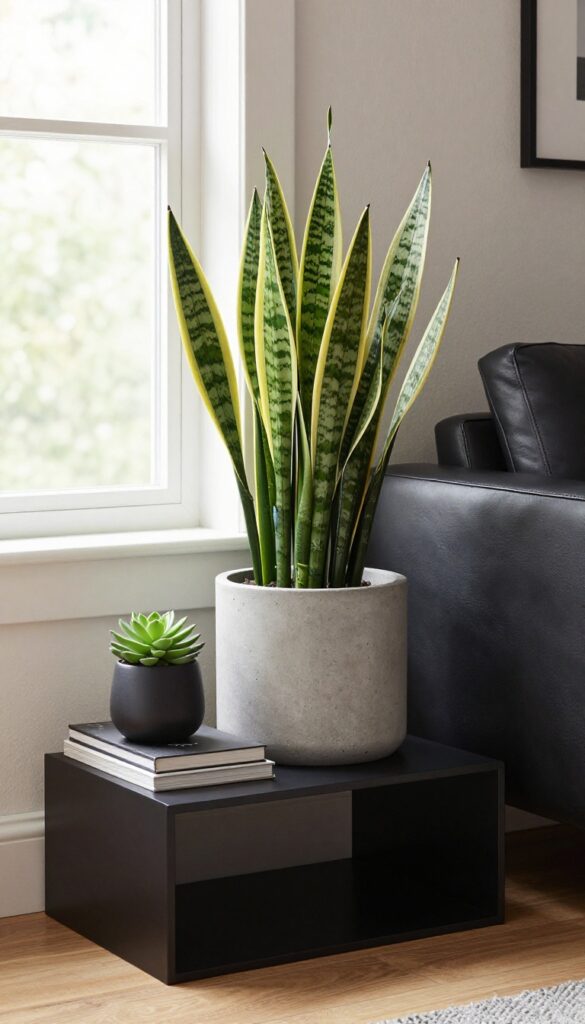
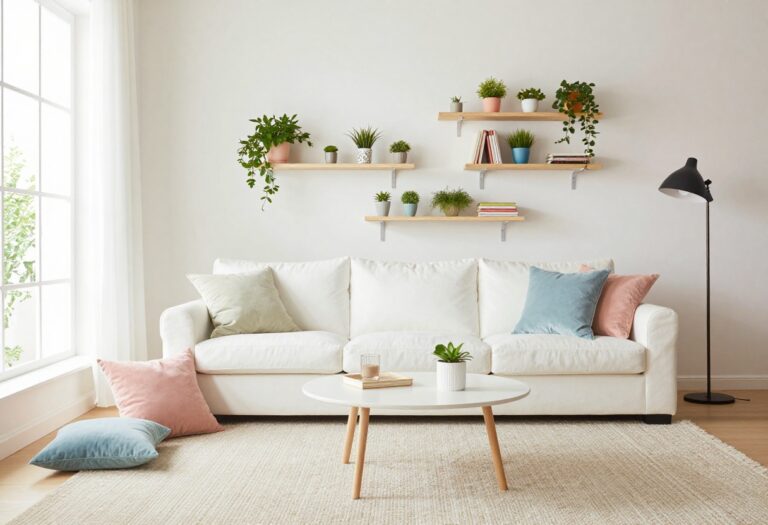
Plants are an easy way to breathe life into a masculine living room without going overboard. Snake plants, fiddle leaf figs, or a cluster of succulents add organic texture and a pop of green that softens all those hard edges. The trick is to keep the planters industrial—concrete, matte black, or terracotta—so the greenery feels intentional, not fussy.
It's a small addition that makes the whole space feel more relaxed and layered.
Low-maintenance plants are perfect for guys who want the benefits of greenery without the constant upkeep. Snake plants thrive on neglect, succulents need minimal water, and fiddle leaf figs add dramatic height. Place them near natural light sources, like a window or a well-lit corner, to keep them happy.
Grouping plants of different heights on a sideboard or shelf creates visual interest without clutter. For a cohesive look, stick to one or two planter finishes—concrete and matte black are foolproof choices that tie into an industrial or modern aesthetic. The green leaves contrast beautifully with neutral walls, leather sofas, and wood tones, making the room feel more alive but still calm.
Best Plant Choices
- Snake plants are virtually unkillable and add vertical lines that echo architectural details. Fiddle leaf figs offer a bold, sculptural silhouette, perfect for a corner. Succulents work well in groups on coffee tables or shelves, bringing texture without overwhelming the space.
- For a low-light room, consider a ZZ plant or pothos—they're forgiving and still look sharp.
Planter Styling Tips
- Stick to matte finishes: concrete, black ceramic, or dark terracotta. Avoid glossy or brightly colored pots that can feel distracting. Use a mix of heights and shapes—tall planters for floor plants, squat ones for tabletops.
- A simple saucer underneath protects surfaces and keeps the look clean.
Placement For Maximum Impact
- Put a tall fiddle leaf fig or snake plant next to the sofa or in an empty corner to anchor the room. Cluster smaller succulents on a coffee table or media console. Near a window is ideal, but even a shelf with indirect light can host a pothos or ZZ plant.
- The goal is to add life without blocking walkways or making the space feel crowded.
7. Create a Gallery Wall with Personal Art
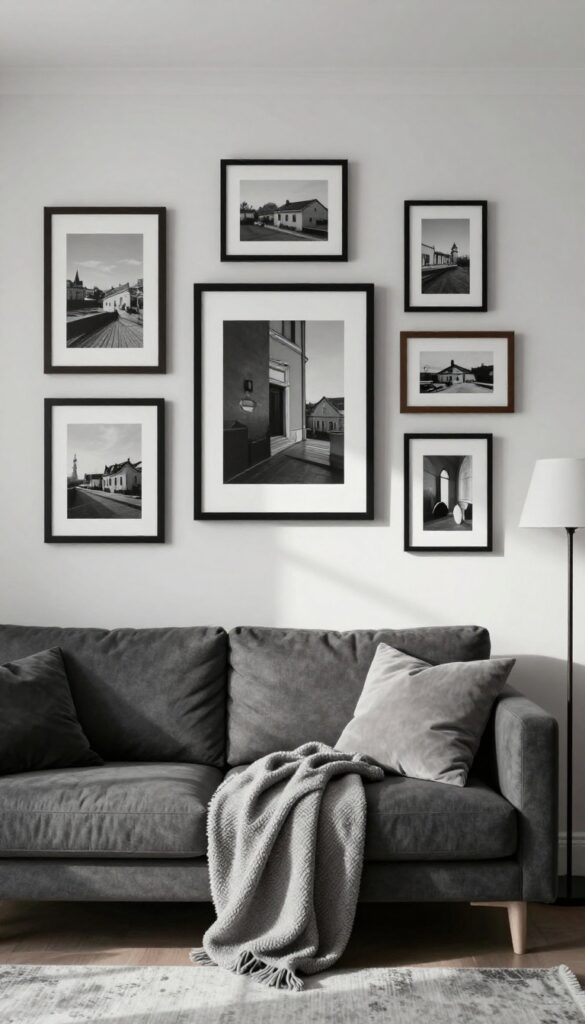
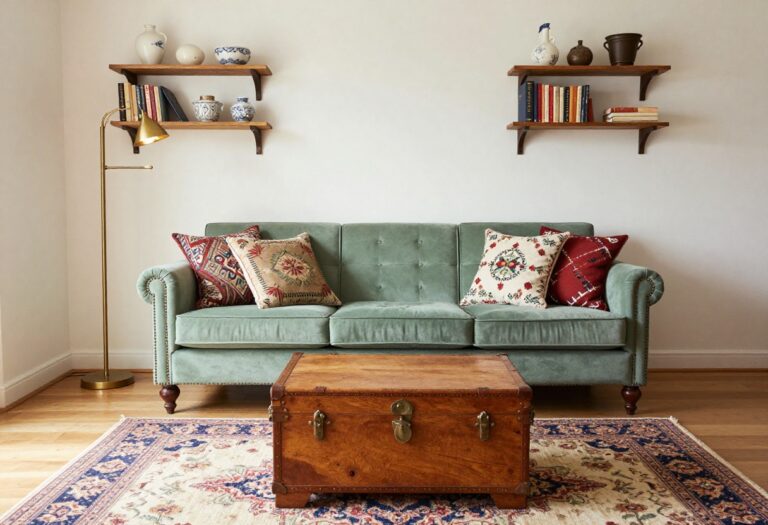
A gallery wall is one of those moves that instantly makes a living room feel like yours. But for a sleek, relaxed space, you want to keep it from looking cluttered or random. The trick is to mix black-and-white photography with a few vintage finds—maybe an old map, a botanical print, or a thrifted landscape.
Then tie everything together with frames in the same finish, like black or dark wood. That consistency gives the whole arrangement a curated, intentional feel without losing the personal touch.
Start by laying out your pieces on the floor to find a balanced arrangement before you put any nails in the wall. Aim for a mix of sizes and orientations—some horizontal, some vertical—and leave about two to three inches between frames for a clean look. If you're worried about committing to a pattern, try using paper templates taped to the wall first.
This idea works especially well above a sofa, a console table, or even in a hallway leading into the living room. The result is a wall that feels collected over time, not thrown together.
Best Colors And Framing
Stick with black, white, and shades of gray for the artwork itself, then use dark wood or matte black frames. This palette keeps the gallery wall from competing with other colors in the room. If you want a bit of warmth, add one or two vintage pieces with subtle sepia tones—they'll blend right in without breaking the monochrome vibe.
Layout Tip For A Relaxed Look
- Instead of a rigid grid, go for an organic layout that feels more casual. Start with your largest piece slightly off-center, then build outward with smaller frames. Keep the outer edges relatively even, but don't stress about perfect symmetry.
- A slightly asymmetrical arrangement adds to the relaxed, lived-in feel you're going for.
Finishing Touch
Add a small picture light above the gallery wall to highlight the art and create a cozy glow in the evening. Choose a warm LED bulb to keep the light soft and inviting. This not only shows off your collection but also makes the wall feel like a deliberate focal point, even in a space that's meant to be laid-back.
8. Incorporate Smart Storage That Disappears
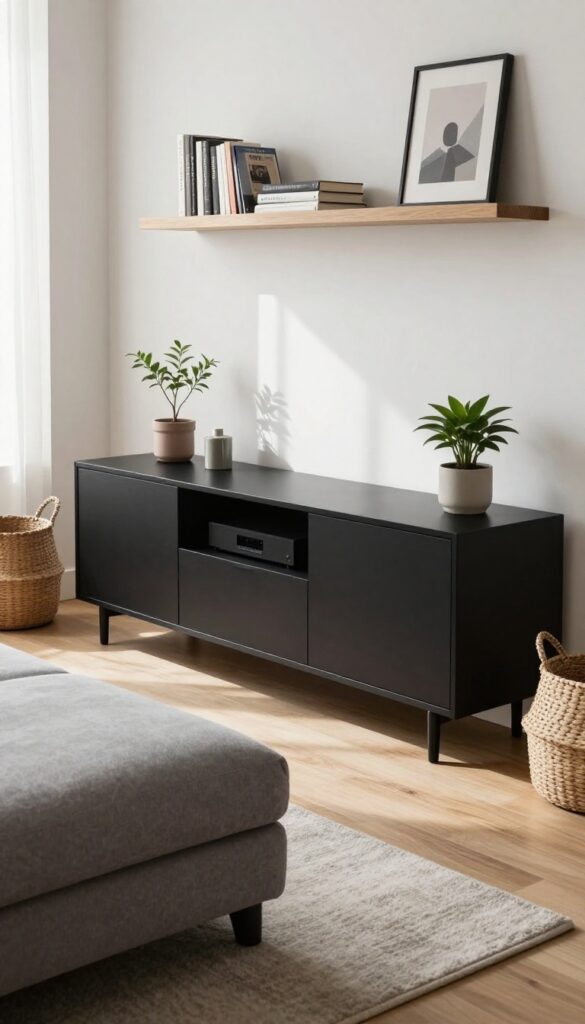
A sleek living room doesn’t mean you have to live without your stuff. The trick is making storage blend in so well you barely notice it. Ottomans with hidden compartments, floating shelves that feel like part of the wall, and media consoles with closed cabinets keep remotes, cables, and everyday clutter out of sight.
The result is a space that feels calm, clean, and effortlessly put together.
Smart storage is about choosing pieces that pull double duty without shouting for attention. A storage ottoman works as a footrest, extra seat, and a place to stash throw blankets or board games. Floating shelves keep books and decor visible but off the floor, which helps a room breathe.
And a media console with closed doors hides the TV mess while letting you display a few curated objects on top. The key is to pick finishes that match your room’s palette, so the storage just fades into the background.
Best Materials
- Stick with natural wood tones or matte black for a grounded look. Wood adds warmth and layers well with cozy textiles. Matte black feels modern and sharp, especially against lighter walls.
- Avoid high-gloss finishes, they reflect too much and can feel busy in a relaxed space.
Layout Tip
Place your main storage piece, like a media console or a large ottoman, where it gets daily use but doesn’t block sightlines. In a small room, use vertical space with tall cabinets or shelves to draw the eye up and keep the floor clear.
Finishing Touch
Add a woven basket or two next to the sofa for extra stashing. They bring texture and an organic feel that softens the sleek lines of built-in storage. Keep the top of shelves and consoles lightly styled with a few books, a plant, or a ceramic vase to avoid a bare look.
9. Mix Metals for an Industrial Edge
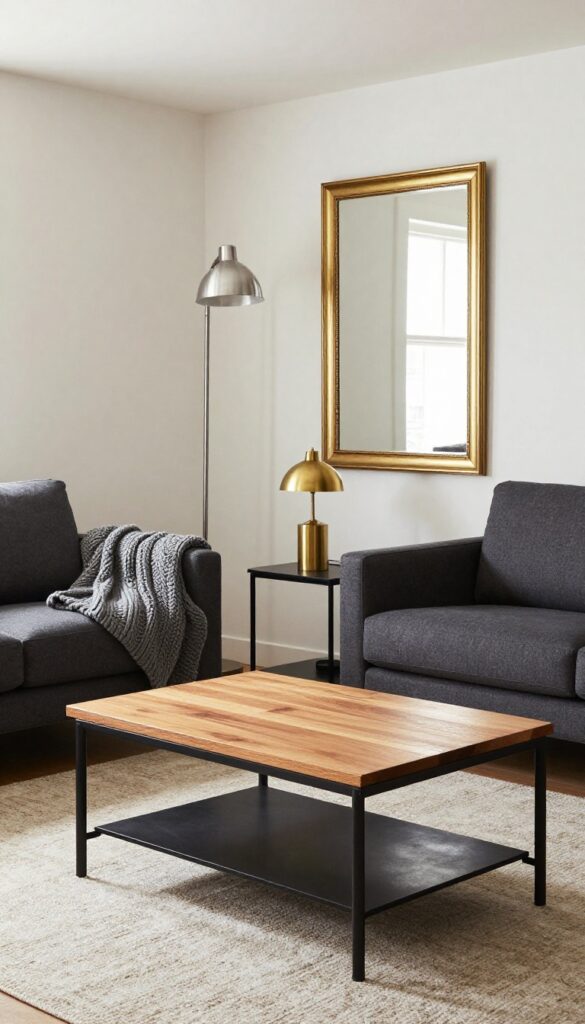
Metals can feel cold and uninviting when you overdo them, but the trick is to mix them like you would textures. Brushed nickel, black iron, and brass each bring something different to the table—warmth, weight, and shine. In a cozy layered living room, these small doses of contrast keep the space feeling intentional without screaming for attention.
A brass lamp perched on a black side table, for instance, creates a quiet visual pop that feels curated, not chaotic.
The key is restraint. Pick one dominant metal—say, black iron for your coffee table base—and then add one or two accent metals in smaller pieces. A brushed nickel floor lamp near a brass-framed mirror ties the room together without looking like a hardware store exploded.
This approach works especially well in open layouts where you want distinct zones to feel connected yet separate. The industrial edge comes from the honest, unpolished vibe of raw metals, but the cozy layer happens when you balance them with soft textiles like a chunky knit throw or a wool rug.
Best Metals To Combine
- Stick to three at most. Brushed nickel is your neutral—it blends with almost anything. Black iron adds that industrial weight, perfect for shelving brackets or lamp bases.
- Brass brings warmth and a hint of vintage charm. Avoid chrome or polished silver here; they can feel too shiny and clash with the relaxed mood you're after. Think of these metals as a color palette: nickel is your base, iron is your dark accent, and brass is your highlight.
Placement Tips
- Group metals in pairs rather than scattering them everywhere. A brass lamp on a black side table creates a focal point. Then echo the brass with a picture frame or a vase on a nearby shelf.
- Keep the larger furniture pieces in one metal family—like a black iron coffee table—and let the accents do the mixing. This prevents the room from feeling busy while still giving you that curated, industrial edge.
Finishing Touch
- Add one unexpected metal piece, like a brass magazine rack or a nickel floor lamp with an exposed bulb. The exposed bulb reinforces the industrial vibe, while the brass adds a soft glow. Place it near a window so natural light catches the metal and creates subtle reflections throughout the day.
- This small detail makes the whole room feel more considered and polished.
10. Use a Dark Accent Wall to Anchor the Room
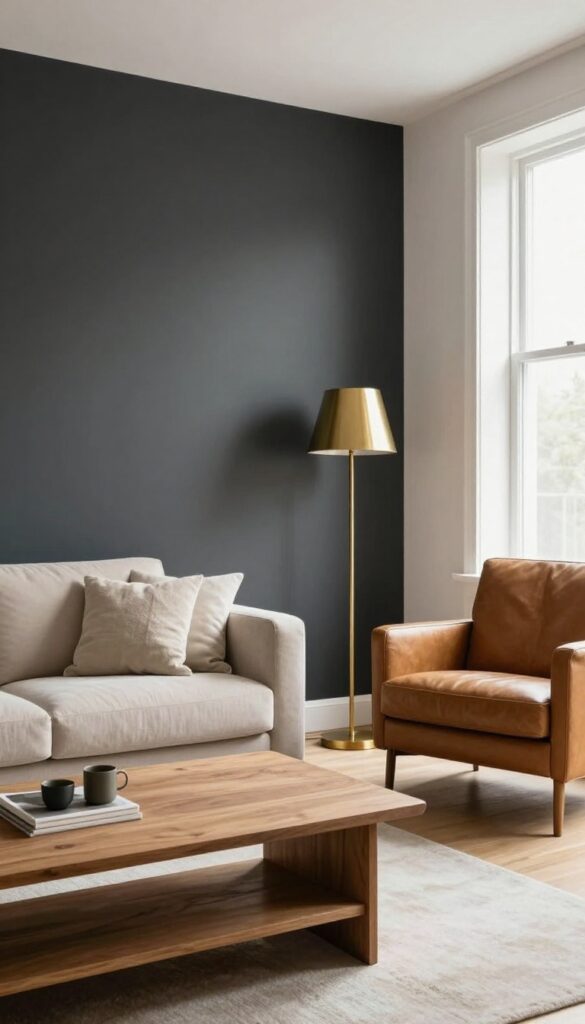
A single dark wall can shift the whole energy of a living room without overwhelming it. Charcoal, deep green, or navy adds weight and warmth, making the space feel grounded and intentional. It’s a smart move for guys who want a cozy, layered look that still feels open and airy.
Painting one wall in a deep hue creates a natural focal point, especially behind the sofa or media console. The contrast makes lighter furniture and decor pop, while the darker tone adds a sense of depth and intimacy. In a room with good natural light, the dark wall won’t feel cave-like—instead, it balances brightness with a touch of drama.
Pair it with warm wood, leather, and soft textiles to keep the vibe relaxed and inviting.
Best Colors For A Cozy Vibe
- Charcoal gray is a safe bet—it’s neutral enough to work with almost any palette but adds instant sophistication. Deep green brings a natural, earthy feel that pairs beautifully with tan leather and brass accents. Navy blue feels classic and crisp, especially with white trim and light wood floors.
- Avoid flat finishes; go for a matte or eggshell sheen to reduce glare and keep the wall looking soft.
Furniture And Decor Pairing
- Place your largest piece of furniture—like a sofa or sectional—against the dark wall to anchor the arrangement. Choose light-colored upholstery, such as cream, beige, or light gray, to create contrast. Add a few metallic touches, like a brass floor lamp or gold-framed art, to reflect light and break up the darkness.
- Keep the rest of the room’s walls light to maintain an open, spacious feel.
Lighting Tip
- Layered lighting is key with a dark accent wall. Use a mix of overhead, task, and accent lighting to prevent the room from feeling too dim. A picture light over art on the dark wall draws the eye and adds a gallery-like touch.
- Floor lamps with warm bulbs (2700K–3000K) create a cozy glow without washing out the wall’s depth.
11. Invest in a Quality Media Console with Character
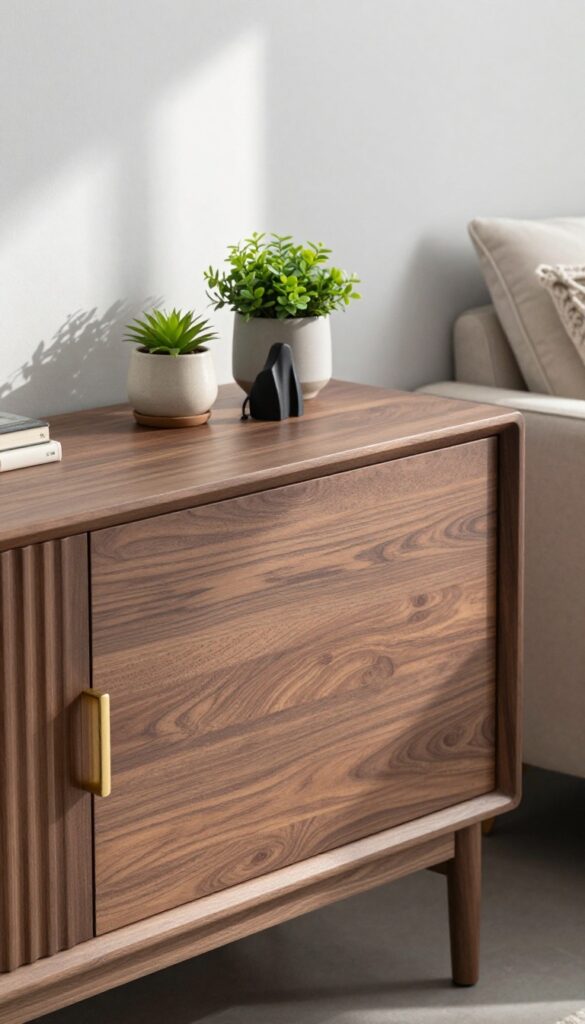
Your TV stand or media console does more than hold your screen—it sets the tone for the whole room. A well-chosen piece in dark wood or black metal with clean lines instantly adds sophistication while keeping things clutter-free. Look for one that hides cables, fits a soundbar, and leaves room for a few curated decor pieces.
It’s a smart investment that anchors your space without screaming for attention.
A quality media console is the backbone of a sleek, relaxed living room. It should feel substantial but not bulky, with enough storage to keep electronics out of sight. Dark finishes like walnut or matte black create a grounded look that pairs well with lighter walls and soft textiles.
The key is to balance function with personality—choose something with subtle character, like brass handles or a slatted wood front, so it doesn’t fade into the background. Once it’s in place, style the top with a mix of books, a small plant, and a sculptural object to make it feel intentional, not just functional.
Best Materials
Stick with solid wood or powder-coated metal for durability. Dark walnut, oak in a deep stain, or blackened steel all age well and hide smudges. Avoid glossy finishes that show every fingerprint—matte or satin surfaces are more forgiving and feel cozier.
Storage Tip
Look for a console with at least one enclosed cabinet to stash remote controls, game controllers, and other small items. Open shelves are great for display, but closed storage keeps the room from looking busy. If your console has a back panel with cutouts, use cable management sleeves to keep wires hidden.
Styling The Top
Keep the surface balanced but not crowded. Place a low-profile soundbar at the front, then add a stack of coffee table books on one side and a small ceramic vase or a trailing plant on the other. Leave some negative space so the console doesn’t feel overloaded.
12. Add Cozy Throws and Pillows in Muted Tones
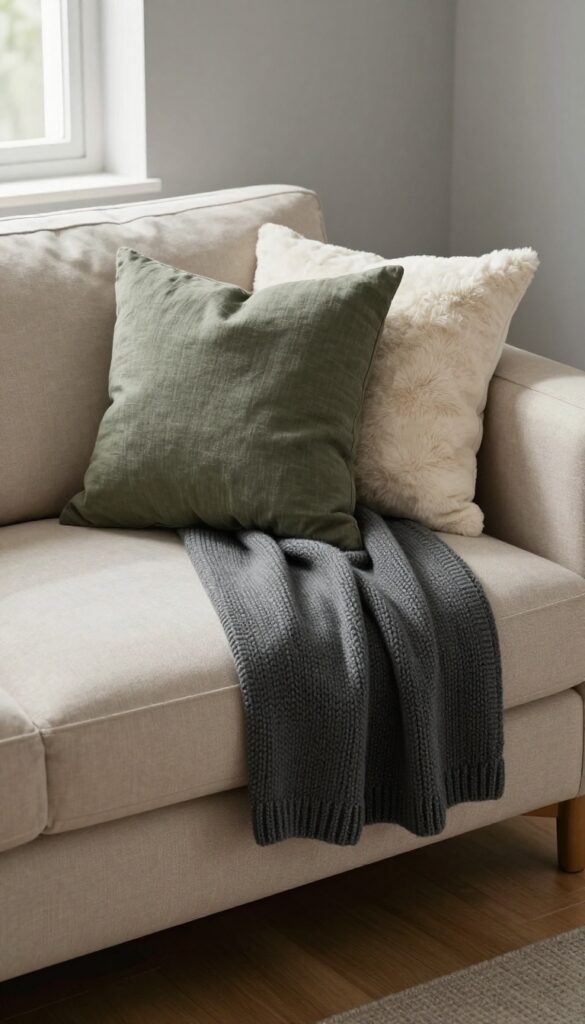
Layering textiles is one of the easiest ways to make a living room feel instantly more inviting without adding clutter. Sticking to a restrained palette of gray, beige, olive, and black keeps the look calm and intentional, while mixing textures like chunky knits, faux fur, and linen adds depth. The goal is a space that feels cozy and layered but still streamlined—perfect for a guy who wants comfort without sacrificing a smart, edited aesthetic.
When you keep your throw and pillow palette muted, the texture does all the work. A chunky knit throw in charcoal draped over the arm of a beige sofa creates visual interest without shouting for attention. Add one olive linen pillow and one faux fur pillow in cream, and you’ve got a balanced trio that feels curated, not cluttered.
Stick to three pillows max on a standard sofa—any more starts to look messy. For a sectional, you can go up to five, but keep the same tonal range. This approach works especially well in open-plan spaces where the living area needs to feel connected to adjacent rooms without competing visually.
Best Colors
- Gray, beige, olive, and black form the backbone of this palette. Start with a neutral sofa (gray or beige) and layer in one olive accent for a subtle pop of earthiness. Black can appear as a thin stripe, a small geometric pattern, or a solid lumbar pillow.
- Avoid bright whites—opt for off-white or cream instead to keep the warmth intact.
Texture Mix
Combine at least three different textures to keep the eye moving. Chunky cable-knit throws, smooth faux fur, matte linen, and maybe a ribbed cotton pillow cover all work well together. The contrast between rough and soft, matte and sheen, makes the arrangement feel rich without needing more pieces.
Finishing Touch
Fold the throw loosely rather than draping it perfectly—a slightly undone look feels more lived-in and effortless. Place the pillows asymmetrically: two on one side, one on the other, or stack the smaller pillow in front of a larger one. This keeps the arrangement from feeling too staged.
13. Keep the Layout Open and Conversation-Friendly
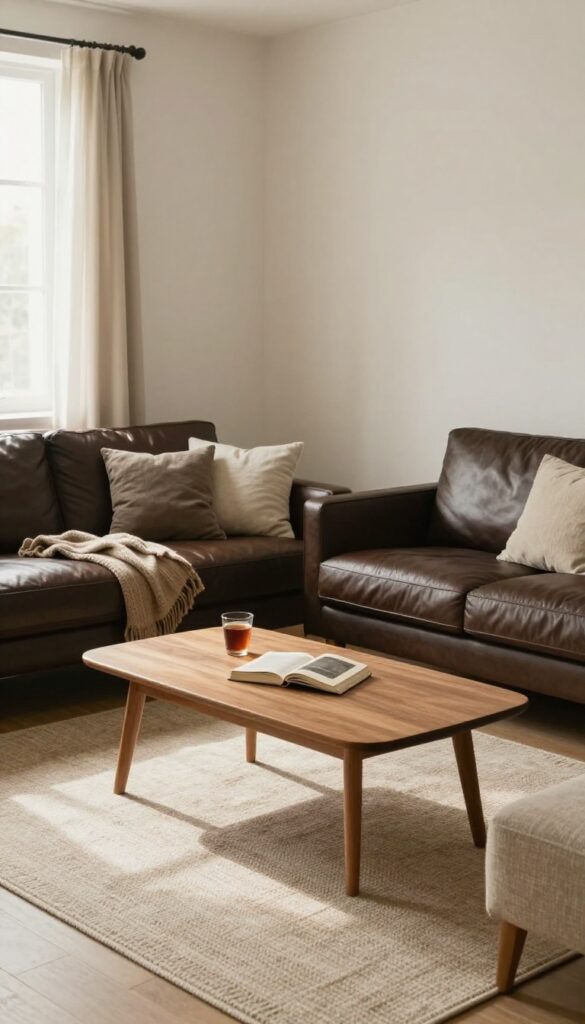
Nothing kills a relaxed vibe faster than furniture shoved against every wall like it's trying to escape. An open, conversation-friendly layout changes the whole energy of a room. People naturally gravitate toward spaces where they can face each other, lean in, and actually talk without shouting across an ottoman.
This approach works especially well in a men's living room where comfort and ease take priority over fussy arrangements.
Start by pulling your sofa away from the wall, even just a foot or two. That small gap creates breathing room and makes the seating area feel intentional. Place a couple of armchairs opposite or at an angle so everyone can see each other.
A central coffee table anchors the setup and gives people a place to set down a drink or a book. The goal is flow—not a maze of furniture. In a cozy, layered space, this open layout invites people to settle in without feeling cramped.
Layout Tip
- Float your main sofa about 12 to 18 inches from the wall. Then position two armchairs at a slight angle across from it. This creates a natural conversation circle without blocking walking paths.
- Leave at least 18 inches between the coffee table and seating so people can move around easily.
Best Materials
- Stick with materials that feel substantial but not heavy. A leather sofa pairs well with a linen armchair or a wool-upholstered ottoman. A wood-framed coffee table adds warmth without visual bulk.
- Avoid overly shiny or fragile surfaces—this is a space meant for real life.
Cozy Detail
Layering a textured rug under the coffee table ties the seating group together. Choose a low-pile wool or jute rug that defines the zone without tripping anyone. Add a couple of throw pillows in contrasting fabrics like chunky knit or suede to soften the edges.
FAQ
What colors work best for a men's living room?
Neutrals like gray, beige, navy, and charcoal form a solid base. Add depth with black, olive, or deep green accents. These colors feel sophisticated and easy to layer.
How can I make a small living room feel sleek and spacious?
Choose low-profile furniture, use mirrors to reflect light, and keep the color palette light on walls. Smart storage like floating shelves and ottomans with hidden compartments helps reduce visual clutter.
What type of flooring is best for a sleek, relaxed look?
Hardwood or engineered wood in a dark stain adds warmth and elegance. If you prefer carpet, go for a low-pile neutral tone. Layer with a textured rug for comfort.
How do I add personality without making the room feel messy?
Stick to a few curated pieces like art, books, or a vintage lamp. Display items on a tray or in a small grouping. Rotate accessories seasonally to keep the look fresh.
Can I mix modern and rustic elements in the same room?
Absolutely. Combine a sleek leather sofa with a reclaimed wood coffee table. Use metal lighting and soft textiles to bridge the styles.
The key is keeping the color palette consistent.
Conclusion
Creating a living room that feels both sleek and relaxed is all about balance. By mixing clean lines with cozy textures and personal touches, you get a space that's stylish without being stiff. Start with a few key pieces and build from there—your living room should evolve with you.
Remember, the best rooms feel lived-in and welcoming. So take these ideas, make them your own, and enjoy the process of making your space truly comfortable.