10 Living Room Wall Color Ideas for a Warm, Stylish Update
A fresh coat of paint can do wonders for a living room. It’s one of the quickest, most affordable ways to change the entire feel of the space without a full renovation. Whether you’re craving something cozy and intimate or light and airy, the right wall color sets the stage for everything else.
But with so many options out there, picking a shade can feel overwhelming. You want something that looks good with your furniture, fits your style, and doesn’t feel like a trend that’ll fade in a year.
That’s where this list comes in. These ten wall color ideas are all about warmth and style—think rich earth tones, soft neutrals, and a few unexpected pops of color.
1. Warm Taupe: The Ultimate Neutral with Depth
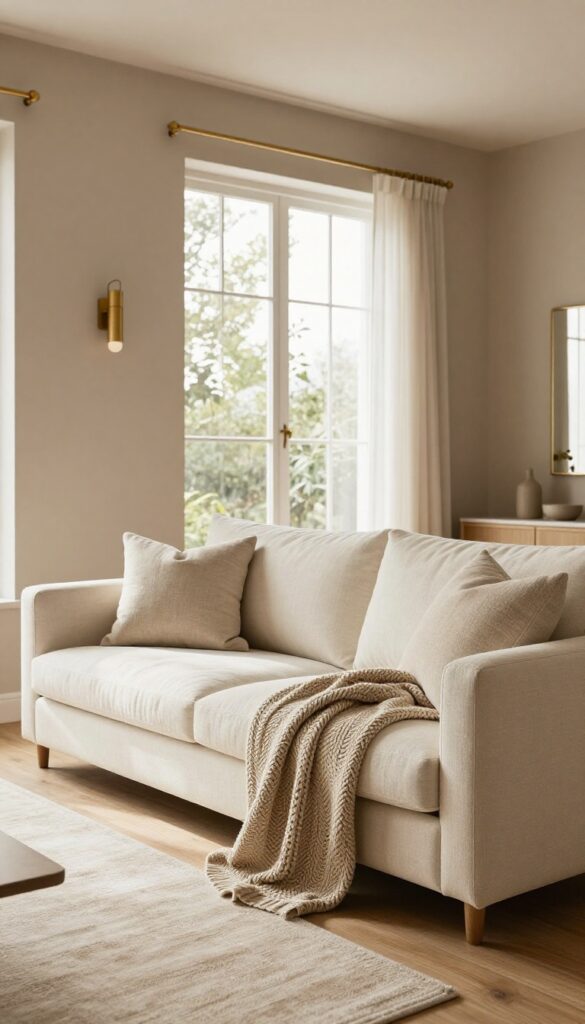
If beige feels too bland and gray feels too cold, warm taupe is the Goldilocks neutral you've been looking for. It sits right between brown and gray, with enough earthy undertone to make a room feel grounded but not heavy. This color works like a chameleon—it shifts subtly under different lighting, keeping the walls interesting without shouting for attention.
For a weekend refresh, painting your living room in warm taupe is one of the most rewarding changes you can make.
Why It Works
Warm taupe offers the perfect backdrop for almost any decor style because it reads as both warm and neutral. It doesn't fight with other colors; instead, it lets your furniture and accessories shine. The depth in this shade prevents a room from feeling flat or sterile, unlike lighter neutrals that can sometimes look washed out.
Best For
This color is ideal for living rooms that get a mix of natural and artificial light. It's especially flattering in spaces with wooden floors or exposed brick, as it picks up those warm notes. If you love changing your decor seasonally, warm taupe will happily accommodate both summer linens and winter velvets.
Styling Tip
Pair warm taupe walls with a cream or off-white sofa to keep the room airy. Add brass or gold-toned light fixtures and mirror frames to bring out the warmth in the paint. For texture, layer in a chunky knit throw in oatmeal and some linen curtains—this keeps the look soft and inviting without feeling busy.
2. Terracotta: Earthy and Inviting
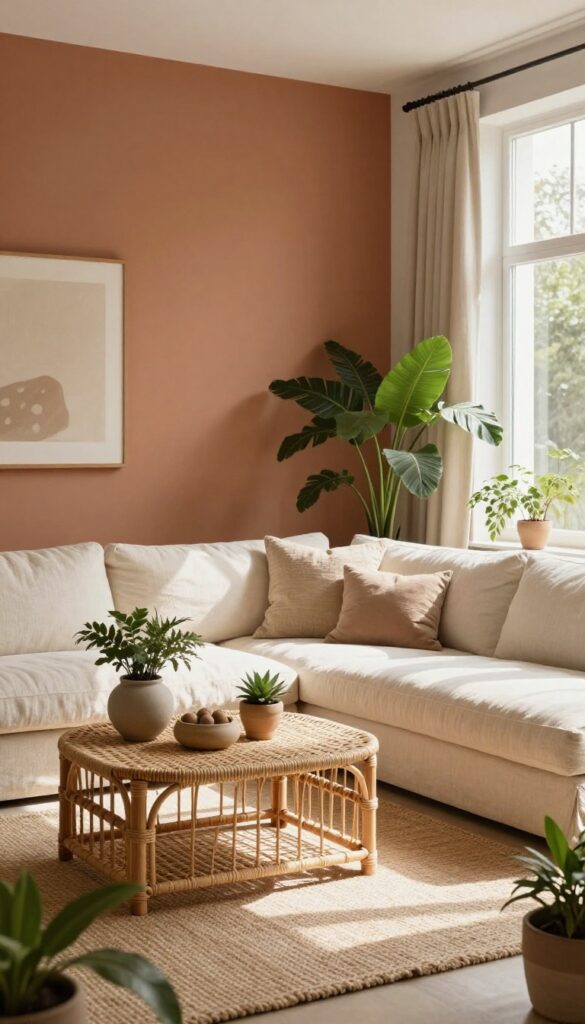
Terracotta is having a moment, and for good reason. This warm, clay-based hue brings a grounded, earthy feel that instantly makes a living room feel like a cozy retreat. Unlike bold reds or oranges, terracotta has a muted, natural quality that pairs beautifully with soft neutrals and organic textures.
It's the kind of color that feels both timeless and on-trend, perfect for a weekend refresh that doesn't require a total overhaul.
Why It Works
- Terracotta works because it taps into our innate desire for warmth and connection to nature. The color has a subtle, sunbaked quality that adds depth without overwhelming the space. It reflects light in a flattering way, making rooms feel more inviting and lived-in.
- Plus, it's incredibly versatile—it can read as a neutral or a statement color depending on what you pair it with.
Best For
This color is ideal for living rooms that get plenty of natural light, as it can handle brightness without washing out. It's also a great choice for open-concept spaces where you want to define a cozy seating area without using a physical divider. If your style leans bohemian, rustic, or modern organic, terracotta will feel right at home.
Styling Tip
To keep terracotta from feeling too heavy, balance it with plenty of soft white or cream. Add natural textures like a chunky linen sofa, a rattan coffee table, and plenty of green plants. For a quick weekend update, try painting just one accent wall—like the wall behind your sofa—and layer in terracotta-toned throw pillows and a ceramic vase to tie it all together.
3. Sage Green: Soft, Soothing, and Natural
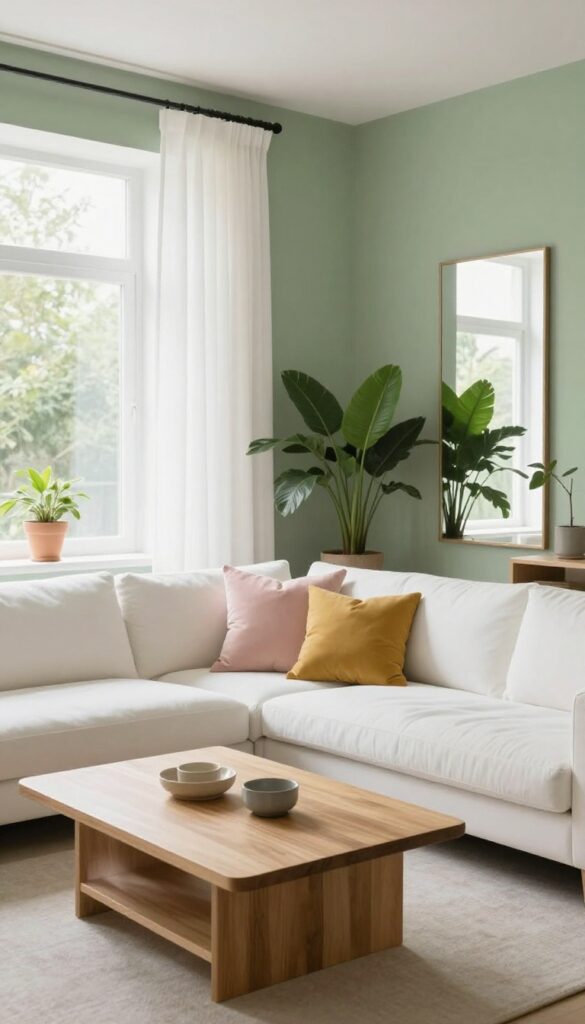
Sage green brings a breath of fresh air into any living room without feeling cold or stark. This muted, earthy green sits somewhere between gray and green, making it incredibly easy to live with. It has a way of making a space feel grounded and serene, like a quiet corner of a garden.
Whether your room gets lots of natural light or leans a bit dim, sage green adapts beautifully—never looking too dark or washed out. It’s the kind of color that instantly makes a room feel more put together, yet still relaxed and welcoming.
Why It Works
- Sage green is a chameleon color that pairs well with both warm and cool tones. It softens bright whites and adds depth to beige or gray neutrals. Because it’s not too saturated, it doesn’t overwhelm the room, making it a great choice for a weekend painting project.
- You can easily refresh the whole room in a day and immediately feel the calming effect.
Best For
This shade is perfect for living rooms that double as relaxation zones—think spaces where you unwind with a book or chat with friends. It also works well in open-concept layouts, where it can define the living area without clashing with adjacent kitchen or dining colors. If you love natural textures like wood, linen, and rattan, sage green will make them shine.
Styling Tip
- Keep the rest of the room light and airy to let the sage green take center stage. Use white or cream sofas, light wood coffee tables, and sheer curtains. Then add small pops of color with blush pink or mustard yellow throw pillows.
- A large mirror on one wall will bounce light around and make the green feel even fresher.
4. Dusty Rose: Romantic but Not Too Sweet
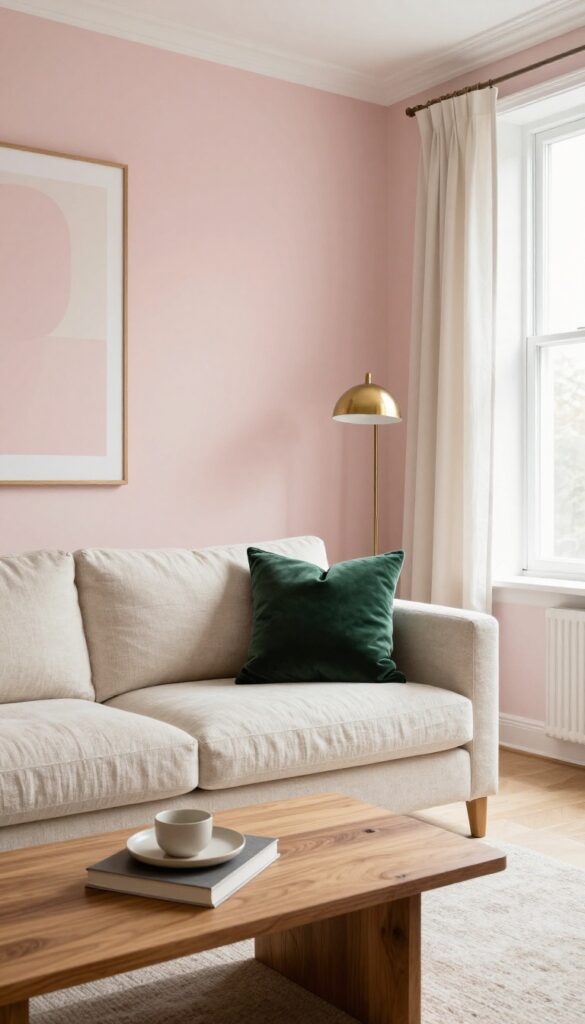
Dusty rose is that rare color that feels both soft and grounded. It’s pink, yes, but muted enough to avoid any candy-box vibes. On your walls, it reads like a warm neutral with a gentle blush—perfect for a living room that wants to feel cozy without going full boho or farmhouse.
This shade works especially well in north-facing rooms where cooler light can make whites feel flat; dusty rose adds just enough warmth to balance things out. It’s also surprisingly versatile, pairing with everything from crisp white trim to charcoal sofas and brass accents.
Why It Works
Dusty rose sits in that sweet spot between a color and a neutral. It brings warmth and personality without dominating the room, so you can easily change accessories or artwork without repainting. The gray undertones keep it from feeling too feminine, making it a great choice for shared spaces or anyone who wants a hint of color without going bold.
Best For
This color is ideal for living rooms that get moderate natural light—especially east- or west-facing rooms where the pink shifts beautifully throughout the day. It’s also a fantastic choice for open-concept spaces where you want a subtle separation between zones; a dusty rose accent wall behind the sofa defines the seating area without a visual barrier.
Styling Tip
- Pair dusty rose walls with warm wood tones and plenty of texture. A linen sofa in cream or light gray keeps the look airy, while a chunky knit throw in oatmeal or charcoal adds depth. For a touch of contrast, bring in deep green velvet pillows or a brass floor lamp.
- Avoid too much pink in the decor—let the wall be the star and keep accessories in neutrals or jewel tones.
5. Deep Navy: Bold and Cocooning
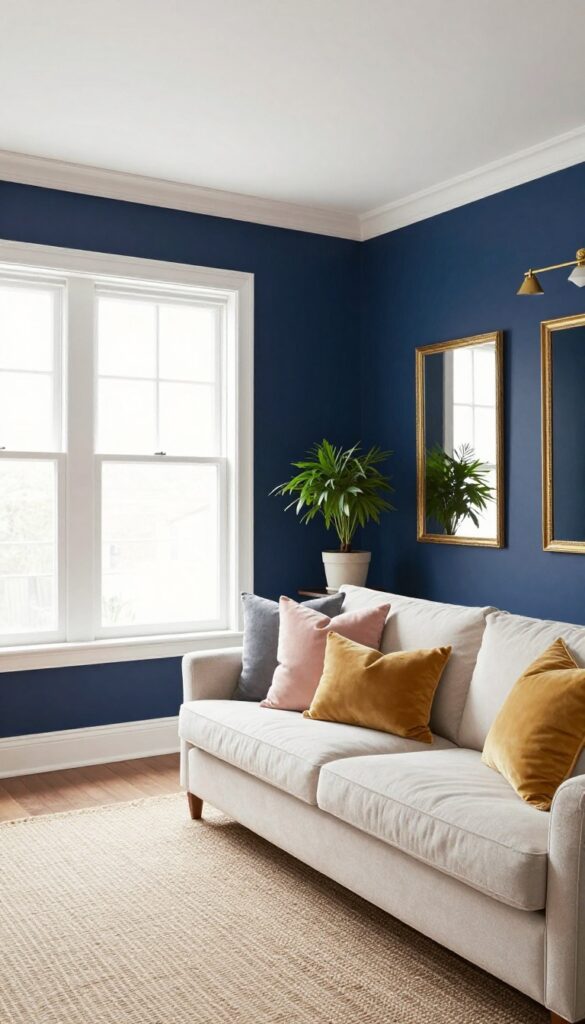
Deep navy walls wrap a room in a quiet, confident embrace. It’s a hue that feels both dramatic and soothing—like the sky just after sunset. In a living room with generous natural light, this dark shade actually makes the space feel more intimate and grounded, not smaller.
The key is letting the navy take center stage while keeping the rest of the room light and airy.
Why It Works
Navy absorbs light in a way that creates depth and richness, making a room feel instantly more polished. It also serves as an incredible backdrop for artwork, plants, and metallic accents. The contrast between the dark walls and bright trim or furniture keeps the look balanced and intentional.
Best For
This color shines in living rooms that get plenty of daylight. It’s also a great pick for open-concept spaces where you want to define a cozy seating area without building walls. If you have high ceilings, navy can make the room feel more intimate without sacrificing openness.
Styling Tip
Pair navy walls with crisp white trim and moldings for a classic, tailored look. Add gold or brass light fixtures, mirror frames, and side table legs to bring warmth and a touch of glam. A light beige or cream sofa will keep the room from feeling too dark, while velvet pillows in blush or mustard add softness and color.
6. Buttery Yellow: Cheerful and Sunlit
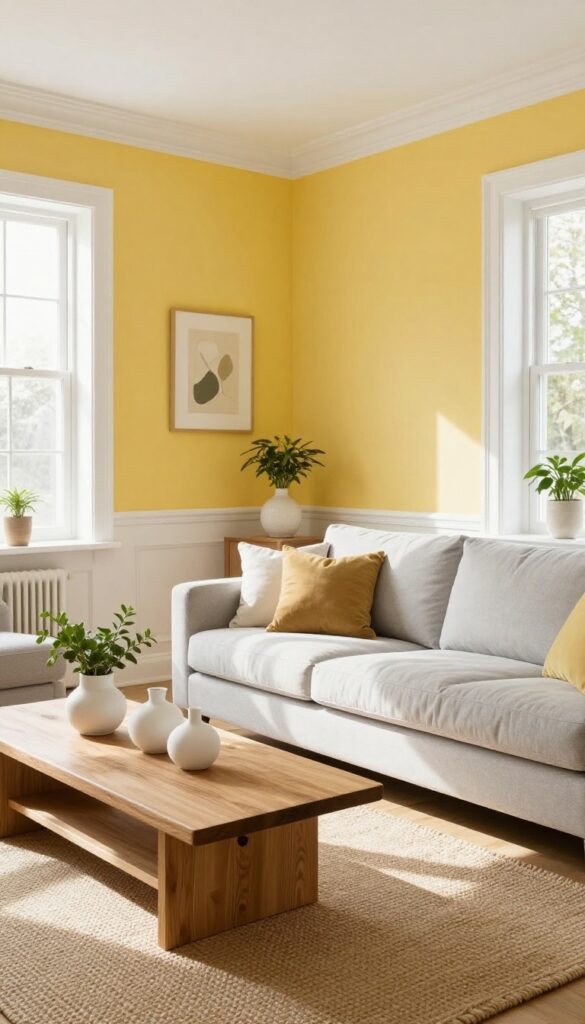
Yellow can be tricky, but buttery yellow is the gentler, more sophisticated cousin of bright lemon hues. It wraps a room in warmth without screaming for attention—like a soft sunrise that lingers. This shade feels especially welcoming in living rooms where you want to boost energy but keep things calm.
Pair it with crisp white trim and warm wood accents, and you’ve got a space that feels both happy and grounded.
Why It Works
Buttery yellow reflects light beautifully, making even north-facing rooms feel brighter and cozier. It’s a warm neutral that pairs effortlessly with grays, whites, and natural wood, so you don’t have to overhaul your furniture. The color has a timeless appeal that avoids the trendiness of bolder yellows, giving your room a lasting, sunny personality.
Best For
This color is perfect for living rooms that lack natural light or feel a bit cold. It’s also great for open-concept spaces where you want a cohesive warm flow from room to room. If you love a cheerful, welcoming vibe but don’t want to commit to a high-energy orange or red, buttery yellow is your sweet spot.
Styling Tip
Anchor the yellow walls with a large, light gray sofa and a jute rug for texture. Add wooden coffee tables or shelves in natural oak or walnut to enhance the warmth. Keep accessories minimal—a few white ceramic vases and green plants—to let the walls shine without clutter.
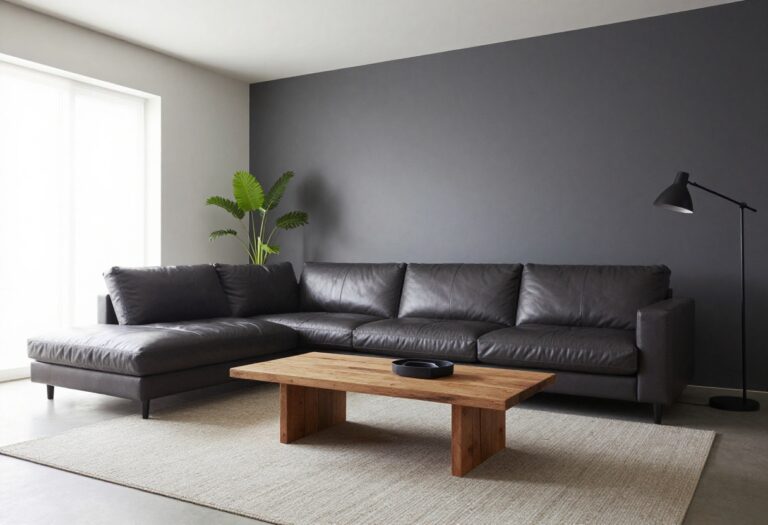
7. Charcoal Gray: Modern and Grounding
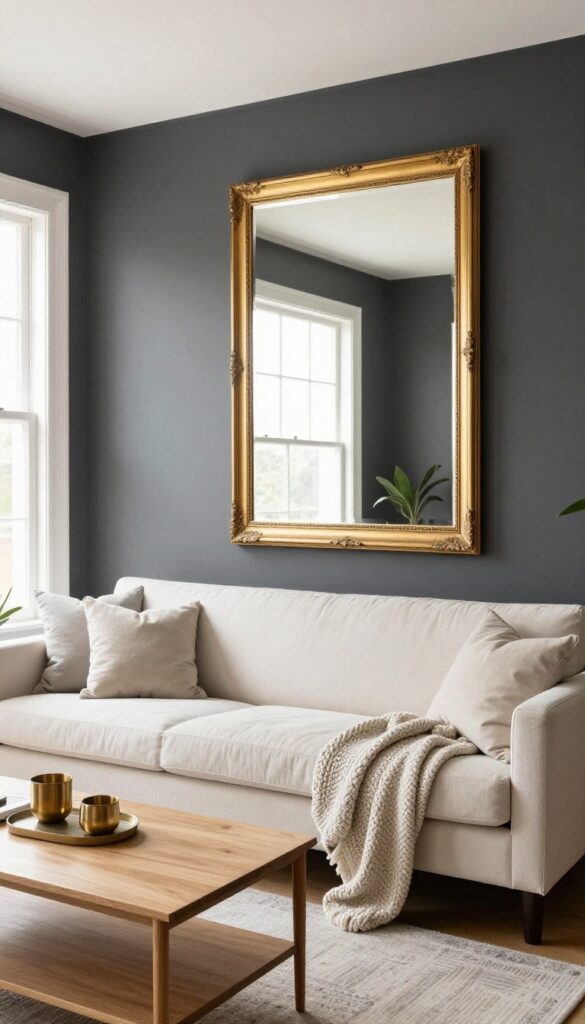
Charcoal gray has a way of making a room feel instantly more polished without trying too hard. It’s deep enough to add weight and drama, but it doesn’t suck the light out of the space like black can. On a weekend refresh, painting one wall in this moody neutral gives you a sophisticated anchor that works with almost any style—from industrial lofts to cozy bungalows.
Why It Works
Charcoal gray absorbs light just enough to create a sense of depth and intimacy, yet it stays neutral enough to let your furniture and accessories shine. It pairs beautifully with crisp whites, warm woods, and metallic accents, so you can easily shift the mood from cool and contemporary to warm and inviting just by swapping out pillows or art.
Best For
This color is ideal for living rooms that get plenty of natural light, because it balances the brightness and keeps the room from feeling washed out. It’s also a great choice for open-concept spaces where you want to define a seating area without building walls—a charcoal accent wall can visually separate the living zone from the dining area.
Styling Tip
To keep the look from feeling heavy, balance your charcoal wall with light-colored furniture, like a cream sofa or a pale oak coffee table. Add a large mirror or metallic-framed art to bounce light around, and layer in textured throws or a chunky knit blanket for softness. A few brass or gold accents will warm up the cool gray beautifully.
8. Rust Orange: Vibrant and Cozy
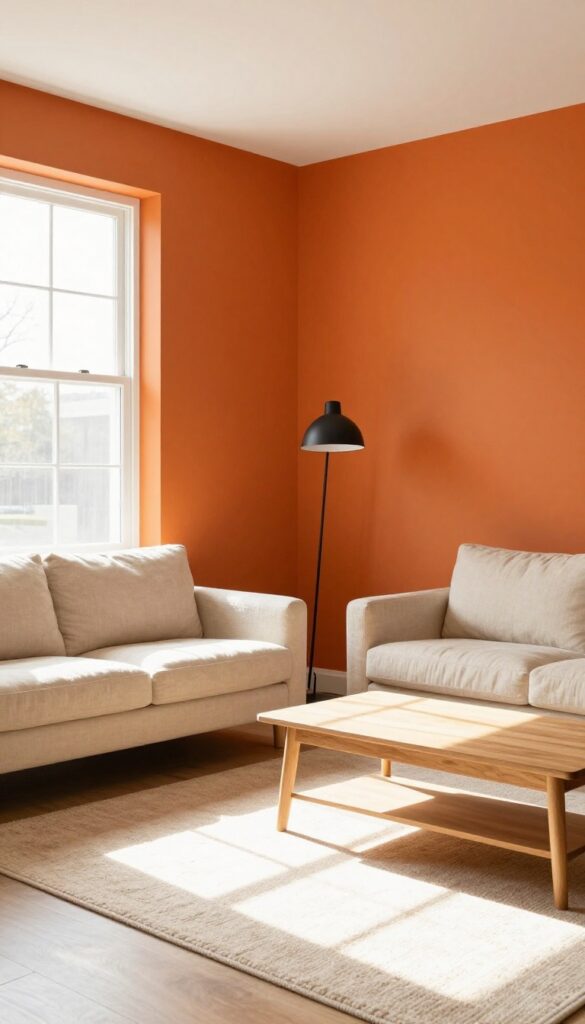
Rust orange brings a jolt of energy that feels both grounded and uplifting. It’s the kind of color that makes a room feel alive without shouting for attention. On a weekend, you can paint a single wall or even a large piece of furniture to get that warm, sunbaked glow without a full-room commitment.
Balanced with creamy whites, warm woods, and soft linen textures, rust orange becomes an instant anchor that feels collected, not chaotic.
Why It Works
Rust orange sits in that sweet spot between bold and earthy. It has enough saturation to create visual interest, but its brown undertones keep it from feeling jarring. This color naturally draws the eye and creates a focal point, making a room feel intentionally designed even if you only change one wall.
Best For
This shade works beautifully in living rooms that get plenty of natural light, where it can play off sunny windows and cast a warm glow throughout the afternoon. It’s also a great choice for open-plan spaces where you want to define a seating area without building walls.
Styling Tip
Pair rust orange with soft neutrals like oatmeal, cream, or light beige to let the color shine without overwhelming the room. Add a few matte black or dark wood accents—like a slim floor lamp or picture frames—to ground the look and give it a modern edge.
9. Soft Beige: Classic and Effortless
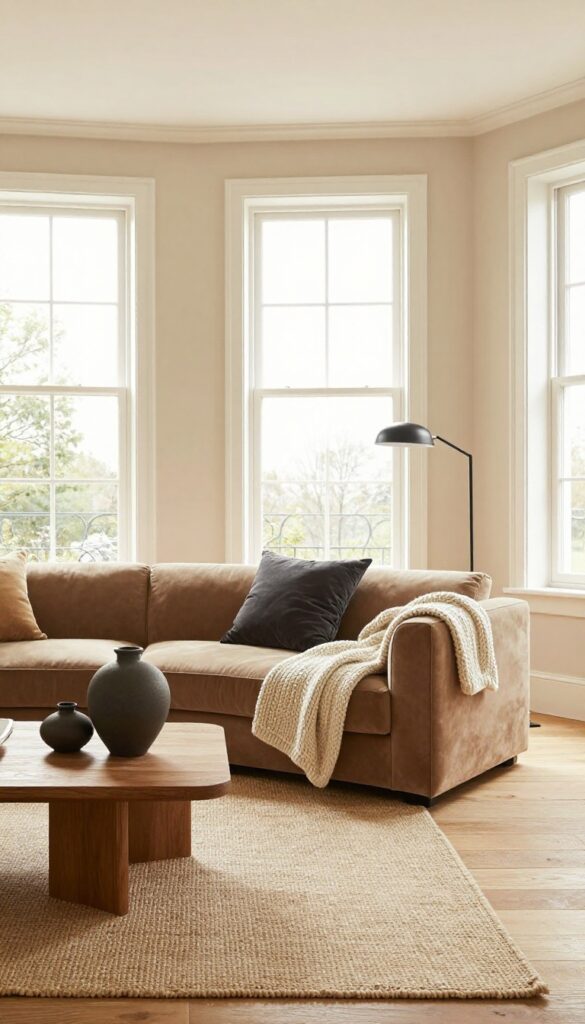
Soft beige has a quiet confidence that other neutrals can't quite match. It wraps a room in warmth without shouting for attention, making it the perfect backdrop for a living room that feels both put-together and relaxed. Because it's so versatile, you can refresh the space over a weekend just by swapping in a few new pillows or a different rug.
The key is to keep the beige from falling flat—layer in plenty of textures, and let your furniture do the talking.
Why It Works
Beige is forgiving with natural light, shifting from creamy in the morning to slightly warmer in the afternoon. It doesn't compete with bold art or colorful sofas, so you can change your accent pieces without repainting. Plus, it hides everyday dust and wear better than stark white, making it a practical choice for busy households.
Best For
This color works beautifully in living rooms that get moderate to lots of natural light, especially if you have wooden floors or warm-toned furniture. It's also a great pick if you love rotating decor seasonally—beige plays well with both bright summer accents and cozy winter textures.
Styling Tip
To keep beige from feeling bland, mix at least three textures in the same room. Think a chunky knit throw on a velvet sofa, a jute rug underfoot, and matte ceramic vases on a wood coffee table. Add one or two darker accents—like charcoal pillows or a black floor lamp—to create contrast and depth.
10. Olive Green: Rich and Sophisticated
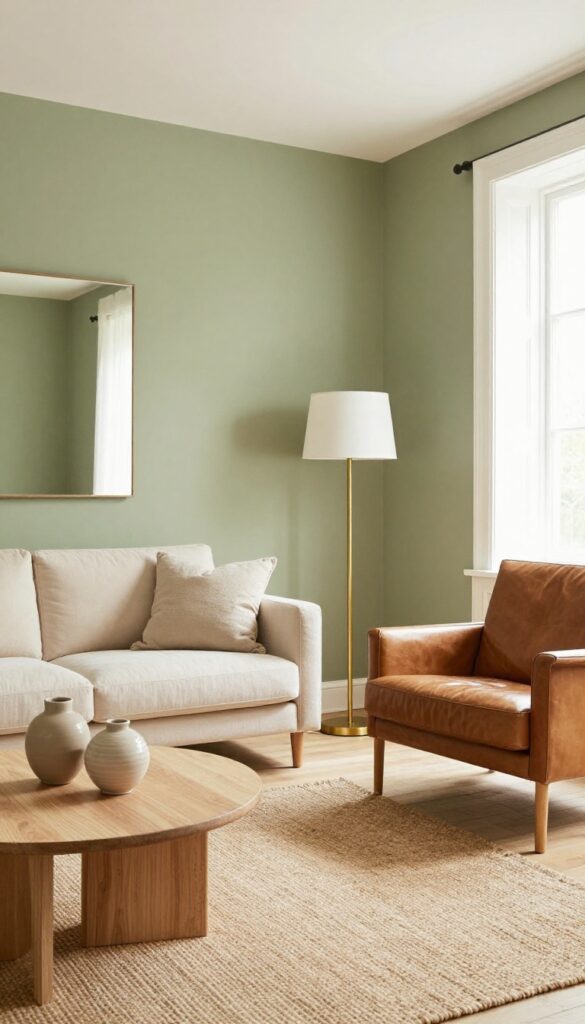
Olive green is a shade that feels both grounded and elevated. It’s darker than sage but doesn’t tip into forest green territory, so it still reads as warm and approachable. In a living room, this color wraps the space in a quiet, earthy elegance that pairs beautifully with natural materials like leather, brass, and cream.
It’s the kind of backdrop that makes a room feel instantly more curated without trying too hard.
Why It Works
Olive green brings a sense of depth and richness that lighter neutrals can’t match, yet it stays warm and inviting rather than moody. It complements a wide range of accent colors—from blush and rust to navy and charcoal—so you can change your decor seasonally without repainting. Plus, it’s forgiving with wear and tear, making it a practical choice for busy homes.
Best For
This color is ideal for living rooms that get moderate to good natural light, as it can feel too heavy in a dark room. It works especially well in spaces with wood furniture, brass or gold accents, and plenty of soft textiles. If you love a nature-inspired look but want something more refined than basic beige or gray, olive green is your match.
Styling Tip
Pair olive green walls with a cream or off-white sofa to keep the room bright, then add a leather armchair in cognac or chestnut for contrast. Brass light fixtures, a jute rug, and a few ceramic vases in earthy tones will tie the look together. For a finishing touch, hang a large mirror to reflect light and prevent the room from feeling too enclosed.
FAQ
What is the best warm neutral for a small living room?
Warm taupe or soft beige are excellent choices for small living rooms. They reflect light while adding warmth, making the space feel larger and cozier at the same time.
How do I choose a wall color that matches my furniture?
Start by identifying the undertones in your furniture—warm, cool, or neutral. Then pick a wall color that complements those undertones. For example, warm wood furniture pairs beautifully with terracotta or olive green.
Can I use dark colors in a living room with little natural light?
Yes, but balance them with plenty of lighting and lighter accents. Deep navy or charcoal can work if you add mirrors, lamps, and light-colored furniture to keep the room from feeling too dark.
What are the best accent wall colors for a warm living room?
Rust orange, deep navy, or dusty rose make great accent wall choices. They add a focal point and warmth without overwhelming the space.
How do I make a neutral wall color feel interesting?
Layer in texture through textiles, rugs, and decor. Add plants, metallic accents, and varied fabrics to give a neutral backdrop depth and personality.
Conclusion
Updating your living room wall color is one of the simplest ways to breathe new life into your home. Whether you go for a cozy terracotta or a classic soft beige, the right shade can make your space feel warmer, more stylish, and truly yours.
Take your time picking a color that resonates with you, and don’t be afraid to test a few samples on the wall. A weekend of painting can lead to a living room you’ll love coming home to every day.