10 Cool Living Room Ideas for Trendy Relaxed Style
Want a living room that looks effortlessly cool without breaking the bank? You don't need a designer budget to pull off that relaxed, trendy vibe everyone's after. It's all about mixing smart finds with a little creativity.
Think warm textures, layered lighting, and pieces that feel personal rather than perfect. The best part? Most of these ideas are easy to tweak for your own space, whether you're renting or own.
Ready to give your living room a refresh that feels both stylish and doable? Let's dive into ten budget-friendly ideas that bring the cool factor without the stress.
1. Thrifted Statement Furniture
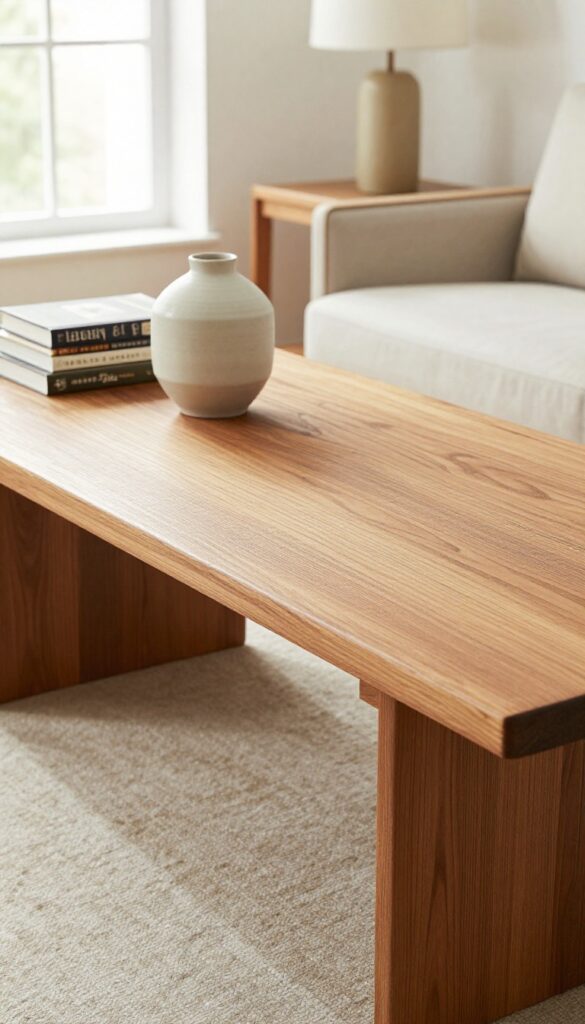
Scoring a unique coffee table or sideboard from a thrift store or Facebook Marketplace is a win for your wallet and your style. A quick sanding or new paint job can turn a dated piece into a conversation starter, adding character that mass-produced furniture just can't match. It's the kind of find that makes your living room feel collected over time, not bought in an afternoon.
Hunting for secondhand furniture might take a little patience, but the payoff is a one-of-a-kind piece that anchors your room with personality. Look for solid wood construction and classic silhouettes—those are easiest to update. A coat of chalk paint in a muted sage or warm charcoal can modernize an old dresser into a media console, while a worn wooden coffee table gets new life with a sanded top and natural oil finish.
The best part? You'll spend a fraction of what you would on something new, leaving budget left for other upgrades like a cozy throw or a sculptural lamp.
Best Materials To Look For
- Solid wood, metal frames, and cane or rattan details are your best bets. They're durable, easy to refinish, and tend to look better with age. Avoid particleboard or veneer that's already peeling—those are more trouble than they're worth.
- A chunky oak coffee table or a mid-century metal side table can be transformed with minimal effort.
Styling Tip: Mix Old And New
- Balance your thrifted find with modern pieces to keep the room from feeling like a time capsule. Pair a vintage wooden sideboard with a sleek contemporary sofa and a minimalist rug. Add a few fresh accessories like a ceramic vase or a stack of modern books to tie the look together.
- The contrast makes the vintage piece stand out even more.
Budget-Friendly Swap
- If you're not ready to commit to a big furniture flip, start small. Swap out an old lamp or a set of chairs from a thrift store. A quick spray paint in brass or matte black can update a dated lamp base, and reupholstering dining chairs with a bold fabric gives them instant personality.
- Small wins build confidence for bigger projects.
2. DIY Abstract Wall Art
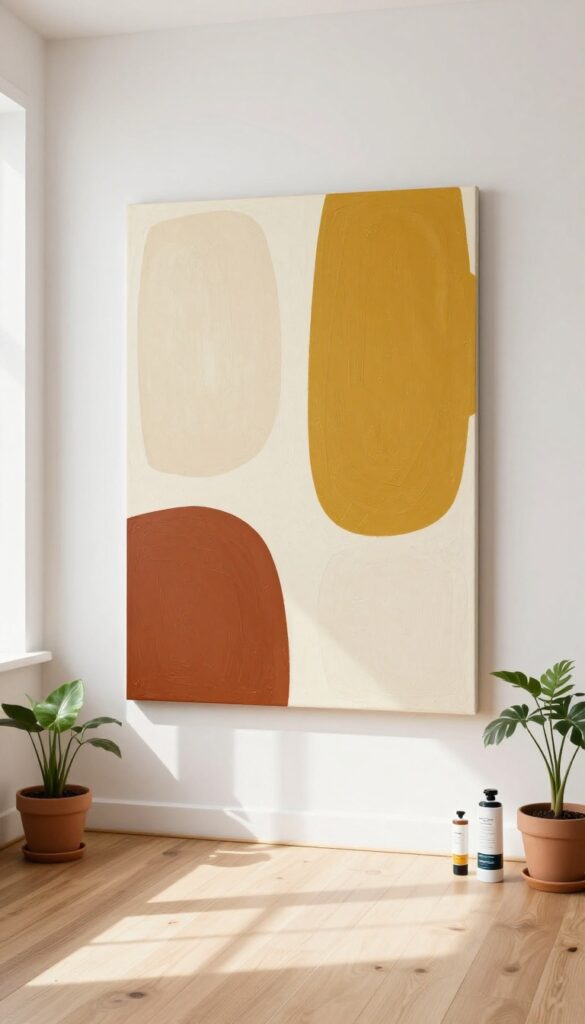
Blank walls can feel a little sad, but buying large-scale art often comes with a hefty price tag. That's where DIY abstract painting comes in—it's budget-friendly, completely personal, and surprisingly easy to pull off. Even if you've never picked up a brush, you can create something that looks intentional and polished.
The trick is to keep it simple. Think big shapes, bold colors, and a bit of texture. You don't need to paint a masterpiece—just a few confident strokes or splatters can turn a plain canvas into a statement piece.
Plus, you get to choose colors that actually work with your room.
Creating your own abstract wall art is one of the most rewarding projects you can tackle. It's cheap, personal, and instantly makes your walls feel curated. No artistic talent required—just a canvas, some paint, and a willingness to experiment.
Start with a color palette that complements your living room. If your space leans neutral, go for a pop of rust or mustard. If you already have colorful furniture, stick to monochromatic tones for a more sophisticated look.
Techniques like color blocking, splatter painting, or even using a palette knife to create texture are all beginner-friendly. You can also try the "pour method" where you layer paint and tilt the canvas to let it flow. The key is to work in layers and not overthink it.
Step back often, and stop when it feels balanced. Once it's dry, hang it at eye level—and enjoy the fact that you made it yourself.
Best Colors
Stick to two or three colors that already appear in your room—maybe a neutral base like cream or gray, plus one accent color from your pillows or rug. For a trendy look, try earthy tones like terracotta, olive, and sand. If you want contrast, go for navy and mustard, or black and white with a pop of blush.
Budget-Friendly Swap
Instead of buying a large stretched canvas, grab a canvas panel or even a piece of plywood from the hardware store. You can paint it with gesso first to create a smooth surface. Also, use acrylic craft paint instead of artist-grade—it's much cheaper and works just as well for abstract pieces.
Finishing Touch
Once your painting is dry, consider adding a simple frame or just leaving the edges raw for a modern look. If you used a canvas panel, mount it on a floating frame to give it depth. Hang it alone as a focal point or group it with smaller pieces for a gallery wall.
3. Layered Rug Combo
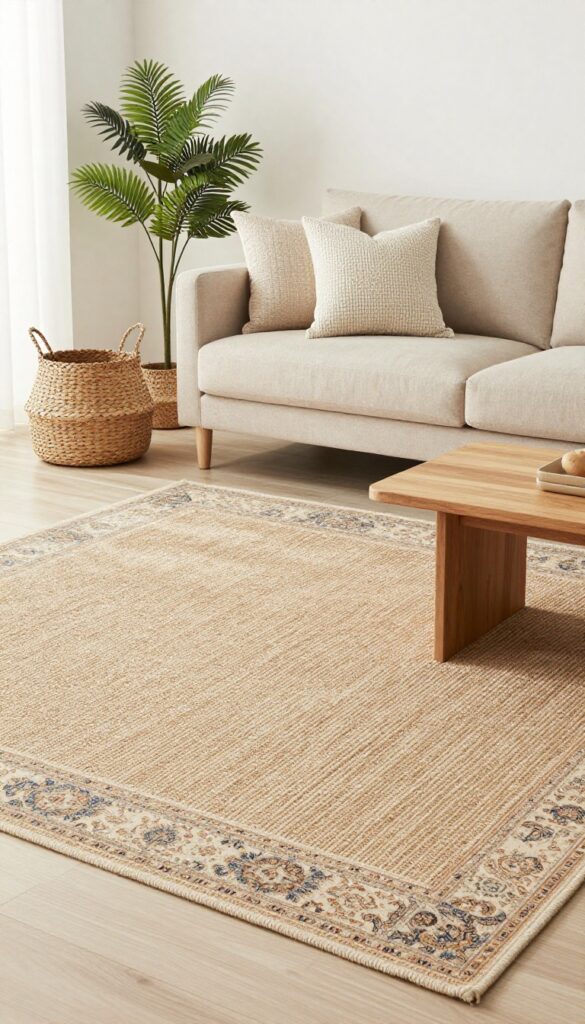
Layering rugs is one of those tricks that looks effortlessly curated but takes almost no effort to pull off. Start with a large, neutral base rug—think jute, sisal, or a low-pile wool in beige or gray. Then top it with a smaller vintage or patterned rug that brings in a pop of color or a fun print.
The contrast instantly adds texture and dimension, plus it defines your seating area without needing a massive statement rug. Best part: it hides any stains or wear on the base rug, so you can keep using that old favorite without replacing it.
This budget-friendly approach lets you experiment with bold patterns or vintage finds without a big investment. A small 4×6 or 5×8 rug works perfectly on top of a larger 8×10 neutral base. Place it so the front legs of your sofa and chairs rest on the layered rug, anchoring the conversation zone.
The layered look also makes a room feel more collected and personal—like you've gathered pieces over time, even if you just ordered them last week.
Best Rugs To Layer
- For the base, stick with natural fibers like jute, sisal, or a flat-weave wool in a solid neutral. They're affordable, durable, and provide a great backdrop. For the top layer, go for a vintage-inspired Oriental, a kilim, a cowhide, or even a bold geometric print.
- Thinner rugs work best on top so the layers don't create a tripping hazard. If you're worried about slipping, use a rug pad between layers.
Budget-Friendly Swap
- Instead of buying a brand new large statement rug, use an old neutral rug you already own as the base. Then shop secondhand or discount stores for a small patterned rug. Thrift stores, flea markets, and online marketplaces are goldmines for affordable vintage rugs.
- You can also use a flat-woven cotton dhurrie or a washable runner—just cut it to size if needed.
Styling Tip
Keep the top rug slightly off-center or at an angle for a relaxed, lived-in feel. Make sure at least the front legs of your main furniture pieces sit on the layered rug to visually connect the seating area. If your space is small, use a lighter base rug to keep the room feeling open, and let the top rug add the personality.
4. Mix-and-Match Throw Pillows
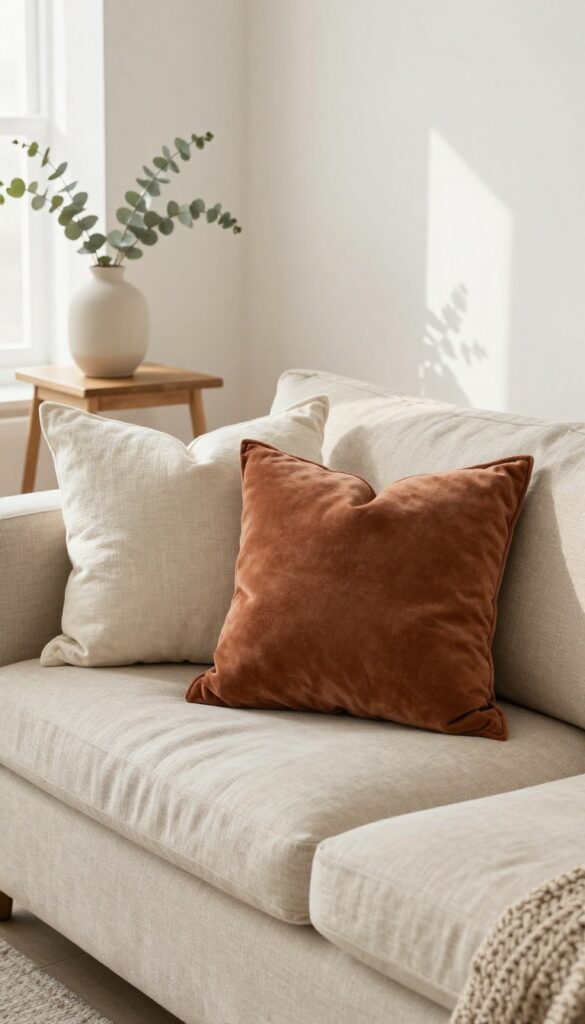
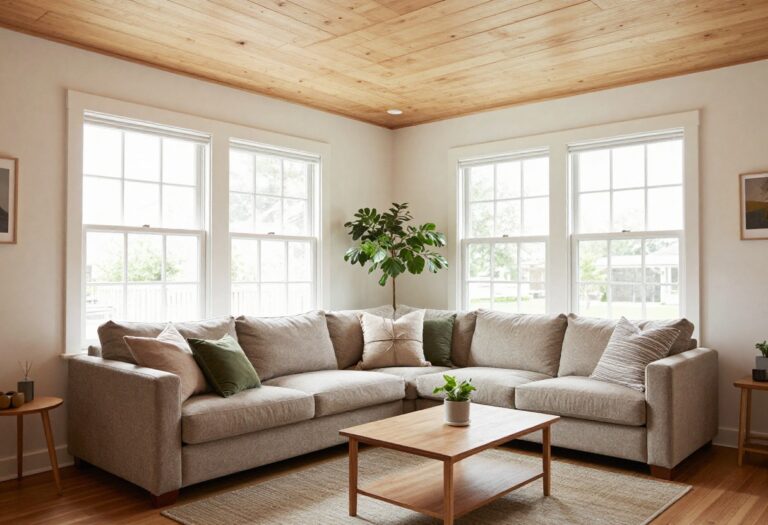
Throw pillows are the easiest way to inject personality into your living room without spending a lot. By combining different textures like linen, velvet, and knit, you create a layered, inviting look that feels curated but not fussy. The trick is to stick to a cohesive color palette so the mix feels intentional, not chaotic.
For a relaxed, trendy vibe, limit yourself to three to four pillows on the sofa. This keeps the seating area from looking cluttered while still adding visual interest. Choose a neutral base color like cream or beige, then add one or two accent shades that pop—think muted rust, sage green, or dusty blue.
Swap out pillow covers seasonally for an instant refresh without buying new pillows each time.
Best Colors
Stick with a warm neutral base—like oatmeal or taupe—then layer in one or two muted accent colors. Earthy tones such as terracotta, olive, or mustard work beautifully. Avoid high-contrast combos; instead, keep the palette harmonious for that effortless, relaxed feel.
Texture Mix
Pair a smooth linen pillow with a plush velvet one and a chunky knit for depth. The contrast in textures adds richness without needing bold patterns. If you want a pattern, choose one subtle geometric or stripe to tie the mix together.
Budget-Friendly Swap
- Instead of buying new pillows, invest in removable covers. You can swap them seasonally or whenever you want a change. Look for sales at home stores or online—mix-and-match sets often cost less than buying individually.
- Store off-season covers in a vacuum bag to save space.
5. Floating Shelf Gallery Wall
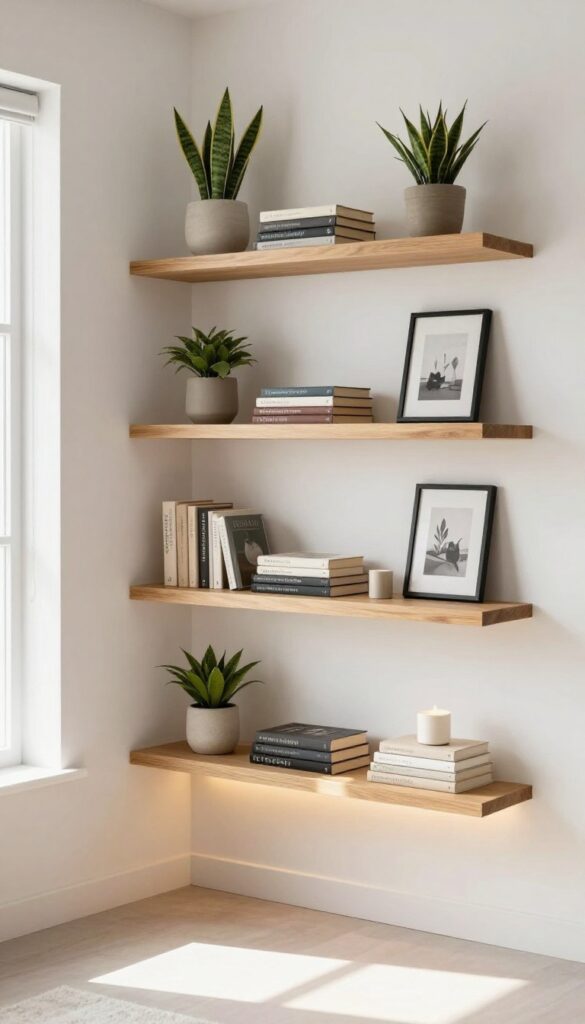
A gallery wall can feel like a big commitment—especially if you're renting or just love switching things up. Floating shelves give you that same curated look without the nail holes and permanence. Plus, they're a budget-friendly way to make a blank wall feel intentional and personal.
Install a few floating shelves and style them with a mix of books, small plants, and framed photos. This creates a dynamic display without the permanence of a full gallery wall. Easy to update anytime.
Shelf Styling Tip
Stick to odd numbers and varying heights. Lean a framed photo against the wall, stack a couple of books horizontally, and top them with a small plant or candle. Leave some breathing room—crowded shelves lose their visual appeal.
Budget-Friendly Swap
Instead of buying expensive art, frame pages from old books, fabric scraps, or even your kids' drawings. Black and white prints keep the look cohesive without costing much.
Finishing Touch
Add a small LED strip under the bottom shelf to highlight your display at night. It instantly makes the wall feel like a curated gallery without a big renovation.
6. Budget-Friendly Lighting Layers
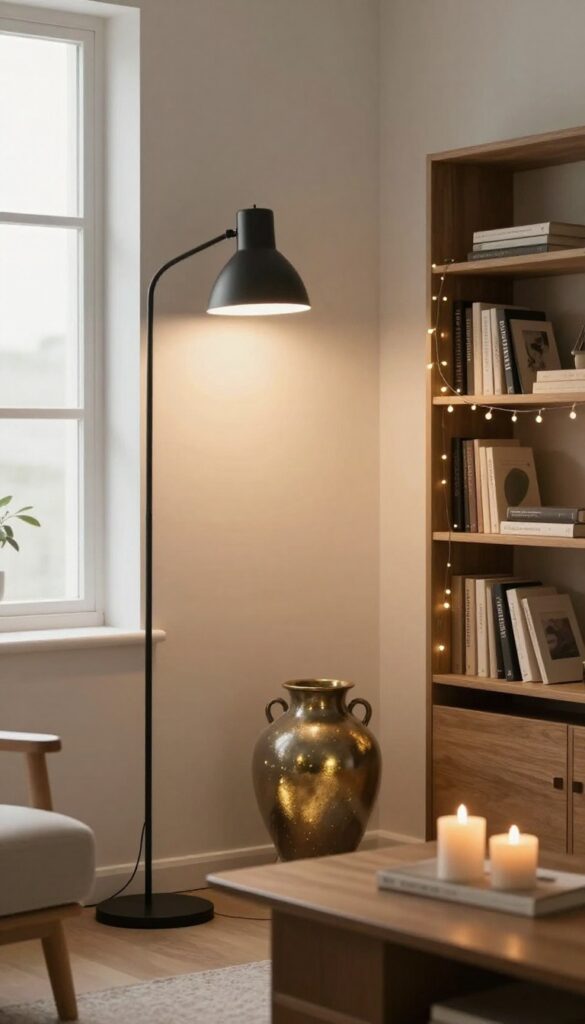
Lighting can make or break a room's mood, but you don't need to spend a fortune to get that warm, layered glow. By mixing a few affordable sources—like a floor lamp, a table lamp, and some string lights or candles—you create depth and coziness without any fancy fixtures. The trick is to look for secondhand lamps and give them a fresh coat of spray paint for a custom finish that feels intentional, not thrifty.
Layering light sources at different heights instantly makes a living room feel more inviting. A floor lamp adds ambient light, a table lamp provides task lighting for reading or side table duties, and string lights or candles bring soft, flickering warmth. This combination works in any room, but it's especially effective in rentals where you can't change overhead fixtures.
Start by scouring thrift stores or online marketplaces for lamps with good bones—think classic shapes or interesting bases. A can of spray paint in a matte black, brass, or even a bold color transforms them into statement pieces. Place the floor lamp in a corner to wash the walls with light, set the table lamp on a console or end table, and drape string lights along a bookshelf or above a window.
The result is a space that feels polished and personal, all on a tight budget.
Where To Source Lamps
- Thrift stores, garage sales, and Facebook Marketplace are goldmines for inexpensive lamps. Look for solid metal or ceramic bases—plastic can be harder to paint evenly. Don't worry about the shade; you can replace it or spray paint the frame and add a new shade later.
- A quick wipe-down and a coat of primer before painting ensures the finish lasts.
Lighting Tip
- Use warm white bulbs (2700K-3000K) for a cozy, flattering glow. Avoid cool or daylight bulbs, which can feel harsh. Dimmable bulbs or smart plugs let you adjust brightness easily.
- For string lights, choose ones with a warm tone and avoid blinking modes—steady on is more sophisticated.
Finishing Touch
Group candles of varying heights on a tray or small shelf near the lamps. This adds another layer of light and a soft, organic texture. Scented candles in subtle fragrances like vanilla or sandalwood can enhance the relaxed vibe without overwhelming the room.
7. Indoor Plant Corner
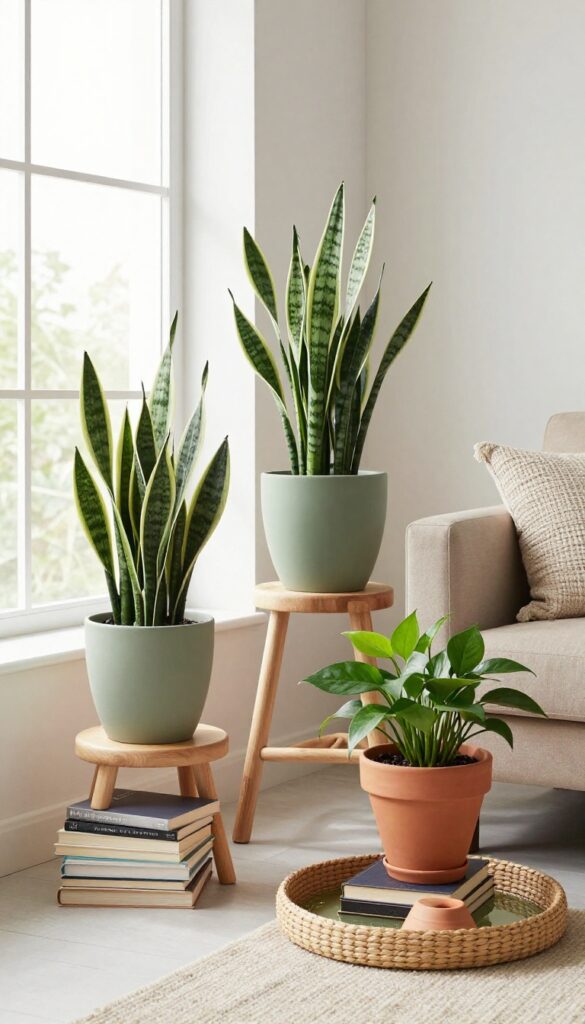
Grouping plants in a corner is one of the easiest ways to add life and texture without spending much. A cluster of low-maintenance varieties like pothos or snake plants creates a mini indoor garden that feels fresh and intentional. You can use thrifted pots or give plain ones a coat of paint to keep costs low.
An indoor plant corner doesn't need to be elaborate. Choose a spot that gets indirect light—near a window is ideal—and arrange three to five plants at different heights. Use a small stool, stack of books, or an upside-down pot to elevate some plants.
This creates visual interest and makes the corner feel curated, not cluttered.
Best Plants For Low Light
Snake plants, pothos, ZZ plants, and philodendrons thrive in low light and need minimal watering. They're forgiving if you forget them for a week, making them perfect for beginners. Mix leaf shapes and shades of green for a lush look without the fuss.
Budget-friendly Pot Ideas
Thrift stores often have unique ceramic or terracotta pots for a few dollars. If you find plain nursery pots, spray paint them in a matte finish—sage green, terracotta, or black—for an instant upgrade. You can also wrap them in jute twine or fabric scraps for texture.
Styling The Corner
Place the largest plant in the back or on a stand, then layer smaller ones in front. Add a small tray or basket to catch water and tie the group together. A warm-toned throw pillow or a small piece of art on the wall nearby can help the corner feel like a deliberate vignette.
8. Slipcover Makeover
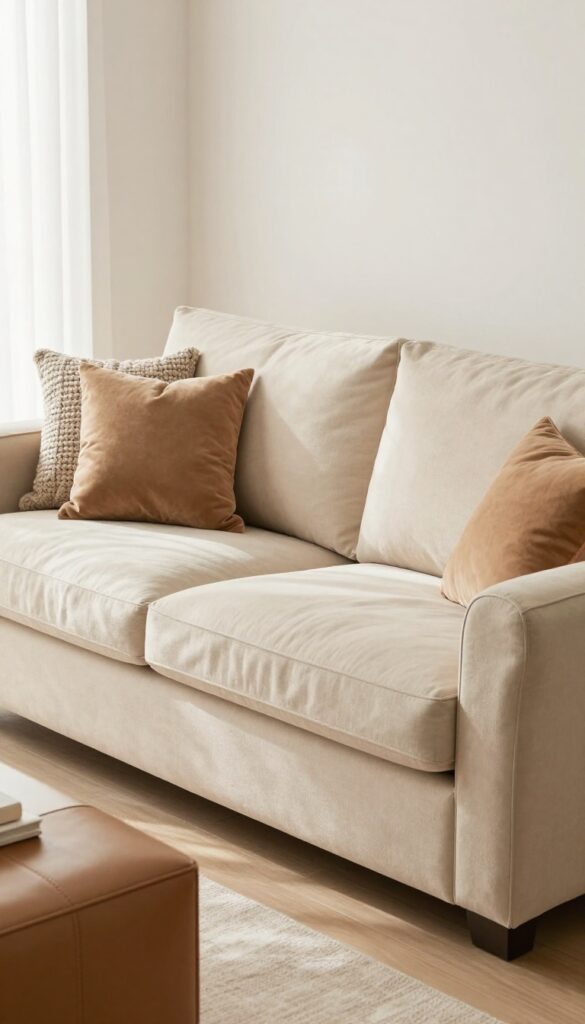
A tired or mismatched sofa doesn't have to be a costly problem. A fitted slipcover in a neutral or earthy tone can completely transform your seating without the price tag of reupholstering. It's a practical, washable solution that instantly gives your living room a more pulled-together, relaxed vibe.
Slipcovers are the unsung heroes of budget-friendly decor. They hide stains, soften harsh lines, and let you change your sofa's look with the seasons. Best of all, they're machine-washable—perfect for homes with kids, pets, or just everyday life.
Choose a cotton or linen blend in a shade like warm beige, soft taupe, or olive green to keep the room feeling calm and inviting. The key is a well-fitted cover that doesn't look baggy or sloppy; look for options with elastic edges and separate seat cushions for a tailored appearance.
Best Fabrics For Slipcovers
Cotton twill and linen blends are top choices because they're durable, breathable, and get softer with each wash. Avoid slick polyester or stiff canvas—they don't drape well and can feel uncomfortable. For a relaxed look, go with a fabric that has a bit of natural texture, like a slub cotton or a washed linen.
Styling Around A Slipcovered Sofa
Balance the soft, casual feel of a slipcover with structured accents like a leather ottoman or metal coffee table. Add throw pillows in contrasting textures—think chunky knits or velvet—to create visual interest. A neutral slipcover also makes it easy to swap out accent colors seasonally without rethinking the whole room.
Budget-Friendly Swap
Instead of buying a new sofa, invest in a high-quality slipcover that fits your current piece perfectly. Many online retailers offer custom sizing for standard sofa shapes, and some even have ready-made options for popular brands. The total cost is often under $200—a fraction of reupholstery or a new couch.
9. Curtain Hack for Height
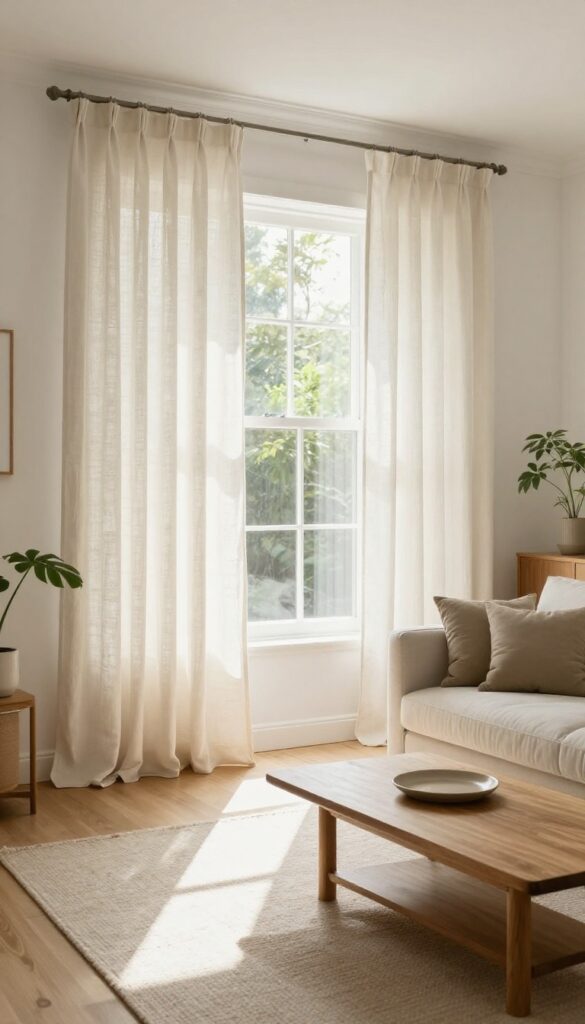
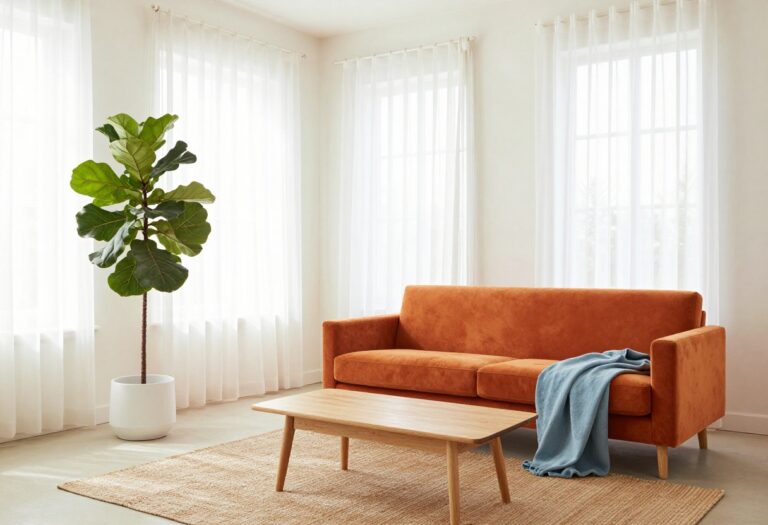
Raising your curtain rods is one of the easiest ways to make a living room feel taller and more polished. When you hang them close to the ceiling and let floor-length drapes skim the floor, the eye travels upward, creating an illusion of height that even works in rooms with standard eight-foot ceilings. It’s a budget-friendly tweak that instantly upgrades the whole space, and with the right fabric choice, it stays casual and relaxed.
For this hack to work best, choose light, airy fabrics like linen or cotton. They drape beautifully without looking stiff, and their natural texture adds softness to the room. Stick to neutral tones such as off-white, beige, or soft gray to keep the look cohesive and bright.
Darker fabrics can work too, but they tend to absorb light and make the room feel smaller, so save those for larger windows or rooms with plenty of natural light.
Install the rod as close to the ceiling as possible—ideally just an inch or two below the crown molding or ceiling line. Extend the rod a few inches beyond the window frame on each side so the curtains can stack back and let in maximum light when open. This also makes the window appear wider.
Use simple rings or clip rings for an easy, casual drape that doesn’t require professional pleating.
Floor-length is non-negotiable here. Curtains that stop above the floor break the vertical line and ruin the effect. If you’re on a tight budget, no-sew hemming tape or fabric glue can shorten panels without sewing.
For a truly polished finish, let the fabric just kiss the floor—puddling looks romantic but can collect dust and feel less tidy in a casual space.
Best Fabrics For A Casual Look
- Linen and cotton are the top picks for a relaxed, airy feel. They have a natural slub or weave that adds texture without being fussy. If you want a bit more weight, a linen-cotton blend works well.
- Avoid heavy velvet or polyester satin, which can look too formal and weigh down the room. For a budget-friendly option, look for cotton curtain panels at big-box stores or online—they often come in standard lengths and neutral colors.
Budget-Friendly Swap
- You don’t need custom curtains for this hack. Ready-made panels are affordable and easy to find. If they’re too long, use hemming tape to shorten them—no sewing required.
- For the rod, a simple tension rod or a basic metal rod from a home store works fine. Spend a little more on quality rings or clips, since they’re visible and can make cheap panels look more expensive.
Finishing Touch
- To complete the look, add a subtle tieback or holdback to keep curtains from blocking too much light when open. Choose a simple leather strap or a fabric loop in a contrasting neutral. This small detail adds a custom feel without extra cost.
- Also, make sure the curtains are evenly hemmed and don’t drag on the floor—use a quick iron or steamer to remove wrinkles for a crisp, polished appearance.
10. Repurposed Storage Solutions
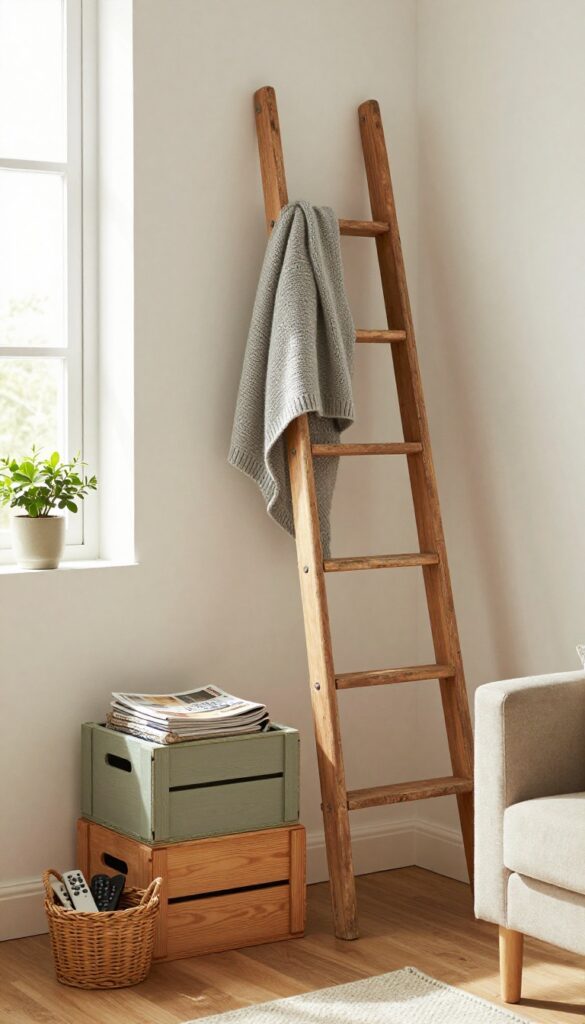
You don't need to spend a lot on fancy storage units to keep your living room tidy. Vintage crates, woven baskets, and even an old wooden ladder can become stylish catchalls for blankets, magazines, and remote controls. The trick is to choose pieces that feel intentional—paint or stain them to blend with your color scheme, and suddenly clutter looks like decor.
Repurposed storage is a budget-friendly way to add character while keeping everyday items within reach. An old ladder leaned against the wall becomes a unique blanket rack. Stacked crates create modular shelving that you can rearrange as needed.
Woven baskets hide electronics or toys while adding texture. The key is to treat these pieces as part of your design, not afterthoughts—so give them a uniform finish or coordinate them with your room's palette.
Best Materials
Wooden crates, metal baskets, and natural woven fibers work best because they bring warmth and texture. Look for vintage finds at flea markets or thrift stores—they often have character that new items lack. If you're painting, stick to matte finishes in neutral tones like sage, navy, or warm gray to keep the look cohesive.
Styling Tip
Group similar items together for visual impact. For example, line three small crates on a console table to hold remotes and coasters, or hang a single large basket on the wall as a mail catcher. Mixing old and new—like a rustic crate next to a sleek lamp—keeps the space from feeling too themed.
Small-space Fix
In a compact living room, vertical storage is your friend. Mount a wooden ladder horizontally on the wall to hang throws or use it as a towel rack in a nearby entryway. Stack crates vertically to create a slim bookshelf that doesn't eat up floor space.
FAQ
How can I make my living room look trendy on a tight budget?
Focus on a few key pieces like a thrifted coffee table or DIY art. Use layers of lighting and textiles to add warmth without spending much. Small changes like new pillow covers or a rug can make a big difference.
What colors work best for a relaxed living room style?
Earthy neutrals like beige, warm gray, and olive green create a calm base. Add pops of muted colors like terracotta or mustard through accessories. Keep the palette cohesive for a serene feel.
How do I mix patterns without it looking chaotic?
Stick to a common color scheme and vary the scale of patterns. For example, pair a large floral with a small geometric. Use solids in between to give the eye a rest.
What's the easiest way to add texture to a living room?
Layer different materials like a chunky knit throw, velvet pillows, a jute rug, and wooden accents. Texture adds depth and makes the space feel cozy without needing more furniture.
Can I achieve a trendy look in a small living room?
Absolutely. Use multi-functional furniture like an ottoman with storage. Hang curtains high to make the room feel taller.
Stick to a light color palette and use mirrors to reflect light.
Conclusion
Updating your living room doesn't have to mean a complete overhaul or a huge expense. With a little creativity and some smart shopping, you can achieve that trendy relaxed style that feels both cool and comfortable.
Start with one or two ideas that speak to you, and build from there. The best spaces evolve over time, so enjoy the process and make it your own.