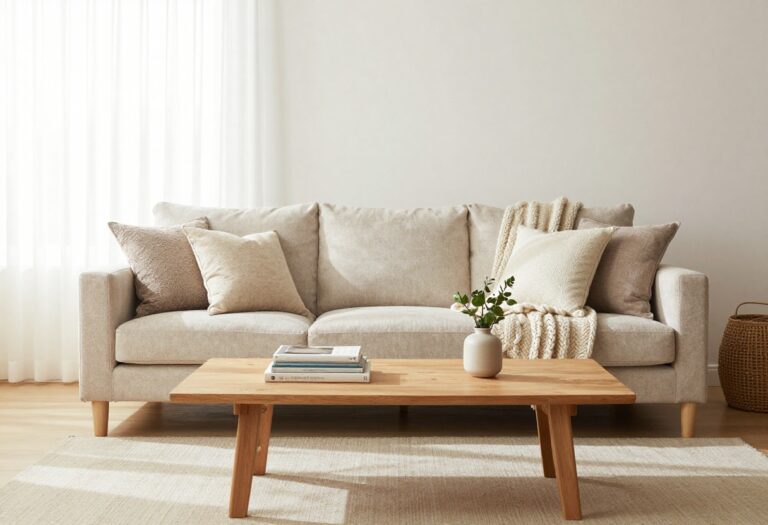
15 Brown and Orange Living Room Ideas Creating Retro Warmth
Brown and orange might sound like a throwback to the 70s, but when done right, this color duo feels fresh, grounded, and incredibly inviting. Think toasted caramel walls, burnt orange velvet pillows, and warm wood tones that wrap the room in comfort.
The key is layering—mixing textures, balancing warm and cool shades, and keeping the look intentional rather than costume-like.
Whether you're going full retro revival or just adding a few earthy accents, these 15 ideas will help you create a living room that feels both nostalgic and now.
1. Start with a Warm Brown Sofa as Your Anchor
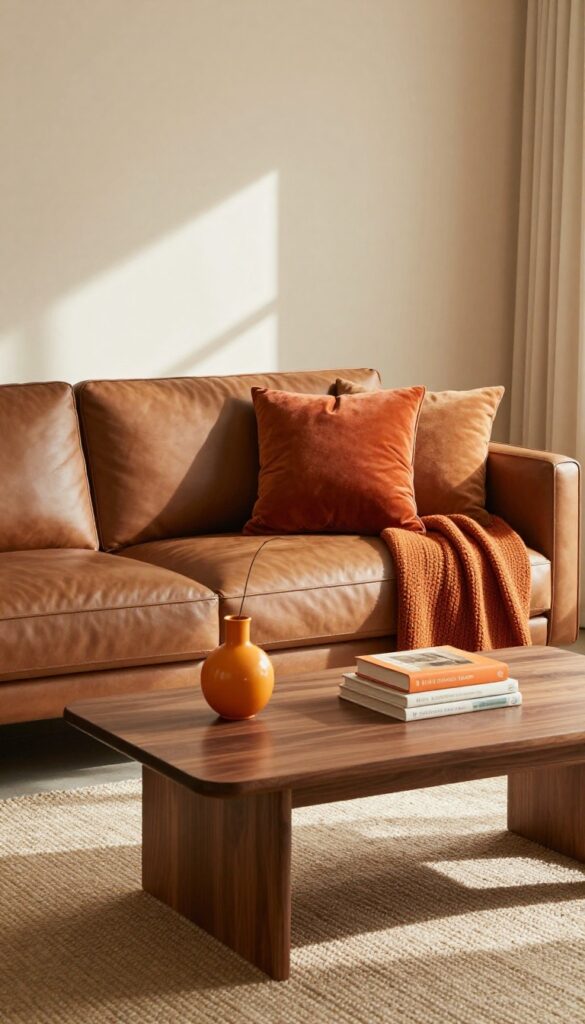
A brown sofa is more than just a piece of furniture—it's the foundation of a cozy, grounded living room. Whether you choose a rich chocolate leather or a soft cognac velvet, this anchor piece sets a warm, inviting tone. The key is balancing it with lighter orange accents, so the room feels layered and bright rather than heavy.
Think of your sofa as the sturdy base that everything else builds upon. A warm brown hue—like caramel, chestnut, or espresso—adds instant depth and pairs beautifully with orange tones. To keep the space from feeling too dark, introduce orange through pillows, throws, or a nearby armchair.
This contrast creates a retro warmth that's both nostalgic and fresh.
Best Colors To Pair
Stick with warm oranges—think terracotta, burnt orange, or pumpkin—rather than neon or citrus shades. These complement brown without clashing. Add in cream, beige, or soft white for breathing room, and a touch of mustard yellow or olive green for extra richness.
Texture Mix
A leather sofa feels sleek and durable, but it can be cold without soft touches. Layer on a chunky knit throw in burnt orange and velvet pillows in rust. A wool or jute rug underfoot adds natural texture that ties the brown and orange together.
Finishing Touch
Place a wooden coffee table in front of the sofa—walnut or oak works best. Top it with a small orange ceramic vase or a stack of books with orange spines. This simple styling echoes the color palette and makes the whole setup feel intentional.
2. Layer in Burnt Orange Throw Pillows for Instant Pop
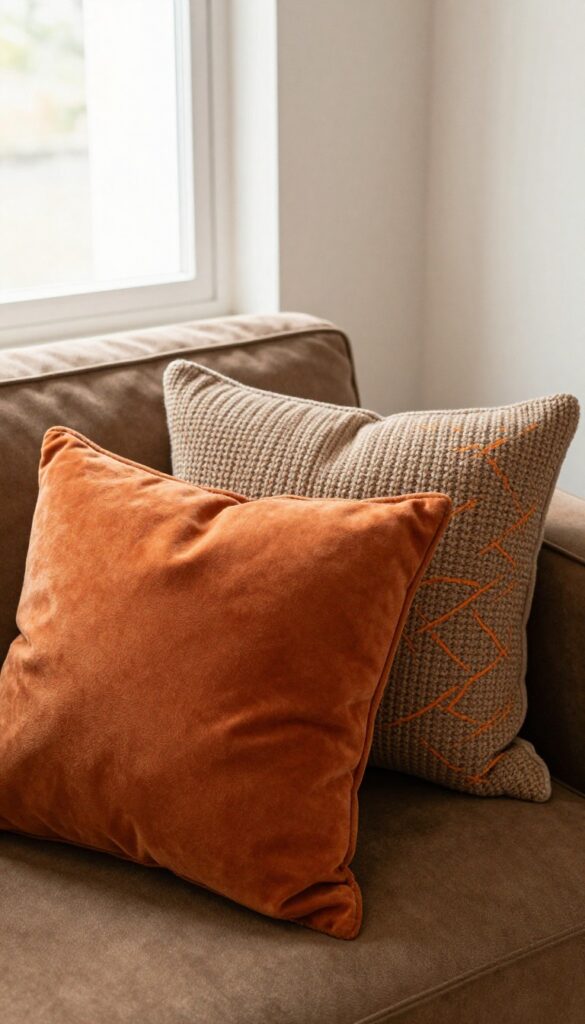
Throw pillows are the quickest way to test a color without commitment. Burnt orange brings that 70s warmth without feeling dated, especially when you pair it with brown. The trick is to mix solids with patterns and vary textures so the look feels intentional, not thrown together.
Velvet, knit, and linen each catch light differently, adding depth to your sofa or armchair.
Start with two or three solid burnt orange pillows in velvet or chenille for a rich base. Then add one or two patterned pillows in brown tones—think ikat, geometric, or subtle plaid. Vary sizes: a 20-inch square, a lumbar, and a smaller 16-inch square create a natural cluster.
Place the larger pillows at the ends and layer smaller ones in front. This arrangement draws the eye across the sofa and makes the color feel balanced, not overwhelming.
Texture Mix
Velvet reads luxe and warm, knit adds casual coziness, and linen keeps things airy. Use velvet for the solid burnt orange pillows, a chunky knit for a neutral brown lumbar, and a linen-blend for a patterned square. The contrast in sheen and handfeel prevents the pillow pile from looking flat.
Pattern Pairing
- Stick to brown-based patterns that include a hint of orange or cream. A geometric print with thin orange lines on a brown ground ties the solids together. Avoid patterns with too many colors—two or three tones keep the look sophisticated.
- If your sofa is brown, go for a cream-and-orange patterned pillow to break up the brown.
Arrangement Tip
- Odd numbers look more natural. Try three pillows on a two-seater sofa or five on a sectional. Place the largest solid pillows at the ends, then layer the patterned and smaller pillows in the middle.
- Fluff them daily to keep the shapes inviting. For a quick refresh, swap the patterned pillow covers seasonally.
3. Add a Rust-Colored Area Rug to Define the Space
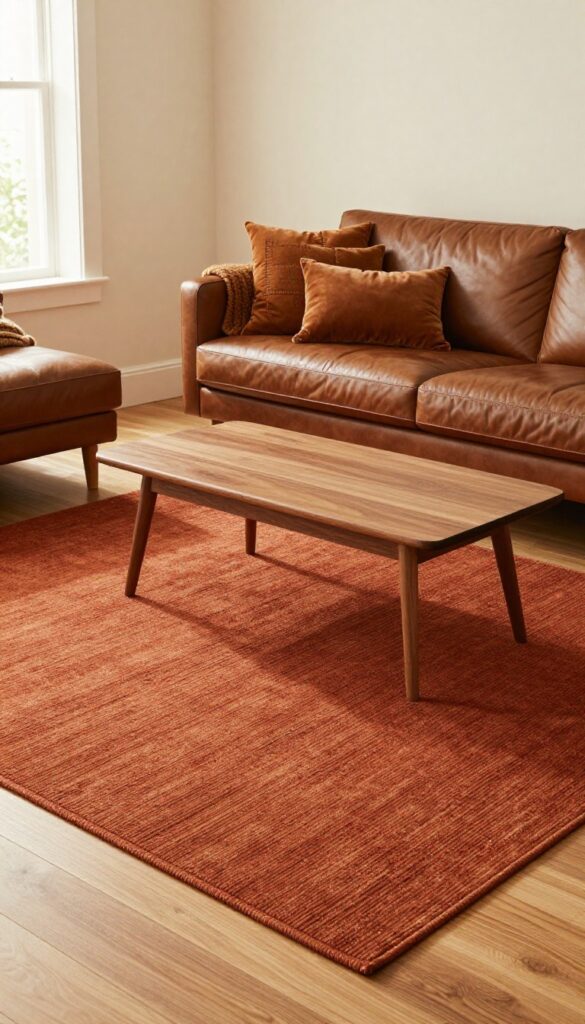
A large area rug in rust or terracotta does more than just warm up your floor—it visually anchors your seating arrangement and gives the room a clear focal point. In a brown and orange palette, this rich hue bridges the two colors beautifully, adding depth without overwhelming the space. The earthy tone also ties in naturally with wooden furniture and neutral walls, making the whole setup feel intentional and grounded.
Choose a low-pile or flatweave rug for easy maintenance and a retro vibe that fits the mid-century modern aesthetic. The texture should be smooth enough to let the color shine, but with a slight weave for visual interest. Place it under the front legs of your sofa and coffee table to create a cohesive zone, especially in open-plan layouts where you need to separate the living area from the dining or entryway.
This simple addition instantly makes the room feel more layered and curated.
Best Colors
Stick with rust, terracotta, or burnt orange for the rug. These shades complement brown leather sofas, walnut wood tones, and cream walls. Avoid bright or neon oranges—they'll clash with the cozy, retro feel you're going for.
Layout Tip
Make sure the rug is large enough to fit all key furniture pieces. A 8×10 or 9×12 rug works best for a standard living room. If your space is smaller, go for a 5×8 and place it just under the coffee table and front legs of the sofa.
Texture Mix
Pair the flatweave rug with plush velvet cushions or a chunky knit throw. The contrast between the smooth rug and soft textiles adds a cozy, layered look without making the room feel busy.
4. Paint an Accent Wall in Deep Terracotta
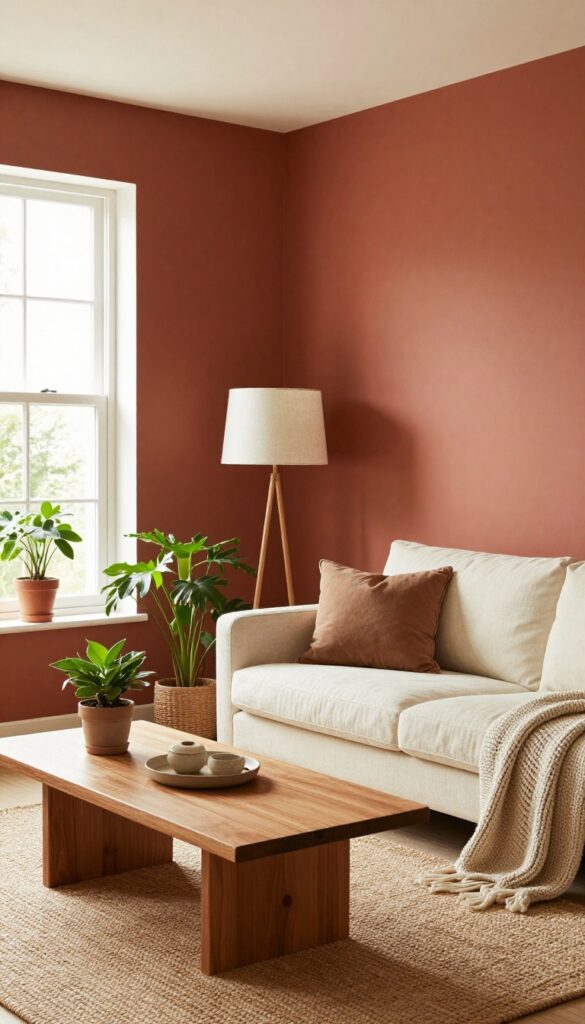
One wall painted in a rich terracotta shade instantly changes the whole energy of a room. It brings warmth and depth without making the space feel closed in. The trick is to keep the surrounding walls light and neutral so the accent wall stays the hero, not the whole room.
Deep terracotta works beautifully as an accent wall because it taps into that earthy, grounded feeling that brown and orange palettes are known for. It’s bold enough to make a statement but still soft and inviting. Pair it with warm wood furniture, cream textiles, and a few green plants to complete the look.
This approach is especially effective in living rooms that get good natural light—the terracotta glows during the day and feels cozy at night.
Best Colors
Stick with warm neutrals for the other walls—soft cream, warm beige, or a light greige work perfectly. For the accent wall itself, look for a terracotta with a bit of brown undertone rather than a bright orange-red. This keeps the retro warmth without feeling too loud.
Texture Mix
A matte finish on the accent wall adds a velvety, tactile quality. Then bring in contrasting textures through decor: a chunky knit throw, a smooth leather sofa, and a woven jute rug. The interplay of textures keeps the room from feeling flat.
Lighting Tip
Warm white bulbs (2700K-3000K) enhance the terracotta's richness. Avoid cool or blue-toned lights, which can make the wall look dull. A floor lamp with a linen shade placed near the accent wall casts a soft glow that highlights the color beautifully.
5. Incorporate Wood Tones from Light Oak to Dark Walnut
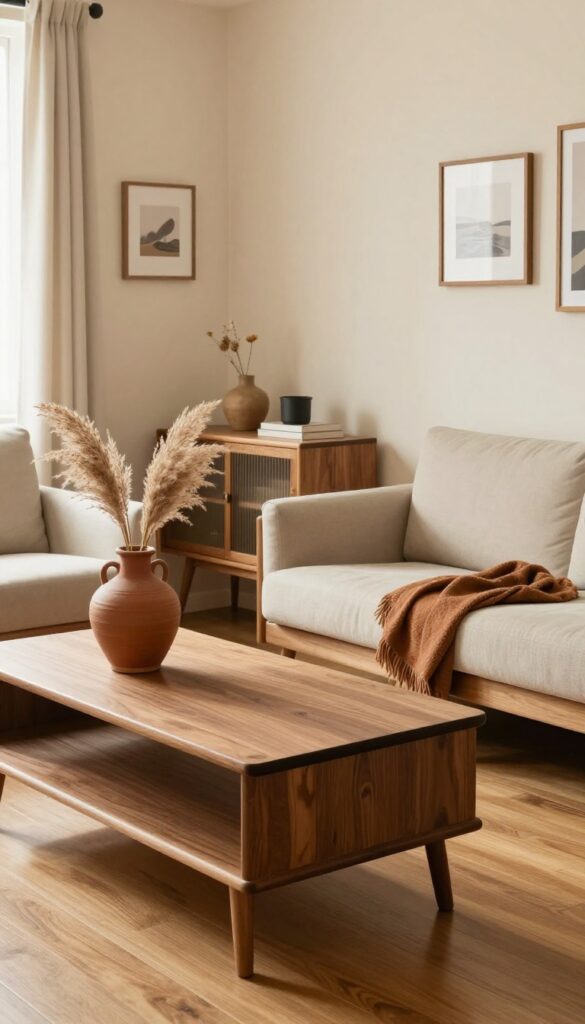
Wood is the unsung hero of any brown and orange living room. It brings natural texture, warmth, and a sense of groundedness that balances out bolder accent colors. The trick is to mix wood tones intentionally—think light oak coffee tables paired with dark walnut shelves or a walnut media console alongside oak-framed art.
This layered approach keeps the room from feeling flat or one-note, and it plays beautifully with orange accents like terracotta pillows or a burnt umber throw. Plus, wood ages gracefully, so your space only gets better with time.
Mixing wood tones is one of the easiest ways to add depth and personality to a living room. Start with a anchor piece like a dark walnut coffee table—it grounds the space and gives it a sturdy, retro feel. Then layer in lighter elements: a light oak side table, a floating shelf in ash, or even a reclaimed wood ladder for blankets.
The contrast creates visual interest without needing a lot of color. For a cohesive look, repeat each tone at least twice in the room—so if you have a walnut coffee table, add walnut picture frames or a walnut lamp base. This prevents any single piece from feeling random.
And don't forget the floor: if you have wood floors, let them guide your choices. Warm oak floors pair well with medium to dark furniture, while cooler ash floors can handle a wider range of stains.
Best Wood Pairings For Orange Accents
- Orange tones—whether in a velvet sofa, a patterned rug, or ceramic vases—pop best against medium to dark woods. Walnut, teak, and mahogany create a rich, earthy backdrop that makes terracotta and rust shades sing. Lighter woods like oak or birch keep things airy and work well if your orange is more peachy or coral.
- A good rule: match the wood’s undertone to the orange’s warmth. Cooler oranges (think salmon) look fresh with ash or maple, while warm oranges (burnt orange, rust) love the depth of walnut or cherry.
Layout Tip: Anchor With Dark, Layer With Light
- Place your darkest wood piece—like a walnut console or a mahogany bookshelf—on a wall that gets the most natural light. This keeps the room from feeling heavy. Then add lighter wood accents on the opposite side or in seating areas.
- For example, a light oak side table next to a dark walnut sofa table balances the visual weight. If you have an open layout, use wood tones to define zones: a dark wood media unit anchors the TV area, while a light oak desk marks the work corner.
Finishing Touch: Mix Textures, Not Just Colors
- Wood isn’t just about color—it’s about texture too. Combine smooth, polished walnut with rough-hewn oak or reclaimed barn wood for tactile variety. A live-edge coffee table adds organic curves, while a sleek walnut shelf brings clean lines.
- Add a woven jute rug or a chunky knit throw to soften the hard surfaces. The contrast between smooth wood and nubby textiles makes the room feel layered and lived-in, not like a furniture showroom.
6. Hang Orange Curtains for a Bold Frame
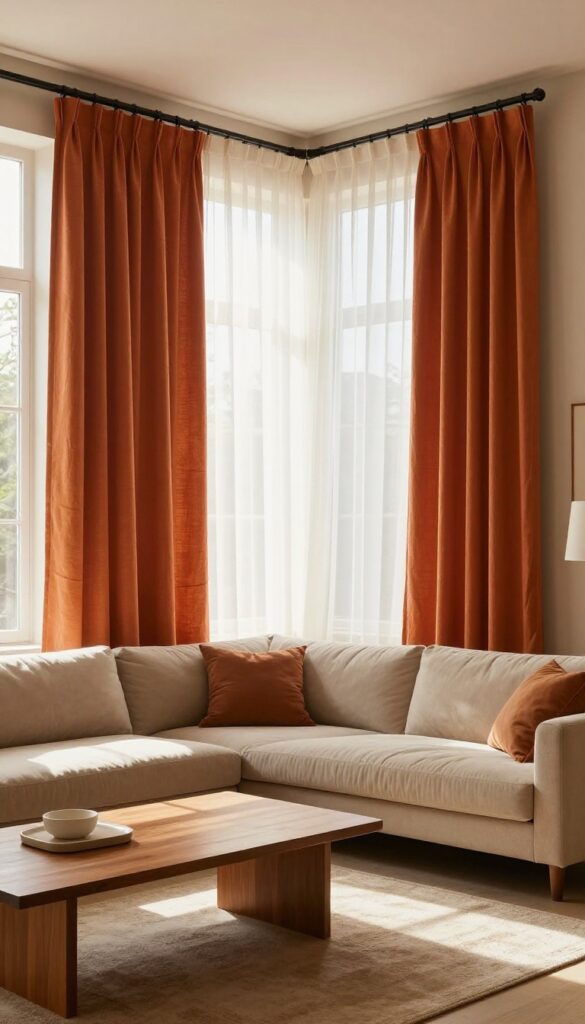
Curtains do more than just block light—they frame your windows and set the mood for the whole room. In a brown and orange living room, floor-length curtains in a muted rust or burnt orange tone can soften large windows and add a warm, inviting glow. The key is choosing a matte fabric like cotton or linen, which keeps the look grounded and cozy rather than shiny or formal.
Orange curtains instantly draw the eye upward, making ceilings feel higher and windows feel grander. They work especially well in rooms with neutral brown walls or beige sofas, where they provide a pop of color without overwhelming the space. For a layered effect, pair them with sheer white or cream curtains underneath—this softens the orange and lets you adjust light levels throughout the day.
Keep the curtain rod simple, like a black or dark brown metal rod, to maintain the smart, space-aware aesthetic.
Best Shades And Fabrics
- Stick with muted oranges like rust, terracotta, or burnt sienna—these feel sophisticated and blend easily with brown tones. Avoid bright neon oranges, which can feel jarring. For fabric, choose matte cotton, linen, or a cotton-linen blend.
- These materials have a natural drape and a soft texture that adds warmth. Velvet can work if you want a richer look, but stick to a matte velvet rather than a shiny one.
Placement And Length
- Hang the curtain rod as high as possible—close to the ceiling—to make the room feel taller. Curtains should just barely touch the floor (or puddle slightly for a relaxed look). In a small living room, avoid heavy puddling; a clean hem that skims the floor keeps the space tidy.
- For wide windows, use multiple panels so they gather nicely when open.
Styling Tip: Layer With Sheers
- Layering orange curtains with white or cream sheers adds depth and flexibility. During the day, pull the orange panels to the sides and let the sheers filter light softly. In the evening, close the orange curtains for a cozy, cocooning effect.
- This combination also helps the orange feel more intentional and less overwhelming.
7. Use Brown Leather Accent Chairs for Extra Seating
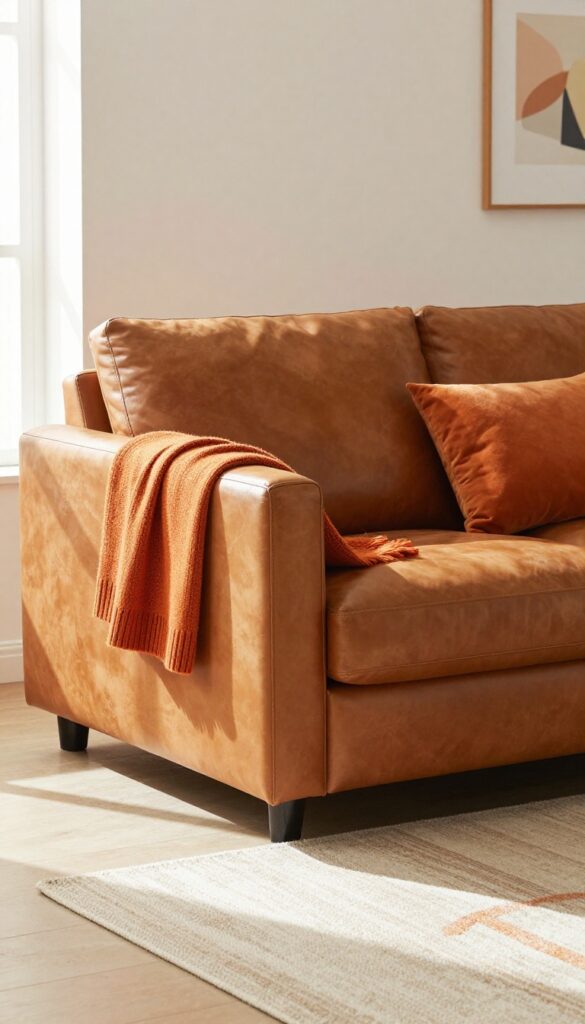
A pair of brown leather armchairs or a single club chair adds instant warmth and a touch of vintage character to your living room. The rich brown tones anchor the space, while the natural patina of leather develops over time, making each chair uniquely yours. Toss an orange throw over one arm to tie the whole color scheme together and create a cozy, layered look that feels both intentional and lived-in.
Leather accent chairs are a smart choice for extra seating because they're durable, easy to clean, and age beautifully. In a brown and orange living room, they serve as a neutral anchor that lets bolder orange elements shine without overwhelming the space. Choose a classic club chair silhouette for a timeless feel, or go with a mid-century modern design to lean into the retro warmth of your palette.
Position them opposite the sofa to create a conversation area, or flank a fireplace for symmetry. The key is to keep the leather in a medium to dark brown—avoid black or stark tan, which can clash with the orange accents.
Best Colors And Finishes
- Stick with warm brown leathers like cognac, chestnut, or mahogany. These shades have red or orange undertones that naturally complement your orange decor. For a more rustic vibe, choose a distressed or pull-up leather that shows wear gracefully.
- Avoid cool-toned browns like taupe or gray-brown, as they can make the room feel disjointed.
Layout Tip
Place the accent chairs at an angle to the sofa rather than directly facing it. This creates a more relaxed, conversational layout and softens the formality of a symmetrical arrangement. If space is tight, use a single chair with a small side table to avoid crowding.
Cozy Detail
Layer an orange knit throw or a patterned cushion in rust and cream over the back of the chair. This not only ties the chair into the room's color story but also adds texture and softness to the leather's sleek surface. A small floor lamp with a warm bulb nearby makes the chair an inviting reading nook.
8. Display Vintage Ceramics in Orange and Brown Glazes
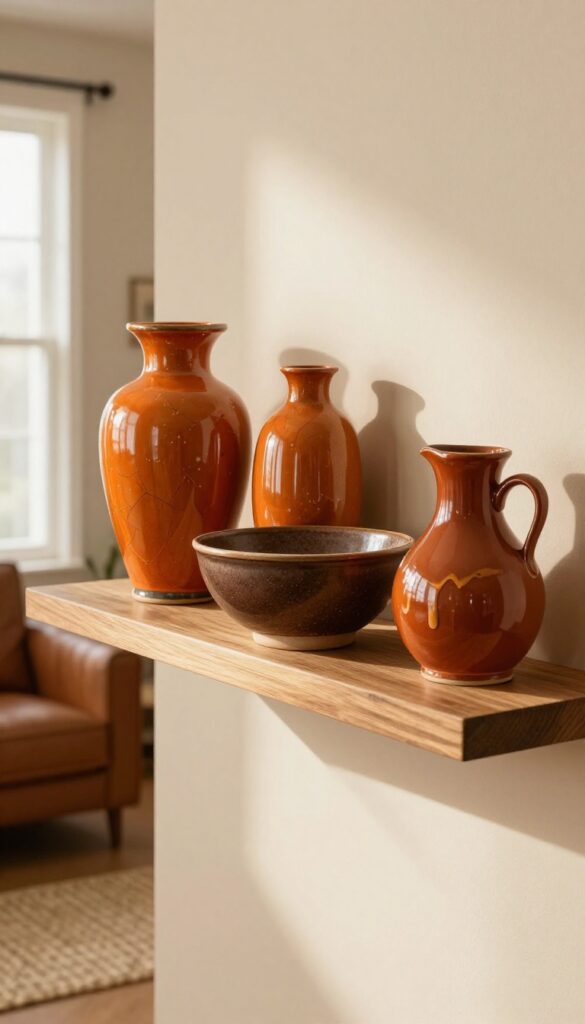
There’s something about a collection of ceramic pieces that instantly makes a room feel lived-in and curated. When you choose vases, bowls, and pitchers with orange and brown glazes, you’re adding layers of earthy color that tie the whole palette together. Scatter them across a shelf or gather them on a sideboard—they don’t need to match perfectly.
The subtle variations in glaze and shape create visual rhythm without overwhelming the space.
Vintage ceramics bring a tactile, handmade quality that modern decor often lacks. Look for pieces with speckled browns, burnt oranges, and deep terracottas. Group them in odd numbers for a balanced but organic look.
Mixing matte and glossy finishes adds depth. A cluster of three small vases on a floating shelf can anchor a wall, while a large pitcher on a console table becomes a sculptural focal point. The key is to let the ceramics breathe—don’t crowd them with too many other objects.
Best Colors And Glazes
- Stick to warm, earthy tones: rust, amber, chocolate, and ochre. Glazes with a slight drip or crackle effect add character. Avoid bright or neon shades—they’ll clash with the retro warmth you’re aiming for.
- Look for pieces that have a handcrafted feel, like those from the 1960s and ’70s, when brown and orange were everywhere.
Shelf Styling Tip
- Arrange ceramics in clusters of three or five, varying heights and shapes. Place the tallest piece slightly off-center, then layer smaller ones in front. Leave a few inches of empty space around each group so the eye can rest.
- For a cohesive look, repeat the same color family across the shelf, but vary the textures—a glossy bowl next to a matte pitcher works beautifully.
Where To Display
- A sideboard or credenza in the living room is an ideal spot—it gives you a long horizontal surface to play with. Floating shelves above a sofa or desk also work well. If you have a fireplace mantel, use it to showcase a single standout piece.
- Avoid high-traffic areas where ceramics might get knocked over. A low shelf in a reading nook or near a window with natural light makes the glazes pop.
9. Add a Statement Light Fixture in Brass or Copper
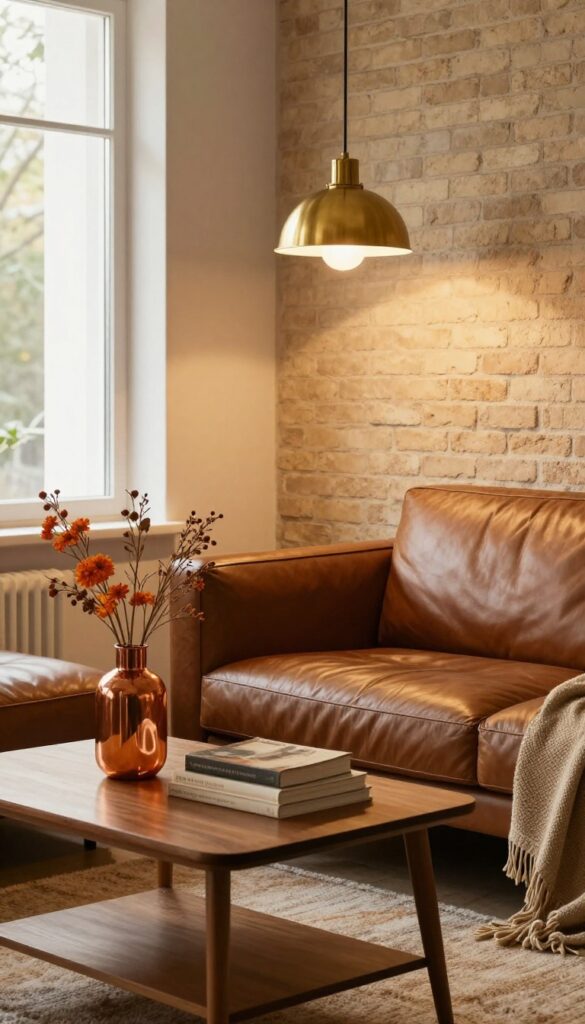
Lighting does more than just brighten a room—it sets the mood. In a brown and orange living room, a brass pendant or copper floor lamp brings a warm metallic glow that ties the whole palette together. The reflective surface catches the warm tones in your decor, making the space feel intentionally layered rather than just colorful.
A statement light fixture acts as both a functional source of illumination and a sculptural element. Brass and copper naturally complement the earthy browns and vibrant oranges, adding a touch of sophistication without feeling cold or sterile. Whether you choose a mid-century modern sputnik pendant or a sleek arc floor lamp, the metallic finish will catch the light and cast a warm, inviting glow across the room.
This works especially well in living rooms with neutral walls, where the fixture becomes a focal point that anchors the seating area. For the best effect, place your brass or copper fixture over a coffee table or beside a brown leather sofa to create a cohesive look.
Best Placement And Scale
- Scale matters when choosing a statement fixture. A large brass pendant works beautifully over a central coffee table, while a copper floor lamp is ideal for a reading nook or beside an armchair. Aim for the bottom of a pendant to hang 30 to 36 inches above a table surface.
- For floor lamps, the shade should sit at eye level when seated, around 40 to 45 inches from the floor.
Mix With Texture
Metallic finishes pair wonderfully with natural textures like wood, linen, and wool. In a brown and orange room, a brass fixture against a textured wool rug or a copper lamp next to a linen sofa adds depth. Avoid too many shiny surfaces at once—balance the metal with matte finishes in your furniture and accessories to keep the space feeling grounded.
Bulb Choice Matters
The right bulb can make or break the warm glow you're after. Choose LED bulbs with a color temperature between 2700K and 3000K for a soft, amber-like light that enhances brown and orange tones. Avoid daylight or cool white bulbs, which can wash out the warmth and make the room feel clinical.
10. Layer Textures with a Chunky Knit Throw in Caramel
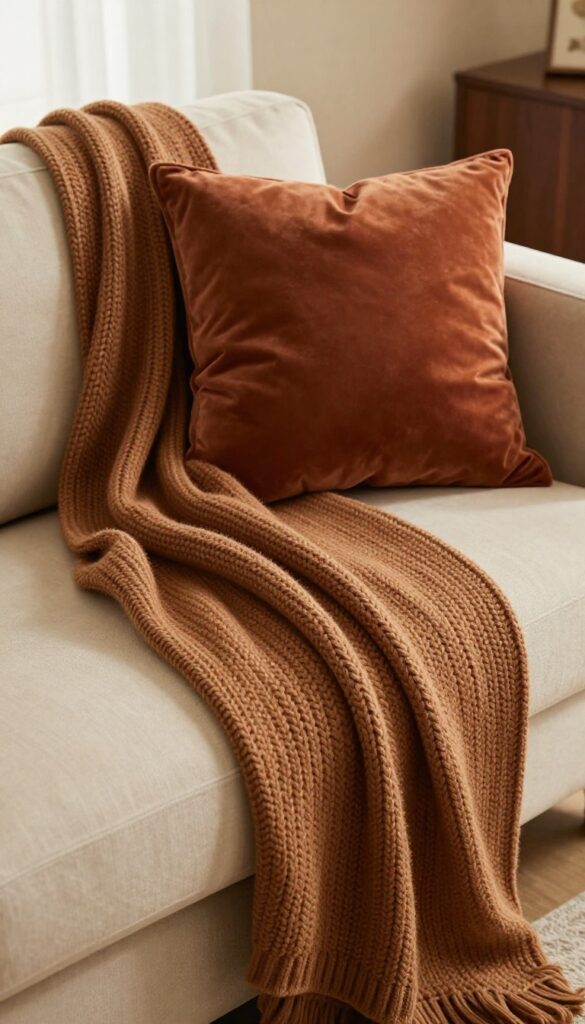
Texture is the secret ingredient that keeps a brown and orange living room from falling flat. A single caramel-colored chunky knit throw can shift the whole feel of your sofa from basic to beautifully layered. It brings in that lighter orange note without overwhelming the space, and the chunky weave adds visual weight that balances darker brown pieces.
Drape a caramel-colored chunky knit throw over the sofa. It adds cozy texture and a lighter orange note. The key is to let it hang naturally—folded neatly loses that relaxed, inviting vibe.
Pair it with a few throw pillows in deep rust or terracotta to create a cohesive color story. The throw acts as a bridge between the brown furniture and any brighter orange accents you have in the room.
Best Color Pairings
Caramel works beautifully with rich chocolate brown, warm taupe, and muted rust. Avoid pairing it with bright citrus oranges—stick to earthy, muted tones to keep the look sophisticated. A cream or off-white sofa underneath makes the caramel pop, while a dark brown sofa lets the throw stand out as a lighter accent.
Placement Tips
Drape the throw over one corner of the sofa, letting it cascade down the front and side. This creates an asymmetrical, casual look that feels intentional but not stiff. If you have a sectional, place it on the main seating area rather than the chaise to draw the eye to the center of the room.
Texture Layering
- Combine the chunky knit with other textures like a velvet pillow, a linen curtain, or a wool rug. The contrast between the chunky weave and smoother fabrics adds depth. Stick to two or three textures max to avoid a cluttered feel.
- A chunky knit throw also pairs nicely with a faux fur accent for extra coziness.
11. Bring in Orange and Brown Artwork for Focal Points
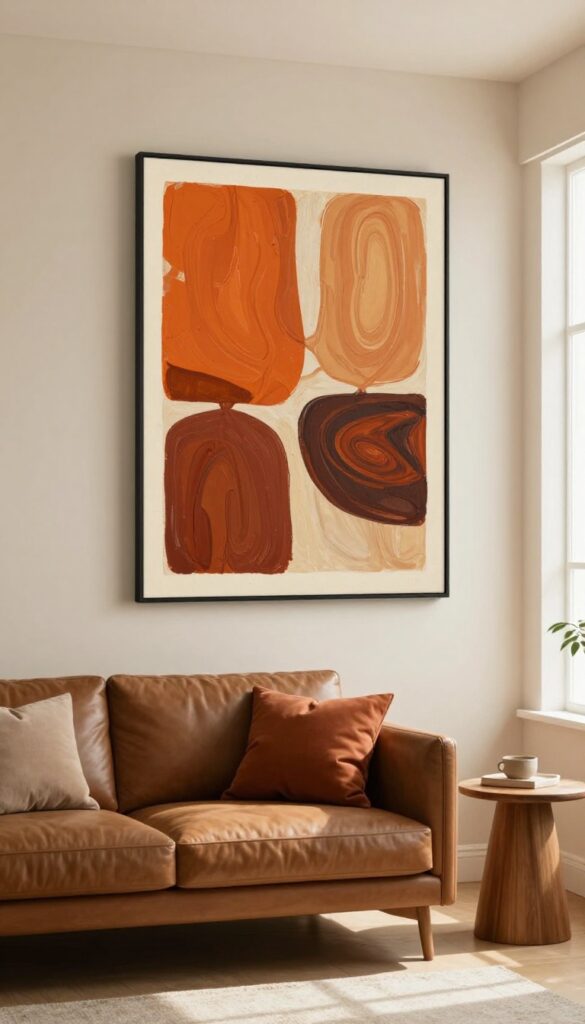
Artwork is one of the easiest ways to anchor a room's color story, and with orange and brown tones, you can create a warm, cohesive focal point that feels intentional rather than accidental. Whether you lean toward abstract splashes or moody landscapes, the right piece pulls the whole palette together. A single large canvas or a thoughtfully arranged gallery wall can define the mood without overwhelming the space.
Choose abstract or landscape prints with orange and brown tones. Group them in a gallery wall or use one large piece to create a natural gathering point. The key is to let the artwork lead the color scheme—pull accent pillows or throws from the shades in the print.
For a cohesive look, match the frame finish to other brown elements in the room, like a leather sofa or wooden side table. This approach keeps the eye moving and adds depth without clutter.
Best Colors To Look For
- Stick with prints that feature burnt orange, terracotta, rust, and warm browns like espresso or caramel. Avoid overly bright neon oranges—they can clash with the cozy retro vibe. A landscape with a sunset palette or an abstract with earthy swirls works beautifully.
- If you want a subtle touch, choose a piece where orange appears as an accent against a neutral brown background.
Gallery Wall Layout Tip
- For a gallery wall, mix frame sizes and shapes but keep the frames consistent in color—black or dark wood frames complement brown and orange tones well. Arrange them in a loose grid or organic cluster, leaving a few inches between each piece. Include one or two smaller prints with orange accents to tie the whole arrangement together.
- This creates a curated look that feels personal and polished.
Finishing Touch With Lighting
- Highlight your artwork with a picture light or a small adjustable lamp directed at the piece. Warm white bulbs (2700K-3000K) enhance the orange and brown tones without washing them out. If you have a large canvas, a simple track light or a floor lamp placed nearby can make it the star of the room.
- Proper lighting ensures the colors pop, especially in the evening.
12. Style a Coffee Table with Orange and Brown Books
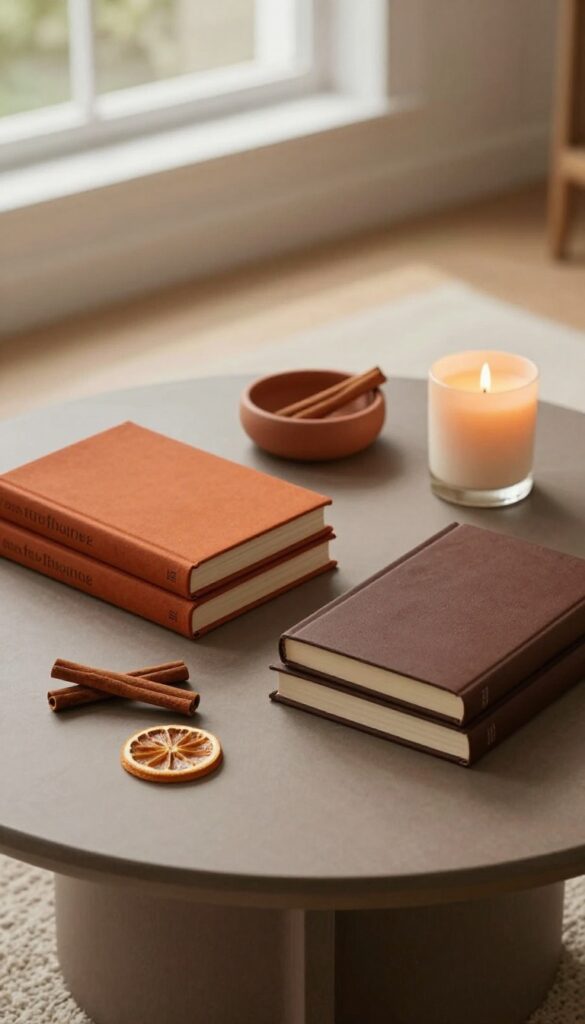
Your coffee table is prime real estate for showing off your color story, and stacking books is one of the easiest ways to bring in orange and brown without committing to a big piece. The trick is to treat it like a mini vignette—layer a couple of oversized books with warm-toned covers, then add a small ceramic dish or a candle that picks up the same hues. It feels intentional but not fussy, and it gives guests something nice to look at while they sip their coffee.
Stack two or three coffee table books with orange, rust, or brown covers—think art books, travel photography, or design tomes. Place them slightly off-center, then set a small ceramic dish or a candle in a matching warm tone next to the stack. The dish can hold coasters or keys, making the arrangement both pretty and practical.
For extra texture, slide a dried orange slice or a few cinnamon sticks into the mix. This styling trick works on any coffee table shape and instantly pulls the orange-and-brown palette together without overwhelming the room.
Best Colors
Look for books in burnt orange, terracotta, rust, chocolate brown, or warm camel. Avoid bright neon orange or cool-toned browns—they’ll clash with the cozy retro vibe. If you can’t find books with the right covers, simply remove the dust jackets and use the cloth bindings underneath, which often come in neutral earth tones.
Finishing Touch
- Add a small ceramic dish or candle in a matching hue to anchor the stack. A matte terracotta dish or a cream candle with an orange tint works beautifully. Keep the scale small—about 4–6 inches wide—so it doesn’t overpower the books.
- This tiny accent ties the whole vignette back to the room’s color scheme.
Layout Tip
Place the stack near one end of the table, not dead center. This leaves room for a tray, a coaster set, or a small plant on the other side. The asymmetry feels more relaxed and collected, which fits the cozy, layered look you’re going for.
13. Incorporate Natural Elements Like Rattan and Jute
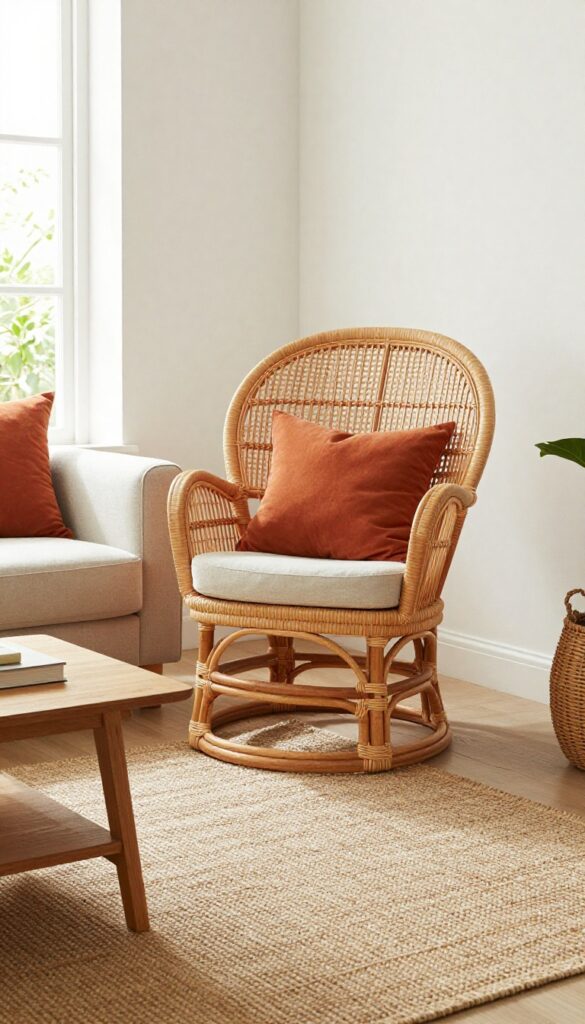
Rattan and jute are two of those materials that instantly make a room feel more grounded. They bring in warmth without adding color, which is exactly what you want when your main palette already has brown and orange doing the heavy lifting. A woven accent chair or a chunky jute rug adds texture that your eyes can almost feel, and it keeps the space from looking too polished or staged.
The contrast between the rough natural fibers and the richer tones of your furniture creates a balanced, lived-in look that feels both intentional and effortless.
The trick with natural textures is to let them sit quietly in the background. A rattan peacock chair in the corner becomes a sculptural element even when no one is sitting in it, while a jute rug under the coffee table defines the seating area without competing for attention. These pieces work especially well in rooms that already have a mix of warm browns and burnt oranges because they add a layer of neutrality that prevents the color scheme from feeling overwhelming.
If your living room has wood floors, the jute rug also helps bridge the gap between the floor and your furniture, making the whole setup feel more cohesive.
Best Materials
- Stick with natural, un-dyed rattan and jute for the most authentic look. Avoid anything that's been painted or treated with glossy finishes—the whole point is the raw, earthy feel. For rattan, look for pieces with visible weaving patterns and slight variations in color.
- For jute, choose a rug with a tight weave that won't shed too much, and consider a braided edge for extra visual interest.
Texture Mix
- Pair the rough jute with smoother surfaces like a leather sofa or a velvet pillow. The contrast makes both materials stand out more. You can also add a wool throw or a cotton cushion on the rattan chair to soften the look.
- The goal is to create layers of different textures that all feel natural and unforced.
Finishing Touch
Place a large potted plant next to the rattan chair to echo the organic vibe. A fiddle-leaf fig or a monstera with big green leaves will pick up the green undertones in the jute and tie the whole natural theme together. Keep the pot simple—terracotta or a plain ceramic in cream or brown works best.
14. Use Orange Accents in Small Doses Like Vases or Frames
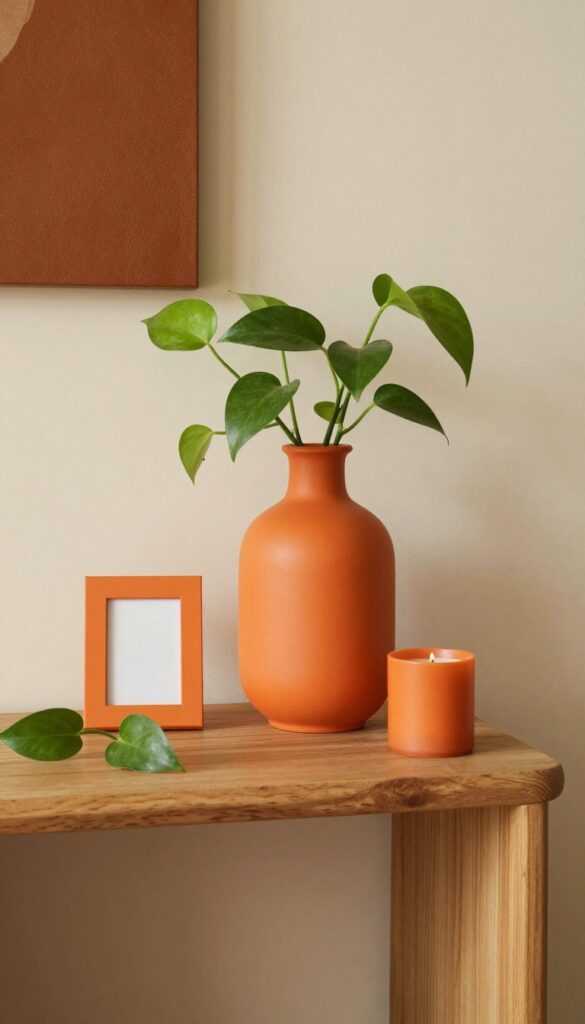
Orange is a bold player, but you don't need to paint the whole room to get its retro warmth. A few well-placed accents can do the trick without overwhelming your space. Think of them as punctuation marks—small, deliberate, and impactful.
Scatter small orange accessories—a vase, a picture frame, a candle—around the room. This keeps the look curated, not chaotic. The key is to let each piece breathe, so the color feels intentional rather than accidental.
A single orange ceramic vase on a coffee table or a slim orange frame on a shelf can draw the eye and add a pop of energy. It's a low-commitment way to test the trend without repainting walls or reupholstering furniture.
Best Colors To Pair
Orange pops best against neutral backdrops like warm beige, cream, or soft gray. It also plays nicely with brown leather and wood tones, reinforcing that retro vibe. For a more modern twist, try pairing orange with muted teal or olive green—just keep the orange accents small to avoid clashing.
Placement Tips
Group orange accents in odd numbers—three small items on a tray or two on a shelf with one on a side table. Avoid spreading them evenly around the room; instead, cluster them in one or two zones to create visual interest. A single orange vase on a console table can be enough, but add a matching candle nearby for a cohesive look.
Finishing Touch
Balance the warmth with a touch of cool contrast, like a green plant or a white ceramic piece. This keeps the orange from feeling too heavy and adds depth to the arrangement. A small orange frame on a bookshelf next to a trailing pothos plant is a perfect example.
15. Balance with Cream and Beige for Breathability
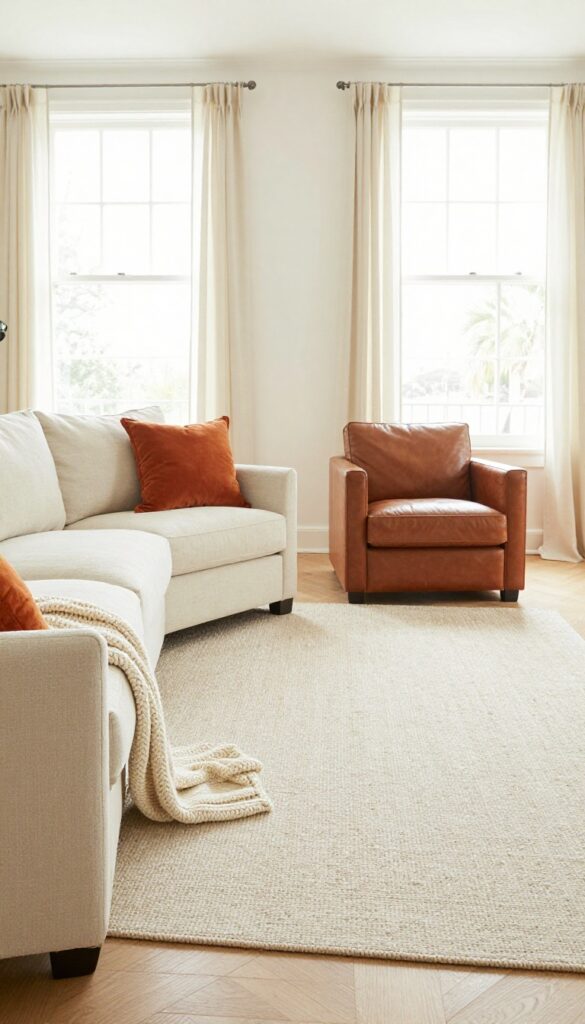
Brown and orange are warm and inviting, but without a lighter counterpart, they can feel heavy or even a little oppressive. That’s where cream and beige come in—they act like visual breathing room. By weaving these softer neutrals into larger pieces, you keep the rich tones grounded without letting them take over the whole room.
Think of cream and beige as the calm in the storm. They don’t compete with brown and orange; they complement them by adding lightness and airiness. A cream-colored sofa or a beige area rug instantly lifts the space, making it feel more open and less enclosed.
This balance is especially important in smaller living rooms where too much dark color can shrink the room visually. The trick is to use these lighter neutrals in substantial pieces—curtains, rugs, or a large upholstered chair—so they have enough visual weight to counterbalance the bolder browns and oranges. You’ll get a cozy, layered look that still feels fresh and breathable.
Best Colors
Stick with warm cream, soft ivory, and sandy beige. Avoid stark white, which can feel too cold next to earthy brown and orange. A warm off-white with a hint of yellow or peach blends seamlessly and keeps the overall palette harmonious.
Texture Mix
Add depth by choosing different textures in the same cream or beige family. A chunky knit throw, a linen curtain panel, and a flat-weave wool rug all read as neutral but add visual interest. This prevents the lighter colors from feeling flat or monotonous.
Finishing Touch
Use cream or beige as the backdrop for your accent pieces. A beige sofa allows orange throw pillows and a brown leather ottoman to pop without overwhelming the room. It’s a simple way to keep the focus on your warm accents while maintaining a light, airy foundation.
FAQ
What shades of brown and orange work best together?
Warm browns like chocolate, caramel, and cognac pair beautifully with muted oranges like burnt orange, rust, and terracotta. Avoid neon or bright orange.
How can I make a brown and orange living room feel modern?
Use clean-lined furniture, mix in black or brass accents, and keep the palette balanced with plenty of cream or beige. Stick to matte finishes.
Is brown and orange a good choice for a small living room?
Yes, but use lighter browns and softer oranges. Keep walls light and add color through accessories and textiles to avoid a cramped feel.
What other colors go well with brown and orange?
Cream, beige, olive green, navy blue, and mustard yellow all complement this palette. Use them as secondary accents.
How do I add texture to a brown and orange living room?
Layer different materials like velvet, leather, wool, jute, and wood. Textured throws, rugs, and pillows add depth without extra color.
Conclusion
Brown and orange living rooms don't have to feel dated or overwhelming. With thoughtful layering and a mix of textures, you can create a space that's warm, inviting, and full of personality.
Start with a few key pieces and build from there—your cozy retro retreat is just a few decor choices away.