13 Beige Living Room Ideas That Feel Warm and Cozy
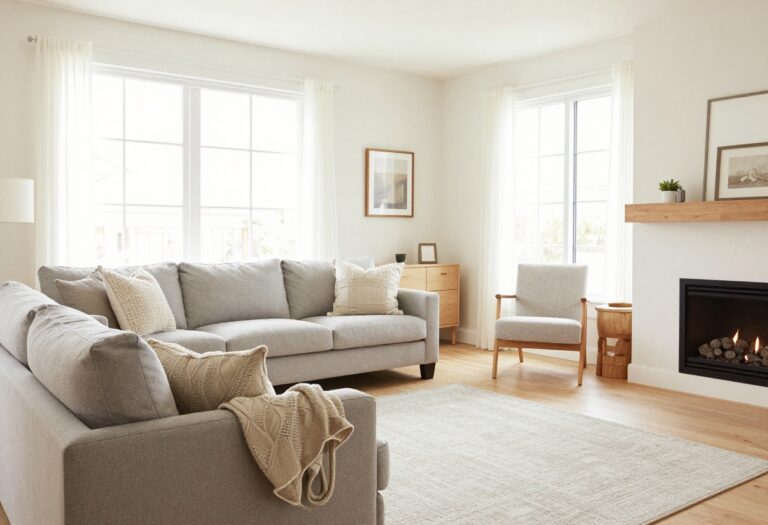
Beige often gets labeled as boring, but in the right hands, it becomes the ultimate backdrop for a warm, cozy living room.
When you layer soft neutrals thoughtfully, beige transforms from plain to plush—especially in smaller spaces where light and texture do the heavy lifting.
These 13 ideas prove that beige can feel rich, inviting, and anything but bland, all while keeping your square footage feeling open and airy.
1. Start with a Textured Beige Sofa
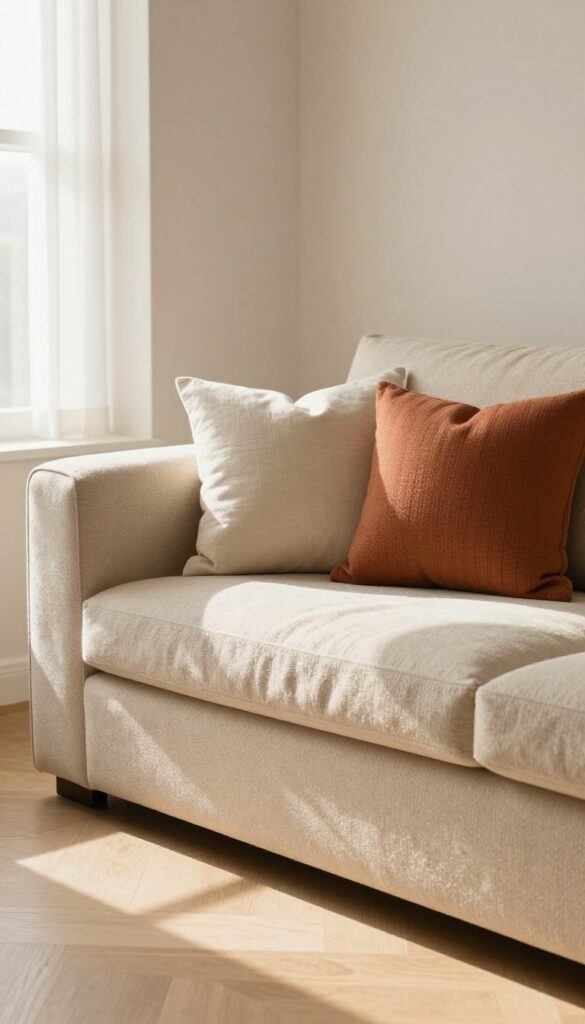
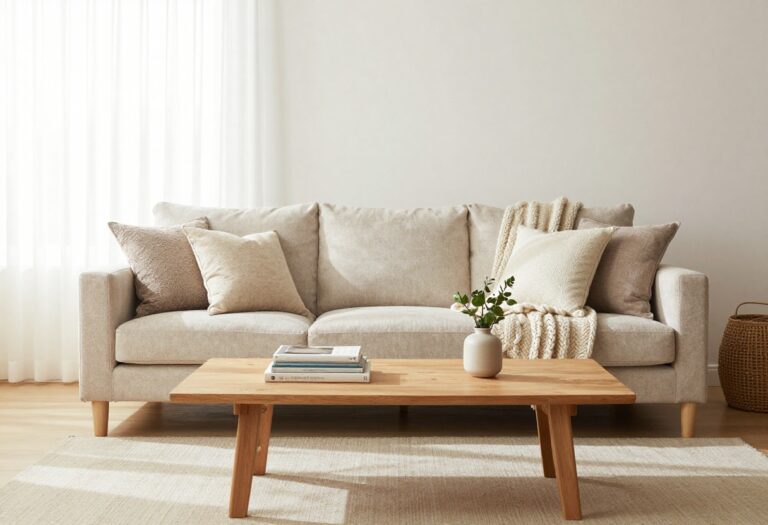
A beige sofa doesn't have to be boring. In a small living room, choosing one with a nubby fabric like linen or bouclé adds instant visual interest without relying on patterns or bold colors. The texture becomes the star, making the sofa feel like a curated anchor piece that draws the eye and gives the space a warm, grounded feel.
When floor space is limited, every piece needs to earn its keep. A textured beige sofa does double duty: it provides comfortable seating while adding depth and dimension to the room. The neutral tone keeps the space feeling open, while the tactile fabric invites touch and creates a cozy, lived-in vibe.
Pair it with soft throw pillows in warm earth tones or cream to enhance the layered look without overwhelming the room.
Best Fabrics For Small Spaces
- Linen and bouclé are top choices for a small living room. Linen has a relaxed, slightly rumpled look that feels airy, while bouclé offers a chunky, wool-like texture that adds warmth. Both fabrics are durable and age well, making them practical for everyday use.
- Avoid smooth, shiny fabrics like velvet or leather, as they can feel too formal and don't contribute the same cozy texture.
Scale And Placement Tips
- In a compact room, opt for a sofa with slim arms and a streamlined silhouette to avoid overwhelming the space. A two-seater or a petite three-seater works best. Place the sofa against the longest wall to maximize floor area, and leave at least 18 inches between the sofa and coffee table for easy movement.
- If possible, float the sofa slightly away from the wall to create a sense of depth.
Finishing Touch
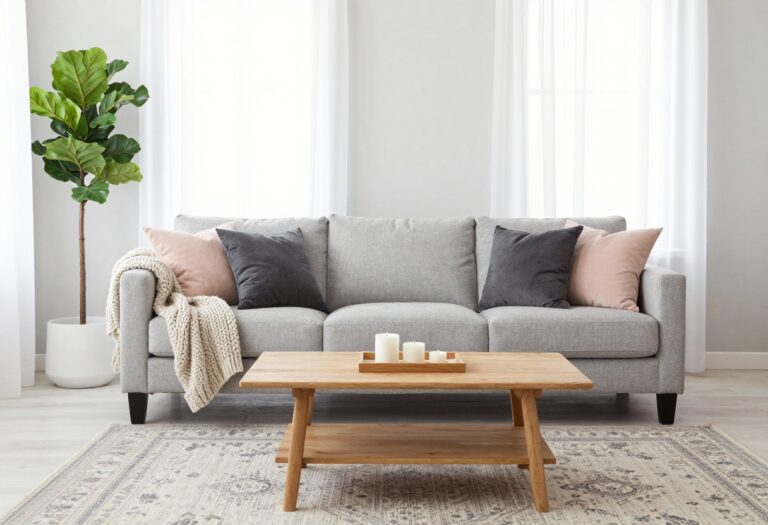
Layer a chunky knit throw in cream or oatmeal over one arm of the sofa, and add two linen pillows in warm beige or terracotta. This simple styling trick enhances the cozy factor and makes the textured sofa feel even more inviting. Keep the coffee table low and simple—a light wood or glass top will keep the focus on the sofa's texture.
2. Layer in Cream and Ivory Throw Pillows
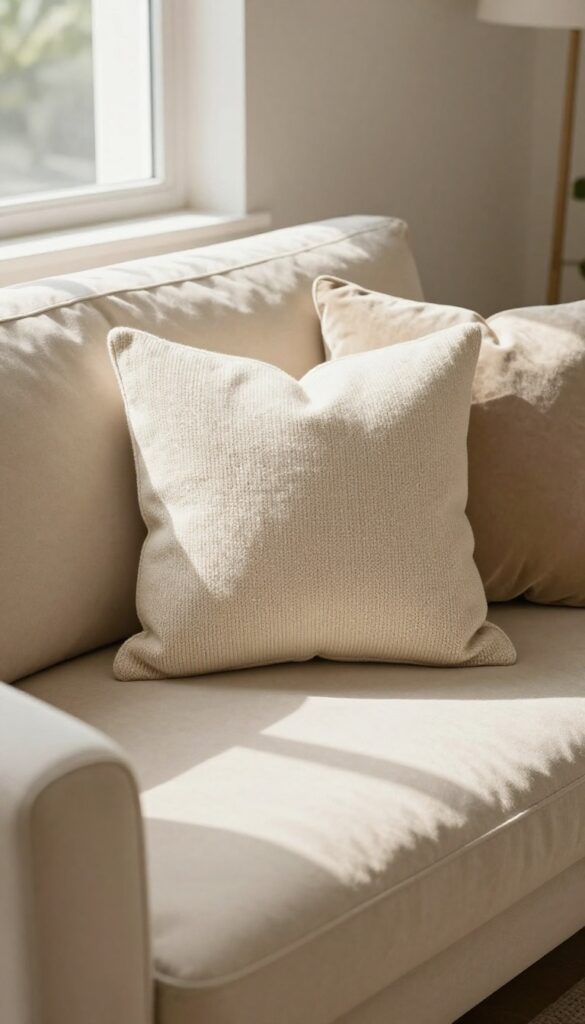
Throw pillows are the easiest way to change the feel of a sofa without buying new furniture. In a small beige living room, sticking to cream and ivory keeps the palette light and airy while adding visual interest through texture and size variation. The key is to avoid matching sets—mix velvet, knit, and cotton pillows in different shapes to create a curated, collected look that feels warm and cozy without cluttering your space.
Start with a neutral base of beige upholstery or a beige-toned sofa, then pile on pillows in cream, ivory, and off-white. Choose at least three different fabrics: a chunky knit for coziness, a soft velvet for a touch of luxury, and a crisp cotton for breathability. Vary the sizes—use a pair of 20-inch squares, one 12×20 lumbar, and maybe a round bolster for unexpected shape.
Arrange them asymmetrically: place the lumbar in the center, flank it with squares, and top with the round pillow for a relaxed, lived-in feel. This layering technique adds depth and dimension, making your small living room feel fuller and more inviting without overwhelming the space.
Best Fabrics For A Cozy Mix
- Velvet, knit, and cotton are your go-to trio. Velvet reflects light softly and feels luxurious, knit adds a handcrafted warmth, and cotton keeps things breathable and easy to clean. In a small room, avoid overly shiny or stiff fabrics that can look formal or take up visual space.
- Instead, opt for matte and textured finishes that absorb light and create a soft, enveloping feel.
Small-space Arrangement Trick
- On a compact sofa, limit yourself to three to five pillows total. Too many can make the seating area feel cramped and fussy. Place the largest pillows at the ends, then layer smaller ones in front.
- Keep the center clear so the seating still feels usable. This arrangement draws the eye outward, making the sofa appear wider and the room more spacious.
Color Flow With Beige Walls
- If your walls are a warm beige, choose cream pillows with a slight yellow undertone to harmonize. For cool greige walls, go with ivory that has a hint of gray. This subtle color matching prevents the pillows from looking stark or disconnected.
- A good rule: hold the pillow fabric next to your wall color in natural light before buying.
3. Add a Chunky Knit Throw Blanket
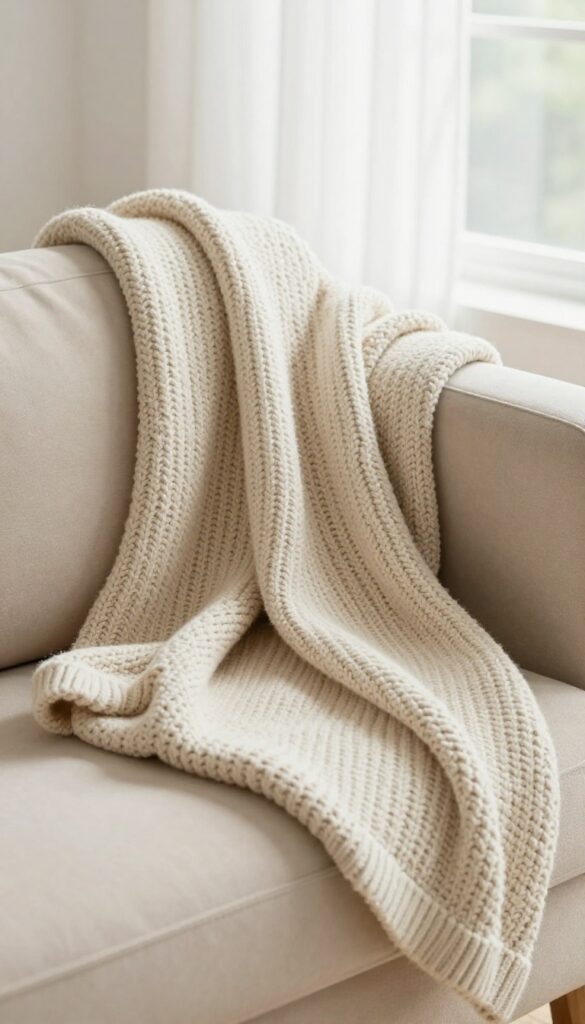
In a small beige living room, texture is your best friend. A chunky knit throw blanket instantly adds warmth and visual interest without taking up any floor space. Draped over the arm of a sofa or folded on an accent chair, it creates an inviting, cozy focal point that makes the room feel lived-in and relaxed.
The thick, oversized stitches contrast beautifully with smooth beige walls and sleek furniture, adding just the right amount of depth.
A chunky knit throw is one of the easiest ways to layer warmth into a neutral living room. The key is choosing a shade that complements your beige palette—think cream, oatmeal, or a slightly darker tan. Drape it loosely over the back of a sofa or fold it neatly on a chair to create a casual, welcoming vibe.
In a small space, this simple addition draws the eye to the seating area, making it feel intentional and cozy. For the best effect, pair it with other soft textures like a wool rug or velvet cushions to build a layered, tactile look.
Best Colors
Stick with warm neutrals that blend with your beige base. Cream, ivory, and light oatmeal keep the look airy, while a slightly darker tan or caramel adds contrast without overwhelming the space. Avoid stark white or gray tones that can feel cold against warm beige.
Small-space Fix
In a compact living room, a chunky knit throw can visually anchor the seating area without adding bulk. Choose a throw that's oversized but lightweight—it should look plush, not heavy. Drape it over a slim armchair or the corner of a loveseat to keep the floor clear and the room feeling open.
Texture Mix
Combine the chunky knit with smoother surfaces for balance. A linen sofa, a sleek wooden coffee table, or a flat-weave rug all provide a nice contrast. The goal is to create a layered, tactile experience that feels rich but not cluttered.
4. Use a Jute or Sisal Area Rug
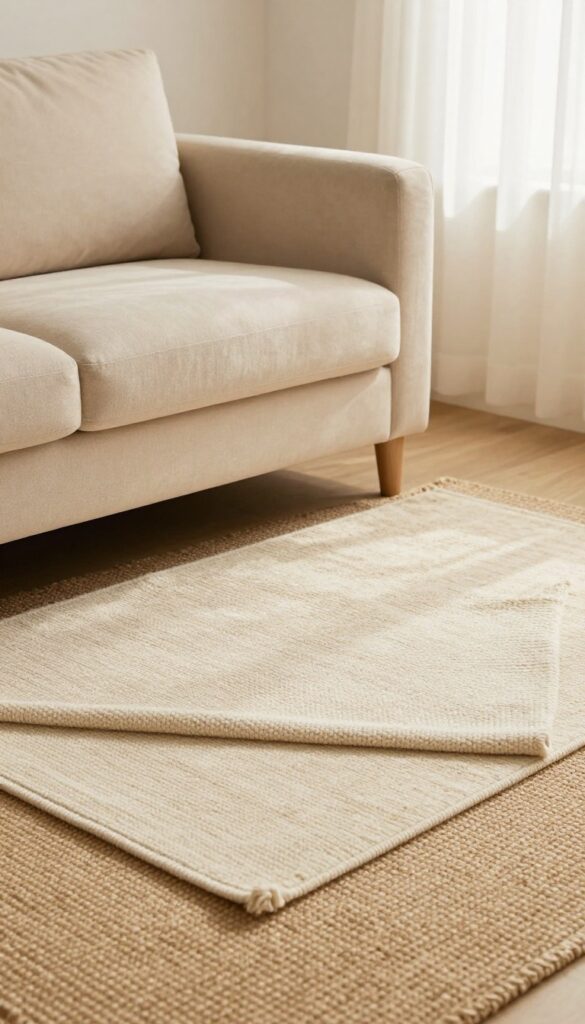
A natural fiber rug does more than just cover the floor—it adds a layer of organic texture that makes a beige living room feel grounded and inviting. Jute and sisal bring warmth without competing with other neutral pieces, so your sofa, pillows, and curtains stay the stars of the show. In a small space, this texture trick also helps define the seating area without adding visual bulk.
A jute or sisal rug is an easy way to introduce natural warmth into a beige living room. The rough weave contrasts beautifully with smooth upholstery and soft throw blankets, creating depth without using color. Because these rugs come in warm, earthy tones, they blend seamlessly with beige walls and furniture while adding subtle visual interest.
For small living rooms, choose a rug that fits just under the front legs of your sofa to anchor the space without overwhelming it. The low pile also makes the room feel more open—no thick shag to eat up visual square footage. Pair it with a wool or cotton rug on top for extra comfort and a layered look that feels curated, not cluttered.
Best Colors
Stick with natural tones like undyed jute, warm tan, or light oatmeal sisal. These shades blend into a beige palette without adding contrast that feels harsh. If you want a subtle pop, look for a rug with a thin border in a slightly darker beige or soft gray—it adds definition without breaking the neutral flow.
Small-space Fix
In a compact living room, a jute or sisal rug can make the floor feel larger because of its continuous, low-profile texture. Avoid busy patterns; a simple weave keeps the eye moving around the room. Place the rug so it extends at least six inches beyond the sofa on each side to visually widen the seating area.
Texture Mix
- Balance the rough feel of jute or sisal with softer textures nearby. A chunky knit throw on the sofa, velvet pillows, or a smooth leather ottoman will create a pleasing contrast. The goal is to make the space feel layered and cozy, not one-note.
- For a finishing touch, add a flat-weave cotton rug on top in a lighter beige to soften the underfoot feel.
5. Incorporate Warm Wood Tones
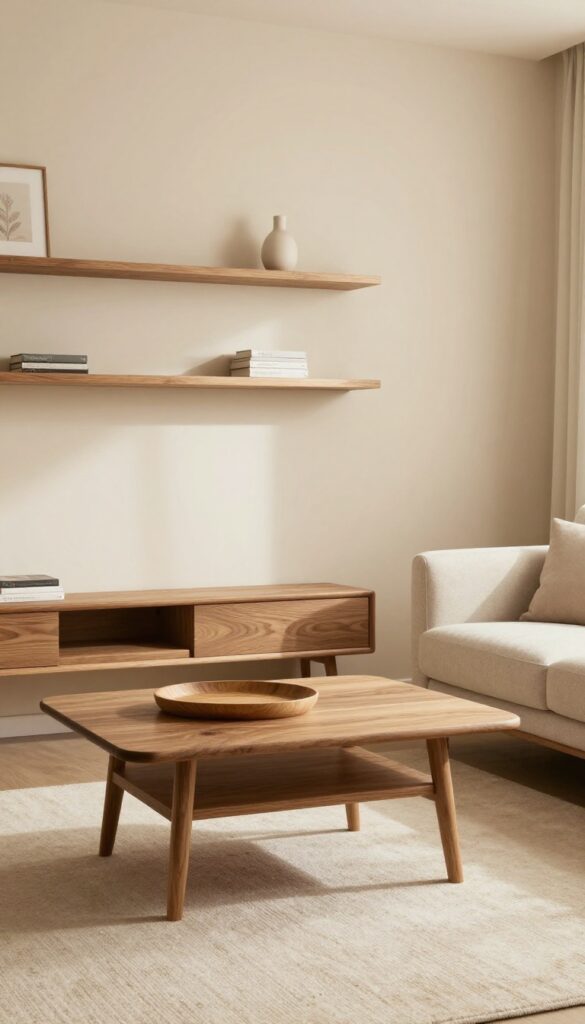
Beige can sometimes feel a little one-note if there isn’t something to break up all that softness. Warm wood tones are the perfect counterbalance—they add contrast, depth, and a natural anchor that keeps the room from feeling flat. In a small space, wood also brings a sense of warmth and character without taking up extra square footage.
Wood elements like a coffee table, side table, or floating shelves in warm oak or walnut introduce a natural contrast that makes beige feel intentional and layered. The key is to choose woods with warm undertones—think honey oak, rich walnut, or acacia—rather than cool, gray-washed finishes. This keeps the overall look cozy and cohesive.
In a small living room, even one wooden piece can make a big difference. A slim walnut console table against a beige wall adds visual weight without crowding the floor. Floating shelves in warm oak provide storage and display space while keeping the airy feel intact.
For a budget-friendly swap, try a wooden tray or a set of wood-handled baskets to introduce the same effect without a big investment.
Best Materials
Stick with solid woods like oak, walnut, or teak for longevity and warmth. If you’re mixing wood tones, keep them within the same warm family—avoid pairing honey oak with a cool ash. For a small space, lighter woods like oak keep things bright, while walnut adds a richer, more grounded feel.
Small-space Fix
When floor space is tight, go vertical. A tall, narrow wooden bookshelf or a set of floating shelves draws the eye upward and adds warmth without taking up floor area. Wooden wall-mounted shelves also double as display space for plants or ceramics, reinforcing the cozy vibe.
Finishing Touch
Pull the wood tone into smaller accents to tie the room together. Wooden picture frames, a turned-wood lamp base, or a sculptural wooden bowl on the coffee table echo the larger pieces and create a cohesive, layered look. This subtle repetition makes the space feel curated, not cluttered.
6. Hang Sheer Linen Curtains
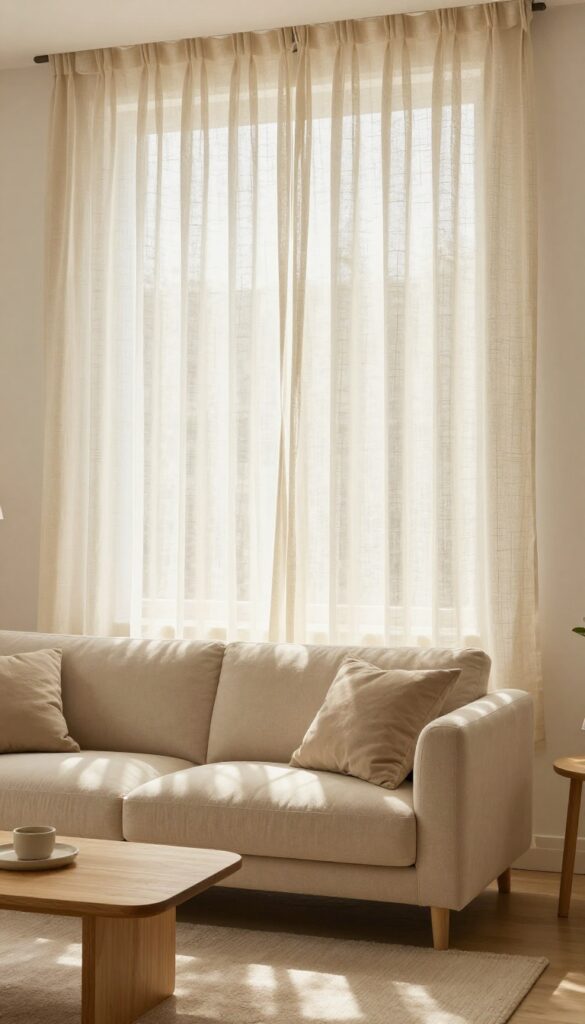
Natural light is a small space’s best friend, but harsh direct sun can feel glaring and uninviting. Floor-to-ceiling sheer linen curtains solve both problems at once. They filter daylight into a soft, diffused glow that makes the room feel airy and calm, while the vertical lines draw the eye upward, creating the illusion of higher ceilings.
In a cozy beige living room, these curtains add a layer of gentle texture without blocking the view or weighing down the space.
Sheer linen curtains are the ultimate soft layer for a warm beige living room. They let in just enough light to keep the room bright while taking the edge off strong afternoon sun. Hanging them from ceiling height (not just above the window frame) instantly makes the room feel taller and more open—a huge win for small spaces.
Choose a warm beige or cream tone that blends with your wall color so the curtains feel like a natural extension of the room rather than a separate element. The fabric’s slight irregular weave adds subtle visual interest without competing with other textures in the room.
Best Colors
Stick with warm neutrals: creamy beige, oat, or a very light taupe. These tones keep the look cohesive and prevent the curtains from feeling stark or cold. If your walls are a deeper beige, go one shade lighter for the curtains to maintain contrast without clashing.
Small-space Fix
Maximize the height trick by mounting the curtain rod as close to the ceiling as possible—ideally just an inch or two below the crown molding. Let the curtains pool slightly on the floor for a relaxed, cozy feel, or hem them to just skim the floor for a cleaner look. Either way, the vertical stretch makes the room feel significantly larger.
Texture Mix
Pair the sheer linen with heavier textures elsewhere, like a chunky knit throw on the sofa or a sisal rug underfoot. This contrast keeps the room from feeling too flat or one-dimensional. The sheers soften the overall look while the chunky textures add warmth and depth.
7. Add a Round Ottoman as a Coffee Table
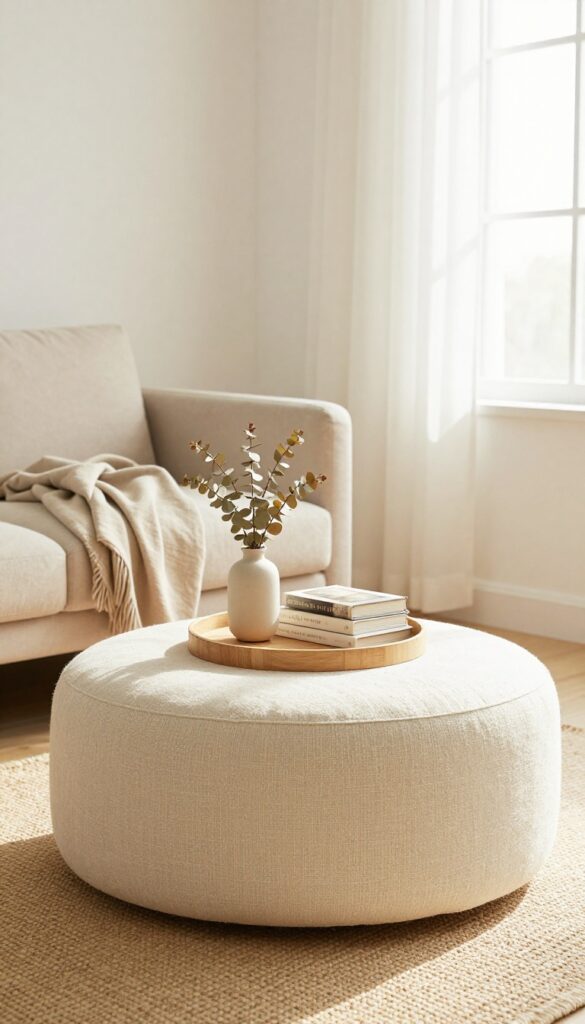
A round ottoman is one of those pieces that just works in a small living room. It's soft, inviting, and doesn't have sharp corners to bump into. Plus, it pulls double duty as a coffee table and extra seating when friends come over.
In a tight layout, a round ottoman in beige or cream keeps the space feeling open and easy to move around. Its curved shape naturally guides traffic flow, so you won't feel boxed in. Look for one with a sturdy base and a stain-resistant fabric—something like a textured linen or performance velvet works beautifully.
Top it with a large tray to hold drinks and remotes, and you've got a functional centerpiece that still feels cozy and soft. If you need more seating, just slide the tray aside and pull up a cushion. It's a simple swap that makes a big difference in how the room lives.
Best Colors And Fabrics
Stick with warm beige, cream, or light taupe to keep the neutral layering going. A bouclé or chenille fabric adds texture without being too fussy. If you have kids or pets, a performance-grade fabric with a subtle pattern can hide spills and wear.
Layout Tip For Small Spaces
Place the ottoman about 14 to 18 inches from the sofa so there's enough legroom but still a reachable surface. In a square room, center it with the sofa; in a narrow room, offset it slightly to create a natural pathway.
Finishing Touch
Add a wooden or woven tray on top to anchor the look and provide a stable surface for coasters, a small vase, or a stack of books. A soft throw draped over one corner adds an extra layer of coziness.
8. Mix Metallic Accents in Brass or Gold
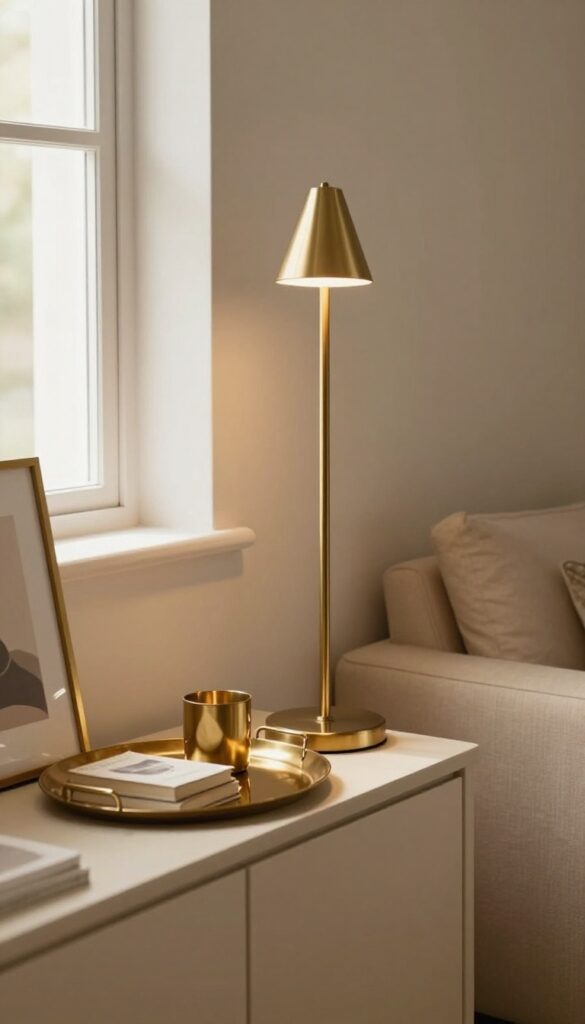
Small brass or gold details—like lamp bases, picture frames, or drawer pulls—add a subtle gleam. They warm up the beige palette without overwhelming it. In a small space, these touches catch the light and create a sense of polish without taking up any floor room.
Metallic accents are the jewelry of a beige living room. They break up the monotony of neutral surfaces and add a layer of sophistication that feels intentional, not fussy. Because the base palette is soft, even a single brass lamp can shift the whole mood from flat to luminous.
Stick to warm metals like unlacquered brass, antique gold, or rose gold to keep the cozy vibe intact. Avoid chrome or silver unless you're going for a cooler look—they can feel stark against warm beige. Place metallic items where they catch natural light: on a side table, a bookshelf, or near a window.
A brass floor lamp with a slim profile works especially well in tight corners, adding both function and shimmer. If you're on a budget, swap out standard cabinet knobs or curtain rod finials for brass versions. It's a five-minute change that makes a visible difference.
Best Spots For Metallic Touches
- Focus on eye-level surfaces: console tables, mantels, and floating shelves. A brass tray on a coffee table corrals remotes and coasters while reflecting light. Picture frames in thin gold profiles add warmth without bulk.
- In a small room, avoid oversized metallic furniture—it can dominate. Instead, let metals appear in smaller doses: a gold wire basket for throw blankets, a brass bookend, or a candle holder trio.
Balancing Warmth And Sparkle
- Too much shine can feel cold, so pair metals with matte textures like linen, wool, or wood. A brass lamp on a chunky knit ottoman or a gold frame against a linen wall keeps the look grounded. Mix finishes slightly—for example, a brushed brass lamp with a polished gold frame—but stay within the same color family to avoid visual clutter.
- The goal is a soft glow, not a disco ball.
Small-space Styling Tip
- In a compact living room, metallic accents double as light multipliers. Place a small brass mirror opposite a window to bounce daylight around the room. Or use a gold-legged side table that feels airy but adds a reflective surface.
- Keep metallic accessories to three or four pieces in a small area so they read as curated, not cluttered.
9. Include a Large Floor Mirror
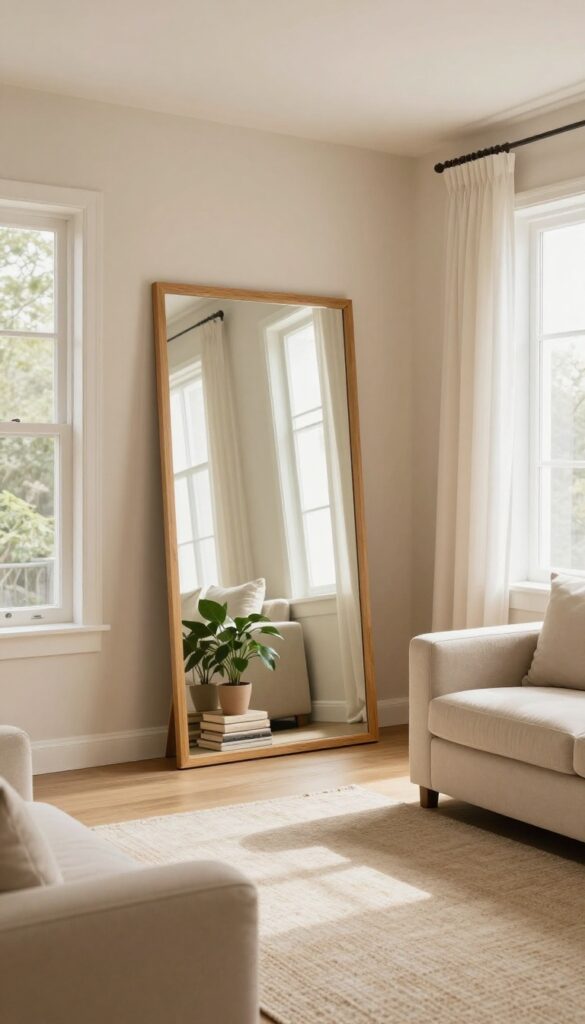
A large floor mirror does more than just help you check your outfit before heading out. In a beige living room, it becomes a subtle design powerhouse—bouncing natural light around the space and making the whole room feel airier and more open. Leaning it casually against the wall keeps the look relaxed and unfussy, which fits perfectly with the warm, cozy vibe you're going for.
The frame is where you can really tie the mirror into your neutral layers. A wooden frame in a honey or walnut tone adds warmth without competing with your beige palette. If you prefer a sleeker look, a metal frame in brass or bronze gives a soft gleam that catches the light.
Either way, the mirror becomes a functional piece of art that visually doubles your square footage—ideal for small living rooms where every trick counts.
Best Placement
Position the mirror across from a window to maximize light reflection. In a small room, this simple move can make the space feel twice as large. Avoid placing it directly opposite a cluttered area, though—you don't want to double the visual noise.
Frame Finish
Stick with warm wood tones like oak, walnut, or a light bamboo to keep the cozy neutral theme intact. For a bit of contrast, a black metal frame adds a modern edge without feeling cold. Just make sure the finish doesn't clash with your other furniture.
Styling Tip
Lean the mirror at a slight angle rather than hanging it flush against the wall. This creates a more relaxed, lived-in feel and lets you adjust the reflection to catch the best light. Add a small plant or a stack of books at its base to anchor the look.
10. Use Woven Baskets for Storage
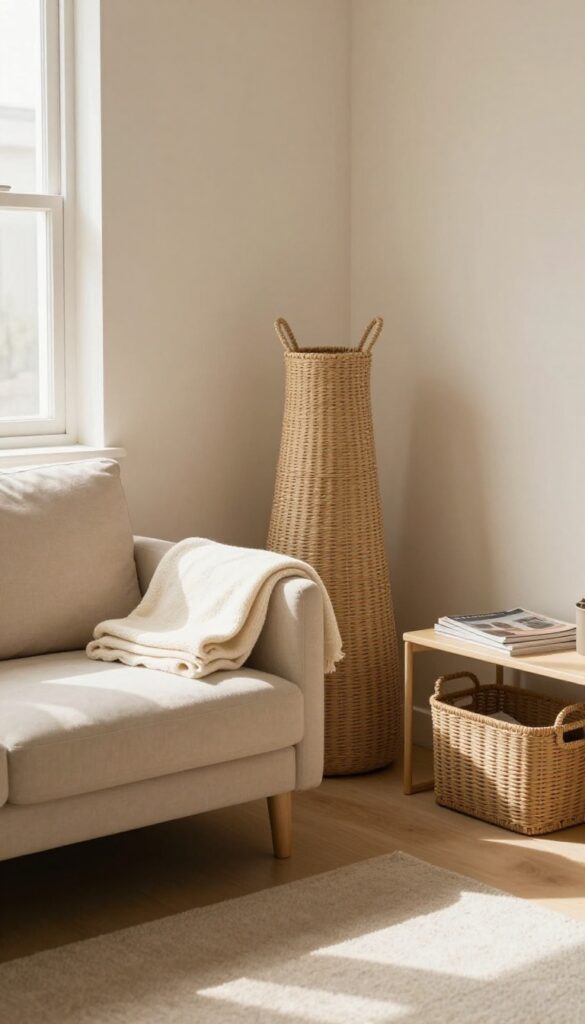
Woven baskets are one of those pieces that pull double duty without trying too hard. They bring in natural texture, soften the edges of a beige room, and give you a spot to stash all the little things that tend to pile up. In a small living room, they’re especially handy because they add warmth without taking up visual space.
Tuck a couple of woven baskets beside the sofa or under a console table to hold blankets, magazines, or remote controls. The natural fiber contrasts nicely with soft beige upholstery, and the baskets keep everyday clutter completely out of sight. For a cohesive look, choose baskets in a light wheat or tan tone that complements your beige walls and furniture.
They work just as well on open shelving to store smaller items like coasters or charging cables.
Best Materials
Seagrass and water hyacinth are sturdy and have a warm, neutral color that blends seamlessly with beige. Rattan adds a slightly lighter, airier feel, while jute offers a more textured, chunky look. Avoid dark stains or painted finishes if you want to keep the soft, layered neutral vibe.
Small-space Fix
- In a tight living room, use baskets that are tall and narrow rather than wide and low. They take up less floor space but still hold plenty. Place one next to an armchair for a dedicated throw blanket spot, and another under a slim console table for magazines.
- This keeps everything accessible without creating visual clutter.
Styling Tip
Mix basket shapes for a collected-over-time look. A round basket with a lid can hide remotes and chargers, while an open rectangular basket works for larger blankets. Group two or three together in a corner, varying heights, to create a cozy, layered vignette that feels intentional but not fussy.
11. Add a Low-Profile Console Table
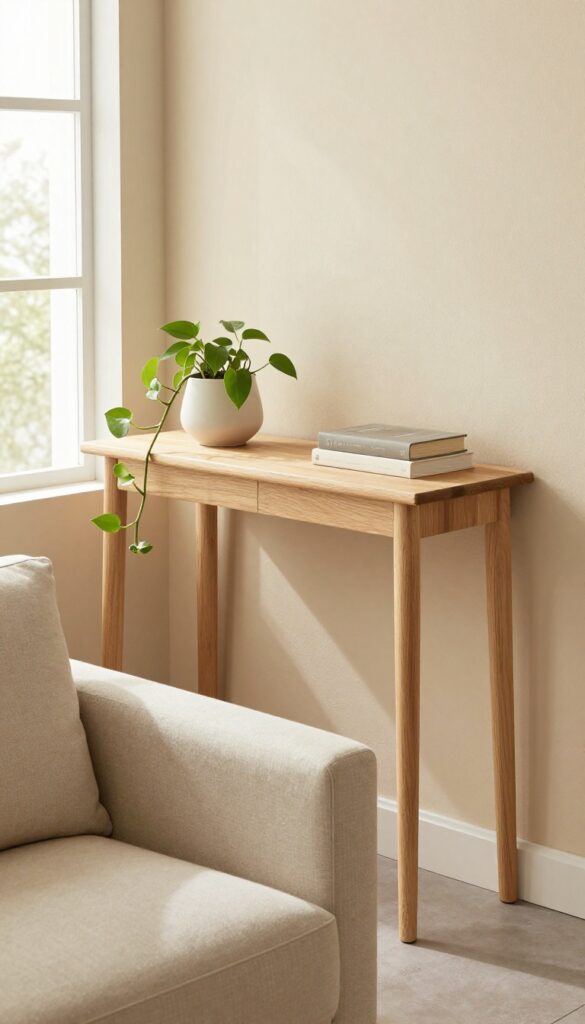
A low-profile console table is a quiet workhorse in a beige living room. It gives you a spot to layer decor without eating up floor space or blocking sight lines. In a warm, cozy room, a slim table in a light wood or soft white finish keeps the airy feel while adding a subtle anchor for your styling.
A slim console table behind the sofa or along a wall provides surface space for decor without eating into the room. Style it with a lamp, a small plant, and a stack of books.
Best Colors
Stick to light wood tones like oak or ash, or go with a matte white or cream finish. These colors blend into the beige palette and keep the table from feeling bulky. If you want contrast, a warm walnut adds depth without overpowering.
Layout Tip
Place the console behind a sofa that’s pulled away from the wall, or tuck it into a narrow hallway. Make sure there’s at least 12 inches of clearance so the table doesn’t block traffic. For a balanced look, center it with a lamp on one side and a stack of books on the other.
Styling Notes
Keep the styling simple: a ceramic lamp, a small trailing plant like pothos, and a couple of neutral-toned books. Add a shallow bowl or a small sculpture for texture. Avoid overcrowding—the goal is a light, curated feel that complements the warm beige layers.
12. Bring in Greenery with Neutral Planters
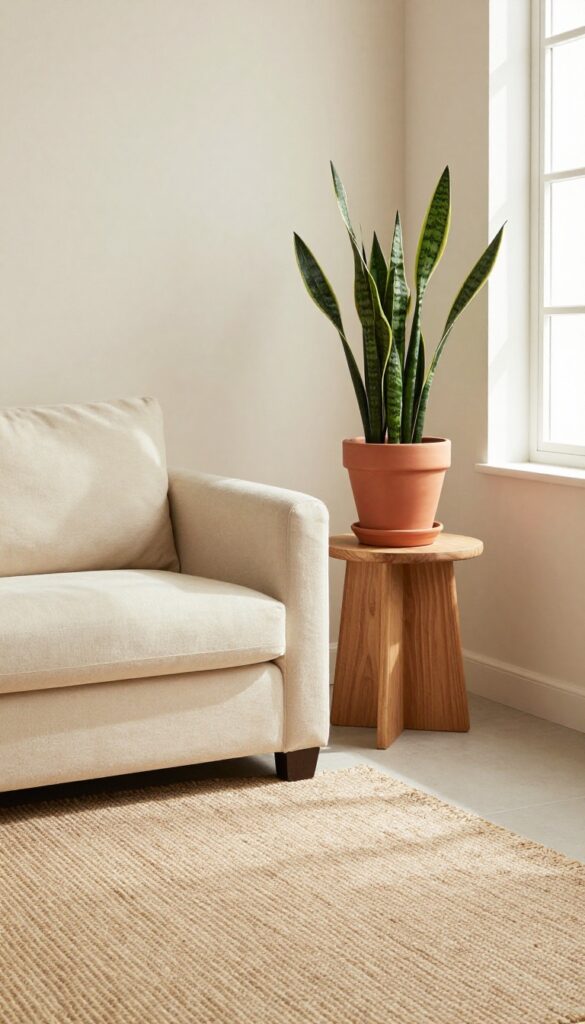
Plants are one of the easiest ways to breathe life into a beige living room, and they don't have to clash with your neutral palette. The trick is choosing planters in earthy tones—think beige, terracotta, cream, or soft sand—so the greenery pops without fighting the rest of the room. In a small space, a few well-placed pots can make the whole room feel fresher and more vibrant, while keeping that warm, cozy vibe intact.
Potted plants in neutral planters add a natural pop of green that instantly freshens up a beige living room. The soft, earthy tones of the pots blend seamlessly with your neutral layers, while the leaves bring in organic texture and a touch of life. For small spaces, this is a low-footprint way to introduce color and energy without cluttering surfaces or overwhelming the room.
A snake plant, pothos, or fiddle leaf fig in a matte cream planter can become a subtle focal point that draws the eye and makes the space feel more inviting.
Best Plant Choices
- Stick with plants that have rich, deep green leaves for maximum contrast against beige. Snake plants, ZZ plants, monstera, and pothos are all hardy options that thrive in indirect light and don't need constant attention. If you want a taller statement, a fiddle leaf fig in a large terracotta pot adds height and drama without taking up floor space.
- For shelf styling, try trailing plants like string of pearls or ivy in small cream pots—they soften hard edges and add movement.
Planter Materials & Finishes
- Matte finishes work best in a warm, cozy beige room—they feel natural and understated. Terracotta brings a rustic touch, while glazed ceramic in cream or sand adds a bit of sheen without being shiny. Avoid glossy black or bright white planters, as they can feel too stark.
- Instead, look for ribbed, textured, or hand-thrown pots that add visual interest. Grouping three planters of varying heights on a console table or windowsill creates a curated look that feels intentional.
Small-space Placement
- In a compact living room, every surface counts. Place a single large plant in a corner to draw the eye upward and make the ceiling feel higher. Use a slim plant stand to elevate a pot without taking up floor space.
- Hanging planters in a window or from a ceiling hook are also great for adding greenery without sacrificing square footage. Just keep the pots neutral so they blend into the background and let the leaves shine.
13. Layer Ambient and Task Lighting
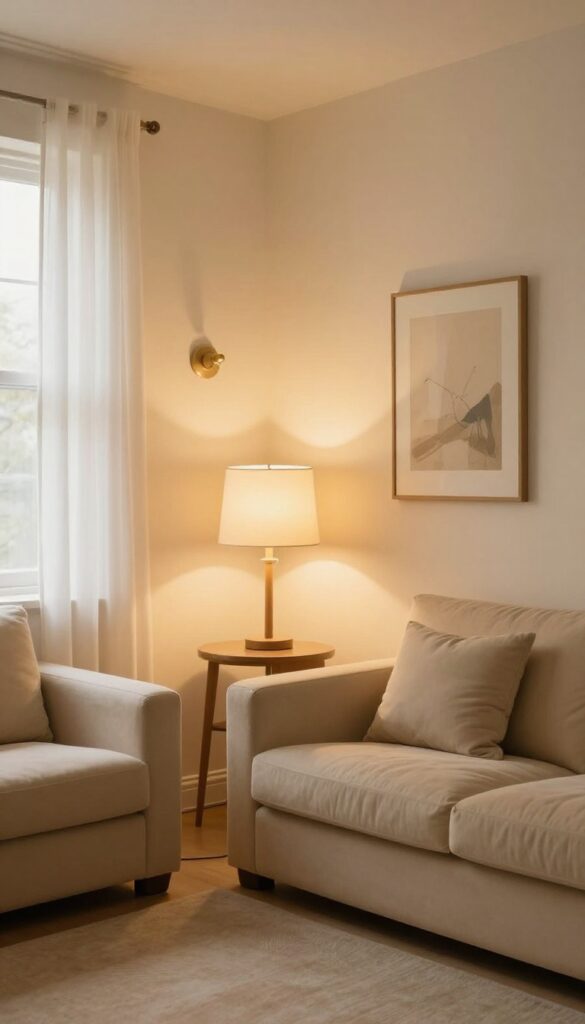
Lighting can make or break a cozy beige living room. Without it, even the softest neutrals can fall flat. By layering a mix of ambient and task lighting, you create depth and warmth that makes the space feel inviting after dark.
Small rooms benefit most from this approach because multiple light sources trick the eye into seeing more dimension.
Start with a floor lamp in one corner to cast a soft glow across the room. Add a table lamp on a side table or console for focused reading light. If you have wall space, install a small sconce near a chair or artwork.
Use warm yellow bulbs (2700K–3000K) to enhance the beige tones and avoid harsh shadows. Dimmers let you adjust the mood from bright and functional to dim and cozy. This layered setup makes a small living room feel larger and more polished without adding visual clutter.
Best Bulb Temperature
Stick with soft white or warm yellow bulbs in the 2700K–3000K range. Cool or daylight bulbs will make beige look gray and sterile. Warm light brings out the honey and cream undertones in your neutrals.
Small-space Placement
In a tight room, place a floor lamp behind a sofa or in a corner to free up floor space. Use a slim table lamp on a floating shelf or narrow console. Wall sconces are a great space-saving option—install them flanking a mirror or above a small desk.
Finishing Touch
Add a dimmer switch to your main overhead light or plug-in lamps. This single change lets you transition from bright daytime cleaning to soft evening relaxation with one click. It’s an affordable upgrade that instantly boosts the cozy factor.
FAQ
Can beige work in a very small living room?
Absolutely. Beige reflects light well, making small spaces feel larger and brighter. Pair it with mirrors and light-colored furniture to maximize the effect.
How do I keep beige from looking dull?
Layer different textures like linen, wood, jute, and velvet. Add warm metallic accents and a few plants to create visual interest without relying on bold colors.
What colors go best with beige in a living room?
Cream, ivory, warm white, soft brown, and muted greens or blues. These colors enhance beige's warmth and keep the palette cohesive.
Is beige still trendy for living rooms?
Yes, especially when used in layered, textured ways. Modern beige is far from the flat beige of the past—it's warm, sophisticated, and versatile.
What type of rug works best with a beige sofa?
A jute or sisal rug adds natural texture, while a patterned rug in neutral tones can add subtle interest. Avoid rugs that are too dark or busy.
Conclusion
Beige doesn't have to be basic. With the right mix of textures, warm wood, and thoughtful lighting, it becomes the foundation for a living room that feels both spacious and incredibly cozy.
These 13 ideas show how small-space living can still feel rich and inviting—one soft layer at a time. Try a few of these tips, and your beige living room will go from forgettable to your favorite spot in the house.