How to Clean Glass Shower Doors in 13 Easy Home Steps
You step out of the shower, only to see your glass doors covered in cloudy spots and water marks. It's frustrating, but you don't need harsh chemicals or expensive products to fix it. With a few household staples and a little elbow grease, you can restore that crystal-clear look.
Hard water and soap scum build up fast, but they're no match for the right approach. This guide breaks down 13 straightforward steps that tackle grime without damaging the glass. Each step is practical and easy to fit into your cleaning routine.
Whether you're dealing with stubborn stains or just want to prevent future buildup, these tips will save you time and effort. Let's get those doors sparkling again.
1. Gather Your Cleaning Arsenal
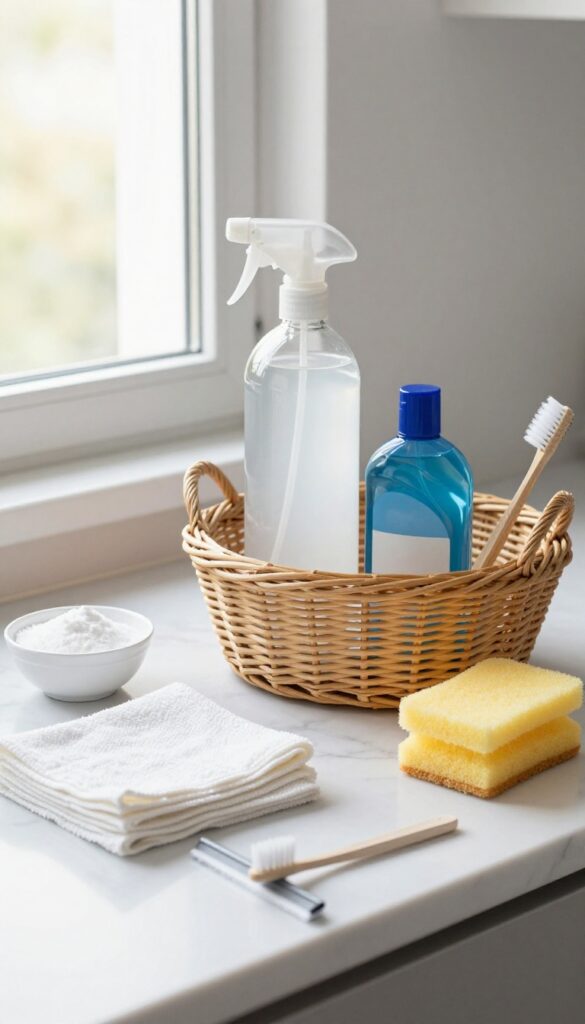
Before you tackle those cloudy spots, take a minute to round up the right tools and cleaners. Having everything within arm's reach makes the job faster and less frustrating. You likely already have most of these items in your pantry or under the sink.
The Must-have Liquids
White vinegar is your star player—it cuts through hard water stains and soap scum naturally. Dish soap breaks down grease, and a little baking soda gives you gentle scrubbing power for stubborn spots. Pour each into a separate spray bottle or keep them in their original containers for easy access.
Tools That Make A Difference
A squeegee is non-negotiable for streak-free drying after each shower. Microfiber cloths trap dirt without scratching the glass, and a soft sponge or non-abrasive scrubber handles the heavy lifting. A spray bottle helps you apply vinegar or soap solution evenly.
Optional But Helpful Extras
If your doors have metal frames, grab an old toothbrush for tight corners. Rubber gloves protect your hands if you have sensitive skin, and a bucket of warm water is handy for rinsing. You don't need a fancy caddy—a small tray or basket keeps everything organized.
2. Rinse the Doors with Warm Water
A quick rinse is the easiest way to kick off your cleaning session. Warm water helps loosen surface grime, soap scum, and loose dirt without any scrubbing. It also primes the glass so your cleaning solution can work more effectively later.
Why Warm Water Works Best
Hot water is great for dissolving soap scum and mineral deposits. Cold water won't cut through the grease as well. Aim for comfortably warm—not scalding—to avoid damaging any seals or hardware.
How To Rinse Properly
Use a handheld showerhead or a cup to pour water over the entire glass surface. Start from the top and work your way down. Make sure every corner gets wet, especially the bottom edges where grime tends to collect.
What To Do After Rinsing
Don't let the water air-dry completely—that can leave new spots. Move on to the next step while the glass is still damp. If you need to pause, wipe the doors dry with a microfiber cloth to prevent water marks.
3. Apply a Vinegar and Dish Soap Solution
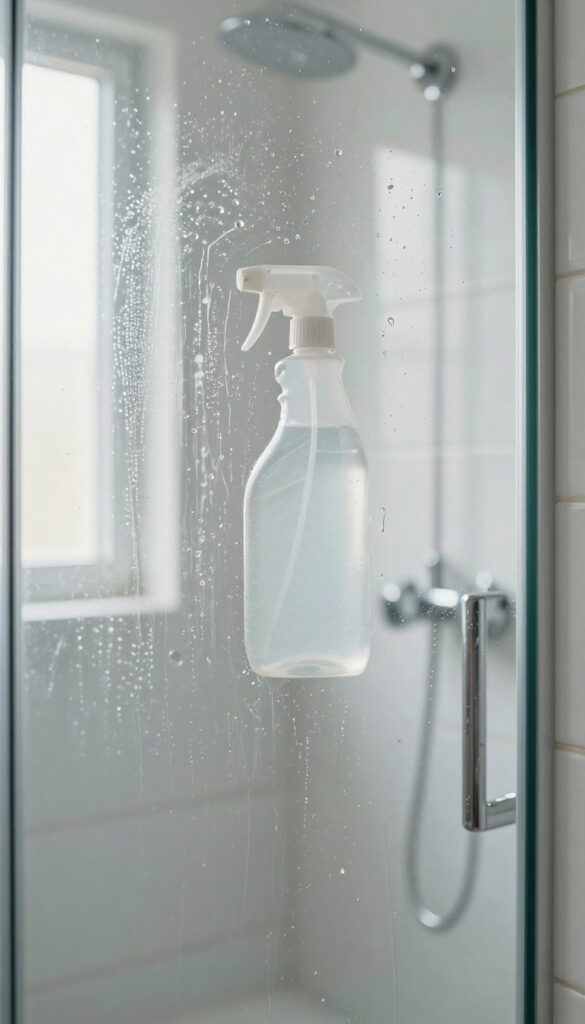
Now that you've prepped the surface, it's time to bring out the big guns—without resorting to harsh chemicals. A simple mix of white vinegar, warm water, and dish soap creates a powerful yet gentle cleaner that cuts through soap scum and hard water stains. Vinegar's acidity breaks down mineral deposits, while dish soap tackles greasy residue.
Together, they make a dynamic duo for glass shower doors.
In a spray bottle, combine equal parts white vinegar and warm water. Add a few drops of dish soap—just enough to create a slight sudsy effect when shaken. Swirl gently to mix, then spray the solution generously all over the glass doors.
Let it sit for 5–10 minutes to allow the vinegar to work on stubborn spots. The solution is safe for most glass finishes, but avoid letting it pool on metal frames for too long to prevent any potential discoloration.
Why This Mix Works
Vinegar is a mild acid that dissolves alkaline mineral deposits from hard water. Dish soap is a surfactant that lifts and suspends oily soap scum. When combined, they tackle both types of buildup simultaneously.
The warm water helps activate the ingredients and improves spreading. This homemade solution is just as effective as many commercial cleaners but costs pennies per batch.
Application Tips For Best Results
For heavy buildup, use a spray bottle with a wide mist setting to cover large areas quickly. Work from top to bottom so drips don't create streaks on already-cleaned sections. If your doors are particularly grimy, apply a second coat after the first has sat for a few minutes.
Avoid using this solution on natural stone or unsealed grout, as the acid can etch those surfaces.
Safety And Storage
The solution is non-toxic and safe around kids and pets once dry. Store any leftover mixture in a labeled spray bottle out of direct sunlight. It will remain effective for up to a week.
If you have sensitive skin, wear gloves when applying, as prolonged contact with vinegar can cause mild irritation.
4. Let the Solution Sit for 10 Minutes
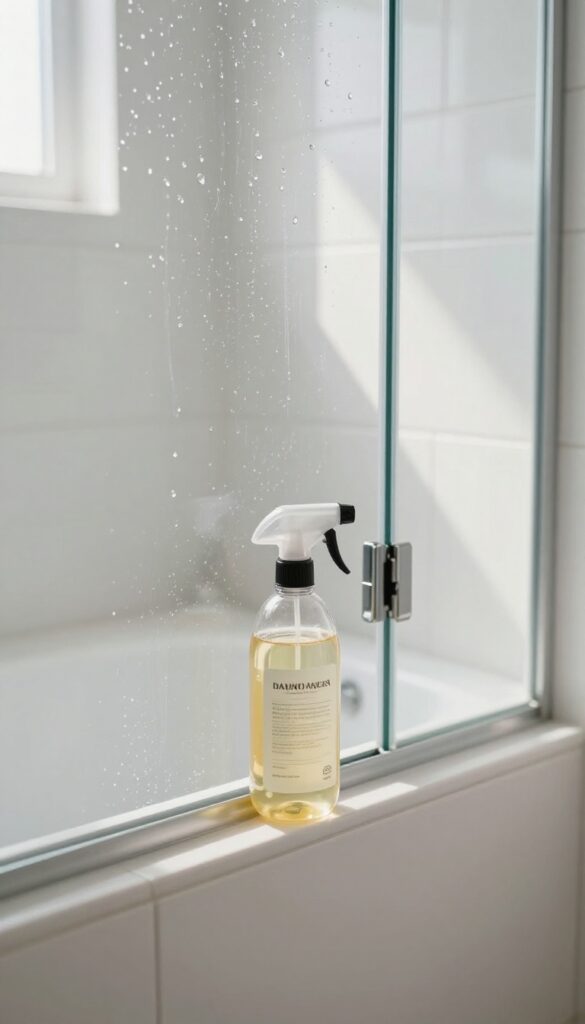
Patience is a virtue, especially when it comes to cleaning glass shower doors. After you've sprayed on your vinegar and dish soap mixture, resist the urge to start scrubbing right away. Giving the solution a few minutes to work its magic makes all the difference.
The active ingredients need time to break down the mineral deposits and soap scum that have built up over time. Without this waiting period, you'll be scrubbing much harder and still might not get the glass fully clean. Ten minutes is the sweet spot—long enough to loosen grime but not so long that the solution dries out.
Why Time Matters
Vinegar is acidic, which helps dissolve hard water stains, while dish soap cuts through greasy soap scum. But chemical reactions don't happen instantly. Letting the solution sit gives it time to penetrate layers of buildup, so when you do wipe, the grime comes off easily.
What To Do While You Wait
Use those ten minutes wisely. You can wipe down other bathroom surfaces, organize your cleaning supplies, or simply enjoy a quick break. Just make sure the solution stays wet on the glass—if it starts to dry, mist it lightly with water to reactivate.
Don't Let It Dry Out
If the solution dries on the glass, it can leave streaks or even etch the surface over time. Set a timer and check the glass after about eight minutes. If it looks dry, give it a quick spritz with plain water to keep it damp until the ten minutes are up.
5. Scrub with a Soft Sponge or Non-Abrasive Pad
Now that your DIY cleaner has had time to work, it's time to gently scrub away the loosened grime. The key here is using the right tool—something soft enough to protect the glass but effective enough to lift residue. A non-abrasive sponge or microfiber pad is perfect for this job.
Why Soft Matters
Glass shower doors are often treated with a protective coating to repel water and stains. Using an abrasive scrubber like steel wool or a harsh scouring pad can scratch that coating and even etch the glass itself. Once scratched, the glass becomes a magnet for soap scum and hard water deposits.
A soft sponge or a non-abrasive pad (often labeled as "safe for nonstick cookware") will clean effectively without causing damage.
The Circular Motion Technique
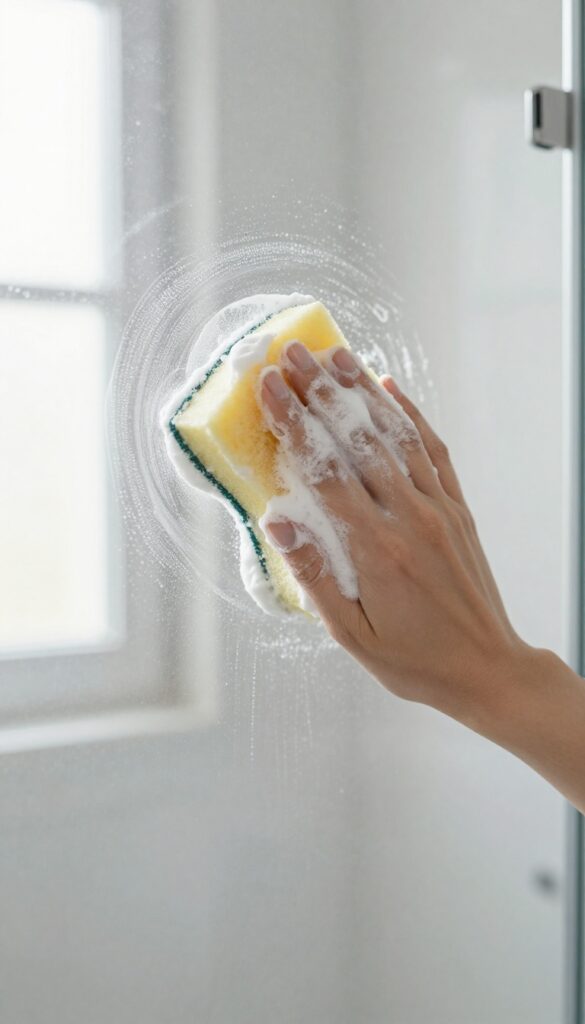
Apply gentle pressure and scrub in small, overlapping circles. This motion helps lift dirt from all angles and prevents streaking. Focus on areas with visible buildup, like the bottom edges where water pools or corners where soap scum collects.
For tough spots, let the cleaner sit for a few extra minutes before scrubbing again.
What To Avoid At All Costs
Steel wool, metal scrubbers, and abrasive powders are enemies of glass shower doors. Even a single pass can leave fine scratches that cloud the surface permanently. Also avoid using colored sponges that might bleed dye onto the glass—stick with white or neutral-colored non-abrasive pads.
6. Tackle Stubborn Stains with Baking Soda Paste
Some spots just won't budge with vinegar alone. That's where baking soda steps in. It's gentle enough to avoid scratching glass but abrasive enough to lift caked-on grime.
This simple paste turns tough stains into a quick scrub job.
Mix three parts baking soda with one part water to form a thick paste. Apply it directly to problem areas like the bottom track or around the handles where soap scum loves to hide. Let it sit for five minutes—this gives the baking soda time to break down the residue without drying out.
Then scrub with a soft sponge or microfiber cloth in circular motions. Rinse thoroughly and wipe dry to prevent new spots from forming.
Why Baking Soda Works So Well
Baking soda is mildly alkaline, which helps neutralize acidic soap scum and dissolve mineral deposits. Its fine particles provide just enough friction to scrub away grime without scratching the glass. Plus, it's non-toxic and safe for your family and pets.
How To Apply The Paste Effectively
Use a soft sponge or an old toothbrush for tight corners. Spread the paste evenly, focusing on stained areas. Let it sit for five minutes—don't let it dry completely.
If it starts to dry, spritz a little water to reactivate it.
Rinsing And Finishing Up
After scrubbing, rinse the glass thoroughly with warm water. Any leftover paste can leave a white film, so take your time. Wipe the surface dry with a clean microfiber cloth to restore shine and prevent water spots.
7. Rinse Thoroughly with Warm Water
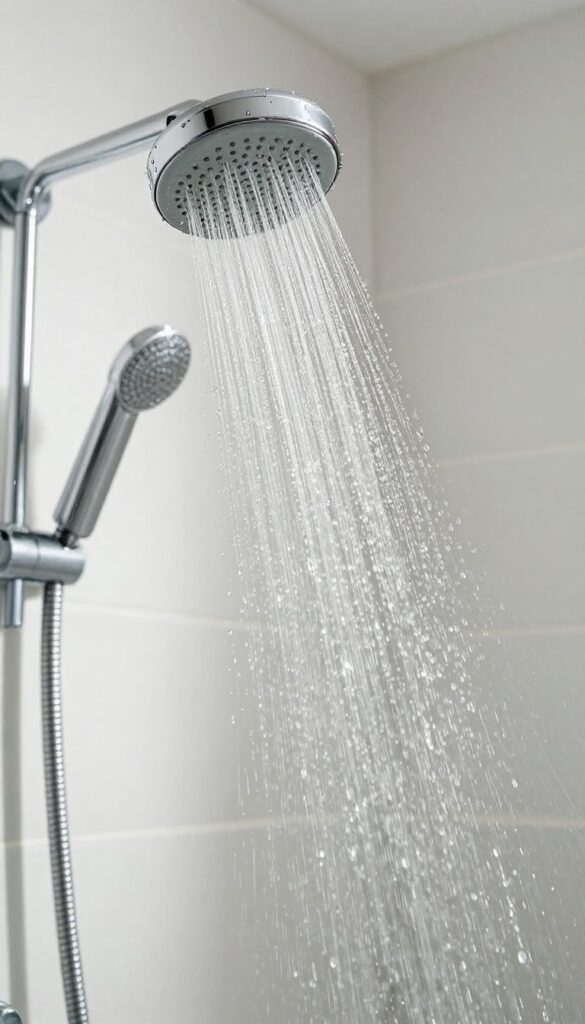
After all that scrubbing, the final step before drying is often the most overlooked. Rinsing might seem simple, but doing it wrong can leave behind residue that causes streaks and spots. Warm water is your best friend here—it helps dissolve any leftover cleaner or loosened grime so nothing gets left behind.
Grab your handheld showerhead or a large cup of warm water. Start at the top of the door and work your way down, making sure every inch gets a good rinse. Pay extra attention to corners and edges where suds like to hide.
If you used a vinegar-based cleaner, a thorough rinse also neutralizes the acidity, protecting the glass over time.
Why Warm Water Works Best
Cold water can cause soap residue to re-solidify, while hot water may be uncomfortable to handle. Warm water strikes the perfect balance—it keeps any remaining cleaner in liquid form so it flows away easily. Plus, it helps the glass dry faster without mineral deposits.
How To Rinse Without Missing Spots
Work in sections: top left, top right, then middle, and finally bottom. Overlap your rinsing path to avoid streaks. If you're using a cup, pour slowly and evenly.
For a handheld showerhead, use a wide spray setting. Check for any suds or slippery spots—if you feel any, rinse again.
8. Squeegee the Glass Immediately
You've scrubbed, rinsed, and admired your hard work—but the job isn't done until you dry the glass properly. Skipping this step is like washing your car and leaving it to air dry: water spots will form as droplets evaporate, leaving behind mineral deposits that dull the shine. A quick pass with a squeegee prevents that and keeps your doors looking streak-free.
Grab a high-quality squeegee with a rubber blade (the kind used for windows works perfectly). Start at the top corner of the door and pull the squeegee across in a straight, overlapping stroke. Overlap each pass by about an inch to avoid leaving streaks.
Work your way down the entire door, wiping the blade dry with a microfiber cloth after every few strokes to prevent water from dripping back onto the glass. Don't forget the edges and corners—use a small towel or cloth to catch any drips there. This whole process takes less than a minute but makes a huge difference in preventing new spots from forming.
Why The Squeegee Beats Towel Drying
Towel drying can leave lint, streaks, or even scratch the glass if the towel is dirty. A squeegee removes water in one smooth motion, leaving no residue. It also reaches into corners better than most cloths.
Plus, it's faster—you can squeegee both doors in under 30 seconds, while towel drying takes twice as long.
The Right Technique For A Streak-free Finish
Angle the squeegee slightly so the blade glides smoothly without skipping. Use firm, even pressure—too light and water stays behind; too hard and you risk damaging the seal. Always start at the top and work downward so gravity helps you.
For large doors, use a horizontal stroke across the width, then a vertical stroke down the middle to catch any remaining water.
When To Squeegee: Right After Every Shower
Make it a habit to squeegee immediately after you step out, while the glass is still wet. If you wait even a few minutes, water begins to evaporate and minerals start bonding to the glass. For best results, keep a squeegee hanging inside the shower so it's always handy.
A quick daily habit keeps your doors looking clean for weeks longer between deep cleans.
9. Buff with a Microfiber Cloth for Streak-Free Shine
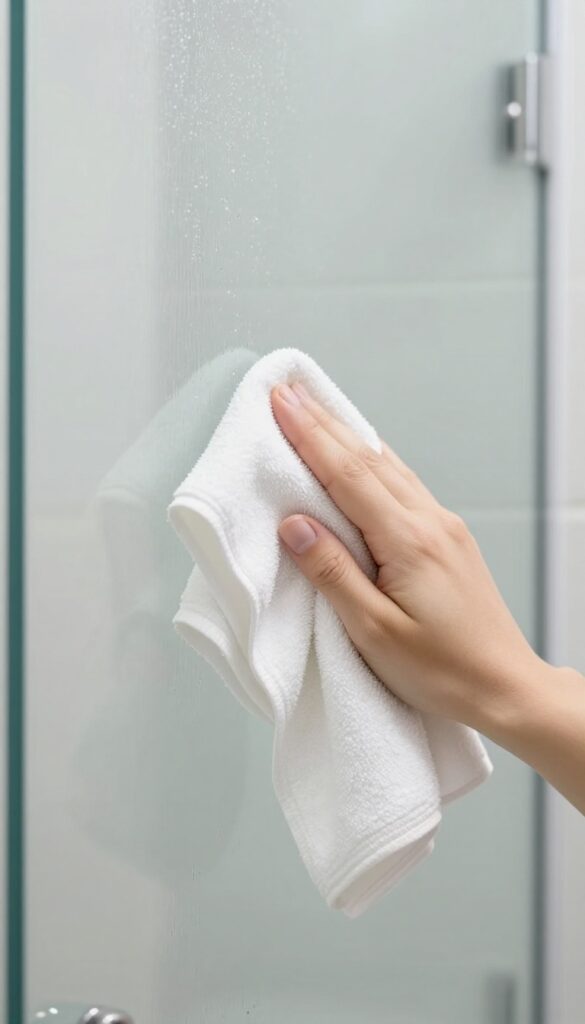
The final touch can make all the difference. After all that scrubbing and rinsing, a quick buff with the right cloth transforms cloudy glass into a crystal-clear surface. Microfiber is the hero here—it lifts away leftover moisture without leaving lint or streaks behind.
Grab a clean, dry microfiber cloth and fold it into a manageable pad. Start at the top corner of the door and work your way down in overlapping, circular motions. This technique picks up any remaining water droplets and polishes the glass to a brilliant shine.
Avoid using paper towels or old rags, as they can leave fibers or smears that ruin the effect. For large doors, switch to a fresh side of the cloth once it feels damp. The result is a streak-free finish that looks professionally cleaned.
Why Microfiber Works Best
Microfiber cloths have split fibers that create a static charge, attracting dust and moisture like a magnet. They absorb several times their weight in water without leaving behind lint. Unlike cotton or terry cloth, microfiber won't shed fibers that stick to wet glass.
Plus, they're reusable and machine washable, making them an eco-friendly choice for regular maintenance.
Technique Tips For A Perfect Buff
Work in sections to avoid missing spots. Use a top-to-bottom, left-to-right pattern, and apply light pressure—let the cloth do the work. If you notice streaks, the cloth might be too damp; switch to a dry one.
For stubborn water spots, add a tiny drop of distilled white vinegar to the cloth before buffing. Always finish with a dry buff to seal the shine.
10. Clean the Tracks and Seals
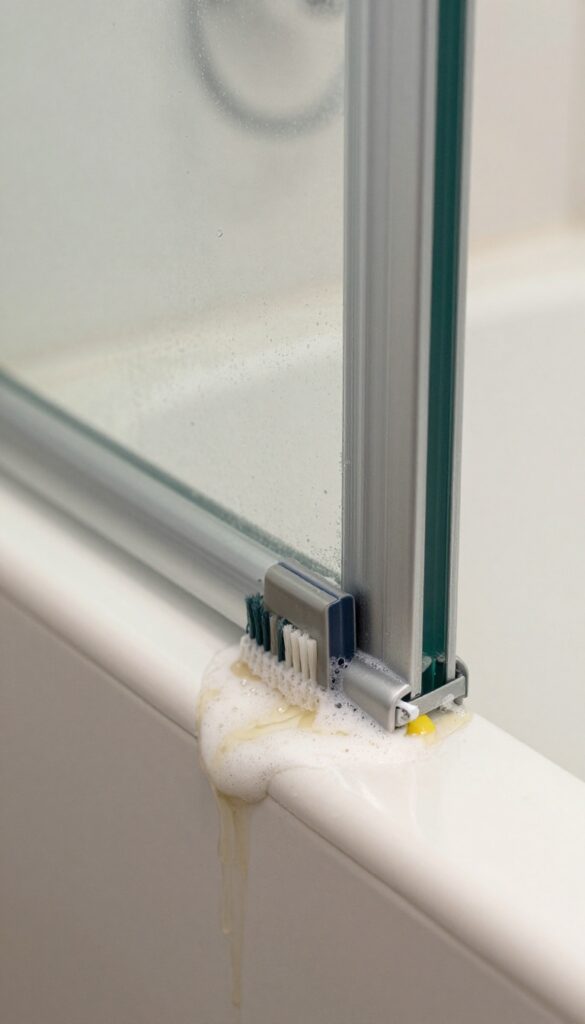
The glass might be spotless, but if the tracks and seals are grimy, your shower doors still look dirty. Mold and mildew love hiding in these damp, dark crevices. A quick scrub with an old toothbrush and a vinegar solution will get them back in shape.
Why Tracks And Seals Get Gross
Soap scum, hair, and hard water minerals settle in the bottom tracks. Rubber seals stay damp, making them prime real estate for black mold. Over time, this buildup can even make the door harder to slide.
What You'll Need
Grab a spray bottle filled with equal parts white vinegar and water, an old toothbrush (or a small scrub brush), and a microfiber cloth. For tough mold, add a drop of dish soap to the vinegar mix.
Step-by-step Scrubbing
Spray the tracks and seals generously with the vinegar solution. Let it sit for 5 minutes to loosen grime. Then, dip the toothbrush in the solution and scrub along the tracks, paying extra attention to corners.
For rubber seals, gently brush the entire length. Rinse with warm water by pouring it down the tracks or using a spray bottle. Wipe dry with a microfiber cloth.
Prevent Future Build-up
After every shower, use a squeegee or towel to wipe the tracks and seals. Once a week, give them a quick spray with vinegar and a rinse. This simple habit keeps mold from coming back.
11. Apply a Rain-Repellent Coating (Optional)
If you want to make future cleanings easier, a rain-repellent coating is a game-changer. These products create a hydrophobic layer that makes water bead up and roll off, taking soap scum and minerals with it. You can buy a commercial glass protectant or whip up a DIY version with car wax.
It's an optional step, but once you try it, you'll wonder why you didn't sooner.
A rain-repellent coating works like a shield for your glass. It fills microscopic pores and creates a smooth surface that water can't grip. This means less spotting, less scum, and quicker drying.
The effect can last for weeks or months depending on the product and how often you shower. It's especially useful if you have hard water or live in a humid area.
Commercial Glass Protectants
Look for products specifically designed for shower glass, like Rain‑X or similar brands. They come in spray or wipe-on forms. Follow the instructions carefully: clean the glass thoroughly first, then apply the product in a well‑ventilated area.
Buff it off with a microfiber cloth until the glass is clear. These treatments typically last 2–4 weeks.
Diy Wax Method
You can use a high‑quality carnauba car wax (avoid any with cleaners or abrasives). Apply a small amount to a damp microfiber cloth and rub it onto the clean glass in circular motions. Let it haze for a minute, then buff it off with a clean dry cloth.
This method is cheaper and works well, but you may need to reapply every 1–2 weeks.
Application Tips For Best Results
Work in small sections to avoid the product drying before you buff it. Use two microfiber cloths: one for application and one for buffing. Make sure the glass is completely dry before applying the coating.
Avoid getting the product on metal or rubber seals, as it can cause discoloration. Test on a small hidden area first.
12. Maintain with a Daily Spray and Wipe Routine
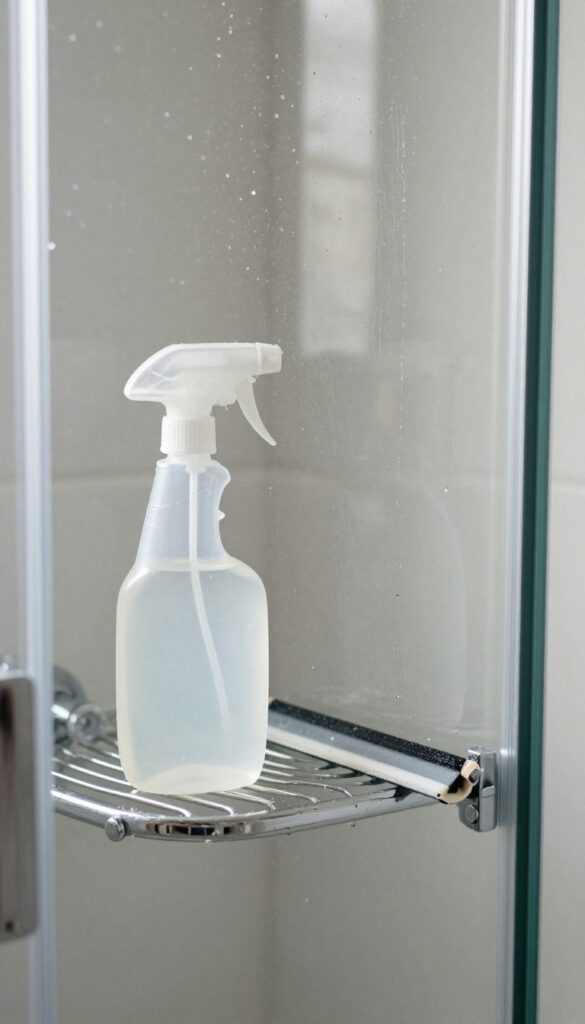
You've put in the work to get those doors sparkling, but keeping them that way doesn't have to be a chore. A simple daily habit can prevent soap scum and hard water spots from ever building up again. The key is consistency, not intensity.
After every shower, take 30 seconds to spray the glass with a mixture of equal parts white vinegar and water. Then, run a squeegee from top to bottom. This routine removes water droplets before they dry into mineral deposits, and the vinegar cuts through any fresh soap residue.
Over time, you'll notice you need deep cleans much less often.
Why Vinegar Works
White vinegar is mildly acidic, which breaks down the alkaline minerals in hard water and the fatty acids in soap scum. Using it daily keeps the glass surface clean without harsh chemicals. Just make sure to store the spray bottle in a cool, dark place to maintain its potency.
Squeegee Technique Matters
Use a good-quality squeegee with a rubber blade. Start at the top corner and pull horizontally, overlapping each stroke slightly. Wipe the blade dry with a cloth after each pass to avoid streaks.
For curved doors, a flexible squeegee or a microfiber cloth works better.
Make It A Family Habit
Encourage everyone in the household to follow the routine. Keep the spray bottle and squeegee within easy reach in the shower. A small caddy or hook can make it convenient.
After a week, it becomes second nature, and your glass stays clear with minimal effort.
13. Schedule a Weekly Deep Clean
Even with daily maintenance, soap scum and hard water deposits can sneak back. That's why setting aside one day each week for a thorough cleaning makes all the difference. Think of it as a reset button for your shower doors—a small investment that pays off in lasting sparkle.
Consistency is the secret to keeping glass shower doors looking brand new. A weekly deep clean prevents buildup from becoming stubborn, so you never have to scrub for hours. Stick to the routine, and you'll spend less time cleaning overall.
Pick Your Weekly Day
Choose a day that works best for your schedule—Sunday morning or Wednesday evening, it doesn't matter. The key is to make it a habit. Set a reminder on your phone or pair it with another weekly chore, like laundry, so you don't forget.
Follow The Full Routine
Each week, run through steps 2 through 9 without skipping. That means spraying your cleaning solution, scrubbing with a non-abrasive pad, and rinsing thoroughly. Don't cut corners—every step matters for preventing buildup.
Adjust Based On Usage
If your shower gets heavy use, you might need to deep clean twice a week. In a low-traffic bathroom, every 10 days could be enough. Pay attention to how quickly scum reappears and tweak your schedule accordingly.
Reward Yourself For Consistency
A clean shower feels great, so acknowledge your effort. Maybe treat yourself to a new bath mat or a scented candle after a month of sticking to the routine. Positive reinforcement makes the habit stick.
FAQ
Can I use bleach to clean glass shower doors?
Bleach can damage glass seals and is not recommended for routine cleaning. Stick to vinegar and baking soda for safe, effective results.
How do I remove hard water stains that won't come off?
Try a paste of baking soda and vinegar, let it sit for 15 minutes, then scrub. For extreme stains, use a commercial hard water remover.
Is it safe to use a razor blade on glass doors?
Yes, but only on flat glass and with a new blade held at a 45-degree angle. Avoid on textured or tinted glass.
How often should I clean my glass shower doors?
Daily squeegeeing and a weekly deep clean keep doors spotless. Adjust based on your water hardness and usage.
What's the best natural cleaner for glass shower doors?
A 50/50 mix of white vinegar and water with a drop of dish soap works wonders. It's cheap, non-toxic, and effective.
Conclusion
With these 13 steps, your glass shower doors can look crystal clear without harsh chemicals or endless scrubbing. Pick the methods that fit your schedule and stick with them.
Consistency is the real secret to streak-free glass. A quick daily wipe and a weekly deep clean will keep soap scum and hard water stains from building up again.