9 Living Room Interior Design Ideas That Make the Room Look Better
A living room that looks good but never feels cluttered? That’s the sweet spot. The trick isn’t just buying more storage bins—it’s choosing pieces that pull double duty and arranging them in a way that feels intentional.
Whether you’re working with a compact apartment or just want to tame the chaos, these nine ideas focus on making every inch count. Each one keeps your space looking polished while hiding the mess behind the scenes.
Ready to give your living room a smart, stylish upgrade? Let’s dive in.
1. Floating Shelves That Double as Display and Storage
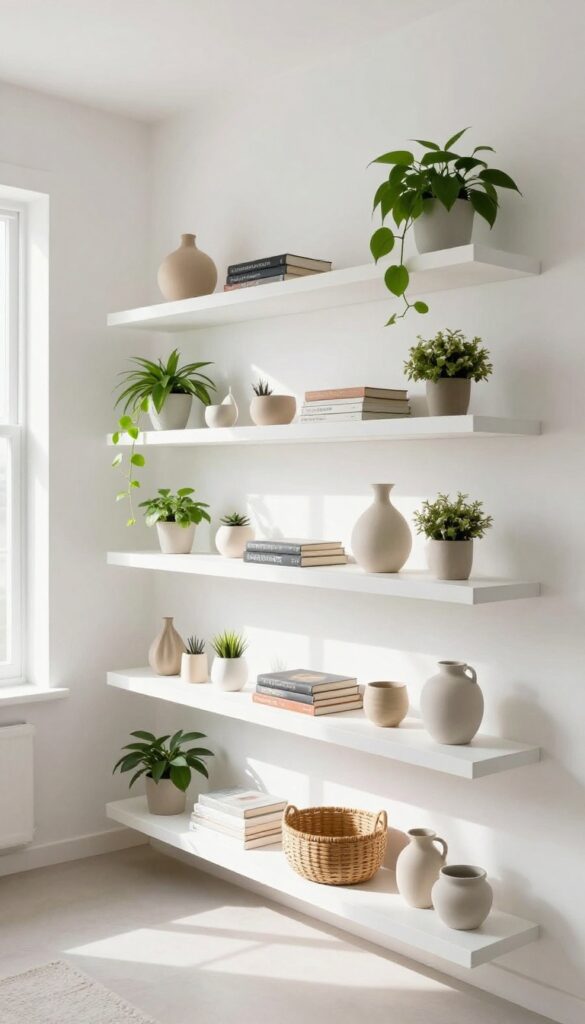
Floating shelves are the unsung heroes of living room design. They free up floor space, draw the eye upward, and let you show off your favorite things without committing to bulky furniture. The trick is to install them at varying heights, creating a dynamic, gallery-like wall that feels curated, not cluttered.
Matching baskets tucked between stacks of books keep remote controls and charging cables hidden, so the whole setup looks intentional and clean.
Floating shelves do more than hold a few picture frames. When arranged thoughtfully, they become a focal point that adds depth and personality to your living room. The key is mixing open display with concealed storage.
Use sleek, low-profile shelves in a finish that complements your wall color or trim—white shelves on white walls keep things airy, while dark wood adds warmth against lighter paint. Stagger the heights so the eye moves naturally across the wall, and group items in odd numbers for a balanced, collected feel.
Best Heights And Spacing
- Aim for a vertical spread of about 6 to 8 inches between shelves, but vary the gaps slightly to avoid a rigid look. Place the lowest shelf around 12 inches above a sofa or console table, then step the next one up by 10 inches, and so on. This staggered rhythm creates visual interest without looking chaotic.
- If you're working with a narrow wall, keep the shelves shorter and closer together to maintain proportion.
Storage Tip: Baskets And Bins
- Woven baskets or neutral fabric bins are your best friend here. Use them on one or two shelves to corral small items like coasters, charging bricks, or TV remotes. Choose baskets that match your room's texture palette—seagrass for a natural vibe, linen for a softer look.
- Keep the baskets shallow so they don't eat up too much shelf depth, and leave at least one shelf fully open for decor like a small plant or a stack of coffee table books.
Shelf Styling Tip: Layer And Edit
- Treat each shelf like a mini vignette. Lean a framed photo against the wall, place a small vase in front, and let a trailing plant drape over the edge. Mix vertical and horizontal objects to break up the line of sight.
- And don't overcrowd—leave about 30 percent of each shelf empty so the eye can rest. Edit ruthlessly every few months to keep the display feeling fresh and intentional.
2. A Coffee Table with Hidden Compartments
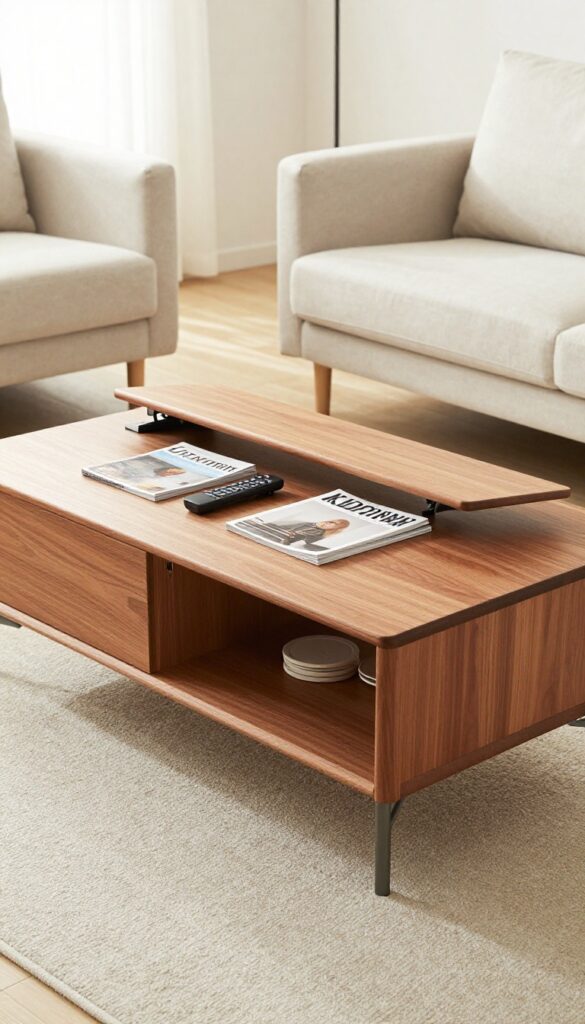
Coffee tables often become catchalls for remote controls, coasters, and half-read magazines. Instead of fighting the clutter, choose a table that hides it all. A lift-top, drawers, or a lower shelf keeps everyday items accessible but out of sight, so your living room always looks tidy without constant tidying.
A coffee table with built-in storage does double duty: it anchors the seating area and provides a place to stash the stuff you actually use. Look for designs that blend with your existing furniture—wood tones, metal legs, or a glass top—so the storage feels intentional, not like a utility piece. In smaller rooms, a table with a lower shelf can replace a separate media console, while a lift-top works well for casual dining or laptop use.
The key is to choose a style that matches your habits: if you eat in front of the TV, a lift-top is a game-changer; if you just need a spot for coasters and remotes, a drawer or two is plenty.
Best Materials For Durability
Solid wood or wood veneer holds up best to daily use and hides scratches better than glass or glossy finishes. If you have kids or pets, consider a table with a matte or distressed finish—it hides fingerprints and minor wear. Metal frames add an industrial touch and are easy to clean, but make sure the drawers glide smoothly and the lift mechanism feels sturdy.
Layout Tip: Keep It Functional
Leave enough space between the coffee table and sofa for easy movement—about 14 to 18 inches. If your table has a lift-top, ensure the sofa height allows comfortable access when the top is raised. For rectangular tables, align the center with the sofa’s midpoint; for round tables, center them in the seating area to maintain flow.
Small-space Fix
In tight living rooms, a nesting coffee table set offers hidden storage without visual weight. Use the larger table for everyday needs and pull out the smaller one when you need extra surface space. Another option: an ottoman with a hidden compartment and a tray on top gives you storage plus a place to put drinks.
3. Ottomans That Open Up for Extra Stash Space
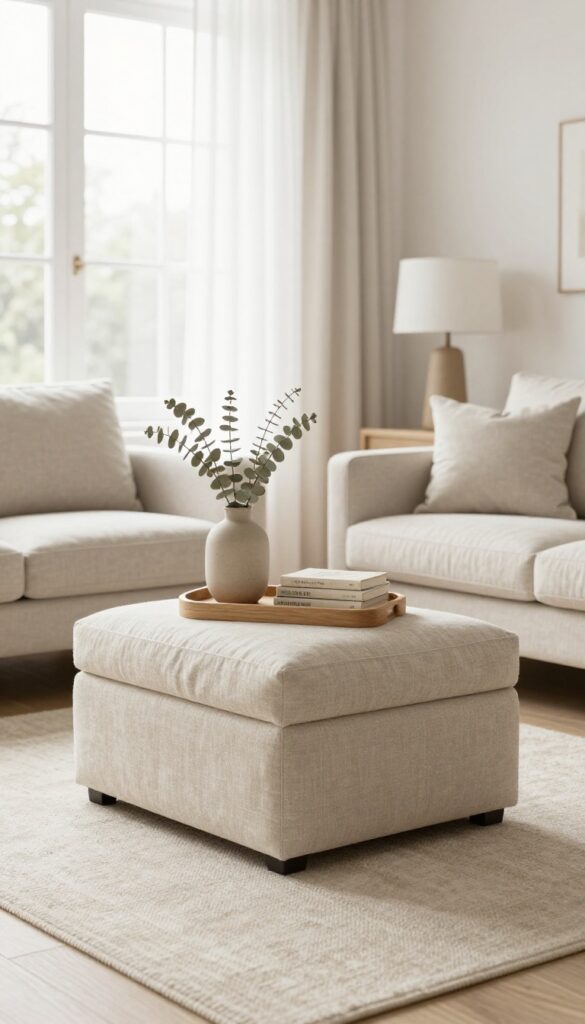
A storage ottoman is one of those pieces that quietly does double duty without calling attention to itself. It gives you a place to put your feet up, an extra seat when guests are over, and a hidden compartment for all the things you want out of sight. The trick is choosing one that blends in so naturally you forget it’s even a storage unit.
Tuck away throw blankets, extra pillows, or board games inside, and keep the top clear for a tray or a stack of books. When the ottoman matches your sofa fabric or complements the room’s color scheme, it feels intentional rather than like a last-minute fix. For small living rooms, this is a smart way to add function without adding visual clutter.
Best Materials For Durability
Look for performance fabrics like linen blends or crypton if the ottoman will see heavy use. Leather is easy to wipe clean but can feel formal; a textured weave adds warmth and hides wear better. If you have kids or pets, avoid light velvet or silk-like materials that show every smudge.
Size And Placement Tips
Choose an ottoman that’s roughly the same height as your sofa seat for comfortable footrest use. In a small room, a round or square ottoman works better than a rectangular one because it doesn’t block flow. Place it directly in front of the sofa or slightly off-center if you want to create a casual, lived-in look.
Styling The Top
- Keep the surface functional but styled. A large wooden tray corrals remote controls and coasters, while a small stack of books adds height. Add a single decorative object like a ceramic vase or a candle to make it feel finished.
- Avoid piling on too many items or the ottoman starts to look like a catchall.
4. Built-In Look with Modular Shelving Units
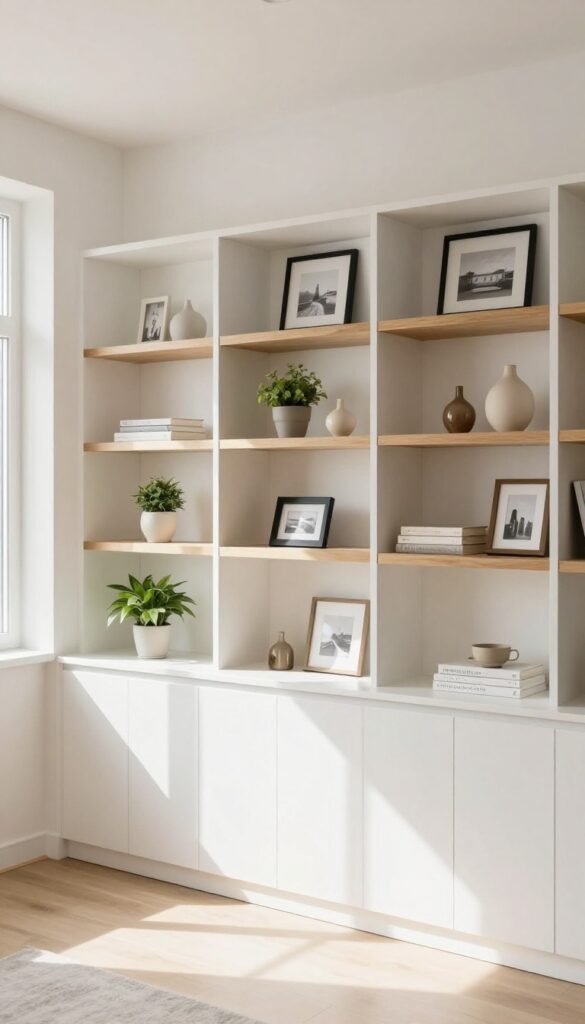
Modular shelving systems have come a long way from the clunky, boxy units of the past. Today’s designs are sleek, flexible, and surprisingly affordable. The trick is to arrange them so they look like custom built-ins—filling the wall from end to end or floor to ceiling.
Mixing closed cabinets with open shelves gives you the best of both worlds: space to hide clutter and spots to show off your favorite decor.
Start by measuring your wall and choosing a modular system that offers different sizes and configurations. Place taller units on the ends to frame the arrangement, then fill the middle with a mix of open cubes and drawers. Keep the overall silhouette clean and symmetrical for that built-in feel.
The result is a storage wall that looks intentional and polished, without the cost or commitment of permanent carpentry.
Best Layout Tip
Treat your shelving like a gallery wall. Use closed cabinets on the bottom or sides to anchor the look, then reserve open shelves for lighter items like books, plants, and small sculptures. This creates a visual rhythm that feels curated, not chaotic.
Shelf Styling Tip
Stick to a simple color palette on the shelves—think neutral vases, black-and-white photos, and greenery. Too many colors can make the unit feel busy. Repeat similar objects in different spots to tie the whole wall together.
Budget-Friendly Swap
If you’re on a tight budget, look for modular units from IKEA or Target that come in standard sizes. Add matching legs or a baseboard trim to make them look more built-in. A coat of paint in the same color as your wall can also help them blend in seamlessly.
5. Media Console with Closed and Open Storage
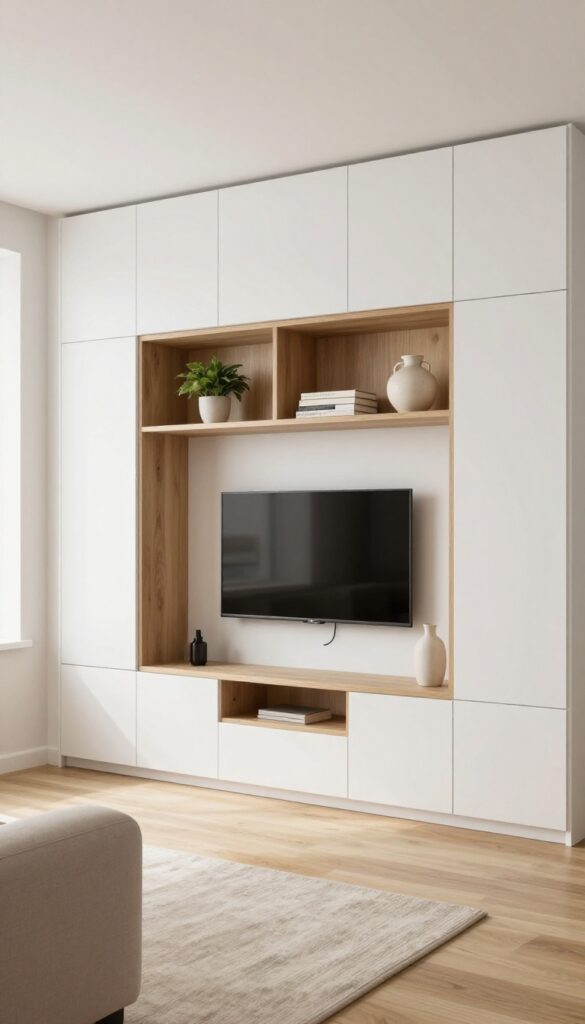
A media console is one of the hardest-working pieces in a living room. It holds your TV, hides the tech clutter, and often becomes a focal point. The trick to making it feel both functional and stylish is choosing one that mixes closed cabinets with open shelving.
This way, you can stash the messy stuff behind doors and display a few curated pieces on the open cubbies. It’s a smart, space-aware approach that keeps the room looking tidy without feeling sterile.
When you’re shopping for a media console, look for a design that offers a balance of hidden and visible storage. The closed sections are perfect for electronics, cables, gaming consoles, and anything else you’d rather not see. The open shelves give you a chance to add personality with books, small plants, or decorative objects.
This mix keeps the console from feeling too heavy or too bare, and it makes the whole setup feel intentional rather than cluttered. In a small living room, this approach is especially valuable because it maximizes storage without taking up extra floor space.
Best Colors And Materials
- For a smart, space-aware look, stick with light or medium wood tones paired with white or black. A light oak console with white cabinets feels airy and modern, while a walnut piece with black metal accents adds warmth and contrast. Avoid overly dark finishes in small rooms, as they can make the console feel bulky.
- If you want a cohesive look, match the wood tone to other furniture pieces like your coffee table or sideboard.
Storage Tip
- Use the closed cabinets for your router, cable box, and power strips. Install a small cable management panel or use adhesive clips to keep cords organized inside. On the open shelves, limit yourself to three or four items per cubby.
- A small stack of books, a ceramic vase, and a framed photo create a balanced vignette without looking busy.
Small-space Fix
- If your living room is tight, choose a console that’s no deeper than 16 inches to keep the walkway clear. Floating consoles are a great option because they free up floor space and make the room feel larger. Pair it with a wall-mounted TV to avoid a bulky setup.
- The open shelving can double as a display for remote controls or a small tray for daily essentials.
6. Wall-Mounted Cabinets for Vertical Storage
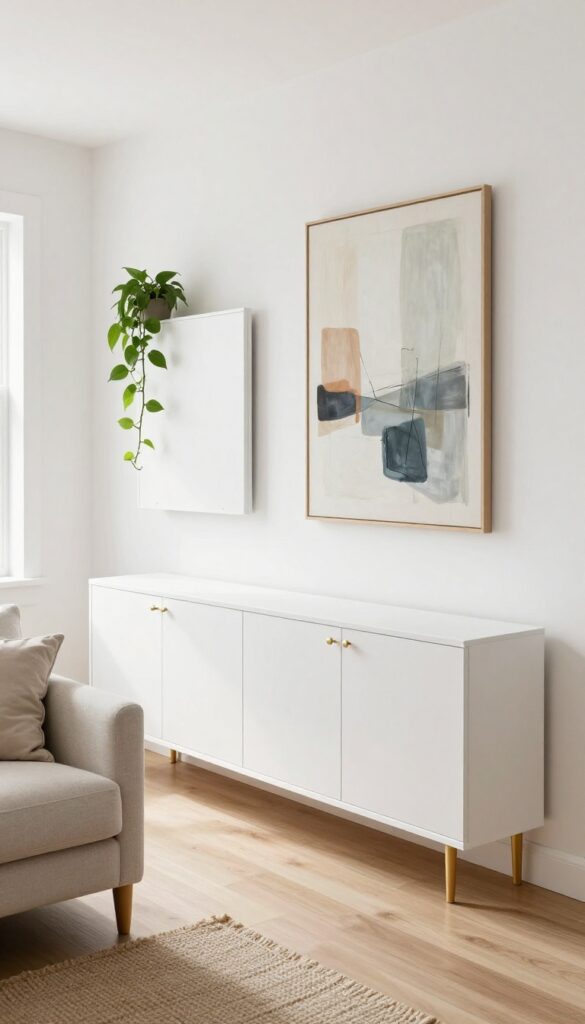
When floor space is tight, look up. Wall-mounted cabinets let you stash clutter without sacrificing square footage. Mounted high, they keep everyday essentials within reach while freeing up the floor for furniture and flow.
Paint them the same shade as your wall, and they practically disappear.
Mount slim cabinets high on the wall to store items you don’t need daily, like extra decor or seasonal throws. Paint them the same color as the wall to make them blend in. This trick works especially well in small living rooms where every inch counts.
Use them to hide remote controls, chargers, or board games behind closed doors. The key is keeping the cabinets shallow so they don’t protrude too much. For a cohesive look, match the cabinet hardware to other metal finishes in the room.
Best Placement
Install cabinets above a sofa or console table, leaving at least 18 inches of clearance below for artwork or a mirror. In a narrow room, place them on the longest wall to draw the eye upward and make the ceiling feel higher.
Cabinet Styling Tip
Keep the tops of the cabinets clutter-free. Add a single trailing plant or a small sculptural object for visual interest without making the wall feel busy. If the cabinets are open, group items in odd numbers and vary heights.
Small-space Fix
In a studio or tiny living room, use two matching cabinets flanking a window to create symmetry and frame the view. This arrangement also provides balanced storage without overwhelming the space.
7. Baskets and Bins as Decorative Accents
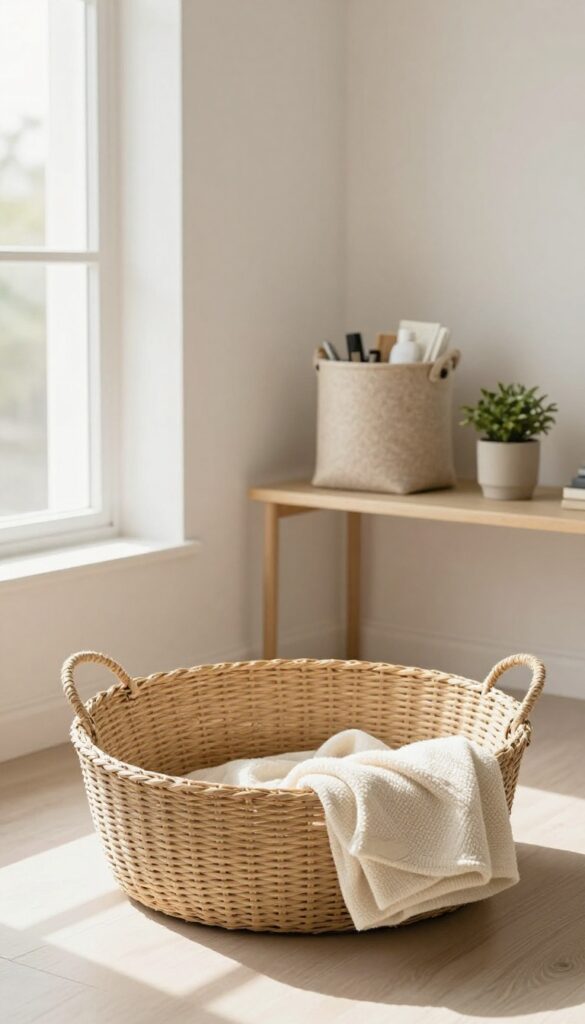
Baskets and bins are the unsung heroes of a tidy living room. They hide clutter in plain sight while adding warmth and texture. Whether you need to stash kids' toys, extra throws, or remote controls, woven baskets and fabric bins make organization feel intentional—not like an afterthought.
Place them under console tables, beside the sofa, or on open shelving for a look that's both practical and polished.
The beauty of baskets and bins lies in their versatility. They soften hard edges in a room, introduce natural materials, and make tidying up almost effortless. When you have a designated spot for stray items, the living room stays neat without constant policing.
Plus, they come in so many styles—from chunky seagrass to sleek felt—that you can easily match them to your decor. The key is to choose sizes that fit your storage needs and place them where they're most useful, like next to seating areas or near entry points.
Best Materials And Textures
- Natural materials like seagrass, rattan, and bamboo add organic warmth and pair beautifully with wood tones and plants. For a more modern look, opt for felt or canvas bins in neutral colors like beige, gray, or cream. Mixing textures—say, a chunky woven basket next to a smooth fabric bin—creates visual interest and keeps the arrangement from feeling flat.
- Avoid plastic bins if you want a cozy, lived-in feel; they tend to look utilitarian and can cheapen the space.
Placement And Styling Tips
- Slide a large basket under a console table to store blankets or magazines—it keeps them accessible but out of sight. Use smaller bins on open shelves to corral remotes, chargers, or kids' art supplies. Group two or three baskets of varying heights in a corner for a sculptural effect.
- Just make sure they don't block walkways or look crammed. Leave a little breathing room around each basket so the area feels curated, not cluttered.
Small-space Solutions
- In a compact living room, every inch counts. Use slim, tall baskets to fit in narrow gaps between furniture pieces. Nesting bins can stack when not in use, freeing up floor space.
- Wall-mounted baskets (like woven poufs) can hold small items while adding a vertical accent. The goal is to add storage without taking up precious square footage—so think vertically and use hidden spots like under the coffee table or behind the sofa.
8. Multi-Functional Furniture Like a Storage Bench
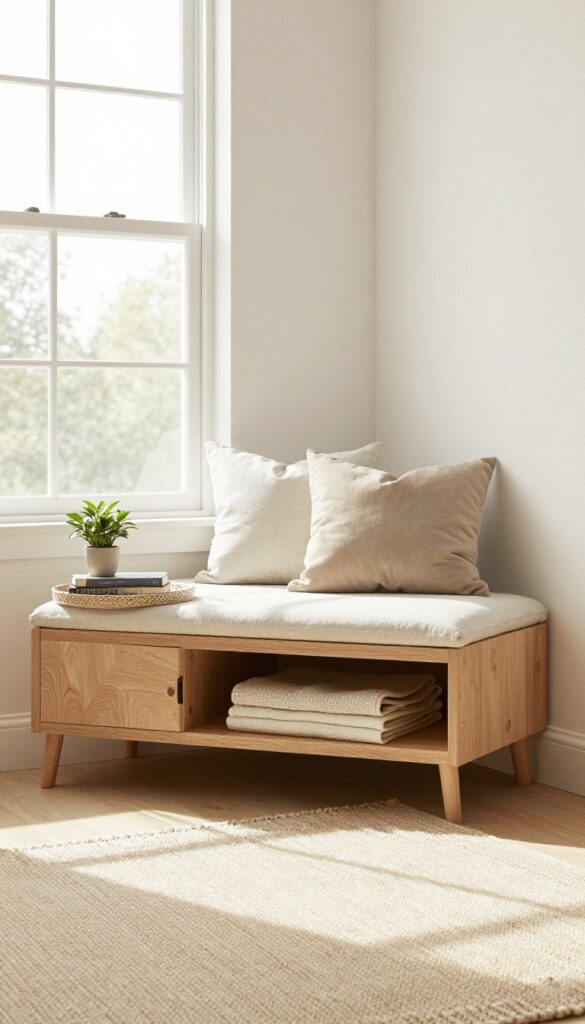
In a living room, every piece of furniture should earn its keep—especially if you're short on space. A storage bench is the ultimate multitasker: it offers a spot to sit, a surface for decor, and a hidden compartment for stashing items you don't want on display. Tucked under a window or against a wall, it adds a clean, built-in look while keeping clutter out of sight.
A storage bench is a smart solution for living rooms that need extra seating without sacrificing style. Choose one with a cushioned top for comfort, and use the interior for items like throw blankets, board games, or kids' toys. The bench can double as a coffee table or a landing spot for trays and books.
For a cohesive look, match the bench's finish to other wood tones in the room, or go for a painted version that adds a pop of color. Place it under a window with a couple of pillows to create a cozy reading nook, or use it as a hallway bench near the entry if your living room flows into the foyer.
Best Materials
Solid wood benches offer durability and a classic look, while woven rattan or seagrass brings texture and a relaxed vibe. For a modern touch, try a bench with a metal frame and a wood top. Upholstered benches in performance fabrics are great for high-traffic areas—they're easy to clean and add softness to a room with hard surfaces.
Storage Tip
Maximize the hidden storage by using baskets or bins inside the bench to keep smaller items organized. This way, you can quickly grab what you need without everything becoming a jumbled mess. If the bench is deep, consider adding a divider to separate categories like shoes and bags.
Layout Tip
Position the bench opposite your sofa to create a symmetrical seating arrangement, or use it as a window seat to take advantage of natural light. In a small living room, a bench can replace a bulky armchair, freeing up visual space while still providing seating for guests.
9. Corner Shelves That Use Dead Space
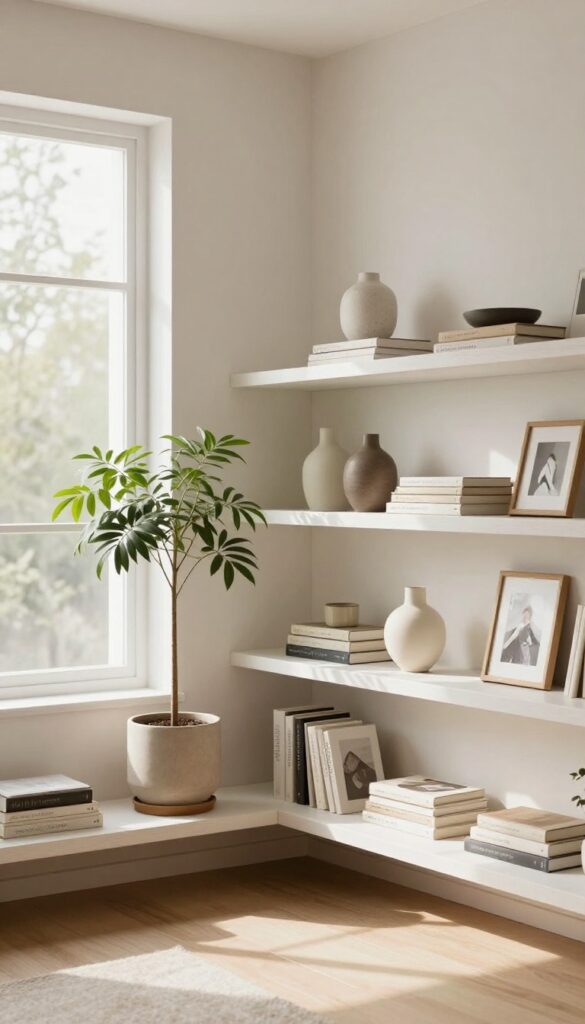
Every living room has those awkward corners where nothing seems to fit—too small for a chair, too narrow for a table. Instead of letting that space go to waste, corner shelves turn it into a functional feature. They draw the eye upward, make the room feel taller, and give you extra storage without taking up floor space.
Whether you fill them with plants, books, or small baskets, these shelves add both style and purpose to an otherwise forgotten area.
Corner shelves are one of the smartest ways to maximize square footage without cluttering the room. They work especially well in small living rooms or open-plan spaces where every inch counts. By using vertical real estate, you keep surfaces clear and create a curated display that feels intentional.
The key is to treat the shelves as part of your decor, not just storage—choose finishes that complement your existing furniture and arrange items with balance in mind.
Best Materials And Finishes
- Floating wood shelves add warmth and blend with most styles, from farmhouse to modern. For a sleek look, try black metal or glass shelves—they recede into the corner and let your objects stand out. If you prefer a seamless feel, paint the shelves the same color as the wall so they almost disappear.
- White shelves against a white wall keep the room airy, while dark wood adds contrast and coziness.
Styling Tips For Visual Balance
- Avoid overcrowding—stick to 3–5 items per shelf, varying heights and textures. Start with a tall plant or a stack of books on the bottom, then layer smaller decor like a ceramic vase or a framed photo above. Leave some negative space so the eye can rest.
- Group items in odd numbers for a more natural, collected look. If you use baskets, choose ones with a similar material or color to keep the arrangement cohesive.
Storage-smart Additions
- Incorporate small baskets or bins on the lower shelves to hide remotes, coasters, or charging cables. This keeps the corner tidy while still looking polished. For a living room that doubles as a home office, use the shelves to store notebooks and pens in a decorative tray.
- The goal is to make the corner work hard without feeling busy—every item should earn its spot.
FAQ
How can I add storage to a small living room without making it feel cramped?
Focus on vertical storage like floating shelves or wall-mounted cabinets. Use multi-functional furniture like ottomans or coffee tables with hidden compartments. Keep surfaces clutter-free by storing items out of sight.
What are the best materials for storage furniture in a living room?
Wood and metal are durable and classic. For a softer look, consider fabric storage ottomans or woven baskets. Mix materials to add texture while keeping the space cohesive.
How do I style open shelves without them looking messy?
Group items in odd numbers, use baskets for small items, and leave some empty space. Stick to a color palette and vary heights with books, plants, and decor pieces.
Can I use storage solutions that also serve as decor?
Absolutely. Decorative baskets, stylish boxes, and sleek shelving units can double as storage and decor. Choose pieces that match your room’s style to make them blend in seamlessly.
What is the best way to hide TV cables and electronics?
Use a media console with closed cabinets or a cable management system. You can also run cables behind the wall or use cord covers that paint over to match the wall color.
Conclusion
Smart storage doesn’t mean sacrificing style. With these nine ideas, you can keep your living room organized and inviting without it feeling like a storage unit. The key is choosing pieces that work for your space and your habits.
Start with one or two changes and see how much better the room feels. A clutter-free home is a happier one—and it looks great too.