15 Home Decor Ideas for Living Room and Kitchen Flow
Getting your living room and kitchen to feel like they belong together can be tricky, especially when square footage is tight. You want each space to have its own identity, but the last thing you need is a jarring transition that makes your home feel chopped up.
The good news is that with a few intentional decor choices, you can create a natural flow that makes both rooms feel larger and more connected. Think of it as a conversation between two spaces—one that uses color, texture, and layout to speak the same language without repeating itself.
These 15 ideas are all about making that dialogue feel effortless, even in the coziest of homes.
1. Carry the Same Flooring Through Both Spaces
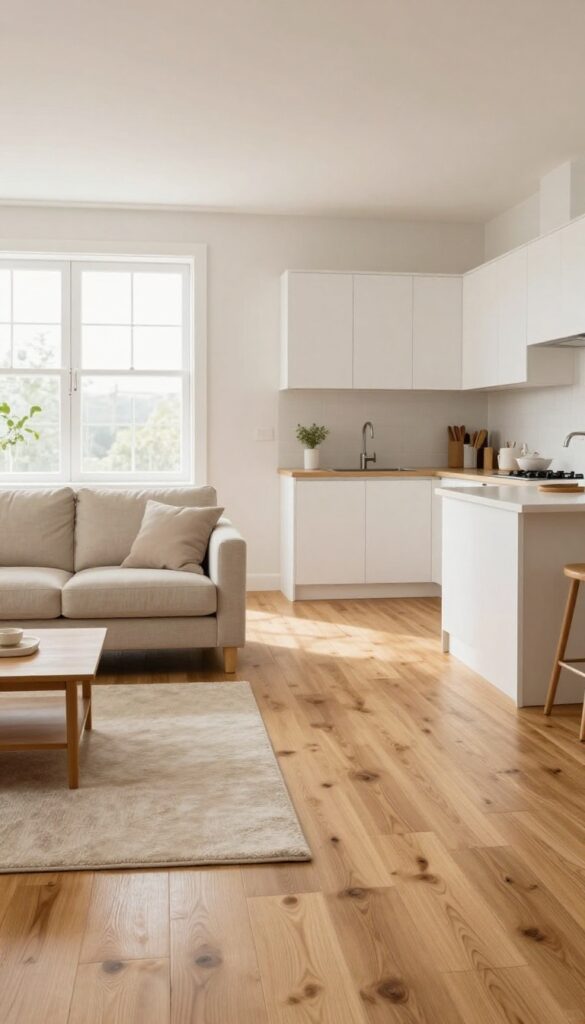
Nothing blurs the line between living room and kitchen quite like a continuous floor. When you use the same material—be it wide-plank oak, textured luxury vinyl, or large-format tile—the eye travels freely without tripping over a change in surface. It’s a surprisingly affordable trick that makes both rooms feel larger and more intentional, especially in open-concept homes where every square foot counts.
Matching flooring is the ultimate small-space hack because it removes the visual stop that different materials create. In a compact apartment or a narrow galley kitchen, that seamless stretch of floor tricks the eye into seeing one big room instead of two tiny ones. The result is calm, uncluttered, and instantly more spacious—no furniture required.
Best Materials For High-traffic Flow
Hardwood is the classic choice, but engineered wood or luxury vinyl plank (LVP) offers better moisture resistance for kitchen spills. If you prefer tile, choose large rectified porcelain planks that mimic wood grain—they’re durable, easy to clean, and grout lines are minimal, keeping the seamless look intact.
Layout Tip: Run Boards In One Direction
To maximize the illusion of space, lay your flooring in a single continuous direction—usually lengthwise through the longest sightline. Avoid borders, transition strips, or changing plank orientation at the kitchen island. A straight, uninterrupted run makes the room feel wider and longer.
Budget-Friendly Swap
If replacing all flooring isn’t in the budget, consider a high-quality sheet vinyl or LVP that closely matches your existing material. Even adding a matching rug in the same tone can help bridge the visual gap until you’re ready for a full renovation.
2. Repeat a Key Color in Small Doses
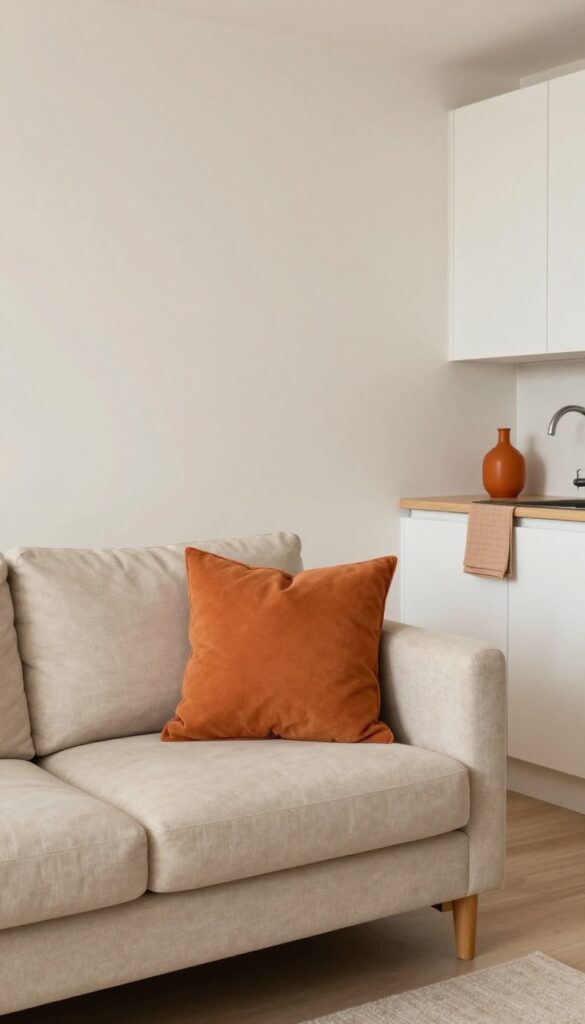
Tying your living room and kitchen together doesn't require a full color overhaul. One of the easiest ways to create visual flow is by picking a single accent color and sprinkling it sparingly across both spaces. Think of it as a subtle thread that connects the rooms without screaming for attention.
A few intentional touches in each room are enough to make the whole layout feel cohesive.
The trick is restraint. You don't need to paint walls or buy matching furniture. Instead, choose one color that pops against your neutral base and repeat it in small, functional items.
A burnt orange throw pillow on the sofa, a matching dish towel by the sink, and a tiny vase on the kitchen counter. That's it. The color catches your eye in both rooms, creating a quiet visual link.
This approach works especially well in open-concept homes where the living room and kitchen share a line of sight. It also keeps the look flexible—swap out the accent color whenever you want a refresh without any major commitment.
Best Colors For A Subtle Link
- Stick with one saturated hue that contrasts nicely with your neutral backdrop. Deep teal, mustard yellow, rust, or forest green are all strong candidates. Avoid pastels if your base is already light—they can blur together.
- The goal is a color that stands out just enough to be noticed but not so loud that it dominates. If your living room has a beige sofa and white walls, a rich navy accent will read clearly in both rooms without overwhelming the space.
Where To Place The Color
- Focus on spots that naturally draw the eye. In the living room, a throw pillow on the sofa, a small ceramic vase on the coffee table, or a stack of books on a side table work well. In the kitchen, a dish towel draped over the oven handle, a fruit bowl, or a set of canisters on the counter are perfect.
- Keep the number of items low—three to five per room is plenty. You want the color to feel intentional, not scattered.
Small-space Styling Tip
- In a compact layout, repeat the accent color on items that are also functional. A colorful cutting board left on the counter, a patterned mug on a hook, or a small plant pot in the living room all serve double duty. This keeps the decor from feeling cluttery while still reinforcing the color connection.
- If you're tight on surface space, hang a small piece of art in each room that includes your accent color—it takes up zero floor or counter area.
3. Use a Rug to Define the Living Area
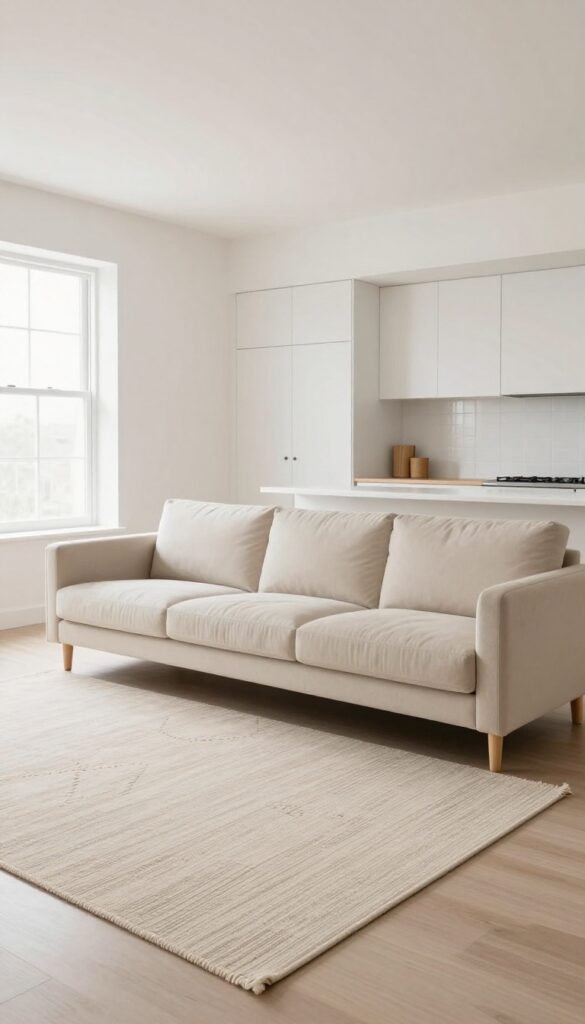
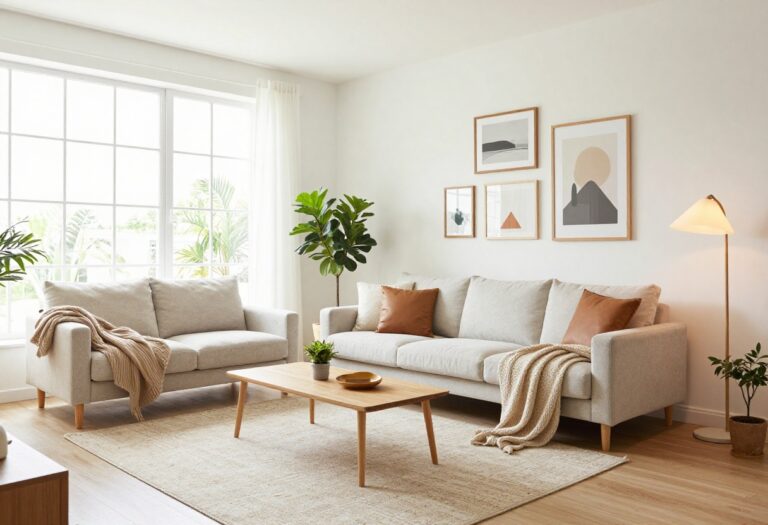
In an open layout, a well-placed rug anchors the living room zone and visually separates it from the kitchen. Go for a size that fits under the front legs of your sofa to keep the connection intact while defining the space. It's a simple trick that adds warmth, texture, and a clear boundary without building a single wall.
A rug is one of the easiest ways to carve out a distinct living area in an open-concept home. It creates a visual anchor that tells the eye where the living room ends and the kitchen begins. For small spaces, a rug that's too small can make the room feel disjointed, so aim for a size that reaches under the front legs of your sofa and extends at least a few inches beyond the sides.
This keeps the furniture grouping cohesive while still marking the zone. Choose a low-pile or flatweave rug for easy cleaning near the kitchen, and pick a pattern or color that complements both spaces without clashing. A subtle geometric or textured neutral works well to bridge the two areas.
Size And Placement Tips
- Measure your living area before buying. For a standard sofa, an 8×10 rug usually works, but a 6×9 can fit smaller layouts. Place the rug so the front legs of your sofa and any accent chairs sit on it, leaving the back legs on the floor.
- This visually connects the furniture while still defining the zone. In a narrow room, try a runner parallel to the sofa to stretch the space.
Best Materials For High Traffic
- Since the rug borders the kitchen, opt for durable materials like polypropylene, wool, or cotton blends. These resist stains and are easy to vacuum. Avoid high-pile or shag rugs near eating areas—they trap crumbs.
- A flatweave or low-pile option is practical and still adds texture.
Color Flow Between Zones
Pick a rug that pulls a color from the kitchen or living room to create harmony. If your kitchen has navy cabinets, a navy-and-cream rug ties the spaces together. Or go neutral with a jute or sisal rug for a natural, airy feel that doesn't compete with either zone.
4. Install Open Shelving on the Kitchen Side
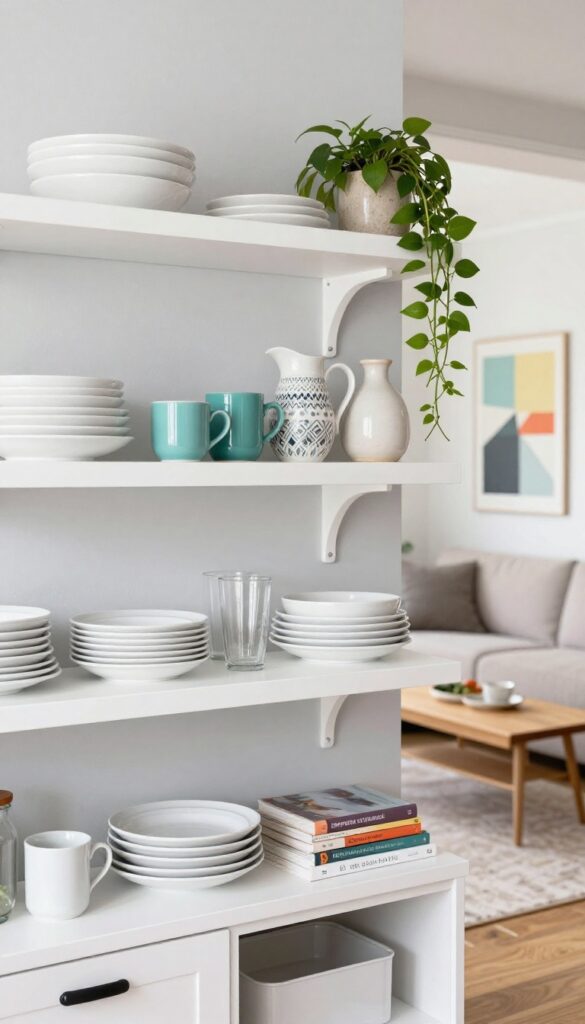
Open shelving isn't just for storing spices and mugs. When you install a set of shelves on the kitchen wall that faces the living room, it becomes a visual handshake between the two spaces. This is especially helpful in open-concept layouts where you want some separation but still need a cohesive flow.
The trick is to treat those shelves like a mini gallery—mix everyday dishes with a few curated decor pieces that echo your living room's color palette and style. It keeps the kitchen feeling practical while making the whole area feel connected and intentional.
Open shelving on the kitchen side acts as a bridge, blending function with style. It draws the eye across the room and creates a sense of continuity without needing a full renovation. By keeping the shelves streamlined and uncluttered, you maintain an airy feel that's perfect for small spaces.
The key is balance: too many items can feel messy, while too few might look sparse. Aim for a mix of 60% functional items (like plates, bowls, or glassware) and 40% decorative accents (like small plants, ceramic vases, or a stack of cookbooks). This approach keeps the shelves useful without sacrificing style.
Best Items To Display
- Choose items that pull double duty. White or neutral dinnerware creates a clean backdrop, while a few colorful pieces (like a teal mug or a patterned pitcher) add personality. Stackable bowls and simple glassware look great and are easy to grab.
- For decor, think small sculptures, a trailing plant, or a framed photo that ties into your living room's artwork. Avoid anything too bulky or fussy—open shelves work best when they feel light and intentional.
Small-space Styling Tip
- In a compact home, every inch counts. Use floating shelves that are shallow (around 10–12 inches deep) so they don't protrude too far into the room. Stick to one or two shelves to avoid a cluttered look.
- Group items in odd numbers (three small vases or five plates) for a naturally balanced arrangement. Leave a little breathing room between objects—this prevents the shelves from feeling cramped and helps the eye travel smoothly between the kitchen and living area.
Color And Material Flow
- Match the shelf material to something in the living room—like wood tones that echo your coffee table or black metal that complements your sofa legs. On the shelves, repeat a color from the living room's decor, such as a throw pillow or rug. For example, if your living room has mustard yellow accents, add a small yellow bowl or a ceramic piece in that hue.
- This subtle repetition visually connects the two zones without being matchy-matchy.
5. Choose a Consistent Metal Finish
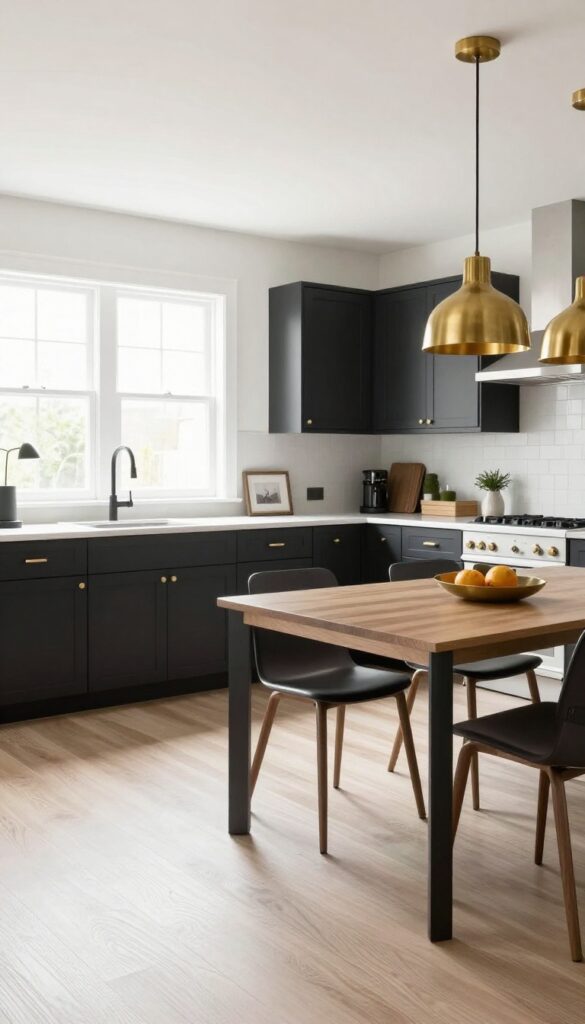
Nothing pulls a room together quite like a unified metal finish. When your kitchen cabinet knobs, living room floor lamp, and dining pendants all share the same tone—say, brushed brass or matte black—the whole space feels intentional. It's a subtle detail that makes an open-concept layout look polished without trying too hard.
Best of all, it's an easy, low-cost way to create visual harmony between two high-traffic areas.
Mixing metals can look great, but it takes a confident eye. For most of us, sticking with one finish is the safer, smarter bet. It creates a quiet thread that connects the living room and kitchen, making the flow feel seamless.
Whether you prefer warm brass, cool nickel, or matte black, commit to it across light fixtures, hardware, and small accents like picture frames or vase stands. The result is a cohesive, curated look that feels both practical and stylish.
Best Finishes For Small Spaces
- In a small or open-concept home, dark finishes like matte black or oil-rubbed bronze add depth without overwhelming the space. Brushed brass and champagne gold bring warmth and a soft glow. Avoid polished chrome if your space gets a lot of natural light—it can feel too reflective and busy.
- Stick with satin or brushed textures for a subtle, modern look.
Where To Start
- Begin with the largest metal piece in your living room or kitchen—often the pendant light or faucet. Then match smaller items like cabinet pulls, switch plates, and lamp bases to that finish. Don't forget picture frames, curtain rods, and even the legs of furniture.
- A quick audit of your current metals can reveal mismatches to swap out gradually.
Budget-Friendly Swap
- You don't need to replace everything at once. Start with high-impact, low-cost changes like spray-painting outlet covers or swapping out cabinet knobs. Even a new set of drawer pulls in your chosen finish can tie the room together.
- Thrift stores often have brass or chrome pieces you can refresh with a little metallic spray paint.
6. Add a Counter-Height Bar or Peninsula
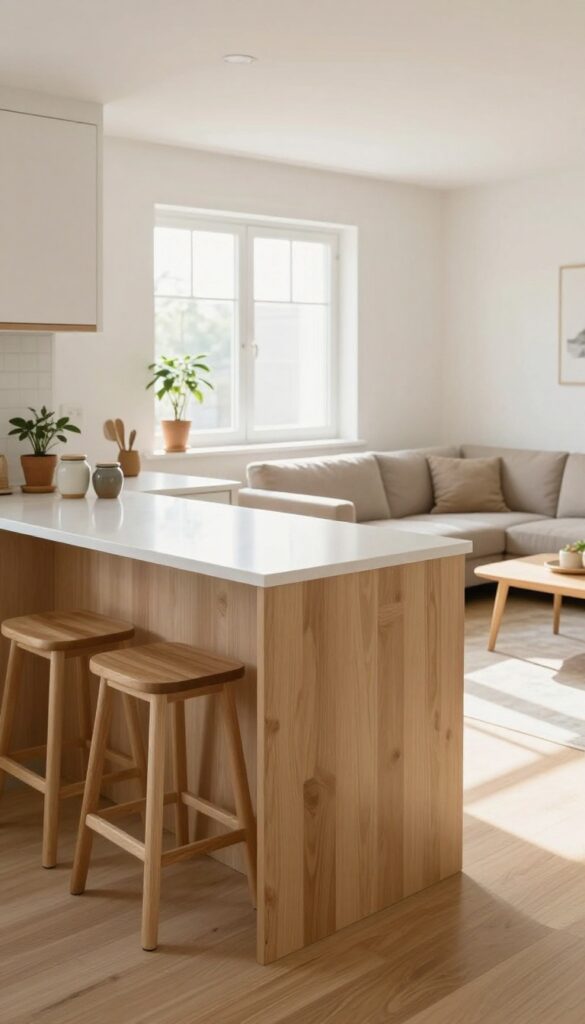
A counter-height bar or peninsula is a smart way to separate your living room and kitchen without closing things off. It gives you extra seating, a spot for quick meals, and a surface for spreading out work or snacks. Because it stays low, you can still see and talk across both spaces, which keeps the whole area feeling open and connected.
In a small or open-plan home, a counter-height bar or peninsula does double duty as a room divider and a functional surface. It creates a clear boundary between cooking and lounging zones without blocking natural light or visual flow. Choose a style that matches your kitchen cabinetry or contrasts nicely with your living room furniture.
A narrow peninsula works well in tight layouts, while a longer bar can anchor a breakfast area. Top it with durable materials like quartz or butcher block, and add a few stools that tuck under when not in use.
Best Materials For Durability And Style
- Go with quartz or a solid-surface countertop for a sleek, low-maintenance finish. Butcher block adds warmth and works beautifully in kitchens with wood tones. For the base, consider matching your existing cabinetry or using open shelving to keep the space airy.
- Metal legs or a slim profile help the peninsula feel less bulky in a small room.
Layout Tip For Small Spaces
- If your floor plan is tight, opt for a peninsula that extends from the kitchen counter rather than a standalone island. This saves space while still providing a clear division. Leave at least 36 inches of clearance on the living room side so traffic flows easily.
- Stools with a low back or no back can slide completely under the counter when not in use.
Styling The Surface
Keep the bar top clutter-free but add a few decorative touches like a small plant, a bowl of fruit, or a stack of coasters. Use a couple of bar stools with cushions in a fabric that ties into your living room palette—this helps the two zones feel coordinated. A pendant light or two hung directly above the bar defines the area and adds a cozy glow.
7. Use the Same Window Treatments
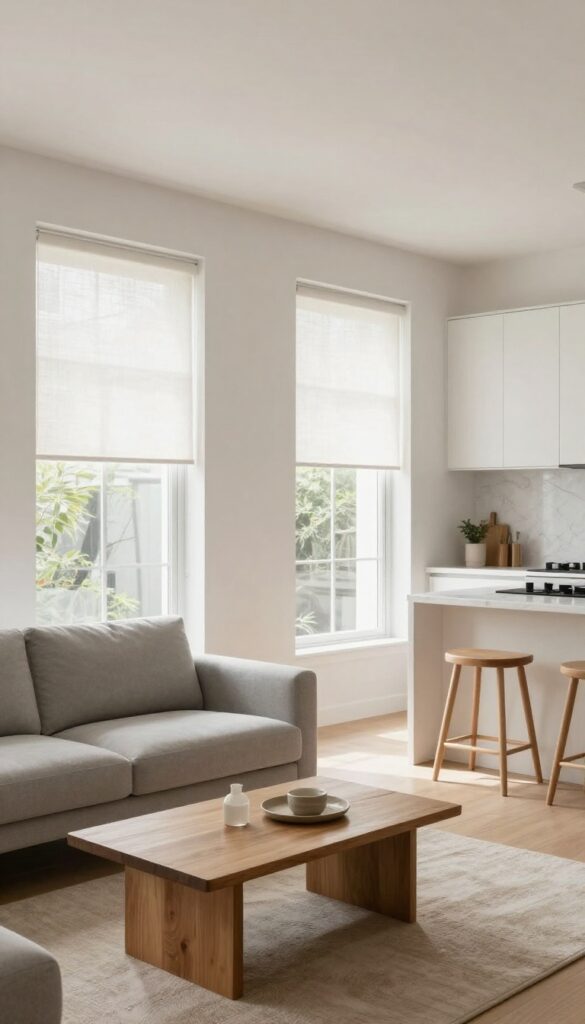
Repeating the same blinds, shades, or curtains in both rooms unifies the look and makes the entire space feel larger. Keep them simple and light to let in as much natural light as possible. This trick works especially well in open-concept layouts where the living room and kitchen share a visual line.
When your living room and kitchen flow into one another, consistent window treatments act like a visual handshake. Matching blinds or curtains tie the two zones together without adding clutter. Light-filtering materials like linen or sheer cotton keep things airy, while neutral colors like white, beige, or soft gray blend seamlessly with most palettes.
If you want a bit of privacy without sacrificing light, top-down bottom-up shades are a smart choice. For a cohesive finish, mount the treatments at the same height in both rooms. This simple detail tricks the eye into seeing a larger, more unified space.
Best Materials For A Unified Look
Linen and cotton blends are forgiving, easy to clean, and soften harsh sunlight. For a more modern vibe, try woven wood shades or bamboo blinds—they add texture while keeping things light. Avoid heavy velvet or dark fabrics that can make a small space feel closed in.
Small-space Styling Tip
Mount curtain rods as close to the ceiling as possible and let the fabric skim the floor. This draws the eye upward, making both rooms feel taller. In a kitchen, choose shorter curtains or blinds that clear the countertop to avoid a bulky look.
Finishing Touch
Add a subtle pattern like a thin stripe or a faint geometric print to introduce visual interest without breaking the flow. Keep the color palette consistent with your wall color or trim to maintain that seamless, spacious feel.
8. Bring in Pendant Lights Over the Kitchen Island
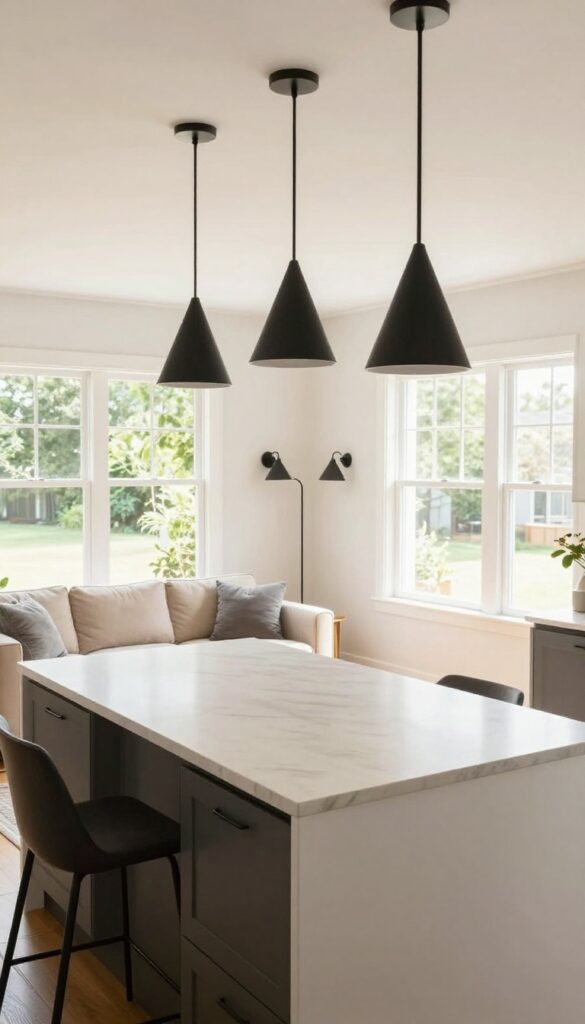
Pendant lights do more than just brighten up your kitchen island—they can visually connect your kitchen to the living room. By choosing fixtures that echo the style or finish of your living room lighting, you create a subtle line that guides the eye from one space to the next. It's a small detail that makes an open floor plan feel cohesive without being matchy-matchy.
Pendant lights over the kitchen island are a practical way to tie your living room and kitchen together. The key is to pick a shape or finish that complements your existing living room fixtures. For example, if your living room has black metal sconces, try black cone pendants over the island.
Or if your living room features brass accents, go for brass pendants with a simple glass shade. This creates a visual thread that makes the whole space feel intentional. In a small home, this trick helps define the kitchen zone without closing it off.
Keep the pendants at a height that doesn't block sightlines—about 30 to 36 inches above the counter works well. This way, the lights serve as a stylish bridge between rooms.
Best Finishes For Flow
- To create a seamless look, match the metal finish of your pendant lights to the hardware or lighting in your living room. If your living room has brushed nickel, go with brushed nickel pendants. For a warmer vibe, brass or copper pendants pair nicely with wood tones and beige sofas.
- If you want a bit of contrast, choose a finish that appears elsewhere in the room, like black or matte white, to tie everything together.
Small-space Styling Tip
- In a compact open floor plan, avoid bulky pendants that clutter the visual path. Instead, opt for slim, open designs like glass globes or linear bars. These let light pass through and keep the space feeling airy.
- Hang them in a row of two or three, depending on your island length, and keep the spacing even. This simple arrangement draws the eye across the kitchen and into the living area without adding visual weight.
Lighting Placement Note
- Position your pendants so they hang at a consistent height and are centered over the island. For a standard 8-foot ceiling, aim for about 30 inches above the counter. If your ceilings are higher, you can go a bit lower, but never so low that they block the view from the living room.
- The goal is to create a horizontal line that visually connects the two spaces, so keep the pendants aligned with the edge of the island for a clean look.
9. Incorporate a Large Mirror in the Living Room
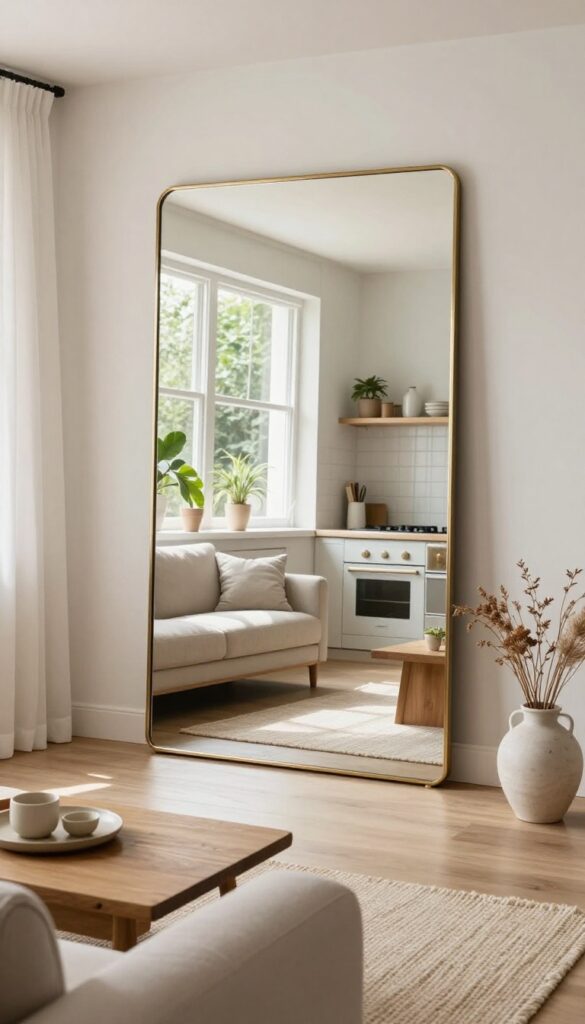
A large mirror is one of the easiest ways to make a small living room feel twice as big. When placed thoughtfully, it reflects natural light from the kitchen and creates a visual connection between the two spaces. Plus, the frame itself becomes a design detail that can tie your living room and kitchen together without adding clutter.
Mirrors are a small-space superpower. They bounce light around, making the whole area feel brighter and more open. In an open-concept layout, a large mirror on the living room wall can capture kitchen light and spread it into seating areas.
It also adds a decorative focal point that draws the eye, especially if you choose a frame that echoes kitchen finishes like brass, black metal, or natural wood. The trick is to place it where it reflects something nice—a window, a plant, or a piece of art—rather than a blank wall or a cluttered corner.
Best Placement For Light Flow
- Position the mirror directly across from a window or a light source in the kitchen. This maximizes the reflection and makes the room feel airier. Avoid placing it opposite a TV or a busy area, as that can create visual noise.
- In a long, narrow room, hang the mirror on the longer wall to visually widen the space.
Frame Material That Connects Rooms
- Choose a frame that ties into your kitchen's hardware or cabinetry. For example, if your kitchen has brass pulls, a mirror with a thin brass frame creates a subtle link. A black metal frame works with industrial or modern kitchens, while a natural wood frame suits warm, rustic styles.
- The frame doesn't have to match exactly—just echo the same finish or material family.
Size And Scale Tip
- Go big. A mirror that's at least two-thirds the width of your sofa or the wall it's on makes the biggest impact. Lean an oversized mirror against the wall for a casual look, or hang it securely if you have kids or pets.
- In small spaces, a floor-to-ceiling mirror can visually double the room's height.
10. Keep the Color Palette Neutral with Pops of Texture
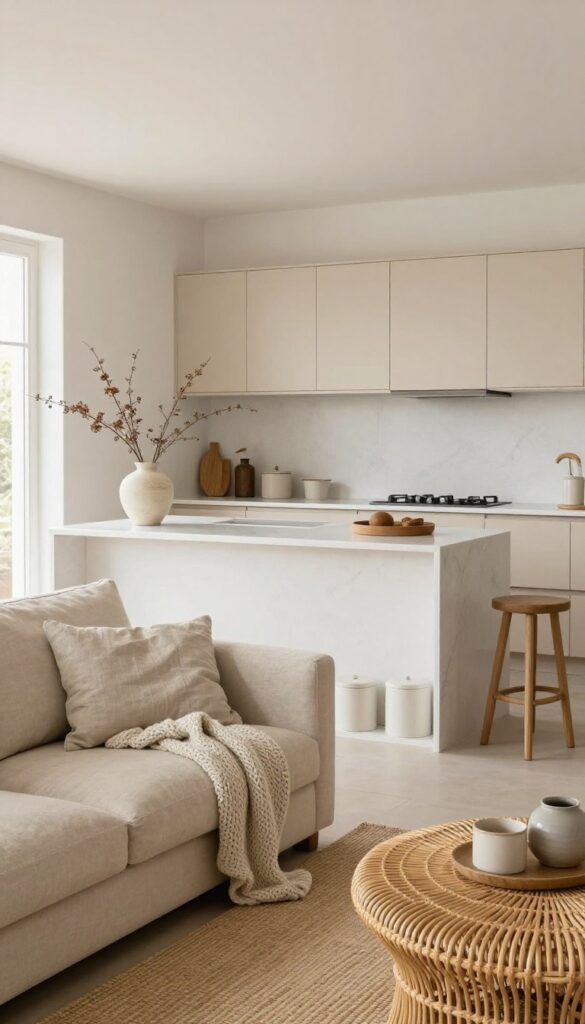
A neutral base is the secret to making a small living room and kitchen feel like one continuous space. Warm whites, soft greys, and beiges create a calm backdrop that doesn't compete for attention. The trick to keeping it from feeling flat is layering in texture—linen curtains, a chunky knit throw, or a ceramic vase add visual interest without clashing colors.
When you're working with a compact open-plan layout, a neutral palette helps the eye travel smoothly from the sofa to the kitchen island. You get a sense of spaciousness without sacrificing style. Texture does the heavy lifting here: it adds depth and coziness, so the room feels inviting rather than sterile.
Think about mixing materials like matte ceramics, soft linens, and natural woods to create a layered look that's both practical and stylish.
Best Colors To Start With
- Stick with warm whites like Swiss Coffee or soft greige for walls and large furniture. These tones reflect light and make the space feel airy. Avoid stark whites or cool greys, which can feel harsh in a small room.
- For the kitchen, consider pale beige cabinetry or a warm white backsplash to tie into the living area.
Texture Mixing Tips
- Combine at least three textures in each zone. In the living area, pair a smooth linen sofa with a chunky knit throw and a rattan coffee table. In the kitchen, contrast sleek quartz countertops with a woven seagrass runner and matte ceramic canisters.
- This variety keeps the eye moving and adds richness without clutter.
Small-space Styling Fix
Use texture to define zones without walls. A shaggy rug under the coffee table anchors the living area, while a set of linen bar stools at the kitchen island signals the dining spot. Keep the color consistent so the transition feels seamless, but let the textures do the separating.
11. Use a Console Table as a Room Divider
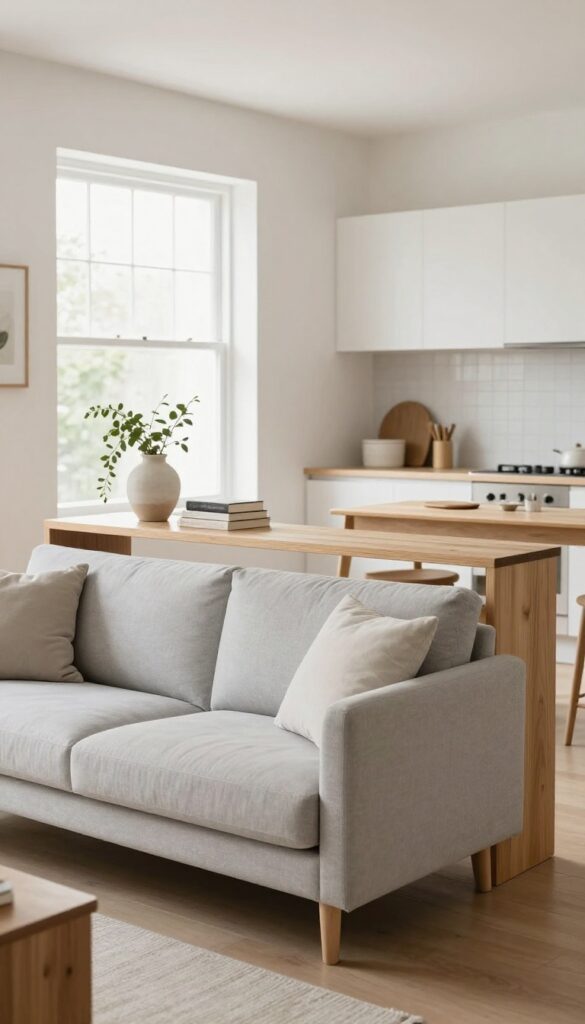
Open-plan living can sometimes feel like one big, undefined space. Instead of building a wall, a slim console table behind the sofa or between the living and dining areas creates a subtle separation. It defines zones without closing them off, keeping the room airy and connected.
This trick works especially well in smaller homes where every inch counts.
A console table is a low-commitment way to carve out distinct areas. Place it behind your sofa to anchor the seating zone, or use it as a visual break between the living room and kitchen. Because it's narrow, it won't eat into walkways.
Style it with a lamp, a stack of books, or a trailing plant to draw the eye and soften the boundary. The result is a room that feels organized and intentional, not cramped.
Best Placement
- The most common spot is directly behind a sofa that faces the kitchen or dining area. Make sure the table is about the same length as the sofa or slightly shorter. Leave at least 18 inches of clearance behind the table so you can walk through easily.
- If your sofa is against a wall, try placing a console table between two seating areas instead.
Styling Tips
- Keep the styling simple to avoid visual clutter. A table lamp adds warmth, a small tray catches keys or remotes, and a low vase or sculpture provides height. For a cohesive look, choose accessories that echo colors from both zones.
- If the table is behind the sofa, consider adding a pair of matching lamps for symmetry.
Small-space Fix
- In tight spaces, opt for a console table with open shelving or a slim profile. Avoid bulky designs that block light. A mirrored or glass top can make the area feel larger.
- Use the lower shelf for baskets to store extra throws or magazines, keeping the surface clear and functional.
12. Coordinate Your Artwork or Wall Decor
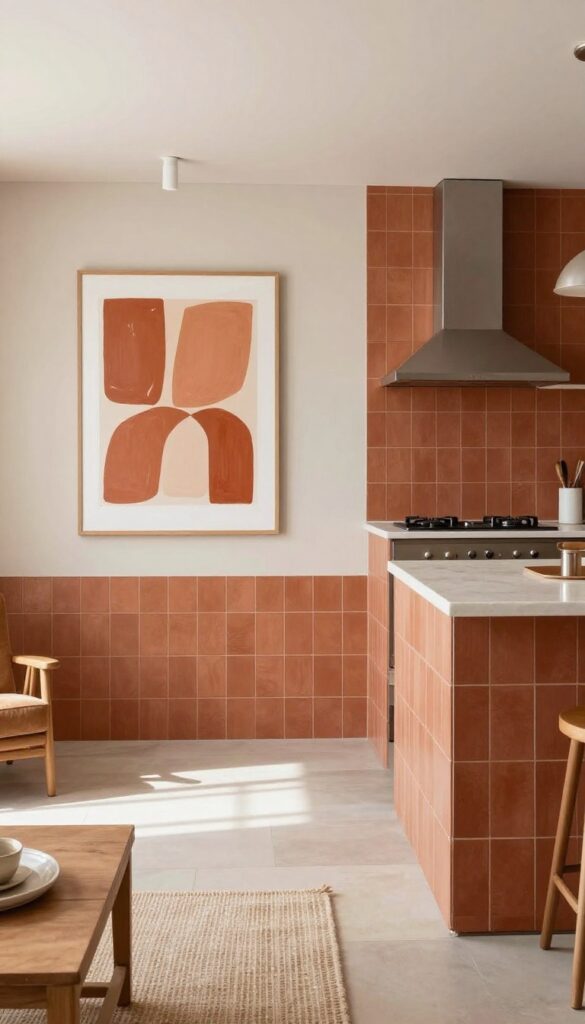
Art is one of the easiest ways to tie two rooms together without saying a word. When your living room and kitchen share a sightline, hanging pieces that echo each other’s colors or mood makes the whole space feel intentional. You don’t need a matching set—just a subtle thread that connects them visually.
Pick a color from your kitchen backsplash or cabinetry and find art for the living room that includes that same hue. It could be a warm terracotta print that mirrors your kitchen tiles, or a black-and-white photograph that picks up the matte hardware. The goal is a quiet visual link, not a loud match.
In a small space, this trick makes the two rooms feel like one cohesive area rather than separate boxes. Even a single piece of art placed where you can see it from both rooms can do the job.
Best Colors To Connect
Look for a dominant color in your kitchen—like the blue in your tile backsplash or the green of your cabinets—and choose living room art that features that same color. Even a small accent in the painting is enough to create a bridge. Neutral kitchens work well with art that has warm wood tones or soft grays.
Small-space Fix
In an open layout, hang a single large piece on the wall between the two rooms so it’s visible from both sides. This creates a focal point that belongs to both spaces. If you have a pass-through or a half-wall, lean a framed print on the counter or shelf to connect the rooms without drilling extra holes.
Finishing Touch
Use similar frame finishes in both rooms—like black metal or natural wood—to reinforce the connection. Even if the art styles differ, matching frames make them feel like part of a curated collection. Add a small plant or ceramic object near the art to tie the colors together further.
13. Add Greenery in Both Spaces
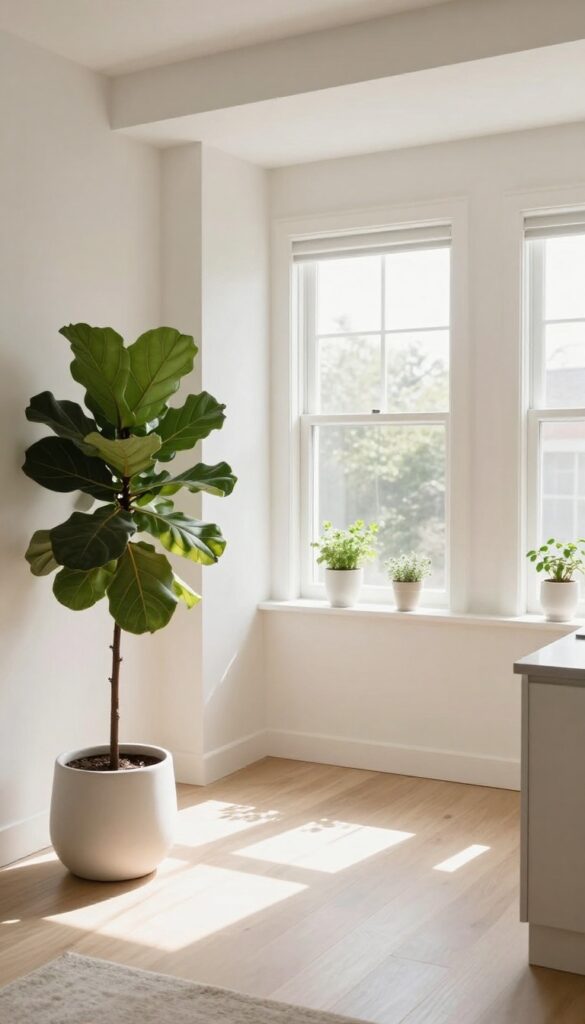
Plants are the easiest way to make a small home feel alive and connected. When you repeat the same plant family or pot style in the living room and kitchen, your eye naturally flows between the two. It’s a subtle trick that ties the spaces together without adding clutter.
For small apartments, stick to low-maintenance varieties like pothos, snake plants, or ZZ plants that tolerate varying light conditions.
Choose one type of planter—think matte ceramic, woven baskets, or sleek terracotta—and use it in both rooms. This visual repetition creates a cohesive thread. In the living room, a tall fiddle leaf fig in a corner adds height; in the kitchen, a small herb garden on the windowsill in matching pots keeps the connection going.
Group plants in odd numbers (three is a charm) for a balanced, intentional look.
Best Plants For Low Light
Not every small space gets tons of natural light. Snake plants, pothos, and philodendrons thrive in indirect light and are nearly impossible to kill. Place a snake plant in the living room corner and a pothos trailing from a kitchen shelf—they’ll survive and still look lush.
Pot Pairing Trick
- Stick to one material and color family for all your pots. White ceramic with a matte finish works in both modern and boho spaces. If you prefer warm tones, go for terracotta or woven seagrass.
- The key is consistency—your eye will travel from one room to the next without a jarring break.
Small-space Styling Tip
Use vertical space to save floor area. Hang a macramé plant holder in the living room window and mount a small shelf with trailing plants above the kitchen sink. This keeps surfaces clear while adding greenery at eye level, making both rooms feel larger and more connected.
14. Choose Furniture with Legs for an Airy Feel
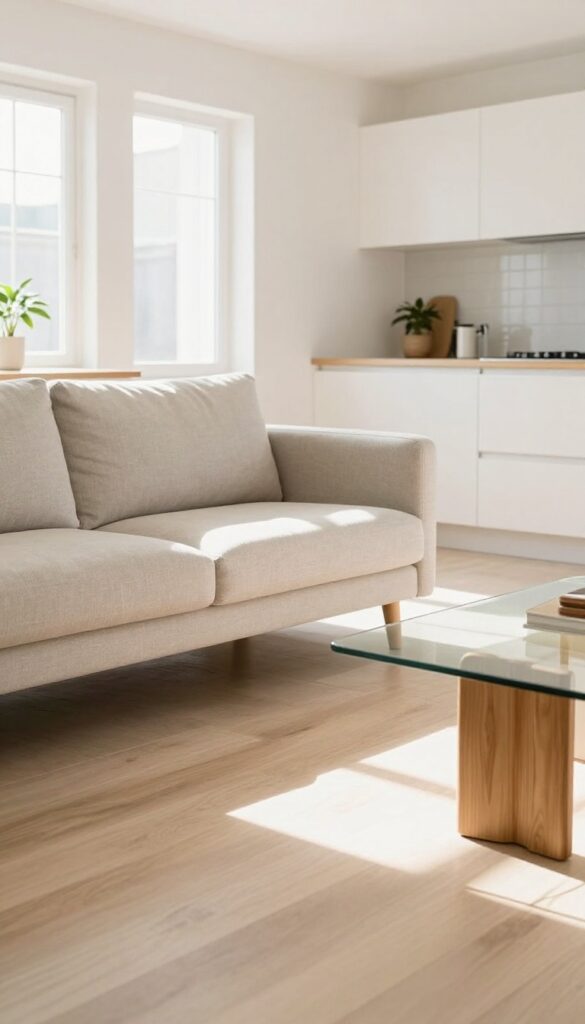
Sofas, chairs, and tables with exposed legs let light pass underneath, making the floor space feel larger. This trick helps maintain an open flow between the living room and kitchen. In small spaces, every visual trick counts, and raised furniture is one of the easiest to pull off.
Furniture with legs creates a sense of openness that solid-base pieces just can't match. When light travels under your sofa or coffee table, the floor appears to extend further, tricking the eye into seeing more square footage. This is especially valuable in open-plan layouts where the living room and kitchen share a visual line.
Stick to slim, tapered legs in wood or metal for a modern look, or go with turned legs for a touch of traditional charm. The key is to keep the silhouette light so the furniture doesn't feel bulky. Pair a leggy sofa with a glass-top coffee table on metal legs, and you've got a setup that breathes.
Best Heights And Proportions
- Aim for legs that are at least 4 to 6 inches tall to allow enough clearance for light and dusting. Too short and you lose the effect; too tall and the piece might feel unstable. For sofas, look for models with legs that sit flush with the seat frame rather than extending out, which keeps the profile clean.
- Coffee tables and side tables work well with slightly taller legs, around 6 to 8 inches, so they don't visually weigh down the seating area.
Material Pairing
- Wood legs add warmth and work beautifully with neutral upholstery like linen or cotton. Metal legs, especially in black or brass, bring an industrial edge that pairs well with leather or performance fabrics. For a cohesive flow between living and kitchen, echo the leg material in your bar stools or dining chairs.
- If your kitchen has brass hardware, brass legs on the sofa tie the spaces together without being matchy.
Small-space Layout Tip
In tight layouts, use leggy furniture to define zones without blocking sightlines. A sofa with exposed legs acts as a subtle room divider between the living area and kitchen, letting the eye pass underneath so the space feels connected. Avoid placing a solid-backed sofa directly in front of a kitchen island; instead, choose a piece with an open back or low profile to maintain the airy flow.
15. Layer Lighting for a Warm, Inviting Glow
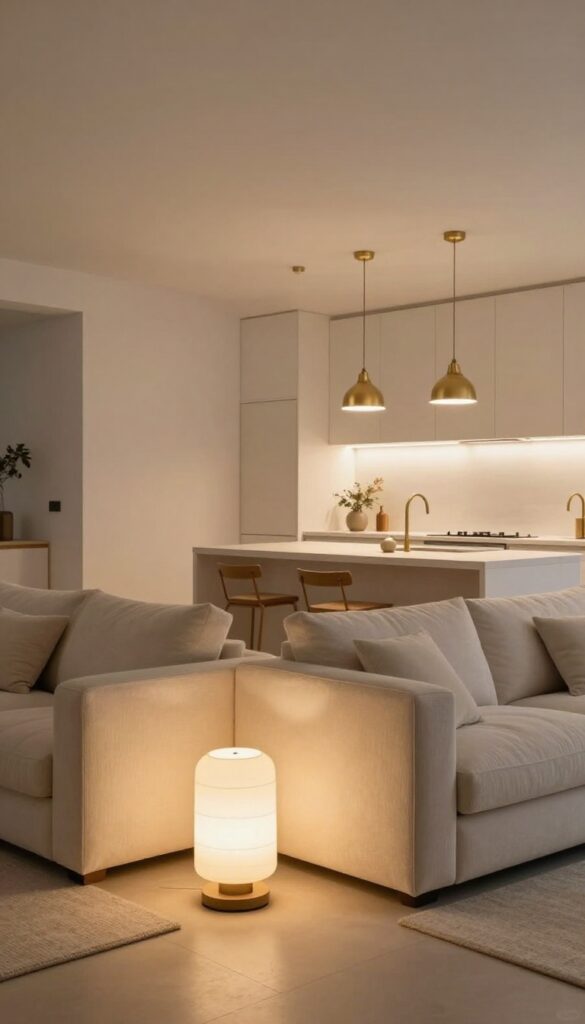
Lighting is the secret ingredient that ties your living room and kitchen together without a single piece of furniture. By layering overhead lights, task lighting, and ambient lamps in both spaces, you create a consistent mood that flows naturally. Dimmers are a game-changer here—they let you shift from bright and functional during meal prep to soft and cozy for movie nights.
This approach works especially well in open-concept layouts, but it’s just as effective in separate rooms where you want a visual connection.
The key is to use similar light temperatures and fixture styles in both rooms. Warm white bulbs (2700K–3000K) keep the glow inviting, while matching finishes like brushed brass or matte black on pendants and lamps create a cohesive look. In the kitchen, focus on task lighting under cabinets and a dimmable pendant over the island.
In the living room, add a floor lamp in a corner and table lamps on side tables. Dimmers on all circuits let you adjust each layer independently, so you can brighten the kitchen for cooking while keeping the living room dim and relaxing.
Lighting Tip
- Aim for at least three light sources per room. In the kitchen, combine recessed cans, under-cabinet strips, and a decorative pendant. In the living room, pair a ceiling fixture with a floor lamp and a table lamp.
- Use dimmers on all of them to control the intensity.
Small-space Fix
If your rooms are tight, skip bulky floor lamps and opt for wall-mounted swing-arm lamps or plug-in sconces. They free up floor space while still providing that warm, layered glow. Choose fixtures with a slim profile to keep the visual flow open.
Finishing Touch
Add a few candles or a salt lamp on the kitchen counter and living room coffee table. They introduce a flickering, organic warmth that electric lights can’t replicate, and they tie the two spaces together with a soft, consistent glow.
FAQ
How do I make a small living room and kitchen feel connected without making them look the same?
Focus on repeating a few key elements like color, metal finish, or texture rather than duplicating furniture. This creates harmony while letting each space keep its own personality.
What's the best flooring for an open-concept living room and kitchen?
Hardwood or luxury vinyl plank in a consistent color works beautifully. They're durable, easy to clean, and visually unify the space. Avoid abrupt transitions like different tile in the kitchen.
Can I use different rug styles in the living room and kitchen?
Yes, but keep them complementary. For example, a low-pile rug in the living room and a washable runner in the kitchen can both work if they share a similar color palette or pattern vibe.
How do I separate the living room from the kitchen in a studio apartment?
Use furniture placement—like a sofa with its back to the kitchen—or a slim console table. Area rugs and pendant lights also help define zones without closing off the space.
What colors work best for a small open-plan living and kitchen area?
Light, neutral colors like soft white, warm beige, or pale gray keep the space feeling open. Add depth with wood tones, black accents, or muted greens and blues for personality.
Conclusion
Creating flow between your living room and kitchen doesn't require a major renovation. Small, thoughtful choices—like repeating a color, choosing consistent metals, or adding a few well-placed plants—can make both spaces feel like part of a bigger, brighter home. The goal is connection without clutter, style without sacrifice.
Try a couple of these ideas and see how your home starts to breathe a little easier. After all, the best decor is the kind that makes everyday life feel just a bit more effortless.