15 Trailer Living Room Ideas Single Wide Homes Can Use
Living in a single wide trailer doesn't mean you have to sacrifice style. With a little creativity and some smart choices, your living room can feel open, inviting, and totally you. The key is working with the space you have, not against it.
These 15 ideas are all about making the most of every square foot without spending a fortune. We're talking budget-friendly swaps, clever layouts, and finishing touches that add personality.
Whether you're starting from scratch or just want to refresh, these tips will help you create a living room you love coming home to. Let's dive into simple, achievable ways to turn your trailer living room into a cozy retreat that feels much bigger than it is.
1. Float Your Furniture Away from Walls
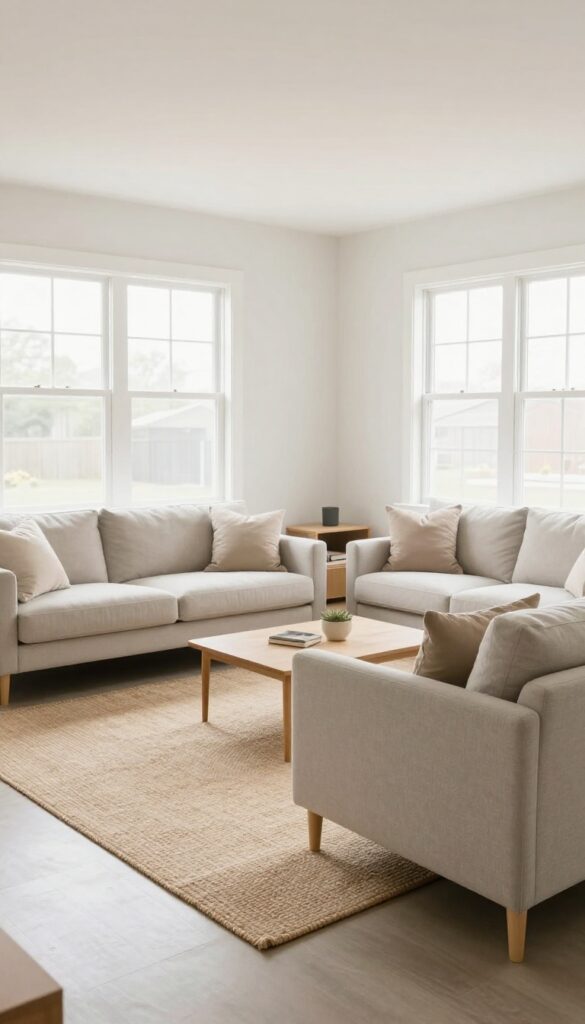
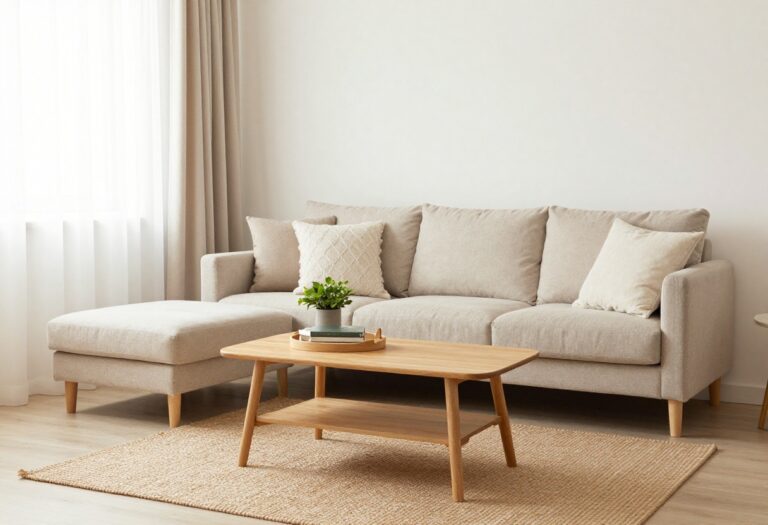
Instead of pushing everything against the walls, try floating your sofa and chairs to create a natural conversation area. This trick makes the room feel larger and more intentional, especially in narrow single wide layouts. It also gives you a chance to add a rug that anchors the space without being hidden under furniture.
Floating furniture is a game-changer for narrow single wide living rooms. By pulling your sofa and chairs away from the walls, you instantly create a defined zone that feels more like a real living room and less like a hallway. This layout trick works best when you have a focal point—like a TV on a low console or a large window—so the furniture naturally faces it.
In a budget-friendly setup, you can repurpose what you already own; just experiment with different positions until it clicks. The key is to leave enough walking space behind the sofa (at least 18 inches) so the room still flows. Add a cozy rug under the front legs of your furniture to tie the grouping together, and you'll wonder why you ever hugged the walls.
Best Layout For Narrow Rooms
- In a single wide, the living room is often a long rectangle. Float your sofa perpendicular to the longest wall, with two chairs angled toward it. This creates a cozy conversation pit and breaks up the length of the room.
- If you have a TV, place it on a slim console against one short wall—not the long wall—so the seating faces it without blocking the walkway.
Budget-Friendly Swap
- You don't need new furniture to try floating. Simply move your existing pieces away from the walls and add a thrifted rug or a few floor pillows to define the area. A small side table between chairs can be a stack of books or a repurposed crate.
- This zero-cost change instantly upgrades the room's layout.
Finishing Touch
Anchor the floating arrangement with a rug that extends at least 6 inches beyond the front legs of your sofa. Choose a low-pile or flatweave rug in a light color to keep the space airy. Add a floor lamp behind the sofa to create a warm glow and visually separate the seating zone from the rest of the room.
2. Use Light, Neutral Walls to Open Up the Space
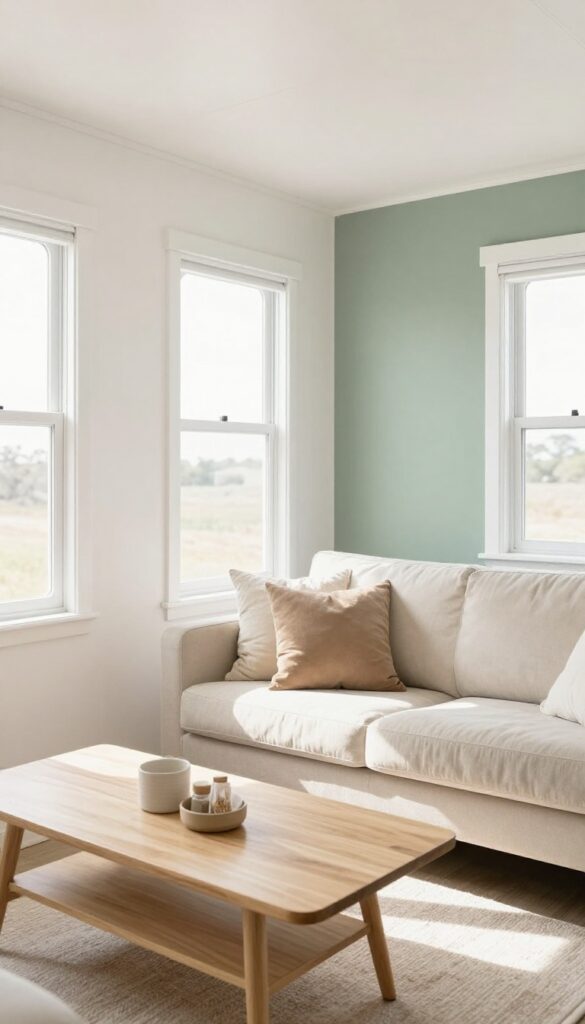
Paint is one of the cheapest ways to transform a room, and in a single wide trailer, it can work wonders. Light colors bounce natural light around, making a narrow living room feel wider and a low ceiling feel higher. The trick is choosing the right neutral—something warm enough to feel cozy but bright enough to keep things airy.
A soft white or warm beige on the walls sets a calm base, and you can always add a single accent wall for a touch of depth without shrinking the room.
Light walls are the backbone of a budget-friendly makeover. They reflect light, hide minor imperfections, and make furniture pop. Stick with finishes like eggshell or satin for easy cleaning.
Pair with white trim for a crisp look that defines the space. A single accent wall in a muted sage or warm taupe adds visual interest without overwhelming the room. Keep the ceiling white or off-white to visually lift it.
This simple palette lets you switch up decor seasonally without repainting.
Best Colors For A Single Wide Living Room
- Go with soft whites (like Swiss Coffee or Alabaster), warm beiges (like Accessible Beige), or light greiges (like Agreeable Gray). These shades have just enough warmth to keep the room from feeling cold. Avoid stark white—it can look flat under trailer lighting.
- Test samples on different walls to see how they change with natural light throughout the day.
Accent Wall Done Right
- Choose a wall that naturally draws the eye, like the one behind the sofa or the TV wall. Use a muted tone like a dusty blue or soft clay. This adds depth without making the room feel smaller.
- Keep the accent wall to one focal point—too many dark walls can close in a narrow space.
Budget-friendly Paint Tips
- You don't need expensive paint. Mid-range brands with primer built in save time and money. Use a roller for large areas and a brush for edges.
- One coat might be enough if you're going lighter, but two coats ensure even coverage. Leftover paint can be used to refresh old furniture or picture frames.
3. Choose Multipurpose Furniture That Earns Its Keep
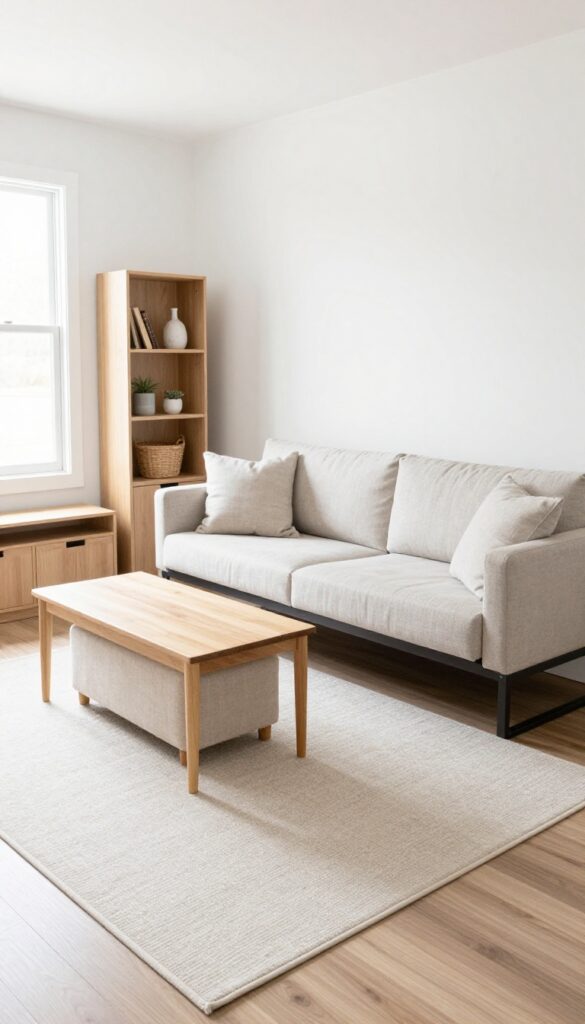
In a single wide trailer, every square inch matters. That's why furniture that pulls double duty isn't just smart—it's essential. Ottomans with hidden storage, sofa beds, and nesting tables can transform your living room from cluttered to calm without sacrificing style.
The best part? You don't need to spend a fortune to make it happen.
Multipurpose furniture is the secret weapon of small-space living. It saves money, reduces clutter, and keeps your room feeling open and airy. Look for pieces that hide toys, blankets, or extra seating, so your living room stays tidy even when life gets messy.
Best Materials For Durability And Style
- Stick with materials that can handle daily use. A linen-upholstered ottoman with a wooden top works as a coffee table and extra seat. For sofa beds, look for a sturdy metal frame and a medium-firm mattress that won't sag.
- Nesting tables in wood or metal add visual interest without taking up floor space.
Storage Tip: Go Vertical With Shelving Units
A tall bookcase or shelving unit can hold decor, books, and baskets for remote controls and chargers. Choose one with closed cabinets at the bottom to hide less attractive items. This frees up floor space and draws the eye upward, making the room feel taller.
Budget-friendly Swap: Repurpose What You Own
- Before buying new, look at what you already have. A wooden crate can become a side table with storage. An old trunk can serve as a coffee table and hide blankets.
- Thrift stores often have solid wood pieces that just need a fresh coat of paint or new hardware.
4. Hang Curtains High and Wide
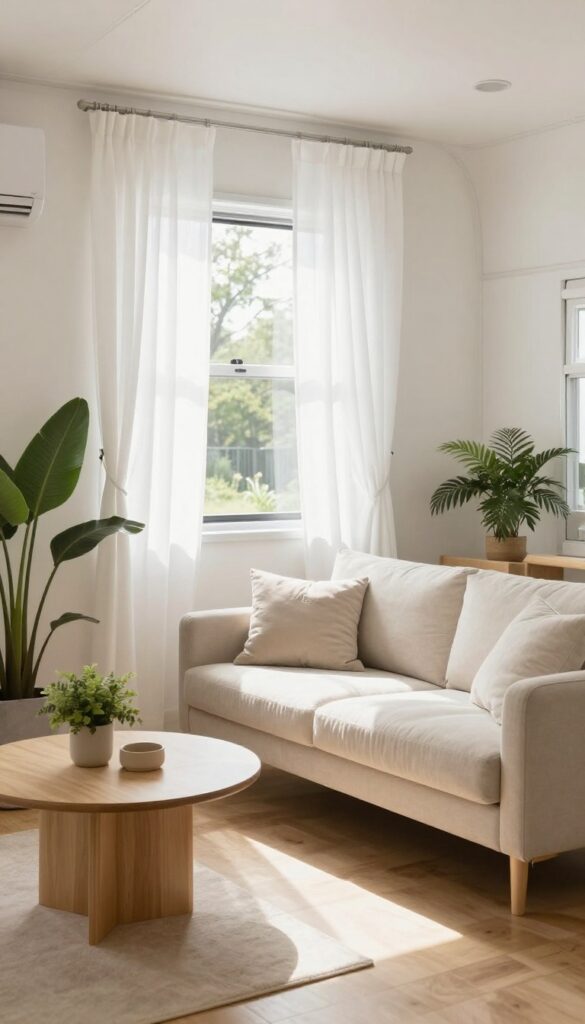
One of the quickest ways to make a single-wide living room feel bigger is to trick the eye with curtain placement. Instead of mounting rods right above the window frame, go high—close to the ceiling—and wide, extending past the window on both sides. This simple change draws the gaze upward, making ceilings feel taller and windows look larger.
The result is an instant sense of spaciousness without moving a single wall. Plus, it's a budget-friendly upgrade that works with any window treatment style.
In a single-wide home, every inch counts, and vertical space is often underused. By hanging curtains high and wide, you create the illusion of height and width, making the room feel more open and airy. This trick is especially effective in narrow living rooms where windows are small or placed close together.
It also adds a polished, custom look without the cost of new windows. For maximum impact, choose curtains that pool slightly on the floor for a relaxed, luxurious feel. If you're on a tight budget, even basic panels from a big-box store can transform the space when hung this way.
Best Curtain Length And Material
- For the tallest effect, use curtains that touch the floor—or even puddle an inch or two. Avoid curtains that stop above the window sill, as they break the vertical line. Lightweight fabrics like cotton, linen, or polyester blends work best because they hang neatly without adding bulk.
- In a single-wide, heavy drapes can overwhelm the space, so stick with airy materials that move easily. If you need privacy or light control, lined curtains are a good choice but still keep the fabric light in weight.
Rod Placement Tips
- Mount the rod as close to the ceiling as possible—ideally within two to four inches. Extend the rod at least six to eight inches past the window frame on each side. This allows the curtains to stack back when open, so they don't block the window glass.
- For a cohesive look, use a continuous rod for multiple windows in the same wall. A simple metal rod in black, bronze, or brushed nickel works with most decor styles and keeps costs low.
Budget-Friendly Swap
- You don't need expensive custom curtains to pull off this look. Store-bought panels in standard lengths (84 or 96 inches) are often affordable. If they're too long, hem them with fabric tape or a quick sew.
- For a single-wide, two panels per window are usually enough. Another money-saving trick: use clip rings to attach panels—they make opening and closing easy and add a decorative touch without extra hardware.
5. Add a Large Mirror to Reflect Light
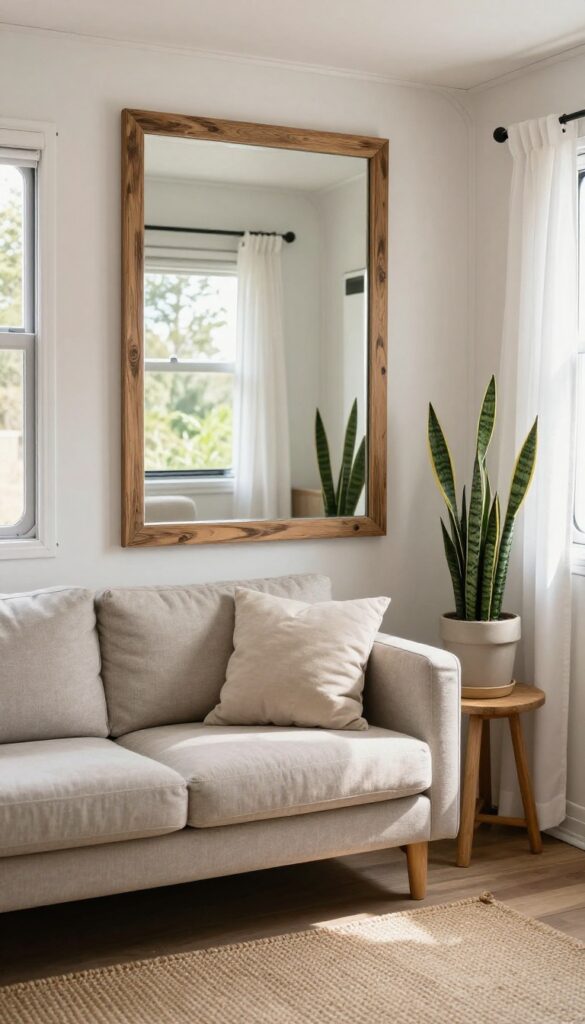
Mirrors are magic in a single wide. Placing a big one opposite a window instantly doubles the natural light and makes the room feel twice as spacious. It's one of the cheapest ways to open up a narrow living room without moving a single wall.
Plus, you can find amazing frames at thrift stores or discount home shops for next to nothing.
A large mirror acts like a second window, bouncing sunlight into dark corners and making the whole space feel airier. In a single wide, where every square foot counts, this trick visually expands the room without any construction. Look for a mirror with a frame that matches your style—maybe a weathered wood for a rustic feel, or a sleek black metal for a modern touch.
Hang it securely on a wall that gets the most light, and watch your living room brighten up instantly.
Best Placement
The sweet spot is directly across from a window, but even a few feet to the side works. If you have a dark hallway or a cramped corner, angle a mirror to catch light from the nearest window. In a single wide, avoid placing it where it reflects a cluttered area—you want it to bounce light, not mess.
Budget-friendly Frame Ideas
- Thrift stores, garage sales, and Facebook Marketplace are gold mines for cheap mirrors. A plain mirror can be dressed up with a DIY frame made from molding or even rope. Spray paint an old frame in a bold color like matte black or brass for an instant upgrade.
- No frame? Lean a large frameless mirror against the wall for a casual, modern look.
Styling Tip
Pair your mirror with a small plant or a lamp on a nearby table to create a layered vignette. The reflection will double the greenery or the warm glow, making the room feel cozier. Keep the area in front of the mirror clean and simple—too much stuff will defeat the purpose.
6. Layer Rugs to Define Zones
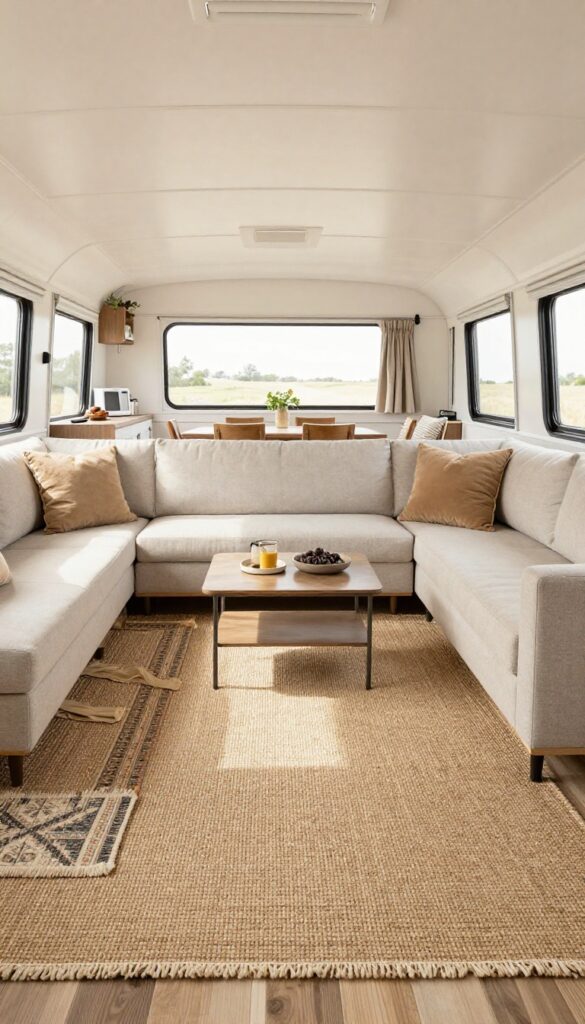
In a single wide, the living room often flows straight into the dining or kitchen area without a wall in sight. That open layout can feel a little chaotic if everything blends together. A simple trick to carve out a cozy living zone without any construction?
Layer rugs. Start with a large, neutral base rug that covers most of the floor space, then top it with a smaller, patterned rug right under your sofa and coffee table. This instantly anchors the seating area, adds warmth underfoot, and gives the room a collected, intentional look.
Layering rugs is one of the easiest ways to add texture and visual interest to a trailer living room without spending a ton. The key is choosing a neutral base—think jute, sisal, or a low-pile wool in beige or gray—that won't compete with the patterned top rug. The top rug should be smaller, maybe 4×6 or 5×8, with a bold pattern or contrasting color that ties into your decor.
This setup not only defines the living zone but also makes the space feel bigger by creating distinct areas within the open floor plan. Plus, it's budget-friendly: you can find affordable base rugs at big-box stores and swap out the top rug whenever you want a refresh.
Best Rug Pairings
- For a relaxed, budget-friendly look, pair a natural jute or seagrass base rug with a cotton or wool patterned rug on top. Jute adds organic texture and is super affordable, while the top rug brings color and personality. Stick to two to three colors in the top rug to keep it cohesive.
- If you have kids or pets, choose a low-pile or flatweave top rug that's easy to vacuum and clean.
Layout Tip
- Place the base rug so it extends at least 6 inches beyond the top rug on all sides. Center the top rug under the front legs of your sofa and coffee table. In a single wide, this helps the seating area feel grounded even if the room is narrow.
- If your sofa is against a wall, pull the base rug out toward the center of the room to create a clear path.
Budget-Friendly Swap
- Don't have a large neutral rug? Use a carpet remnant or a flatweave rug from a discount store as your base. For the top rug, try a vintage-style runner or a small washable rug.
- You can also layer a faux sheepskin or a woven cotton rug over a larger solid-color rug for a cozy, low-cost alternative.
7. Go Vertical with Wall-Mounted Shelves
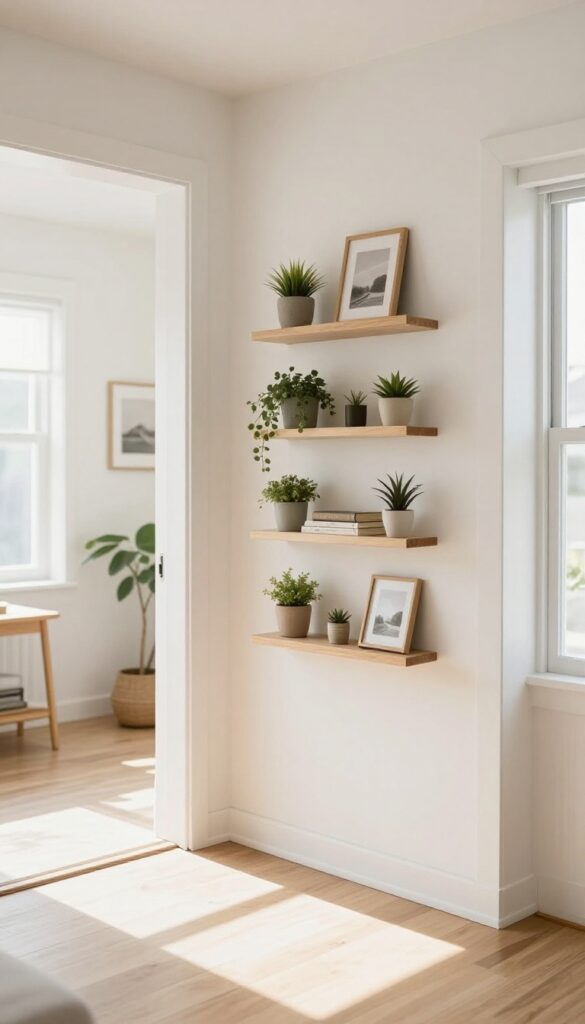
When floor space is at a premium, the walls become your best friend. Floating shelves let you stash books, plants, and decor without eating into your precious square footage. Plus, keeping things up high draws the eye upward, which tricks the room into feeling taller and more open—a huge win for any single wide living room.
Wall-mounted shelves are a budget-friendly way to add both storage and style. You can find simple floating shelves at big-box stores for under $20 each, or DIY them from reclaimed wood for next to nothing. The key is to mount them high enough that they don’t interfere with furniture but low enough that you can still reach what’s on them.
Mix in a few small plants, a stack of books, and a framed photo to create a curated look that feels intentional, not cluttered.
Best Materials
Go with light-colored wood like pine or birch to keep the room feeling airy. If your walls are white, a natural wood tone adds warmth without weighing things down. For a modern twist, try black metal brackets with a wood shelf—it’s an inexpensive way to add industrial edge.
Shelf Styling Tip
- Group items in odd numbers—three small pots or five books—and vary the heights. Use a small stack of books as a riser for a candle or a tiny plant. Leave some negative space so the shelf doesn’t look overcrowded.
- This trick makes even budget shelves look designer.
Small-space Fix
Install shelves in a vertical column rather than spreading them out horizontally. This creates a tower effect that emphasizes height and uses wall space more efficiently. Perfect for that narrow wall beside a doorway or window.
8. Stick to a Cohesive Color Palette
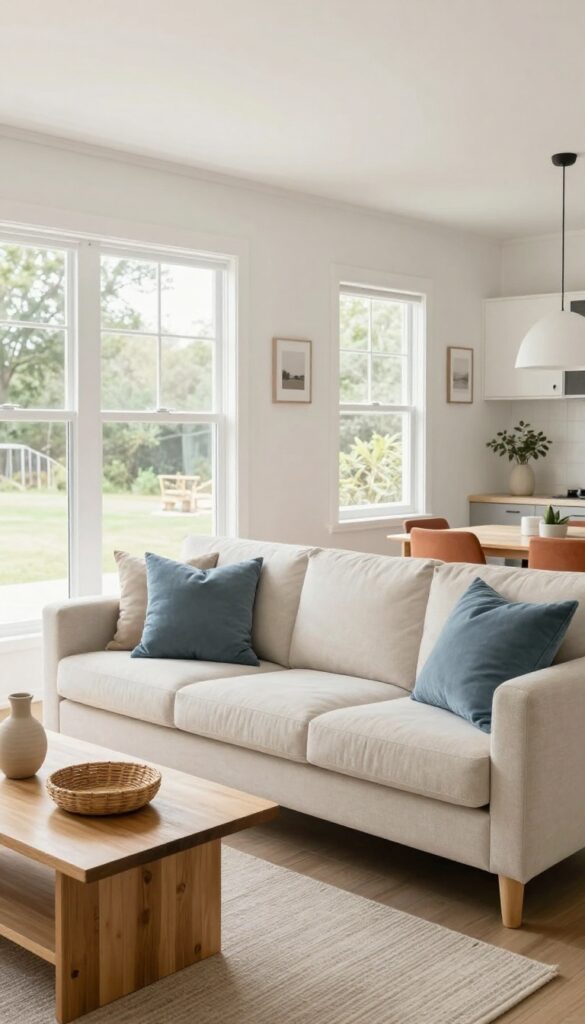
A unified color palette is like a visual deep breath for your single wide living room. When you choose two or three main colors and weave them throughout the space, everything starts to feel intentional and calm. This approach is especially powerful in a smaller layout, where too many competing shades can make the room feel chaotic and cramped.
Soft tones as your base—think warm whites, light greiges, or muted beiges—keep the space airy, while pops of color in pillows, throws, or a single accent chair add personality without overwhelming the eye. The best part? You can pull this off on a tight budget by sticking with what you already own and swapping in a few affordable accessories in your chosen hues.
A cohesive palette doesn't mean everything has to match perfectly—it means the colors harmonize. Start by picking a neutral anchor, like a warm off-white for the walls and a slightly deeper neutral for larger furniture pieces. Then choose one or two accent colors—maybe a dusty blue and a terra-cotta—and repeat them in your decor items.
This repetition creates a visual rhythm that guides the eye around the room and makes the whole space feel more polished. In a single wide, where open floor plans are common, a consistent palette also helps define zones without needing walls. Your living area, dining nook, and kitchen will flow together seamlessly when they share the same color story.
Best Colors For A Single Wide Living Room
- Soft, light neutrals are your best friend here. Think creamy white, light beige, or a warm gray for the walls and large furniture. These shades reflect light and make the room feel bigger.
- For your accent colors, lean into muted tones like sage green, dusty rose, or soft navy. These add warmth and interest without being too loud. Avoid very dark or saturated colors on large surfaces—they can shrink the room visually.
- Instead, save those deeper shades for small accessories like vases or picture frames.
Budget-Friendly Swap
- You don't need to repaint or buy new furniture to create a cohesive palette. Start with what you have and add a few inexpensive items in your chosen accent colors. A couple of throw pillows, a cozy blanket, and a new rug can tie everything together.
- Thrift stores and discount home goods stores are goldmines for accent pieces in soft, trendy colors. Even swapping out your curtain rods for a matching finish can make a surprising difference.
Finishing Touch
Once you've got your main colors placed, add a tiny dose of a surprise hue—like a single mustard yellow cushion or a small ceramic bud vase in coral. This unexpected pop keeps the room from feeling too matchy-matchy and gives it a collected-over-time look. Just keep it to one or two small items so the cohesion stays intact.
9. Incorporate Plenty of Textures
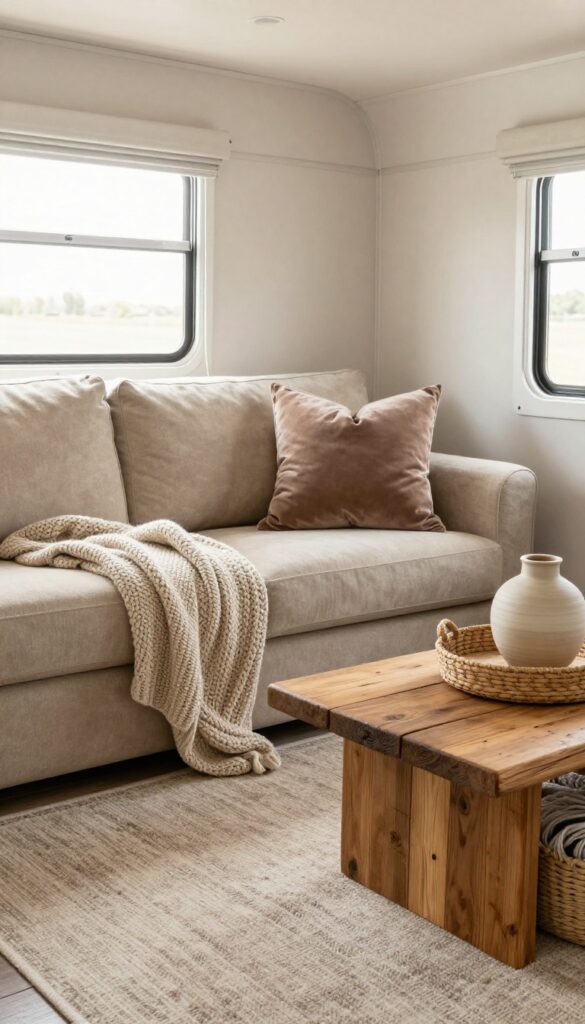
You don't need a lot of stuff to make a room feel rich and inviting—just the right mix of textures. In a single wide living room, where square footage is limited, texture becomes your secret weapon for adding depth without clutter. Think soft, rough, shiny, and matte all working together to create a space that feels collected and cozy, not busy or chaotic.
Layering different materials is one of the easiest ways to make a small living room feel warm and intentional. A chunky knit throw draped over the sofa, a couple of velvet pillows, a woven basket holding extra blankets, and a wooden coffee table with visible grain—each piece brings its own tactile quality. The contrast keeps the eye moving and makes the room feel more dimensional.
Best of all, this look is budget-friendly because you can shop your own home or hit up thrift stores for natural fiber throws, secondhand baskets, and solid wood furniture. Start with one anchor texture (like a soft area rug) and build from there, mixing in at least three different materials for the best effect.
Texture Mix
Aim for a balance of soft, rough, and smooth. For example, pair a chunky cable-knit throw with a sleek leather sofa, or set a smooth ceramic vase on a rustic wood side table. The contrast makes each texture stand out more.
Budget-Friendly Swap
You don't have to buy everything new. Look for a secondhand wooden coffee table and give it a quick sanding, or grab a set of velvet pillow covers online for under $20. A woven basket from a dollar store can be spray-painted for a custom look.
Finishing Touch
Add a natural fiber rug like jute or sisal underneath your seating area. It anchors the room and adds an organic texture that works with almost any style. Plus, it's durable and easy to clean—perfect for a busy living room.
10. Use Corner Space with a Small Reading Nook
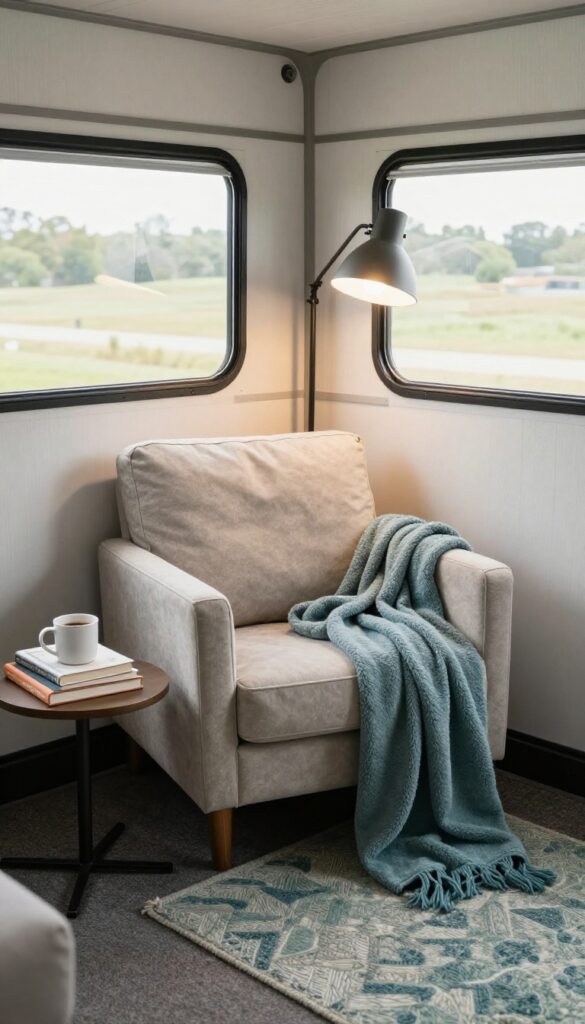
That awkward corner in your living room doesn't have to stay empty. With a little creativity, it can become your favorite spot in the house. A mini reading nook adds personality and function without eating into your floor space—perfect for single wide homes where every square foot counts.
Start with a comfortable chair that fits the corner's dimensions. A small armchair or a cozy papasan chair works well. Add a floor lamp to provide task lighting for reading, and a tiny side table for your coffee mug or a stack of books.
Keep the color palette calm to make the nook feel like a retreat. Soft neutrals or muted blues and greens help the space feel relaxing. If you're on a budget, look for secondhand furniture and give it a fresh coat of paint or new upholstery.
A plush throw blanket and a small rug under the chair add warmth and define the zone. This nook doesn't need to be large—just enough to curl up with a good book and a cup of tea.
Best Chair Choices For Tight Corners
Look for chairs with a smaller footprint, like a wingback chair, a slipper chair, or a compact armless chair. Avoid bulky recliners or oversized styles that overwhelm the corner. A chair with a high back can also make the nook feel more enclosed and cozy.
Lighting That Sets The Mood
A floor lamp with an adjustable arm or a swing arm wall lamp gives you directed light for reading without taking up table space. Choose warm light bulbs (2700K-3000K) to keep the nook inviting. If you have an overhead light, dimmer switches help control the ambiance.
Budget-friendly Finishing Touches
Add a small shelf above the chair for a few books or a small plant. Use a woven basket under the side table to store extra throws or magazines. Thrift stores and online marketplaces are goldmines for affordable side tables and lamps—just sand and repaint if needed.
11. Let in as Much Natural Light as Possible
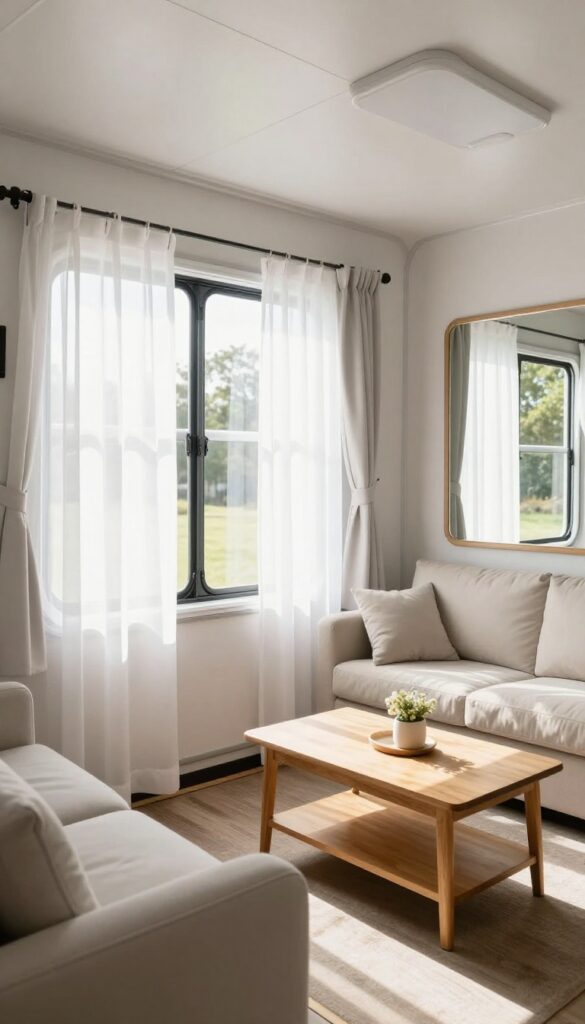
Natural light is one of the easiest ways to make a single-wide living room feel larger and more inviting. Without it, even the coziest space can feel cramped and closed in. The trick is to keep window treatments minimal during the day—think sheer curtains or blinds that pull all the way up.
This lets sunlight flood the room, bouncing off walls and making everything feel airier. Plus, it costs nothing to open your curtains, so it's a budget-friendly upgrade that pays off instantly.
Maximizing natural light doesn't require a renovation. Start by removing heavy drapes or dark blinds that block sunlight. Replace them with lightweight, light-colored sheers or simple roller shades that disappear when raised.
Keep windows clean inside and out to let every ray through. If privacy is a concern, use frosted window film or top-down-bottom-up shades that let light in from above while covering the lower half. Mirrors placed opposite windows also help bounce light deeper into the room, doubling the brightness without adding a single watt.
Best Window Treatments
- Go for sheer white or ivory curtains that filter light softly. If you need more privacy, try bamboo shades with a light-filtering liner—they add texture without darkening the room. Avoid blackout curtains during the day; save them for bedrooms.
- For a clean, modern look, mount curtain rods high and wide so the curtains stack completely off the glass when open.
Mirror Placement Trick
- Place a large mirror on the wall directly across from your biggest window. It will reflect the outdoors and make the room feel twice as big. A floor-leaning mirror works great in a small living room, or try a grouping of smaller mirrors for a gallery wall that amplifies light.
- Keep frames light or metallic to avoid visual weight.
Furniture Arrangement
- Don't block windows with bulky furniture. Keep sofas and chairs low and away from the glass. If you must place something in front of a window, choose a slim console table or a low bench that doesn't block light.
- Arrange seating to face the window when possible, so you enjoy the view and the brightness.
12. Add Greenery for Life and Color
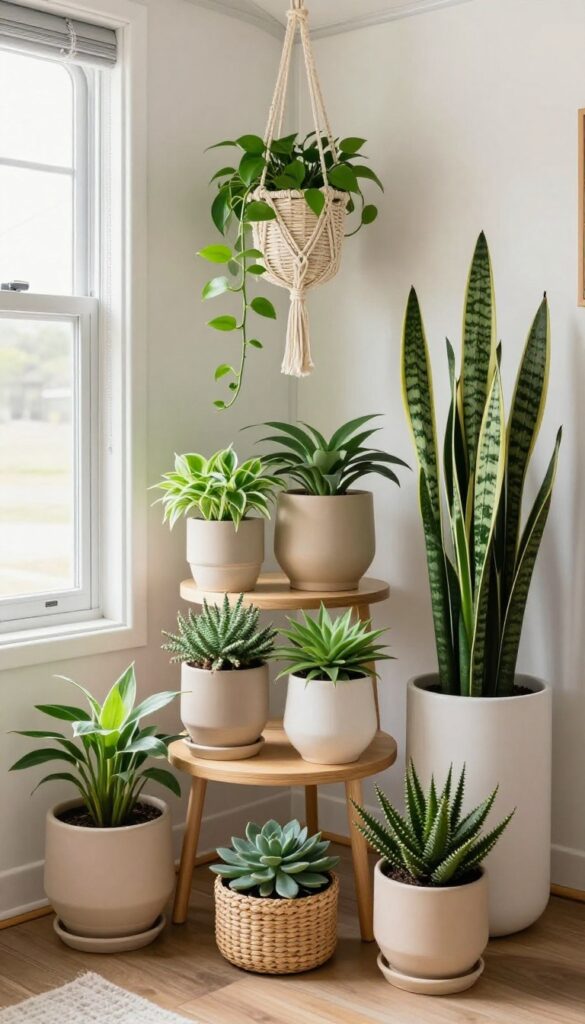
Houseplants are one of the easiest ways to breathe life into a single wide living room. They add color, texture, and a fresh vibe without taking up much floor space—perfect for tighter layouts. Plus, caring for plants can be a relaxing hobby that makes your space feel more like home.
Bringing plants into your trailer living room doesn't require a green thumb or a big budget. Low-maintenance varieties like snake plants, pothos, and ZZ plants thrive in various light conditions and need minimal watering. Use hanging planters or wall-mounted pots to keep surfaces clear and draw the eye upward, making the room feel taller.
A few well-placed plants can transform a plain corner into a cozy, inviting nook.
Best Low-maintenance Choices
- Stick with hardy plants that forgive occasional neglect. Snake plants and pothos are nearly indestructible and look great in any decor style. ZZ plants handle low light well, and succulents add quirky shapes without demanding much attention.
- These options keep your space green without adding stress to your routine.
Space-saving Plant Displays
- Maximize your floor area by going vertical. Hang planters from the ceiling or mount small pots on walls using simple brackets. A tiered plant stand can hold several pots in a compact footprint.
- Macrame hangers add a boho touch and keep your surfaces clutter-free.
Styling Tip: Mix Textures And Heights
Group plants of different heights and leaf shapes to create visual interest. Pair a tall snake plant with a trailing pothos on a shelf, and add a small succulent nearby. Use neutral pots in woven baskets or ceramic finishes to tie the look together without clashing with your existing decor.
13. Create a Gallery Wall on a Budget
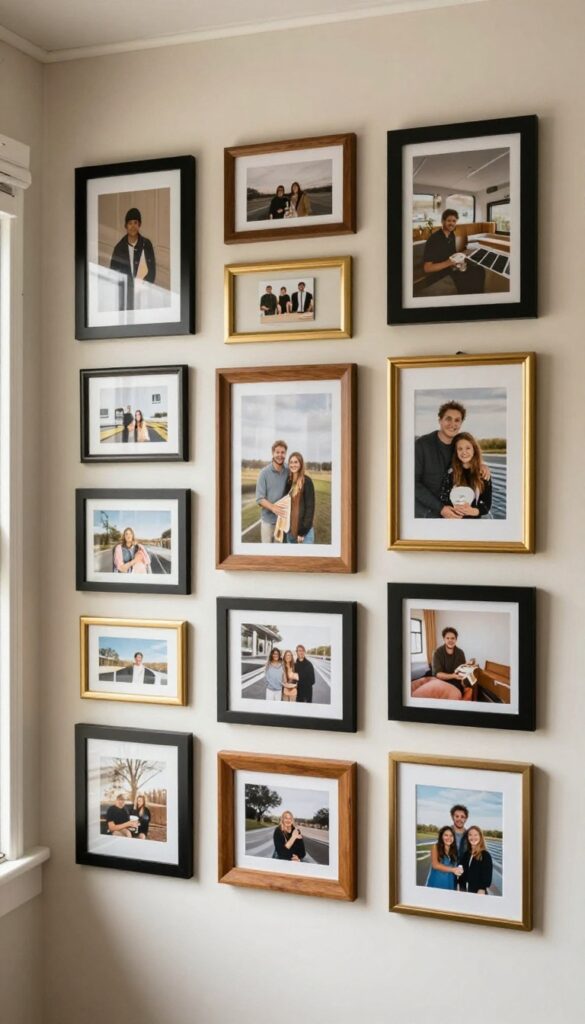
Blank walls can make a trailer living room feel unfinished, but filling them with art doesn't have to cost a fortune. A gallery wall is one of the easiest ways to inject personality and warmth into a small space, and you can pull it together for pocket change. The trick is to mix and match affordable frames with items you already have—photos, postcards, even fabric scraps—to create a curated look that feels intentional, not thrown together.
Start by collecting frames from thrift stores, garage sales, or dollar stores. You don't need them to match perfectly—in fact, a mix of finishes (black, wood, gold) adds character. Fill each frame with personal photos, free printable art, pages from old books, or even a piece of fabric that ties into your color scheme.
Arrange them on the floor first to test the layout, then hang them using a level and measuring tape for a clean finish. This project gives your living room a custom, lived-in feel without the custom price tag.
Best Frame Mix
Aim for a combination of sizes and shapes to keep the gallery wall visually interesting. Use a few large frames as anchors, then fill in with smaller ones. Stick to two or three frame colors—like black, natural wood, and white—to keep the look cohesive without being matchy-matchy.
Layout Tip
Before hammering any nails, trace each frame onto kraft paper, cut out the shapes, and tape them to the wall. This lets you move things around until the arrangement feels balanced. For a small living room, keep the gallery wall tight—group frames within a 4-foot square area to avoid overwhelming the space.
Budget-Friendly Swap
If you don't have enough frames, incorporate non-framed elements like a floating shelf to lean art on, or use washi tape to attach lightweight prints directly to the wall. You can also spray-paint mismatched thrift store frames in a single color for a unified, high-end look.
14. Swap Out Bulky Lighting for Sleek Options
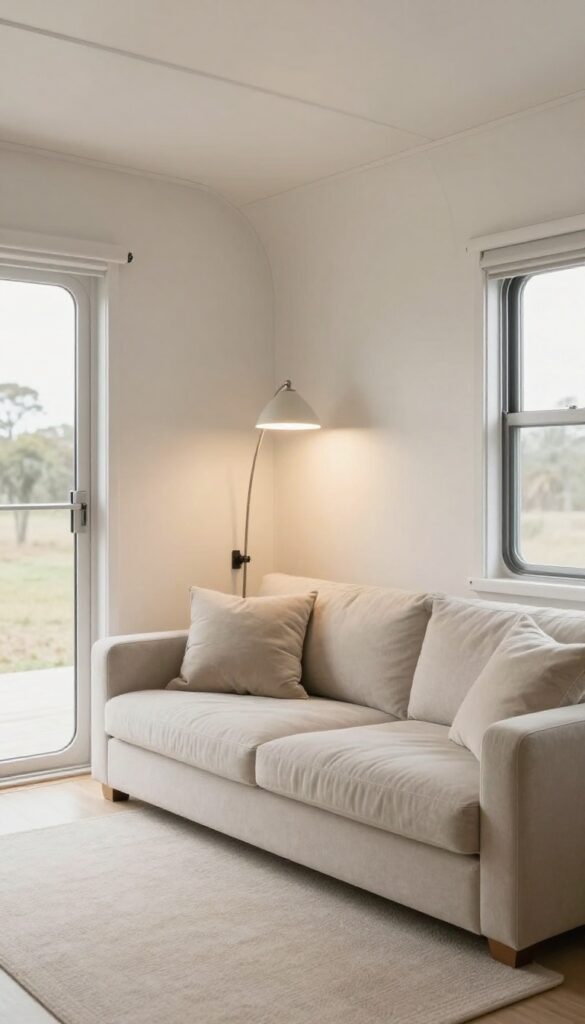
Heavy floor lamps and oversized fixtures can eat up visual space in a single wide living room. Swapping them for slim, modern designs or wall-mounted sconces instantly opens up the room. Good lighting makes the space feel bright and airy, and warm bulbs add a cozy glow without the clutter.
Replace bulky floor lamps with sleek, space-saving alternatives that still provide plenty of light. Look for slim tripod lamps, arc lamps that hover over furniture, or wall-mounted swing-arm sconces that free up floor space. Warm LED bulbs (around 2700K) create a welcoming ambiance.
This budget-friendly swap can make your living room feel larger and more intentional.
Best Styles For Small Spaces
Go for minimalist designs with thin metal or wood frames. A sleek arc lamp can stretch over a sofa without taking up floor space, while wall sconces with adjustable arms give you directed light for reading. Avoid bulky shades; choose open or translucent options that let light diffuse softly.
Budget-Friendly Swap
- You don't need to spend a lot. Thrift stores often have vintage lamps with slim profiles—just give them a fresh coat of paint. Or try DIY wall sconces using a simple cord kit and a small shade.
- Even swapping a heavy lampshade for a lighter, more open one can make a big difference.
Lighting Tip
Layer your lighting: combine a sleek overhead flush mount with a couple of wall sconces or a slim floor lamp. Use dimmers to adjust brightness throughout the day. This creates depth and makes the room feel bigger without adding visual weight.
15. Keep Clutter Hidden with Stylish Baskets
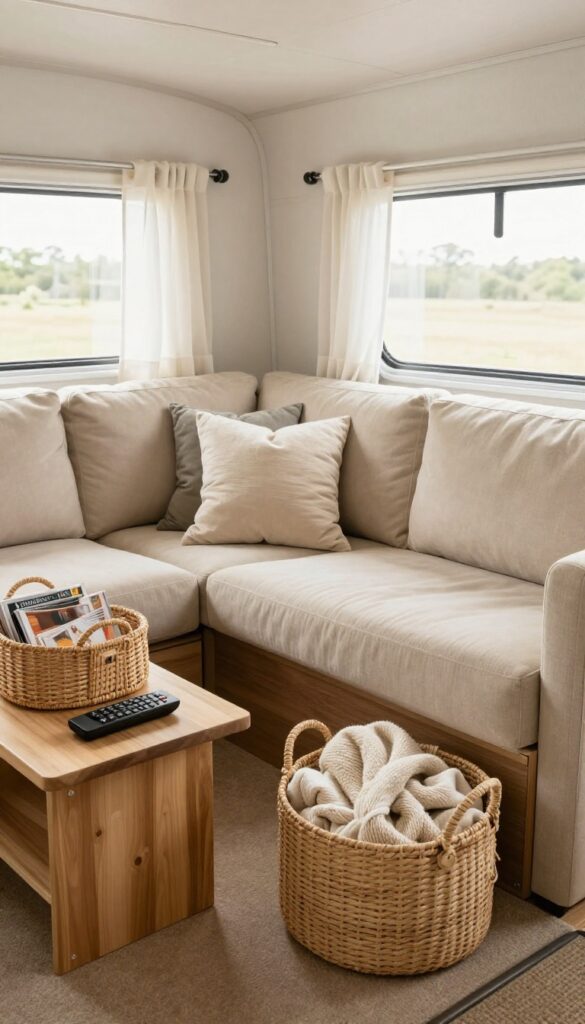
A single wide living room can start to feel cramped fast when remotes, blankets, and magazines pile up. The trick is to stash the mess without losing access to the things you use daily. Decorative baskets offer a simple, budget-friendly fix that adds warmth and texture to the room.
Baskets are the unsung heroes of small-space living. They corral clutter in plain sight, turning everyday necessities into part of the decor. Choose natural materials like seagrass, woven rattan, or jute to bring an organic, cozy feel to your trailer living room.
Place a large basket next to the sofa for throw blankets, and use smaller ones on shelves or under a console table for remotes and chargers. The key is to pick baskets that complement your color scheme—neutral tones like beige, tan, or soft gray blend easily, while a pop of navy or mustard can add a playful accent. Because baskets come in all shapes and sizes, you can mix and match without spending a lot.
A set of three nesting baskets costs under $30 at many discount stores, making this an affordable upgrade that instantly tidies up the space.
Best Materials For Long-lasting Style
- Stick with natural fibers for a look that feels timeless and textural. Seagrass is durable and has a subtle sheen, while woven rattan adds a boho touch. Jute baskets are soft and earthy, perfect for holding larger items like extra pillows.
- If you have kids or pets, look for tightly woven options that won't snag or fray easily.
Where To Place Baskets For Maximum Impact
- Think beyond the floor. Place a small basket on an ottoman or coffee table to hold coasters and remotes. Use a tall, narrow basket in a corner for standing blankets or yoga mats.
- On open shelving, line up a few matching baskets to store odds and ends while keeping the visual rhythm clean.
Budget-Friendly Swap
Skip expensive designer baskets and check thrift stores or dollar stores for plain woven baskets. A quick coat of spray paint in a matte finish can update them to match your room. Or, line a basic basket with a fabric liner for a custom look without the price tag.
FAQ
What is the best way to make a single wide living room feel bigger?
Use light paint colors, hang curtains high and wide, add a large mirror, and float furniture away from walls. These tricks create the illusion of more space without any major renovations.
Can I use dark colors in a small trailer living room?
Yes, but use them sparingly. A dark accent wall behind the sofa or in a nook can add depth. Balance it with light furniture and plenty of natural light to keep the room from feeling cramped.
What type of furniture works best for a narrow living room?
Look for slim-profile pieces like a loveseat instead of a full sofa, a narrow console table, and armless chairs. Multipurpose furniture like ottomans with storage also helps maximize space.
How can I add storage without making the room feel cluttered?
Use vertical storage like wall-mounted shelves, tall bookcases, and hanging organizers. Decorative baskets and bins keep items hidden while adding texture. Choose furniture with built-in storage.
What are some budget-friendly ways to update my trailer living room?
Paint the walls, swap out throw pillows and curtains, add a new rug, and create a gallery wall with thrifted frames. Small changes like these can transform the room without costing much.
Conclusion
Making your single wide living room feel stylish and spacious doesn't require a big budget or major renovations. With a few thoughtful tweaks like floating furniture, adding mirrors, and choosing multipurpose pieces, you can create a space that feels open, cozy, and totally yours. Remember, the best decor ideas are the ones that work for your everyday life.
Start with one or two changes that excite you most, and build from there. Your trailer living room has so much potential—enjoy making it your own.