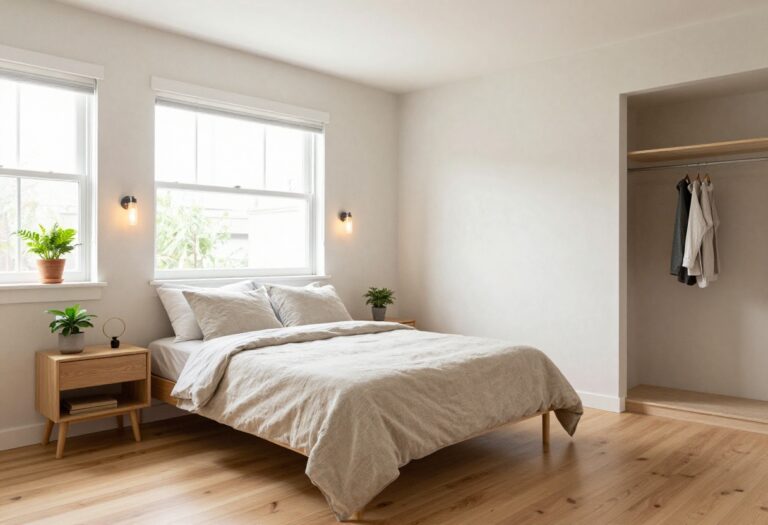
10 Living Room Colour Ideas for Soft Styled Layers (Small-Space Friendly)
Layering colour in a small living room can feel tricky—too many tones and the space shrinks, too few and it falls flat. The secret is choosing soft, harmonious hues that add depth without overwhelming the square footage. Think of your room as a canvas where each colour layer whispers, not shouts.
Soft styling isn't about playing it safe; it's about building a palette that feels intentional and calming. From muted earth tones to barely-there pastels, these ideas are designed to make your compact living room look and feel larger, while still brimming with personality.
Ready to give your small space a gentle colour refresh? Here are ten ways to layer soft tones that work beautifully in tighter quarters.
1. Warm White Walls with Sand and Linen Accents
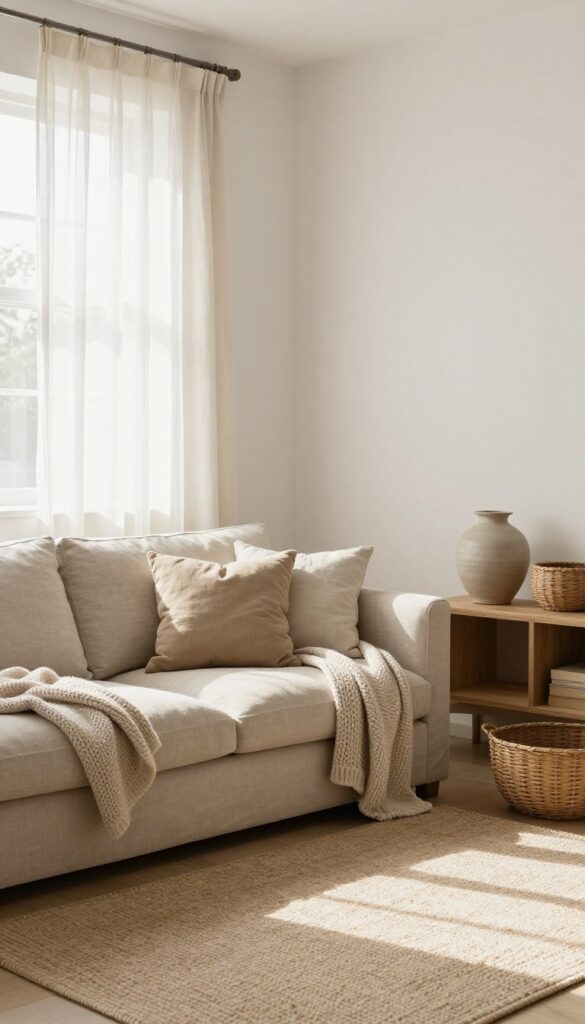
A warm white wall color does more than just brighten a room. It creates a soft, reflective backdrop that makes small spaces feel open and airy without feeling cold or sterile. The key is choosing a white with a hint of warmth—think creamy, not stark.
Pair it with sand-toned textiles and natural linen, and you get a layered look that feels both grounded and light.
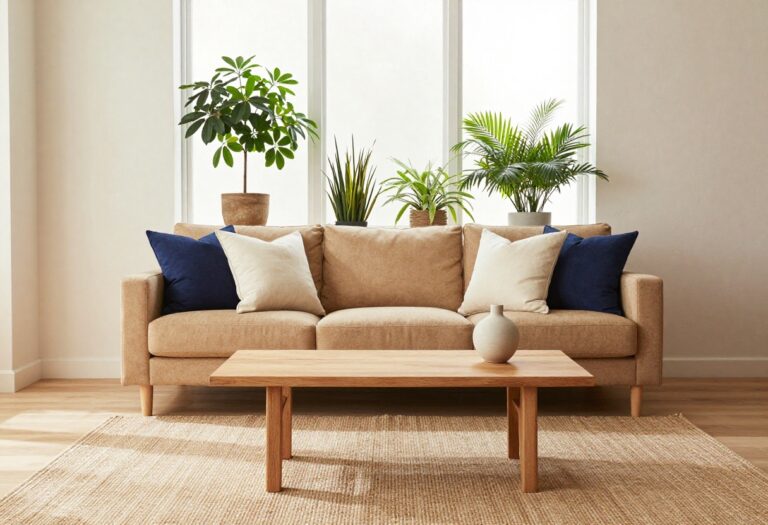
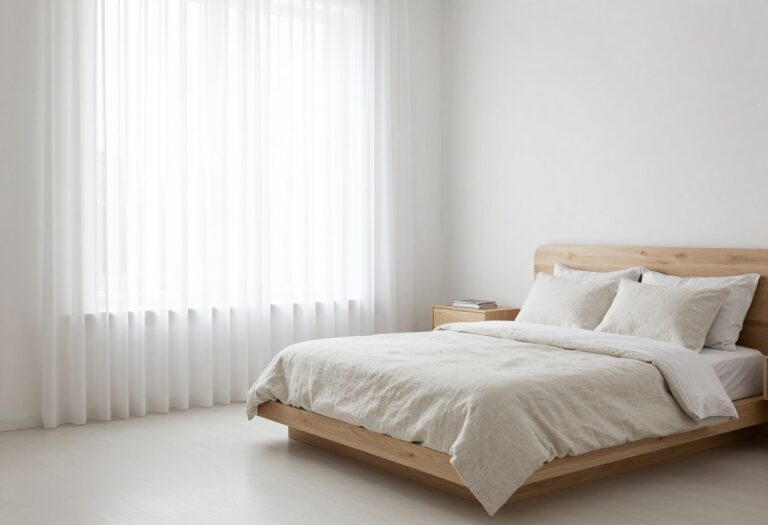
Start with a warm white base to bounce light around the room. Layer in sand-coloured throws, linen curtains, and a jute rug for texture that feels airy and grounded. This palette works especially well in small living rooms where you want to maximize natural light while keeping the space cozy.
The neutral tones create a calm foundation that you can easily refresh with accent pillows or art.
Best Colors
- For the walls, choose a warm white like Benjamin Moore's White Dove or Sherwin-Williams' Creamy. These have subtle yellow or beige undertones that prevent the room from feeling clinical. Then bring in sand, camel, and oat shades through upholstery, pillows, and curtains.
- A jute or sisal rug adds a natural tan layer that ties everything together.
Texture Mix
To keep the look from feeling flat, mix textures: a chunky knit throw on a linen sofa, a smooth ceramic vase on a wood console, and a woven basket for storing blankets. The contrast between rough jute, soft linen, and smooth cotton adds visual interest without introducing new colors. This is especially important in a small space where too many patterns can feel busy.
Small-space Fix
- In a tight living room, use curtains in a light linen that hang from ceiling to floor. This draws the eye upward and makes the walls feel taller. Choose furniture with exposed legs—like a slim sofa on tapered legs or a light wood coffee table—to maintain an open, airy feel.
- A jute rug underfoot grounds the seating area without overwhelming the floor.
2. Pale Sage Green Paired with Creamy Beige
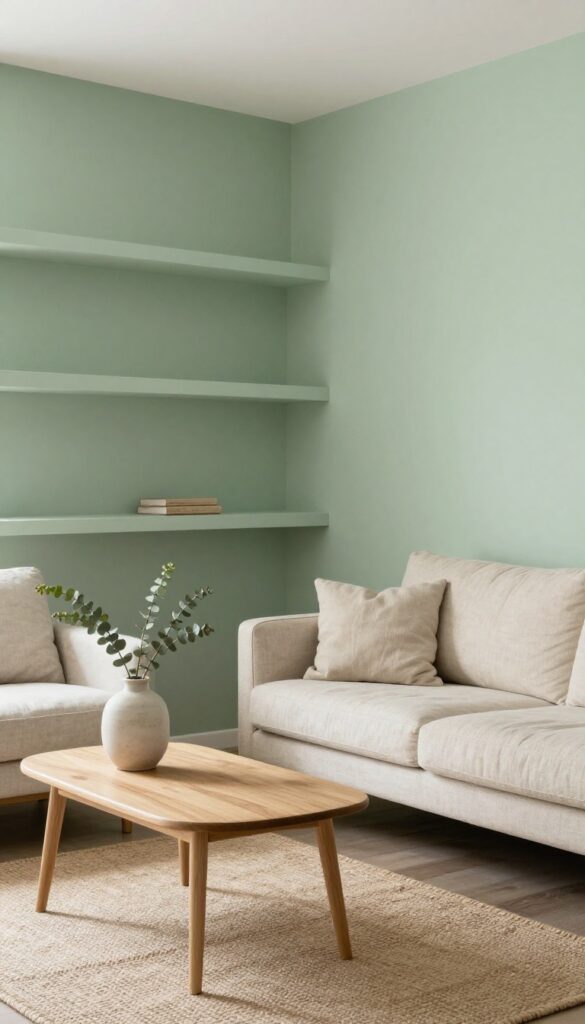
Sage green is having a moment, and for good reason. It brings a gentle touch of nature indoors without going full botanical. When you pair it with creamy beige, the result is a calm, airy palette that makes small living rooms feel bigger and more open.
This combo works especially well if you want color but are worried about dark tones swallowing your space.
Start with an accent wall in pale sage green—it adds depth without dominating the room. Built-in shelving painted in the same shade creates a cohesive look that draws the eye upward, making ceilings feel higher. Balance the green with creamy beige upholstery on your sofa or armchairs, and bring in light wood furniture like a coffee table or sideboard to keep the whole scene soft and spacious.
The key is keeping the beige warm but not yellow, and choosing sage with a hint of gray for a modern edge.
Best Materials
- Stick with natural textures to enhance the earthy vibe. Linen or cotton for curtains and cushions, a wool or jute rug, and unfinished or whitewashed wood for furniture. Avoid glossy finishes—they can make the palette feel cold.
- Matte paint on walls and satin on woodwork keeps things soft.
Small-space Fix
In a compact living room, use sage green on just one wall or the inside of a bookshelf rather than all four walls. This adds color without closing in the room. Pair with a creamy beige sofa and a light wood coffee table that has slim legs to keep the floor visible and the space feeling open.
Finishing Touch
Add a few dried eucalyptus stems in a ceramic vase on the coffee table. They echo the sage green and bring a subtle organic shape. A woven throw in cream or light tan over the sofa arm adds another layer of texture without cluttering the look.
3. Blush Pink and Dusty Rose with Warm Greys
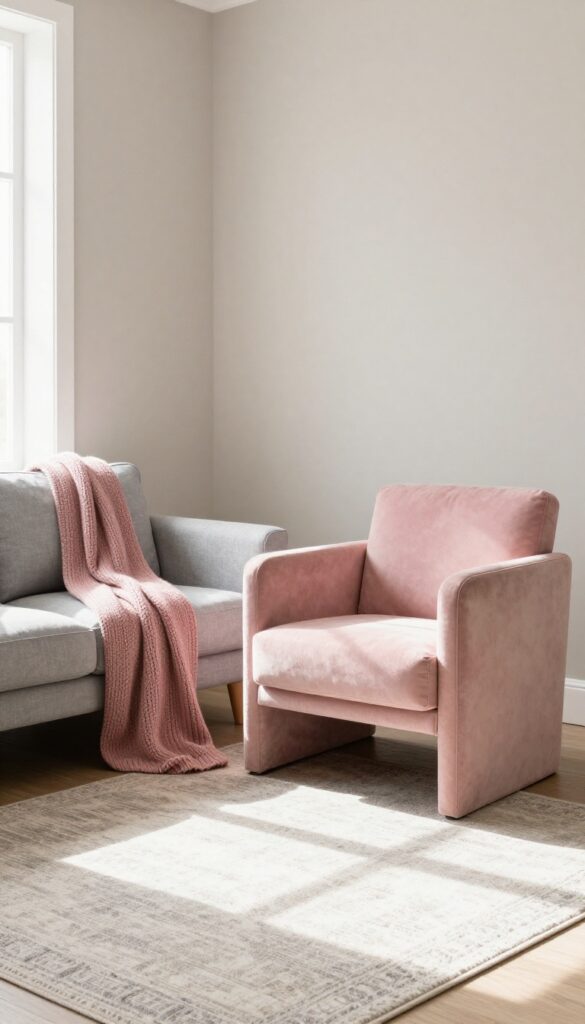
Blush pink and dusty rose bring a soft, romantic warmth that feels cozy without being cloying. The key to keeping this palette modern and grounded is pairing it with warm greys—think greige or mushroom tones—that add a subtle, earthy anchor. This combination works especially well in smaller living rooms because the light pinks reflect natural light, while the grey prevents the space from feeling too saccharine or one-note.
Start with a warm grey sofa or a soft grey accent wall as your neutral base. Then layer in blush pink through pillows, throws, or a single statement piece like a dusty rose armchair. The contrast between the cool-warm grey and the pink creates a balanced, inviting look that feels both fresh and lived-in.
For a small space, stick to one or two pink accents to avoid overwhelming the room, and let the grey do the heavy lifting.
Best Colors
Stick to blush pink, dusty rose, and warm greys like greige, mushroom, or charcoal with brown undertones. Avoid cool greys that can clash with the pink's warmth. A soft white ceiling and trim keep the palette airy.
Small-space Fix
In a compact living room, use blush pink on a single accent chair or a pair of pillows rather than on walls. Warm grey on the walls makes the room feel larger and more cohesive, while the pink adds a pop of personality without shrinking the space.
Texture Mix
Combine velvet or chenille for the pink pieces with a chunky knit throw and a linen grey sofa. Add a wool rug in a warm grey tone with a subtle pattern. This mix of textures keeps the palette from feeling flat and adds visual interest.
4. Soft Blue-Grey with Off-White and Natural Wood
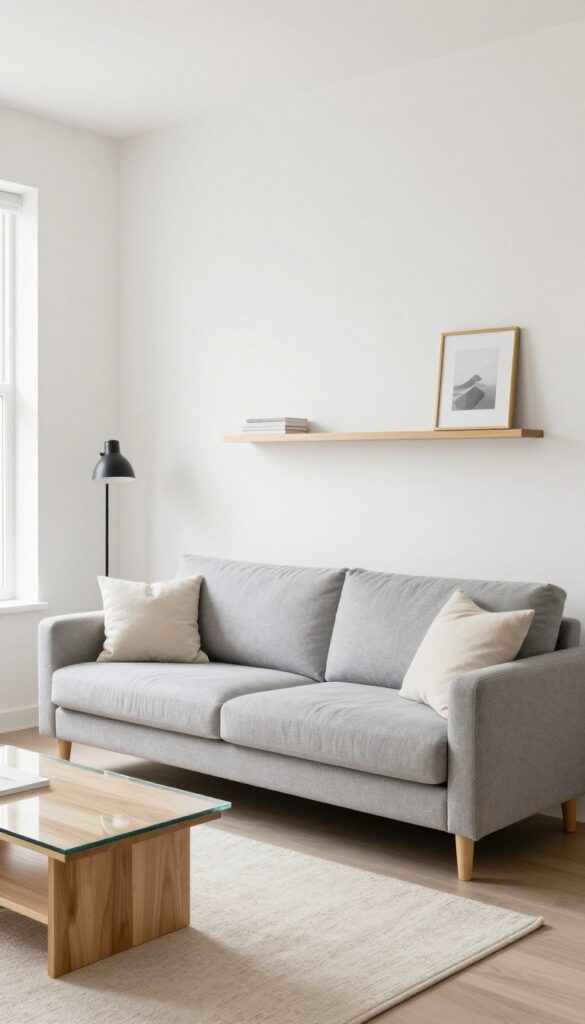
Blue-grey is one of those colors that feels both cozy and airy at the same time. It’s not as cold as straight blue, but it still brings a calm, collected energy into a room. Pair it with off-white walls and natural wood accents, and you get a space that feels open, grounded, and effortlessly put together.
This combo works especially well in smaller living rooms because the light walls keep things bright while the wood adds just enough warmth to prevent it from feeling sterile.
Start with a blue-grey sofa or a large area rug as the anchor. Off-white walls keep the room feeling spacious, and natural wood elements—like a coffee table, floating shelves, or a media console—add texture and warmth. The key is to keep the wood tones medium to light; dark woods can weigh down the look.
Add a few soft textiles in cream or light beige, and you have a living room that feels serene without being boring.
Best Colors
- Stick with a blue-grey that has a bit of green undertone—something like a muted slate or a soft denim. Off-white should be warm, not stark—think ivory or cream. For wood, go with oak, ash, or birch.
- Avoid yellow-toned woods; they can clash with the coolness of the blue-grey.
Small-space Fix
In a small living room, use the blue-grey on a single piece, like a sofa or an accent chair, rather than on the walls. Keep the rug light—maybe a cream or a pale grey—to maintain an open feel. A glass coffee table with a natural wood frame can add function without visual bulk.
Finishing Touch
Add a few matte black or brass accents—like lamp bases or picture frames—to give the scheme a little edge. A chunky knit throw in off-white and a couple of indoor plants (think snake plant or fiddle leaf) will make the room feel lived-in and fresh.
5. Butter Yellow Accents on a Neutral Base
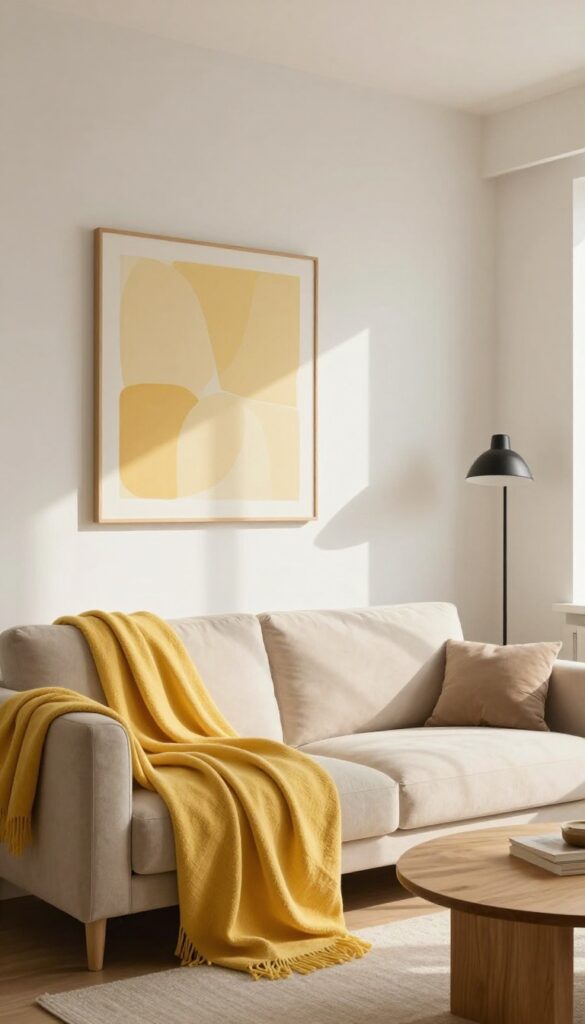
If you want a splash of color that feels sunny but not loud, butter yellow is your answer. Against a backdrop of soft white walls and warm taupe furniture, a few yellow pieces add a cheerful lift without overwhelming the space. It's a classic trick for small living rooms: keep the base calm, then let one or two bright accents do the talking.
The beauty of butter yellow is its restraint. Unlike a bold mustard or bright lemon, this pale, creamy shade blends into a neutral palette almost like a neutral itself—but with a subtle glow. In a small living room, you don't need much: a throw draped over the sofa, a framed abstract print, or a single accent chair in a soft yellow fabric.
The contrast against white and taupe keeps the room light and airy, while the yellow adds just enough personality to feel intentional. It's an easy way to test a warmer color without committing to a full paint job.
Best Colors
Stick to a base of soft white (think warm white, not stark) and taupe or greige. For the yellow, look for a shade that's closer to butter than egg yolk—pale, creamy, with a hint of warmth. Pair it with natural wood tones and a touch of black in frames or lamp bases for grounding.
Small-space Fix
In a tight living room, place your butter yellow accent piece near a window or a light source. The natural light will amplify the cheerful effect without making the room feel cramped. A yellow throw pillow on a neutral sofa is the simplest, most low-commitment way to try the look.
Texture Mix
To keep the neutral base from feeling flat, layer in texture: a chunky knit throw, a linen sofa, a sisal rug. The yellow accent can be smooth (like a ceramic vase) or plush (like a velvet cushion) to add visual interest. The contrast between soft textures and the bright pop of yellow creates a cozy, curated feel.
6. Lavender and Light Greige for a Subtle Contrast
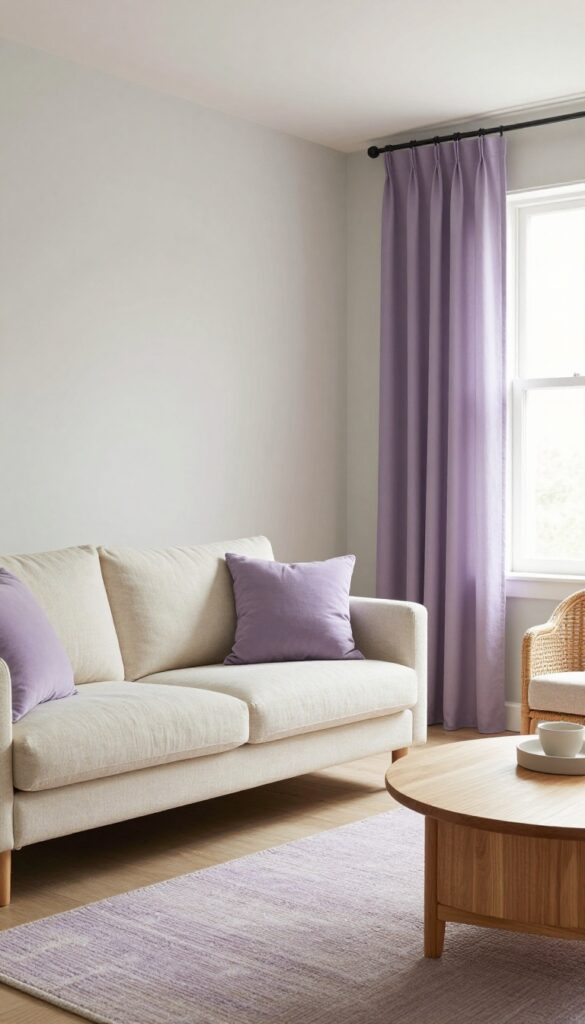
Soft lavender isn't just for nurseries or shabby chic spaces—it can feel fresh and grown-up when paired with the right neutral. Light greige, that perfect blend of grey and beige, acts as a calm backdrop that lets lavender sing without feeling pastel-heavy. This combo works especially well in small living rooms because the cool tones visually expand the space while adding just enough personality to keep it from feeling sterile.
Start with greige walls—something like Benjamin Moore's Revere Pewter or Sherwin-Williams' Agreeable Gray. Then bring in lavender through soft furnishings: floor-length curtains, a wool-blend rug, or a couple of throw pillows on a cream sofa. The key is keeping the lavender muted—think dried lavender, not bright Easter egg purple.
Cream or off-white furniture pieces (a linen sofa, a rattan chair) keep the look airy, while natural wood accents add warmth. This palette feels soothing and sophisticated, perfect for a cozy living room that still wants to feel open.
Best Colors
- Stick with a lavender that has grey undertones—something like 'Dusty Lavender' or 'Soft Purple' from popular paint lines. For greige, choose a shade that leans slightly warmer to balance the cool lavender. Cream, off-white, and light oak are your go-to accents.
- Avoid true purple or bright violet; they'll compete with the greige and make the room feel smaller.
Texture Mix
Since the color palette is soft, texture becomes crucial. A chunky knit throw, a velvet pillow, a jute rug layered under a flat-weave lavender rug—these add depth and keep the room from feeling flat. Velvet curtains in lavender also catch light beautifully and give a subtle luxe feel without overwhelming the space.
Small-space Fix
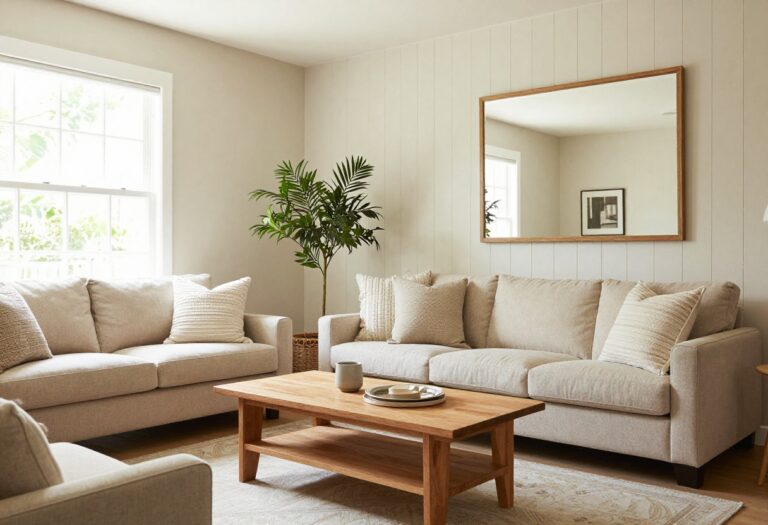
In a compact living room, use lavender on just one element—say, a single accent chair or a pair of drapes—to avoid visual clutter. Keep the rest of the room in greige and cream. A large mirror opposite a window will bounce light around and make the lavender feel like a deliberate pop rather than a heavy color block.
7. Terracotta and Clay with Cream and Sand
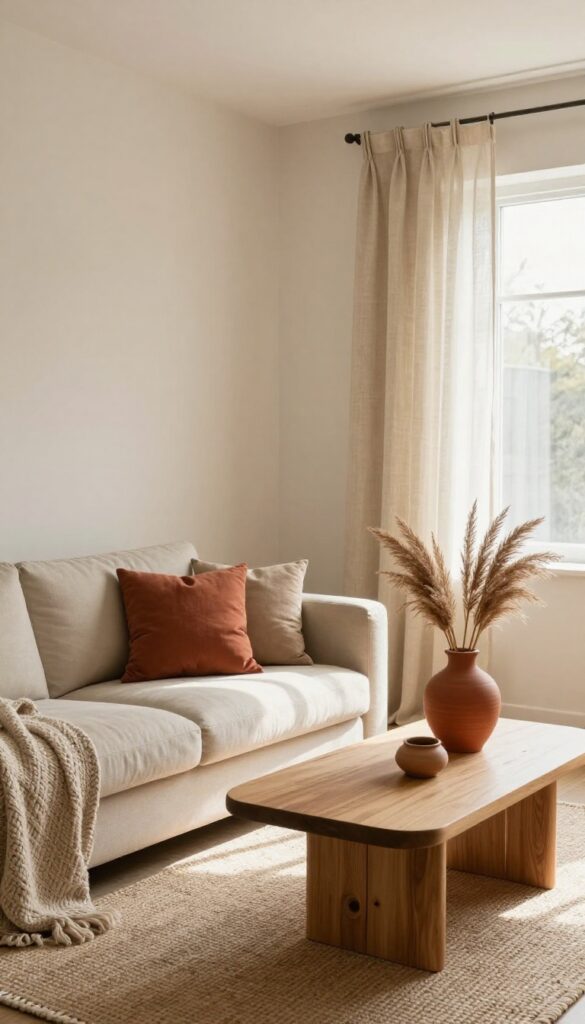
Warm earth tones like terracotta and clay bring a grounded, sunbaked feel to any room without making it feel heavy. In a small living room, these rich, natural hues work beautifully when balanced with lighter neutrals—cream walls and sand-colored textiles keep the space from closing in. The contrast between the deep, rusty warmth and the soft, airy backdrop creates a look that feels both cozy and open.
This palette is all about layering texture and tone. Start with cream or off-white walls as your base, then introduce terracotta through a few key pieces—a ceramic vase, a set of clay pots, or a single cushion on the sofa. Sand-colored linen curtains, a jute rug, and a chunky knit throw in oatmeal complete the look.
The result is a space that feels naturally curated, not overly decorated, and the warm earthy accents add depth without taking up visual square footage.
Best Colors
Stick to a warm neutral base: cream, sand, and soft beige for walls and large textiles. Then layer in terracotta, burnt orange, and clay brown for accents. A touch of muted olive or sage green can also work as a secondary accent, but keep the main contrast between warm earth and pale neutral.
Texture Mix
- The key to making this palette feel soft and layered is texture. Pair a smooth terracotta vase with a chunky knit throw, a linen sofa, and a flat-weave jute rug. The rough, matte finish of clay pots contrasts nicely with the softness of cotton or wool.
- In a small space, this variety keeps the eye moving and prevents the room from feeling flat.
Small-space Fix
In a compact living room, use terracotta on smaller surfaces to avoid overwhelming the space. A terracotta-toned cushion on an accent chair, a small clay planter on a side table, or a slim ceramic vase on a console table adds warmth without clutter. Keep large furniture pieces in cream or sand so the room stays visually light.
8. Muted Mint Green with White and Light Oak
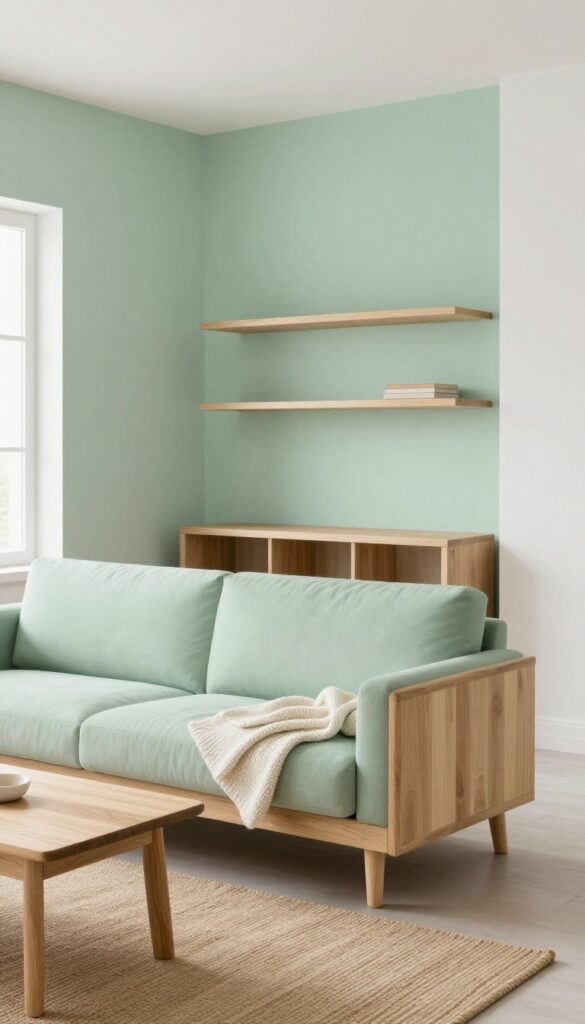
Mint green is one of those colors that feels both nostalgic and refreshingly modern. In a small living room, it can open up the space without feeling cold or sterile. The trick is to keep it soft—think barely-there mint rather than a bright pastel—and pair it with crisp white walls and warm light oak tones.
This combination creates a Scandinavian-inspired look that feels clean, calm, and surprisingly spacious.
Muted mint green works beautifully as an accent wall, especially behind a sofa or in a reading nook. The rest of the room stays white to reflect light and keep things airy. Light oak furniture—like a slim console table, open shelving, or a simple coffee table—adds warmth without weighing down the space.
The overall effect is fresh and open, perfect for a small living room that needs to feel larger than it is.
Best Colors
- Stick with a muted mint that has a touch of gray in it—something like sage meets seafoam. Pair with bright white (not ivory or cream) on the other walls and ceiling. For contrast, add touches of warm wood and maybe a few black or charcoal accents in frames or lamp bases.
- Avoid adding other pastels; let the mint be the star.
Small-space Fix
If you're short on square footage, use mint on just one wall or even in a large piece of art instead of painting. This gives you the color hit without closing in the room. Keep furniture low and leggy—a light oak sofa with exposed legs or a glass coffee table—so the eye travels across the floor, making the room feel wider.
Finishing Touch
Add texture with a chunky knit throw in off-white or a jute rug. A single trailing plant on a high shelf echoes the green tone and brings life. Keep window treatments minimal—simple white linen curtains or bamboo blinds—to maintain that light, airy vibe.
9. Peach and Soft Coral with Ivory and Tan
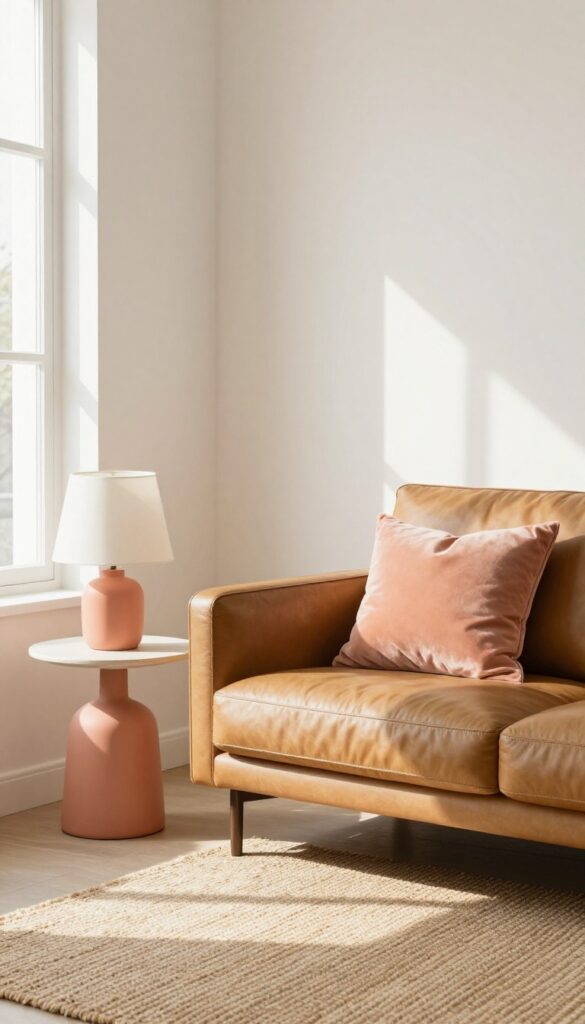
Peach and soft coral are having a moment, and for good reason. These warm, blush-adjacent tones bring a gentle energy that feels both fresh and cozy. In a small living room, they work like a charm—adding just enough color without overwhelming the space.
The trick is to keep them balanced with neutral anchors like ivory walls and tan leather or woven accents. This way, the peach reads as a subtle pop rather than a loud statement. It’s a palette that feels sunny but grounded, perfect for creating a soft, layered look that doesn’t crowd a compact floor plan.
Peach and soft coral are having a moment, and for good reason. These warm, blush-adjacent tones bring a gentle energy that feels both fresh and cozy. In a small living room, they work like a charm—adding just enough color without overwhelming the space.
The trick is to keep them balanced with neutral anchors like ivory walls and tan leather or woven accents. This way, the peach reads as a subtle pop rather than a loud statement. It’s a palette that feels sunny but grounded, perfect for creating a soft, layered look that doesn’t crowd a compact floor plan.
Best Colors
- Start with ivory walls to keep the room airy and bright. Then layer in peach and soft coral through smaller accents—think a velvet throw pillow, a ceramic lamp base, or a round pouf. Tan leather (like a classic club chair or ottoman) adds warmth and contrast, while woven textures in rattan or jute bring in natural depth.
- Avoid going too pink; the goal is a peachy warmth that feels sunny, not saccharine.
Small-space Fix
- In a tight living room, use peach and coral to define zones without building walls. A coral floor lamp in the reading corner or a peach-toned pouf near the coffee table visually anchors the area. Keep larger furniture pieces (sofa, shelves) in ivory or tan so the color stays concentrated.
- This prevents the room from feeling busy and lets the peach act as a deliberate accent rather than a scattered afterthought.
Texture Mix
- To keep the palette from falling flat, mix textures intentionally. Pair a smooth tan leather sofa with a chunky knit coral throw and a woven jute rug. Add a ceramic peach vase or a matte coral lampshade for variety.
- The interplay of matte and shiny, soft and coarse, gives the room depth without needing more color. It’s a quiet way to make the space feel layered and lived-in.
10. Dove Grey and Pale Blue with Silver and Glass
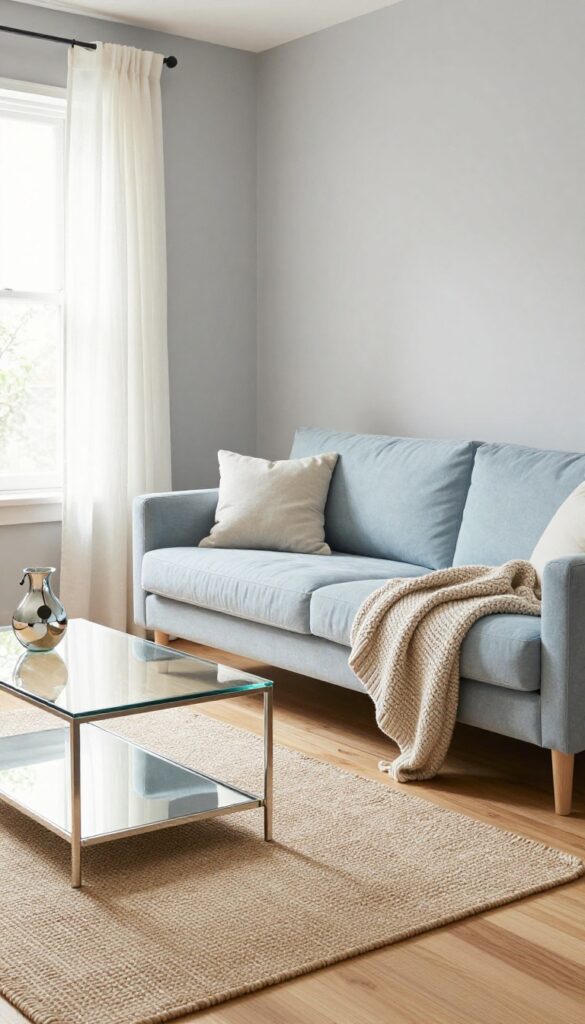
Soft, airy, and quietly elegant—this palette is perfect for anyone who wants a calm living room without going fully neutral. Dove grey walls act as a gentle backdrop, while pale blue upholstery adds a whisper of colour that feels fresh, not cold. The real magic happens with the accents: silver frames, glass vases, and mirrored surfaces catch the light and make the whole space feel bigger.
It’s a look that works beautifully in smaller rooms, where every reflective detail helps push the walls outward.
This combination leans into serenity without feeling bland. The grey and blue together evoke a coastal mood, but it’s subtle enough for city apartments or suburban homes. By keeping the main pieces light and the accessories shiny, you create depth without clutter.
The silver and glass elements act like little light traps, bouncing brightness into corners that might otherwise feel dim. It’s a smart, small-space-friendly strategy that feels polished but not precious.
Best Colors
- Start with a warm dove grey on the walls—think a shade with a hint of beige undertone so it doesn’t read as cold. For upholstery, choose a pale blue that’s closer to powder than sky. A creamy white for trim and ceiling keeps the look cohesive.
- Avoid stark whites or cool greys, which can make the room feel clinical.
Texture Mix
- Balance the sleekness of silver and glass with soft, tactile fabrics. A chunky knit throw in oatmeal or a linen curtain in natural white adds warmth. A wool or sisal rug grounds the space and prevents it from feeling too glossy.
- The contrast between smooth reflective surfaces and cozy textiles is what makes this idea feel lived-in, not like a showroom.
Small-space Fix
- Use mirrored furniture strategically—a mirrored coffee table or a console with a glass top can visually double the square footage. Place a large mirror opposite a window to maximize natural light. Keep accessories minimal: one silver-framed photo, a single glass vase with a few stems, and a small mirrored tray on the coffee table.
- Too many shiny objects can start to feel busy.
FAQ
What are the best soft colours for a small living room?
Soft colours like warm white, pale sage, blush pink, light blue-grey, and butter yellow work well. They reflect light and make the room feel larger while adding gentle personality.
How do I layer colours without making a small room feel cluttered?
Stick to 2-3 main hues and use texture to add depth. For example, pair a neutral wall colour with a few accent pillows in a soft tone and a textured rug. Keep furniture simple and uncluttered.
Can I use dark colours in a small living room?
Yes, but use them sparingly. A dark accent wall behind a sofa or a dark piece of furniture can add drama without shrinking the room, especially if paired with light walls and plenty of natural light.
What type of lighting works best with soft colour layers?
Warm, layered lighting—like a mix of overhead fixtures, floor lamps, and table lamps—enhances soft colours. Avoid harsh white bulbs; opt for warm white (2700-3000K) to keep the palette cozy.
How can I make a small living room feel cohesive with multiple soft colours?
Choose a dominant colour for walls or large furniture, then repeat accent colours in smaller items like pillows, art, and throws. Use a neutral base to tie everything together.
Conclusion
Soft colour layers are a powerful tool for making a small living room feel both spacious and inviting. By choosing gentle hues and repeating them through textures and accents, you can create a space that feels thoughtfully styled without overwhelming the senses. Remember, the goal is harmony, not perfection.
Start with one or two ideas that resonate with your personal style, and build from there. Your small living room can absolutely feel like a soft, layered retreat.