13 Shower Bench Built Ins Ideas for Comfort and Storage
A shower bench can be more than just a place to sit—it's a chance to add storage, comfort, and character to your bathroom. Whether you're working with a tight corner or planning a full remodel, the right built-in bench can turn a functional necessity into a standout feature.
From sleek floating designs to natural stone options, these 13 ideas balance practicality with style.
Each one brings something different to the table, so you can find the perfect fit for your space, your habits, and your budget.
1. Corner Bench with Built-In Shelves
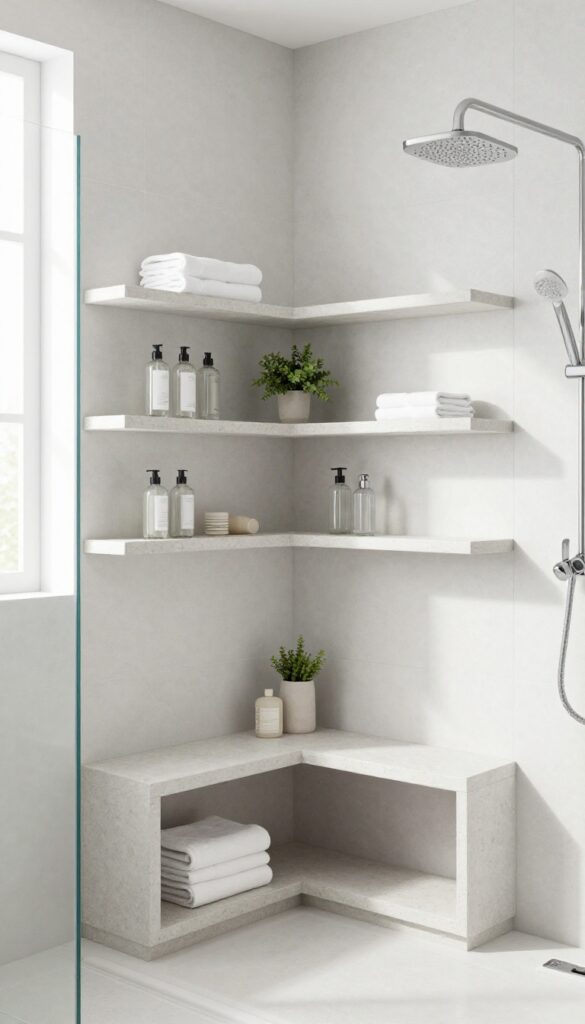
If your bathroom has an awkward corner that's just collecting dust, a corner bench with built-in shelves can turn that dead space into a hardworking feature. Wrapping around two walls, this design offers a cozy spot to sit while giving you open storage right underneath. It's a smart way to keep shampoos, soaps, and towels close at hand without cluttering the shower floor.
This idea shines in smaller bathrooms where every inch counts. The bench itself doesn't jut out into the room—it tucks neatly into the corner, so you keep your walking space. The shelves below are perfect for everyday essentials, and because they're open, everything stays visible and easy to grab.
Plus, the wrap-around design feels more custom and intentional than a simple square bench.
Why This Layout Works
The corner placement uses space that would otherwise be wasted. It also gives you a natural spot to sit while showering, shaving, or just relaxing. The open shelves keep your products within arm's reach, so you don't have to bend down or step out to grab what you need.
This layout is especially handy for families or anyone who likes to keep the shower organized.
Material And Finish Options
For a seamless look, match the bench and shelves to your existing tile or use the same stone as your shower walls. If you prefer a warmer feel, consider a teak or cedar bench with floating shelves. Waterproof materials like solid surface or porcelain are easy to clean and won't warp.
Think about a contrasting finish—like dark wood against light tile—to make the bench a focal point.
Installation And Customization Tips
Work with a contractor to ensure the bench is properly waterproofed and sloped for drainage. You can customize the shelf height to fit your tallest bottles or add a small lip to keep items from sliding off. If you're handy, a DIY version using tile and cement board is possible, but don't skip the waterproofing.
For a quick update, a freestanding corner shelf unit can mimic the look without major construction.
2. Tiled Bench with Recessed Niche
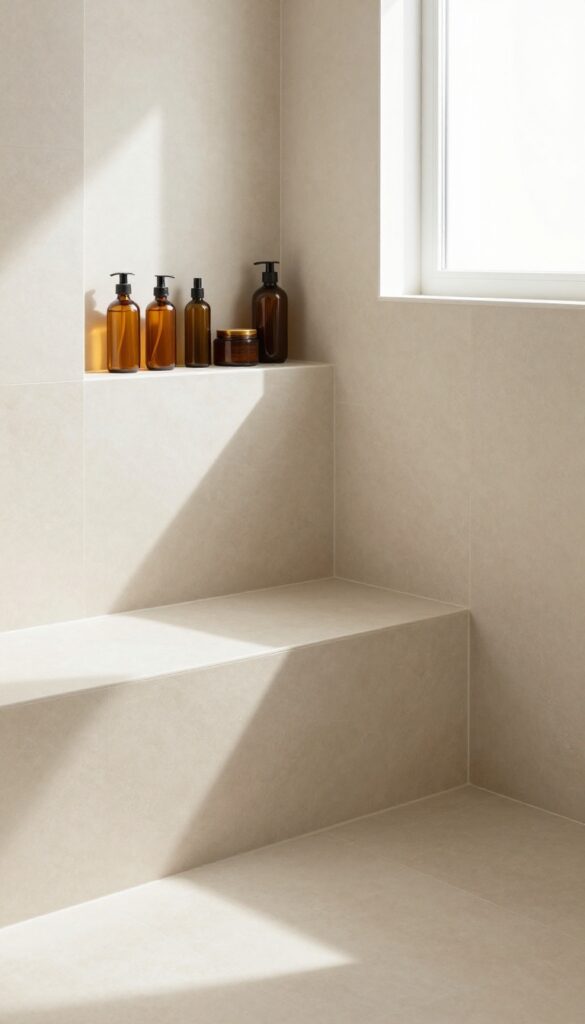
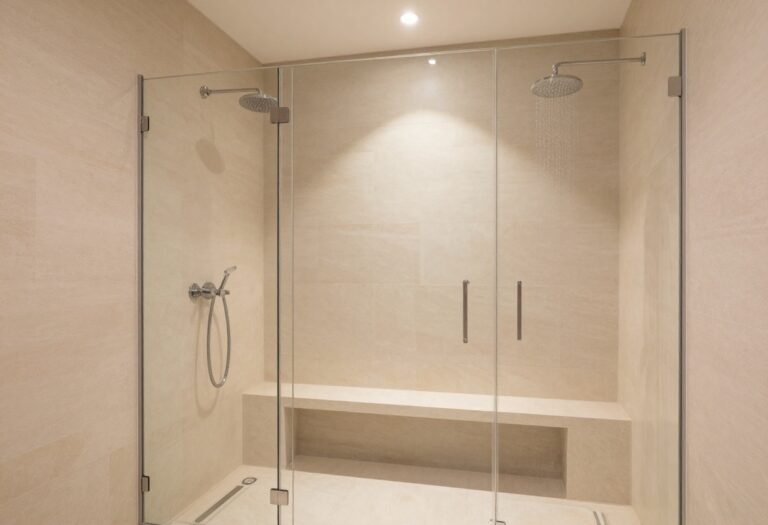
Pairing a tiled bench with a recessed niche above it is a classic combo that keeps everything within arm's reach. The niche holds shampoo and soap, so you don't need a caddy or shelf cluttering the shower floor. It's a clean, seamless look that works in almost any bathroom style.
This design is all about simplicity and function. The bench itself is usually built from the same tile as the shower walls, creating a continuous, waterproof surface. The recessed niche sits right above the bench, at a height that's easy to grab from a seated or standing position.
You get a spot to sit and a spot to store your essentials, all without taking up extra floor space.
Why This Combo Works So Well
The niche eliminates the need for hanging caddies or corner shelves that can look cluttered. Everything you use regularly—shampoo, conditioner, body wash—is right there, tucked into the wall. The bench below gives you a stable place to sit while you shave your legs or just enjoy a moment of calm.
Together, they make the shower feel more organized and open.
Design And Placement Tips
For the niche, aim for a size that fits your largest bottle—usually about 12 to 16 inches tall and deep enough to hold standard containers. Place it about 12 to 18 inches above the bench seat, so it's easy to reach whether you're sitting or standing. If you're tiling the bench, consider using a matching tile for the niche to keep the look unified.
A slight slope on the niche floor helps water drain back into the shower.
Materials And Maintenance
Porcelain or ceramic tile is a practical choice because it's water-resistant and easy to clean. Grout lines should be sealed to prevent moisture buildup. For the bench, a solid surface like quartz or marble can also work, but tile is often more affordable and allows for a fully integrated look.
Just wipe down the niche and bench after each use to keep them looking fresh.
3. Teak Wood Bench on Tile Base
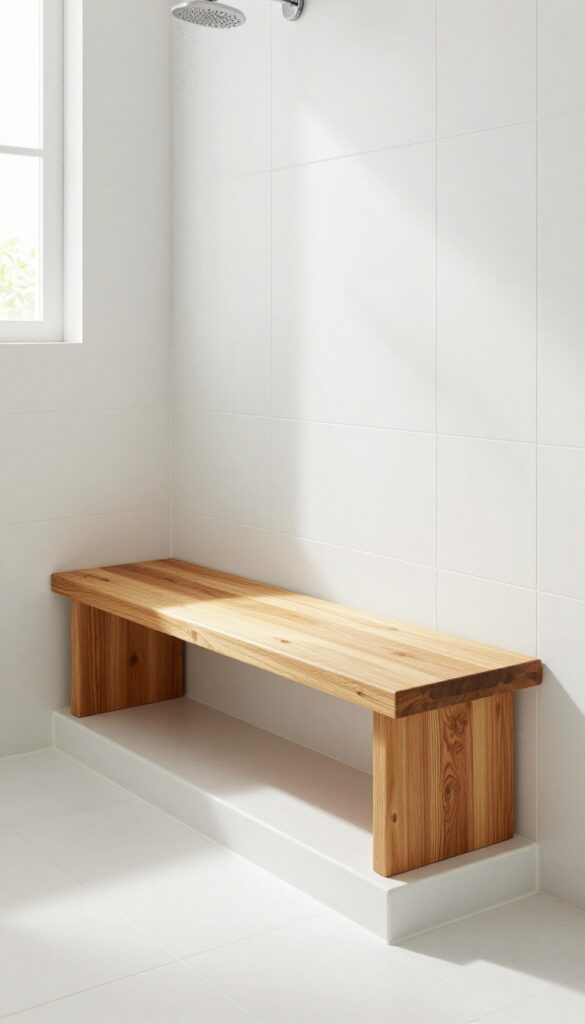
There’s a reason teak shows up in saunas and on boat decks—it laughs at moisture. Set that warm, golden wood onto a crisp tile base, and you get a bench that feels like a mini spa retreat every time you step into the shower. The contrast between the smooth, water-resistant wood and the cool, textured tile adds instant visual interest without trying too hard.
This combo works because it plays to each material’s strengths. Teak handles humidity and resists warping, while the tile base gives you a solid, easy-to-clean foundation that catches drips and keeps the wood from sitting directly in standing water. The result is a bench that looks custom, feels sturdy, and stays beautiful for years with minimal fuss.
Why Teak Works So Well
Teak’s natural oils make it a superstar in wet areas. It won’t rot, splinter, or grow mold easily, and it dries fast after each shower. The wood also stays cool to the touch, so you won’t get that unpleasant hot-seat surprise.
Plus, its rich honey-brown tone warms up any tile color, from cool gray to crisp white.
Building The Tile Base Right
The tile base should be slightly recessed or have a subtle lip so water drains away instead of pooling around the wood. Use large-format tiles or a mosaic sheet to minimize grout lines, and make sure the base is pitched just a degree or two toward the drain. That small detail keeps the area dry and makes cleaning a breeze.
Styling And Maintenance Tips
Let the teak be the star—skip busy patterns on the tile and go for a clean, neutral finish. To keep the wood looking fresh, give it a quick rinse after use and let it air dry. Once a year, rub in a thin coat of teak oil to maintain that warm glow.
If you notice any rough spots, a light sanding brings it right back.
4. Floating Bench with Under-Bench Storage
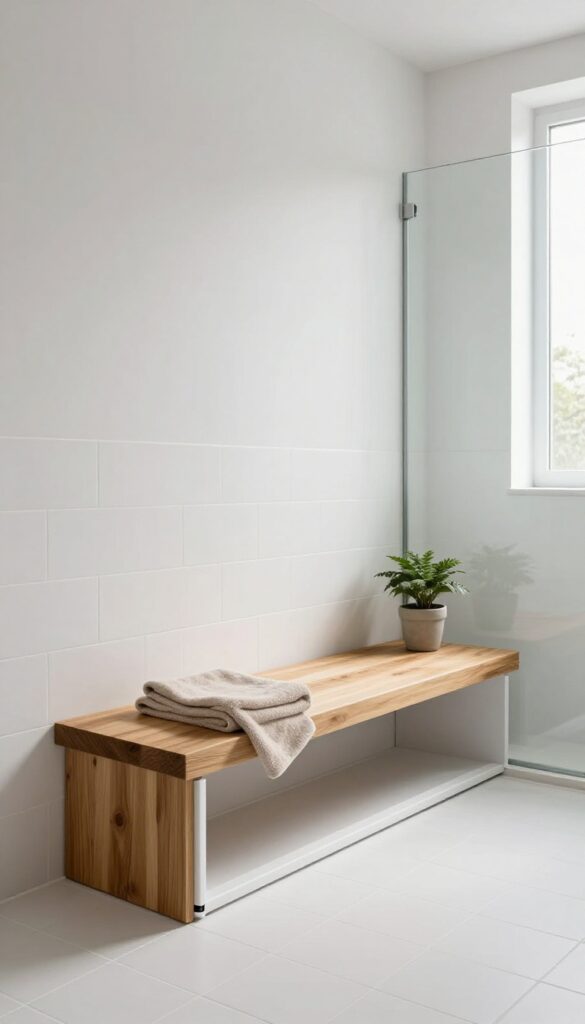
A floating bench does more than just save floor space—it creates a clean, modern look that feels open and airy. Tuck a hidden compartment underneath, and you’ve got a clever spot for towels, toiletries, or even a few extra rolls of toilet paper. This idea works especially well in smaller bathrooms where every inch counts.
The magic of this design is in the details. The bench itself appears to hover, with no visible legs or brackets, thanks to a sturdy wall-mounted frame. Below the seat, a drawer or pull-out bin slides out smoothly, keeping your essentials dry and out of sight.
You can match the bench’s finish to your vanity or go with a contrasting wood tone for a pop of warmth.
Choosing The Right Materials
For a floating bench, you need materials that can handle moisture without warping or rotting. Treated plywood, marine-grade plywood, or solid teak are solid choices. If you prefer a tiled look, make sure the substrate is waterproofed with a membrane before tiling.
The storage compartment should be lined with a waterproof sealant to protect anything you store inside.
Installation Tips For A Secure Fit
Proper installation is key to making a floating bench feel solid. You’ll need to anchor the frame to wall studs, not just drywall. Use heavy-duty brackets or a custom steel frame for extra support.
If you’re not confident in your DIY skills, hiring a professional is worth the peace of mind. Also, ensure the bench is level and can support at least 300 pounds.
Styling And Finishing Touches
Once your bench is in place, think about how to make it work for you. Add a plush cushion or a folded towel on top for comfort. For the storage area, use small baskets or bins to keep items organized.
A subtle LED strip under the bench can create a soft glow, making the space feel even more inviting.
5. Long Bench with End Shelves
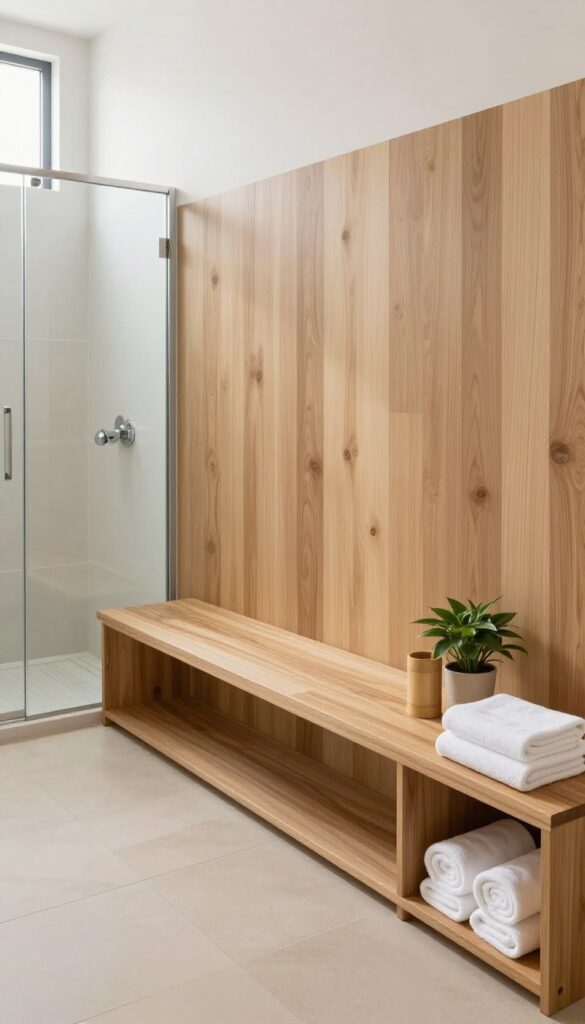
A full-length bench along one wall isn't just for sitting—it's a storage powerhouse. By adding built-in shelves at one end, you create a dedicated spot for towels, toiletries, or decorative baskets. This layout works especially well in larger bathrooms where you can stretch the bench out and still have room to move.
This design turns a simple bench into a multi-purpose station. The long seat gives you plenty of space to sit comfortably, while the end shelves keep everyday items within reach. You can customize the shelf height and depth to fit your specific storage needs, whether that's rolled towels, shampoo bottles, or a stack of books for long soaks.
Design Variations
You can go with open shelving for easy access, or add cabinet doors to hide clutter. For a seamless look, match the shelf material to the bench and surrounding tile. If you want a more rustic vibe, use wood for both the bench and shelves—teak or cedar hold up well in damp environments.
Placement Tips
Position the bench along a wall that's not directly opposite the shower or tub, so it doesn't get soaked every time you rinse off. Place the shelves on the side closest to the shower entrance—that way, you can grab a towel or shampoo without stepping out. Keep at least 30 inches of clearance in front of the bench for easy movement.
Storage Ideas
Use the lower shelf for bulky items like extra toilet paper or a hairdryer, and the upper shelf for frequently used products. Add a few woven baskets to corral smaller items and keep the shelves looking tidy. A small hook on the side of the bench can hold a loofah or a hand towel.
6. L-Shaped Bench with Cubbies
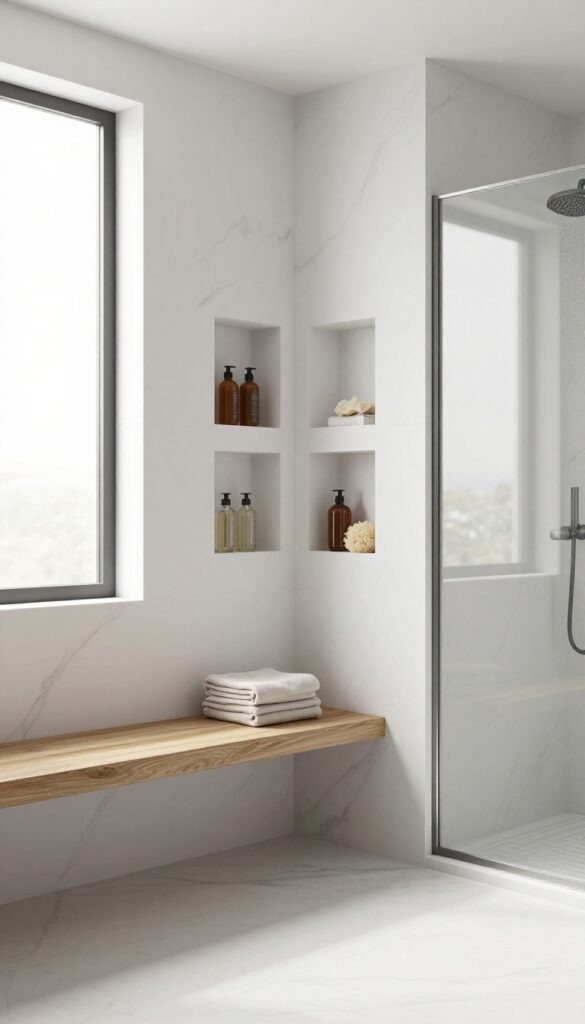
When two walls meet in a bathroom, that corner often ends up as wasted space. An L-shaped bench turns that junction into a cozy seating area that wraps around the corner, giving you a place to sit while also tucking storage right where you need it. The cubbies built into the side keep bottles, loofahs, and other shower essentials organized and within easy reach.
An L-shaped bench is a smart way to maximize a corner that might otherwise be too tight for a standard bench. By following both walls, it creates a generous seating area without protruding too far into the room. The built-in cubbies on the side are perfect for storing everything from shampoo bottles to extra towels, so you can keep the shower floor clear and clutter-free.
Why An L-shape Works
The L-shape naturally fits into a corner, making use of space that would otherwise be empty. It provides two seating directions, so you can sit facing the shower or the bathroom, depending on your preference. This design also feels more built-in and intentional compared to a simple straight bench, adding a custom touch to your bathroom.
Cubbies: Size And Placement
Think about what you'll actually store in the cubbies. Deep, wide cubbies work well for large bottles, while smaller, shallow ones are perfect for loofahs and razors. Place the cubbies on the side that's easiest to reach from the shower, and consider adding a small lip or angled shelf to keep items from sliding out.
Materials And Waterproofing
Since the bench will be exposed to moisture, choose materials that can handle it. Tile, stone, or sealed wood are all good options. Make sure the cubbies are properly waterproofed and sloped slightly to let water drain.
Using a waterproof membrane behind the tile and sealing the grout will help prevent mold and mildew.
7. Stone Bench with Natural Texture
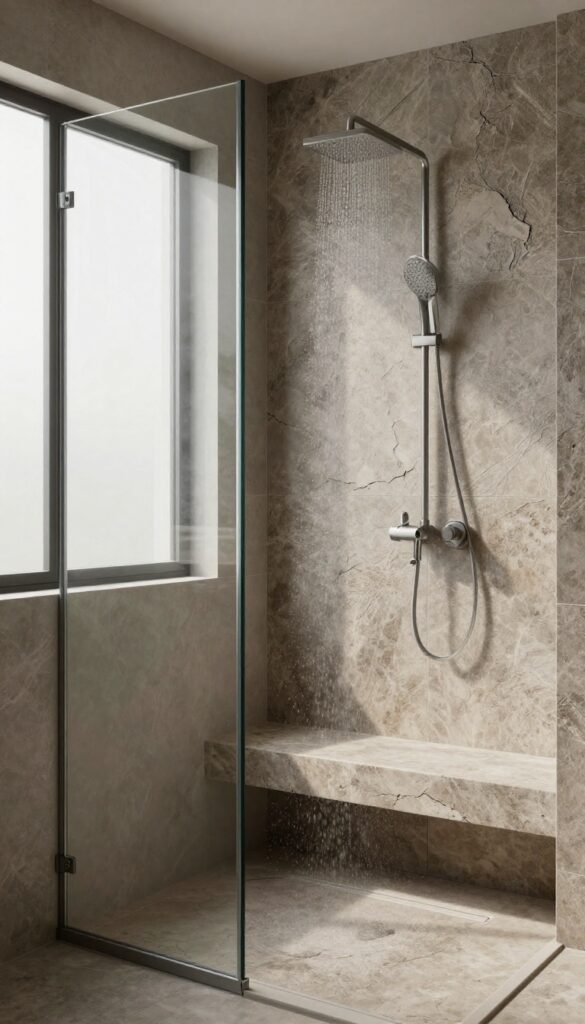
Sometimes the best way to make a bathroom feel grounded is to bring in a material that's been around for millennia. A stone bench does exactly that, offering a rugged, organic presence that no manufactured surface can quite replicate. Slate, travertine, or even granite can turn a simple seat into a sculptural focal point.
Natural stone brings an earthy, timeless quality to a shower, and it's incredibly durable. Unlike wood or some composites, stone resists moisture, scratches, and temperature changes, making it a smart long-term investment. Plus, each slab has its own veining and color variations, so your bench will be one of a kind.
That said, stone isn't the most forgiving material—it can be cold underfoot and porous if not sealed properly. But with the right finish and a little care, a stone bench becomes a striking, functional centerpiece that ages beautifully.
Choosing The Right Stone
Slate is a popular pick because it's naturally slip-resistant and has a cleft texture that adds grip. Travertine offers a softer, more classic look with its pitted surface, but it needs a honed finish to avoid catching dirt. Granite is the toughest option, resisting stains and scratches with ease, though it can feel colder to the touch.
Sealing And Maintenance
Most natural stones benefit from a penetrating sealer applied once a year. This keeps water from soaking in and prevents mildew from taking hold. Daily care is simple—just wipe down with a squeegee or cloth after use, and avoid harsh chemical cleaners that can strip the sealer.
Design Tips For A Natural Look
Pair the stone bench with earthy tones like warm beige, moss green, or charcoal to let the texture shine. A built-in niche with the same stone ties the design together. For a more modern twist, use a single thick slab with clean edges and let the stone's natural patterns do the talking.
8. Bench with Towel Bar and Hooks
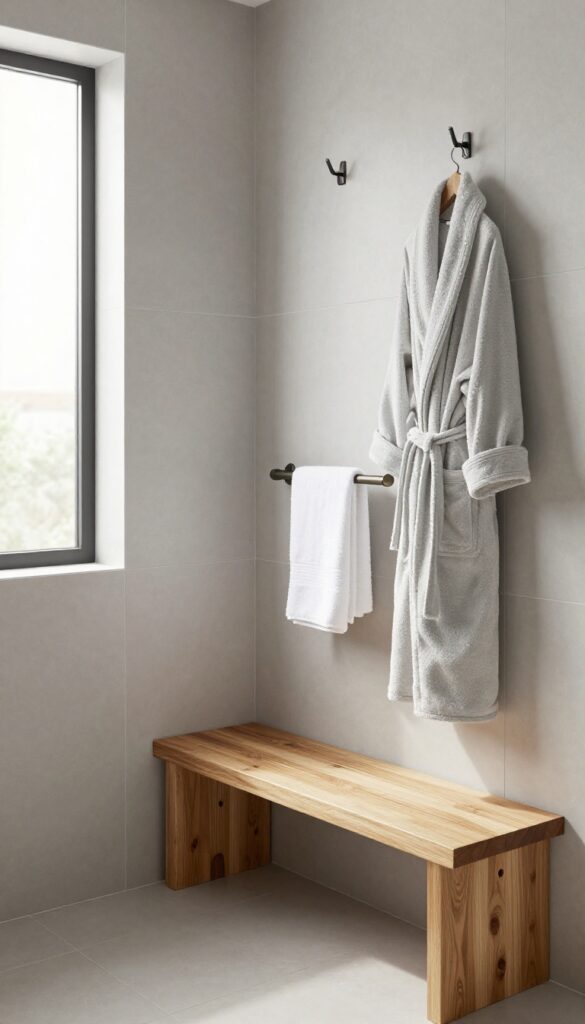
A built-in bench that includes a towel bar or hooks on the side is a simple upgrade that pays off every single day. Instead of reaching for a towel across the room or letting a wet robe drip on the floor, you have everything within arm's reach. It's one of those details that feels obvious once you have it, but you'll wonder how you lived without it.
When you're designing a shower bench, think about what happens right after you step out. You're wet, maybe cold, and you want a towel without hunting for it. Adding a towel bar or hooks to the side of the bench solves that problem neatly.
It also keeps the floor clear of damp towels and gives you a designated spot for a robe or a change of clothes.
Placement That Makes Sense
The key is putting the bar or hooks where they're actually useful. If the bench is inside the shower, mount the towel bar on the outside edge so you can grab it without stepping out. If the bench extends beyond the shower opening, position the hooks on the end facing the bathroom.
That way, your towel stays dry while you're showering, and it's still within easy reach.
Material And Style Options
You can match the hardware to your bathroom's style. Brushed nickel or matte black looks modern, while oil-rubbed bronze adds warmth. For a seamless look, consider a recessed niche with a towel bar built into the tile, or opt for a wall-mounted bar that sits just above the bench.
If you have kids, hooks at different heights can be a fun and practical touch.
Maximizing Functionality
Think beyond just towels. Hooks can hold a bathrobe, a loofah, or even a small caddy for toiletries. A towel bar can double as a place to hang a wet swimsuit to dry.
If you have the space, add a small shelf above the bench for folded towels or a plant. This turns the bench into a mini command center for your bathroom.
9. Curved Bench for Small Spaces
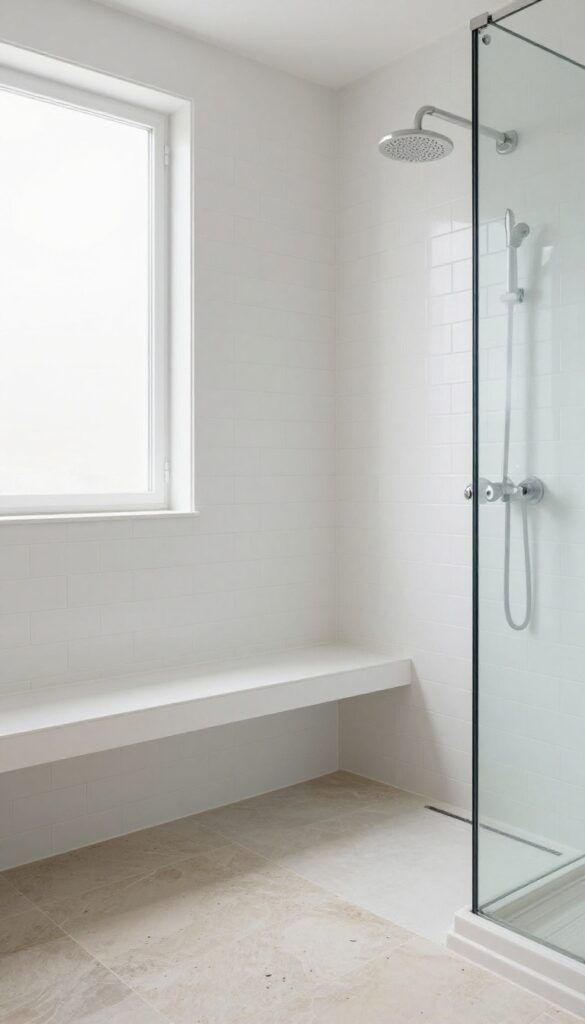
When square footage is tight, a straight bench can feel like it’s taking over the room. A curved bench, on the other hand, tucks neatly into a corner or follows the line of a curved wall, giving you a place to sit without eating up precious floor space. It’s a clever solution that feels custom and intentional, even in a compact bathroom.
A curved bench is all about making the most of an awkward layout. Instead of fighting against the shape of your bathroom, you work with it, creating a seamless seating area that looks like it was meant to be there. Plus, the gentle arc adds a softness that straight lines can’t match, making the space feel more inviting.
Fitting The Corner
Corners are often overlooked, but they’re prime real estate for a curved bench. By wrapping around the corner, you get a generous seating surface without blocking traffic flow. It’s perfect for a small shower or a bathroom where every inch counts.
You can even add a small shelf underneath for shampoo or soap, keeping everything within reach.
Working With Curved Walls
If your bathroom has a curved wall—maybe around a tub or a window—a curved bench can follow that line beautifully. It feels like the bench was always part of the architecture, not an afterthought. This approach works especially well in older homes or custom builds where curves are already part of the design language.
Material And Finish Options
Curved benches can be built from the same materials as any other bench, but some shine brighter in this shape. Tile is a top choice because it can be cut to fit the curve seamlessly. Natural stone, like marble or quartz, can be shaped to match, though it may cost more.
For a budget-friendly option, consider a solid surface material like Corian, which can be molded into smooth curves without visible seams.
10. Bench with Integrated Soap Dish
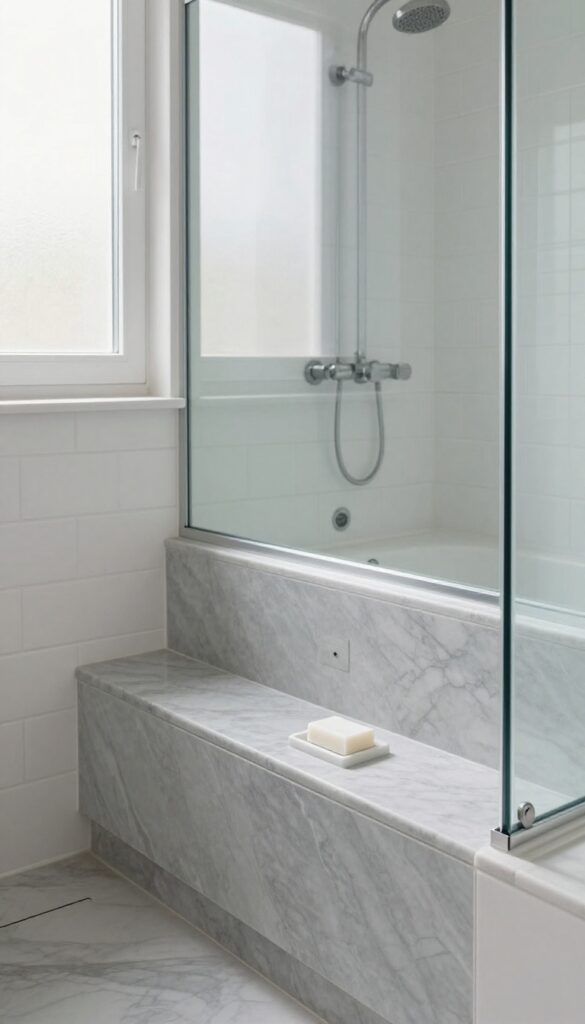
A built-in bench can pull double duty when you add a recessed soap dish right into the seat. It’s a small detail that keeps bar soap within easy reach and lets it drain properly between uses. No more hunting for a slippery soap dish on the edge of the tub or counter.
Carving a shallow niche into the bench surface gives you a dedicated spot for bar soap, and it’s surprisingly easy to incorporate during construction. The recess keeps the soap from sliding off, while the open design allows water to drip away, so the soap stays dry and lasts longer. You can place it near the front edge for quick access or tuck it closer to the wall if you prefer a cleaner look.
Placement And Size
Think about how you’ll actually use the bench. If it’s near the shower controls, a soap dish at the front corner is handy. For a bench that doubles as a seat, a slightly recessed dish about 4 to 5 inches wide works well.
Make sure it’s deep enough to hold the soap securely but not so deep that it’s hard to clean.
Materials And Drainage
Choose a material that matches your bench—marble, quartz, or tile all work. The key is to slope the bottom slightly toward a small drain hole or let water evaporate naturally. If you tile the niche, use a waterproof membrane underneath to prevent moisture from seeping into the bench structure.
Styling And Extras
You can keep it simple with a single recessed square, or add a subtle ledge for a razor or sponge. A contrasting tile or stone color inside the niche adds visual interest without complicating the design. Just remember to keep the edges smooth and sealed for easy wiping.
11. Two-Tier Bench with Storage Below
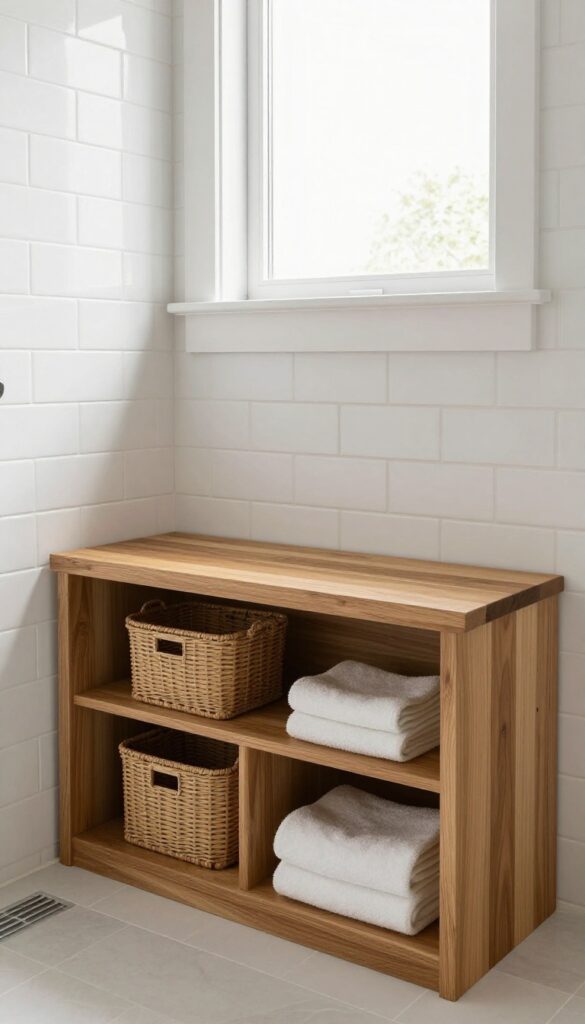
This design gives you the best of both worlds: a comfortable place to sit and a hidden storage zone underneath. The lower tier is perfect for keeping bath essentials like extra towels, shampoo bottles, or kids' toys within arm's reach but out of sight. It’s a smart way to maximize space in a busy family bathroom or a compact ensuite.
Why Two Tiers Work So Well
The upper tier is your seating area, sized to match your shower’s footprint. The lower tier sits a few inches below, creating a gap that’s ideal for sliding in baskets or bins. You can use waterproof containers to store items you don’t want on display, like razors, loofahs, or extra soap.
This keeps the shower feeling tidy without sacrificing convenience.
Material And Finish Choices
For the bench itself, you’ll want materials that handle moisture well—think sealed teak, marine-grade plywood, or natural stone. The lower shelf can be a simple ledge or a solid base with a cutout for baskets. If you’re going for a seamless look, match the bench to your shower walls or tile.
For a warmer feel, contrast it with a wood tone.
Installation And Customization Tips
You can build this as a custom built-in during a remodel or add it as a freestanding unit if you’re handy. Make sure the lower tier is at least 12 inches off the floor so cleaning underneath is easy. Add a slight slope to the seat for water runoff, and consider a removable lower shelf for quick access to stored items.
If you’re using baskets, pick ones with ventilation to prevent mildew.
12. Bench with Glass Shelf Above
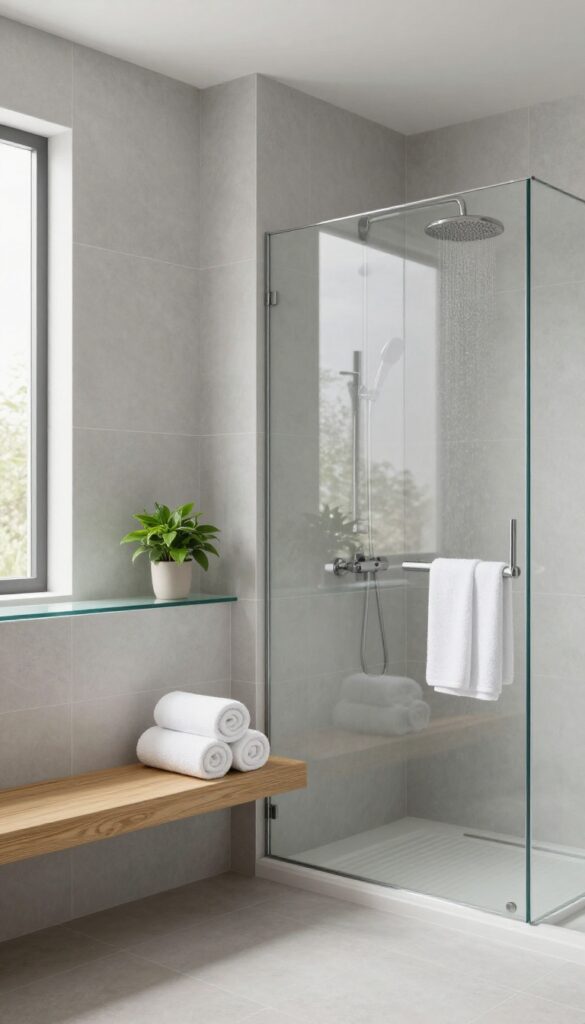
Pairing a bench with a glass shelf above it is a smart way to add function without weighing down the space. The transparency of the glass keeps the visual flow open, making even a compact bathroom feel larger. It's a simple addition that gives you a spot for decorative touches or everyday essentials within arm's reach.
The glass shelf acts as a bridge between practicality and style. You get the convenience of extra storage without the bulk of a solid cabinet. Plus, it's easy to keep clean and won't trap moisture like wood might.
This setup works especially well when you want to display items but still want them protected from splashes.
Perfect For Small Bathrooms
If your bathroom is on the smaller side, a glass shelf above the bench is a lifesaver. It adds storage without eating into floor space or making the room feel crowded. The clear material lets light pass through, which helps the area feel airy and open.
You can even use it to hold a few rolled towels or a small plant for a touch of green.
Style Options To Consider
Glass shelves come in different finishes—clear, frosted, or even tinted. Clear glass keeps things minimal, while frosted adds a bit of privacy for items you'd rather not display. If you want a warmer look, pair the glass with wooden brackets or a metallic frame.
The shelf itself can be flush against the wall or slightly recessed for a built-in feel.
Installation Tips
When adding a glass shelf, make sure the wall can support the weight, especially if you plan to store heavy bottles. Use proper anchors and brackets rated for the load. Also, consider the height—it should be easy to reach from a seated position.
A professional can help if you're unsure about the installation, but many DIYers handle this project with ease.
13. Minimalist Bench with Hidden Drainage
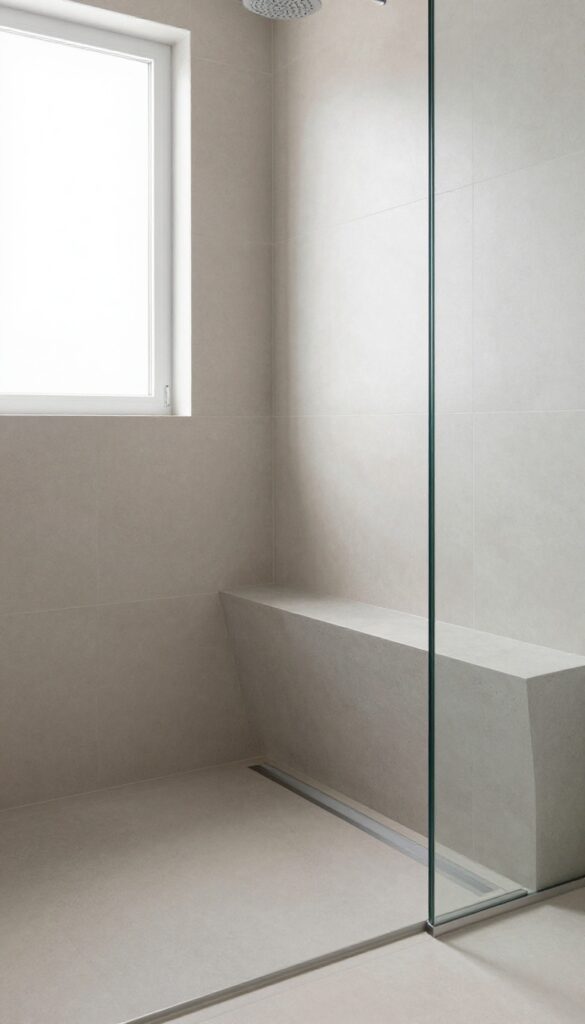
A bench that looks clean and stays dry might sound like a small detail, but it changes how the space feels and functions. The minimalist approach strips away extra features and focuses on one smart upgrade: a subtle slope and a drainage channel that keep water moving off the surface. This design is perfect for anyone who wants a sleek, uncluttered look without sacrificing safety or comfort.
It’s the kind of bench you don’t think about—until you step out of the shower and it’s already dry.
The idea is simple: build a bench with a gentle slope toward a narrow channel or a series of small slots that let water escape. The surface stays relatively dry, which means less slipping and less time wiping down the bench after every shower. It’s a practical solution that fits naturally into a modern or minimalist bathroom.
Because the design is so clean, it pairs well with large-format tiles, solid surface materials, or even polished concrete. The hidden drainage doesn’t interrupt the visual flow—it just works quietly in the background. You get the comfort of a bench and the peace of mind that comes with proper water management.
Why Slope And Drainage Matter
Water pooling on a flat bench isn’t just annoying—it can make the surface slippery and lead to soap scum buildup. A slight slope, even just a quarter-inch over the depth of the bench, encourages water to run off naturally. Add a discreet channel or a few linear drains, and you’ve solved the problem without adding bulk.
This is especially useful in bathrooms with poor ventilation, where moisture lingers. A dry bench means less mold and mildew, and it’s easier to keep clean. The hidden drainage also keeps the look sleek, so you don’t have to sacrifice style for function.
Material Choices That Work
For a minimalist bench with hidden drainage, the material matters. Natural stone like marble or travertine can be shaped to include a subtle slope, but it needs regular sealing. Solid surface materials like Corian or quartz are non-porous and easy to clean, making them a low-maintenance choice.
Tile is another option, but you’ll need to ensure the slope and drainage are built into the substrate. Large-format tiles with minimal grout lines keep the surface smooth and modern. Whatever you choose, make sure it’s slip-resistant when wet—safety should always come first.
Installation Tips For A Seamless Look
The key to a truly minimalist bench is hiding the mechanics. The drainage channel can be integrated into the bench’s edge or tucked along the back wall, so it’s barely noticeable. If you’re using a linear drain, position it at the lowest point of the slope, and make sure the floor drain is properly connected.
Work with a professional who understands waterproofing and slope requirements. A small mistake can lead to standing water or leaks. When done right, the bench looks like a single, solid block—clean, simple, and completely functional.
FAQ
How deep should a shower bench be?
A typical shower bench depth is around 15 to 18 inches, which is comfortable for sitting. If you plan to use it for storage, you might go a bit deeper, but keep in mind that too deep can make the shower feel cramped.
What is the best material for a built-in shower bench?
The best material depends on your style and maintenance preference. Tile, stone, and concrete are durable and waterproof, while teak wood is warm and naturally resistant to moisture. Ensure any material is properly sealed and sloped for drainage.
Can I add a shower bench to an existing shower?
Yes, you can add a freestanding teak bench or a waterproof storage caddy, but a true built-in bench requires more extensive remodeling. If you're not ready for a full renovation, consider a temporary bench that still offers comfort and storage.
How much does it cost to install a built-in shower bench?
Costs vary widely based on materials, labor, and whether you're doing a full remodel. A simple tiled bench might cost a few hundred dollars, while a custom stone or teak bench could run into the thousands. Get quotes from contractors for accurate pricing.
Do shower benches need to be sloped?
Yes, a slight slope (about 1/4 inch per foot) toward the drain helps water run off and prevents puddling. This reduces the risk of slipping and keeps the bench cleaner and more hygienic.
Conclusion
A built-in shower bench is more than a luxury—it's a practical addition that can make your shower safer and more organized. Whether you choose a simple tiled ledge or a teak seat with storage, the key is to match the design to your space and needs.
Take your time planning the layout, and don't forget to consider drainage and materials. With the right built-in, you'll enjoy a more comfortable and clutter-free shower for years to come.