13 Neutral Living Room Ideas for Calm Texture and Balance
Neutral living rooms don't have to feel flat or boring. When done right, they become a sanctuary of calm—layered with texture, balanced with contrast, and full of quiet personality.
The key is choosing the right mix of materials, tones, and shapes so the space feels warm, not sterile.
Whether you're starting from scratch or refreshing a few corners, these 13 ideas will help you build a living room that feels both modern and deeply cozy.
1. Start with a Warm White Base
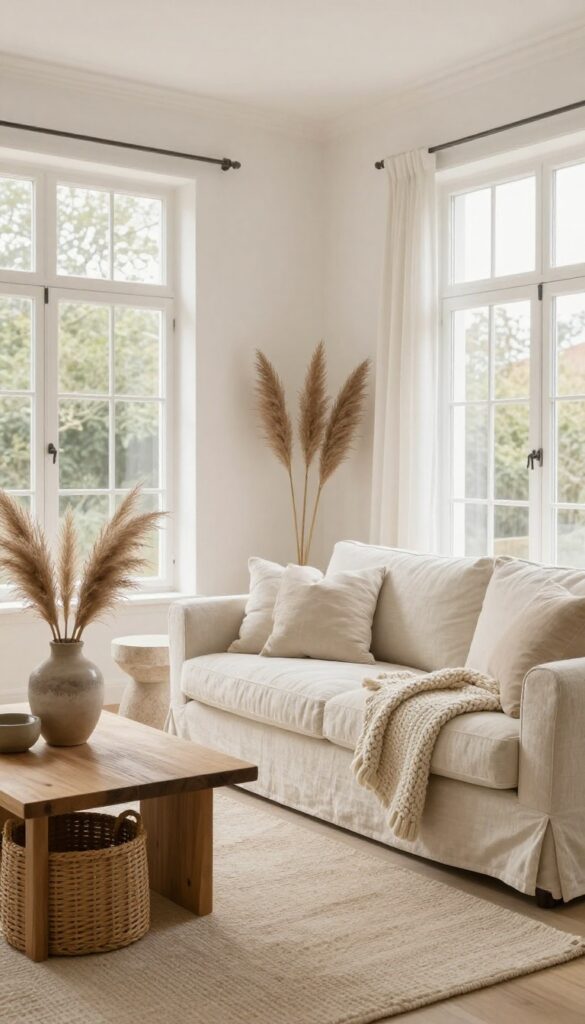
A warm white wall might sound simple, but it's one of the most intentional choices you can make in a neutral living room. The key is picking a white with subtle undertones—think greige (gray-beige) or creamy ivory—rather than a stark, cool white. This soft backdrop lets every texture in the room stand out without feeling sterile or flat.
It's the foundation that makes cozy layers possible.
Warm whites do more than just brighten a space; they add a gentle glow that changes throughout the day. In the morning, the room feels fresh and airy; by evening, it turns cocoon-like and inviting. This versatility is perfect for a modern, clean aesthetic that still craves warmth.
Plus, it's forgiving with natural light variations and pairs effortlessly with wood tones, linen, and stone.
Best Colors To Try
Look for paint names like 'Alabaster' (a soft off-white), 'Agreeable Gray' (a light greige), or 'Creamy' (a warm ivory). Test samples on your wall and observe them at different times of day. The goal is a white that feels like a gentle hug, not a blank slate.
Texture Pairing Tip
Once your walls are warm white, layer in tactile elements like a chunky knit throw, a linen sofa, and a wool rug. The contrast between the smooth painted surface and these textured pieces creates depth. Even a simple ceramic vase or a rattan basket will pop against this backdrop.
Lighting To Enhance The Glow
Warm white walls love soft, layered lighting. Use warm-toned bulbs (2700K–3000K) in floor lamps and sconces to amplify the cozy factor. Avoid overhead lights that cast harsh shadows—instead, let table lamps and candlelight bring out the subtle warmth in the paint.
2. Layer in Natural Linen Curtains
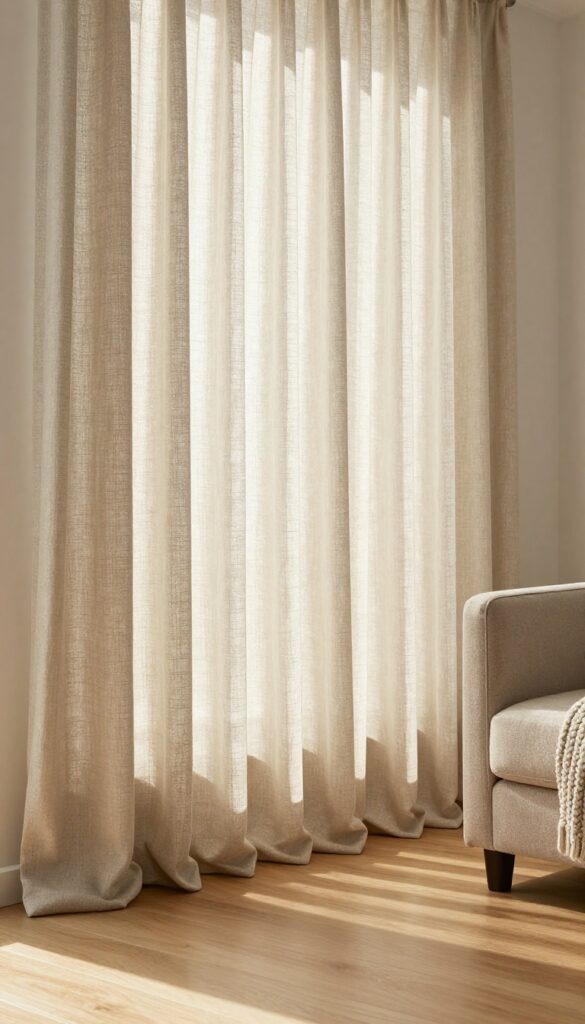
Curtains do more than cover windows—they set the entire mood of a room. Floor-length linen panels in soft oatmeal or stone tones bring a sense of calm that’s hard to beat. The fabric filters harsh sunlight into a gentle glow, making the space feel airy and relaxed without trying too hard.
It’s an easy swap that instantly upgrades the texture and warmth of your living room.
Linen curtains are a go-to for achieving that modern, clean look while keeping things warm and cozy. The natural fibers have a slight irregularity that adds character, and the way they catch light creates soft shadows that make the room feel lived-in and inviting. For best results, hang the rod as close to the ceiling as possible and let the panels pool just slightly on the floor—that extra length adds a touch of effortless elegance.
Choose a neutral shade that complements your wall color; oatmeal works well with warm whites, while stone pairs beautifully with greiges and soft taupes. The key is to keep the look simple and uncluttered—no heavy patterns or busy trims.
Best Colors
Stick with earthy neutrals like oatmeal, stone, or warm ivory. These shades blend seamlessly with most neutral palettes and add subtle depth without overpowering the room. Avoid stark whites or cool grays if your goal is warmth.
Hanging Tip
Mount the curtain rod high—just a few inches below the ceiling—to draw the eye upward and make the room feel taller. Extend the rod a few inches past the window frame on each side so the panels don’t block the glass when open.
Texture Mix
Pair linen curtains with heavier textures like a chunky knit throw or a wool rug. The contrast between the airy linen and the dense textures creates visual interest and keeps the room from feeling flat.
3. Mix Wood Tones for Depth
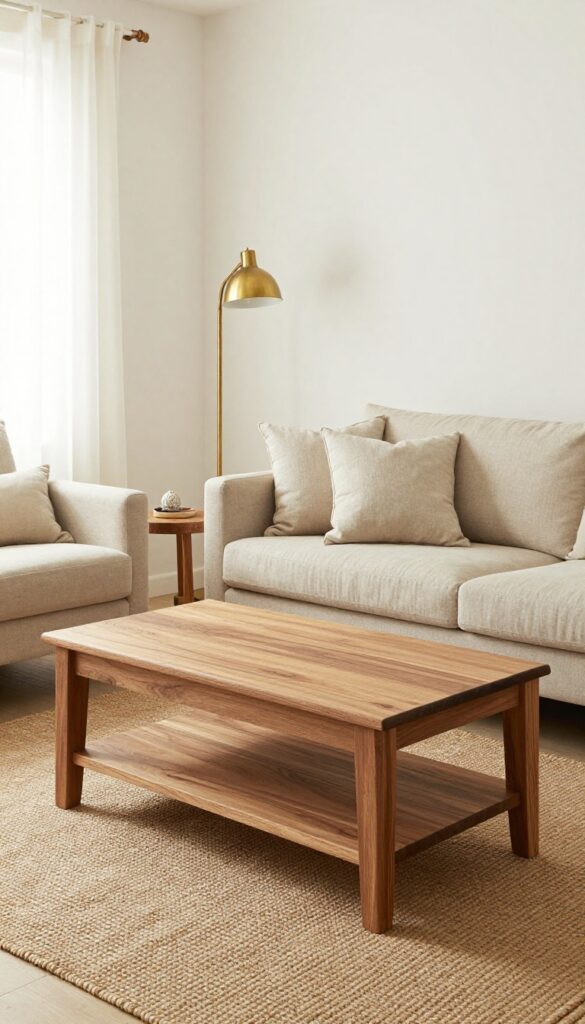
Wood brings instant warmth, but using a single shade can feel flat. The trick is to combine light oak, rich walnut, and weathered reclaimed pieces. This layered approach adds visual texture without clutter, keeping the room grounded and cohesive.
Stick with warm undertones across all your wood choices to maintain that calm, collected feel.
Start with a larger anchor piece, like a walnut coffee table or media console, then bring in lighter accents such as oak side tables or a reclaimed wood shelf. The contrast creates natural depth, making the space feel curated over time. Balance is key: if your sofa is neutral, let the wood tones carry the warmth.
For a modern edge, choose clean-lined furniture with visible grain rather than ornate carvings.
Best Wood Pairings
Light oak pairs beautifully with medium walnut and dark reclaimed wood. Avoid mixing more than three distinct tones, and keep the undertones consistent—all warm or all cool. For a cohesive look, repeat the same wood finish in at least two places, like a walnut frame on the sofa and walnut legs on the coffee table.
Texture Mix Tip
Add a chunky knit throw or a linen cushion to soften the wood's hard edges. The contrast between smooth walnut and rough reclaimed wood already adds interest, but textiles prevent the room from feeling too rigid. A jute rug underfoot also bridges the different wood tones naturally.
Finishing Touch
Pull the look together with a warm metal accent, like brass or copper. A brass floor lamp or copper vase echoes the wood's warmth without competing. Keep walls and larger upholstery neutral—cream, beige, or soft gray—so the wood remains the star.
4. Add a Chunky Knit Throw
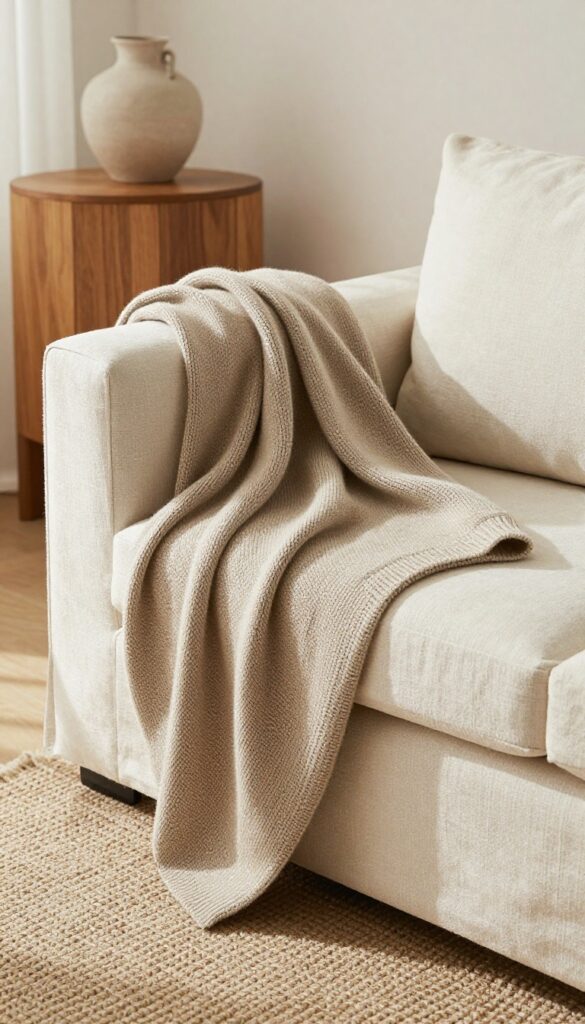
Texture is the secret ingredient that keeps a neutral living room from feeling flat. A chunky knit throw does more than keep you warm—it adds a sculptural, tactile element that instantly makes a space feel layered and lived-in. Drape one over the arm of a sofa or fold it across a reading chair, and you get that cozy, inviting look without any visual noise.
The key is choosing a neutral shade like cream, taupe, or oatmeal so the throw blends into the palette while standing out through its texture alone.
A chunky knit throw is one of the easiest ways to introduce warmth and contrast in a neutral living room. The oversized stitches create a soft, organic shape that breaks up the clean lines of modern furniture. It also invites you to actually use it—whether for a movie night or a lazy Sunday afternoon.
Because the throw is a single, uncomplicated piece, it won't compete with other decor elements. Instead, it quietly elevates the whole room by adding depth and a handmade feel.
Best Colors
- Stick with warm neutrals that complement your existing palette. Cream and off-white keep things airy, while taupe or warm gray add a bit more depth. If you want a subtle contrast, try a shade that's one or two tones darker than your sofa.
- Avoid stark white—it can feel harsh against soft neutral walls. A heathered oatmeal or a sandy beige works beautifully in a modern, cozy living room.
Styling Tip
- Drape the throw loosely over one corner of the sofa or fold it neatly across the back of an armchair. For a more relaxed look, let one end puddle slightly on the seat or floor. Pair it with a matching knit pillow in a similar fiber to create a cohesive texture story.
- Just don't overdo it—one chunky throw is enough to make a statement without overwhelming the space.
Material Matters
- Look for throws made from cotton, wool, or a cotton-wool blend. Pure wool is warm and durable but can be itchy—choose a merino or alpaca blend for softness. Cotton knits are lighter and easier to wash, making them great for high-traffic living rooms.
- Avoid acrylic or synthetic blends that look shiny or feel stiff; they won't give you that cozy, organic texture you're after.
5. Use a Jute or Sisal Rug
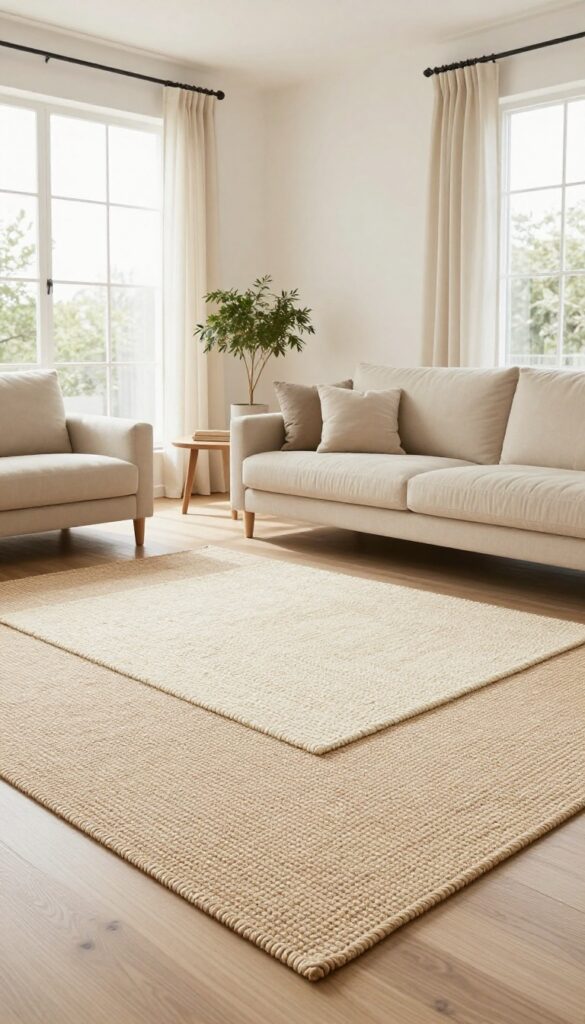
Natural fiber rugs bring an earthy, grounded feel to a neutral living room. Jute and sisal add organic texture that softens the clean lines of modern furniture, creating warmth without sacrificing a tidy look. They’re also durable and budget-friendly, making them a smart choice for high-traffic areas.
A jute or sisal rug anchors the seating area with a tactile, natural foundation. The woven texture introduces subtle variation that prevents the room from feeling flat, while the neutral tones blend seamlessly with other earthy hues. For extra comfort, layer a smaller wool or cotton rug on top—this adds softness underfoot and creates a curated, collected vibe.
Place the layered rug slightly off-center for a relaxed, lived-in feel.
Best Colors And Patterns
Stick with undyed or lightly bleached jute for a warm beige tone, or choose sisal in a pale gray or oatmeal for a cooler look. Both work well with white, cream, or taupe walls. Avoid busy patterns—let the natural weave be the star.
Layering Tip
Choose a top rug that contrasts in texture, like a chunky wool or a flat-weave cotton. Keep the top rug smaller—about two-thirds the size of the jute rug—and position it so the jute border is visible on all sides. This prevents the layers from feeling bulky.
Maintenance Note
Jute and sisal are sensitive to moisture, so place them away from direct sunlight and avoid wet spills. Vacuum regularly with a brushless attachment to prevent fraying. A rug pad underneath helps reduce wear and adds cushioning.
6. Incorporate Sculptural Ceramics
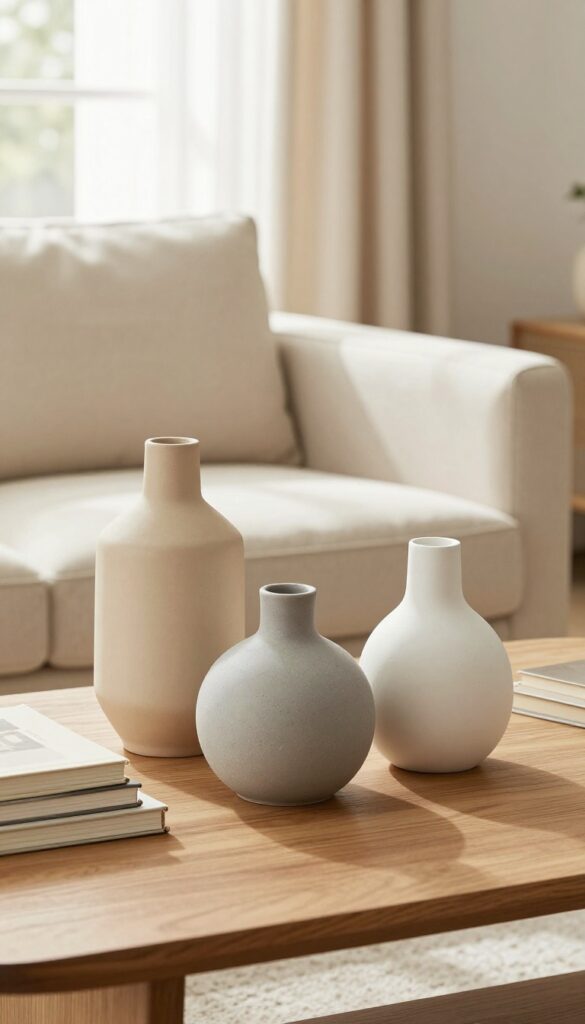
Sculptural ceramics bring an organic, handcrafted feel to a neutral living room without adding visual clutter. Think matte vases with irregular curves or bowls with subtle speckles—they act like tiny art pieces that soften the clean lines of modern furniture. Placed on a coffee table, shelf, or console, they draw the eye with their earthy textures and muted glazes, making the space feel collected over time rather than styled all at once.
Ceramics are an easy way to introduce tactile variety and a sense of calm. In a neutral room, they provide gentle contrast without competing with the palette. Look for pieces in cream, sand, or soft gray with a matte finish—glossy ceramics can feel too shiny next to cozy textures like linen and wool.
Group two or three vases of different heights on a tray, or set a single sculptural bowl on a stack of books. The key is to keep the arrangement intentional but not overly symmetrical, so the room feels relaxed and personal.
Best Colors And Finishes
Stick with matte, unglazed finishes in warm neutrals like oatmeal, terracotta, or chalky white. These tones blend seamlessly with beige sofas, wood tables, and linen curtains. Avoid bright colors or high-gloss glazes that might disrupt the calm, layered look you're building.
Where To Place Them
Coffee tables and console tables are natural spots, but don't overlook shelves and windowsills. A single ceramic bud vase on a floating shelf adds height and interest without taking up surface space. For a coffee table, cluster two or three small pieces on a wooden tray to keep them from feeling scattered.
Texture Mix Tip
Pair ceramics with natural materials like wood, rattan, or stone to reinforce the earthy, handmade vibe. A ceramic vase next to a stack of leather-bound books or a woven basket creates a rich contrast that feels intentional and warm.
7. Choose a Low-Profile Sofa
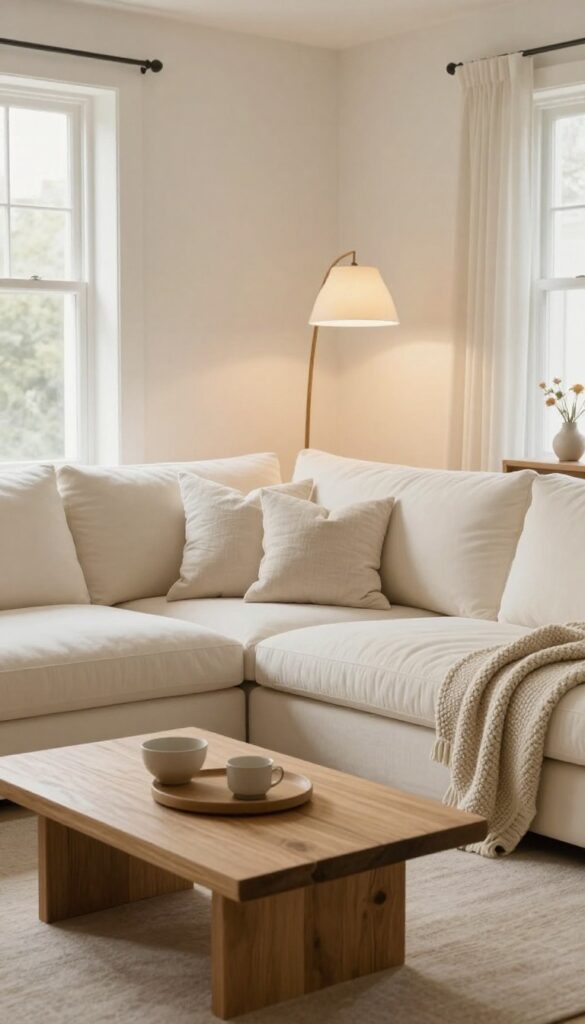
A low-profile sofa instantly changes the energy of a room. Instead of a bulky, high-backed couch that dominates the space, a streamlined silhouette keeps sightlines open and the whole room feeling airier. In a neutral living room, this kind of sofa becomes a quiet anchor—present but not pushy.
The key is picking a fabric that adds softness without adding visual weight. Bouclé, linen, or a textured cotton in a warm off-white or light beige works beautifully. The low frame pairs perfectly with a chunky coffee table—think raw oak or a sculpted stone top—to create that satisfying contrast between sleek and substantial.
This combo feels modern but still cozy, especially when you layer in a chunky knit throw or a few linen cushions.
Best Fabrics For A Low-profile Look
- Bouclé is a top contender because its nubby texture adds warmth without bulk. Linen is another great choice—it wrinkles naturally and feels relaxed. If you want something more durable, look for a performance textured weave in a light cream or warm gray.
- Avoid shiny or overly smooth fabrics; they can make the sofa feel cold.
Coffee Table Pairing
- A low sofa calls for a coffee table that feels grounded. A chunky wooden table with visible grain or a round stone table adds weight and balance. Keep the table at roughly the same height as the seat cushions or slightly lower.
- This creates a cohesive, lounge-like feel that invites you to put your feet up.
Finishing Touch
Add a floor lamp with a slim arc or a tripod base to draw the eye upward and balance the low furniture line. A warm-toned lamp shade softens the overall look and makes the seating area feel like a cozy nook.
8. Add a Stone or Marble Accent
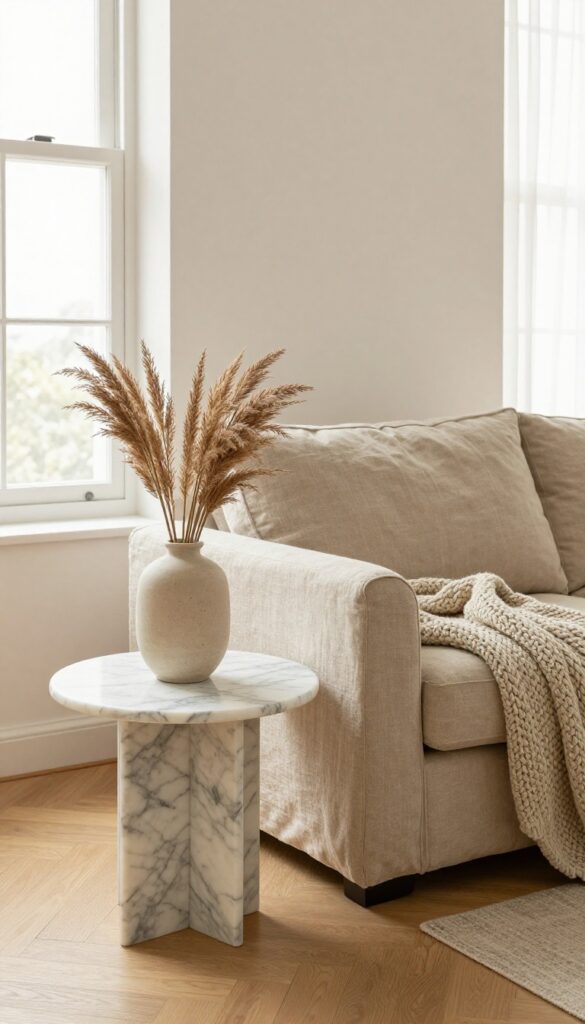
A neutral living room can sometimes feel a little flat if everything is soft and matte. That is where stone or marble comes in. A small marble side table, a limestone sculpture, or even a marble-topped console brings a cool, polished surface that breaks up all the warmth.
The contrast is subtle but effective—smooth stone next to chunky knit throws or linen upholstery adds a layer of sophistication without making the room feel stiff.
Stone accents work especially well in modern and clean spaces, but they also fit perfectly into warm and cozy rooms when chosen thoughtfully. The key is to keep the piece small and let it stand out naturally. A marble side table next to a plush sofa creates an instant visual anchor, while a limestone sculpture on a shelf adds organic texture.
The coolness of the stone balances the warmth of wood and fabric, creating a sense of calm and stability.
Best Materials
- Marble is the classic choice, but limestone, travertine, and even terrazzo offer similar benefits with slightly different finishes. Carrara marble has subtle gray veining that blends well with neutral palettes, while limestone has a more matte, earthy feel. Travertine adds natural pitting and warmth, making it a great bridge between modern and rustic.
- Stick to light or medium tones to keep the look airy and cohesive.
Where To Place It
- The most effective spot is often beside a seating area—a small marble side table next to an armchair or sofa. You can also use a marble tray on a coffee table to corral remotes and coasters, or a marble bookend on an open shelf. Avoid large marble surfaces like a full coffee table, which can feel heavy and cold.
- Instead, let the stone accent be a supporting player, not the main event.
Finishing Touch
- Pair your stone accent with something soft and organic nearby. A marble lamp on a linen-covered side table, or a limestone sculpture next to a potted fern, creates a pleasing contrast. Add a small brass or wood detail to warm up the stone even more.
- The goal is to let the cool surface shine without making the room feel uninviting.
9. Hang a Large Abstract Art Piece
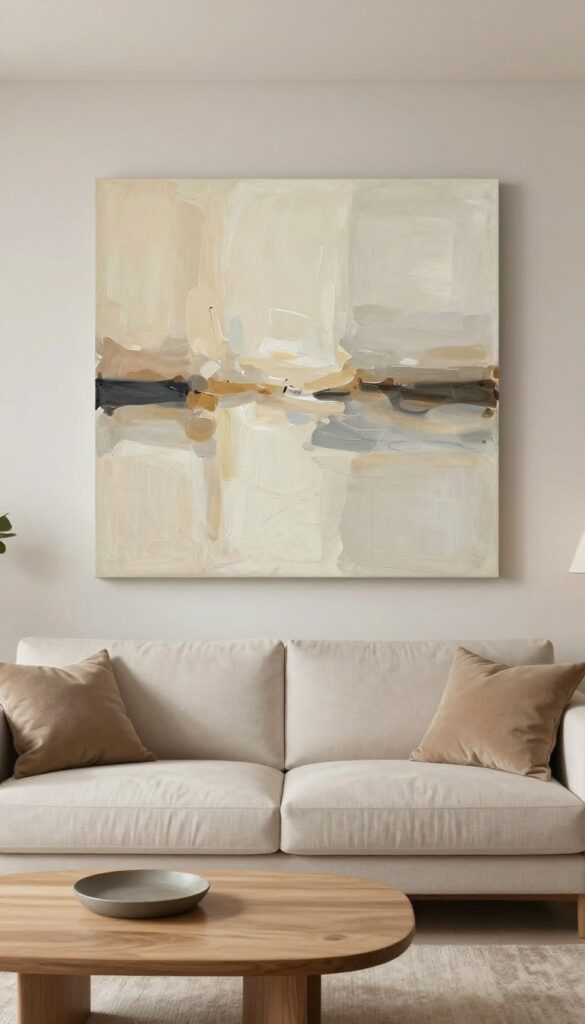
A big canvas with muted earth tones and soft brushstrokes can anchor your neutral living room without shouting for attention. It gives the space a gallery-like feel while keeping everything calm and collected. The key is choosing something that feels organic, not loud—think sandy beiges, warm grays, and subtle clay tones.
Large abstract art works especially well in rooms with clean furniture lines because it adds visual interest without clutter. A frameless canvas keeps the look modern, while a simple wood frame brings in warmth. This piece becomes the natural starting point for your room's color palette, letting you pull accent hues from the painting for pillows, throws, or ceramics.
Best Colors
Stick to muted earth tones like terracotta, oatmeal, taupe, and dusty sage. Avoid high-contrast combinations—think tonal rather than stark. A painting that blends these shades softly will feel cohesive with your neutral room.
Placement Tip
Hang the art so its center is at eye level, about 57 to 60 inches from the floor. In a living room, that usually means the bottom edge sits 8 to 10 inches above a sofa or console. Leave breathing room around it so the piece feels intentional, not cramped.
Finishing Touch
Add a small picture light above the canvas to highlight the texture of the brushstrokes. A warm LED bulb will make the earth tones glow without washing them out. This little detail turns the art into a cozy focal point, especially in the evening.
10. Use Woven Baskets for Storage
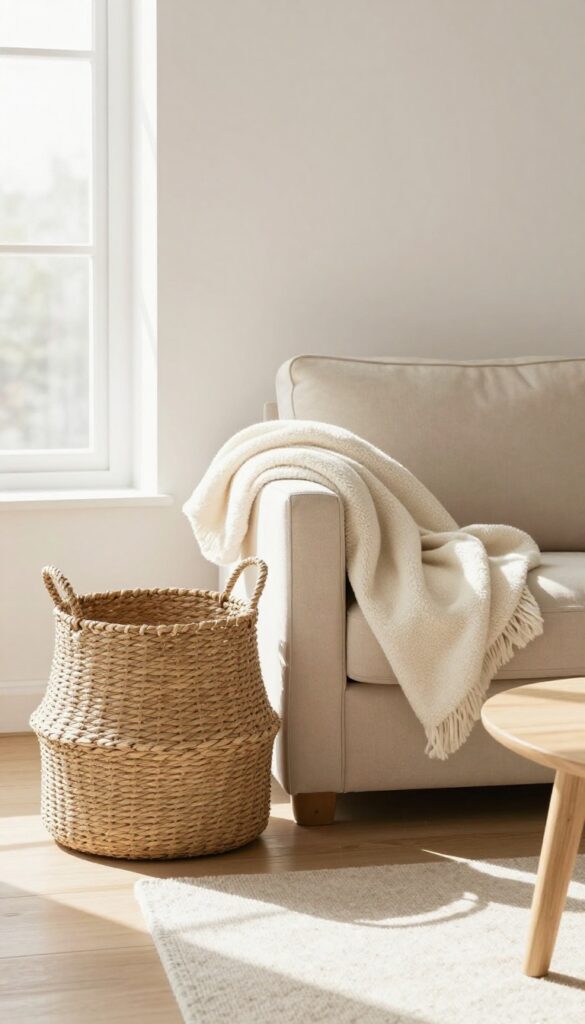
Woven baskets are one of those decor pieces that do double duty without trying too hard. They bring in natural texture, warm up a neutral palette, and quietly hide the clutter that tends to pile up in a living room. Whether you're wrangling throw blankets, stashing kids' toys, or corralling remote controls, a well-placed basket keeps things tidy while adding a layer of organic charm.
In a modern neutral living room, baskets soften all the straight lines and smooth surfaces. They feel grounded and earthy, which balances out the clean, crisp look of contemporary furniture. Plus, they're incredibly easy to move around, so you can shift them from the sofa corner to the media console as your needs change.
Woven baskets are a simple, stylish way to add storage and texture to a neutral living room. They work especially well in modern and clean spaces because they introduce warmth without making the room feel busy. Choose baskets in natural tones like seagrass, jute, or rattan to keep the palette cohesive.
Place a pair of large baskets next to the sofa for blanket storage, or use a single tall basket near the media console to hide electronics or magazines. The key is to pick baskets with a tight weave for a polished look, and to keep them in similar finishes for a collected feel.
Best Materials
- Stick with natural fibers like seagrass, rattan, or jute for a warm, organic texture. Seagrass is durable and has a subtle golden tone, while rattan offers a more open weave that feels airy. For a sleeker modern look, consider woven rope baskets or those with a dark wash.
- Avoid synthetic materials that look too shiny or cheap—they can clash with the calm neutral vibe.
Placement Ideas
- Put one large basket beside the sofa to hold extra throws and pillows. Another can sit under a console table or next to the media stand for magazines, remotes, or kids' toys. If you have an empty corner, a tall basket with a lid works as a discreet catch-all.
- Grouping two or three baskets of different sizes together creates a styled vignette that also serves storage needs.
Styling Tip
Keep the baskets cohesive by sticking to one material or color family—like all seagrass or all dark rattan. If you want a bit of contrast, line a basket with a neutral fabric liner. For a finishing touch, drape a lightweight throw over the edge of a basket to soften its shape and tie it into the room's color scheme.
11. Install a Floating Shelf with Greenery
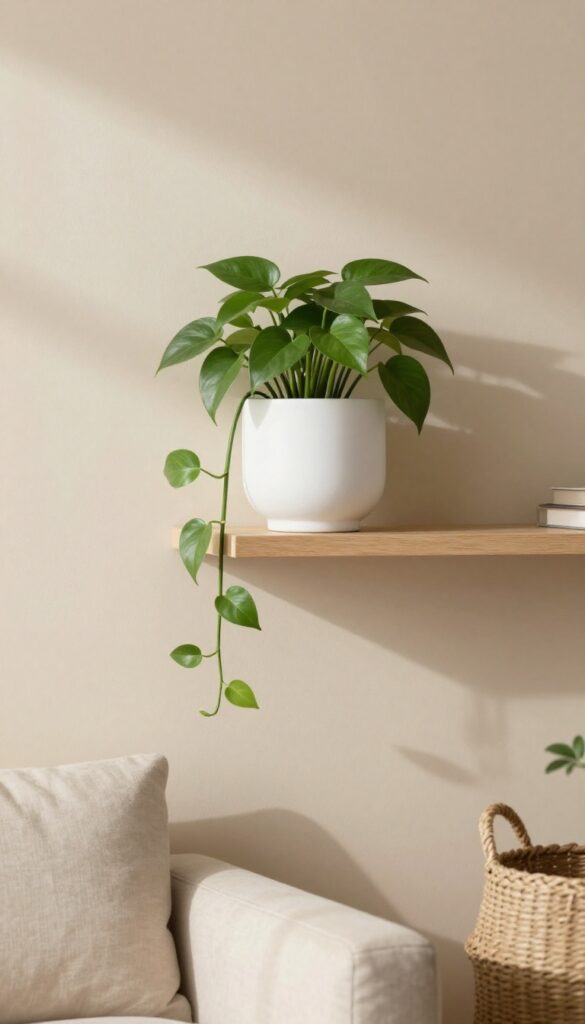
A slim floating shelf does more than just hold a plant—it draws the eye upward and fills a blank wall without adding visual weight. In a neutral living room, a single shelf with a trailing pothos or a few dried eucalyptus stems brings life and softness to empty walls. Choose a planter in a neutral tone like matte white, warm beige, or soft terracotta to keep the look clean and cohesive.
This idea works especially well in spots where floor space is limited but walls feel bare. A shelf placed at eye level above a sofa or console table creates a natural focal point. The trailing greenery adds organic movement, while the neutral planter ties into the calm, balanced palette of the room.
For a modern and clean feel, stick to one shelf rather than a cluster, and let the plant be the star.
Best Placement
Install the shelf about 6 to 8 inches above a sofa or side table, centered or slightly offset for a relaxed look. Avoid placing it too high—the plant should feel reachable and part of the room, not just decor. A wall near a window works best for live plants, but dried eucalyptus or preserved moss works anywhere.
Planter Style
Stick with simple, matte finishes in neutral colors like off-white, sand, or warm gray. A ribbed ceramic planter or a woven basket adds subtle texture without competing with the greenery. Keep the planter proportional to the shelf—about two-thirds the shelf width for balance.
Plant Choice
Trailing plants like pothos, string of pearls, or philodendron create a soft, cascading effect that feels organic and effortless. For a low-maintenance option, dried eucalyptus or bunny tails offer texture without watering. Mix in a small framed photo or a stack of books for a styled vignette.
12. Layer Lighting at Different Heights
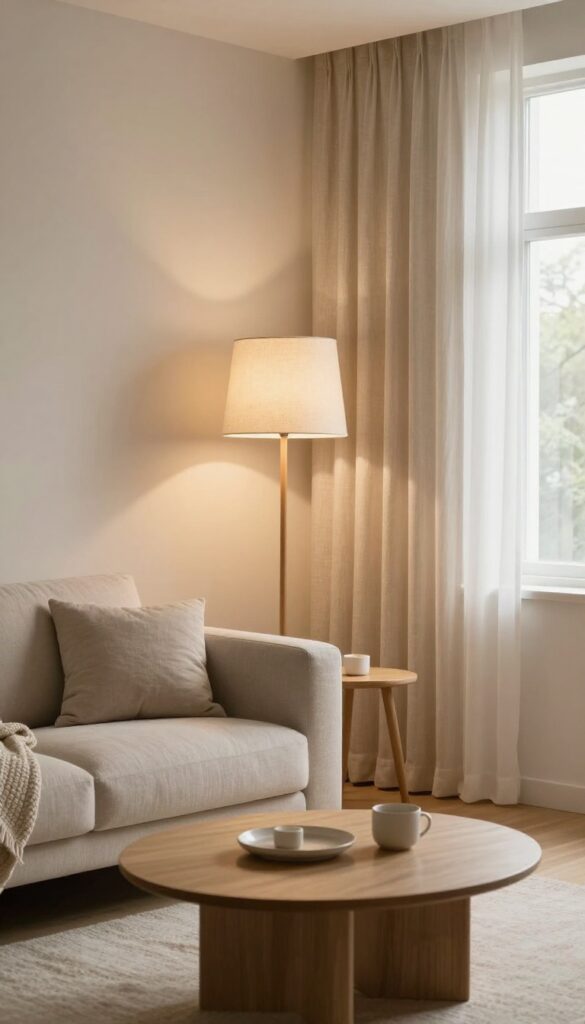
A living room that relies on a single overhead fixture often feels flat and one-dimensional. By layering light sources at different heights, you create depth, warmth, and visual interest that changes throughout the day. This approach is especially effective in neutral rooms where texture and light do the heavy lifting.
Start with a floor lamp in a corner to cast a soft, ambient glow across the room. Add a table lamp on a side table or console for task lighting and a cozy focal point. Then bring in a pendant light or a small chandelier above a coffee table or seating area to anchor the space.
Dimmable bulbs let you transition from bright and energizing to soft and intimate with a simple twist. The key is to vary the heights so the light pools at different levels, creating a layered, sculptural effect that makes the room feel larger and more inviting.
Lighting Tip
Place your floor lamp behind a sofa or armchair to create a warm halo effect. Use a table lamp with a linen shade for a diffused, flattering light that softens the room's edges.
Finishing Touch
Choose bulbs with a warm color temperature (2700K–3000K) to keep the glow cozy and consistent. Smart dimmers let you control each layer independently for ultimate flexibility.
13. Finish with a Tray on the Coffee Table
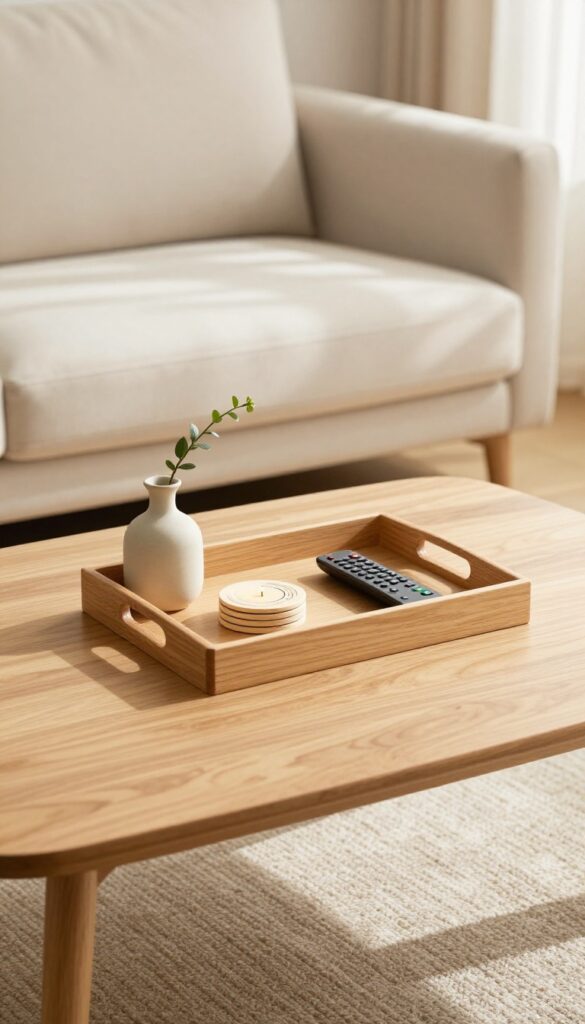
A coffee table can quickly become a dumping ground for remote controls, magazines, and random odds and ends. That’s where a simple tray comes in—it creates a designated landing zone that keeps everything looking intentional. A wooden or stone tray adds texture and warmth, plus it makes tidying up a five-second task.
A tray is one of those finishing touches that pulls a room together without trying too hard. It corrals everyday items like remotes, coasters, and a candle, so your coffee table feels curated instead of cluttered. For a modern yet warm look, choose a natural wood tray with clean lines or a textured stone option.
Place it slightly off-center for a relaxed vibe, and layer in a small plant or a stack of books for visual interest. The tray also makes it easy to clear the table when you need extra surface space—just lift and move it aside.
Best Materials
- Wood and stone are top choices for a warm, neutral living room. A light oak tray keeps things airy, while a dark walnut adds depth. Stone trays, like marble or slate, bring in subtle texture and a cool contrast to soft fabrics.
- Avoid plastic or shiny metal—they can feel cheap or too modern for a cozy space.
What To Put On It
- Stick to three or four items for balance. A candle, a small coaster stack, and a remote holder are enough. Add one decorative object, like a ceramic bud vase or a polished stone, for personality.
- Keep it minimal so the tray doesn’t become cluttered itself.
Placement Tip
Set the tray at one end of the coffee table rather than dead center. This leaves room for drinks or books on the other side and feels more natural. If your table is round, place the tray slightly off-center for the same relaxed effect.
FAQ
How do I keep a neutral living room from feeling boring?
Focus on texture variety—mix linen, wood, stone, and wool. Add contrast with different shades of neutrals (warm whites, taupes, greiges) and incorporate sculptural shapes or greenery.
What are the best neutral paint colors for a living room?
Look for warm whites like Benjamin Moore White Dove or Sherwin-Williams Alabaster. Greiges like Agreeable Gray also work well. Avoid cool whites that can feel stark.
Can I use patterns in a neutral living room?
Yes, but keep them subtle. Try a tone-on-tone stripe, a subtle herringbone, or a low-contrast geometric pattern on pillows or a rug to add interest without breaking the calm.
How do I add warmth to a neutral living room?
Layer natural materials like wood, jute, and linen. Use warm lighting with soft white bulbs. Add touches of brown, tan, or rust through accessories like throws and ceramics.
What flooring works best with a neutral living room?
Light to medium wood floors (oak, walnut) are ideal. If you have tile or carpet, add a large jute or wool rug to introduce warmth and texture.
Conclusion
Neutral living rooms are all about balance—mixing softness with structure, warmth with simplicity. By layering textures and choosing pieces with care, you can create a space that feels both modern and inviting.
Start with one or two ideas and build from there; even small changes can shift the whole energy of the room.