13 Small Living Room Layout Ideas That Open Better Paths
A small living room can feel like a puzzle where every piece of furniture needs to earn its spot. The trick isn't just picking smaller pieces—it's about arranging them so the room breathes and you can actually move through it without sidestepping.
When storage is part of the layout, you get both function and flow. These 13 ideas focus on opening up pathways while keeping your essentials close at hand.
Each one is designed to make your space feel bigger, smarter, and more inviting without a major renovation.
1. Float a Console Table Behind the Sofa
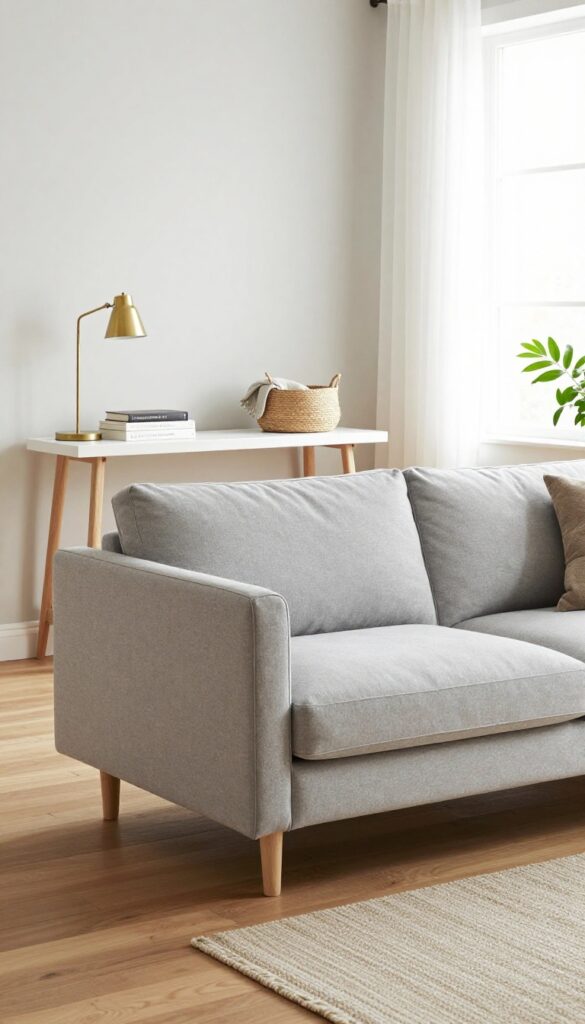
That empty gap between your sofa and the wall? It's prime real estate for a slim console table. By placing a narrow table right behind the couch, you instantly gain a surface for lamps, books, or decorative baskets without eating into your walkway.
This trick also visually anchors the seating area, making the room feel intentionally arranged rather than just pushed against the wall.
A console table behind the sofa is a storage-smart solution that keeps pathways clear. It works especially well in open-plan layouts or long, narrow rooms where every inch counts. Choose a table that's about the same length as your sofa or slightly shorter, and no deeper than 12–14 inches so you can still walk past comfortably.
Style it with a mix of practical and pretty items: a pair of table lamps for ambient lighting, a stack of coffee table books, and a woven basket for remotes or throws. The result is a layered, lived-in look that doesn't sacrifice flow.
Best Materials
Go for light wood or a slim metal frame to keep the visual weight low. A white oak or birch console adds warmth without bulk, while a black iron or brass base feels airy and modern. Avoid chunky, dark pieces that might make the room feel cramped.
Storage Tip
Use baskets or slim bins on the lower shelf to stash extra blankets, magazines, or kids' toys. This keeps clutter out of sight but still within arm's reach from the sofa. Woven seagrass or linen baskets add texture and soften the look.
Lighting Idea
Place a lamp on each end of the console to create balanced task lighting for reading. Choose slim, tapered lampshades that won't overwhelm the table. This also draws the eye upward, making the ceiling feel higher.
2. Use a Corner Shelf Unit for Vertical Storage
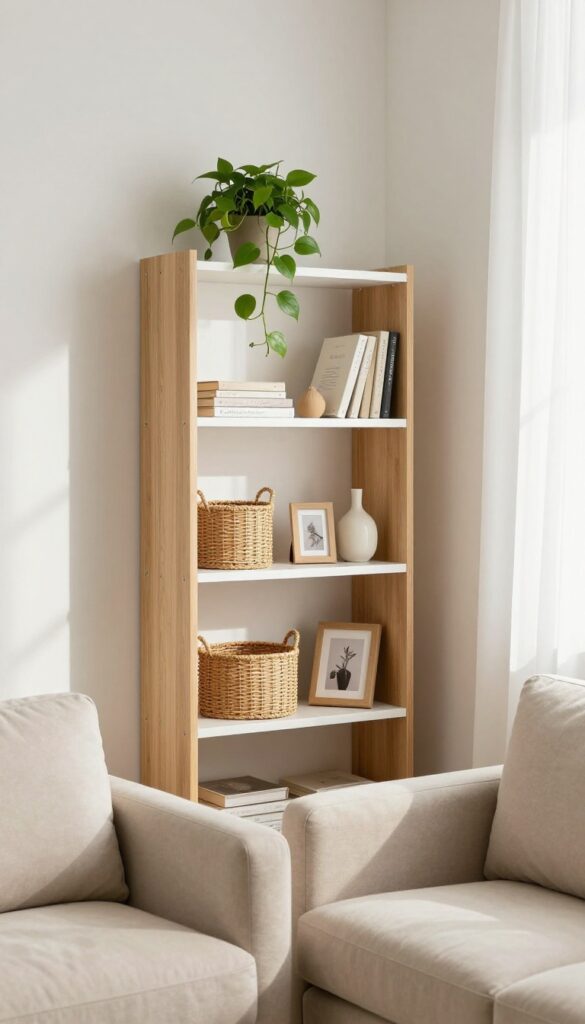
Corners are notoriously tricky in small living rooms. They often end up as dead zones where dust bunnies gather or an awkward chair gets shoved. But with a tall corner shelf unit, that wasted space becomes one of the most functional spots in the room.
It draws the eye upward, making the ceiling feel higher, and keeps the floor clear for better traffic flow. Plus, it gives you a dedicated place to display your favorite things without cluttering surfaces.
A corner shelf unit is a smart storage solution that doesn't eat into your floor plan. By going vertical, you add storage without sacrificing precious square footage. The key is to choose a unit that fits snugly into the corner—either a custom-built option or a ready-made triangular shelf.
Use it for a mix of closed storage (like baskets or bins) and open display to keep it from looking too busy. This approach works especially well in living rooms where you need to store books, media, or decor but don't have room for a bulky entertainment center.
Best Materials & Finishes
- For a practical yet stylish look, go with light wood like oak or ash to keep the room feeling airy. White or light-colored shelves also blend into the wall and make the corner feel less heavy. If you want a bit of contrast, try a matte black metal frame with wood shelves—it adds an industrial edge without overwhelming the space.
- Avoid dark, heavy materials that can make the corner feel like a dark hole.
Shelf Styling Tip
- Keep the styling balanced by grouping items in odd numbers and varying heights. Place a trailing plant like pothos on the top shelf to soften the vertical lines. Use baskets or boxes on the bottom shelves to hide remote controls, chargers, or other clutter.
- Leave about 30 percent of each shelf empty to avoid a packed look—this helps the unit feel like a curated display, not a storage dump.
Small-space Fix
If your corner is tight, look for a slim, ladder-style shelf that leans against the wall. These take up even less visual space and can be tucked behind a door or next to a sofa. Another option is a corner cabinet with doors—great for hiding media equipment or board games while still using the corner efficiently.
3. Choose a Slim Console Table Along One Wall
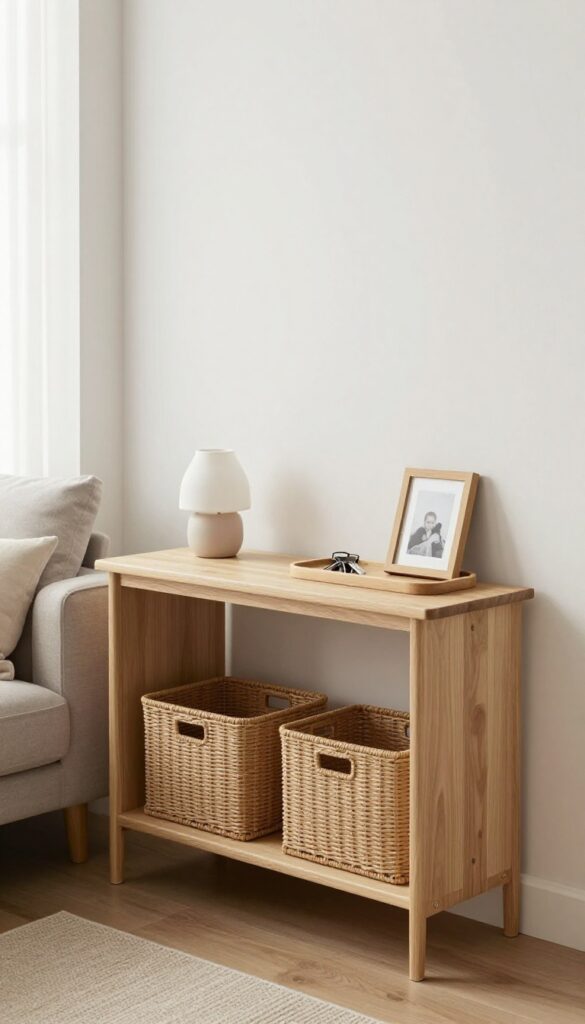
A slim console table is one of those pieces that quietly solves multiple problems at once. It adds a landing spot for keys, mail, or a lamp without eating into your floor space. Because it sits flush against the wall, the center of the room stays wide open—perfect for small living rooms where every inch counts.
The trick is picking a narrow profile (12 to 16 inches deep) so it doesn't stick out too far, then using the area underneath for hidden storage.
A slim console table gives you a dedicated surface for everyday essentials while keeping the floor plan uncluttered. It works especially well in narrow rooms or behind a sofa where a full desk would feel cramped. The shallow depth means you can still walk past comfortably, and the visual weight stays low so the room feels airy.
To make it earn its keep, choose a style with a lower shelf or room for baskets underneath—that way you stash remotes, throws, or extra cords out of sight. Finish it with a small lamp, a tray for odds and ends, and maybe a framed photo to make it feel intentional without going overboard.
Best Materials For A Slim Console
Light woods like oak or ash keep the table from feeling bulky, while a glass top can make the piece almost disappear visually. If you prefer a bit of contrast, a slim metal console in black or brass adds a modern edge without taking up visual space. Avoid heavy, dark woods that can make the wall feel closed in—stick with finishes that blend into the room rather than dominating it.
Storage Tip: Baskets And Bins
- Use woven baskets or fabric bins under the console to store items you don't need every day, like extra blankets, board games, or seasonal decor. This keeps clutter hidden but still easy to grab. For a cleaner look, choose baskets that match the room's color palette—neutral tones like beige, gray, or soft green work well.
- If the console has a lower shelf, arrange a few stacked books or a small plant alongside the baskets for a styled, layered effect.
Styling The Surface
- Keep the top of the console simple to avoid visual clutter. A slim table lamp (or a wall-mounted sconce above) adds warmth without taking up surface space. A small tray corrals keys and mail, and one or two decorative objects—like a ceramic vase or a stack of coffee table books—add personality.
- Resist the urge to fill every inch; leaving some empty space actually makes the room feel more open and intentional.
4. Opt for a Nesting Coffee Table Set
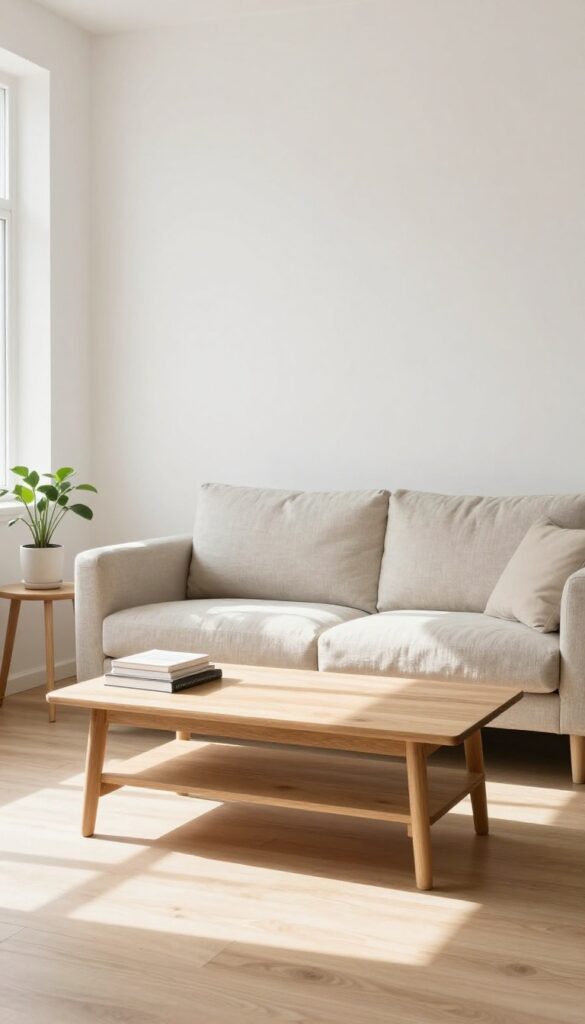
A single bulky coffee table can eat up a surprising amount of floor space in a small living room. Nesting tables solve this by giving you multiple surface areas that slide apart when you need them and tuck back together when you don’t. It’s a flexible, storage-smart solution that keeps your path clear without sacrificing style.
Nesting tables are a practical and stylish choice for small living rooms. They offer extra surface space for drinks, books, or decor, but can be compactly stored when not in use. This flexibility helps maintain an open, clutter-free layout that makes the room feel larger and easier to navigate.
Best Materials
For a practical yet stylish look, consider nesting tables in light wood like oak or ash—they keep the space feeling airy. Glass tops with metal frames also work well, as they visually disappear. Avoid dark, heavy woods that can make the room feel cramped.
Layout Tip
- Place the largest table in front of your sofa and keep the smaller ones slightly to the side. When you need extra surface for snacks or a laptop, pull them out. When guests leave, slide them back under.
- This keeps your main walkway clear at all times.
Storage-smart Styling
Use the top of the largest table for a tray with remotes or coasters. The smaller tables can hold a stack of books or a small plant. Avoid overcrowding—the goal is to have surfaces ready when needed, not permanently cluttered.
5. Mount Floating Shelves Above the Sofa
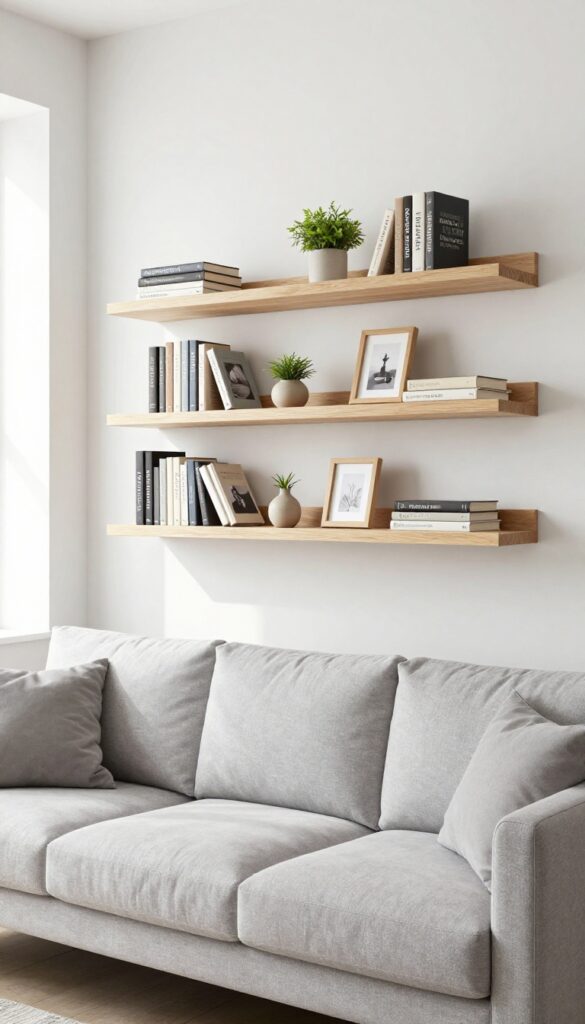
If your living room is short on square footage, the wall above your sofa is prime real estate. Floating shelves turn that empty vertical space into a stylish storage zone for books, plants, and decorative objects—all without stealing an inch of floor area. By drawing the eye upward, they also make the ceiling feel higher and the room feel more spacious.
Floating shelves above the sofa are a smart way to add storage and personality in a small living room. They keep everyday items within reach while freeing up floor space for furniture and movement. The key is to balance practicality with visual lightness—choose slim shelves that don’t overwhelm the wall, and style them with a mix of functional and decorative pieces.
Best Materials
Go with solid wood or high-quality MDF in a finish that complements your sofa. Light woods like oak or ash keep the look airy, while dark walnut adds warmth without feeling heavy. For a modern touch, try black metal brackets with a wood shelf.
Shelf Styling Tip
- Group items in odd numbers and vary heights. Stack a few books horizontally, add a small plant or vase, and lean a framed photo. Leave some breathing room between objects to avoid a cluttered look.
- Stick to a cohesive color palette—neutrals with one accent color work well.
Small-space Fix
Install shelves at least 12 inches above the sofa back so you don’t bump your head. Keep the depth under 10 inches to maintain a slim profile. Use baskets or bins on the shelves to hide smaller items like remotes or charging cables.
6. Place a Storage Ottoman as a Coffee Table
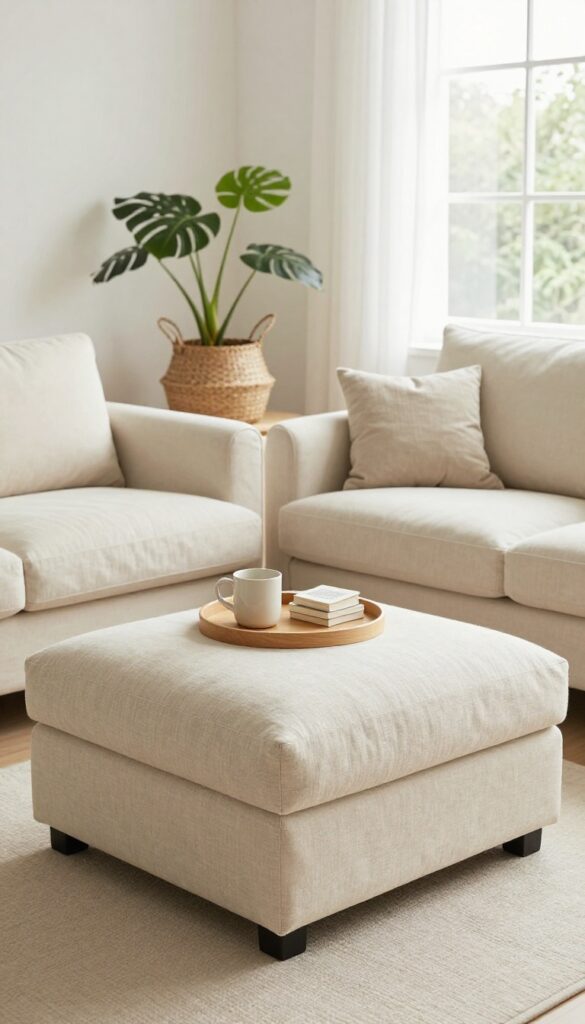
A storage ottoman is one of those pieces that quietly solves two problems at once. It gives you a soft surface to set down a drink or a book, while hiding away the clutter that tends to pile up in a small living room. The best part?
It's lightweight and easy to shift around, so you can clear a path for guests or create extra floor space in seconds.
In a small living room, every piece of furniture needs to earn its spot. A storage ottoman does exactly that—it works as a coffee table, a footrest, and a hidden bin for blankets, remotes, or kids' toys. Because it's upholstered and often has rounded edges, it feels softer and less bulky than a traditional wood or glass coffee table.
That softness helps the room feel more open and less cluttered, especially when you choose a light or neutral fabric. You can also find ottomans with a flat, firm top that works perfectly for trays, so you still have a stable surface for drinks and snacks. The key is to pick one that's proportional to your sofa—too big and it'll dominate the room, too small and it'll look lost.
Aim for about two-thirds the length of your sofa for a balanced look.
Best Colors And Fabrics
- Stick with light, neutral fabrics like linen, cotton, or a soft bouclé in shades of cream, beige, or light gray. These colors keep the ottoman from visually weighing down the room. If you want a little contrast, try a muted sage or a warm taupe.
- Avoid dark, heavy fabrics like black leather or deep navy—they can make the space feel smaller and harder to navigate.
Layout Tip
Place the ottoman about 12 to 18 inches from the sofa so there's enough room to walk around it. In a tight space, you can also use it as a side table by pairing it with a small chair. When you need extra floor space for yoga or guests, just slide it against the wall or into a corner.
Storage Hack
Use the interior for items you don't need every day, like extra throw blankets, board games, or seasonal decor. For remotes and coasters, keep a small tray on top so they're easy to grab without digging inside. This way, the ottoman stays functional without becoming a catch-all.
7. Use a Low Profile Media Console with Baskets
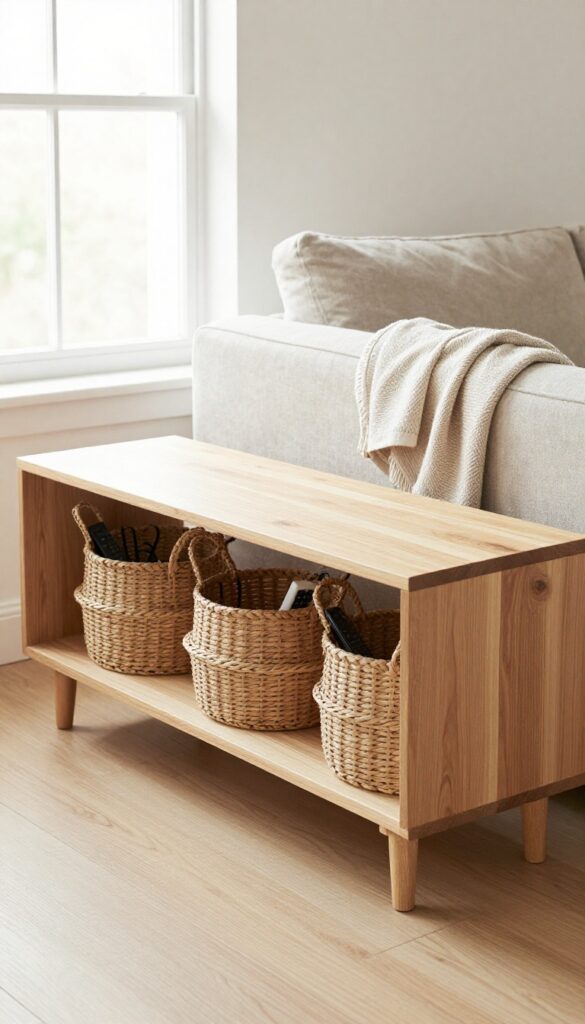
A media console doesn't have to dominate your living room. By choosing a low-profile design with woven baskets, you keep electronics and daily clutter neatly hidden while preserving the open feel of the space. This setup works especially well in small rooms where every inch of visual breathing room matters.
The key is to pick a console that sits low enough to stay below your line of sight when you're seated. Pair it with baskets that slide in and out easily for storing remotes, cables, and extra blankets. The natural texture of woven baskets adds warmth without adding visual weight, so the room still feels airy and uncluttered.
Best Colors
Stick with light wood tones like oak or ash for the console to keep the look airy. White or pale gray finishes also work well. For baskets, choose natural seagrass, rattan, or a warm tan to add texture without darkening the space.
Small-space Fix
Mount the console on short legs to create a gap underneath. This lets light flow under the piece, making the floor area feel larger. It also makes vacuuming underneath a breeze.
Storage Tip
Use the baskets to corral items you use daily, like streaming remotes and charging cables. Label each basket if you have multiple, or keep one dedicated to toys and another for throws to stay organized without thinking.
8. Add a Narrow Bookcase Behind the Door
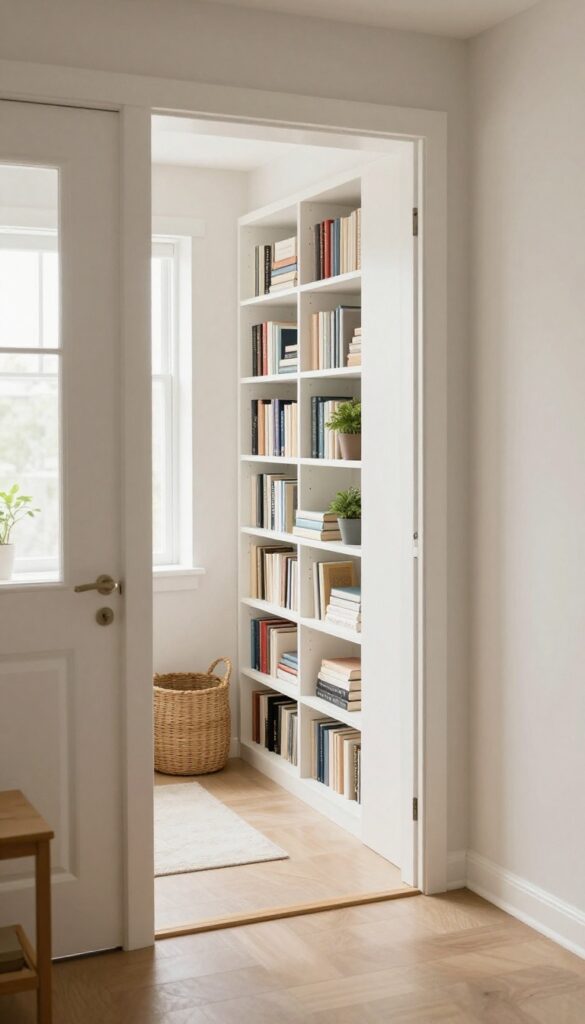
That sliver of wall behind the door often goes completely unused. But with a slim bookcase, it becomes one of the most practical spots in your small living room. The trick is choosing a unit that's shallow enough to let the door open fully, yet tall enough to hold a surprising amount of stuff.
This way, your main walls stay clear for seating and flow, while you gain storage that doesn't eat into your floor plan.
A narrow bookcase tucked behind the door is a smart, low-effort way to add storage without sacrificing space. It's perfect for books, small decor, or everyday essentials you want close at hand. Because it's out of the main sightline, it can be a little more casual in styling—think stacked paperbacks, a small plant, or a basket for remotes.
This idea works especially well in living rooms where every inch counts, and it keeps the room feeling open and uncluttered.
Best Materials
Look for a bookcase that's 8 to 12 inches deep—anything deeper might block the door swing. Open shelving in light wood or white keeps the piece from feeling bulky, while a slim metal frame adds an airy, industrial touch. If you prefer a closed look, a narrow cabinet with doors hides clutter and works as a mini bar or media stand.
Layout Tip
- Measure your door's clearance before you buy. You want the bookcase to sit flush against the wall without interfering with the door's path. If the door swings into the room, place the bookcase on the hinge side.
- For sliding doors, you have more flexibility—just make sure the unit doesn't protrude into the walking lane.
Shelf Styling Tip
Keep the styling simple since this is a secondary zone. Use baskets or bins on the lower shelves to hide odds and ends, and reserve the top shelf for a few curated objects like a small vase or a stack of coffee table books. This prevents the area from looking messy while still feeling intentional.
9. Incorporate a Window Seat with Drawers
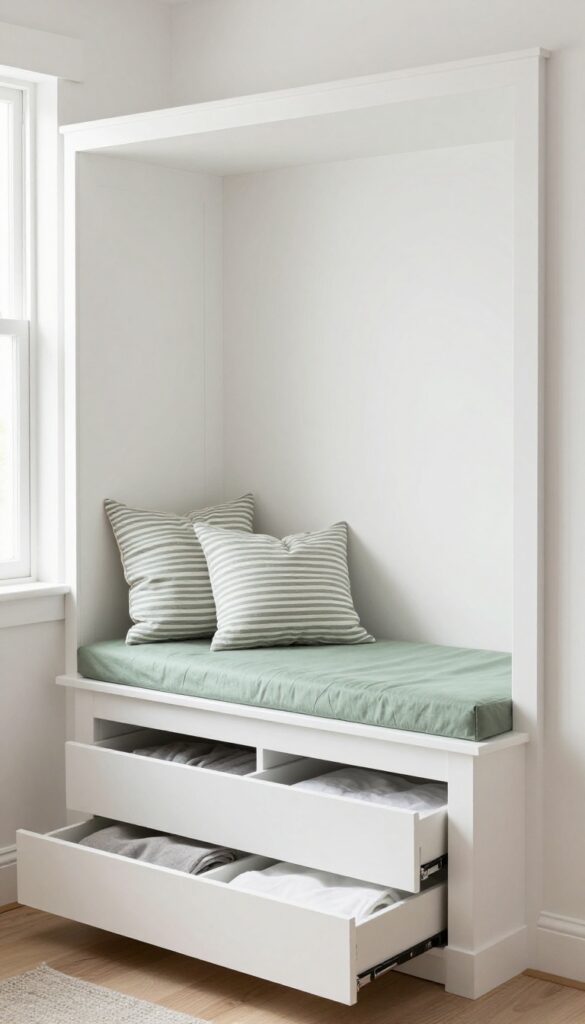
A window seat is one of those rare features that feels both indulgent and completely practical. By adding built-in drawers underneath, you turn an often-wasted spot into a cozy reading nook and a storage powerhouse. The seat itself stays flush with the wall, so it doesn't eat into your floor space—perfect for a small living room where every inch counts.
The beauty of a window seat with drawers is that it pulls double duty without looking bulky. You get a comfortable place to sit, read, or just stare out the window, plus hidden storage for things like blankets, books, or board games. Since it's built into the architecture, it feels like the room was always meant to have it.
Pick a cushion in a durable fabric like performance velvet or outdoor-grade canvas, and you've got a spot that's both stylish and low-maintenance.
Best Colors And Materials
- For a seamless look, paint the window seat frame the same color as your wall trim or the wall itself. White or light gray keeps it airy, while a darker shade like navy or charcoal can make the window area feel like a focal point. The cushion is where you can add personality—try a warm mustard, soft sage, or a subtle stripe.
- If you want extra durability, go for a washable slipcover.
Storage Tip
Make the drawers deep enough to hold bulky items like throw blankets or pillows. Use drawer dividers to keep smaller things like remote controls or charging cables organized. If the window seat is in a corner, consider a lift-up top instead of drawers for easier access to larger items.
Cozy Detail
Layer the seat with a couple of lumbar pillows and a small throw blanket to make it inviting. Add a wall-mounted reading light or a small shelf above for books and a cup of tea. A soft rug underneath can define the zone and make it feel even more like a dedicated nook.
10. Use a Rolling Cart as a Side Table
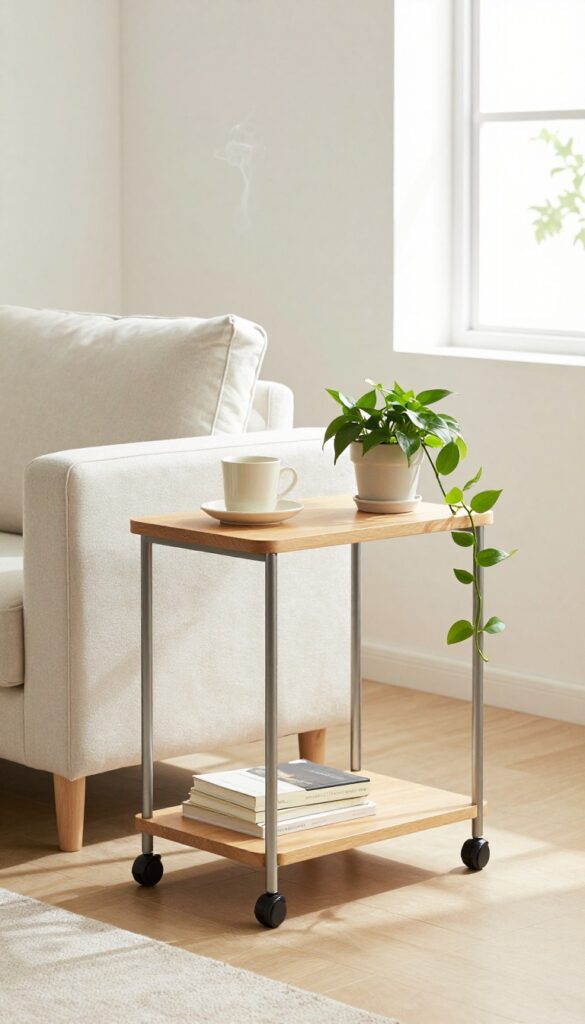
When every inch counts, a rolling cart is a secret weapon. It works as a side table when you need it—holding your coffee, a stack of books, or a trailing plant—but can roll out of the way in seconds to clear a path. This is especially handy in narrow living rooms where a permanent side table would block the flow.
Plus, the open shelving keeps the visual weight light, so the room still feels airy.
A rolling cart brings flexibility to a small space without sacrificing style. Choose one with a slim profile and two or three tiers to maximize storage without taking up floor space. Use it to corral remote controls, magazines, and a small vase, then wheel it into a corner when you need extra room for guests.
The key is picking a cart that complements your decor—metal and wood combinations work well with industrial or modern styles, while a fully wooden cart suits bohemian or Scandinavian rooms.
Best Materials
- Look for carts with a metal frame and wood or glass shelves. Metal keeps the silhouette sleek, while wood adds warmth. Avoid bulky designs with thick frames—thin legs and open sides keep the cart from feeling heavy.
- A matte black or brass finish adds a touch of elegance without overwhelming the space.
Layout Tip
Position the cart next to the sofa or armchair, but leave enough room to pull it out easily. In a very tight space, use it as an end table on one side only, and balance the other side with a wall-mounted shelf or a floor lamp. When not in use, tuck it beside a bookshelf or under a window.
Storage Strategy
- Use the top tier for daily essentials like a coaster and a small tray for remotes. The lower shelves can hold extra blankets, baskets with snacks, or a stack of magazines. Keep it from looking cluttered by limiting each shelf to one or two items.
- A small plant or a candle on the top shelf adds a decorative touch.
11. Hang a Wall-Mounted Desk for a Compact Workspace
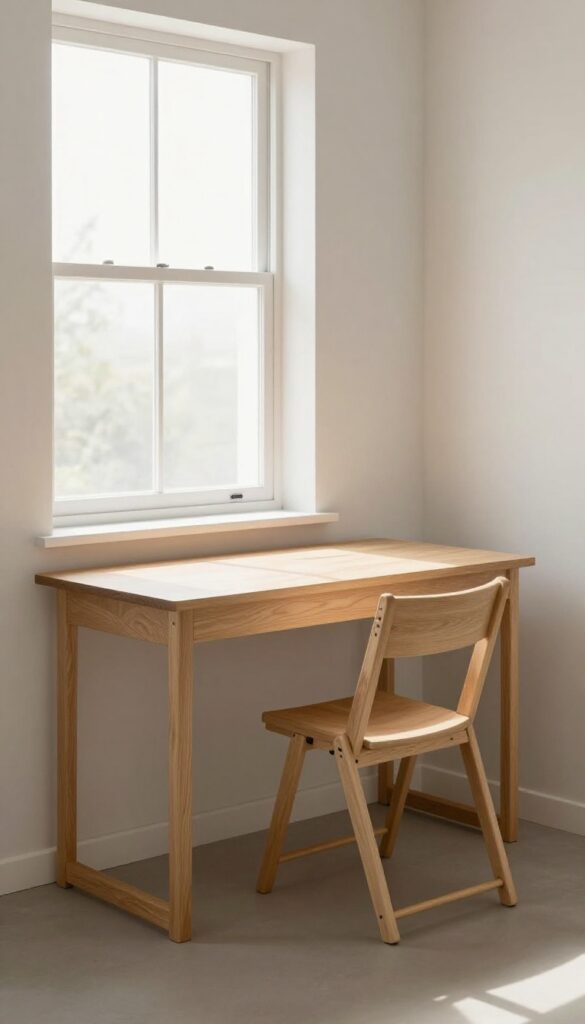
When your living room doubles as a home office, every inch counts. A wall-mounted desk folds down when you need it and tucks away flat when you don't, giving you a work surface without sacrificing precious floor space. It's a clever solution for small apartments or multi-purpose rooms where a permanent desk would feel cluttered.
A wall-mounted desk is the ultimate space-saver for a small living room. It creates a dedicated work zone that disappears when not in use, keeping the room open and flexible. Choose a design with built-in storage, like a small shelf or cubby, to keep essentials within reach but out of sight when folded.
Mount it at a height that works for both sitting and standing, and pair it with a slim, foldable chair or a stool that slides underneath. This setup works especially well in an unused corner or next to a window for natural light.
Best Materials
- Opt for a desk made of solid wood or a wood veneer with a smooth finish—it feels warm and durable. A matte white or light oak finish keeps the look airy and blends with most decor. For a modern edge, try a sleek black metal frame with a wooden top.
- Avoid glossy surfaces that show fingerprints and glare under task lighting.
Layout Tip
- Place the desk on a wall that doesn't interrupt the main traffic flow. A narrow stretch of wall between windows or beside a doorway works well. If your living room is long and narrow, mount the desk on the shorter wall to avoid blocking the path.
- Keep the area around it clear so you can easily pull the desk down and push it back up.
Styling Detail
When the desk is folded down, style the wall above it with a small art piece or a floating shelf to make the area feel intentional. When closed, the desk becomes a clean surface—add a small plant or a decorative tray on top to soften the look. Use a clip-on lamp or a wall sconce for lighting without taking up desk space.
12. Choose a Sofa with Built-in Storage
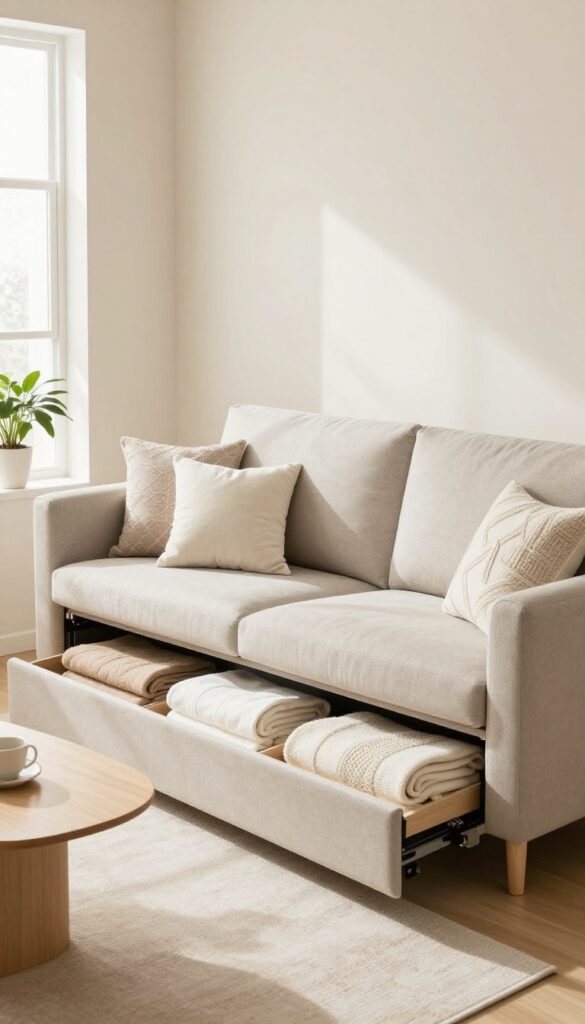
A sofa that doubles as a storage unit is a game-changer for small living rooms. Instead of letting clutter pile up in plain sight, you can tuck away extra blankets, throw pillows, or even seasonal decorations right under the seats. It’s a smart swap that keeps your space looking tidy without sacrificing comfort or style.
When floor space is tight, every square inch counts. A storage sofa lets you hide the things you don’t need every day, freeing up your shelves and cabinets for items you actually want to display. Plus, many modern designs look just as sleek as traditional sofas, so you don’t have to compromise on aesthetics.
Look for models with a clean profile and neutral upholstery to keep the room feeling open.
Best Colors
Stick with light, neutral tones like beige, light gray, or soft taupe. These shades help the sofa blend into the room rather than dominate it. If you want a pop of color, add it through throw pillows or a cozy blanket—items you can easily swap out.
Storage Tip
Use the built-in compartments for items you don’t reach for daily. Store extra linens, off-season decor, or board games. Avoid cramming in everyday essentials, or you’ll end up lifting the cushions more often than you’d like.
Layout Tip
Place the sofa against the longest wall to maximize floor space. If your room is narrow, consider a loveseat with storage instead of a full-sized sofa. It’s easier to move around and still offers plenty of hidden storage.
13. Use a Ladder Shelf for Lean Storage
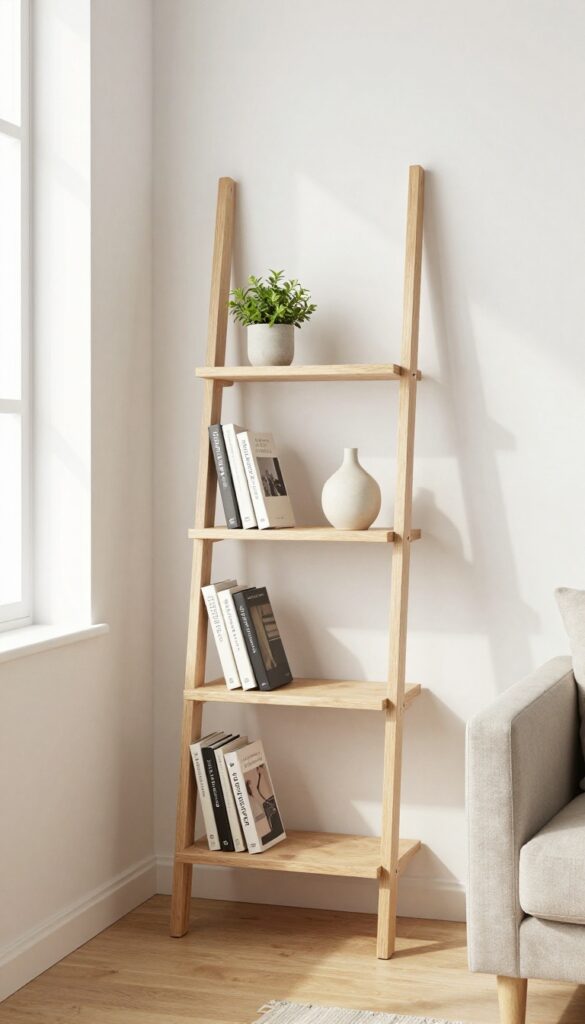
When floor space is tight, look up—or rather, look to the wall. A ladder shelf leans gracefully against the wall, offering both display and storage without the bulk of a traditional bookcase. It keeps the floor plan open while adding a casual, modern touch that feels curated, not cluttered.
Perfect for small living rooms, this piece pulls double duty as storage and decor.
A ladder shelf is one of those rare furniture pieces that actually makes a small room feel bigger. By leaning instead of standing upright, it creates a sense of lightness and airiness. The angled design draws the eye upward, which helps the ceiling feel taller.
And because it doesn't have a solid back or sides, it doesn't block light or views. You can use it to store books, display plants, or corral everyday items like remotes and coasters. The key is to keep the styling intentional—mix a few decorative objects with functional pieces to avoid visual clutter.
Stick to a cohesive color palette, and leave some negative space on each shelf so it doesn't look overloaded.
Best Materials
Look for ladder shelves in natural wood tones like oak, walnut, or bamboo for warmth, or go with black metal for an industrial edge. A light wood finish keeps the room feeling airy, while darker woods add contrast against light walls. Avoid heavy, ornate designs—stick to clean lines and slim profiles.
Styling Tips
- Treat each shelf like a mini vignette. Layer books horizontally and vertically, add a small plant or two, and include a sculptural object like a ceramic vase or a framed photo. Keep the bottom shelf for baskets or bins to hide cords or extra blankets.
- The top shelf should hold something light and visually interesting, like a trailing plant.
Placement Ideas
Place the ladder shelf next to a sofa or in an empty corner. It also works well behind a door or along a narrow wall that can't fit a full bookcase. Make sure it's stable—most models come with wall anchors for safety, especially if you have kids or pets.
FAQ
What is the best layout for a small living room to improve flow?
The best layout keeps pathways clear by placing furniture against walls or using multifunctional pieces. A floating console behind the sofa or nesting tables can help open up the center of the room.
How can I add storage to a small living room without cluttering it?
Use vertical storage like floating shelves or tall corner units. Choose furniture with hidden storage, such as ottomans or sofas with built-in compartments, to keep items out of sight.
What type of coffee table works best in a small living room?
A nesting coffee table set or a storage ottoman works well because they offer flexibility and can be moved or tucked away to free up floor space.
Can I have a workspace in a small living room without sacrificing style?
Yes, a wall-mounted desk that folds down is a great option. It provides a functional workspace and disappears when not in use, keeping the room looking clean.
How do I make a small living room feel larger?
Use light colors, mirrors, and vertical storage to draw the eye upward. Keep furniture low-profile and leave clear pathways to create an open, airy feel.
Conclusion
Opening up a small living room doesn't mean sacrificing storage or style. With these layout ideas, you can create a space that feels larger, moves better, and keeps your essentials organized. Start with one or two changes and see how the room transforms.
Small shifts in furniture placement and storage choices can make a big difference in how your living room lives. Remember, every piece should earn its spot—and help you move through the room with ease.