13 Leather Sofas Living Room Ideas for Timeless Comfort
A leather sofa is one of those pieces that only gets better with age. It starts firm, develops a patina, and becomes the spot everyone fights over during movie night. But styling one without making the room feel like a waiting room takes a little thought.
That's where these ideas come in. Whether your sofa is a deep brown chesterfield or a sleek black sectional, there's a way to make it feel fresh, inviting, and totally you.
We're talking about mixing textures, playing with color, and adding layers that soften the leather without hiding it. From minimalist setups to cozy, layered lounges, these 13 ideas will help you turn your leather sofa into the heart of your living room.
1. Pair with a Chunky Knit Throw
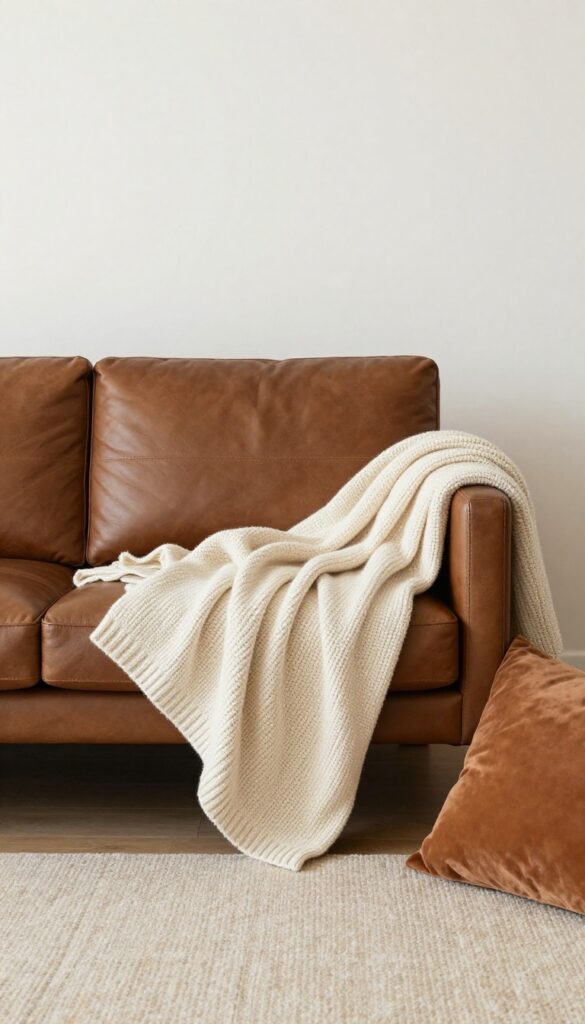
There's something about the combination of smooth leather and a thick, textured knit that just works. It's like the sofa instantly goes from sleek to snug without losing its modern edge. A cream or oatmeal chunky throw draped over one arm softens the whole look and makes the space feel lived-in from day one.
The trick is to let the throw feel effortless—not staged. Drape it loosely over one corner or fold it across the back for a casual, relaxed vibe. The neutral tone keeps things clean and versatile, so you can switch up accent pillows or wall art later without clashing.
This simple addition does double duty: it adds warmth visually and literally, making the leather sofa more inviting on cooler evenings.
Best Colors
Stick with soft neutrals like cream, oatmeal, or light gray. These tones contrast beautifully with darker leathers (think chocolate or charcoal) and blend seamlessly with tan or cognac sofas. Avoid bright colors or busy patterns—the goal is texture contrast, not color clash.
Texture Mix
Pair the chunky knit with other soft textures nearby, like a wool rug or velvet pillows. This layering creates a cozy, curated feel without overwhelming the room. The leather stays as the anchor, while the knit adds that touch of handmade warmth.
Finishing Touch
Fold the throw so it hangs over the arm by about a third of its length. Tuck one corner slightly under the cushion for a relaxed, undone look. It should feel like you just tossed it there, not like you spent ten minutes arranging it.
2. Go Monochrome with Soft Grays
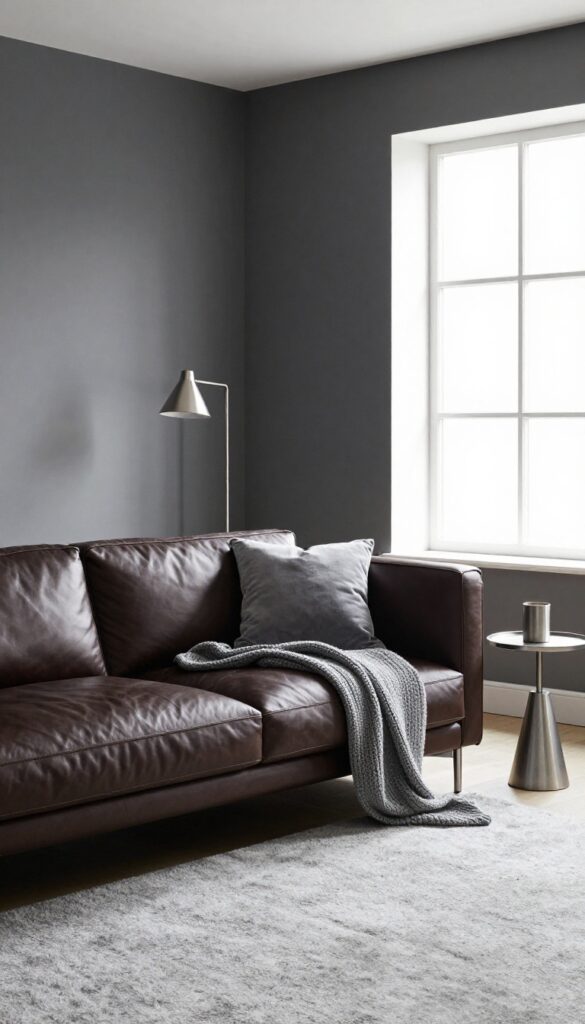
A leather sofa already brings a lot of character, so why not let it shine against a calm, neutral backdrop? A monochrome gray palette does exactly that—quieting the room enough so your sofa becomes the star. Think charcoal walls or a deep gray accent wall, a light gray rug underfoot, and silver or pewter accessories scattered around.
The result is a space that feels pulled-together and serene, without any visual chaos. It's a look that works especially well in modern living rooms, but it can also soften a more traditional setup.
Building a monochrome gray palette around your leather sofa is all about layering shades to create depth. Start with the walls: a deep charcoal or warm gray adds drama and makes a brown or black leather sofa pop. If that feels too bold, try a medium gray on the walls and go lighter on the floor with a plush area rug in pale gray or heather.
Then bring in silver, chrome, or brushed nickel for lamps, side tables, and picture frames. The key is to vary the tones so the room doesn't look flat—mix warm grays with cool ones, and add texture through velvet pillows, a chunky knit throw, or a linen curtain. This palette is forgiving, easy to style, and makes your leather sofa feel intentional rather than just plopped in the room.
Best Gray Tones To Use
- Not all grays are created equal. For a warm, inviting feel, choose grays with brown or beige undertones—like greige or mushroom. If you want a crisper, more modern vibe, go with cool grays that have blue or green hints.
- Stick to two or three shades max: one dark (for walls or a large piece), one mid-tone (for the rug or curtains), and one light (for accessories and smaller furniture). This keeps the look cohesive without feeling monotonous.
Texture Mix For Visual Interest
- A monochrome palette can risk feeling flat if everything is the same finish. Layer in different textures to add life: a chunky cable-knit throw in light gray, a smooth leather sofa (obviously), a wool or sisal rug, and velvet or linen pillows. Metallic accents in silver or brushed nickel break up the matte surfaces and catch the light.
- Even a matte ceramic vase or a glass coffee table can add variety. The goal is a room that feels rich and layered, even though the color range is narrow.
Finishing Touch: Silver Accessories
- Once your gray base is set, silver accessories are the easiest way to pull the look together. Think a sleek floor lamp, a few silver-framed photos on a console, or a metallic tray on the coffee table. Keep it minimal—a couple of well-placed pieces are more effective than a cluttered shelf.
- Silver also echoes the cool tones in the gray palette, creating a subtle shimmer that keeps the room from feeling too heavy.
3. Add a Vintage Rug for Contrast
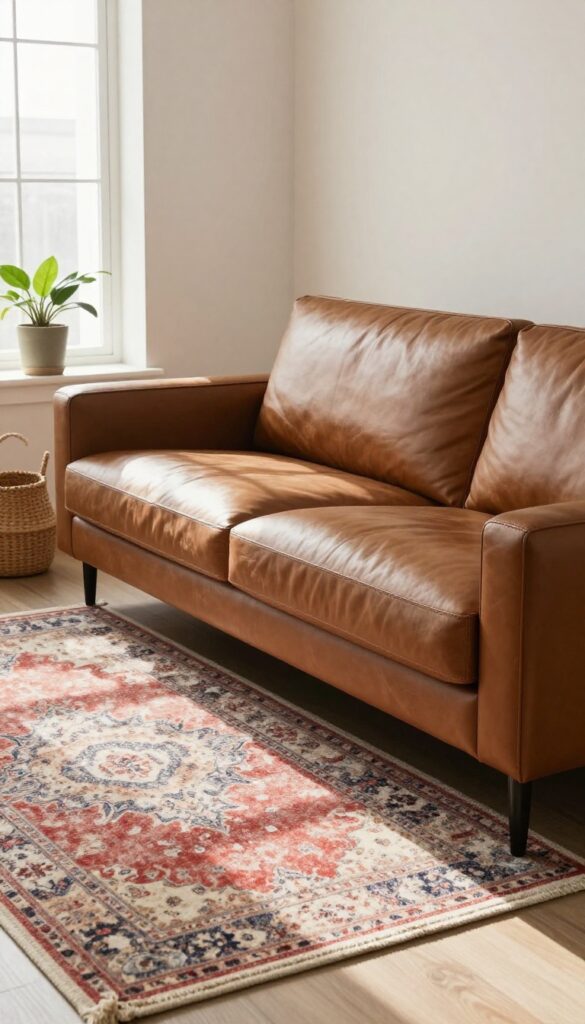
A leather sofa can feel a little one-note if you let it sit on bare floors. That’s where a worn-in vintage rug comes in—its faded colors and soft texture break up the solid expanse of leather and give the room a collected-over-time feel. Think faded reds, dusty blues, or earthy terracottas that add warmth and character underfoot.
The contrast between smooth leather and a rug with visible wear is what makes this pairing work. A vintage rug doesn’t have to be perfect—in fact, the more faded and frayed, the better. It softens the room acoustically and visually, making the leather sofa feel grounded and intentional.
This is an easy way to add personality without buying new furniture.
Best Colors For Contrast
Stick with rugs that have muted, faded tones—think Persian-style patterns in rust, indigo, or sage. These colors complement brown or black leather without clashing. Avoid bright, saturated hues that compete with the sofa’s natural richness.
Size And Placement
Go big enough that the sofa’s front legs sit on the rug, ideally with a few inches extending past each side. For a standard 84-inch sofa, an 8×10 rug works well. This anchors the seating area and makes the room feel larger.
Texture Mix
Layer a flat-weave vintage rug over a larger neutral sisal or jute rug for added depth. The mix of smooth leather, nubby jute, and worn wool creates a rich, tactile look that feels curated and cozy.
4. Mix in Natural Wood Tones
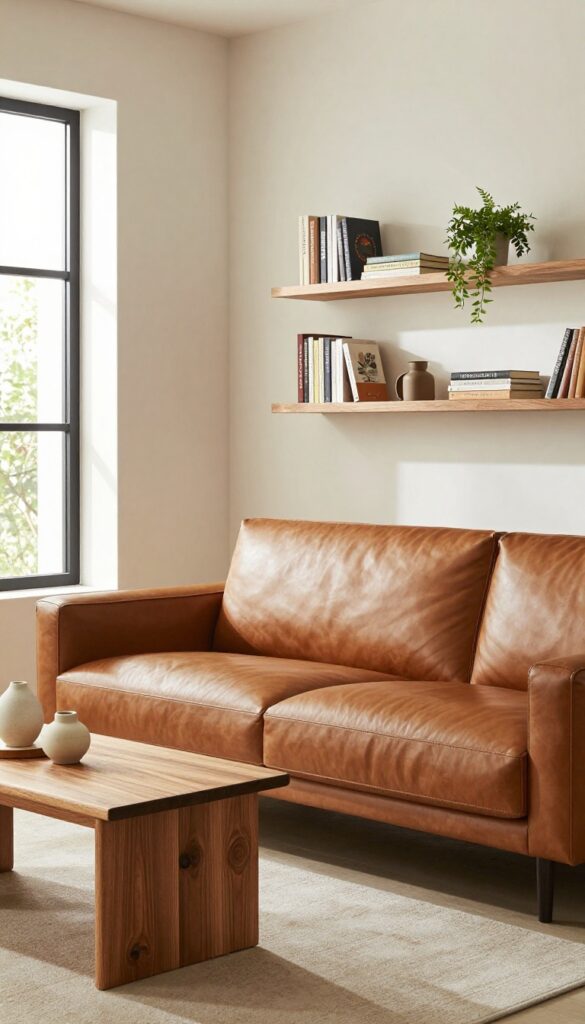
A leather sofa already brings a lot of warmth, but if you lean too heavily into metal or glass accents, the room can start to feel a little cold and modern. That’s where natural wood comes in—it softens the look and adds a layer of organic texture that leather loves. Think of it as balancing the sleekness of leather with something earthy and grounded.
Wood tones like oak, walnut, or teak bring out the richness of leather without competing with it. A chunky wooden coffee table or a set of floating shelves instantly makes the space feel more collected and lived-in. The key is to keep the wood finishes warm but not overly rustic—so you get that cozy, natural vibe without drifting into farmhouse territory.
Best Wood Pairings
- For a modern look, stick with medium to dark woods like walnut or teak. They have enough depth to stand up next to a dark or cognac leather sofa without looking heavy. Lighter woods like oak or ash work better with lighter leathers or when you want a more airy, Scandinavian feel.
- Avoid reddish woods (like cherry) unless you’re going for a traditional look—they can clash with the leather’s undertones.
Where To Add Wood
- Start with a coffee table or a side table—those are the easiest swaps and make the biggest visual impact. Then layer in smaller pieces like a wooden tray on the ottoman or a set of floating shelves above the sofa. If you have a media console, choose one in a natural wood finish rather than glossy white or black.
- The goal is to repeat the wood tone in at least two or three spots so it feels intentional.
Finishing Touch Tip
To keep the look clean and modern, go for wood pieces with simple, straight lines—avoid ornate carvings or heavy distressing. A live-edge coffee table can work if the rest of the room is minimal, but stick to clean silhouettes for a more polished feel. And don’t forget the floor: a natural jute or sisal rug underneath the sofa adds another layer of texture that ties the wood and leather together beautifully.
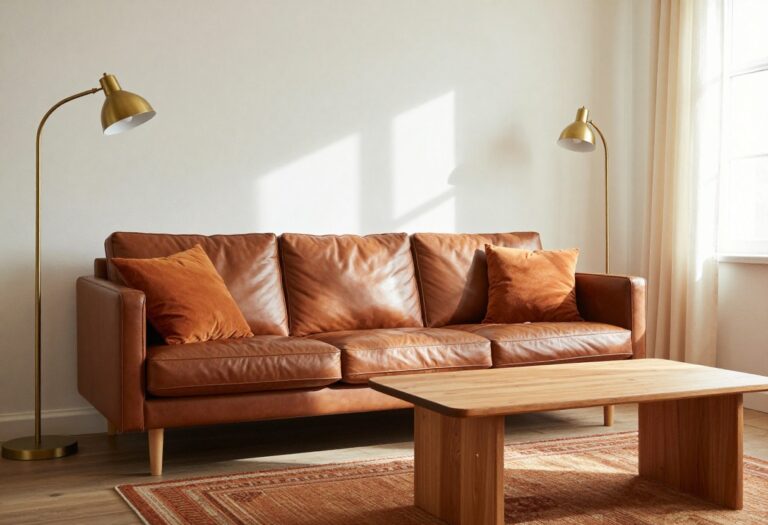
5. Use Floor Lamps for Warm Lighting
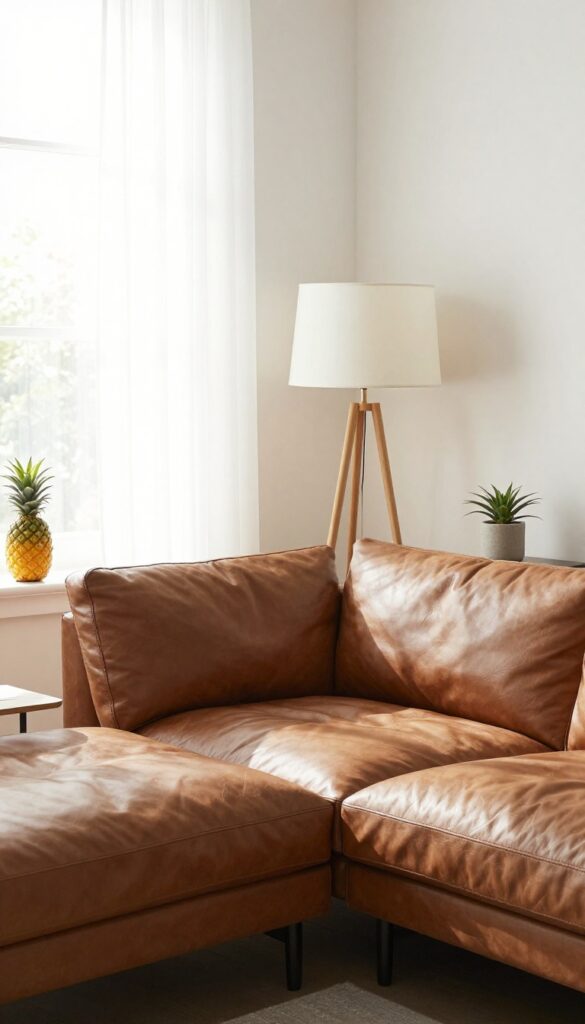
Overhead lighting can make leather sofas look flat or even harsh. The fix is simple: swap that ceiling fixture for a floor lamp placed right next to the sofa. A warm bulb—think 2700K to 3000K—softens the leather’s surface and brings out its natural richness.
It’s an easy change that instantly makes the room feel cozier and more inviting.
Floor lamps do more than just light up a corner—they can be a sculptural statement that adds character to your space. For a modern, clean look, choose a lamp with a slim metal stem and a simple shade. A tripod lamp adds a graphic, architectural feel, while an arc lamp can drape over the sofa for a dramatic yet functional effect.
Position the lamp so the light falls across the seating area, not directly in anyone’s eyes. This creates a soft, ambient glow that makes the leather look richer and more textured. Plus, you can adjust the bulb’s warmth to match the mood—cooler for a fresh daytime feel, warmer for evening relaxation.
Best Lamp Styles
Tripod lamps work well in modern spaces because their three legs add visual interest without clutter. Arc lamps are perfect for floating sofas, as the curved arm extends over the seating area. For a minimalist look, a simple cylinder or dome shade on a straight metal pole keeps things clean and unobtrusive.
Lighting Tip
Always use a dimmable bulb or a lamp with a dimmer switch. This lets you control the intensity—bright for reading or entertaining, low for a cozy movie night. Pair the lamp with a side table or a small plant to anchor the corner and complete the vignette.
Finishing Touch
Place the lamp on a natural fiber rug or next to a textured throw blanket to balance the sleekness of the leather. The contrast between the warm light, soft rug, and smooth leather creates a layered, inviting look that feels both polished and relaxed.
6. Layer with Velvet or Linen Pillows
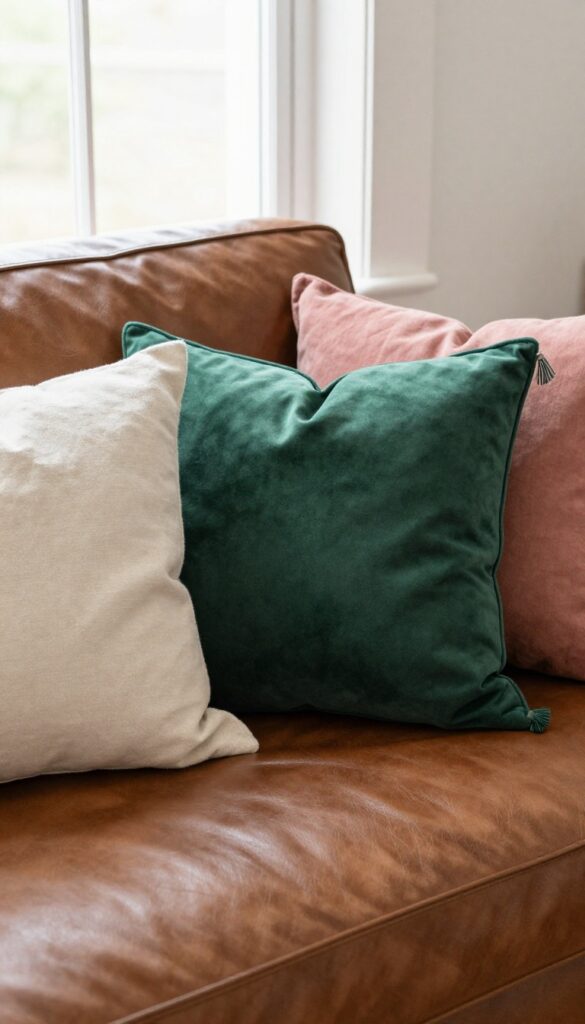
A leather sofa can feel a little one-note if you leave it bare. Throwing on a mix of velvet and linen pillows instantly changes the vibe—it adds softness, color, and personality without covering up that beautiful leather. The key is choosing muted jewel tones like emerald, mustard, or blush, which complement the leather’s natural richness without clashing.
This layering trick makes your sofa feel more inviting and custom, like you spent hours curating the perfect combo (even if it took five minutes).
Start with a couple of larger linen pillows in a neutral or warm tone—think oatmeal, dusty rose, or soft gray. Linen brings a relaxed, breathable texture that keeps the look casual. Then add one or two smaller velvet pillows in deeper shades like emerald green, sapphire blue, or burnt orange.
Velvet’s plush sheen contrasts beautifully with the matte leather and linen, creating visual depth. Don’t overdo it—three to five pillows total is plenty for a standard sofa. Arrange them asymmetrically: place a linen pillow at each end, then tuck a velvet one in the middle or off-center.
This feels effortless and avoids that stiff, showroom look. For a finishing touch, choose pillows with subtle details like tassels, fringe, or a contrasting piped edge to add a bit of character without going overboard.
Best Color Combos
- Stick with muted jewel tones that won’t fight with the leather. For a brown leather sofa, try emerald green and blush pink velvet paired with cream linen. Black leather looks sharp with mustard velvet and charcoal linen.
- For tan or cognac leather, go with navy velvet and warm white linen. The goal is contrast without clashing—keep the undertones consistent (warm with warm, cool with cool).
Texture Mix Tip
- Velvet and linen are a dream team because they balance each other out. Linen is matte and slightly rough, while velvet is glossy and smooth. Add a third texture like a chunky knit throw or a faux fur pillow for extra coziness.
- But don’t go overboard—stick to three textures max so the look stays intentional, not chaotic.
Arrangement Idea
- Skip the symmetrical two-pillow-each-end setup. Instead, place a large linen pillow on one side, a medium velvet on the other, and a small velvet in the center. Or cluster three pillows in one corner for a relaxed, loungey feel.
- This asymmetry makes the sofa look lived-in and approachable, perfect for a modern clean aesthetic.
7. Create a Reading Nook Around It
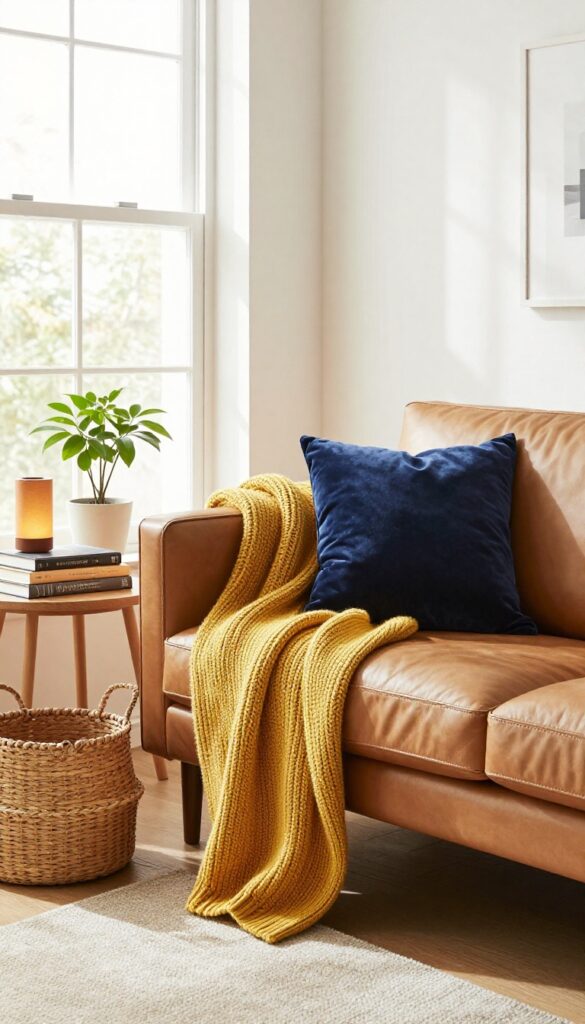
Turn your leather sofa into the heart of a cozy reading corner. By placing it near a window and adding a few thoughtful accessories, you create a dedicated spot for unwinding with a book or a warm drink. This setup feels intentional and inviting without requiring a lot of space or money.
Position the leather sofa near a window to take advantage of natural light. Add a small side table with a lamp and a stack of books. A cozy throw and a floor cushion for your feet make the sofa feel like a personal retreat.
This arrangement works especially well in living rooms with an unused corner or an awkward layout.
Best Colors
Stick with neutral leather tones like tan, cognac, or charcoal to keep the look clean and modern. Add pops of color through the throw and cushion—think mustard, navy, or soft blush. This keeps the space feeling fresh without overwhelming the eye.
Lighting Tip
Choose a slim arc floor lamp or a small table lamp with a warm bulb. Position it so the light falls over the sofa seat, not directly in your eyes. A dimmer switch gives you control over the mood, from bright reading light to soft evening glow.
Finishing Touch
Layer textures to make the nook feel cozy. A chunky knit throw, a velvet cushion, and a woven floor basket for extra blankets add depth. A small plant on the side table brings life and ties the whole look together.
8. Keep It Minimal with Black and White
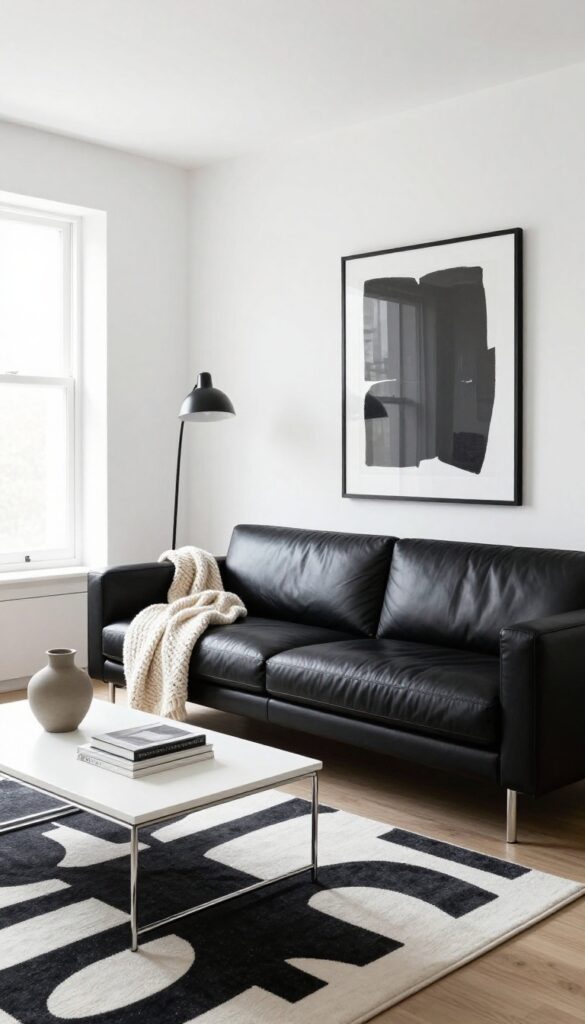
A black leather sofa can feel heavy if the room is too busy. That's where a black-and-white palette comes in—it strips away the clutter and lets the sofa's clean lines do the talking. White walls and a monochrome rug create a crisp backdrop, while a few metallic accents add just enough shine to keep things from feeling flat.
The result is a living room that feels both modern and calming, with the sofa as the undisputed star.
This look works best in spaces with good natural light, because the contrast between dark leather and white walls really pops. Keep accessories minimal—a single black floor lamp, a white coffee table, and perhaps a small stack of books. The goal is to avoid visual noise so the eye rests on the sofa's silhouette.
If you want a touch of warmth, add a textured throw in cream or light gray.
Best Colors
- Stick to a strict black-and-white base. White walls, a black-and-white abstract rug, and a black leather sofa. For accents, use metallics like chrome or brushed nickel—silver tones keep the look cool and sleek.
- Avoid introducing other colors; the whole point is the high-contrast simplicity.
Texture Mix
Even with a limited color palette, you can add depth through texture. Pair the smooth leather with a chunky knit throw, a wool rug, or matte ceramic vases. The variety prevents the room from feeling sterile or one-dimensional.
Finishing Touch
Add a large mirror or a black-framed abstract print on the wall behind the sofa. This reinforces the monochrome scheme and reflects light, making the room feel even more open. Keep the frame simple—no ornate details.
9. Add Greenery for Life
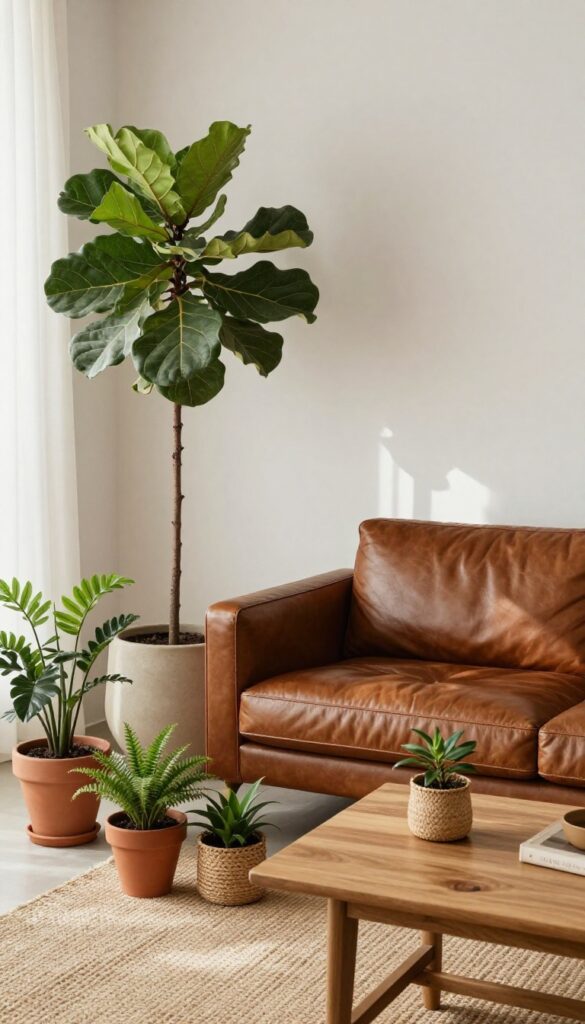
Leather sofas can feel a bit serious on their own. That’s where plants come in. A tall fiddle-leaf fig or a cluster of smaller potted plants placed near the sofa instantly softens the look.
The organic shapes and vibrant green leaves create a beautiful contrast against the smooth, rich leather, making the whole room feel more relaxed and alive.
Plants are the easiest way to breathe life into a leather sofa setup. They add color, texture, and a natural, calming vibe that balances the formality of leather. Whether you go big with a statement plant or group several smaller ones, the effect is fresh and inviting.
Plus, they purify the air and make the space feel more personal.
Best Plant Choices
- Fiddle-leaf figs, monstera, and snake plants are top picks for their sculptural leaves and easy care. If your room gets low light, go with a ZZ plant or pothos. For a softer look, try a fern or a trailing plant like string of pearls on a nearby shelf.
- Stick to plants that thrive in your specific light conditions so they stay healthy and lush.
Placement Tips
- Position a tall plant next to the sofa’s arm to frame the seating area and draw the eye upward. For smaller plants, cluster them on a coffee table, side table, or a low plant stand near the sofa. Vary the heights by using stands or stacked books to create visual interest.
- Keep the pots simple—terra-cotta, matte ceramic, or woven baskets work well with leather.
Finishing Touch
Add a natural fiber rug under the sofa to tie the greenery into the rest of the room. The texture of jute or sisal complements both the leather and the plants, creating a cohesive, grounded look. A few dried branches or eucalyptus stems in a vase can also add a subtle organic touch without the upkeep.
10. Incorporate a Leather Ottoman or Pouf
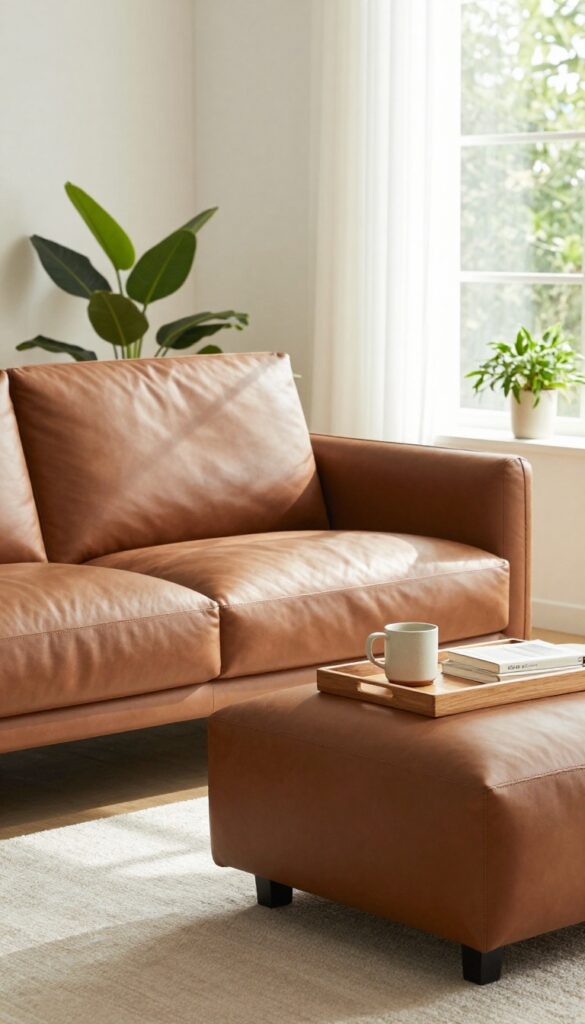
A leather ottoman is one of those pieces that quietly does a lot. It gives you a spot to kick your feet up after a long day, an extra seat when friends are over, and a stable surface for a coffee tray or a stack of books. The best part?
It naturally complements your leather sofa without competing for attention. Whether you match the leather exactly or go for a contrasting shade, the ottoman anchors the seating area and makes the whole setup feel more intentional.
Think of a leather ottoman as the utility player in your living room. It can slide right up to the sofa for a casual footrest, pull away to become a perch for an extra guest, or hold a tray that turns it into a makeshift coffee table. The leather ties it visually to your sofa, creating a cohesive look that feels polished but not overly matched.
If you want a softer contrast, try a suede or nubuck ottoman in a neutral tone like taupe or charcoal. For a bolder statement, go with a color that picks up an accent from your rug or throw pillows. The key is to keep the scale right—an ottoman that's too small will look lost, while one that's too large can overwhelm the sofa.
Aim for about two-thirds the width of your sofa for a balanced proportion.
Best Colors And Finishes
- Stick with leathers that echo your sofa's tone for a seamless look. If your sofa is a warm brown, choose an ottoman in a similar shade or go a few shades lighter for subtle depth. For a black or charcoal sofa, a cognac or rust ottoman adds a nice pop of warmth.
- Distressed leather works well in casual, lived-in spaces, while smooth, matte finishes feel more modern. Avoid glossy or patent leathers—they can look too formal and clash with the relaxed vibe of a living room.
Layout And Styling Tip
- Place the ottoman directly in front of the sofa, about 12 to 18 inches away—close enough to rest your feet but far enough to walk around. Top it with a wooden or woven tray to hold coasters, remotes, or a small plant. This keeps the surface functional and prevents it from becoming a dumping ground.
- If you have a sectional, position the ottoman at the open end to define the seating area and make the layout feel complete.
Small-space Fix
- In a compact living room, an ottoman with hidden storage is a game changer. Look for one with a lift-top or a hinged lid to stash blankets, magazines, or board games. This way you get the flexibility of a footrest and extra seating without sacrificing precious floor space.
- A round ottoman works particularly well in tight spots because it doesn't have sharp corners and feels less bulky.
11. Hang a Large Statement Mirror
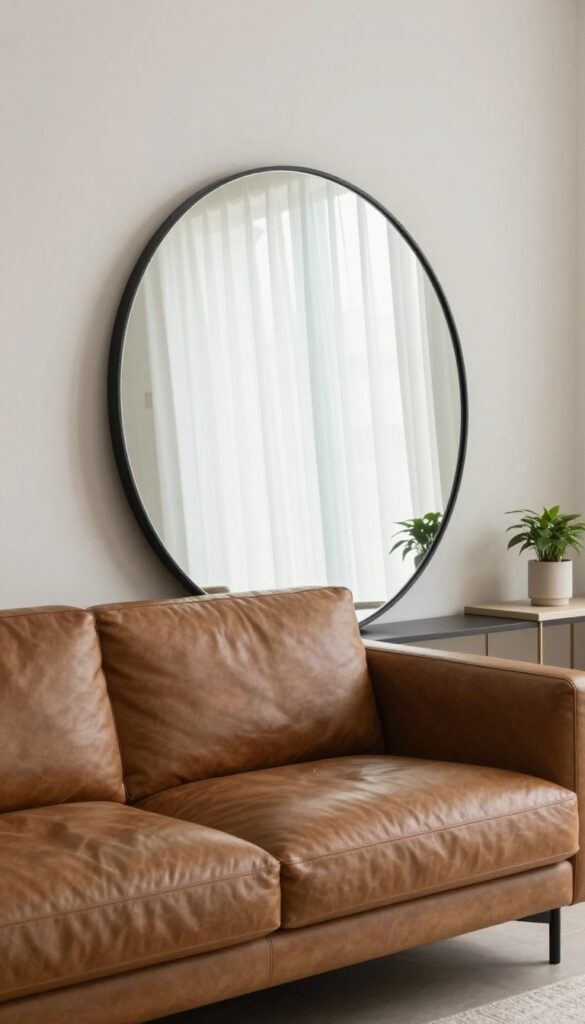
A large mirror does more than just help you check your outfit before heading out. When placed opposite your leather sofa, it becomes a powerful tool for opening up the room, bouncing light around, and making the whole space feel airier. Round or arched mirrors are especially good here—they soften the strong, clean lines of a leather sofa and add a graceful, elegant touch without trying too hard.
Leaning a tall mirror against the wall behind the sofa or hanging one above a console table on the opposite wall creates an instant focal point. The reflection doubles the visual space, which is a lifesaver in smaller living rooms. Plus, the way it catches natural light during the day and lamp light at night makes the leather sofa look even richer and more inviting.
Best Shapes And Frames
- A round mirror with a slim metal frame in black, brass, or bronze pairs beautifully with modern leather sofas. Arch-shaped mirrors lean slightly more traditional but still feel fresh when kept simple. Avoid heavy ornate frames—they can clash with the clean, modern vibe you're going for.
- The goal is to complement the sofa, not compete with it.
Placement And Height
- Hang or lean the mirror so its center is at eye level—roughly 57 to 60 inches from the floor. If you're leaning it, make sure it's stable and slightly tilted back. Opposite the sofa is the classic spot, but even a mirror on an adjacent wall can work wonders if it catches a window's reflection.
- Just avoid placing it where it reflects a cluttered corner or a TV screen.
Finishing Touch
Add a small console table or a low plant shelf beneath the mirror to anchor it visually. A couple of stacked books, a small ceramic vase, or a trailing pothos plant keeps the area from feeling bare. The leather sofa across the room will pick up the reflection, making the whole setup feel intentional and polished.
12. Use a Neutral Color Palette with One Pop
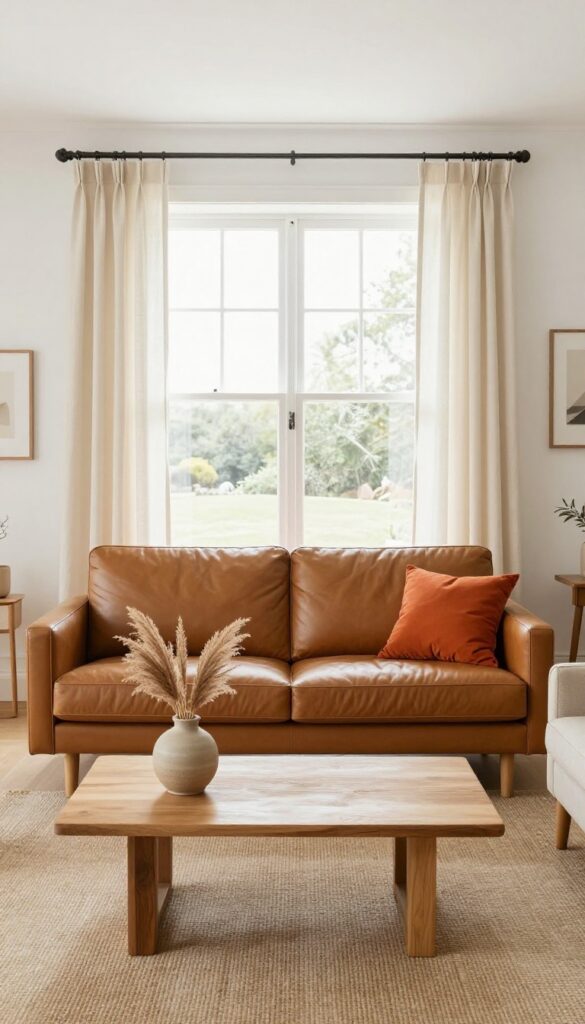
A neutral palette is the ultimate backdrop for a leather sofa, letting its natural texture and rich color take center stage. By keeping walls, rugs, and larger furniture pieces in soft beige, cream, or tan, you create a calm, airy foundation that feels both modern and inviting. Then, instead of adding multiple competing hues, introduce just one bold accent—a deep blue armchair, a burnt orange throw, or a vibrant abstract painting—to create a focal point that energizes the room without overwhelming it.
This approach is especially effective in open-concept spaces, where a single pop of color can define the living area without cluttering the visual flow.
Starting with a neutral base is a smart way to make your leather sofa look timeless and sophisticated. The sofa itself can be a warm cognac, a rich chocolate, or even a creamy white—all of which pair beautifully with beige walls, a jute rug, and linen curtains. The key is to keep everything else quiet and understated so the sofa remains the hero.
Then, choose one accent color that complements the leather's undertones. For a warm brown leather, burnt orange or rust works wonders; for a cool gray or black leather, a deep teal or navy adds a striking contrast. That single pop can appear on a statement armchair, a piece of large-scale artwork, or even a few carefully placed accessories like a ceramic vase or a stack of books.
The result is a pulled-together look that feels intentional and effortlessly chic.
Best Colors For The Pop
- When selecting your one accent color, think about the mood you want to create. For a serene, coastal vibe, go with a soft sage green or a dusty blue. If you prefer warmth and energy, try a terracotta or mustard yellow.
- For a more dramatic, sophisticated feel, a deep burgundy or charcoal can be stunning against a light neutral backdrop. The key is to stick to just one hue—no competing colors—so the pop feels deliberate and powerful. Use it in a single piece of furniture or a large artwork, then echo it subtly in a pillow or a small accessory for cohesion.
Where To Put The Pop
- Place your accent piece where it will naturally draw the eye without competing with the sofa. A bold armchair angled toward the sofa creates a conversation area, while a large painting above a console table adds vertical interest. If you're working with a small space, a single brightly colored ottoman or a floor lamp can do the trick.
- Avoid scattering the accent color across multiple small items, as that can dilute the impact. Instead, commit to one hero piece and let it shine.
Texture Mix To Keep It Interesting
- Even with a neutral palette, texture is your best friend for adding depth. Pair your leather sofa with a chunky knit throw, a velvet pillow, and a woven wool rug. The contrast between smooth leather and soft, nubby textures keeps the space from feeling flat.
- For the accent piece, consider a material that stands out—like a velvet armchair or a glossy ceramic vase—to add another layer of visual richness. This way, the room feels layered and curated, not just monochromatic.
13. Style with a Tray on the Coffee Table
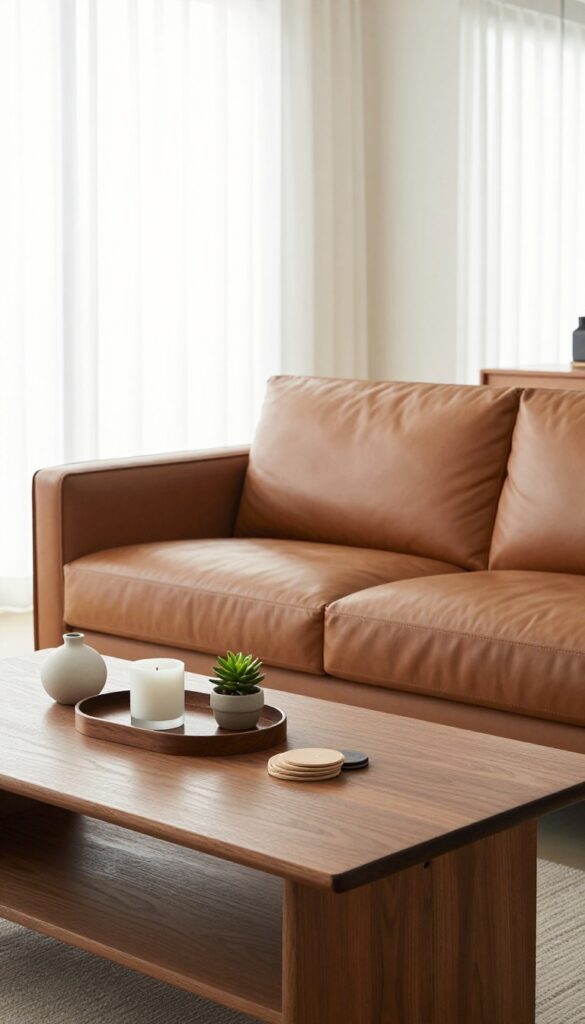
A coffee table tray is one of those little details that makes a big difference. It gives you a defined spot for remotes, coasters, and decor, so the surface stays tidy without looking bare. In front of a leather sofa, a tray adds a layer of polish that balances the ruggedness of the material—keeping the room feeling clean and intentional.
Place a wooden or marble tray on the coffee table in front of the sofa. Arrange a candle, a small plant, and a coaster set on it. The tray corrals clutter and adds a polished finishing touch that complements the leather's durability.
Best Materials
For a modern look, go with a marble or concrete tray. If your leather sofa is warm-toned (like tan or cognac), a dark wood tray adds contrast. For black or gray leather, a light wood or white marble keeps the space airy.
Layout Tip
Center the tray on the coffee table, leaving a few inches of empty space around it. This keeps the arrangement from feeling cramped. If your table is rectangular, place the tray slightly off-center toward one end for a more relaxed vibe.
Finishing Touch
Add a small sculptural object—like a ceramic bud vase or a stack of design books—to one side of the tray. This creates visual balance and makes the setup feel styled, not just functional.
FAQ
How do I make a leather sofa look cozy?
Layer it with soft textiles like chunky knit throws, velvet or linen pillows, and a plush area rug. Warm lighting from floor lamps also helps soften the leather's sleek appearance.
What colors go best with a brown leather sofa?
Earthy tones like cream, olive, rust, and navy work beautifully. For a modern look, pair brown leather with soft grays and whites. Jewel tones like emerald and mustard also add a nice pop.
Can I mix leather with other materials?
Absolutely. Mixing leather with wood, velvet, linen, and wool creates visual interest and prevents the room from feeling one-note. Natural materials like wood and plants especially complement leather.
How do I clean and maintain a leather sofa?
Dust regularly with a soft cloth, and clean spills immediately with a damp cloth. Use a leather conditioner every 6-12 months to keep it supple. Avoid harsh chemicals and direct sunlight to prevent fading.
What style of rug works with a leather sofa?
Vintage or patterned rugs add contrast and soften the leather's formality. For a modern look, go with a low-pile neutral rug. A shag rug can also add cozy texture, but keep it low-profile to avoid overwhelming the space.
Conclusion
A leather sofa is more than just a seat—it's a foundation for your living room's personality. With the right mix of textures, colors, and lighting, it can feel both timeless and fresh, whether your style leans minimalist or layered.
Try a few of these ideas and see what clicks. The best rooms are the ones that feel like you, and a well-styled leather sofa is the perfect place to start building that comfort.