13 Sage Green Living Room Ideas That Bring Muted Natural Charm
Sage green has a way of making a room feel grounded without trying too hard. It’s soft, earthy, and pairs well with almost any style—from modern to farmhouse.
If you’ve been wanting to bring this color into your living room but aren’t sure where to start, these ideas are for you. Each suggestion is designed to be weekend-friendly, meaning you can tackle them without a full renovation.
Whether you’re painting a wall, swapping out pillows, or adding a new plant, small changes can shift the whole mood of the room. Let’s walk through 13 ways to let sage green work its quiet magic in your living space.
1. Paint an Accent Wall Behind the Sofa
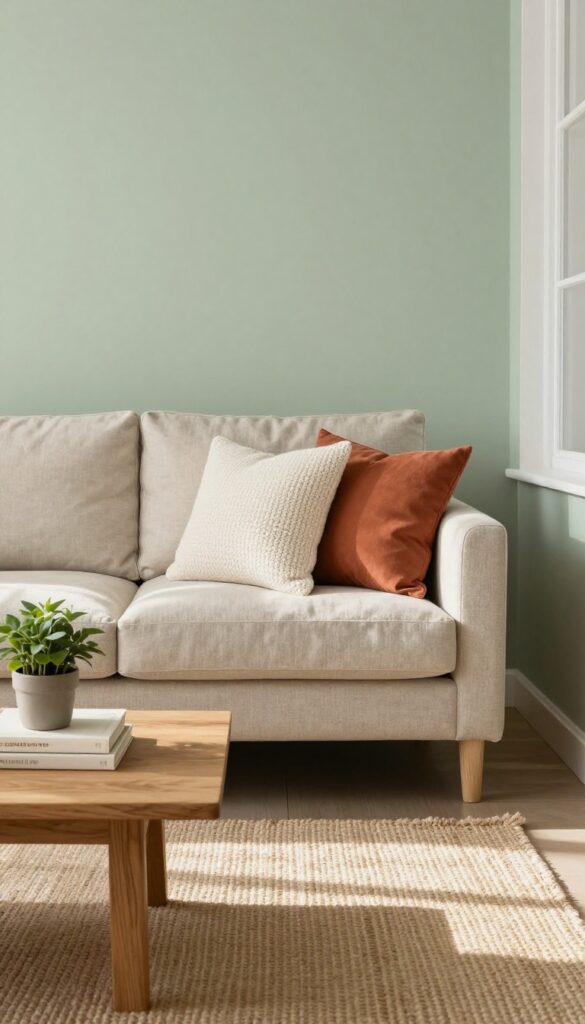
An accent wall is one of the easiest ways to bring sage green into your living room without committing to a full color overhaul. By painting just the wall behind your sofa, you create a grounded focal point that anchors the seating area. The soft, muted green adds depth and a calming backdrop, especially when paired with neutral furniture and warm wood tones.
This approach is perfect for a weekend refresh—minimal effort, maximum impact.
Choose the wall your sofa faces or sits against. A single coat of sage green creates a focal point without overwhelming the room. Pair with neutral furniture and warm wood tones.
The result is a space that feels intentional and serene, with the green acting as a subtle nod to nature without dominating the decor.
Best Colors To Pair
Sage green works beautifully with off-whites, warm beiges, and soft greys. For a bit of contrast, add touches of terracotta or mustard yellow in throw pillows or artwork. The key is to keep the palette earthy and understated so the green remains the star.
Texture Mix
Balance the matte paint finish with varied textures in the room. A chunky knit throw, a linen sofa, and a woven jute rug add visual interest and prevent the wall from feeling flat. Wooden furniture with visible grain brings warmth that complements the green's natural vibe.
Lighting Tip
- Sage green can shift in appearance depending on light. In a north-facing room, it may look cooler and more grey; in a south-facing room, it warms up. Test a sample patch and observe it at different times of day.
- Use warm white bulbs in lamps to keep the green looking inviting.
2. Layer Sage Green Throw Pillows on a Neutral Couch
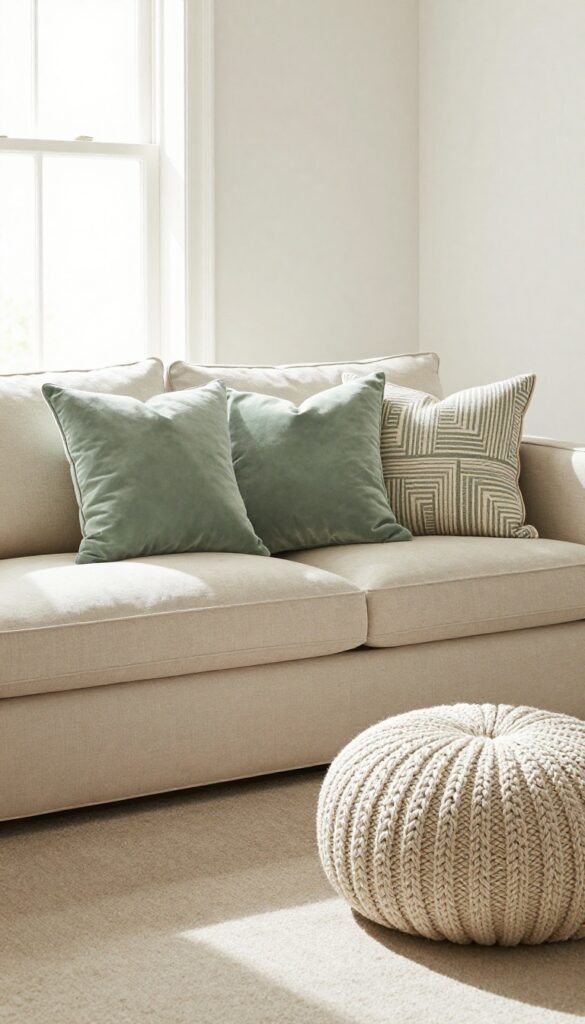
A neutral sofa—white, beige, or gray—is like a blank canvas waiting for a splash of color. Sage green throw pillows are the easiest way to bring that muted natural charm into your living room without committing to a full furniture overhaul. By mixing textures like linen, velvet, and knit, you add depth and coziness that feels intentional, not thrown together.
Start with a base of two or three sage green pillows in different fabrics. A linen pillow gives a relaxed, breathable feel, while velvet adds a touch of luxury. A chunky knit pillow brings warmth and tactile interest.
For a little contrast, add one patterned pillow—maybe a subtle stripe or a geometric print that picks up the sage tone. Keep the couch light so the green really stands out. This is a weekend-refresh kind of upgrade: swap out your current pillows, and the whole room feels updated.
Best Color Pairings
Sage green pairs beautifully with warm neutrals like cream, oatmeal, and taupe. For a bolder look, try a mustard yellow or blush pink accent pillow. Stick to two or three colors total to keep the arrangement cohesive.
Texture Mixing Tips
Combine smooth velvet with nubby linen and soft knit for a rich, layered look. Avoid using all the same fabric—it flattens the visual appeal. A chunky cable-knit pillow in the center adds a cozy focal point.
Placement And Arrangement
On a standard three-seater couch, place two sage pillows at each end and one patterned pillow in the middle. For a loveseat, two pillows are enough—one solid sage and one patterned. Fluff them regularly to keep them looking inviting.
3. Add a Sage Green Area Rug Under the Coffee Table
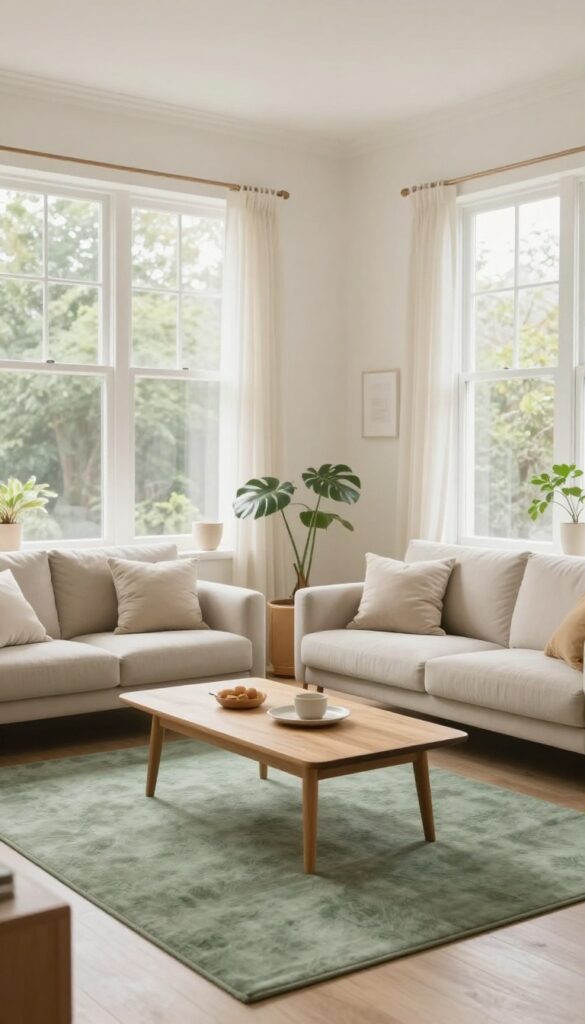
An area rug does more than just cover the floor—it defines the whole seating zone. A sage green rug under the coffee table brings that muted, earthy tone right into the center of the room, making the space feel grounded and intentional. It’s a simple swap that instantly softens hard floors and adds a layer of cozy texture without overwhelming the rest of your decor.
A low-pile or woven rug in sage green anchors the seating area. Choose a subtle pattern or solid color. It softens hard floors and ties the room together.
This is one of those weekend-refresh moves that takes minimal effort but changes the entire feel of the room. The rug becomes the visual anchor, pulling the sofa, coffee table, and accent chairs into a cohesive arrangement. Plus, it’s a practical choice—it hides dirt well and feels soft underfoot.
Best Rug Materials
- For a low-maintenance, family-friendly option, go with a low-pile wool or polypropylene rug. Wool is naturally stain-resistant and feels luxurious, while polypropylene is budget-friendly and easy to clean. If you want a more relaxed, boho vibe, a flat-weave cotton or jute rug with sage green stripes works beautifully.
- Just keep in mind that natural fibers like jute can be rougher underfoot, so pair them with a rug pad for extra cushioning.
Size And Placement
- The rug should be large enough that the front legs of your sofa and any accent chairs sit on it. For a standard living room, an 8×10 or 6×9 rug works well. Center the coffee table on the rug, leaving about 12 to 18 inches of rug visible around the table.
- This creates a balanced, intentional look and keeps the seating area feeling connected.
Styling The Rest
- Once the rug is down, pull the sage green into other elements for a cohesive feel. Add a couple of sage green throw pillows on the sofa, or place a ceramic vase in a similar hue on the coffee table. Stick with neutral furniture—cream, beige, or light wood—so the rug remains the star.
- A few warm-toned accessories like brass or rattan will complement the green without clashing.
4. Hang Sage Green Curtains for Soft Framing
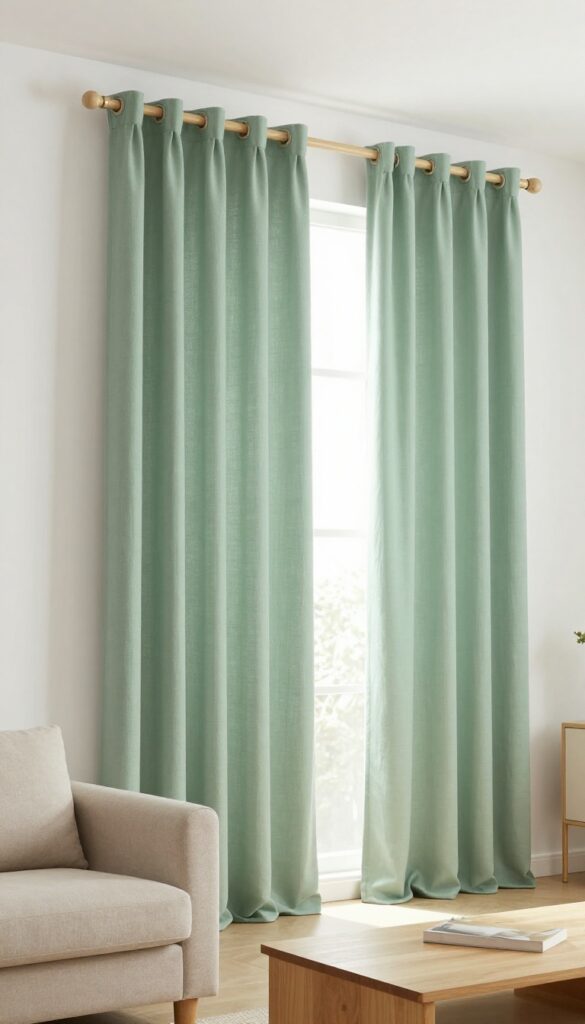
Curtains do more than cover windows—they frame the room and set the mood. Floor-length sage green panels add a quiet, grounded presence that softens natural light and makes walls feel warmer. Linen or cotton in a muted sage keeps the look airy and natural, not heavy or formal.
It's an easy weekend swap that instantly makes the room feel more pulled together.
Sage green curtains work especially well in living rooms with white or light neutral walls. The contrast is gentle but noticeable, adding depth without overwhelming the space. Choose a fabric with a bit of texture—like a slub linen or a brushed cotton—to catch the light differently throughout the day.
Hang the rod as high and wide as possible to make windows look larger and the ceiling feel higher. Full-length panels that just kiss the floor create a polished, intentional look. For a casual vibe, let the fabric pool slightly.
Pair with wooden or brass curtain rods to keep the natural theme going. The result is a soft, enveloping feel that makes the room cozy without closing it in.
Best Fabric Choices
- Linen is the top pick for that relaxed, lived-in look. It breathes well, filters sunlight beautifully, and develops character over time. Cotton is a close second—smoother, easier to clean, and often more budget-friendly.
- Avoid heavy velvet or blackout linings if you want the sage tone to stay muted and light. A medium-weight fabric with a slight weave gives the best balance of privacy and softness.
Hanging Tip For Maximum Impact
- Mount the curtain rod close to the ceiling, about 4 to 6 inches above the window frame, and extend it 6 to 12 inches past the window on each side. This trick makes the window feel wider and the room taller. Use rings or clips for an easy, casual drape.
- If you're renting, tension rods inside the frame work too—just go for a slightly shorter curtain that ends at the sill for a modern cafe look.
Styling The Rest Of The Window
- Keep the window treatment simple—no heavy valances or fussy tiebacks. Let the sage green be the star. Add a natural woven shade underneath for extra texture and light control.
- Or layer with sheer white panels behind the sage for a soft, diffused glow. Finish with a small potted plant on the sill or a ceramic vase to echo the earthy tones.
5. Incorporate a Sage Green Velvet Armchair
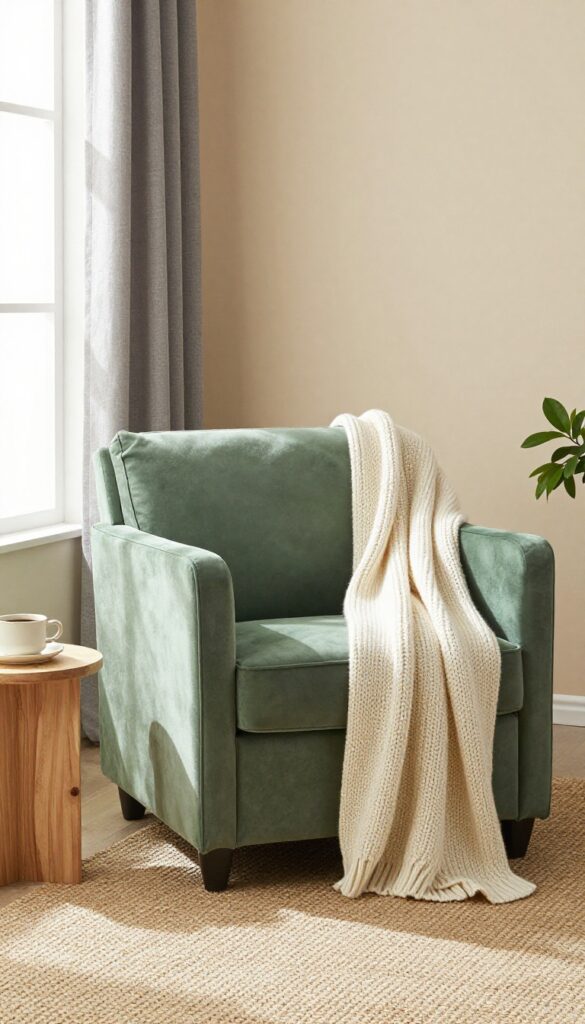
A single accent chair in sage green velvet can transform an empty corner into a cozy reading nook. The soft, plush texture adds warmth and richness without overpowering the room. Place it near a window for natural light or next to a floor lamp for a dedicated spot to unwind.
This idea works especially well in living rooms that need a small focal point or a pop of color. The velvet material catches light beautifully, creating a subtle sheen that feels luxurious yet approachable. Pair it with natural textures like a wool throw or a jute rug to keep the look grounded and inviting.
It's a weekend-friendly update that instantly elevates the room's comfort level.
Best Colors To Pair
Stick with neutral companions like warm beige, creamy white, or soft gray to let the sage green stand out. For a bolder contrast, try mustard yellow or dusty rose throw pillows. Avoid cool blues or stark whites, which can clash with the muted green tone.
Placement Tip
Position the chair at a slight angle toward the center of the room rather than flush against the wall. This creates a more inviting, conversational feel. Add a small side table for a coffee cup or book, and you have an instant relaxation zone.
Texture Mix
Balance the smooth velvet with rougher materials like a chunky knit blanket or a linen cushion. A sisal or wool rug underneath adds tactile contrast and prevents the chair from feeling too formal. This mix keeps the look cozy and lived-in.
6. Style a Sage Green Coffee Table Tray
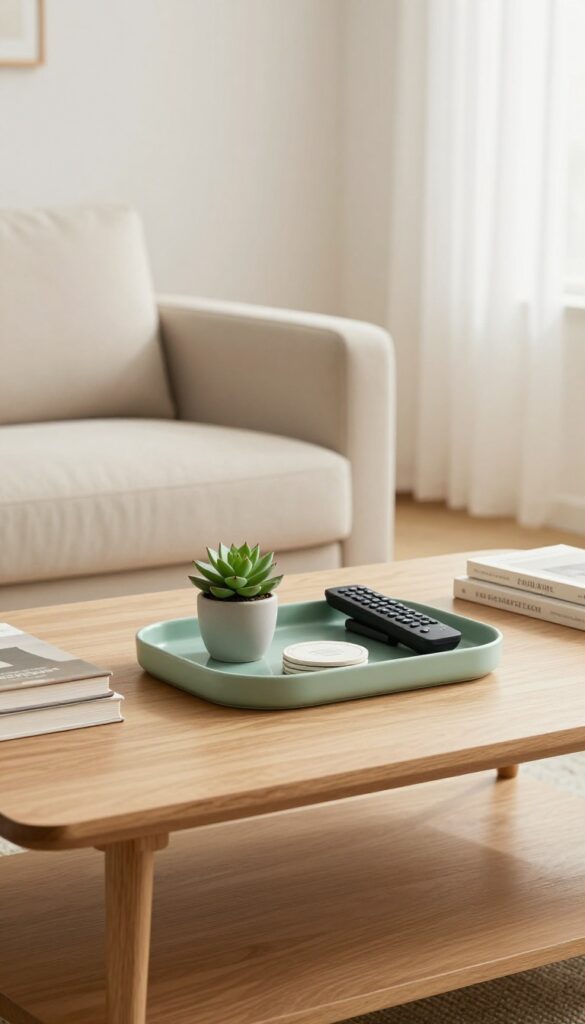
A coffee table tray might seem like a small detail, but it’s one of those pieces that can quietly pull a room together. When you choose one in sage green, it instantly becomes a focal point—a soft anchor for all the little things that tend to scatter across the table. The muted green adds a calm, earthy note without overwhelming the space, making it feel intentional rather than cluttered.
It’s a weekend-refresh kind of upgrade: simple to swap in, but it changes how the whole seating area reads.
Start by clearing your coffee table completely. Then place the sage green tray slightly off-center—toward one end if the table is long, or in the middle if it’s square. Inside the tray, group three to four items: a small potted plant or succulent, a coaster stack, and maybe a remote holder.
Keep the rest of the tabletop bare or add just one more decorative object outside the tray, like a stack of books. The tray’s color should be the main event, so let it breathe. This setup works especially well on light wood or glass tables, where the green really stands out.
For a darker table, choose a tray with a slightly lighter sage tone to keep contrast clear.
Best Materials And Finishes
- A sage green tray can come in several materials—ceramic, lacquered wood, or even velvet-lined metal. For a casual, everyday look, go with a matte ceramic or a painted wood tray. If your living room leans more modern, a glossy lacquered finish adds a subtle sheen.
- Avoid overly ornate trays; clean lines keep the look fresh and uncluttered.
What To Put Inside
- Stick to functional but pretty items. A small air plant or a low succulent works well because it won’t block sightlines. Stack two or three coasters in a neutral tone—white, beige, or natural stone.
- A slim remote holder or a small ceramic dish for keys and rings finishes the grouping. Resist the urge to fill every inch; negative space is your friend here.
Where To Place The Tray
- Position the tray where it’s most useful but still visually balanced. If your coffee table is often used for snacks or work, place the tray at one end so the other side stays clear. For a purely decorative setup, center the tray and surround it with a couple of books or a candle.
- The tray should feel like a natural part of the table, not an afterthought.
7. Display Sage Green Ceramic Vases on Shelves
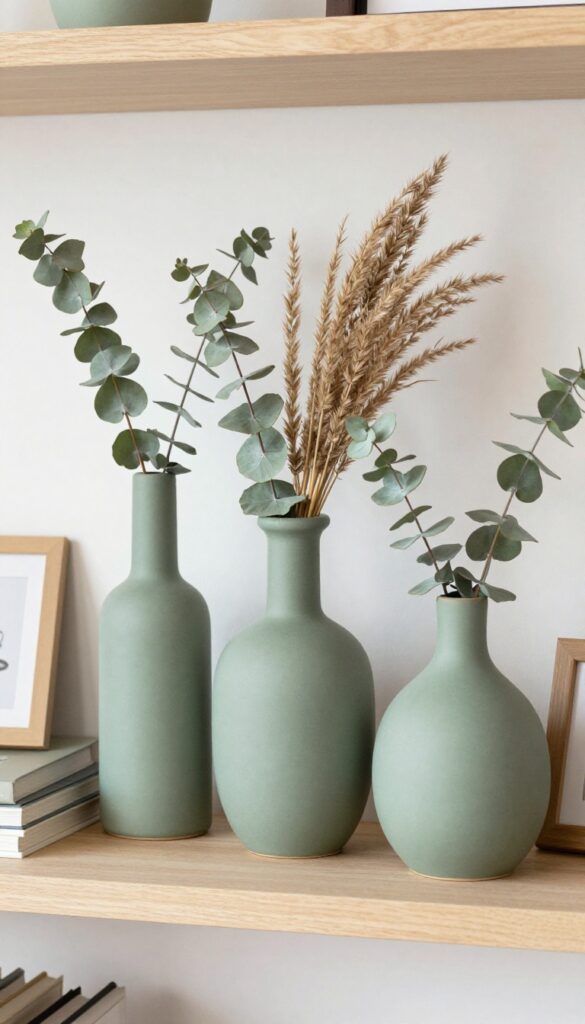
Open shelves give you a chance to play with shape and color, and sage green ceramic vases are an easy way to add that muted earthy tone without committing to a big furniture piece. The matte finish of ceramic feels grounded and modern, while the soft green keeps things calm. Grouping a few vases together creates a collected look that feels intentional but not overstyled.
Start by choosing two or three ceramic vases in slightly different shades of sage—some lighter, some deeper. Place them on a shelf with a bit of breathing room between each. Add dried eucalyptus or pampas grass for texture and height.
The combination of matte ceramic and organic dried stems brings a natural, relaxed feel that fits perfectly with a weekend refresh. Keep the rest of the shelf simple to let the vases stand out.
Best Shapes And Sizes
Mix a tall, slim vase with a round, bulbous one and a small bud vase. This variety in height and silhouette keeps the display interesting. Avoid matching sets—different shapes make the grouping feel curated over time.
Shelf Styling Tip
Place the vases at different depths on the shelf—some pushed back, some forward. This creates layers and shadows that add depth. Pair them with a stack of neutral books or a small framed print for balance.
Budget-Friendly Swap
If you don't have ceramic vases, look for thrifted glass bottles and spray paint them in a matte sage green. It's a quick DIY that gives the same look for less.
8. Paint the Fireplace Surround in Sage Green
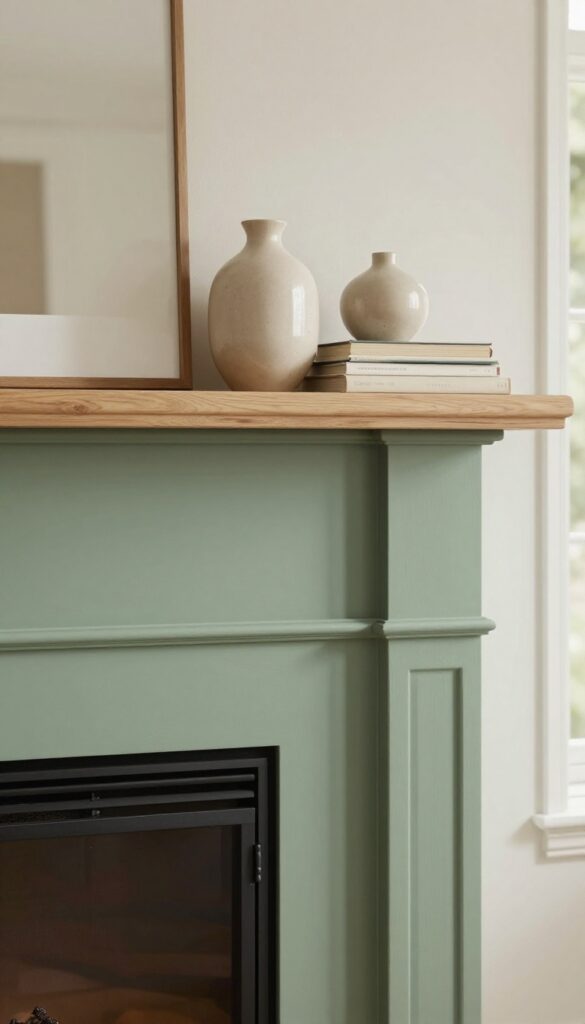
A fireplace often anchors the living room, but if yours is wrapped in outdated brick or tired tile, a coat of sage green paint can change everything. This isn't a full renovation—just a weekend project that makes the surround feel intentional and fresh. The muted green softens the fireplace's presence while still letting it stand out as a focal point.
Keep the mantel natural wood or crisp white to balance the color and maintain that calm, earthy feel.
Painting a fireplace surround sage green works especially well in rooms with neutral walls and warm wood tones. The green adds just enough color without competing with other decor. It's a subtle statement that draws the eye without shouting.
For brick surrounds, use a high-quality masonry paint and a roller for a smooth finish. If your fireplace is tile, lightly sand the surface first so the paint adheres properly. The result is an updated look that feels both grounded and refined.
Best Colors To Pair
Sage green pairs beautifully with warm whites like cream or off-white, natural wood tones, and soft beiges. For a bolder contrast, try deep navy or charcoal on the mantel. Avoid pairing it with bright primary colors or cool grays, which can clash with the green's earthy undertones.
Finishing Touch
Once the paint is dry, style the mantel with simple decor: a few ceramic vases, a stack of books, or a single piece of art. Keep it minimal so the green surround remains the hero. A small plant or dried eucalyptus adds a natural echo of the color.
9. Use Sage Green Storage Baskets
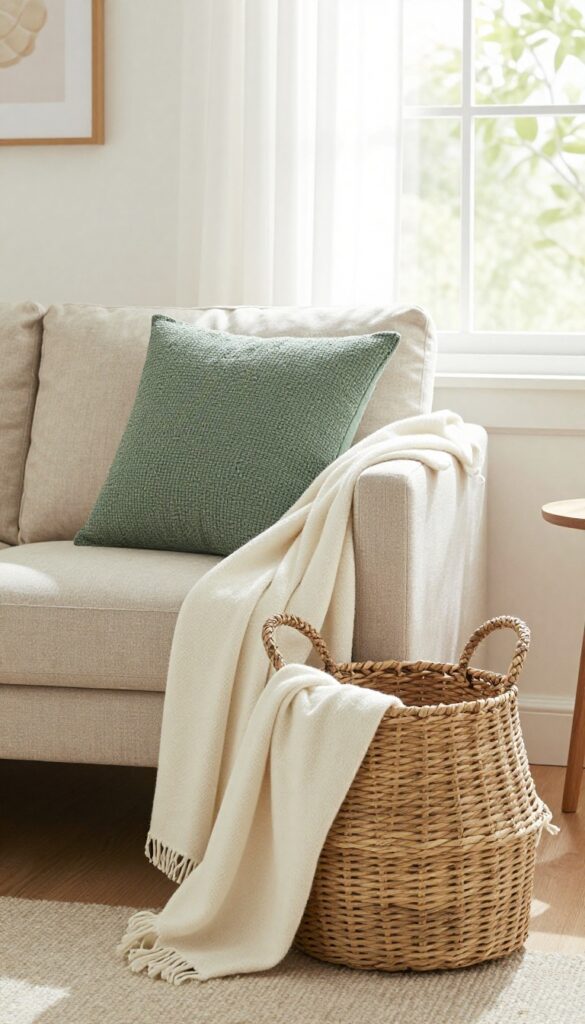
Storage doesn't have to be boring. Woven baskets with sage green accents or dye hide clutter while adding a soft pop of color. Place them under a console table or beside the sofa.
They’re practical and pretty.
Sage green storage baskets are a weekend-refresh friendly way to tidy up your living room without sacrificing style. The muted green tone blends with neutral decor and adds a natural, earthy feel. Use them to store blankets, magazines, or kids' toys.
Their texture—whether seagrass, rattan, or cotton rope—brings warmth and depth to the space. For a cohesive look, choose baskets that echo other sage elements in the room, like pillows or curtains. If you're on a budget, you can even spray-paint plain baskets with sage green fabric paint.
Best Materials
- Natural fibers like seagrass, rattan, or jute work beautifully with sage green accents. These materials add organic texture and complement the muted tone. For a softer look, opt for cotton rope baskets dyed in sage.
- They feel cozy and are gentle on delicate items.
Where To Place Them
Slide a pair of baskets under a console table in the entryway or living room to catch shoes and throws. A single large basket beside the sofa works for extra blankets. In a small space, use a stack of smaller baskets on open shelving to hide remotes and chargers.
Budget-Friendly Swap
If you already have plain baskets, give them a sage green makeover with fabric spray paint or a dip-dye technique. It’s an easy weekend project that costs under $15 and instantly refreshes your decor.
10. Hang Sage Green Artwork or Prints
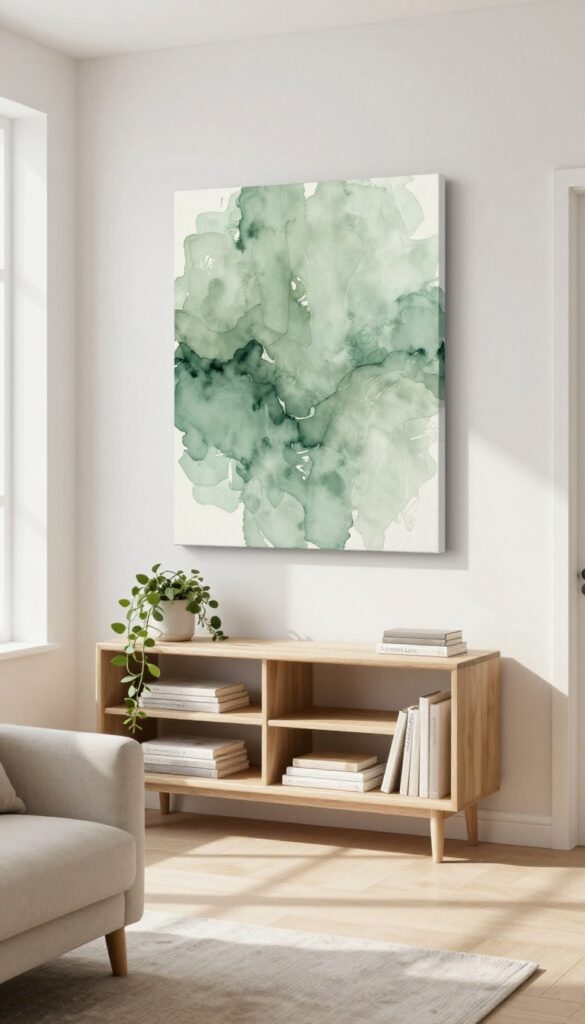
Artwork is one of the easiest ways to introduce sage green without committing to a full paint job. Abstract watercolors or botanical prints in muted greens add a soft, natural focal point that feels curated, not chaotic. The key is choosing pieces that echo the same earthy undertones so the wall feels intentional.
A single large print can anchor a sofa or console table, while a gallery wall of mixed greens creates a layered, collected look. Stick with light wood or black frames to keep the focus on the art. This idea works in any room—living rooms, bedrooms, even entryways—and it's a weekend project that instantly refreshes the space.
Best Art Styles
Abstract washes, botanical line drawings, and landscape silhouettes in sage, olive, and soft white blend seamlessly. Avoid overly bright or saturated greens—stick to muted, dusty tones for that calm, natural feel.
Gallery Wall Layout
Mix frame sizes and orientations, but keep the color palette consistent. Start with the largest piece slightly off-center, then build outward. Leave 2–3 inches between frames for a clean, airy look.
Finishing Touch
Add a small shelf below the artwork to lean a few smaller prints or a trailing plant. This breaks up the wall and adds depth without extra holes in the wall.
11. Add a Sage Green Throw Blanket Over the Couch
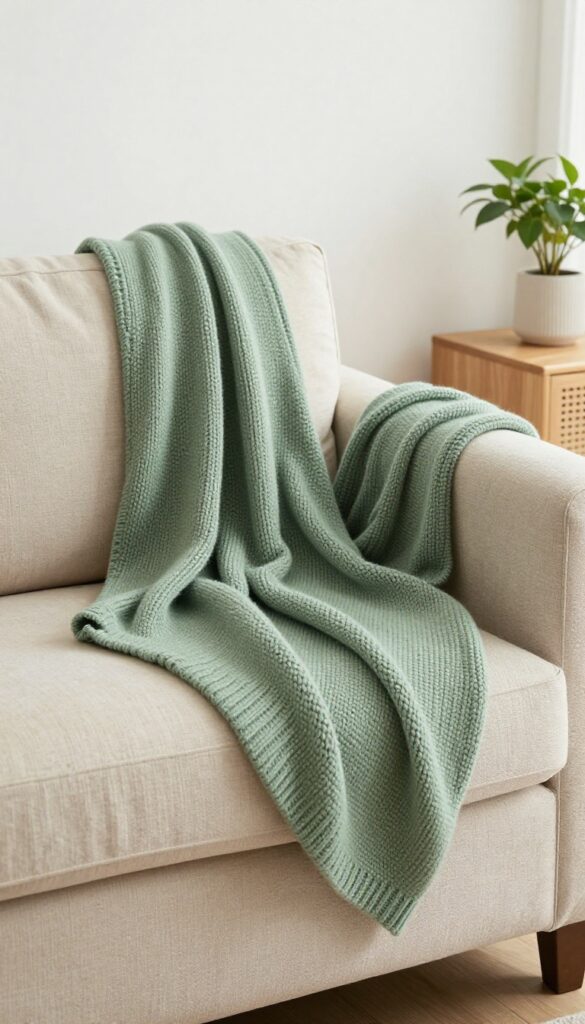
A throw blanket might be the easiest refresh you can give your living room. Drape a chunky knit or soft woven throw in sage green over the arm or back of your sofa, and the whole space instantly feels more inviting. It's a low-commitment way to test the color—no painting or upholstery required—and you can swap it out seasonally if you want a change.
Sage green throws work with almost any sofa color. On a neutral beige or gray couch, the green adds a soft pop of earthy color. On a white sofa, it creates a clean, calming contrast.
Even on a darker navy or charcoal couch, a sage throw lightens the mood and brings in a natural element. The key is to let it drape casually, not folded perfectly. Toss it over one corner or let it hang over the back for an effortless, lived-in look that still feels intentional.
Best Textures To Look For
- For a cozy feel, go with a chunky knit or cable-knit throw. The thick yarn adds visual weight and warmth, which balances the coolness of sage green. If your room leans modern, a smooth woven cotton or linen blend keeps things crisp.
- Faux fur or fleece throws work well if you want extra softness and a bit of luxury. Avoid anything too shiny or synthetic-looking—sage green looks best with natural, matte textures.
Where To Drape It
- The most natural spot is over the arm of the sofa, especially if you have a corner sectional or a chaise. Drape it so it hangs down about halfway, with a slight fold at the top. Another option is to lay it across the back of the couch, letting the ends fall evenly on both sides.
- This works well if your sofa is against a wall. For a layered look, fold the throw neatly and place it on a nearby ottoman or basket when not in use.
Weekend Refresh Tip
- Since this is a weekend-friendly update, keep it simple. You don't need to rearrange the whole room. Just swap out your current throw for a sage green one and see how it changes the vibe.
- If you want to tie it in further, add a couple of sage green cushions or a small vase with eucalyptus stems on the coffee table. The whole refresh takes about five minutes and costs way less than a new rug or paint job.
12. Incorporate Sage Green in Your Bookshelf Styling
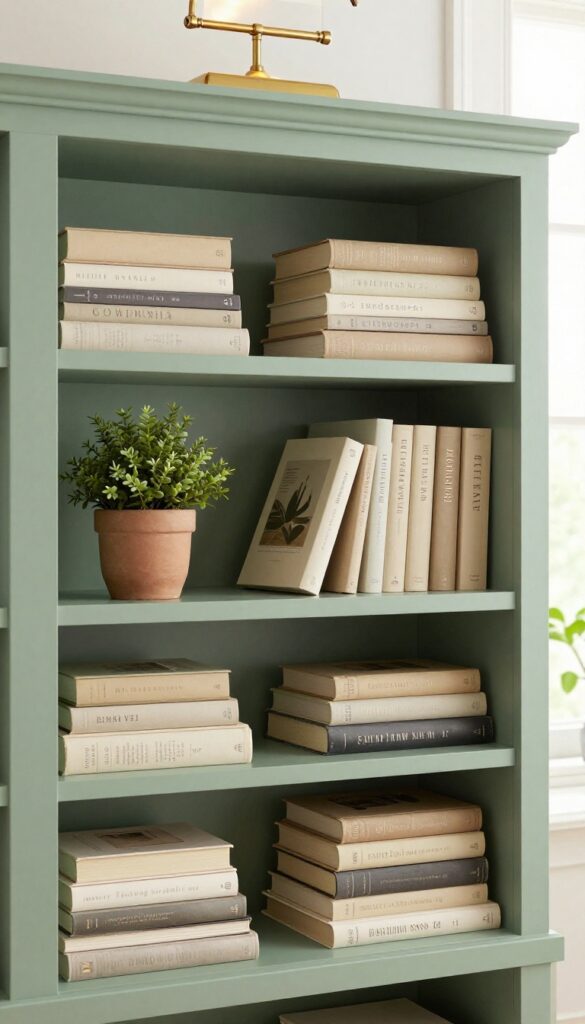
Bookshelves often become a catchall for mismatched items, but a simple coat of paint on the back panel can turn them into a focal point. Sage green adds a soft, earthy backdrop that makes your books and decor pop without overwhelming the room. It’s a weekend-friendly project that instantly gives your shelving a custom, curated feel.
Painting just the back panel of your bookshelf in sage green is a low-commitment way to introduce the color into your living room. The green peeks through between books and decor, creating depth and visual interest. It works especially well on built-ins or standalone bookcases, and the effect is both polished and approachable.
Best Colors To Pair
Sage green pairs beautifully with warm neutrals like cream, beige, and light wood tones. For a bolder contrast, add touches of terracotta or mustard yellow in your book spines or decorative objects. The green also complements white and off-white walls, making the shelf feel like an intentional design moment.
Shelf Styling Tip
Stack some books horizontally and leave a few leaning vertically to vary the visual rhythm. Place a small plant or ceramic vase in front of the green back panel to draw the eye. Keep the arrangement airy—leave a little negative space so the sage color can breathe and act as a backdrop.
Finishing Touch
Add a small reading lamp or a strip of LED lights along the top edge of the shelf to highlight the green panel. The light will cast a warm glow and make the sage color feel even more inviting, especially in the evening.
13. Bring in Live Plants with Sage Green Pots
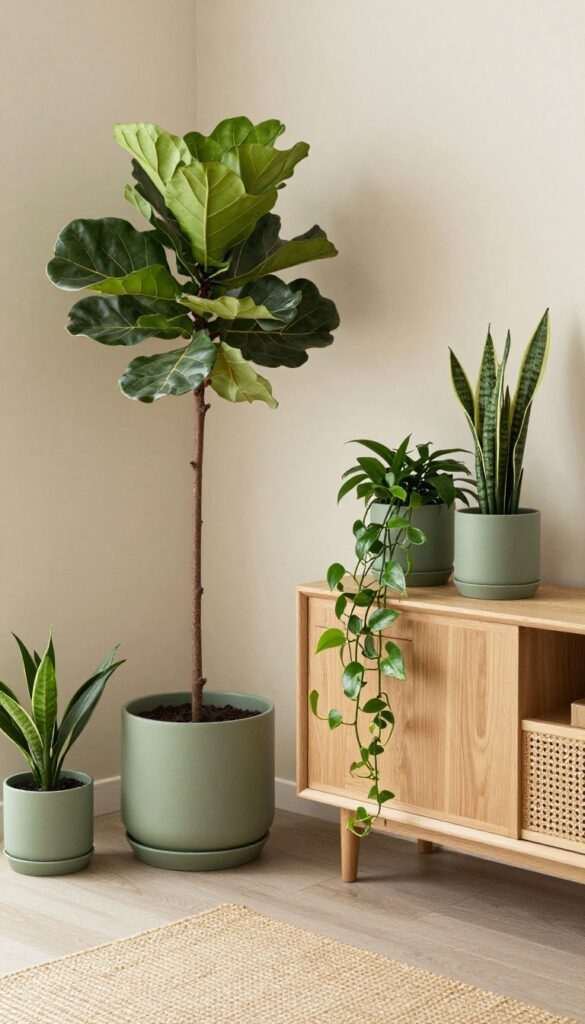
There’s something quietly satisfying about pairing a living plant with a pot that complements its leaves. Sage green pots do exactly that—they echo the natural tones of your fiddle leaf, snake plant, or pothos without stealing the show. The result is a green-on-green look that feels calm, collected, and effortlessly put together.
Grouping several pots at different heights adds visual rhythm, turning a simple plant collection into a living sculpture.
Live plants already bring life and texture to a room, but the right pot can elevate them from basic to intentional. Sage green pots work because they blend with the foliage while providing a subtle contrast against most wall colors. Whether you place them on a console table, a shelf, or the floor, they soften the transition between the plant and its surroundings.
This idea is especially powerful in a living room where you want a natural, grounded feel. Choose pots with a matte finish for a modern touch or a glazed surface for a bit of sheen. Either way, the effect is serene and sophisticated.
Best Plant Choices
- Not every plant shines in a sage green pot, but many do. Fiddle leaf figs and snake plants are top picks because their broad, structured leaves stand out against the muted pot color. Pothos and trailing philodendrons also work well—the cascading vines create a soft, organic look.
- For a taller statement, try a rubber tree or a monstera. Stick to plants with deep green or variegated leaves; avoid plants with bright flowers that might clash with the subtle tone.
Styling Tip: Vary Heights
- To make your plant display feel curated, group three pots at different heights. Use a tall floor pot, a medium stand, and a small tabletop pot. Place them near a window or in a corner where they can catch natural light.
- The varying levels draw the eye upward and add dimension to the room. You can also mix in a few neutral or terracotta pots for contrast, but keep the majority sage green to maintain the calming theme.
Finishing Touch: Pebble Tray
- Add a simple pebble tray beneath your largest pot. Not only does it catch excess water, but it also introduces a natural texture that complements the sage green. Fill a shallow dish with smooth river stones and place the pot on top.
- This small detail reinforces the organic vibe and helps with humidity for plants like ferns or calatheas. It’s a practical, low-cost upgrade that feels intentional.
FAQ
What colors go best with sage green in a living room?
Sage green pairs beautifully with whites, creams, beiges, warm woods, and soft grays. For a bolder look, try mustard yellow, blush pink, or navy blue.
Is sage green a good color for small living rooms?
Yes, sage green is light enough to keep a small room feeling open. Use it on an accent wall or in textiles to add depth without shrinking the space.
How can I add sage green without painting?
Use throw pillows, rugs, curtains, blankets, vases, or artwork. These items are easy to swap and still bring the color into your room.
Does sage green work with gray furniture?
Absolutely. Sage green and gray create a calm, sophisticated palette. Add warm wood or cream accents to keep it from feeling too cool.
What lighting works best with sage green walls?
Warm white or soft yellow lighting complements sage green’s earthy tone. Avoid cool blue light, which can make the green look drab.
Conclusion
Sage green is one of those colors that feels both fresh and timeless. Whether you go all in with an accent wall or start small with a few pillows, it brings a sense of calm that’s hard to beat. The best part?
Most of these ideas can be done over a weekend, so you can enjoy the change right away. Pick the ideas that feel right for your space and style. Even one or two updates can shift the whole energy of your living room.