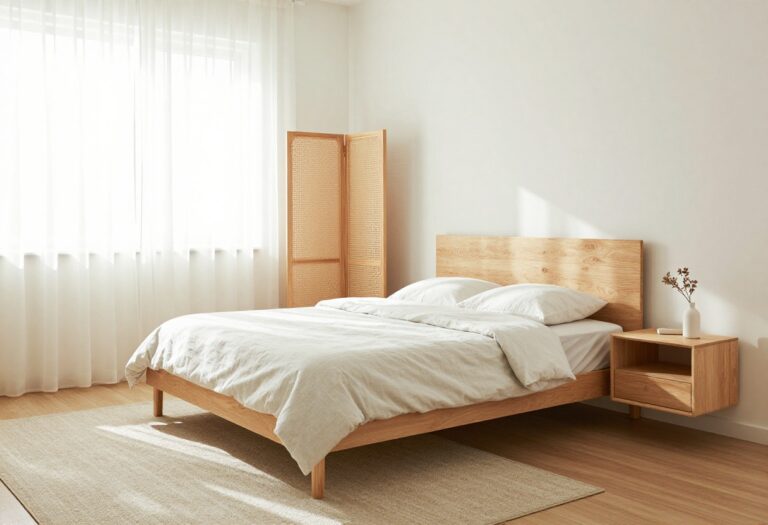
10 Mirrors in Living Room Ideas That Bounce More Light (Small-Space Friendly)
Mirrors are one of the easiest ways to make a small living room feel bigger and brighter. They don't just reflect your decor—they bounce light around the room, making the whole space feel airier.
The trick is knowing where to put them and how to style them so they work with your layout, not against it. Whether you're working with a tiny apartment or a cozy den, the right mirror placement can double your natural light and open up the room.
You don't need a major renovation or expensive fixtures. Just a few smart choices about size, angle, and frame style can transform how your living room looks and feels.
1. Lean a Large Floor Mirror Against a Wall
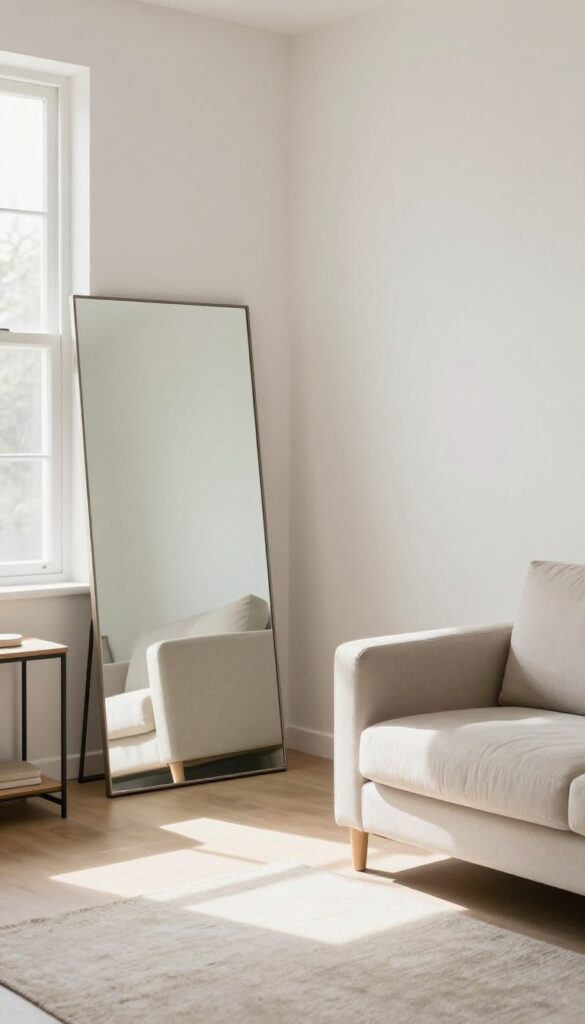
A floor mirror does more than just check your outfit. Leaning one against a wall instantly opens up a room, especially when placed across from a window. The reflection pulls in natural light and spreads it around, making even a small living room feel brighter and more spacious.
Plus, the casual lean keeps things modern and unfussy—no drilling or heavy furniture required.
Start by choosing a mirror that's tall enough to reach at least halfway up your wall. A lean creates a relaxed, almost effortless look that works beautifully in living rooms where you want to keep the vibe airy. Position it opposite your main window to maximize light bounce.
The reflection will double the visual depth of the room, making the ceiling feel higher and the space larger. For a cohesive look, lean the mirror against a wall with minimal clutter so the reflection isn't busy. Pair it with a low-profile sofa or a simple console table to maintain that open feel.
Best Placement
The sweet spot is directly across from a window, but if that's not possible, angle it slightly toward a light source. Avoid placing it where it reflects a cluttered corner or a TV screen—you want the mirror to bounce light, not mess. In a small living room, lean it next to the sofa or behind a side table to create the illusion of more square footage.
Style Pairing
A floor mirror with a thin metal frame keeps the look light and modern, while a wooden frame adds warmth. For a practical touch, choose a mirror with a slight lean-back design—it stays secure without needing to be attached to the wall. Add a soft rug underneath to anchor the mirror and tie the zone together.
Small-space Fix
- In tight rooms, a leaning mirror can double as a visual room divider. Place it between a seating area and a dining nook to define zones without blocking light. The reflection tricks the eye into seeing more space, which is exactly what small apartments need.
- Just make sure the mirror is tall enough to reflect both floor and ceiling for maximum effect.
2. Hang a Mirror Above the Sofa
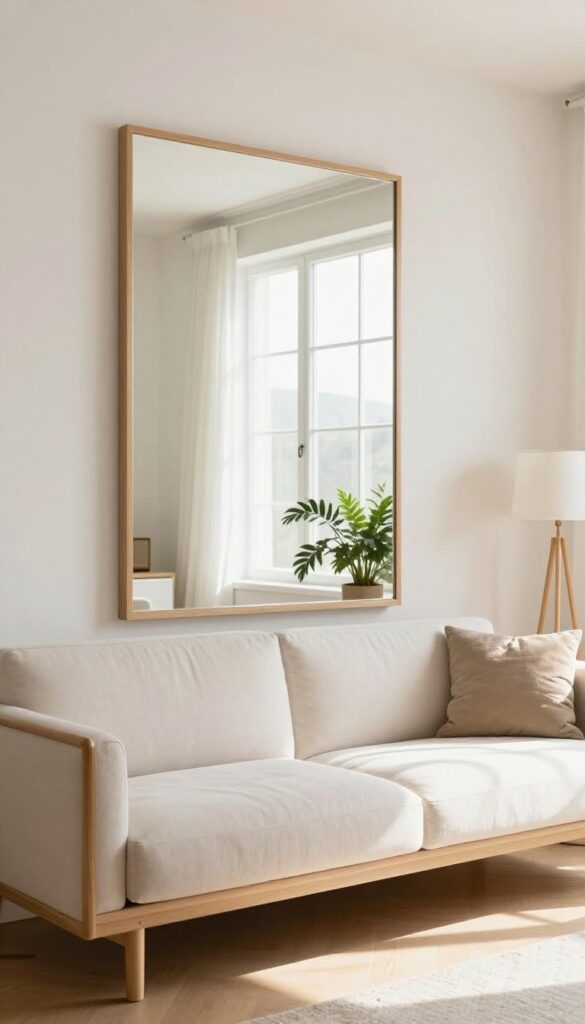
A wide mirror centered above the sofa is one of the smartest ways to instantly make a living room feel bigger and brighter. It catches light from nearby windows and throws it back into the room, which is especially helpful in smaller spaces or rooms that don't get a ton of natural light. Plus, it creates a natural focal point that anchors your seating area without adding visual clutter.
Positioning a mirror above the sofa works best when the mirror is roughly two-thirds the width of the sofa for balanced proportions. A slim, minimalist frame keeps the look light and modern, while a slightly arched or round shape can soften all the straight lines in a typical living room. This trick is particularly effective in small living rooms, where every bit of reflected light helps the space feel more open and airy.
Best Frame Styles
For a clean, contemporary look, go with a thin black or metallic frame. If your style leans more traditional, a natural wood frame in a light oak or walnut adds warmth without overpowering the room. Avoid bulky or ornate frames in small spaces—they can make the mirror feel heavy and shrink the visual space instead of expanding it.
Small-space Tip
Hang the mirror so the bottom edge sits about 6 to 8 inches above the back of the sofa. This height ensures the mirror catches light from lamps and windows while keeping the reflection useful rather than just decorative. In a narrow room, a horizontal rectangle mirror helps the wall feel wider, which counteracts the cramped sensation.
Lighting Boost
Pair the mirror with a floor lamp or wall sconce placed nearby. The mirror will double the light output, making the whole seating area feel brighter without adding extra fixtures. For the best effect, position the mirror directly across from a window so it can capture and distribute daylight throughout the afternoon.
3. Use a Mirrored Coffee Table
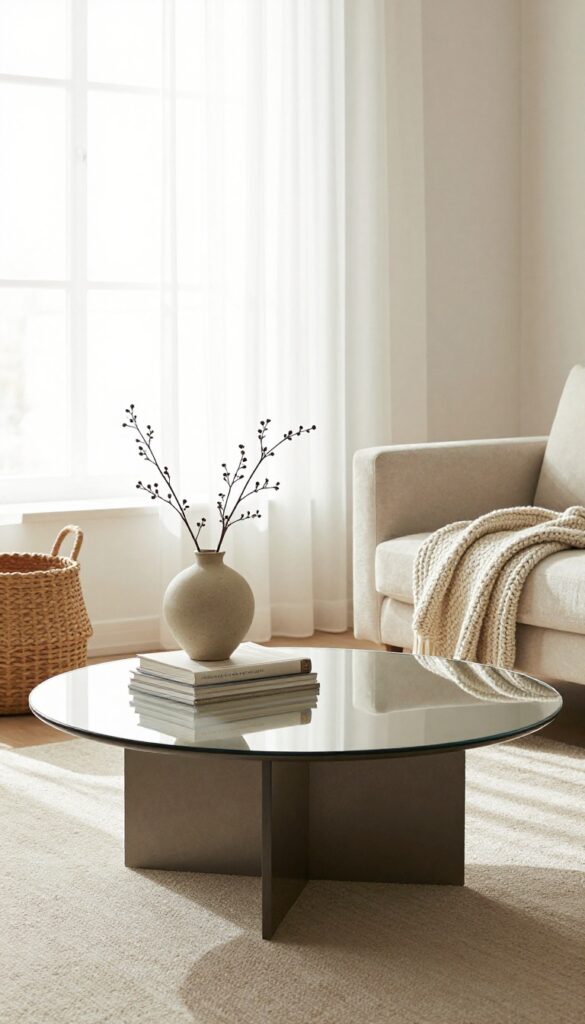
A mirrored coffee table does double duty in a small living room. It reflects light from windows and lamps, making the center of the room feel brighter and more open. Plus, the glassy surface adds a subtle glam factor without overwhelming the space.
It’s a practical choice that feels polished but not fussy.
A mirrored coffee table is one of those pieces that works harder than it looks. The reflective top bounces light upward, which can make a room with limited natural light feel instantly airier. It also creates the illusion of more floor space, since the reflection tricks the eye into seeing a larger area.
For small living rooms, this is a game-changer. The key is balancing the shine with softer textures to keep the room from feeling cold. A chunky knit throw, a woven basket, or a few matte ceramic accessories can add warmth and contrast.
Stick to a simple styling approach—too many reflective items can feel busy. A single stack of books, a small plant, or a sculptural tray is enough to keep the table looking intentional.
Best Shapes For Small Spaces
- Round or oval mirrored coffee tables are especially good for tight layouts. They soften the room’s angles and make it easier to move around. Plus, they eliminate sharp corners that can make a small space feel cramped.
- A round table also encourages better traffic flow, which is crucial in a compact living room.
Styling Without Clutter
- Since the mirrored surface reflects everything, less is more. Avoid piling on too many objects. Instead, choose one or two statement pieces, like a ceramic vase with dried branches or a stack of neutral-toned books.
- Use a small tray to corral remote controls or coasters, so the surface stays tidy and the reflection remains the star.
Pairing With Rugs
- A mirrored coffee table pairs beautifully with a textured rug. The contrast between the sleek, reflective top and a chunky wool or woven rug adds depth. Go for a rug with a low pile to keep the table stable.
- A neutral rug with subtle pattern keeps the focus on the table’s light-bouncing effect.
4. Create a Gallery Wall of Small Mirrors
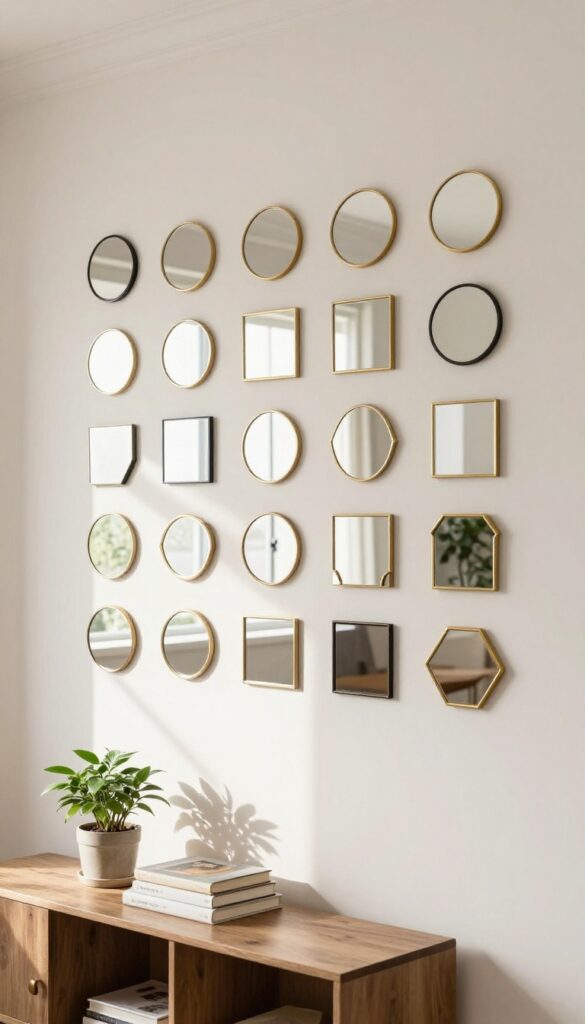
A single large mirror can feel heavy in a small living room, especially if you're working with limited wall space. Grouping several small mirrors together creates a dynamic, airy focal point that bounces light around the room without overwhelming the wall. This approach works beautifully in apartments or cozy homes where every inch counts, and it lets you play with shapes and frames for a custom look that feels collected over time.
Start by gathering an assortment of small mirrors—round, oval, square, even hexagons—in similar or complementary frame finishes. Lay them out on the floor first to experiment with spacing and arrangement before committing to nail holes. Aim for a layout that feels balanced but not perfectly symmetrical; a slightly organic grouping adds character and keeps the eye moving.
Hang them close together (about 2 to 3 inches apart) so they read as one cohesive piece. The scattered reflections will catch light from different angles, making the room feel brighter and more open. This idea is especially effective on a wall opposite a window or near a lamp, where the mirrors can amplify natural and artificial light alike.
Best Shapes And Sizes
Mix round and rectangular mirrors for visual contrast, but keep the sizes within a similar range so no single mirror dominates. A 6-inch round paired with a 5×7 rectangle works well; avoid pairing a tiny 3-inch mirror with a 12-inch one unless you're going for a very deliberate eclectic look. Stick to 4 to 8 mirrors total for a gallery wall that feels intentional without being cluttered.
Small-space Layout Trick
In a tight living room, arrange the mirrors in a vertical column or a narrow rectangle to draw the eye upward and make the ceiling feel higher. This works especially well beside a doorway or between two windows. Use lightweight mirrors with sawtooth hangers so you can adjust easily without damaging the wall.
Finishing Touch With Frames
Unify the gallery wall by choosing frames in the same metal finish—brass, black, or nickel—or go for a mix of natural wood tones for warmth. If your room leans modern, stick with thin black frames; for a bohemian vibe, try rattan or carved wood. The frames are what tie the mirrors together, so keep the palette tight.
5. Place a Mirror Behind a Lamp
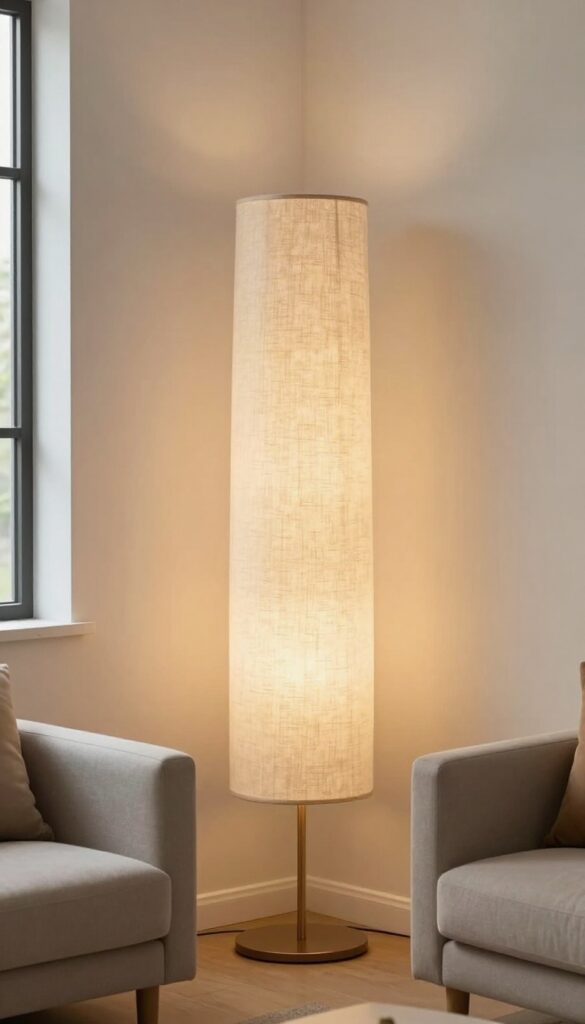
This trick is almost too simple, but it works like magic. By setting a mirror behind a table or floor lamp, you instantly double the light in the room. The reflection creates a warm, layered glow that makes the space feel bigger and cozier—perfect for small living rooms where every ray counts.
The key is positioning. Place the mirror close enough to catch the lamp's glow, but not so close that it creates a harsh hotspot. A floor lamp next to a tall mirror or a table lamp in front of a wall mirror both work beautifully.
The reflected light bounces around the room, softening shadows and making the whole area feel more open. This is especially effective in corners or near seating areas where you want a cozy, inviting ambiance. For small spaces, it's a no-brainer: you get more light without adding extra fixtures or clutter.
Best Lamp Styles
- Choose lamps with translucent or lightly frosted shades—think linen, rice paper, or opal glass. These diffuse light evenly, so the mirror reflection looks soft and warm rather than glaring. Avoid dark or opaque shades that block most of the light.
- A slim arc floor lamp or a classic table lamp with a tapered shade works especially well.
Mirror Shape & Placement
Round or oval mirrors soften the look and echo the lamp's curve, while rectangular mirrors can make the arrangement feel more structured. Place the mirror at the same height as the lamp's shade, or slightly higher, so the reflection captures the light source directly. If the lamp is on a side table, a small leaning mirror behind it adds a casual, layered feel.
Small-space Bonus
- This setup is a dream for tight living rooms. The reflected light tricks the eye into seeing more depth, making the room feel larger. Plus, you don't need to drill holes or add permanent fixtures—just lean a mirror behind a lamp on a console table or bookshelf.
- It's an instant upgrade that takes zero commitment.
6. Install a Mirrored Wall Panel
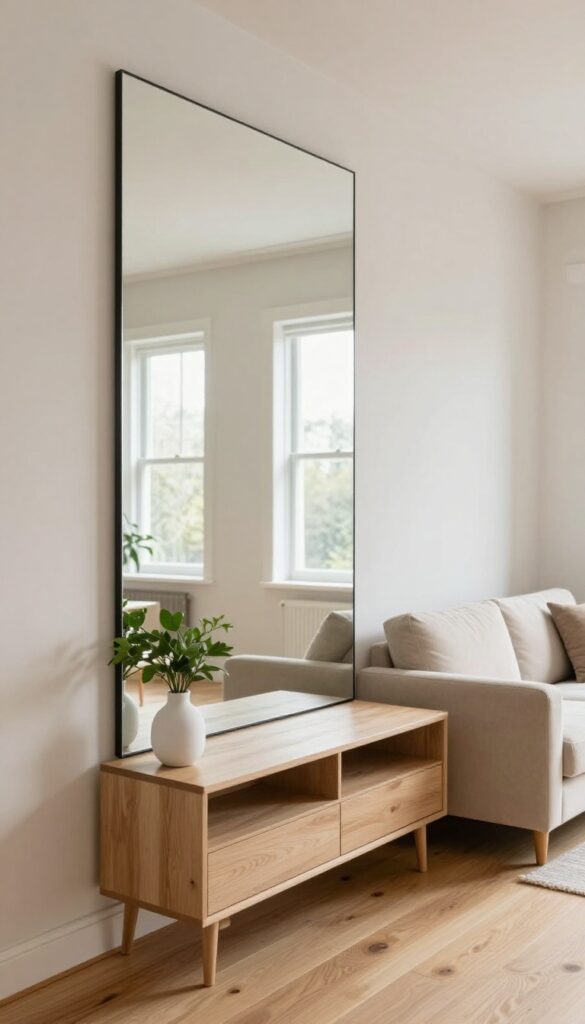
A full-length mirrored panel on a narrow wall makes the room feel twice as wide. It's a sleek, space-saving solution that works especially well in tight layouts. Unlike a collection of smaller mirrors, a single large panel creates a seamless reflection that tricks the eye into seeing more square footage.
Mirrored wall panels are a game-changer for small living rooms. By reflecting both natural and artificial light, they brighten the space without adding a single lamp. The key is placement: install the panel opposite a window to maximize the bounce of daylight.
For a polished look, frame the panel with thin molding or keep it edge-to-edge for a modern, minimalist vibe. This idea pairs beautifully with neutral walls and light-colored furniture, but it can also handle bolder accents like a velvet sofa or patterned rug without feeling busy.
Best Placement
Position the mirrored panel on the wall perpendicular to your main light source. This catches and scatters light across the room, eliminating dark corners. Avoid placing it directly opposite a cluttered area, as the reflection will double the visual noise.
Styling Around It
- Keep the area in front of the panel simple. A slim console table with a single vase or a low plant works well. Too many objects will break up the reflection and reduce the spacious effect.
- Let the mirror be the star.
Budget-Friendly Swap
If a custom panel is out of budget, use large frameless mirror tiles arranged edge to edge. They create a similar effect for a fraction of the cost. Just ensure the seams are as invisible as possible for a continuous look.
7. Angle a Mirror Toward a Window
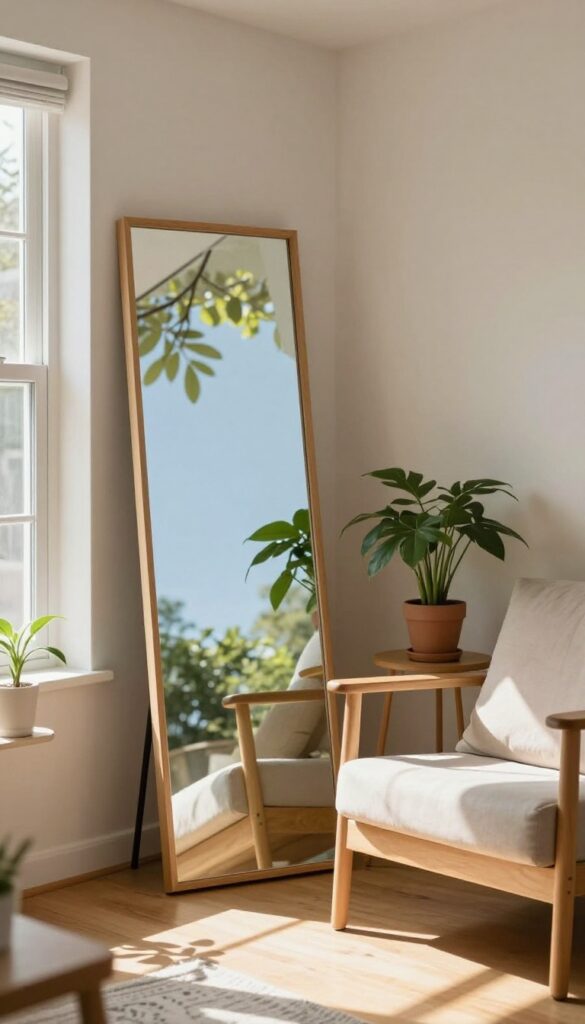
Not every living room gets direct sunlight all day. Sometimes the only window is off to the side, leaving a whole corner feeling dim. That’s where a cleverly angled mirror comes in.
Instead of hanging it flat against the wall, tilt it slightly toward the window—downward or sideways—to catch and redirect daylight deeper into the room. This simple trick can make a small or awkwardly shaped space feel brighter and more open without adding a single lamp.
Tilting a mirror toward a window is one of those low-effort, high-impact moves that designers swear by. It works especially well in rooms where the window isn’t centered or is partially blocked by furniture. By angling the mirror, you effectively create a secondary light source that bounces sunlight across the ceiling or walls, softening shadows and making the whole room feel airier.
The best part? You don’t need a huge mirror—even a medium-sized one can make a noticeable difference. Just make sure the mirror is positioned so it reflects something pleasant (like a tree or a patch of sky) rather than a blank wall or clutter.
Best Placement
- For maximum light bounce, place the mirror on a wall perpendicular to the window rather than directly opposite. This catches sidelight and spreads it across the room. If your window is low, tilt the mirror slightly downward to catch more floor-level light.
- In a small living room, try leaning a floor mirror against the wall at an angle—it’s easy to adjust and adds a casual, curated look.
Styling Tip
Pair the angled mirror with a light, reflective surface nearby—like a glass coffee table or a metallic lamp base—to amplify the effect. Keep the area around the mirror uncluttered so the light can travel freely. A simple plant or a stack of books at the base adds texture without blocking the bounce.
Small-space Fix
In a narrow living room or a corner with limited natural light, angling a mirror can visually widen the space. Try a round or oval mirror tilted on a shelf or console table—it softens the geometry and keeps the look modern. Avoid heavy frames that eat up visual space; a slim metal or frameless mirror works best.
8. Use a Round Mirror in a Corner
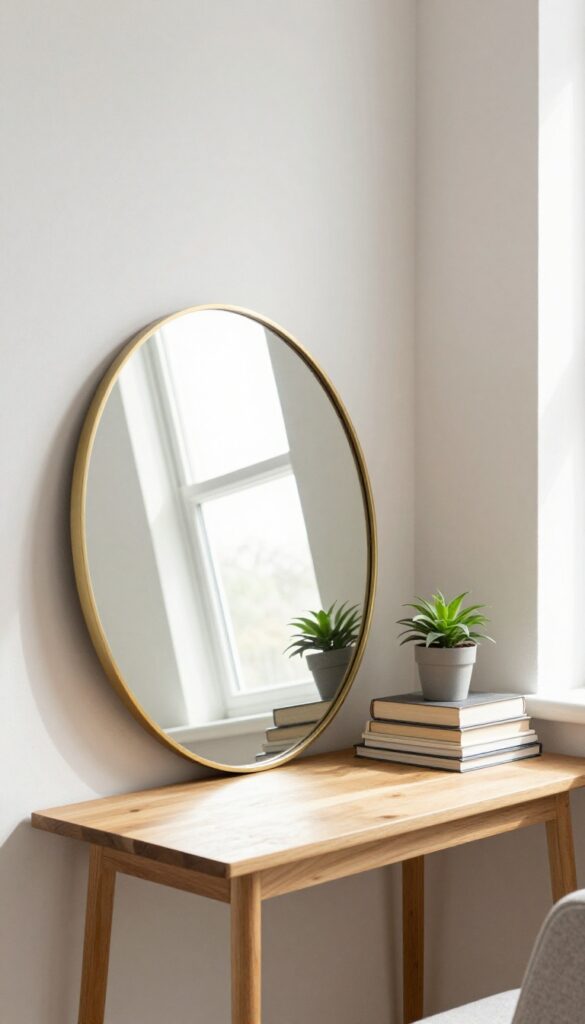
Corners often get left out when it comes to mirror placement, but tucking a round mirror into one can completely change how the room feels. It catches light from two walls and sends it back into the space, making even a small living room feel brighter and more open. The soft curve also breaks up all those straight lines from sofas, shelves, and TV units—effortlessly.
A round mirror in a corner does double duty: it reflects light from two directions and adds a gentle, organic shape that contrasts with angular furniture. This trick works especially well in tight spaces where a large wall mirror might feel overwhelming. Lean it against the wall on a small console table, or hang it at eye level for a more polished look.
The result is a brighter, airier corner that feels intentional, not awkward.
Best Placement Height
Hang the mirror so its center is around 60 inches from the floor—roughly eye level for most people. If you're leaning it, prop it at a slight angle so it catches more light from the nearest window. Avoid placing it too high, or it will reflect the ceiling instead of the room.
Frame Finish Matters
A thin metal frame keeps the look light and modern, while a natural wood or rattan frame adds warmth. In a small space, match the frame color to your existing hardware or furniture legs for a cohesive feel. Black or brass finishes work well with most decor styles.
Small-space Styling Tip
Pair the mirror with a slim floor plant or a small stack of books on a corner shelf. This creates a vignette that draws the eye and makes the corner feel purposeful. Keep surrounding surfaces clutter-free so the mirror remains the focal point.
9. Hang a Mirror Across from a Doorway
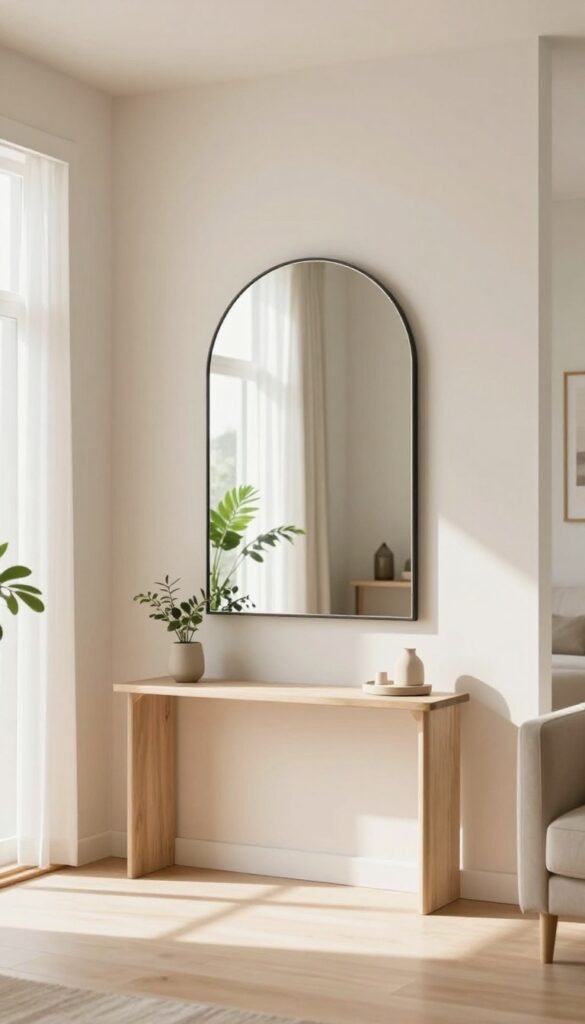
One of the sneakiest ways to make a small living room feel bigger and brighter is to let a mirror borrow light from another room. By hanging it directly across from a doorway, you’re essentially creating a light pipe that pulls sunshine from a hallway, kitchen, or bedroom into your space. It’s a low-effort trick that works especially well in apartments or homes where adding windows isn’t an option.
Positioning a mirror across from a doorway is like giving your living room a second window without any construction. The mirror catches whatever natural light is coming through the adjacent room and bounces it right into your seating area. This works wonders in narrow living rooms or open-plan layouts where one side feels dim.
For the best effect, choose a spot where the mirror will reflect something pleasant—like a piece of art or a plant—rather than a cluttered corner. A simple round or arched mirror keeps the look soft and intentional, while a larger rectangular mirror maximizes the light grab. Keep the frame light in color or metallic to avoid eating up brightness.
Best Placement
The key is to hang the mirror at eye level directly facing the doorway, not off to the side. If the door is slightly ajar most of the time, angle the mirror slightly to catch the light stream. In a galley-style living room, try placing it at the end of the long wall opposite the entry—this visually doubles the depth of the room.
Small-space Fix
In tight layouts, a mirror across from a door can also make the room feel less boxed in. Pair it with a slim console table underneath to anchor the look without eating floor space. Add a small lamp or a stack of books on the table to create a mini vignette that the mirror will reflect, adding layers to the borrowed light.
Finishing Touch
To keep the effect from feeling accidental, treat the mirror like a deliberate design element. Choose a frame that complements your existing trim or door color—black for modern, brass for warmth, or natural wood for a cozy feel. A subtle arch or sunburst shape can add character without competing with the light.
10. Layer a Mirror with Sheer Curtains
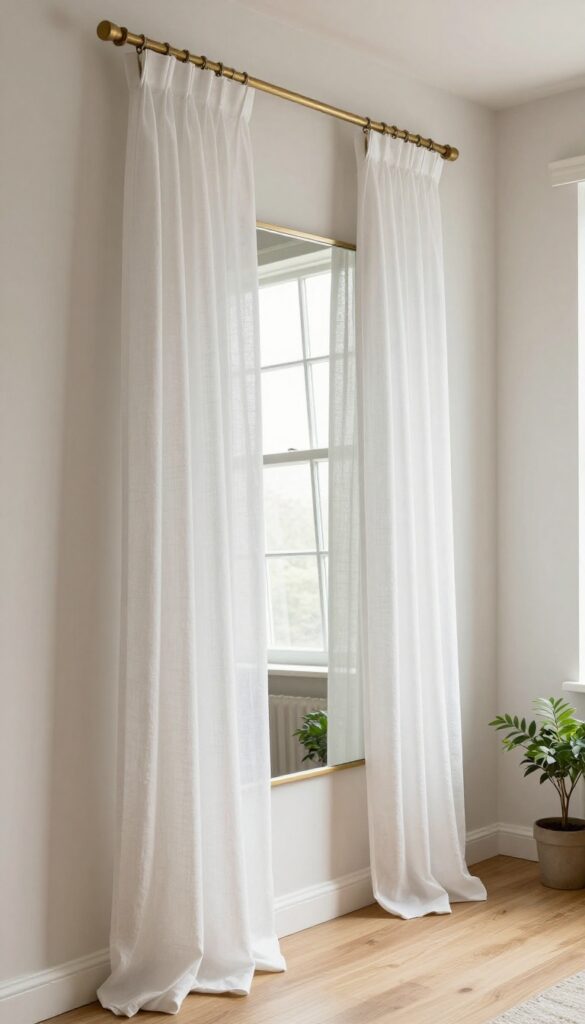
Hanging a mirror next to a window is a classic trick to bounce light, but adding sheer curtains takes it a step further. The soft fabric diffuses the reflection, creating a dreamy, airy feel that still lets the mirror do its job of amplifying natural light. It's an easy way to make a small living room feel bigger and brighter without any major renovation.
Start by choosing a mirror with a simple frame—thin metal or wood works best—and hang it on the wall adjacent to a window. Then install a curtain rod above the mirror, extending slightly past its edges, and drape sheer white or light-colored panels so they frame the mirror on both sides. The curtains should be long enough to pool slightly on the floor for a relaxed look.
This setup works especially well in narrow living rooms or corners where you want to maximize every ray of light. The sheers soften harsh reflections and add a layer of texture that makes the space feel cozy, not clinical.
Best Materials
- For the mirror, choose a slim frame in brass, matte black, or natural wood to keep the look clean. Sheer curtains should be lightweight—linen or cotton blends work beautifully. Avoid heavy velvet or thick polyester, as they'll block too much light.
- Stick to white, cream, or pale gray for maximum brightness.
Layout Tip
Position the mirror so it reflects the window directly, not a wall or furniture. In a small living room, angle it slightly to catch light from multiple directions. If your window is off-center, place the mirror opposite the window's center line for balanced reflection.
Small-space Fix
In a very tight room, use a floor-length mirror instead of a wall-mounted one. Lean it against the wall next to the window and drape a single sheer panel from a tension rod above. This saves wall space and still creates that soft, light-enhancing effect.
FAQ
Where should I place a mirror in a living room to maximize light?
The best spot is directly across from a window or at an angle that catches the most daylight. Avoid placing mirrors on dark walls where they'll reflect shadows instead of light.
What size mirror works best for a small living room?
A large mirror (at least 3 feet tall) makes the biggest impact in a small space. If you can't go big, use a group of smaller mirrors to scatter light.
Can a mirror make a room look bigger?
Yes, mirrors create the illusion of depth and double the visual space. A well-placed mirror can make a cramped living room feel open and airy.
Should I use a framed or frameless mirror?
Frameless mirrors blend in and maximize reflection, while framed mirrors add style. For small spaces, thin or metallic frames keep the look light and modern.
How many mirrors should I use in one room?
One or two well-placed mirrors are usually enough. Too many can feel cluttered and create confusing reflections. Focus on quality placement over quantity.
Conclusion
Mirrors are a simple, affordable way to transform a small living room into a brighter, more open space. By choosing the right placement and style, you can bounce light around the room without sacrificing your decor aesthetic. Whether you lean a floor mirror or create a gallery wall, each idea adds both function and charm.
Start with one or two of these tips that fit your layout best. You'll be surprised how much difference a little reflection can make.