13 Moody Living Room Ideas for a Deep, Cozy Atmosphere
There's something special about a living room that feels like a warm hug at the end of the day. Moody doesn't mean dark or dreary—it's about depth, richness, and a sense of calm that wraps around you. Think deep colors, soft lighting, and textures that invite you to sink in and stay awhile.
Getting that cozy, moody vibe doesn't require a total overhaul. Small shifts in color, fabric, and layout can transform a bright, sterile room into a sanctuary.
The key is balance: keeping things modern and clean while layering in warmth. These 13 ideas are designed to be practical and achievable, whether you're starting from scratch or just tweaking what you have.
1. Paint the Ceiling a Dark Shade
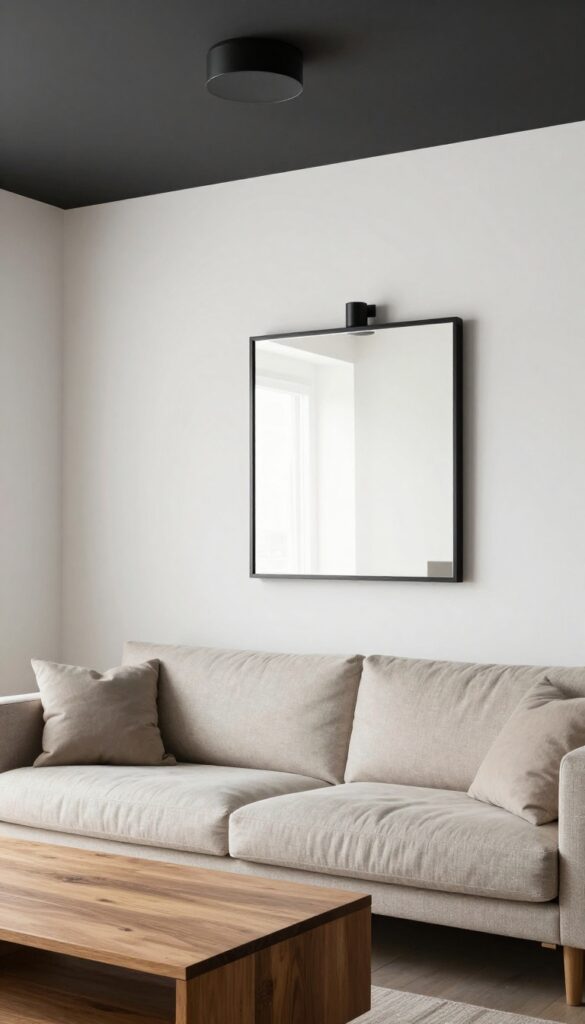
Most people leave their ceiling white without a second thought. But if you want a living room that feels instantly cozier, painting the ceiling a deep color is one of the most effective tricks around. A dark ceiling tricks your eye into thinking the room is lower, which creates a snug, enveloping feel.
It’s especially powerful in rooms with high ceilings that can feel a little cavernous otherwise.
The key is balance. You don’t want the whole space to feel like a cave, so keep your walls a lighter, complementary shade. Think a soft warm white or pale greige against a charcoal or navy ceiling.
This contrast keeps the room grounded without making it feel closed in. The dark ceiling becomes a visual anchor, drawing the eye upward while still maintaining an airy feel at eye level.
Best Colors To Try
- Deep charcoal, navy blue, and forest green are top picks for a moody ceiling. Charcoal reads as neutral and works with almost any wall color. Navy adds a touch of drama without being too dark.
- Forest green brings in a natural, earthy vibe that pairs beautifully with warm woods and plenty of plants.
Finishing Touch
Once the ceiling is painted, add a matte black or dark brass light fixture to tie the look together. A flush mount or semi-flush fixture keeps the visual line clean and reinforces the cozy, grounded feeling. Avoid shiny finishes that might compete with the matte ceiling paint.
Small-space Fix
In a small living room, a dark ceiling can actually make the space feel more intimate rather than cramped. Just keep the walls light and use mirrors to reflect natural light. A large mirror opposite a window will bounce light around and keep the room from feeling too heavy.
2. Layer in Plush Textures

There's something about sinking into a room that feels like a warm hug. The secret? Layers of soft, touchable textures that invite you to stay awhile.
By mixing velvet, chunky knits, and faux fur, you create a space that feels rich and inviting without trying too hard. A velvet sofa paired with a wool throw and a shag rug adds depth without clutter, especially when you stick to a cohesive palette like charcoal, olive, and cream.
Start with a foundation piece like a velvet sofa in a deep tone—think forest green or navy. Then pile on a chunky knit throw in cream or oatmeal, and add a faux fur accent pillow for that extra bit of luxury. Underfoot, a high-pile shag rug in a neutral shade ties everything together.
The key is to keep the color palette limited to three or four shades so the textures can shine without the room feeling chaotic. This approach works best in living rooms with neutral walls, letting the fabrics do the talking.
Best Fabrics For The Job
- Velvet is a no-brainer for sofas and accent chairs—it's durable and instantly elevates the room. Chunky knits work well for throws and poufs, adding a handmade feel. Faux fur is perfect for pillows or a small rug, but use it sparingly to avoid a cave-like vibe.
- Stick to natural fibers where possible: wool for throws, cotton for velvet blends, and high-quality synthetic for faux fur.
Color Palette Tips
- A cohesive palette makes layering textures look intentional. Charcoal and olive are grounding, while cream or ivory adds lightness. You can also swap olive for deep burgundy or mustard for a warmer feel.
- Avoid more than three main colors—too many will compete with the textures.
Layout And Styling
- Place the rug so it extends beyond the sofa's front legs, anchoring the seating area. Drape the throw casually over one arm of the sofa, and arrange pillows in odd numbers (three works well). Keep side tables and lighting simple—metal or wood finishes prevent the room from feeling too soft.
- A floor lamp with a linen shade adds a warm glow that enhances the cozy factor.
3. Use Statement Lighting with Warm Bulbs
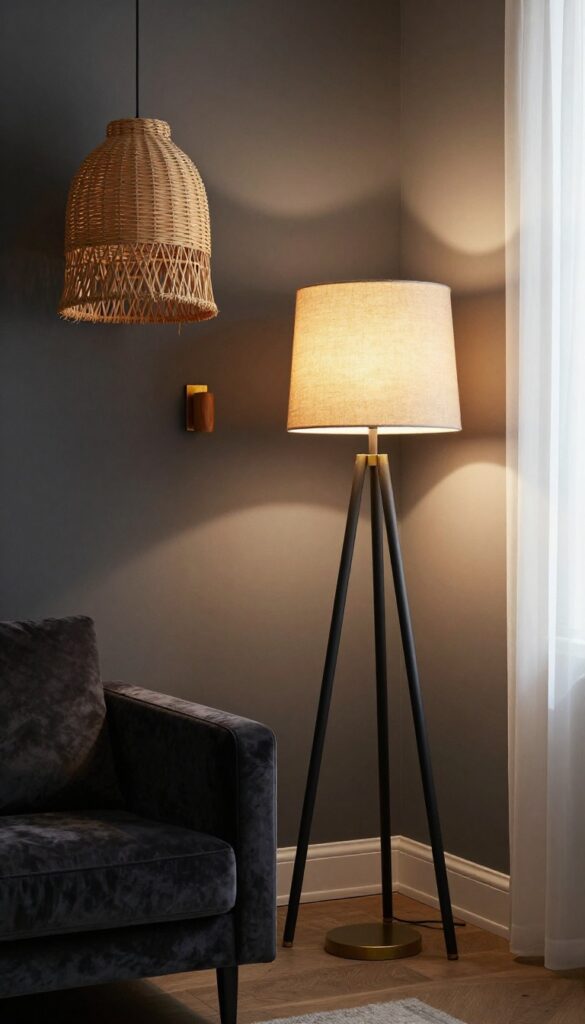
Lighting is the quickest way to shift a room from flat to cozy. Swap out cool white bulbs for warm amber tones around 2700K, and suddenly the whole space feels like a soft hug. A sculptural floor lamp or a dimmable pendant doesn't just illuminate—it creates pools of light that carve out intimate zones.
Skip the overheads on full blast; let your lighting be selective and moody.
The right lighting can make or break a moody living room. Warm bulbs (2700K) cast a golden glow that flatters every surface, from velvet sofas to matte black frames. Choose fixtures that double as art—a tripod floor lamp with a linen shade or a smoked glass pendant.
Place them in corners or over side tables to draw the eye down and create cozy pockets. Dimmers are your best friend here, letting you adjust from bright enough to read to dim enough for movie night without harsh shadows.
Best Fixture Styles
- Go for sculptural silhouettes that stand out even when off. A brass arc lamp adds warmth and a mid-century touch. A woven rattan pendant softens the light and adds texture.
- Avoid anything too shiny or cold—think matte black, brushed brass, or natural wood tones.
Placement Tip
- Layer your lighting at different heights. A tall floor lamp in one corner, a table lamp on a console, and a dimmable sconce on a feature wall. This creates depth and lets you control the mood zone by zone.
- Avoid placing all lights at eye level—mix high and low for a balanced glow.
Bulb Choice
- Stick to 2700K for that warm amber tone. Look for bulbs with a high CRI (90+) so colors look rich and true. Dimmable LEDs are ideal—they last long and let you fine-tune the ambiance.
- Avoid anything labeled 'daylight' or 'cool white'—they'll kill the cozy vibe instantly.
4. Incorporate Dark Wood Furniture
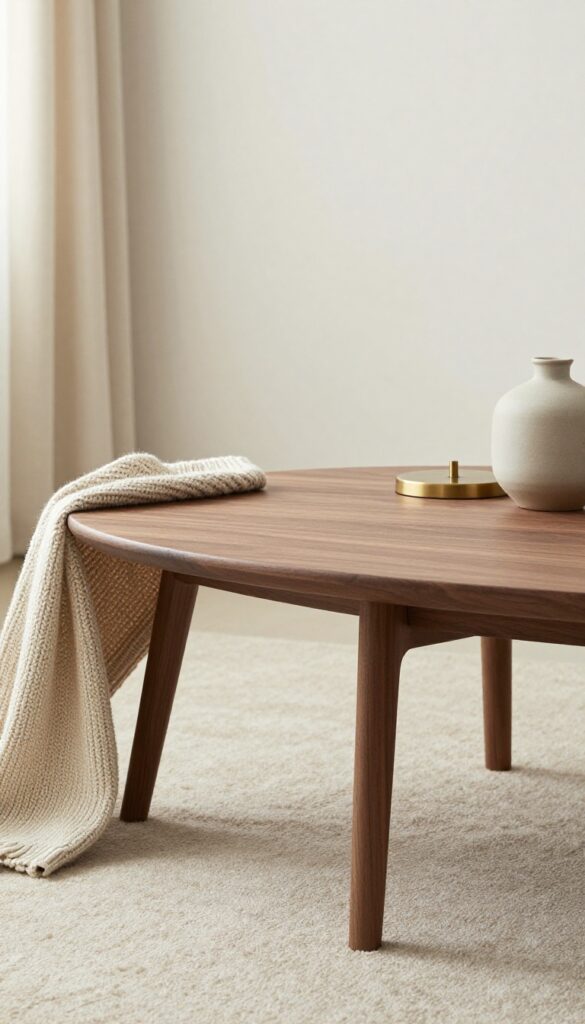
Dark wood pieces like walnut or ebony coffee tables and shelving bring a grounded, earthy richness to a moody living room. They anchor the space without weighing it down, especially when paired with lighter walls or soft textiles. The key is to choose clean, modern lines—think slim legs, simple silhouettes—so the wood feels sophisticated, not heavy.
Dark wood furniture adds depth and a sense of permanence to a moody living room. It contrasts beautifully with lighter walls or soft neutrals, creating a balanced, cozy look. Stick to streamlined designs to keep the feel modern and airy, and mix in warm metals or glass for a touch of lightness.
Best Wood Tones
Walnut and ebony are top choices for a moody vibe. Walnut offers warm brown undertones that feel inviting, while ebony leans cooler and more dramatic. Both work well with deep greens, charcoals, and creamy whites.
Pairing With Textures
Balance dark wood with soft textures like a chunky knit throw, a wool rug, or linen curtains. This prevents the room from feeling too severe and adds a layer of comfort.
Finishing Touch
Add a small brass or gold accent—like a lamp base or tray—on the dark wood surface. The metallic pop catches the light and keeps the look from feeling flat.
5. Add a Large-Scale Abstract Art Piece
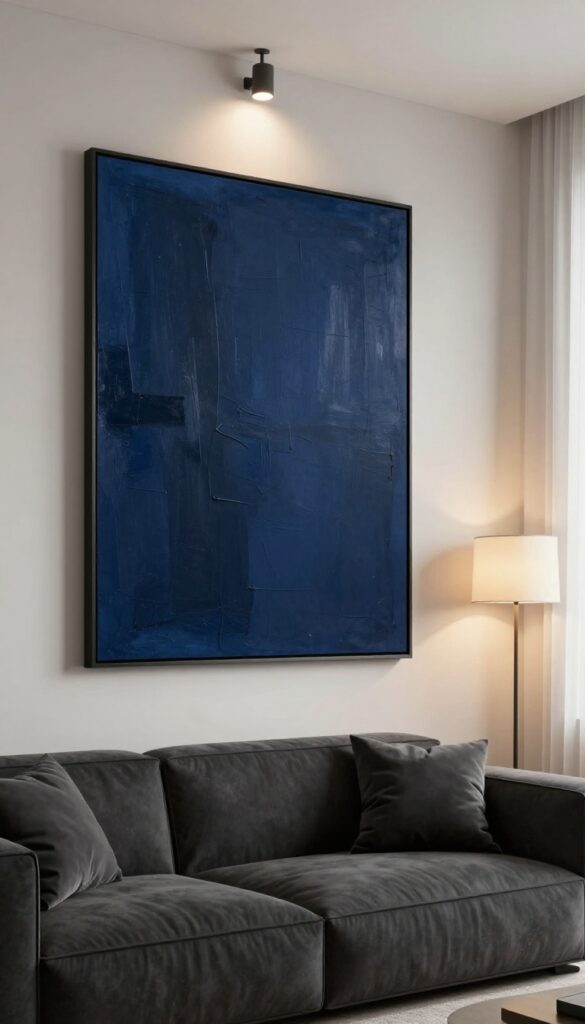
A big canvas with deep blues, blacks, or earthy tones becomes a focal point. Abstract art adds mood without being literal. Frame it simply to keep the look clean.
When you want to dial up the drama in a moody living room, a large abstract painting does the heavy lifting. It brings color, texture, and emotion into the space without telling a specific story. That ambiguity is what makes it work so well with cozy, dim lighting and plush furnishings.
The key is to go big—think at least half the width of your sofa or the full height of the wall. A smaller piece can feel lost and understated, but a large one commands attention and anchors the room. Stick to a simple frame, like a thin black or natural wood border, so the art itself stays front and center.
Best Colors For Mood
- Deep navy, charcoal, forest green, and warm terracotta are ideal for a moody palette. These colors absorb light and create a cocooning effect. If you want a softer look, mix in muted blush or dusty lavender as accents.
- Avoid bright whites or neon tones—they break the spell.
Placement And Scale
Hang the piece at eye level, about 57 to 60 inches from the floor to the center. If it's above a sofa, leave 6 to 8 inches of breathing room. For a really dramatic statement, let the art float on its own wall without competing furniture nearby.
Finishing Touch
Add a picture light above the canvas to highlight the texture and depth. A warm LED bulb (2700K-3000K) will enhance the moody tones without washing them out. This also creates a soft glow that makes the art feel alive at night.
6. Install Floor-to-Ceiling Curtains in Heavy Fabric
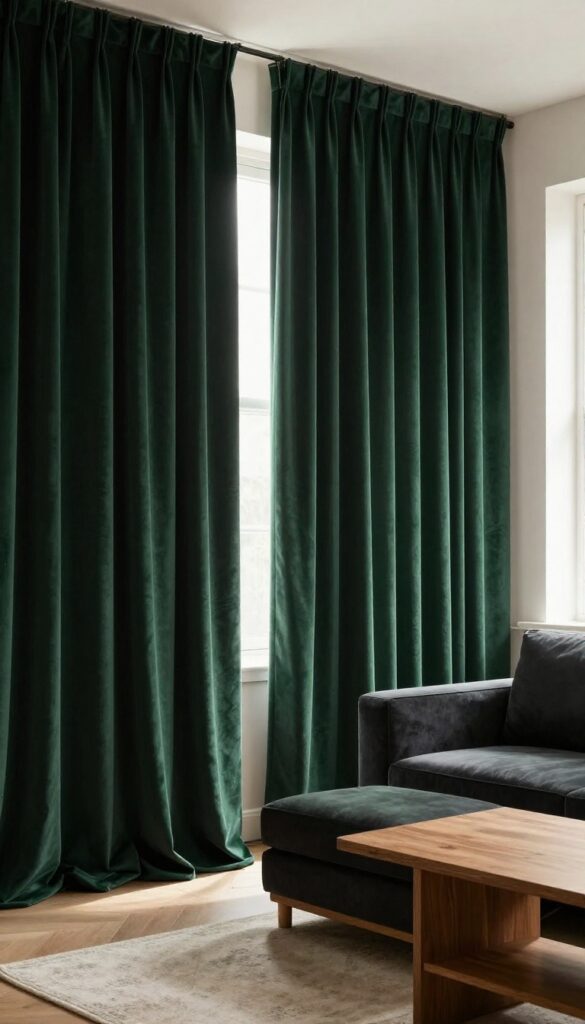
Nothing makes a room feel instantly more dramatic and cozy like floor-to-ceiling curtains in a rich, heavy fabric. By mounting the rod close to the ceiling and extending it past the window frame, you create the illusion of taller ceilings and larger windows. The extra fabric pooled on the floor adds a soft, luxurious touch that absorbs sound and softens the space.
Choose a dark hue like forest green, charcoal, or deep navy to anchor the room and make it feel enveloping. Velvet or linen blends work beautifully—they catch the light differently and add texture without being fussy. Hang the curtains high and wide: the rod should sit just below the ceiling and extend at least 6–8 inches beyond the window on each side.
This simple trick makes the window feel grand and lets in maximum light when open, while closing them transforms the room into a cocoon.
Best Fabric Choices
Velvet is the top pick for a moody, luxurious feel—it’s soft, drapes beautifully, and muffles noise. Linen blends offer a more relaxed, organic look while still providing weight. Avoid lightweight cottons or polyester sheers, as they won’t create the same dramatic effect.
Hanging Height & Width
Mount the rod as close to the ceiling as possible—ideally 1–2 inches below the crown molding. For width, extend the rod 6–12 inches beyond the window frame on each side so the curtains stack back completely, revealing the full window. This makes the window feel larger and the room more spacious.
Finishing Touch
Let the curtains pool slightly on the floor for a relaxed, intentional look. A 1–2 inch puddle adds that “decorator” feel without being fussy. Pair with a matching or contrasting tieback for versatility—you can open them fully during the day and close them for cozy evenings.
7. Create a Gallery Wall with Dark Frames
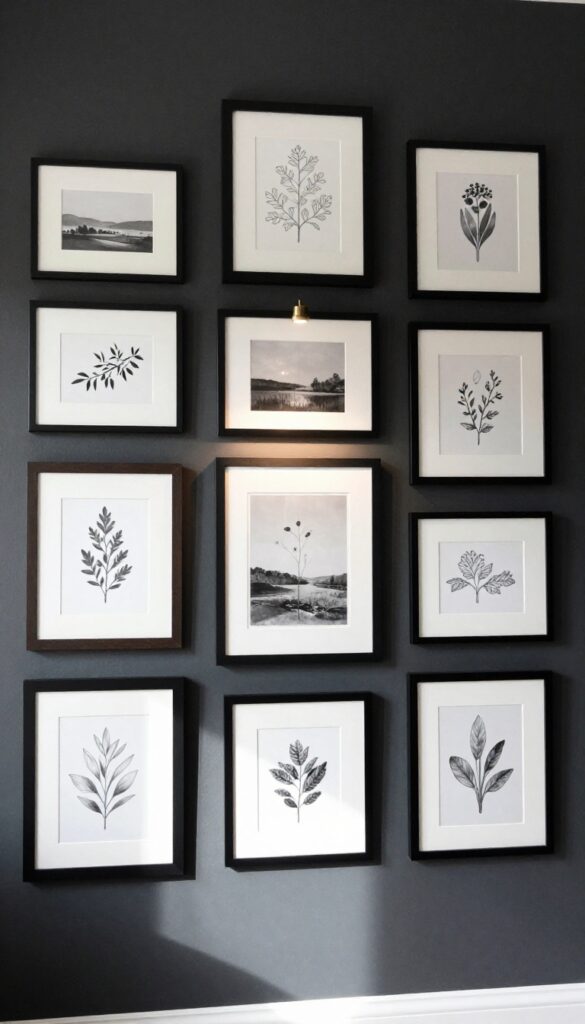
A gallery wall is a classic way to add personality, but when you stick to dark frames and moody art, it becomes something else entirely—quiet, intentional, and deeply cozy. Instead of a chaotic mix of colors and styles, you get a cohesive wall that feels curated and calm. It's the kind of setup that draws your eye in without overwhelming the room, making it perfect for a relaxed living space where you actually want to unwind.
The secret is in the framing. Black, charcoal, or dark wood frames create a visual anchor that keeps the eye moving smoothly from piece to piece. Pair them with monochrome prints, botanical sketches, or moody landscapes, and you've got a wall that feels both sophisticated and lived-in.
Keep the arrangement tight—no more than a few inches between frames—so the whole thing reads as one unified display rather than a scattered collection. This approach works especially well on a wall that's already painted in a deep tone, like charcoal or navy, because the frames blend in and let the art take center stage.
Best Art Choices
Stick with black-and-white photography, ink drawings, or muted watercolors in earthy tones. Avoid bright pops of color—they'll break the moody spell. If you want a bit of texture, try a few pieces with visible brushstrokes or linen-finish paper.
Layout Tip
Lay the frames out on the floor first to nail the spacing. Aim for 2 to 3 inches between each frame. A symmetrical grid feels clean and modern, while a slightly staggered arrangement adds a relaxed, collected-over-time vibe.
Finishing Touch
Add a small picture light above the central piece or a warm sconce nearby. The soft glow will deepen the shadows in the art and make the whole wall feel like a cozy nook, even in a larger room.
8. Use a Large Rug to Define the Seating Area
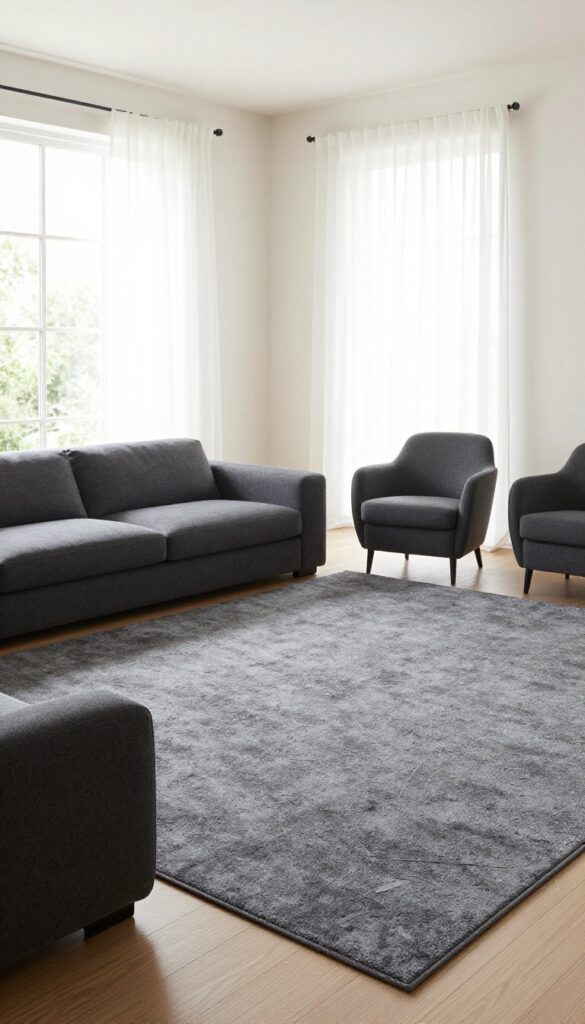
A rug does more than soften footsteps—it visually anchors your living room setup. In a moody space, a large low-pile rug in a deep tone like slate or burgundy creates a grounded foundation that pulls the seating together. The key is scale: a rug that's too small makes the room feel disjointed, while one that's generously sized under the front legs of sofas gives the whole arrangement a clean, intentional look.
Choosing a rug for a moody living room is about balancing depth and simplicity. A solid or subtly patterned rug in a dark hue keeps the focus on the furniture and layers of texture around it. Low-pile is practical for high-traffic areas and makes vacuuming easy, while the large size ensures the seating area feels cohesive.
Let the rug set the stage for cozy evenings with warm lighting and plush throws.
Best Colors And Patterns
Stick with deep, saturated tones like charcoal, navy, or burgundy. A subtle geometric pattern or a tone-on-tone texture adds visual interest without competing with the room's moody palette. Avoid busy prints that can feel chaotic—keep the rug as a calm base.
Size And Placement Tip
Measure your seating area and choose a rug that extends at least 6-8 inches beyond the sides of your sofa. For a standard 8×10 rug, place it so the front legs of all major furniture pieces rest on it. This creates a unified zone that feels intentional and spacious.
Material And Maintenance
Low-pile wool or synthetic blends are durable and easy to clean. Wool naturally resists stains and feels soft underfoot, while polypropylene is budget-friendly and great for homes with pets. Vacuum regularly and spot-clean spills quickly to keep the rug looking fresh.
9. Incorporate Black Metal Accents
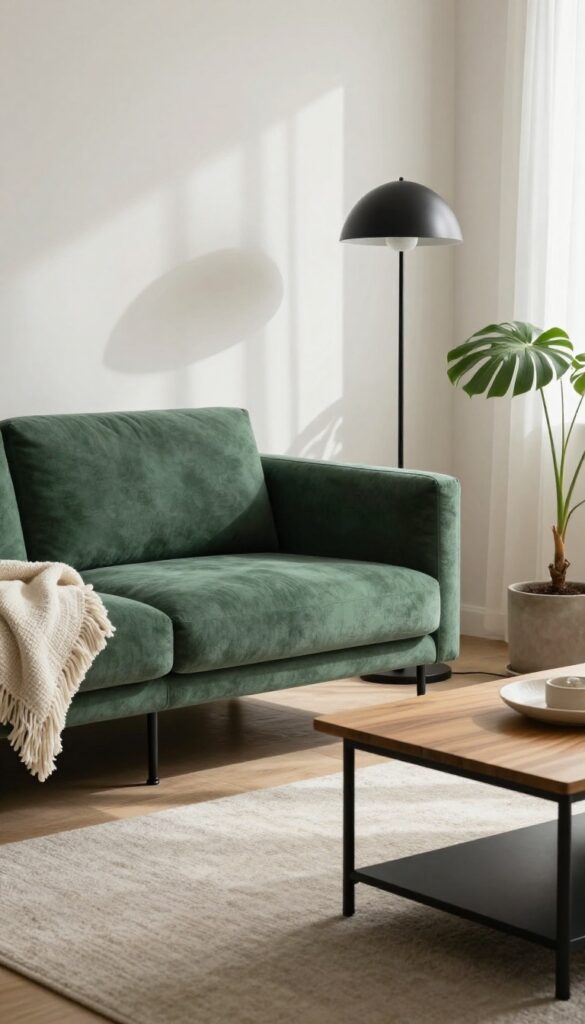
Black metal accents bring an industrial edge that cuts through soft textures and keeps the moody vibe feeling modern. A few well-placed black metal legs on a coffee table or a slim floor lamp can anchor the room without making it feel heavy. The trick is using them sparingly—too many dark metallic pieces can tip the balance from moody to cold.
When done right, these accents add structure and a clean, contemporary feel that contrasts beautifully with plush sofas and chunky throws.
Black metal works best as a supporting player in a moody living room. Think of it as the frame that holds the softer elements together. A sofa with black metal legs feels lighter than one with a solid base, and a black metal plant stand adds height and visual interest without clutter.
The key is to keep the finish matte or lightly textured—glossy black metal can look too polished for a cozy, relaxed atmosphere. Pair these accents with warm wood tones, creamy neutrals, or deep greens to let the black pop without overwhelming the space.
Best Places To Add Black Metal
- Start with furniture that has visible legs: sofas, armchairs, coffee tables, and media consoles. A black metal floor lamp with a slim profile can also work wonders, especially if it has an adjustable arm for reading light. For a subtle touch, try black metal drawer pulls or a small side table with a black metal frame.
- Avoid covering every surface—one or two statement pieces per room is plenty.
Materials That Pair Well
- Black metal loves natural textures. Pair it with raw wood, linen, wool, and leather for a balanced look. A black metal coffee table with a wooden top feels warm and grounded.
- Add a chunky knit throw and a leather ottoman, and the contrast between hard and soft becomes the room's best feature. Avoid mixing black metal with too many other metallic finishes—stick to one or two for a cohesive feel.
Small-space Tip
- In a smaller living room, black metal accents can actually make the space feel more open. Choose furniture with slender black metal legs to keep the visual weight low. A black metal shelf or wall-mounted plant holder draws the eye upward without taking up floor space.
- Just keep the rest of the room light and airy to prevent the black from shrinking the room.
10. Add Greenery with Dark Foliage
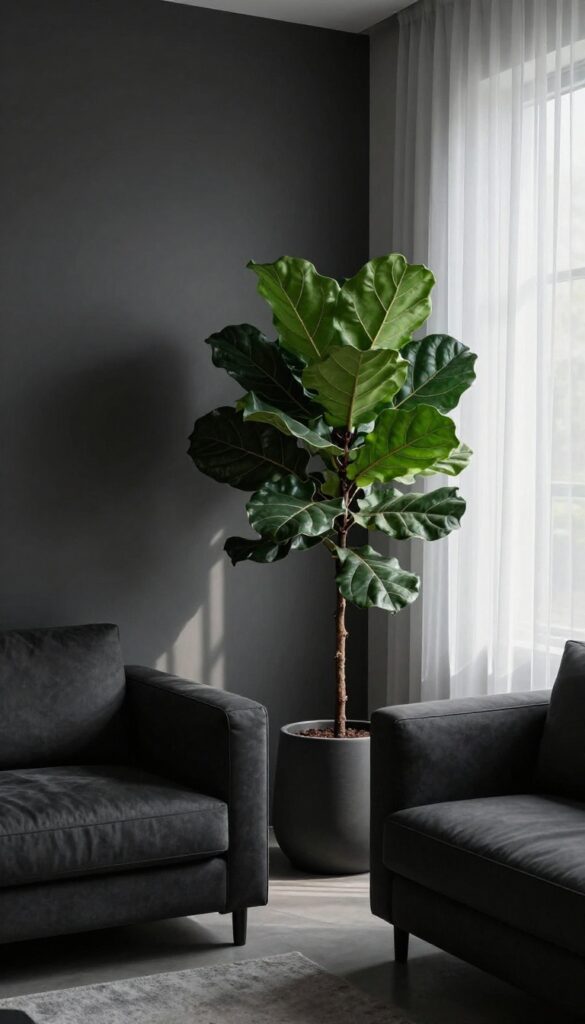
Plants are an easy way to breathe life into a moody living room, but you don't want anything too bright or cheerful. Stick with dark foliage—think deep green leaves that blend right into the shadowy palette. Snake plants, ZZ plants, and fiddle leaf figs in matte black or charcoal pots keep the vibe grounded and organic without introducing a pop of color that feels out of place.
The trick is to choose plants with rich, almost black-green leaves and pair them with containers that disappear into the room. A large fiddle leaf fig in a textured ceramic pot can anchor a corner, while a cluster of smaller snake plants on a side table adds layers. The contrast between the glossy leaves and matte walls creates depth, and the natural shapes soften the clean lines of modern furniture.
Plus, these plants are low-maintenance—perfect if you don't have a green thumb but still want that living, breathing element.
Best Plant Choices
- Snake plants are practically indestructible and their upright, sword-like leaves add vertical interest. ZZ plants have waxy, dark green leaves that almost look polished, and they thrive in low light—ideal for a moody room. Fiddle leaf figs are a bit more dramatic with their large, veined leaves, but they need a spot with indirect light.
- For smaller spaces, try a cast iron plant or a philodendron in a deep burgundy pot.
Pot And Planter Styling
- Stick with pots in dark, matte finishes like charcoal, slate, or deep terracotta. Avoid glossy or brightly colored containers—they'll compete with the moody aesthetic. Textured pots, like ribbed ceramic or woven black baskets, add tactile interest without stealing attention.
- Group plants of varying heights on a low console table or a dedicated plant stand to create a mini indoor jungle that feels curated, not chaotic.
Placement And Lighting
- Position plants near windows with filtered light, but don't worry if your room is on the darker side—snake plants and ZZ plants handle low light well. Use a small grow light in a black fixture if needed, aiming it at the foliage to highlight the deep greens. Avoid placing plants directly in front of a heat source or in drafty spots.
- A corner near a bookshelf or beside the sofa works perfectly.
11. Style a Coffee Table with Dark Objects
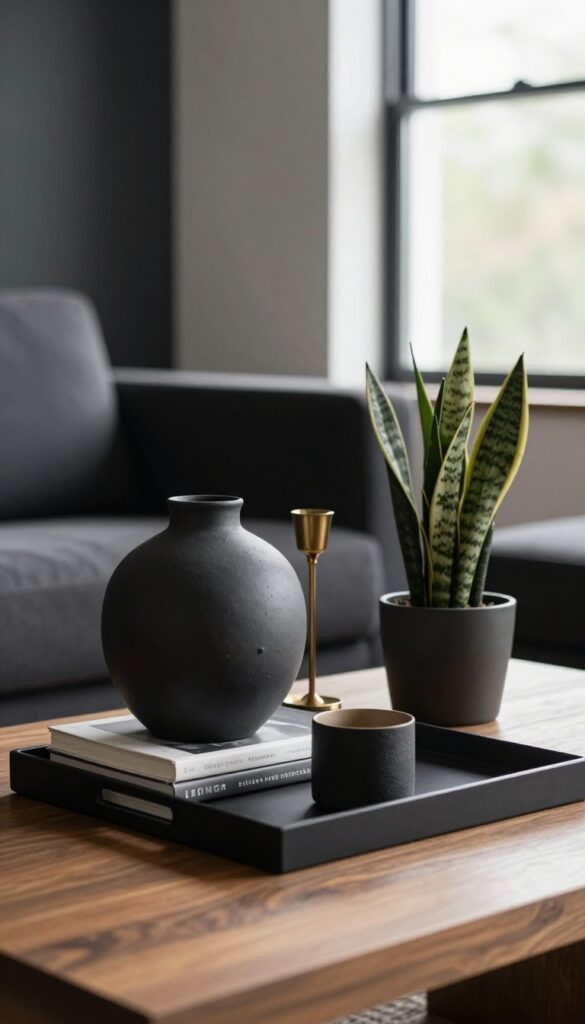
A coffee table is often the centerpiece of the living room, but it's easy to let it become a catch-all for remotes, coasters, and random magazines. When you intentionally style it with dark objects, you create a focal point that feels grounded and intentional. The key is to keep the palette moody but the arrangement clean—think matte black, charcoal, and deep wood tones, with just enough contrast to keep it from feeling flat.
Stack a few black-and-white books, place a matte black tray, and add a ceramic vase in charcoal. Keep it minimal—three to five items—to avoid clutter. This adds a curated feel.
Best Colors
Stick with matte black, charcoal, deep brown, and off-white for contrast. Avoid glossy finishes—they can look too shiny against a moody palette. A single metallic accent, like a brass candle holder, can add warmth without breaking the dark vibe.
Layout Tip
Arrange items in a triangle or a straight line for visual balance. Place the tallest item at the back or center, then layer smaller objects in front. Leave some negative space so the table doesn't feel crowded.
Finishing Touch
Add a small plant in a dark pot—snake plants or ZZ plants work well—to bring in a touch of life without adding bright colors. The deep green leaves will complement the dark objects perfectly.
12. Use Mirrors to Reflect Light Strategically
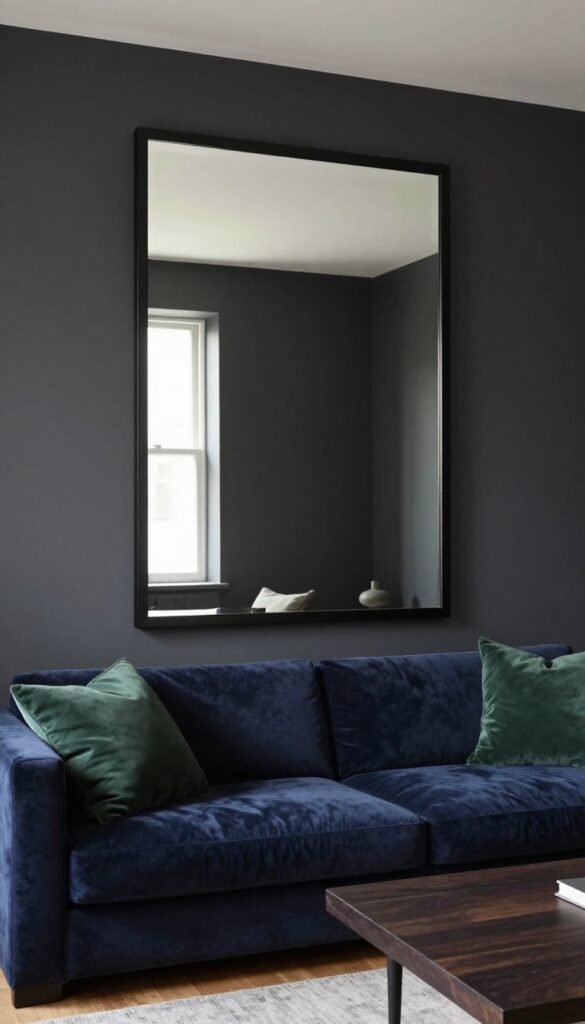
Moody doesn't have to mean dark and cave-like. A well-placed mirror can bounce natural light around the room, keeping the deep, cozy vibe without sacrificing brightness. The trick is choosing a frame that blends in—think simple black or bronze—so the mirror feels like a natural part of the moody palette, not a shiny afterthought.
It's a small move that makes a big difference in how open and airy the space feels.
When your living room leans into deep charcoal, navy, or forest green, you risk it feeling a bit too enclosed. A large mirror placed directly across from a window catches daylight and scatters it into darker corners. This keeps the room feeling spacious and alive while still maintaining that cocoon-like atmosphere.
For the best effect, go with a single oversized mirror rather than a cluster of small ones—it creates a cleaner, more intentional look that complements modern decor.
Best Placement
- Position the mirror opposite the largest window in the room. If that's not possible, place it near a lamp or sconce to reflect artificial light. Avoid putting it directly across from a dark wall or a closed curtain, as that won't do much good.
- The goal is to capture and redistribute light, so think about where the sun hits during the day.
Frame Finish
- Stick with matte black, oil-rubbed bronze, or a dark wood frame. These finishes blend into the moody scheme without drawing too much attention. A shiny silver or gold frame would pop too much and break the cohesive, cozy feel.
- If you want a softer look, a frameless mirror with beveled edges works beautifully—it reflects light without adding visual clutter.
Size And Scale
- Go big. A mirror that's at least two-thirds the width of the sofa or the window it's reflecting will make the room feel significantly larger. Lean it against the wall for a casual, modern touch, or hang it securely if you have kids or pets.
- Either way, make sure it's at eye level so it catches both ambient light and the room's activity.
13. Incorporate a Deep Green Accent Wall
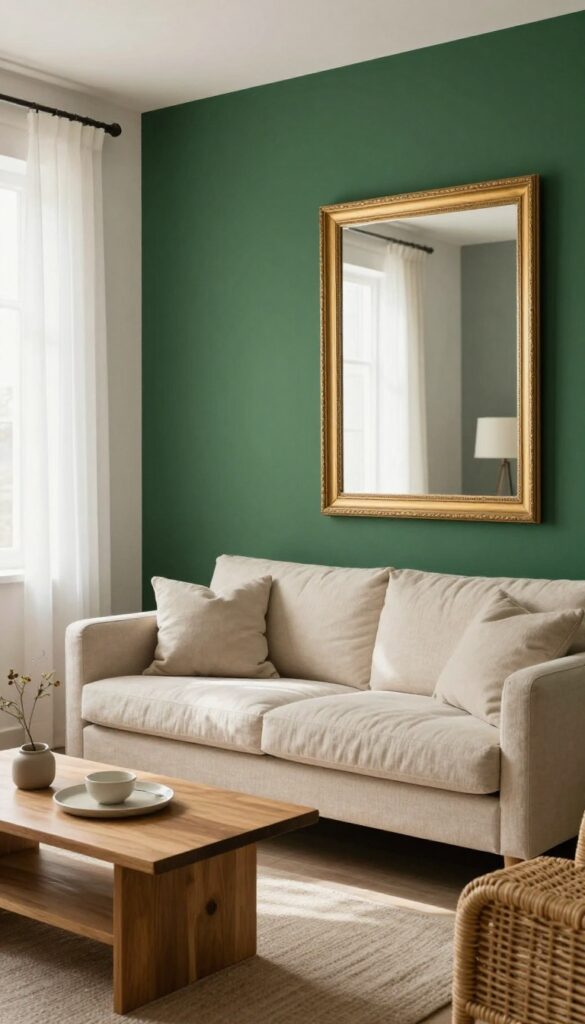
A deep green accent wall is one of the fastest ways to add moody depth without overwhelming the room. Forest or emerald tones bring a grounded, organic feel that instantly makes a space feel cozier and more intentional. The key is to keep the surrounding walls light—think warm white or soft beige—so the green becomes a striking focal point rather than a dark cave.
This works especially well in living rooms with neutral furniture, where the wall adds personality without clashing.
Painting one wall in a rich forest or emerald green adds depth and pairs beautifully with neutral furniture. Keep the other walls light to maintain balance and avoid a cramped feel. This approach creates a sophisticated backdrop that makes the room feel both intimate and open.
Best Colors
Stick with deep, muted greens like Sherwin-Williams Pewter Green or Benjamin Moore Essex Green. Avoid bright or yellow-toned greens, which can feel less sophisticated. Pair with warm neutrals like cream, tan, or light gray for a balanced look.
Furniture Pairing
Let the green wall be the star by keeping furniture light and simple. A beige or white sofa works perfectly, while wooden coffee tables and rattan accents add natural warmth. Avoid bold patterns on nearby pieces—solid textures keep the space calm.
Finishing Touch
Hang a large mirror or a piece of art with gold or brass frames on the green wall. The metallic finish catches light and adds a touch of elegance, making the wall feel even more intentional.
FAQ
What colors work best for a moody living room?
Deep blues, charcoal grays, forest greens, and warm blacks are great choices. They create depth without feeling oppressive. Pair them with lighter neutrals like cream or beige for balance.
How do I keep a moody room from feeling too dark?
Use layered lighting—floor lamps, table lamps, and dimmers. Add mirrors to reflect light, and incorporate lighter accents like a cream rug or white pillows. Balance is key.
Can I achieve a moody look on a budget?
Absolutely. Paint is the most affordable change. Swap out throw pillows and blankets for darker hues, and add thrifted dark wood frames.
Small changes add up.
What type of lighting is best for a moody atmosphere?
Warm, dimmable lights with a color temperature around 2700K. Use multiple light sources at different heights to create soft, inviting pools of light.
How do I make a small living room feel moody without overwhelming it?
Stick to one dark accent wall and keep the rest light. Use mirrors to open up the space. Choose furniture with exposed legs to maintain an airy feel, and keep decor minimal.
Conclusion
Creating a moody living room is all about layering depth and warmth in a way that feels intentional, not heavy. With these 13 ideas, you can craft a space that's both modern and deeply cozy—perfect for relaxing or entertaining. Start with one or two changes that speak to you, and build from there.
The best rooms evolve over time, so take it slow and enjoy the process. Your cozy retreat is closer than you think.