9 Storage-Smart Living and Dining Room Partition Ideas for Better Zones
Open-plan living sounds great in theory—until you're eating dinner with a clear view of yesterday's laundry pile. The trick to making it work isn't just about furniture placement; it's about creating visual boundaries that feel intentional, not accidental.
Partition ideas that double as storage are the unsung heroes here, giving you both separation and a place to stash the clutter.
Whether you're working with a sprawling loft or a cozy apartment, these nine ideas prove that a room divider can be as practical as it is pretty.
1. Floor-to-Ceiling Bookshelf Dividers
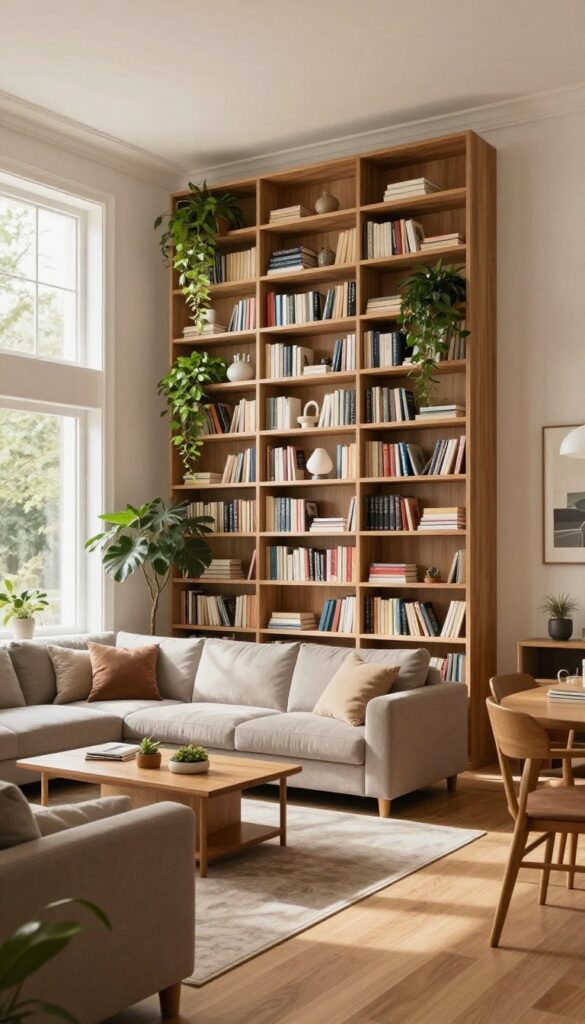
A floor-to-ceiling bookshelf does more than hold your collection—it carves out two distinct zones without sacrificing an inch of square footage. The key is choosing an open-back or ladder-style unit that lets light pass through, so neither side feels boxed in. On the living room side, you can display artful stacks of books and trailing plants; on the dining side, tuck away serving dishes, barware, or cookbooks.
It’s a storage-savvy solution that instantly gives each space its own identity.
Why It Works
By reaching the ceiling, the divider maximizes vertical storage and creates a visual boundary that feels intentional, not makeshift. The open shelves keep the sightline airy, so your room still feels connected while gaining clear separation between lounging and dining.
Best For
Open-plan living and dining combos where you want to define zones without losing natural light or a sense of openness. It’s also ideal for renters, since a freestanding bookshelf leaves no permanent marks.
Styling Tip
Mix closed baskets on lower shelves to hide clutter, and leave upper shelves for curated displays. Stick to a neutral or wood tone that complements both sides of the room, and add a small lamp or sconce on the shelf to warm up the divider at night.
2. Double-Sided Credenza with Open Shelving
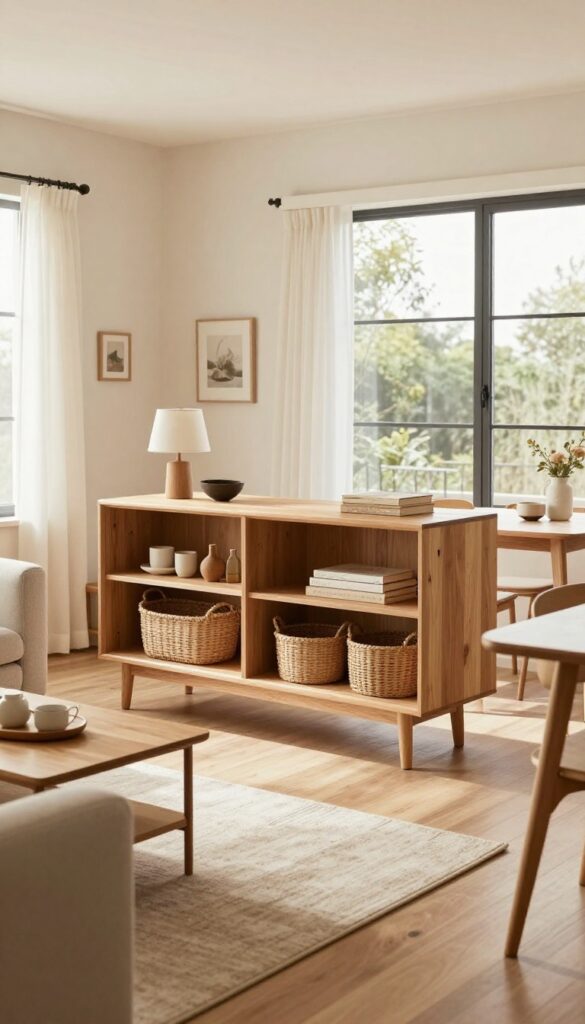
Instead of a solid wall or a tall bookcase that blocks sightlines, a low credenza with open shelves on both sides keeps the room feeling open while defining the separation. The double-sided design means both zones get storage and display space without one side feeling like the back of a piece of furniture. In a storage-smart home, this piece earns its keep by serving two purposes at once.
Why It Works
It creates a clear visual boundary between living and dining areas without closing off the space. The open shelving lets light and sightlines pass through, so the room still feels connected. Plus, you get functional storage on both sides, which is a huge win for small to medium open-plan layouts.
Best For
Open-plan living and dining rooms where you want a subtle division that still allows conversation and light to flow. It's also great for narrow spaces where a full partition would feel too bulky.
Styling Tip
Style the shelves with a mix of closed bins and a few curated objects to keep it from looking cluttered. On the dining side, use the top for serving dishes or a small lamp; on the living side, corral remotes and magazines in woven baskets. Stick to a consistent color palette so the credenza feels intentional, not random.
3. Sliding Barn Doors on a Ceiling Track
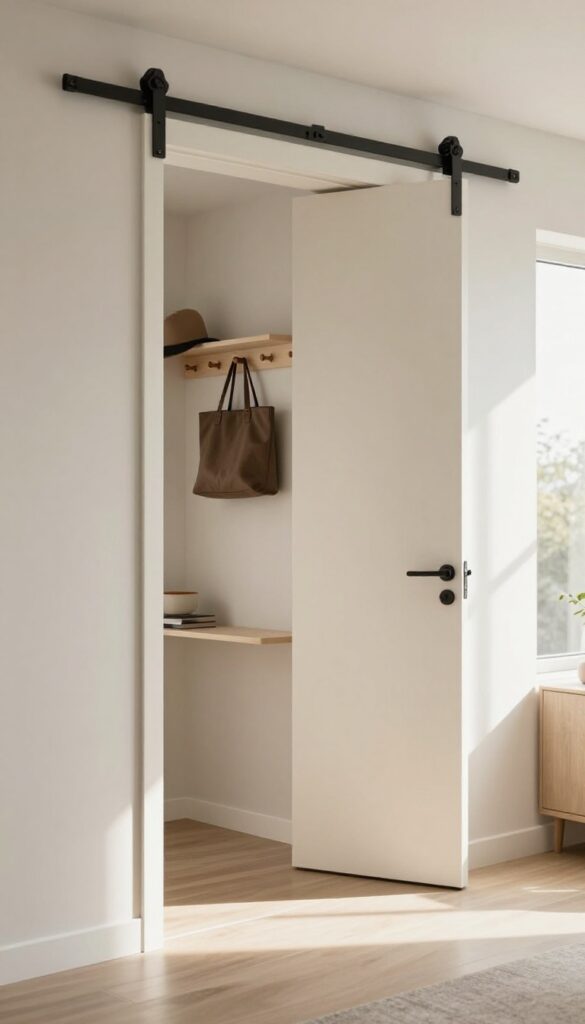
Barn doors aren't just for farmhouses anymore. Mounted on a ceiling track, a sliding door can tuck neatly against a wall when open, then glide across the opening for instant separation. Choose a door with built-in shelves or peg hooks to turn it into a vertical storage station—perfect for hanging bags, hats, or kitchen towels.
The hardware itself becomes a design feature, especially in matte black or brushed brass.
Why It Works
A sliding barn door saves floor space since it doesn't swing out, making it ideal for tight living-dining combos. The built-in storage adds function without extra furniture, keeping everyday essentials accessible yet hidden when the door is closed.
Best For
Open-plan living rooms that need occasional separation from a dining area or kitchen, especially in narrow spaces where a traditional door would eat into the layout.
Styling Tip
Match the door's finish to your room's hardware—if your light fixtures are brass, go for brass track and handles. Paint the door the same color as the wall behind it for a seamless look, or use a contrasting stain to make the door a focal point.
4. Modular Cube Storage as a Room Divider
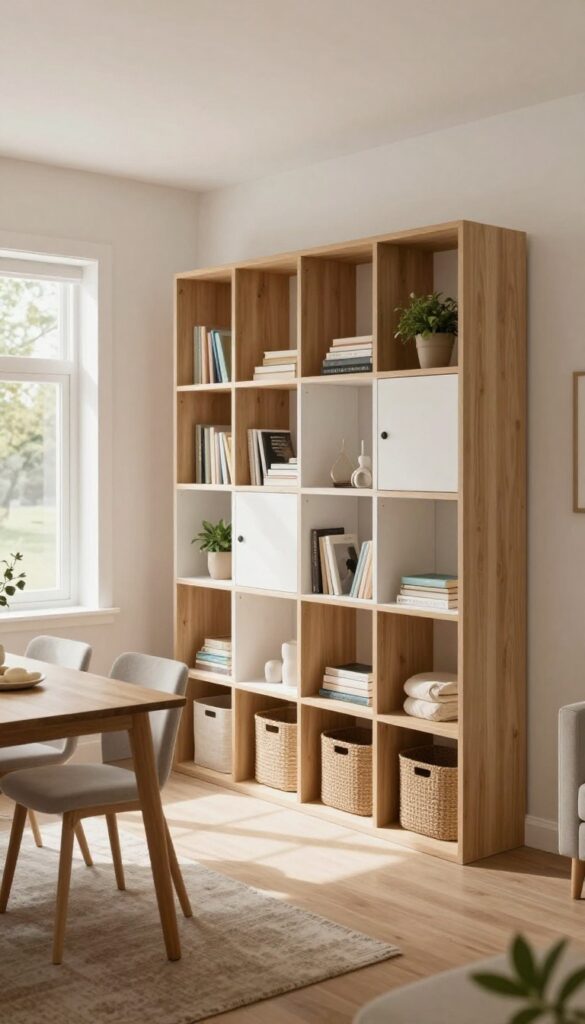
A waist-high grid of modular cubes strikes a smart balance between separation and openness. By stacking lightweight units in a neat pattern, you define the dining zone without blocking light or views. Fabric bins on one side keep dining essentials tidy, while open cubes on the living side display books and remotes within easy reach.
Why It Works
The cubes create a visual boundary that feels intentional, not heavy. The waist height keeps the space airy and lets you talk across zones, while the built-in storage eliminates the need for extra furniture. It’s a practical way to add structure without losing the open-plan feel.
Best For
Open-plan living and dining rooms where you want a subtle divide that doesn’t sacrifice floor space. Also great for renters, since cube units are easy to move and reconfigure.
Styling Tip
Choose cubes in a light wood or white finish to keep the look fresh. On the dining side, use woven fabric bins in a neutral tone; on the living side, arrange a few stacked books, a small plant, and a decorative object for a curated vignette.
5. Glass-Paneled Partition with a Shelf
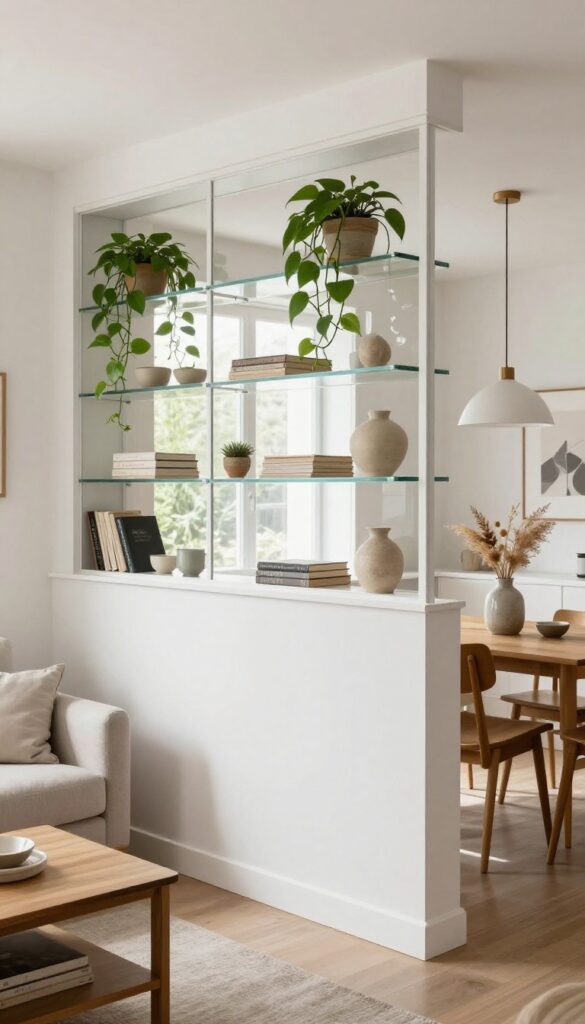
A half-wall topped with glass panels strikes the perfect balance between separation and openness. The solid lower portion anchors the room, while the transparent upper section lets light flow freely, keeping both zones feeling airy and connected. Adding a slim shelf along the top turns the partition into a functional display surface—perfect for trailing plants, a stack of favorite cookbooks, or a row of ceramic vases.
It’s a practical way to define your dining area without closing it off.
Why It Works
The glass panels maintain visual continuity, so the living and dining areas still feel like one cohesive space. The shelf adds valuable storage or display real estate without taking up floor space, making it ideal for smaller homes where every inch counts.
Best For
Open-plan living rooms that need a subtle boundary between the lounge and dining zone, especially in apartments or condos where natural light is at a premium.
Styling Tip
Keep the shelf styling intentional but not cluttered. A row of matching ceramic planters with trailing pothos or a neatly aligned set of neutral-toned cookbooks creates a clean, curated look. Add a small lamp or a vase of dried flowers for a touch of warmth.
6. Tall Plant Stands with Storage Baskets
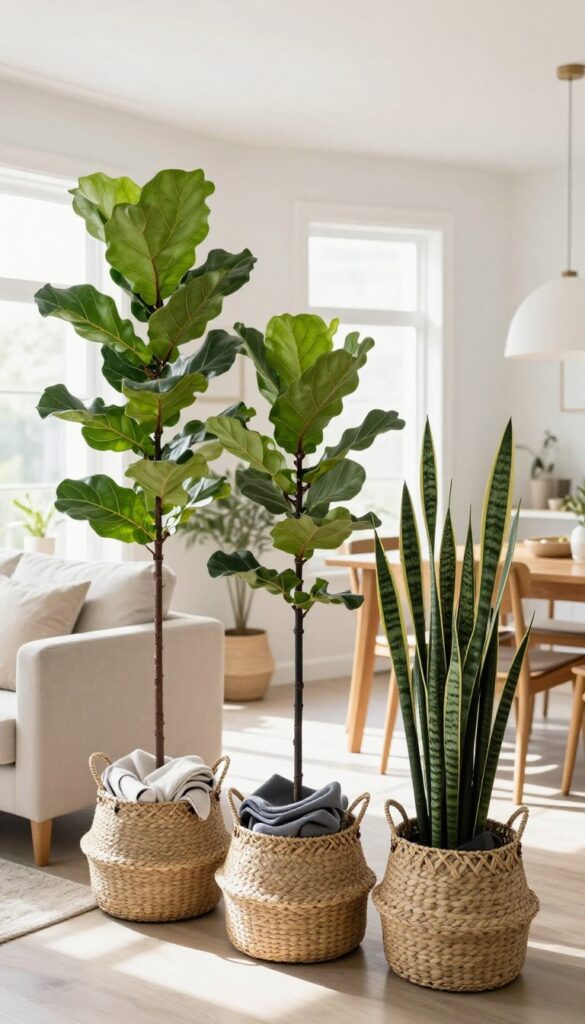
Bringing the outdoors in is always a good idea, but what if your greenery could also help you get organized? Tall plant stands with woven baskets at the base do exactly that. Line up three or four in a row, and you've got a natural, airy partition that doesn't block light.
The baskets catch all the odds and ends that usually clutter a room—throws, shoes, or extra napkins for the dining table. It's a clever, low-commitment way to define zones without building anything permanent.
Why It Works
The vertical rhythm of the plant stands draws the eye upward, making the ceiling feel higher, while the baskets anchor the look at ground level. The combination of living greenery and natural woven textures softens the division between living and dining areas, creating a visual break that feels organic rather than forced. Plus, the baskets provide hidden storage that keeps everyday clutter out of sight.
Best For
This idea shines in open-plan living and dining combos where you want a subtle separation without losing the sense of space. It's also perfect for renters who can't install permanent dividers, or for anyone who loves plants but needs extra storage in a small footprint.
Styling Tip
Choose plant stands in a consistent finish—black metal or light wood both work well—and pick plants with similar care needs, like fiddle-leaf figs, snake plants, or tall ferns. For the baskets, stick to one material and color, such as seagrass or dark rattan, to keep the row looking cohesive. Tuck a folded throw or a stack of cloth napkins in each basket for a styled, intentional look.
7. Curtain Track with Hanging Organizers
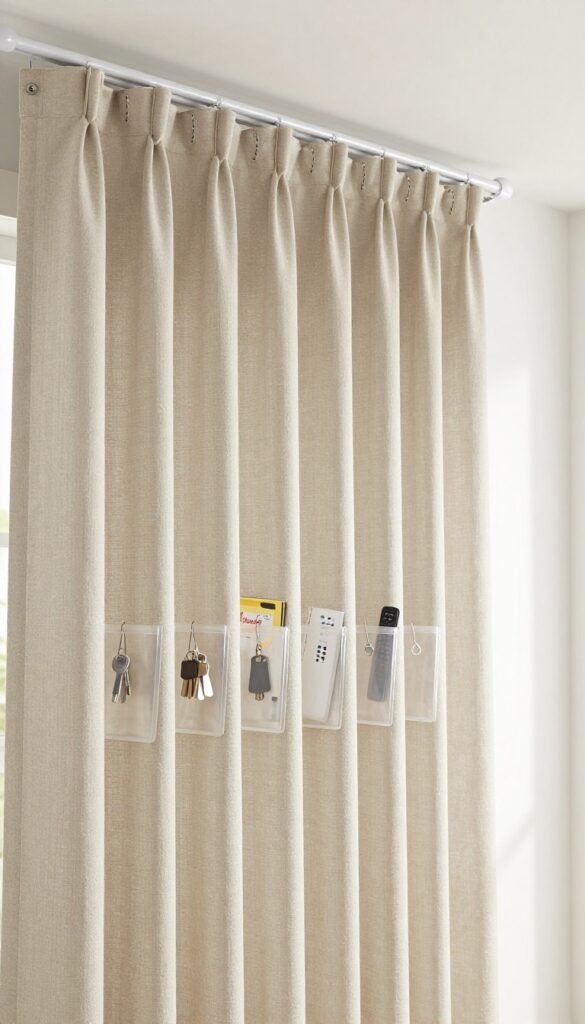
Curtains are great for separating spaces, but they can also work harder for you. By choosing a ceiling-mounted track and attaching clear pocket organizers to the back of the drape, you turn a simple partition into a vertical storage solution. It’s perfect for small items that tend to clutter surfaces—keys, mail, remotes—keeping them accessible yet out of sight when the curtain is drawn.
The heavy fabric adds a sense of privacy and softness, while the pockets keep daily essentials neatly corralled.
Why It Works
This idea combines the flexibility of a temporary room divider with smart storage that doesn’t take up floor space. The clear pockets are discreet from the front, so the curtain still looks clean and intentional. When you need the room to feel open, simply pull the curtain aside and the storage disappears.
Best For
Open-plan living and dining combos where you want occasional separation without sacrificing storage. Also great for studio apartments or home offices where every square inch counts.
Styling Tip
Choose a heavy linen or velvet drape in a neutral tone to anchor the space. Attach the pocket organizers using removable adhesive hooks so you can adjust the layout or remove them for cleaning. Keep the pockets organized by category—one for mail, one for keys, one for charging cables.
8. Low Console Table with a Room Screen
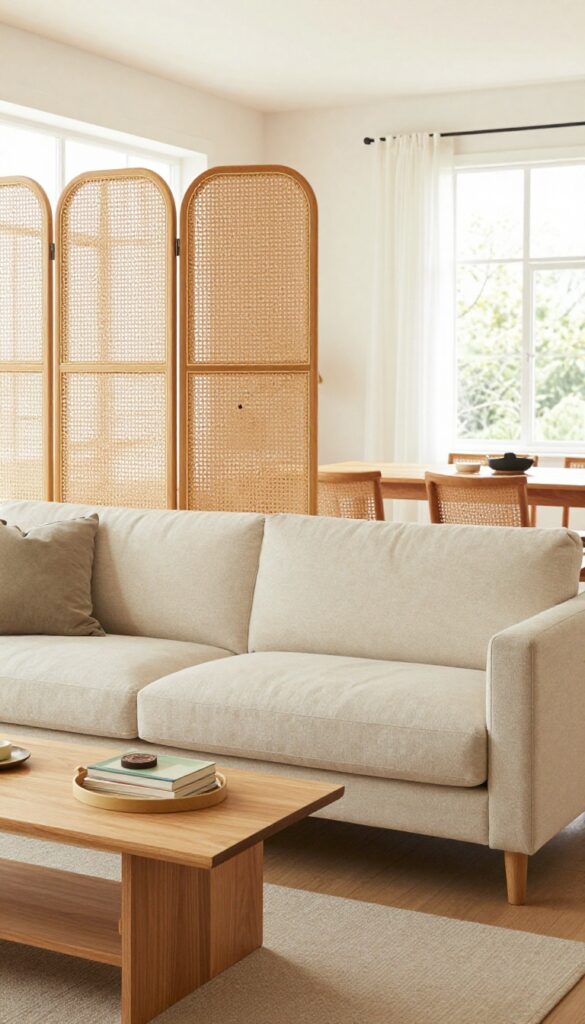
Behind the sofa is often wasted real estate, but a slim console table changes that instantly. Top it with a folding room screen, and you’ve got a flexible partition that adds height, pattern, and privacy without any permanent commitment. The console becomes a handy spot for trays, coasters, or a stack of books, while the screen softens the transition between living and dining zones.
Why It Works
This setup is pure storage-smart thinking. The console keeps everyday items within reach but out of sight, and the screen visually separates the two areas without blocking light or making the room feel smaller. It’s an easy way to define zones in an open floor plan without renovation.
Best For
Open-concept spaces where you want a subtle division between the living room and dining area, especially if you rent or prefer not to install permanent walls. It also works well in narrow rooms where a full partition would feel cramped.
Styling Tip
Choose a console with a lower shelf or drawers for extra storage, and pick a screen that complements your existing color palette—a natural rattan screen adds warmth, while a black metal one feels more modern. Keep the console surface mostly clear except for a small tray or a couple of decorative objects to maintain a clean look.
9. Open-Frame Metal Shelving Unit
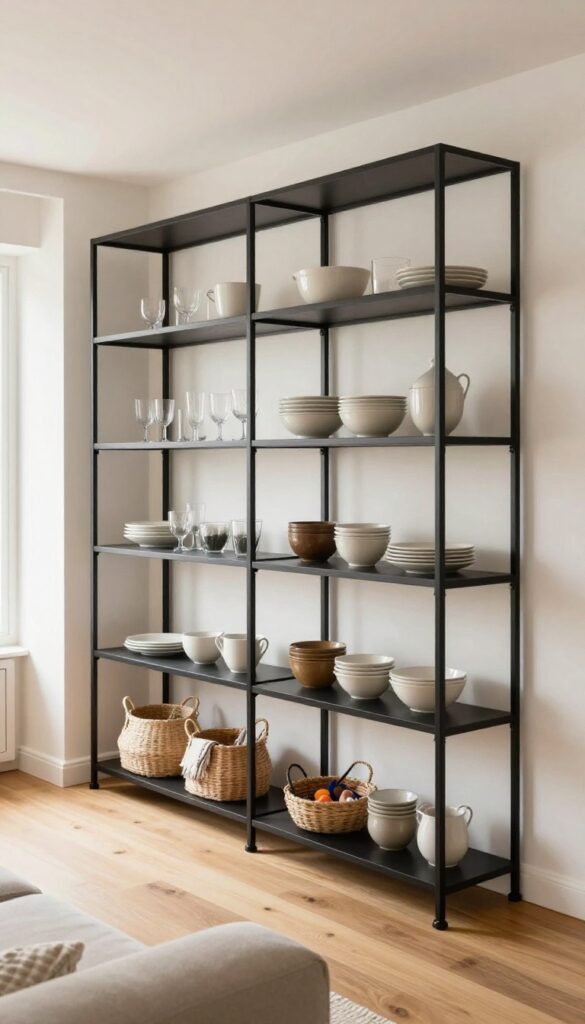
An open-frame metal shelving unit brings an industrial edge that feels both practical and intentional. The see-through design keeps sightlines open, so your room doesn't feel chopped in half. It's the kind of piece that earns its keep by showing off your favorite dishes on one side and hiding kid clutter in baskets on the other.
Why It Works
The open structure lets light pass through, which prevents the room from feeling boxed in. Adjustable shelves mean you can customize the spacing for tall vases on the dining side and chunky baskets on the living side. Plus, the metal frame adds a subtle loft-style vibe without being too heavy.
Best For
This works well in open-plan apartments or long living-dining combos where you need a visual break but can't lose light or space. It's also great for renters since it's freestanding and doesn't require drilling into walls.
Styling Tip
Stick to a neutral or black metal finish to keep things cohesive. On the dining side, arrange ceramics and glassware in odd-numbered groupings. On the living side, use woven baskets for throws and toys to add texture and warmth.
FAQ
What is the best partition for a small living-dining room?
A low bookshelf or a curtain track works well because they don't block light or make the space feel cramped. Look for options with built-in storage to maximize every inch.
How can I add storage without making the room feel cluttered?
Choose partitions with closed storage like cabinets or bins on at least one side. Keep the top surface clear or styled minimally with a few curated objects.
Do I need to drill holes for a ceiling-mounted partition?
Some options like tension rods or freestanding screens require no drilling. For sliding doors or heavy shelves, you'll need to secure them to the ceiling or wall for safety.
Can a partition also serve as a dining buffet?
Absolutely. A double-sided credenza or a low console with a shelf above can function as a buffet for dining while storing living room items on the opposite side.
What style of partition works with modern decor?
Clean lines and natural materials like wood, metal, or glass blend seamlessly. Avoid ornate details; instead, opt for simple geometric frames or solid colors.
Conclusion
Partitioning your living and dining room doesn't have to mean sacrificing storage or style. Each of these ideas lets you carve out distinct zones while keeping everyday essentials within arm's reach. The best part?
You can mix and match—like pairing a low credenza with a plant screen—to create a solution that's uniquely yours. Start with one idea that fits your space, and watch how a simple divider transforms the way you live in your home.