11 Covered Patio Ideas That Balance Shelter and Style
A covered patio often ends up as an afterthought—just a roof and a slab that keeps the rain off but does little else. But with the right mix of comfort and character, that same space can become your favorite room in the house, no matter the weather.
These 11 ideas focus on practical upgrades that add both function and flair, from simple fabric additions to built-in features that change how you use the area.
Whether you're starting fresh or giving an existing setup a facelift, you'll find plenty of ways to make your covered patio feel like a true outdoor living space.
1. Add a Ceiling Fan for Comfort and Flow
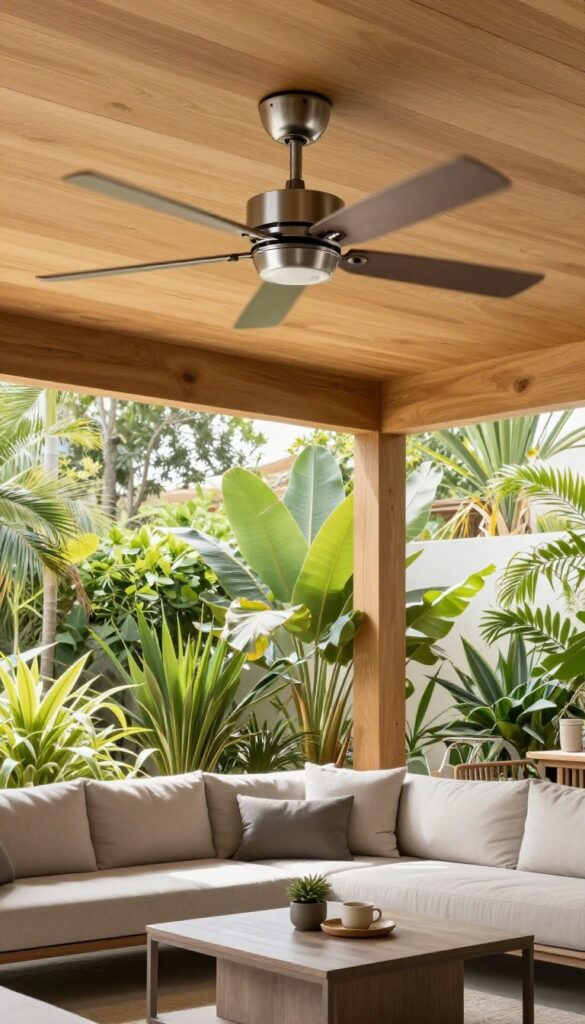
A covered patio can turn into a stuffy pocket of still air, especially in summer. A ceiling fan solves that by keeping the breeze moving, which makes the space feel several degrees cooler. It also helps disperse smoke from a fire pit or grill and keeps bugs from lingering around your seating area.
Choosing the right fan matters more than you might think. Look for a model rated for damp or wet locations—damp-rated is fine for a covered patio, but wet-rated is safer if the fan gets direct rain. The size should match your patio's square footage: a 52-inch fan works for most spaces up to 400 square feet, while larger areas may need two fans or a bigger blade span.
Installation height is another key factor. The fan should hang at least 7 feet above the floor and ideally 8 to 9 feet for optimal airflow. If your ceiling is low, consider a flush-mount model that sits close to the surface.
For higher ceilings, use a downrod to bring the fan into the comfort zone. Don't forget about the controls. A remote or wall switch with a timer is convenient, and some fans come with smart features that let you adjust speed or set schedules from your phone.
That way, you can turn it on before you step outside without fumbling for a pull chain.
Choosing The Right Fan For Outdoor Use
Outdoor ceiling fans aren't the same as indoor ones. They need to handle humidity, temperature swings, and occasional moisture without rusting or shorting out. Look for a damp-rated fan if your patio is fully covered, or a wet-rated one if it's exposed to rain.
Materials like stainless steel, powder-coated aluminum, and plastic blades resist corrosion better than wood or metal that isn't treated. Size matters for airflow. A fan that's too small won't move enough air, while one that's too large can feel overpowering.
Measure your patio's length and width, then match the blade span to the area. Most manufacturers provide a chart to guide you.
Placement And Height Tips
Position the fan in the center of the main seating area, not off to the side where the breeze won't reach. If your patio is long and narrow, you might need two fans spaced evenly. The fan should hang at least 7 feet above the floor to avoid head bumps, but no higher than 9 feet so the airflow still reaches you.
For sloped or angled ceilings, use a sloped-ceiling adapter or a ball-and-socket mount to keep the fan level. This ensures smooth operation and prevents wobbling.
Style And Finishes That Blend In
A ceiling fan doesn't have to look utilitarian. Many outdoor fans come in finishes like bronze, matte black, or white, with blades in wood tones or neutral colors. Choose a finish that complements your patio furniture and trim.
Some fans even include integrated LED lights, which can double as a light source for evening gatherings. Consider the fan's visual weight. A sleek, low-profile model works well on a modern patio, while a rustic or coastal design can add character to a traditional space.
The goal is to make the fan feel like a natural part of the patio, not an afterthought.
2. Install Outdoor Curtains for Softness and Privacy
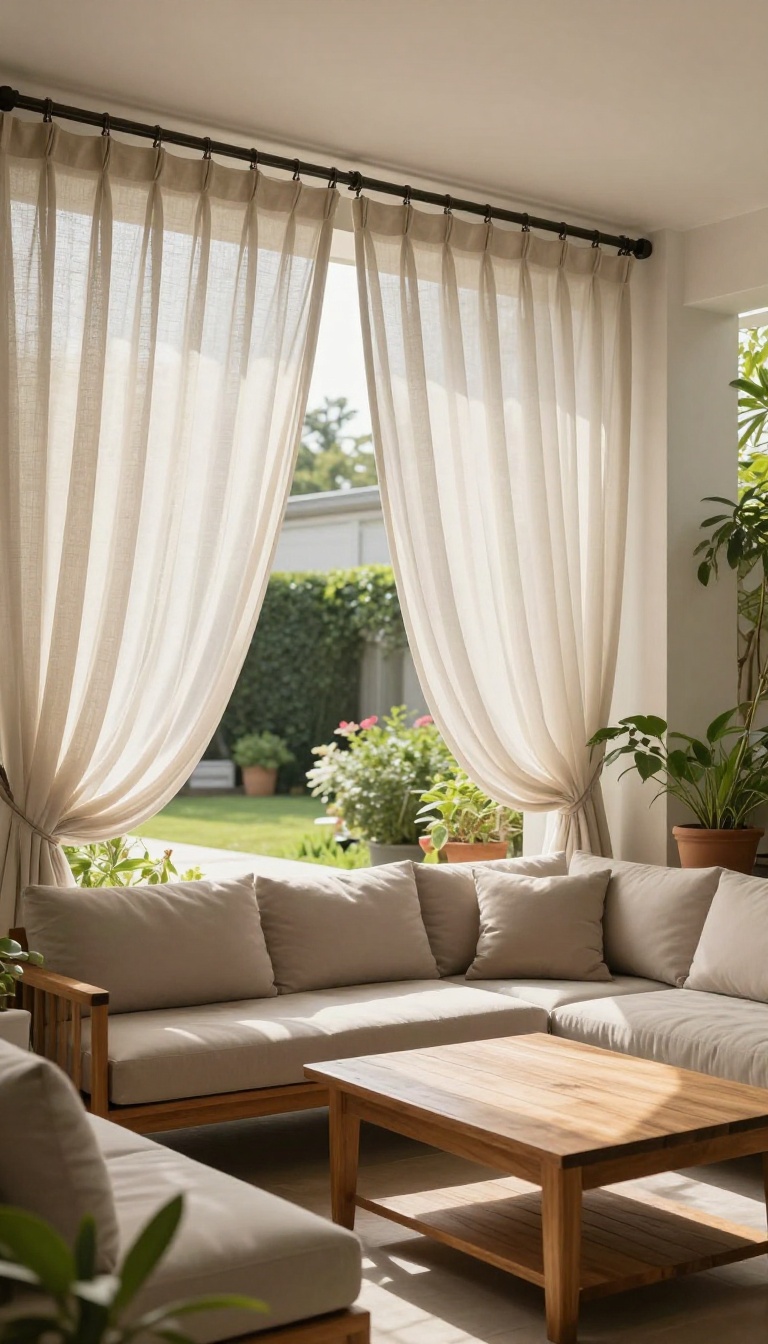
Outdoor curtains are one of the quickest ways to transform a covered patio from bare to inviting. They add a layer of softness that contrasts with hard surfaces, and they give you control over light and visibility. With the right fabric and hardware, they can also stand up to the elements for years.
Choose weather-resistant fabric like polyester or acrylic that won't fade or mildew. Install a sturdy rod or track that can handle wind, and consider adding weights to the bottom hem to keep curtains from blowing around. For privacy, opt for opaque panels; for a breezier feel, go with sheer or semi-sheer options.
Pick The Right Fabric
Not all fabrics are created equal when it comes to outdoor use. Look for solution-dyed acrylic or polyester that resists UV rays and moisture. Avoid cotton or linen unless they're treated, as they can rot or fade quickly.
If you want a soft, flowing look, choose a heavier drape that moves gracefully in the breeze.
Mounting And Hardware
A sturdy curtain rod or track is essential. Use stainless steel or powder-coated aluminum to resist rust. Install the rod high and wide to make the ceiling feel taller and the space larger.
For windy areas, use a track system with gliders to keep curtains in place, or add tiebacks to secure them when not in use.
Style And Function
Curtains can define zones, like a dining area or a cozy reading nook. They also provide instant privacy from neighbors and block harsh afternoon sun. Choose colors that complement your patio furniture and outdoor surroundings.
Neutral tones like beige or gray are versatile, while bold patterns can add a pop of personality.
3. Layer Rugs to Define Zones
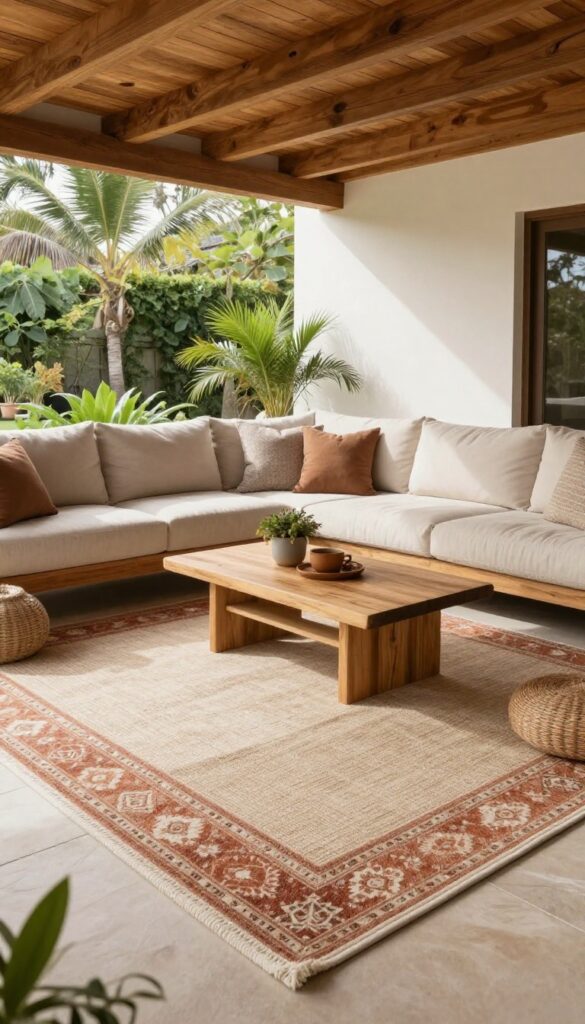
Bare concrete or wood underfoot can make a covered patio feel unfinished, no matter how nice the furniture is. An outdoor rug changes that instantly, adding warmth and color while anchoring the seating or dining area. But you don't have to stop at one—layering rugs is an easy way to create visual interest and separate different zones in an open layout.
Start with a large, durable base rug that fits your main seating group. Then add a smaller, contrasting rug on top, slightly off-center, to create a collected, lived-in look. This works especially well if you have a long, narrow patio—place one rug under the dining table and another under a lounge chair setup to break up the space.
Choose flat-weave or indoor-outdoor materials that can handle foot traffic and resist fading, and don't be afraid to mix patterns or textures.
Pick The Right Materials
Not all rugs are created equal when it comes to outdoor use. Look for polypropylene, polyester, or recycled plastic fibers—they dry quickly, resist mildew, and hold up to sun and rain. Avoid natural fibers like jute or sisal, which can absorb moisture and deteriorate.
If you want a softer feel underfoot, opt for a rug with a low pile and a rubber or PVC backing to keep it from slipping.
Layer With Purpose
Layering isn't just about looks—it helps define function. Use a large neutral rug as your base, then add a smaller, colorful one in a high-traffic area like in front of a sofa or under a coffee table. This creates a visual anchor and makes the space feel more intimate.
You can also layer a round rug over a square one to break up the lines and add a playful touch.
Maintenance And Care
Outdoor rugs are low-maintenance, but they still need occasional attention. Shake them out or sweep regularly to remove dirt and debris. For spills, spot-clean with mild soap and water.
During heavy rain, make sure the rug can dry completely—prop it up or roll it if necessary. With proper care, a quality outdoor rug can last for years, keeping your patio looking fresh and inviting.
4. Build a Built-In Bar or Serving Station
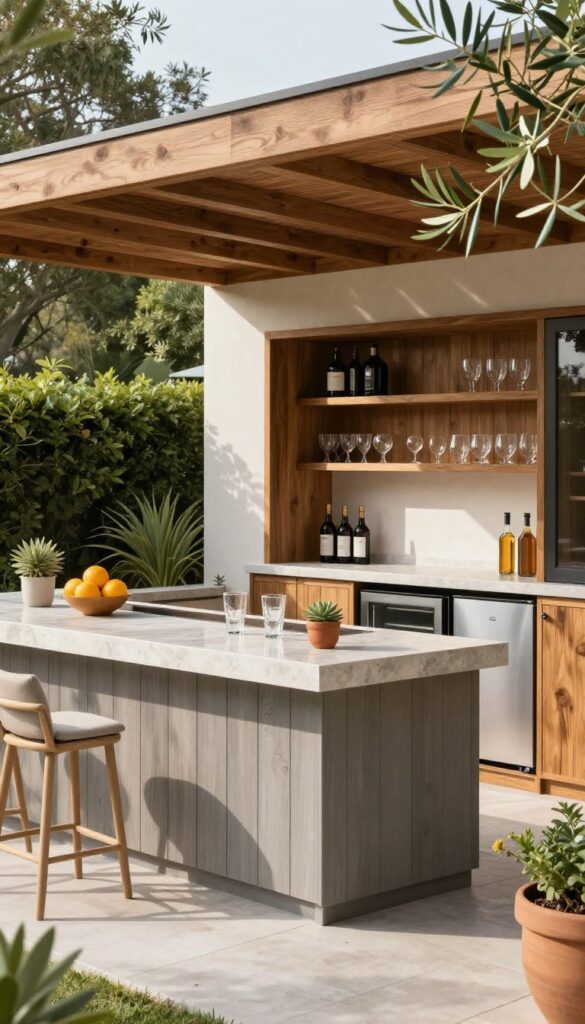
Hosting gets a lot easier when you don't have to run back and forth to the kitchen. A built-in bar or serving station keeps drinks, snacks, and glassware right where your guests are, and it adds a permanent touch of polish to your covered patio. With the right materials and a little planning, this feature can become the natural gathering spot in your outdoor space.
A built-in bar isn't just about convenience—it's about creating a dedicated spot that feels intentional. You can design it to match your patio's style, whether that's a sleek modern counter or a rustic wooden ledge. The key is to use materials that can handle the elements, so your bar looks great for years without constant upkeep.
Choose Weatherproof Materials
Since your bar will live outdoors, pick materials that resist moisture, sun, and temperature swings. Stone, concrete, and tile are solid choices for the countertop—they're durable and easy to wipe down. For the base, consider pressure-treated wood, composite decking, or metal that won't rust.
Avoid materials that absorb water or fade quickly, like untreated softwoods or cheap laminates.
Add Smart Storage
Think about what you'll actually store at the bar. Open shelves are great for displaying glassware and bottles, while closed cabinets keep less attractive items out of sight. Include a small drawer for bar tools like corkscrews and stirrers.
If you have room, a mini-fridge tucked under the counter keeps drinks cold and within arm's reach—a game-changer for parties.
Incorporate Lighting And Power
Don't forget the practical details. Add a couple of electrical outlets for blenders or phone chargers, and install task lighting above the bar so you can see what you're pouring after dark. Under-counter LED strips are a nice touch, too—they add a subtle glow and make the bar feel more inviting in the evening.
5. Incorporate a Fire Feature for Year-Round Use
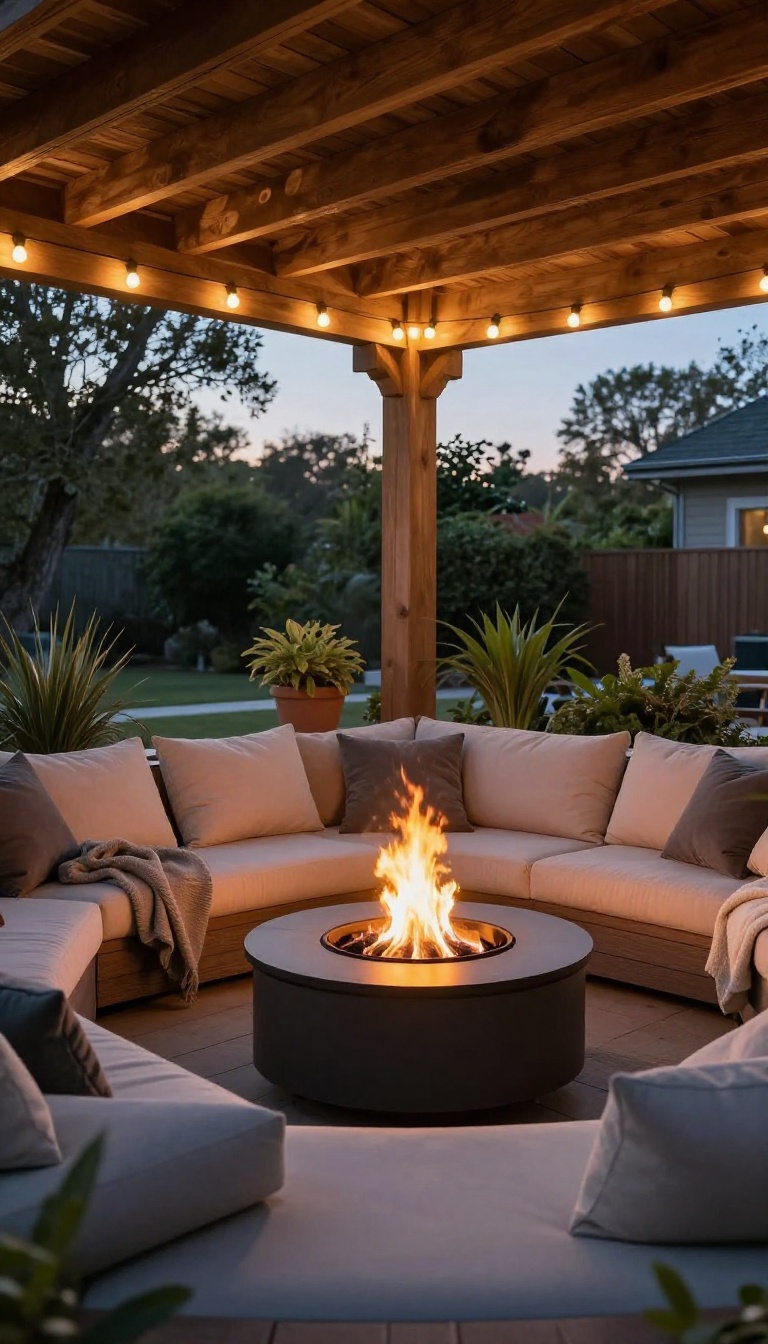
When the temperature drops, a covered patio often gets abandoned. But adding a fire feature changes that completely. A fire pit or outdoor fireplace brings warmth and a cozy focal point, making the space inviting even on chilly evenings.
It's not just about heat—it's about creating a gathering spot that draws people together.
A fire feature is one of the most effective ways to extend the life of your covered patio. It turns a fair-weather space into a year-round retreat. Whether you opt for a wood-burning pit or a gas-powered unit, the glow and warmth instantly make the area more welcoming.
Plus, it adds a touch of luxury that makes your patio feel like a true outdoor living room.
Choose The Right Fire Feature For Your Space
Think about the size of your patio and how you plan to use it. A small, round fire pit works well for intimate gatherings, while a linear or rectangular model can serve as a stylish focal point. If you're short on space, consider a wall-mounted fireplace or a tabletop fire bowl.
Gas options are cleaner and easier to control, but wood-burning pits offer that classic crackle and aroma. Weigh the pros and cons based on your lifestyle and local regulations.
Safety First: Placement And Ventilation
Even under a covered patio, proper ventilation is crucial. Never place a fire feature directly under a low ceiling or near flammable materials. Keep it at least 10 feet from any structure or overhang, and check the manufacturer's clearance requirements.
If you're unsure about the setup, consult a professional. Also, have a fire extinguisher nearby and always supervise the fire when it's lit.
Complement With Cozy Seating And Lighting
A fire feature is only as good as the seating around it. Arrange chairs and sofas in a semi-circle to encourage conversation. Add weather-resistant cushions and throws for extra comfort.
Soft lighting, like string lights or lanterns, enhances the warm glow of the fire and keeps the area functional after sunset. This combination makes your patio a place where people naturally want to linger.
6. Use String Lights or Lanterns for Ambiance
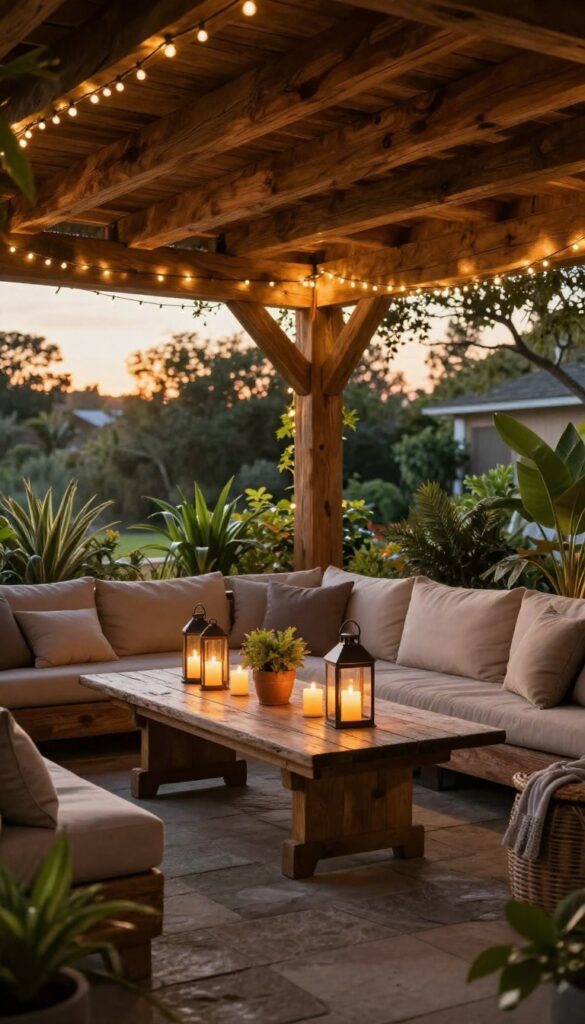
When the sun goes down, a covered patio can quickly fade into darkness. That’s where lighting steps in—not just to help you see, but to set the mood. String lights, lanterns, and LED candles add a warm, inviting glow that makes the space feel cozy and magical.
You don’t need to hire an electrician or install complicated fixtures. Simple, portable options can be hung, placed, or draped with minimal effort. Mixing different heights and intensities creates depth and visual interest, turning your patio into an evening retreat.
Lighting is one of the easiest ways to transform the feel of a covered patio. With a mix of string lights, lanterns, and candles, you can create layers of light that make the space inviting after dark. Start by hanging string lights along the ceiling or beams, then add lanterns on tables or the floor for a soft, flickering effect.
LED candles are a safe, low-maintenance alternative that still gives that warm glow. The key is to vary the heights and positions—some lights overhead, some at eye level, some low—to create a sense of depth and intimacy.
Hang String Lights With Purpose
Don’t just drape them randomly. Plan where you want the light to fall. Hang them along the perimeter to define the edges, or crisscross them overhead to create a canopy effect.
Use hooks or clips that are easy to remove, so you can change the layout whenever you want. If you have beams, wrap the lights around them for a more integrated look.
Mix Lanterns And Candles For Warmth
Lanterns come in all shapes and sizes—metal, wood, glass, or paper. Place a few on side tables, hang them from hooks, or set them on the floor near planters. For a safer option, use LED candles inside the lanterns.
They flicker like real flames but don’t require supervision. Grouping lanterns of different heights adds a casual, collected feel.
Create Depth With Multiple Light Levels
Relying on a single light source can make the space feel flat. Combine overhead string lights with lower lanterns and maybe a floor lamp or a spotlight aimed at a plant or wall. This layering adds dimension and makes the patio feel more like an indoor room.
Dimmer switches or smart plugs let you adjust the brightness to match the occasion.
7. Add Greenery with Potted Plants and Vertical Gardens
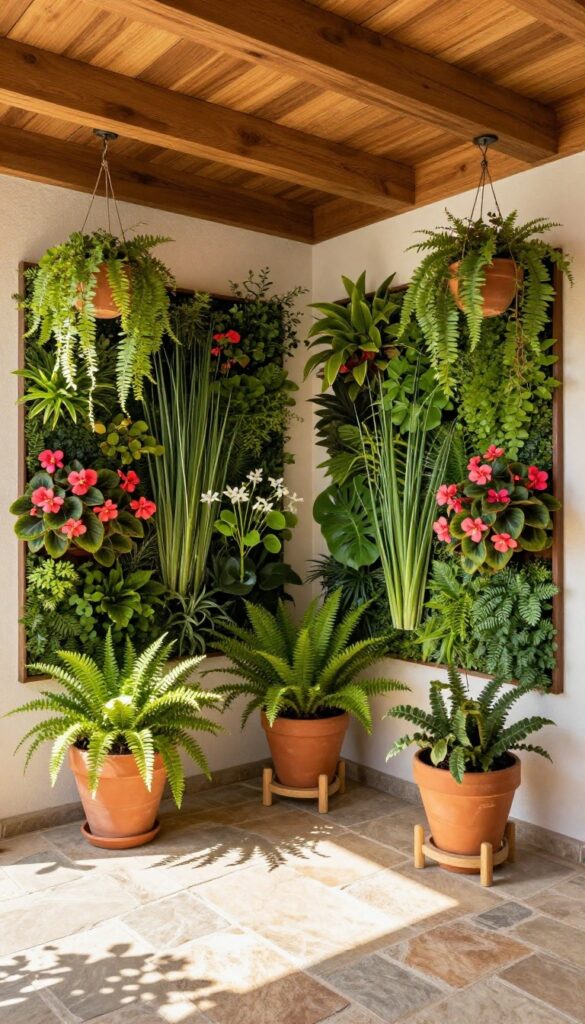
Plants have a way of making any space feel more alive, and a covered patio is no exception. They soften the hard lines of the structure and add a pop of color that changes with the seasons. Even if you don't have a green thumb, there are plenty of low-maintenance options that thrive in the shade.
Start with a mix of potted plants in different sizes to create depth and interest. Group them in corners or along the edges to frame the space. For smaller patios, hanging baskets and vertical gardens can maximize your greenery without taking up floor space.
Choose plants that suit the light conditions under your cover—some areas might be fully shaded, while others get dappled sun.
Choosing The Right Plants
Not all plants do well under a covered patio. If your space gets little direct sunlight, opt for shade-loving varieties like ferns, hostas, or calatheas. For spots with more light, consider herbs like basil or mint, or flowering plants like begonias.
Succulents are great for sunny, dry areas and require minimal watering.
Arranging Pots For Impact
Instead of lining up pots in a row, group them in odd numbers—three or five—at different heights. Use plant stands or overturned pots to elevate some, and let trailing plants spill over the edges. This creates a more natural, layered look that draws the eye.
Don't forget to leave enough room for walking and seating.
Going Vertical With A Living Wall
Vertical gardens are a smart way to add greenery without sacrificing floor space. You can install a modular wall planter, repurpose a wooden pallet, or hang a series of pots on a trellis. These work especially well against a blank wall or fence, turning it into a lush focal point.
Just make sure to water regularly, as vertical setups can dry out faster.
8. Choose Durable, Stylish Furniture
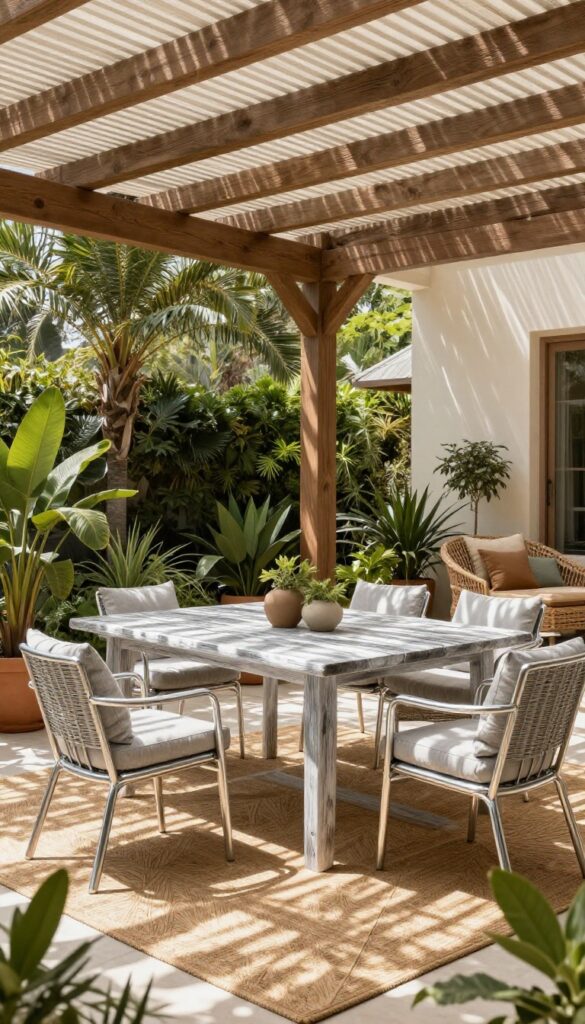
Furniture can make or break a covered patio. It needs to handle sun, rain, and everything in between, but it also has to look good enough that you actually want to sit out there. The right pieces balance toughness with style, so you're not replacing them every couple of years or hiding them under ugly covers.
When shopping for patio furniture, focus on materials that are built to last. Teak is a classic choice—it's naturally weather-resistant and develops a nice silver patina over time. Aluminum is lightweight and won't rust, while all-weather wicker offers that cozy, textured look without the maintenance of natural wicker.
Pair these frames with cushions made from outdoor-grade fabric that resists fading and mildew. Look for removable, washable covers so you can keep everything fresh with minimal effort.
Mix And Match Materials
You don't have to stick to one material. Combining different textures—like a teak table with aluminum chairs—adds visual interest and lets you play with durability. Just make sure each piece is rated for outdoor use, so you're not mixing something that will rust with something that will fade.
Prioritize Comfort
Style is great, but comfort is what keeps you outside. Test cushions for firmness and support, and consider deep seating for lounging. Add throw pillows for extra coziness, but choose ones with zippered, washable covers so they're easy to clean after a rainstorm.
Storage And Maintenance
Even durable furniture needs a little care. Invest in covers or a storage bench to protect cushions during harsh weather. Regularly wipe down frames and tighten any loose screws.
A few minutes of upkeep now saves you from costly replacements later.
9. Create a Cozy Lounge Area with Outdoor Rugs and Pillows
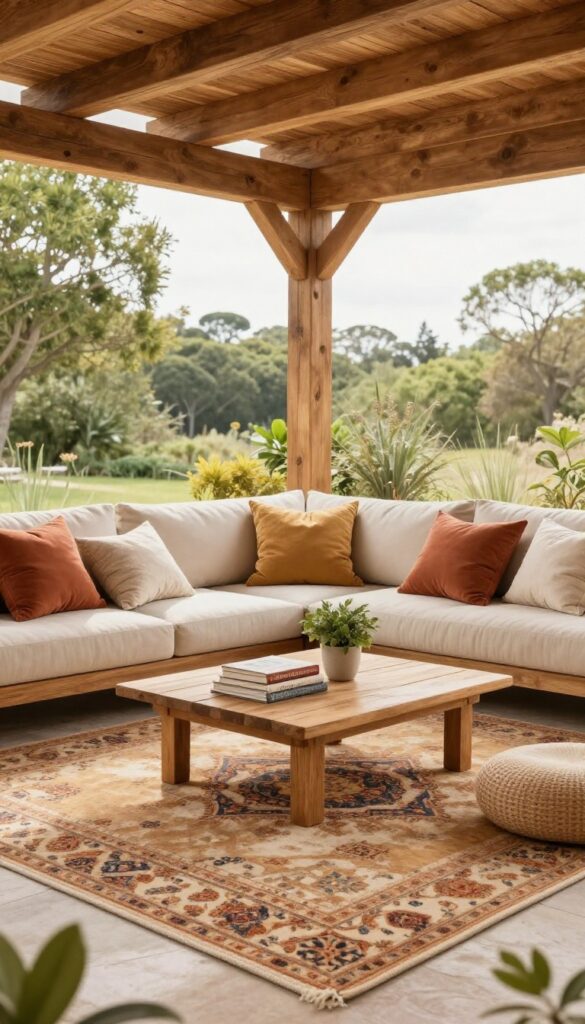
A covered patio often becomes a dumping ground for mismatched chairs and forgotten planters. But with a few soft touches, you can turn that same space into a spot where people actually want to linger. The trick is to layer textures and colors that make the concrete or wood feel like an extension of your living room.
Start by defining the zone with an outdoor rug that anchors the furniture. Then pile on floor cushions, throw pillows, and a low table for drinks and books. The goal is to create a casual, inviting nook that begs you to sit down, kick off your shoes, and stay a while.
Pick The Right Rug
Outdoor rugs are built to handle sun, rain, and foot traffic, but not all are created equal. Look for polypropylene or other synthetic fibers that resist fading and mildew. Choose a size that fits your seating area—large enough to ground the space but not so big it gets lost under furniture.
A bold pattern can hide dirt and add personality, while a neutral tone keeps the look calm and versatile.
Layer Cushions And Pillows
Mixing floor cushions with standard throw pillows gives you flexibility. Use large floor cushions as extra seating or backrests, and scatter smaller pillows in complementary colors and textures. Don't be afraid to mix stripes, solids, and geometric prints—just keep a common color palette to tie it together.
For easy maintenance, choose fabrics with outdoor ratings that resist water and UV damage.
Add A Low Table And Lighting
A low coffee table or a few stacked wooden crates give you a place to set drinks, books, or a small plant. If you want to use the space in the evening, add a string of lights overhead or a couple of lanterns on the table. The soft glow makes the lounge area feel cozy and inviting after dark.
10. Install Outdoor Speakers for Music and Entertainment
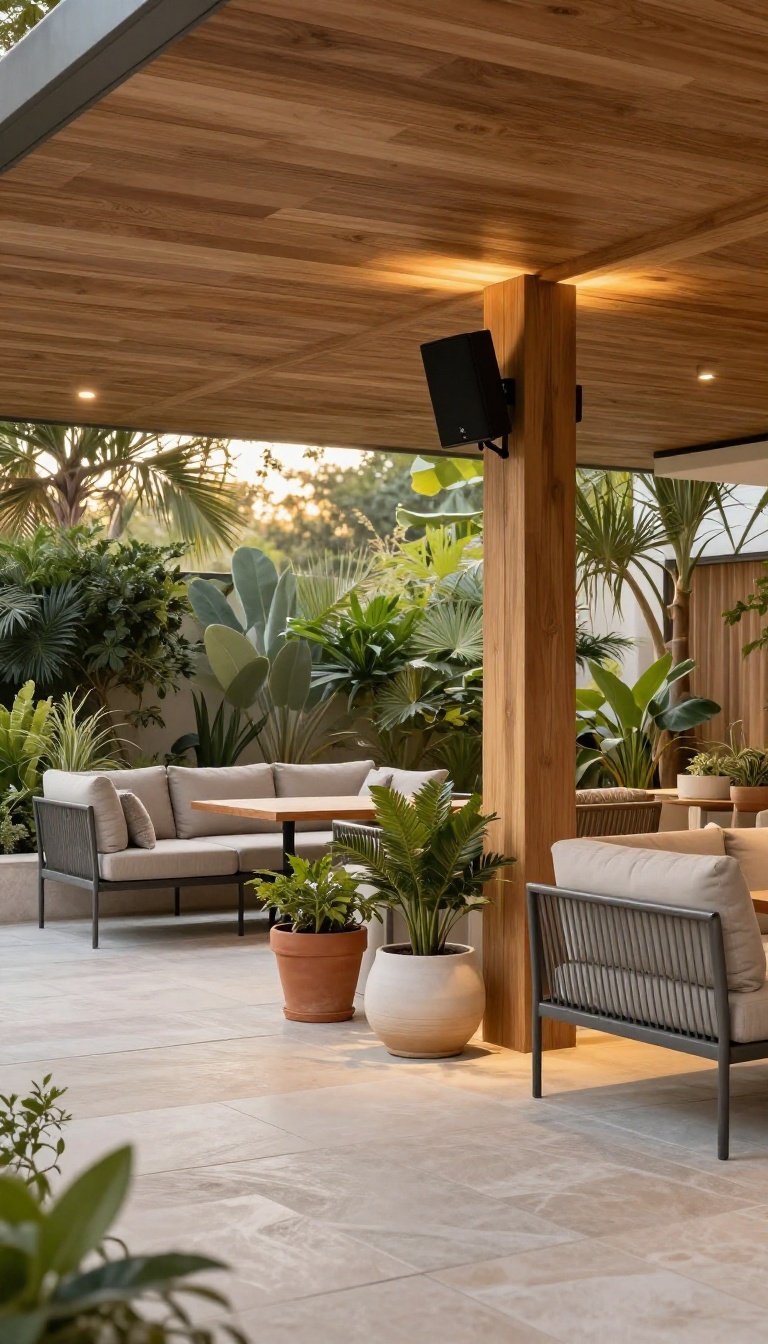
Music can transform a patio from a quiet corner into the heart of the party. But regular speakers aren't built for the elements—humidity, temperature swings, and the occasional splash can ruin them fast. That's where weatherproof outdoor speakers come in, letting you crank up your favorite playlist without worrying about damage.
Outdoor speakers are designed to handle the elements, so you can enjoy music, podcasts, or game-day audio rain or shine. Place them strategically for balanced sound—think corners or under eaves—and consider a smart system for easy control from your phone or voice assistant.
Choose The Right Type
You've got options: in-wall, in-ceiling, or freestanding speakers. In-ceiling models blend into the patio cover for a clean look, while freestanding ones are portable and easy to move. Look for an IP rating (like IP65) to ensure they're truly weatherproof.
Placement For Balanced Sound
Don't just stick them anywhere. Place speakers at ear level when you're seated, and spread them out to avoid a 'one-sided' audio experience. If you're covering a large area, consider adding a subwoofer for deeper bass.
Smart Control And Connectivity
Smart speakers pair with your home Wi-Fi and voice assistants, so you can change tracks or adjust volume without getting up. Many also support multi-room audio, letting you sync music between the patio and indoor spaces.
11. Add a Ceiling or Wall-Mounted Heater for Chilly Evenings
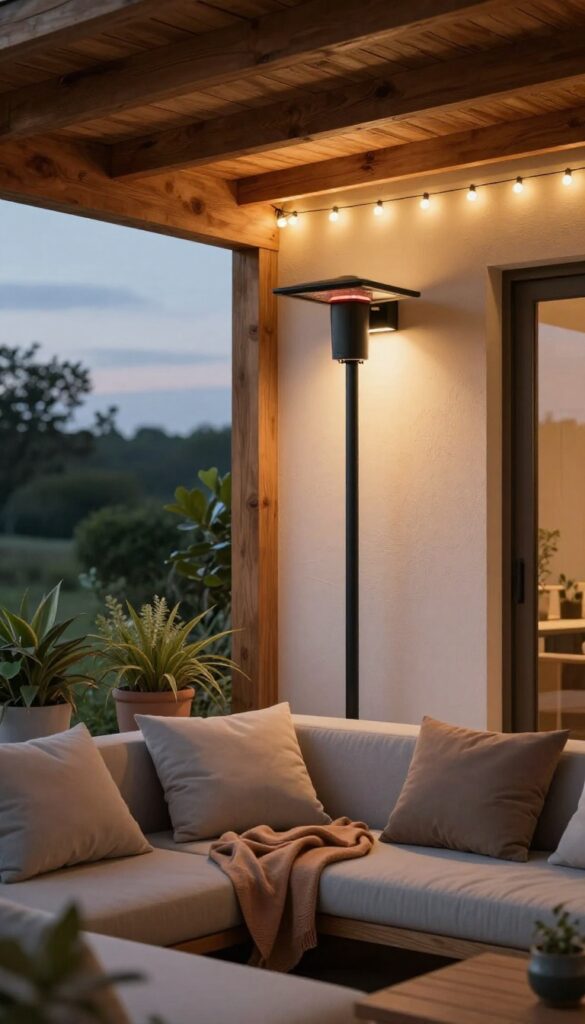
When the temperature dips, that covered patio can turn from a favorite hangout into a spot you avoid. A patio heater—whether a standing propane model or a sleek wall-mounted infrared unit—takes the chill off and lets you enjoy your space even when the forecast says otherwise. It’s a simple upgrade that extends your outdoor season by months.
A heater isn’t just about comfort; it’s about making your patio usable more often. With the right setup, you can sit outside on a crisp fall evening or a cool spring night without rushing back inside. Plus, a well-chosen heater can add a subtle glow and a modern touch to your covered space.
Pick The Right Heater For Your Space
Think about the size of your patio and how you’ll use it. For a small seating area, a wall-mounted infrared heater works wonders—it warms objects and people directly, not the air, so it feels cozy fast. For larger gatherings, a freestanding propane heater can radiate heat in all directions, but make sure you have proper ventilation and clearance from the ceiling.
Placement And Safety Tips
Where you put the heater matters. Keep it at least three feet away from anything flammable, and make sure it’s stable if you go with a standing model. For wall-mounted units, mount them high enough to avoid accidental bumps but low enough to actually feel the warmth.
Always follow the manufacturer’s instructions and consider a model with automatic shut-off for peace of mind.
Style That Fits Your Patio
Heaters don’t have to be an eyesore. Many modern infrared units come in sleek finishes like matte black or brushed steel that blend seamlessly with your decor. You can also find propane heaters with built-in tables or stylish covers that double as furniture.
Choose a design that complements your patio’s vibe—whether that’s rustic, industrial, or minimalist.
FAQ
What is the best material for a covered patio roof?
The best material depends on your climate and style. Aluminum and steel are durable and low-maintenance, while wood offers a natural look but requires more upkeep. Polycarbonate panels let in light while blocking UV rays.
How can I make my covered patio feel more private?
Use outdoor curtains, bamboo screens, lattice panels, or tall planters with shrubs. Adding a pergola with climbing vines can also create a natural privacy screen.
What type of lighting is best for a covered patio?
Layered lighting works best. Combine overhead string lights or pendant lights with task lighting for cooking or reading, and add accent lights like lanterns or LED strips for ambiance.
Can I use indoor furniture on a covered patio?
It's not recommended. Indoor furniture isn't designed to withstand moisture, temperature changes, or UV exposure. Choose outdoor-rated materials that are weather-resistant and easy to clean.
How do I protect my covered patio from insects?
Install screens or netting, use citronella candles or torches, and consider a ceiling fan to keep bugs away. Also, eliminate standing water and keep the area clean to reduce breeding grounds.
Conclusion
You don't have to overhaul your entire patio at once—just pick the idea that solves your biggest comfort or style gap first. Whether it's adding a retractable canopy, string lights, or a cozy outdoor curtain, each upgrade brings you closer to a space that works in every season.
Start with one change, see how it feels, and let your patio evolve naturally. Before long, you'll have a sheltered spot that's as inviting as any room inside your home.