11 Earthy Living Room Ideas That Layer Natural Texture for Cozy Vibes
There’s something about natural textures that instantly makes a room feel more grounded. Think woven baskets, chunky knits, and the soft grain of unfinished wood. These elements don’t just look good—they invite you to touch, settle in, and stay awhile.
If your living room feels a little flat or too polished, adding earthy layers can shift the whole mood. You don’t need a full renovation.
Small swaps and thoughtful additions can bring that warm, lived-in feel without sacrificing style. Let’s walk through 11 ideas that make natural texture the star of your space.
1. Start with a Jute or Sisal Rug
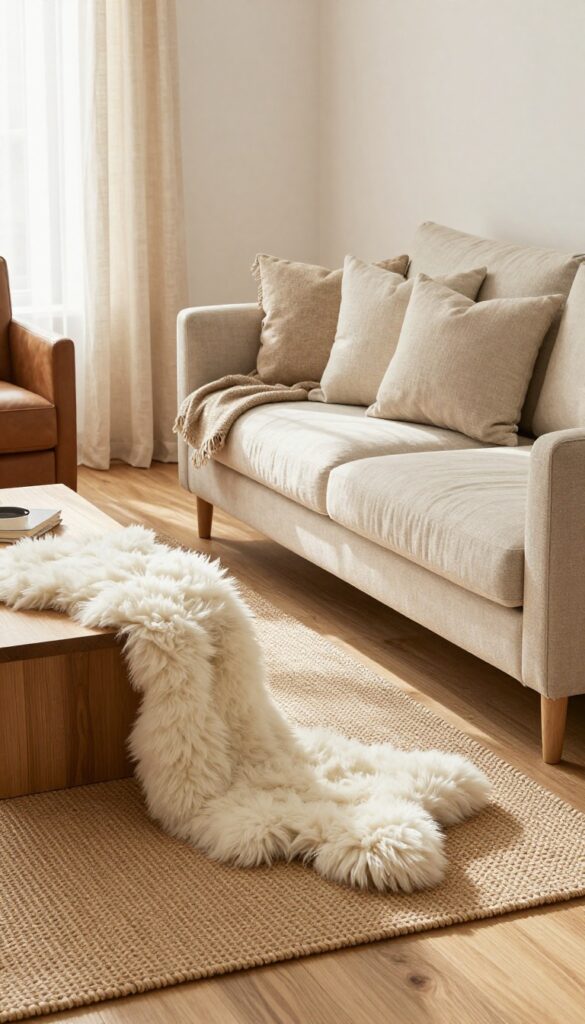
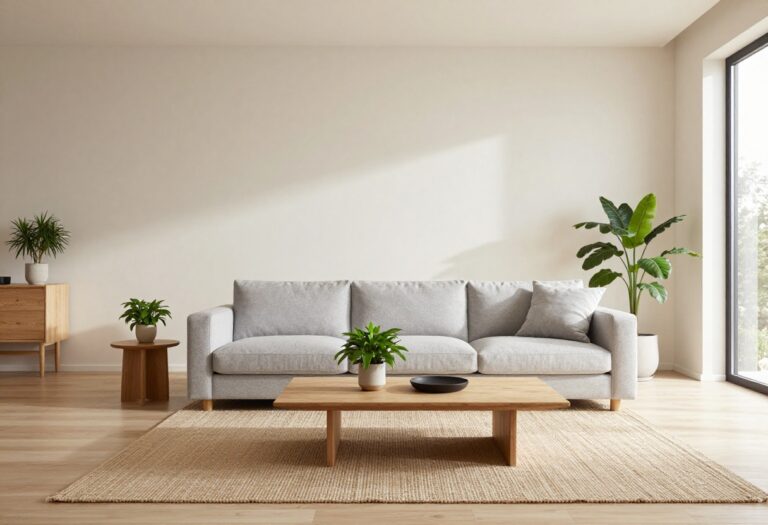
Layering texture starts from the ground up, and nothing does that better than a natural fiber rug. Jute and sisal bring an instant organic feel that softens hard floors and anchors the room with warmth. They’re also surprisingly durable and budget-friendly, making them a smart foundation for any earthy living room.
A natural fiber rug sets the foundation for earthy texture. Jute and sisal add warmth underfoot and pair well with almost any color palette. Their neutral tones let other textures—like wool throws, linen curtains, or leather sofas—take center stage.
For a cozy layered look, place a smaller wool or cotton rug on top of your jute rug to define a seating area or add softness.
Best Colors And Patterns
Stick with undyed or lightly bleached tones like natural beige, warm tan, or pale oatmeal. These shades blend seamlessly with wood floors and neutral walls. If you want subtle pattern, look for a herringbone or chevron weave in sisal—it adds visual interest without overwhelming the space.
Where To Place It
In a living room, let the rug extend at least 6 inches beyond your sofa on each side. For a cozy feel, choose a size that allows the front legs of all main furniture pieces to sit on the rug. This anchors the seating group and makes the room feel intentionally layered.
Cozy Detail
Add a sheepskin or faux fur throw on the rug near the coffee table. The contrast between the rough weave and the plush fur creates a tactile moment that invites bare feet and lounging.
2. Layer in Linen Curtains for Soft Movement
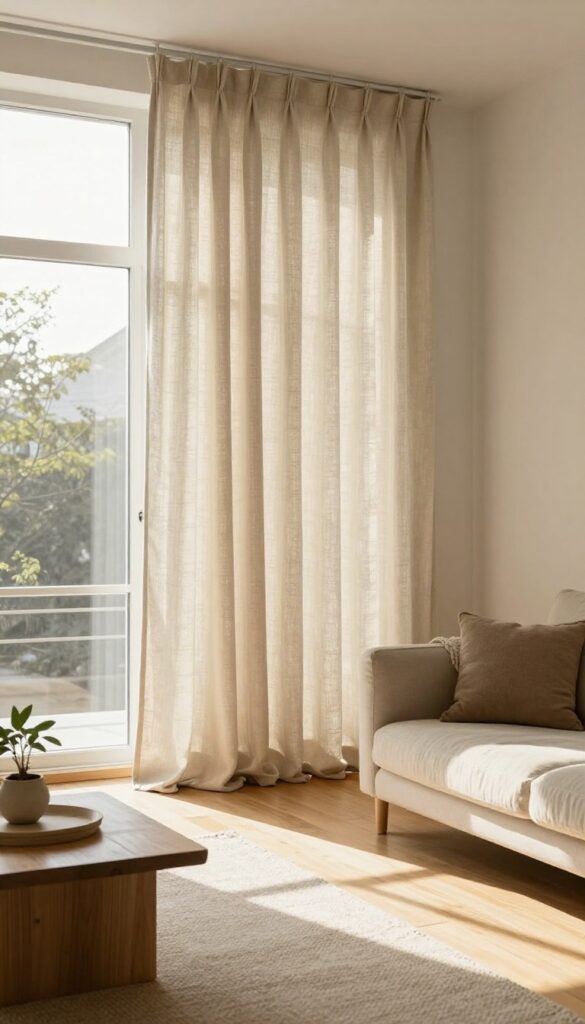
There’s something about the way linen catches the light that instantly softens a room. These curtains don’t try to be perfect—they wrinkle, they shift, they filter sunlight into a warm, hazy glow. In an earthy living room, that gentle movement adds a layer of life that feels organic and unhurried.
Plus, they’re one of the easiest swaps you can make if your space feels a little flat or too rigid.
Linen curtains bring a relaxed, airy feel. Their slight wrinkles and soft drape add visual texture while filtering light beautifully. They work especially well in living rooms with lots of natural light, but even in darker spaces, they add a softness that other fabrics can’t match.
Choose a neutral tone like oatmeal, stone, or warm white to keep the look cohesive with other natural textures.
Best Colors
Stick with earthy neutrals—think undyed flax, warm beige, or a soft clay. These tones blend seamlessly with wood, stone, and greenery. Avoid stark white; it can feel too crisp for the cozy, layered vibe you’re going for.
Hanging Tip
Hang your curtains high and wide—mount the rod close to the ceiling and extend it past the window frame. This makes the room feel taller and lets the fabric pool slightly on the floor for that relaxed, lived-in look.
Texture Mix
Pair linen curtains with heavier textures like a chunky knit throw or a wool rug. The contrast between the airy linen and dense fabrics creates depth without clutter. Add a wooden curtain rod or iron rings to tie it back to the earthy theme.
3. Add a Chunky Knit Throw on the Sofa
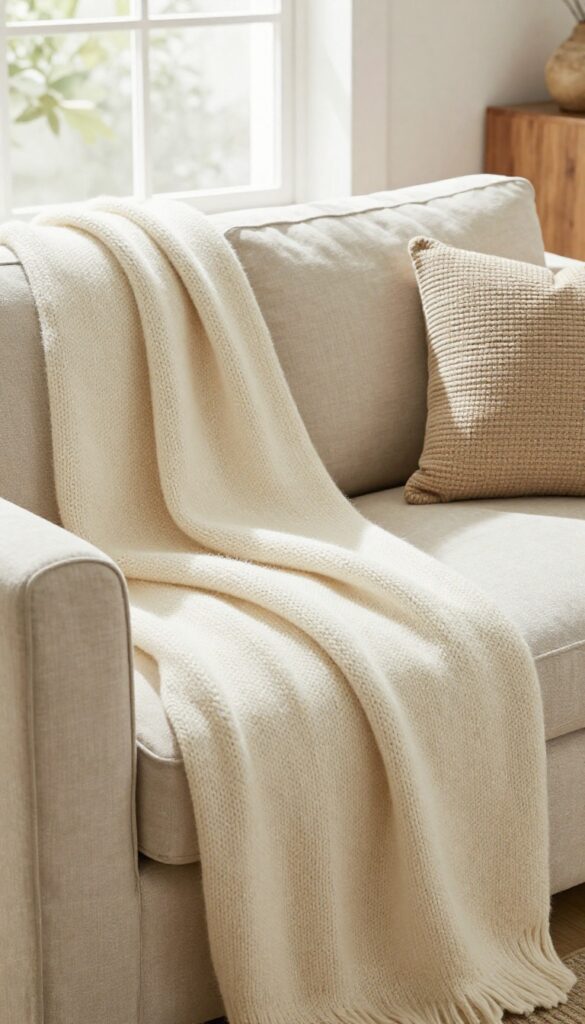
A chunky knit throw is one of the easiest ways to layer in texture without overhauling your whole room. The oversized stitches and soft, natural fibers instantly make a sofa look more inviting—like someone just finished a nap there. Draped loosely over one arm or folded across the back, it adds visual weight and warmth that feels organic, not staged.
Choose a cream or oatmeal shade to keep things neutral and grounding. The thickness of the knit creates a tactile contrast against smoother upholstery like linen or cotton. This works especially well in rooms with wood tones or stone accents, where the softness balances the harder surfaces.
Plus, it's practical: you'll actually use it on chilly evenings.
Best Colors
Stick with undyed or lightly tinted natural shades: cream, oatmeal, taupe, or warm gray. These colors blend seamlessly with earthy palettes and won't compete with other textures in the room. Avoid bright whites or stark grays—they can feel cold against the cozy vibe you're going for.
Texture Mix
Pair the throw with a woven basket for storage or a linen cushion nearby. The contrast between the chunky knit and smoother or rougher textures (like jute or velvet) keeps the eye moving and adds depth. Avoid pairing it with another heavy knit on the same piece—it can feel bulky.
Finishing Touch
Drape the throw so it cascades over the armrest with a slight fold, not perfectly straight. A little asymmetry looks lived-in and effortless. If your sofa is dark, go for a lighter throw; if it's light, a slightly darker oatmeal adds definition.
4. Incorporate Wood Accents with Live Edges
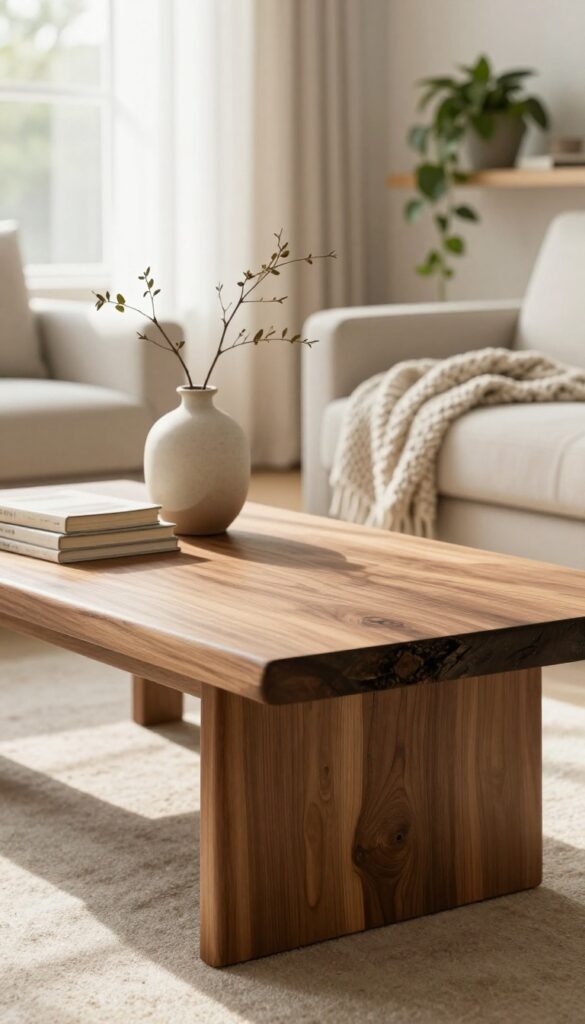
A live-edge coffee table or shelf brings the outdoors in with its raw, organic silhouette. Instead of perfectly straight lines, you get natural curves, knots, and grain patterns that make each piece one of a kind. That subtle imperfection adds warmth and character, instantly making your living room feel more grounded and inviting.
Live-edge furniture works because it blends structure with nature. The smooth, polished top contrasts with the rugged bark edge, creating visual interest without trying too hard. Place a live-edge console behind your sofa or use a slab coffee table as the room's anchor.
Pair it with soft textiles like a chunky knit throw or linen cushions to keep the space feeling cozy, not cold.
Best Woods For A Warm Look
Walnut and oak are popular choices for live-edge pieces because their rich tones complement earthy color palettes. Walnut adds depth with its dark brown hues, while oak brings a lighter, honeyed warmth. If you prefer a more rustic vibe, reclaimed pine or cedar offers visible knots and a weathered finish that feels lived-in from day one.
Styling Tip: Balance The Raw Edge
- Because live-edge furniture is naturally bold, keep surrounding decor simple. Let the wood be the star. Style your live-edge shelf with a few ceramic vases, a stack of books, or a single trailing plant.
- Avoid overcrowding—negative space helps the organic shape stand out and keeps the room feeling airy.
Where To Place It
A live-edge coffee table works best in the center of the seating area, where its curves soften the layout. For a smaller space, a live-edge floating shelf above the sofa adds character without taking up floor space. Even a live-edge side table next to an armchair can introduce texture and warmth without overwhelming the room.
5. Use Woven Baskets for Storage and Style
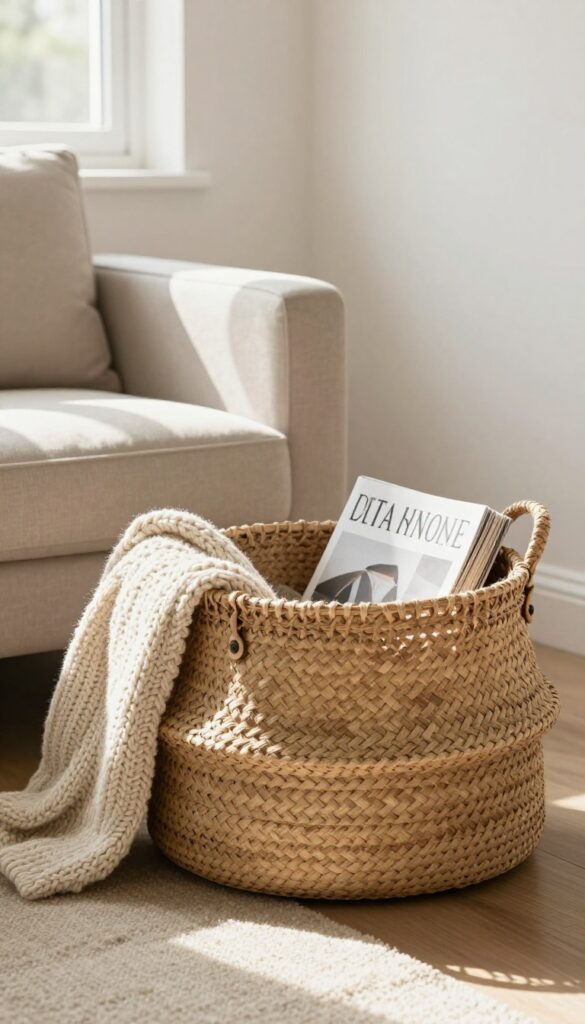
Baskets are one of those rare decor pieces that pull double duty without ever looking like they're trying too hard. Woven from natural materials like seagrass, rattan, or bamboo, they bring warmth and texture to a room in a way that plastic bins or sleek metal containers just can't match. Plus, they hide clutter beautifully — think throw blankets, magazines, or kids' toys — all while adding to the cozy, layered look you're going for.
Grouping baskets in different sizes creates a visual rhythm that feels intentional and collected. Place a trio near the fireplace to hold firewood or extra blankets, or tuck a large one beside the media console for remote controls and cables. The key is to vary the heights and weaves: a tight-woven seagrass basket next to a chunky rattan one adds depth without being busy.
For a more curated feel, stick to one material but play with shape — round, rectangular, and oval baskets together look effortlessly styled.
Best Materials And Finishes
- Seagrass is durable and has a neutral, sandy tone that blends with almost any color scheme. Rattan feels lighter and more airy, perfect for a breezy, relaxed vibe. Bamboo offers a slightly darker, more structured look that works well in modern earthy spaces.
- For a touch of contrast, look for baskets with leather handles or dyed accents in warm brown or charcoal.
Where To Place Them
Besides the fireplace and media console, baskets work wonders under console tables, on open shelving, or even as plant pot covers. In a small living room, a single large basket can serve as both a side table and storage — just top it with a tray for drinks or remotes. Near the entry, use a tall basket for umbrellas or dog leashes to keep the clutter contained.
Styling Tip: Mix And Match
Don't be afraid to combine different weaves and colors within the same natural palette. A tight-weave basket next to an open-weave one creates textural interest. For a cohesive look, limit the color family to warm neutrals — tan, oatmeal, and coffee — and let the varying patterns do the work.
6. Bring in Stone or Terracotta Decor
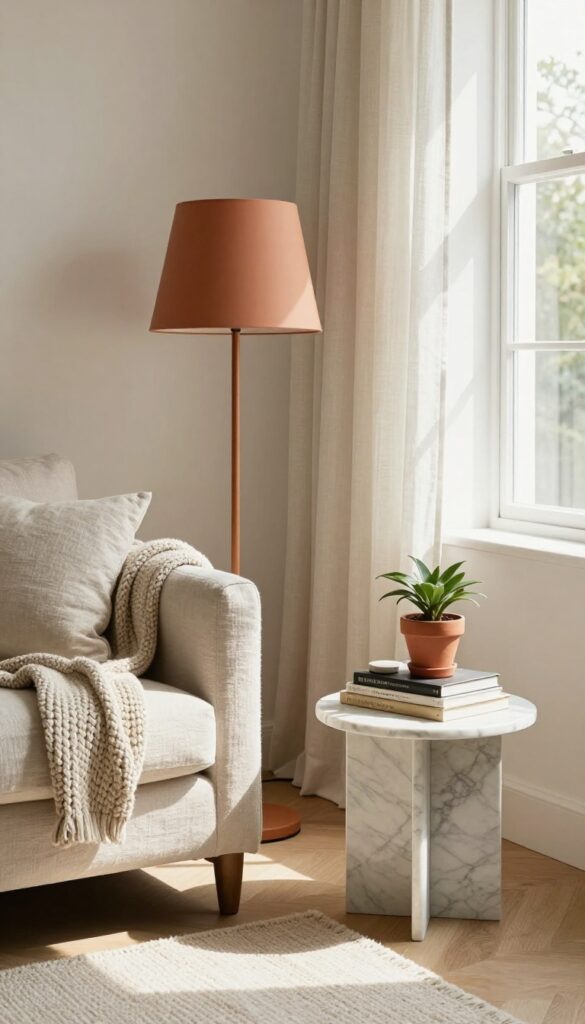
Stone and terracotta bring a grounded, earthy feel that balances out all the soft layers in a cozy living room. The cool, matte surfaces of these natural materials create a nice contrast with plush sofas and chunky knit throws, adding visual depth without feeling heavy. A few well-placed pieces can make the whole space feel more intentional and connected to nature.
Stone coasters, terracotta planters, or a marble side table introduce cool, earthy surfaces that contrast nicely with soft textiles. These materials add a subtle ruggedness that keeps the room from feeling too precious or overly styled. They also age beautifully, developing character over time with natural patina.
Best Materials
Look for unglazed terracotta, honed marble, slate, or limestone. Avoid overly polished finishes that can feel too sleek. The goal is matte, tactile surfaces that invite touch and feel grounded.
Texture Mix
Pair stone or terracotta with soft, nubby textiles like a wool rug, linen curtains, or a chenille throw. The contrast between rough and smooth, cool and warm, creates a layered, cozy look that feels curated but not fussy.
Small-space Fix
In a small living room, use a single statement piece like a terracotta floor lamp or a marble-topped coffee table. Too many hard surfaces can make the space feel cold, so balance with plenty of softness elsewhere.
7. Style with Ceramic Vases and Pottery
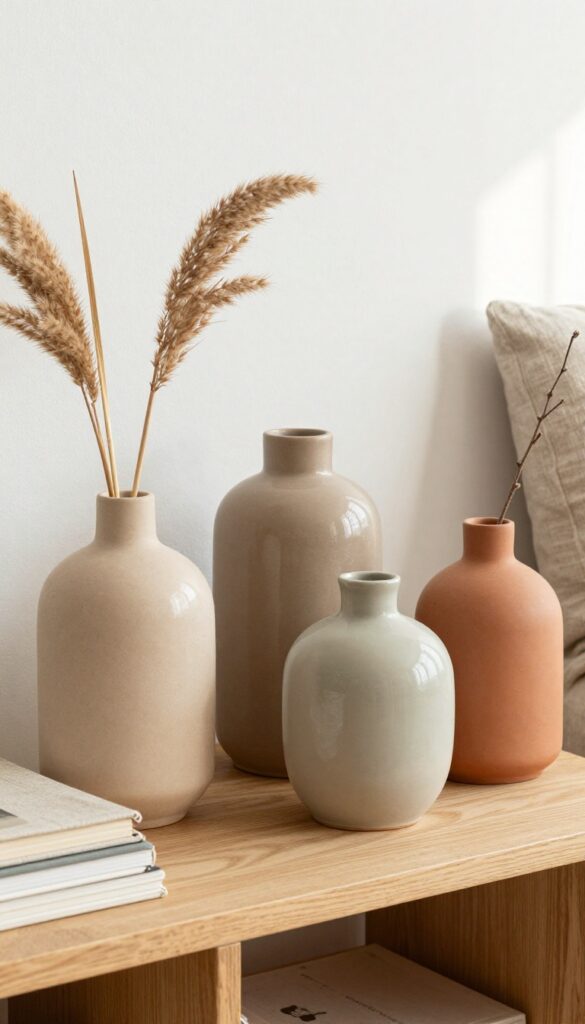
Hand-thrown ceramic pieces bring a quiet, artisanal feel to any living room. Their imperfect shapes and muted glazes add depth without shouting for attention. Whether you group them on a mantel or scatter them across a shelf, pottery introduces a grounded, earthy texture that feels both intentional and effortless.
Ceramic vases and pottery are the unsung heroes of cozy, layered decor. They bridge the gap between rustic and refined, offering a tactile contrast to softer textiles like wool or linen. To make the most of this look, choose pieces in warm, earthy tones—think clay, sage, or sand—and vary their heights and shapes for visual interest.
Dried branches, pampas grass, or even a single stem can transform a vase into a sculptural focal point. Don't be afraid to mix glossy and matte finishes; the interplay of light on different surfaces adds another layer of texture. Place a cluster of three on a coffee table tray, or line them up on a floating shelf above a sofa.
The key is to keep the arrangement feeling collected over time, not overly styled.
Best Colors And Glazes
Stick with muted, earthy glazes like oatmeal, terracotta, dusty blue, or soft charcoal. These tones blend seamlessly with natural wood and linen, reinforcing the cozy, grounded vibe. Avoid bright or glossy colors that can feel jarring in a warm, layered space.
Shelf Styling Tip
Group pottery in odd numbers—three or five pieces work best. Vary the heights by using small stacks of books or wooden risers underneath shorter vases. Leave some negative space around each piece so the eye can rest, and tuck in a trailing plant or a small framed photo for balance.
Finishing Touch
Add a single dried element like a eucalyptus branch or bunny tail grass to one or two vases. This brings organic movement and a soft, neutral color pop that ties the pottery to the rest of the room's natural palette.
8. Add a Faux Fur or Sheepskin Throw
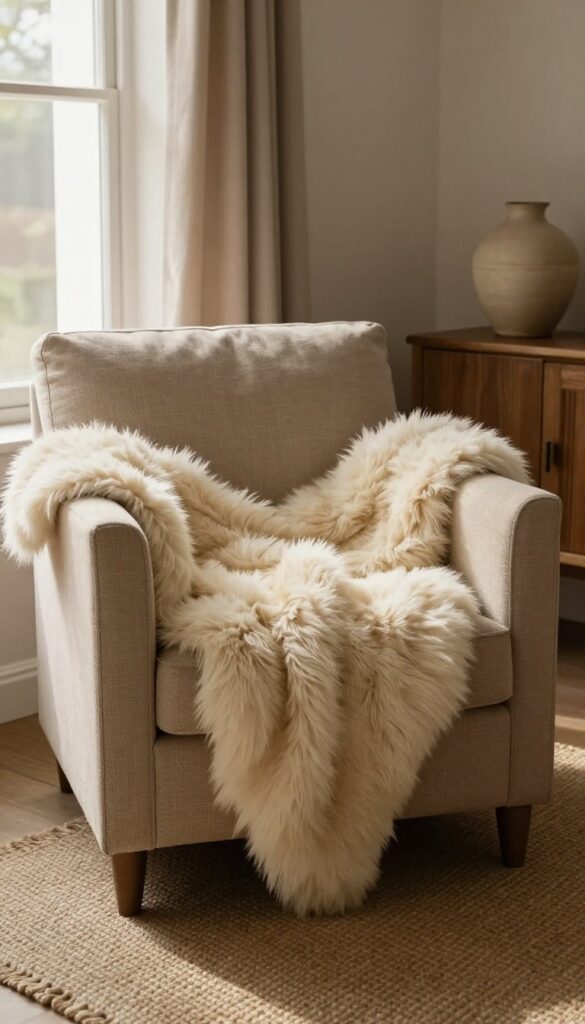
A faux fur throw draped over an armchair or ottoman adds instant coziness and a touch of luxury. It contrasts well with rougher textures like jute or linen, creating that layered, lived-in feel. This simple addition softens the room visually and invites you to curl up, making it a must for any warm, earthy space.
Nothing beats the tactile appeal of a fluffy throw in a room full of natural textures. It breaks up the monotony of flat surfaces and adds a soft focal point. Plus, it’s an easy swap—you can change the color or length seasonally without redecorating.
Best Colors
Stick with warm neutrals like cream, taupe, or caramel to keep the earthy vibe. A white faux fur can brighten a dark corner, while a deeper brown adds richness. Avoid stark white or cool grays—they clash with the warm palette.
Placement Tips
Drape it over the back of a neutral sofa or fold it on a wooden ottoman. For a casual look, let one end hang to the floor. In a small space, use it on a single accent chair to create a cozy reading nook without overwhelming the room.
Texture Mix
Pair the throw with a chunky knit blanket or a jute rug. The contrast between soft fur and rough natural fibers adds depth. Avoid pairing it with another high-pile texture—it can look messy rather than intentional.
9. Incorporate Greenery with Textured Leaves
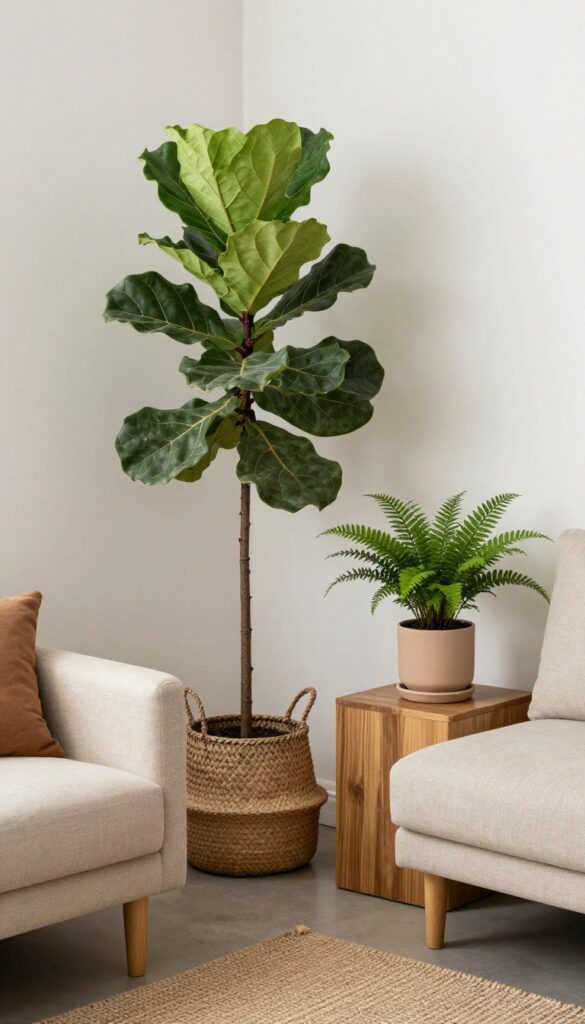
Plants do more than just add a pop of green—they bring in organic shapes and a sense of life that instantly warms up a room. When you choose varieties with large, textured leaves, like fiddle-leaf figs, monstera, or ferns, you're also layering in visual interest that complements other natural materials. The key is to let the leaves be the star, then use pots that add their own tactile appeal, like woven baskets or ceramic planters with a matte finish.
Grouping a few of these plants together creates a mini indoor jungle that feels curated, not chaotic. Place a tall fiddle-leaf fig in a corner to anchor the space, then cluster smaller ferns on a side table or shelf. The mix of leaf shapes and pot textures—think ribbed ceramic, rough terracotta, or handwoven seagrass—adds depth without overwhelming the room.
For a cozy touch, choose pots in earthy tones like clay, sage, or warm terracotta that blend seamlessly with your existing palette.
Best Plant Choices
- Fiddle-leaf figs offer broad, leathery leaves that make a bold statement. Monstera leaves have natural splits and holes that create intriguing shadows. Ferns bring soft, feathery fronds that contrast nicely with smoother surfaces.
- All three thrive in indirect light and moderate humidity, making them realistic for most living rooms.
Pot Pairing Ideas
Woven baskets in neutral tones add warmth and a casual feel. Ceramic pots with a matte glaze or subtle ribbing offer a more polished look. For a budget-friendly swap, use simple terracotta pots and paint them in muted earth tones to match your decor.
Placement & Styling Tip
Cluster plants at varying heights—use a plant stand or a stack of books to elevate smaller pots. Place them near a window but out of direct drafts. Grouping three plants of different sizes creates a balanced vignette that draws the eye and softens hard edges.
10. Use Natural Wood Wall Paneling or Beadboard
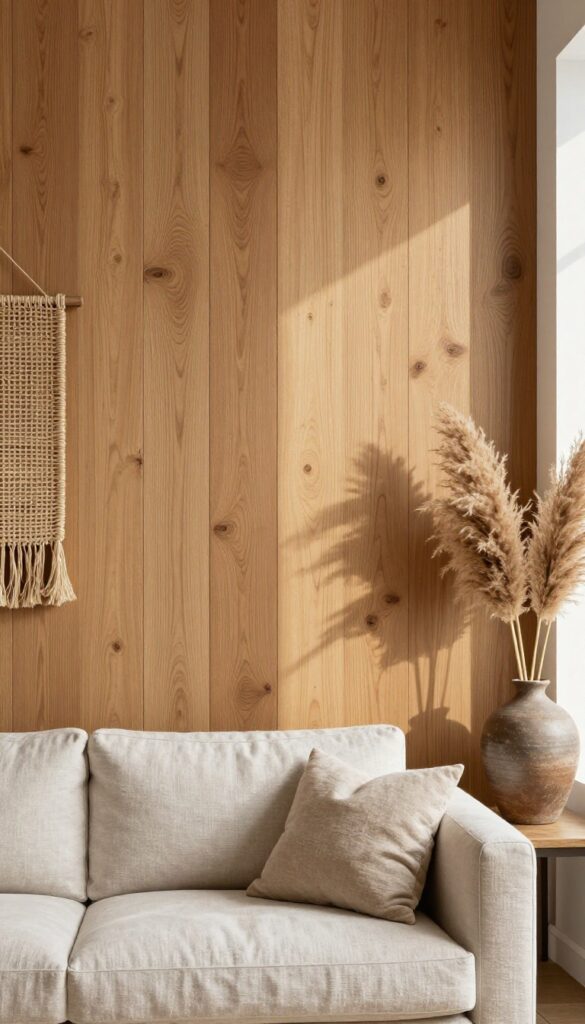
Adding wood paneling to one wall creates a warm backdrop that instantly makes a room feel more grounded. Whether you go for reclaimed planks with visible grain or a simple beadboard painted in a soft earth tone, this texture adds depth without overwhelming the space. It works especially well behind a sofa or as an accent wall opposite a window, where the natural light can play up the wood's character.
Wood paneling is a classic way to bring natural texture into a living room, but it doesn't have to feel heavy or rustic in a dated way. The key is choosing the right finish and placement. A single accent wall in a warm oak or salvaged barn wood sets a cozy backdrop for furniture, while beadboard painted in a muted clay or sage green keeps things light and airy.
This idea pairs beautifully with soft linen curtains, wool throws, and leather or velvet seating to balance the wood's hardness. For a layered look, hang a large woven wall hanging or a collection of botanical prints on the paneled wall.
Best Wood Types And Finishes
Reclaimed wood adds instant history and warmth, but new pine or cedar can be stained to mimic that aged look. For a smoother finish, beadboard or shiplap painted in a warm off-white or pale terracotta keeps the room feeling fresh. Avoid high-gloss finishes—matte or satin sheers feel more natural and cozy.
Placement And Layout Tip
Focus on one wall only, ideally the one your eye lands on first when entering the room. Behind the sofa or a console table works well. If your room is small, choose vertical paneling to draw the eye upward and make the ceiling feel higher.
Cozy Finishing Touch
Add a wall-mounted sconce or a small shelf on the paneled wall to break up the surface and create a focal point. A warm-toned light bulb (2700K–3000K) will enhance the wood's richness and keep the space feeling inviting.
11. Finish with a Macrame Wall Hanging
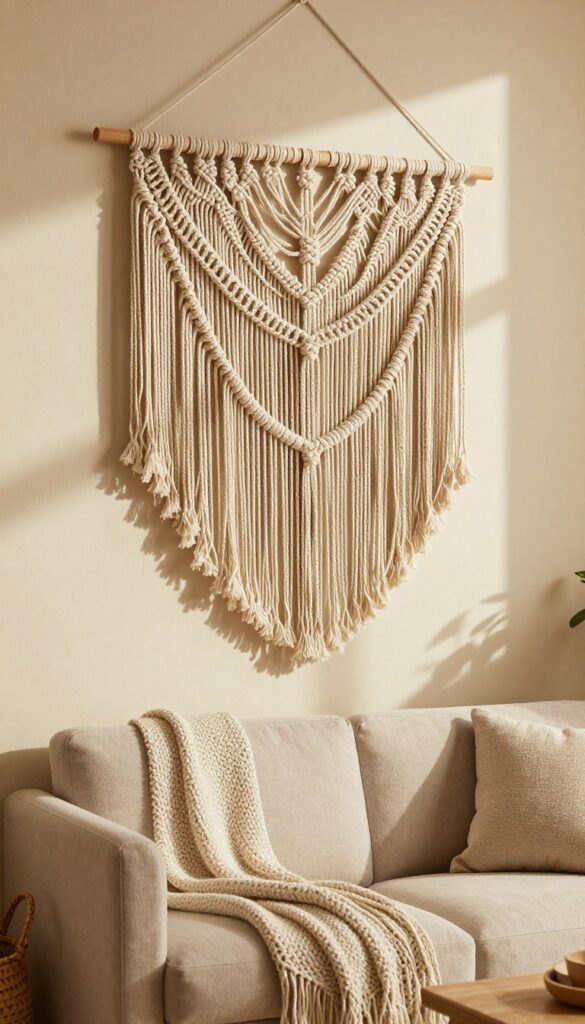
A macrame wall hanging is one of the easiest ways to add boho texture without taking up any floor space. The knotted cotton brings a soft, handcrafted feel that instantly warms up a room. Choose one in natural undyed cotton to keep the look cohesive and earthy.
Macrame wall hangings work especially well above a sofa, bed, or console table where you want a focal point that isn't a mirror or artwork. The layered fringe and open weave add visual interest without making the space feel busy. For a cozy layered look, pair a large macrame piece with a chunky knit throw or a woven basket nearby.
The repetition of natural fibers ties the room together.
Best Placement
Hang your macrame piece where it can catch some natural light to emphasize the texture. Above a neutral-colored sofa or bed works perfectly. Avoid placing it in high-traffic areas where it might get snagged.
Size And Scale
Go big for impact — a piece that's at least 36 inches wide creates a strong anchor. In a small space, a narrower vertical design still adds height and draws the eye upward. Make sure there's at least 6 inches of breathing room on each side.
Styling Tip
Layer smaller macrame pieces with other wall decor like a round mirror or woven baskets for an eclectic gallery wall. Keep the color palette warm and neutral — think cream, tan, and soft beige — to maintain that earthy, cozy vibe.
FAQ
How do I layer textures without making the room feel cluttered?
Stick to a neutral color palette and vary the scale of textures—pair a large jute rug with a small velvet pillow. Edit ruthlessly: if an item doesn't add visual or tactile interest, leave it out.
What are the best natural textures for a small living room?
Lightweight linens, smooth ceramics, and small woven baskets work well. Avoid bulky items like oversized chunky knits that can overwhelm the space.
Can I mix warm and cool natural textures?
Absolutely. Pair warm wood and rattan with cool stone or linen. The contrast creates depth.
Just keep the overall color palette cohesive—think sandy beiges with soft grays.
How do I clean natural fiber rugs like jute or sisal?
Vacuum regularly on a low setting without a beater bar. Spot clean spills immediately with a damp cloth and mild soap. Avoid moisture buildup to prevent mold.
What colors work best with earthy textures?
Earthy textures pair beautifully with warm neutrals like beige, taupe, cream, and terracotta. Soft greens and muted blues also complement the natural look.
Conclusion
Bringing natural texture into your living room doesn’t have to be complicated. Start with one or two ideas that speak to you—maybe a jute rug and some linen curtains—and build from there. The goal is a space that feels layered, cozy, and unmistakably yours.
Remember, the best earthy rooms look collected over time, not styled all at once. Let each piece breathe, and your living room will naturally become the warm, inviting retreat you’ve been wanting.