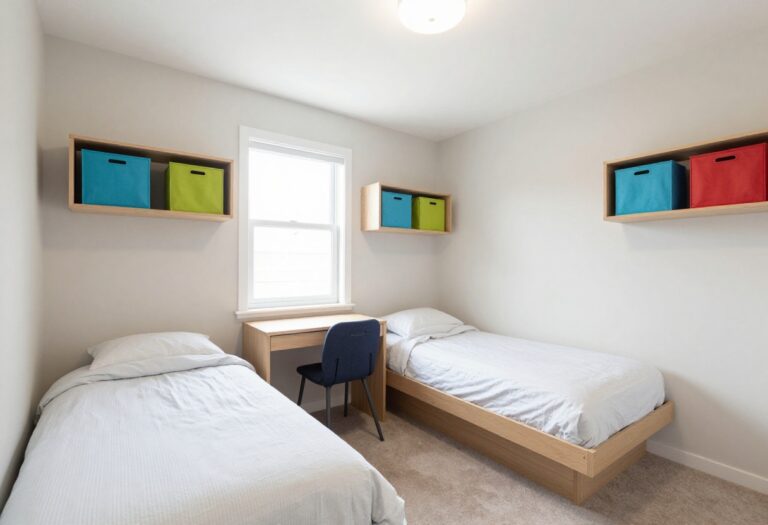
12 Warm and Cozy Kids Bedroom Interior Design Ideas You Can Pull Off in a Weekend
A kid's bedroom should feel like a hug at the end of the day. But between school schedules and endless activities, finding time for a full room makeover can feel impossible. The good news?
You don't need a total overhaul to create a warm, layered space your child will love. With a few intentional swaps and a free weekend, you can transform their room into a cozy retreat.
Think soft textures, gentle lighting, and personal touches that make the space feel collected over time. These 12 ideas are designed to be achievable, affordable, and full of warmth.
1. Start with a Neutral Base and Add Warm Accents
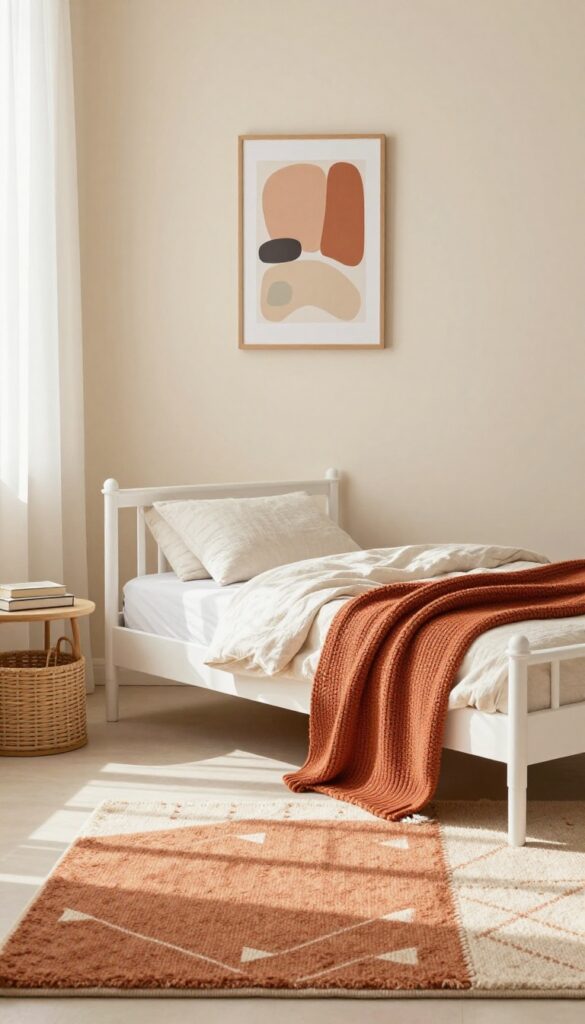
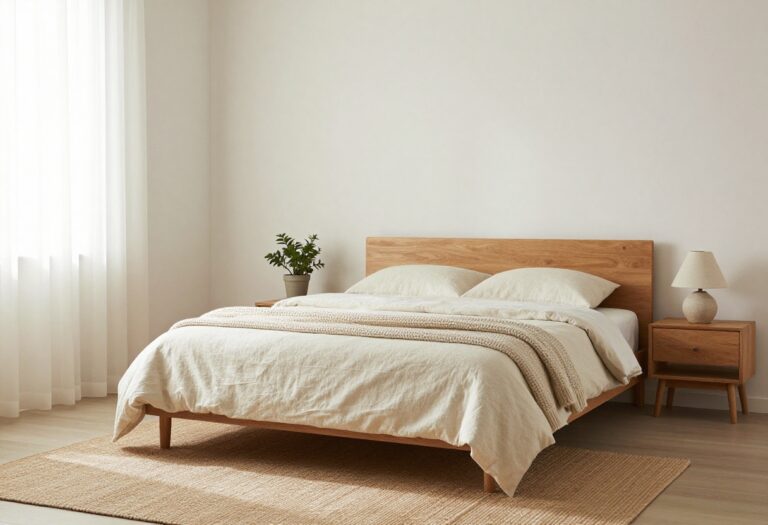
A soft, neutral backdrop gives you the freedom to refresh the room whenever your child’s tastes change. Paint the walls in a warm cream or beige, then bring in earthy tones like terracotta, rust, or ochre through pillows, rugs, and wall art. The result is a calm, cozy space that feels grounded without being heavy—perfect for a weekend refresh that doesn’t require a full redo.
Why It Works
Neutral walls act as a blank canvas, so you can swap out accent pieces seasonally or as your child grows. The warm earthy hues add visual interest and a sense of comfort, making the room feel inviting without overwhelming the senses. This approach is budget-friendly and easy to maintain.
Best For
This idea works well for any age, from toddlers to teens, because the base is timeless. It’s especially great for shared rooms where you want a cohesive look that suits different personalities.
Styling Tip
Choose one or two accent colors to keep the palette cohesive. A terracotta throw pillow, a rust-colored rug, and an ochre print can tie the room together. Stick to natural textures like linen, cotton, or wool for an extra layer of warmth.
2. Swap Out Harsh Overheads for Soft, Layered Lighting
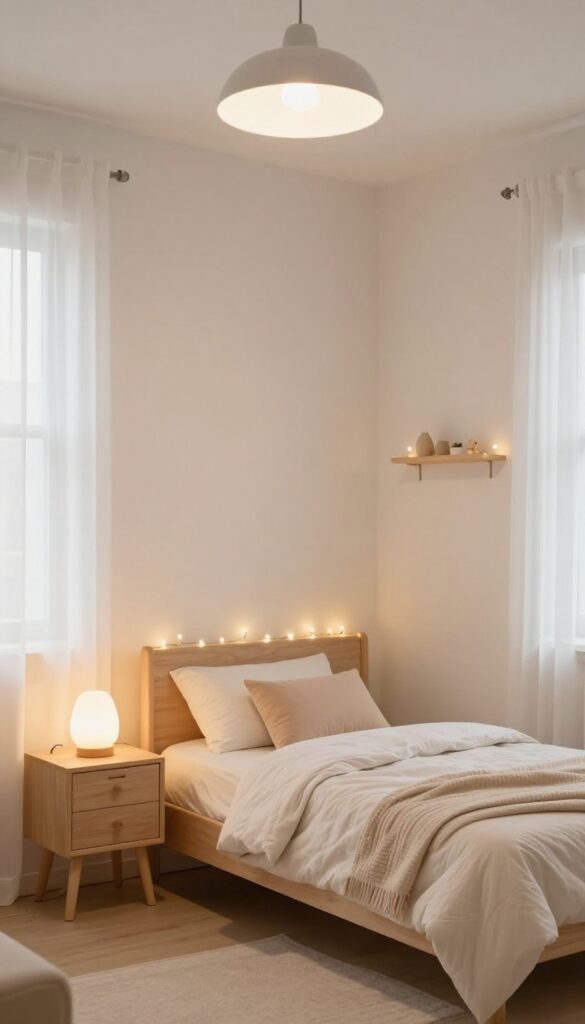
Overhead lights can feel like an interrogation lamp in a kid’s bedroom—especially at bedtime. Swapping that single harsh fixture for a mix of softer sources instantly changes the mood. Think a dimmable pendant over the bed, a small table lamp on the nightstand, and a string of warm fairy lights draped along a shelf or window frame.
The room goes from stark to snug in minutes, and the best part? You can do it all in one weekend afternoon.
Why It Works
Layered lighting mimics the way natural light shifts throughout the day, which helps kids wind down more easily. The dimmable pendant gives you control, the table lamp offers a focused glow for reading, and the fairy lights add a gentle sparkle that feels magical without being overstimulating. Together, they create a warm, cozy cocoon that makes bedtime feel like a treat.
Best For
This idea works beautifully in any kids’ bedroom, but it’s especially helpful in rooms with a single overhead fixture or no dimmer switch. It’s also great for shared rooms where one child needs to sleep while the other is still awake—the separate light sources let each kid have their own zone.
Styling Tip
Choose warm white bulbs (2700K–3000K) for all three light sources to keep the glow consistent and cozy. Hang the pendant low enough to feel intimate—about 18 inches above a bedside table or reading nook. For the fairy lights, look for battery-operated ones with a remote so you can turn them off without reaching behind furniture.
3. Introduce Texture with a Chunky Knit Throw or Blanket
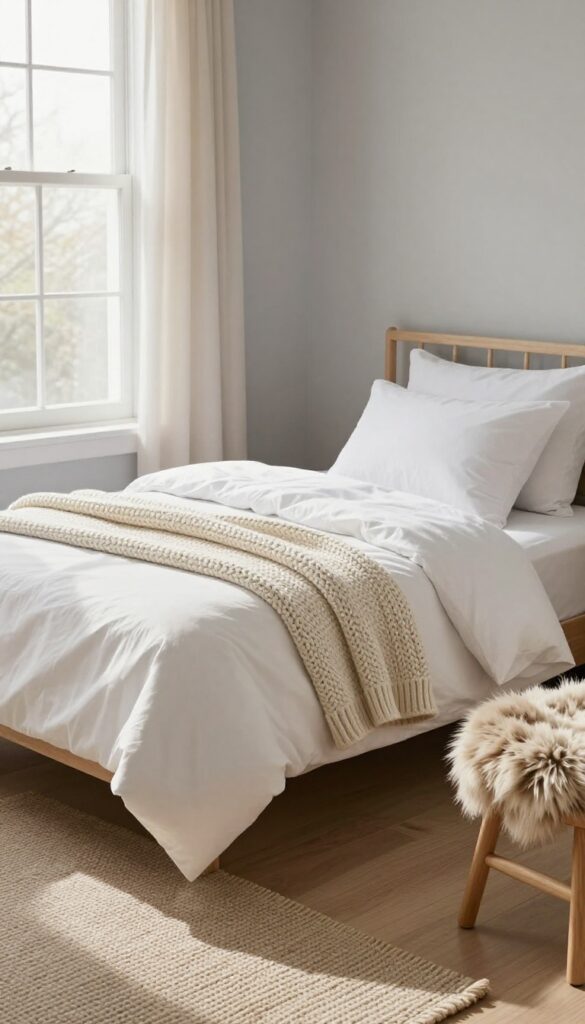
Sometimes the smallest addition makes the biggest difference. A chunky knit throw or a soft faux-fur blanket draped over the foot of the bed instantly changes the whole feel of a kid's room. It adds that cozy, layered look without any commitment—perfect for a weekend refresh.
The texture alone makes the space feel warmer and more inviting, like a hug in blanket form.
Why It Works
Texture is a secret weapon in interior design. Chunky knits and faux fur break up flat surfaces and add visual depth, making the room feel richer and more curated. Plus, kids love the tactile sensation—they'll actually want to snuggle under it during story time or movie nights.
Best For
This idea works in almost any kids' room, from toddler to teen. It's especially great for rooms that feel a bit bare or lack personality. If you're working with neutral walls and simple furniture, a textured throw becomes the focal point that pulls everything together.
Styling Tip
- Choose a throw in a warm neutral like cream, oatmeal, or soft gray to keep it versatile. Drape it casually over one corner of the bed or fold it neatly at the foot. For a reading nook, toss it over the back of a chair so it's always ready to grab.
- Swap it out seasonally for a quick refresh.
4. Create a Cozy Reading Nook with Floor Pillows and a Basket of Books
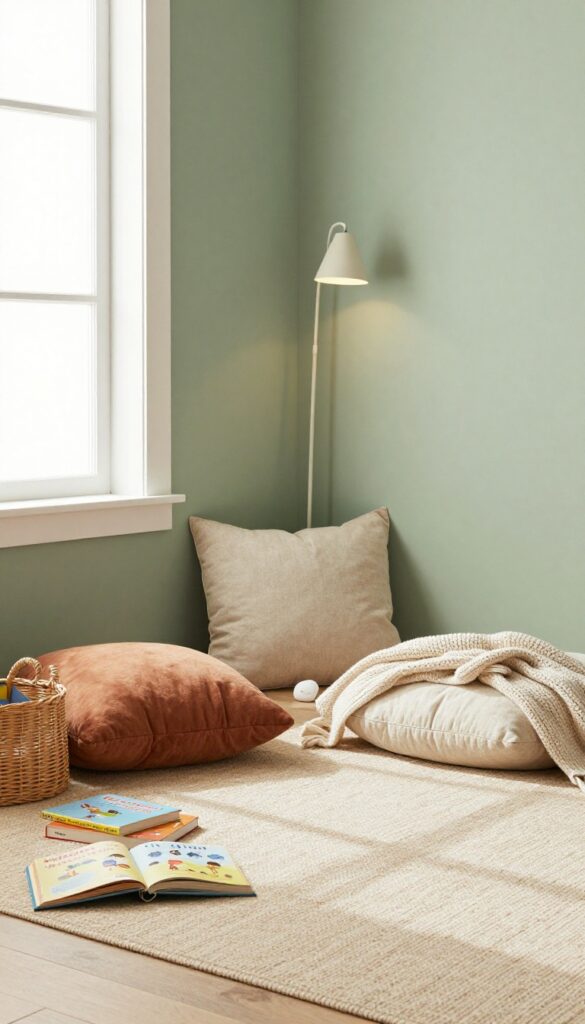
Every kid needs a quiet corner to escape into a story, and this reading nook delivers exactly that without taking up much space. By tucking oversized floor cushions into an unused corner, you instantly create a soft landing spot that feels like a mini retreat. Add a low basket filled with favorite books and a warm floor lamp, and you've got a designated zone for quiet time that actually gets used.
The best part? It's a weekend project that costs little but adds serious charm to the room.
Why It Works
This setup works because it respects a child's need for independence while keeping the space functional. Floor pillows invite lounging, the basket keeps books organized and accessible, and the soft lighting makes the nook feel special without being overstimulating. It's a low-commitment way to encourage reading and downtime.
Best For
Best for any bedroom with an empty corner, a bay window, or even a wide hallway nook. It's ideal for toddlers through early elementary ages, but older kids will appreciate a more grown-up version with a beanbag and a small shelf.
Styling Tip
Layer textures to keep it warm—think a chunky knit throw, a faux fur pillow, and a flat weave rug underneath. Stick to earthy tones like oatmeal, rust, and sage to match the warm and cozy profile, and use a clip-on book light for a flexible, non-glaring glow.
5. Layer Rugs for Warmth and Visual Interest
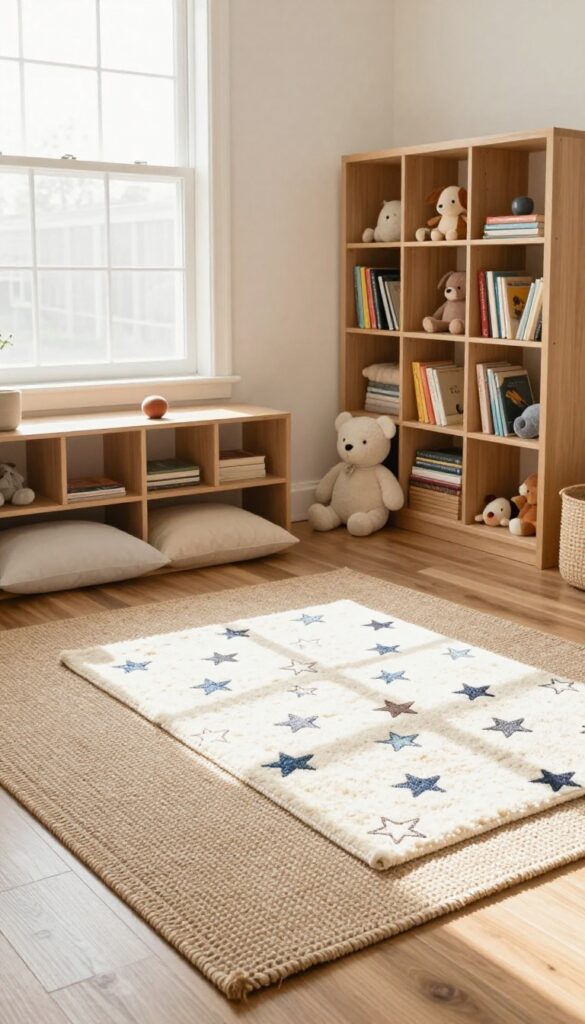
A single rug can anchor a room, but layering two rugs takes the cozy factor to another level. Start with a large neutral base—think jute, sisal, or a low-pile wool in beige or gray—then top it with a smaller patterned or textured rug. This trick adds warmth underfoot and makes the floor feel like a curated part of the design.
In a kid's bedroom, it also creates defined zones for playing, reading, or lounging without needing furniture to do the job.
Why It Works
Layering rugs adds depth and softness that a single rug can't achieve. The contrast between textures—rough jute under a soft shag or flat-weave under a plush wool—creates visual interest and makes the room feel more intentional. Plus, it's budget-friendly: you can use a smaller, pricier rug on top of an affordable natural fiber base and still get a high-end look.
Best For
This idea works well in bedrooms with hardwood or tile floors that need warmth, especially in cooler months. It's also great for rooms where you want to define separate areas, like a play corner next to a bed, without adding bulky furniture. If your child loves sitting on the floor for reading or toys, layered rugs make that spot extra inviting.
Styling Tip
Keep the top rug centered or slightly offset on the base rug, leaving at least 12–18 inches of the bottom rug visible on all sides. Choose a top rug with a low pile to avoid tripping hazards, and make sure both rugs are non-slip or use a rug pad underneath. For a playful twist, pick a top rug with a fun pattern—like stars, stripes, or a favorite animal—that matches the room's theme.
6. Add Curtains That Go Floor to Ceiling
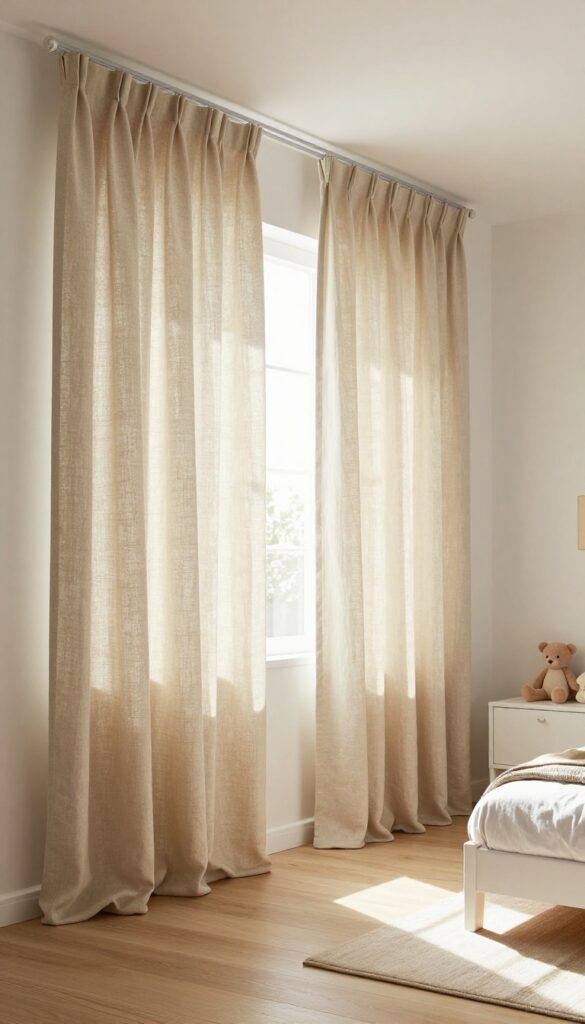
There’s something quietly transformative about curtains that stretch from the ceiling all the way down to the floor. In a kid’s bedroom, this simple swap makes the room feel taller, softer, and instantly more put-together without a full renovation. Warm linen or velvet fabrics in earthy tones like oatmeal, dusty rose, or sage green add that cozy, cocoon-like feeling while keeping the space airy.
It’s one of those weekend-friendly updates that delivers a big visual payoff with minimal effort.
Why It Works
Floor-to-ceiling curtains draw the eye upward, making even small rooms feel grand and spacious. The extra fabric also helps with insulation, keeping the room warmer in winter and cooler in summer, which is a bonus for little ones who sleep better in a comfortable temperature. Plus, the soft folds add texture and warmth that balance out harder surfaces like wood floors or painted walls.
Best For
This idea works beautifully in rooms with standard or low ceilings that need a lift, or in any space where you want to create a snug, enveloping feel. It’s especially effective in shared bedrooms where each child has their own window, as the consistent curtain height unifies the look.
Styling Tip
Hang the curtain rod just a few inches below the ceiling line and choose a fabric that puddles slightly on the floor for a relaxed, lived-in vibe. If you’re worried about kids pulling on them, opt for a sturdy linen blend that’s machine washable and use cordless blinds underneath for light control.
7. Incorporate Natural Elements Like Wood and Woven Baskets
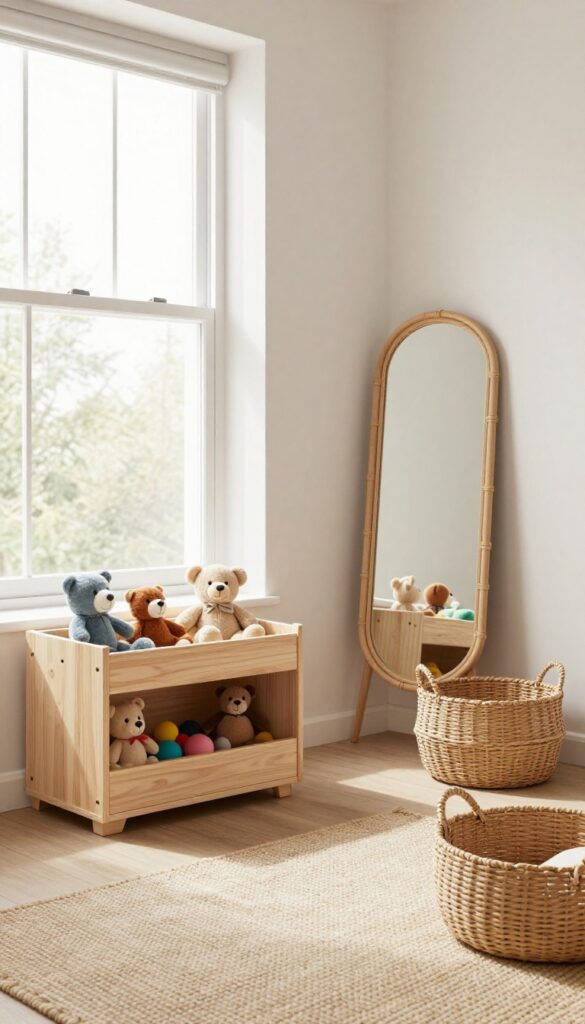
Wood and woven textures bring a sense of calm and warmth that’s hard to beat. A wooden toy bin or a rattan mirror adds just enough organic feel to balance out all the colorful toys and bedding. It’s an easy weekend refresh—swap a plastic storage bin for a woven basket, and the room instantly feels more grounded.
Why It Works
Natural materials add visual warmth and texture without overwhelming the space. They soften the room’s look, making it feel less like a playroom and more like a cozy retreat. Plus, they’re durable and kid-friendly, so you don’t have to worry about them getting banged up.
Best For
This idea works well in any kids’ bedroom, especially if the room has a lot of bright plastic toys or synthetic furniture. It’s also great for neutral or earthy color schemes, where wood and woven accents can tie everything together.
Styling Tip
Mix different wood tones for depth—a light pine shelf with a dark walnut basket. Add a woven rug or a rattan pendant light to carry the natural theme upward. Keep it simple: one or two statement pieces are enough.
8. Use a Canopy or Tent for a Dreamy, Enclosed Feel
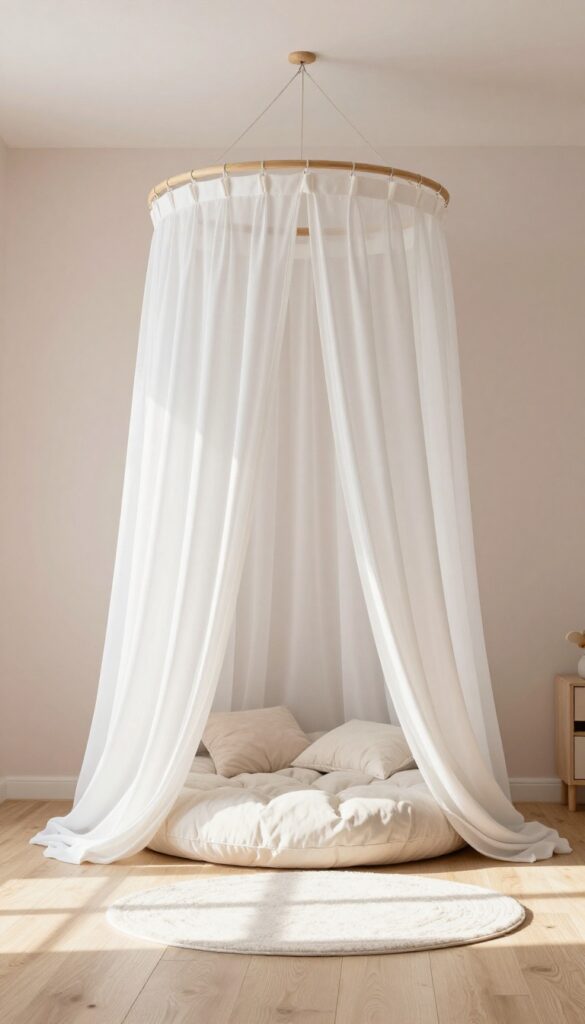
Draping a lightweight cotton canopy over the bed or a corner instantly transforms the space into a cozy hideaway. The soft fabric softens the room's edges and adds a layer of warmth that feels both playful and serene. It's a simple weekend project that brings a big dose of charm without a major commitment.
Why It Works
The canopy creates a defined, intimate zone within the room, giving kids their own little retreat. The fabric filters light gently, making the area feel calm and inviting—perfect for winding down or getting lost in a book.
Best For
This idea works especially well in shared rooms where each child can have their own personal nook, or in smaller bedrooms where you want to carve out a cozy reading corner without taking up floor space.
Styling Tip
Choose a neutral or pastel cotton canopy to keep the look airy and warm. Hang it from a ceiling hook or a simple wooden ring, and add a few floor pillows and a soft rug underneath to complete the nest-like feel.
9. Display Art at Child's Eye Level for a Personal Touch
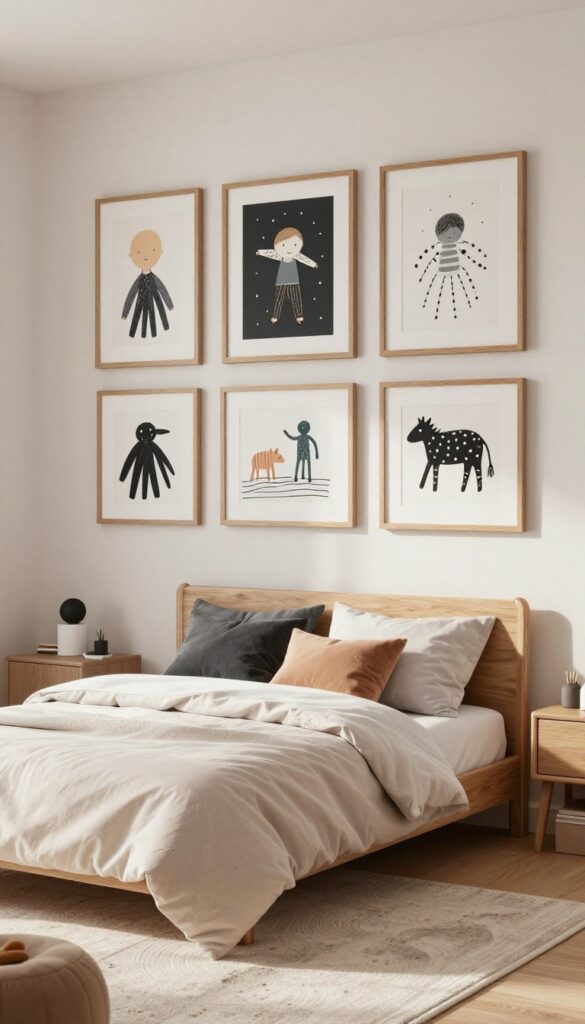
Hang a few framed prints or your child's own artwork at their eye level. This makes the room feel truly theirs and adds a layer of personality that no store-bought decor can match. It's a simple weekend swap that instantly warms up the space.
Why It Works
When art is placed where kids can actually see it, they feel ownership and pride in their room. It also creates a cozy, lived-in look that feels intentional, not cluttered.
Best For
This idea works for any age, from toddlers to tweens. It's especially great for shared rooms where each child can have their own mini gallery.
Styling Tip
Mix frames in warm wood tones or matte black for a collected-over-time feel. Swap out pieces seasonally or whenever your child creates something new to keep the display fresh.
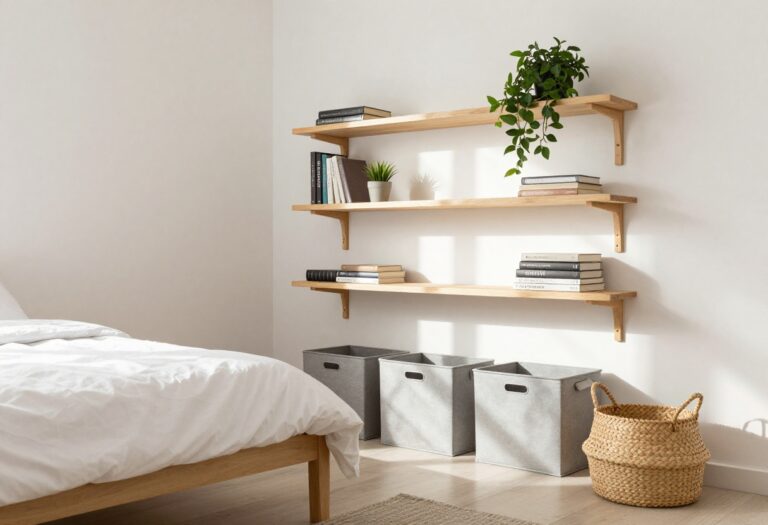
10. Swap Plastic Storage for Woven or Fabric Bins
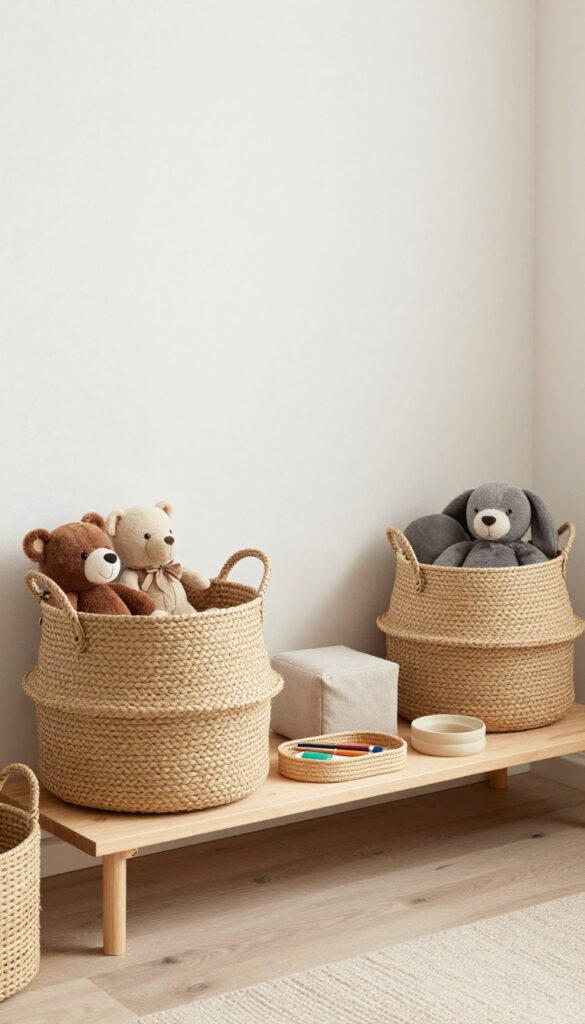
Plastic toy bins might be practical, but they can make a room feel like a play center instead of a cozy bedroom. Swapping them out for woven seagrass baskets or soft fabric cubes instantly warms up the space. The natural textures add depth and a handmade feel that softens the overall look, while still keeping clutter under control.
It’s one of those small weekend swaps that makes a big difference in how the room feels.
Why It Works
Natural materials like seagrass, rattan, or canvas bring warmth and a sense of calm that plastic just can’t match. They also absorb sound better, making the room feel quieter and more restful. Plus, the neutral tones blend easily with any color scheme, so you don’t have to worry about clashing.
Best For
This idea works especially well for younger kids who have lots of small toys or art supplies. It’s also great for shared rooms where you want to keep things organized without adding visual noise. And if you’re aiming for a more grown-up look that can transition as your child gets older, woven bins are a smart choice.
Styling Tip
Mix different sizes and weaves for a collected, layered look. Use a large seagrass basket for stuffed animals, a set of fabric cubes for blocks or LEGOs, and a small woven tray for art supplies on a shelf. Stick to a neutral palette—beige, tan, soft gray—to keep the room feeling calm and cohesive.
11. Add a Small Rug or Mat by the Bed for a Soft Landing
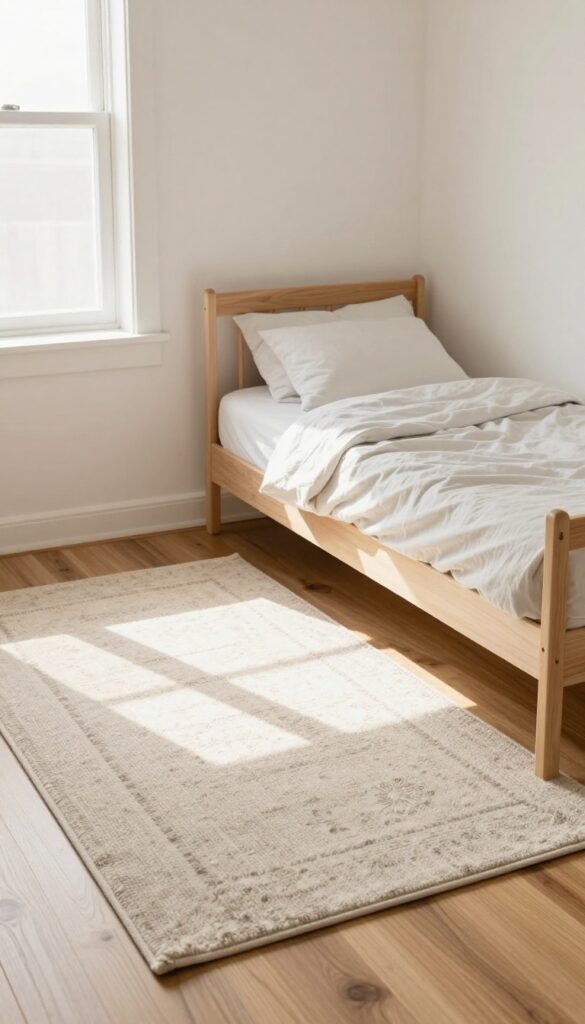
Mornings go smoother when little feet hit something soft instead of a cold floor. A plush, washable rug beside the bed adds warmth and a gentle start to the day. It’s a small detail that makes a big difference in how the room feels—cozy, grounded, and intentionally layered.
Why It Works
A rug by the bed creates a defined zone that feels comforting and safe. The soft texture underfoot adds warmth, both physically and visually, making the room feel more inviting. Plus, it’s an easy weekend swap that instantly updates the space without any major changes.
Best For
This works well in any kid’s room, especially for toddlers transitioning to a big bed or for older kids who like to sit on the floor to read or play. It’s also perfect for rooms with hard flooring that need a touch of softness.
Styling Tip
Choose a rug with a low pile or a washable material like cotton or synthetic blends—they’re easier to clean and less likely to trip little ones. Go for a round or rectangular shape that extends just past the bed’s edge. Neutral tones with a subtle pattern keep it versatile, or pick a color that ties into the room’s accent palette.
12. Finish with a Scented Candle or Diffuser (Kid-Safe, of Course
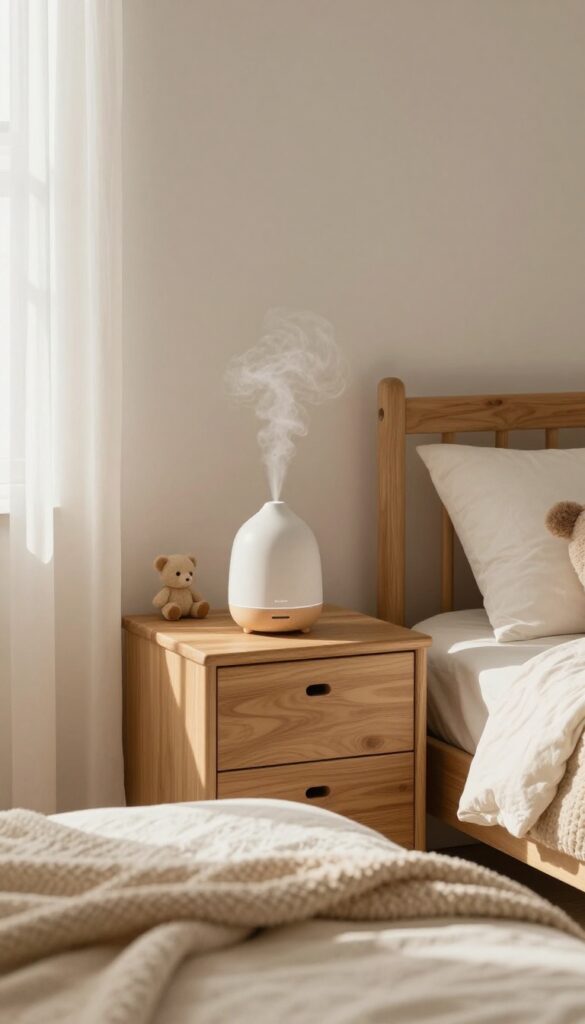
The final touch in any warm, layered bedroom is often the one you can't see but can feel: scent. A kid-safe essential oil diffuser with calming notes like lavender or chamomile adds a subtle, cozy layer that makes the whole room feel more complete. It's a simple weekend-refresh move that instantly turns a playful space into a relaxing retreat, especially at bedtime.
Why It Works
Scent has a powerful effect on mood and relaxation. A gentle, natural fragrance helps signal to your child that it's time to wind down, creating a calm atmosphere that complements the warm textures and soft lighting you've already layered in. It's a low-effort, high-impact finishing touch.
Best For
This idea works wonderfully for any kid's bedroom, but it's especially helpful for children who struggle with winding down at night. The calming scent can become a comforting part of their bedtime routine, making the room feel like a safe, cozy haven.
Styling Tip
Choose a sleek, ceramic diffuser in a neutral tone like soft white or warm beige to blend with your decor. Place it on a dresser or shelf away from reach, and use only a few drops of kid-safe essential oil. Always opt for high-quality, pure oils and avoid synthetic fragrances.
FAQ
How can I make my kid's bedroom feel cozy without spending a lot?
Focus on small, impactful swaps like adding a chunky throw, swapping out lighting for warmer bulbs, and incorporating natural textures like woven baskets or a soft rug. These changes are budget-friendly and can be done in an afternoon.
What colors work best for a warm and cozy kids bedroom?
Stick with soft neutrals like cream, beige, and warm gray as a base, then layer in earthy accent colors such as terracotta, rust, mustard, or olive green. These tones feel grounding and inviting without being too stimulating.
How do I add warmth to a room with mostly white walls?
White walls can feel cold, but you can warm them up with plenty of texture. Add a chunky knit blanket, a woven rug, wooden furniture, and warm-toned lighting. Even a few plants or a rattan mirror can make a big difference.
What are some weekend-friendly projects that make a big impact?
Painting an accent wall, swapping out curtain rods and curtains, adding a new rug, or creating a reading nook with floor pillows are all projects you can complete in a weekend. They instantly change the feel of the room.
How can I make a shared kids bedroom feel cozy for both children?
Use a neutral base and let each child personalize their own zone with a different accent color or a small gallery wall of their art. Layer in soft textiles and separate lighting options so each child has a cozy corner that feels like theirs.
Conclusion
Creating a warm, layered kids bedroom doesn't require a big budget or a major renovation. With a weekend and a few thoughtful touches, you can turn their space into a cozy haven that feels both stylish and lived-in. The key is to focus on texture, lighting, and personal details that make the room feel like theirs.
Start with one or two ideas from this list, and let the room evolve naturally. Your child will love the extra warmth, and you'll love how easy it was to create.