12 Weekend-Friendly Two Kids Bedroom Ideas for Small Rooms With Bunks and Dividers
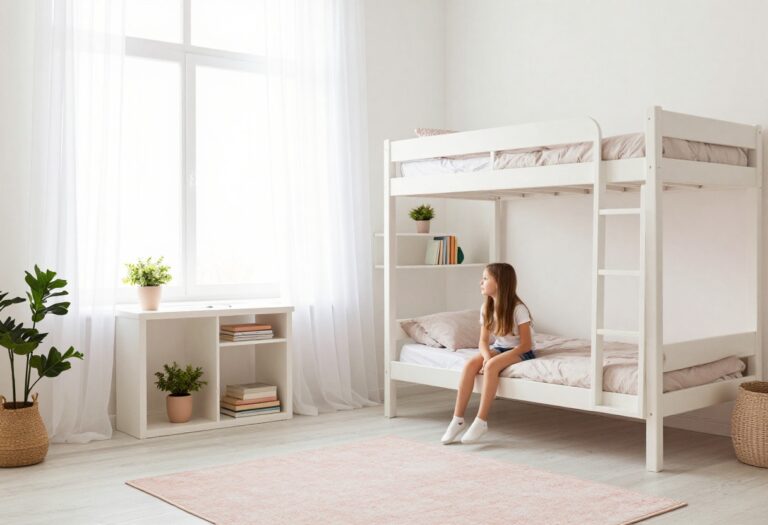
Sharing a bedroom can be a wonderful adventure for siblings, but making the space work for both personalities takes a bit of thought. When square footage is tight, bunks and dividers become your best friends—they carve out personal zones without sacrificing style.
The best part? You don't need a full renovation to give the room a fresh feel.
These 12 ideas are designed for a weekend refresh, focusing on warm, cozy touches that make the room feel like a retreat for both kids.
1. Bunk Beds with Built-In Curtains for Instant Privacy
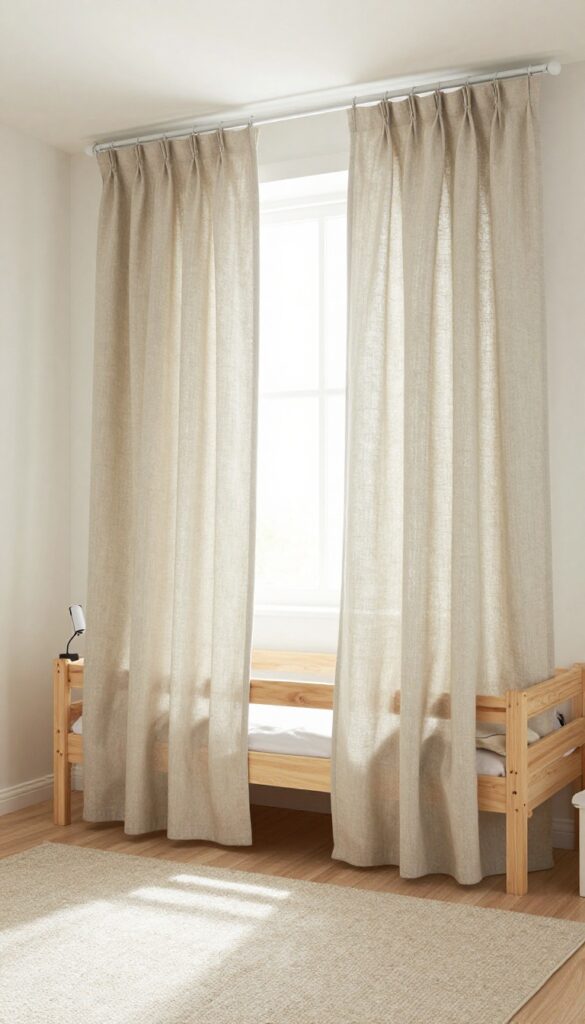
In a shared room, giving each child their own little retreat can make all the difference. Floor-to-ceiling curtains around each bunk create private nooks where kids can read, relax, or simply have a moment to themselves. Soft, warm fabrics like linen or cotton in muted tones keep the space cozy and inviting, while the curtains add a soft, layered look that feels more like a boutique hotel than a cramped bedroom.
Why It Works
The curtains provide a simple, visual separation without taking up any floor space. They make each bunk feel like a personal hideaway, reducing sibling squabbles over territory. Plus, they soften the room's acoustics and add a touch of warmth that plain metal or wood bunks lack.
Best For
This setup is ideal for small rooms where floor space is at a premium and you need to maximize every square inch. It works especially well for twins or siblings close in age who value a bit of alone time but share a room.
Styling Tip
Use a ceiling-mounted track system for a clean, floating look that doesn't require drilling into the bunk bed. Choose curtains in a light, breathable fabric like washed linen in a soft oatmeal or pale sage to keep the room feeling airy. Add a small clip-on reading light inside each curtain for a cozy bedtime corner.
2. A Low Bookshelf Divider That Doubles as a Headboard
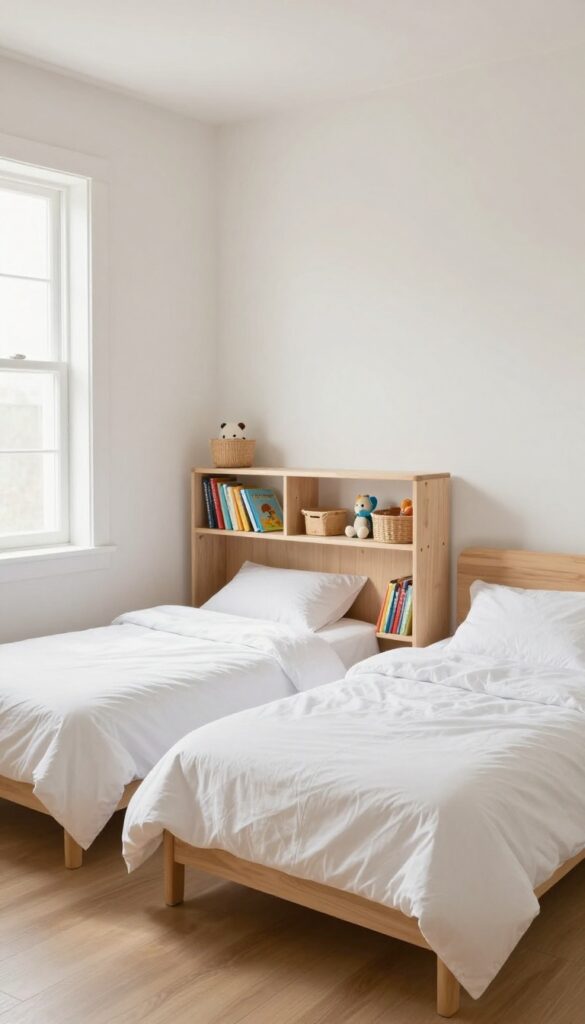
A low bookshelf placed between two twin beds does double duty as a room divider and a shared headboard. It carves out separate sleeping zones without closing off the room, so both kids still feel connected. The shelves become a mini library for bedtime stories and a display spot for their favorite treasures, adding warmth and personality to the space.
Why It Works
In a small room, every piece of furniture needs to earn its keep. This low bookshelf defines each child’s area while providing storage that’s easy for little hands to reach. It also creates a visual anchor for both beds, making the layout feel intentional and cozy rather than cramped.
Best For
Toddlers and young children who love having their books and toys close by. It’s also ideal for rooms where you want to give each kid a sense of personal space without sacrificing the open, airy feel of the room.
Styling Tip
Choose a sturdy shelf that sits about as high as a standard headboard—around 18 to 24 inches tall. Paint it the same color as the wall or go with a natural wood tone to keep the room feeling light. Fill the shelves with a mix of books, small baskets for odds and ends, and a few soft toys for a lived-in look.
3. Loft Beds with Desks Underneath for Study Zones
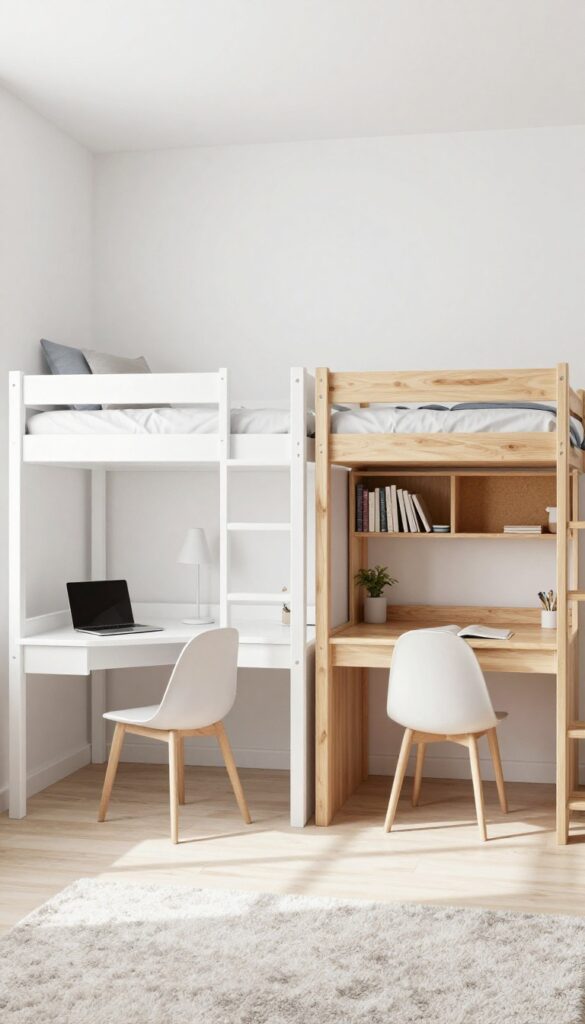
Stacking a bed over a desk is one of the smartest ways to carve out a dedicated study area without losing square footage. Loft beds lift the sleeping spot high enough to slide a desk, chair, and maybe even a small bookshelf underneath. The result feels almost like a tiny treehouse—cozy and defined—while the floor below stays open for homework or drawing.
Warm task lighting, like a clip-on lamp with a soft white bulb, keeps the workspace from feeling like a cave, and a plush rug under the desk adds comfort for bare feet.
Why It Works
By using vertical space, loft beds free up the floor for two separate study zones in one small room. Each child gets their own nook, which reduces distractions and helps them focus. The elevated bed also creates a sense of privacy for sleeping, making the room feel larger than it is.
Best For
This setup works best for school-aged kids who need a quiet place for homework but still want a fun, elevated bed. It's ideal for rooms with at least 8-foot ceilings so there's enough headroom both above and below the loft.
Styling Tip
Paint the desk area a slightly different color than the rest of the room—like a soft sage or pale blue—to visually separate the study zone. Add a small corkboard or magnetic strip above each desk for pinning up artwork or reminders, and keep the surface clutter-free with a simple caddy for supplies.
4. Fabric Room Dividers That Add Texture and Warmth
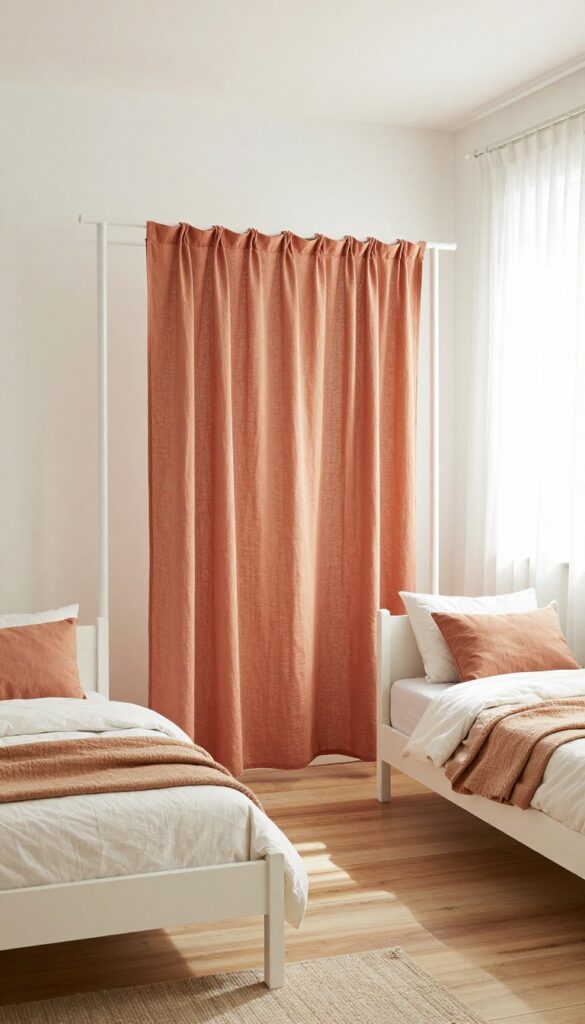
A fabric room divider is one of the simplest ways to carve out separate zones in a shared kids' bedroom without committing to a permanent wall. Hanging a panel of soft material from the ceiling creates a gentle boundary that feels more like a canopy than a barrier. The right fabric can introduce warmth, pattern, and a cozy layer that makes the room feel intentionally designed rather than just divided.
Why It Works
Fabric dividers are lightweight, easy to install, and can be swapped out as kids grow or tastes change. They soften the room acoustically and visually, making the space feel quieter and more intimate. Because they don't block light entirely, the room stays bright and airy, which is key in a small room.
Best For
This idea works well for siblings who need a sense of personal space but still share a room. It's especially helpful when the room has bunks or two beds close together, as the divider gives each child a visual anchor for their own zone.
Styling Tip
Choose a fabric with a bit of weight, like linen or cotton blend, so it hangs nicely. For a warm and cozy feel, go with earthy tones like terracotta, ochre, or a soft plaid. Install a simple ceiling track or a tension rod between two walls to make the divider easy to slide open or closed.
5. Color-Coded Bedding for Each Child's Personality
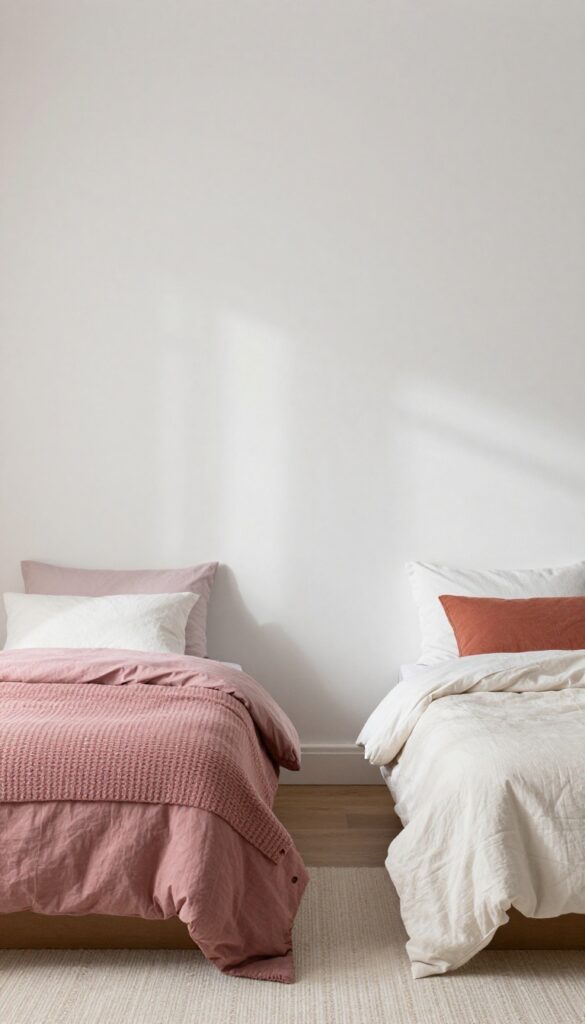
Letting each child choose their own bedding is one of the easiest ways to make a shared room feel personal. Instead of clashing patterns, guide them toward coordinating warm tones—think dusty rose and terracotta, or sage green and mustard. The result is a space that feels cohesive yet distinctly theirs, with texture from quilts, linen duvets, or knit throws adding cozy depth.
Best of all, this is a weekend-refresh project: swap out pillowcases or add a throw blanket for an instant personality boost.
Why It Works
Color-coded bedding gives each child ownership over their corner without visual chaos. When you stick to a warm, coordinated palette, the room stays calm and intentional. It's a low-commitment way to experiment with color—if tastes change, you can update bedding in an afternoon.
Best For
This idea is perfect for siblings with different color preferences, especially in small rooms where bold wall paint might feel overwhelming. It works well for both younger kids and tweens who want to express their style without a full room redo.
Styling Tip
Anchor the look with neutral base layers—white or cream sheets and a matching mattress protector. Then let each child pick one main bedding piece (like a duvet cover or quilt) in their chosen warm tone. Add one or two accent pillows in a complementary shade, and finish with a cozy throw at the foot of each bed.
6. Wall-Mounted Shelves as Visual Dividers
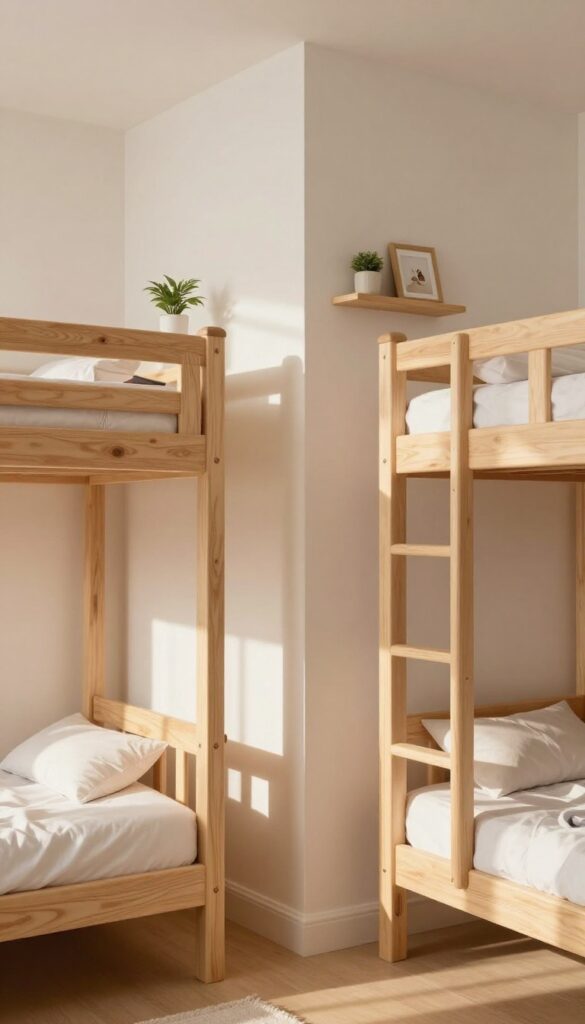
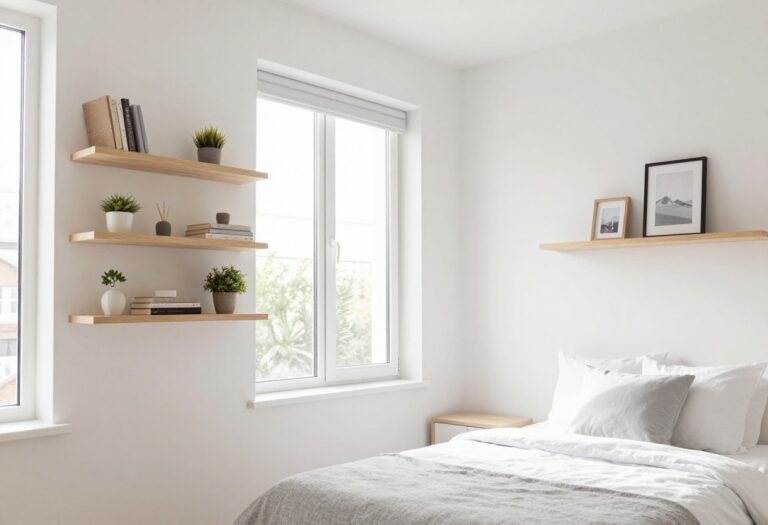
Staggered wall-mounted shelves above each bed do more than hold books and treasures—they carve out a subtle visual boundary between two sides of a room. Floating shelves break up the shared wall without the permanence of a full divider, making each bunk feel like its own little zone. For a weekend refresh, this is one of the easiest ways to add personality and structure in a few hours.
Why It Works
Shelves create a clear vertical line that separates each child's space without blocking light or making the room feel closed in. The staggered arrangement adds visual interest and lets each kid display their favorite items, reinforcing ownership of their area. It's a budget-friendly trick that doubles as storage and decor.
Best For
This idea shines in bunk bed setups where floor space is too tight for a freestanding divider, or in rooms where you want to keep an open, airy feel while still giving each child a sense of privacy. It works especially well for siblings close in age who share a room but crave their own corner.
Styling Tip
Use warm wood or white shelves to match the cozy vibe, and keep the styling simple—a few books, a small plant, and a framed photo per shelf. Vary the heights and depths of the shelves for a collected look, and add a small LED strip underneath for a soft glow that defines each zone at night.
7. A Shared Window Seat with Storage Underneath
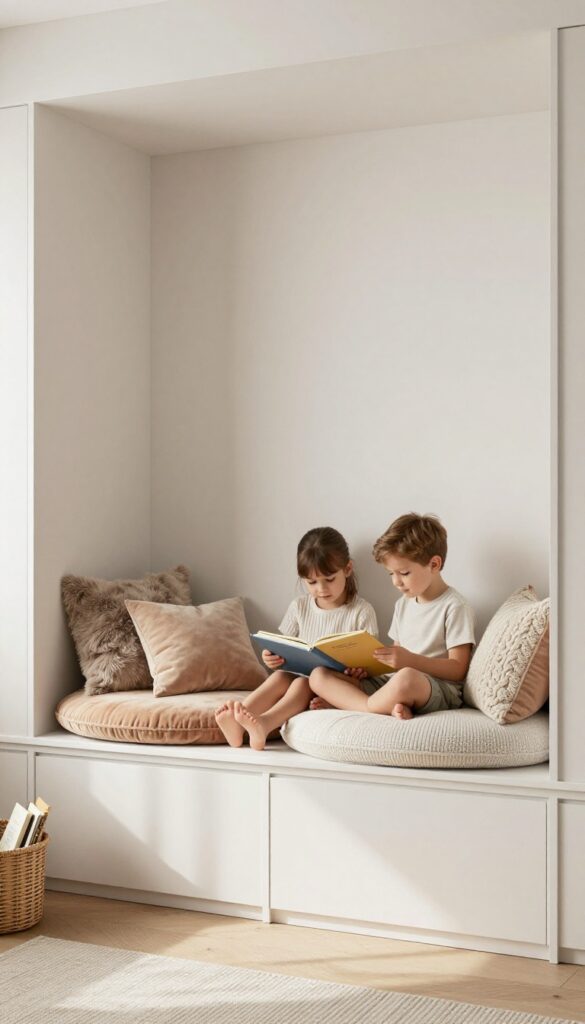
Imagine a cozy nook where both kids can curl up with a book, chat, or just watch the rain. A built-in window seat with storage drawers underneath gives you that snug spot without sacrificing an inch of floor space. It turns an ordinary window into a destination—and hides toys, books, or extra bedding neatly out of sight.
Why It Works
In a small shared room, every piece of furniture should pull double duty. This window seat offers a quiet retreat for reading or daydreaming, while the built-in drawers keep clutter contained. It’s a smart way to add seating and storage without the bulk of a separate armchair or toy bin.
Best For
Rooms with a low window that gets good natural light. It’s ideal for kids who love to read or need a calm spot to decompress. The storage works especially well for stashing bulky items like board games, extra blankets, or out-of-season clothes.
Styling Tip
Layer cushions in warm, washable fabrics like cotton velvet or chunky knits. Add a couple of throw pillows in contrasting textures—think a faux fur pillow next to a linen one. Keep a small basket nearby for books so the seat stays tidy and ready for use.
8. Twin Beds with a Shared Headboard Wall
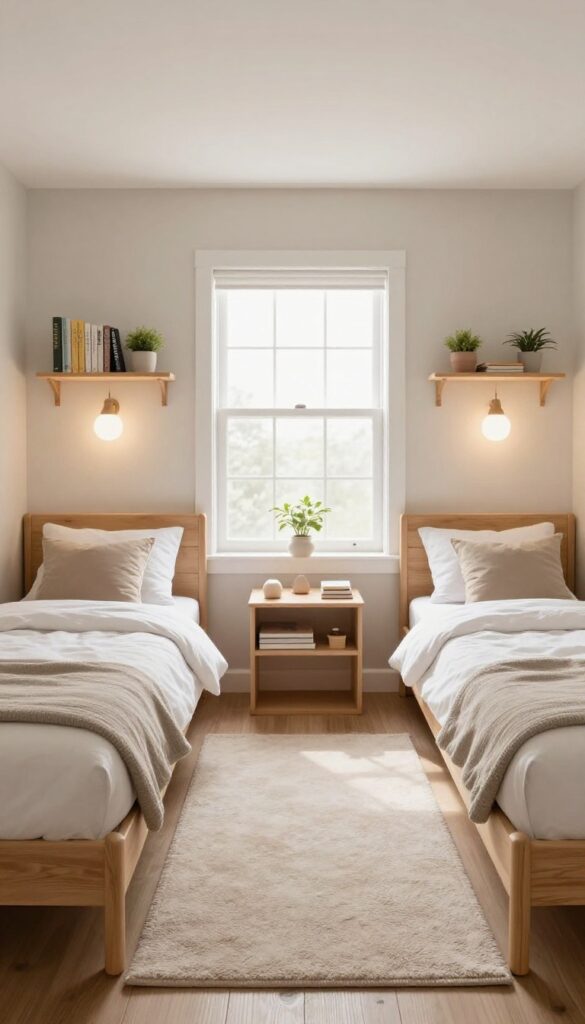
There’s something about twin beds pushed against opposite walls that instantly makes a small room feel more balanced. By connecting them with a continuous headboard—like a long panel of warm wood or a padded fabric strip—you create a visual anchor that ties the whole space together. Soft lighting, such as wall sconces or a central pendant, adds a cozy glow that makes the room feel intentional and inviting.
Why It Works
This layout maximizes floor space by keeping the center open for play or a shared rug. The shared headboard draws the eye horizontally, making the room feel wider, while the warm tones add a snug, unified feel.
Best For
Siblings who need their own sleeping zones but share a small room. It’s also great for rooms with limited wall length, since the headboard can span the entire wall.
Styling Tip
Use matching bedding in neutral tones with contrasting throw pillows to define each bed. Add a low shelf above the headboard for books or a small plant to keep the look tidy and personal.
9. Hanging Canopies for Dreamy Sleep Zones
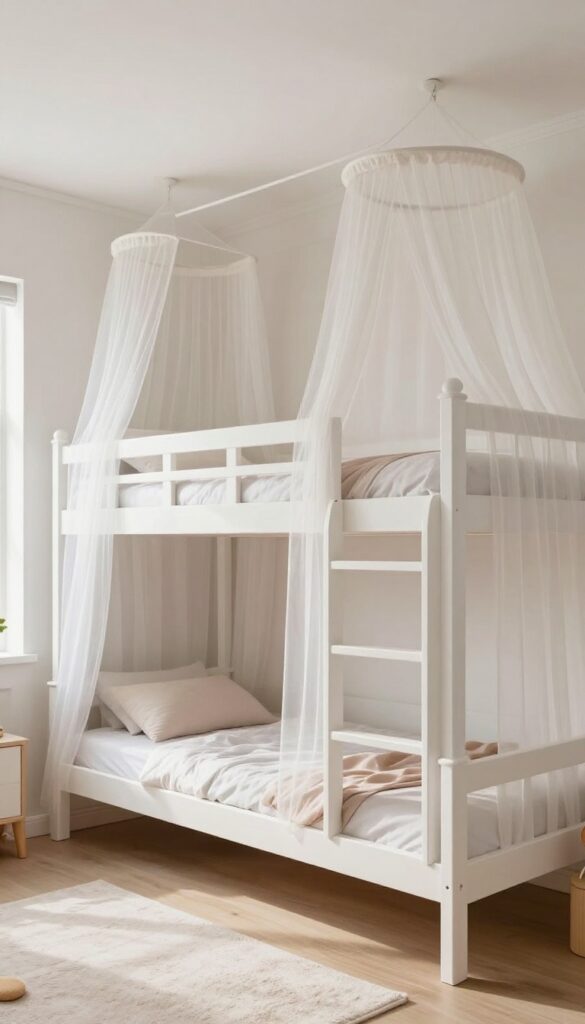
A quick weekend project that instantly softens the room, hanging sheer canopies over each bunk turns a plain sleeping area into a cozy little retreat. Warm white or blush-toned fabric filters the light beautifully and gives each child a sense of their own special nook. It’s an easy, affordable way to add texture and a touch of whimsy without cluttering the floor.
Why It Works
Canopies create visual separation between bunks without taking up any floor space, which is crucial in a small room. The sheer material keeps the room feeling airy and open while adding a soft, dreamy layer that makes bedtime feel special.
Best For
This idea works well for younger children who love the idea of a secret hideaway, but it can also feel age-appropriate for tweens if you choose neutral or muted tones like oatmeal or dusty rose.
Styling Tip
Hang the canopy from a simple ceiling hook or a curtain rod mounted above the bunk. For a cohesive look, match the canopy fabric to the bed linens or add a string of fairy lights inside for a warm glow at night.
10. A Rug That Defines Each Side of the Room
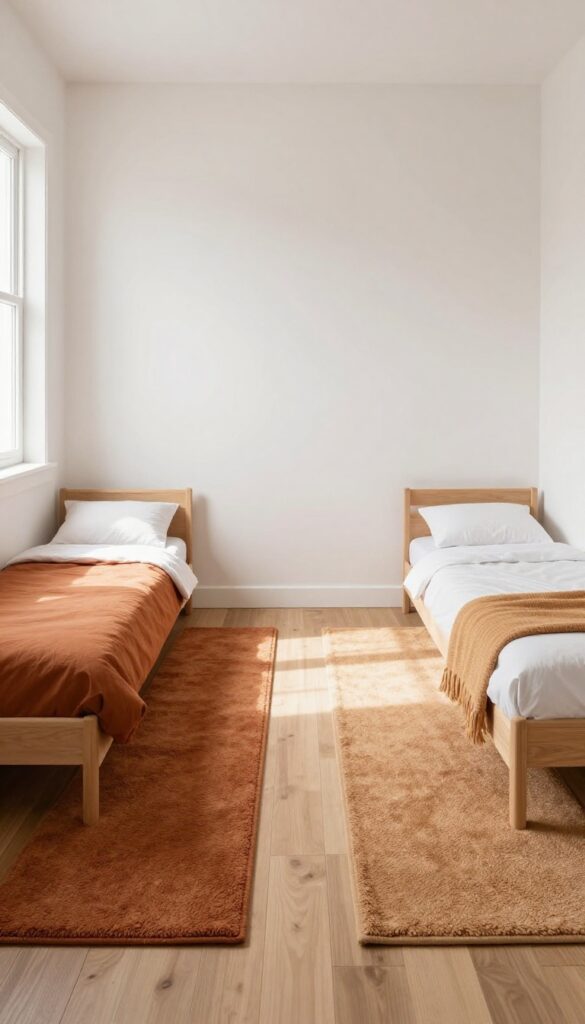
Rugs do more than soften footsteps—they can carve out territory in a shared room. Instead of one large rug that blurs the line between two sides, try placing a smaller rug under each bed or desk. Choose complementary warm tones like rust and ochre, or soft terracotta and cream.
This simple swap instantly gives each child their own visual anchor, making the room feel more personal and less chaotic.
Why It Works
Two rugs create clear zones without any construction or permanent changes. They add warmth underfoot, reduce noise, and let each child feel ownership over their corner. The color contrast also helps the room feel larger by breaking up the floor space into defined areas.
Best For
This trick works especially well in rooms where kids have different tastes or need a sense of independence. It's also great for renters or anyone who wants a weekend-friendly refresh—just swap out the rugs whenever the style needs updating.
Styling Tip
Stick with rugs that share a similar texture or pattern family so the room still feels cohesive. A low-pile wool or cotton blend is easy to clean and won't trip up little feet. Place the rug at an angle under the bed for a playful look, or keep it straight for a more orderly feel.
11. Pegboard Walls for Flexible Storage and Display
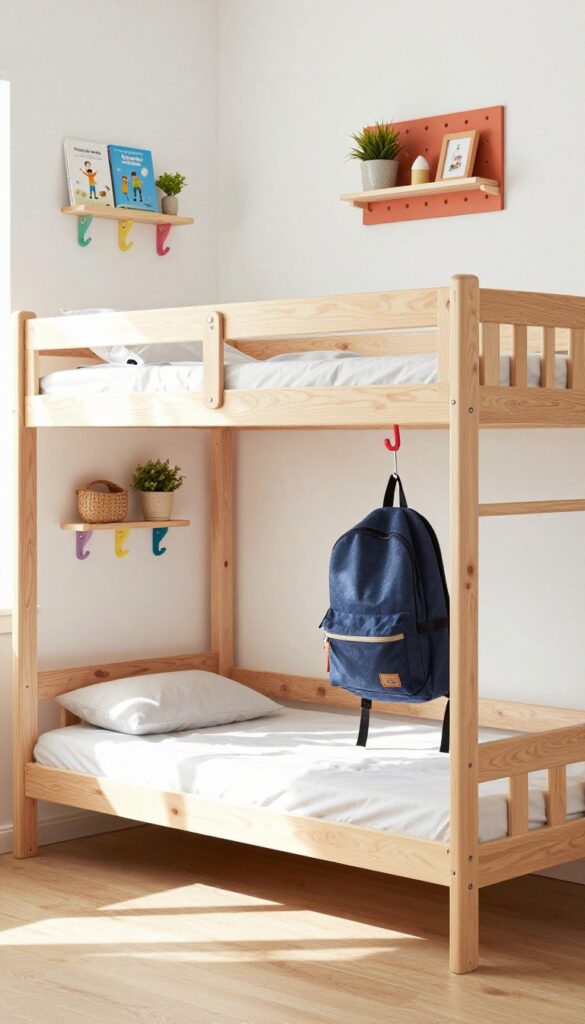
Pegboards aren't just for garages. Above each bunk, a painted pegboard gives kids a changing gallery for treasures, books, and daily gear. Choose warm terracotta or soft ochre to keep the look cozy, then let little hands arrange hooks, shelves, and baskets however they like.
It's a storage solution that grows with them—and looks good doing it.
Why It Works
Pegboards make the most of vertical wall space without committing to fixed shelves. Kids can swap out accessories as their interests change, and the warm paint color ties the whole room together.
Best For
Families who want a weekend project that instantly adds storage and personality. Ideal for rooms where kids share a wall of bunks and need their own zone.
Styling Tip
Use a mix of small shelves for books, hooks for backpacks, and mini buckets for art supplies. Keep the layout low enough for kids to reach, and add a few framed photos or a small plant for a finished look.
12. Magnetic Chalkboard Walls for Shared Creativity
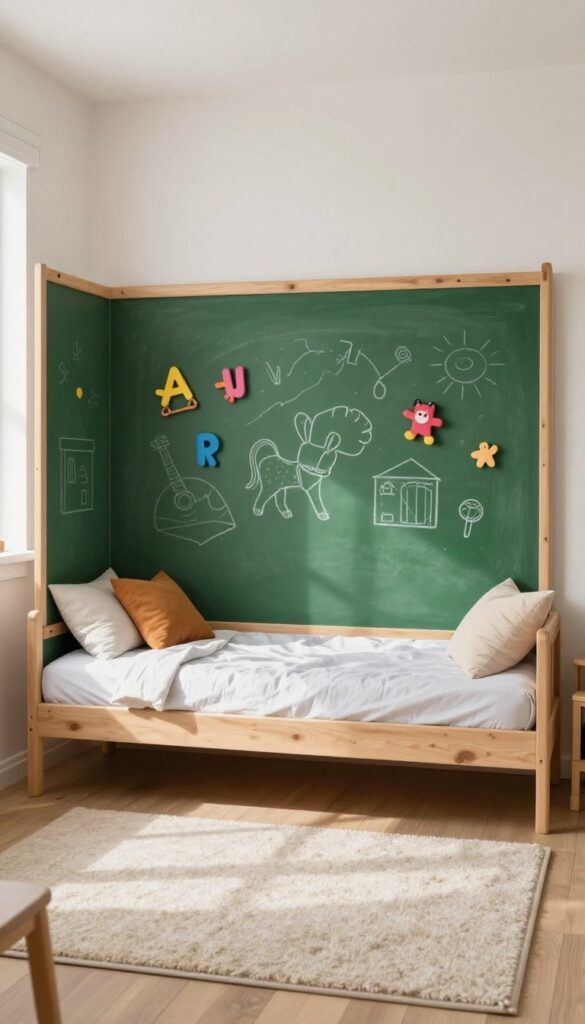
Imagine a wall that pulls double duty as a divider and a canvas for your kids' imaginations. Magnetic chalkboard paint turns an ordinary surface into a shared creative zone where both children can draw, write notes, or play with magnetic letters and puzzles. It's a weekend-friendly project that adds instant personality and function to a small room without eating up floor space.
Why It Works
- In a tight two-kid bedroom, every surface should earn its keep. A chalkboard wall naturally separates sleeping areas while giving each child a spot to express themselves. The magnetic feature lets you swap in artwork, photos, or learning toys, keeping the wall fresh and interactive.
- Plus, it's easy to refresh with a damp cloth—no need for bulky furniture or permanent dividers.
Best For
This idea shines in shared rooms with school-age kids who love to draw, practice letters, or play with magnetic games. It's also perfect for families who want a flexible, low-cost way to define zones without committing to a fixed wall or heavy shelving. Works best on a single accent wall that's visible from both beds.
Styling Tip
Choose a warm chalkboard color like deep charcoal or forest green instead of basic black to keep the room cozy. Frame the chalkboard area with a simple wooden trim or mount a slim ledge below it for holding chalk and magnets. Add a soft, washable rug underneath to catch dust and make the zone feel intentional.
FAQ
How can I make a small shared bedroom feel cozy for both kids?
Use warm textures like soft rugs, layered bedding, and fabric dividers. Add personal touches like each child's favorite colors or a small display shelf to make the space feel like their own.
What's the best type of room divider for a small kids' bedroom?
A low bookshelf or a fabric curtain divider works well. They don't block light or make the room feel smaller, and they add storage or softness.
Can I use bunk beds in a very small room?
Yes, bunk beds are great for saving floor space. Choose a design with built-in storage or lofted beds to maximize every inch.
How do I give each child privacy without a full wall?
Use curtains around bunks, hanging canopies, or a tall headboard. Even a small shelf divider can create a sense of personal space.
What colors work best for a warm, cozy shared kids' room?
Soft neutrals like beige, warm white, and blush, paired with muted greens or blues. Add warmth with wood tones and textured fabrics.
Conclusion
A small shared bedroom doesn't have to feel cramped or chaotic. With a few weekend-friendly tweaks like adding a fabric divider, swapping bedding, or installing a pegboard, you can create a warm, cozy space where both kids feel at home.
The key is to blend function with personality, letting each child's style shine while keeping the room harmonious. So grab a curtain rod, a can of paint, or a new rug—and enjoy the transformation.