15 Small Kids Bedroom Ideas with Storage-Friendly Plans for a Light and Airy Feel
Designing a small bedroom for your child doesn't mean you have to sacrifice style or storage. With a little creativity, you can create a space that feels open, organized, and full of personality.
The key is choosing pieces that work double duty—think beds with drawers, wall-mounted shelves, and multipurpose furniture. In this listicle, we'll walk through 15 storage-friendly ideas that keep the room light and airy, so your little one has room to play, learn, and dream.
Each plan is designed to be achievable and budget-conscious, proving that small can still be mighty.
1. Loft Bed with Built-In Desk and Shelves
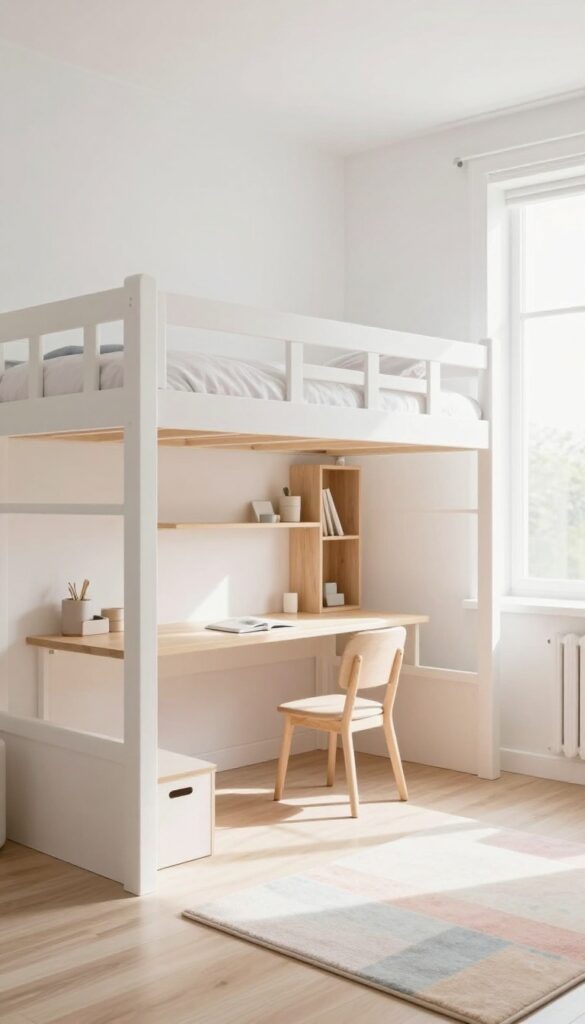
Raising the bed up high frees the floor below for a compact desk and open shelving, turning a tiny bedroom into a two-zone space. The light wood finish keeps the room feeling open and breezy, while white walls and a soft rug add to the airy vibe. It’s a smart way to give a school-age child both a sleep zone and a study nook without squeezing everything together.
Why It Works
By stacking the bed over the desk, you reclaim valuable floor space that would otherwise be taken up by separate furniture. The built-in shelves keep books and supplies within arm’s reach, reducing clutter and making the room feel organized. This vertical approach is especially effective in small rooms where every square foot counts.
Best For
This layout is ideal for grade-school kids who need a dedicated homework area but share a small room or have limited square footage. It works well in rooms with at least 8-foot ceilings, giving enough headroom for sitting at the desk underneath. Families looking to combine sleep and study in one compact footprint will love this solution.
Styling Tip
Paint the loft bed and desk in the same light neutral tone to keep the visual weight low. Add a small task lamp with a warm bulb on the desk, and use woven baskets on the shelves to hide smaller toys or art supplies. A lightweight, washable rug in a soft pastel ties the two zones together without making the floor feel busy.
2. Under-Bed Drawers for Seasonal Clothes and Toys
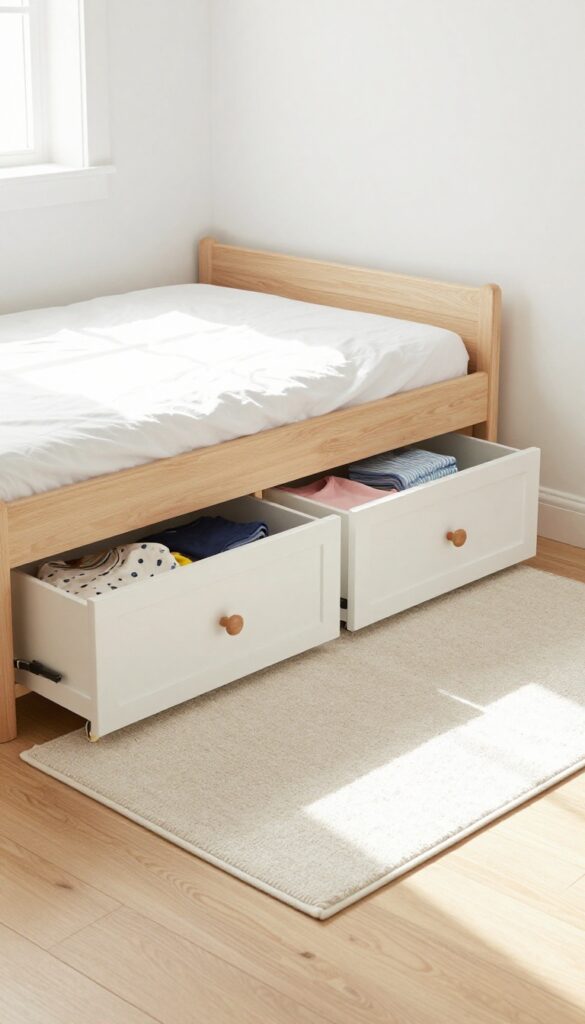
That space under the bed often becomes a black hole for dust bunnies and stray socks. Custom drawers on casters turn it into prime real estate for out-of-season clothes and overflow toys. The light, airy feel comes from choosing drawers in a pale wood tone or white, with simple hardware that keeps the room looking polished instead of bulky.
Why It Works
Built-in drawers eliminate the need for plastic bins that get shoved out of sight and forgotten. Kids can slide them open easily, which encourages them to actually put things away. The casters make cleaning underneath a breeze—just roll them out and sweep.
Best For
Small bedrooms where floor space is tight and every inch counts. It's especially useful for shared rooms where each child needs their own designated storage zone without adding extra furniture.
Styling Tip
Paint the drawer fronts the same color as the baseboard or wall to make them blend in. Add round wooden knobs or leather pulls for a soft, tactile detail that's easy for little hands to grip.
3. Wall-Mounted Bookshelves as a Gallery Wall
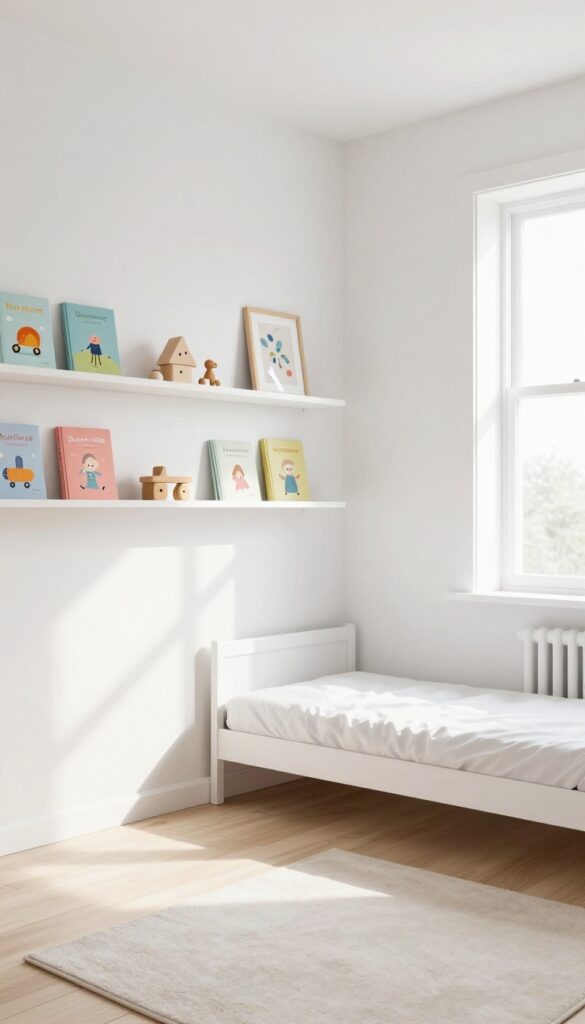
Blank walls in a kid's room are wasted real estate. By mounting floating shelves at staggered heights, you create a dynamic gallery that doubles as storage. The mix of books, small toys, and framed art keeps the wall visually engaging while freeing up floor space.
In a light and airy room, white or pale wood shelves blend seamlessly, letting the colorful items pop without feeling cluttered.
Why It Works
This setup maximizes vertical space, which is crucial in small bedrooms. The varying shelf heights add architectural interest, and because items are displayed rather than hidden, kids can easily grab a book or toy and put it back. It also encourages tidiness since everything has a visible home.
Best For
Ideal for toddlers to tweens who have a growing collection of books and small treasures. Works especially well in rooms with limited floor space or awkward wall areas that need a focal point.
Styling Tip
Stick to a cohesive color palette for the shelf contents—think pastel book spines, neutral frames, and a few wooden toys. Leave some negative space on each shelf to avoid a crowded look. Use small clear bins for tiny items to keep the display neat.
4. Corner Wardrobe with Sliding Doors
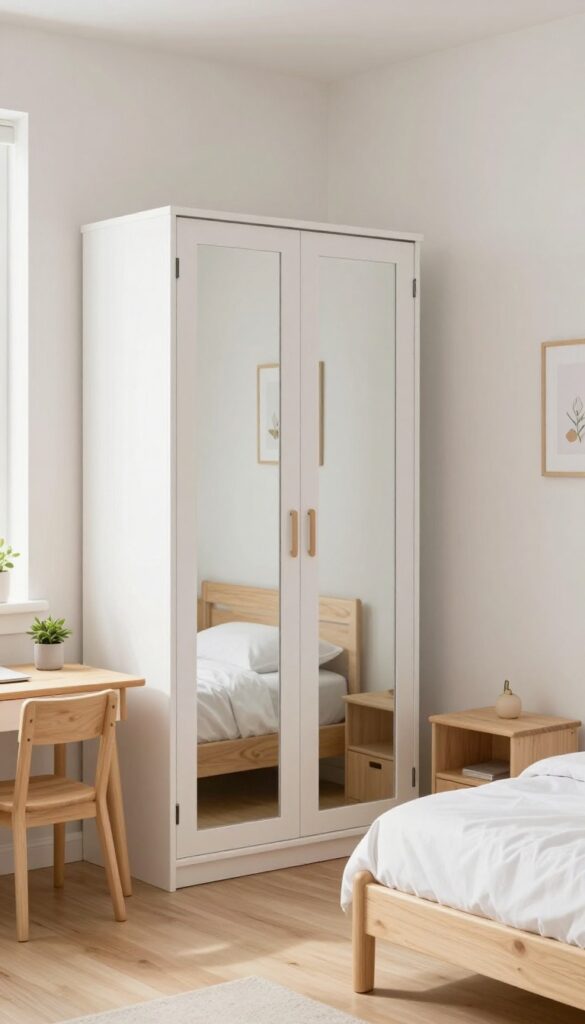
Corners often go underutilized in small bedrooms, but they’re prime real estate for storage. A corner wardrobe with sliding doors fits snugly into that awkward nook and offers plenty of hanging space without eating into the floor area. The mirrored doors bounce light around, making the whole room feel airier and more open—exactly what a compact space needs.
Why It Works
Sliding doors don’t need clearance to swing open, so you can place the wardrobe right next to a bed or desk without blocking anything. Mirrored panels add depth and reflect natural light, visually doubling the room’s size. Inside, adjustable rods and shelves let you customize storage for clothes, shoes, and accessories.
Best For
This setup is ideal for kids who have outgrown a dresser but don’t have room for a full closet system. It works especially well in narrow or L-shaped rooms where a standard wardrobe would feel bulky.
Styling Tip
Keep the interior organized with matching hangers and slim storage bins on the top shelf. Add a small hook on the side for a robe or backpack, and place a low basket underneath for shoes or toys.
5. Bunk Beds with Integrated Storage Steps
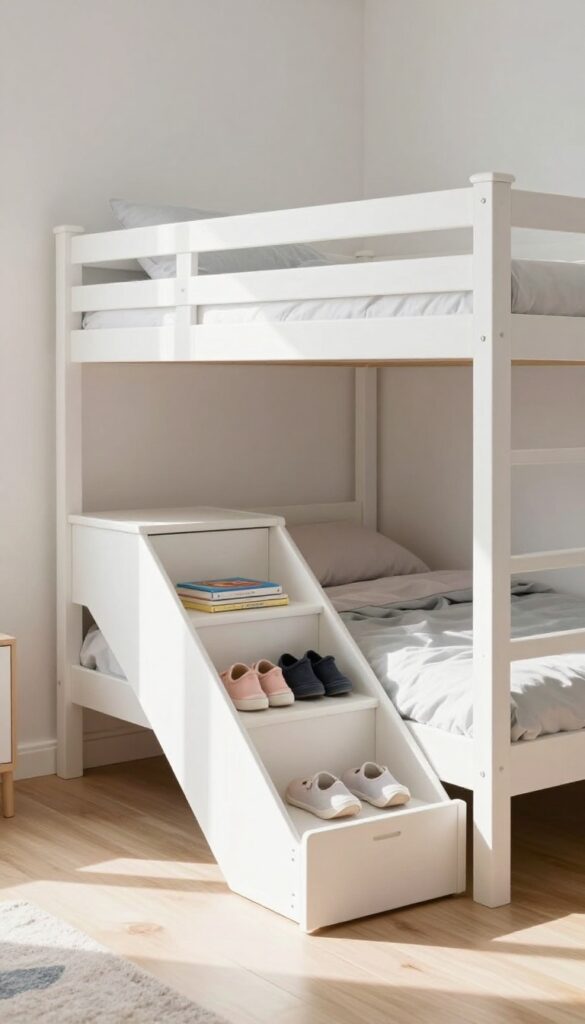
Let's face it: bunk beds are practically a rite of passage for shared kids' rooms, but the climb up can be a pain—especially when the ladder eats up floor space. The smartest solution? A bunk bed where the steps themselves are storage.
Each stair doubles as a pull-out drawer or a cubby, so shoes, books, and bedtime essentials have a dedicated home right where they're needed. It's a design that feels light and airy because every inch is working for you, not cluttering up the room.
Why It Works
Integrated storage steps eliminate the need for extra furniture like a dresser or nightstand, freeing up precious square footage. The built-in organization keeps small items off the floor and out of sight, making the room feel more open and tidy. Plus, kids naturally learn to put things away when their spot is right on the way up to bed.
Best For
This idea is ideal for siblings sharing a room, especially if one child is younger and needs easy access to lower storage. It also works wonders in narrow rooms where a traditional ladder would block traffic flow. If your kids love having their books or toys within arm's reach at bedtime, this is a game-changer.
Styling Tip
Keep the look light and airy by choosing a white or pale wood finish for the bunk bed. Add soft, breathable linens in muted pastels or neutral tones. To maintain the practical yet stylish vibe, use the top cubbies for items used less often—like extra blankets or off-season clothes—and the bottom steps for daily essentials.
6. Window Seat with Hidden Storage
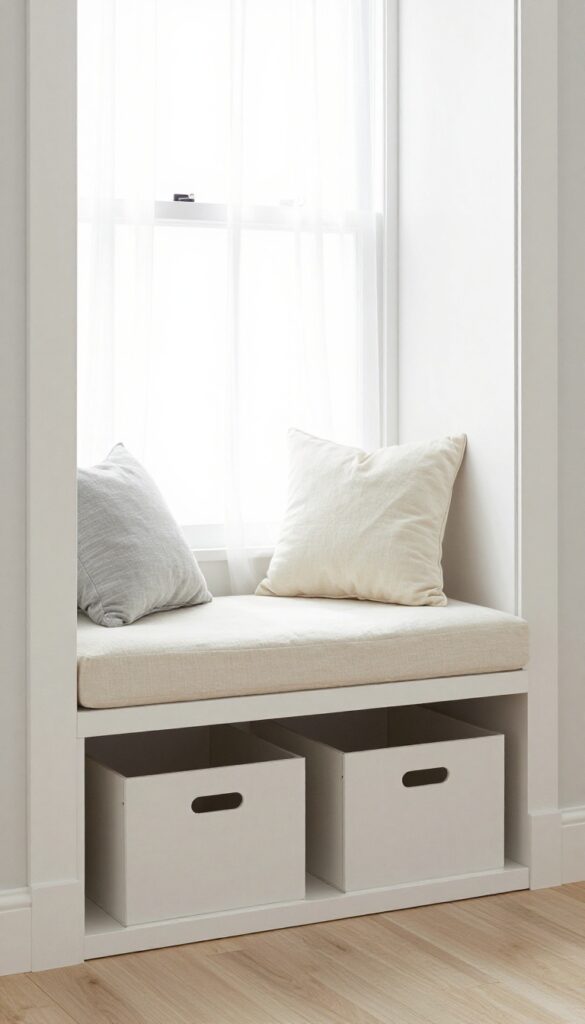
A window seat does double duty in a small bedroom. It carves out a cozy nook for reading or daydreaming while hiding a surprising amount of storage underneath. The key is to keep the design light and airy—think white or pale wood trim, a plush cushion in a soft neutral, and minimal hardware so the seat blends into the room without feeling bulky.
When the top lifts, you’ll find deep bins perfect for stashing extra blankets, off-season clothes, or toys that need a home.
Why It Works
It turns an often underused spot—the area in front of a window—into a functional, space-saving feature. The hidden storage keeps clutter out of sight without taking up floor space, and the seat itself becomes a beloved spot for quiet time. Because it’s built-in, it feels custom and intentional, not like an afterthought.
Best For
This idea shines in small bedrooms where floor space is tight and every inch counts. It’s especially great for kids who love to read or need a quiet corner away from the main play area. The storage is ideal for items you don’t need daily, like seasonal bedding or outgrown clothes waiting to be passed down.
Styling Tip
Choose a cushion fabric that’s durable and washable—performance linen or cotton canvas in a light gray or cream works well. Add a couple of toss pillows in a contrasting texture (like a chunky knit or velvet) to make the seat inviting. Keep the window treatment simple: Roman shades or sheer curtains let in natural light and keep the look uncluttered.
7. Pegboard Wall for Art Supplies and Accessories
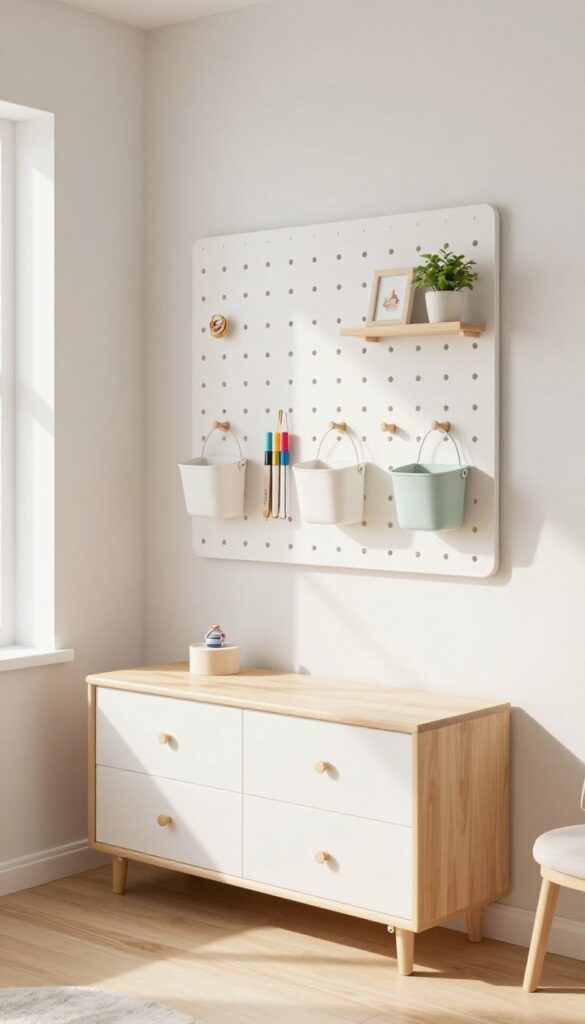
A pegboard wall brings serious function to a small bedroom without making it feel cluttered or heavy. Mounted above a low dresser or desk, it turns blank wall space into a flexible storage hub for all those little things kids collect—markers, hair ties, craft supplies, and tiny treasures. The light and airy vibe comes from choosing a white or pale wood pegboard and keeping the baskets and hooks minimal, so the wall feels organized and open rather than busy.
Why It Works
Pegboards are endlessly adjustable, so as your child’s interests change, you can swap out baskets for hooks or add small shelves without drilling new holes. Everything stays visible and easy to grab, which cuts down on mess and makes morning routines smoother. Plus, the open storage keeps the room feeling spacious because nothing is hidden behind closed doors.
Best For
This setup is ideal for kids who love arts and crafts, collect small accessories, or need a landing spot for daily essentials like headphones and hairbrushes. It works especially well in rooms where floor space is tight, because it uses vertical real estate that would otherwise go unused.
Styling Tip
Stick to a cohesive color palette by choosing baskets and bins in soft neutrals or pastels that match the room’s light, airy scheme. Add a small plant or a framed photo on one of the pegboard shelves to soften the look and make it feel more like decor than just storage.
8. Rolling Cart as a Mobile Nightstand
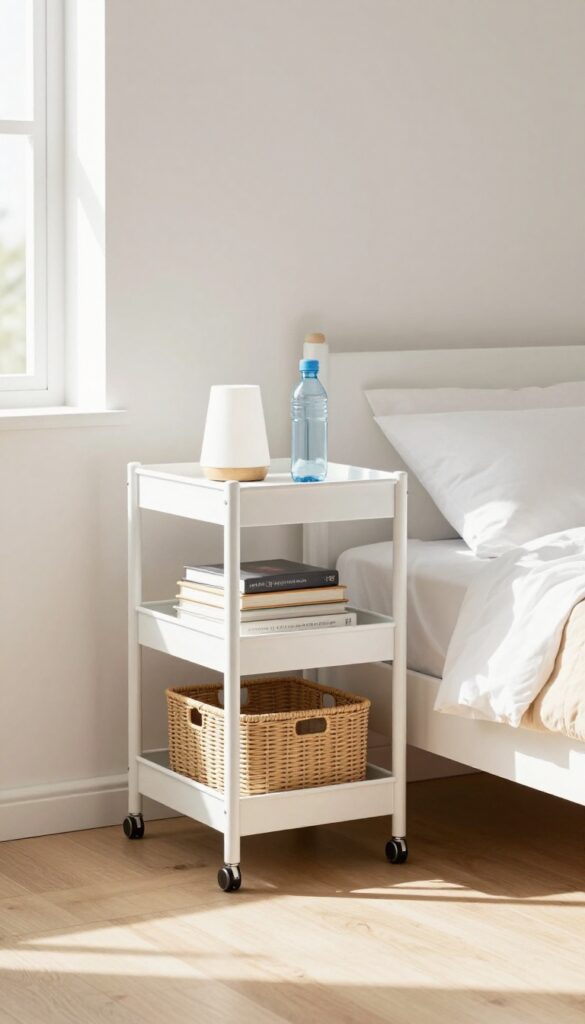
A slim rolling cart slides right next to the bed, offering a compact surface for books, a lamp, and a water bottle. Its open design keeps the room feeling airy and uncluttered, while the wheels make it easy to move for cleaning or rearranging. This practical piece adds a touch of industrial charm without weighing down the space.
Why It Works
Rolling carts are lightweight and portable, so your child can easily pull it closer for homework or push it aside for playtime. The open shelves prevent visual bulk, making the room feel larger and more open.
Best For
This idea works especially well in small bedrooms where floor space is limited and every piece of furniture needs to earn its keep. It's also great for kids who like to change their room layout often.
Styling Tip
Choose a cart in a light color like white or pale wood to maintain the airy vibe. Add a small tray on top to corral bedtime essentials, and use the lower shelf for a basket of extra books or toys.
9. Over-the-Door Shoe Organizer for Small Items
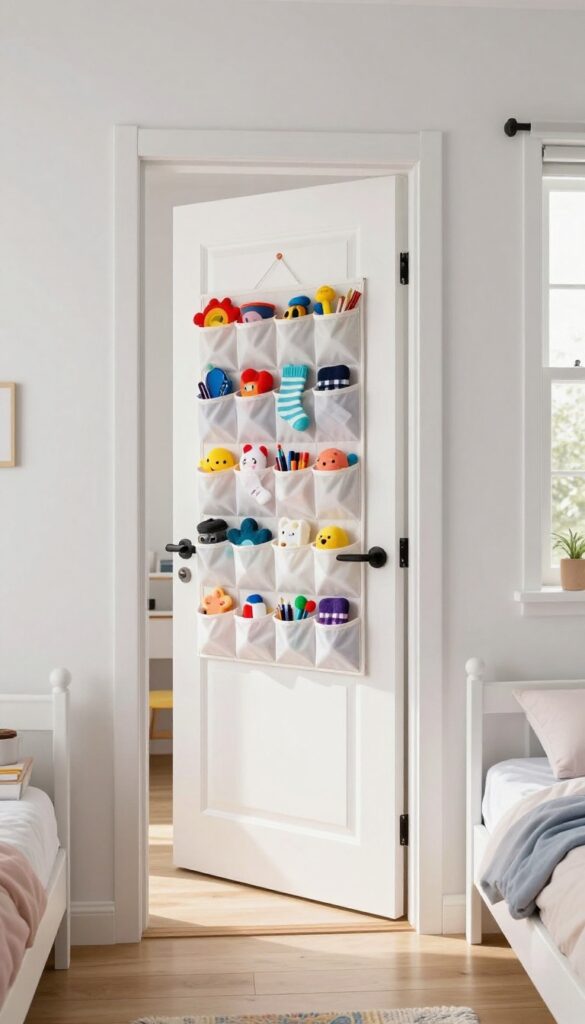
That unused space behind the door? It’s prime real estate for storage. An over-the-door shoe organizer, typically meant for footwear, becomes a surprisingly clever catchall for kids’ small treasures.
The clear pockets let little ones spot their favorite toy or art supply instantly, and since it hangs rather than sits, you gain back precious floor area. It’s a light, airy solution that keeps clutter contained without adding visual weight.
Why It Works
Kids accumulate tiny items—action figures, hair clips, crayons, socks—that easily become clutter. This organizer corrals them in visible, accessible pockets, reducing mess and morning scrambles. It uses zero floor space, which is a game-changer in a small room, and the transparent design means no digging through bins.
Best For
This hack shines in bedrooms where floor space is at a premium and kids need to grab things quickly. It’s perfect for storing art supplies, small toys, socks, or even shoes. Also great for shared rooms where each child can have a designated organizer on their own door.
Styling Tip
Choose an organizer with clear pockets and a neutral or white backing to keep the look light and airy. Hang it on the back of the door or on a closet door. For a cohesive feel, match the color of the organizer’s trim to the room’s accent color—like a soft mint or pale yellow.
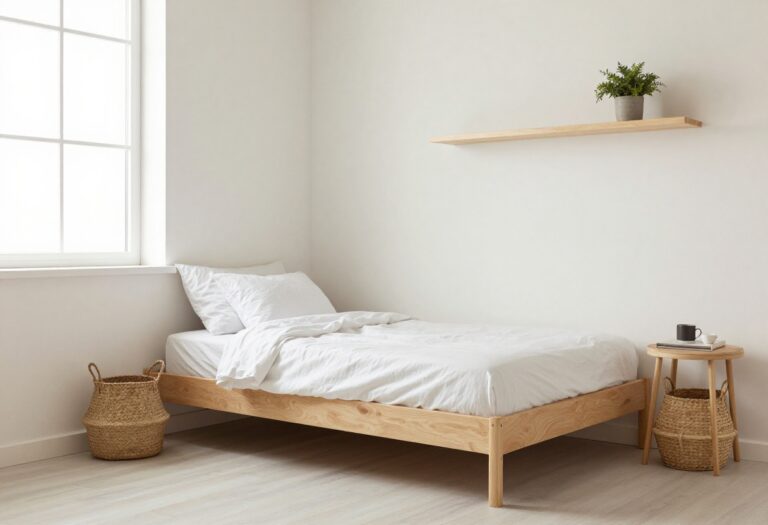
10. Low-Profile Bed with Drawers on Both Sides
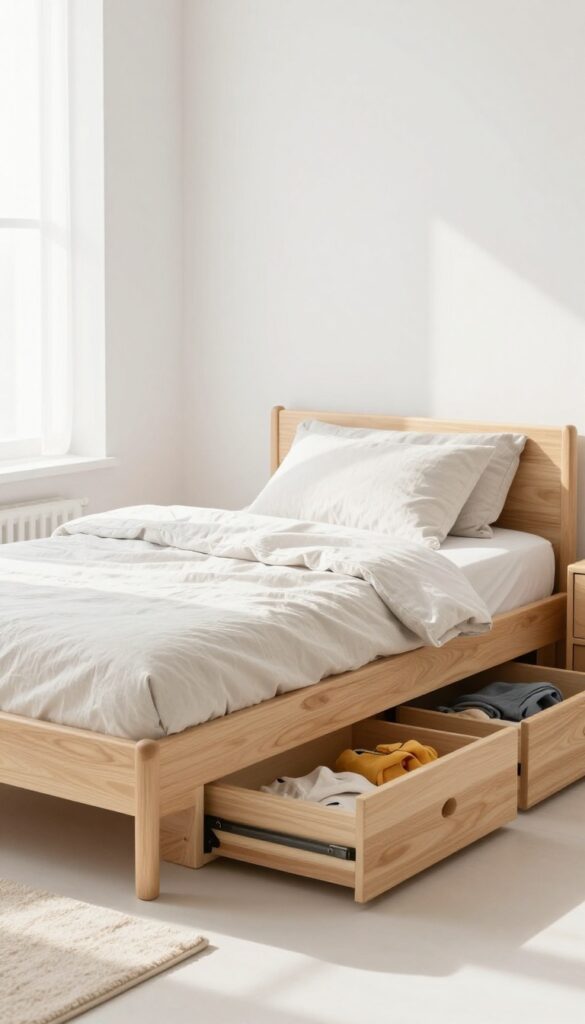
A platform bed that sits low to the ground instantly makes a small room feel more open and less crowded. When you add deep drawers on both sides, you gain a surprising amount of hidden storage without the visual weight of a tall frame or bulky dresser. For younger children especially, having their clothes and toys within easy reach encourages independence and keeps the room tidy with minimal effort.
Why It Works
The low profile keeps the visual center of gravity low, which makes ceilings feel higher and the room more spacious. Drawers on both sides double the storage capacity compared to a standard bed with only one side accessible, and they eliminate the need for a separate dresser that would take up precious floor space.
Best For
This setup is ideal for toddlers and early elementary-age kids who need simple, accessible storage for clothes, pajamas, and favorite toys. It also works well in shared rooms where each child can have their own set of drawers for personal items.
Styling Tip
Choose a bed frame in a light wood tone or crisp white to keep the airy feel. Add a low-profile headboard in a soft fabric like linen or cotton to introduce texture without height. Finish the look with a lightweight quilt and a small, soft rug that peeks out from under the bed.
11. Hanging Wall Pockets for Stuffed Animals
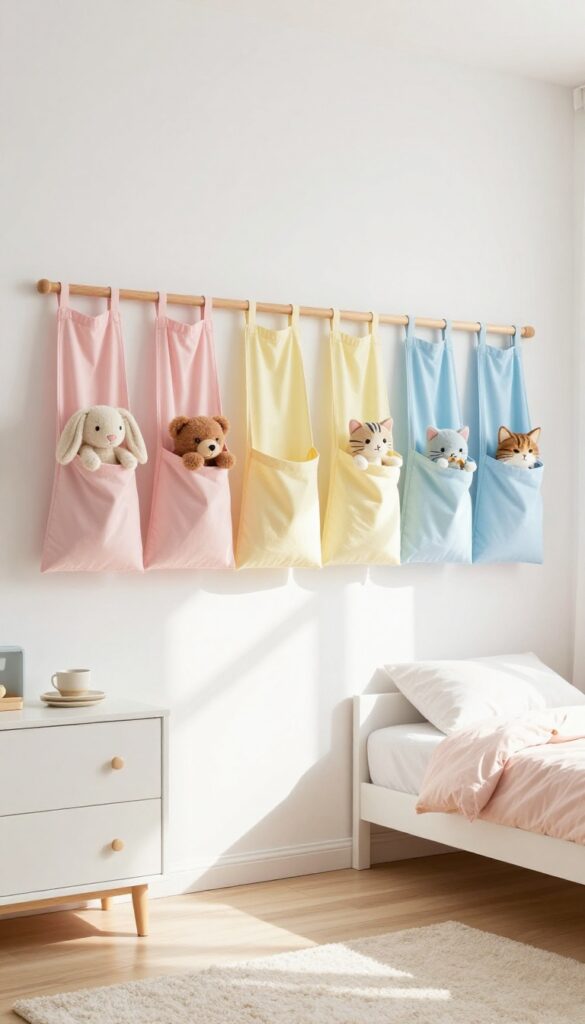
Stuffed animals have a way of multiplying overnight, don’t they? Before you know it, the bed is a mountain of plush friends and the floor is a tripping hazard. Hanging wall pockets solve this in the sweetest way—by giving each toy a visible, reachable home.
These fabric organizers add softness and color to the walls, making the room feel cozy without feeling cluttered. In a light and airy space, choose pockets in pale pastels or natural linen to keep the look breezy.
Why It Works
Wall pockets keep stuffed animals off surfaces where they collect dust and get in the way. They also turn toy storage into a decorative feature—kids can see their favorites and grab them easily. The vertical storage frees up floor space for play, which is a huge win in small rooms.
Best For
This idea is ideal for toddlers and preschoolers who have a growing collection of soft toys but aren’t ready for a toy bin system. It also works well in shared rooms where each child can have their own set of pockets for their special plushies.
Styling Tip
Hang the pockets at child height so they can reach without help. Arrange them in a row or a playful cluster above a low dresser or near the bed. For a cohesive look, match the pocket fabric to the bedding or rug—think soft blush, butter yellow, or sky blue.
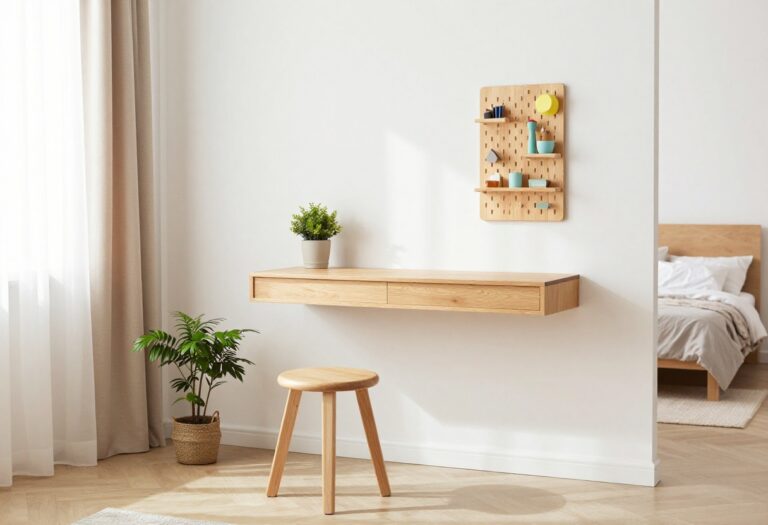
12. Fold-Down Desk That Disappears When Not in Use
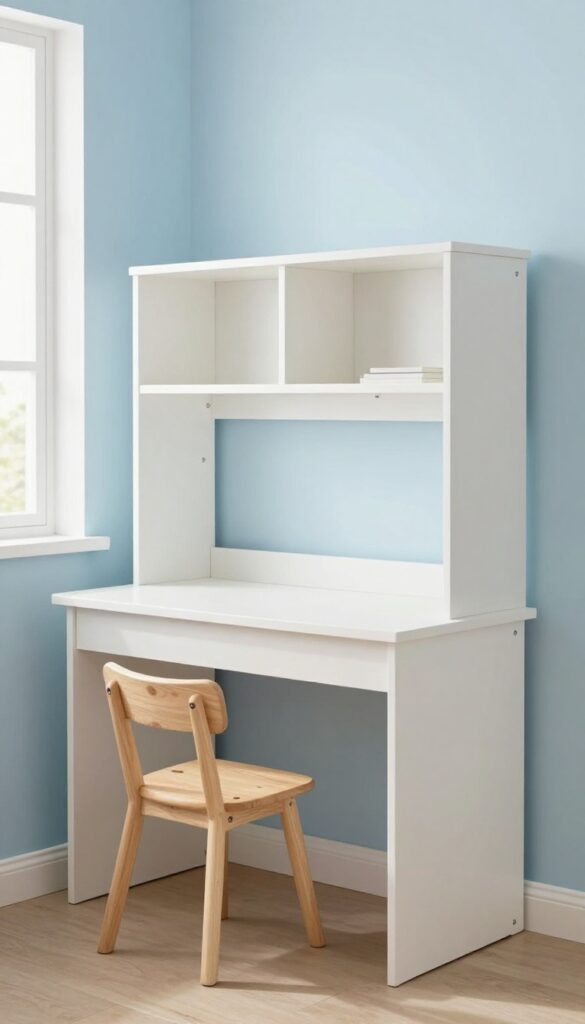
A wall-mounted fold-down desk is a game-changer for small bedrooms. When homework is done, simply fold it up and the space instantly returns to play area. It's a smart way to carve out a dedicated work zone without sacrificing precious square footage.
The key is choosing a light wood or white finish that blends into the wall, so the desk feels almost invisible when closed. Pair it with a small stool that tucks neatly underneath, and you've got a practical setup that keeps the room feeling open and airy.
Why It Works
This idea works because it creates a functional workspace without permanently claiming floor space. When folded, the desk takes up just a few inches of wall depth, leaving the room free for other activities. It's especially useful in rooms where a traditional desk would block traffic or make the space feel cramped.
Best For
Best for school-aged kids who need a spot for homework but also want plenty of room to play. It's also ideal for very small bedrooms where every square foot counts, or for shared rooms where flexibility is key.
Styling Tip
Choose a fold-down desk with a built-in shelf or cubby above it to store books and supplies. Keep the area around it clutter-free by using wall-mounted organizers or a small caddy that can be tucked away when the desk is folded. A soft, neutral color palette keeps the desk from visually overwhelming the room.
13. Cube Storage Unit as a Room Divider and Toy Bin
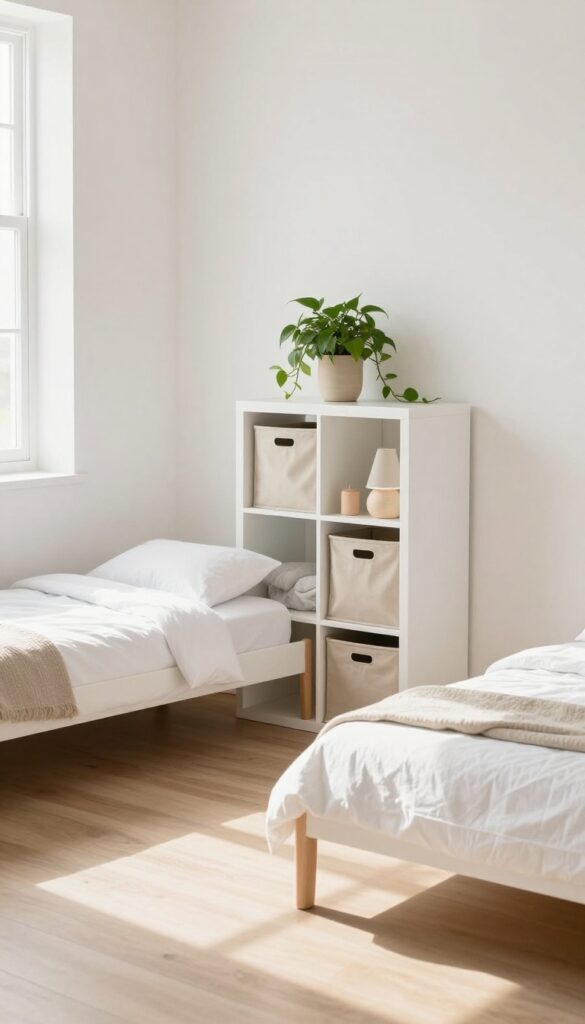
Sharing a bedroom can feel tricky when there’s no clear separation between each child’s space. A cube storage unit placed between beds creates a low, airy divider that defines zones without blocking light. The open cubbies double as organized toy storage when you add fabric bins in soft, neutral tones.
It’s a simple way to give siblings their own corner while keeping the room feeling open and calm.
Why It Works
The cube unit’s open design keeps the room light and spacious, unlike a solid wall or tall bookcase. Each child gets their own set of bins, making cleanup clear and easy. The top surface offers a spot for a small lamp or trailing plant, adding a finished, stylish touch that ties the room together.
Best For
This idea works well for siblings sharing a room, especially when beds are against opposite walls or parallel. It’s also great for small bedrooms where you need both storage and separation without losing floor space. Choose a low unit (around 3 cubes high) so it doesn’t overpower the room or block the view across the space.
Styling Tip
Stick with light wood or white cube units to keep the look airy. Use fabric bins in a single color, like pale gray or beige, for a cohesive feel. Add a small table lamp on top for soft ambient lighting, and tuck a low-growing plant like a pothos nearby to bring in a touch of nature.
14. Magnetic Wall Strip for Metal Toys and Art
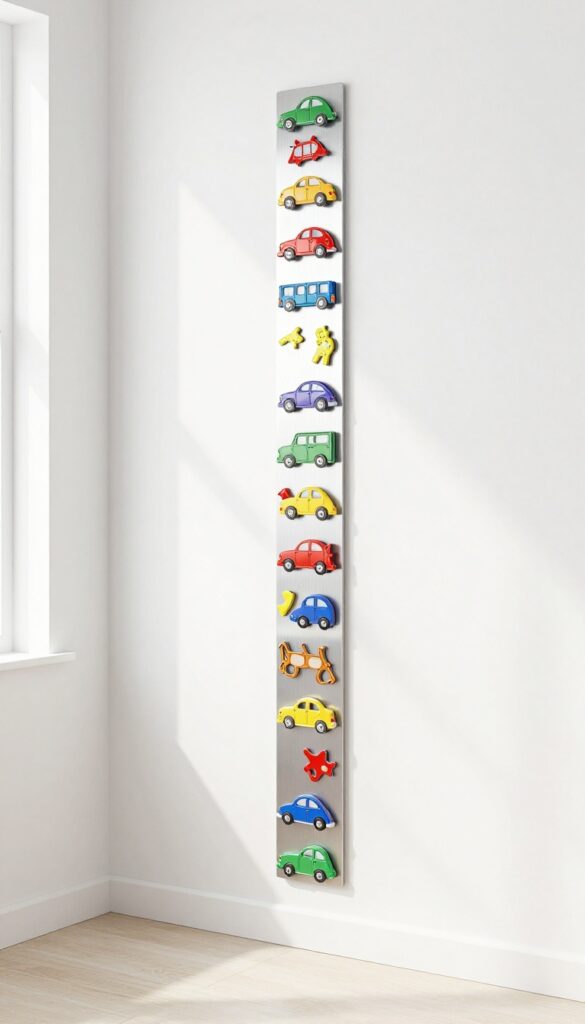
Kids' rooms are magnets for clutter, but a magnetic wall strip turns that chaos into curated display. Mount a long metal strip at kid height—painted to match the wall or left in a brushed silver finish—and let little hands arrange their favorite metal cars, magnetic puzzles, or even lightweight framed art. It’s a constantly changing gallery that encourages tidying up without a single command.
The airy feel comes from keeping the floor clear and the walls functional, so the room breathes easier.
Why It Works
Magnetic strips put toys on display rather than in bins, making cleanup feel like play. Kids can easily rearrange items, which fosters independence and ownership of their space. Plus, it frees up shelf and floor space, contributing to that light, uncluttered look.
Best For
This works especially well for kids who love cars, trains, or magnetic building sets. It’s also great for displaying lightweight art prints or photos if you attach small magnets to the back. Ideal for small rooms where every inch of wall needs to earn its keep.
Styling Tip
Choose a strip with a low-profile design and mount it at your child’s eye level. Paint the strip the same color as the wall for a seamless look, or go with a contrasting metallic finish for a playful accent. Keep the collection rotating—swap out items seasonally to keep the wall feeling fresh and airy.
15. Ceiling-Mounted Canopy with Storage Pockets
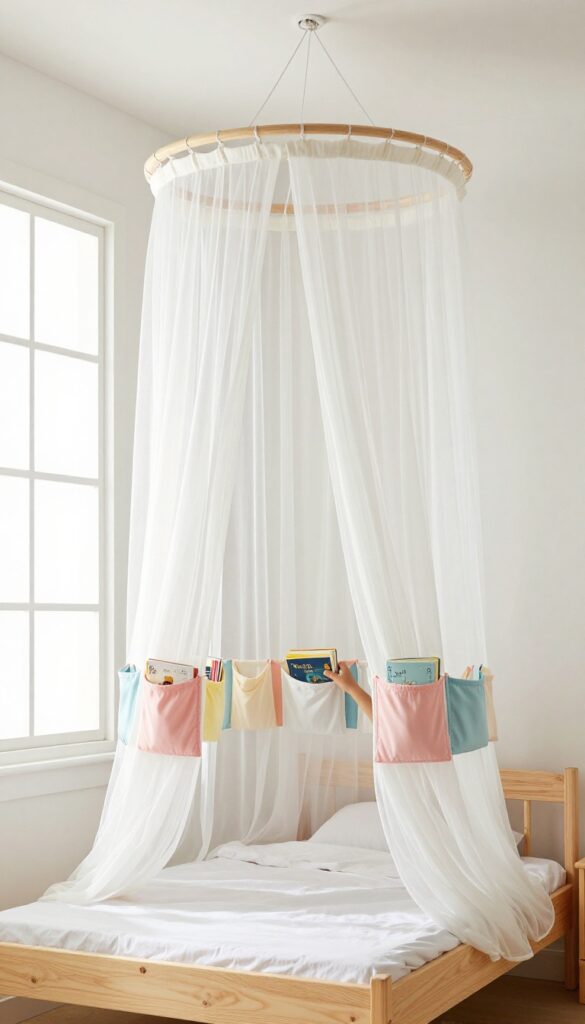
A canopy bed doesn't have to mean heavy drapes or a princess vibe. For a small kid's room, a lightweight ceiling-mounted canopy with built-in storage pockets adds a playful focal point without eating up floor space. The sheer fabric keeps the room feeling open and airy, while the pockets offer a clever spot for bedtime essentials.
It's a simple DIY-friendly project that instantly makes the bed feel like a cozy hideaway.
Why It Works
This idea maximizes vertical space and adds storage exactly where kids need it—within arm's reach from bed. The pockets keep small items like books, a flashlight, or a lovey organized and off the floor, reducing clutter. The canopy also creates a defined sleeping zone, which can help little ones feel more secure and settled at bedtime.
Best For
This is ideal for young children who love forts and cozy nooks, especially in rooms with low furniture or limited floor space. It works well for shared rooms too, as each bed can have its own canopy and pocket system, giving each child a personal zone.
Styling Tip
Choose a sheer cotton or linen canopy in a soft neutral or pastel to keep the room light. For the pockets, use fabric that complements the bedding or wall color. Hang the canopy from a simple ceiling hook or a wooden ring, and attach the pockets with fabric glue or stitching so they're secure enough for small treasures.
FAQ
How can I make a small kids bedroom feel bigger?
Use light colors on walls and bedding, incorporate mirrors, and choose furniture with legs to create an open feel. Vertical storage like wall shelves also draws the eye upward, making the room appear larger.
What is the best storage solution for a small shared kids room?
A cube storage unit can double as a room divider and provide individual bins for each child. Bunk beds with built-in drawers or shelves also maximize floor space while giving each child their own zone.
How do I keep a small kids bedroom organized long-term?
Involve your child in the organization system and label bins or drawers. Regularly purge outgrown clothes and toys. Use furniture with built-in storage so everything has a designated spot.
Can I use dark colors in a small kids bedroom?
Yes, but balance them with plenty of light accents and natural light. Consider an accent wall behind the bed and keep the rest of the room light. Mirrors and glossy finishes can also help reflect light.
What type of bed is most space-efficient for a small room?
Loft beds or bunk beds with integrated storage are excellent choices. A low-profile platform bed with drawers underneath also works well, especially for younger children.
Conclusion
Creating a small kids bedroom that's both stylish and storage-friendly is all about thinking vertically and choosing multipurpose pieces. With these 15 ideas, you can transform a cramped space into a light, airy haven where your child can thrive. Remember, every square inch counts, so let each piece of furniture earn its keep.
We hope these plans inspire you to design a room that's as functional as it is beautiful. Happy decorating!