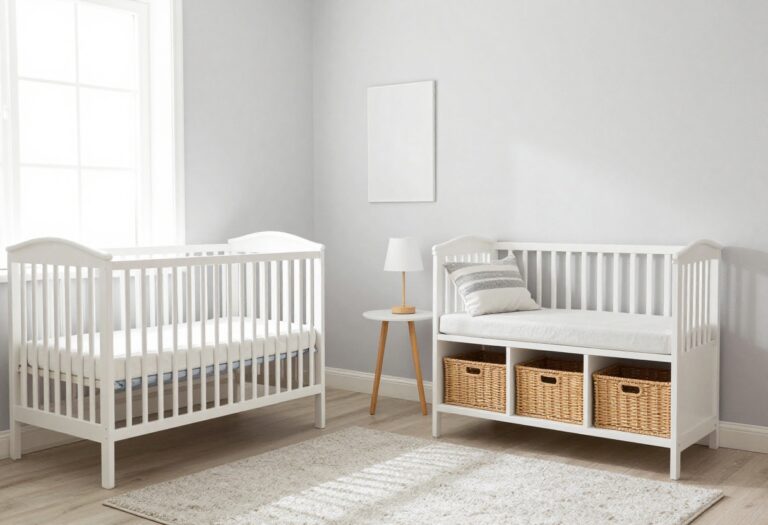
11 Kids Desk Area in Bedroom Ideas for Smart Study Nooks
Carving out a dedicated study spot in a kid's bedroom can feel like a puzzle, especially when square footage is tight. But with a little planning, you can create a desk area that's both practical and inviting, without sacrificing style.
The key is to think vertically, use multi-functional furniture, and keep storage front and center.
These 11 ideas focus on smart solutions that make the most of every inch, so your child has a calm, organized space to focus and create.
1. Corner Desk with Floating Shelves
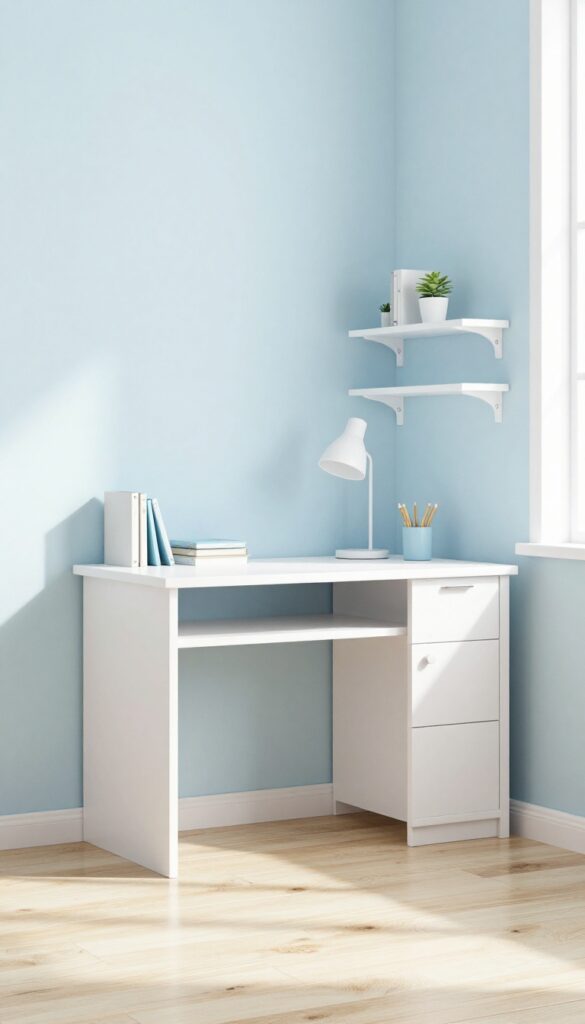
Tuck a compact corner desk into an unused nook and install floating shelves above for books and supplies. This setup maximizes vertical storage and keeps the desk surface clear. It’s a smart, space-aware solution that turns a forgotten corner into a productive study zone without cluttering the room.
Why It Works
By going vertical, you free up floor space and keep essentials within arm’s reach. Floating shelves add storage without the bulk of a bookcase, making the area feel open and organized. The corner placement also uses an often-wasted area, giving your child a dedicated spot without sacrificing play space.
Best For
Small bedrooms or shared rooms where floor space is at a premium. It’s ideal for kids who need a quiet homework station but don’t have room for a full desk setup. Also great for rooms with an awkward corner that’s hard to furnish otherwise.
Styling Tip
Choose a desk with a slim profile and mount the shelves at varying heights for visual interest. Add a small task lamp and a corkboard or magnetic strip for notes. Keep the color palette light—white or pale wood—to maintain an airy feel.
2. Window-Side Desk with Built-In Storage Bench
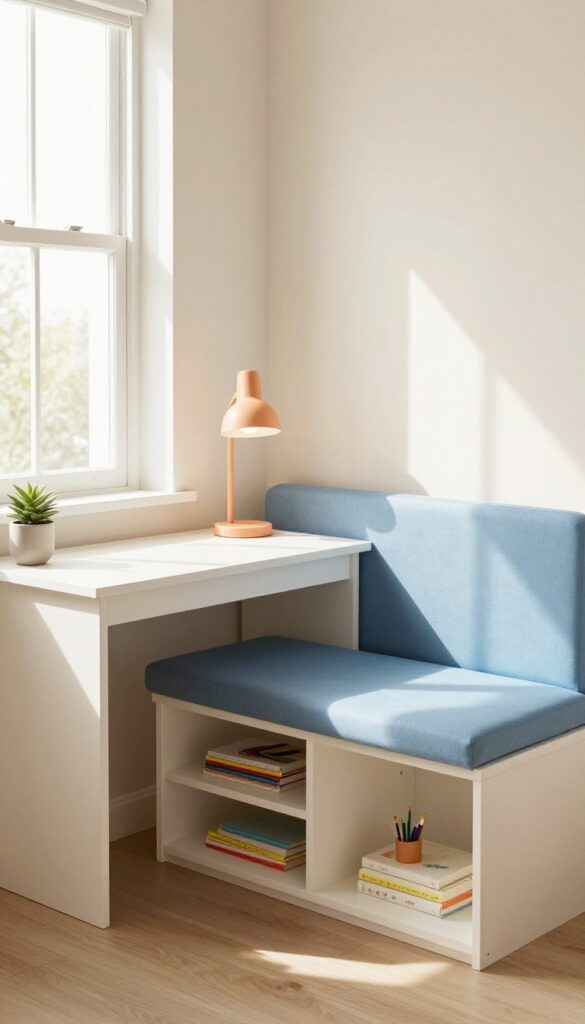
Natural light does wonders for focus, and placing a desk right by the window makes homework feel less like a chore. Pair it with a built-in storage bench underneath, and you’ve got a spot that holds everything from art supplies to extra books while also offering a comfy seat for reading or pulling on shoes. The bench keeps clutter out of sight, so the room stays tidy and the desk area feels open and airy.
Why It Works
This setup maximizes every inch of floor space. The bench stores bulky items that would otherwise end up on the desk or floor, and because it’s built in, it doesn’t add visual clutter. The window provides natural light that reduces eye strain and makes the nook feel larger.
Best For
Great for small bedrooms where floor space is tight and you need both a study area and extra storage. Also ideal for kids who do art projects or have lots of books, since the bench can hold bins or baskets that are easy to swap out.
Styling Tip
Choose a bench cushion in a durable, washable fabric like canvas or outdoor-grade polyester. Add a small plant or a fun lamp on the desk to bring in personality without taking up valuable work surface.
3. Wall-Mounted Fold-Down Desk
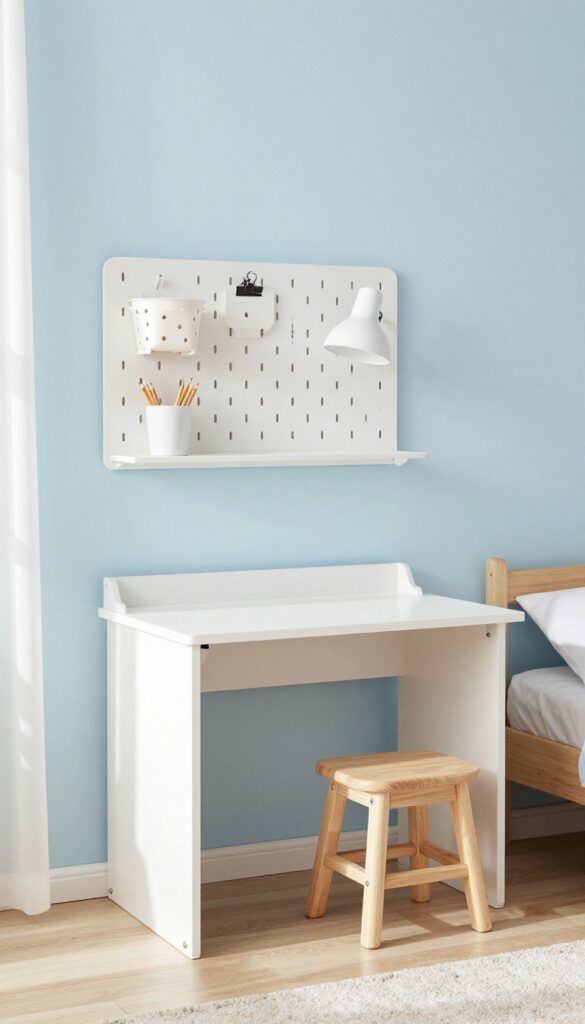
A wall-mounted fold-down desk is a clever solution when floor space is tight but a dedicated study spot is non-negotiable. When closed, it blends into the wall like a slim cabinet, freeing up the room for play or sleep. Open it up, and you've got an instant workspace that's easy to tuck away when homework is done.
Why It Works
This setup keeps the bedroom flexible and clutter-free. The fold-down design means the desk doesn't dominate the room, and adding a pegboard above turns vertical space into a storage powerhouse for supplies, art, or a small lamp.
Best For
Ideal for small bedrooms or shared rooms where every square inch counts. Works especially well for younger kids who need a simple, distraction-free surface for drawing or homework.
Styling Tip
Mount the desk at a height that works for your child's chair or stool. Use the pegboard to hang a pencil cup, a small basket for papers, and a clip-on light so the desk stays clear and ready to use.
4. Loft Bed Desk Combo
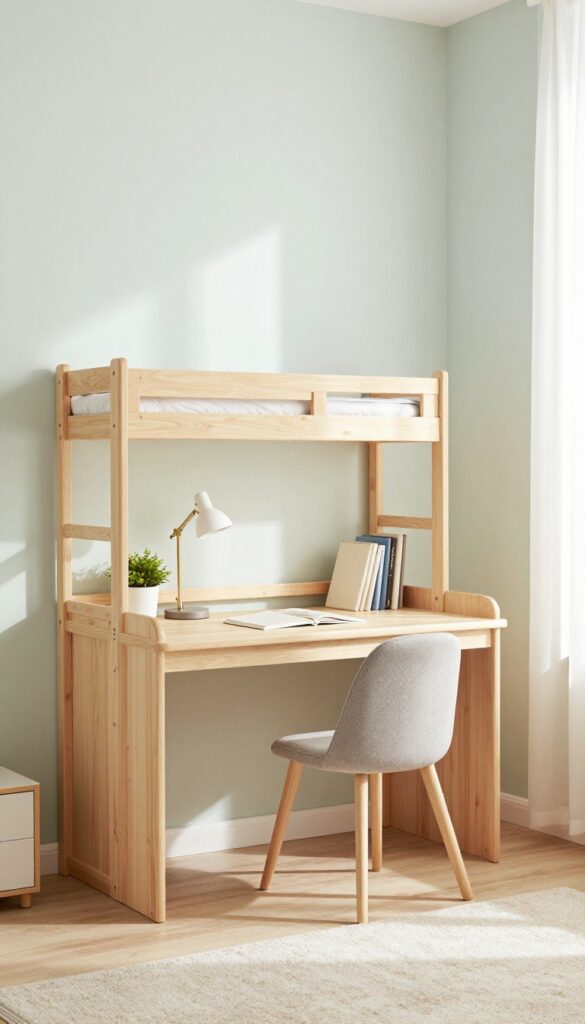
Loft beds are a genius way to reclaim square footage in a compact kids' room. By elevating the sleeping area, you free up valuable floor space for a desk, chair, and maybe even a small bookshelf. The built-in desk underneath feels intentional and organized, turning what could be a cramped corner into a dedicated study zone that doesn't compete with the bed for room.
It's a space-saving win that also looks clean and purposeful.
Why It Works
This setup eliminates the need for a separate desk and bed, which is a game-changer in tight quarters. The vertical design keeps the floor clear, making the room feel larger and less cluttered. Plus, having the desk right under the bed creates a natural separation between sleep and study areas, helping kids focus when it's homework time.
Best For
Small bedrooms where floor space is at a premium, especially for school-aged kids who need a proper desk but don't have room for both a bed and a separate study table. It's also great for shared rooms where you want to maximize every inch.
Styling Tip
Add a pegboard or wall-mounted shelf above the desk to keep supplies within reach without cluttering the work surface. Use a task lamp with adjustable arm to direct light exactly where needed, and choose a chair that slides easily under the desk when not in use.
5. Desk with Rolling Cart Storage
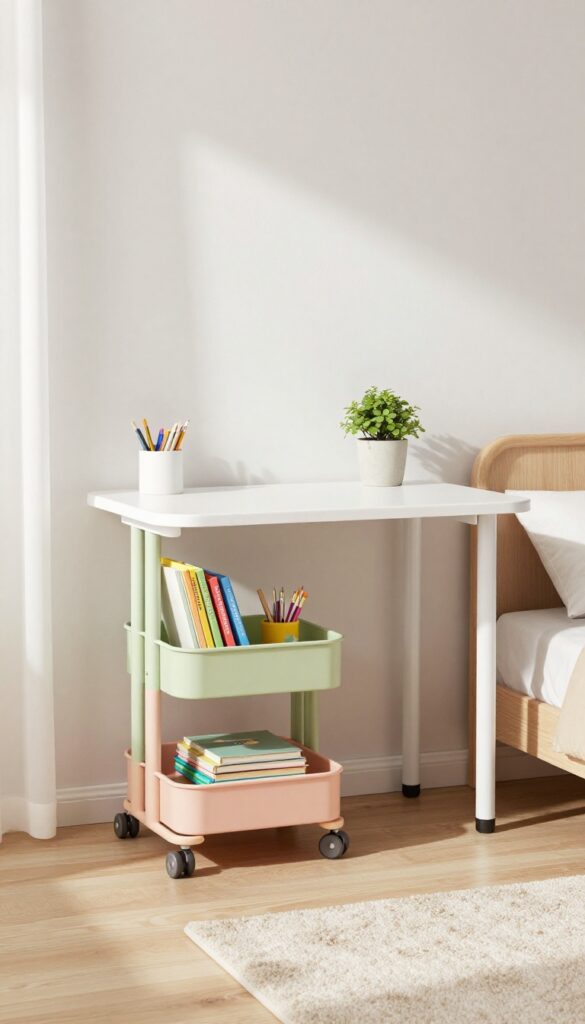
A slim desk paired with a rolling cart underneath is a simple way to add storage that adapts as your child grows. The cart glides out easily for homework sessions and tucks away when floor space is needed. It feels intentional and tidy, not like an afterthought.
Why It Works
The rolling cart keeps supplies close but out of the way, and its mobility makes cleaning under the desk a breeze. You can swap the cart’s contents as needs change—pencils and paper now, art supplies or a small lamp later.
Best For
This setup works well in smaller bedrooms where every inch counts, or for kids who like to rearrange their space often. It’s also great for shared rooms where each child needs their own portable storage.
Styling Tip
Choose a cart with casters that lock to prevent rolling during use. Match the cart’s finish to the desk legs for a pulled-together look, or go with a bright color to add a playful pop.
6. Bookshelf Desk Hybrid
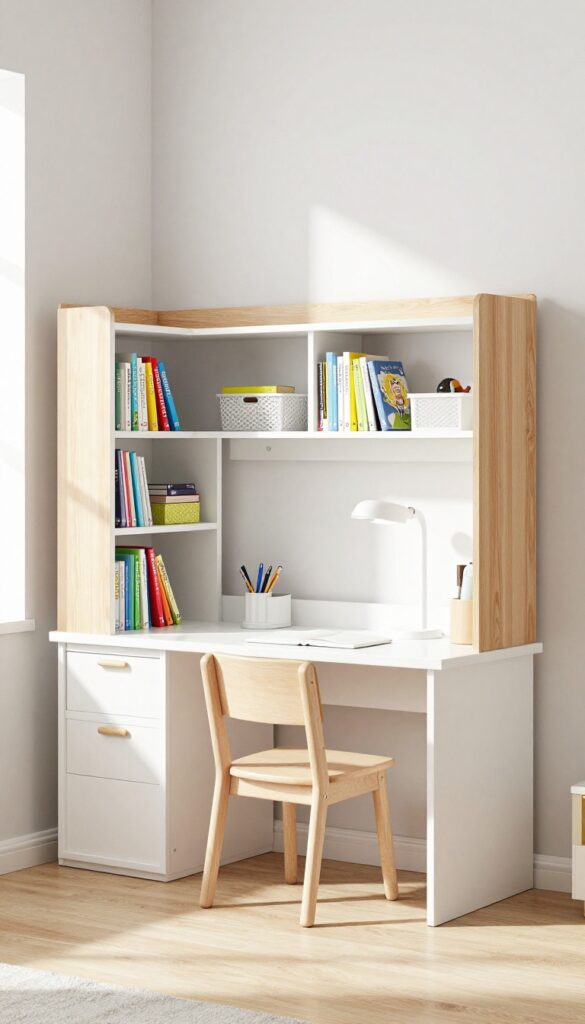
A low bookshelf does double duty when you top it with a sturdy wooden board. Suddenly, you've got a desk that blends right into the storage unit, keeping books, bins, and baskets within arm's reach. The surface is spacious enough for homework, drawing, or a laptop, while the shelves below hide the clutter.
It's a clever setup that feels intentional, not makeshift.
Why It Works
This hybrid saves floor space by combining two furniture pieces into one. The bookshelf provides vertical storage for school supplies and toys, and the desk surface offers a generous work area without taking up extra square footage. It also keeps the study zone visually tidy since everything has a designated spot.
Best For
Small bedrooms where every inch counts, especially for kids who need both a desk and ample storage. It's also great for shared rooms where you want to define separate study corners without bulky furniture.
Styling Tip
Choose a wooden board that overhangs the bookshelf by a few inches on each side for a built-in look. Paint or stain it to match the shelf or go for a contrasting color. Add a small task lamp and a caddy for pens to keep the surface organized.
7. Under-Bed Desk Nook
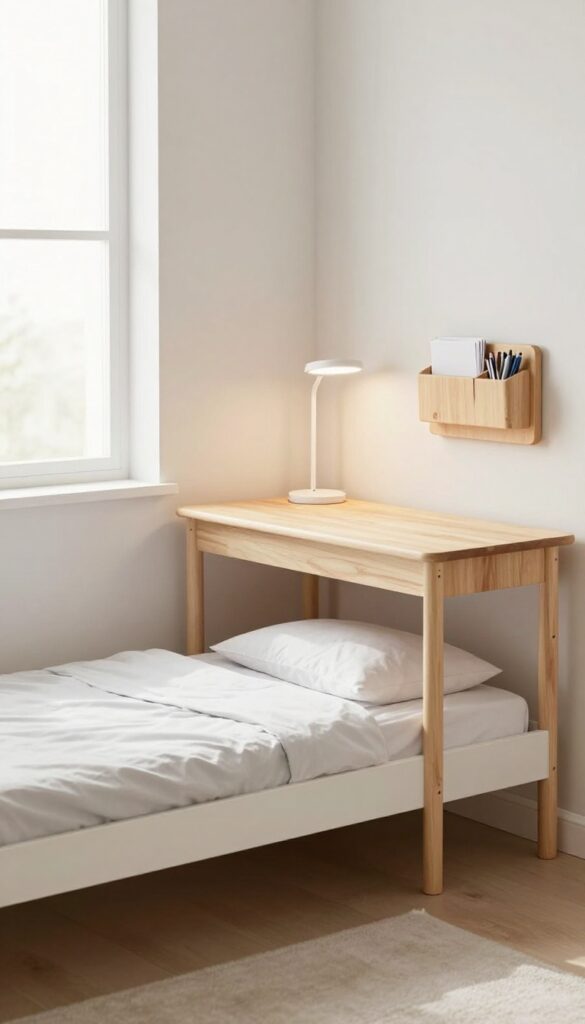
Maximizing vertical space is a game-changer in small bedrooms, and the area under a raised bed often goes unused. By sliding a slim desk underneath, you turn wasted square footage into a dedicated homework zone. This setup feels like a secret hideaway, making studying more appealing for kids who crave a little privacy.
A task light and a small caddy for supplies complete the nook without cluttering the room.
Why It Works
This idea is pure storage-smart thinking. It reclaims dead space without adding furniture footprint, keeping the floor clear for play or movement. The enclosed feel under the bed helps kids focus by minimizing visual distractions.
Best For
Ideal for small bedrooms where every inch counts, especially if the bed is already on risers or a loft frame. Works well for grade-schoolers who need a dedicated spot but don't have room for a separate desk.
Styling Tip
Choose a desk that's just slightly narrower than the bed to avoid bumping knees. Add a clip-on LED lamp to save surface space, and use a wall-mounted caddy for pens and paper to keep the desk clear.
8. Desk with Over-the-Door Organizer
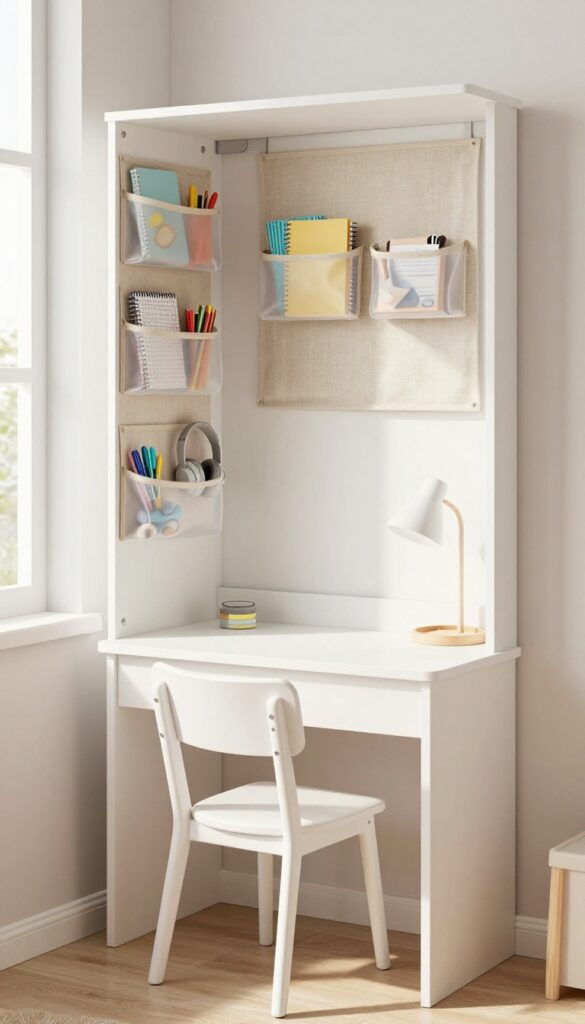
When floor space is tight, the back of the door becomes prime real estate. An over-the-door organizer turns an often-wasted vertical surface into a catchall for school supplies, art materials, and small toys. Paired with a compact desk that stays clutter-free, this setup keeps the study zone functional without feeling cramped.
The organizer holds everything from notebooks to headphones, while the desk surface remains clear for homework or drawing. It’s a smart, space-saving trick that makes the most of every inch.
Why It Works
The over-the-door organizer adds storage without taking up any floor area, which is a huge win in small bedrooms. By keeping the desk itself minimal—just a lamp and a tray for daily essentials—you avoid visual clutter and help your child focus. The organizer’s pockets make it easy to find what you need at a glance, reducing morning scramble and after-school chaos.
Best For
This idea is ideal for small bedrooms where every square foot counts, especially shared rooms where each kid needs their own study zone. It also works well for kids who tend to accumulate small items like pens, sticky notes, or craft supplies, as the organizer keeps everything visible and accessible without taking over the desk.
Styling Tip
Choose an organizer with clear pockets or a neutral fabric like canvas or linen to keep the look tidy. Match the desk and chair to the room’s color palette—white or light wood keeps things airy. Add a small desk lamp with a warm bulb to create a cozy homework nook, and use a tray (like a simple wooden or acrylic one) to corral the few items you leave out.
9. L-Shaped Desk in a Closet
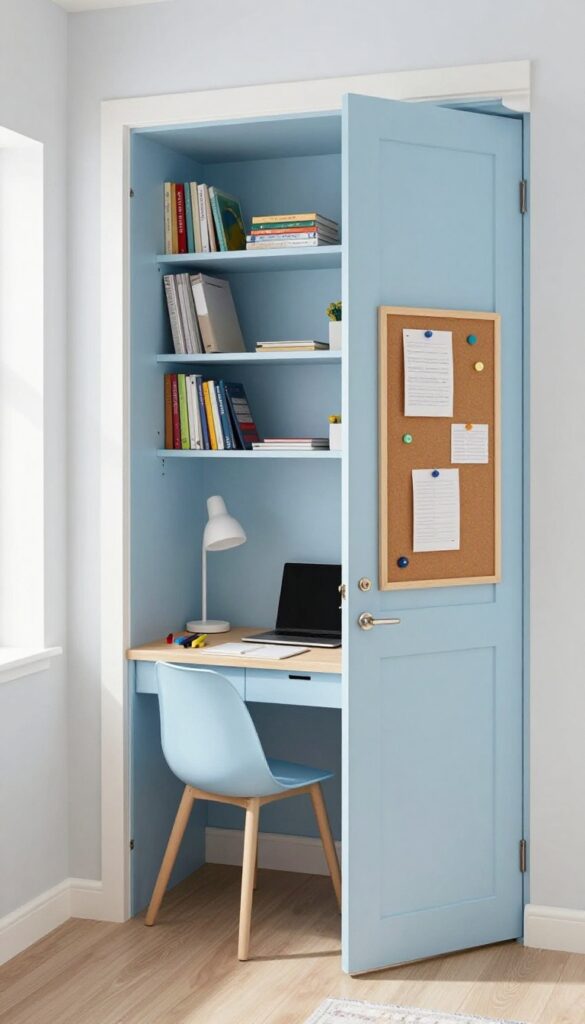
That awkward shallow closet in the corner? It might be the smartest homework station you’ve never thought of. By installing an L-shaped desk inside, you turn a wasted space into a compact mini office that tucks away completely when the doors close.
The layout gives two surfaces—one for a laptop or writing, the other for a lamp or art supplies—so even a small closet feels roomy enough for focused work.
Why It Works
An L-shaped desk maximizes every inch of a closet’s footprint, offering separate zones for different tasks without needing extra floor space. Upper shelves keep books and binders within reach, while lower cabinets or drawers hide paper, pens, and charger cords. When the door shuts, the whole study zone disappears, keeping the bedroom calm and clutter-free.
Best For
Kids who share a bedroom and need a private spot to study, or for rooms where every square foot counts. It’s also a lifesaver in small apartments or guest rooms that double as a homework area. The closed-door trick works especially well for visual clutter–sensitive kids.
Styling Tip
Paint the closet interior a soft, light color like pale blue or warm white to keep it feeling open rather than cave-like. Add a small LED strip under the upper shelf for task lighting, and use a slim chair that slides fully under the desk. A corkboard on the inside of one door turns into a pin-up space for schedules and artwork.
10. Desk with Magnetic Wall Board
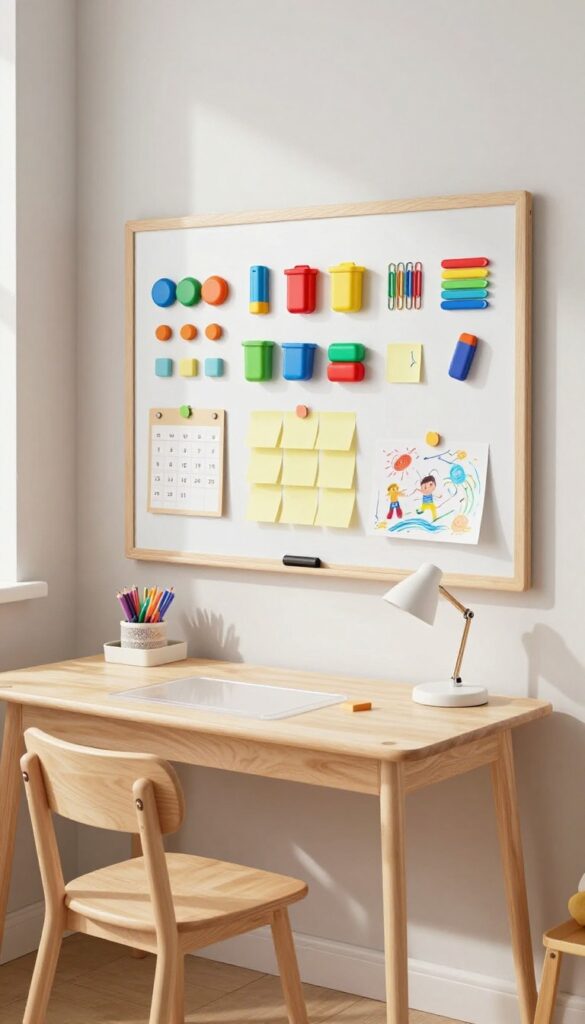
Above a compact desk, a large magnetic wall board becomes the command center for your child's daily life. It holds homework reminders, a rotating gallery of their latest drawings, and a family calendar—all within easy reach. The real trick is attaching magnetic containers to the board itself, so paper clips, erasers, and sticky notes float right off the desk surface, freeing up precious workspace.
Why It Works
This setup turns vertical wall space into active storage, keeping the desk clear for actual homework. Magnetic containers eliminate the need for bulky desktop organizers, and the board itself becomes a changing display that grows with your child's interests. It's a clutter-free system that encourages organization without nagging.
Best For
A desk in a shared or small bedroom where every inch of surface counts. It's especially great for kids who thrive on visual schedules or love to pin up their artwork and certificates. The magnetic board also works well for tween and teen rooms transitioning from toys to study space.
Styling Tip
Choose a whiteboard or chalkboard-style magnetic board for a clean look, or frame a plain steel sheet with molding for a custom feel. Use matching magnetic containers in a single color—like bright white or soft pastel—to keep the board from looking chaotic. Add a small tray at the bottom for pens and a clip-on lamp to light the board evenly.
11. Twin Desk with Shared Storage Cubes
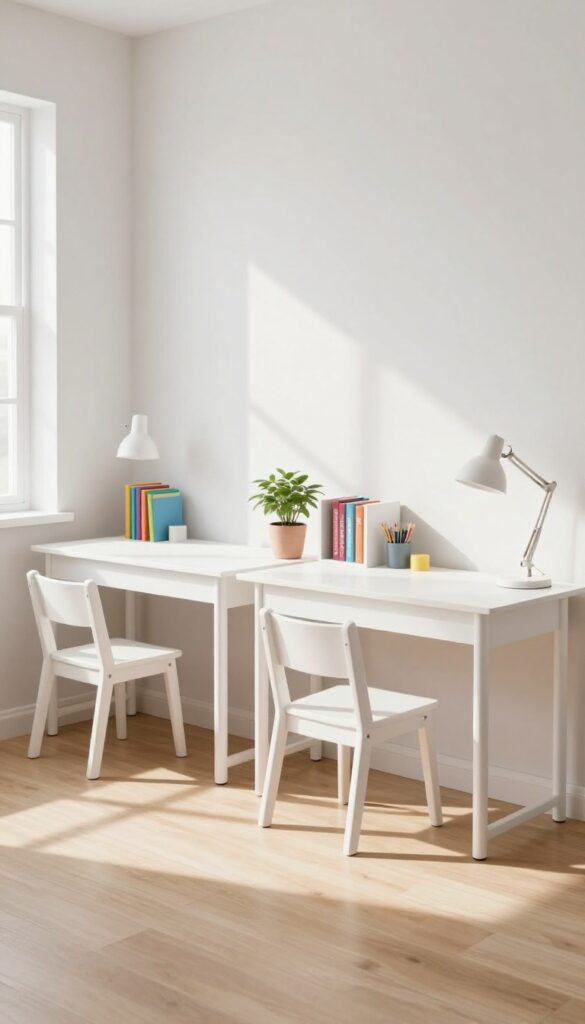
When two kids share a bedroom, study space can get competitive fast. A twin desk setup solves that by giving each child their own defined work surface while keeping the room feeling balanced. Placing a set of open storage cubes between the desks creates a natural divider that holds shared supplies like markers, notebooks, and charging cables.
It’s a smart layout that respects personal space without wasting a single square foot.
Why It Works
The shared storage cubes act as both a room divider and a central supply hub, reducing clutter on each desk. Open cubbies keep frequently used items visible and accessible, while the symmetrical layout makes the room feel organized and intentional. Plus, the cubes can double as a display spot for each child’s favorite books or small plants.
Best For
Siblings close in age who share a bedroom and need dedicated homework zones. It’s also great for small rooms where you can’t fit two separate desks against different walls. The setup works especially well in rectangular rooms where you can place the desks along one long wall.
Styling Tip
Choose desks with clean lines and a light wood or white finish to keep the space feeling airy. Use matching desk lamps with adjustable arms so each child can direct light where they need it. For the cubes, mix solid bins for hiding messy supplies with open cubbies for displaying a few favorite items.
FAQ
What is the best desk size for a small bedroom?
A desk around 30 to 36 inches wide works well for most small bedrooms. It's large enough for a laptop and a notebook but doesn't overwhelm the space. Measure the area first to ensure a good fit.
How can I add storage without making the room feel cluttered?
Use vertical storage like floating shelves or wall-mounted organizers. Bins and baskets in neutral colors help hide clutter while keeping essentials accessible. A rolling cart under the desk is also a great space-saver.
What lighting is best for a kids' study nook?
A combination of natural light from a nearby window and a task lamp with adjustable brightness works best. Look for LED lamps with a warm white light to reduce eye strain.
How do I keep the desk area organized daily?
Create a simple routine: clear the desk after homework, use trays for papers, and assign a spot for every item. A small caddy for pens and a drawer for supplies can make tidying up quick.
Can I create a study nook without a desk?
Yes, you can use a lap desk on a bed or a sturdy tray on a bookshelf. Alternatively, a wall-mounted fold-down table provides a surface without taking up floor space.
Conclusion
Creating a study nook in your child's bedroom doesn't have to be complicated or expensive. With a focus on smart storage and space-saving furniture, you can design a corner that encourages focus and keeps mess to a minimum.
Start with one idea that fits your room layout, and build from there. A little planning goes a long way in making homework time feel less like a chore and more like a calm, productive part of the day.