15 Small Bedroom Ideas Layout Tricks for Better Room Flow
A cramped bedroom usually has one real problem: the layout fights you every time you move. You shuffle sideways past the bed, bump the dresser, and squeeze through a gap that never should have been a walkway. Rearranging the furniture often fixes more than buying new furniture ever will.
The trick is treating your floor plan like a puzzle with a clear path through it. Float the bed, trim the bulk, and let the room guide your feet instead of blocking them. Small rooms reward smart placement far more than square footage does.
These 15 layout tricks focus on flow first. Each one opens up movement, cuts visual clutter, or buys back space you didn't know you had.
1. Float Your Bed Away from the Wall
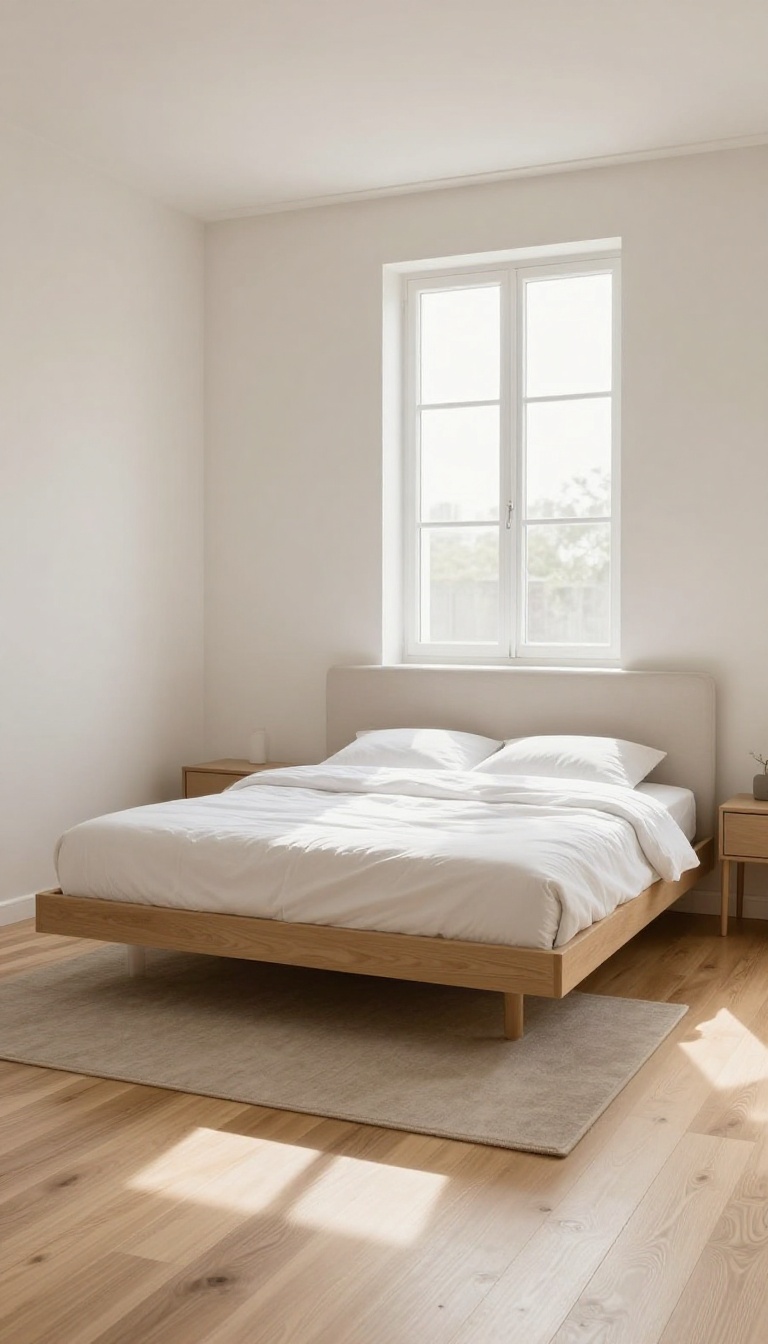
Pushing your bed into a corner feels like the safe move in a small room. It frees up floor space, right? Not exactly.
Corner beds often create dead zones and force you to climb over one side, which makes the whole room feel tighter. Floating your bed—pulling it away from the wall—can actually improve flow and make your room feel more open.
When you center your bed, you create walkways on both sides. That means you can get in and out without doing gymnastics. It also makes the room feel more balanced and less like a furniture storage unit.
This trick works best in square rooms where you have a bit of extra width. If your room is long and narrow, floating the bed might eat up too much floor space, so measure first. A floating bed doesn't mean it's literally hovering.
It just means it's not pushed against any wall. You'll need a headboard that looks good from both sides, or you can use a freestanding screen or a low bookshelf as a divider. The key is to leave at least 24 inches of walking space on each side.
That's enough to move comfortably without feeling squeezed. One bonus: floating your bed can create a natural separation between sleeping and living areas in a studio or open-plan bedroom. It's a simple way to define zones without adding walls.
Just make sure you have a rug underneath to anchor the bed visually, or it might look like it's drifting in space.
Measure Your Walkways First
Before you move anything, grab a tape measure. You need at least 24 inches on each side of the bed for comfortable walking. If you can't get that, floating might not work.
But if you have 30 inches or more, go for it. Also, check the distance from the foot of the bed to the opposite wall. You want at least 36 inches there so you don't feel boxed in.
Pick The Right Headboard
A floating bed needs a headboard that looks finished from the back. If yours is plain or ugly, consider a slipcover or a simple fabric panel. You can also use a low dresser or a bookshelf as a headboard—it doubles as storage and looks intentional.
Just make sure it's stable and won't tip over.
Anchor With A Rug
A rug under the bed ties everything together and prevents that floating-in-space look. Choose a rug that extends at least 18 inches beyond the sides and foot of the bed. A light color can make the room feel bigger, while a bold pattern adds interest.
Just avoid a rug that's too small—it'll make the bed look like it's on an island.
2. Use a Corner Bed to Open Up Floor Space
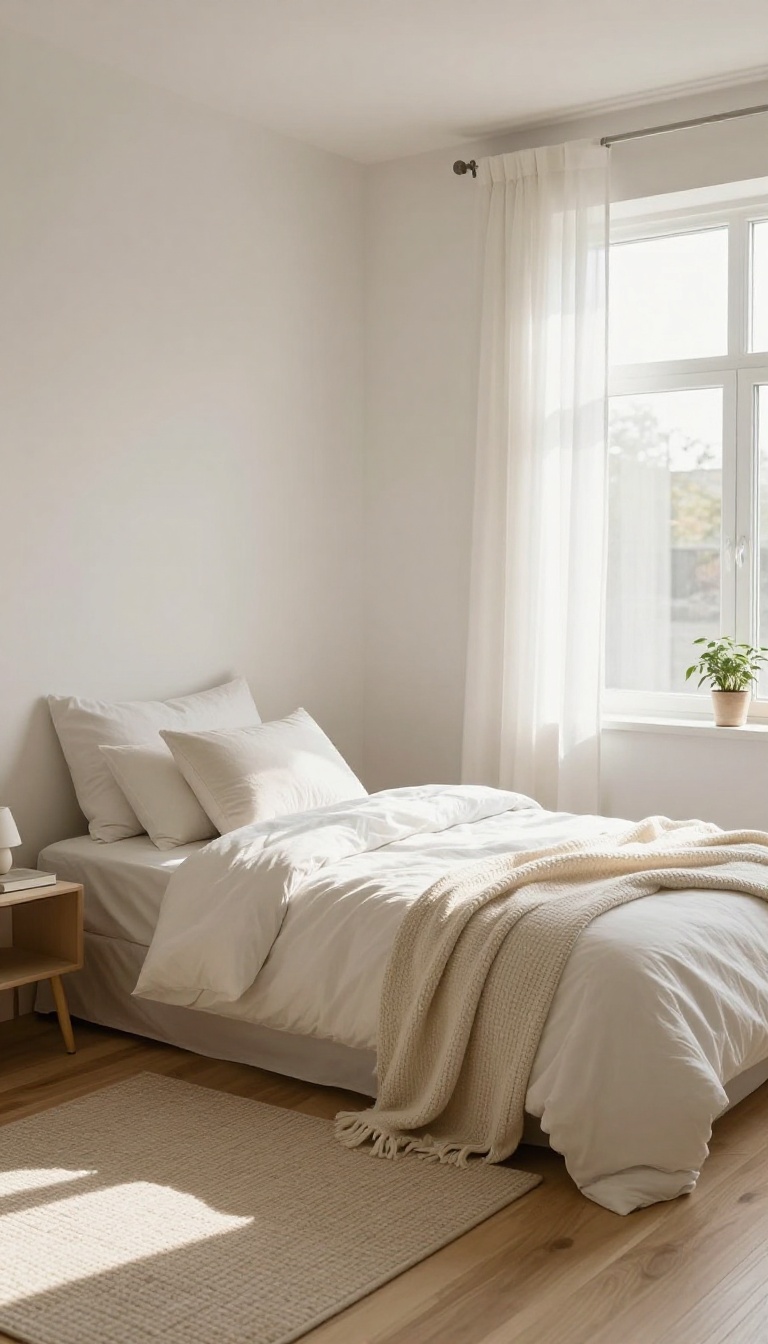
A centered bed in a small room can turn the floor into an obstacle course. You lose the middle of the room, which is exactly where you need to walk. Shoving the bed into a corner changes that by giving you one clear, open path.
It sounds almost too simple, but corner beds are a classic small-space move for a reason. They free up the center of the room for movement, and they make even a narrow bedroom feel less cramped. The trick is doing it without making the bed feel like an afterthought.
Corner placement works best when you treat the bed as part of the room's architecture, not just a piece of furniture. That means thinking about how you get in and out, where you store things, and what the corner does for the rest of the layout. When you push a bed into a corner, you instantly create a diagonal walking path from the door to the far side of the room.
That path is what makes a small bedroom feel functional. Instead of weaving around a bed island, you move along the edges and the room opens up. But corner beds come with trade-offs.
One side of the bed is against a wall, which can make it harder to get in and out if you share the bed. And the corner itself can become a dead zone for dust and clutter if you're not careful. The good news is that a few smart adjustments solve most of these problems.
Make The Wall Side Work For You
The side of the bed against the wall doesn't have to be a problem. If you sleep alone, it's actually cozy. If you share the bed, give the wall side to the person who doesn't mind climbing over or scooting down.
You can also add a narrow floating shelf above the bed on the wall side. It gives the person on that side a place for a phone, glasses, or a book without needing a nightstand. That keeps the floor clear and makes the corner feel intentional.
Choose The Right Corner
Not all corners are equal. The best corner for your bed is the one farthest from the door and away from the main walking path. That way, the bed doesn't block traffic when you enter or leave.
Avoid putting the bed in a corner right next to the door. You'll feel cramped every time you walk in, and the door swing might hit the bed. The far corner, ideally diagonal from the door, gives you the most open floor.
Use The Space Under The Bed
When the bed is in a corner, the space underneath becomes prime storage. Add under-bed bins or drawers for off-season clothes, extra bedding, or shoes. It's a free closet that doesn't take up any wall space.
Just make sure you can still access the storage. If the bed is boxed in on two sides, you might need to pull it out slightly to reach the bins. Measure first so you don't create a storage system you can't actually use.
3. Choose a Bed with Built-in Storage
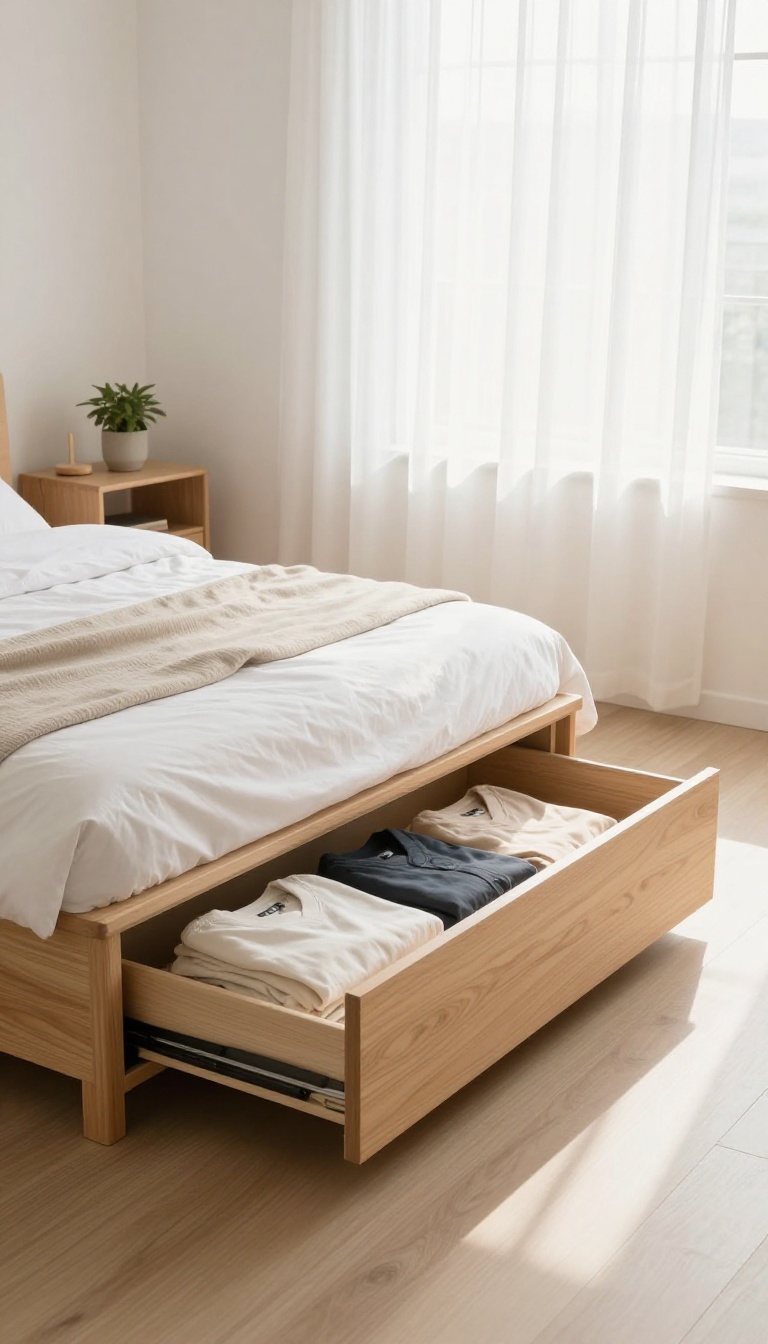
A bed with built-in storage solves two problems at once: it gives you a place to stash your stuff and it frees up the floor space a dresser would otherwise eat. In a small room, that trade-off is huge. You get to keep the things you need without adding another bulky piece of furniture to dodge.
Think about how much room a dresser takes up. Even a slim one juts out two feet from the wall and creates another corner to navigate around. Swap it for a bed with drawers underneath, and that footprint disappears.
Your clothes, extra blankets, and off-season items slide out of sight, and your floor stays open. The result is a cleaner path from the door to the window, and a room that feels less like a storage unit and more like a place to relax.
Drawers Vs. Lift-up Storage
Under-bed drawers work best when you have space on both sides of the bed. They pull out like dresser drawers and give you easy access to folded clothes or shoes. A lift-up bed, on the other hand, raises the entire mattress to reveal a deep storage cavity.
That's great for bulky items you don't need daily, like suitcases or winter coats. Pick drawers if you want everyday convenience, and a lift-up if you need maximum hidden volume.
Keep The Flow Clear
A storage bed only helps if you can actually open it. Leave at least two feet of clearance on the side where drawers pull out. If the bed sits against a wall on one side, put the drawers on the open side.
And don't overstuff them. A drawer that won't close flush becomes a trip hazard and a visual mess. Stick to what fits comfortably, and the bed stays a clean, functional anchor for the room.
Style Without The Bulk
Storage beds come in plenty of designs that don't look like utility furniture. A platform bed with built-in drawers can have a low profile and a modern finish. A captain's bed with drawers underneath works well in kids' rooms or guest spaces.
Just measure your mattress size and the room's dimensions before you buy. The right pick adds function without making the room feel heavier.
4. Swap Your Nightstand for a Floating Shelf
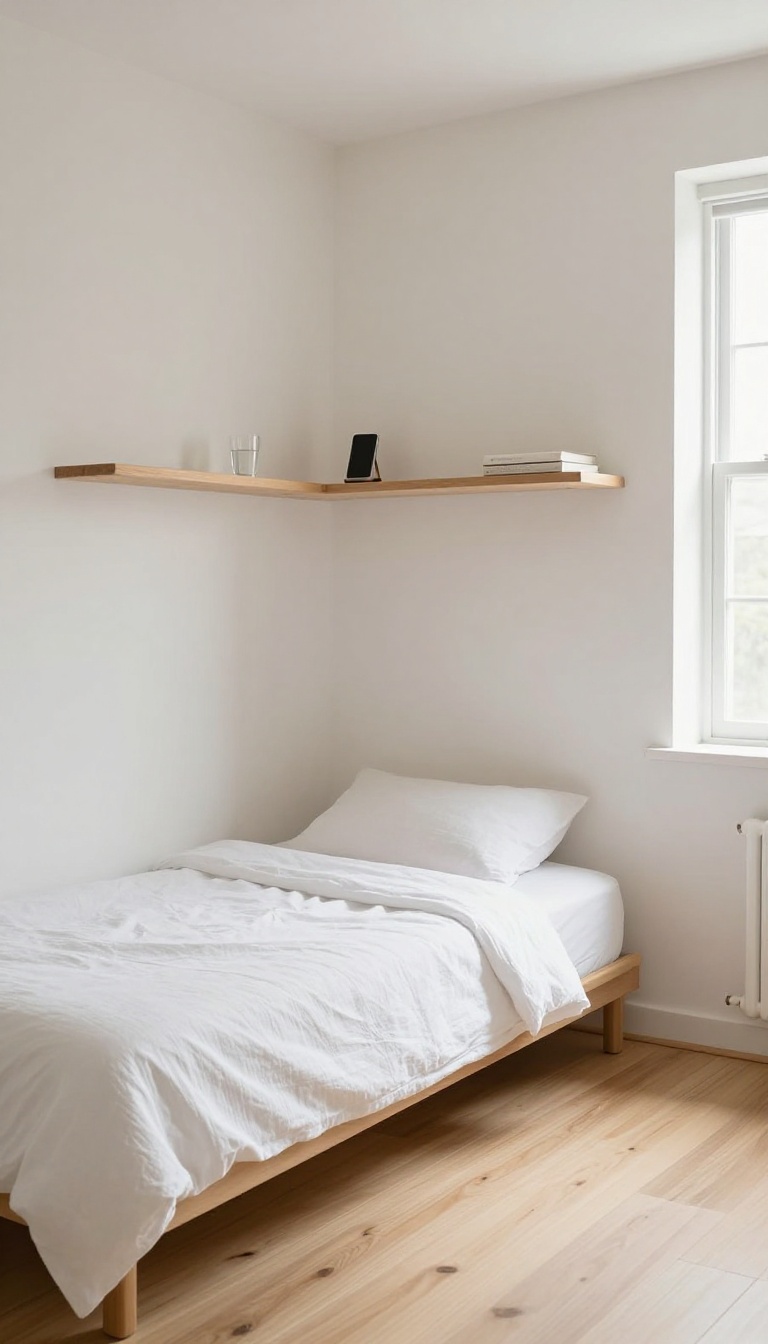
Nightstands are bulky by design. They sit on the floor, collect dust underneath, and take up a surprising amount of real estate for something that mostly holds a lamp and your phone. A wall-mounted shelf changes that equation.
It holds the same essentials without touching the floor, which means your feet and your vacuum both get a clear path. In a small bedroom, every square inch of floor counts. A floating shelf gives you storage without asking the room to stretch.
The switch is simple: pick a shelf, mount it at the right height, and move your bedtime essentials up off the ground. The result feels lighter and looks more intentional than a chunky piece of furniture squeezed into a tight corner.
Pick The Right Height
Mount the shelf so the top sits level with your mattress or just a few inches above it. That puts your lamp, book, and water glass within easy reach while you're lying down. Too high and you'll be stretching.
Too low and you'll knock things over when you roll out of bed. A quick test: sit on the edge of the mattress and reach sideways. Your hand should land naturally on the shelf surface.
What Actually Belongs On It
A floating shelf works best when you keep it lean. A small lamp, a phone, a glass of water, and maybe one book. That's it.
If you need more storage, add a second shelf above the first instead of piling everything onto one. Two slim shelves take up less visual weight than one crowded surface, and they keep the wall from feeling cluttered.
Mounting Tips That Keep It Solid
Use wall anchors rated for the weight you plan to put on the shelf. A shelf holding a lamp and a few small items doesn't need heavy-duty hardware, but it does need to be anchored into something solid. If you rent and can't drill into the wall, look for adhesive shelves designed for lightweight items.
They won't hold a ceramic lamp, but they'll handle a phone, a remote, and a paperback.
Why It Opens Up The Room
Removing the nightstand clears the floor beside your bed. That gap makes the whole room feel wider, and it gives you a place to step when you get up in the dark. It also cuts visual clutter.
A floating shelf reads as clean and minimal, while a nightstand with drawers and a lower shelf tends to collect random stuff. Less furniture, less mess, more flow.
5. Mount Your Lights to Save Surface Space
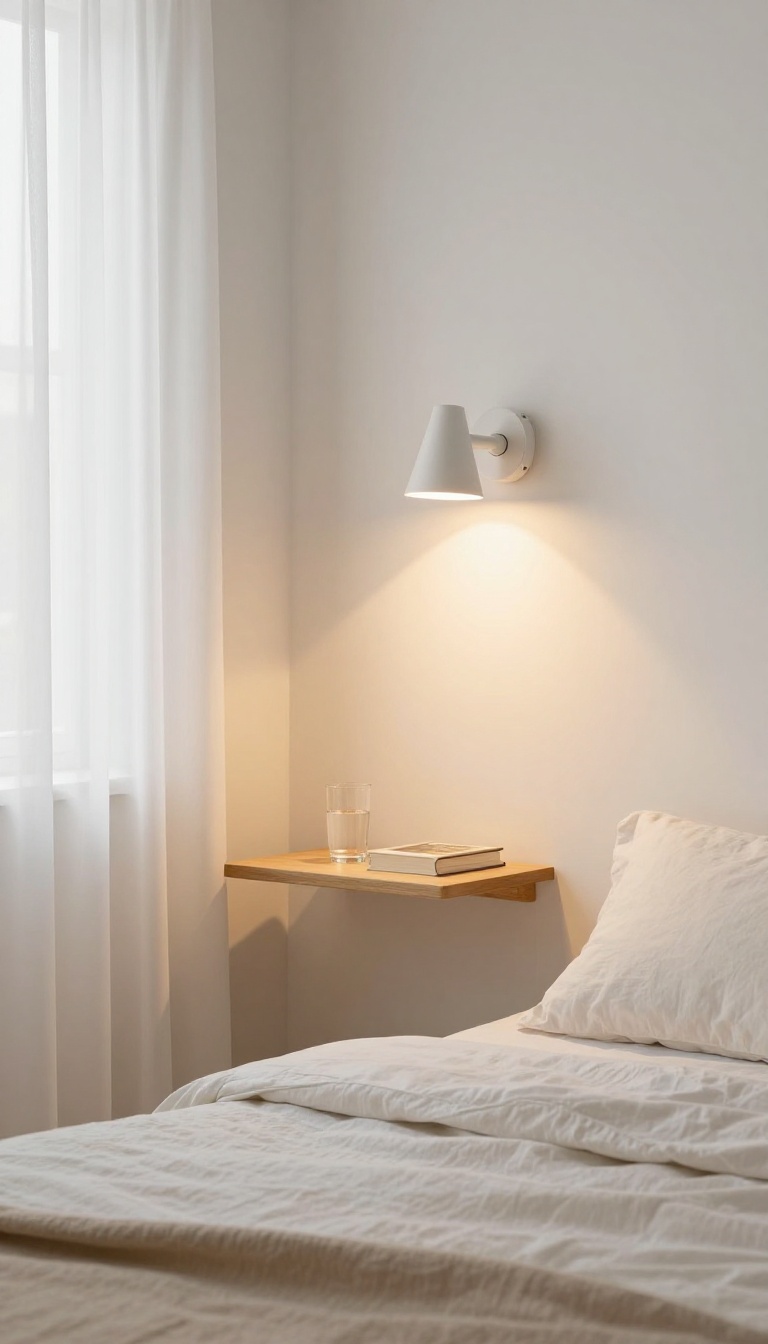
Table lamps eat up prime real estate on your nightstand. In a small bedroom, that surface is too valuable to sacrifice. Wall sconces or plug-in pendants move light off the table and onto the wall, freeing up space for the things you actually need within reach.
When you ditch the table lamp, you gain back a surprising amount of usable area. That spot can now hold your phone, a glass of water, a book, or just about anything else. Plus, without a lamp crowding the surface, the whole room feels less cluttered.
The light itself can be just as warm and functional, often with better direction because it's mounted at eye level or above.
Wall Sconces: Simple And Space-saving
Wall sconces come in hardwired and plug-in versions. Hardwired looks cleaner but requires an electrician. Plug-in models are renter-friendly and easy to install.
Mount them at about shoulder height when sitting in bed, so the light falls on your lap or book, not in your eyes. A swing-arm sconce lets you adjust the angle for reading or ambient glow.
Plug-in Pendants: A Modern Alternative
If you want a statement piece, a plug-in pendant hangs from the ceiling and plugs into a wall outlet. You can swag the cord along the ceiling and down the wall for a relaxed look. Hang it slightly off-center over your nightstand to avoid bumping your head.
A dimmable LED bulb lets you switch from bright task light to soft evening light.
Placement Tips For Better Flow
Keep cords tidy with adhesive clips or a cord cover that matches your wall color. If you have a floating nightstand, mount the sconce just above it so the light pools exactly where you need it. For symmetry, use two matching sconces on either side of the bed.
But if space is tight on one side, a single sconce works fine.
6. Create a Clear Path from Door to Window
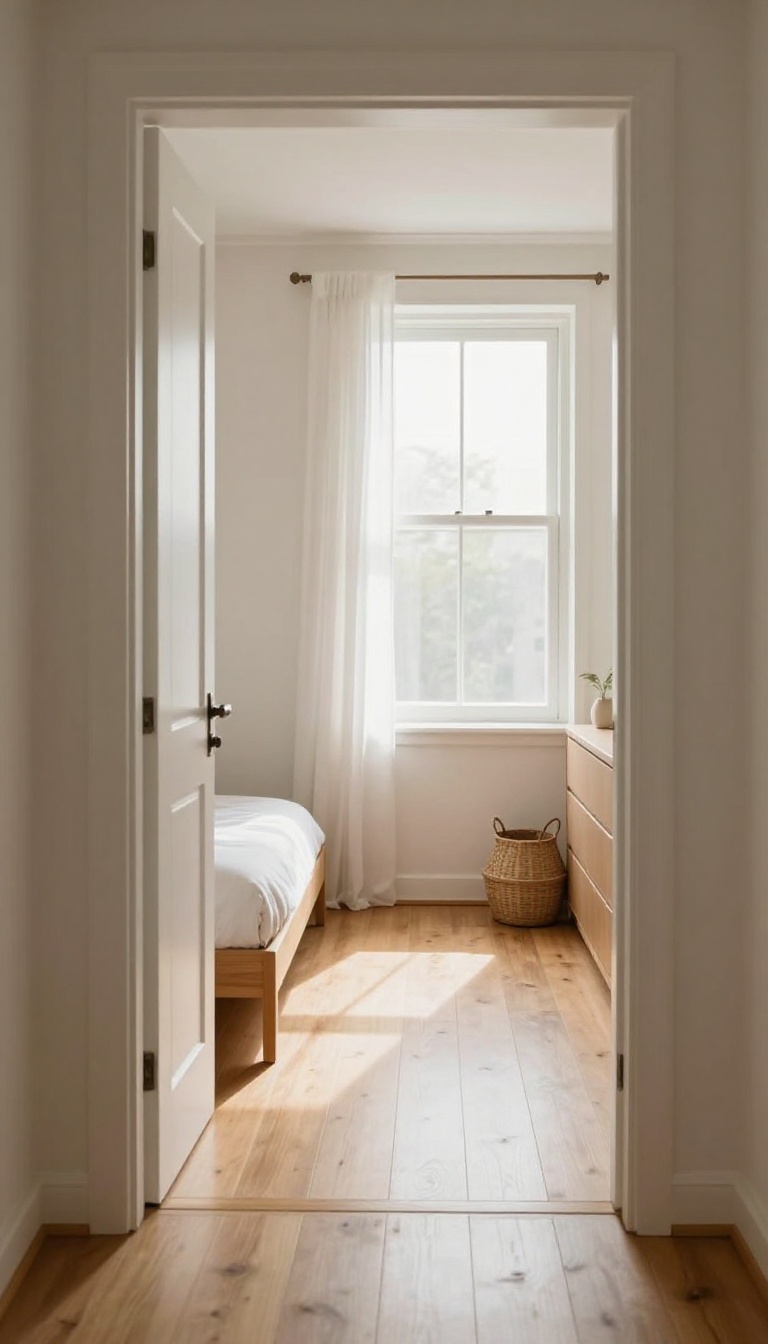
The fastest way to make a small bedroom feel less cramped is to give yourself one clean, straight shot from the door to the window. That path becomes the spine of the room, and everything else arranges itself around it. When you can walk in without zigzagging, the whole space instantly feels calmer and bigger.
Start by standing at your door and looking straight at the window. Is there anything blocking that imaginary line? A bed, a dresser, a stray hamper, or a chair that wandered into the middle of the room can all break the flow.
Move whatever you can to the sides so the center stays open. Even a few inches of clearance makes a noticeable difference. Once the path is clear, treat it like a rule you don't break.
Furniture goes along the walls or into corners, not into the walkway. That might mean swapping a wide dresser for a slimmer one or pushing the bed against a side wall instead of floating it in the middle. The goal is simple: no obstacles between you and the window.
A clear path also helps with light and air. When nothing blocks the window, daylight reaches deeper into the room, and cross-breezes actually move. That alone can make a small bedroom feel less stuffy and more open.
Measure The Gap
Grab a tape measure and check the distance between your door and window. You want at least 24 inches of clear walking space, ideally 30 if you can manage it. If your current layout gives you less, that's your cue to rearrange.
Measure before you move anything so you know exactly how much room you're working with.
Slide Furniture To The Sides
Most small bedrooms have furniture hugging the walls already, but one piece often creeps into the center. Look for the usual suspects: a nightstand, a laundry basket, a floor lamp, or an ottoman. Slide them left or right until the middle is empty.
If something truly can't move, consider replacing it with a slimmer version.
Keep The Path Clear Daily
Once you've created the path, protect it. Make it a habit to kick shoes, bags, and clothes to the edges instead of dropping them in the middle. A clear path isn't just a one-time fix; it's a daily practice that keeps your room feeling open.
A small basket by the door can catch clutter before it blocks your walkway.
7. Use a Rug to Define Zones
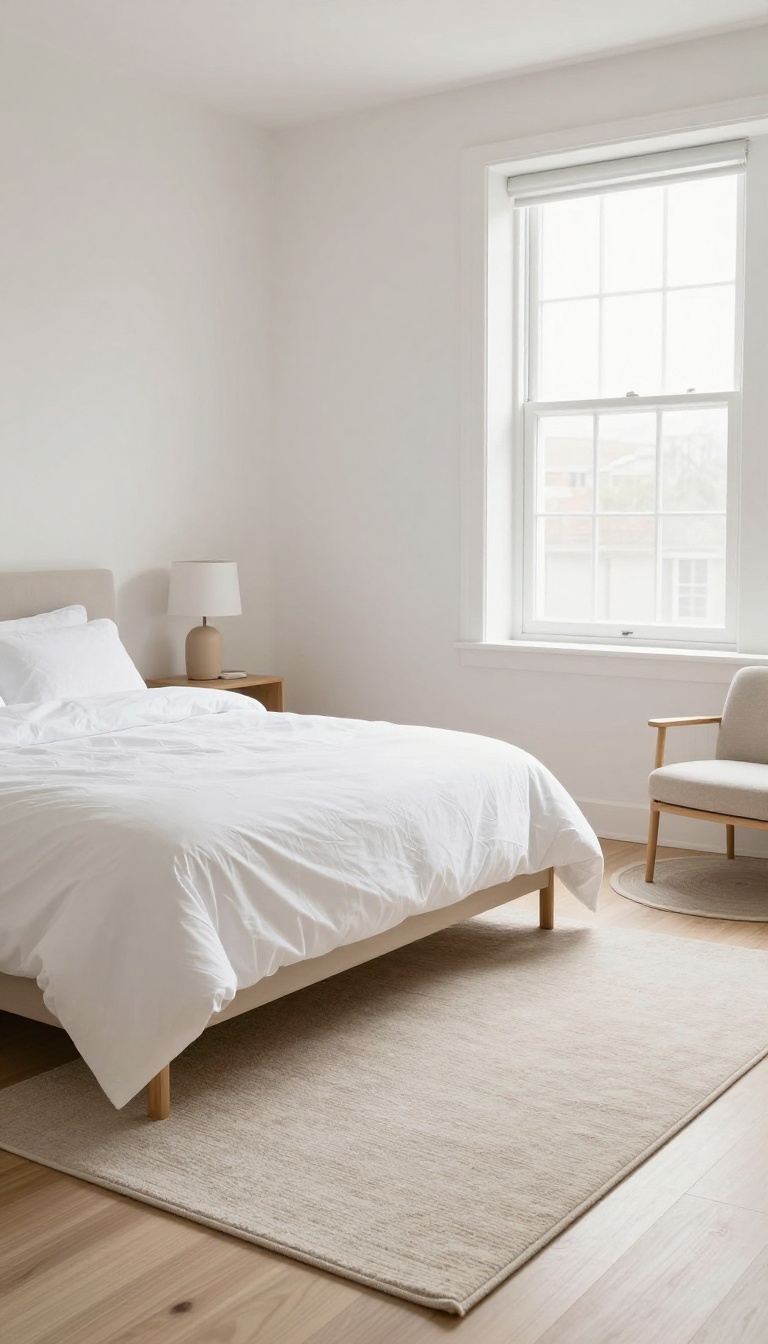
A rug does more than warm up cold floors. In a small bedroom, it draws an invisible border around whatever sits on top of it, so your brain instantly reads that patch of floor as a distinct area. That mental separation is what keeps a tight room from feeling like one big jumble.
The trick is picking the right size and placement. A rug that's too small looks like a bath mat lost in the middle of the room, while one that's too big swallows the whole floor and defeats the purpose. You want a rug that clearly anchors one zone without crowding the rest of the room.
Think of it as a low-cost way to add architecture where you have none. No walls to move, no built-ins to install. Just a soft rectangle that tells you, and anyone walking in, where one activity ends and another begins.
Anchor The Bed With A Runner Or Area Rug
Place a runner along the side of the bed or a small area rug under the lower two-thirds of the mattress. This defines the sleeping zone without covering the entire floor. Leave at least a few inches of bare floor around the edges so the room still breathes.
A rug that stops short of the walls makes the space feel larger, not smaller.
Carve Out A Reading Or Dressing Corner
If you have a chair, a small bench, or even a floor cushion tucked in a corner, put a round rug under it. The circle breaks up all the straight lines in the room and creates a cozy pocket that feels separate from the bed. For a dressing area, a narrow rectangular rug in front of a mirror or wardrobe does the same job.
It signals, "this is where I get ready, " without adding a single piece of furniture.
Keep The Walkway Clear
Your main path from the door to the window or closet should stay rug-free, or at least use a low-pile runner that doesn't trip you. High-pile rugs in a walkway catch your feet and make the room feel tighter. Stick to flat-weave or low-pile styles in traffic areas, and save the plush stuff for beside the bed.
That way, the rug defines zones without becoming an obstacle.
8. Hang Curtains High and Wide
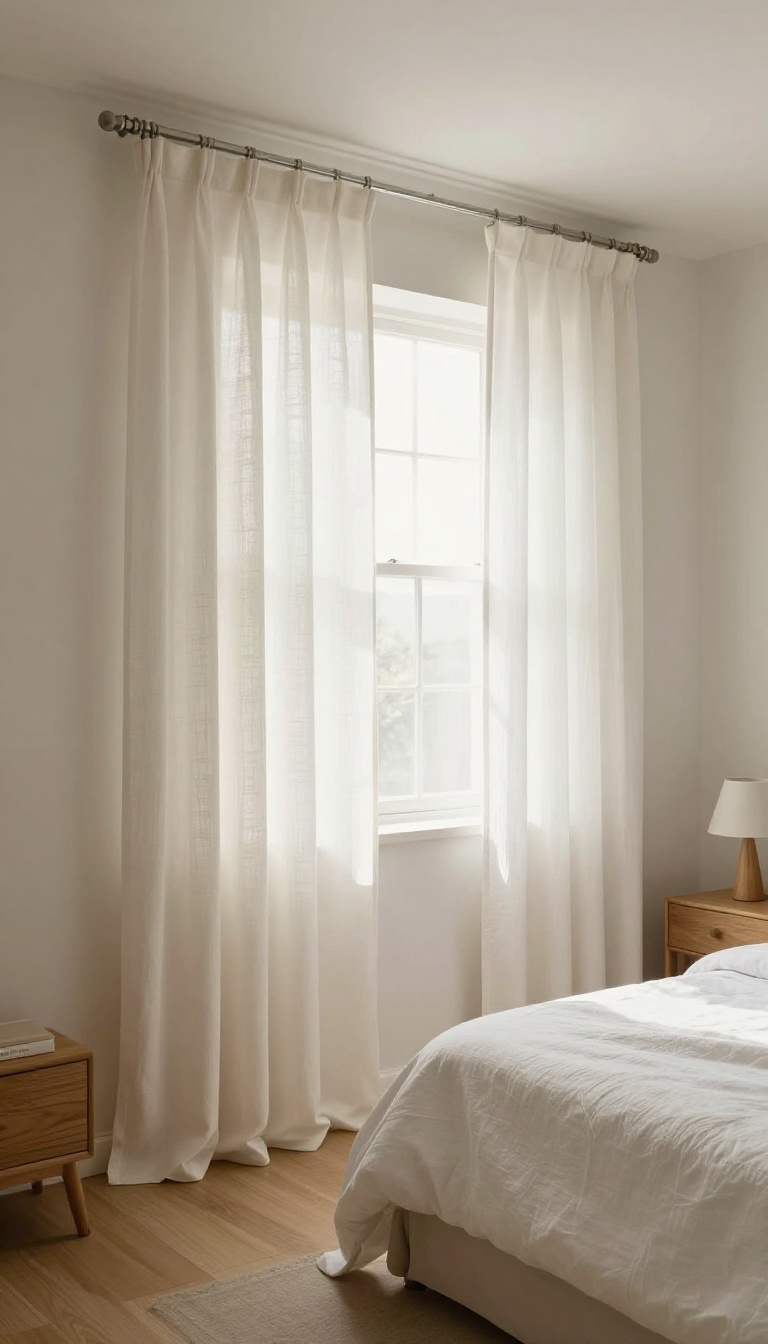
Curtains are one of the few things in a small bedroom that can change how the whole room feels without eating up an inch of floor space. Most people hang them just above the window trim and stop right at the frame, which actually shrinks the window and chops the wall into awkward chunks. Move the rod up and out, though, and the room starts to breathe.
The goal is simple: trick the eye into seeing more height and more width than what's really there. When curtains climb toward the ceiling and spill past the window edges, your brain reads the whole wall as one tall, open stretch. That's a free upgrade for flow, because the room stops feeling boxed in.
You don't need custom drapes or a bigger window to pull this off. You need a rod, a drill, and about twenty minutes. The payoff shows up every time you walk in the door.
Here's the basic move. Take your curtain rod and mount it two to four inches below the ceiling, or right at the ceiling line if your trim allows it. Then extend the rod three to six inches past each side of the window frame.
That extra width means the curtains can hang mostly over the wall when they're open, letting maximum light through and making the window itself look wider. The height does the heavy lifting. A window that starts low on the wall keeps your eye pinned down near the floor.
A window framed by fabric that reaches toward the ceiling pulls your gaze up, and suddenly the room has vertical space you didn't think it had. This works in rentals too. Tension rods and removable adhesive hooks can hold lightweight curtains without leaving holes, so you can test the look before committing.
If you own the place, a simple bracket and anchor setup is cheap and fast.
Pick The Right Rod Length
Measure your window width, then add at least six inches total, three on each side. That's your minimum rod length. If you want the window to feel even wider, go eight to ten inches past the frame.
A rod that's too short forces the curtains to cover glass when they're open, which defeats the purpose. You want the fabric stacked on the wall, not blocking light.
Choose Curtains That Don't Bulk Up The Room
Heavy, dark, floor-piling curtains can swallow a small bedroom whole. Stick with light or medium-weight fabrics in colors close to your wall tone. Sheer or semi-sheer layers work well because they add softness without visual weight.
If you need blackout coverage, use a double rod with a sheer panel in front and a blackout panel behind. You get darkness when you want it and a light, airy look when you don't.
Keep The Floor Line Clean
Curtains that puddle on the floor collect dust and make the room feel messy. Aim for a hem that just kisses the floor or hovers a half-inch above it. That crisp line keeps the eye moving and reinforces the taller, cleaner look you're after.
If you're working with standard-length curtains that are too short, lower the rod slightly or add a fabric trim at the bottom. A small fix keeps the whole trick intact.
9. Opt for a Slim Dresser or Chest
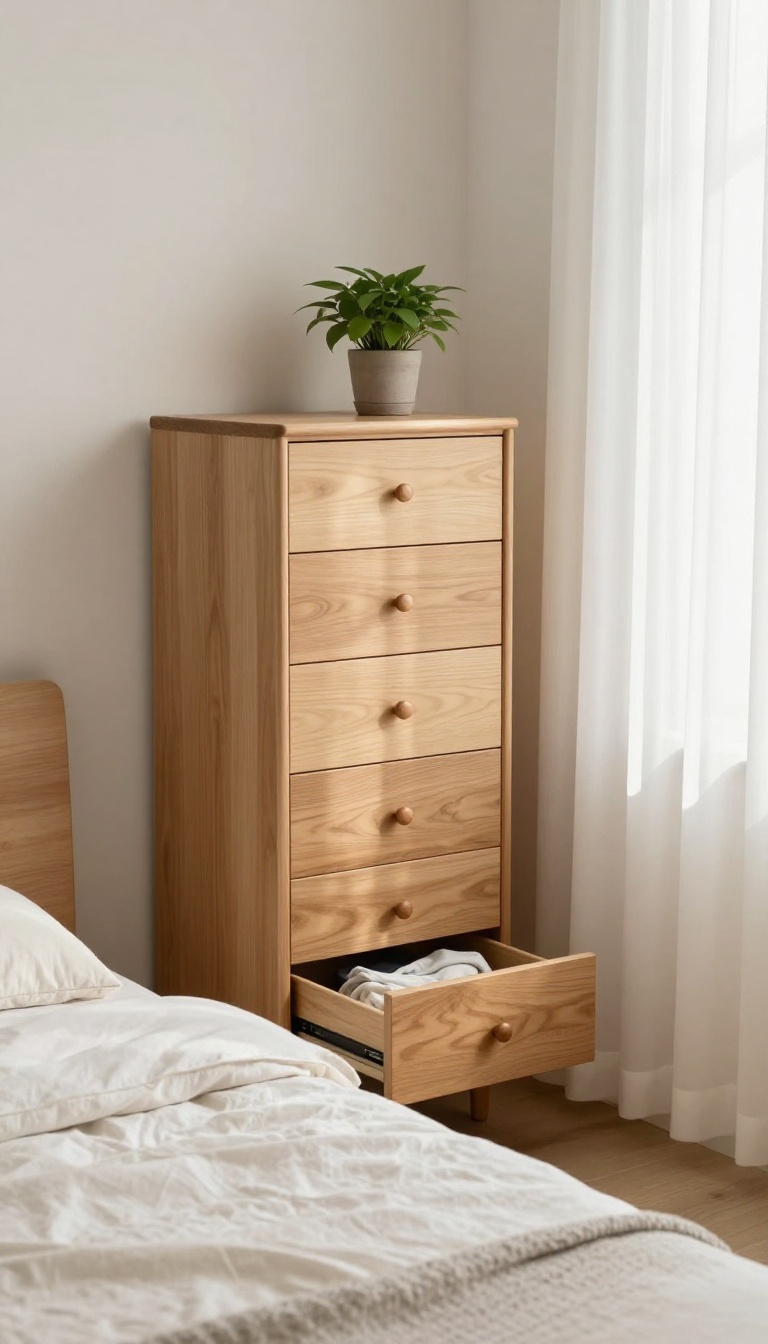
A standard dresser can swallow a foot or more of floor space you don't have to give. Swap it for a slim model and you instantly widen the path around your bed. The goal is simple: keep your storage, lose the bulk.
Most dressers are built deep because deep drawers hold more. But in a small bedroom, that depth becomes a roadblock. A slim dresser—usually under 15 inches deep—gives you just enough room for folded clothes while leaving the floor open for your feet.
You don't need to sacrifice storage to make this work. Many slim designs use taller frames with more drawers, so you keep capacity without the footprint. Look for options with shallow drawers and a narrow profile, and measure your walkway before you buy.
Measure Your Walkway First
Before you shop, grab a tape measure and check the gap between your bed and the wall. You want at least 24 inches of clear walking space. If a standard dresser leaves you less, a slim one will fix it.
Write down the maximum depth you can afford, then stick to it.
Look For Tall And Narrow
A tall, narrow chest gives you vertical storage without spreading out. Five or six shallow drawers can hold just as much as three deep ones. Bonus: a taller piece draws the eye upward, which makes the ceiling feel higher and the room feel less boxy.
Place It Where It Won't Block Flow
The best spot for a slim dresser is often beside the bed or opposite the foot of it, not in the main path. If you have a closet, tuck it next to the door. Just make sure you can open every drawer without stepping back into the bed.
10. Use an Over-the-Door Organizer
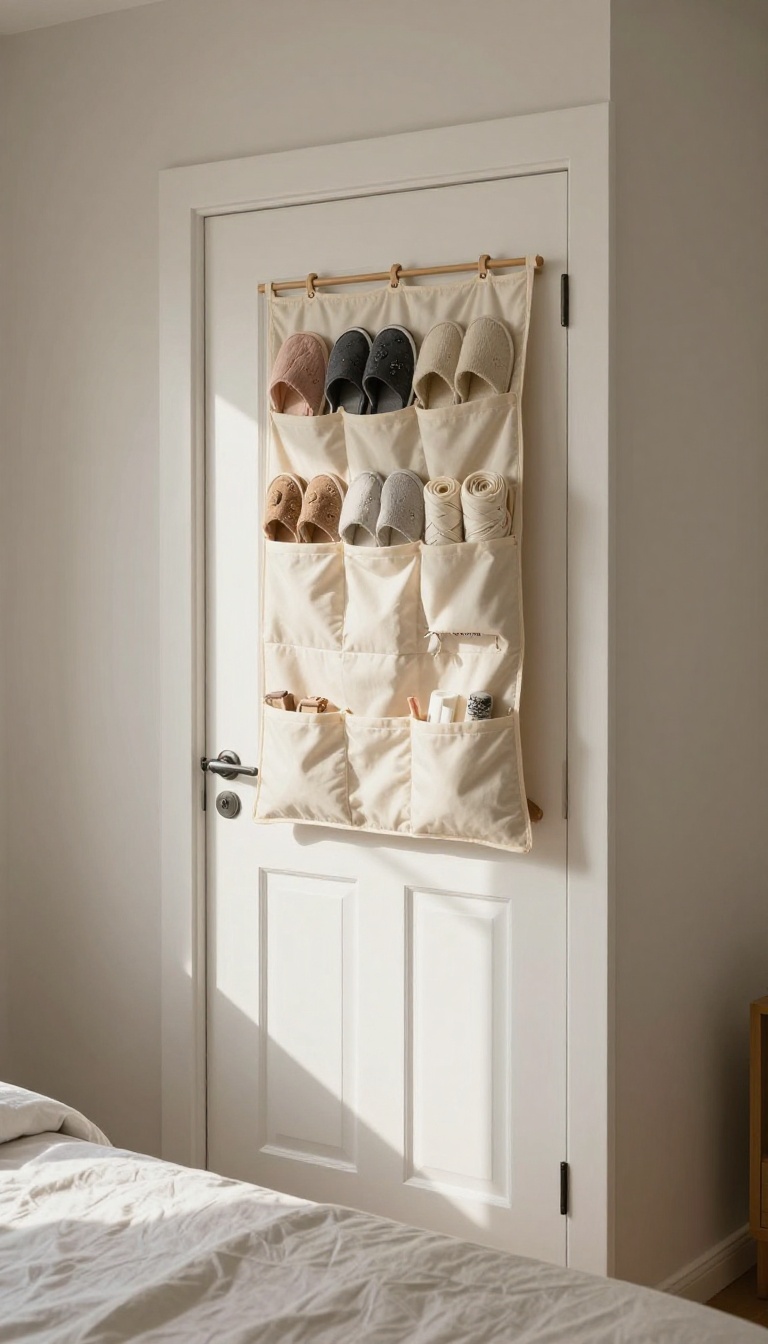
The back of your bedroom door is a blank canvas that most people ignore. Hang an over-the-door organizer there and you instantly gain storage without losing a single square foot of floor space. It’s one of the easiest ways to clear clutter that would otherwise end up on your dresser or nightstand.
Over-the-door organizers come in all shapes and sizes, from fabric shoe racks to clear pocket versions for accessories. They hook right over the top of the door, so you don’t need tools or wall damage. The best part?
You can stash things you use daily—like slippers, belts, or toiletries—right where you need them. When you free up surface areas, the room feels less packed and you move through it more easily. No more tripping over shoes or digging through a drawer for your keys.
This trick works in any small bedroom, whether you’re a student, a renter, or just tight on space.
Pick The Right Organizer
Fabric shoe organizers are great for lightweight items like socks, scarves, or flip-flops. Clear plastic pockets let you see what’s inside, which is perfect for jewelry or hair accessories. If you need something sturdier, look for canvas or mesh versions with reinforced hooks.
Just make sure it doesn’t stick out too far or block the door from closing.
What To Store (and What Not To)
Use it for things you grab often: shoes, slippers, belts, hats, or toiletries. Avoid heavy items like books or tools—they can stretch the fabric and strain the door hinges. Also skip anything that might leak or spill, like open bottles.
Keep it light and functional.
Keep It Tidy
An over-the-door organizer can become a catch-all if you’re not careful. Once a week, take a minute to put things back where they belong. If a pocket hasn’t been touched in months, clear it out.
A quick tidy keeps the organizer useful and the room looking neat.
11. Replace a Bulky Chair with a Folding Stool
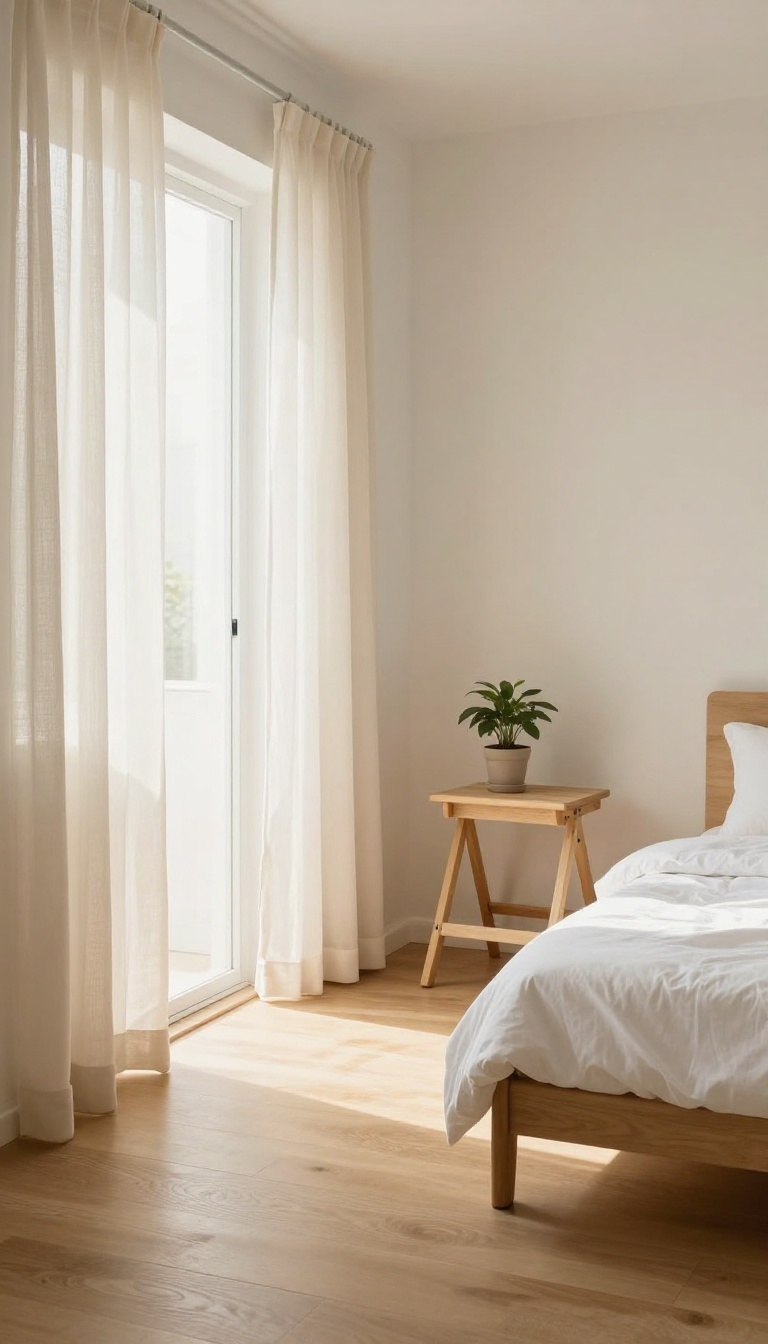
That armchair in the corner might look cozy, but it’s probably stealing a chunk of your walking space. A folding stool gives you a seat when you need one and disappears when you don’t. It’s a simple swap that keeps your floor clear and your room feeling open.
Bulky chairs are space hogs. They stick out, block paths, and often end up as a dumping ground for clothes. A folding stool, on the other hand, is lightweight and slim.
You can park it against the wall or slide it under a desk. When guests come over, unfold it and you’ve got extra seating. The rest of the time, it’s out of your way.
This trick works in any small bedroom, whether you’re short on square footage or just want a cleaner look. It’s about making your furniture work double duty without eating up your flow.
Why Bulky Chairs Kill Your Flow
A standard armchair can take up 3 to 4 square feet of floor space. That’s a lot in a small room. It creates a dead zone you have to walk around, and it visually closes off the room.
Even a small accent chair can feel like an obstacle if it’s in the wrong spot. Folding stools, by contrast, have a tiny footprint. They don’t interrupt your path from the door to the bed or closet.
Picking The Right Folding Stool
Not all folding stools are created equal. Look for one that’s sturdy but lightweight—metal or wood frames with a canvas or cushioned seat work well. Consider the height: a standard stool is about 18 inches, which works for most beds and desks.
If you want something that doubles as a nightstand, try a slightly taller model. And don’t overlook style. You can find folding stools in colors and materials that match your room, so it looks intentional even when it’s folded up.
Where To Stash It When It’s Not In Use
The beauty of a folding stool is that it disappears. Slide it under your bed if you have the clearance. Tuck it between the dresser and the wall.
Hang it on a hook behind the door. Some stools even fold flat enough to fit in a closet. The key is to have a dedicated spot so it doesn’t become clutter.
When you need it, grab it; when you don’t, it’s out of sight.
12. Install a Wall-Mounted Desk
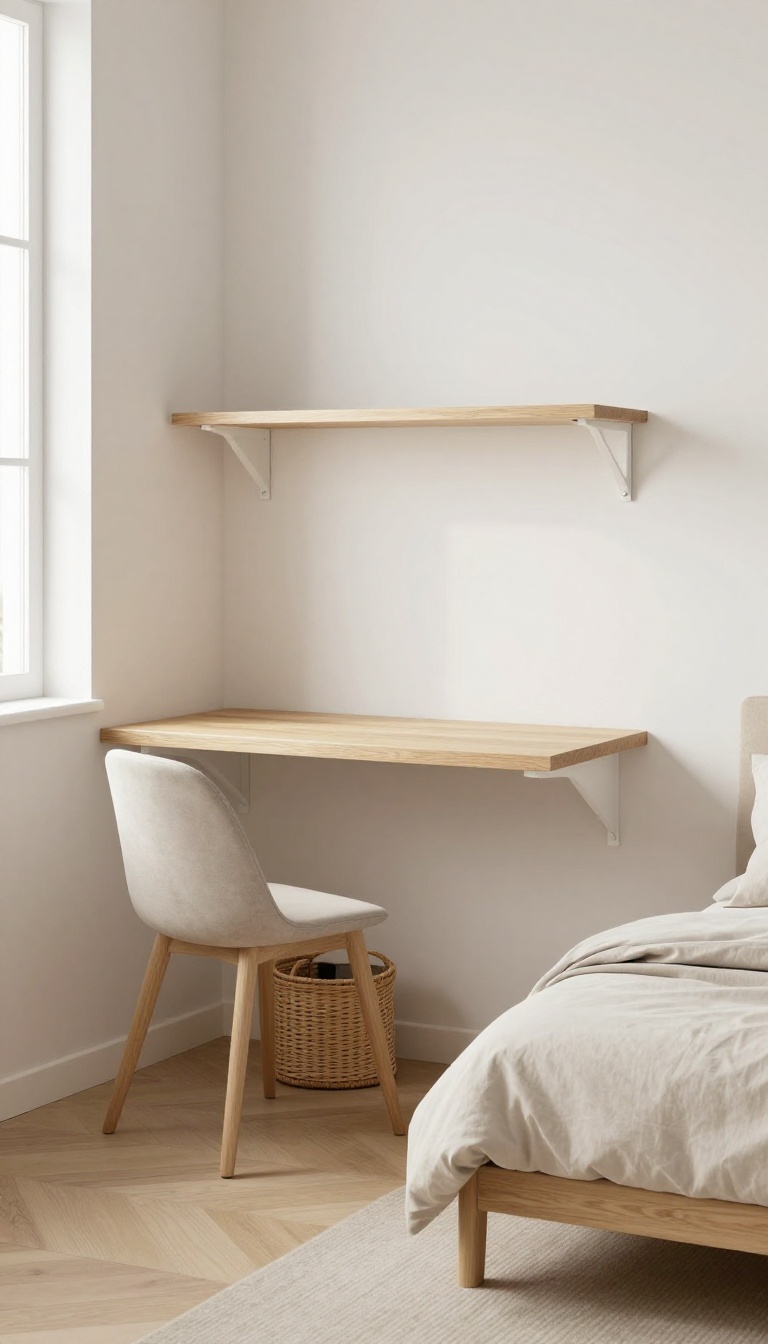
A wall-mounted desk, often called a floating desk, attaches directly to the wall with no legs touching the floor. That means you get a full workspace without sacrificing any square footage to a table base. It’s a game-changer for bedrooms that need to pull double duty as an office.
The real magic is in the floor space you reclaim. You can slide a chair completely under it when you're done, or even tuck a small storage bin underneath. The room instantly feels less cluttered and more open.
A wall-mounted desk, often called a floating desk, attaches directly to the wall with no legs touching the floor. That means you get a full workspace without sacrificing any square footage to a table base. It’s a game-changer for bedrooms that need to pull double duty as an office.
The real magic is in the floor space you reclaim. You can slide a chair completely under it when you're done, or even tuck a small storage bin underneath. The room instantly feels less cluttered and more open.
Pick The Right Spot
The best wall for a floating desk is usually the one you rarely walk past. Think about the wall behind your bedroom door, or the narrow strip beside your bed. You want a spot that doesn’t interrupt the main path from door to closet to bed.
Avoid placing it under a window if you need to open that window often. Also, keep it away from heating vents so your laptop doesn’t overheat. A little forethought keeps the desk from becoming an obstacle.
Choose A Support System That Works
Floating desks rely on brackets, cleats, or a French cleat system to hold them up. For a simple shelf-style desk, heavy-duty L-brackets are fine if they’re anchored into studs. If you want a cleaner look, a wooden cleat screwed into studs and then into the desktop gives a seamless appearance.
For a more substantial desk, consider a wall-mounted drawer unit or a pair of sturdy metal legs that attach to the wall instead of the floor. Always check the weight limit and use proper anchors. A wobbly desk is worse than no desk.
Keep It Tidy And Functional
Since the desk has no drawers, you’ll need a plan for supplies. A small floating shelf above the desk holds pens, notebooks, and a lamp. Underneath, add a slim rolling cart or a wall-mounted pocket organizer for papers and chargers.
Cable management is key. Use adhesive clips or a cable raceway to run cords along the wall and down to the outlet. A clean desk surface makes the whole room feel calmer, and it takes just a few minutes to set up.
13. Use Vertical Space for Shelving
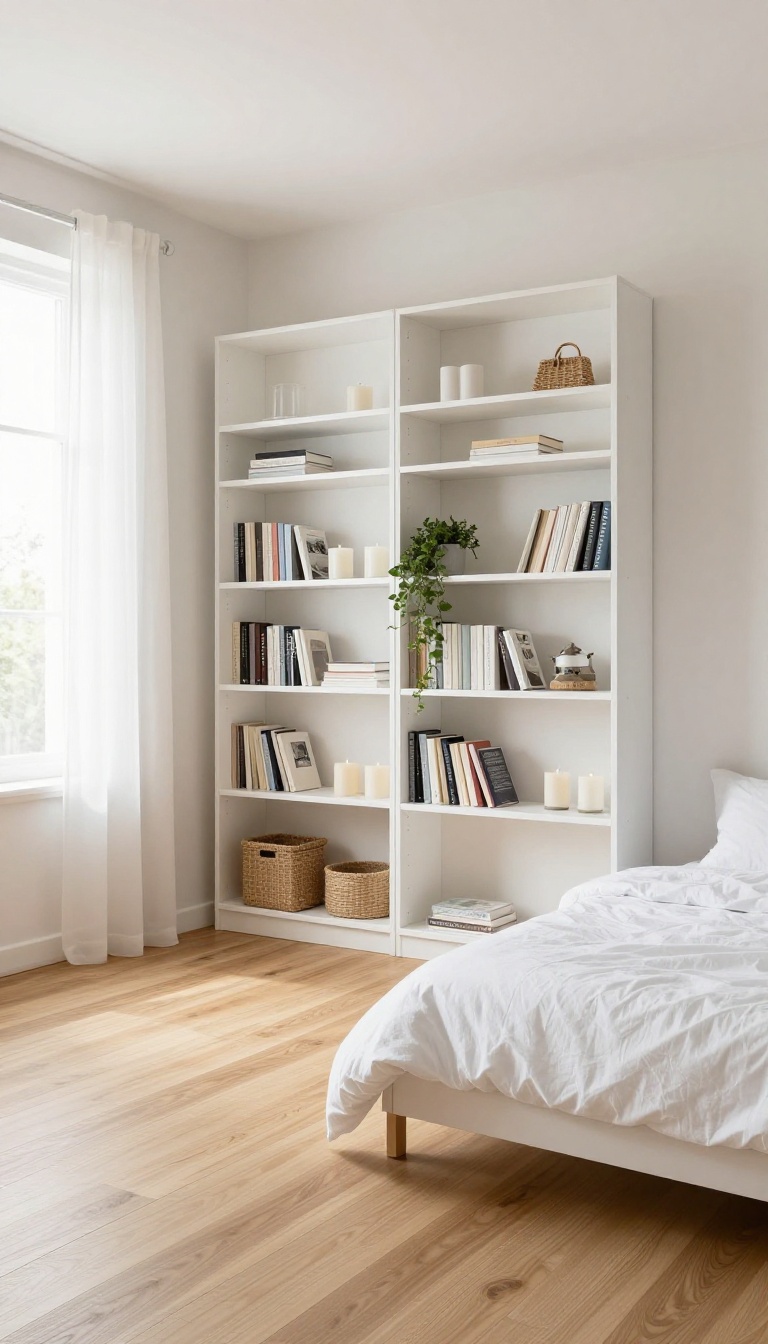
Your walls are doing nothing while your floor takes all the heat. Every book, candle, and pair of shoes piled on the ground is a small barricade in a room that can't afford one. Shelving that climbs upward instead of outward keeps that same stuff off your walking path.
Tall, narrow bookcases and wall-mounted shelves pull the eye up, which makes a low ceiling feel higher and a tight room feel less compressed. They also turn dead wall space into real storage. The result is a floor you can actually cross without sidestepping.
The trick is choosing the right vertical storage for your room's proportions, then anchoring it so it doesn't feel like a tower about to tip. Here's how to make it work.
Vertical shelving solves two problems at once: it gives your belongings a home and it clears the floor for your feet. In a small bedroom, those two wins stack up fast. You stop tripping over clutter, and the room starts to breathe.
But not every tall shelf belongs in every bedroom. The width, depth, and mounting style all matter. Get those right and the shelf practically disappears into the room.
Get them wrong and you've just added a bulky obstacle. Start by measuring the wall you have in mind, then match the shelf to that space rather than the other way around.
Pick The Right Shelf Depth
Deep shelves eat into your walking space even when they're against the wall. A 12-inch-deep bookcase juts out far enough to clip your shoulder on the way to the closet. Look for shelves that are 8 to 10 inches deep instead.
That depth still holds standard books, small bins, and folded clothes. It just doesn't bully the room. If you need to store something bulkier, put it on a higher shelf where your body doesn't travel.
Narrow widths work the same way. A 24- to 30-inch-wide unit fits into corners and beside doorways without dominating the wall. Two slim towers often beat one wide one because you can split them apart.
Go Wall-mounted To Free The Floor
Wall-mounted shelves attach directly to studs, so nothing touches the ground. That means zero lost floor space and a cleaner sightline from bed to door. Floating shelves also look lighter, which helps a small room feel less packed.
Use them for the stuff you reach for often: books, a glass of water, your phone, a small plant. Keep the lowest shelf at least 18 inches above the floor so your feet and vacuum can pass underneath. If you rent and can't drill big holes, adhesive shelves or over-the-door racks can fake the same effect.
Just check the weight limit before you load them up.
Stack High Without Feeling Heavy
A tall shelf draws the eye up, but it can also feel like a wall if you fill every inch. Leave some breathing room. Group items in twos and threes, then leave a gap before the next cluster.
Mix horizontal and vertical stacks. Lay some books flat, stand others up, and tuck a small basket in between. That variation keeps the shelf from reading as a solid block.
Stick to one color family for bins and baskets. Matching containers make the shelf look intentional instead of like a yard sale. The room stays calm, and your stuff stays findable.
Anchor It So It Stays Put
Tall shelves tip. It's rare, but it happens, especially in bedrooms where you might bump them in the dark. Use the anti-tip strap that comes with the unit, or buy one if it doesn't.
Secure the shelf to a stud, not just drywall. A stud finder costs less than a replacement lamp, and the install takes ten minutes. If you're not handy, a handyman can do it quickly.
Keep the heaviest items on the bottom shelves. That lowers the center of gravity and makes the whole thing more stable. Light decor goes up top, where a fall won't hurt anything.
14. Choose a Mirror to Bounce Light and Space
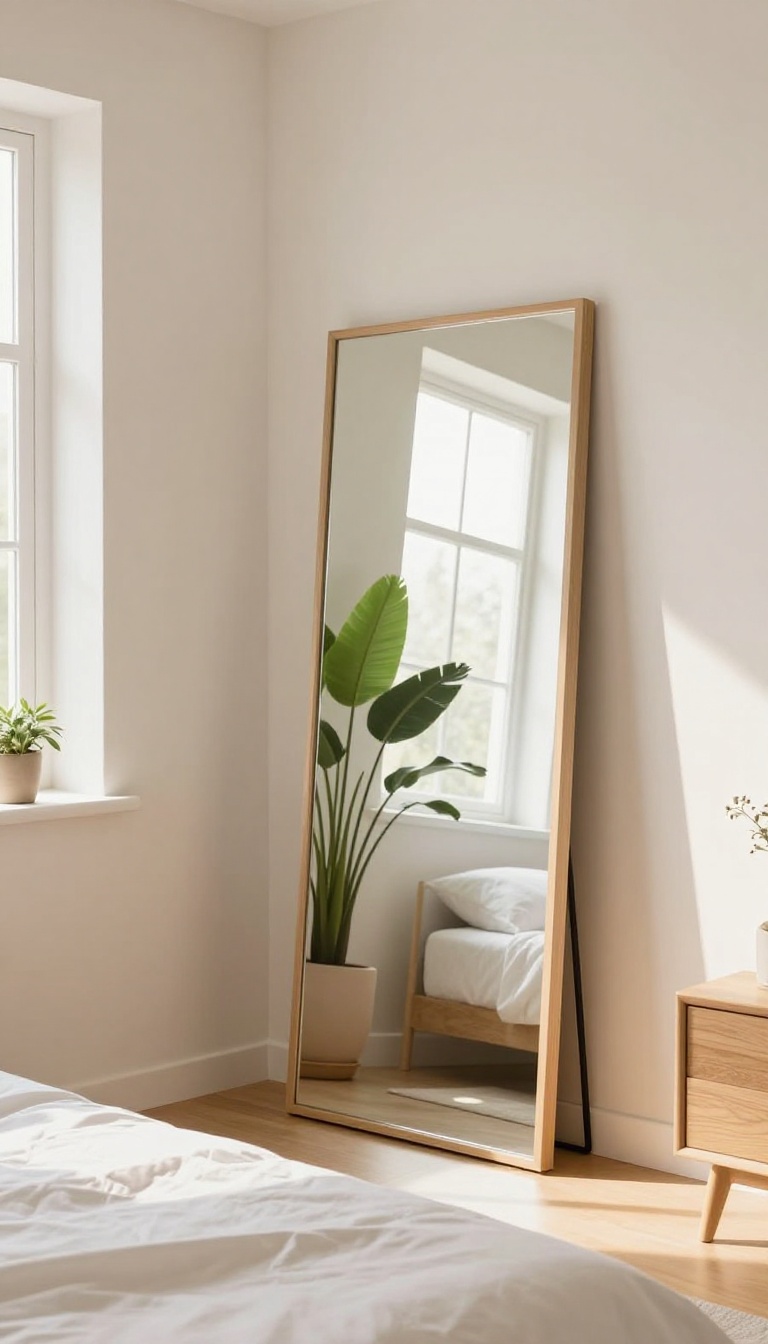
A mirror might seem like a simple decoration, but in a small bedroom it's a secret weapon for flow. When you place a large mirror opposite a window, it reflects natural light and doubles the visual depth of the room. Suddenly, the space feels twice as big without moving a single piece of furniture.
The key is to position the mirror so it catches the view you want to amplify. A window with a nice view or plenty of daylight is ideal. The mirror will bounce that light around and make the room feel airy and open.
Avoid placing it where it reflects clutter or a dark corner, as that will only make the room feel smaller.
Pick The Right Spot
Opposite a window is the classic move, but you can also angle it to reflect a pretty part of the room. Just make sure it doesn't face the bed directly if you find that unsettling. A full-length mirror leaning against the wall can work, but secure it properly.
Size Matters
Go big or go home. A tiny mirror won't do much for flow. A large, frameless or thin-framed mirror will reflect more light and create a bigger sense of space.
If you're on a budget, a few smaller mirrors grouped together can also work.
Style And Placement Tips
Lean a mirror against the wall for a relaxed look, or mount it flush for a clean finish. Avoid placing it where it reflects a cluttered area. Instead, aim it at something visually pleasing, like a plant or a piece of art.
This way, the mirror becomes a focal point that enhances the room's flow.
15. Keep Colors Light and Consistent
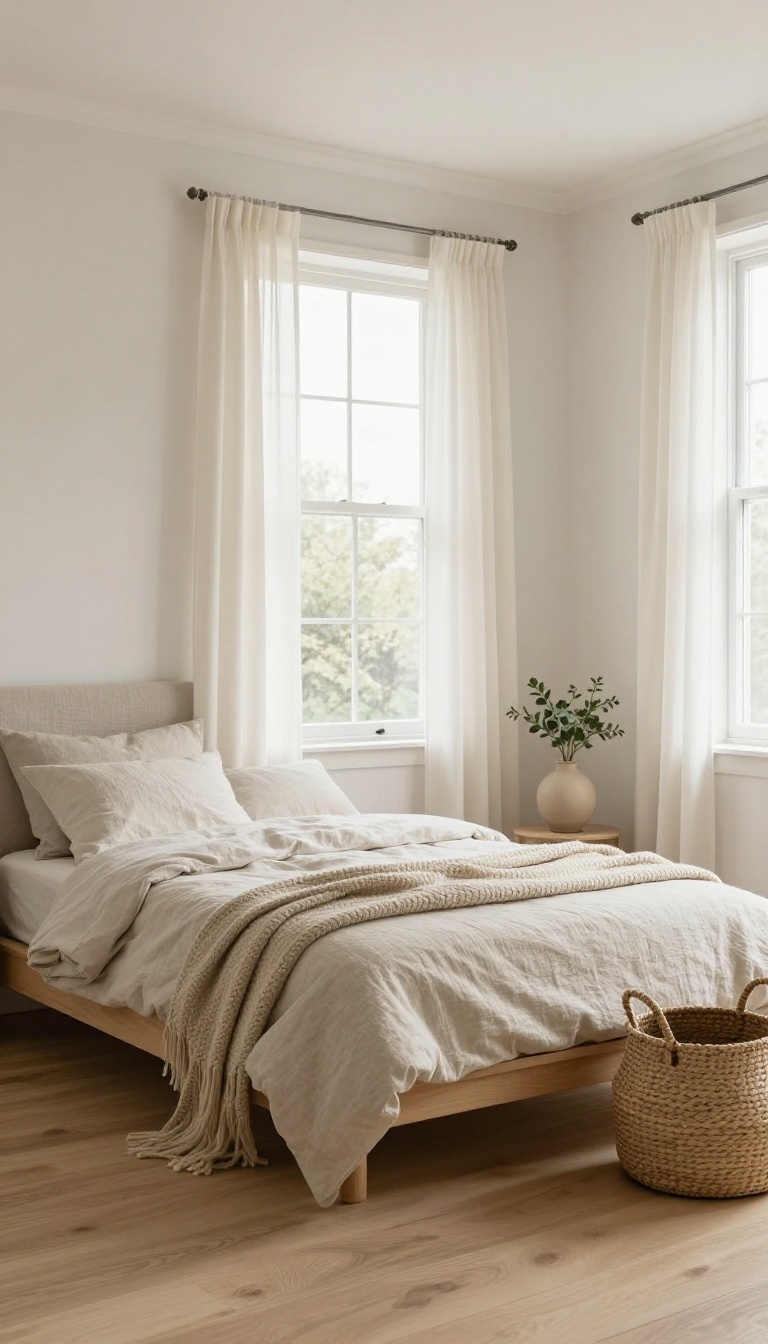
Color does quiet work in a small bedroom. A light, consistent palette cuts visual noise, so your eye glides around the room instead of snagging on contrast. That calm surface makes the space read as bigger and keeps the flow you worked so hard to create.
You do not need an all-white box. You need tones that agree with each other. When walls, bedding, and curtains share a family of light shades, the room stops feeling chopped into pieces.
Think of a small room as one continuous surface. Every dark stripe, bold pattern, or mismatched tone acts like a wall your eye has to climb. Light colors blend those surfaces together, so the ceiling, walls, and floor feel like one open volume instead of three separate zones.
Consistency matters more than the exact shade. Pick a base tone, then let everything else sit a step or two away from it. A soft warm white on the walls, oatmeal bedding, and ivory curtains will feel seamless.
Swap one of those for a deep navy and the room snaps back into tight, boxy territory.
Pick One Base Tone And Stick With It
Choose a light base color first, then build the room around it. Warm whites, pale greige, soft sand, and light gray all work. Bring a paint chip to your bedding and curtains before you buy, so you can see how they sit together in daylight.
If you already own light furniture, match your walls to it instead of starting over. That keeps the palette coherent and saves money. The goal is a room that feels like one thought, not five separate purchases.
Use Contrast In Small Doses
An all-light room can drift toward flat. Add contrast through texture, not color. A chunky knit throw, a woven basket, or a linen headboard gives the eye something to enjoy without breaking the calm.
Keep those darker accents low and few. A wood nightstand or a single framed print is enough. Spread heavy tones around the room instead of clustering them on one wall, or the space will feel lopsided.
Let Light Reflect Off Your Surfaces
Light colors bounce daylight around the room, which makes corners feel less closed in. Keep curtains light and hang them close to the ceiling so they frame the window instead of cutting it short. Choose bedding and rugs in similar light tones so the floor and bed read as one soft plane.
A pale rug that matches your walls visually extends the room. That continuity is what makes a small bedroom feel airy rather than cramped.
FAQ
What is the best bed placement for a small bedroom?
The best placement depends on your room's shape. In square rooms, floating the bed in the center can improve flow. In narrow rooms, a corner bed often works better to open up floor space.
How can I make my small bedroom feel bigger without renovating?
Use light colors, hang curtains high, add a large mirror, and keep floors clear. These simple changes can make a big difference in how spacious the room feels.
What furniture should I avoid in a small bedroom?
Avoid bulky pieces like large dressers, oversized chairs, and heavy nightstands. Opt for slim, multi-functional furniture instead.
How do I create better flow in a small bedroom?
Keep a clear path from door to window, avoid blocking walkways, and use furniture that serves multiple purposes. Floating shelves and wall-mounted lights help save floor space.
Can I use a rug in a small bedroom?
Yes, a rug can define zones and add warmth. Choose a size that fits the area without overwhelming the space, and make sure it doesn't block doors.
Conclusion
A small bedroom doesn't have to fight you every morning. The right layout clears a path, opens up floor space, and makes the room feel bigger without knocking down a wall. Pick one trick from this list and try it this weekend.
You can always layer in more once you see what works.
Start with the spot that bugs you most, whether that's the door swing or the cluttered nightstand. Fix that first, then let the rest of the room breathe. Small changes add up faster than you'd think.