13 Small Single Bedroom Ideas That Feel Open and Refined
A cramped bedroom can quietly reshape itself once you stop treating every wall like it needs furniture. The shift rarely comes from knocking anything down. It comes from smarter placement, lighter pieces, and a few deliberate choices that let the room breathe.
You do not need a bigger footprint to get a calmer, more polished feel. Small rooms reward precision, so the moves that matter most are the ones that protect floor space and keep sightlines clear. A low bed, tall curtains, and the right mirror can do more than a whole weekend of rearranging.
The thirteen ideas below cover layout, storage, color, and lighting in ways that suit real single bedrooms. Some take an afternoon, others a slow Saturday.
1. Float the Bed Away From the Wall
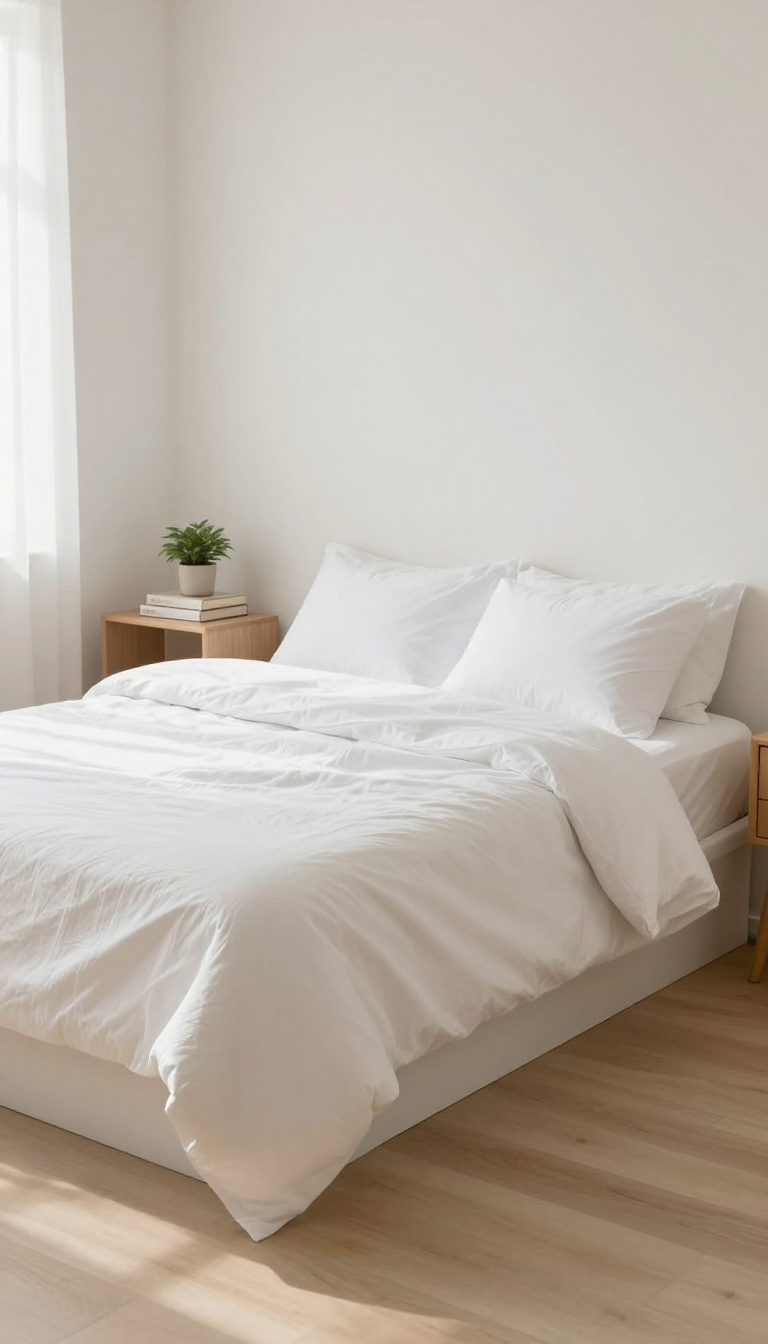
Most people shove their bed into a corner without thinking. It feels safe and saves space, but it also makes the room look smaller. Pulling the bed just a few inches off the wall changes everything.
You get breathing room, better flow, and a layout that looks intentional.
When your bed touches the wall, it becomes part of the architecture. The eye reads it as one big block, and the room feels packed. Float it slightly and you create a gap that lets light and air move around it.
That tiny shift makes the bed feel like a deliberate piece of furniture, not an afterthought. You do not need a huge room to pull this off. Even six inches can make a difference.
The key is to keep the gap consistent on both sides if possible. If one side is against a wall, try to leave space on the other. This simple move instantly makes the room feel less cramped.
How Much Space Do You Really Need?
Aim for at least four to six inches between the bed and the wall. If your room is tight, three inches still helps. The goal is to break the visual connection.
You want a clear line of floor or baseboard visible. That gap tells your brain the bed is separate. It also makes it easier to make the bed and change sheets.
If you have a headboard, make sure it does not touch the wall either. A small gap behind the headboard works fine.
What To Do With The Gap
That narrow space can become useful. Slide a slim nightstand or a floating shelf into it. A small plant or a stack of books adds interest without clutter.
If the gap is too tight for furniture, leave it empty. The negative space is the point. You can also run a strip of LED lighting along the baseboard behind the bed.
It creates a soft glow and makes the bed look like it is floating. Just keep the gap clean and dust-free.
Make It Look Intentional
A floating bed can look accidental if you do not style it. Center the bed on the wall if you can. If not, balance it with a piece of art or a mirror on the opposite side.
Use a rug that extends beyond the bed to anchor the whole setup. Keep the bedding simple and tucked. The cleaner the lines, the more refined the room feels.
And do not forget to check the gap from the doorway. That is the view that matters most.
2. Choose a Low-Profile Bed Frame
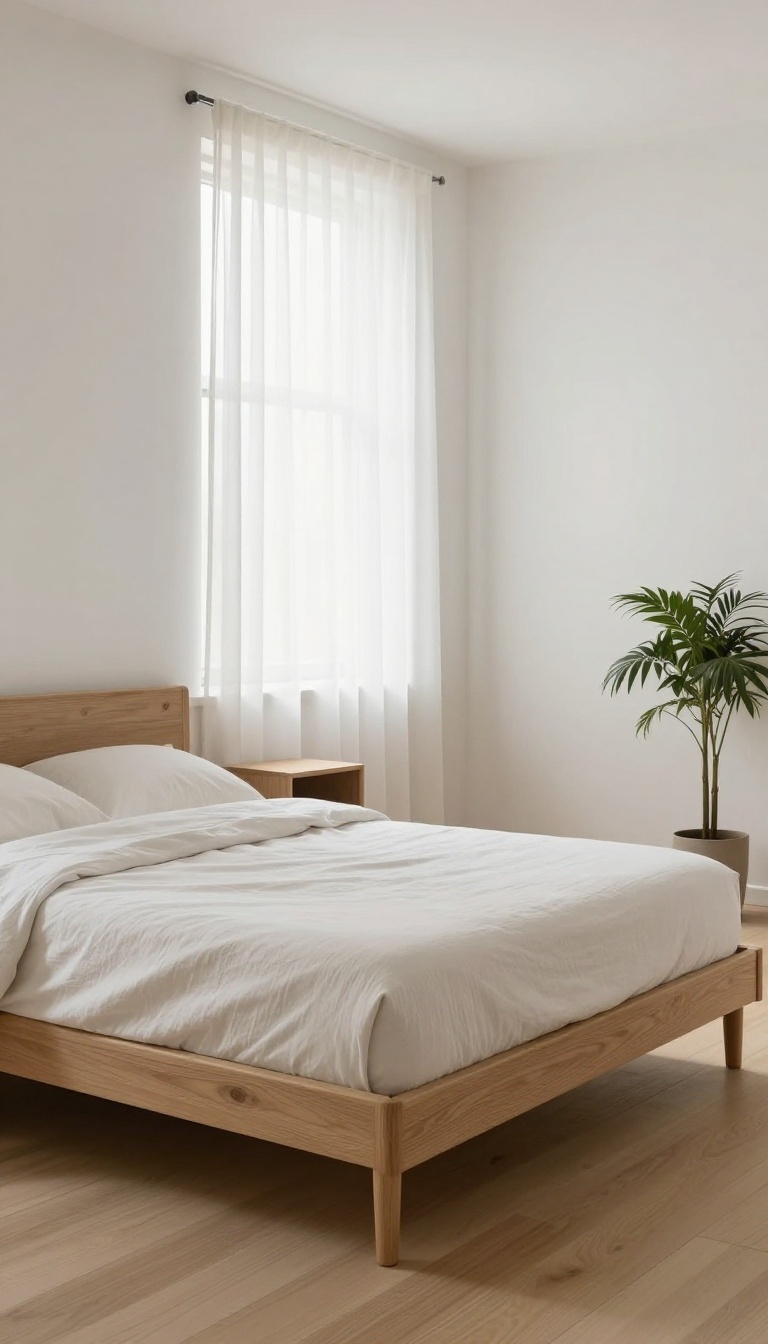
A tall bed frame eats up visual space before you even add a mattress. It pushes the bulk of the bed up into the middle of the room, where your eye naturally lands. Swap it for something low and the whole room seems to exhale.
Low frames keep the sightline closer to the floor, which tricks your brain into reading the ceiling as farther away. That extra perceived height makes even a tiny bedroom feel less boxed in. It's one of the simplest swaps with an outsized payoff.
You do not need a platform bed from a design showroom. Plenty of affordable options sit under fourteen inches, and some go as low as eight. The key is keeping the mattress close to the ground without looking like a college dorm setup.
A low-profile frame does two things at once: it opens up the wall space above the bed and it makes the floor plane feel larger. Both matter in a single bedroom where every inch counts. The effect is subtle but immediate, like letting air into a sealed room.
Standard bed frames often sit eighteen to twenty-four inches off the floor. That height is fine in a primary suite, but in a small room it creates a visual block. A low frame, usually eight to fourteen inches, keeps the bed from dominating the vertical space.
Your eye can travel across the room instead of stopping at the mattress line. This choice also pairs well with the other ideas in this list. Low beds work with floating nightstands, under-bed storage, and tall curtains without fighting any of them.
It's a foundational move, not a finishing touch.
How Low Should You Go?
Aim for a frame that puts the top of your mattress between sixteen and twenty inches off the floor. That range feels grounded without being awkward to get in and out of. Anything lower than fourteen inches can start to feel like a futon, which is not the refined look you want.
Measure your current bed before you shop. If your mattress sits at twenty-six inches or higher, you have room to go lower. A tape measure and five minutes will save you from ordering the wrong height.
Materials That Keep It Light
Wood and metal both work, but lighter finishes tend to feel more open. A pale oak or whitewashed frame reflects more light than a dark walnut or black metal one. That reflection matters in a room with one window.
If you love dark wood, balance it with a light wall color and bedding. The contrast keeps the frame from reading as a heavy anchor. You can also choose a frame with thin legs or a recessed base, which lets light pass underneath.
Watch The Under-bed Gap
A low frame still leaves a gap between the mattress and the floor. Use it. Flat storage bins on wheels slide right under and disappear from view.
Just avoid stacking so much underneath that the bed looks like it is hovering on a pile of boxes. Keep the gap clean and shadowy. That darkness reads as depth, which makes the room feel bigger.
A few well-chosen bins are fine; a wall of plastic totes is not.
3. Use Vertical Storage to Free Up Floor Space
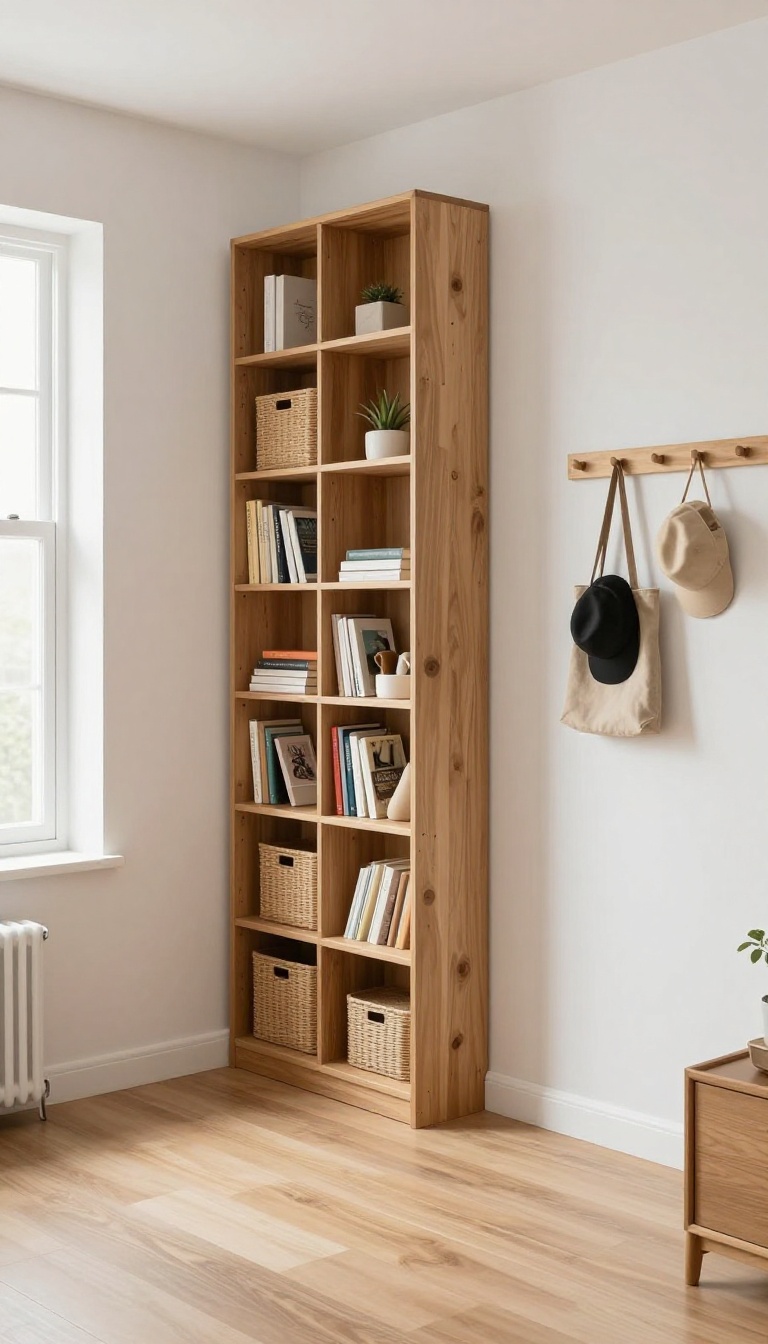
Floor space is precious in a small bedroom, and every item you park on it makes the room feel tighter. Vertical storage moves your belongings up the walls, where they take up zero square footage and keep the floor clear for walking, breathing, and just existing. The trick is to go tall without making the room feel like a warehouse.
Choose slim, airy pieces that draw the eye upward and keep the lower half of the room open.
When you store things vertically, you're essentially using the walls as real estate. That means fewer bulky dressers, less clutter on the floor, and a room that feels taller and more open. The key is to pick pieces that don't visually weigh down the space.
Open shelves, floating units, and wall-mounted hooks all do the job without adding bulk. You'll also want to keep the top third of the room relatively light so the ceiling doesn't feel like it's pressing down. A few well-placed tall elements can actually make a small bedroom feel more refined, not less.
Go Tall With Bookshelves
A tall, narrow bookshelf is one of the best vertical storage moves you can make. It holds a ton without eating floor space, and if you choose an open design, it won't block light or make the room feel closed in. Place it against a wall that isn't the first thing you see when you walk in, so it reads as functional rather than overwhelming.
Keep the shelves styled with a mix of books, baskets, and a few decorative objects to avoid visual clutter. The goal is to make it look intentional, not like a storage unit.
Mount Hooks And Rails
Wall hooks and rails are tiny but mighty. They give you a spot for bags, hats, robes, and even a folded blanket or two, all without a single piece of furniture on the floor. Install a row of hooks behind the door or on a narrow wall segment.
A simple rail with hanging baskets can corral small items that would otherwise end up on your nightstand or dresser. Just don't overload them—keep it to everyday essentials so the wall stays neat.
Float Shelves For Everyday Items
Floating shelves are perfect for the stuff you reach for daily: books, a glass of water, your phone, a small plant. Because they have no visible brackets, they feel light and don't add visual weight. Mount a couple above your nightstand to replace a bulky bedside table, or run a long shelf along the wall above your bed for a clean, streamlined look.
Just make sure they're installed securely and don't go too deep—8 to 10 inches is plenty for most items.
4. Hang Curtains High and Wide
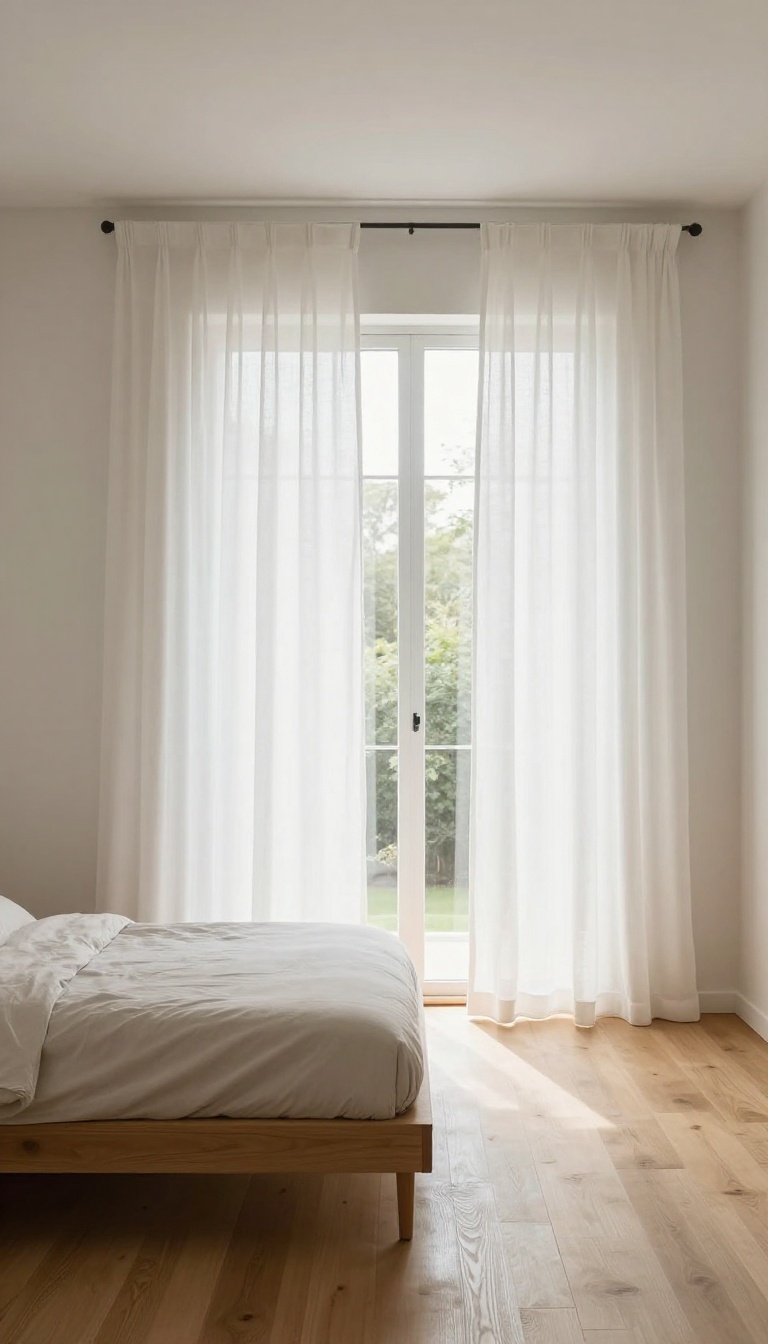
Curtains are one of the few things in a small bedroom that can make the room feel bigger without taking up any floor space. The trick is to hang them high and wide, so they frame the window in a way that draws the eye upward and outward. It is a simple change that adds height and light, and it works in any style of room.
Most people hang curtains right above the window frame and just wide enough to cover the glass. That approach makes the window look smaller and the walls feel shorter. Instead, mount the rod close to the ceiling and extend it several inches past each side of the window.
This creates the illusion of a taller, wider window, which makes the whole room feel more open. The extra width also lets you pull the curtains completely clear of the glass during the day. That means more natural light comes in, and the room feels brighter.
At night, the curtains still close fully for privacy. It is a small adjustment with a big payoff.
How High Is High Enough?
Aim to place the curtain rod about two to four inches below the ceiling, or right at the ceiling line if you have crown molding. This draws the eye up and makes the ceiling feel higher. If your ceiling is very low, going all the way to the ceiling can feel dramatic in a good way.
Just make sure the rod is level and securely anchored.
How Wide Should You Go?
Extend the rod at least six to ten inches beyond the window frame on each side. This gives the curtains room to stack when open, so they do not block any light. It also makes the window appear larger.
If you have the space, going even wider can make a small room feel more expansive.
Pick The Right Curtain And Rod
Choose a curtain that is light in color and made from a fabric that lets some light through, like linen or a sheer blend. Heavy, dark curtains can make a small room feel closed in. For the rod, a simple metal or wood style works well.
Make sure it is sturdy enough to hold the weight of your curtains, especially if you are using blackout panels.
5. Pick a Light, Cohesive Color Palette
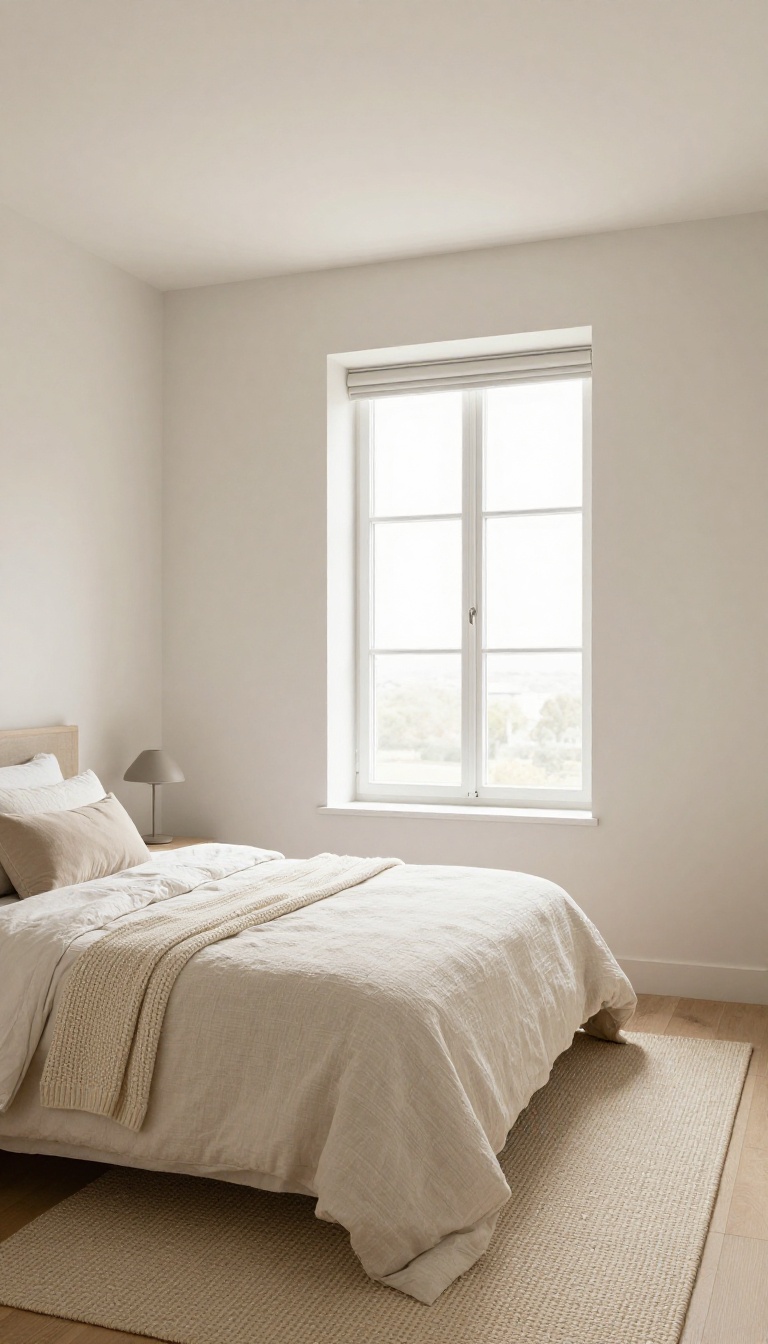
Color does more for a small bedroom than most people give it credit for. A tight, light palette bounces daylight around the room and cuts down on the visual clutter that makes tight spaces feel busy. Stick to soft neutrals and tonal shades, and the whole room starts to read as one calm, open space.
The goal isn't to make everything match perfectly. It's to keep the tones close enough that your eye glides around the room instead of stopping at every contrast. Warm whites, pale greys, soft beiges, and muted taupes all work well because they reflect light and stay quiet.
Add depth with texture and subtle shifts in shade, not with bold color blocks. If you love color, you don't have to give it up. Just keep it tonal: pick one hue and use it in three or four nearby shades.
A dusty blue wall with a lighter blue duvet and a navy throw reads cohesive without feeling flat. The room stays calm, but it still has personality.
Keep Walls And Ceiling Close In Tone
Painting the ceiling the same color as the walls softens the hard line where they meet. That blur makes the room feel taller and more continuous. If you want a little contrast, go one shade lighter on the ceiling instead of bright white.
It keeps the light moving without chopping the space into boxes.
Use Texture Instead Of Contrast
A linen duvet, a chunky knit throw, and a woven rug in similar shades add interest without breaking the calm. Your eye reads the texture, not a jarring color shift. That's how you keep a small room from feeling like a plain box.
Mix matte and soft sheen finishes too, but stay in the same family.
Let One Accent Do The Work
Pick a single accent color and use it in small doses: a lamp base, a framed print, or a folded blanket at the foot of the bed. One accent keeps the palette from feeling monotone without adding visual noise. If you change your mind later, swapping that one piece is easy and cheap.
6. Add a Large Mirror Opposite the Window
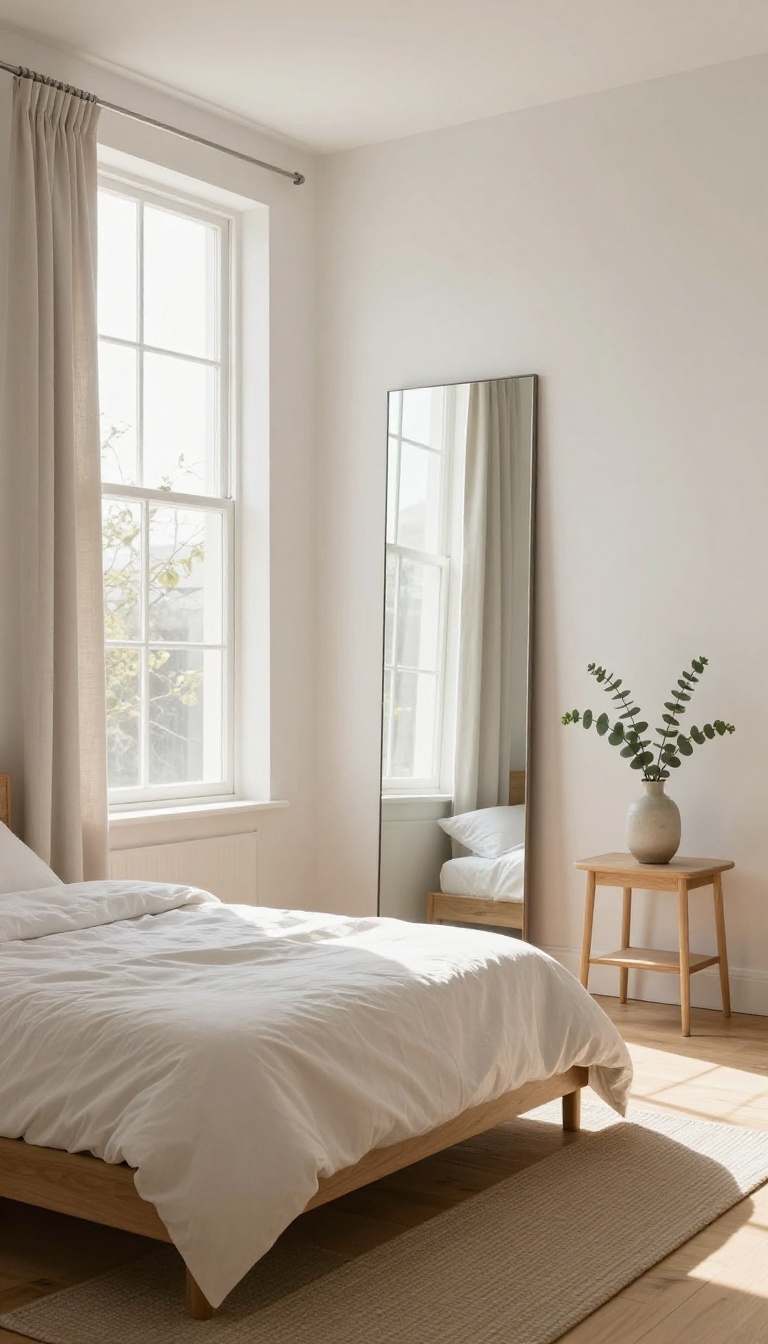
A mirror on the wall across from your window works like a second window, doubling the daylight that enters the room. It bounces light back into the space instead of letting it die against a dark wall. The effect is instant: the room feels brighter, deeper, and more open without moving a single piece of furniture.
Most small bedrooms have one good light source, and that's the window. If the wall opposite it is bare or covered in dark paint, you're wasting half the light you already have. A large mirror changes that by reflecting the view and the brightness back into the room.
It also adds a sense of depth, which makes the walls feel farther apart than they actually are. The trick is placement and size. You want the mirror to catch the window directly, not sit at an angle where it only reflects a corner of the ceiling.
And it needs to be big enough to make a difference. A tiny decorative mirror won't do much. A mirror that's at least two-thirds the width of your window will actually change how the room feels.
Pick The Right Wall
The mirror should go on the wall directly opposite your window, not on a side wall. That's the only spot where it can reflect the window itself and double the natural light. If your bed is on that wall, hang the mirror above the headboard or offset it to one side so it still catches the window.
Just make sure it doesn't reflect a cluttered corner or an open closet door. You want it to reflect light and maybe a nice view, not mess.
Choose A Size That Works
Go bigger than you think you need. A mirror that's too small looks like an afterthought and won't bounce enough light to matter. Aim for something at least 24 to 36 inches wide for a standard single bedroom.
A full-length mirror leaned against the wall can work too, especially if it's positioned to catch the window. Just avoid hanging it so high that it only reflects the ceiling. The center of the mirror should be around eye level when you're standing.
Keep The Frame Simple
A thick, ornate frame can eat up visual space and make the room feel busier. A thin metal frame, a plain wood edge, or even a frameless mirror keeps things clean and modern. If you want a little warmth, a slim brass or black frame adds polish without stealing attention.
The point is to let the reflection do the work, not the frame.
Angle It For Maximum Bounce
If you can't hang the mirror perfectly flat, lean it slightly against the wall and tilt it toward the window. Even a small angle can help it catch more light. Just secure it so it doesn't slide.
A mirror that's angled just right can reflect the sky or a tree outside, which adds a little life to the room. And if you have a lamp on the opposite side, the mirror will bounce that light too, making the whole room feel warmer at night.
7. Swap Bulky Furniture for Multifunctional Pieces
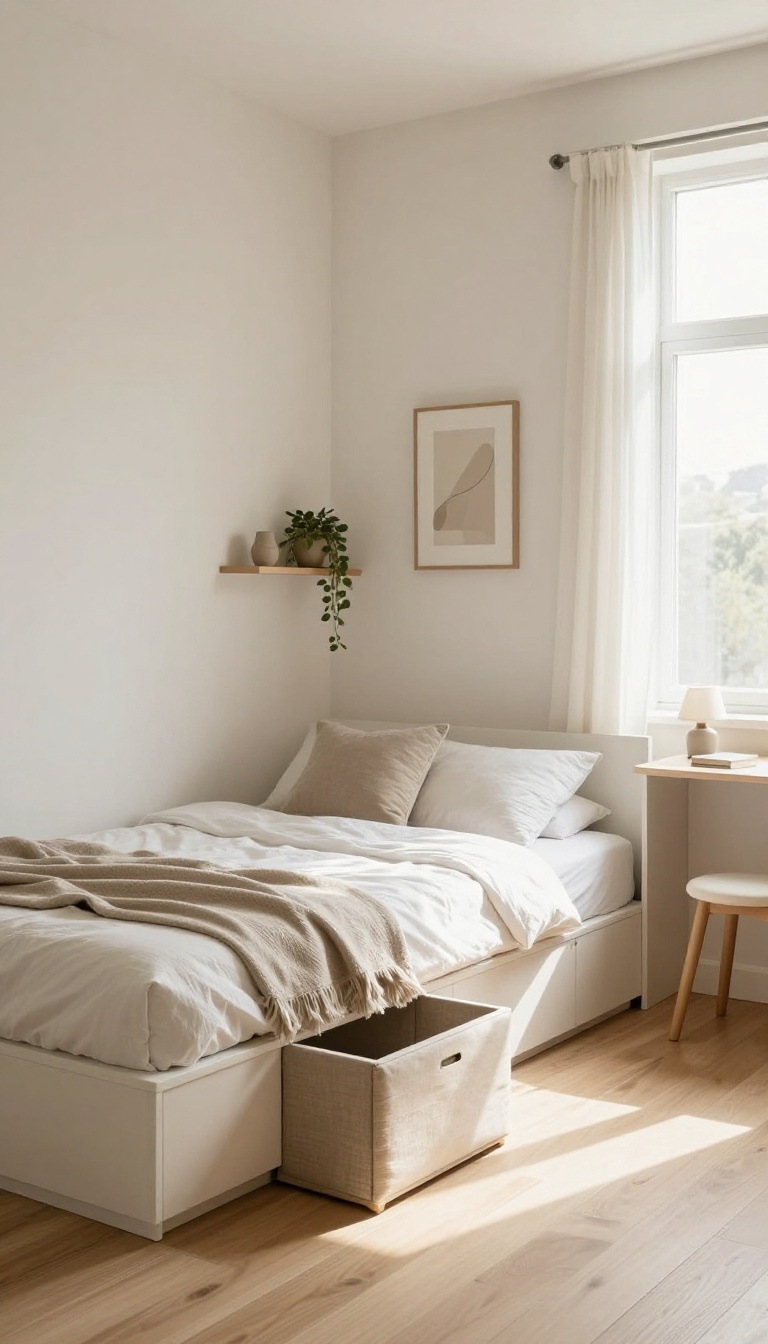
Every piece of furniture in a small bedroom has to earn its spot. A single dresser can eat up a whole wall, and a nightstand might only hold a lamp and a phone. When you trade those one-job items for pieces that do two or three things at once, the room instantly feels less crowded.
The goal is not to buy more stuff. It is to replace several bulky items with one smart solution that handles storage, surface area, and daily function. A storage ottoman, a bed with built-in drawers, or a fold-down desk can clear floor space without forcing you to give up anything you actually use.
Multifunctional furniture works because it removes the need for separate pieces that each take up their own footprint. Instead of a bed, a dresser, and a bench, you get one item that covers all three jobs. That means fewer legs on the floor, fewer surfaces to clutter, and fewer visual stops that make a room feel smaller than it is.
The trick is choosing pieces that fit your actual routines. If you never sit at a desk, a fold-down table is wasted space. If you live out of a laundry basket, a bed with drawers might just become a place to shove things.
Pick the functions you use every day, and let the rest go. Start by looking at what takes up the most room and does the least work. That is usually your biggest opportunity.
Beds That Pull Their Weight
A bed with drawers underneath replaces a dresser entirely. You get the same storage volume without adding another piece of furniture to the room. Look for models with soft-close drawers and a low profile so the bed does not dominate the space.
If drawers feel too permanent, a bed with an open under-frame works with rolling bins instead. You keep the flexibility to change things later, and the bins slide out of sight when you are done.
Seating That Hides Stuff
A storage ottoman can serve as a bench, a footrest, a side table, and a place to stash blankets or shoes. One piece replaces three, and it tucks under a window or at the foot of the bed without blocking traffic. Choose a lid that stays open on its own so you are not fighting it every time you need something.
A firm top also lets you set a tray down for coffee or a laptop.
Desks That Disappear
A fold-down desk mounts to the wall and swings up when you need it. When you are done, it folds flat and the floor is clear again. That single move can free up enough space to make the whole room feel twice as open.
Pair it with a wall-mounted shelf above for supplies, and you have a full work setup that takes up zero floor space when it is not in use.
8. Keep Nightstands Slim and Simple
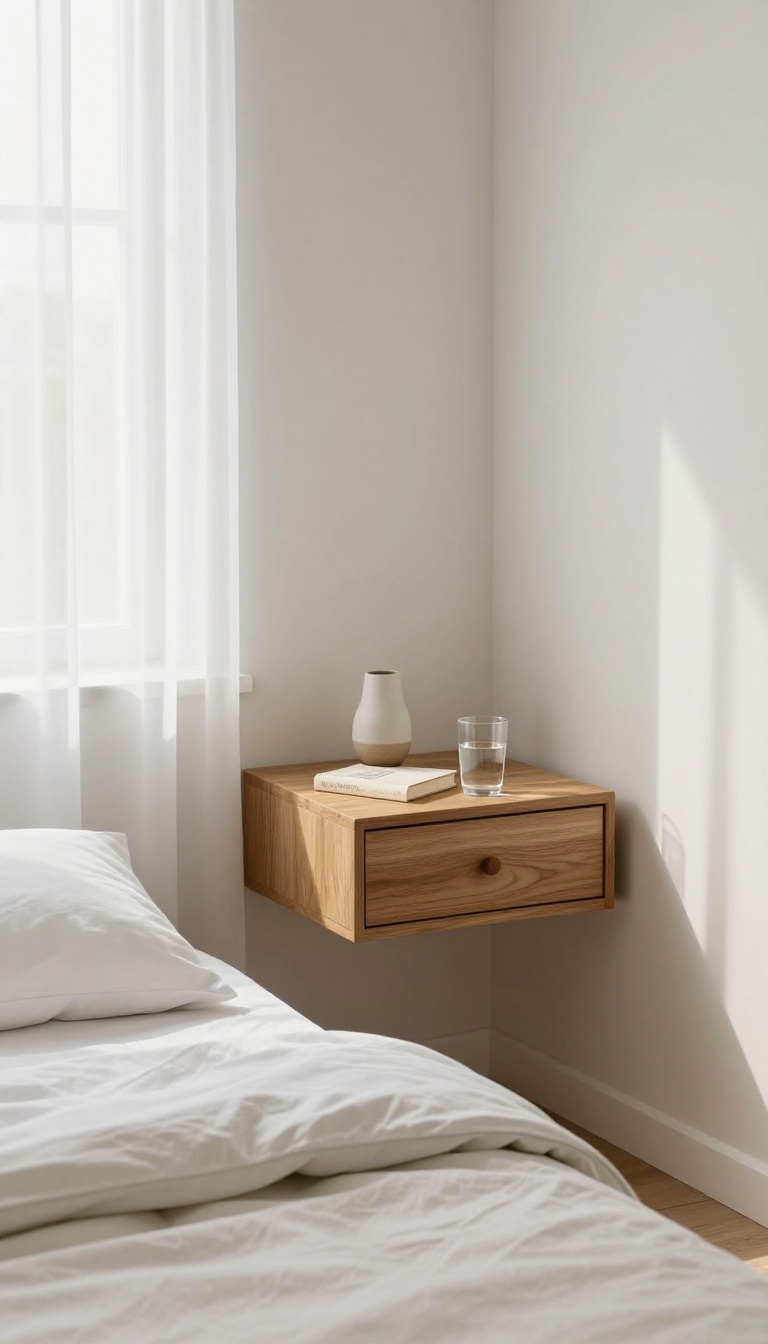
A bulky nightstand does more damage to a small bedroom than most people realize. It juts into the walking path, crowds the bed, and makes the whole room feel like it is holding its breath. Slim nightstands and wall-mounted shelves solve that problem without asking you to give up the things you actually use at night.
The goal is simple: give yourself a landing spot for a phone, a book, and a glass of water, and nothing more.
The trick is to think in terms of surface area, not storage volume. A nightstand that is eighteen inches deep will swallow your floor space and offer nothing in return. A nightstand that is eight to ten inches deep, or a floating shelf that is six inches deep, gives you exactly what you need and leaves the rest of the room alone.
That difference of a few inches is often the difference between a room that feels tight and one that feels open. You also want to keep the height low enough that it does not compete with the bed. If the top of the nightstand sits above the mattress, it starts to feel like a wall.
If it sits at or just below mattress height, it disappears into the background. Simplicity matters here too. A single drawer or an open cubby is plenty.
Anything with two drawers, a shelf, and a cabinet door is overkill for a single bedroom. You are not furnishing a hotel suite. You are carving out a small, calm corner that supports your nightly routine without stealing from the rest of the room.
Go Narrow, Not Tiny
Narrow does not mean flimsy or useless. A nightstand that is twelve inches wide and ten inches deep can still hold a lamp, a phone, and a book. The key is to avoid the deep, chunky boxes that dominate big-box stores.
Look for pieces with slim legs or a floating design. If you cannot find one you like, a simple wall shelf works just as well. Mount it at mattress height and you have a nightstand that takes up zero floor space.
Mount It And Forget It
Wall-mounted shelves are the quiet heroes of small bedrooms. They cost less than a traditional nightstand, they install in minutes, and they free up the floor completely. A single shelf that is twenty-four inches wide and six inches deep gives you room for the essentials.
Add a small basket underneath for a charger and a sleep mask, and you are done. Just make sure you anchor it into a stud. A shelf that pulls out of the wall at 2 a. m. is not the kind of open feeling you want.
Keep The Top Clear
A slim nightstand only works if you resist the urge to pile things on it. One lamp, one small tray, and one book is the limit. If you need more storage, use a floating shelf above the nightstand for a few decorative items or a small plant.
But keep the main surface clear. Clutter on a tiny surface reads as clutter in the whole room. A clean top makes the nightstand feel intentional, not like a catch-all.
9. Use a Rug to Define the Space
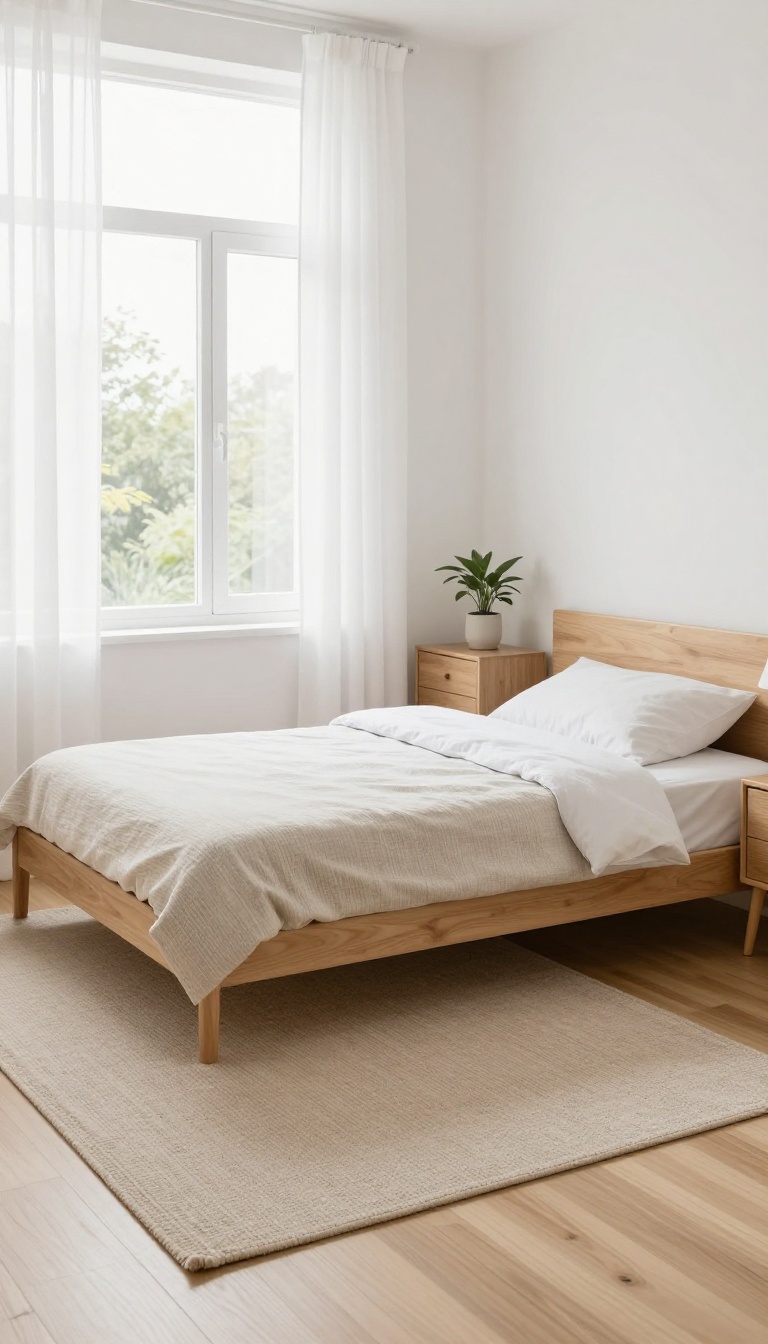
A rug does more than warm up bare floors. In a single bedroom, it draws a boundary around the bed and tells your eye where the sleeping zone begins and ends. That simple visual cue makes the room feel intentional instead of like furniture pushed against walls.
Without a rug, a small bedroom can feel like everything is floating. The bed, the dresser, and the nightstand all sit on the same expanse of floor, so nothing feels anchored. A rug fixes that by creating a clear island for the bed.
It also adds softness and color without eating into your usable space the way another piece of furniture would.
Pick The Right Size
For a single bed, a 5×8 rug works in most rooms. You want the rug to extend at least 18 to 24 inches beyond the sides and foot of the bed. That gives you a soft landing spot when you get up and makes the bed feel like the center of the room.
If the room is really tight, a 4×6 can work, but place it so the front legs of the bed sit on the rug. That small overlap is what ties the bed to the rug visually.
Choose A Low-pile Or Flatweave Style
Thick, plush rugs look cozy, but they can swallow a small room. They also make it harder to move around and can bunch up under a bed frame. Go with a low-pile or flatweave rug instead.
It lies flatter, cleans easier, and keeps the floor plane looking open. A subtle pattern or a solid tone with a bit of texture works better than a busy design that competes with everything else.
Place It With Purpose
The most common mistake is pushing the rug too far under the bed. If you cover the entire floor, you lose the defining effect. Instead, let the rug start a few inches in front of the headboard and run past the foot of the bed.
Leave a border of bare floor around the edges. That gap makes the room feel larger because your eye can still read the full shape of the floor.
Keep The Color Connected
A rug that clashes with your bedding or curtains will make the room feel choppy. Pull one or two colors from your existing textiles and repeat them in the rug. If your room is mostly neutral, a rug with a soft blue, warm terracotta, or muted green can add life without overwhelming.
The goal is harmony, not a statement piece that fights for attention.
10. Embrace a Monochromatic Bedding Look
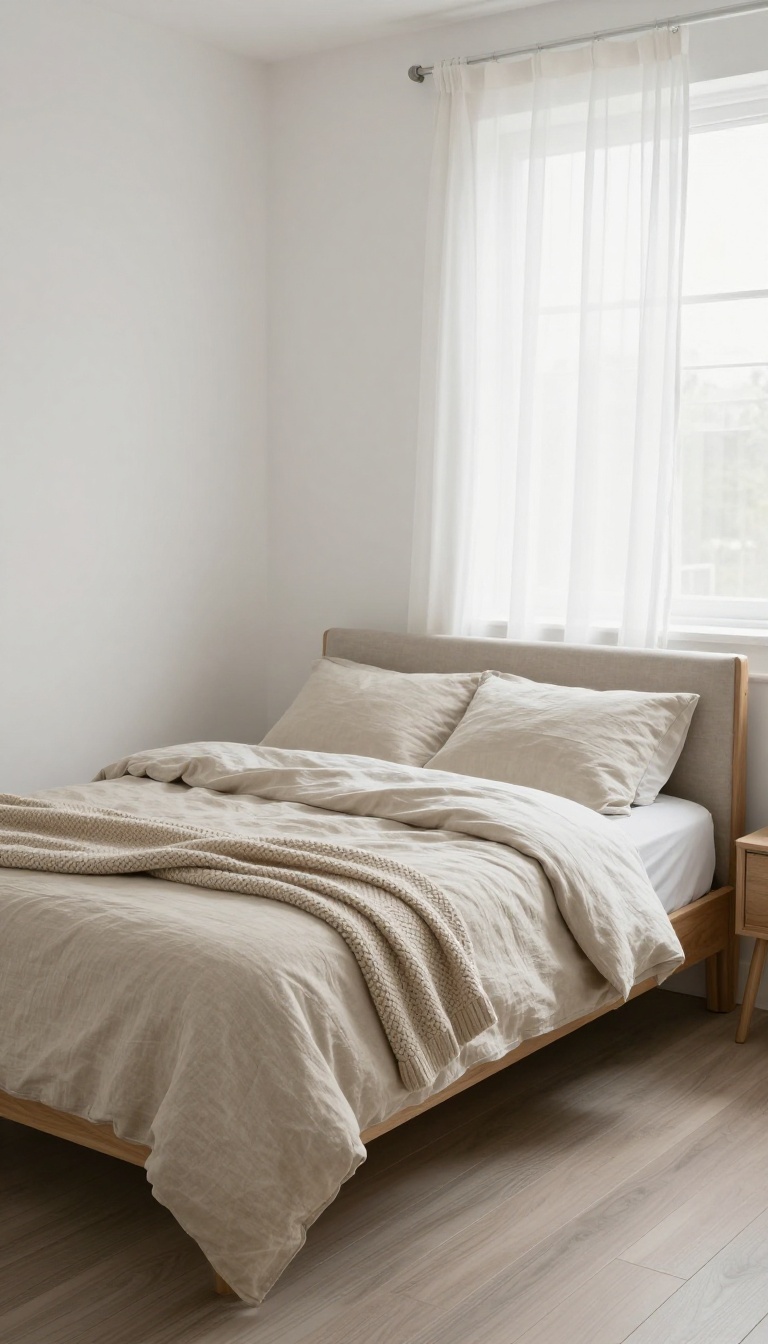
Matching your bedding to your walls or floor creates a seamless flow that makes the room feel larger. When your comforter, sheets, and shams blend into the background, the eye glides over the bed instead of stopping at it. That uninterrupted line is what gives a small bedroom its open, refined feel.
Think of your bed as a block of color rather than a stack of patterns. In a tight room, busy prints and high-contrast duvets chop the space into visual pieces. A single tone lets the bed recede, so the walls and floor read as one continuous surface.
You still get comfort and texture, just without the visual noise.
Pick A Base Color That Already Exists In The Room
Pull your bedding color from the wall paint, the rug, or even the curtains. That way the bed looks intentional, not like a separate purchase. If your walls are warm white, go with an oatmeal or cream duvet.
If you have a soft gray floor, a matching gray linen set will disappear in the best way.
Use Texture To Keep It From Feeling Flat
One color does not mean one fabric. Layer a crisp cotton sheet under a washed linen duvet, then add a chunky knit throw at the foot. The mix of weaves catches light differently and adds depth without adding contrast.
Your eye reads richness, not boredom.
Keep The Pillows In The Same Family
Skip the bright accent pillows that fight the walls. Choose shams and cases in the same tone as your duvet, maybe a shade lighter or darker. A single lumbar pillow in a slightly deeper hue can add a quiet focal point.
The goal is a soft gradient, not a color block.
Let The Headboard And Bed Frame Blend In Too
If your headboard is upholstered, consider a fabric that matches your walls. A painted or wood frame in a similar tone as your floor also works. When the whole bed area reads as one shape, the room feels wider and more polished.
You can always add a small lamp or plant for a touch of life.
11. Install Adjustable Lighting
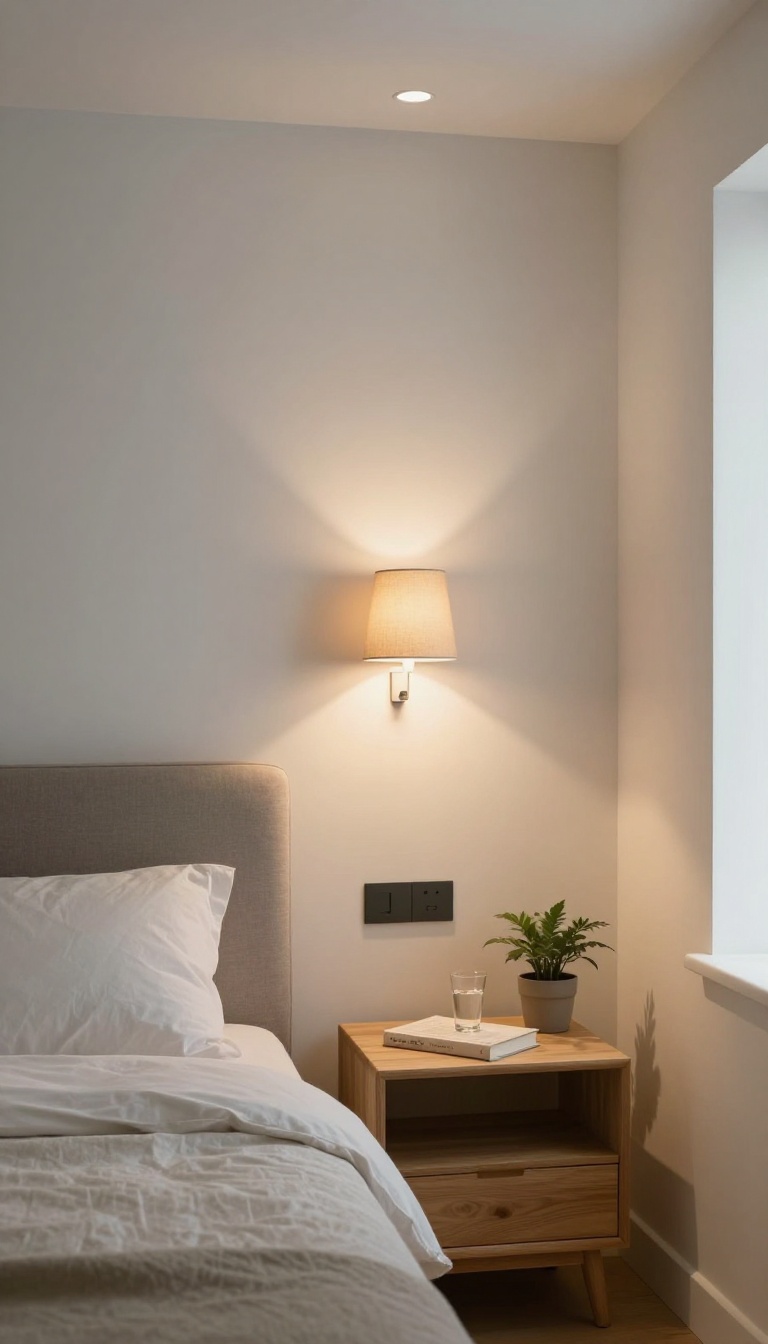
Overhead lights tend to flatten a small bedroom. They blast the whole room with the same brightness, which makes every corner feel exposed and every surface look cluttered. Adjustable lighting flips that.
You get pools of light where you need them and soft shadows everywhere else, so the room reads as calm and intentional instead of just small.
The trick is layering. A single dimmer on the ceiling helps, but the real change comes from adding two or three smaller sources you can move, angle, or dim independently. That way you can light a reading corner without waking up the whole room, or wash a wall in a warm glow that makes the ceiling feel higher.
None of it has to be expensive or permanent.
Swap The Big Light For A Dimmer
If your only light source is a ceiling fixture, put it on a dimmer. A dimmer costs less than a new lamp and instantly gives you control over the room's mood. Turn it low in the evening and the walls recede.
Turn it up when you need to clean or get dressed. Just make sure the bulb is dimmable, because standard LEDs can buzz or flicker on a dimmer switch.
Add Wall Sconces To Free Up Surfaces
Wall sconces are the quiet heroes of a small bedroom. They mount above or beside the bed and throw light downward, which keeps the glow where you want it and leaves your nightstand clear for a book, a glass of water, or nothing at all. Plug-in versions exist for renters, and cord covers keep the wires tidy.
Angle them slightly toward the wall for a softer, indirect wash.
Use Clip-on Lamps Where Space Is Tight
Clip-on lamps attach to a headboard, a shelf, or even a windowsill. They're perfect for reading because you can point them exactly where you need light without lighting up the whole room. Choose a warm bulb around 2700K to keep the vibe cozy.
And if you have a bunk bed or a narrow ledge, a clip-on is often the only option that actually works.
Choose Warm Bulbs And Dim Them Low
Bulb color matters as much as the fixture. Cool white bulbs make a small room feel like an office. Warm white or soft white bulbs make it feel like a retreat.
Look for 2700K to 3000K, and keep the wattage low. If you can dim them, even better. A warm, dimmed room always feels bigger than a bright, cold one.
12. Hide Clutter With Baskets and Bins
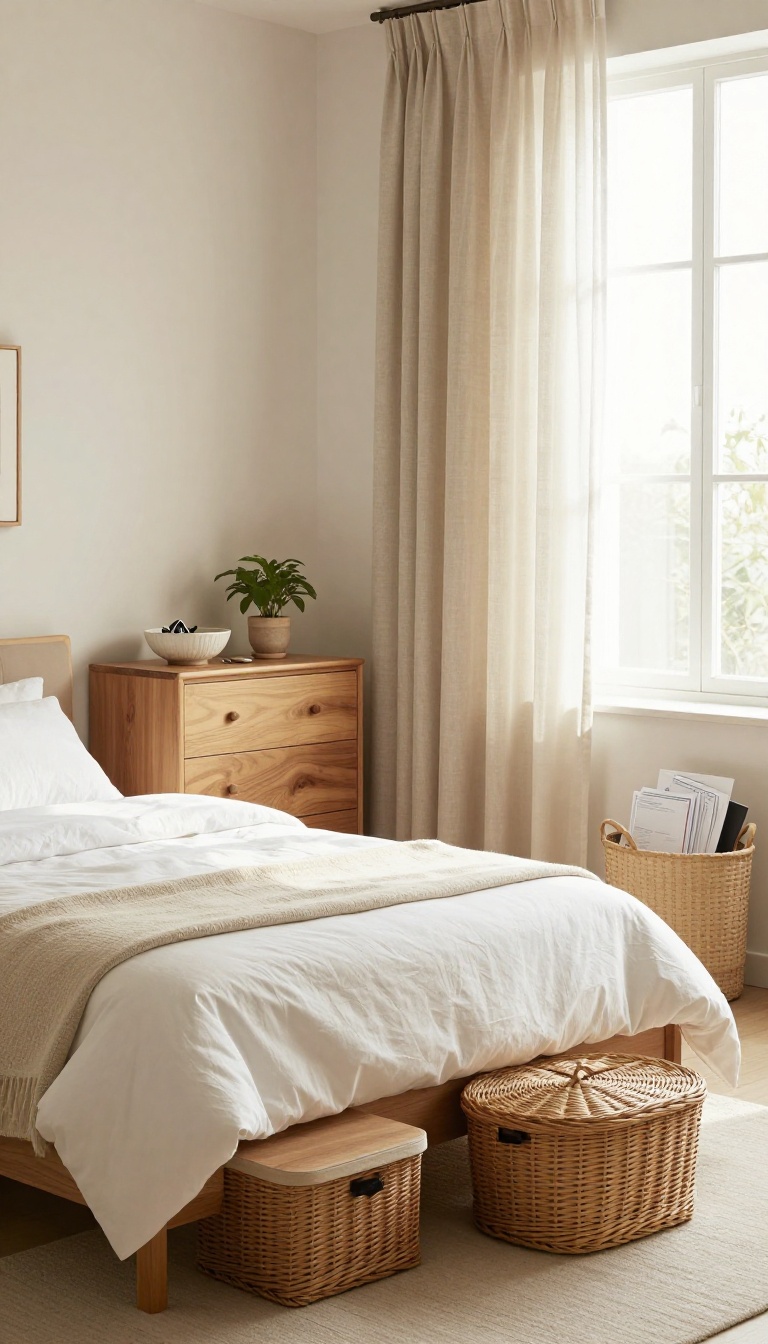
Clutter is the enemy of a calm small bedroom. When every surface is covered with odds and ends, the room feels chaotic and cramped even if it is not. Baskets and bins give those items a home so they disappear from view.
The trick is choosing the right styles and placing them where they actually get used.
Baskets and bins are not just for storage—they are part of the decor. They add texture and warmth while keeping things tidy. In a small bedroom, you want options that blend in and serve a purpose.
Here is how to make them work for you.
Pick Baskets That Pull Double Duty
Woven baskets can hold laundry, extra blankets, or even shoes. Look for ones with lids or handles so they are easy to move. A large basket beside the bed can act as a nightstand and hide clutter at the same time.
Just make sure it fits the space and does not block walkways.
Use Lidded Bins For Out-of-sight Storage
Under-bed bins are perfect for off-season clothes or paperwork. Choose flat, lidded containers that slide easily. Label them if you need to, but keep labels facing away from view.
This keeps the room looking polished while storing what you do not need daily.
Place Them Where Clutter Collects
Notice where piles tend to form—usually on the dresser, desk, or floor. Put a small bin or basket right there. A decorative bowl on the dresser can catch keys and change.
A basket by the door holds mail and bags. When the container is right there, you are more likely to use it.
13. Add a Touch of Greenery or Art
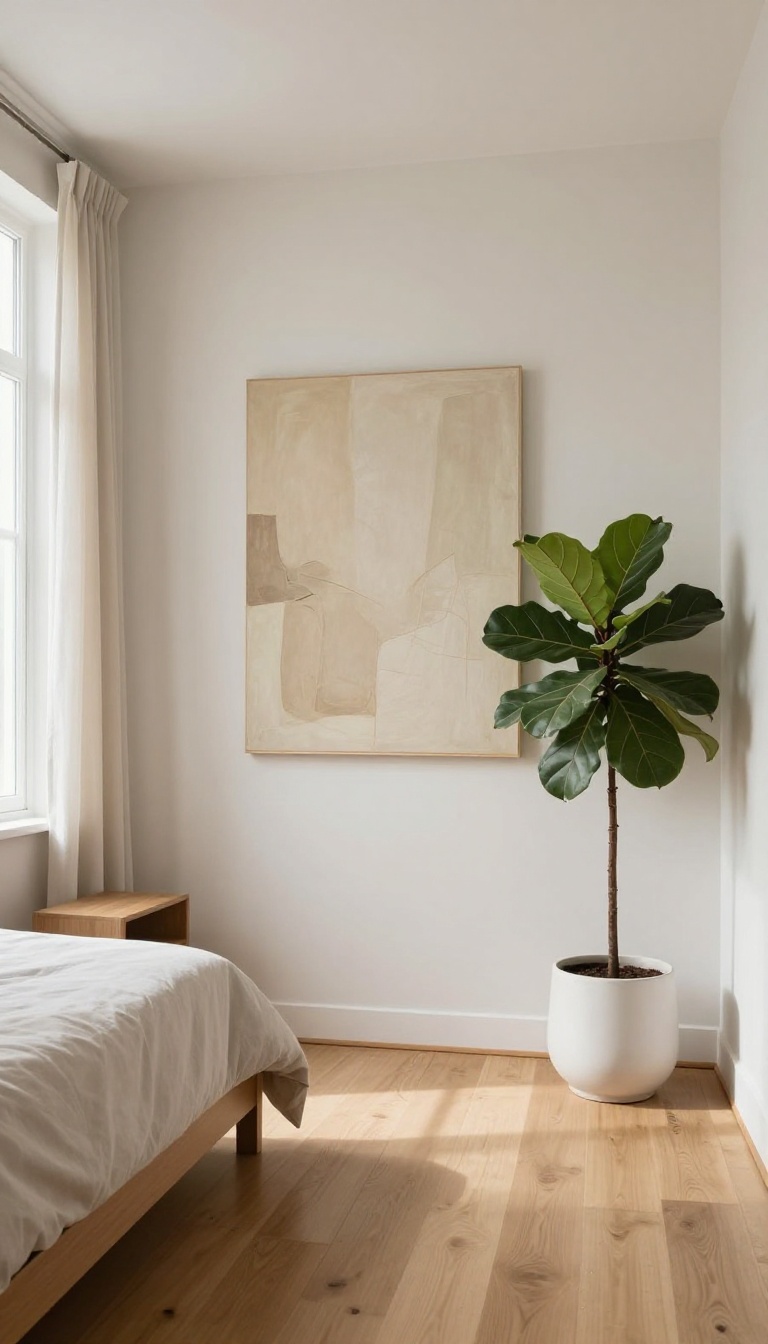
A single plant or one bold piece of art can shift the whole mood of a small bedroom. It gives the eye a place to land, so the room reads as curated instead of cluttered. The trick is choosing something with presence, not a collection of tiny objects that add visual noise.
You do not need a gallery wall or a jungle of houseplants. One well-placed item does more for a tight space than a dozen small ones. It creates a focal point, and focal points make small rooms feel intentional.
Think of it as giving the room a signature move. When everything in a small bedroom is the same scale and tone, the eye has nowhere to rest. A tall plant or a large canvas breaks that flatness.
It adds depth and a bit of life without eating floor space. The key is to go big in one spot rather than sprinkling small things everywhere.
Pick A Plant That Earns Its Space
A single tall plant, like a snake plant or a fiddle leaf fig, can fill an empty corner without blocking traffic. It draws the eye upward, which makes the ceiling feel higher. Keep the pot simple and low-profile so the plant itself does the work.
If floor space is tight, a hanging plant near the window adds green without touching the floor. Just make sure it is easy to water. A plant that struggles looks sad, and sad plants do not help a room feel refined.
Go Big With One Piece Of Art
One large piece of art above the bed or on the main wall can replace a cluster of small frames. It creates a strong focal point and cuts down on visual clutter. Choose something with colors that tie into your bedding or curtains.
If you cannot commit to a big piece, lean a medium-sized canvas on a shelf or dresser. Leaning feels relaxed and lets you swap it out later. Just avoid hanging art too high.
Keep the center of the piece at eye level so it feels connected to the room.
Keep The Rest Of The Room Quiet
The plant or art should be the star, so let everything else stay calm. Stick to neutral bedding and simple furniture. That contrast makes the green or the artwork pop without shouting.
You can also repeat one color from the art in a small way, like a throw pillow or a lamp base. That tiny echo ties the room together. It is a subtle move that makes the space feel designed rather than decorated.
FAQ
What is the best layout for a small single bedroom?
Place the bed against the longest wall, keep pathways clear, and use vertical storage. Floating the bed slightly away from the wall can also help.
How can I make my small bedroom look bigger without painting?
Use mirrors, light-colored bedding, and strategic lighting. Decluttering and choosing multifunctional furniture also makes a big difference.
What colors make a small bedroom feel open?
Soft whites, light grays, pale blues, and warm neutrals reflect light and create a sense of airiness. Avoid dark, heavy colors on all walls.
Should I use a rug in a small bedroom?
Yes, a rug can define the space and add warmth. Choose a size that fits under the bed and extends a bit on the sides, or go with a runner beside the bed.
How do I store things in a tiny bedroom?
Maximize vertical space with shelves, use under-bed storage bins, and opt for furniture with built-in storage like an ottoman or bed with drawers.
Conclusion
A small bedroom doesn't transform overnight, and it shouldn't. Start with the one idea that solves your biggest daily annoyance, whether that's a bed blocking the door or a corner that collects clutter. Give it a week before you judge it.
Then add the next thing when you're ready. Layered choices beat a single frantic weekend of shopping, and your room will feel more refined because of it. Small spaces reward patience more than square footage ever will.