10 Shower Ideas for Small Bathrooms with Clever Details
Small bathrooms don't have to feel cramped or boring—especially when you bring in a few clever shower ideas that work with the space you have, not against it. From corner units that tuck neatly into unused angles to walk-in designs that open up the floor, these ten approaches blend practicality with personality.
You can pick one standout feature, like a rainfall showerhead or bold tile, without blowing your budget or your square footage.
Whether you're planning a full remodel or just want to refresh the look, these details make a compact shower feel intentional, stylish, and genuinely comfortable to use every day.
1. Corner Showers: Maximize Every Inch
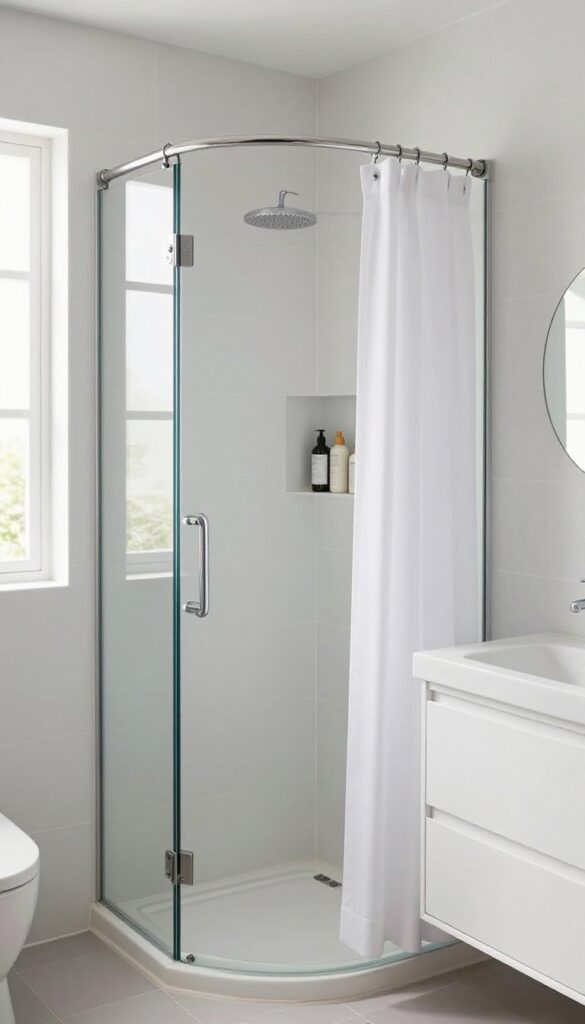
When square footage is tight, the corners of your bathroom often go unused. A corner shower changes that, slipping into the angle and opening up the rest of the room. These designs come in a few shapes—quadrant, neo-angle, or even a simple square—so you can match the footprint to your floor plan.
The payoff is a dedicated shower zone that doesn't steal the show.
Corner showers are a classic for small bathrooms. They tuck neatly into the corner, freeing up floor space. Look for quadrant or neo-angle designs that fit snugly.
A curved rod adds extra elbow room inside without taking up more floor space.
Pick The Right Shape
Quadrant showers have a rounded front that saves space and looks sleek. Neo-angle models feature a corner door with angled glass, which can make the shower feel more open. Measure your available corner to see which shape fits best.
A 36-inch by 36-inch footprint works in most small baths.
Glass Or Curtain?
Frameless glass doors make the bathroom feel larger because you can see through them. If you prefer a curtain, choose a curved rod to push it outward. This adds a few extra inches of shoulder room, making the shower feel less cramped.
Smart Storage Inside
Use the corner space above the showerhead for a recessed shelf or a caddy that hangs over the door. Keep shampoo and soap within easy reach without cluttering the floor. A corner caddy with multiple tiers maximizes vertical storage.
2. Walk-In Showers: Open and Airy
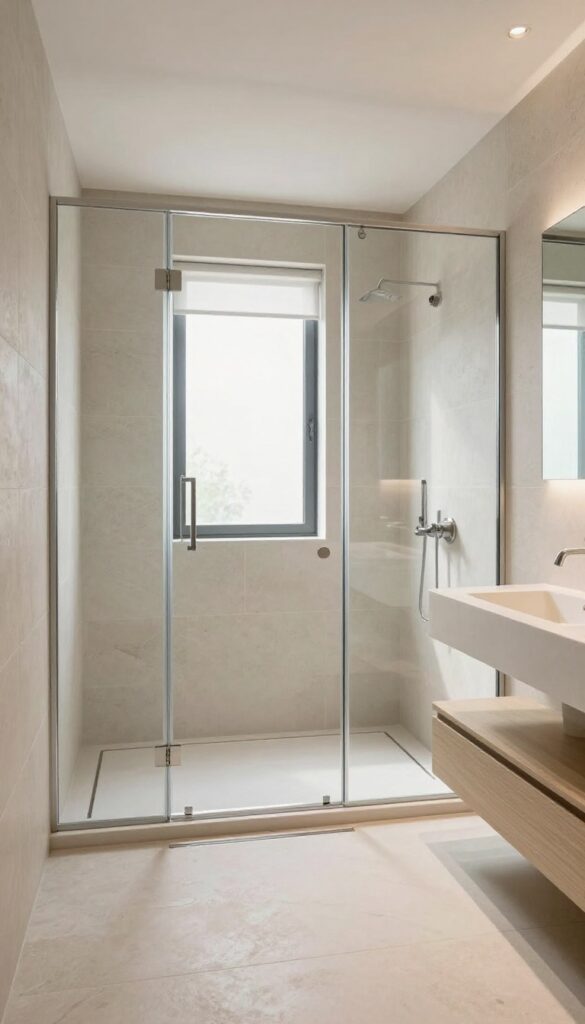
A walk-in shower does more than just save space—it visually expands the entire bathroom. By removing the traditional door and curb, you create a seamless flow that makes the room feel larger and more open. This design is not only stylish but also practical, offering easier access and simpler cleaning.
Walk-in showers are a smart choice for small bathrooms because they eliminate the visual barrier of a shower door or curtain. With a sleek glass panel or even no door at all, the eye travels freely across the space, making the bathroom appear bigger than it is. The absence of a curb also means a flat, continuous floor, which is easier to navigate and clean—no more stepping over a ledge or scrubbing tricky corners.
Why A Glass Panel Beats A Door
A frameless glass panel offers the same splash protection as a door but without the visual weight. It lets light travel through the entire bathroom, making the space feel brighter and more open. Plus, you avoid the hassle of a door that swings into the room or collects grime in its tracks.
The Magic Of A Linear Drain
A linear drain is a game-changer for walk-in showers. Instead of a central drain that requires a sloped floor, a linear drain sits along one edge, allowing the floor to stay perfectly flat. This not only looks sleek but also makes the shower accessible for everyone, including those with mobility concerns.
Easy Maintenance And Accessibility
Without a door or curtain, there are fewer surfaces to scrub and no fabric to wash. The open design also means you can walk right in without stepping over a curb, making it safer for kids, older adults, and anyone with limited mobility. It's a practical upgrade that adds long-term value to your home.
3. Sliding Barn Doors: Style Meets Function
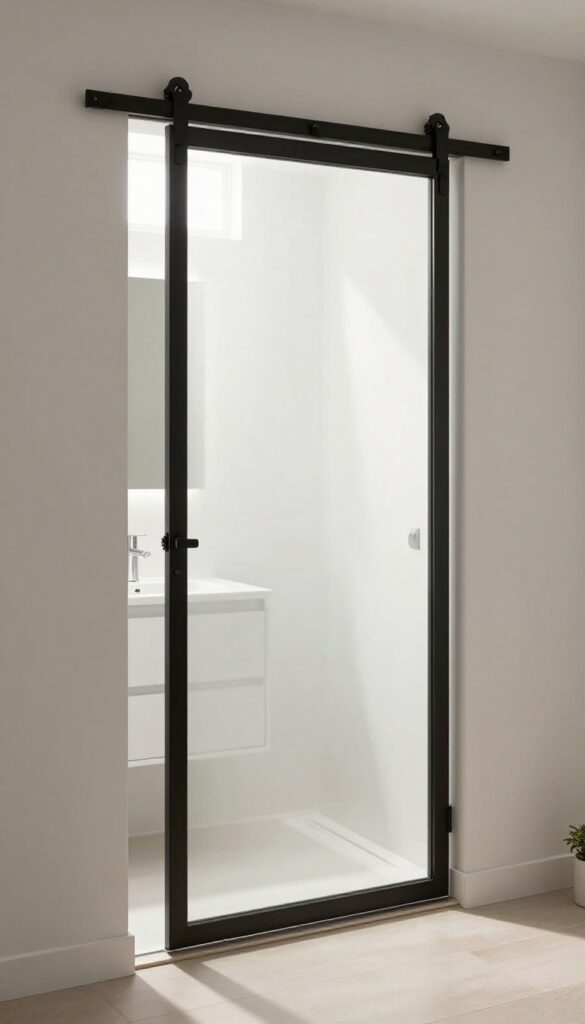
If your bathroom layout makes a traditional swing door awkward, a sliding barn door is a smart alternative. It glides along a track instead of swinging into valuable floor space, so you can position it exactly where you need it without sacrificing accessibility. Beyond the space savings, barn doors bring a distinctive look—whether you lean rustic with reclaimed wood or modern with a sleek matte black frame.
Sliding barn doors are more than a trendy accent; they solve a real problem in compact bathrooms. Because they don't need clearance to swing open, you can place fixtures like a toilet or vanity right up against the door opening. That extra few inches can make a cramped room feel noticeably more open.
Plus, the hardware itself becomes a design feature, with options ranging from industrial pipe to minimalist rail systems.
Choosing The Right Material
The material sets the tone for the whole bathroom. A solid wood door in a warm oak or walnut adds a cozy, farmhouse feel, while a frosted glass panel keeps things light and airy—great for letting natural light pass through. If you want a more contemporary edge, go for a matte black or brushed nickel frame with a simple flat panel.
Just make sure the finish coordinates with your other fixtures, like the showerhead or faucet.
Installation Tips For Small Spaces
Proper installation is key to making a barn door work in a tight bathroom. Mount the track securely to a stud, not just drywall, to avoid sagging over time. Measure the door width carefully—it should overlap the opening by at least an inch on each side to block light and sound.
Also, consider a soft-close mechanism to prevent the door from slamming, which is especially nice in a small room where every noise echoes.
Pairing With Shower Ideas
A barn door works beautifully with a curbless or low-threshold shower, since there's no track on the floor to trip over. You can also use it to hide a shower nook or a closet area within the bathroom. For a cohesive look, match the door's hardware to your shower's fixtures—for example, oil-rubbed bronze handles with a bronze rainfall showerhead.
This small detail ties the whole space together.
4. Built-In Niches: Storage Without Bulk
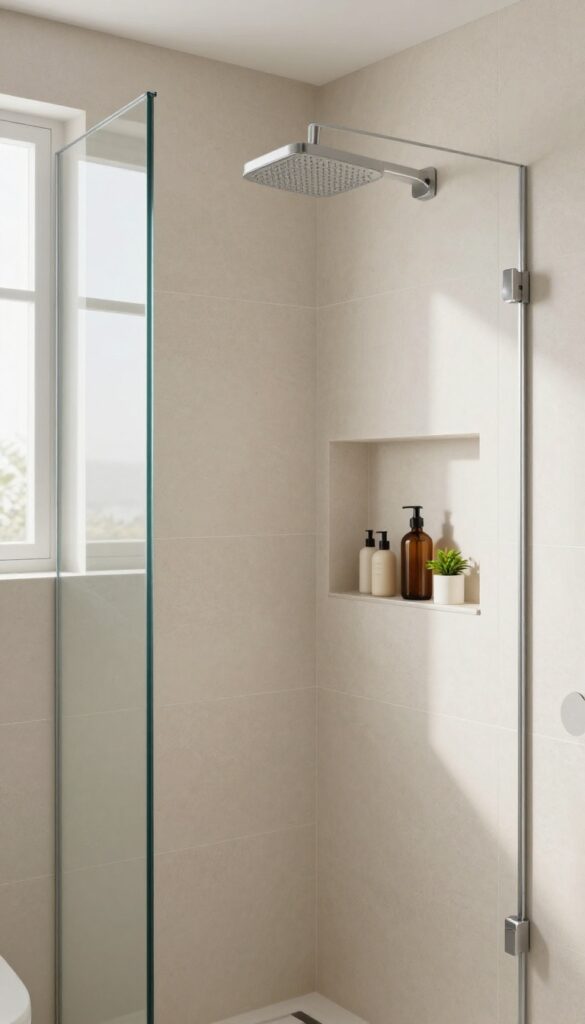
A recessed niche is one of those details that feels like a luxury but is actually a smart space-saver. Instead of hanging a wire caddy or balancing bottles on the edge of the tub, you carve out a neat pocket in the wall. It keeps everything within reach without stealing any floor or visual space.
The best part? You can customize the size, height, and even add a shelf to fit your exact needs.
Built-in niches are a favorite among designers because they combine form and function effortlessly. They work in any shower, but especially in small bathrooms where every inch counts. By tucking storage into the wall, you eliminate clutter and create a sleek, seamless look.
Plus, you can choose materials that match your tile or create a contrast for a subtle design statement.
Get The Placement Right
The key to a useful niche is placing it where you actually need it. Think about your daily routine: where do you reach for shampoo, soap, or a razor? Typically, a niche at chest height is comfortable for most people.
If you're adding multiple niches, stagger them at different heights—one for bottles, one for smaller items like razors or loofahs. Avoid placing it too low, as bending over every time gets old fast.
Size And Shelf Options
Standard niches are about 12 to 16 inches square, but you can go bigger or smaller depending on your wall space. If you want extra storage, add a shelf in the middle to create two levels. This doubles your capacity without taking up more wall area.
Just make sure the niche is deep enough to hold standard bottles—usually 3 to 4 inches is sufficient. For a custom touch, use a contrasting tile or a metal frame to make it pop.
Waterproofing And Slope
A niche needs to be properly waterproofed to prevent moisture from seeping into the wall. Use a waterproof membrane behind the tile and ensure the base of the niche has a slight slope toward the shower so water doesn't pool. This small detail prevents mold and mildew down the line.
If you're not comfortable doing it yourself, hire a professional to avoid costly issues later.
5. Shower Curtains with a Twist: Light and Bright
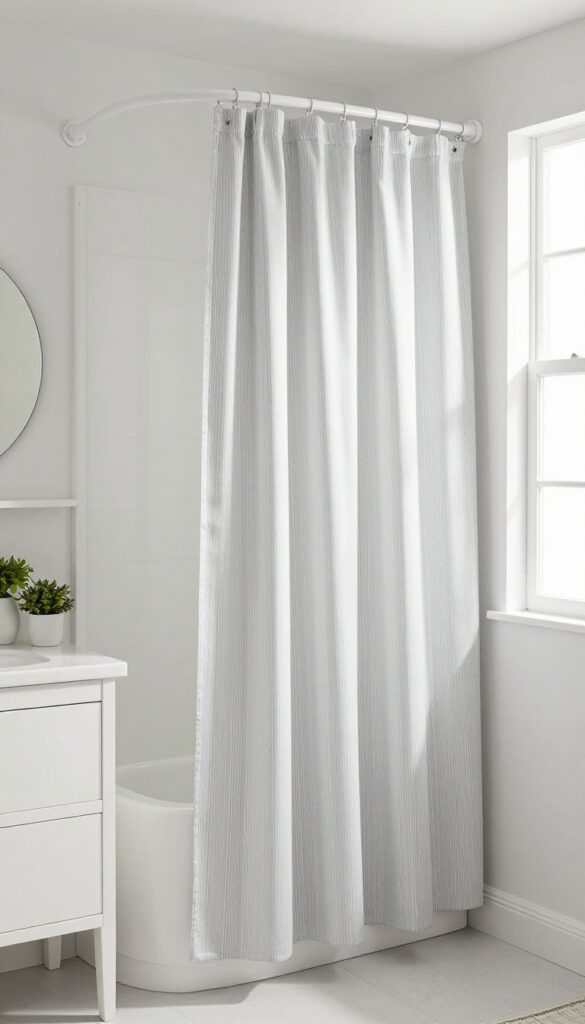
A shower curtain might seem like the most basic part of your bathroom, but it’s actually a powerful tool for making a small space feel larger. The right curtain can add height, brightness, and even a touch of personality without taking up any extra floor space. With a few clever tricks, you can turn this simple fixture into a design feature that opens up the room.
Choosing the right shower curtain is about more than just picking a pattern you like. In a small bathroom, the curtain plays a big role in how open and airy the space feels. Light colors reflect light, while vertical stripes draw the eye upward, making the ceiling seem higher.
And don’t forget the rod—a curved one can add valuable elbow room inside the shower, making the whole experience more comfortable.
Light Colors And Vertical Stripes
When it comes to making a small bathroom feel bigger, color and pattern are your best friends. Light-colored curtains—think white, soft gray, or pale blue—reflect natural and artificial light, which brightens the entire room. Vertical stripes, whether subtle or bold, create an illusion of height, pulling the eye upward and making the ceiling appear taller.
Avoid dark, heavy fabrics that absorb light and make the space feel closed in.
Curved Rods For Extra Space
A curved shower rod is a simple upgrade that can make a huge difference. By bowing outward, it adds several inches of space inside the shower, so you don’t feel like your elbows are hitting the curtain. This extra room is especially valuable in tight corners or when the shower is close to the toilet.
Plus, the curved shape adds a subtle architectural interest to the bathroom.
Material And Maintenance
The fabric of your curtain matters too. Lightweight, quick-drying materials like polyester or nylon are practical for small bathrooms because they don’t hold moisture and are easy to clean. Look for curtains with a mildew-resistant coating or a removable liner to keep things fresh.
A curtain that’s easy to wipe down or toss in the wash will stay looking bright and new, which is key in a compact space.
6. Glass Panels: See-Through Sophistication
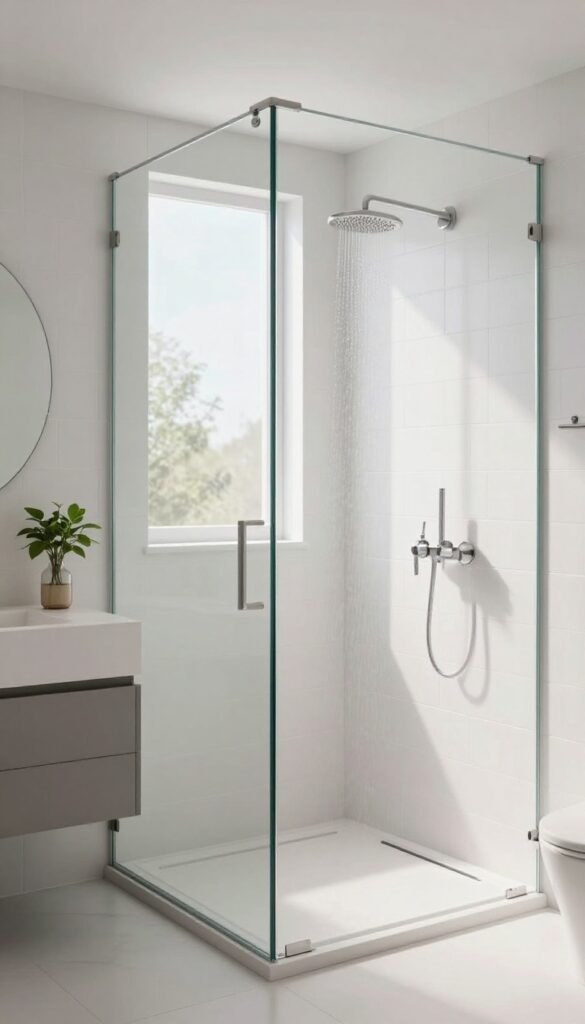
Frameless glass panels are a game-changer for small bathrooms. They ditch the visual barrier of a curtain or door, letting light travel freely and making the whole room feel more open. Plus, they show off your beautiful tile work, turning the shower into a focal point rather than an afterthought.
When you swap a bulky shower curtain or a framed door for a frameless glass panel, you instantly remove visual clutter. The clear glass creates a seamless transition between the shower and the rest of the bathroom, so your eye isn't stopped by a heavy line. This optical trick makes the space feel larger and more airy, even if the square footage hasn't changed.
Why Frameless Works In Small Spaces
Frameless glass panels are typically 3/8-inch or 1/2-inch thick tempered glass, which means they don't need a bulky metal frame for support. That lack of framing is what makes them look so sleek and minimal. Without a frame, there's less visual weight, so the shower blends into the room.
You also get an unobstructed view of your tile, which can be a design statement in itself. Plus, the glass lets natural light pass through, brightening up the entire bathroom.
Installation And Layout Tips
You don't have to do a full remodel to add a glass panel. In many cases, you can replace an existing shower curtain rod or door with a fixed glass panel that attaches to the wall and floor. For a small bathroom, a single fixed panel with a small opening on one side works well—it keeps water in but doesn't swing out and eat up floor space.
If you're worried about splashes, add a slight angle to the panel or install a small fixed section on the wall. Always hire a professional for the glass installation, as precise measurements and proper sealing are key to avoiding leaks.
Keeping It Spotless
Glass panels do show water spots and soap scum, so you'll need a quick cleaning routine. Keep a squeegee in the shower and give the glass a wipe-down after each use—it takes less than a minute. For a deeper clean, use a mixture of white vinegar and water or a commercial glass cleaner.
Avoid abrasive scrubbers that can scratch the glass. With regular care, your glass panel will stay crystal clear and keep your bathroom looking polished.
7. Rainfall Showerheads: Luxury in a Compact Space
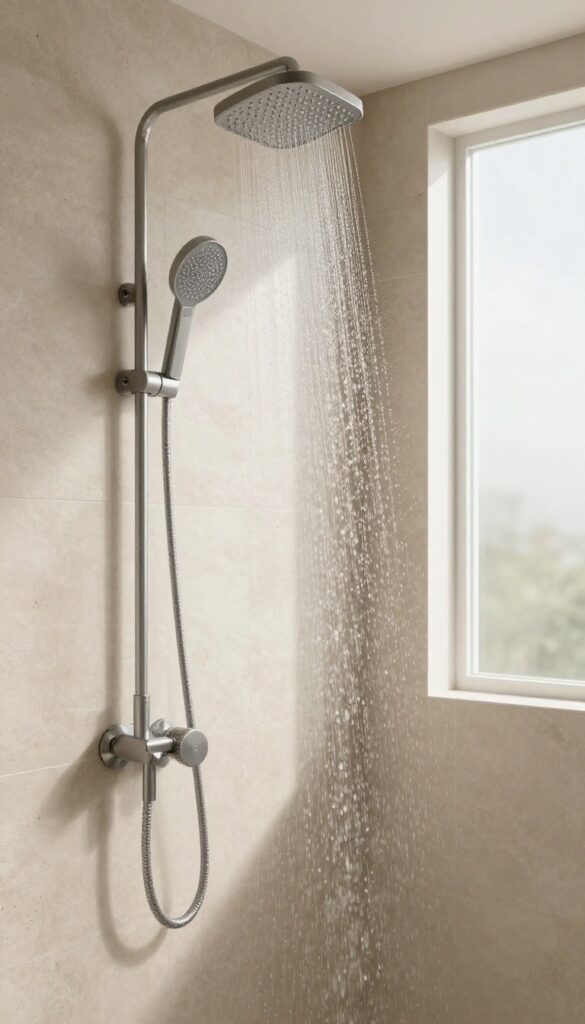
A rainfall showerhead can make a small bathroom feel like a personal spa without taking up any extra floor space. Mounted overhead, it delivers a steady, gentle downpour that wraps you in warmth. The best part?
It doesn’t require a bigger shower—just a smart ceiling or wall mount.
Rainfall showerheads are a favorite for small bathrooms because they add a touch of indulgence without sacrificing square footage. They’re installed directly into the ceiling or on a high wall, so there’s no bulky arm or hose getting in the way. Plus, the wide spray pattern makes even a compact shower feel more spacious and luxurious.
Choosing The Right Mount
For a truly spa-like feel, mount the rainfall head on the ceiling directly above where you stand. If your ceiling is low or sloped, a wall-mounted version with an angled arm can still give you that overhead sensation. Just make sure the head is positioned so the water falls straight down, not at an angle that might splash out.
Pairing With A Handheld Sprayer
Rainfall heads are great for a relaxing rinse, but they’re not great for rinsing shampoo or cleaning the shower. That’s why adding a separate handheld sprayer is a smart move. You can install it on a slide bar or a simple hook, so it’s out of the way when you’re not using it, but there when you need it.
Installation Tips For Small Spaces
Before you buy, check your water pressure and ceiling height. A rainfall head needs decent pressure to work well, and if your ceiling is too low, you’ll end up hunched over. Also, consider a model with a swivel joint so you can adjust the angle slightly if needed.
And don’t forget to hire a professional if you’re not comfortable with plumbing—it’s worth the peace of mind.
8. Corner Shelves: Vertical Storage
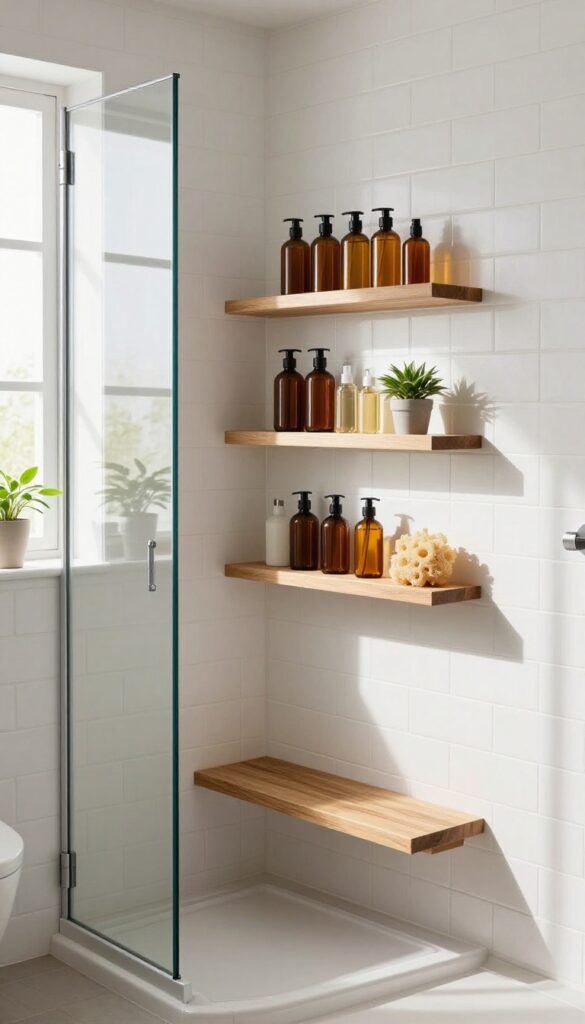
When floor space is tight, look up. Corner shelves turn an often-ignored angle into a handy storage spot for shampoo, soap, and scrub brushes. They keep everything within reach without making the shower feel any smaller.
Corner shelves are a simple, low-cost upgrade that can make a big difference in a compact shower. By using vertical space, you free up the floor and avoid the clutter of bottles lined up along the edge. Plus, they're easy to install and can be adjusted to fit your exact needs.
Why Corner Shelves Work
Corners are usually wasted space in a small shower. A shelf tucked into that angle gives you a dedicated spot for toiletries without eating into your standing area. It also keeps everything organized and visible, so you don't have to hunt for your shower gel mid-rinse.
Choosing The Right Material
Waterproof materials are a must. Teak is a popular choice because it resists moisture and looks warm and natural. Stainless steel is another solid option—it's durable, easy to clean, and has a sleek, modern feel.
Avoid materials that can warp or rust over time.
Installation Tips
Most corner shelves come with adhesive strips or screws. Adhesive is great for rentals or if you want to avoid drilling, but make sure the surface is clean and dry before sticking. For a more permanent solution, screw the shelf into the studs for extra stability.
Always check the weight limit and adjust the shelf height to suit your reach.
9. Foldable Shower Seats: Comfort and Convenience
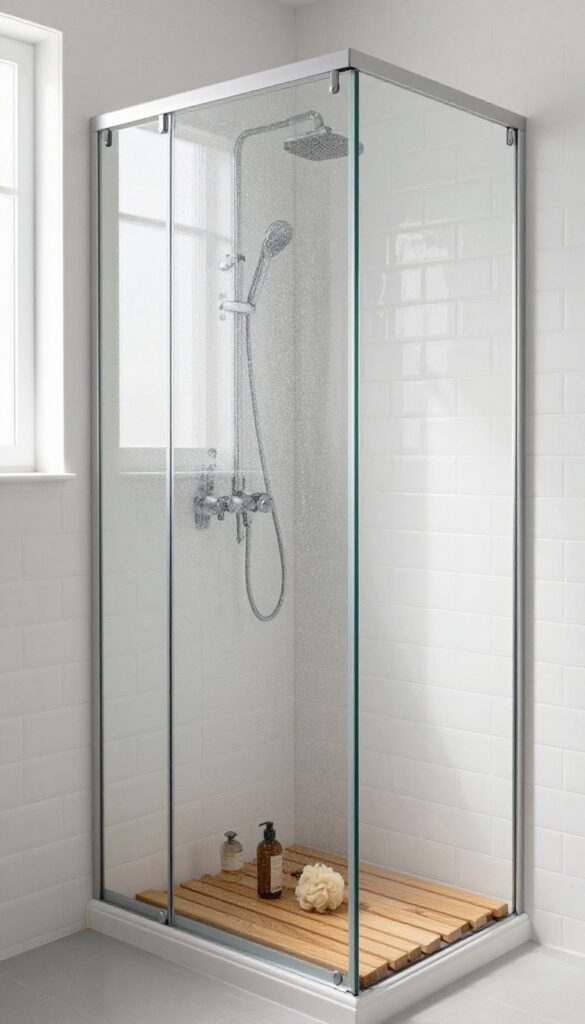
A foldable seat is a game-changer for small showers. It gives you a place to sit when you need it, then folds flat against the wall when you don't. Perfect for shaving legs, washing feet, or just taking a moment to relax under the warm water.
And because it tucks away, it doesn't eat up precious floor space.
Foldable shower seats are cleverly designed to offer seating without permanently sacrificing room. They attach securely to the wall and swing down when needed, then fold up neatly out of the way. This makes them ideal for compact bathrooms where a permanent bench would make the space feel cramped.
Plus, they add a touch of accessibility and comfort that makes daily showers more enjoyable.
Why Foldable Beats Fixed
A fixed bench or stool takes up floor space even when you're not using it. A foldable seat, on the other hand, disappears when you want more room to move. This is especially valuable in a small shower where every inch counts.
You get the convenience of sitting when you need it, without the permanent footprint.
Material And Maintenance
Look for seats made from moisture-resistant materials like teak, plastic, or aluminum with a waterproof finish. These hold up well in humid conditions and are easy to clean. Some models have a smooth surface that resists mold and mildew.
A quick rinse after use is usually all it takes to keep them looking fresh.
Installation Tips
Proper installation is key to safety and durability. Make sure the seat is anchored into wall studs or use heavy-duty toggle bolts for tile. If you're not confident doing it yourself, hire a professional.
A secure seat is one you can trust, whether you're using it for a quick rinse or a longer soak.
10. Bold Tile Patterns: Make a Statement
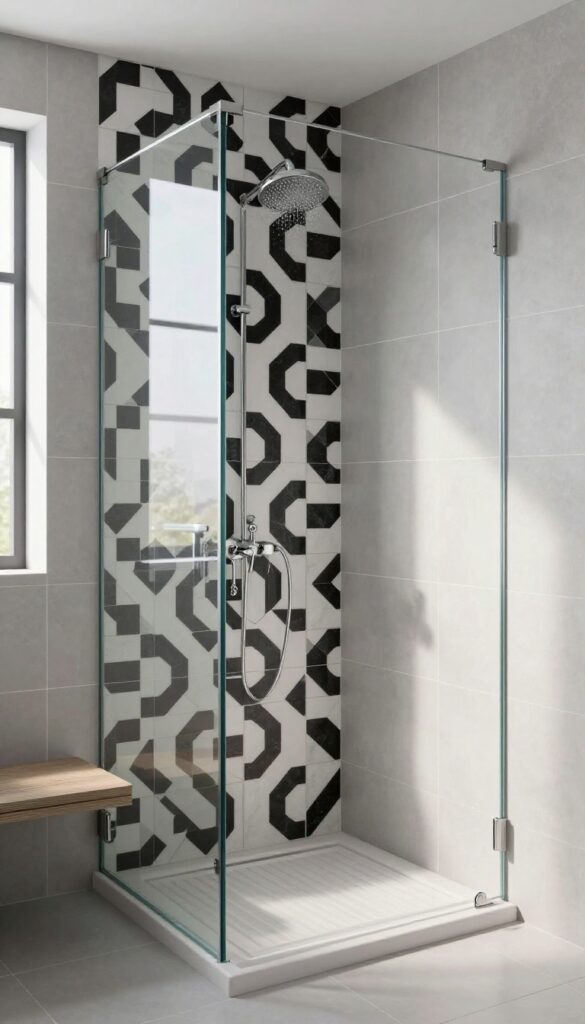
Small showers often get the plain white tile treatment, but that’s a missed opportunity. A bold pattern can add depth and personality without taking up an inch of floor space. The trick is choosing the right scale and placement so the pattern enhances the room instead of overwhelming it.
Large-format tiles are a smart choice for small showers because fewer grout lines mean less visual clutter. They make the walls feel more seamless, which helps the space read as larger. For a striking look, use a patterned tile on one accent wall—like the one behind the showerhead—and keep the rest neutral.
Light grout keeps the overall effect airy and bright.
Pick The Right Scale
Oversized tiles, like 12×24 or even 24×48 inches, minimize grout lines and create a clean, expansive look. Large format also means fewer edges to catch your eye, which helps the shower feel more open. If you love a mosaic pattern, choose sheets with larger individual pieces so the design doesn’t get too busy.
Use Pattern Strategically
Limit bold patterns to one feature wall or a niche to avoid overwhelming the space. A geometric or botanical print on the back wall becomes a focal point, while solid tiles on the other walls keep the eye from bouncing around. This approach gives you the wow factor without making the shower feel chaotic.
Keep Grout Light
Light-colored grout, like white or soft gray, reflects more light and makes the tile pattern pop without darkening the room. Dark grout can create a heavy, boxy feel, especially in a small enclosure. If you’re worried about staining, choose a high-quality epoxy grout that’s easy to clean.
FAQ
What is the best shower type for a small bathroom?
Corner showers and walk-in showers are excellent choices. They maximize floor space and make the room feel more open. Consider a sliding door or a curtain to save even more space.
How can I make my small shower feel bigger?
Use glass panels instead of opaque curtains, choose light colors, and install a rainfall showerhead. Adding a niche for storage reduces clutter, making the space feel larger.
Are walk-in showers practical for small bathrooms?
Yes, walk-in showers are practical if you have enough space for a linear drain and a flat floor. They eliminate the need for a door, which saves space and makes the bathroom easier to clean.
What are some budget-friendly shower ideas for small bathrooms?
Simple changes like swapping a curtain for a glass panel, adding a corner shelf, or installing a rainfall showerhead can be budget-friendly. You can also refresh the grout or paint the walls to make a big difference.
How do I choose the right shower curtain for a small bathroom?
Opt for a light-colored curtain with vertical stripes to create an illusion of height. A curved rod adds extra elbow room, making the shower feel more spacious.
Conclusion
Small bathrooms can still feel spacious and stylish when you choose the right shower setup. The clever details we covered—from sliding doors to corner niches—prove that even tight spaces can work hard for you.
Take your time picking the ideas that fit your layout and budget. A few smart tweaks can make your daily routine feel more comfortable and your bathroom look bigger than it really is.