10 Rust Sofa Living Room Ideas That Feel Fresh and Easy
A rust sofa brings instant warmth to a living room. It's a color that feels rich without being loud, and it pairs beautifully with so many other shades.
Whether you're starting from scratch or refreshing an existing space, these ideas will help you make that rust sofa the heart of a room that feels both fresh and lived-in. The key is balancing that bold hue with textures, neutrals, and a few personal touches.
Let's walk through ten ways to style your rust sofa for a look that's easy to live with and always inviting.
1. Pair with Cream and Wood for an Instant Warmth Boost
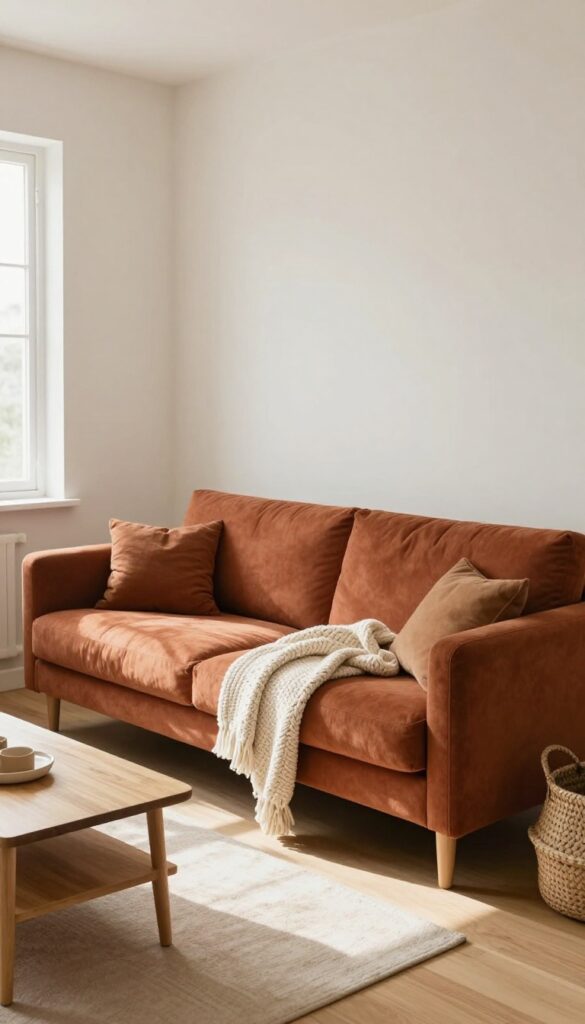
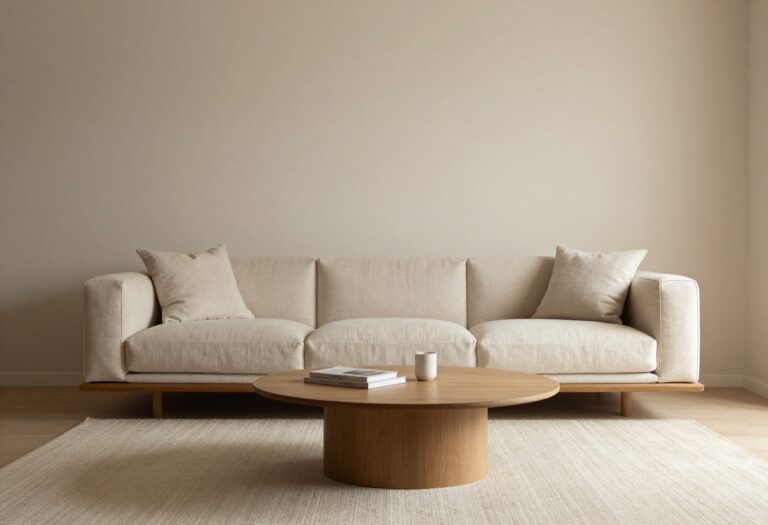
Cream walls and light wood floors or furniture soften the rust, making the sofa pop without overwhelming the room. Add a chunky knit throw and a woven basket for texture. This combination feels grounded and inviting—like a cozy cabin but with a modern edge.
Rust is a warm, earthy color, but it can feel heavy if not balanced. Cream and wood are the perfect counterpoints: cream keeps things airy, while wood adds natural warmth that complements rust without competing. The result is a living room that feels both vibrant and relaxed.
Start with a cream or off-white wall color—think warm ivory or soft oat—to create a neutral backdrop. Then bring in light wood tones like oak, ash, or birch through flooring, a coffee table, or open shelving. The contrast between the rust sofa and the pale surroundings makes the sofa the star, but the room still feels cohesive and calm.
For an extra layer of coziness, drape a chunky knit throw in a neutral cream or oatmeal over one arm of the sofa, and place a woven basket nearby for blankets or magazines. This adds texture and reinforces the warm, lived-in vibe. The whole setup is easy to achieve and doesn't require a big budget—just a few thoughtful pieces.
Best Colors To Pair
- Stick with warm creams, soft whites, and light beiges for walls and larger furniture. Avoid stark white—it can clash with rust's warmth. For wood, choose light to medium tones like pine, maple, or white oak.
- Dark wood can work but may make the room feel too heavy; if you go that route, add plenty of cream textiles to keep things balanced.
Texture Mix Tips
- Layering textures is key to making this palette feel inviting. Use a chunky knit throw, a linen or cotton sofa cover, and a jute or wool rug. Add a woven basket for storage and a few ceramic or wood accessories.
- The mix of soft, rough, and smooth surfaces gives the room depth without adding clutter.
Finishing Touch
A simple wood-framed mirror or a set of cream-hued curtains can tie the look together. Place a small potted plant—like a snake plant or pothos—on the coffee table to bring in a touch of green, which contrasts nicely with rust and cream. Keep accessories minimal to let the sofa remain the focal point.
2. Layer in Olive Green and Terracotta for a Nature-Inspired Palette
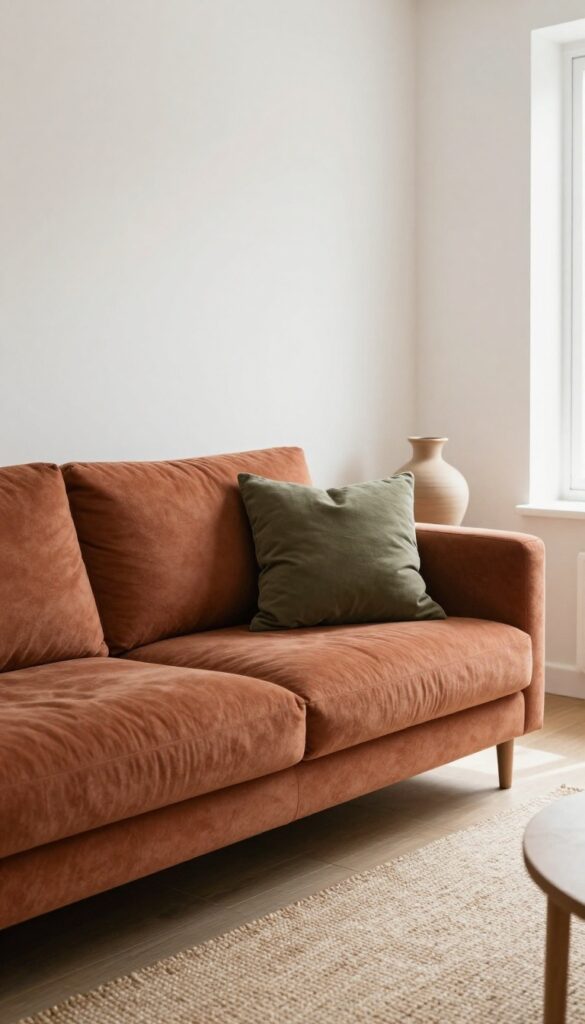
Olive green and terracotta might sound like colors you’d see on a hiking trail, but they actually look incredibly polished in a living room. The deep green brings a calm, grounded feeling, while the warm clay tones add just enough energy to keep things interesting. Together, they create a palette that feels both earthy and elevated—like a cozy cabin but with better lighting.
The trick is to use these colors in layers, not all at once. Start with your rust sofa as the anchor, then bring in olive green through pillows or a throw, and let terracotta show up in a single accent chair or a ceramic vase. A natural jute rug underneath ties everything together, adding texture without competing with the colors.
This palette works because it mirrors nature without trying to copy it exactly. Olive green and terracotta are complementary opposites on the color wheel, so they naturally balance each other. The rust sofa already leans into the warm side of the spectrum, making terracotta an easy neighbor.
Olive green cools things down just enough to prevent the room from feeling too hot or heavy. The result is a space that feels intentional and collected, not like you just threw a bunch of earthy things together. It’s also incredibly forgiving—these colors hide everyday wear and tear better than lighter neutrals, which makes them perfect for real living.
Best Colors To Pair
Stick with warm whites on the walls—think creamy off-white or a soft beige—to let the olive and terracotta stand out without feeling muddy. If you want a bolder look, try a deep navy accent wall behind the sofa; it makes both green and clay colors pop. Avoid cool grays or stark whites, which can make the palette feel disconnected.
Texture Mix
- Mix materials to keep the look from falling flat. Pair a chunky knit olive throw with smooth terracotta ceramic pots, and add a linen curtain in a soft neutral. The jute rug adds a rough, natural texture that grounds the whole scheme.
- A velvet pillow in olive green introduces a touch of softness that contrasts nicely with the rugged jute.
Finishing Touch
Add a few dried eucalyptus stems or a potted snake plant to reinforce the nature-inspired vibe without needing constant watering. A warm-toned wooden coffee table—like oak or walnut—ties the colors together and adds another layer of organic texture. Keep metal finishes in brass or bronze to stay consistent with the warm palette.
3. Go Monochrome with Deep Reds and Burgundies
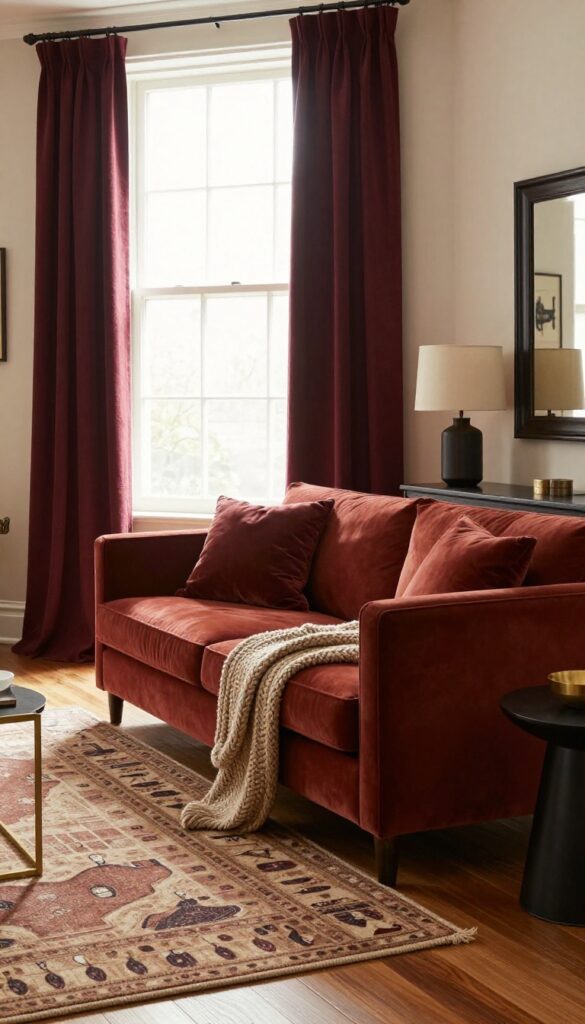
Sticking to one color family might sound limiting, but when you work with deep reds and burgundies, the result feels anything but flat. A velvet rust sofa becomes the anchor, while burgundy curtains and a patterned rug in similar tones layer in richness without visual chaos. This tonal approach reads as intentional and polished, perfect for a living room that feels both warm and put-together.
The key to making a monochrome red scheme work is varying the textures and depths. Your rust sofa is the star—go for a plush velvet to catch the light. Then, bring in a burgundy linen curtain for softness, and a rug with a subtle pattern in wine and brick tones to ground the space.
Add a few throw pillows in slightly lighter or darker shades of red to keep the eye moving. The result is a room that feels cohesive, cozy, and surprisingly sophisticated.
Best Colors
Stick to the red family: rust, burgundy, brick, and wine. Avoid adding contrasting colors like blue or green—the whole point is the tonal harmony. If you want a neutral break, use small touches of warm beige or cream in accessories like lampshades or picture frames.
Texture Mix
Since the colors are similar, texture does the heavy lifting. Pair the velvet sofa with a chunky knit throw, a jute rug under the patterned one, and matte black or brass side tables. This keeps the room from feeling one-note and adds the visual interest that color contrast usually provides.
Finishing Touch
Add a large mirror with a dark wood or black frame to reflect light and break up the reds without introducing a new color. A floor lamp with a warm bulb also helps the burgundy and rust tones feel rich rather than dark.
4. Add Black Metal Accents for an Industrial Edge
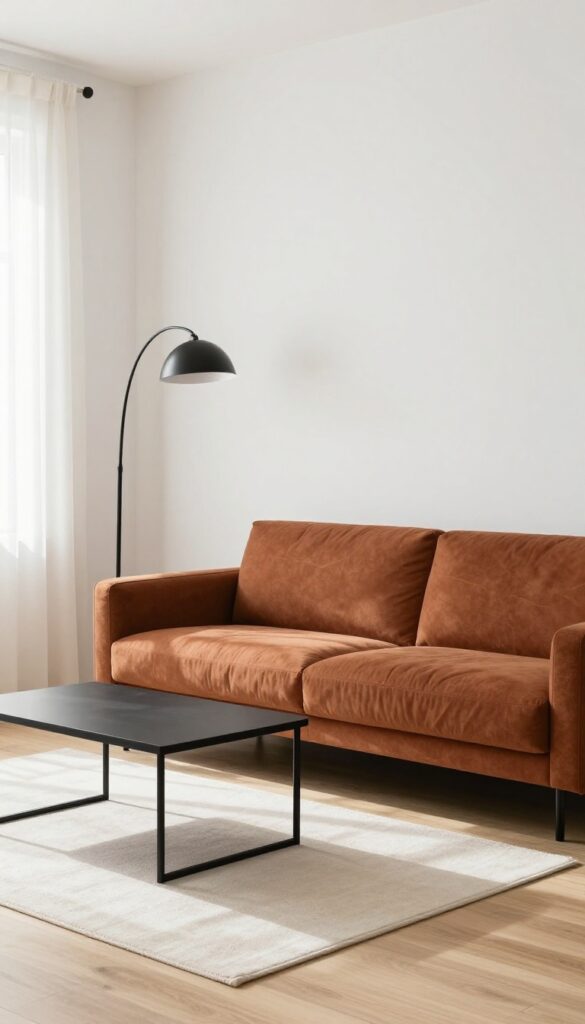
Pairing a rust sofa with black metal accents creates a look that feels grounded and modern without trying too hard. The warm orange-brown of the sofa softens the cool darkness of the metal, so the room never feels cold or harsh. Think matte black coffee tables, slender floor lamps, and simple picture frames—each piece adds a touch of structure while keeping the overall vibe relaxed.
To let the sofa stay the star, keep the rest of the palette light: white walls, pale wood floors, and soft cream textiles help the rust and black pop without overwhelming the space.
Black metal accents are the perfect counterpoint to a rust sofa—they add a crisp, architectural edge that keeps the warm color from feeling too sweet or overly rustic. The key is to use metal sparingly so it reads as intentional, not heavy. Start with one or two statement pieces, like a black metal coffee table with a slim profile or a floor lamp with an arched arm.
Then echo the look with smaller details: black frames on wall art, a metal magazine rack, or black legs on an end table. The contrast works because rust is already a strong color, so the black acts as a visual anchor. To keep the room feeling airy, balance the dark accents with plenty of light surfaces—a white or cream rug, light-wash wood furniture, and sheer curtains.
This way, the sofa and metal pieces stand out clearly, and the room stays warm and inviting rather than feeling like an industrial loft.
Best Colors To Pair
- Stick with a light, neutral backdrop to make the rust and black combo shine. White or off-white walls are a no-brainer, but warm cream or pale beige also work beautifully. For flooring, light wood tones—like white oak or ash—keep the space bright.
- Add soft gray or cream textiles on the sofa (throw pillows, a chunky knit blanket) to soften the look. Avoid adding more dark colors like navy or charcoal, as they can compete with the black metal and make the room feel heavy.
Texture Mix Tip
- Black metal can feel sleek and cool, so it's important to bring in warm textures to balance it. A chunky wool rug, linen curtains, and a velvet or corduroy throw pillow on the rust sofa add softness. The contrast between the hard metal and these cozy materials makes the room feel more lived-in and inviting.
- A woven basket for blankets or a ceramic vase on the coffee table also helps bridge the industrial and warm vibes.
Finishing Touch
- Don't overlook the power of black metal picture frames. Group a few black-framed prints or photos on the wall behind the sofa, or lean a large frame on the console table. This small detail ties the whole look together without adding clutter.
- For an extra touch, choose frames with a matte finish so they don't reflect too much light and compete with the sofa's rich color.
5. Use Soft Gray and Blush for a Gentle, Feminine Touch
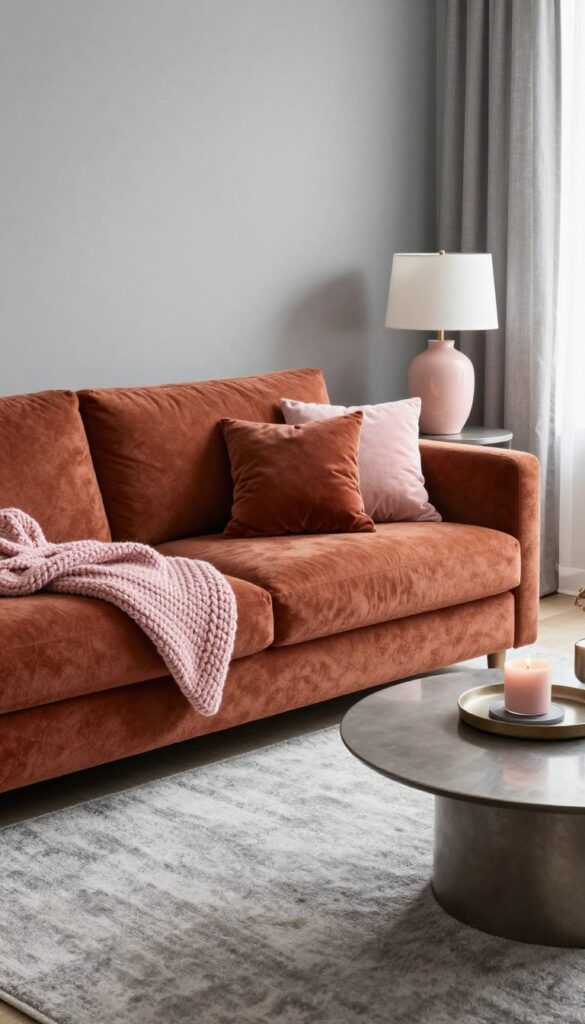
Pairing rust with soft gray and blush pink creates a palette that feels both grounded and airy. The gray acts as a neutral anchor, while blush adds a whisper of warmth that keeps the rust from feeling too heavy. This combination works especially well in living rooms that want to feel calm but not cold, feminine but not frilly.
A few plush textures—like a faux fur throw or velvet pillows—make the whole setup feel cozy and inviting.
Start with soft gray walls or a large gray area rug to set a serene backdrop. Then bring in rust through your sofa or a pair of armchairs. Blush pink accessories—think throw pillows, a ceramic vase, or a lightweight blanket—add the gentle contrast.
The key is balance: let gray dominate, rust anchor, and blush accent. This way the room stays sophisticated and not overly sweet.
Best Colors
- Stick with cool-toned grays like dove or greige to keep the palette fresh. For blush, look for dusty rose or muted salmon rather than bright pink. Rust should be a true burnt orange or terracotta.
- Avoid warm grays that can make the whole scheme feel muddy.
Texture Mix
Layer a chunky knit throw in blush over the rust sofa, and add velvet pillows in both rust and gray. A faux fur rug or sheepskin draped on the armrest brings softness. Mix in a smooth ceramic lamp base or a matte metal coffee table to keep the textures interesting without overwhelming.
Finishing Touch
Hang sheer linen curtains in a pale gray to let in natural light, which helps the blush and rust glow. Add a small tray on the coffee table with a blush candle and a few gray coasters. This pulls the color story together without adding clutter.
6. Incorporate Natural Textures Like Rattan and Linen
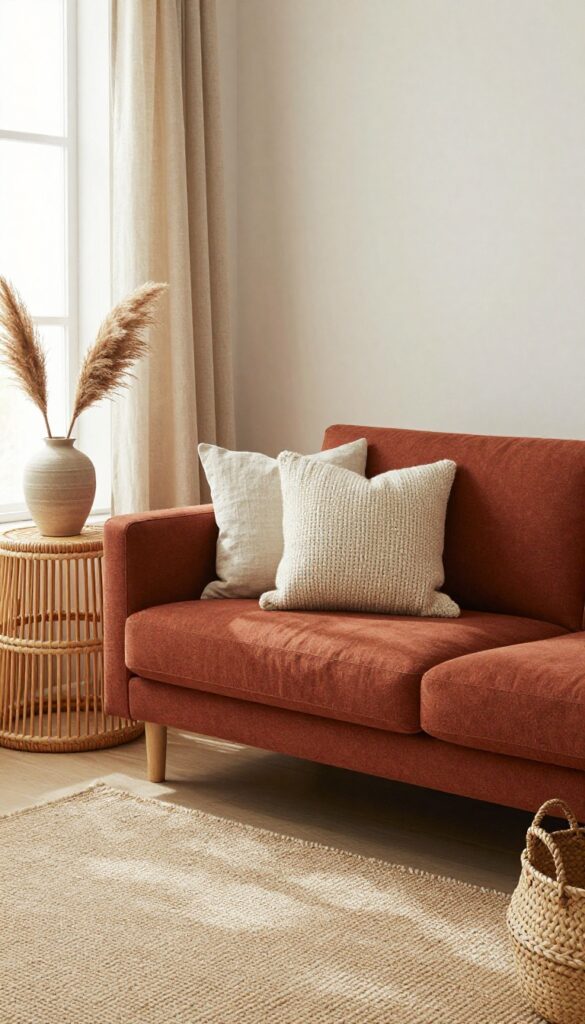
A rust sofa already brings a grounded, earthy feel, so lean into that by layering in natural textures. Think rattan side tables, linen curtains, and a sisal rug—these materials soften the space and make it feel effortlessly relaxed. The contrast between the warm rust upholstery and the light, airy textures creates a balanced room that breathes easy.
The key is to keep the palette neutral and organic so the rust sofa stays the star. Start with a large sisal or jute rug under the sofa—it adds texture without competing for attention. Then bring in a rattan coffee table or a pair of woven side tables.
Linen curtains in a soft cream or beige let in natural light while adding a gentle, flowing layer. Finish with a few ceramic or wood accents, and you have a living room that feels both warm and uncluttered.
Best Colors To Pair
Stick with earthy neutrals like cream, beige, warm white, and soft taupe. These colors let the rust sofa pop while keeping the overall look calm. Avoid cool grays or stark whites—they can feel jarring next to the warm rust and natural textures.
Texture Mix Tip
Mix three textures: one rough (sisal or jute), one smooth (linen or cotton), and one woven (rattan or bamboo). This trio creates visual interest without clutter. For example, pair a jute rug with linen curtains and a rattan side table.
Finishing Touch
Add a chunky knit throw in cream or oatmeal draped over the sofa. It softens the look and invites you to curl up. A woven basket for extra blankets or magazines keeps the room tidy and reinforces the natural vibe.
7. Create a Cozy Reading Nook Around the Sofa
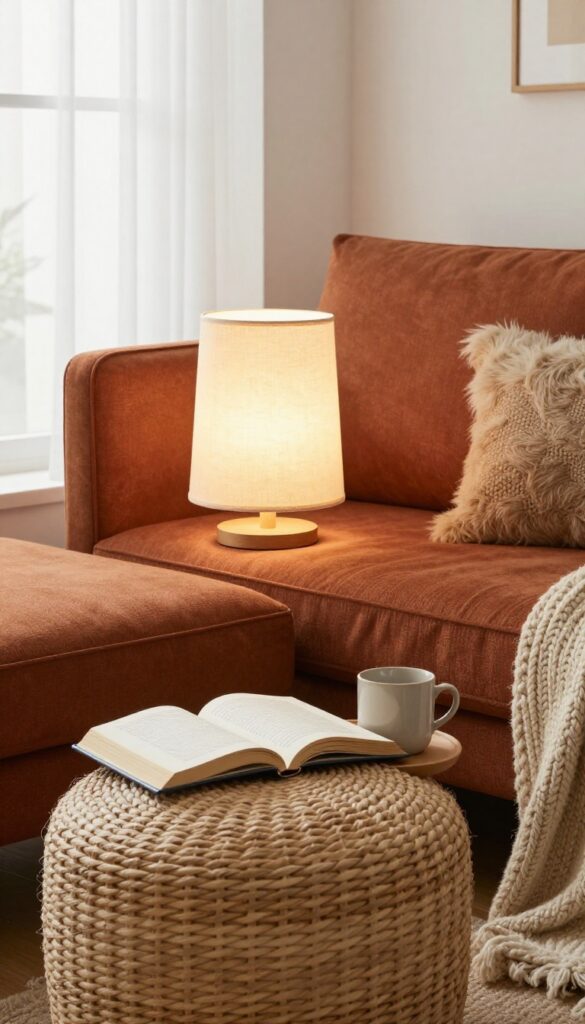
Turning one end of your rust sofa into a dedicated reading spot instantly makes the whole room feel more intentional and lived-in. It doesn't require a lot of space—just a few carefully chosen pieces that invite you to curl up with a book. The warm rust tone already sets a cozy backdrop, so you can lean into that with soft lighting and tactile textures.
Position a floor lamp with a warm bulb next to the sofa, angled toward the seating area. Add a small side table—just big enough for a book and a mug of tea—and a plush ottoman or pouf for putting your feet up. A woven basket filled with soft blankets within arm's reach makes the nook extra inviting and keeps the space tidy.
This setup works especially well in a corner or against a wall, turning an underused area into your favorite spot to unwind.
Lighting Tip
Choose a floor lamp with a fabric shade or an adjustable arm so you can direct light exactly where you need it. A warm bulb (2700K–3000K) creates a soft glow that complements the rust sofa without washing it out. Avoid cool white bulbs—they'll make the space feel stark instead of snug.
Texture Mix
Layer a chunky knit throw or a faux fur blanket in the basket to add visual contrast against the sofa's fabric. A woven basket in natural seagrass or dark wicker keeps the look grounded and adds warmth. The mix of soft, rough, and smooth textures makes the nook feel curated but relaxed.
Small-space Fix
If your living room is tight, skip the side table and use a wall-mounted shelf or a slim console behind the sofa for your book and drink. A compact floor lamp with a narrow base also saves floor space. The key is to keep everything within arm's reach without crowding the sofa.
8. Mix in Mustard Yellow and Ochre for a Playful Pop
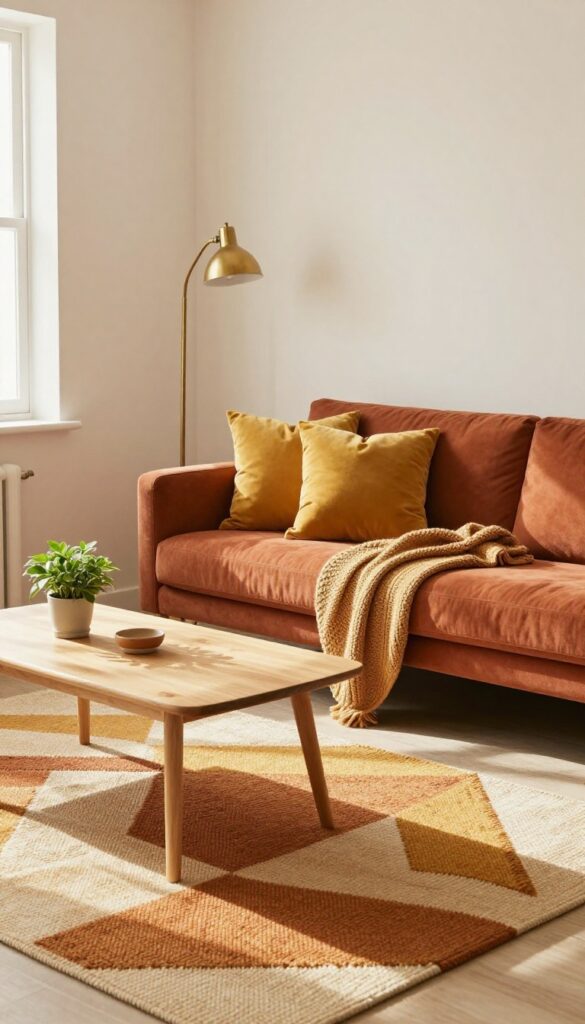
Rust is a warm, earthy neutral that plays nicely with just about any color, but mustard yellow and ochre take it to a whole new level. These golden hues bring a cheerful, sunlit energy that feels both retro and fresh. The trick is to use them in small doses—think pillows, throws, or a single accent chair—so the contrast stays playful without overwhelming the space.
Mustard yellow and ochre are natural companions to rust because they share the same warm undertones. A few mustard throw pillows on a rust sofa instantly brighten the seating area, while an ochre knit blanket draped over the arm adds texture and a cozy, lived-in feel. For a bolder move, try a geometric rug that blends rust, mustard, and ochre in a repeating pattern—it ties the whole look together without clashing.
This palette works especially well in living rooms with neutral walls (cream, beige, or warm gray) and natural wood accents. Keep the rest of the room simple: a light coffee table, a few green plants, and maybe a brass floor lamp to echo the golden notes.
Best Colors
- Stick to warm, earthy tones that complement rust without competing. Mustard yellow (a muted, golden yellow) and ochre (a deeper, brownish-yellow) are the stars. Add cream, warm beige, or soft terracotta as supporting neutrals.
- Avoid cool blues or stark whites—they can make the warm palette feel disconnected.
Texture Mix
Mix textures to keep the color combo from feeling flat. A chunky knit ochre throw, velvet mustard pillows, and a flat-weave rug in warm tones add depth. A woven basket for blanket storage or a macrame wall hanging can introduce natural fiber texture that softens the bold colors.
Finishing Touch
Anchor the look with a warm metallic accent. Brass or copper in lamp bases, picture frames, or side table legs echoes the golden hues and adds a subtle shine. A single brass vase with dried pampas grass or eucalyptus ties the rust-and-mustard palette together effortlessly.
9. Keep It Minimal with White Walls and Greenery
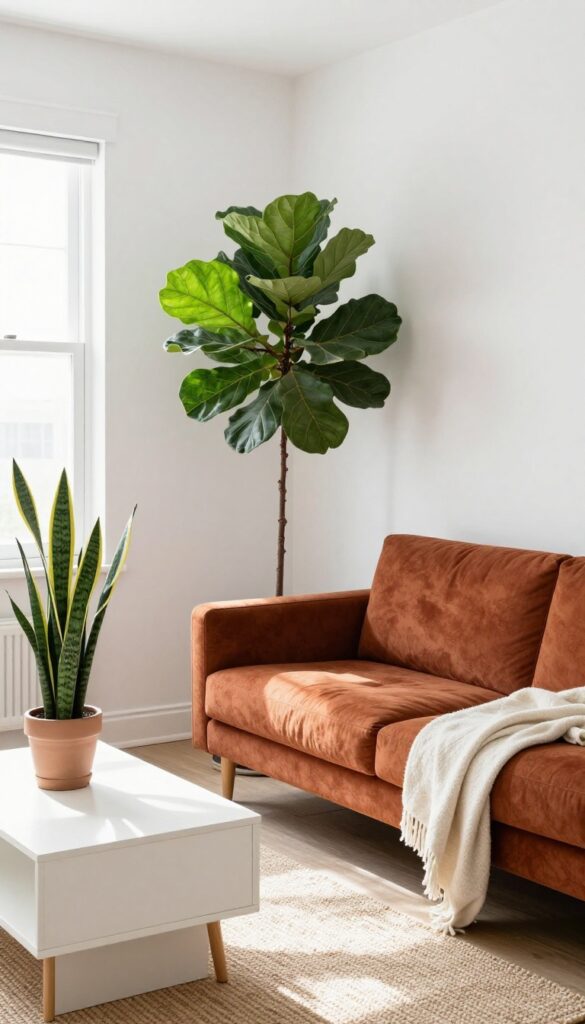
Sometimes the best way to let a rust sofa shine is to give it plenty of breathing room. White walls and a handful of green plants create a clean, calm backdrop that makes that warm terracotta hue pop without any competition. It's a look that feels fresh, easy, and surprisingly cozy—like a breath of fresh air in your living room.
White walls and plenty of green plants let the rust sofa be the star. A simple white coffee table and a few leafy plants keep the space fresh and uncluttered. This approach works especially well in smaller living rooms or apartments where you want to avoid visual clutter.
The contrast between the crisp white and the rich rust creates a balanced, inviting space that feels both modern and warm.
Best Plants For The Look
Go for plants with big, sculptural leaves like fiddle-leaf figs, monstera, or snake plants. Their deep green adds life and texture without competing with the sofa. Place one tall plant next to the sofa and a smaller one on the coffee table for a layered effect.
Coffee Table Styling Tip
Keep the coffee table simple—a white or light wood table with just a stack of books and a small plant or ceramic vase. Avoid overcrowding. The goal is to let the sofa remain the focal point while the greenery adds a natural, organic feel.
Finishing Touch
Add a textured white or cream throw blanket draped over one arm of the sofa. It softens the look and makes the space feel lived-in without adding clutter. A natural fiber rug in jute or sisal underneath ties the whole room together.
10. Add a Gallery Wall Above the Sofa for Personality
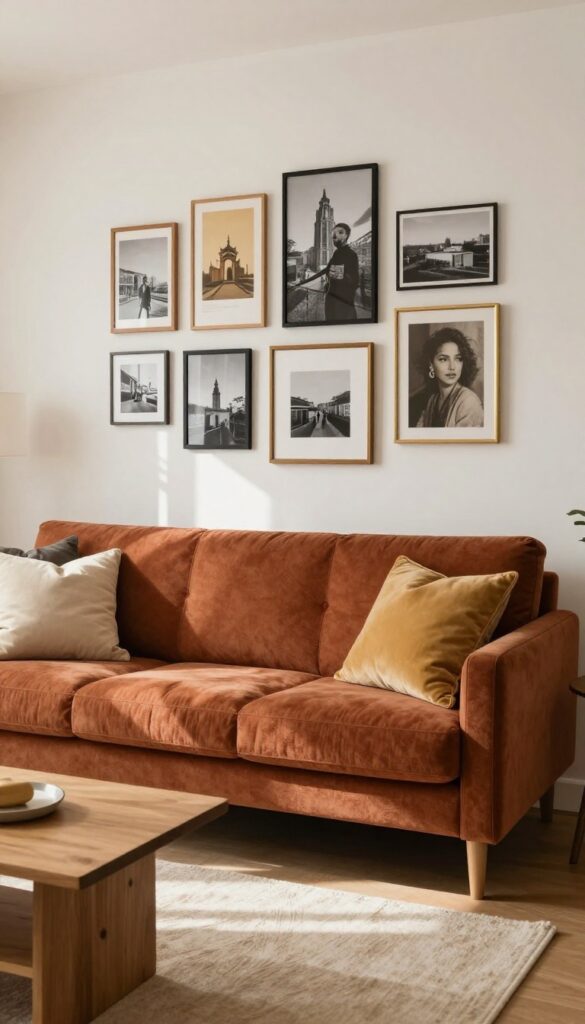
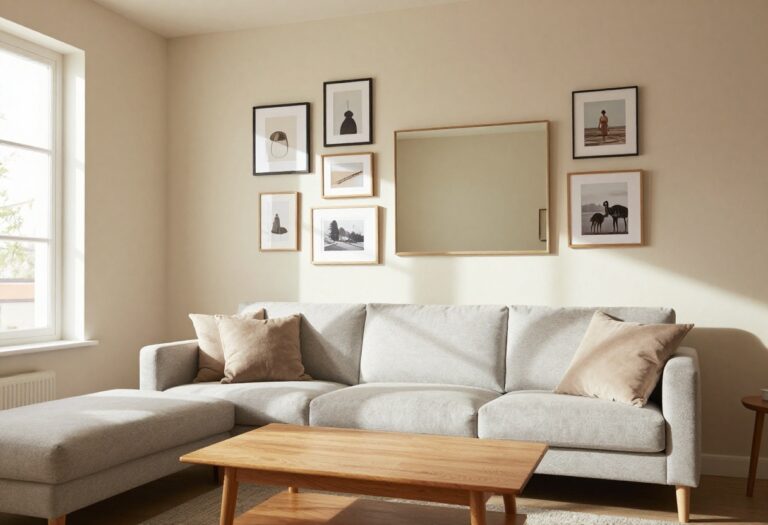
A gallery wall is one of the easiest ways to make a rust sofa feel like the centerpiece of a curated, lived-in room. Instead of leaving that wall blank, fill it with a mix of black-and-white photos, warm-toned art, and a few personal mementos. The contrast of cool monochrome prints against the warm rust upholstery creates a balanced, collected look that feels intentional but not overly styled.
The key is to treat the gallery wall as an extension of the sofa's warmth. Start by laying out your frames on the floor to find a composition that feels balanced—try a loose grid or organic cluster. Include pieces with warm wood frames or brass accents to tie back to the rust tones.
Leave a few inches of breathing room between frames to keep it from feeling cluttered. Once hung, the gallery wall draws the eye upward, making the room feel taller and more dynamic, while the rust sofa anchors everything with its earthy presence.
Best Colors For Gallery Wall Art
Stick with a palette that complements rust: cream, warm white, soft beige, charcoal, and muted gold. Black-and-white photography works beautifully because the neutral tones let the rust sofa pop. If you add color, choose art with hints of terracotta, olive, or mustard to create a cohesive flow.
Layout Tip: Mix Frame Styles
Combine different frame finishes—wood, black, and brass—for a collected-over-time feel. Use a mix of portrait and landscape orientations to keep the arrangement visually interesting. A good rule: keep the outer edges of the gallery wall aligned with the sofa's width or slightly narrower.
Finishing Touch: Add Personal Mementos
Tuck in a small shelf or two within the gallery to hold a ceramic vase, a stack of books, or a tiny plant. These 3D elements break up the flat frames and add texture. Just keep them minimal so the wall doesn't feel busy.
FAQ
What colors go best with a rust sofa?
Cream, olive green, soft gray, blush, mustard yellow, and deep burgundy all pair beautifully with rust. Neutrals and earthy tones tend to work best for a warm, cohesive look.
How do I keep a rust sofa from overwhelming a small room?
Balance it with light walls and floors, and use mirrors to reflect light. Keep accessories minimal and choose a low-profile sofa style to avoid visual bulk.
Can I use a rust sofa in a modern living room?
Absolutely. Pair it with clean-lined furniture, black metal accents, and neutral tones. The rust adds warmth without sacrificing a modern aesthetic.
What type of rug works with a rust sofa?
Jute, sisal, or low-pile wool rugs in neutral shades like cream, gray, or beige are safe bets. For more color, try a geometric pattern that includes rust or warm tones.
How do I make a rust sofa feel cozy in winter?
Layer with chunky knit throws, faux fur pillows, and a soft wool blanket. Add warm lighting from floor lamps or candles, and use a plush rug underfoot.
Conclusion
A rust sofa doesn't have to be intimidating. With the right colors, textures, and a few personal touches, it can become the coziest spot in your home. The ideas here are meant to be mixed and matched, so feel free to take what works and leave the rest.
The goal is a living room that feels fresh, easy, and unmistakably yours. So go ahead, pull up a throw pillow, and enjoy the warmth your rust sofa brings.