11 Brown Couch Living Room Ideas That Feel Warm and Rich (Small-Space Friendly)
A brown couch is one of those pieces that instantly grounds a room. It brings warmth and a sense of stability, but figuring out how to style it without making the space feel heavy can be tricky—especially when square footage is tight.
The good news is that brown is surprisingly versatile. Whether your sofa is chocolate, caramel, or taupe, it can anchor a small living room without overwhelming it.
The key is balancing rich tones with lighter elements and smart layout choices. These 11 ideas will help you turn your brown couch into the heart of a cozy, stylish space that feels anything but cramped.
1. Pair with Light Walls and Airy Curtains
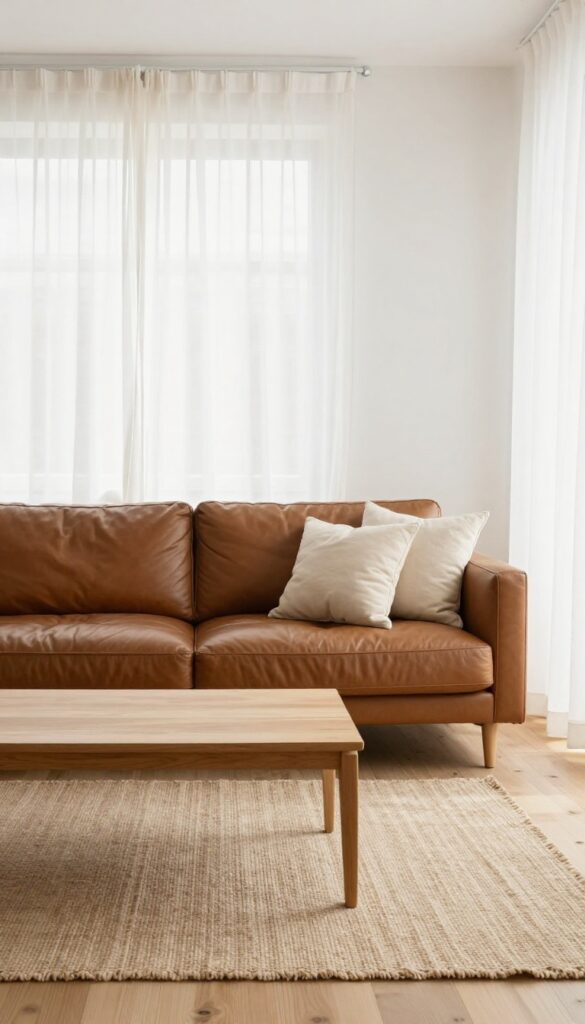
A brown couch can feel heavy if the room around it is too dark or closed in. The trick is to let your sofa be the star while keeping everything else light and breezy. Soft white or warm cream walls create a gentle contrast that makes the brown upholstery feel rich rather than overwhelming.
Sheer or linen curtains add to that airy vibe, letting sunlight filter through and keep the space feeling open.
This approach works especially well in small living rooms, where every design choice affects how spacious the room feels. By sticking with pale wall colors and lightweight window treatments, you avoid the cave-like effect that sometimes comes with darker furniture. The brown couch becomes a warm anchor point, while the rest of the room stays bright and inviting.
Best Colors
Stick with soft whites like Benjamin Moore White Dove, warm creams such as Sherwin-Williams Creamy, or pale greiges like Agreeable Gray. These shades have just enough warmth to complement brown without competing. Avoid stark white, which can make the couch look harsh, and steer clear of cool grays that might clash with the warm undertones of brown.
Curtain Choice
- Go for sheer or linen curtains in white, cream, or a very light neutral. Floor-length panels add height and elegance, but even café-length curtains work well in smaller spaces. The key is to let light pass through easily—heavy drapes would defeat the purpose.
- If you need privacy, opt for a double rod with sheers behind and light linen panels in front.
Small-space Fix
In a tight room, mount the curtain rod as close to the ceiling as possible and extend it a few inches past the window frame. This trick draws the eye upward and makes the window feel larger, which helps the whole room breathe. Pair with a light-colored rug—like a jute or a low-pile cream—to keep the floor from feeling heavy.
2. Add a Jute or Natural Fiber Rug
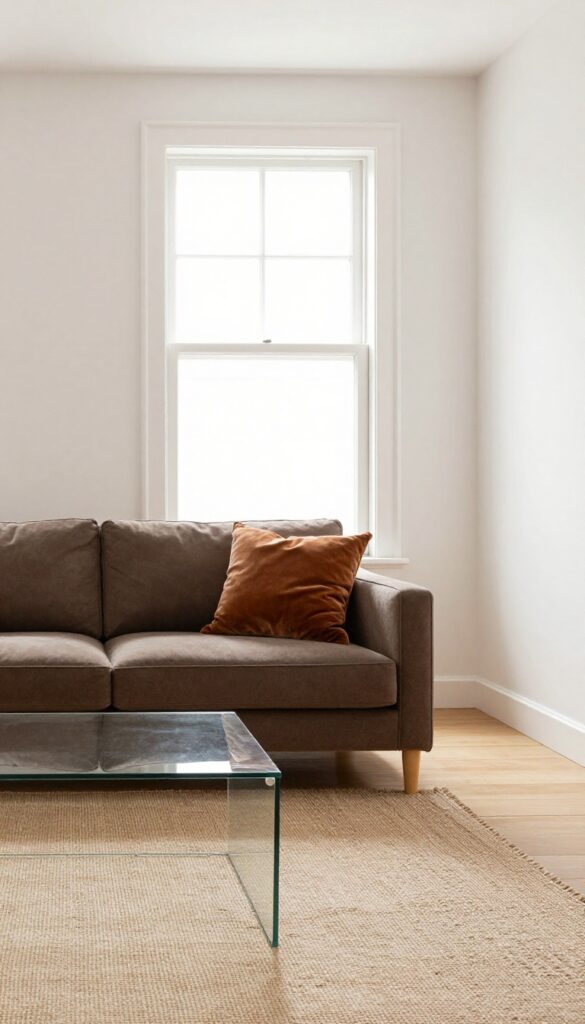
Natural fiber rugs like jute, sisal, or seagrass bring an earthy texture that pairs beautifully with brown sofas. They define the seating area without overwhelming a small floor, keeping the space open and airy. The neutral tones also help ground the room while adding a subtle organic warmth.
A natural fiber rug is a practical choice for high-traffic living rooms, especially when you want to balance your brown couch's richness with something light and breathable. The woven texture adds visual interest without competing for attention, making it easier to layer in other decor pieces.
Best Colors
Stick with warm beige, tan, or light gray tones that echo the brown couch without matching exactly. Avoid cool grays or stark whites—they can clash with the warm undertones of brown leather or fabric.
Small-space Fix
In a compact room, choose a rug that extends just past the front legs of the sofa. This anchors the seating area without making the floor feel crowded. A 5×7 or 4×6 size works well for standard loveseats or small sectionals.
Texture Mix
Pair the rough weave of jute with smooth surfaces like a glass coffee table or a velvet throw pillow. This contrast keeps the look intentional and prevents the space from feeling too rustic or too formal.
3. Layer in Warm Metallics for Glow
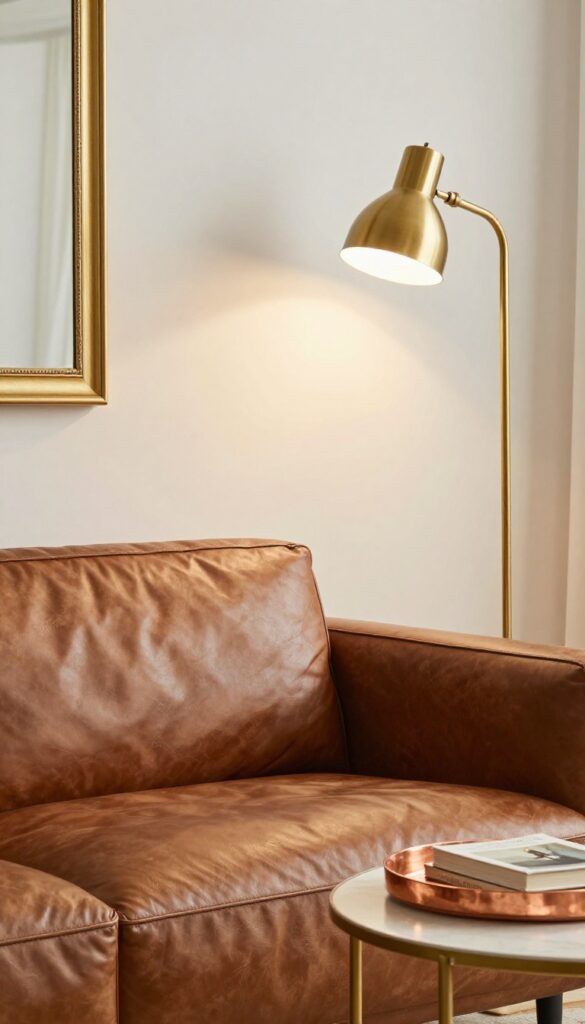
A brown couch brings an earthy, grounded feel, but adding metallic accents introduces a layer of warmth that makes the whole room glow. Brass, copper, and gold finishes catch the light and create subtle reflections that keep the space from feeling too heavy. In a small living room, these shiny touches act like little mirrors, bouncing light around and making the area feel more open.
Metallics don't have to be flashy—they just need to be placed where they can catch natural or artificial light. A brass floor lamp next to the sofa, copper picture frames on a nearby shelf, or a coffee table with gold legs all add a polished contrast to the brown upholstery. Stick to one metal tone to keep the look cohesive, and mix in soft textures like velvet or linen to balance the shine.
Best Metals To Use
- Brass and gold work best with warm brown couches, especially if your couch has reddish or caramel undertones. Copper pairs nicely with darker browns and adds a rustic touch. Avoid silver or chrome, which can feel too cool against the warm brown.
- Stick to one metal family—warm tones only—to keep the look intentional.
Small-space Placement
In a compact living room, place metallic accents near the couch where they can catch light. A slim brass floor lamp next to the sofa, a gold-framed mirror above it, or a copper tray on the coffee table all add glow without taking up floor space. Avoid cluttering surfaces—one or two metallic pieces per zone is plenty.
Finishing Touch
Add a metallic element to your throw pillows or blanket. A pillow with a subtle gold thread or a copper-toned knit throw ties the whole scheme together without overwhelming the space. This small detail echoes the metallic accents throughout the room and creates a cohesive, polished look.
4. Use a Slim Console Table Behind the Sofa
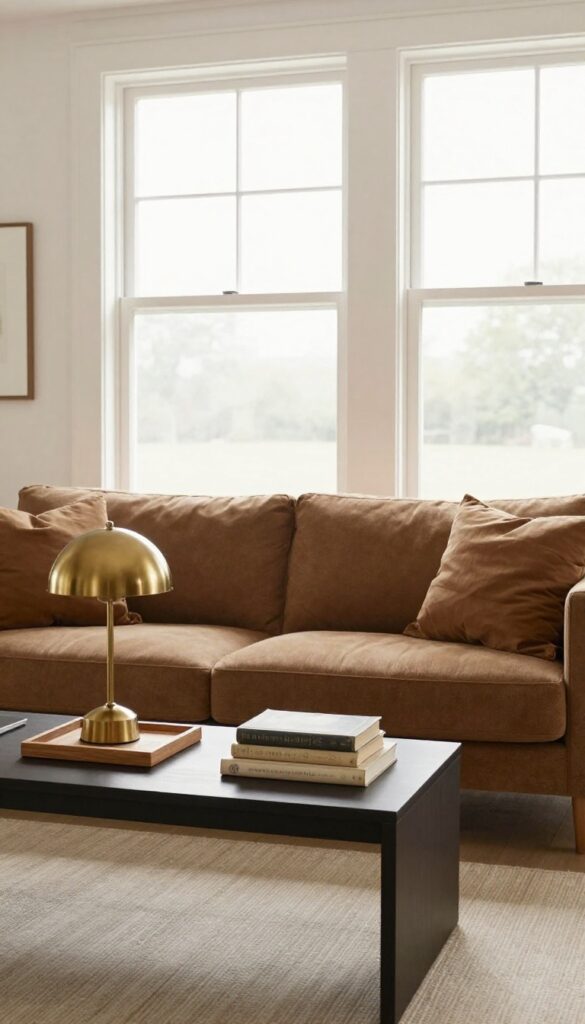
In an open layout, that gap behind the couch often feels like wasted real estate. A narrow console table slides right in, giving you a spot for lamps, books, or a catch-all tray without blocking traffic. It’s a small-space hack that makes the whole room feel more intentional.
A console table behind the sofa is one of those ideas that works in almost any living room, but it’s especially genius in open-concept homes. It defines the seating area without adding visual bulk, and it gives you a surface to style without taking up floor space. Keep it slim—12 to 18 inches deep is plenty—so you can still walk behind the couch easily.
Style it with a table lamp for cozy lighting, a stack of books, and a small tray for remotes or coasters. The key is to keep the arrangement low and layered so it doesn’t block the sightline or feel cluttered.
Best Height And Depth
Look for a console that’s about the same height as the back of your sofa, or slightly lower. That way, it won’t peek out awkwardly above the cushions. Depth-wise, 14 to 18 inches is the sweet spot: deep enough to hold a lamp and a few decor pieces, but shallow enough to leave a comfortable walking path.
Styling Tips For A Narrow Surface
Since the surface is slim, edit your decor down to a few key pieces. A single table lamp, a small vase with stems, and a stack of coffee table books work beautifully. Add a tray to corral small items like remotes or coasters, and consider a slim charging station tucked underneath to keep cords hidden.
Small-space Layout Fix
In a tight living room, this console can double as a room divider. Place it behind the sofa to separate the seating area from the dining space or entryway. It creates a visual boundary without closing off the room, and the extra surface helps the layout feel purposeful.
5. Mix in Cream and Beige Textiles
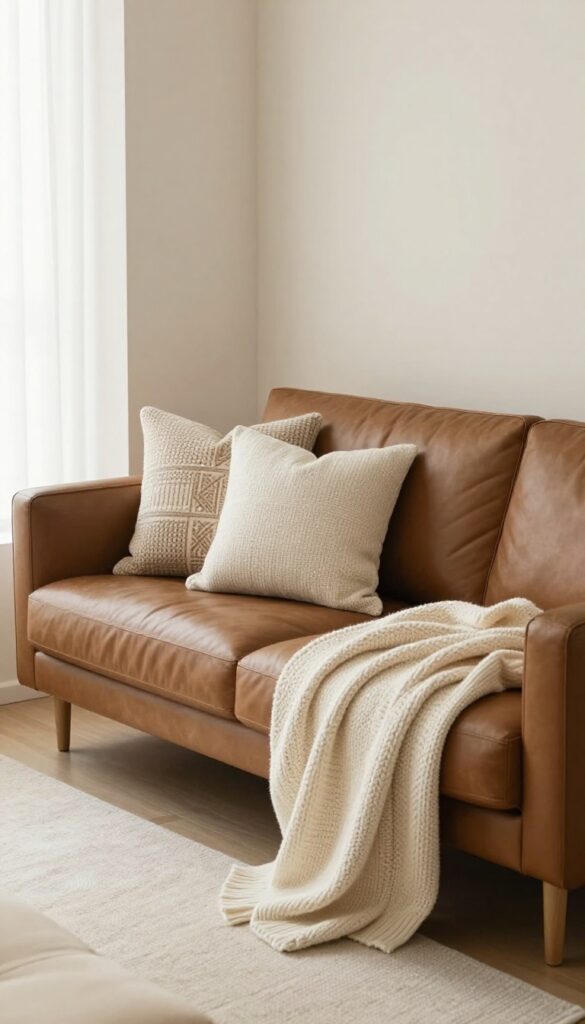
A brown couch can feel heavy if everything around it is dark. The trick is to bring in light, neutral textiles that soften the look and keep the room from feeling closed in. Cream, beige, and oatmeal tones work especially well because they add warmth without competing with the brown.
In a small living room, these light fabrics also help reflect natural light, making the space feel bigger and airier. The contrast between the deep sofa and pale accents creates a balanced, inviting palette that feels both rich and relaxed.
Layering cream and beige textiles is one of the easiest ways to brighten a brown couch without a full redesign. Start with a few throw pillows in different textures—think chunky knits, soft linen, or subtle patterns like stripes or geometric weaves. Add a lightweight cream blanket draped over one arm or folded across the back.
If you have an accent chair nearby, choose one with a beige or oatmeal upholstery to echo the same light tones. This approach keeps the eye moving around the room and prevents the brown sofa from dominating the space. For a small living room, stick with solid or subtly patterned textiles to maintain a clean, uncluttered look.
Best Colors
Stick with warm off-whites like cream, ivory, and oatmeal rather than stark white, which can look harsh against brown. Beige with a hint of yellow or pink undertone blends naturally with most brown couch shades, from chocolate to tan. Avoid gray-based beiges unless your brown has cool undertones—they can clash and make the room feel flat.
Texture Mix
Combine smooth cotton or linen pillows with chunky cable-knit throws or a faux-fur accent for depth. A woven wool blanket adds rustic warmth, while a matelassé cover offers subtle pattern without overwhelming the space. The key is to vary the tactile feel so the light layers don't look flat or boring.
Small-space Fix
In a compact room, use light textiles to visually expand the area. Drape a cream throw over the back of the couch and add two beige pillows—this draws the eye upward and creates a sense of height. Keep the rest of the room's furniture light or neutral to maintain an open, breezy feel.
6. Hang a Large Mirror to Bounce Light
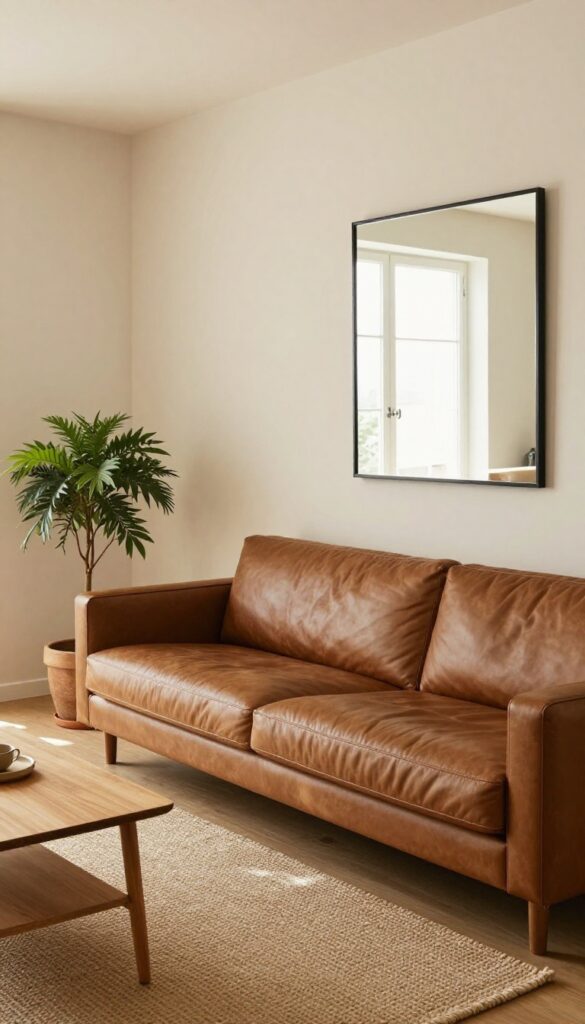
A big mirror does more than just let you check your outfit before heading out. In a room anchored by a brown couch, a well-placed mirror can make the whole space feel brighter and more open—especially if you're working with a smaller floor plan. The trick is choosing a frame that complements your couch's tone and positioning it where it can actually do some work.
Mirrors are one of the most underrated tools for making a room feel larger and more luminous. When you place one opposite a window or beside your brown sofa, it catches natural light and sends it back into the room, softening shadows and adding a sense of airiness. For a small living room, this is a game-changer.
Go for a frame that echoes other finishes in the room—warm wood if your couch has wooden legs, or a slim black metal frame if you have darker accents. Avoid overly ornate styles that can feel busy; a clean, simple shape keeps the focus on the light, not the mirror itself.
Best Placement For Maximum Impact
Hang the mirror on the wall directly across from your biggest window, or at a 90-degree angle to it, so it reflects the brightest part of the room. If your couch sits against a wall, try placing the mirror on the adjacent wall—it will bounce light across the seating area and make the couch feel less heavy. In a narrow room, a tall, vertical mirror can trick the eye into seeing more depth.
Frame Finish That Ties It Together
- Match the mirror frame to the undertones of your brown couch. For a warm chocolate or caramel sofa, choose a wood frame in a similar honey or walnut shade. For a cooler taupe or gray-brown couch, a brushed nickel or matte black frame keeps things cohesive.
- If you want a lighter look, a white or natural rattan frame can add texture without competing.
Small-space Bonus
In a compact living room, a mirror can double as decor. Lean a large floor mirror against the wall beside the couch instead of hanging it—it adds a casual, collected vibe while still doing its light-bouncing job. Pair it with a small plant or a stack of books at its base for an intentional styled look.
7. Choose a Low-Profile Coffee Table
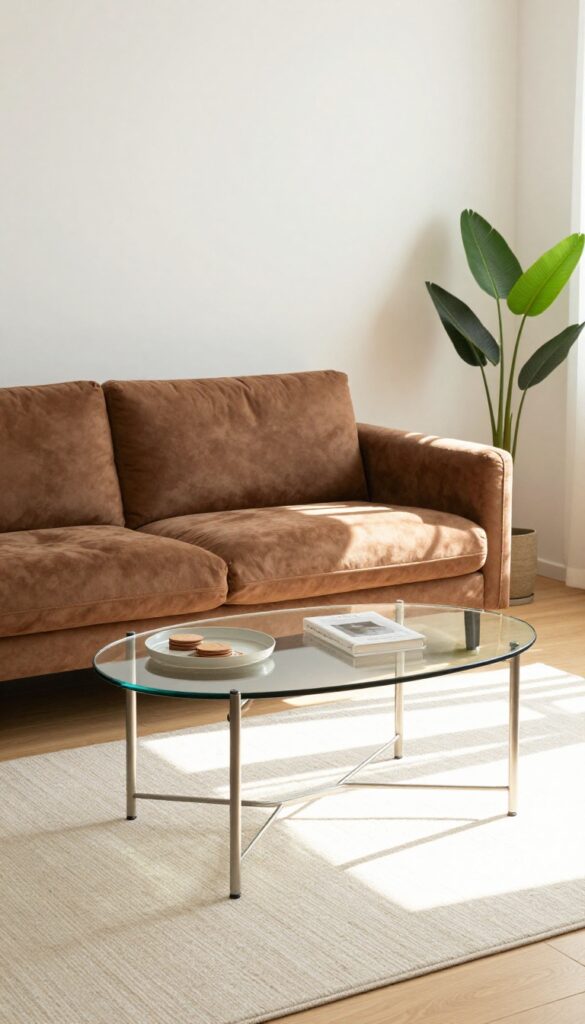
A low coffee table does more than hold your remote and coffee mug—it opens up the whole room. When your couch is brown, a sleek, low-profile table keeps the visual weight low, letting the sofa anchor the space without feeling boxed in. Glass, acrylic, or a slim wooden top on thin legs creates that airy, uncluttered look that makes a living room breathe easier.
In small spaces, every inch counts. A bulky coffee table can turn a cozy setup into a cramped one. By going low and lean, you preserve sightlines across the room, which is a game-changer when you're working with limited square footage.
Plus, a low profile makes the ceiling feel higher and the floor plan feel bigger—two things any small-space dweller will appreciate.
Best Materials For A Low Look
- Glass and acrylic tops are the ultimate invisibility trick—they reflect light and barely register visually. If you prefer wood, go for a thin slab on hairpin legs or a minimalist frame. Avoid chunky, dark-stained tops that compete with your brown couch.
- A light oak or bleached wood keeps things fresh.
Layout Tip For Small Spaces
Keep at least 12 to 18 inches between the couch and the coffee table. This gap is crucial for walking past easily and for reaching drinks without stretching. In a narrow room, try a round or oval table—it softens the edges and makes moving around feel natural.
Finishing Touch
Place a small tray or a couple of coasters on the table to keep it functional but not cluttered. A single stack of books or a small plant adds personality without weighing down the look. The goal is to let the table disappear into the background while still serving its purpose.
8. Incorporate Greenery for Fresh Contrast

A brown couch can feel heavy if the room leans too warm or dark. That's where plants come in—they add an instant jolt of life and a crisp, natural contrast. In a small space, greenery also helps define zones without adding bulk.
Snake plants, pothos, or fiddle-leaf figs are easy-care options that brighten the brown and keep the room feeling fresh.
Plants are one of the simplest ways to break up brown's earthy tones with a lively pop of green. They work especially well in compact living rooms because they draw the eye upward and add vertical interest without taking up floor space. Choose low-maintenance varieties that thrive in indirect light, and place them where they'll frame the sofa or fill empty corners.
The result is a balanced, organic look that feels both polished and effortless.
Best Plant Choices
- Snake plants, pothos, and fiddle-leaf figs are top picks for brown couch living rooms. Snake plants tolerate low light and neglect, making them perfect for beginners. Pothos trails beautifully from shelves or hanging planters, adding softness.
- Fiddle-leaf figs offer a bold, sculptural silhouette that contrasts nicely with the couch's bulk. All three stay manageable in size for small spaces.
Small-space Placement
In a tight room, use tall planters in corners to draw the eye up and make the ceiling feel higher. Place small pots on floating shelves or windowsills to keep the floor clear. A single large plant beside the sofa can act as a natural room divider, while a cluster of tiny succulents on the coffee table adds a subtle green accent without clutter.
Styling Tip
- Match your planters to the room's palette for a cohesive look. White or cream pots keep things airy, while terracotta or woven baskets echo the brown couch's warmth. Group plants at varying heights—a tall stand next to a low pot on the floor—to create visual rhythm.
- And don't forget to rotate plants occasionally so they grow evenly toward the light.
9. Stick to a Neutral-With-Warmth Color Palette
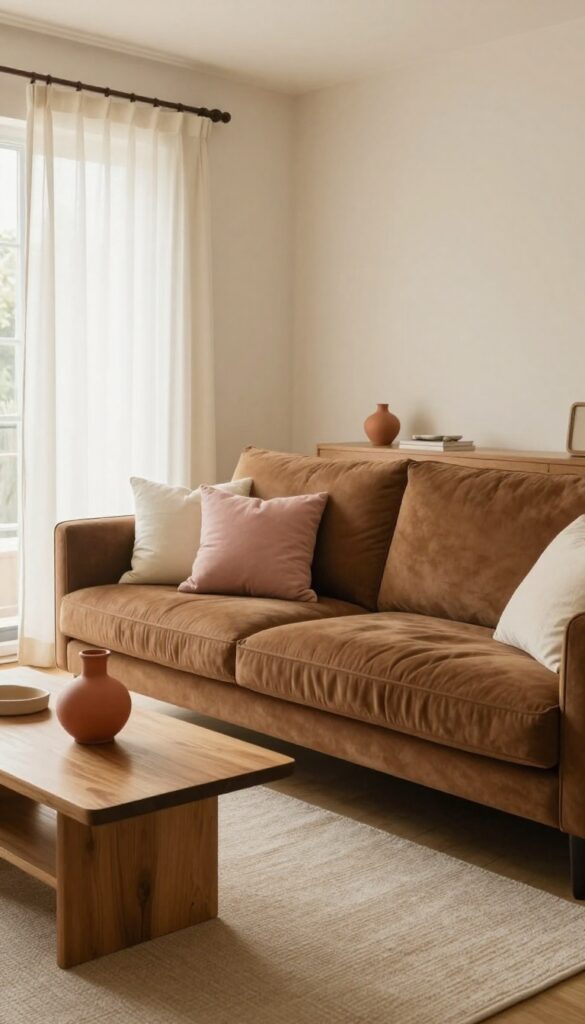
A cohesive color palette does a lot of the heavy lifting in a small living room, especially when a brown couch is involved. Instead of fighting the sofa's warm undertones, lean into them by choosing supporting colors that feel intentional. Think creamy off-whites, soft tans, and muted blush or terracotta accents.
This approach keeps the room from feeling disjointed and helps the brown sofa blend in naturally rather than sticking out.
When your color palette is tight and warm, the brown couch becomes an anchor instead of an obstacle. Cream and tan walls or textiles soften the contrast, while blush or terracotta pillows add just enough visual interest without overwhelming the space. The result is a room that feels put-together and calm, even in a small footprint.
Stick to three or four core colors and repeat them throughout the room for a pulled-together look.
Best Colors To Pair
- Start with a warm white or cream as your base—think Swiss Coffee or a soft almond. Then bring in tan or camel through throw pillows, a rug, or curtains. For a subtle pop, add blush pink or terracotta in small doses, like a single accent pillow or a ceramic vase.
- Avoid cool grays or stark whites, which can make the brown look muddy.
Small-space Fix
- In a small room, use your wall color to blur the edges. Paint the walls a warm off-white or light beige so the brown couch doesn't feel like a dark block. Then layer in lighter textiles—a cream throw, a tan rug—to keep the space airy.
- This trick visually expands the room while keeping the palette rich.
Finishing Touch
Add one or two terracotta or blush accessories, like a ceramic lamp base or a small tray on the coffee table. These warm accents tie the palette together without adding clutter. Keep metallics warm too—brass or copper hardware and light fixtures will reinforce the cozy, intentional feel.
10. Float the Couch Away from Walls
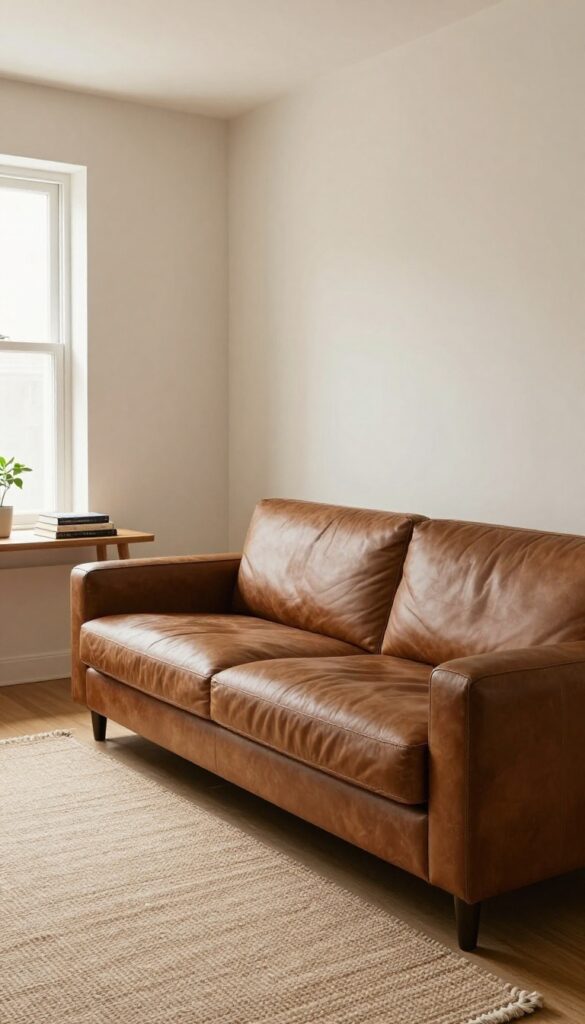
Most of us instinctively push furniture against the wall, especially in smaller rooms. But pulling your brown couch even a few inches away can completely shift how the space feels. That tiny gap creates breathing room, makes the room look larger, and adds a layer of intentionality to your layout.
It’s one of those simple tricks that instantly upgrades the whole vibe without spending a dime.
Moving your couch away from the wall is a small adjustment with big visual payoff. The gap—just 4 to 6 inches—lets air circulate behind the sofa, which can help prevent dust buildup and make the room feel less cramped. In a small living room, that sliver of space tricks the eye into thinking the floor area extends further, making the whole space feel more open.
Plus, it gives you a perfect spot to tuck a slim console table or a row of tall plants, adding function and style without eating into your room’s footprint.
Small-space Fix
In tight quarters, every inch matters. Floating the couch tricks the eye by creating a visual break between the sofa and the wall, which makes the room feel less boxed in. It also opens up the possibility of placing a narrow shelf behind the couch for books, remotes, or decorative objects—turning dead space into storage.
Rug Pairing
When your couch is off the wall, your rug can extend fully under the front legs without awkwardly hitting the baseboard. This creates a more cohesive seating zone and anchors the furniture arrangement. Choose a rug that extends at least 6 inches beyond the sides of the couch for a balanced look.
Finishing Touch
Use the gap to add a slim console table or a row of floor plants. A console table behind the couch can hold lamps, trays, or a stack of books, adding warmth and layering. If space is really tight, even a single tall plant like a fiddle-leaf fig or a snake plant in a decorative pot adds life without crowding.
11. Add a Statement Floor Lamp for Vertical Interest
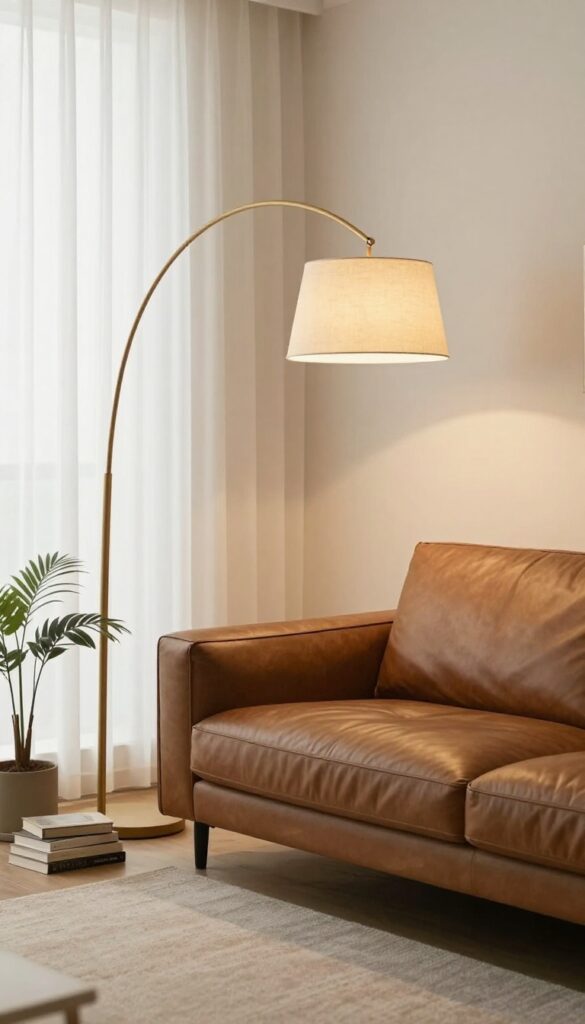
A tall arc or tripod lamp draws the eye upward, emphasizing ceiling height and distracting from limited floor space. Choose a warm-toned shade to complement the couch's coziness. This trick works especially well in small living rooms where every inch counts.
Floor lamps do more than provide light—they add vertical architecture to a room. In a small space with a brown couch, a statement lamp becomes a sculptural element that balances the sofa's visual weight. Look for lamps with slender profiles to keep the floor feeling open.
A warm brass or matte black finish pairs beautifully with brown upholstery, while a linen shade softens the glow. Position the lamp near the couch's arm or in a corner to create a cozy reading nook without taking up valuable surface area.
Best Styles For Small Spaces
Arc lamps with a curved arm reach over the couch without needing a side table, saving floor space. Tripod lamps offer a mid-century vibe and stability. For the tightest spots, a wall-mounted swing-arm lamp frees up the floor entirely while still providing that upward line.
Lighting Tip
Use a dimmable bulb or smart bulb to adjust brightness from task to ambient. A warm white (2700K–3000K) temperature enhances the brown couch's richness and creates a relaxing evening atmosphere.
Finishing Touch
Add a small plant or stack of books at the lamp's base to anchor it visually. This keeps the lamp from feeling isolated and ties it into the room's decor.
FAQ
What colors go best with a brown couch in a small living room?
Soft neutrals like cream, beige, and warm white work beautifully. You can also add muted greens, blush, or terracotta for subtle contrast without overwhelming the space.
How can I make a brown couch look less heavy in a small room?
Use light-colored walls, sheer curtains, and a glass or acrylic coffee table. Adding a mirror and keeping the floor visible with a low-profile rug also helps maintain an airy feel.
Should I avoid dark brown furniture in a small apartment?
Not at all. Dark brown can anchor a room and add warmth. Just balance it with lighter elements and plenty of natural light to keep the space from feeling closed in.
What type of rug works with a brown couch in a small space?
Natural fiber rugs like jute or sisal are great because they add texture without pattern overload. A light-colored low-pile rug also works to keep the room feeling open.
Can I use patterns with a brown couch?
Yes, but keep patterns small-scale and limited to pillows or throws. Stick to geometric or botanical prints in neutral or earthy tones to avoid visual clutter.
Conclusion
A brown couch doesn't have to dominate a small living room. With the right mix of light textures, smart furniture placement, and a cohesive color palette, it becomes a warm anchor that makes the space feel inviting and intentional.
These ideas prove that small spaces can still pack plenty of style and comfort. Start with one or two changes that feel right for your room, and let your brown couch shine as the cozy centerpiece it was meant to be.