10 Very Small Living Room Ideas That Open Up Tight Corners
Small living rooms come with their own set of challenges, especially when every corner feels cramped. But tight spaces don't have to feel closed in.
With a few thoughtful decor choices, you can make your compact living area feel open, light, and surprisingly spacious. The key is focusing on elements that draw the eye upward, let light bounce around, and keep furniture from blocking the flow.
These ten ideas are designed to help you reclaim those tight corners and turn your small living room into a cozy retreat that breathes.
1. Float Furniture Away from Walls
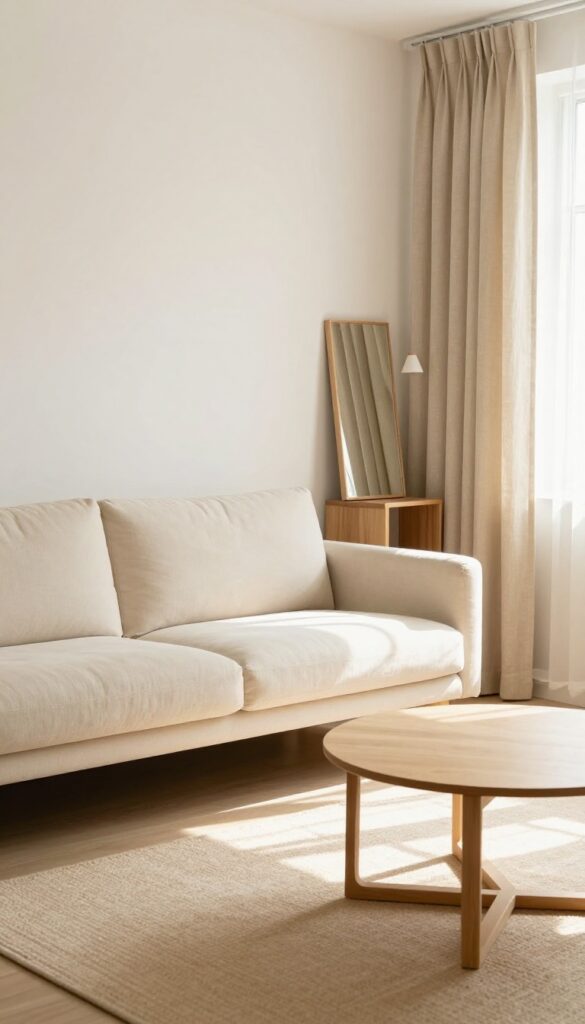
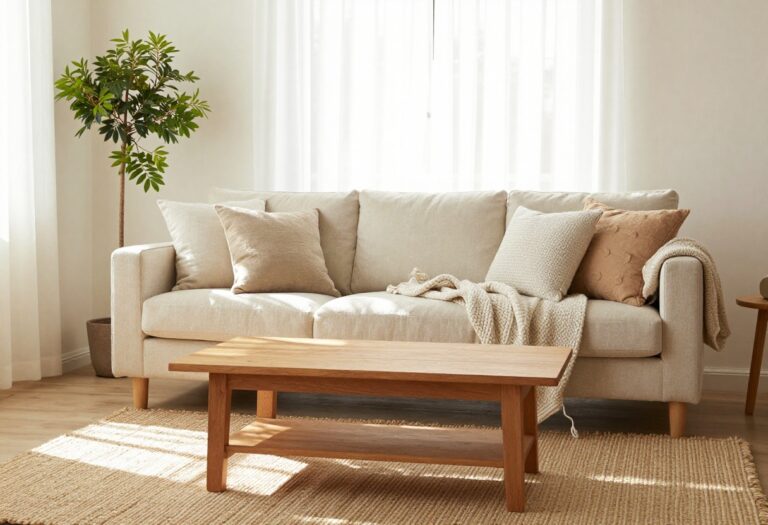
It feels instinctive to push every piece of furniture against the wall in a small living room, but that can actually make the space feel tighter. Pulling your sofa or armchair just a few inches away from the wall creates a narrow gap that tricks the eye into seeing more floor area. That tiny breathing room makes the whole layout feel less cramped and more intentional.
Instead of lining everything up like a showroom, try floating your main seating piece a few inches off the wall. The gap behind it becomes a visual pause, making the floor appear larger and the room less boxed in. This works especially well in narrow living rooms where every inch counts.
Plus, it gives you a spot to tuck a slim console table or a floor lamp behind the sofa, adding function without eating up square footage.
Layout Tip
For the best effect, keep the gap between 3 and 6 inches. Any more than that and you risk wasting precious floor space; any less and the trick won't register. Pair the floating sofa with a lightweight coffee table and open-leg chairs to maintain the airy feel.
Cozy Detail
Use the space behind the sofa to lean a few framed prints or a tall mirror against the wall. This adds depth and a collected look without crowding the room. A soft throw blanket draped over the back of the sofa also helps the furniture feel grounded and inviting.
Best Colors
Stick with light, warm neutrals for the furniture itself—think cream, soft beige, or pale linen. These tones keep the visual weight low and blend seamlessly with the wall, making the gap behind the sofa feel like a natural part of the room rather than an awkward space.
2. Hang Sheer Curtains High and Wide
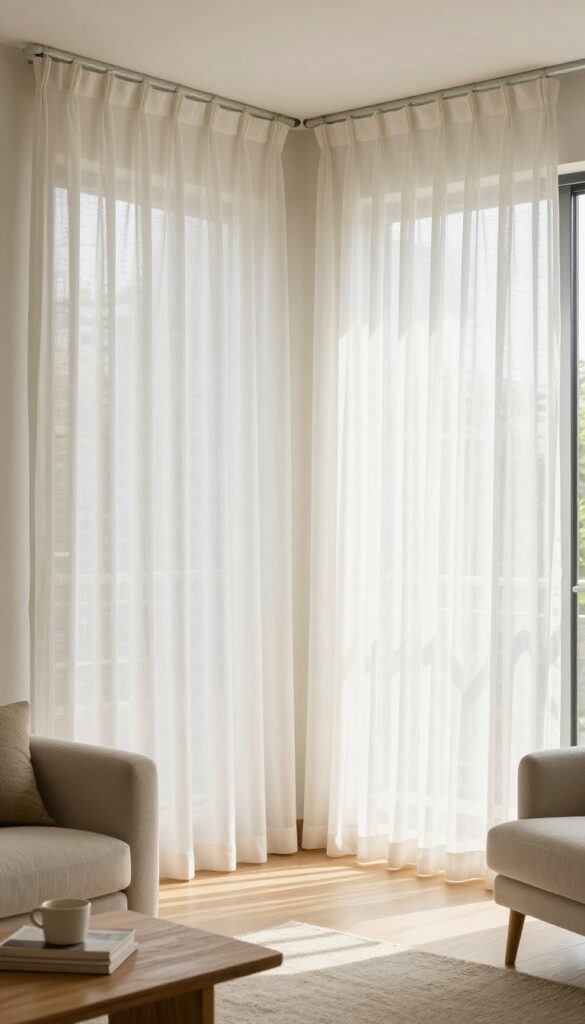
Nothing opens up a tight living room quite like the right window treatment. By mounting your curtain rods close to the ceiling and extending them well past the window frames, you instantly trick the eye into seeing more height and width. Floor-length sheer panels are the secret weapon here—they soften incoming light, add a breezy feel, and make the whole space feel taller and wider without sacrificing warmth.
The key is to choose sheers that feel light and airy, not stiff or heavy. Look for fabrics like linen, cotton voile, or polyester blends with a soft drape. White or off-white is a classic choice, but soft blush, pale gray, or warm cream can add a cozy touch without weighing things down.
Hang the rod as close to the ceiling as possible—ideally just an inch or two below the crown molding—and extend it at least 6 to 12 inches beyond each side of the window. This simple trick makes the window appear larger and lets in more light when the panels are pulled back. For a truly polished look, let the panels puddle slightly on the floor or hem them to just brush the floor.
Either way, the continuous vertical line draws the eye upward, emphasizing ceiling height and making the room feel more spacious.
Best Fabric Choices
For a warm and cozy feel, opt for linen or cotton sheers with a subtle texture. Avoid shiny or stiff synthetics that can look cheap. A soft, matte finish with a slight crinkle adds visual interest while keeping the look relaxed and inviting.
Rod And Hardware Tips
Choose a rod that matches your room's hardware finishes—brushed brass or matte black adds a modern touch, while nickel or bronze works well for traditional spaces. Use brackets that hold the rod close to the wall to minimize visual bulk. A continuous rod (not a tension rod) is best for a clean, permanent look.
Lighting And Layering
Pair sheers with a soft, warm light source like a floor lamp with a linen shade or a dimmable overhead light. The sheers will diffuse natural light during the day and create a cozy glow at night. For extra warmth, add a chunky knit throw or a plush rug in a neutral tone to balance the airy curtains.
3. Use a Slim Console Table Behind the Sofa
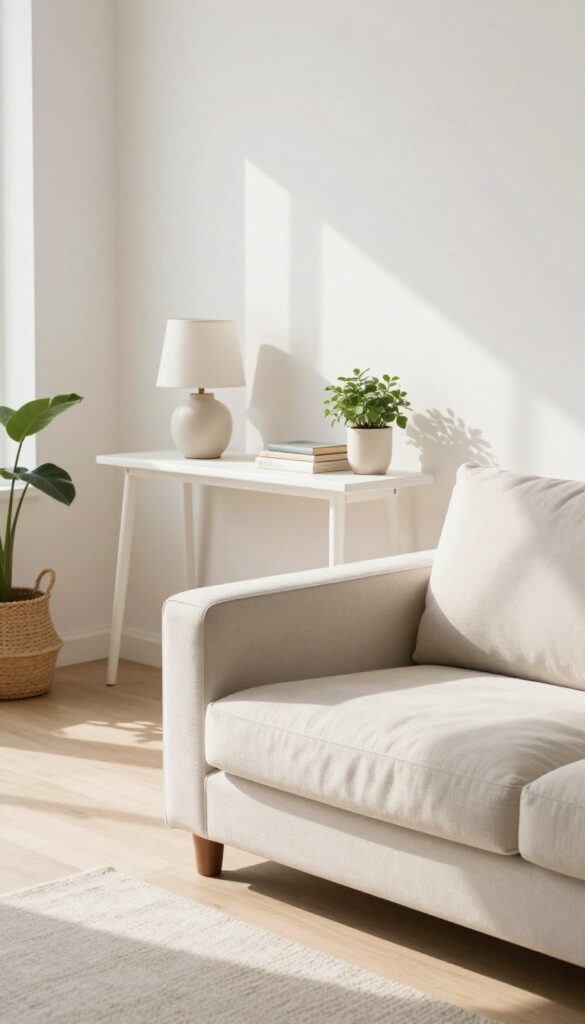
A narrow console table tucked behind the sofa is one of those tricks that makes a small living room feel instantly more put-together. It adds a handy surface for lamps, books, or a tray of remotes without eating into your precious floor space. Plus, it helps define the seating area and gives the room a layered, finished look that feels warm and intentional.
The key is choosing a console that's slim enough to leave a comfortable walking path—aim for 10 to 14 inches deep. Style it with a mix of functional and decorative items: a table lamp for soft lighting, a stack of books, and a small plant or ceramic vase. This creates visual depth behind the sofa and makes the whole seating area feel more anchored.
Best Materials
- Go for light, airy materials that keep the room feeling open. A whitewashed wood console or one with a glass top works beautifully. If you prefer a warmer look, try a light oak or a slim metal frame in brass or matte black.
- Avoid bulky, dark pieces that can weigh down the space.
Styling Tips
- Keep the styling simple and balanced. Place a lamp on one end and a stack of books on the other, with a small tray in the center for catch-alls. Add a woven basket underneath for extra storage—blankets or magazines stay hidden but easy to grab.
- This keeps the console looking intentional, not cluttered.
Layout Fix
Make sure the console is the same length as your sofa or slightly shorter. Leave about 6 inches of space between the back of the sofa and the console so you can still reach items easily. If your sofa is against a wall, pull it forward just enough to fit the console behind—it instantly adds depth and purpose.
4. Choose a Glass Coffee Table
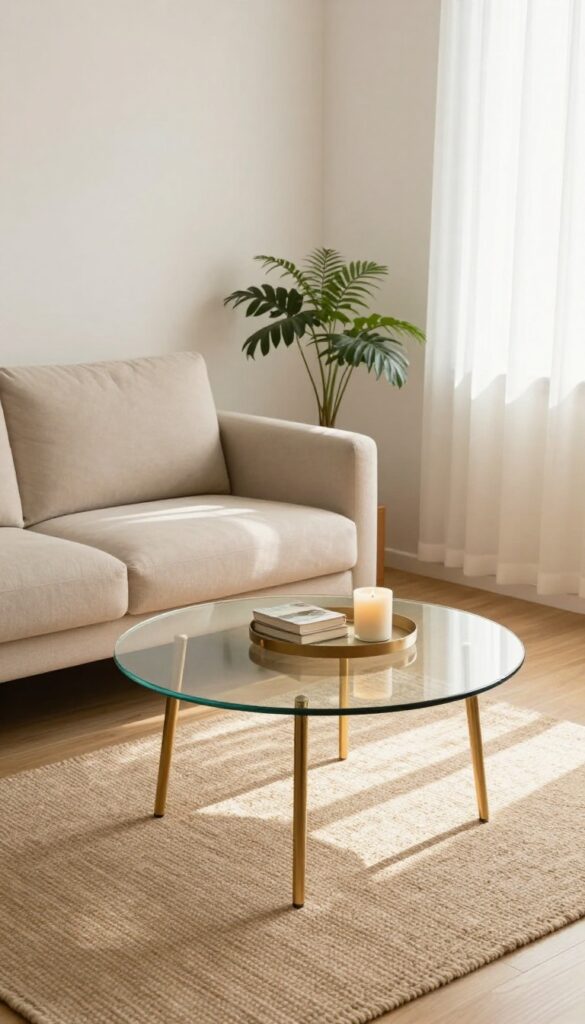
A glass coffee table can be a game-changer in a very small living room. Because the surface is transparent, it doesn't block the view of the floor, which tricks the eye into seeing more space. It also reflects light, brightening the whole room and making it feel airier.
Instead of a heavy wooden table that dominates the center of the room, a glass option keeps the focus on your rug and the rest of your furniture. It works especially well in front of a sofa that's already low to the ground, maintaining an open flow. Plus, it's surprisingly easy to style—just keep the top clutter-free to preserve that light, spacious feel.
Best Shapes For Tight Spaces
Round or oval glass tables are ideal for small living rooms because they have no sharp corners to bump into and they allow traffic to flow around them easily. A round table also echoes the soft curves of a cozy sofa, adding to the warm, inviting vibe you're going for.
Pairing With The Right Base
The base of the table matters almost as much as the glass top. Look for slim metal legs in a warm brass or matte black finish to keep the look light but grounded. Avoid bulky pedestal bases that take up visual space—instead, go for a simple X-frame or four thin legs.
Styling Tip: Keep It Minimal
To maintain that airy feel, place just one or two items on the table—like a small stack of books or a single candle. Use a decorative tray to corral coasters and remotes so they don't look scattered. The goal is to let the glass shine (literally) without visual clutter.
5. Install Floating Shelves in Corners
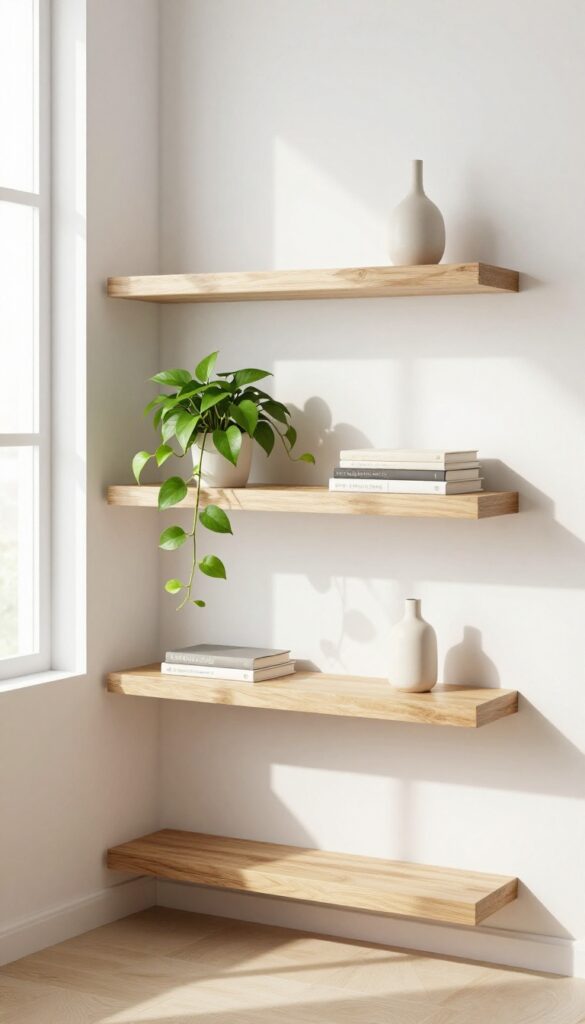
Corners are often overlooked, but they hold so much potential—especially in a small living room. Floating shelves turn that awkward dead space into a functional feature without taking up any floor area. The trick is to keep the styling light and intentional, so the shelves feel like part of the room's airy vibe rather than clutter.
Floating shelves in corners draw the eye upward, making the ceiling feel higher and the room more open. They're perfect for displaying a few curated items—like a small plant, a ceramic vase, or a stack of books—without adding visual weight. Because they mount directly to the wall, they leave the floor clear, which is key in a tight space.
For a warm and cozy feel, choose shelves in a light wood tone or a soft white, and keep the decor minimal. A trailing pothos or a small framed photo can add personality without overwhelming the corner.
Best Materials
Light woods like oak or ash keep the look airy, while painted white shelves blend into the wall for a seamless effect. If you want a touch of warmth, go for a natural wood finish with visible grain. Avoid dark or heavy materials like thick walnut or black metal, which can feel too dominant in a small corner.
Shelf Styling Tip
Stick to the rule of thirds: group items in odd numbers, vary heights, and leave some negative space. A small trailing plant, a slim candle, and a tiny stack of books work beautifully. Don't overcrowd—each shelf should feel curated, not cluttered.
Lighting Tip
Add a small LED puck light under the top shelf to cast a soft glow on the items below. This highlights the decor and makes the corner feel intentional, especially in the evening. Warm white bulbs keep the cozy mood alive.
6. Pick a Low-Profile Sofa
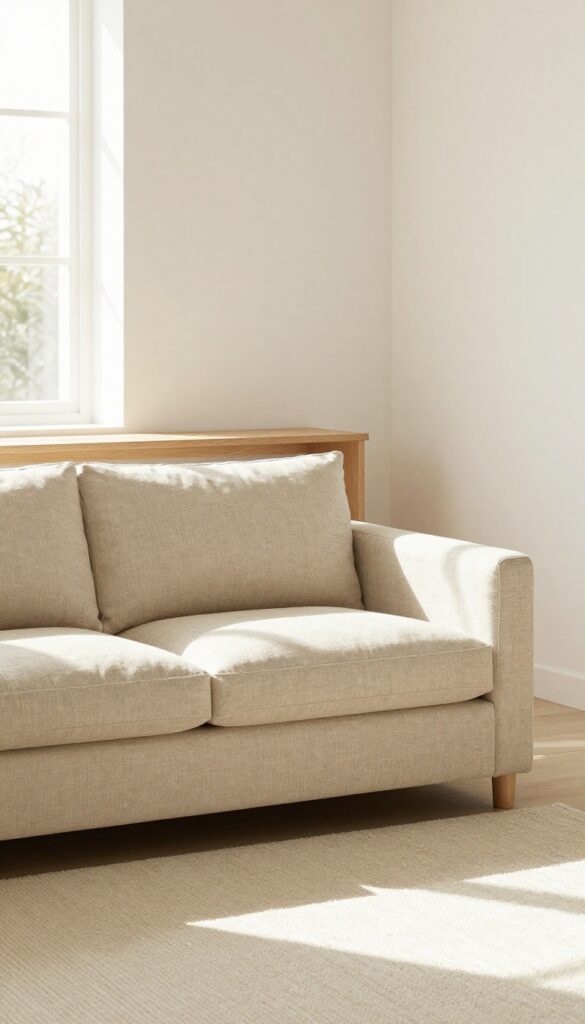
In a small living room, every piece of furniture counts. A low-profile sofa with a low back and slim arms sits closer to the ground, which leaves more wall space visible. This simple shift makes the ceiling feel higher and the whole room less cluttered.
It's a practical choice that instantly opens up tight corners without sacrificing comfort.
A low-profile sofa is a game-changer for small living rooms. By keeping the visual weight low, it tricks the eye into seeing more space above. Look for a design with clean lines and minimal padding on the arms.
The goal is a streamlined silhouette that doesn't compete with the room's proportions. Pair it with a light-colored rug and a slim console table behind it to reinforce the airy feel. This sofa style works especially well in rooms with low ceilings or awkward layouts where bulky furniture would feel overwhelming.
Best Colors And Fabrics
- Stick with light, neutral upholstery like soft beige, warm gray, or cream to keep the room feeling open. Textured fabrics like linen or cotton add coziness without adding visual weight. If you want a pop of color, choose a muted tone like sage green or dusty blue to maintain the light and airy vibe.
- Avoid dark leather or heavy velvet, as they can make the sofa feel larger and heavier.
Layout Tip
- Place the low-profile sofa away from the wall, even just a few inches. This creates a sliver of negative space that makes the room breathe. Float it toward the center of the room if possible, with a slim console table behind to anchor it.
- This setup defines the seating area without blocking sightlines, making the entire room feel larger.
Finishing Touch
Add a couple of throw pillows in a contrasting texture, like a chunky knit or a soft velvet, to bring warmth. Stick to two or three pillows max to keep the look uncluttered. A lightweight throw blanket draped over one arm adds a cozy, lived-in feel without overwhelming the sofa's clean lines.
7. Add a Large Mirror Opposite a Window
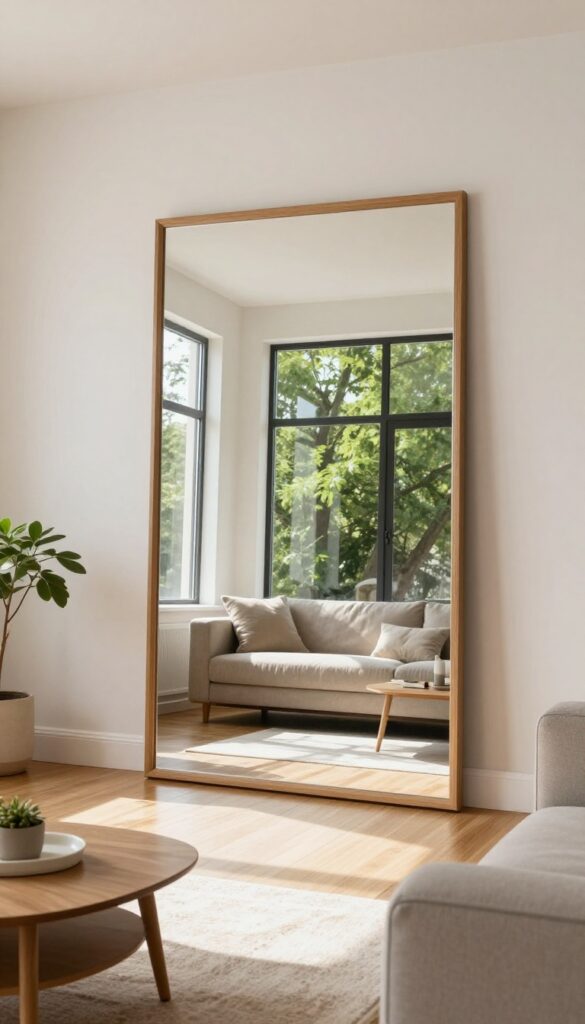
There’s a reason mirrors show up in almost every small-space design playbook. Placing a large one directly across from your main window does something almost magical—it captures the natural light and the view outside and throws them right back into the room. The result is an instant boost in brightness and a visual doubling of your square footage.
It’s one of those tricks that feels like a cheat code, but it’s surprisingly easy to pull off. The key is choosing a mirror that fits the scale of your wall without overwhelming the space, and positioning it so it reflects something worth seeing—like a tree, a bit of sky, or even just a clean wall with a plant.
The effect is immediate and dramatic. Sunlight bounces off the mirror and spreads across the room, making even the darkest corner feel lighter. The reflection of the outdoors creates a sense of depth, tricking your eye into thinking there’s another room or a larger window beyond.
This works especially well in narrow living rooms or spaces where the window is the only source of natural light. You don’t need a floor-to-ceiling mirror—a well-proportioned one that’s at least half the width of your window will do the trick. Hang it at eye level so it catches the light at different times of day.
And don’t forget the frame: a warm wood or a slim gold frame adds a cozy touch without stealing the spotlight.
Best Placement
- The mirror should face the window directly, but it doesn’t have to be perfectly centered. If your window is off to one side, hang the mirror on the opposite wall so it catches the light at an angle. Avoid placing it where it will reflect a cluttered area or a TV screen—you want the reflection to feel open and airy.
- In a long, narrow room, placing the mirror on the shorter wall opposite the window can make the space feel wider.
Frame Style And Finish
- For a warm and cozy vibe, choose a frame in natural wood tones like oak, walnut, or bamboo. A matte black or dark bronze frame can add a touch of modern sophistication without feeling cold. If you want to keep things light and airy, a frameless mirror or one with a slim white or gold frame blends seamlessly.
- The frame should complement your existing furniture—if your sofa has wooden legs, echo that wood tone in the mirror frame for a cohesive look.
Styling The Reflection
- What the mirror reflects matters just as much as the mirror itself. Place a small console table or a low plant stand beneath the window, and add a couple of potted plants or a stack of books. That way, the mirror reflects a curated vignette rather than a bare wall or a radiator.
- A tall floor plant like a fiddle-leaf fig or a snake plant adds greenery and softens the edges. Keep the windowsill clean and simple—no clutter—so the reflection feels intentional and serene.
8. Use Vertical Stripes or Tall Decor
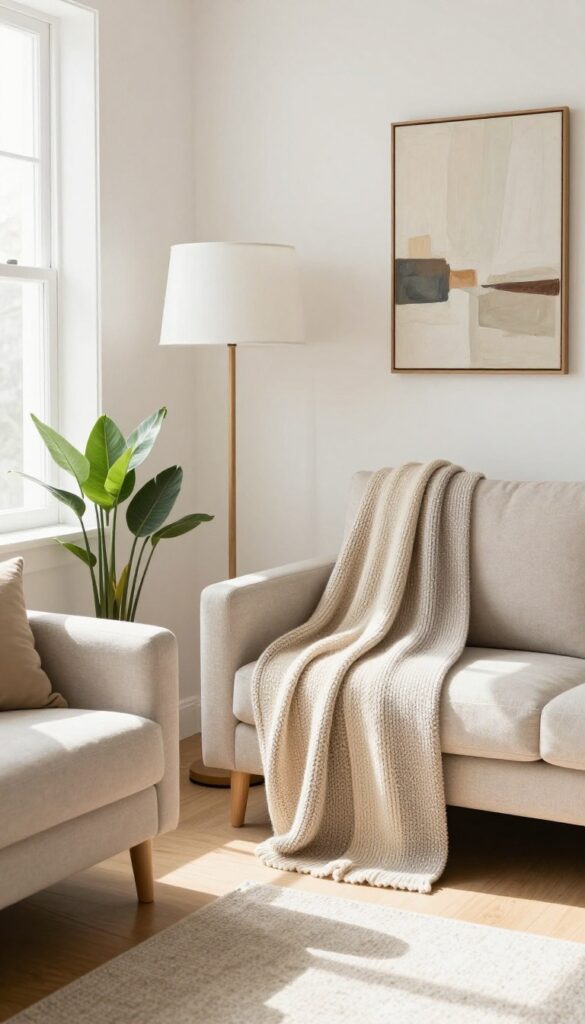
When floor space is tight, the trick is to shift the eye upward. Vertical stripes and tall decor pieces create the illusion of height, making the room feel less cramped and more open. Think of it as giving your living room a visual lift—without moving a single wall.
Incorporating vertical elements like striped throw pillows, tall floor lamps, or elongated artwork draws the gaze up, emphasizing height over width. This simple trick makes low ceilings feel higher and narrow rooms feel broader. It’s an easy, affordable way to add drama and airiness to a small space.
Best Colors
Stick with light, warm neutrals for the stripes—think soft beige, warm white, or pale taupe. These keep the room feeling airy while adding subtle pattern. If you want a bolder look, try muted earthy tones like terracotta or olive green, but keep the background light to maintain openness.
Layout Tip
Place your tallest decor piece—like a floor lamp or a tall plant—near the focal point of the room, such as beside the sofa or in a corner. This draws the eye up and balances the visual weight of lower furniture. Avoid clustering tall items together; spread them out to keep the vertical flow consistent.
Cozy Detail
Add a soft, chunky knit throw in a vertical stripe pattern over the back of the sofa. It reinforces the vertical theme and adds warmth without clutter. Choose a throw with subtle texture to keep the cozy vibe without overwhelming the space.
9. Opt for a Sectional with an Open Base
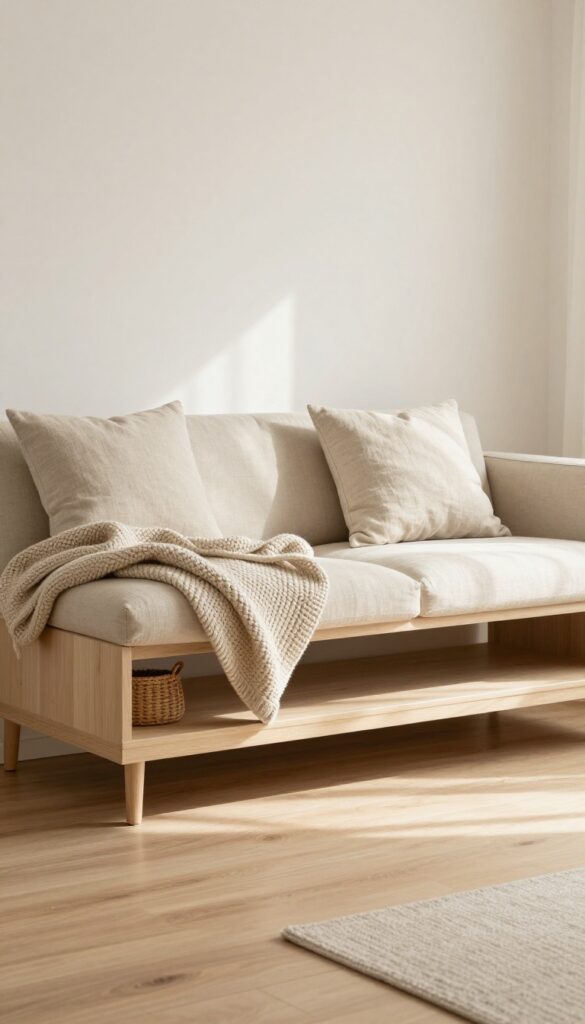
A bulky sofa that sits flat on the floor can make a small living room feel cramped and heavy. Switching to a sectional with slim, exposed legs changes the whole dynamic. The gap of open space underneath lets light pass through and creates an airy, less obstructed look that visually expands the room.
When your sectional hovers above the ground, the floor area feels larger and more connected. This trick works especially well in tight corners where every inch matters. The open base also makes cleaning easier and gives the room a lighter, more contemporary feel.
Best Colors
Stick with light to medium neutrals like warm beige, soft taupe, or pale gray to keep the airy vibe. If you want a pop of color, choose a muted sage or dusty blue that still feels soft. Avoid dark, heavy hues that can visually weigh down the piece.
Layout Tip
Place the sectional so the long side runs along the shorter wall, leaving the opposite side open for flow. Pull it a few inches away from the wall to emphasize the open base and create a floating effect. This small gap makes the whole seating area feel less boxed in.
Cozy Detail
Layer the sectional with textured throw pillows in linen or chunky knit and a soft throw blanket in a complementary tone. Add a low basket for blankets under the open base to keep the look tidy and warm without blocking the visual openness.
10. Layer Lighting at Different Heights
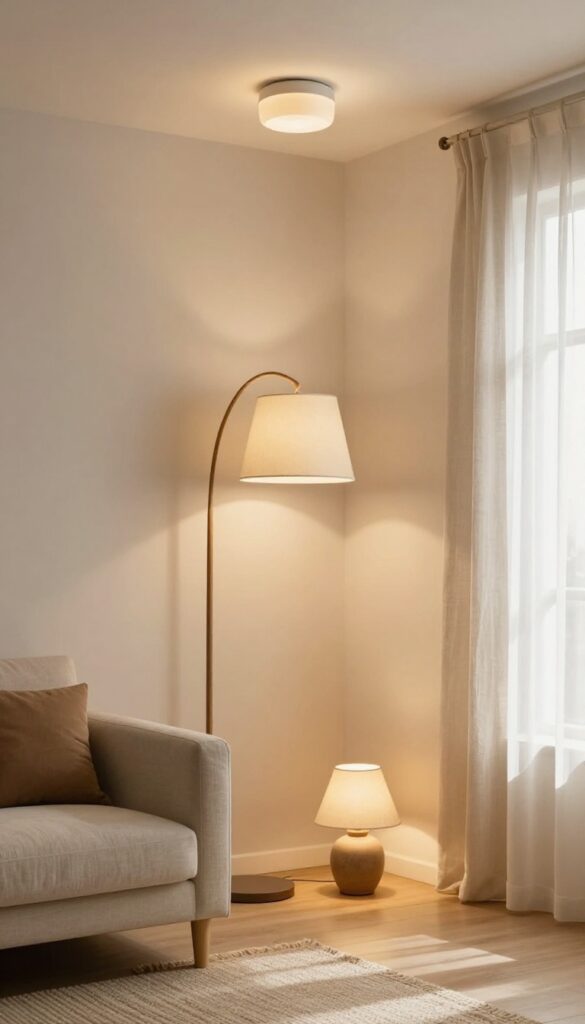
Lighting can make or break a small living room. When you rely on a single overhead fixture, shadows tend to gather in the corners, making the space feel smaller and more closed in. By layering light sources at different heights, you create a soft, balanced glow that opens up the room and adds a cozy, welcoming feel.
Think of it as painting with light—each layer adds depth and dimension without taking up any floor space.
Combining a ceiling fixture, a floor lamp, and a table lamp gives you control over the mood and functionality of the room. The ceiling light provides general illumination, while the floor lamp draws the eye upward, emphasizing height. A table lamp on a side table or shelf adds a warm, intimate pool of light at eye level.
This trio prevents harsh shadows and makes the room feel airy and well-balanced. For the best effect, use warm white bulbs (2700K-3000K) and dimmers so you can adjust the brightness throughout the day.
Lighting Tip
Place your floor lamp in a corner opposite the main seating area to visually widen the room. Choose a slim, tripod or arc lamp that doesn't crowd the space. For the table lamp, opt for one with a fabric shade to soften the light and add texture.
Best Fixtures
A flush-mount or semi-flush ceiling light with a translucent shade works best for even ambient light. For the floor lamp, a tall arc lamp that extends over the sofa saves floor space and creates a cozy reading nook. A small ceramic or glass table lamp with a warm-toned shade adds a touch of personality.
Cozy Detail
Use a smart bulb or plug-in dimmer for the floor lamp so you can easily switch from bright task lighting to a soft, movie-night glow. Adding a second table lamp on a console or shelf behind the sofa creates an extra layer of light that makes the room feel deeper.
FAQ
What colors make a small living room look bigger?
Light, neutral colors like soft white, pale gray, beige, and pastel tones reflect light and make walls recede. Stick to a monochromatic palette with subtle contrasts to avoid visual breaks that can make a room feel smaller.
How can I add storage without cluttering a small living room?
Use multi-functional furniture like ottomans with hidden storage, nesting tables, or a storage bench. Vertical shelving and wall-mounted cabinets keep floor space clear while providing plenty of room for essentials.
Should I use a rug in a very small living room?
Yes, but choose a rug that fits under the front legs of your furniture to anchor the seating area. A light-colored rug with a subtle pattern can define the space without overwhelming it.
Can I use dark colors in a small living room?
Absolutely, but use them sparingly. An accent wall in a deep hue can add depth, while lighter tones on the other walls keep the room open. Balance dark elements with plenty of light and mirrors.
What type of window treatment works best for small spaces?
Floor-length curtains in a light fabric hung high and wide are ideal. They elongate the room and let in maximum light. Avoid heavy drapes or valances that can visually shorten the walls.
Conclusion
Opening up a small living room is all about making smart, intentional choices that prioritize light and flow. Each of these ideas works together to create a space that feels larger than its square footage, while still wrapping you in warmth and comfort.
Start with one or two changes, and you'll quickly notice how your tight corners start to breathe. Remember, a small room doesn't have to feel small—it just needs the right approach to unlock its full potential.