10 Rectangle Living Room Ideas That Fix Awkward Flow
Rectangle living rooms come with a built-in challenge: they can feel more like a hallway than a hangout. The length draws the eye straight through, leaving you with dead zones and a layout that just doesn't click.
But with the right approach, that awkward shape can become your favorite room in the house. The trick is to break up the space without breaking the flow, using cozy layers and intentional furniture placement.
These ten ideas focus on practical, stylish solutions that make your rectangle living room feel balanced, inviting, and anything but awkward.
1. Create Two Distinct Zones with a Sofa Divider
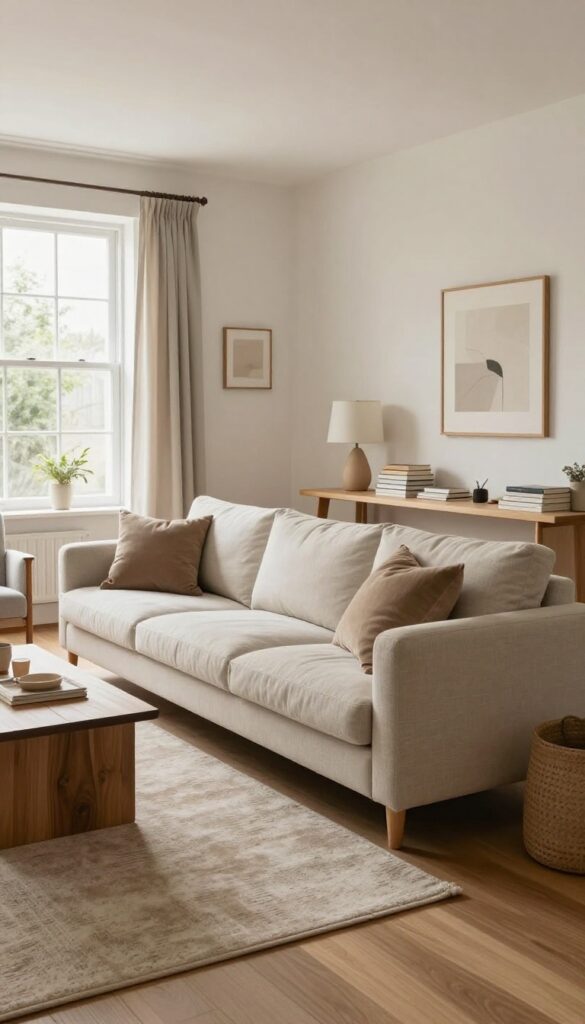
Long, narrow living rooms often feel like a bowling alley—empty in the middle and awkward at both ends. The fix is surprisingly simple: float your sofa perpendicular to the longest wall. Instead of pushing furniture against the perimeter, you carve the room into two purposeful zones.
One side becomes the main seating area for conversation and TV, while the other transforms into a cozy reading nook, a compact home office, or even a play corner. This layout breaks the tunnel effect and makes both halves feel intentional and lived-in.
The key is choosing a sofa that looks good from all sides—think a streamlined design with a finished back. Place it about two-thirds of the way into the room, leaving enough space behind for a console table or a desk. Anchor the seating zone with a rug that extends just past the front legs, and define the secondary zone with a different floor treatment, like a smaller rug or a change in flooring material.
Add a floor lamp or a pendant light above the secondary area to visually separate it further. The result is a room that feels wider, more functional, and far less awkward.
Best Layout Tip
Position the sofa so it faces the longest wall, not the short wall. This opens up the far end of the room for your second zone. Leave at least 3 feet of clearance behind the sofa for easy walking access.
Furniture Pairing
Behind the sofa, place a slim console table or a narrow desk. Top it with a lamp, a tray for keys, and a stack of books. This creates a visual barrier between zones while adding surface space for daily essentials.
Cozy Detail
Layer the secondary zone with a soft armchair, a pouf, and a warm throw blanket. A small side table with a plant or a candle makes the space feel like a purposeful retreat, not an afterthought.
2. Layer Rugs to Anchor Each Area
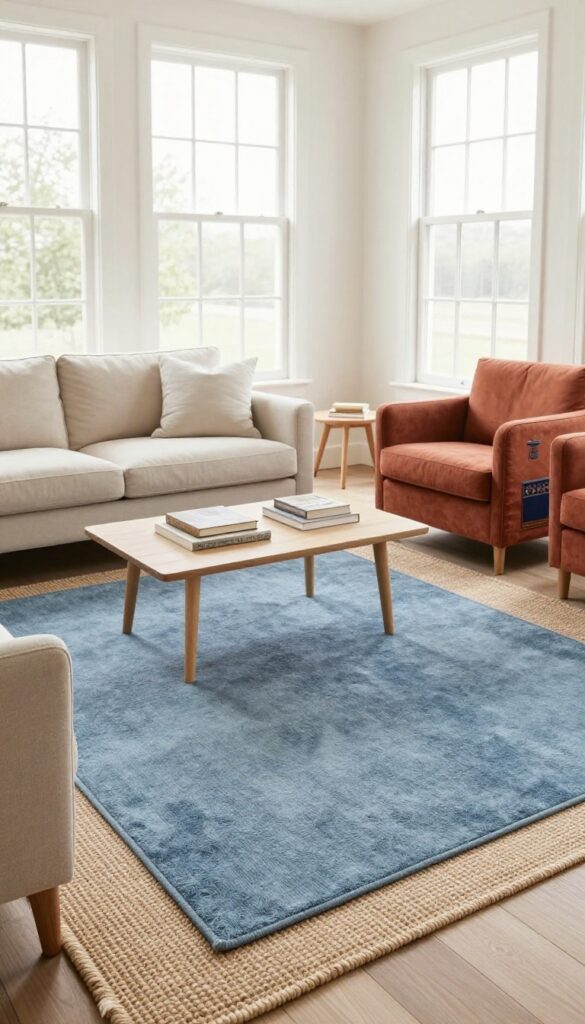
In a rectangle living room, one big rug often leaves awkward empty patches or makes the space feel like a single bowling alley. Layering two rugs—one under the main sofa and another under a secondary zone like a reading chair or a console table—instantly breaks up the length without needing walls. It’s a trick that feels both intentional and cozy, especially when you mix textures like a flatweave with a plush shag.
The key is choosing complementary colors so the room still reads as one cohesive space, not two separate rooms.
Start with a large natural fiber rug (jute or sisal) that covers most of the seating area, then layer a smaller wool or patterned rug on top at an angle or slightly offset. This creates a clear visual anchor for your main conversation group. For the secondary zone, place a second rug—maybe a soft cowhide or a vintage kilim—under a pair of armchairs or a small desk near the window.
The contrast in texture and scale defines each area without needing physical dividers. Keep the color palette connected: if your main rug is neutral, let the secondary rug introduce a subtle accent color that appears elsewhere in the room, like in throw pillows or art.
Texture Mix
Pair a low-pile or flatweave rug with a plusher one so the layers feel deliberate rather than messy. For example, a chunky wool rug over a sisal base adds warmth underfoot and visual interest. Avoid two rugs with similar pile heights—they tend to blur together and lose the layered effect.
Layout Tip
Position the larger rug so it extends at least 6–8 inches beyond the front legs of your sofa. Then place the smaller rug at a slight angle (15–30 degrees) to soften the room’s rectangular lines. This angled layering draws the eye diagonally, making the space feel wider and more dynamic.
Budget-Friendly Swap
If you’re on a tight budget, use a large jute rug as your base (often under $100 for a 6×9) and layer a smaller, more decorative rug from a discount home store. You can also use two identical rugs in different sizes from the same collection—they’ll naturally coordinate without extra effort.
3. Add a Long Console Table Behind the Sofa
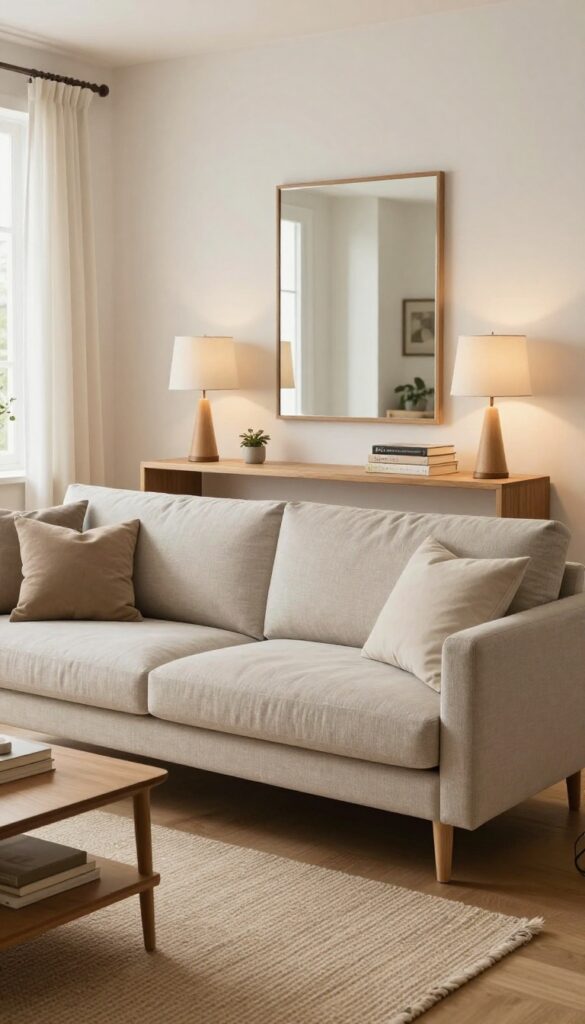
If your living room feels like a racetrack, with the eye zooming straight to the opposite wall, a console table behind the sofa is a simple fix. It acts as a visual anchor, creating a cozy barrier that defines the seating area and makes the room feel more intimate. Plus, it gives you a spot for lamps, books, and decor, adding both function and style without taking up extra floor space.
A narrow console table placed right behind a floating sofa adds depth and purpose to an awkward rectangular room. It stops the flow from rushing to the far wall, creating a layered look that feels intentional. Use it to hold table lamps for warm ambient lighting, stack a few coffee table books, or display a small plant and a catchall tray for remotes.
The key is to keep it shallow—no more than 12 to 14 inches deep—so it doesn't crowd the walkway behind it. Choose a style that complements your sofa: a sleek wood console for a mid-century vibe, a metal and glass one for a lighter feel, or a rustic reclaimed piece for warmth. Finish the look with a large mirror or art above to anchor the arrangement.
Best Materials For A Layered Look
- Since the console sits behind the sofa, you want it to blend without disappearing. A light wood like oak or ash keeps the room airy, while a darker walnut adds richness. For a more modern feel, try a slim metal frame with a glass or marble top—it won't weigh down the space visually.
- If you're going for cozy, a chunky wood console with visible grain and black metal hairpin legs strikes a nice balance between rustic and industrial.
Styling The Surface
- Treat the console as a mini vignette. Start with a pair of matching lamps for symmetry, then add a stack of books on one side and a small tray or bowl on the other. A low plant like a pothos or snake plant brings life without blocking the view.
- Keep the arrangement balanced but not too matchy—vary heights and textures. For example, a ceramic lamp next to a woven basket and a brass bookend creates visual interest without clutter.
Layout Tip For Walkways
- Make sure there's enough space to walk behind the sofa comfortably. Aim for at least 24 to 30 inches between the back of the console and the wall. If the room is tight, choose a console with open shelving or a slim profile so it doesn't feel bulky.
- In a narrow room, this trick actually makes the space feel wider by creating a clear path and a defined seating zone.
4. Use Vertical Stripes or Tall Bookcases to Shorten the Room
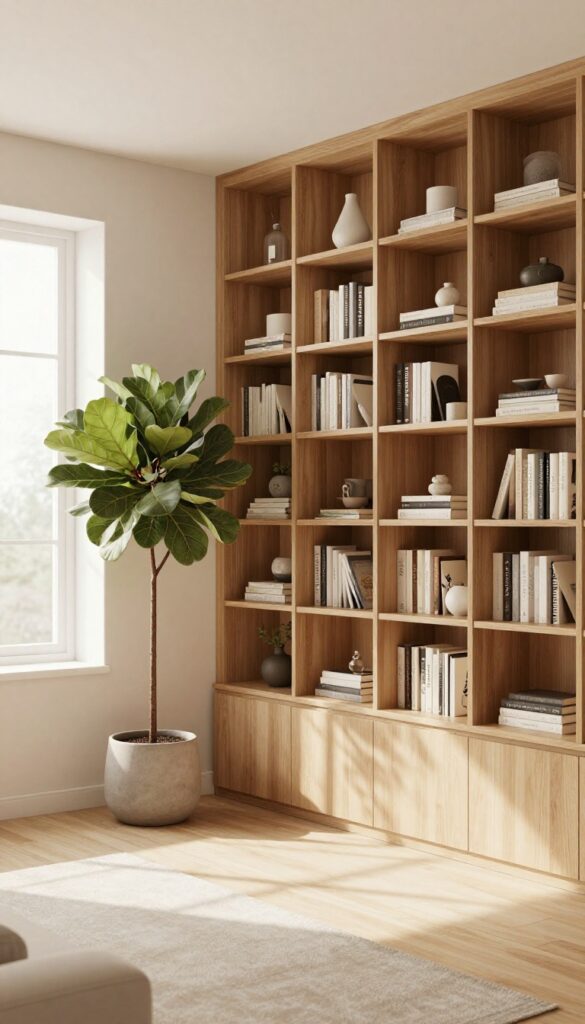
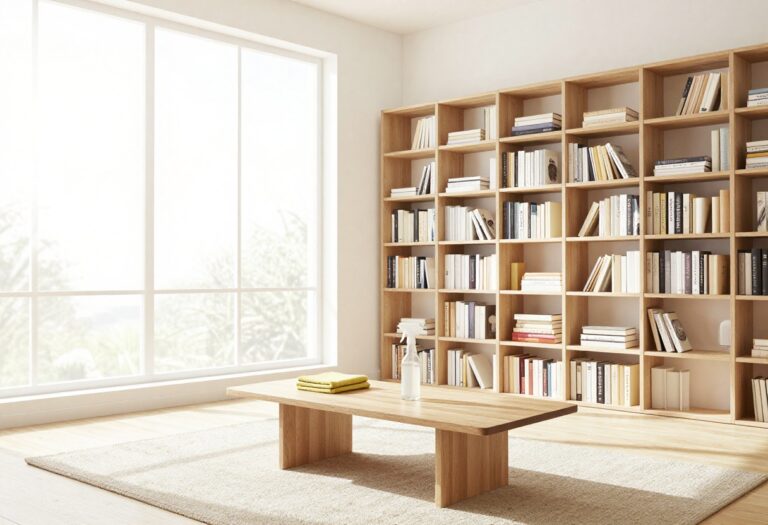
When a rectangle living room feels more like a bowling alley than a cozy hangout, the trick is to interrupt that long sightline. Vertical elements are your secret weapon here—they draw the eye upward, making the ceiling feel higher and the room feel less stretched out. Think floor-to-ceiling bookcases, tall houseplants, or curtains with bold vertical stripes.
It’s a simple visual hack that instantly balances the proportions without a single wall being moved.
The goal is to break up the length of the room by creating strong vertical lines that compete with the horizontal expanse. This doesn’t mean you need to install floor-to-ceiling shelving on every wall—one well-placed tall piece can do the trick. A pair of tall bookcases flanking a window or a large statement plant in the corner can shift the focus upward and make the room feel more square.
The key is to keep the vertical elements grounded with a bit of weight, like a chunky base or a pot that feels substantial, so they don’t look like they’re floating. This idea works especially well in long, narrow rooms where furniture often feels pushed against the walls. By drawing the eye up, you’re essentially tricking the brain into seeing more height and less length, which makes the space feel cozier and more balanced.
Best Colors And Patterns
- Go for vertical stripes in a subtle contrast—think navy on a light gray background or soft charcoal on cream. If stripes feel too bold, try a vertical chevron or a subtle pinstripe in the same color family. For bookcases, paint the back panel a slightly darker shade than the shelves to add depth without overwhelming the room.
- The key is to keep the palette cohesive with the rest of the room so the vertical element feels intentional, not like an afterthought.
Furniture And Styling
- A tall, open bookcase is a workhorse in a rectangle room. Style it with a mix of books, ceramics, and a few trailing plants that spill over the edges—this softens the vertical line and adds a cozy, layered feel. If you’re using curtains, hang the rod as close to the ceiling as possible and let the fabric pool slightly on the floor.
- This creates a continuous vertical line that makes the room feel taller and more pulled together.
Small-space Fix
- In a smaller rectangle living room, a single tall plant like a fiddle-leaf fig or a snake plant in a chunky pot can work wonders. Place it near the midpoint of the longest wall to visually cut the room in half. Pair it with a floor lamp that has a slim, vertical silhouette to reinforce the effect without taking up much floor space.
- This trick is especially useful in rooms where you can’t add built-in shelving.
5. Install a Gallery Wall on the Longest Wall
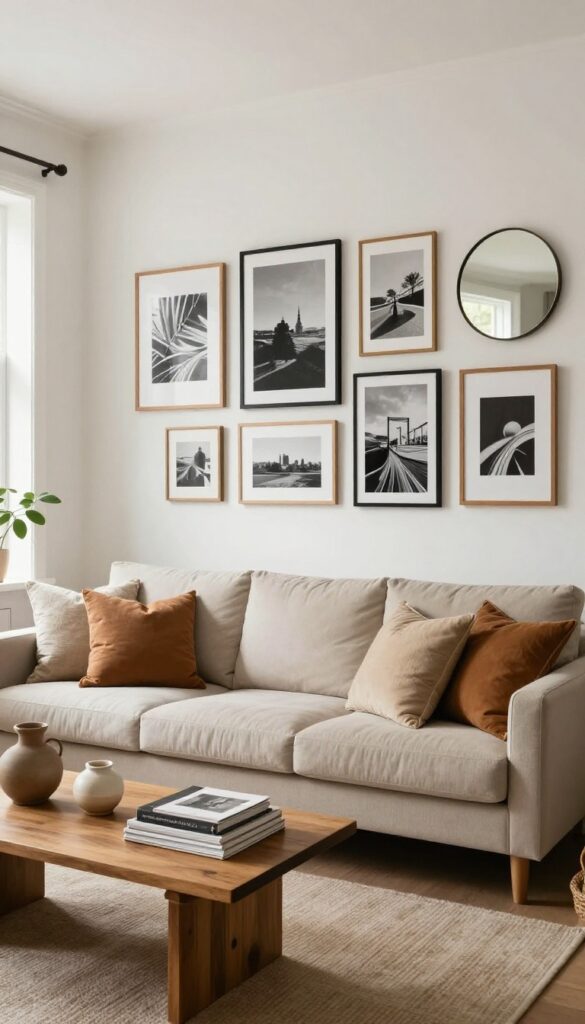
That long, empty wall in your rectangle living room can feel like a missed opportunity—or worse, a tunnel that pulls your eye straight through the space. A gallery wall changes that by creating a horizontal focal point that naturally spreads your gaze sideways, making the room feel wider and more balanced. The key is to treat it like a curated collection, not a random hang.
Mix frame styles, sizes, and art types for a look that feels collected over time rather than bought in a set. This approach adds warmth and personality while subtly fixing the awkward flow.
A gallery wall on the longest wall does double duty: it anchors the room visually and breaks up the length, so your eye stops and wanders rather than zooming to the far end. Start by laying out your pieces on the floor to find a composition that feels balanced but not symmetrical—think organic, like a puzzle. Use a mix of black-and-white prints, small paintings, and maybe a mirror or two to add depth.
Keep the outer edges aligned loosely so the arrangement feels intentional but relaxed. This trick works especially well when the wall is opposite your main seating, giving everyone something interesting to look at without making the room feel cluttered.
Best Frame Mix
Stick to two or three frame colors—black, natural wood, and brass or gold—to keep the look cohesive without being matchy. Thin frames feel lighter and more modern, while thicker frames add a traditional, collected vibe. Mix matted and unmatted pieces for variety, and don't be afraid to include a small sculptural object like a ceramic plate or a woven basket on a shelf bracket to break up the rectangles.
Layout Tip
Before hammering any nails, trace each frame onto kraft paper, cut out the shapes, and tape them to the wall. This lets you step back and adjust spacing (aim for 2–3 inches between frames) without making extra holes. For a rectangle living room, keep the gallery wall centered on the longest wall, but extend it closer to the seating area to pull that side of the room in visually.
Cozy Detail
Add a small picture light above the gallery wall or a pair of sconces flanking it. The warm glow highlights the art and creates a soft, layered lighting effect that makes the whole wall feel like a destination. This also helps the gallery wall feel intentional and polished, not just a random collection.
6. Place a Round Coffee Table to Soften Angles
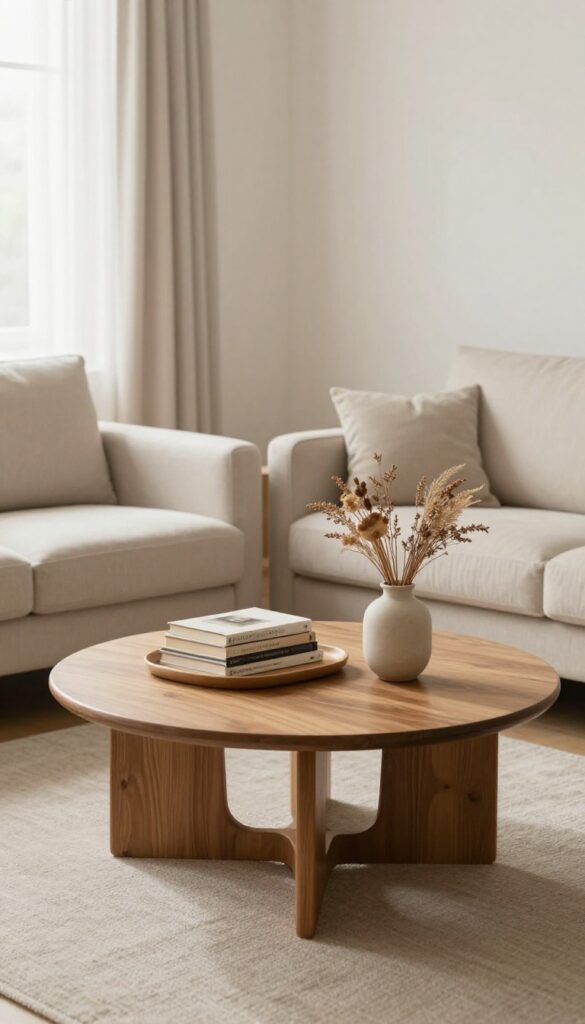
In a rectangular living room, straight lines dominate—from the sofa to the media console to the rug edges. A round coffee table is the perfect counterbalance. Its curved shape breaks up all those hard angles, making the space feel more inviting and less boxy.
Plus, the lack of sharp corners means you can squeeze past without stubbing your toe, which is a win for both style and sanity.
A round coffee table does more than just look good—it actively improves how a room functions. In an awkward rectangular layout, traffic often gets blocked by furniture corners. A round table lets people move around the seating area naturally, creating a smoother flow.
It also encourages conversation because everyone can see each other without a table edge jutting between them. For a cozy, layered feel, choose a table with a warm wood finish or a soft upholstered top, and style it with a stack of books, a small tray, and a low vase of dried flowers.
Best Materials For A Cozy Feel
To keep the look warm and inviting, go with natural materials like oak, walnut, or a matte stone. A wooden round table with a live edge adds organic texture, while a marble or travertine top brings subtle elegance. For extra softness, consider an upholstered round ottoman that doubles as a table—it's perfect for putting your feet up and adds a plush layer to the room.
Scale And Placement Tips
- Size matters here. A round coffee table should be about two-thirds the length of your sofa for proper proportion. Place it 14 to 18 inches from the sofa seat so you can reach it comfortably without feeling cramped.
- In a long, narrow room, center the table in front of the sofa and leave at least 24 inches of clearance on each side for easy walking.
Styling For A Layered Look
- Because the table itself is a sculptural element, keep the styling simple but intentional. Start with a round tray to corral remotes and coasters. Add a ceramic vase with a few stems or a stack of coffee table books.
- A small bowl or candle adds a cozy finishing touch. The key is to leave enough bare surface so the round shape remains the star.
7. Hang Curtains Wide and High for Softness
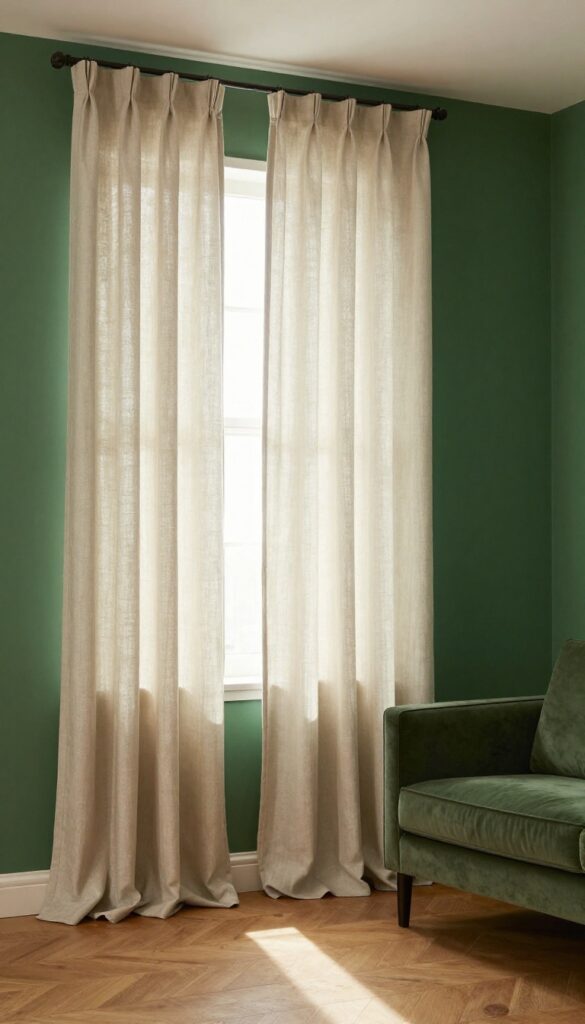
Rectangle living rooms can feel boxy and stiff, especially when the windows are the only source of natural softness. The trick is to trick the eye with curtains that go way beyond the window frame. Mounting the rod close to the ceiling and extending it past the sides makes the room instantly feel wider and taller.
Floor-length drapes in a warm fabric like velvet or linen add that cozy, grounded feel without taking up any floor space.
This simple change does more than just frame the window—it reshapes the whole room. In a rectangle, every line matters, and horizontal lines from wide curtains break up the long vertical feel. The fabric also absorbs sound and adds texture, which makes the space feel more intimate.
Go for a tone that complements your walls but offers a bit of contrast, like a soft oatmeal against a deep green wall or a dusty blush with warm gray.
Best Fabric Choices
- Velvet is the top pick for a cozy, layered look. It adds weight and richness, which helps ground a narrow room. Linen is a close second if you want something more casual and airy.
- Avoid anything too stiff or shiny—you want the curtains to drape softly and pool just a bit on the floor for that relaxed, intentional feel.
Mounting And Length Tips
- Install the rod 4 to 6 inches below the ceiling and extend it 8 to 12 inches past each side of the window. This makes the window look larger and the ceiling higher. Curtains should just kiss the floor or puddle slightly.
- If they're too short, the whole effect falls flat. Use a continuous rod with rings for a clean, seamless look.
Finishing Touch: Layering
- For extra warmth, layer sheer panels under the main curtains. This lets in soft light during the day while still providing privacy. In a rectangle living room, the layered look adds depth and prevents the space from feeling one-dimensional.
- Choose sheers in a similar color family to keep the palette cohesive.
8. Add a Low Bookshelf as a Room Divider
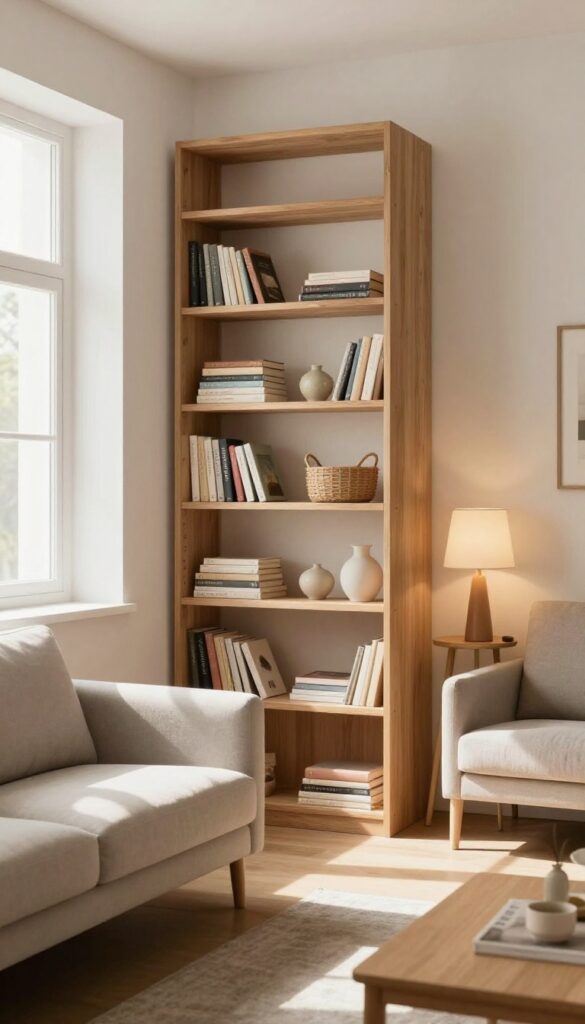
In a long, narrow living room, the biggest challenge is often traffic flow. You want distinct zones—like a seating area and a reading nook—without making the space feel chopped up or dark. A low, open bookshelf placed perpendicular to the wall does exactly that: it defines areas while letting light pass through and keeping sightlines open.
It’s a practical solution that also adds storage and display space, so it pulls double duty without looking bulky.
The key is choosing a bookshelf that’s low (around 30–36 inches tall) and open on both sides. This keeps the room airy and lets you style it from every angle. Use it to store baskets for remotes and blankets, stack books horizontally, and tuck in a few small plants.
Top it with a warm-toned lamp to create a cozy glow in the evening. The shelf acts as a subtle boundary, guiding foot traffic around it rather than through the middle of the room.
Best Height And Placement
Aim for a bookshelf that hits below eye level when seated—around hip height. Place it about two-thirds of the way into the room, perpendicular to the longer wall. This creates a natural L-shaped layout that defines the living area without blocking the path to the dining or entry zone.
Styling For Both Sides
- Treat both sides of the shelf as display surfaces. On the living room side, stack a few large coffee table books and a ceramic vase. On the back side, add a small tray for keys or a stack of magazines.
- This makes the shelf feel intentional from every viewpoint, not just a barrier.
Lighting And Layering
Top the shelf with a table lamp or a pair of small lamps to anchor the seating area. The soft light will make the shelf feel like a piece of furniture rather than a divider. Add a runner or a low rug on either side to further define the zones without closing off the space.
9. Cluster Seating in a Square Formation
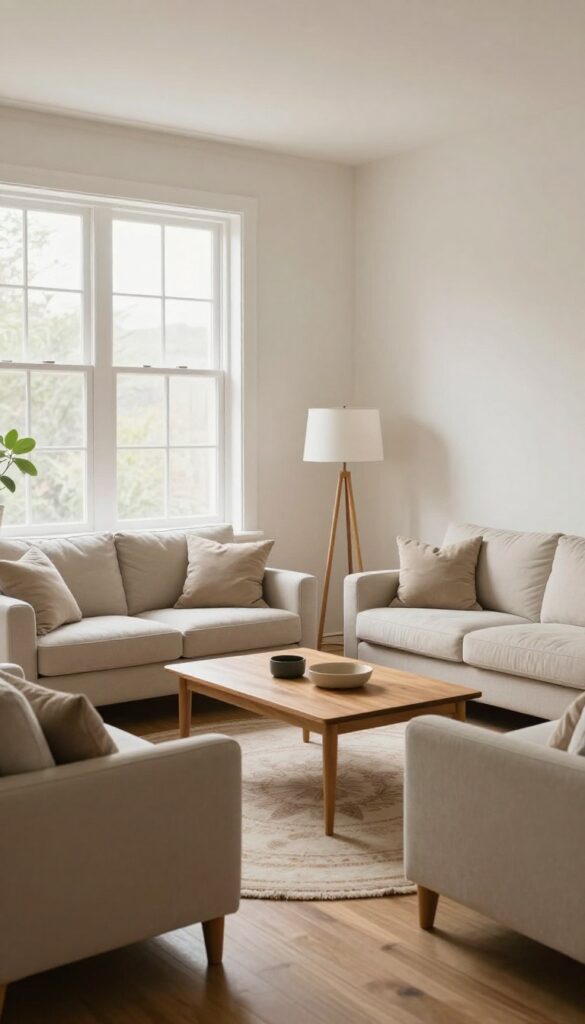
Long, narrow living rooms often feel like hallways because furniture is pushed against the walls. Breaking that habit by grouping seating in a square or circular arrangement near the center instantly changes the energy. It creates an intimate conversation zone and visually shortens the room, making the space feel cozier and more intentional.
Instead of lining furniture along the walls, group sofas and chairs in a square or circular arrangement near the center. This creates an intimate conversation zone and reduces the corridor feel.
Best Layout Tip
Position a sofa opposite two armchairs with a coffee table in the middle. Leave enough space behind the seating for walking—about 36 inches is ideal. This forms a natural square that anchors the room without blocking flow.
Cozy Detail
Add a round rug under the seating cluster to soften the geometry and visually unite the pieces. Choose a rug with a low pile for easy movement and a pattern that ties together your color scheme.
Finishing Touch
Place a floor lamp or a small side table at one corner of the square to break up the symmetry. A sculptural lamp adds height and a casual, layered feel.
10. Use Pendant Lights to Define Zones
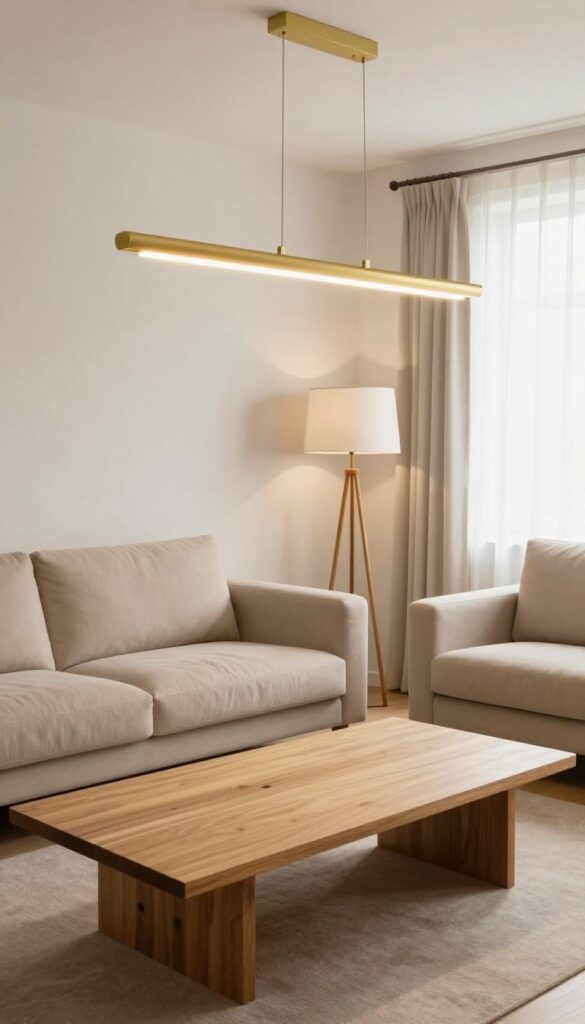
In a long, narrow rectangle living room, lighting does more than just brighten the space—it carves out distinct areas. Pendant lights or a linear chandelier hung above the main seating area create a visual anchor, making that zone feel intentional and grounded. Pair them with floor lamps in secondary spots to layer the light and naturally guide the eye around the room.
This approach turns an awkward layout into a series of cozy, purposeful pockets.
The key is to hang pendants low enough (about 30–36 inches above a coffee table) so they feel intimate, not distant. Choose fixtures with warm metal finishes like brass or black for a practical yet stylish look. In the reading nook or media corner, add a tall floor lamp with a fabric shade to soften the glow.
This layered lighting strategy not only fixes flow but also makes the room feel deeper and more inviting.
Best Fixture Styles
- For a rectangle room, go with a linear suspension or a row of three small pendants. This echoes the room’s length and reinforces the zone. Drum shades or glass globes keep the look airy.
- Avoid bulky chandeliers that might overwhelm the space.
Placement Tip
Center the main pendant over the seating group, not the entire room. If your sofa is against one wall, hang the light directly above the coffee table. This anchors the conversation area and leaves the far end free for a desk or console.
Lighting Layers
Add floor lamps at opposite ends of the room to balance the light. Use dimmers on all fixtures so you can adjust the mood from bright and functional to soft and cozy. This prevents any one zone from feeling too dark or too harsh.
FAQ
How do you arrange furniture in a rectangular living room?
Float furniture away from the walls to create zones. Use a sofa perpendicular to the long wall to break the space, and add a rug to anchor each area. Avoid lining everything along the walls.
What colors work best for a long narrow living room?
Light, warm neutrals on the walls keep the room airy, while deeper accent colors on the shorter walls can make the room feel more square. Use color to define zones without overwhelming.
Should I put a TV on the long wall in a rectangle living room?
It depends on your layout. If the long wall is the only option, mount the TV and arrange seating perpendicular to it. Alternatively, place the TV on a short wall to shorten the visual length.
How can I make a rectangular living room feel cozy?
Layer textures with rugs, throw pillows, and curtains. Use warm lighting from multiple sources, and create intimate seating clusters. Avoid leaving large empty spaces that feel cold.
What is the best rug size for a rectangular living room?
Use a large rug that fits under the front legs of your furniture to unify the seating area. For a long room, consider two rugs to define separate zones, but keep them visually connected.
Conclusion
A rectangle living room doesn't have to feel like a bowling alley. With a few smart layout choices and cozy layers, you can turn that awkward shape into a warm, functional space that actually works for how you live.
Start with one or two of these ideas and see how the room starts to feel more balanced. Small changes—like floating a sofa or adding a round coffee table—can make a surprisingly big difference in flow and comfort.