11 Living Room Art Ideas That Add Personal Character
Your living room walls are a blank canvas waiting for your story. The right art can turn a generic space into a reflection of who you are—your travels, your tastes, your memories. But with so many options, it's easy to feel stuck between matching sets and bare walls.
That's where these ideas come in. We're focusing on art that feels personal, not perfect. Think layered textures, meaningful pieces, and arrangements that grow with you.
Whether you love bold statement pieces or quiet, collected vignettes, there's something here to spark your next wall refresh. Let's walk through 11 ways to bring character into your living room through art—no design degree required.
1. Lean a Large Canvas Against the Wall
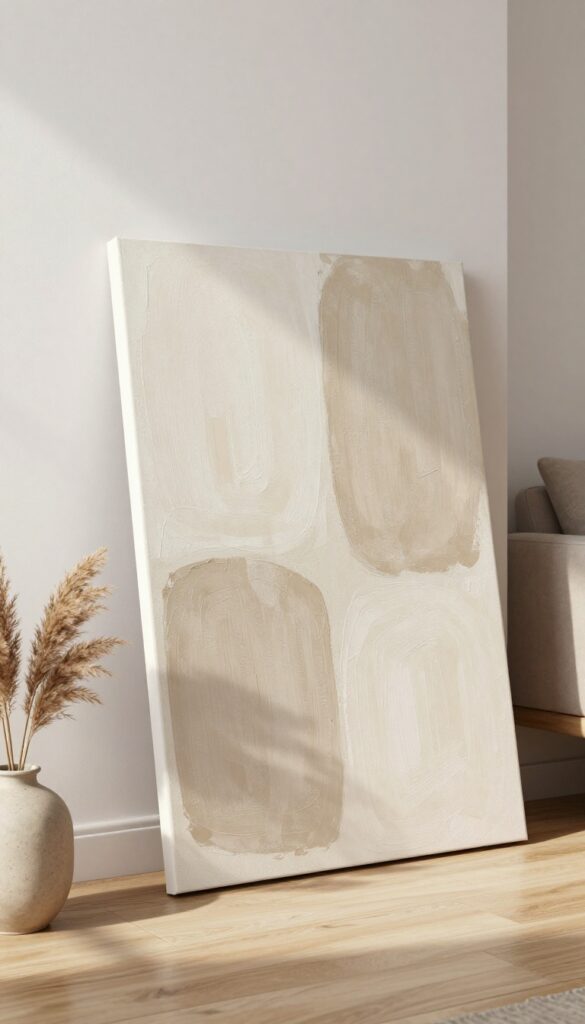
There’s something effortlessly cool about a big canvas casually resting against the wall instead of being hung up. It creates an instant focal point without the commitment of drilling holes, and the tilted angle adds a relaxed, approachable feel to the room. This styling trick works especially well in living rooms where you want to keep the vibe cozy and unpretentious—like a space that’s lived in, not staged.
Leaning a large canvas against the wall is one of the simplest ways to introduce art into your living room while keeping the atmosphere laid-back. The key is to choose a piece that’s substantial enough to hold its own—think at least 36 inches wide—so it doesn’t get lost against the wall or furniture. Place it on a console table, a sideboard, or directly on the floor behind a sofa for a gallery-like feel that’s still grounded.
The lean creates a natural shadow line that adds depth, and you can easily swap it out whenever you want a fresh look. This approach is perfect for renters or anyone who likes to rearrange often, and it instantly makes the room feel more curated and personal.
Best Placement Spots
For maximum impact, lean your canvas on a console table behind the sofa, or on the floor in an empty corner. If you have a fireplace mantel, try leaning a smaller canvas there to break up the vertical lines. The key is to let the art rest at a slight angle so it catches the light and feels intentional, not accidental.
Choosing The Right Scale
Go big—a canvas that’s at least 40 inches wide will anchor the room without competing with other elements. If your sofa is long, consider a diptych or triptych leaned side by side for a balanced, gallery-like arrangement. Avoid tiny pieces that will look lost; the whole point is to make a statement with minimal effort.
Styling Around The Canvas
Keep the area around the leaned canvas clutter-free to let it breathe. Add a small stack of books or a ceramic vase on the console table to anchor the composition, but don’t overcrowd. The canvas itself should be the hero—use neutral or complementary tones in the surrounding decor to tie everything together without distraction.
2. Create a Salon-Style Gallery Wall
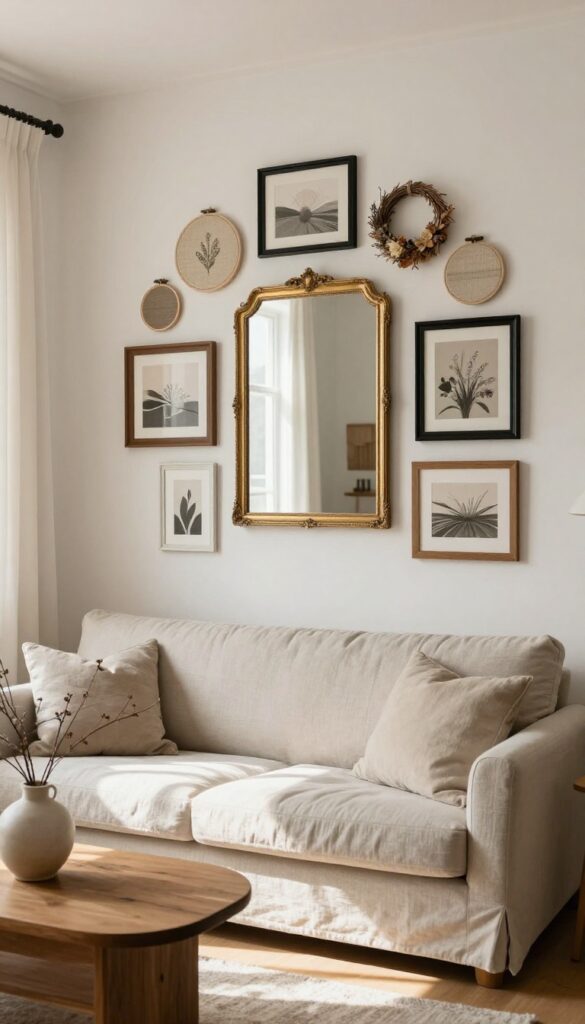
A salon-style gallery wall is the opposite of a rigid, uniform grid. It’s a curated, layered arrangement that feels collected over time, not assembled in an afternoon. By mixing frame sizes, colors, and styles, you get a wall that tells a story and adds instant personality to your living room.
The key is to embrace variety while keeping a cohesive visual flow.
Start with a central anchor piece—maybe a large painting or a vintage mirror—and build outward. Use frames in different finishes like black, gold, wood, and white, and mix in unexpected items like a small textile hoop or a dried floral wreath. Keep spacing consistent at about two inches between each piece to avoid a chaotic look.
This style works especially well above a sofa, console table, or in a reading nook, turning a blank wall into a focal point that feels personal and layered.
Layout Tip
- Before hammering any nails, lay the arrangement out on the floor first. Trace each frame onto kraft paper, cut out the shapes, and tape them to the wall. This lets you adjust spacing and composition without making extra holes.
- Start with your largest piece slightly off-center, then cluster smaller frames around it, balancing visual weight as you go.
Best Frame Mix
Aim for a mix of at least three frame styles: one or two ornate or vintage frames, several simple modern ones, and maybe a matted frame for contrast. Stick to a limited color palette—like black, brass, and natural wood—to keep the collection from feeling messy. If your frames are all different, repeating a color or material helps tie them together.
Finishing Touch
Add small three-dimensional objects like a tiny shelf with a miniature plant or a small ceramic sculpture to break up the flatness. This adds depth and makes the gallery feel even more curated. A picture light mounted above the arrangement casts a warm glow and highlights the textures at night.
3. Hang a Tapestry or Woven Wall Hanging
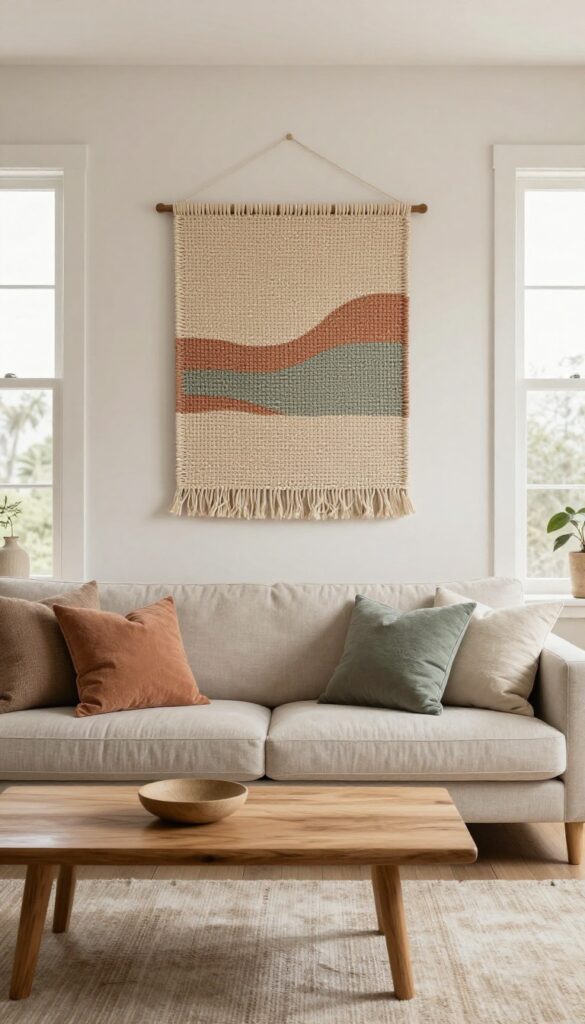
Textile art is an underrated way to bring warmth and softness into a living room. Unlike a framed print or canvas, a woven wall hanging adds texture that literally softens the hard surfaces around it. The natural fibers and earthy tones create a cozy, layered look that feels grounded and inviting, while also helping to absorb sound in an otherwise echoey space.
A tapestry or woven wall hanging makes an immediate visual statement without overwhelming the room. The key is choosing a piece that complements your existing color palette and adds a tactile element that other wall art can't. Look for materials like cotton, wool, or jute in neutral or muted tones—think oatmeal, clay, sage, or charcoal.
These shades blend seamlessly with most decor styles, from boho to modern minimalist. Hang the tapestry at eye level, centered on a prominent wall or above a sofa, bed, or console table. For a more dramatic effect, choose an oversized piece that spans a good portion of the wall.
The irregular edges and natural texture of woven art create a soft, organic focal point that feels intentional and collected, not like a last-minute filler.
Best Placement
- The most impactful spot is above a sofa or bed, where the textile can anchor the seating or sleeping area. In a living room, hang it on the wall opposite the main seating arrangement so it becomes a visual anchor. Avoid placing it in direct sunlight, as natural fibers can fade over time.
- If your room has low ceilings, a vertical wall hanging can draw the eye upward and make the space feel taller.
Texture And Color Pairing
- To keep the look cohesive, pair your tapestry with other textured elements like a chunky knit throw, a sisal rug, or linen curtains. Stick to a warm, earthy color palette—terracotta, mustard, olive, or rust—to enhance the cozy vibe. If your room already has a lot of pattern, choose a solid or subtly textured piece to avoid visual clutter.
- For a boho feel, layer multiple smaller weavings in a gallery-style arrangement.
Hanging And Care Tips
- Most tapestries come with a rod pocket or loops for easy hanging. Use a wooden dowel or a decorative curtain rod to display it, and secure it with hooks or brackets. If the piece is heavy, reinforce the wall with anchors.
- To keep it looking fresh, gently vacuum the surface with a brush attachment every few weeks, and spot clean with mild soap and water if needed. Avoid machine washing, as it can distort the fibers.
4. Display a Single Oversized Statement Piece
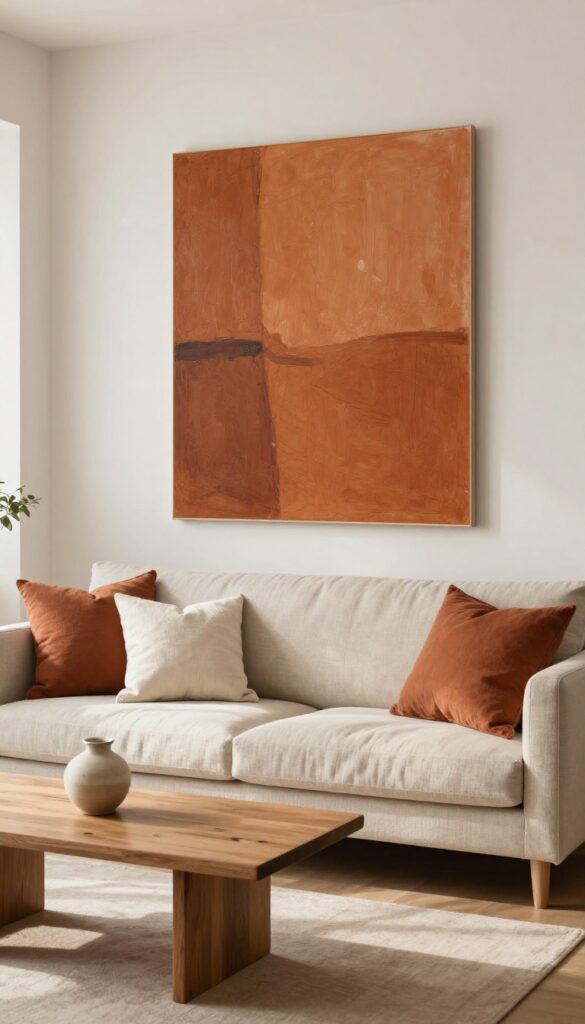
Sometimes the most powerful move you can make is to commit to just one piece of art—and go big. An oversized canvas or print instantly becomes the focal point of the room, setting the tone without needing anything else to compete. The trick is to let it breathe: keep the surrounding walls clean and the furniture understated, so the artwork can do its job.
Choose something that genuinely resonates with you, whether it's a bold abstract, a serene landscape, or a graphic black-and-white photograph. That single piece will anchor the space and give it a sense of purpose and personality.
When you hang one large piece, you're making a confident design statement. It eliminates the guesswork of gallery walls and creates a clean, curated look. The key is scale—aim for artwork that takes up about two-thirds to three-quarters of the width of the furniture below it (like a sofa or console).
This creates visual balance without feeling cramped. And because the piece is the star, you can get away with simpler furniture and fewer accessories, which actually makes the room feel more intentional and less cluttered.
Best Placement
Above a sofa, console, or mantel is classic, but don't be afraid to lean it against the wall on the floor for a casual, modern vibe. In a cozy layered room, placing the art slightly lower than eye level (so the bottom edge is about 8-10 inches above the furniture) helps it feel grounded and part of the overall composition.
Color Flow
Pull one or two accent colors from the artwork and echo them in throw pillows, a rug, or a small vase nearby. This creates a subtle visual thread that ties the room together without making the art feel disconnected. For a calm, layered look, choose a piece with soft, muted tones that blend with your existing palette.
Lighting Tip
Highlight your statement piece with a picture light or a directional floor lamp. Warm, focused light adds depth and makes the colors pop, while also creating a cozy glow in the evening. Avoid harsh overhead lights that can wash out the art.
5. Frame Personal Photographs in a Grid
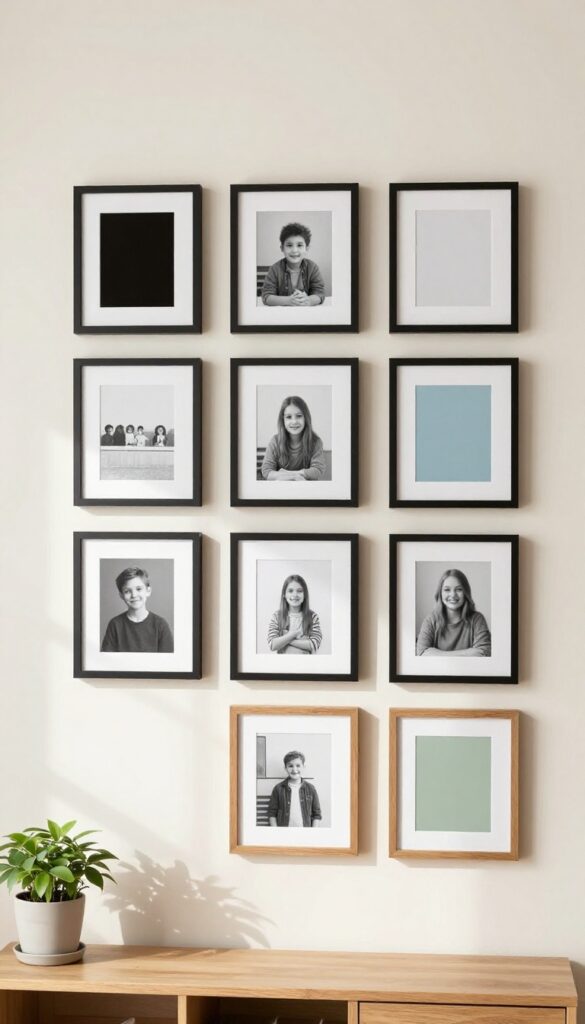
A grid of personal photos brings warmth and a sense of history into your living room without feeling cluttered. By using matching frames and a balanced layout, you turn casual snapshots into a polished focal point. Mixing black-and-white prints with colored mats adds depth while keeping the overall look clean and intentional.
Start by selecting 6 to 9 of your favorite photos—think travel memories, family moments, or candid shots. Choose a consistent frame style, like slim black or natural wood, to keep the grid cohesive. Arrange them in a square or rectangle pattern on the wall, leaving equal spacing between each frame (about 2 to 3 inches works well).
For added visual interest, use white or cream mats for some photos and colored mats—like soft blue or sage green—for others. This subtle variation keeps the eye moving without breaking the grid's structure.
Best Colors And Finishes
- Stick with neutral frame colors like black, white, or unfinished wood to let the photos stand out. If your room leans warm, brass or gold frames add a touch of elegance. For a more casual vibe, mix matte black with natural oak.
- The mats should complement your wall color—white mats pop against dark walls, while cream mats soften the look on light walls.
Layout And Spacing Tip
- Before hammering any nails, lay the frames on the floor to test the arrangement. Use painter's tape to mark the corners on the wall. Keep spacing uniform—a good rule is 2.5 inches between frames.
- Center the grid at eye level, roughly 57 to 60 inches from the floor to the center of the arrangement.
Cozy Detail
Add a small shelf just below the grid to display a few tiny objects—a ceramic vase, a stack of old books, or a small plant. This grounds the photos and makes the wall feel layered and lived-in, not just a gallery.
6. Incorporate a Sculptural Wall Object
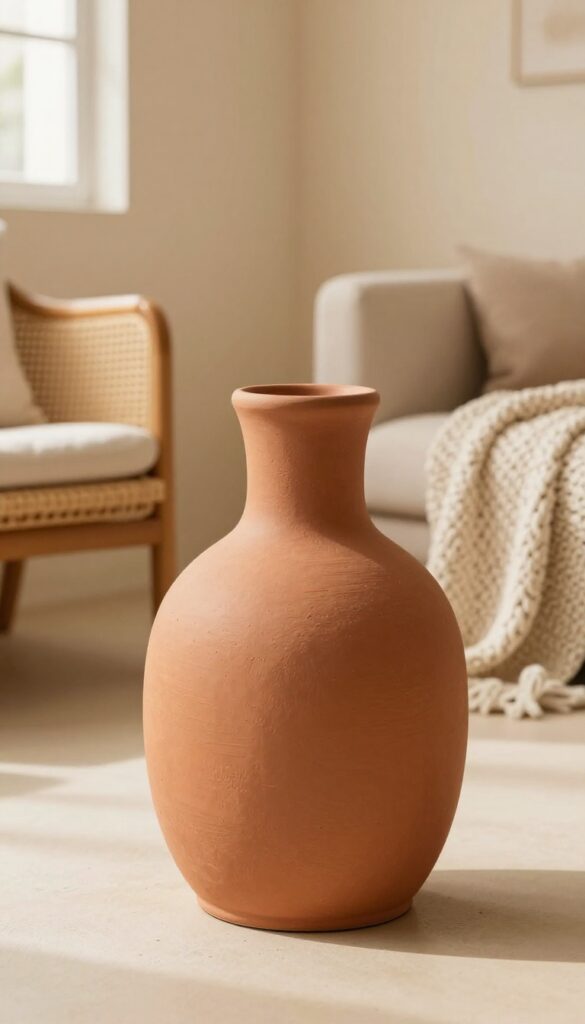
Flat art has its place, but nothing adds depth like a sculptural piece mounted on the wall. A ceramic sunburst, a woven fiber sculpture, or a carved wooden relief brings a tactile quality that instantly makes the room feel more collected. These objects catch light differently throughout the day, creating shifting shadows that add warmth and intrigue.
They also break up large empty walls without overwhelming the space—perfect for a cozy, layered living room.
A sculptural wall object acts as a focal point without demanding all the attention. Its three-dimensional form invites the eye to explore, adding a sense of craftsmanship and personality. Because these pieces often have natural textures—rough clay, smooth metal, or grainy wood—they complement cozy interiors filled with soft textiles and warm lighting.
Place one above a sofa, console table, or in an entryway nook to create a subtle anchor that feels intentional and unique.
Best Materials For A Cozy Look
- Natural materials like unglazed ceramic, rattan, or raw-edged wood blend seamlessly with layered decor. A matte black metal sculpture adds contrast without feeling cold, while a woven seagrass piece brings organic texture. Avoid glossy or overly polished finishes—they can read as sleek rather than cozy.
- Stick to earthy tones like terracotta, sand, or warm brown for a grounded feel.
Placement And Scale Tips
- Hang the piece at eye level, about 57 to 60 inches from the floor to center. For small walls, choose a piece no larger than two-thirds the width of the furniture below it. On a large wall, a single oversized object can stand alone, or cluster two or three smaller pieces in an asymmetrical arrangement.
- Leave at least 6 inches of breathing room around the object so it doesn't feel cramped.
Lighting To Enhance Dimension
Direct a picture light or a small adjustable spot at the sculpture to cast dramatic shadows and highlight its texture. Warm bulbs (2700K) keep the glow soft and inviting. If the piece is near a window, position it so natural light hits it at an angle—morning or late afternoon light works best to reveal its form without harsh glare.
7. Layer Art on a Shelf or Mantel
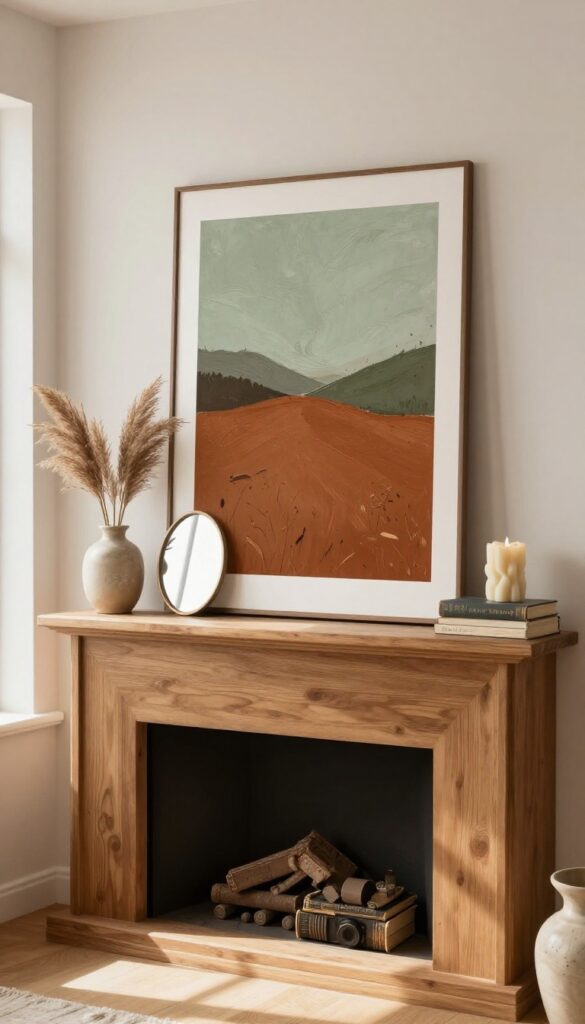
Gallery walls aren’t the only way to make a statement. Layering art on a shelf or mantel gives you that curated, collected look without committing to nail holes. It’s perfect for renters or anyone who likes to refresh their space seasonally.
By propping smaller pieces in front of larger ones, you create depth and a sense of abundance that feels intentional, not cluttered.
Start with a sturdy shelf or mantel as your foundation. Choose a large piece of art as your anchor—maybe a landscape or abstract print—and lean it against the wall. Then, place smaller frames, photographs, or even a small mirror in front, overlapping slightly.
Mix in a few objects like a ceramic vase, a stack of books, or a sculptural candle to break up the rectangles. The key is to vary heights and depths so the eye moves around naturally. This setup works especially well above a sofa, console table, or fireplace.
It gives your living room a lived-in, personal feel that’s easy to update when your mood or the season changes.
Best Colors
- Stick to a cohesive color palette to keep the layered look from feeling chaotic. Warm neutrals like beige, cream, and soft brown create a calm backdrop. If you want more contrast, pull one accent color from your anchor piece—like a muted rust or sage green—and echo it in smaller frames or objects.
- This ties everything together without matching too perfectly.
Shelf Styling Tip
- Don’t line everything up in a row. Overlap frames by about an inch or two, and let some items sit slightly off-center. Use bookends or a small stack of books to elevate a smaller piece.
- Play with negative space too—leave a few inches between clusters so the arrangement breathes. And always step back to check the balance from across the room.
Budget-Friendly Swap
- You don’t need expensive art to pull this off. Frame pages from a vintage book, a favorite postcard, or even a piece of fabric. Thrift stores are goldmines for unique frames you can spray-paint in a unified color.
- Mixing high and low keeps the look authentic and easy on your wallet.
8. Use a Floor Easel to Display a Canvas
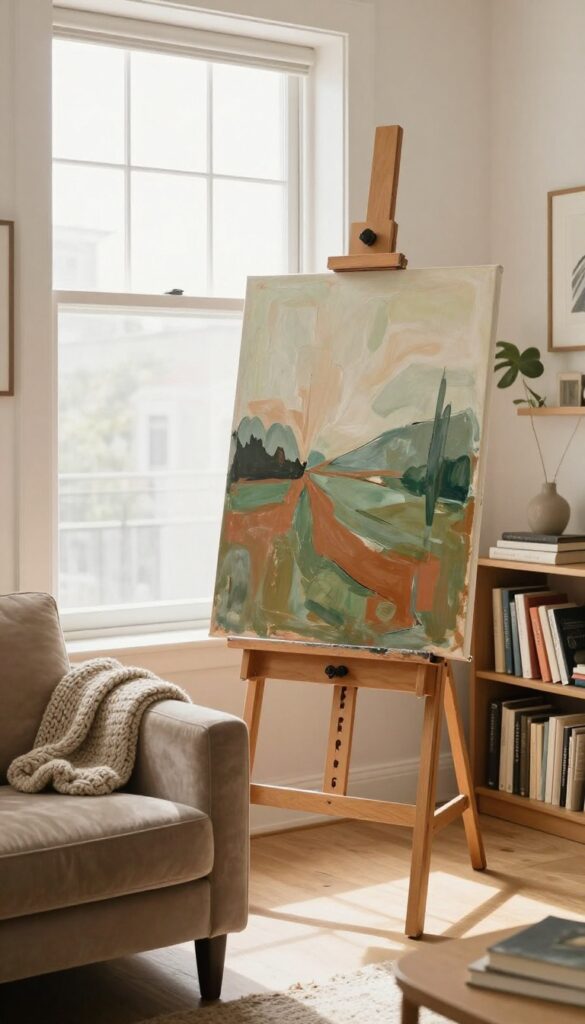
A wooden easel brings an artist-studio vibe into your living room, instantly making the space feel creative and curated. It's perfect for rotating art—swap out canvases with the seasons or your mood—and even when empty, the easel itself stands as a sculptural piece. This idea works especially well in cozy, layered rooms where you want to add height and a touch of imperfection.
A floor easel is a versatile decor piece that doubles as both art display and sculpture. Place it in a corner near a window or beside a bookshelf to create a mini gallery moment. The natural wood tones of the easel add warmth and texture, complementing soft textiles like a chunky knit throw or a velvet sofa.
For a cohesive look, choose a canvas that picks up colors already in your room—maybe a muted landscape or an abstract in earthy greens and terracotta. The easel also solves the problem of blank walls if you rent or just don't want to commit to hanging art. It's an easy way to introduce a personal, ever-changing focal point without any tools or holes.
Best Placement And Scale
- Position the easel in a spot where it has breathing room—avoid crowding it with furniture. A corner next to a reading chair or beside a console table works well. The easel should be tall enough to feel substantial but not overpowering; a 5- to 6-foot easel is ideal for most living rooms.
- If your ceilings are low, a smaller tabletop easel can still create the same effect on a sideboard or shelf.
Styling The Canvas
- Go for a canvas that feels intentional, not random. Abstract art with soft brushstrokes or a simple line drawing keeps the look clean. You can also lean a framed piece on the easel for a more polished feel.
- To keep the rotation easy, store extra canvases behind the sofa or in a basket nearby. For a cozy touch, drape a small garland or a piece of dried eucalyptus over the top of the easel—just keep it minimal.
Texture And Finishing Touches
- The easel's natural wood pairs beautifully with other organic materials like linen, wool, and rattan. Add a small stool or stack of books at the base to anchor it. A warm-toned floor lamp nearby will cast soft light on the canvas, making the art feel even more inviting.
- If the easel is in a high-traffic area, choose a sturdy one with a wide base to prevent tipping.
9. Group Small Works in a Cluster Above a Sofa
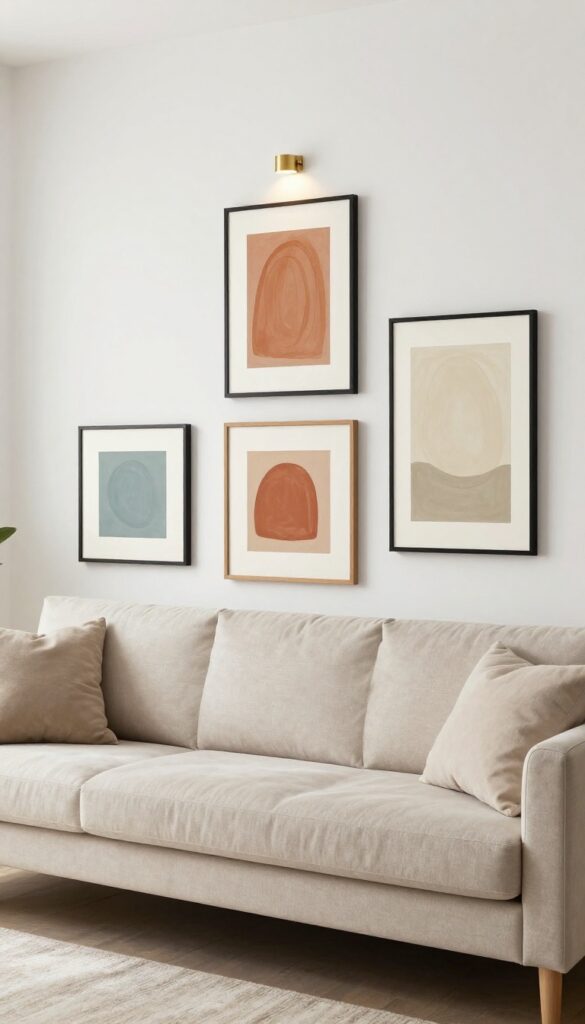
A single oversized canvas isn't the only way to make a statement above your sofa. Clustering several small artworks creates a curated, collected look that feels personal and layered. This approach works especially well in cozy living rooms where you want to avoid a single piece dominating the space.
By keeping the outer edges aligned with the sofa's width, the arrangement feels intentional and balanced, not like a random scatter.
Start by gathering 3 to 5 small pieces that share a common thread—maybe a similar color palette, frame style, or subject matter. Lay them out on the floor first to experiment with spacing and arrangement. Aim for 2 to 3 inches between each frame for a tight, gallery-like feel.
Once you're happy, transfer the layout to the wall using paper templates or a measuring tape. The result is a dynamic focal point that invites the eye to wander and discover each piece.
Best Frame Choices
Thin black or natural wood frames keep the cluster cohesive without competing with the art. If your pieces vary in style, matching frames ties them together. For a more eclectic vibe, mix frame finishes but keep the width consistent.
Layout Tip
Treat the entire cluster as one rectangular shape. Measure the sofa's width and center the cluster so the outer edges align with the sofa arms. A good rule of thumb: leave 6 to 8 inches between the top of the sofa and the bottom of the lowest frame.
Cozy Detail
Add a small sconce or picture light above the cluster to create a warm glow in the evening. This turns the arrangement into a cozy vignette that feels intentional and inviting.
10. Add a Mirror with Artistic Flair
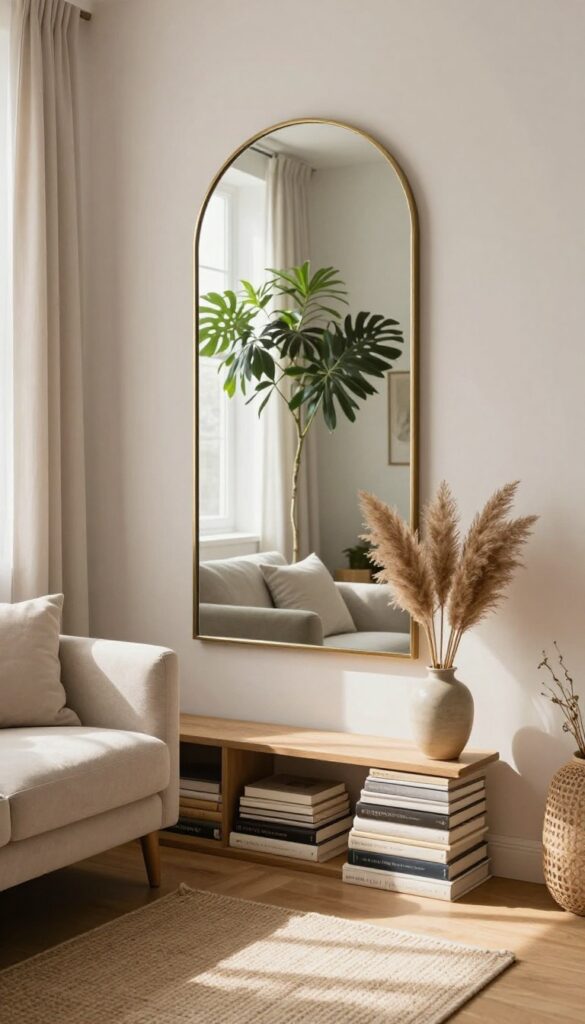
Mirrors do double duty in a living room: they reflect light to make the space feel brighter and larger, and they can act as a striking piece of wall art. The trick is choosing one with an unusual frame—think sunburst, arched, or organic shapes—that stands out even when it's not catching the light. A well-placed mirror adds depth without cluttering the walls, making it a smart choice for cozy, layered rooms.
A decorative mirror brings both function and personality to your living room. Unlike standard rectangular mirrors, artistic frames create visual interest and can anchor a gallery wall or stand alone as a focal point. For a cozy, layered look, lean a large arched mirror against the wall behind a sofa or console table.
The soft curve softens hard lines and adds a touch of elegance. Sunburst mirrors work well above a fireplace or entryway table, radiating warmth and light. Organic, irregular frames made from natural materials like rattan or driftwood bring texture and a relaxed vibe.
Placement matters: position mirrors to reflect something beautiful—a window, a lamp, or a plant—to maximize their impact. In smaller rooms, a mirror opposite a window can make the space feel twice as large. For a cohesive look, choose a frame finish that echoes other metal or wood tones in the room, like brass, black, or whitewashed wood.
Best Shapes For Impact
- Arched mirrors are having a moment because they add architectural interest without overwhelming the room. Sunburst mirrors bring a retro, energetic feel, perfect for mid-century or eclectic spaces. Organic shapes, like irregular ovals or asymmetrical frames, feel modern and sculptural.
- Stick to one statement shape per room to avoid visual chaos.
Placement And Light
- Hang or lean your mirror where it can reflect natural light or a cozy lamp. Opposite a window is ideal, but even reflecting a bookshelf or a piece of art can create depth. Avoid placing mirrors directly across from clutter or a TV—they'll just double the mess.
- In a dark corner, a mirror with a bright frame can act like a second light source.
Styling Around The Mirror
- Treat your mirror like artwork. If it's leaning, layer it with a small plant or stack of books in front. If hanging, keep the surrounding wall simple so the mirror remains the star.
- For a gallery wall, mix mirrors with framed prints and photos, using the mirror as the largest piece to anchor the arrangement.
11. Showcase Children's Art in Simple Frames
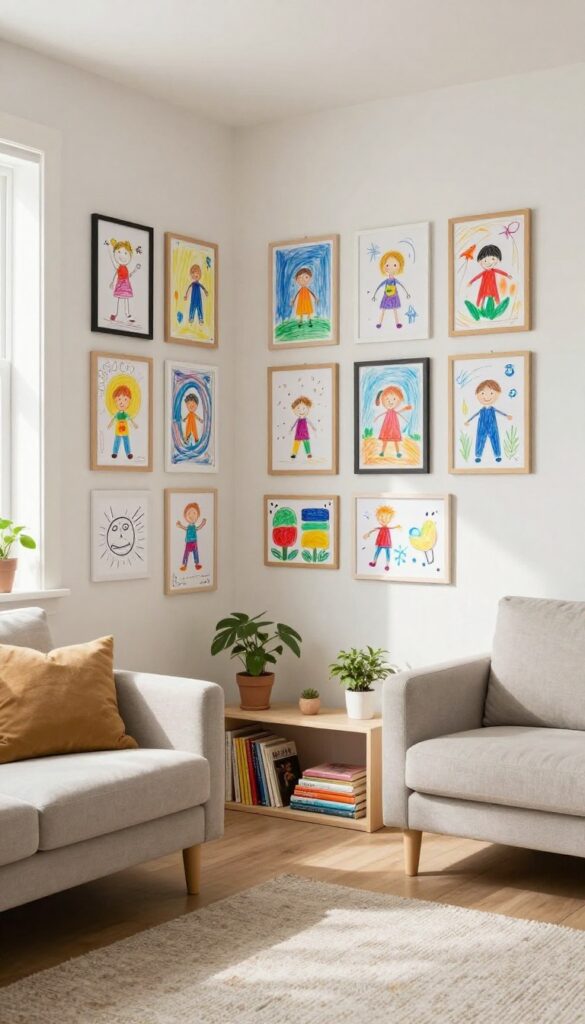
Kids' drawings deserve more than the refrigerator door. When you frame their artwork in clean, simple frames, it transforms from a temporary display into a meaningful piece of decor. The key is keeping the frames minimal so the art stays the star.
This approach adds warmth and a deeply personal layer to your living room, celebrating creativity in a way that feels curated, not cluttered. It also makes your space feel more lived-in and cozy, which is exactly what you want in a relaxed home.
Framing children's art is an easy way to inject personality into your living room without spending much. Choose frames with thin profiles in neutral tones like black, white, or natural wood to keep the focus on the artwork. Arrange them in a small gallery wall or mix them with other prints for an eclectic look.
The result is a space that feels both stylish and sentimental.
Best Frames For The Job
- Stick with simple, affordable frames—IKEA's Ribba or similar styles work great. Avoid ornate or colorful frames that compete with the art. Black or white frames create a clean gallery feel, while natural wood adds warmth.
- Use mats to give the artwork breathing room and make even small drawings feel substantial.
Where To Display Them
A hallway or a corner of the living room works well. Consider a low gallery wall at kid's eye level for an interactive feel, or mix framed pieces with a few favorite books on a shelf. For a cohesive look, group frames of the same size and color, or go for an organic arrangement with varying sizes.
Rotating The Art
Swap out pieces seasonally or whenever your child creates something new. Keep a stash of extra frames ready so you can rotate without re-framing each time. This keeps the display fresh and gives your child a sense of pride seeing their work honored.
FAQ
How high should I hang art above a sofa?
Aim for 6 to 8 inches between the top of the sofa back and the bottom of the frame. This keeps the art connected to the furniture without feeling cramped.
What size art works best for a small living room?
One medium-to-large piece can make a small room feel bigger than several tiny ones. Go for a single statement or a tight cluster that doesn't overwhelm the wall.
Can I mix art styles in one room?
Absolutely. Mixing abstract, photography, and illustration adds personality. Tie them together with a common color palette or similar frame finishes for cohesion.
How do I arrange a gallery wall without making mistakes?
Lay out the frames on the floor first to test spacing and arrangement. Snap a photo for reference, then transfer the layout to the wall using paper templates.
What if I don't have a lot of wall space?
Use leaning art on shelves, mantels, or the floor. You can also hang a single piece in an unexpected spot, like above a doorway or next to a window.
Conclusion
Art is one of the easiest ways to make a living room feel like yours. Whether you lean a canvas, build a gallery wall, or frame a child's drawing, each choice adds a layer of story and warmth. The best part?
You can always swap, rearrange, or add more as your style evolves. Start with one idea that feels right for your space. Small changes can have a big impact, and before you know it, your living room will feel more personal, cozy, and layered than ever.