How to Clean Your Closet in 15 Neat Sorting Routines
Your closet might look like a disaster zone right now, but that's about to change. These 15 sorting routines are designed to tackle every corner of your wardrobe—from the floor to the shelves—without overwhelming you.
Each routine focuses on a specific area, so you can work through them one at a time and see real progress. Whether you have 15 minutes or a whole afternoon, you can pick any routine and start making a difference.
Let's get sorting.
1. The Empty-Floor Blitz
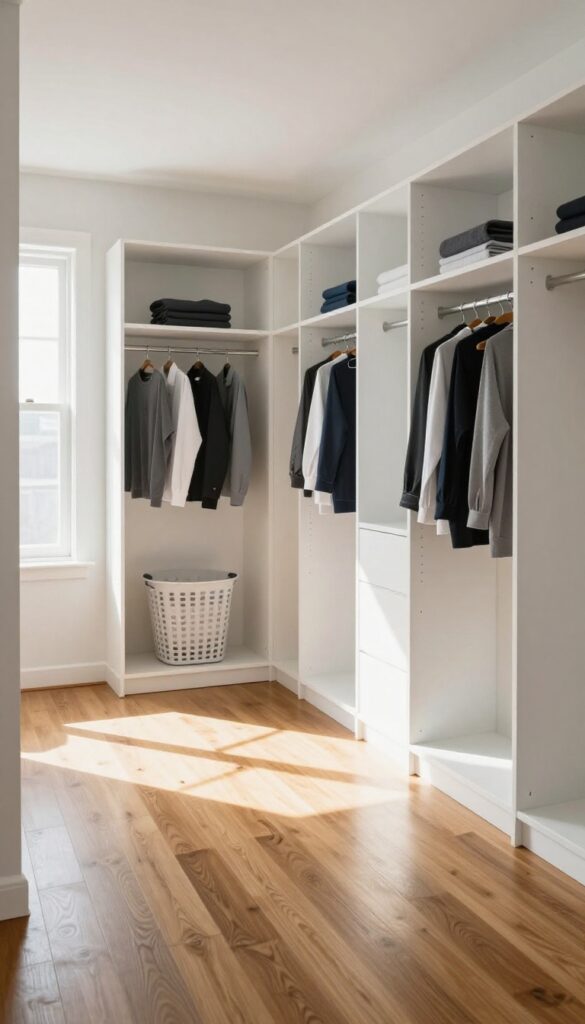
Before you can organize anything, you need a blank canvas. The floor is the biggest visual clutter magnet in any closet—shoes kicked off after work, bags dropped in a hurry, laundry piles that never made it to the hamper. By clearing every single item off the floor, you instantly reclaim space and create a clean starting point.
This first win sets the tone for the rest of your sorting session.
Start by grabbing a laundry basket or empty box. Walk through your closet and pick up everything that's sitting on the floor: shoes, boots, slippers, handbags, backpacks, gym bags, laundry piles, stray hangers, and any random items that have migrated there. Don't sort yet—just relocate everything to a temporary spot outside the closet, like your bed or a cleared corner of the room.
Once the floor is bare, sweep or vacuum it. You'll be amazed at how much bigger the space feels. This quick action gives you a psychological boost and a clean foundation for the routines ahead.
Why The Floor Matters Most
The floor is the first thing you see when you open your closet. When it's covered in clutter, your brain registers chaos, which can make you feel overwhelmed before you even start. Clearing it first is a low-effort, high-impact move that instantly changes how the room feels.
What To Do With The Pile You Made
Don't panic when you see everything you pulled out. Leave it in a temporary holding area for now. You'll sort through shoes, bags, and laundry in later routines.
For now, just enjoy the sight of an empty floor and the sense of progress.
Pro Tip: Keep A Floor-free Rule
Once your floor is clean, make a pact to keep it that way. Use hooks for bags, a shoe rack for footwear, and a hamper for laundry. If it doesn't have a designated spot on the floor, it shouldn't be there.
2. The Hanger Harmony
Mismatched hangers are a silent clutter culprit. They create visual noise and can even damage your clothes. Swapping them out for a uniform set is one of the fastest ways to make your closet look polished and organized.
Plus, it helps your garments keep their shape better.
Start by pulling everything out and sorting hangers by type. Keep only the ones that work well—thin velvet hangers for delicate items, sturdy wooden ones for coats, and clip hangers for skirts. Donate or recycle the rest.
Then hang items back by category, using the same hanger style for each group. The visual consistency alone will make your closet feel twice as organized.
Choose Your Hanger Style
Velvet hangers are great for saving space and keeping slippery fabrics in place. Wooden hangers add a classic look and support heavier items like suits. Plastic tube hangers work for casual wear but can be bulky.
Pick one or two styles that fit your wardrobe and stick with them.
Sort By Color And Length
Once you have uniform hangers, arrange clothes by color or by sleeve length. This makes outfits easier to find and gives your closet a clean, curated feel. Start with white, then move through the rainbow, or group short sleeves together, then long sleeves.
Maintain The System
Every time you do laundry, put clothes back on the right hanger and in the right section. It takes an extra second but keeps your closet from sliding back into chaos. A quick weekly check helps you catch any stray hangers before they multiply.
3. The One-Year Rule
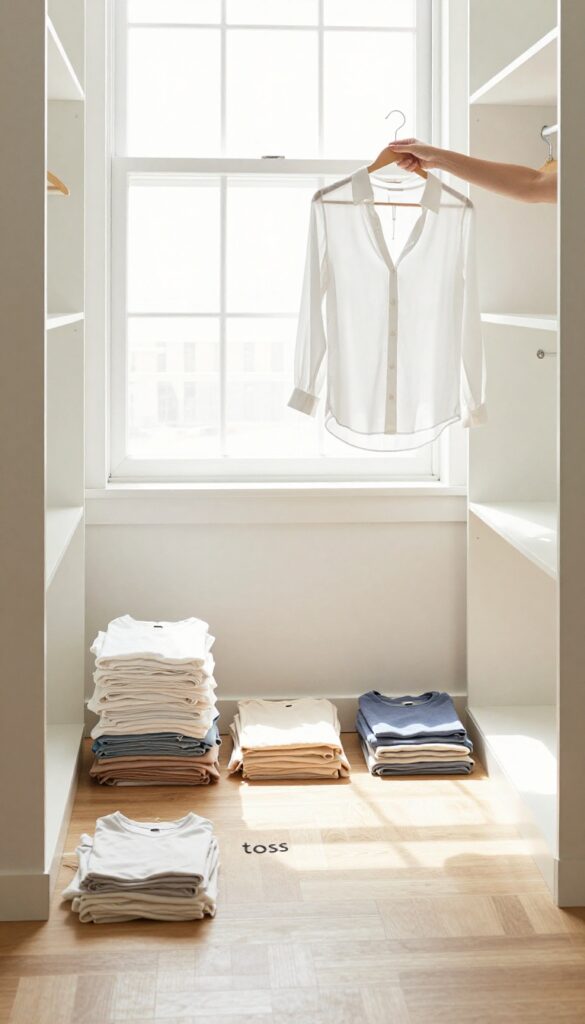
Here's a simple truth: if you haven't worn it in 12 months, you probably never will. That dress you bought for a wedding three summers ago? The jeans that are a little too tight?
They're taking up space and adding mental weight. The one-year rule cuts through the excuses and forces a decision. Unless an item is clearly seasonal or holds deep sentimental value, it's time to let it go.
You'll be surprised how much lighter your closet feels when you stop holding onto clothes that are just taking up room.
Start by pulling everything out of your closet that you haven't worn in the past year. Be honest with yourself—if you've been avoiding it, there's usually a reason. Sort these items into three piles: keep, donate, and toss.
For the keep pile, only include items that are truly seasonal (like a heavy winter coat in a warm climate) or have genuine sentimental value (like your grandmother's vintage scarf). Everything else should go. Don't overthink it.
If you're on the fence, ask yourself: would I buy this today? If the answer is no, it's time to say goodbye.
What Counts As Sentimental?
Sentimental items are the ones that bring back a specific memory or emotion. A concert t-shirt from your favorite band, a dress you wore on your first date with your partner—those are keepers. But be careful not to let sentimental clutter pile up.
If you have five t-shirts from high school, pick your favorite one and let the rest go. Designate a small box or a shelf for these items so they don't take over your closet.
The Seasonal Exception
Seasonal items get a pass, but only if they actually get worn during their season. If you live in a place with four distinct seasons, it's fair to keep your heavy sweaters and snow boots even if you haven't worn them in the past year—because you will in a few months. However, if you have a winter coat that you've never worn in two years, it's time to donate it.
Be honest about your climate and your habits.
Donate Or Toss?
Once you've identified the items to remove, decide whether they're donation-worthy or trash. Clothes that are gently used, clean, and in good condition can go to a local charity or thrift store. Anything stained, torn, or worn out should be tossed or repurposed as rags.
Many clothing retailers also offer recycling programs for textiles that are beyond repair. Do a quick search to find options near you.
4. The Color Code
Once you've sorted by category, it's time to take things a step further. Arranging clothes by color within each category—like grouping all blue shirts together—transforms your closet into a visual tool. You'll spot outfit combinations instantly, and the rainbow-like order makes getting dressed feel effortless.
Color coding isn't just about looks; it's a practical system that saves time. When you know exactly where every shade lives, you can grab a top and bottom that match without rummaging. Plus, it makes your closet feel curated and intentional, like a mini boutique.
Start With The Rainbow
Work within each clothing category (shirts, pants, dresses) and arrange items in ROYGBIV order—red, orange, yellow, green, blue, indigo, violet. This classic sequence is easy to remember and creates a smooth gradient. Neutrals like black, white, gray, and beige can go at one end, usually after violet or before red.
Group Similar Shades
Don't stress about exact hues. Group light blues together, then medium blues, then dark blues. The same goes for other colors.
This prevents a messy gradient and keeps the system flexible. If you have a lot of one color, subdivide by sleeve length or fabric weight.
Maintain The System
After washing and folding, put each item back in its color zone. It takes an extra second but keeps your closet functional. If you notice a color is overflowing, it might be time to edit.
A balanced rainbow is easier to maintain and looks beautiful every time you open the door.
5. The Category Sort
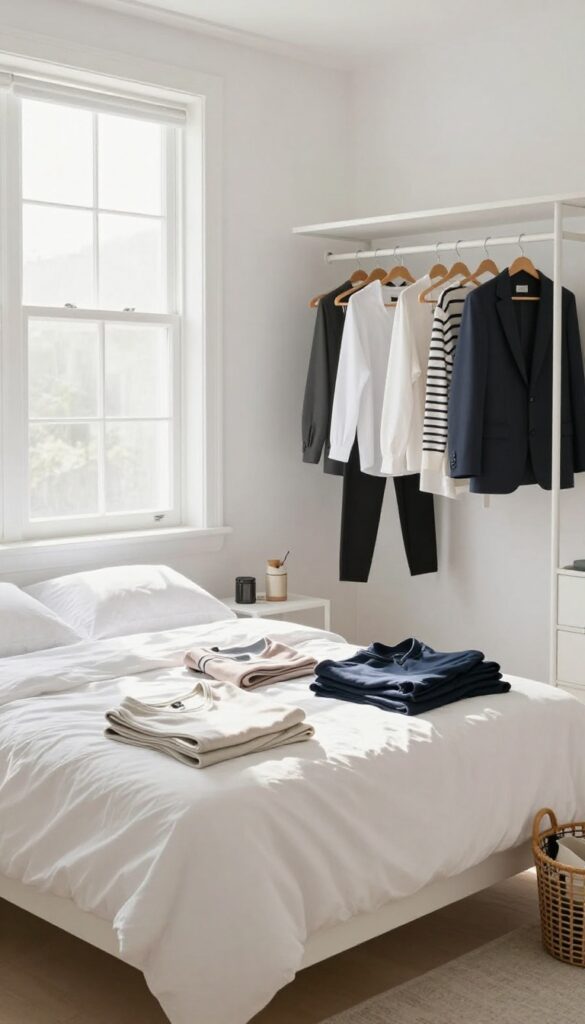
Grouping similar items together is like giving your closet a filing system. When you pull out all your workout gear, casual tops, and formal wear and lay them side by side, you finally see the big picture. You'll notice patterns—like the five black tees you forgot about or the three nearly identical blazers—and that clarity helps you make smarter decisions about what to keep and what to let go.
Start by pulling everything out of your closet and sorting into broad categories: work clothes, casual wear, activewear, formal attire, and accessories. As you sort, be honest about duplicates and items you rarely reach for. Once categorized, evaluate each group: keep the best, donate or sell the rest, and organize the keepers so they're easy to grab.
This method not only streamlines your closet but also saves you money by preventing future duplicate purchases.
Start With The Big Buckets
Don't overthink it. Grab a few laundry baskets or boxes and label them with broad categories like "work, " "weekend, " "workout, " and "dressy. " As you pull items off hangers or out of drawers, toss them into the appropriate bin.
This initial pass is fast and builds momentum.
Refine Within Each Category
Once everything is in its big bucket, go through each one and sub-sort if needed. For example, within "work" you might separate button-downs from blouses, or within "workout" separate tops from bottoms. This level of detail reveals exactly what you own and what gaps you might actually need to fill.
Edit Ruthlessly, Keep Only The Best
Now that you can see every item in a category side by side, it's easy to spot the winners and the losers. Keep the pieces that fit well, flatter you, and get regular wear. Let go of anything that's worn out, outdated, or just not your style anymore.
You'll end up with a curated collection you actually love.
6. The Drawer Dive
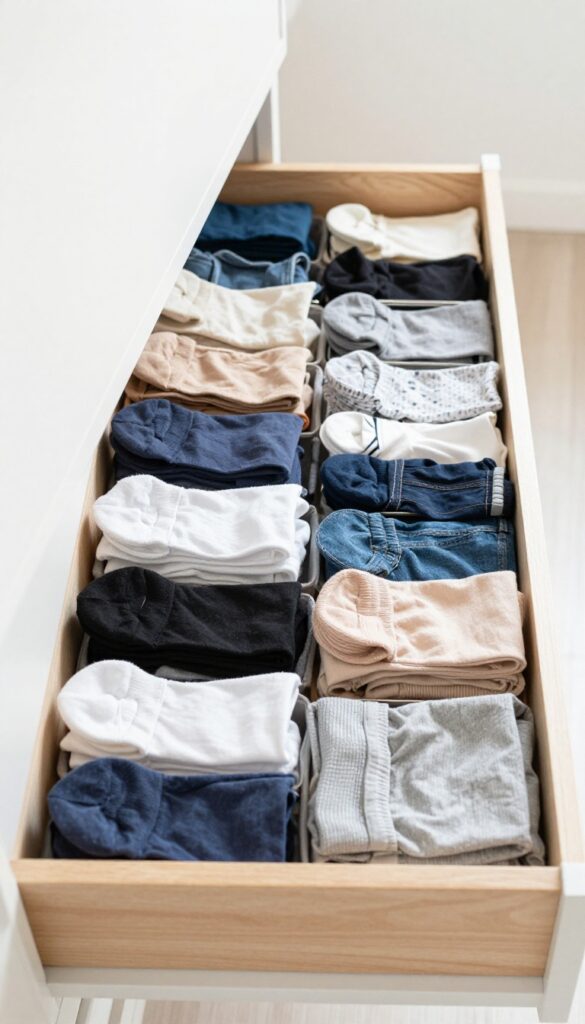
Drawers are where clothes go to disappear. Socks lose their partners, workout gear gets tangled, and somehow you end up with three identical black tees you never wear. The Drawer Dive changes all that by forcing you to empty every single drawer and rebuild it with intention.
This routine takes about 20 minutes per drawer, but the payoff is huge. You'll know exactly what you own, everything will have a designated spot, and your drawers will stay neat for months instead of days.
Empty the drawer completely onto your bed or a clean surface. Wipe down the inside of the drawer with a damp cloth. Now, pick up each item one by one and decide: keep, donate, or relocate.
Use the KonMari folding method for everything—t-shirts, jeans, underwear, socks. Fold each piece into a small rectangle so it stands upright. This lets you see everything at a glance and prevents the dreaded digging-and-destroying cycle.
Only put back items you truly use and love. If you haven't worn something in the past season, move it to a donation bag or a storage bin. Arrange folded items by category and color.
For deep drawers, use dividers or small boxes to keep categories separate. Drawers stay tidy longer because every item has a home and you can see exactly where it goes.
The Konmari Fold For Drawers
This fold is a game-changer. Lay the item flat, fold the sides in to create a rectangle, then fold it in thirds lengthwise. Finally, fold it in half or thirds so it stands upright.
Practice on a t-shirt first—it takes two tries to get the hang of it. Once you do, you'll never go back to stacking.
Drawer Dividers On A Budget
You don't need fancy organizers. Use shoeboxes, cardboard cut to size, or even empty tissue boxes. The goal is to create sections so socks, underwear, and accessories don't mix.
Label each section with a piece of tape and a marker if that helps you stay consistent.
The One-year Rule For Drawers
Drawers are prime real estate for items you actually rotate. If something has been sitting untouched for a year, it's taking up space that could go to something you love. Be ruthless.
Donate or toss anything that doesn't spark joy or serve a purpose.
7. The Shoe Shuffle
Shoes have a way of taking over the floor of your closet, piling up in a jumble that makes it hard to find the pair you want. This routine is about getting them organized so you can see every option at a glance. You'll line them up, pair them off, and decide what stays and what goes.
Start by pulling every shoe out of your closet and placing them in pairs on the floor. This gives you a clear picture of what you own. Then, grab a shoe rack or clear boxes to create a home for each pair.
The goal is to keep only the shoes you wear regularly within easy reach and store seasonal or occasional pairs elsewhere.
Pair Them Up
Line up all your shoes in pairs on the floor or bed. This simple step reveals how many pairs you actually have and helps you spot orphans missing their mate. If a pair is worn out or uncomfortable, set it aside for donation or trash.
Choose Your Storage
A shoe rack keeps pairs visible and accessible, while clear boxes protect shoes from dust and stack neatly. Pick the option that fits your space and style. For high-traffic shoes, an open rack works best.
For special occasion shoes, clear boxes keep them clean and easy to find.
Rotate Seasonally
Store off-season shoes in labeled bins under the bed or on a high shelf. This frees up prime closet real estate for the shoes you actually wear. Rotate them twice a year—spring and fall—so your closet always feels current.
8. The Accessory Audit
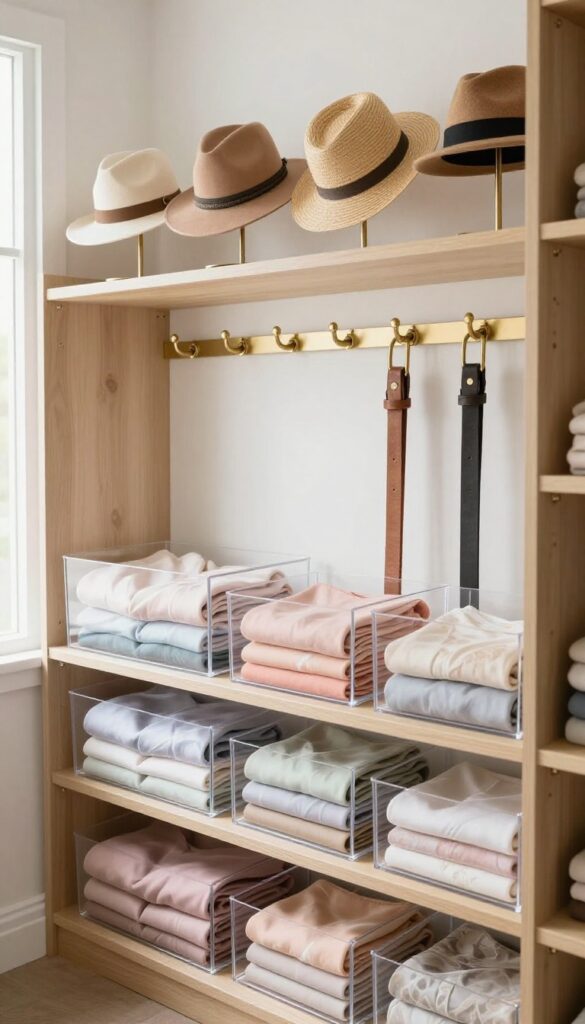
Accessories often get the short end of the stick when cleaning a closet. They end up tangled, buried, or forgotten. This routine gives scarves, belts, and hats the attention they deserve, so you can actually see what you own and use it.
Gather Everything
Start by pulling every accessory from your closet, drawers, and even the bottom of your bag. Lay them all out on your bed or floor. You might be surprised how many you have—and how many you never wear.
Toss The Damaged
Check each item for stains, tears, broken buckles, or stretched elastic. If it's beyond repair, let it go. A frayed scarf or a belt with a cracked buckle won't do you any favors.
Organize By Visibility
Use clear bins for scarves, hooks for belts, and hat racks or shelves for hats. The goal is to see everything at a glance. When accessories are visible, you're more likely to reach for them.
9. The Shelf Stack
Shelves in a closet often become dumping grounds for unfolded clothes that tumble over the moment you grab one item. The solution is simple: fold everything into neat rectangles and stand them upright like files in a drawer. This method, sometimes called the KonMari fold, works especially well for sweaters, jeans, and other bulky items that don't hang nicely.
When you stack them vertically, you can see every piece at a glance, and pulling one out won't disturb the rest.
Vertical folding transforms shelf space into a visual grid of your wardrobe. You'll never have to dig through a pile again or re-fold a stack that collapsed. This technique also helps you keep track of what you own, so you're less likely to buy duplicates or forget about that cozy sweater in the back.
The Basic Vertical Fold For Sweaters
Lay the sweater face down and smooth out wrinkles. Fold one side in toward the center, then tuck the sleeve in. Repeat on the other side.
Fold the bottom up about a third of the way, then fold the top down to create a rectangle that's roughly the width of your shelf. Stand it on its folded edge. Adjust the fold width so the sweater fits snugly between shelf dividers or other items.
Folding Jeans And Heavy Pants
Jeans are thicker, so you may need to fold them into a smaller rectangle. Start by folding them in half lengthwise, aligning the legs. Fold the waistband down to meet the hem, then fold in half again.
Stand the jeans upright with the folded edge facing up. If they're too tall for your shelf, fold them into thirds instead of halves.
Using Shelf Dividers To Keep Stacks Upright
Vertical stacks can lean or fall over if the shelf is too wide. Shelf dividers or small bookends keep everything in place. You can buy adjustable metal dividers or use sturdy boxes turned on their sides as makeshift supports.
Arrange items by color or type so each section feels intentional.
10. The Out-of-Season Swap
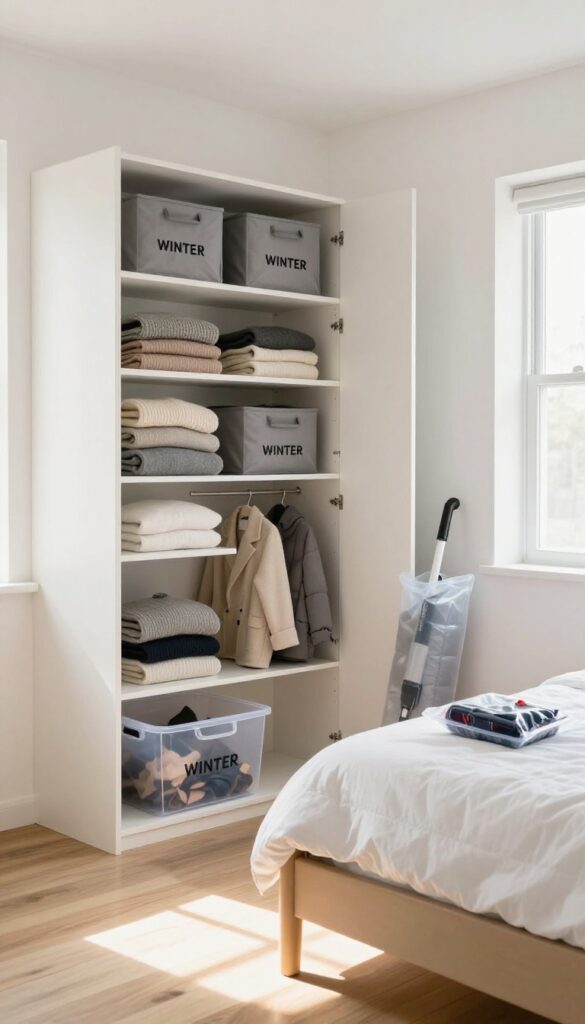
Seasonal clutter is one of the biggest space-wasters in a closet. When summer shorts hang next to winter sweaters, everything feels cramped and harder to find. The Out-of-Season Swap solves this by moving off-season clothes out of your main closet and into storage.
This leaves only weather-appropriate pieces in your daily rotation, making mornings simpler and your closet feel twice as spacious.
What To Store
Start by pulling out everything that doesn't match the current season. For spring and summer, that means heavy coats, wool sweaters, and boots. For fall and winter, pack away sundresses, linen pants, and sandals.
Be honest about what you actually wear—if you haven't touched a puffy vest in two years, it might be time to donate it rather than store it.
Where To Put It
Under-bed storage bins are perfect for bulky items like sweaters and jeans. High shelves in your closet or a spare closet work well for lighter items like t-shirts and shorts. Vacuum-seal bags can save space for puffy jackets and blankets.
Label each container clearly so you can grab what you need when the seasons change.
The Swap Routine
Twice a year (around the equinoxes), schedule a swap day. Take down the stored bins, swap out the contents, and refresh your closet. While you're at it, do a quick check for stains or damage before storing.
This routine keeps your closet lean and your wardrobe ready for whatever weather comes next.
11. The Sentimental Sort
Sentimental items are the trickiest part of any closet cleanout. That concert tee from 2005 or the scarf your grandmother knitted—they carry memories, not just fabric. The key is to honor the memory without letting it take over your space.
This routine helps you keep what truly matters and let go of the rest with grace.
Choose Your Box
Pick a single box—a small one, like a shoebox or a small storage bin. This is your limit for sentimental clothing. Anything that doesn't fit in that box needs a different kind of goodbye.
The box becomes a curated collection of your most meaningful pieces, not a dumping ground for everything you can't part with.
The Photo Test
For items that don't make the cut, take a photo. Lay the piece on a neutral background, snap a picture, and save it in a dedicated album on your phone. The memory stays, but the clutter goes.
You'll be surprised how quickly you forget about the physical item once you have the image.
Let Go With Intention
Donate or pass along items that are still in good condition but don't hold enough emotional weight to stay. Write a short note about why it was special, tuck it in the pocket, and let someone else enjoy it. This turns the act of letting go into a positive ritual rather than a painful loss.
12. The Donation Dash
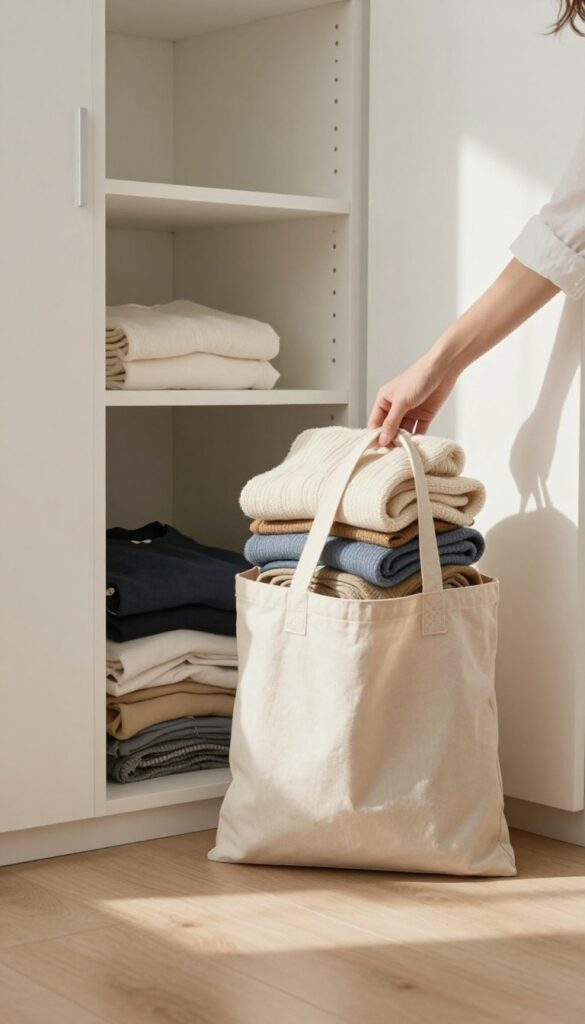
Donating clothes can feel like a chore you'll get to later. That later often never comes. The Donation Dash turns giving away into an instant habit that keeps your closet clean and your conscience clear.
Grab A Bag, Any Bag
Before you start sorting, grab a dedicated donation bag or bin. A large trash bag works fine, but a reusable tote is even better. Place it right next to your sorting area so it's impossible to ignore.
One And Done Rule
The moment you decide an item doesn't fit, isn't your style, or hasn't been worn in a year, it goes straight into the donation bag. No second-guessing, no maybe pile. This prevents decision fatigue and keeps your closet from filling back up.
Car Drop Immediately
After each sorting session, take the donation bag to your car. This small step makes a huge difference. Now the next time you're out running errands, you can swing by the donation center without a separate trip.
Out of sight, out of closet.
13. The Daily Uniform
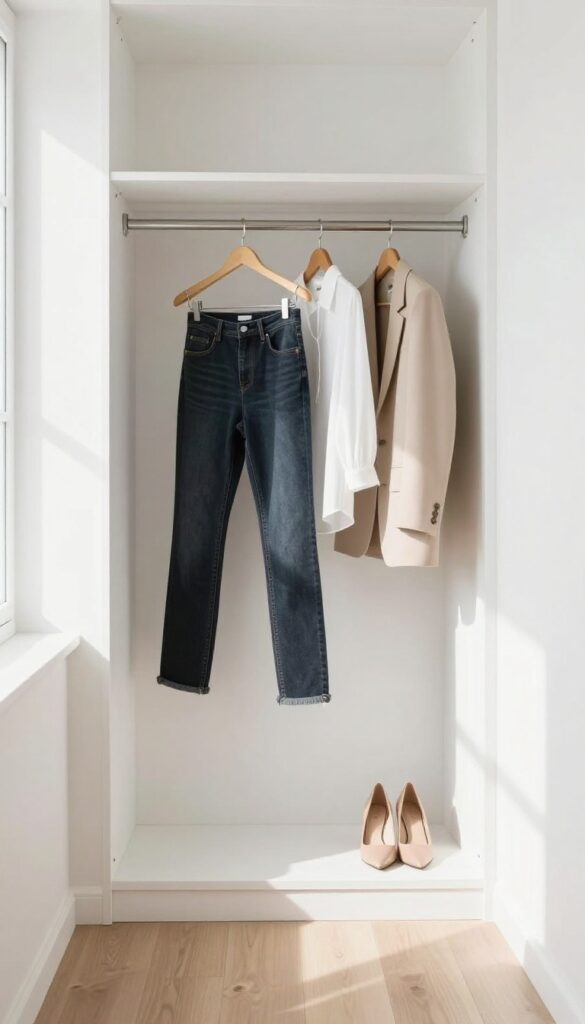
Mornings can be chaotic when you're staring at a packed closet with nothing to wear. The daily uniform routine solves that by carving out a dedicated spot for your most-worn items. This isn't about limiting your style—it's about streamlining your go-to pieces so you can grab them and go.
Think of your daily uniform as a capsule within your closet. It's the handful of outfits you reach for again and again because they fit well, feel good, and make you look put together. By giving these items their own section, you eliminate the daily scramble and cut down decision fatigue.
You'll also notice which pieces truly earn their keep, making future decluttering easier.
Pick Your Power Pieces
Start by pulling out the items you wear at least once a week. This might include your favorite jeans, a go-to blazer, a few reliable tops, and that one pair of shoes that goes with everything. Don't overthink it—trust your instincts.
If you grab it often, it belongs in the uniform zone.
Create A Dedicated Zone
Clear a section of your closet—maybe a specific set of hangers on a rod or a single shelf—and hang or fold only those uniform pieces there. Keep them separate from the rest of your wardrobe. You can use a different type of hanger or a small divider to mark the area visually.
Rotate Seasonally
Your daily uniform will change with the weather and your lifestyle. Every few months, reassess what you're actually wearing and swap out pieces. Store the off-season uniform items elsewhere so your active zone stays clutter-free and relevant.
14. The Label Love
Labels might seem like a small detail, but they make a huge difference in keeping your closet organized long after the initial cleanout. When every bin, shelf, and drawer is clearly marked, there's no guessing where things go. It's a simple system that saves time and keeps everyone in the household accountable.
Think of labels as your closet's road signs. They guide you and anyone else who uses the space—roommates, partners, kids—to put things back exactly where they belong. No more finding sweaters in the shoe bin or scarves mixed with jeans.
Labels turn chaos into order with minimal effort.
Choose The Right Labels
Not all labels are created equal. For fabric bins, use adhesive labels that stick well and won't peel off. For shelves, consider hanging tags or chalkboard labels that you can update as your storage needs change.
Waterproof labels are great for laundry room bins or any area prone to moisture.
Be Specific, Not Vague
Instead of labeling a bin "Accessories, " break it down: "Scarves, " "Belts, " "Hats. " The more specific you are, the easier it is to find what you need and return items to their spot. For seasonal items, include the season or month so you know when to rotate.
Make It Visual
If you share a closet with someone who doesn't speak your language or is a visual learner, add small icons or pictures next to the text. A simple drawing of a t-shirt on a shelf label works wonders. You can also color-code labels by category—blue for tops, green for pants—for an extra layer of organization.
Keep Labels Updated
As your wardrobe changes, so should your labels. When you swap out winter gear for summer clothes, update the labels accordingly. Set a reminder twice a year to review and refresh your labels.
This small habit ensures your system stays relevant and useful.
15. The Five-Minute Reset
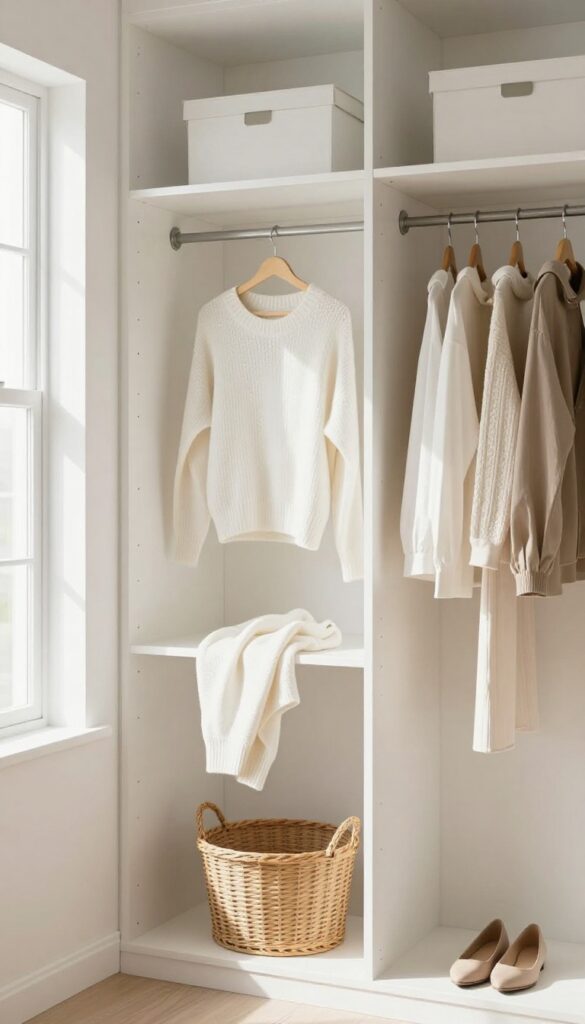
You've done the hard work of sorting, donating, and organizing. Now the real challenge begins: keeping it that way. The Five-Minute Reset is a simple evening habit that stops clutter from creeping back in.
It's not a deep clean—just a quick tidy that keeps your closet looking fresh every morning.
At the end of each day, set a timer for five minutes. Walk through your closet and put away anything that's out of place. Hangers go back on the rod, shoes go on the shelf, and stray items return to their designated spots.
That's it. No deep organizing, no decision-making—just a quick reset that takes almost no time but makes a huge difference.
Why Five Minutes Works
Five minutes is short enough to feel doable, even on tired days. It's a low bar, so you're more likely to stick with it. Over time, this micro-habit prevents the pile-up that leads to weekend-long cleanouts.
Think of it as brushing your teeth for your closet—a small daily act that prevents bigger problems.
How To Make It Stick
Pair the reset with an existing habit, like taking off your shoes or brushing your teeth. Keep a small basket or tray in your closet for items that need to go elsewhere—like that sweater that belongs in the laundry. And don't overthink it.
If something is truly out of place but you're too tired to deal with it, just put it in the basket and handle it tomorrow.
What To Focus On
Prioritize high-traffic zones: the floor, the shelf you grab from most, and the rod where you hang daily outfits. Don't worry about every drawer or bin. The goal is to restore order to the areas you see and use most.
Over a week, you'll notice the whole closet stays tidier with almost no extra effort.
FAQ
How long does it take to clean a closet using these routines?
Each routine takes about 15–30 minutes. If you do one per day, your closet will be fully organized in two weeks.
Do I need to buy special organizers?
Not necessarily. Uniform hangers and a few bins help, but you can start with what you have. Focus on sorting first.
What should I do with clothes I don't wear but can't part with?
Keep a small sentimental box. For the rest, take a photo and donate—the memory stays, but the clutter goes.
How do I maintain the organization after cleaning?
Use the Five-Minute Reset daily and do a quick seasonal review. Consistency is key to keeping it neat.
Can I do these routines with a small closet?
Absolutely. These routines work for any size closet. In small spaces, focus on vertical storage and multi-use items.
Conclusion
A clean closet isn't a one-time event—it's a series of small, smart choices. By breaking the task into these 15 routines, you've turned a daunting project into manageable steps. Each routine solves a specific problem, so you can pick the one that bothers you most and start there.
Remember, the goal isn't perfection. It's a closet that works for you every single day. So take a deep breath, pick a routine, and enjoy the calm that follows.