12 Inviting Kitchen Blinds Ideas That Bring Style Without the Clutter
Kitchen windows often get the short end of the design stick. They're either left bare or covered with generic blinds that do little for the room's vibe. But the right window treatment can tie the whole space together, adding warmth and personality without taking up precious counter or cabinet space.
You want something that handles moisture, grease, and daily wear while still looking good. And let's be honest, nobody wants a cluttered window area with cords and bulky hardware. The good news?
There are plenty of blind styles that are both functional and visually light. Here are 12 kitchen blind ideas that bring style and simplicity to your cooking space.
1. Bamboo Shades for Natural Warmth
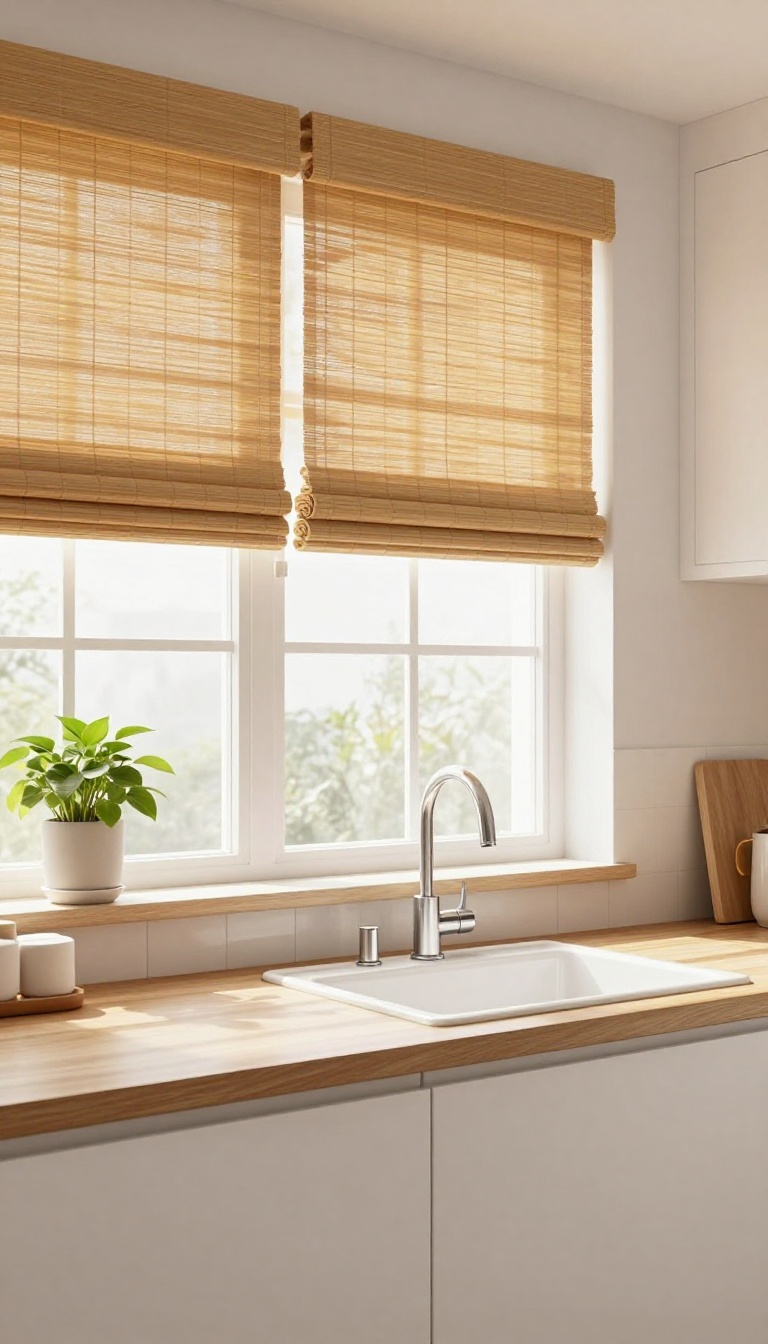
Bamboo shades bring a slice of nature indoors, instantly making your kitchen feel cozier. They're not just pretty—they're also tough enough for the demands of a busy cooking space. The natural fibers filter light beautifully, creating a soft glow that flatters any color scheme.
Bamboo shades are a top pick for kitchens because they strike a perfect balance between form and function. They resist moisture and heat, so they won't warp or fade near the sink or stove. Plus, they're lightweight and easy to install, making them a DIY-friendly upgrade.
Why Bamboo Works In Kitchens
Bamboo is naturally moisture-resistant, which is a huge plus in a room where steam and splashes are part of daily life. It also holds up well against heat, so you don't have to worry about damage from a hot pan nearby. And because bamboo is a renewable resource, it's an eco-conscious choice.
Light Control And Privacy
These shades let in a warm, diffused light that makes the kitchen feel inviting without being too bright. You can also find options with blackout lining if you want more privacy or need to block out harsh afternoon sun. Either way, you get a soft, natural look that's easy to live with.
Styling Tips For Bamboo Shades
Pair bamboo shades with simple curtain panels in a neutral tone for a layered look. Or let them stand alone for a clean, minimalist vibe. They work well with wood accents, plants, and earthy color palettes, so they're easy to blend into your existing decor.
2. Roman Shades in Linen for Soft Elegance
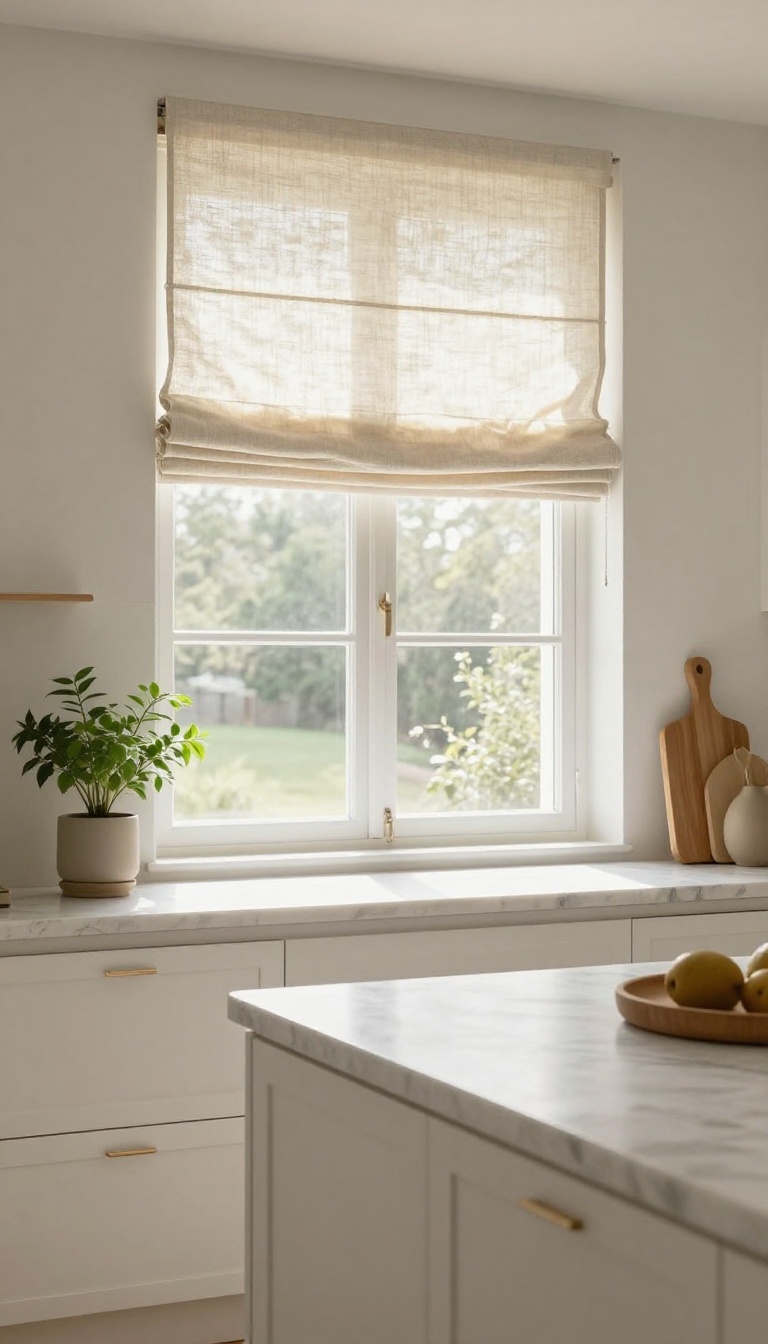
Linen Roman shades bring a soft, tailored look that feels both elegant and relaxed. They work especially well in kitchens where you want to soften the light without making the space feel heavy. The natural texture of linen adds warmth, and the clean folds keep the window area tidy and uncluttered.
Roman shades are a classic choice, but linen versions take them to another level. The fabric diffuses sunlight beautifully, creating a gentle glow that makes the kitchen feel inviting. Plus, linen is breathable and durable, so it holds up well in a busy cooking space.
Why Linen Works In Kitchens
Linen is naturally resistant to moisture and doesn't attract static, which means it won't cling to dust as much as some synthetic fabrics. It's also easy to clean—most linen shades can be spot-cleaned or gently vacuumed. And because linen has a relaxed, lived-in look, it doesn't need to be perfectly pressed to look good.
Choosing The Right Fold Style
Roman shades come in different fold styles: flat, hobbled, and relaxed. Flat folds are sleek and modern, while hobbled folds create soft, cascading loops that add texture. Relaxed folds have a slight curve at the bottom, giving them a casual, breezy feel.
For a kitchen, relaxed or flat folds often work best because they're easy to operate and don't collect dust in crevices.
Color And Pattern Ideas
Neutral tones like ivory, oatmeal, or soft gray blend seamlessly with most kitchen palettes. If you want a pop of color, consider a muted sage green or dusty blue. For a subtle pattern, look for linen blends with a faint stripe or check.
Avoid busy prints that might clash with your backsplash or countertops.
Installation Tips For A Clean Look
Mount the shades inside the window frame for a streamlined appearance that doesn't protrude into the room. If you have an odd-sized window, custom shades are worth the investment. Also, consider cordless options or motorized lifts—they're safer if you have kids or pets and keep the window area free of dangling cords.
3. Roller Shades with a Clean Profile
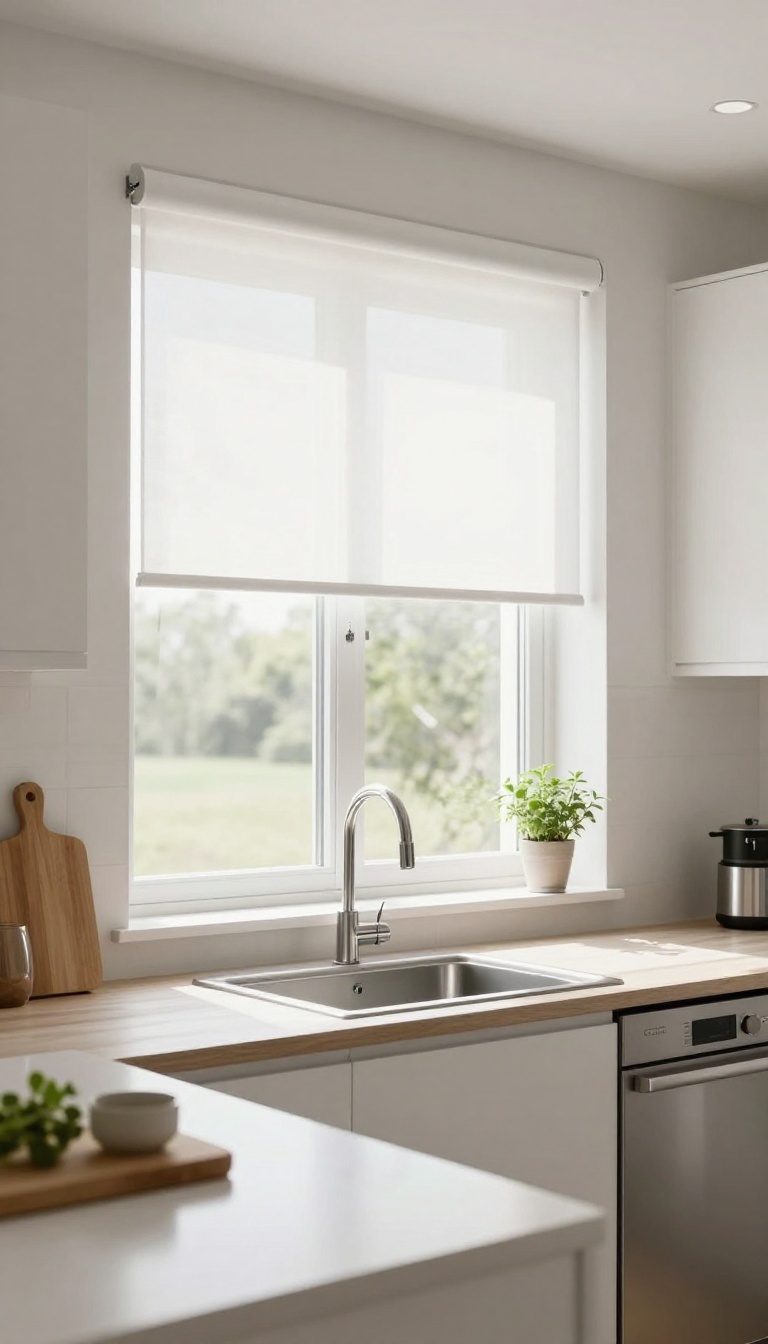
Roller shades are the ultimate minimalist option for kitchen windows. They roll up neatly into a compact cylinder, leaving the window frame clean and unobstructed. With a variety of fabrics from light-filtering to blackout, they offer both privacy and light control without any visual bulk.
When you want a window treatment that disappears when not in use, roller shades deliver. Their simple design means no cords dangling or bulky hardware cluttering your view. Plus, they're a breeze to operate—just pull the chain or use a motorized version for hands-free convenience.
Why Roller Shades Shine In Kitchens
Kitchens face unique challenges: moisture, grease, and frequent cleaning. Roller shades handle these well because they're made from durable materials like polyester or vinyl that wipe clean easily. Their flat surface doesn't trap dust or odors, making them a hygienic choice for food prep areas.
Fabric Options For Every Mood
You can choose from a range of fabrics to suit your style and needs. Light-filtering shades let in soft daylight while offering some privacy—great for daytime cooking. Blackout fabrics are perfect if you have a morning sun glare or want to keep the kitchen cool.
Some even come in moisture-resistant coatings for extra durability.
Styling Tips For A Polished Look
To keep the clean profile, install the shades inside the window frame so they sit flush. Pair them with a valance or cornice if you want a softer edge, but avoid heavy drapes that add bulk. Choose neutral colors like white, beige, or gray to blend seamlessly, or go bold with a pattern to make the window a focal point.
4. Cellular Shades for Energy Efficiency
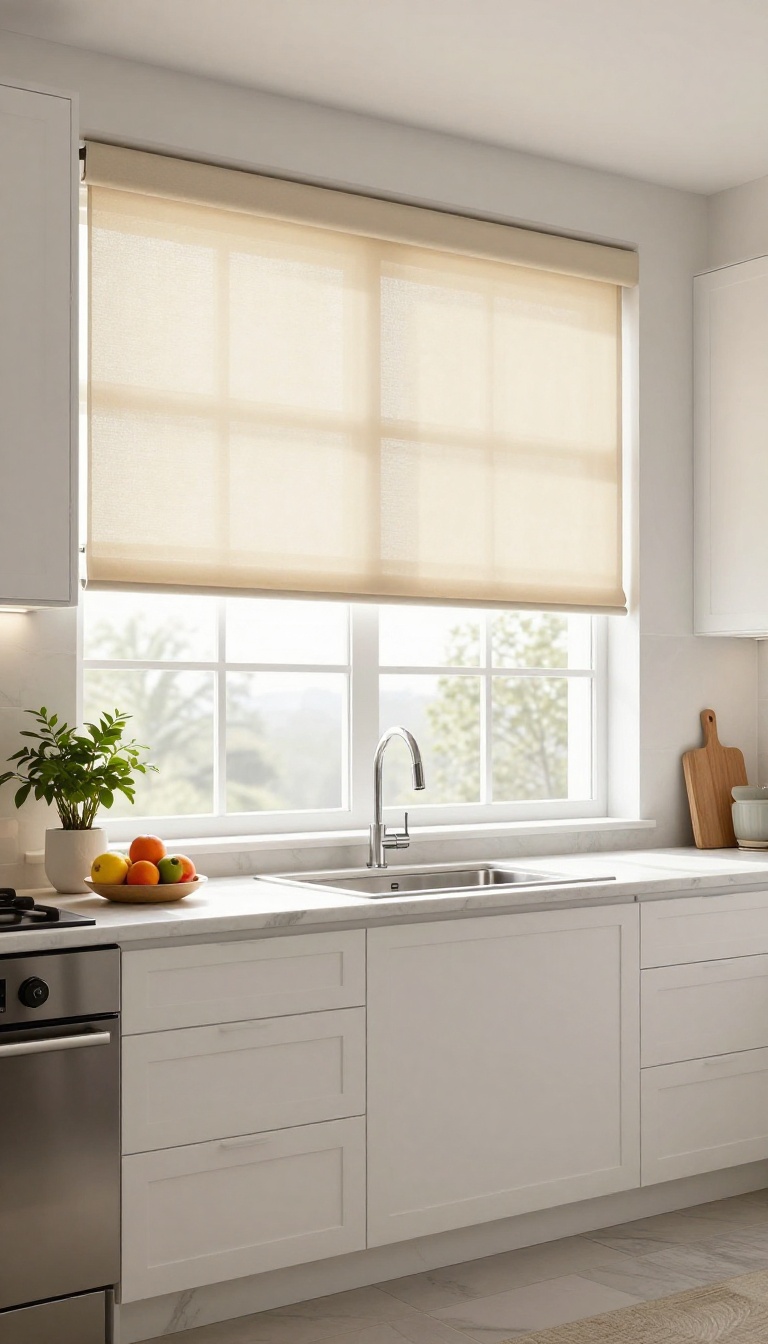
Cellular shades, also called honeycomb shades, are a smart pick for kitchens where temperature swings are common. Their unique pocketed design traps air, creating a buffer that keeps the room cooler in summer and warmer in winter. That means your AC and heater don't have to work as hard, which is a win for both comfort and your energy bills.
Beyond insulation, these shades have a clean, modern look that fits almost any kitchen style. They come in a wide range of colors, from crisp white to warm neutrals, so matching your existing decor is easy. Plus, the fabric softens light beautifully, giving your kitchen a cozy glow without the harsh glare.
Why They Work So Well In Kitchens
Kitchens deal with moisture, grease, and temperature changes from cooking. Cellular shades are made from durable polyester or cotton blends that resist moisture and are easy to wipe down. Their cordless options also reduce clutter and keep things safe, especially if you have kids or pets around.
Light Control And Privacy Options
You can choose between light-filtering and blackout versions, depending on how much sunlight you want. Light-filtering shades let in a soft, diffused glow, while blackout shades offer total privacy and are great for evening cooking sessions. Some even come with a top-down/bottom-up feature, letting you adjust light from the top while keeping the bottom closed for privacy.
A Bonus: Noise Reduction
The honeycomb structure also acts as a sound barrier, absorbing some of the clatter from pots, pans, and appliances. If your kitchen is open to a living area or near a busy street, this extra quiet can make a big difference in how calm the space feels.
5. Faux Wood Blinds for Moisture Resistance
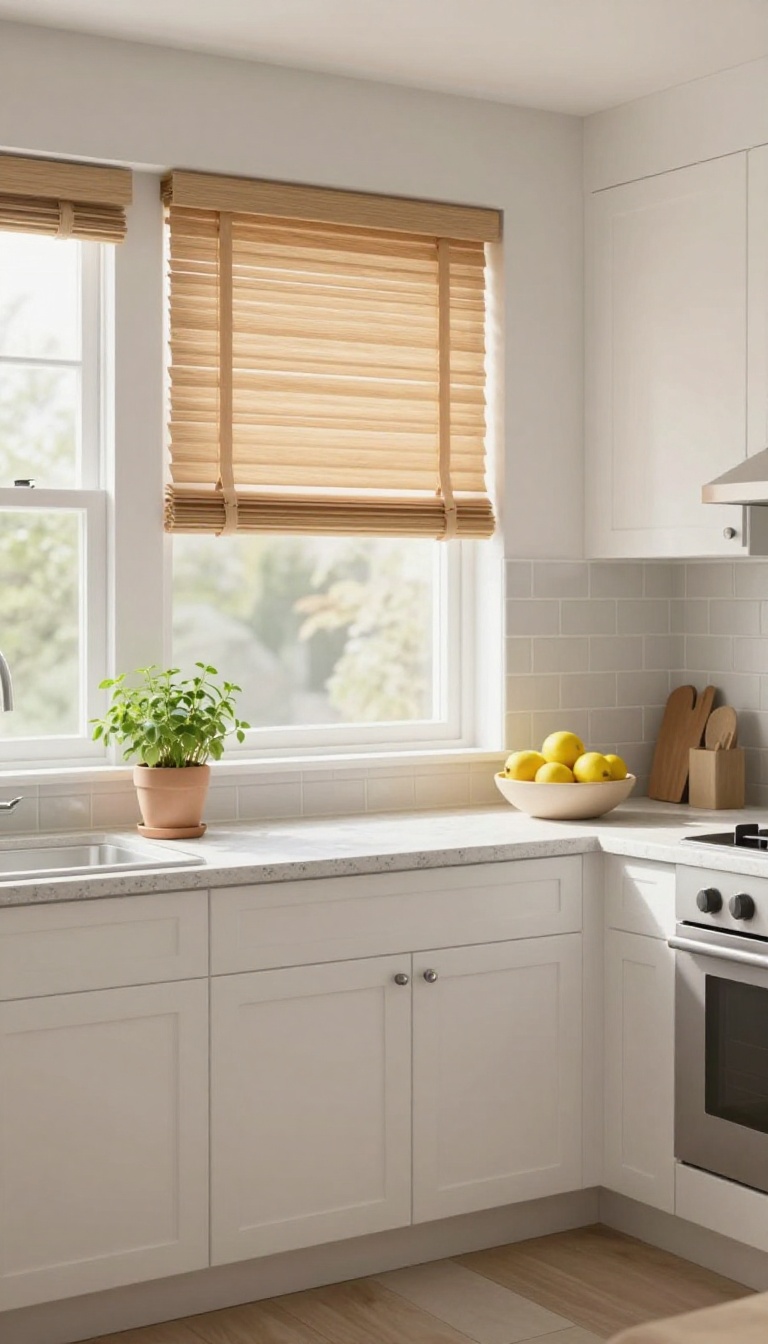
Real wood blinds look gorgeous, but they can be a risky choice near a sink or stove. Moisture and heat can cause them to warp, crack, or discolor over time. Faux wood blinds give you that same warm, natural look without the worry.
They're built to handle the steamy, splattery reality of a working kitchen.
Faux wood blinds are made from composite materials like PVC or a blend of wood and polymer. This makes them incredibly durable and resistant to humidity, heat, and even grease. You can wipe them down with a damp cloth and they'll look as good as new.
They're also more affordable than real wood, so you can cover larger windows without breaking the bank. Plus, they come in a range of finishes—from smooth white to textured oak—so you can match your cabinets or countertops easily.
Why Faux Wood Beats Real Wood In The Kitchen
Real wood blinds are beautiful, but they're not built for the kitchen's harsh conditions. Steam from boiling pasta, splatters from frying, and the heat from your oven can cause real wood to bow, twist, or split. Faux wood, on the other hand, is engineered to stay stable.
It won't absorb moisture, so it won't swell or warp. And if it gets a little dirty, you can scrub it with soap and water without worrying about damaging the finish.
Easy Cleaning And Low Maintenance
Kitchen blinds take a beating—grease, dust, and fingerprints are part of the deal. Faux wood makes cleanup a breeze. A quick wipe with a damp microfiber cloth is usually all it takes.
For tougher spots, a mild detergent works fine. Unlike fabric blinds, you don't have to worry about stains or odors. Plus, the slats are easy to dust with a duster or a vacuum attachment.
You'll spend less time cleaning and more time enjoying your kitchen.
Light Control And Privacy Without The Bulk
Faux wood blinds give you precise control over light and privacy. You can tilt the slats to let in soft, diffused light or close them completely for full privacy. The clean, classic slat design doesn't add visual clutter to your window area.
And because they're mounted close to the window, they don't take up any extra space. You get the functionality of traditional blinds with a look that feels timeless and understated.
6. Sheer Curtains Paired with Blinds
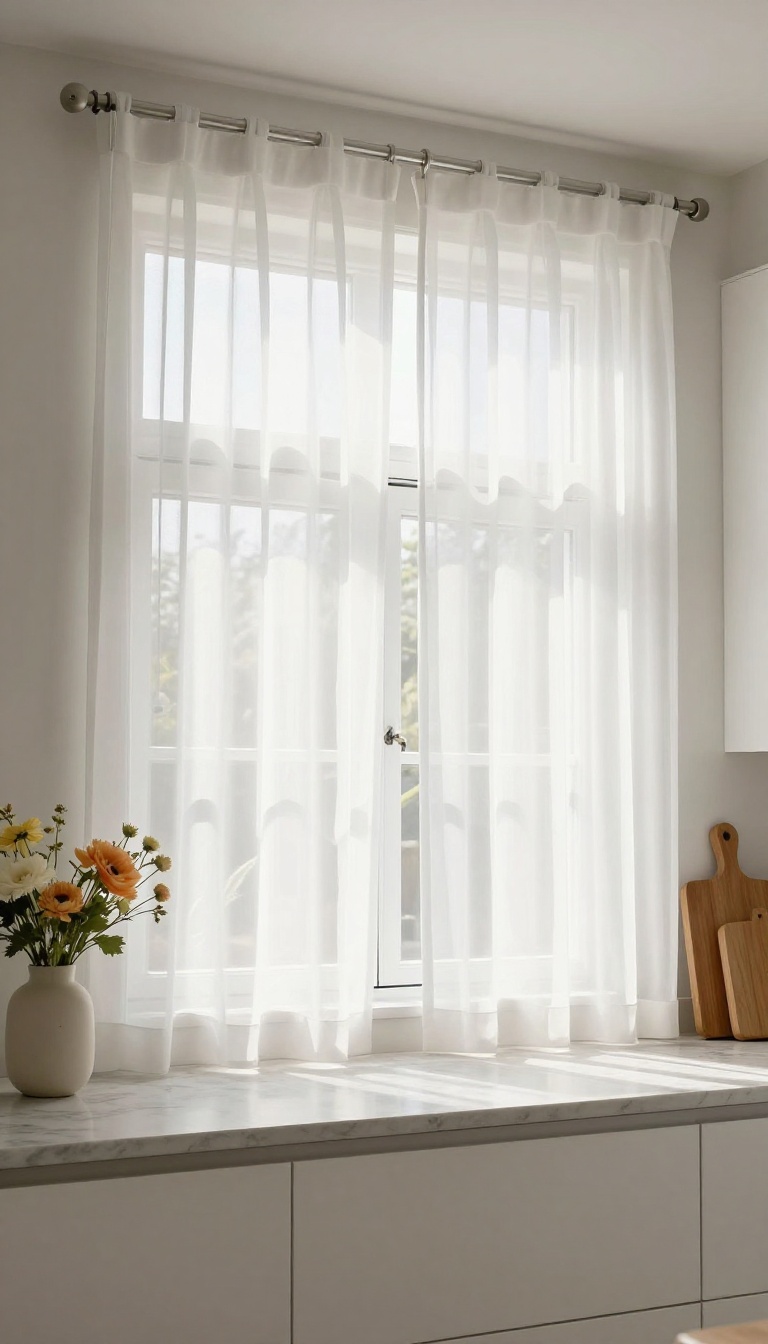
Layering sheer curtains over blinds is a trick that adds instant depth and softness to a kitchen. The sheer fabric diffuses light beautifully, creating a warm glow, while the blinds underneath handle privacy and light control. This combo gives you the best of both worlds—an airy, inviting look without feeling heavy or cluttered.
Pairing sheers with blinds is all about balance. The blinds do the practical work, and the sheers soften the edges. It's a simple way to make a kitchen feel more layered and lived-in, without adding bulk or visual noise.
Why This Combo Works
Blinds give you precise control over light and privacy, but they can look a bit stark on their own. Sheers add a gentle, diffused layer that makes the window feel fuller and more finished. Together, they create a look that's both functional and inviting, and they work with almost any kitchen style—from modern to farmhouse.
Picking The Right Sheers
Choose lightweight fabrics like linen, cotton, or polyester blends that can handle humidity and grease. Avoid heavy drapes that absorb odors. White or light neutral sheers are the safest bet—they keep the space bright and airy, and they won't compete with your cabinets or countertops.
Installation Tips
Mount the blinds inside the window frame, then hang the sheers on a rod above the frame. This adds height and makes the window look larger. Use a double rod if you want to adjust them independently, or a single rod with clip rings for a simpler setup.
Just make sure the sheers are long enough to puddle slightly or fall cleanly to the sill.
7. Top-Down Bottom-Up Shades for Flexibility
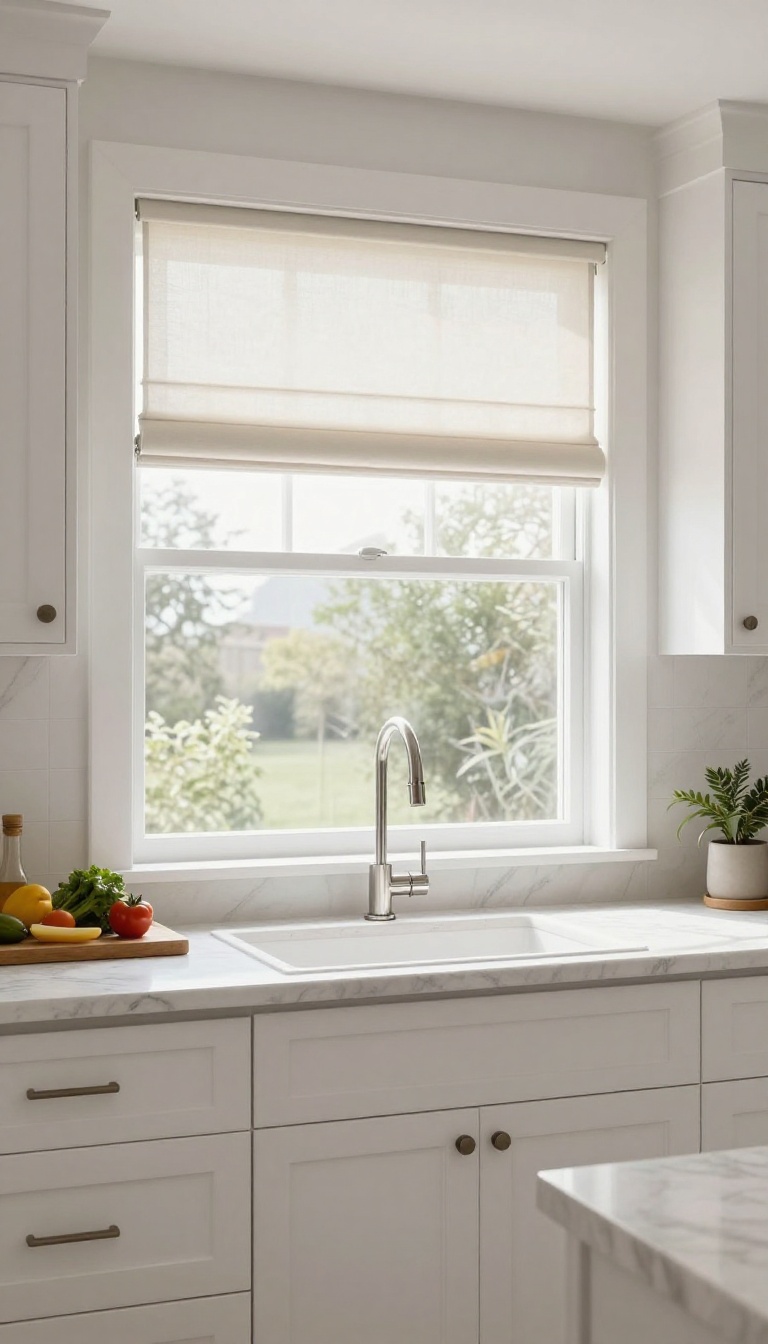
Kitchens are all about balance—light, privacy, and style. Top-down bottom-up shades give you exactly that by letting you lower the top or raise the bottom. This means you can let in natural light while keeping the lower part covered, perfect for when you're at the counter or sink.
The clean, simple lines of these shades keep the window area looking neat and uncluttered.
Top-down bottom-up shades are a game-changer for kitchens. They offer unmatched flexibility, allowing you to adjust both the top and bottom panels independently. This is especially useful if your kitchen faces a busy street or a neighbor's window—you can keep the bottom closed for privacy while still flooding the room with light from above.
The shades also work beautifully with the practical needs of a kitchen, as you can easily adjust them to control glare on your workspace or to let in a breeze while keeping the lower part covered.
Why They Work In Kitchens
Kitchens are high-traffic areas where you need both natural light and privacy. Top-down bottom-up shades let you have both without sacrificing style. You can lower the top to let in sunlight while keeping the bottom closed to block the view from outside.
This is perfect for homes with close neighbors or busy streets. Plus, the clean, modern look of these shades adds a touch of sophistication without adding visual clutter.
Fabric And Style Options
You can find top-down bottom-up shades in a variety of fabrics, from light-filtering to blackout. For kitchens, light-filtering fabrics are a great choice—they let in soft, diffused light while still offering some privacy. You can also choose from different colors and textures to match your kitchen's decor.
Neutral tones like white, beige, or gray work well and help keep the space feeling airy and open.
Installation And Operation
These shades are easy to install and operate. Most come with cordless options, which are safer for homes with kids and pets and also reduce visual clutter. You can adjust them with a simple pull or a motorized system if you prefer.
The mechanism is smooth and reliable, so you can easily fine-tune the position to get the exact amount of light and privacy you want.
8. Cafe-Style Blinds for a Charming Look
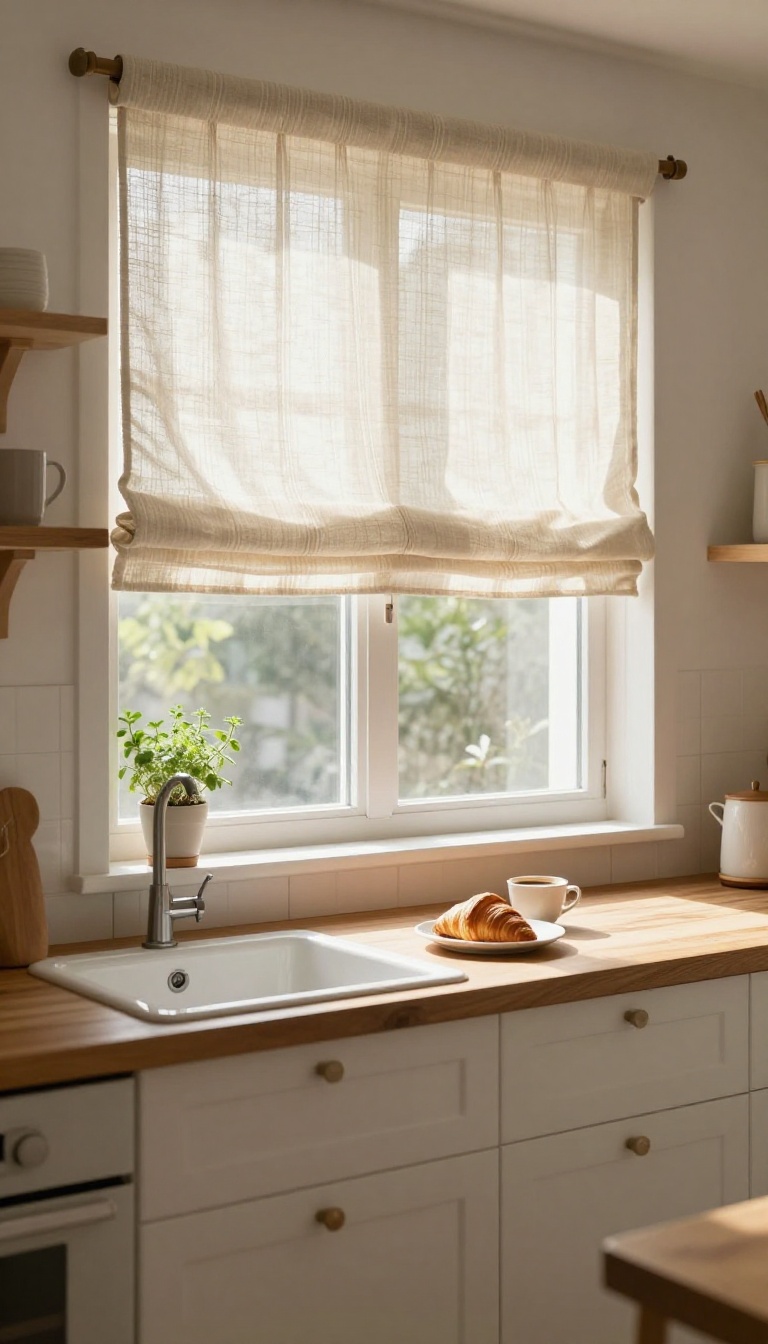
Cafe-style blinds are a timeless choice that brings a touch of European charm to your kitchen. They cover only the lower half of the window, leaving the top open to flood the room with natural light. This design is perfect for kitchens where you want privacy without sacrificing brightness.
Cafe-style blinds are a practical and stylish option that adds a cozy, bistro-like feel to your kitchen. They work especially well if you have a view you want to show off or if your kitchen faces a busy street. The key is to choose a fabric that complements your decor and fits the window's proportions.
Why Cafe-style Works In Kitchens
The half-window coverage gives you privacy at eye level while letting sunlight stream in from above. This makes the room feel open and airy, even when the blinds are closed. Plus, they're easy to operate—just a simple pull cord or a lift mechanism—and they don't take up much visual space.
Choosing The Right Fabric And Pattern
For a true cafe look, go with light, breathable fabrics like cotton or linen. You can pick a solid color for a clean, minimal vibe, or a subtle stripe or check to add a touch of pattern. Avoid heavy materials that might trap grease or moisture.
Also, consider a moisture-resistant finish to keep them looking fresh near the sink.
Installation And Styling Tips
Mount the blinds inside the window frame for a sleek, built-in look, or outside for a more casual, relaxed feel. Pair them with a valance or a simple curtain rod to add extra charm. If you have a large window, consider installing two separate blinds side by side for easier operation and a more balanced appearance.
9. Motorized Blinds for Convenience
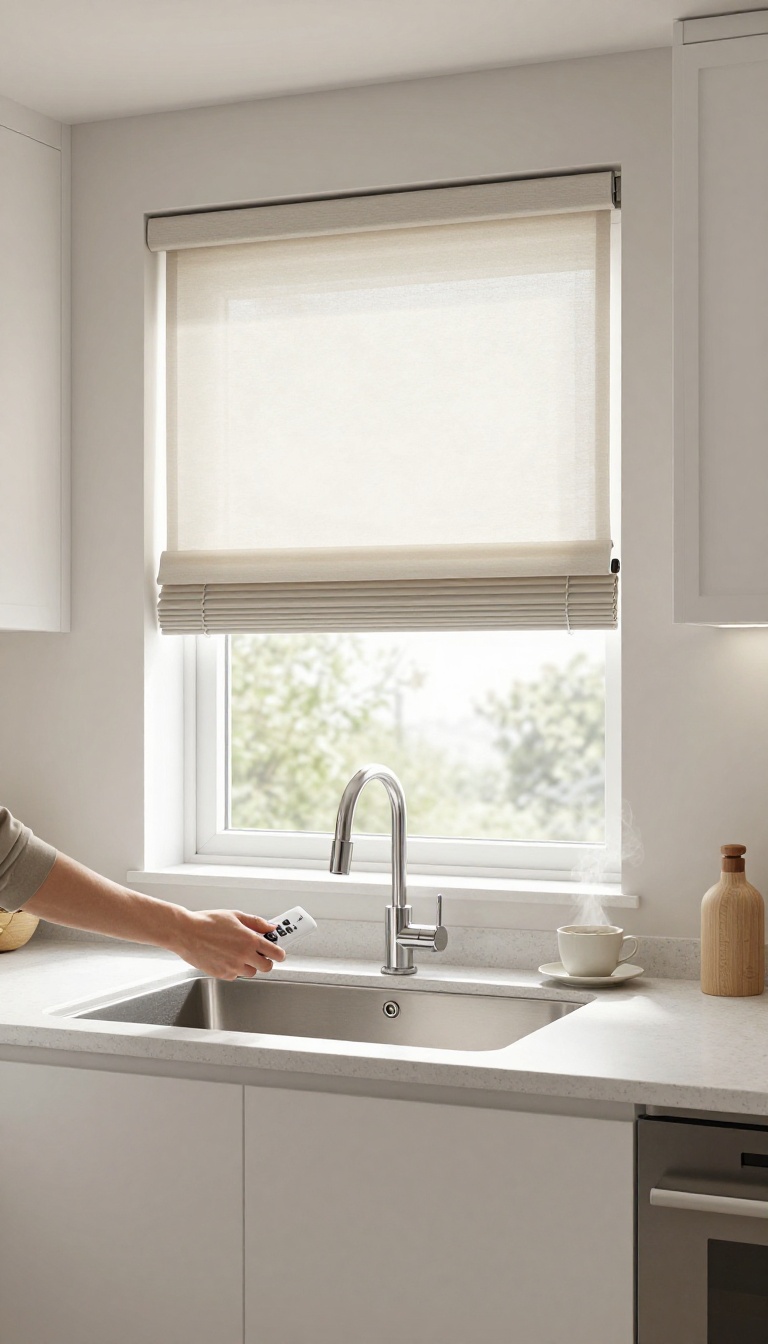
Reaching for blinds over a deep sink or behind a counter can be a daily annoyance. Motorized blinds solve that problem with a simple remote or app tap. They're an especially smart fit for kitchens where you want both function and a sleek, cord-free look.
Motorized blinds bring a level of ease that's hard to beat. You can adjust them without leaving your cooking station, which is perfect when your hands are covered in flour or you're juggling hot pans. Plus, they eliminate dangling cords, keeping the area safe and tidy.
Effortless Control
With motorized blinds, you can program them to open and close at specific times. Morning light can stream in while you sip coffee, and privacy kicks in automatically by evening. Some models even work with smart home systems, so you can use voice commands or set schedules from your phone.
Clean And Cord-free
No cords means fewer visual distractions and less to dust. The streamlined design pairs well with modern or minimalist kitchens. Motorized blinds also reduce the risk of pets or kids getting tangled, which adds peace of mind.
Battery Or Hardwired Options
You don't need to rewire your entire kitchen. Many motorized blinds run on rechargeable batteries that last for months. Hardwired options are available if you prefer a permanent setup, but battery-powered versions offer flexibility and easy installation.
10. Patterned Roller Shades for a Pop of Personality
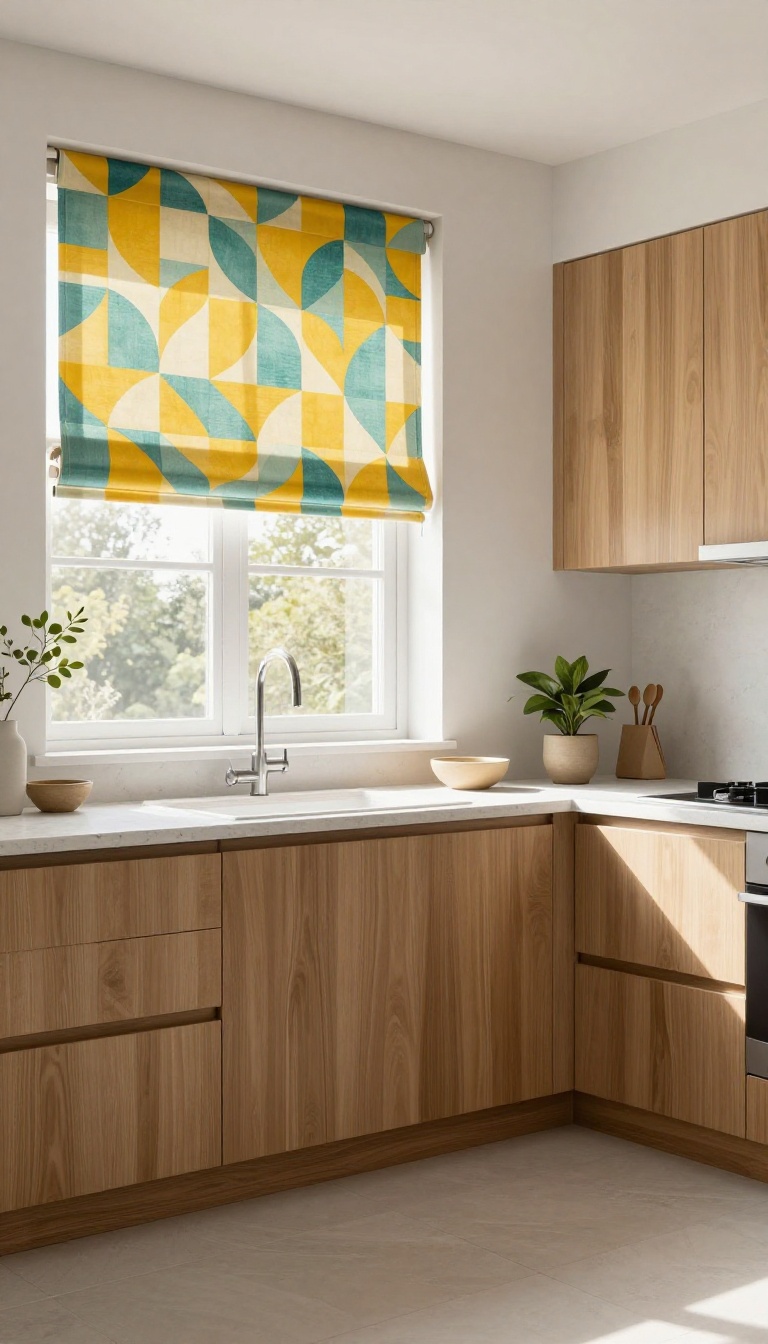
Patterns can feel risky in a kitchen, but they're actually a great way to make the space feel more personal. Roller shades with a bold print or subtle motif can act like art for your windows, adding color and energy without cluttering the room. The key is picking a pattern that complements your existing palette and keeping the rest of the window treatment simple.
Patterned roller shades are a low-commitment way to introduce visual interest. They roll up neatly when you want natural light and tuck away without any bulky fabric. Since they're available in a huge range of colors and designs, you can easily match your backsplash, cabinetry, or even your dish towels for a cohesive look.
Choosing The Right Pattern
Look for patterns that echo colors already in your kitchen. If you have a neutral base, a geometric print in a bold hue can become the focal point. If your cabinets are already busy, opt for a smaller, more subtle pattern that adds texture without competing for attention.
Material Matters For Kitchens
Kitchens get steamy and greasy, so choose roller shades made from moisture-resistant fabrics. Polyester blends are a smart pick because they're easy to wipe clean and won't warp or discolor over time. Avoid natural fibers like linen or cotton unless they're treated for moisture resistance.
Installation And Operation
Inside-mount installation keeps the shades sleek and close to the window, which is ideal for a clean look. For windows above a sink or counter, consider cordless or motorized options to avoid dangling cords that can get in the way or pose a safety hazard.
11. Cordless Blinds for Safety and Clean Lines
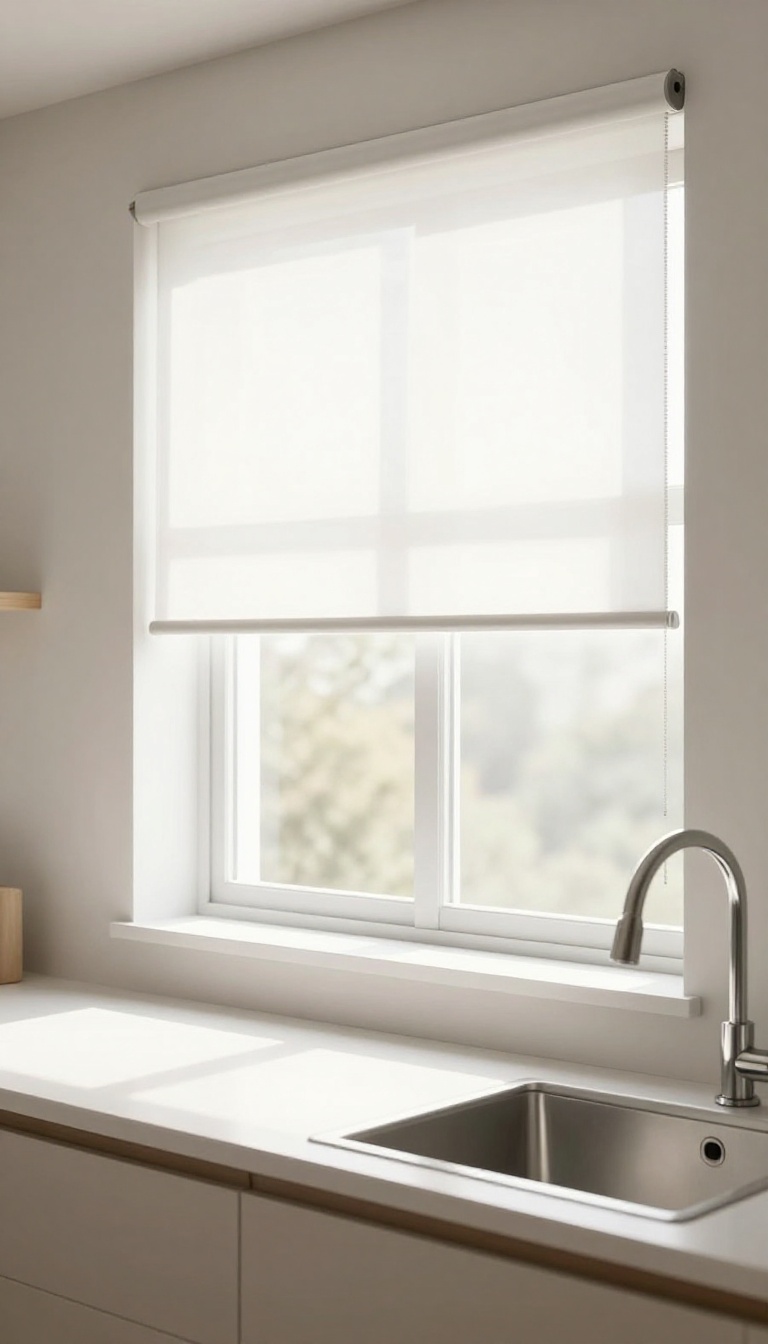
Cords can be a hassle—they dangle, tangle, and catch on things. If you have kids or pets, they're also a real safety concern. Cordless blinds solve all that with a simple push or pull mechanism.
Plus, without cords, the window area looks instantly tidier and more streamlined.
Cordless blinds are a practical upgrade that many homeowners overlook. They come in a wide range of materials, colors, and styles, so you don't have to sacrifice looks for safety. The absence of cords also means less visual clutter, which is especially valuable in a kitchen where you're already juggling appliances, utensils, and daily life.
Why Cordless Works In Kitchens
Kitchens see a lot of activity, and cords can easily get in the way. Whether you're reaching across the counter or have little ones exploring, cordless blinds remove that hazard. They also keep the window area clean and simple, which pairs well with the busy nature of cooking and cleaning.
Styles That Fit Any Kitchen
You're not limited to one look. Cordless options include roller shades, cellular shades, and even wood or faux-wood blinds. For a modern kitchen, sleek roller shades in neutral tones work great.
For a cozier feel, consider cordless Roman shades in a soft fabric. The key is to pick a style that matches your existing decor and light needs.
Ease Of Use And Maintenance
Operating cordless blinds is intuitive—just push up or pull down. They're also easier to clean since there are no cords to dust or untangle. Many are made with moisture-resistant materials, making them suitable for kitchen humidity.
With minimal upkeep, they stay looking fresh for years.
12. Layered Blinds and Valance for a Finished Look
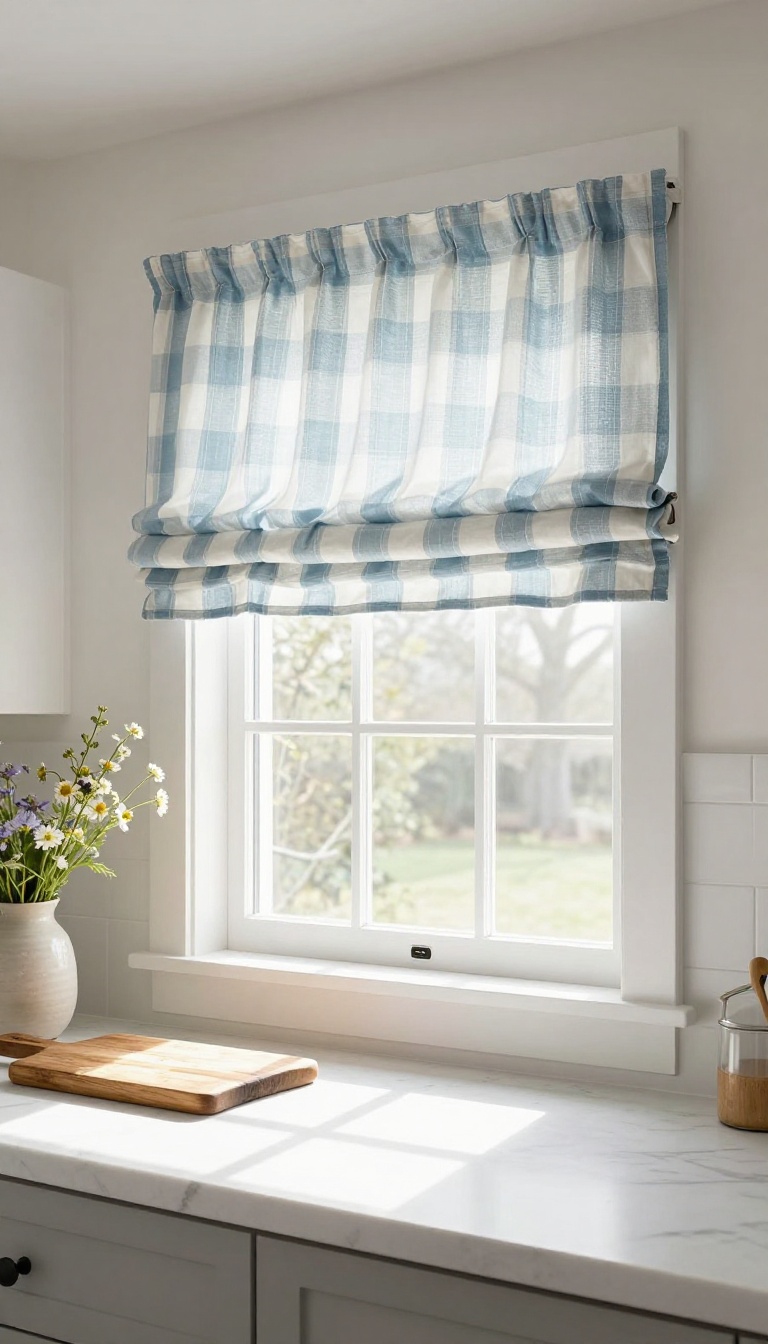
Sometimes a single window treatment just doesn't cut it. Pairing blinds with a fabric valance adds a finished, custom touch that feels intentional and polished. The valance hides the hardware and softens the window's edge, while the blinds give you light control and privacy.
This combination works beautifully in traditional or farmhouse kitchens, bringing a cozy, layered feel that's both practical and inviting.
Layering blinds with a valance is a smart way to elevate your kitchen windows without adding visual clutter. The valance acts as a decorative frame, drawing the eye upward and making the window appear larger. It also conceals the mounting brackets and any cords, keeping the look clean and streamlined.
Plus, you can mix and match fabrics and patterns to tie in your kitchen's color scheme or add a subtle pop of texture.
Why Layer?
Layering isn't just about looks—it's about function. The blinds do the heavy lifting for light control and privacy, while the valance softens the overall appearance and hides any less-than-pretty hardware. This combo is especially useful in kitchens where you want a polished look but don't want to commit to heavy curtains that might get in the way.
The valance sits neatly at the top, so it won't interfere with counter space or window operation.
Choosing The Right Valance
When picking a valance, think about the style you're going for. A tailored, box-pleated valance suits a more formal or traditional kitchen, while a gathered or scalloped valance feels more casual and farmhouse. Choose a fabric that complements your existing textiles—like your dish towels or upholstery—and consider the length.
A shorter valance keeps the window open and airy, while a longer one can add drama. Just make sure it doesn't block too much natural light.
Installation Tips
For a seamless look, mount the valance on a separate rod or board just above the blinds. This way, you can operate the blinds independently without disturbing the valance. If you're handy, you can even make your own valance to match your kitchen perfectly.
But if you're buying, look for valances that are easy to install with basic tools. And don't forget to consider the length—you want it to cover the top of the blinds completely for that finished appearance.
FAQ
What are the best blinds for a kitchen with high humidity?
Faux wood blinds, cellular shades, and roller shades are excellent choices for high humidity. They resist moisture and are easy to clean. Avoid real wood blinds as they can warp over time.
How do I choose the right blind color for my kitchen?
Consider your kitchen's color palette. Neutral tones like white, beige, or gray blend seamlessly, while bold colors can make a statement. If you have a lot of patterns, opt for solid colors to avoid visual clutter.
Are cordless blinds worth the extra cost?
Yes, cordless blinds are safer for households with children and pets, and they offer a cleaner, more modern look. They also reduce clutter and are easier to operate, making them a worthwhile investment.
Can I install blinds myself or should I hire a professional?
Many blinds come with easy DIY installation kits. However, if you have unusual window sizes or want motorized options, professional installation might be better. Always measure carefully before ordering.
How do I clean kitchen blinds effectively?
For most blinds, a microfiber duster or a damp cloth works well. For fabric shades, vacuum with a brush attachment. Avoid harsh chemicals that can damage the material.
Regular dusting prevents buildup.
Conclusion
Choosing the right blinds is about striking a balance between function and personality. Whether you need light control, privacy, or just a softer look, there’s an option that fits your space without adding visual noise. Start with the problem you want to solve—drafts, glare, or clutter—and pick a style that answers it.
Small changes, like swapping heavy drapes for sleek rollers or adding warmth with bamboo, can make your kitchen feel calmer and more put-together. The best part? You don’t have to overhaul the whole room.