15 Bedroom Ideas for Small Rooms Cozy Cheap and Charming
Your bedroom is the size of a postage stamp, but that doesn't mean it can't feel like a cozy haven. With a few clever tricks and a little creativity, you can turn even the tiniest space into a charming retreat. The best part?
You don't need to spend a lot of money to make it happen. Think about the last time you walked into a small room that felt instantly inviting. It probably had soft lighting, smart storage, and a layout that just worked.
You can recreate that same vibe in your own bedroom, no matter how limited your square footage. In this list, we've gathered 15 practical ideas that are big on style and small on budget.
1. Float Your Nightstand to Free Up Floor Space
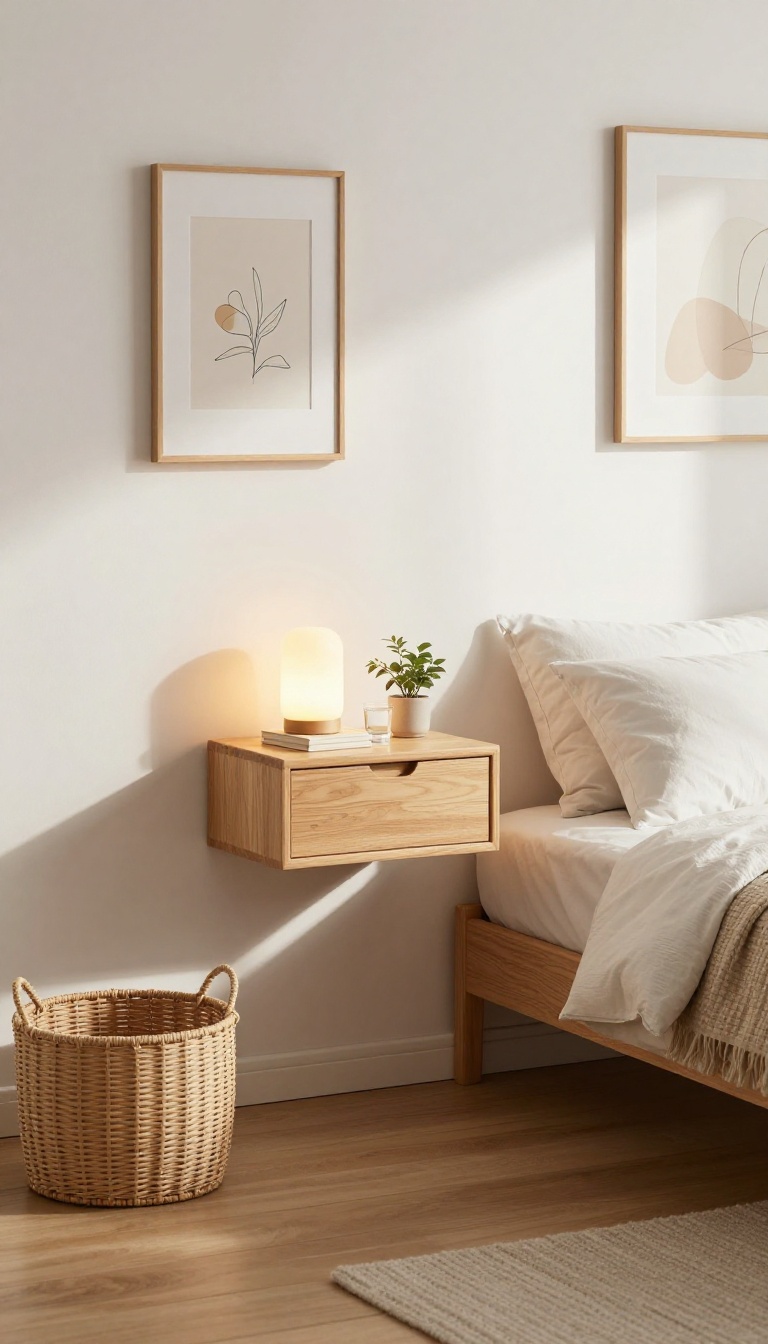
Floor space is precious in a small bedroom, and a bulky nightstand can eat up more than you realize. A floating nightstand solves that problem by attaching to the wall, leaving the area underneath open for your feet, a laundry basket, or just a cleaner look. It's a simple swap that makes the whole room feel less cramped.
You don't need a fancy piece of furniture to pull this off. A basic wall-mounted shelf or a small floating drawer can hold your lamp, phone, and a glass of water without taking up any floor space. The key is to mount it at the right height—usually 24 to 30 inches from the floor—so it's easy to reach from bed.
Pick The Right Spot
Measure the distance from your mattress top to where your hand naturally rests when you're lying down. That's your target height. If you share the bed, mount one on each side, or use a wider shelf that spans the middle.
Just make sure it doesn't crowd your pillow.
Keep It Simple And Sturdy
A single bracket shelf from the hardware store costs less than $20 and takes minutes to install. For a bit more storage, look for a small floating drawer unit online. Always anchor into a stud or use heavy-duty wall anchors—you don't want your midnight water spilling because the shelf gave way.
Style It Without Clutter
Treat your floating nightstand like a mini display. A small lamp, a book, and a tiny plant are plenty. Avoid piling on too much; the whole point is to keep things open and airy.
A clip-on reading light can also free up surface space if you're really tight.
2. Go Vertical with Shelves for Storage and Style
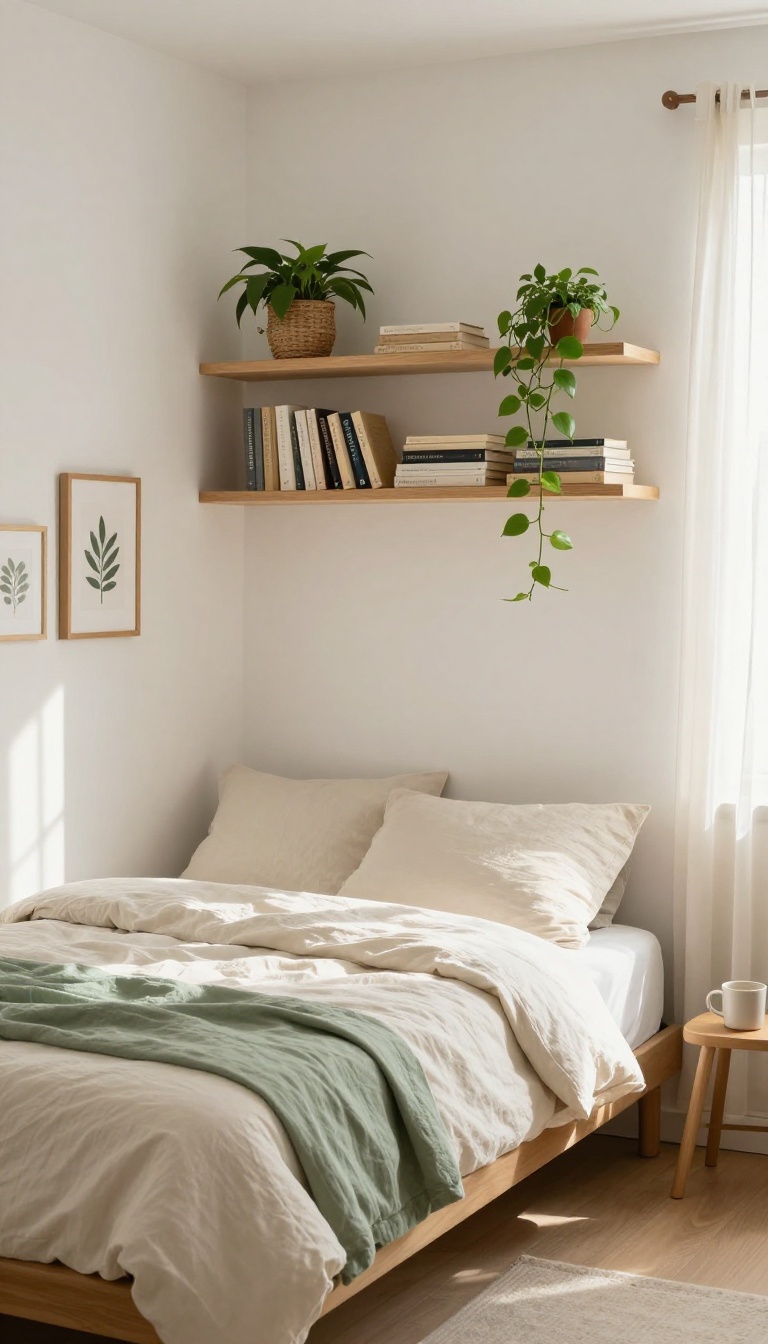
When floor space is tight, the walls become your best real estate. Shelves above your bed or desk turn dead space into handy storage for books, plants, and decor. They also draw the eye upward, making the room feel taller and less cramped.
Best of all, you can pull this off without spending much.
Floating shelves are a small-room game changer. They keep your surfaces clear and add a personal touch. You can arrange them to fit your style, whether you like a clean, minimal look or a cozy, collected vibe.
The key is to use the vertical space you already have. Start by measuring the area above your bed or desk. You want shelves that fit without crowding.
A good rule of thumb is to leave at least 12 to 18 inches between the shelf and the surface below. That gives you room to sit up or work without bumping your head. Once you know your dimensions, you can shop for ready-made shelves or build your own.
Installation is straightforward for most renters and homeowners. Floating shelves often come with hidden brackets that screw into the wall. If you're renting, use removable adhesive strips for lightweight items, or ask your landlord about putting small holes in the wall.
Always anchor shelves into studs when possible for safety. Styling is where the fun begins. Mix functional items like books and baskets with decorative pieces like small plants or framed photos.
Keep it balanced by grouping items in threes and varying heights. This avoids a cluttered look and keeps the space feeling open.
Choosing The Right Shelves
Floating shelves come in many materials, from wood to metal to glass. Pick a finish that matches your room's vibe. For a cozy feel, go with warm wood tones.
For a modern look, try sleek white or black. Consider the weight of what you'll store. Heavy books need sturdier shelves with strong brackets.
Light decor can go on thinner, more delicate shelves.
Placement Tips For Small Rooms
Above the bed is prime real estate. A single long shelf can act as a headboard and display space. Above a desk, shelves keep supplies within reach.
In a corner, stack shelves vertically to create a mini library or display area. Just make sure you don't block natural light from a window.
Styling Without Clutter
The goal is to make the room feel bigger, not busier. Stick to a color palette that blends with your walls. Use baskets or boxes to hide small items.
Leave some empty space on each shelf so it can breathe. Rotate your decor occasionally to keep things fresh.
3. Choose a Bed with Built-in Drawers
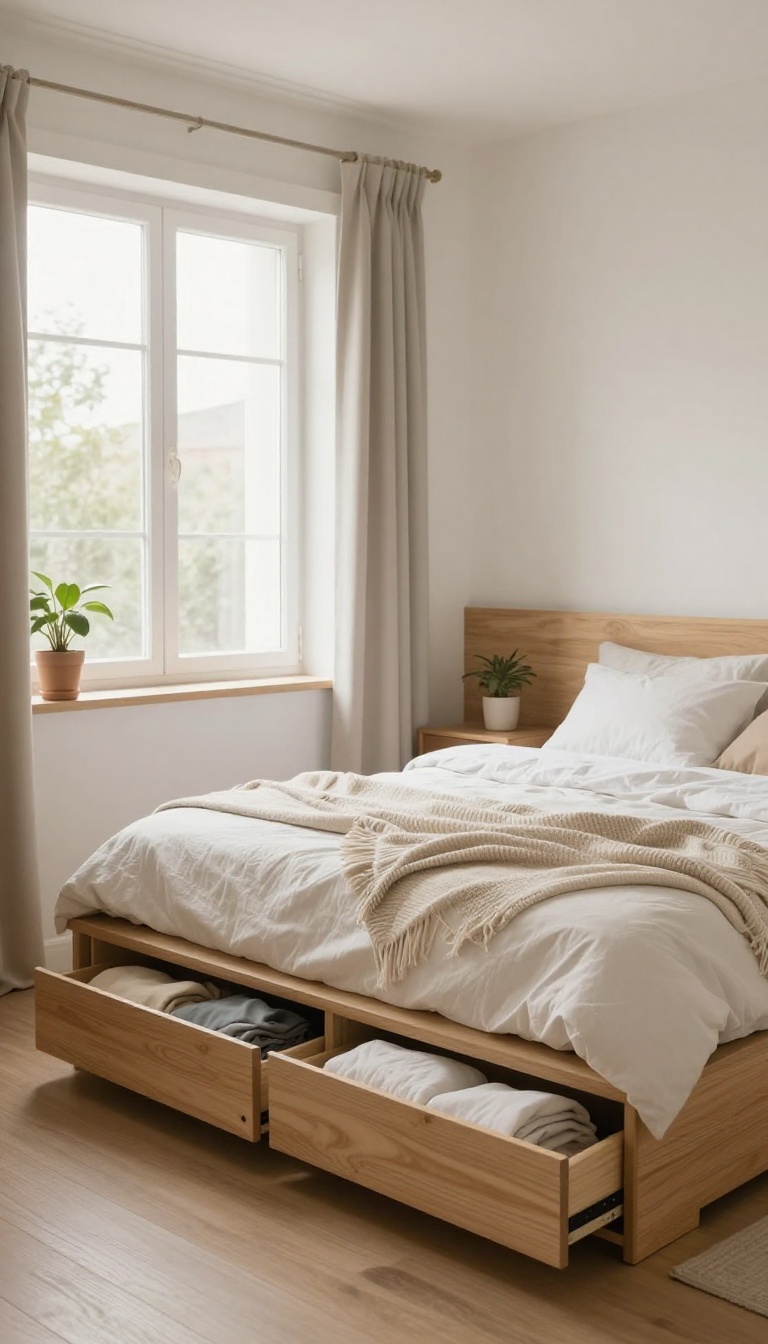
A bed frame with built-in drawers turns wasted space under your mattress into real storage. Instead of letting that area collect dust bunnies, you get a place for clothes, linens, or off-season gear. It’s one of the smartest swaps you can make in a small room because it doesn’t eat up any extra floor space.
Think about how much room a traditional bed frame leaves underneath. Even a low-profile one creates a gap that’s too tall for nothing and too short for most storage bins. Built-in drawers solve that problem by using the footprint you already have.
You’re not adding furniture; you’re upgrading the furniture you need anyway. These beds come in a few styles, so you can match your room’s vibe without spending a fortune. The key is to pick one that fits your space and your storage needs.
Then you can finally stop tripping over bins and bags.
Types Of Storage Beds That Work In Small Rooms
Platform beds with drawers are the most common and usually the most affordable. They sit low to the ground and often have two to four drawers along the sides or foot. Captain’s beds take it a step further with drawers built into the base and sometimes a bookshelf headboard.
If you need maximum storage, a divan bed with drawers gives you a solid base and hidden compartments. For a more custom look, a bed with a hydraulic lift-up mattress reveals a huge storage cavity underneath. Each type has trade-offs, but all of them beat a plain frame when space is tight.
What To Store (and What To Avoid)
Drawers under the bed are perfect for off-season clothes, extra bedding, towels, and shoes. You can also stash books, charging cables, or craft supplies if you use small bins inside. Avoid storing anything that needs airflow, like damp towels or dirty laundry, because closed drawers can get musty.
Heavy items like weights or tools are fine as long as the bed frame can handle the weight. Just check the manufacturer’s weight limit before you load them up.
Sizing And Setup Tips
Measure your room before you buy. A bed with drawers needs clearance to open, so leave at least two feet on the side where the drawers pull out. If your room is really tight, look for a bed with drawers on one side only, or choose a lift-up storage bed that doesn’t need side clearance.
Assembly can be a pain, but most storage beds come with clear instructions. If you’re not handy, ask a friend or hire a tasker for an hour. Once it’s set up, you’ll wonder why you waited so long.
4. Use a Room Divider to Create a Cozy Nook
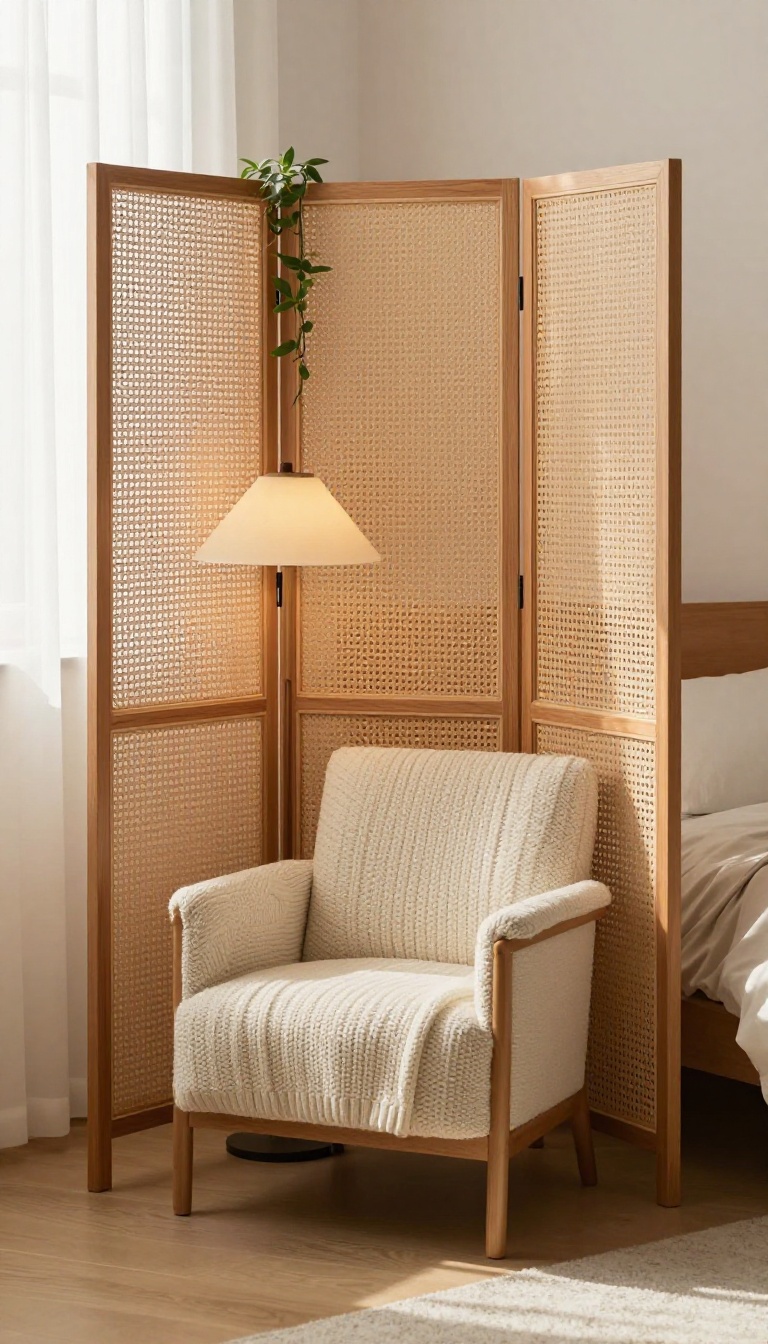
A room divider does more than just split a space. It gives you instant privacy, defines separate zones, and adds a touch of charm without any major renovation. In a small bedroom, where every inch counts, a folding screen or a simple curtain can transform one cramped area into two distinct, usable spots.
Think of it as a flexible wall you can move, swap, or remove whenever you like.
The magic of a divider is that it lets you have it both ways. You can keep your sleeping area feeling separate and restful, while still carving out a corner for work, reading, or getting ready. And because it's not a permanent wall, you're not stuck with the layout forever.
You can adjust it as your needs change, or even fold it up when you want the room to feel more open.
Pick The Right Divider For Your Space
Not all dividers are created equal. A folding screen with three or four panels works well if you want something freestanding and easy to move. For a softer look, a ceiling-mounted curtain track with a floor-length curtain can glide open and closed.
If you're on a tight budget, a tension rod and a pretty sheet or tapestry can do the trick. Just make sure the divider is tall enough to actually block sightlines, and light enough that it doesn't feel like a wall closing in.
Where To Place It For Maximum Coziness
Position your divider so it separates your bed from the busiest part of the room, like a desk or a vanity. Angle it slightly instead of placing it straight across; this adds visual interest and makes the nook feel more intentional. If you have a window, try placing the divider so it creates a little reading corner that catches the natural light.
The goal is to define zones without making either one feel like an afterthought.
Style It To Match Your Vibe
Your divider can be a design feature, not just a functional piece. Choose a material that complements your room: woven rattan for a boho feel, mirrored panels to bounce light around, or a solid fabric in a color that ties your palette together. You can even DIY a plain screen with paint, wallpaper, or decoupage.
A little personality here goes a long way in making the whole room feel cohesive and charming.
5. Hang Curtains High and Wide to Fake Height
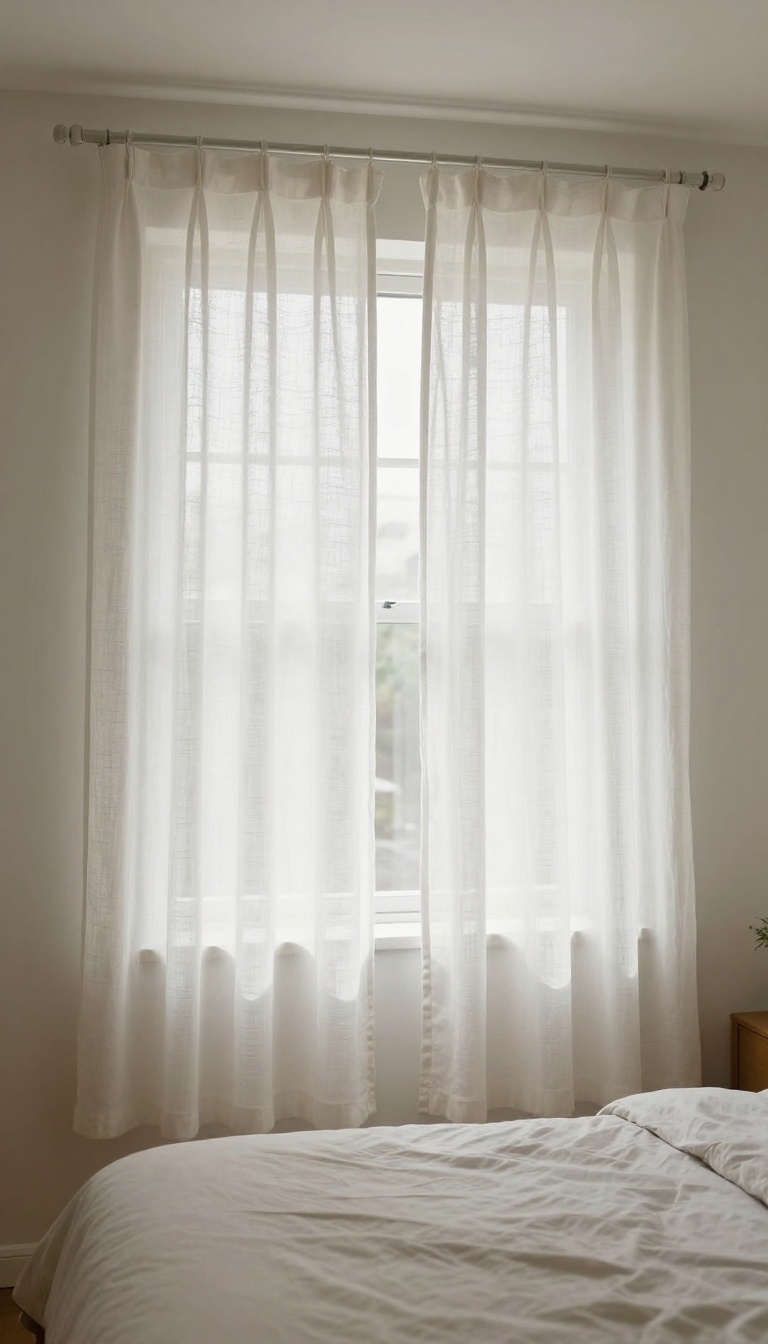
Curtains can do more than block light. They can trick the eye into seeing a taller, wider room. The secret is to hang them high and wide, not just over the window.
This simple change makes your small bedroom feel more spacious without any major renovation.
Most people hang curtains right above the window frame, which actually makes the window look smaller and the ceiling lower. Instead, mount the rod close to the ceiling and extend it several inches past the window on each side. This draws the eye upward and outward, creating an illusion of height and width.
You'll be amazed at how much bigger the room feels. You don't need custom curtains to pull this off. Standard panels work fine as long as they're long enough to graze the floor.
If they're too short, it breaks the illusion. For a cozy, cheap look, choose a lightweight fabric that lets some light through, like cotton or linen blends. And don't forget to use a rod that's sturdy enough to handle the extra width.
Why It Works
Our brains read vertical lines as height. When curtains run from near the ceiling to the floor, they create a long, unbroken line that makes the ceiling seem higher. Widening the rod also exposes more wall space, which makes the window appear larger.
It's a visual trick that costs almost nothing.
How To Hang Them Right
Measure from just below the ceiling to the floor to get your curtain length. For width, extend the rod about 4 to 6 inches beyond the window frame on each side. Use wall anchors if you're not hitting a stud, especially for heavier fabrics.
And make sure the rod brackets are level so the curtains hang straight.
Budget-friendly Picks
You can find affordable curtain rods at thrift stores or discount stores. For curtains, look for sales or use sheets and fabric remnants. A simple white or neutral color keeps the look airy and won't overwhelm a small space.
If you're handy, you can even DIY a rod from a wooden dowel and some brackets.
6. Add a Mirror to Double the Light
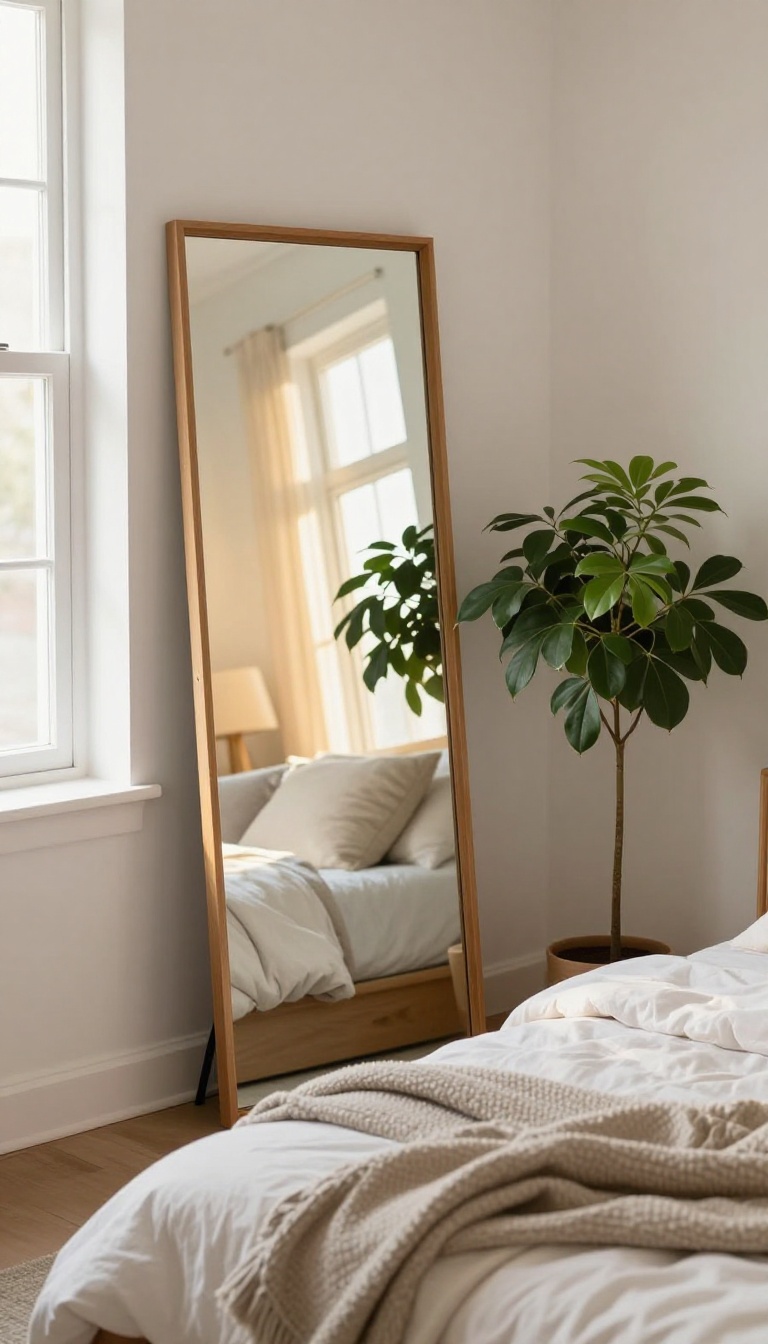
Mirrors are like secret weapons for small bedrooms. They bounce light around the room, making it feel twice as bright and twice as big without any construction. And the best part?
You can find great mirrors at thrift stores for next to nothing. Hang a large mirror opposite a window, and suddenly your room is flooded with natural light. It’s a simple trick that designers use all the time, and it works in any space.
Plus, a mirror adds a touch of style and can even serve as a getting-ready spot.
Here’s how to make the most of mirrors in your cozy bedroom.
Position Matters
Place your mirror directly across from a window to catch and reflect daylight. That way, the light bounces back into the room instead of getting lost. If you can’t hang it opposite a window, angle it toward a lamp or overhead light for a similar effect.
Avoid putting a mirror where it reflects a cluttered area—it’ll just make the mess look bigger. Instead, aim it at something pretty, like a plant or a piece of art.
Thrift Store Treasures
You don’t need a fancy new mirror. Thrift stores, flea markets, and garage sales often have large mirrors for $10 or less. Look for solid frames that you can paint or leave as-is.
A quick cleaning might be all it needs to shine. If the frame is damaged, cover it with washi tape or wrap it in fabric for a custom look. Even a plain frameless mirror can be mounted with clips for a modern vibe.
Beyond The Wall
Lean a full-length mirror against the wall if you can’t hang it—it’s renter-friendly and easy to move. Just secure it with earthquake putty or a furniture strap so it doesn’t tip. You can also use mirror tiles to cover a small section of wall, like above a dresser.
For a budget-friendly option, check dollar stores for small mirror squares and arrange them in a grid. It’s a fun DIY that adds light and personality.
7. Create a Cozy Reading Corner with a Chair
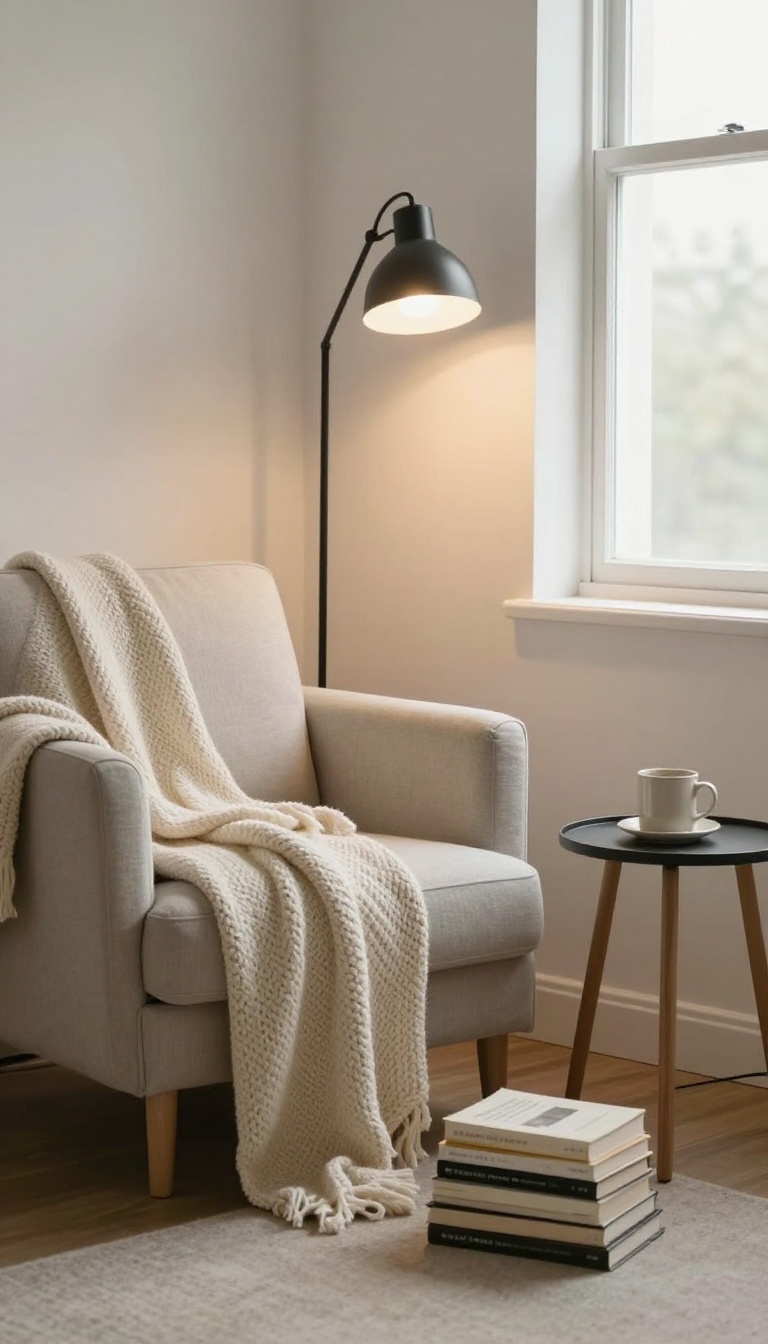
A reading corner gives your small bedroom a purpose beyond sleep. It's a spot to unwind with a book or just sip your morning coffee. And it doesn't require much space—just a corner and the right chair.
You don't need a huge armchair. A small accent chair, a beanbag, or even a floor cushion can work. Pair it with a floor lamp and you've got a cozy nook that feels intentional.
The best part? This corner can double as a spot to dress or check your phone. It's all about making the most of what you have.
A reading corner is one of those small bedroom ideas that instantly makes the room feel more livable. It carves out a dedicated zone for relaxing, so your bed doesn't have to serve every purpose. Plus, it adds visual interest to an empty corner that might otherwise collect clutter.
When you're working with limited square footage, every piece of furniture needs to earn its place. A reading chair does exactly that. It's a comfortable seat that doesn't dominate the room, and it gives you a reason to keep that corner tidy.
You can set up this corner without spending much. Thrift stores, online marketplaces, and even curb finds often have great chairs for cheap. A simple floor lamp from a discount store completes the look.
The goal is comfort and charm, not perfection.
Pick The Right Chair
The chair you choose should be small but comfortable. A slipper chair, a petite armchair, or a beanbag all work well. Test it out—if you can sit there for an hour without squirming, it's a keeper.
Think about the chair's footprint. Measure your corner before you buy. You want enough room to sit down and stand up without bumping into walls or furniture.
A chair with slim arms or no arms saves precious inches. If you're really tight on space, consider a folding chair or a floor cushion that you can tuck away. But a dedicated chair feels more inviting and encourages you to actually use the corner.
Light It Up
Good lighting makes or breaks a reading nook. A floor lamp with an adjustable arm lets you direct light right onto your book. Place it behind or beside the chair so it doesn't shine in your eyes.
If you don't have room for a floor lamp, a wall-mounted sconce is a great alternative. It keeps the floor clear and adds a warm glow. You can also use a clip-on light attached to a shelf or headboard.
Warm white bulbs (around 2700K) create a cozy atmosphere. Avoid harsh blue-toned bulbs—they kill the vibe and make the corner feel clinical.
Add Comfort And Personality
A throw blanket draped over the chair invites you to curl up. A small pillow adds back support and a pop of color. These little touches make the corner feel like a destination.
You can also add a tiny side table or a wall shelf for your book, a mug, or a candle. If floor space is tight, a floating shelf above the chair works wonders. Personalize the corner with art, a plant, or a framed photo.
It's your space—make it reflect what makes you happy. Even a simple basket of magazines can add charm.
8. Use Baskets and Bins for Stylish Storage
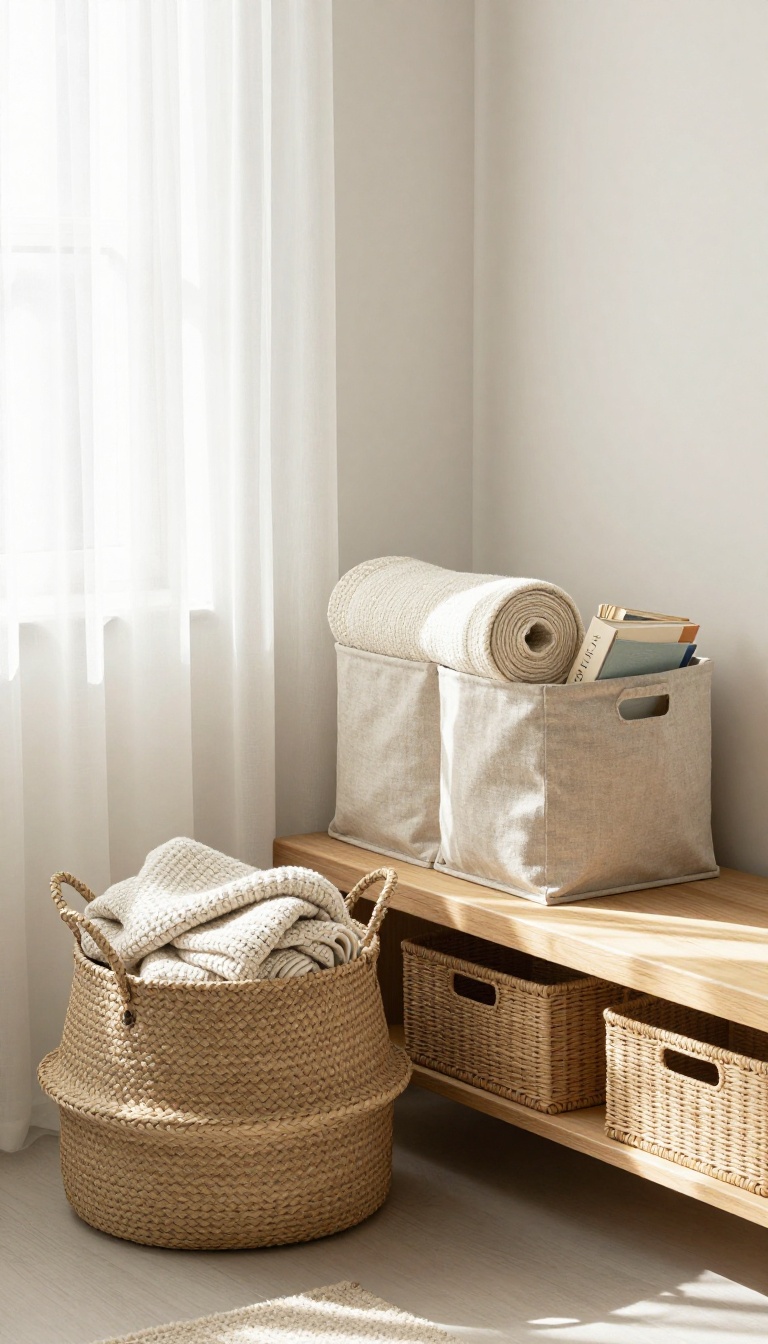
Clutter is the enemy of cozy, especially in a small bedroom. Baskets and bins give everything a home without making the room feel like a storage unit. They also add texture and warmth that plain plastic containers can't match.
The trick is choosing the right sizes and materials, then placing them where they'll be easy to use. You don't need a closet overhaul—just a few smart additions. Here's how to make baskets and bins work hard while looking good.
Pick Baskets That Pull Double Duty
Woven baskets come in every shape and size, so you can find ones that fit your space and style. A large seagrass basket can hold extra blankets and look like a design piece next to your bed. Smaller fabric bins are perfect for socks, chargers, or books.
Look for baskets with lids if you want a cleaner look, or open-top ones if you need quick access. Natural materials like jute, cotton, or rattan add instant warmth. They're also lightweight, so you can move them around without a struggle.
Make The Most Of Under-bed Space
The area under your bed is prime real estate for storage. Flat baskets or bins slide right under and keep dust off your things. Use them for off-season clothes, shoes, or extra bedding.
To keep it tidy, choose bins with handles so you can pull them out easily. Label them if you have trouble remembering what's inside. A bed skirt can hide the bins entirely, giving you a clean look with zero effort.
Use Bins On Shelves And In Closets
Open shelves can turn into a mess fast. Corral small items in fabric bins or wire baskets to keep things neat. Group similar items together—one bin for accessories, another for skincare, and so on.
In your closet, bins can separate shoes, bags, or laundry. Stackable bins save vertical space and keep everything visible. Just make sure you can reach them without pulling everything out.
Keep It Tidy And Intentional
Baskets and bins only work if you actually use them. Set a rule: everything gets put back at the end of the day. A quick tidy-up takes two minutes and keeps the room feeling calm.
Don't overstuff bins—if they're overflowing, it's time to declutter. Rotate items seasonally so you're not storing things you don't need. A little maintenance goes a long way in a small space.
9. Layer Lighting for Warmth and Function
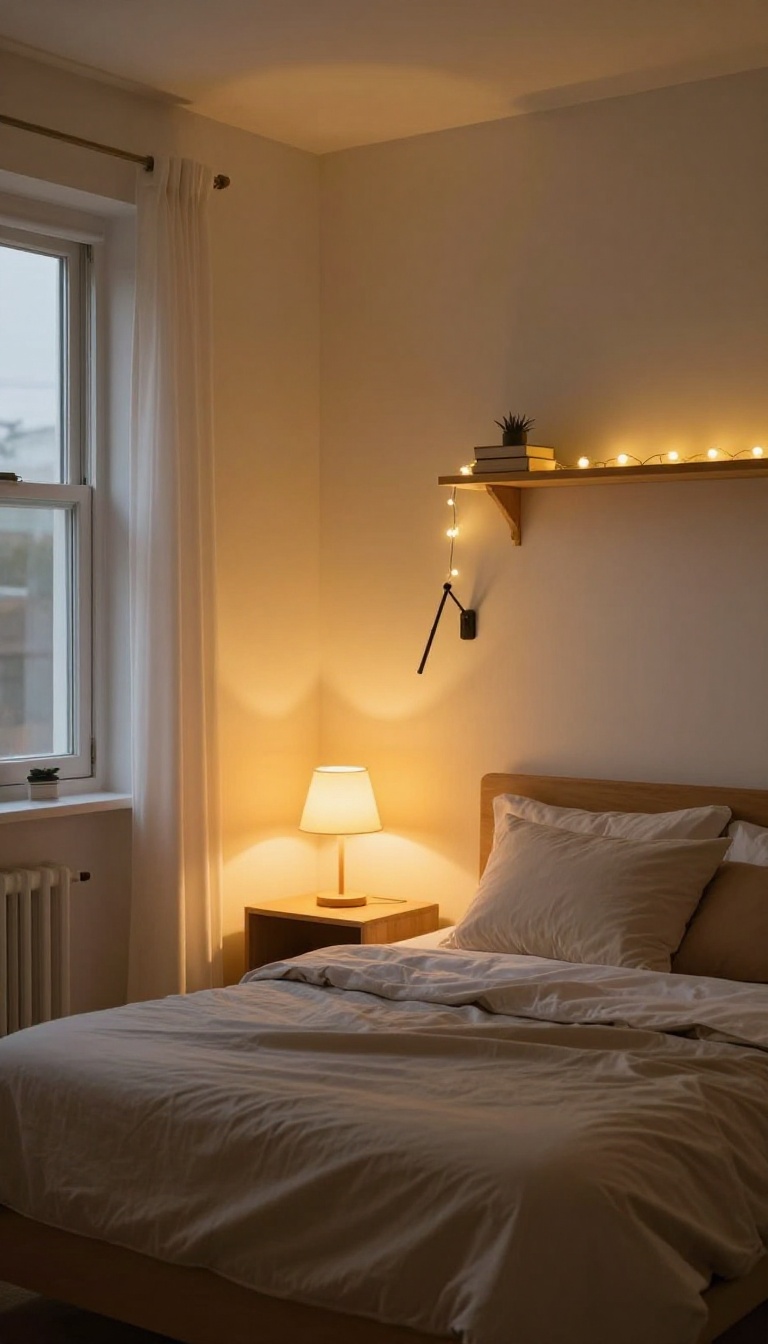
One ceiling light in a small bedroom does you no favors. It flattens the room, casts harsh shadows, and makes everything feel a little too much like a waiting room. Layering your lighting fixes that fast.
You want three jobs covered: overall glow, focused light for reading or getting ready, and a soft accent that just makes the space feel warm. Warm bulbs and a dimmer tie it all together so you can shift the mood from bright morning to sleepy evening without touching a single lamp cord.
The trick is to think in layers, not fixtures. Start with the overhead light as your base, then add smaller sources that you can switch on and off independently. That way you control exactly how cozy or how functional the room feels at any given moment.
Start With A Warm Overhead
Swap out any cool white or blue-toned bulb in your ceiling fixture for a warm one in the 2700K range. That single change makes the whole room feel softer and more inviting. If your overhead light is too bright, add a dimmer switch.
It's a cheap upgrade that lets you drop the brightness way down at night without fumbling for a lamp.
Add Task Light Where You Need It
A small clip-on reading light or a slim wall sconce next to the bed gives you focused light without taking up nightstand space. Look for one with an adjustable arm so you can aim it right at your book. For a vanity or desk corner, a simple LED task lamp with a warm setting keeps things practical.
Just make sure it doesn't blast cool white light across the whole room.
Sprinkle In Accent Glow
Fairy lights along a shelf, a small table lamp on a dresser, or even a plug-in nightlight with a warm glow all add that layered feel. These little sources fill in the shadows and make the room feel bigger somehow. Use smart plugs or a single power strip so you can turn several accent lights on at once.
It keeps the cozy mood easy to switch on without a bunch of separate switches.
Keep Bulbs Consistent
Mismatched bulb colors make a small room look messy fast. Stick to warm white across every fixture so the light blends together instead of fighting itself. If you can, buy dimmable bulbs for every lamp.
Even if you don't have a dimmer switch yet, you'll be ready when you add one.
10. Choose a Light and Airy Color Palette
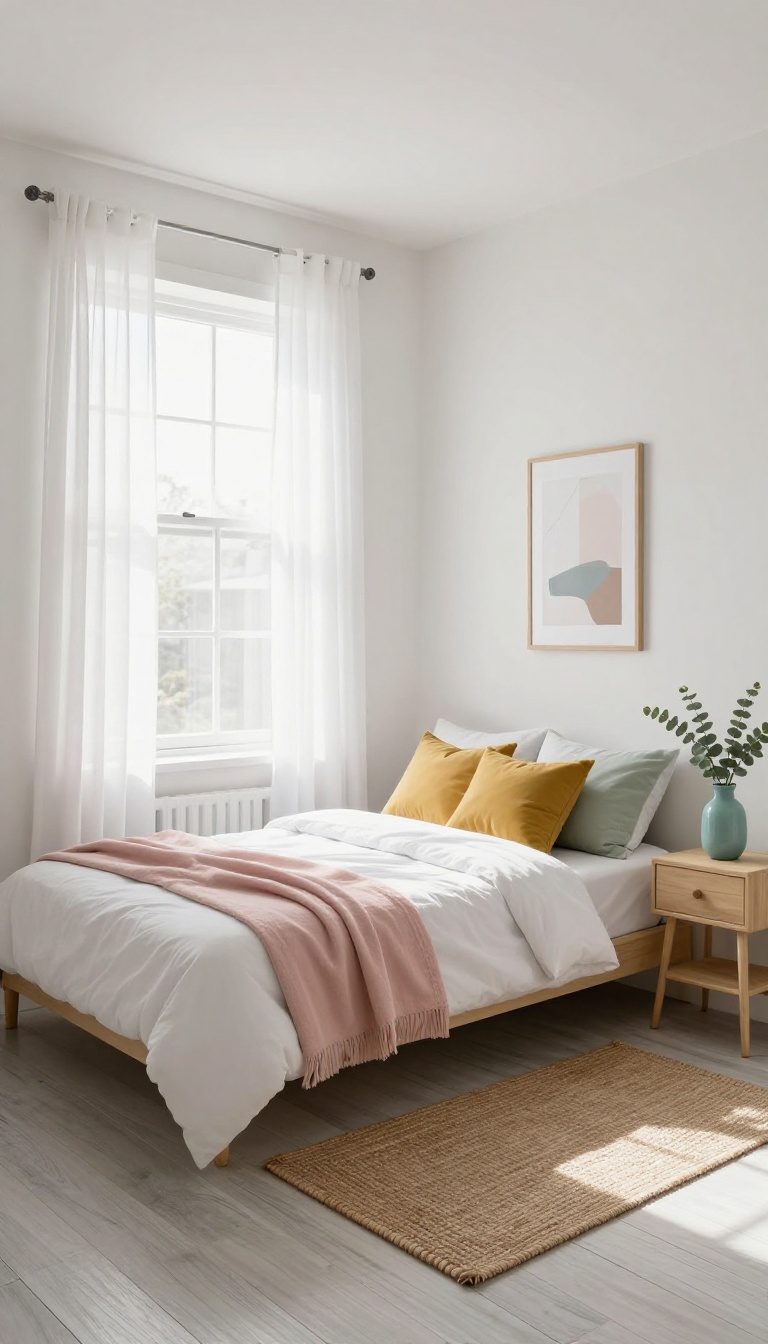
Color sets the mood of your small bedroom before you even add a single piece of furniture. Light shades reflect whatever natural light you get, making walls feel farther apart and the ceiling feel higher. That doesn't mean you're stuck with boring beige.
You just need a smart base and a few well-placed accents.
Start with soft neutrals, pastels, or whites on the biggest surfaces: walls, ceiling, and floor. These colors bounce light around instead of soaking it up, so the room feels open even on gray days. Then bring in personality through smaller items like pillows, art, and throws.
That way you get the airy feel without the sterile look.
Best Base Colors For Tiny Spaces
Warm whites, pale grays, and soft creams work on almost any wall. If you want a hint of color, try pastel blue, sage green, or blush pink. These shades stay light enough to keep the room feeling spacious.
Avoid dark colors on all four walls unless you have huge windows and tall ceilings.
How To Add Pops Of Color Without Overdoing It
Pick two or three accent colors you love and repeat them in small doses. A mustard yellow pillow, a teal vase, or a framed print can wake up a neutral room. Keep the rest of the palette calm so those pops stand out.
Too many colors will make a small space feel busy and cramped.
Cheap Ways To Test A Palette Before You Commit
Paint sample swatches on the wall and live with them for a few days. You can also buy inexpensive pillow covers or a thrifted throw to try a new accent color. If you rent, use removable wallpaper or a large fabric tapestry as a temporary backdrop.
Testing first saves you from repainting a color you end up hating.
11. Make a DIY Headboard from Thrifted Finds
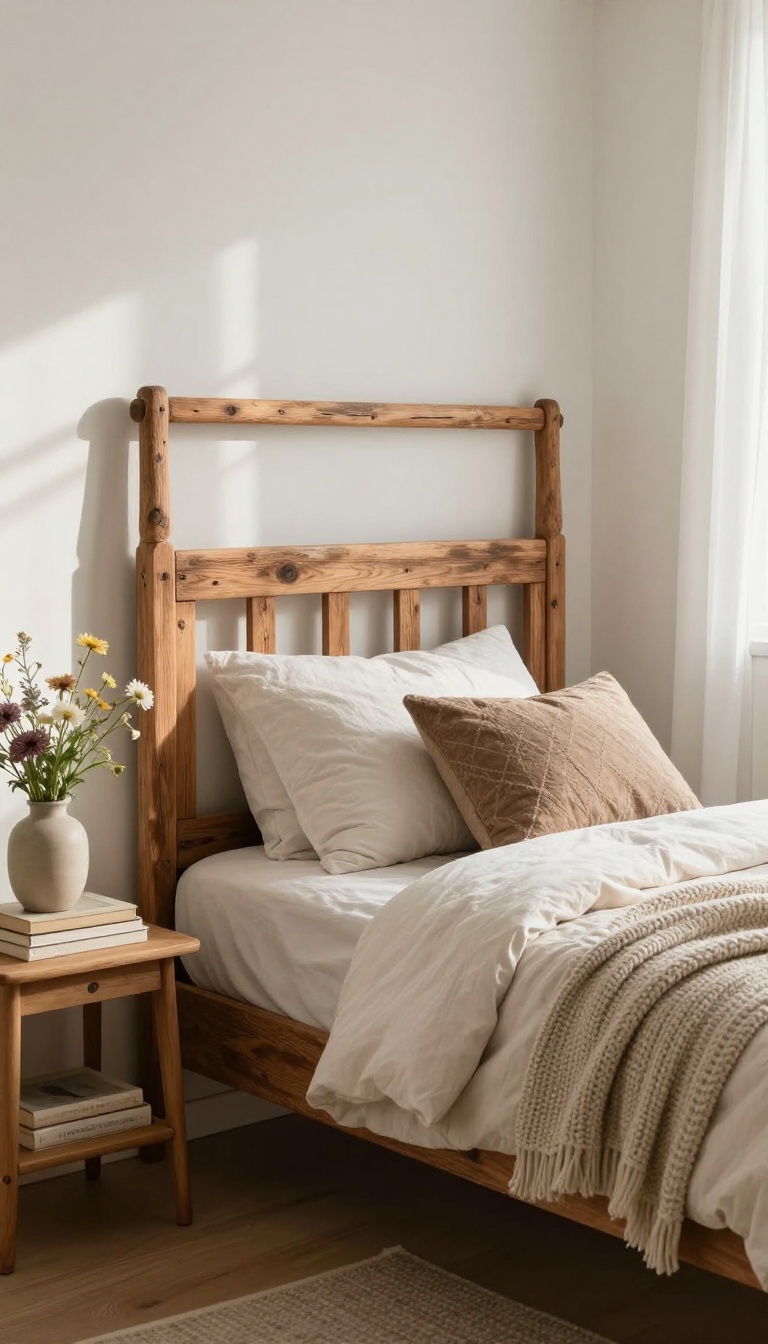
A headboard can transform a small bedroom from plain to polished, but store-bought versions often cost more than your entire bedding set. The thrifty alternative? Make your own from secondhand treasures.
You'll save money, add one-of-a-kind character, and create a focal point that makes your bed feel intentional rather than just pushed against the wall.
Thrift stores, flea markets, and even curbside piles are full of potential headboards. You just need to look at ordinary objects with a little imagination. A vintage garden gate, a piece of reclaimed wood, or a leftover fabric panel can all become a stylish backdrop for your bed.
The best part is that these projects are usually simple enough for a weekend afternoon, even if you're not particularly handy.
Where To Hunt For Materials
Start with your local thrift shops, Habitat for Humanity ReStore, or online marketplaces like Facebook Marketplace and Craigslist. Look for old wooden gates, picket fence sections, shutters, or even a large picture frame. Fabric remnants from curtains or upholstery samples can also work.
Don't overlook freebies on neighborhood buy-nothing groups. The goal is to find something with good bones, not perfection.
Easy Assembly Ideas
For a rustic gate headboard, simply lean it against the wall behind your bed or secure it with a few screws into studs. A fabric headboard can be made by wrapping batting and your chosen fabric around a piece of plywood, then stapling it on the back. If you find a solid wood panel, sand it lightly and seal it with a clear finish.
No power tools? Use heavy-duty adhesive strips for lightweight pieces.
Styling And Safety Tips
Once your headboard is in place, add soft pillows and a cozy throw to tie it into your room's color scheme. If your headboard is tall, make sure it's securely attached to the wall to prevent tipping. For renters, use removable adhesive hooks or lean it against the wall with non-slip pads.
A little creativity goes a long way, and you can always repaint or rewrap it later if you change your style.
12. Use a Fold-Down Desk for a Flexible Workspace
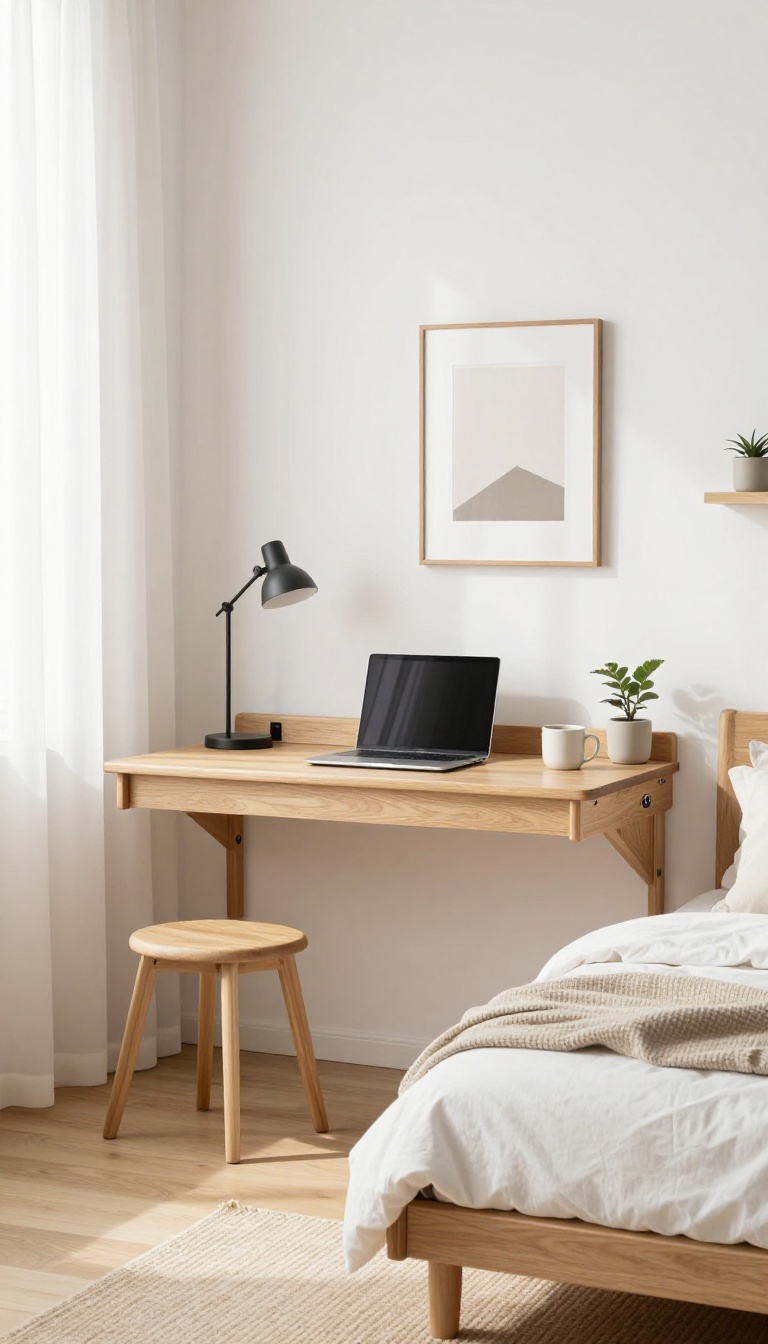
A fold-down desk attaches to your wall and swings or flips out when you need it, then tucks away when you don't. That means you get a real workspace without permanently sacrificing floor space. It's a smart move for a small bedroom that has to pull double duty as an office.
You don't need a separate room to work from home. You just need a surface that appears when inspiration strikes and disappears when you're done. A fold-down desk gives you exactly that kind of flexibility.
Why It Works In Tiny Rooms
In a small bedroom, every square foot counts. A traditional desk eats up floor space 24/7, even when you're not using it. A fold-down version stays out of the way until you need it, so your room feels bigger and less cluttered.
It's especially handy if you live in a studio or share your bedroom with a partner.
Choosing The Right Spot
Look for a blank wall near an outlet. You'll want easy access to power for your laptop or lamp. Avoid placing it behind a door or in a high-traffic path.
A spot next to a window is ideal for natural light, but make sure the desk doesn't block curtains or blinds when it's folded down.
Installation Tips For Renters And Diyers
Many fold-down desks come with mounting hardware and clear instructions. If you rent, use heavy-duty toggle bolts or find a stud to avoid damaging the wall. Not handy?
A handyman can install it in under an hour. Just make sure the desk is level and secure before you load it up with your laptop and coffee mug.
Styling And Storage Tricks
Keep the desk itself clutter-free so it can fold away easily. Use a small basket or wall pocket for pens, chargers, and notebooks. A clip-on lamp saves surface space.
When the desk is up, the wall can double as a display for art or a mirror, so nothing feels wasted.
13. Add a Gallery Wall for Instant Charm
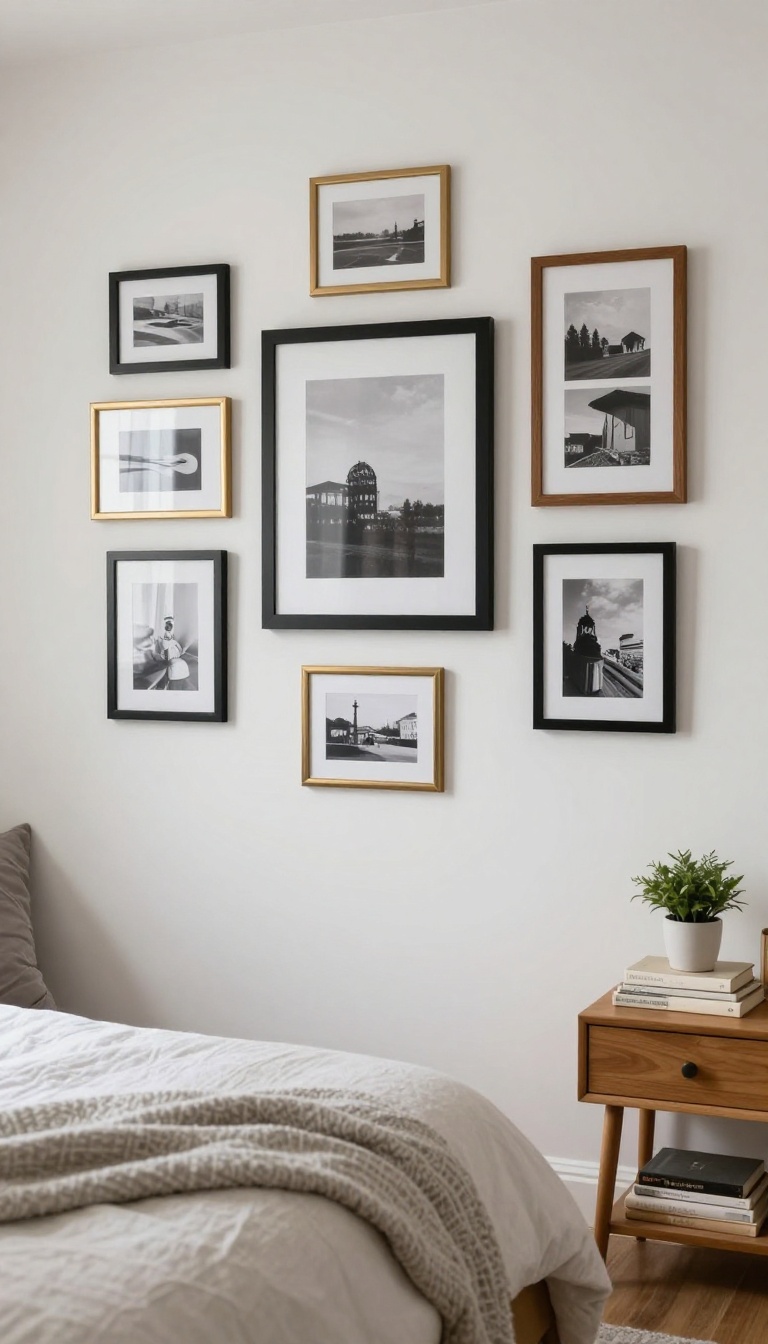
Blank walls in a small bedroom can make the room feel unfinished and boxy. A gallery wall fixes that by turning empty vertical space into a personal, eye-catching display. You don't need a big budget—thrifted frames, old photos, and cheap prints do the job beautifully.
The trick is to cluster your pieces instead of spreading them out. A tight arrangement reads as one intentional feature, while scattered frames can make a small room feel messy. Start by laying everything on the floor or bed to play with the layout before you commit to nails.
Mix Thrifted Frames With Meaningful Pieces
Hit thrift stores, flea markets, or dollar bins for frames in different sizes and finishes. Then fill them with things you already love: concert tickets, postcards, snapshots, or even fabric scraps. The mix of old and new keeps it from looking like a store-bought set, and every piece adds a little story.
Keep The Layout Tight And Balanced
A good gallery wall feels like one unit, not a scattered collection. Start with a larger piece in the center, then build outward with smaller frames. Leave about two inches between frames so the group stays cohesive.
If you're nervous about holes, trace each frame onto paper, tape the paper to the wall, and adjust until it feels right.
Stick To A Loose Color Theme
You don't need matching frames, but a loose color thread ties everything together. Try all black and white photos, warm wood tones, or a single accent color repeated in a few prints. This keeps the wall from feeling chaotic in a small space while still letting your personality show.
14. Incorporate Plants for a Fresh Feel
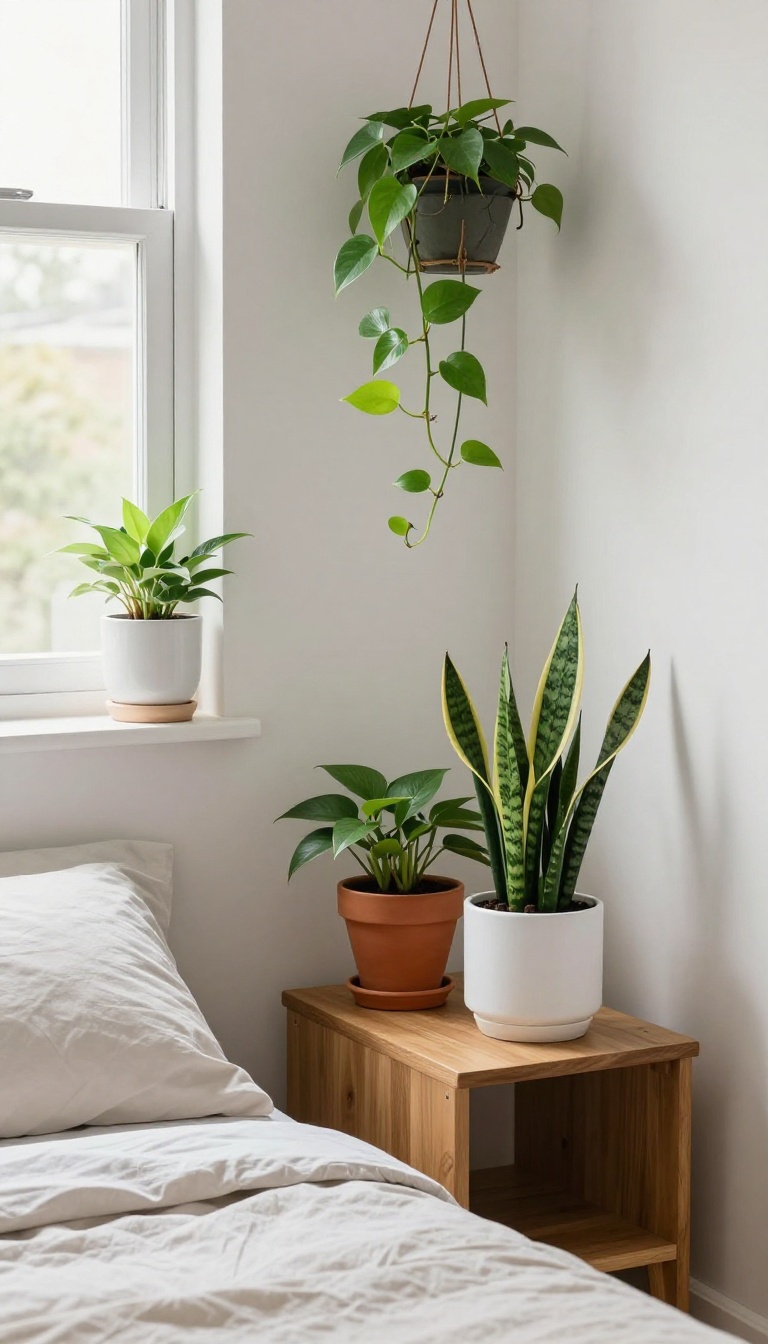
Plants bring a small bedroom to life in a way that no throw pillow or wall print can. They add color, texture, and a little bit of nature without taking up much floor space. Even a single pothos on a nightstand can make the room feel less boxed in.
The trick is choosing plants that thrive in low light and don't mind if you forget to water them now and then. You also want varieties that stay compact, so they don't crowd the room. Once you pick the right ones, you can place them high, low, or hanging to save precious surface area.
Best Low-maintenance Picks
Pothos and snake plants are practically foolproof. They tolerate low light, need water only every week or two, and look good in almost any pot. A small ZZ plant or a spider plant also works well if you want a little variety.
Where To Put Them
Use vertical space whenever you can. Hang a trailing plant from a ceiling hook or place a small pot on a floating shelf above your bed. If you have a windowsill, that's prime real estate for a snake plant or a tiny succulent.
Styling Without Clutter
Stick to two or three plants max in a tiny room. Group them on a tray or in matching pots to keep things looking tidy. A single hanging planter near the window can be enough to freshen up the whole space.
15. Use a Rug to Define the Space
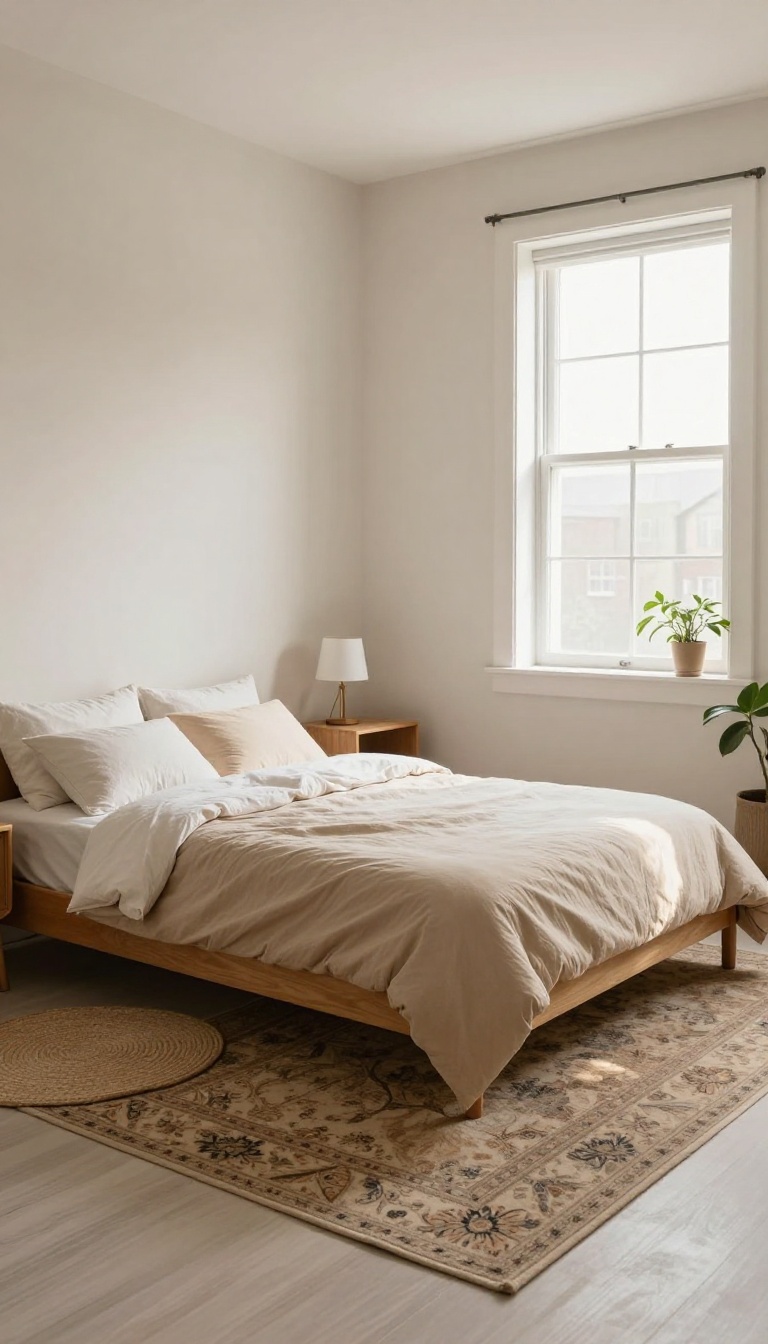
A rug does more than warm up cold floors. In a small bedroom, it visually carves out zones so the room feels intentional instead of cramped. The right rug can anchor your bed, create a cozy reading nook, or simply make the whole space feel pulled together.
Think of a rug as a low-commitment way to add color, texture, and definition. You don't need to cover every inch of floor. A well-placed rug can make a tiny room feel larger by drawing the eye to a specific area.
Plus, it's an easy swap when you want a fresh look without repainting or buying new furniture.
Pick The Right Size And Placement
For a small bedroom, a 4×6 or 5×8 rug usually works best. Place it so the front legs of your bed sit on the rug, or run it alongside the bed to create a soft landing spot. If you have a reading chair, a small round rug underneath can define that corner without eating up floor space.
Choose Washable, Budget-friendly Materials
Look for flat-weave or low-pile rugs that are machine washable. Cotton, jute, or synthetic blends are affordable and easy to clean. Stores like IKEA, Target, and even Amazon have great options under $50.
A patterned rug hides stains better than a solid light color, so you can relax about spills.
Use Pattern And Color To Set The Mood
A bold geometric or vintage-inspired pattern adds personality without overwhelming a small room. If your walls are neutral, a rug is your chance to bring in a favorite color. Just keep the rest of the room simple so the rug stands out for the right reasons.
FAQ
How can I make my small bedroom look cozy on a budget?
Focus on lighting, texture, and smart storage. Use warm string lights, layer thrifted blankets and pillows, and corral clutter in baskets. Small changes make a big impact without spending much.
What's the best layout for a tiny bedroom?
Place the bed against the longest wall, leaving space for a small nightstand or shelf. Keep pathways clear and use vertical storage. If possible, position the bed opposite the door for a more open feel.
How do I add storage without taking up floor space?
Go vertical with shelves, use under-bed bins, and hang over-the-door organizers. Wall-mounted hooks and floating shelves are also great for keeping things off the floor.
What colors make a small bedroom feel bigger?
Light, cool colors like white, soft gray, and pale blue reflect light and make rooms feel airy. You can still add darker accents through textiles and decor for contrast.
Can I make a small bedroom feel charming without spending much?
Absolutely. Thrifted art, DIY headboards, and vintage finds add charm for little money. Mix textures and personalize with items you love to create a cozy, inviting space.
Conclusion
You don't need a big budget or a bigger room to make your bedroom feel cozy. Pick one idea from this list that solves your most annoying problem, whether that's clutter, bad lighting, or a bare wall. Try it this weekend and live with it for a few days before adding anything else.
Small rooms reward smart choices, not more stuff. Notice what actually makes your mornings easier and your evenings calmer, then build from there. One good change beats five rushed ones, and your room will feel more charming because of it.