10 No Glass Shower Ideas for an Open Low Maintenance Layout
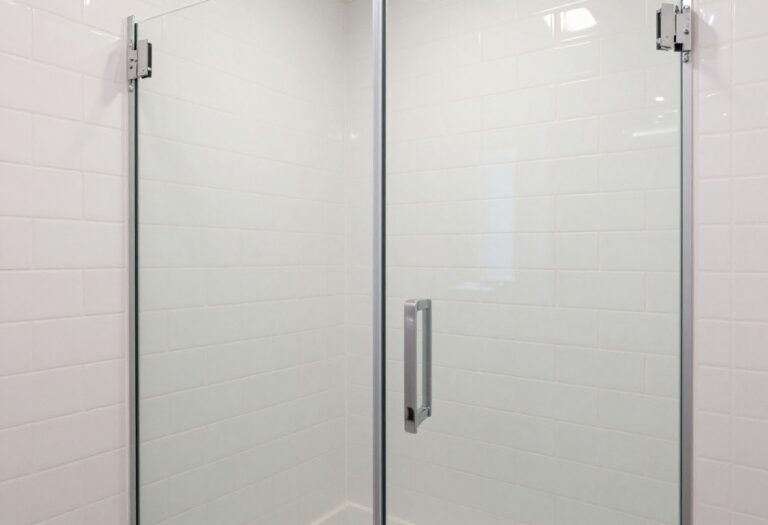
Glass shower doors look sleek, but they come with a downside: constant wiping, water spots, and a hefty price tag. If you're dreaming of a more open, carefree bathroom, ditching the glass might be the smartest move you make.
Not only does it open up the space, but it also cuts down on cleaning time significantly. From simple curtain setups to bold wet rooms, there are plenty of ways to keep the water in without a single pane of glass.
Here are ten ideas that balance style, safety, and easy upkeep.
1. The Classic Curved Rod with a Liner
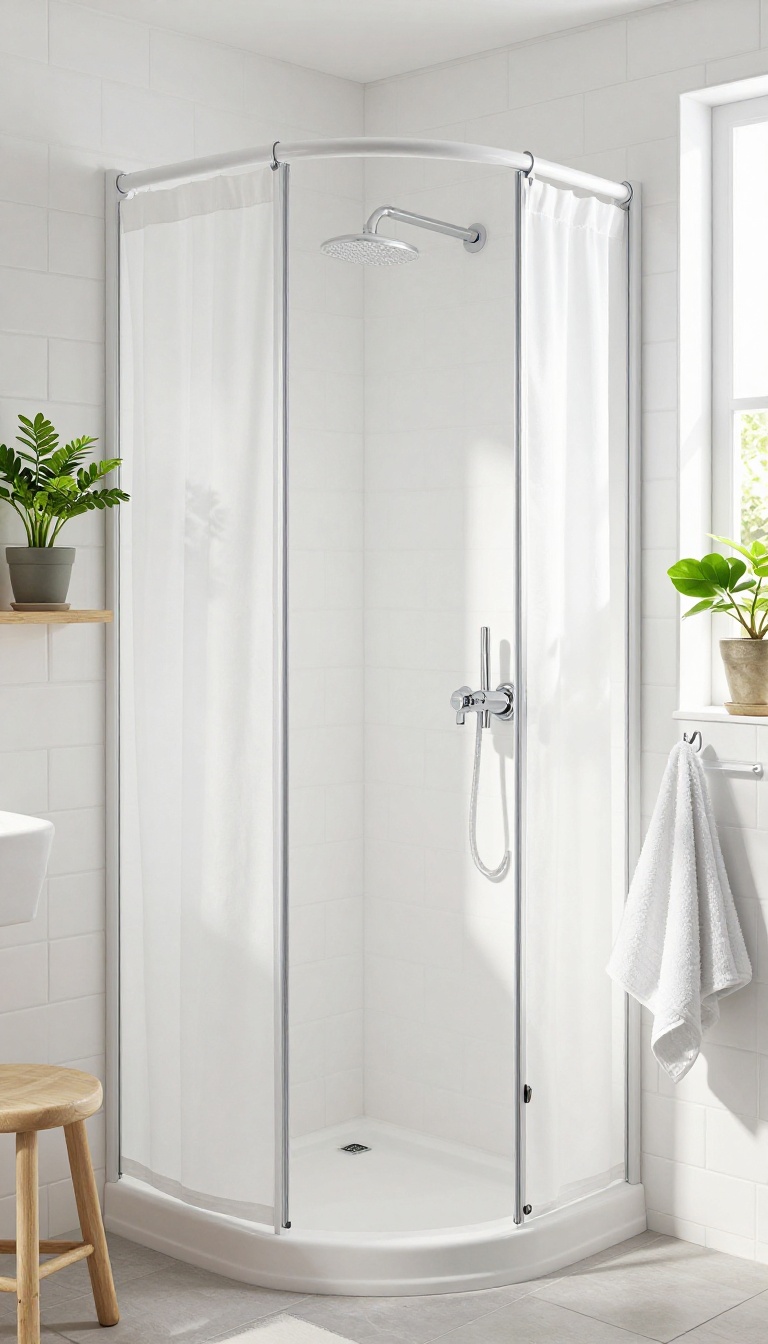
If you want a no-glass shower that's as simple as it gets, a curved rod with a liner is your best friend. It's the kind of setup you can install in an afternoon, and it instantly makes the shower feel roomier thanks to that extra bend. Plus, you get to change the look whenever you want just by swapping the curtain.
The curved rod is a clever upgrade over a straight one. It bows outward, giving you up to 6 extra inches of elbow room at the midpoint. That means less chance of your arms brushing against a damp curtain.
And because the liner sits closer to the wall at the ends, water stays inside the tub or shower pan more effectively.
Why A Liner Beats Glass
Liners are cheap, easy to replace, and don't need any special cleaning. You just toss them in the wash or wipe them down with a mild cleaner. Unlike glass, they won't show water spots or soap scum, and they're far less likely to shatter.
Plus, if you have kids, a liner is much safer than a heavy glass door.
Choosing The Right Rod
Look for a curved rod that's sturdy enough to hold a heavy liner and curtain. Tension rods work for temporary setups, but a permanently mounted one with flanges is more reliable. Measure your shower width before buying, and pick a rod with a smooth, rust-resistant finish—stainless steel or aluminum are good choices.
Curtain And Liner Combo Tips
Pair a clear or frosted liner with a decorative curtain to keep the space feeling open. If you prefer a minimalist look, skip the outer curtain and use a single fabric liner that's water-repellent. Make sure the liner extends a few inches below the tub rim to prevent leaks.
Use a magnetic or weighted bottom to keep it in place.
2. The Minimalist Wet Room
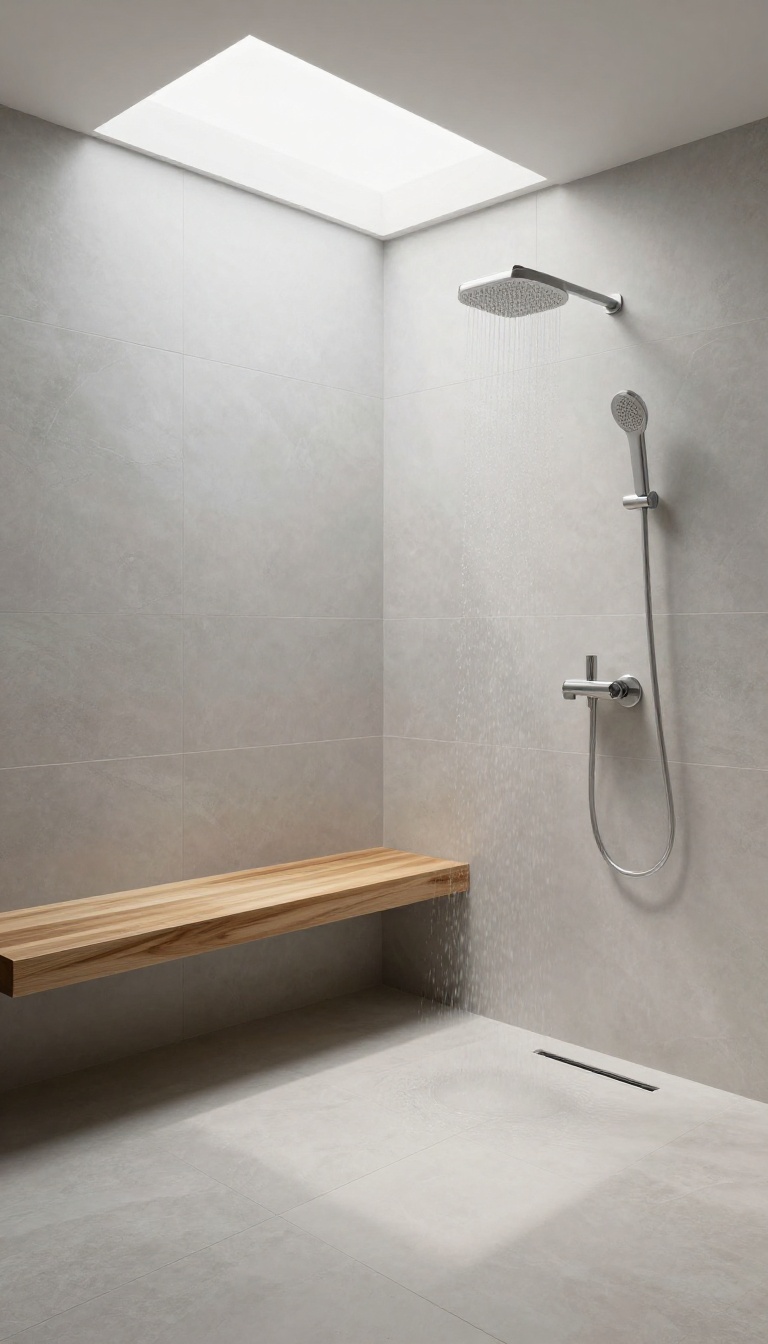
A wet room takes the open concept to its logical end: the entire bathroom floor is the shower floor. There's no curb, no door, no barrier—just a seamless, water-resistant space that feels twice as large as it actually is. The key is a perfectly sloped floor and thorough waterproofing, so water glides toward a single drain.
Wet rooms are a favorite in modern and Scandinavian design because they strip away everything unnecessary. You get a clean, unbroken sightline from wall to wall, which makes even a compact bathroom feel airy and spacious. Plus, without glass or curtains, there's nothing to scrub—just wipe down the walls and floor with a squeegee, and you're done.
Why It Works
The absence of a shower enclosure opens up the room visually and physically. You can walk right in without stepping over a curb, which is great for accessibility and for families with young kids. It also gives you total freedom in layout—place the showerhead wherever you like, and the whole room becomes your shower.
What To Watch Out For
Proper sloping is non-negotiable. The floor needs a gentle pitch toward the drain, usually about 1/4 inch per foot, to prevent puddles. Waterproofing the entire floor and lower walls is also essential—use a liquid membrane or sheet membrane under the tile.
And pick a linear drain for a sleek, modern look that's easier to keep clean.
Design Tips
Keep the palette light and consistent to enhance the open feel. Large-format tiles with minimal grout lines reduce cleaning and create a seamless look. Add a bench or niche for convenience, and consider a rain showerhead for a spa-like experience.
A glass panel is optional if you want to block splashes, but it's not required.
3. The Half-Wall with a Curtain
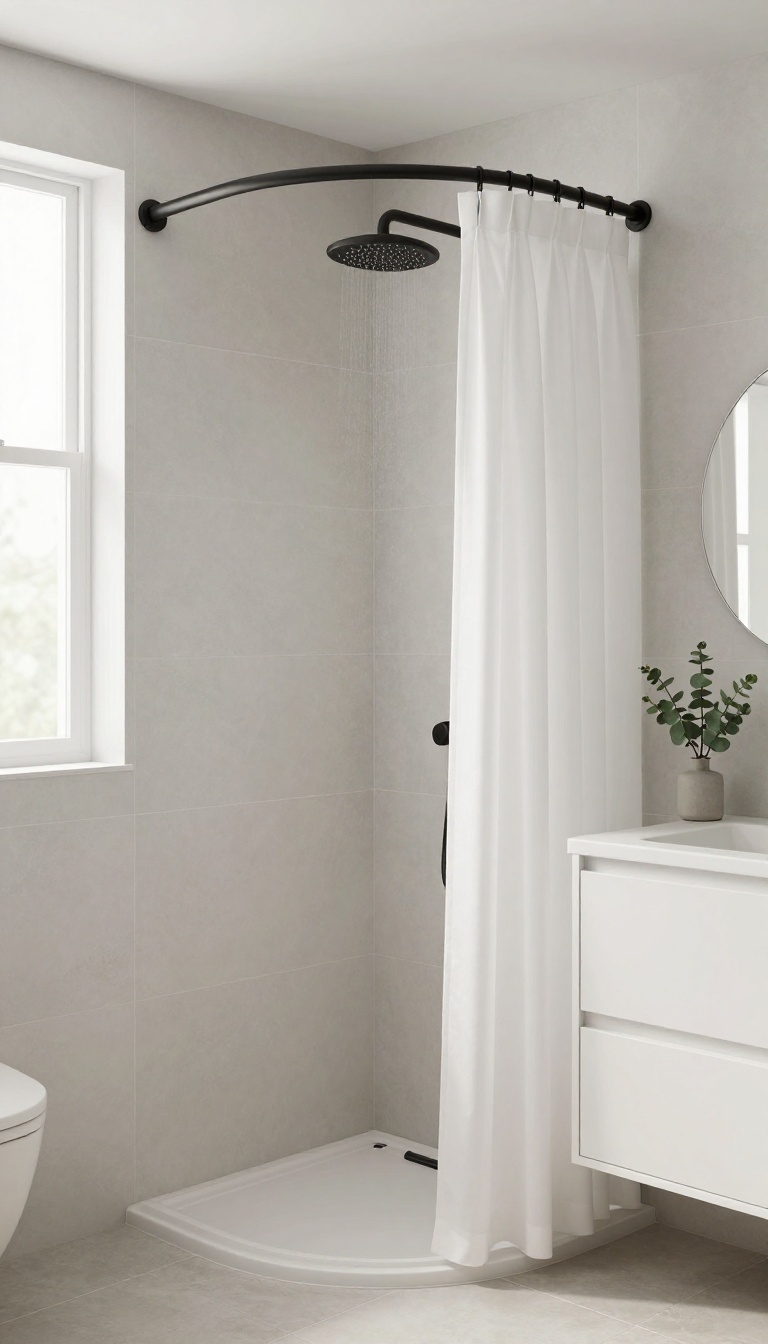
A half-wall, sometimes called a pony wall, gives you a solid anchor without boxing you in. It blocks the view from the toilet area while keeping the ceiling open and the room airy. Add a curtain on the open side, and you get privacy and splash control without the weight of a full enclosure.
This setup works especially well in smaller bathrooms where a full shower door would eat up visual space. The half-wall can be tiled to match your floor or painted to contrast, giving you a design feature that doesn't cost a fortune. The curtain rod can be a simple tension rod or a sleek curved one, depending on your layout.
Where To Place The Half-wall
Think about the shower head location first. The half-wall should sit opposite the shower head, so it catches most of the spray. If you have a corner shower, place the wall on the long open side.
For a tub-shower combo, the wall can extend from the tub edge to about 48 inches high, leaving the top open for light and air.
Choosing The Right Curtain
Skip the heavy vinyl liners if you can. A fabric curtain with a water-repellent finish looks nicer and dries faster. For a truly low-maintenance option, use a washable polyester curtain and toss it in the machine every couple of weeks.
A curved rod gives you extra elbow room, but a straight rod keeps the line clean and minimal.
Keeping The Wall Dry And Clean
Seal the half-wall with a good waterproof grout and a penetrating sealer. Wipe down the wall after each shower with a squeegee—takes ten seconds and prevents soap scum buildup. If you tile the wall, choose large-format tiles with fewer grout lines, so there's less to scrub.
4. The Freestanding Tub-Shower Combo
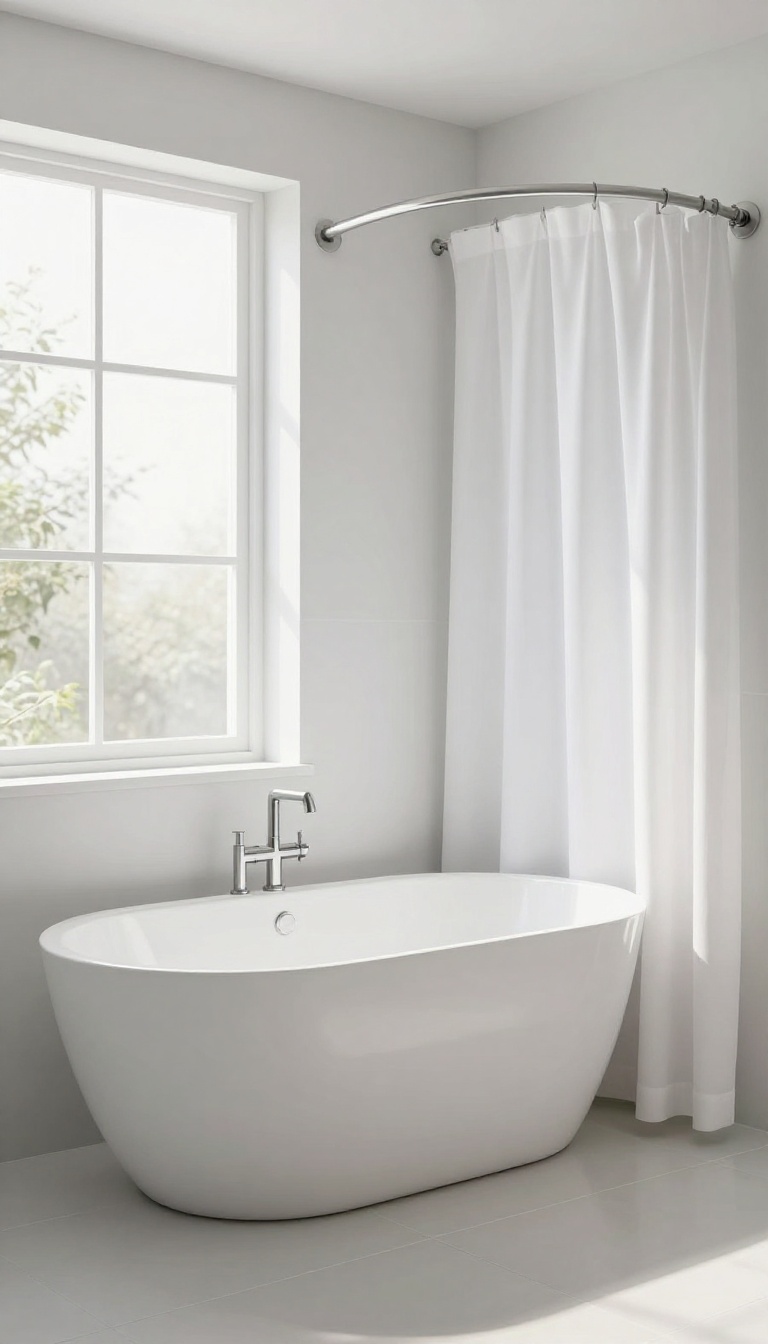
Combining a freestanding tub with a showerhead is a smart way to get both soaking and rinsing without any glass. The key is a curved curtain rod that keeps water in while giving you elbow room. It feels open and airy, and the curtain adds a soft, classic touch.
This setup works especially well in smaller bathrooms where a separate shower and tub just won't fit. You get the luxury of a long soak and the convenience of a quick shower, all in one footprint. Plus, you can swap out the curtain whenever you want a fresh look without any major renovation.
Picking The Right Tub
Not every freestanding tub works well with a shower. Look for one with a flat, slip-resistant bottom and a design that doesn't have sharp curves that could trap water. Alcove-style freestanding tubs are a good choice because they have a built-in ledge for the curtain.
If you go with a classic clawfoot tub, you'll need a circular curtain rod that hangs from the ceiling to keep water from splashing out.
Curtain Rods That Actually Work
A straight rod will leave you feeling cramped and likely lead to water on the floor. A curved rod, also known as a shower curtain bow, gives you extra space at the elbow and shoulder. For a freestanding tub, you can also use a ceiling-mounted circular rod that surrounds the tub entirely.
That setup looks elegant and keeps water contained from all angles.
Keeping It Low Maintenance
The beauty of a curtain is that it's machine washable. Just toss it in with your towels and it comes out fresh. To prevent mold and mildew, use a fabric curtain with a removable liner, and leave the curtain open after each shower to let it air dry.
This simple habit keeps everything clean and dry without scrubbing glass.
5. The Barn Door or Sliding Panel
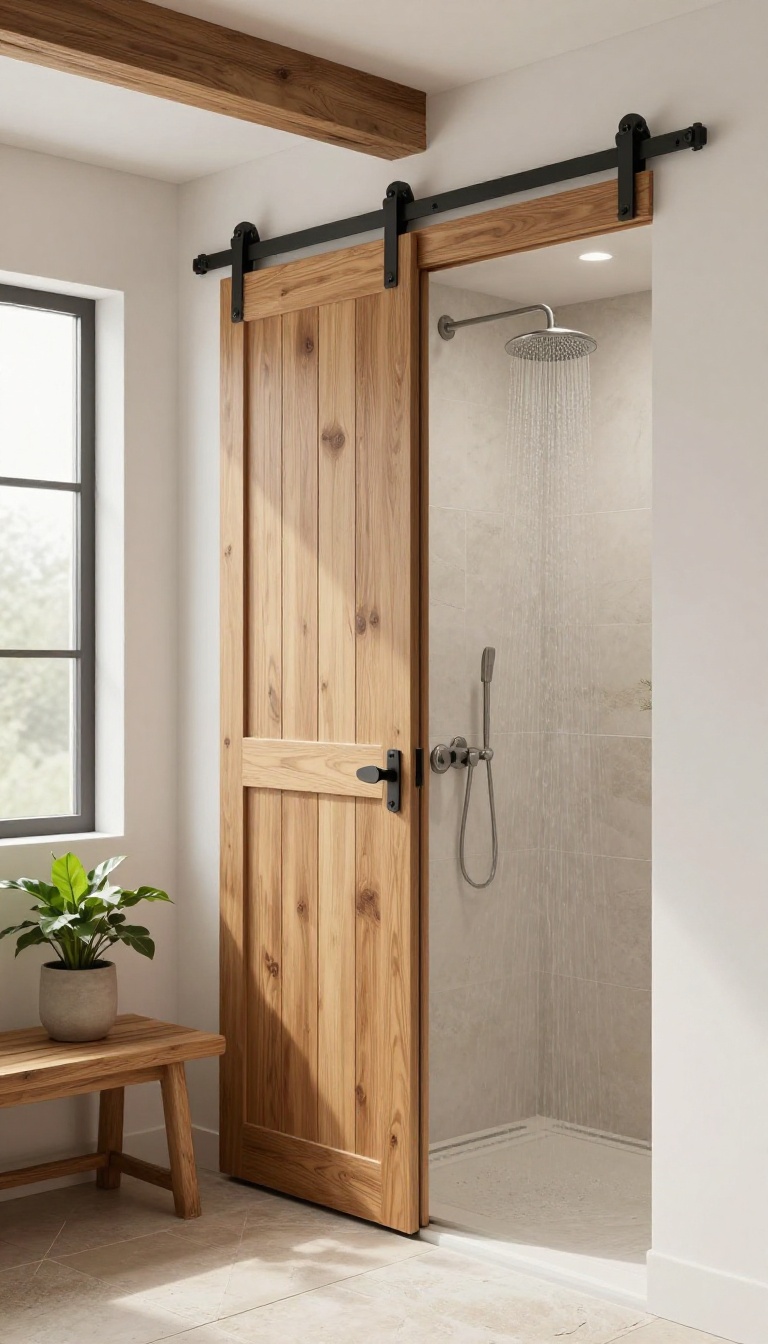
Barn doors aren't just for farmhouse living rooms. A sliding wood panel on a track can replace your shower door with something that feels warm, solid, and surprisingly practical. It's a full barrier, so water stays in, but it doesn't demand the same upkeep as glass.
A barn door or sliding panel gives you privacy and a clear visual break without the constant smudging. The track system glides smoothly, and the solid wood adds a cozy, grounded feel to the bathroom. Plus, you can choose a finish that matches your cabinetry or tile, making it a design feature rather than just a functional add-on.
Why It Works
The solid surface means no water spots, no streaks, and no fingerprints. You just wipe it down occasionally with a wood-safe cleaner. The track keeps the door steady, and the panel swings or slides out of the way when you want an open feel.
It's also a great option for small bathrooms where a swinging door would take up too much room.
Material And Finish Tips
Go for teak, cedar, or a moisture-resistant composite. These woods handle humidity well and won't warp easily. Seal it with a waterproof finish like marine varnish or a water-based polyurethane.
If you want a lighter look, a whitewashed or painted panel works, but make sure the paint is designed for high-moisture areas.
Installation And Space
You'll need a sturdy track mounted to the wall or ceiling. The panel should overlap the shower opening by a few inches on each side to prevent splashes. Measure carefully so the door slides smoothly and doesn't hit any fixtures.
It's a doable DIY project, but if you're not comfortable with hardware, a contractor can handle it in a few hours.
6. The Open Walk-In with a Ceiling-Mounted Curtain
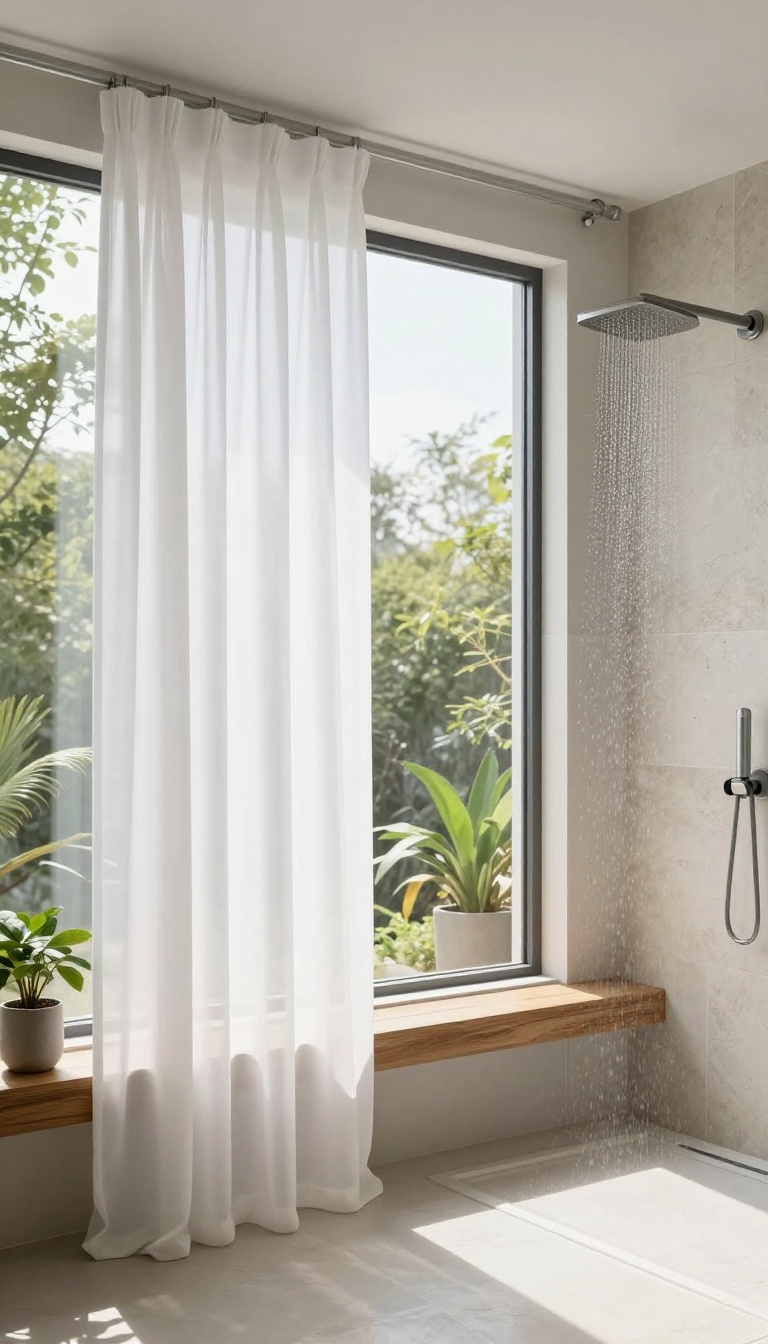
Sometimes the best way to keep a shower open is to skip the door altogether. A ceiling-mounted curtain track lets you wrap the shower area in soft fabric that you can pull back when not in use. It’s a flexible, airy solution that feels more like a dressing room than a bathroom.
This setup works especially well in larger bathrooms where you want to define the shower zone without closing it off. The track can follow a straight line, an L-shape, or even a U-shape, depending on your layout. You get the openness of a wet room but with a clear boundary that keeps water where it belongs.
Why A Ceiling Track Beats A Rod
A standard curved rod still leaves gaps at the ends, and it can sag under heavy fabric. A ceiling-mounted track is sturdier and allows for a full wrap-around curtain. You can also use multiple panels that glide smoothly, so you’re not wrestling with a single heavy curtain.
Choosing The Right Curtain
Look for a fabric that’s water-resistant and quick-drying. Polyester or treated cotton are good options. You can go with a crisp white for a spa-like feel or a bold pattern to add personality.
Just make sure the curtain reaches the floor or at least close to it to prevent splashes.
Installation Tips
The track needs to be securely anchored to the ceiling, preferably into a joist. If you’re not comfortable doing it yourself, a handyman can handle it in under an hour. Use ceiling-mount brackets and a track designed for wet areas to avoid rust and corrosion.
7. The Tile-Lipped Shower with a Curtain
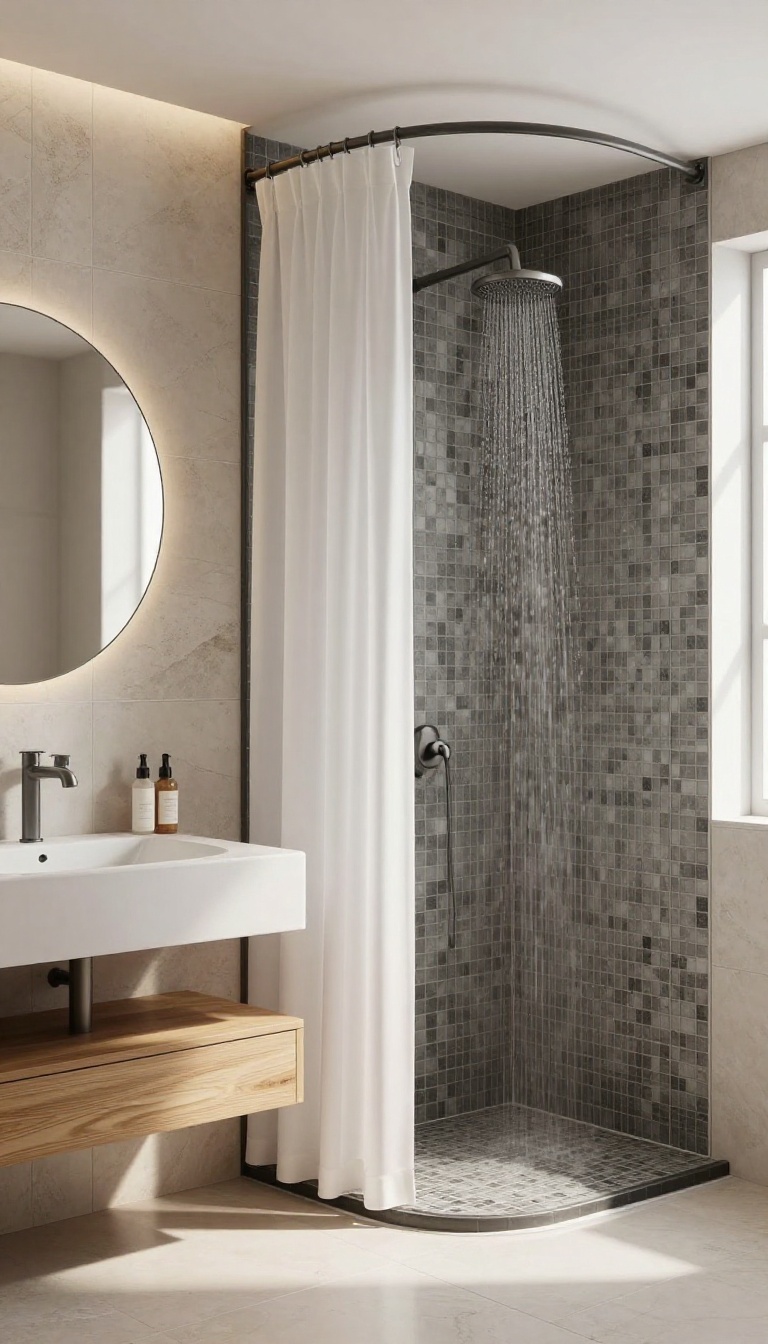
A tile lip is a low curb that defines the shower area without closing it off. It’s just enough of a barrier to keep water where it belongs, while a ceiling-mounted curtain adds privacy and a soft, airy feel. This setup gives you the openness of a wet room but with more containment and a touch of classic bathroom charm.
The tile lip can be as subtle as a single row of contrasting tile or a slightly raised bench-like edge. It doesn’t need to be tall—just enough to stop water from creeping across the floor. Pair it with a curved curtain rod or a straight track mounted to the ceiling, and you’ve got a shower that feels open but still functional.
Why A Tile Lip Works
A tile lip is a practical solution for containing water without the visual weight of a glass enclosure. It’s also easier to clean than a full glass door—no hard water stains to scrub, just a quick wipe of the tile. The lip can double as a seat or a shelf for shampoo bottles, adding function without taking up extra space.
Choosing The Right Curtain
Skip the flimsy plastic liners and go for a fabric curtain that complements your bathroom’s style. Linen or polyester blends dry quickly and resist mildew. For a more open feel, use a clear or semi-sheer curtain that lets light through while still offering privacy.
A curved rod gives you extra elbow room inside the shower, making it feel more spacious.
Installation And Maintenance Tips
When installing the tile lip, make sure the floor slopes slightly toward the drain to prevent pooling. Use a waterproof membrane under the tile to keep moisture from seeping through. For the curtain, choose a rust-proof track or rod, and hang it high—near the ceiling—to create a taller, more dramatic look.
Cleaning is a breeze: just toss the curtain in the wash and wipe down the tile lip with a mild cleaner.
8. The Niche Shower with a Folding Screen
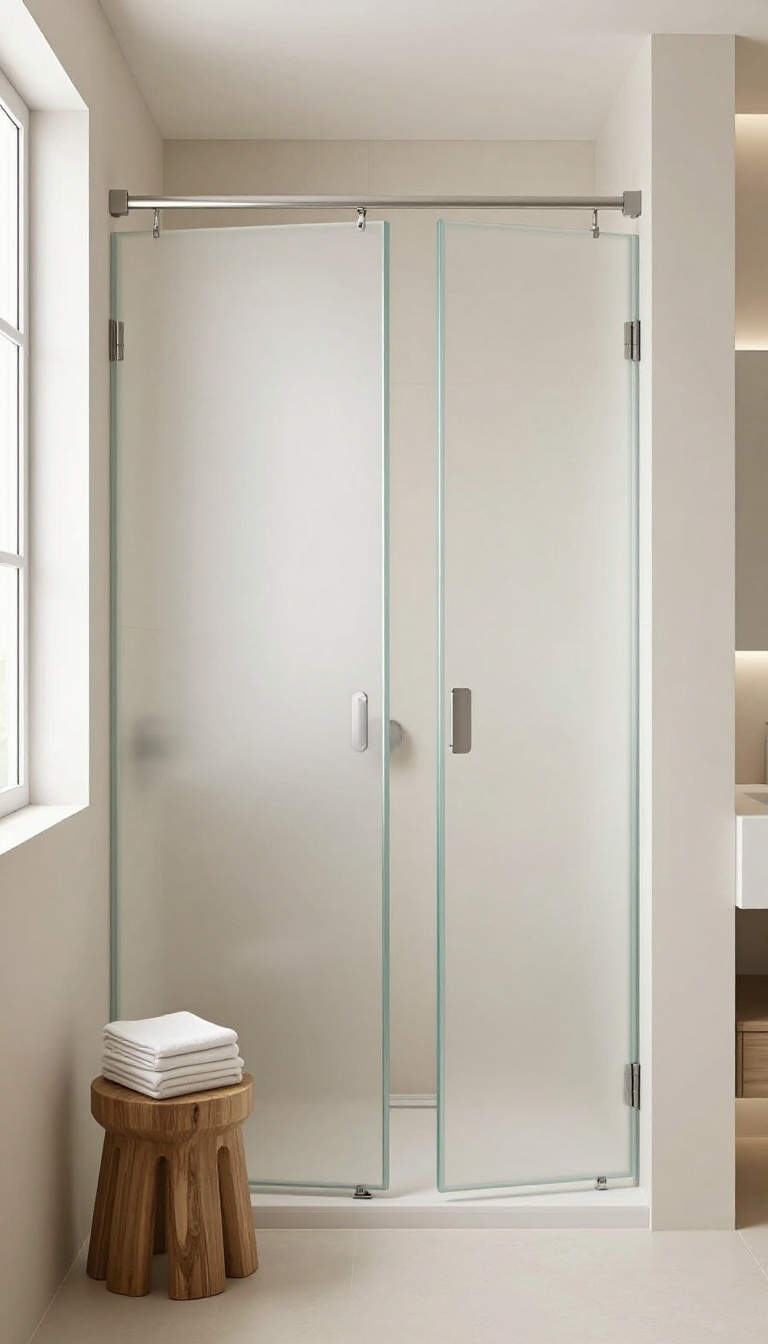
When your shower is tucked into an alcove, you don't need a heavy door to keep water in. A folding screen—made of fabric, acrylic, or even waterproofed wood—can do the job while staying out of the way. It's a lightweight, low-maintenance alternative that adds a touch of flexibility to your layout.
Unlike fixed glass panels, a folding screen can be pushed back completely when you're not using the shower, opening up the space. And since there's no track or frame to scrub, cleaning is a breeze. Plus, you can choose from a variety of materials and styles to match your bathroom's vibe.
Why A Folding Screen Works
Folding screens are ideal for alcove showers because they attach to one wall and fold flat against it when not in use. This keeps the floor clear and makes the bathroom feel larger. They also come in different heights, so you can opt for a full-height screen for maximum splash protection or a shorter one if you prefer a more open feel.
Material Options: Fabric Vs. Acrylic
Fabric screens are soft, affordable, and easy to swap out when you want a new look. They're typically made of waterproof polyester and can be machine washed, which is great for keeping mold at bay. Acrylic screens are more rigid and wipe down easily, but they may show water spots if not dried.
Both are lightweight and simple to install without professional help.
Installation And Maintenance Tips
Installing a folding screen usually involves mounting a track or hinges to the wall, which is a straightforward DIY project. Make sure to use rust-proof hardware if you're in a humid environment. For maintenance, just wipe down the screen after each use and let it dry completely.
Fabric screens can be taken down and washed as needed, while acrylic ones benefit from a squeegee.
9. The Plant-Filled Open Shower
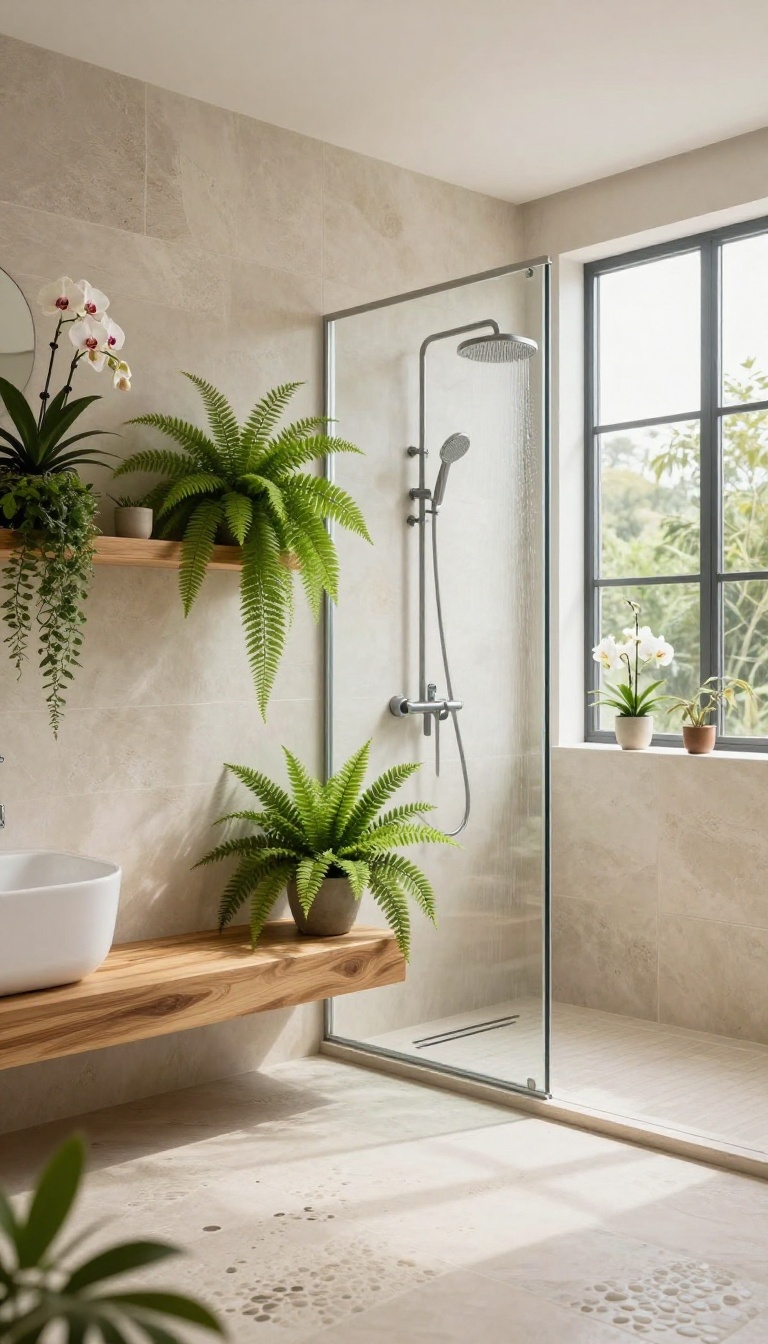
What if your shower felt more like a tropical retreat than a functional corner? Adding moisture-loving plants around an open shower can turn it into a lush, spa-like escape. With a well-designed drain and a slight slope, you can skip any barrier entirely, letting the greenery blend seamlessly with the water.
Plants thrive on the humidity a shower naturally provides, so you're not just decorating—you're creating a mini ecosystem. Choose species like ferns, orchids, or bamboo that love damp air and indirect light. Place them on shelves, ledges, or even hang them from the ceiling to frame the shower area.
The key is to ensure they're safe from direct water spray and that the drainage handles any overflow.
Picking Plants That Love Humidity
Not every plant will survive the steamy environment. Stick to varieties that appreciate high moisture: Boston ferns, peace lilies, and spider plants are all great choices. They'll add a lush, green look without demanding much attention.
Avoid cacti or succulents, which prefer dry air and could rot.
Designing For Easy Drainage
The no-barrier approach only works if water flows away properly. Make sure the floor has a consistent slope toward a linear drain or a central floor drain. Use large-format tiles with minimal grout lines to reduce cleaning hassle.
This setup keeps the area dry between showers and prevents any pooling around your planters.
Styling With Greenery
Arrange plants at different heights to create depth. Tall plants like bamboo or majesty palms can act as natural dividers, while trailing vines soften the edges. Use weatherproof pots that can handle splashes, and consider a pebble tray under pots to catch excess water.
This way, the plants become part of the shower's architecture, not an afterthought.
10. The Curtain-Free, Drain-Focused Shower
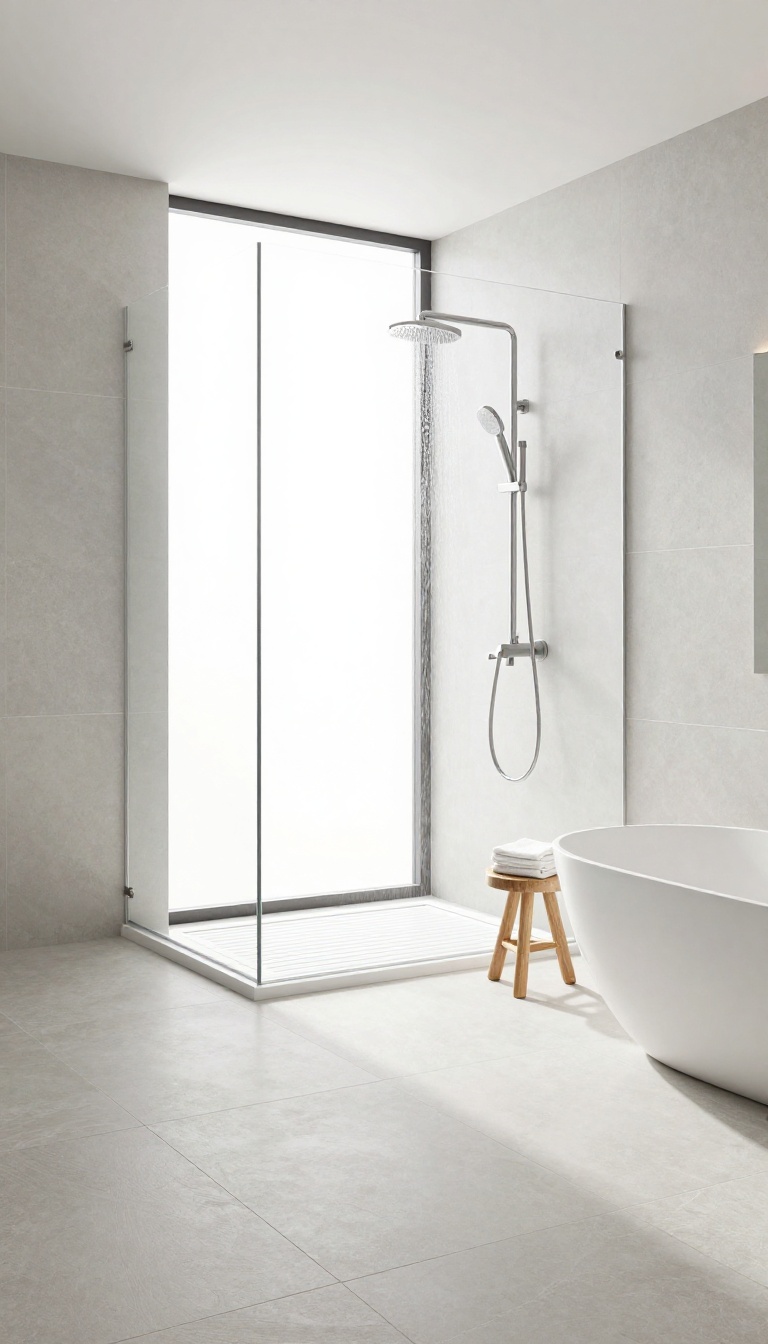
For the boldest look, skip the curtain and the door entirely. A well-designed linear drain and a slight floor slope handle the water, turning your shower into a seamless part of the bathroom. This approach shines in larger spaces where you want a truly open, spa-like feel.
It's a statement that says you're confident in your layout and your drainage.
Going curtain-free means every inch of the shower is visible, so the design has to be spot on. The key is a linear drain placed at the edge of the shower area, with the floor gently sloping toward it. This setup directs water away efficiently, preventing puddles from spreading across the room.
It's a minimalist's dream, but it requires careful planning during construction or renovation.
Why It Works
Without a curtain or door, the bathroom feels instantly larger. There's no visual barrier to break the line of sight, so the space flows freely. The linear drain is a modern touch that adds a sleek, architectural element.
Plus, you eliminate the hassle of cleaning glass or fabric, making maintenance a breeze.
Design Tips For Success
Choose a wide linear drain that matches your tile style for a seamless look. Make sure the floor slope is subtle but effective—usually about 1/4 inch per foot. Use large-format tiles to minimize grout lines, which also helps with water flow.
Consider a rain showerhead centered in the space to keep water contained and avoid splashing.
Ideal Bathroom Layouts
This design works best in larger bathrooms where water has room to spread and evaporate. It's perfect for master suites or open-concept bathrooms. If you have a smaller space, you might need a slight curb or a niche to keep water from reaching other fixtures.
Always ensure the drain is placed strategically to catch water before it travels.
FAQ
Are no-glass showers practical?
Yes, they can be very practical. With proper waterproofing, sloping, and a good drain, they work well and eliminate the hassle of cleaning glass. They also make the bathroom feel more spacious.
How do I keep water from splashing out?
Use a curved rod with a liner, install a half-wall, or rely on a well-designed floor slope and drain. A ceiling-mounted curtain is also a great option for flexible splash control.
What are the best materials for a no-glass shower?
Water-resistant materials like tile, stone, or waterproof panels are ideal. For curtains, use a mildew-resistant fabric or a PEVA liner. For screens, consider acrylic or treated wood.
Will a no-glass shower increase my home's value?
It can, especially if it's done well and appeals to buyers looking for low-maintenance, open designs. However, it's important to ensure the installation is professional and meets building codes.
How do I clean a no-glass shower?
Cleaning is easier without glass. Just wipe down the walls and floor with a squeegee or cloth, and wash the curtain or liner regularly. No more scrubbing soap scum off glass!
Conclusion
Skipping glass doesn't mean compromising on style or function. These shower ideas prove you can have an open, airy feel without the constant upkeep of glass doors and panels.
Pick the approach that best fits your space and routine, and enjoy a bathroom that's both easier to clean and more inviting. Start with one change that solves your biggest frustration, and you'll see how quickly the rest falls into place.