11 Living Room Ideas Indian You’ll Want to Save
Your living room is the heart of your home, and with a few thoughtful touches, it can feel like a brand-new space. Blending Indian heritage with modern comfort isn't just about decor—it's about creating a vibe that's warm, personal, and full of character.
From swapping a sofa for floor cushions to hanging a jhula that instantly adds charm, these 11 ideas are practical, budget-friendly, and easy to adapt. Whether you're in a compact apartment or a spacious house, each tip helps you infuse your space with a distinctly Indian soul.
Ready to transform your living room into a cozy, stylish retreat? Let's dive in.
1. Mix Traditional Textiles with Modern Furniture
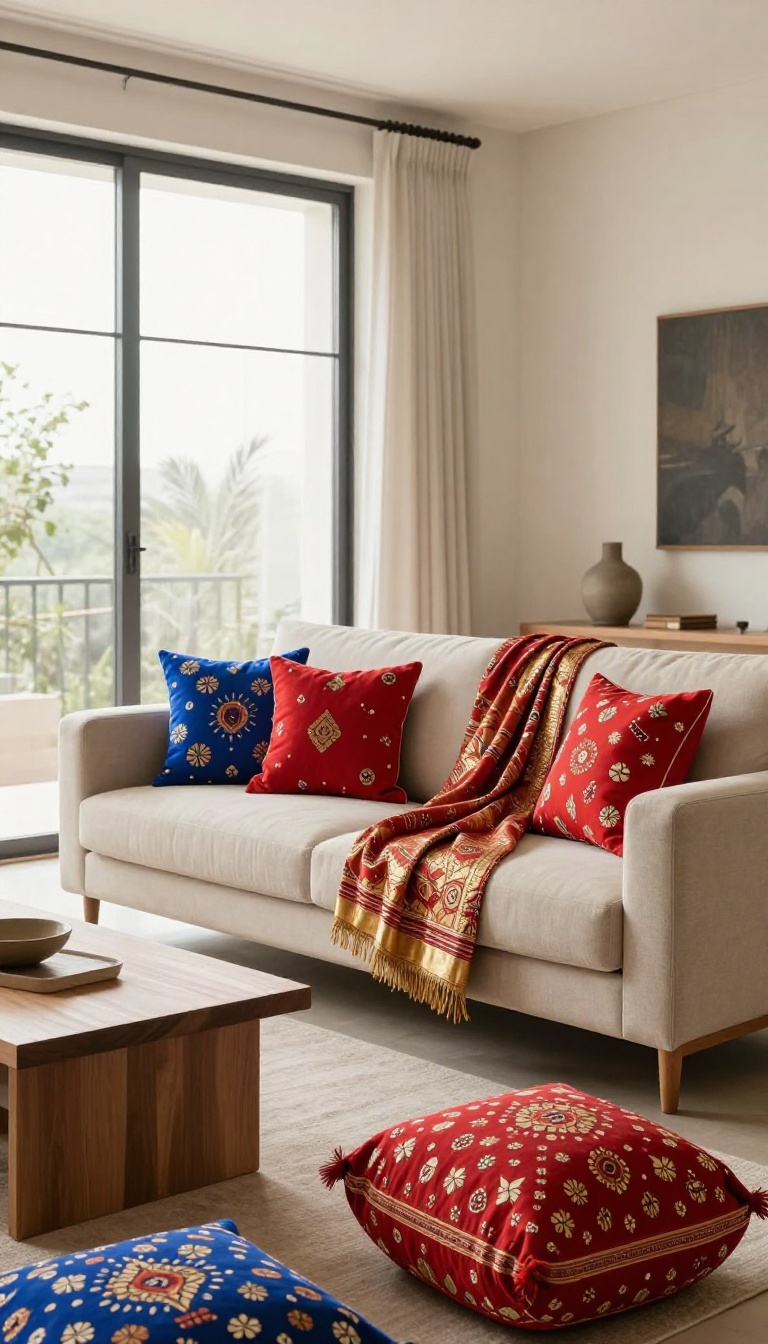
The easiest way to give your living room an Indian soul is through textiles. A modern sofa doesn't have to look cold or generic—just layer it with bold, handcrafted fabrics. The contrast between sleek lines and rich, textured weaves instantly adds warmth and personality.
Start with a neutral base, like a beige or grey sofa, and then bring in cushions and throws that pop. Rajasthani block-prints, with their intricate patterns and earthy tones, are perfect for adding a rustic touch. For a more luxurious feel, drape a Kanjivaram silk throw over one arm—it becomes a talking point and a cozy accent.
Why This Works
Modern furniture often has clean lines and minimal ornamentation, which can feel a bit sterile. Traditional textiles bring in color, texture, and a sense of history. The juxtaposition creates a balanced, lived-in look that feels curated but not overdone.
Plus, textiles are easy to swap out seasonally or when you want a change.
Choosing The Right Textiles
Look for authentic pieces from local markets or artisan cooperatives. Block-print cushions in indigo or madder red work well with neutral sofas. For throws, consider a soft cotton dhurrie or a silk-blend with zari work.
Mixing different prints is fine—just keep a common color palette to tie them together.
Placement Tips
Don't go overboard—three or four cushions and one throw are enough. Arrange cushions asymmetrically for a relaxed vibe. Drape the throw over the back or arm of the sofa, not perfectly folded, to keep it inviting.
You can also add a small floor cushion or pouf with similar fabric to extend the theme.
2. Create a Low-Seating Corner with Floor Cushions
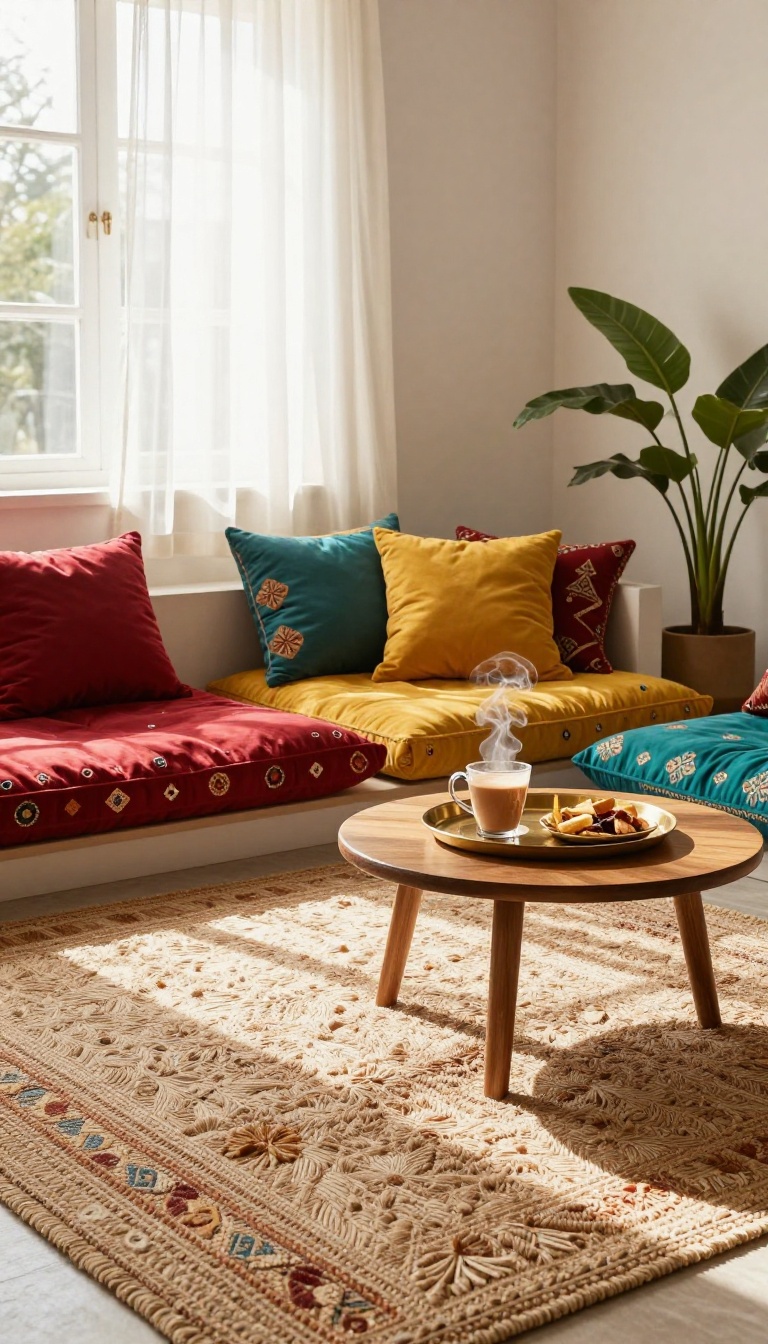
A low-seating corner is a simple way to bring that laid-back Indian charm into your living room. It's not just about aesthetics—it's about creating a spot where you can sink into comfort with a cup of chai or sprawl out with a book. Plus, it's a lifesaver when extra guests show up and you need a few more seats in a pinch.
Start by picking a corner that's not in the main walkway. Lay down a thick rug or a durrie to define the space. Then, pile on floor cushions in different sizes and fabrics—think cotton, silk, or even velvet for a touch of luxury.
A low wooden table or a brass tray in the center completes the setup, giving you a place to rest your cup or a plate of snacks. The best part? You can mix and match patterns and colors to suit your mood, and it's easy to change up when you feel like a refresh.
Pick The Right Spot
Choose a corner that's naturally cozy—maybe near a window with good light or beside a bookshelf. Make sure it's not blocking any doors or high-traffic areas. If you have a balcony door, placing the seating there can blur the line between indoors and out, making the room feel bigger.
Layer For Comfort
Comfort is key, so don't skimp on cushions. Use a mix of firm and soft ones to support your back and let you sink in. Add a few bolsters (long cylindrical pillows) for extra lumbar support.
A soft throw blanket draped over one corner adds warmth and invites you to snuggle up.
Add A Low Table
A low table is essential for keeping your chai, phone, or book within reach. A wooden stool, a repurposed window frame, or even a stack of large books can work. Place a small tray on top to corral items and add a tiny plant or a diya for a traditional touch.
Style It Your Way
This corner is all about your personality. Go bold with bright, printed cushions for a festive vibe, or keep it neutral with earthy tones for a calm, minimalist look. You can also add floor lamps, hanging plants, or a wall hanging to make the space feel intentional and inviting.
3. Use Jali Screens as Room Dividers
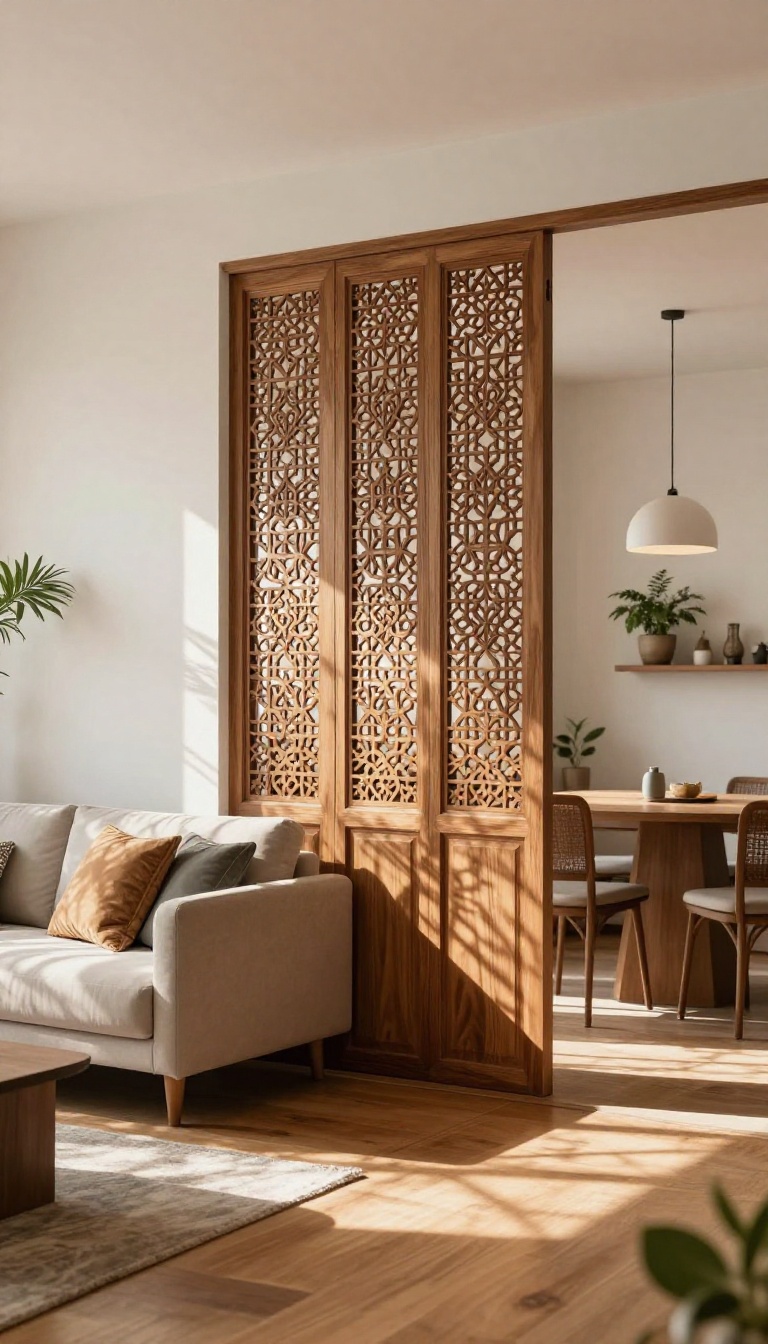
Open-plan living rooms are great, but sometimes you want a little separation without losing the airy feel. A jali screen—carved from wood or metal—offers the perfect middle ground. It filters light beautifully and adds a layer of traditional artistry that instantly warms up the space.
Jali screens are a classic element of Indian architecture, known for their intricate perforated patterns. When used indoors, they act as elegant partitions that define zones without making the room feel closed off. Whether you place one behind your sofa to create a subtle entryway or use it to separate a dining nook, it brings a sense of depth and heritage to your decor.
Why Jali Works In Modern Homes
Unlike solid walls, jali screens maintain the flow of natural light and air. This makes them ideal for smaller apartments or rooms where you don't want to block the view. The play of light and shadow through the perforations creates a dynamic, ever-changing pattern on your floor and walls, adding a layer of visual interest that's both subtle and striking.
Choosing The Right Material
Wooden jali screens bring warmth and a classic, earthy feel. Teak or sheesham wood are durable choices that age beautifully. For a more contemporary look, consider a metal jali in black or brass—it adds a hint of industrial charm while still feeling distinctly Indian.
If you're on a budget, even a lightweight MDF jali panel can do the trick.
Placement Ideas That Work
Use a jali screen to carve out a cozy reading corner or to hide a cluttered workspace. Place it behind your TV to create a stunning backdrop, or lean it against a wall as a decorative accent. You can also hang a jali panel from the ceiling to create a semi-permanent partition that feels airy and intentional.
4. Add a Statement Wall with Indian Art
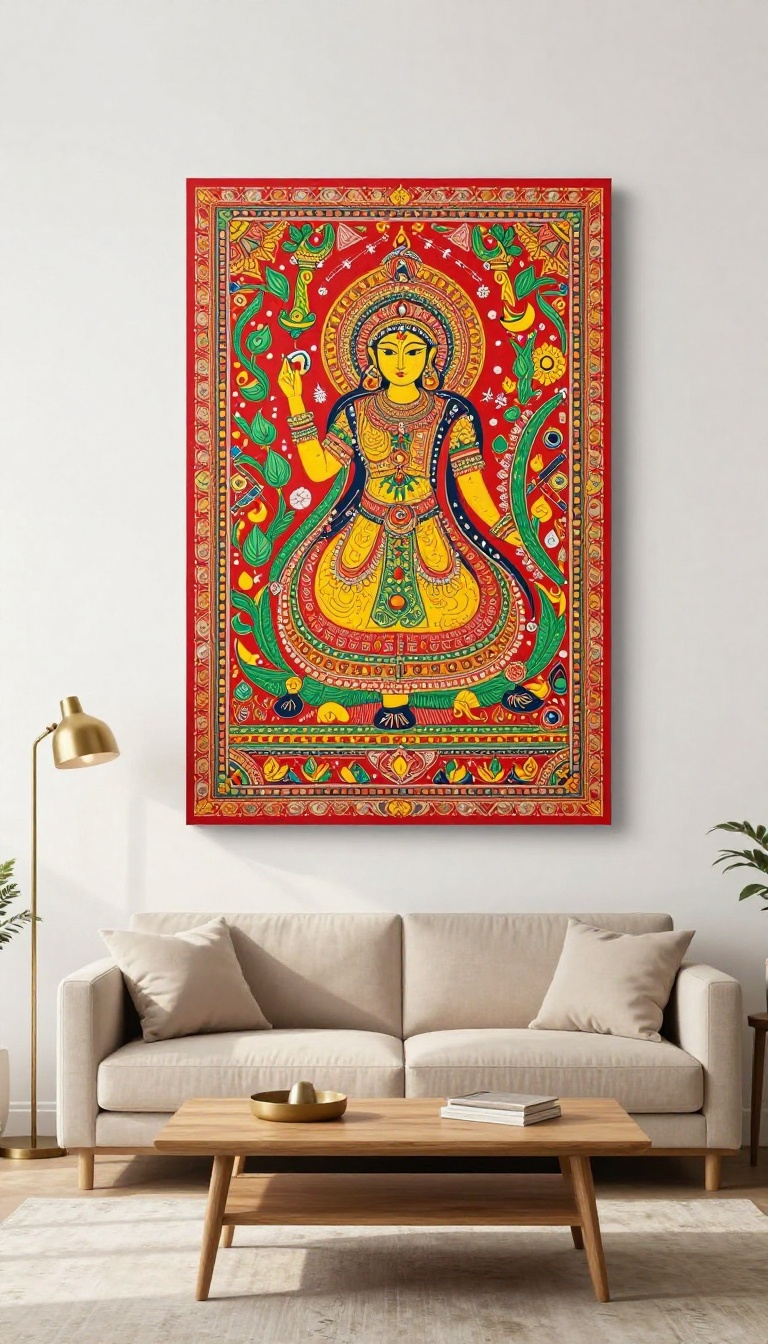
A blank wall is a missed opportunity. Instead of playing it safe with a generic print, go bold with a piece of Indian art that tells a story. A large Madhubani painting, a Warli mural, or a striking brass wall sculpture can instantly become the focal point of your living room.
It's not just decor—it's a conversation starter that adds depth and personality to your space.
Choose a piece that resonates with you. Madhubani art, with its intricate lines and vibrant colors, brings a sense of tradition and energy. Warli art, with its earthy tones and simple figures, offers a more minimalist yet profound aesthetic.
Brass wall sculptures, on the other hand, add a touch of elegance and texture, catching the light beautifully. Whichever you pick, make sure it's large enough to anchor the room—think at least two-thirds the width of your sofa or bed. Hang it at eye level, and let the rest of the decor stay understated so the art can shine.
Picking The Right Artwork
Consider the existing color palette and style of your room. If your space is neutral, a vibrant Madhubani painting can add a pop of color. For a more contemporary look, a brass sculpture with clean lines works well.
Don't be afraid to mix mediums—a canvas painting paired with a metal wall hanging can create an interesting gallery wall effect.
Placement And Lighting
The placement of your statement art is crucial. Hang it on a wall that's visible as soon as you enter the room. Use picture lights or track lighting to highlight the piece, especially if it's a painting with fine details.
For brass sculptures, consider placing them where they can catch natural light during the day and be illuminated by warm lamps in the evening.
Balancing The Rest Of The Room
When you have a bold statement wall, keep the rest of the decor simple. Choose neutral furniture and minimal accessories so the art remains the hero. You can also echo colors from the artwork in cushions or rugs to create a cohesive look without overwhelming the space.
5. Incorporate Indoor Plants in Brass or Clay Pots
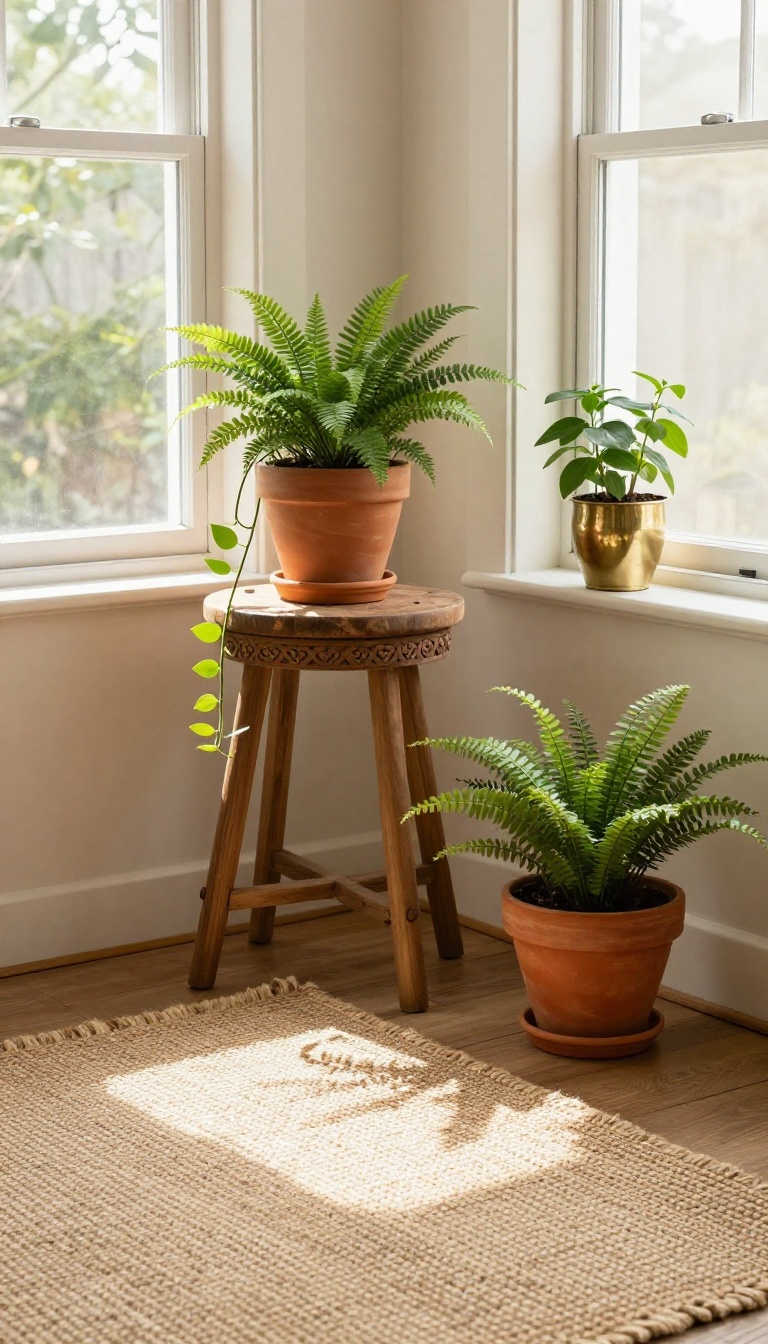
Plants do more than just fill empty corners—they bring life, color, and a sense of calm to your living room. In Indian homes, this connection with nature has always been strong, and using traditional pots like brass or terracotta makes it feel even more rooted. Whether you're a plant parent or a beginner, adding a few greens in these classic containers instantly upgrades the vibe.
Choose plants that thrive indoors and match your light conditions. Money plants are forgiving and grow well in indirect light, while ferns add a soft, feathery texture. Tulsi, or holy basil, is not only sacred but also purifies the air and has a pleasant aroma.
Mix in a few trailing varieties to create depth, and place them at different heights—on shelves, window sills, or even hanging planters.
Why Brass And Clay Pots Work
Brass pots add a warm, golden glow that complements earthy tones and traditional decor. They also have natural antimicrobial properties, which can benefit the soil and plant health. Clay or terracotta pots are porous, allowing air and moisture to reach the roots, preventing overwatering.
Their rustic look pairs beautifully with modern furniture, creating a balanced, organic feel.
Best Plants For Indian Living Rooms
Money plants are a staple—they're hardy, easy to grow, and believed to bring good luck. Ferns like the Boston fern thrive in humid conditions and add a lush, green texture. Tulsi is perfect for a sunny spot near a window and offers both spiritual and health benefits.
Other great options include snake plants, peace lilies, and pothos—all low-maintenance and air-purifying.
Styling Tips For A Natural Look
Group plants of different heights and leaf shapes to create visual interest. Place a tall snake plant in a brass pot on the floor, and set smaller clay pots with succulents on a side table. Use a mix of matte and shiny finishes to add depth.
You can also hang a few trailing plants from the ceiling or a wall-mounted planter to draw the eye upward and make the room feel taller.
6. Install a Swing (Jhula) for a Nostalgic Touch
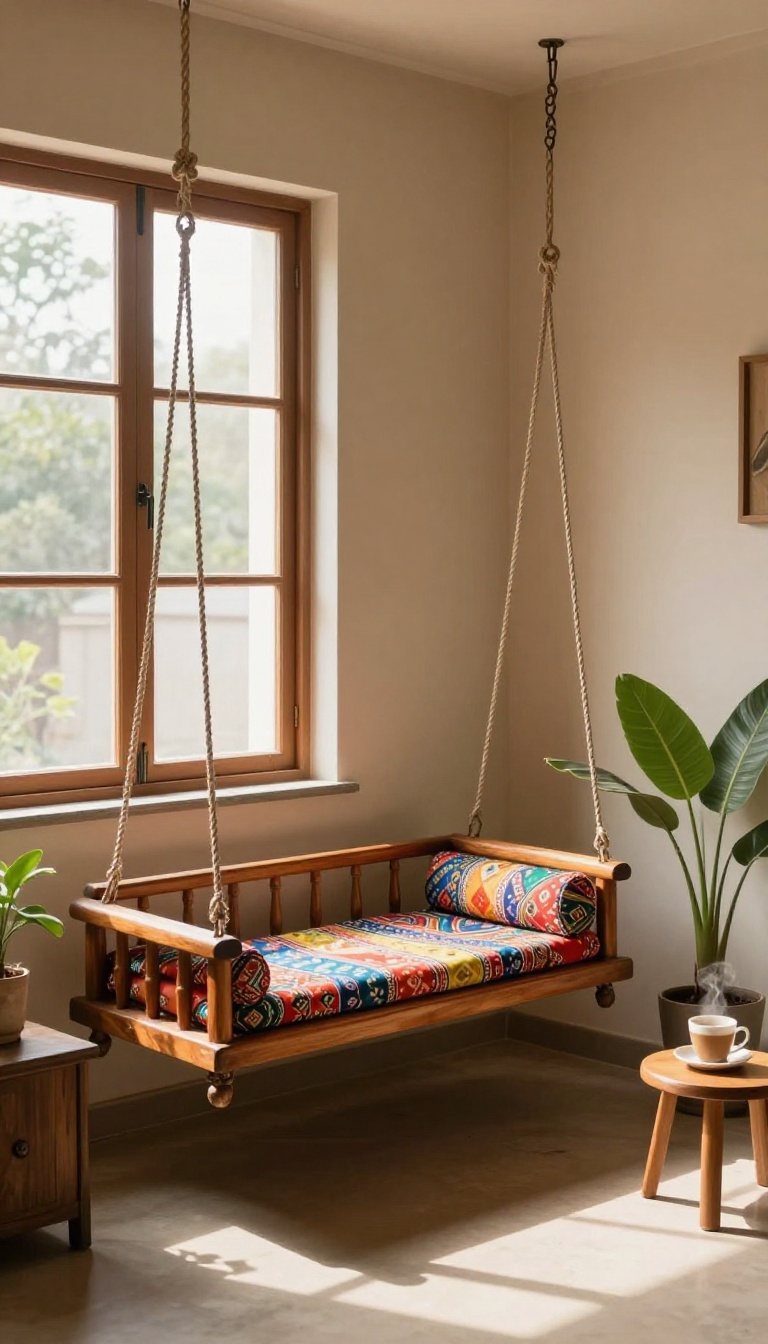
A jhula does more than add seating—it adds an emotional anchor to your living room. The gentle creak of wood and the slow sway bring back memories of lazy afternoons at your grandmother's place. It’s a piece that makes guests smile and instantly warms up the space.
You don’t need a veranda to enjoy one. A sturdy ceiling hook and a corner spot are enough. Whether you choose a classic wooden plank or a modern upholstered version, a jhula turns an ordinary corner into the most loved spot in your home.
Placement is key. The best spots are near a window (so you can enjoy the breeze), in a quiet corner (for reading), or as a room divider in larger spaces. Make sure there’s enough clearance around it—at least 2 feet on each side—so it doesn’t bump into furniture.
Safety first: use a heavy-duty ceiling hook rated for at least 200 kg, and check that it’s anchored into a concrete ceiling or a solid wooden beam. If you’re renting, consider a freestanding jhula stand instead—it’s portable and won’t damage the ceiling. Style-wise, you can go rustic with a raw wood finish, or add cushions in vibrant Indian prints like bandhani or ikat to make it pop.
For a more contemporary look, choose a sleek metal frame with a woven rope seat. The jhula can also double as a cozy reading nook—just add a small side table for your chai and a book. Pro tip: if you have kids (or are a kid at heart), a jhula is a guaranteed hit.
It’s not just decor; it’s a daily dose of joy.
Where To Hang It
Look for a spot that feels natural—near a window for light, or in a corner that’s otherwise unused. If you have an open-plan living room, you can hang it between the living and dining areas to create a subtle separation. Just make sure the swing doesn’t block walkways or doors.
Safety And Installation
Always use a ceiling hook rated for heavy loads and install it into a structural beam or concrete slab, not just drywall. If you’re unsure about your ceiling, consult a professional. For renters, a freestanding jhula stand is a great alternative—it’s sturdy, movable, and easy to set up without drilling.
Styling Your Jhula
Add comfortable cushions and a throw blanket to make it inviting. Mix textures: a jute rug underneath, a wooden side table, and a hanging planter nearby. You can also string fairy lights around the chains for a magical evening vibe.
The goal is to make it look like it’s always been there.
7. Layer Rugs for Depth and Color
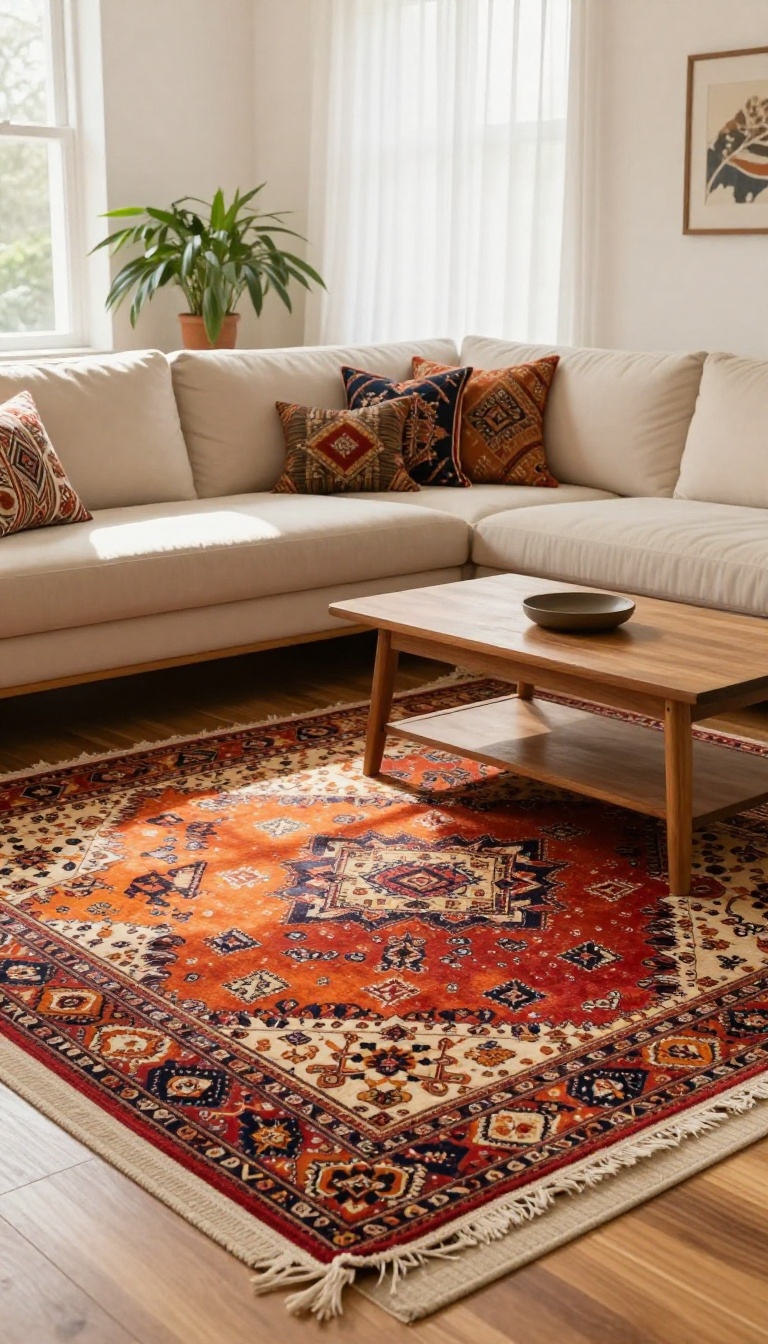
Rugs are the unsung heroes of Indian living rooms. They anchor the space, add warmth, and instantly make a room feel more inviting. But who says you have to stick to just one?
Layering rugs is a clever, stylish trick that adds depth, texture, and a pop of color without a full makeover. It’s a favorite among interior designers for good reason—it’s easy, budget-friendly, and endlessly customizable.
Start with a neutral, large carpet as your base—something in a solid tone like beige, grey, or cream. Then, place a smaller, patterned dhurrie or kilim on top, slightly off-center for a relaxed, effortless look. The contrast between the plain base and the vibrant top rug creates visual interest and makes the room feel layered and lived-in.
This works especially well on wooden floors, which are common in Indian homes, as the rugs add a soft, cozy underfoot feel while protecting the wood.
Mix Patterns And Textures
Don’t be afraid to mix patterns. A classic Jaipuri block-print dhurrie over a plain weave carpet adds a traditional yet contemporary vibe. Or, pair a soft, shaggy rug with a flat-woven one for a tactile contrast.
The key is to keep the color palette cohesive—choose rugs that share at least one accent color, so the combination feels intentional, not chaotic.
Define Zones With Layering
In an open-plan living room, layering rugs can help define distinct areas. Place a large rug under the seating arrangement, then layer a smaller rug under a coffee table or a reading nook. This visually separates the space without building walls, making the room feel organized and purposeful.
It’s a simple trick that adds structure to a large, open area.
Practical Tips For Layering
For a secure stack, use a rug gripper or non-slip pad between the layers. Keep the top rug smaller than the base, leaving at least 6-8 inches of the bottom rug visible on all sides. If you have pets or kids, choose durable, easy-to-clean materials like cotton or jute.
And remember, layering isn’t just for winter—it works year-round, adding color and comfort to your living room.
8. Use Brass Accents for a Warm Glow
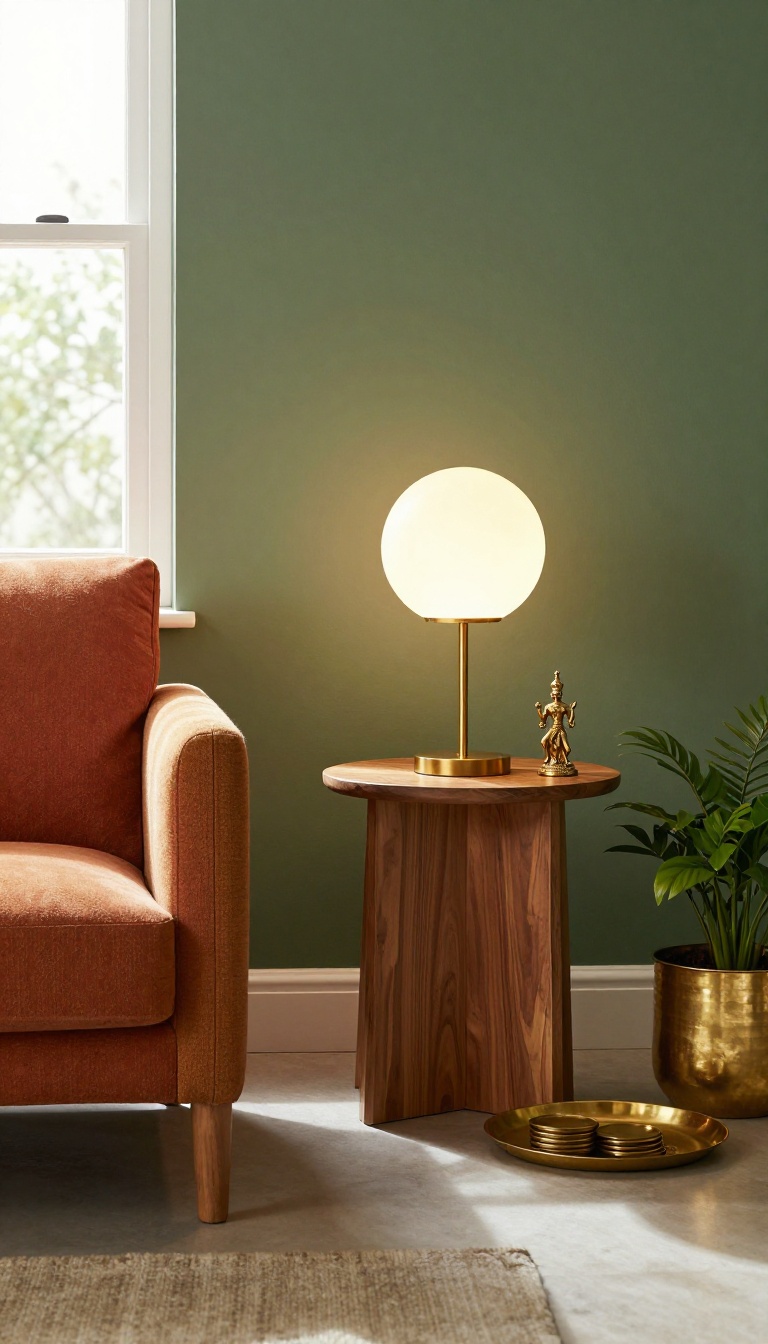
Brass has a way of making a room feel instantly richer, without shouting for attention. In Indian homes, brass isn't just decor—it's tradition. Those warm, golden tones catch the light and bounce it around, making even a dull corner feel alive.
You don't need a full makeover. A few well-placed brass pieces can transform your living room into a space that feels royal yet grounded. And the best part?
Brass pairs effortlessly with earthy tones, warm whites, and even bold colors.
Start small. A brass lamp on a side table, a set of brass coasters, or a vintage brass tray can add that subtle glow. If you're feeling bolder, a brass planter or a statement wall hanging can become the focal point.
The key is to mix—don't go overboard. A little brass goes a long way. Think about placement.
Brass works best where it can catch natural light—near a window, under a lamp, or on a shelf with a spotlight. It also loves contrast. Against a deep green wall or a textured fabric, brass pops beautifully.
Mix Old And New
Don't limit yourself to traditional brass items. A sleek, modern brass table lamp can sit next to a classic brass idol or a vintage vase. This mix keeps the look fresh and personal.
You're not recreating a museum—you're making a space that feels like you.
Pair With Warm Tones
Brass loves company. It looks stunning with warm whites, terracotta, ochre, and even deep maroon. These earthy tones let the brass shine without competing.
Add a few cushions in these colors, and your brass accents will feel right at home.
Care And Maintenance
Brass does tarnish over time, but that's part of its charm. For a quick shine, use a mix of lemon and baking soda, or a simple brass polish. Regular dusting keeps it looking good.
And if you prefer the aged look, just let it be—it adds character.
9. Create a Gallery Wall with Family Photos in Vintage Frames
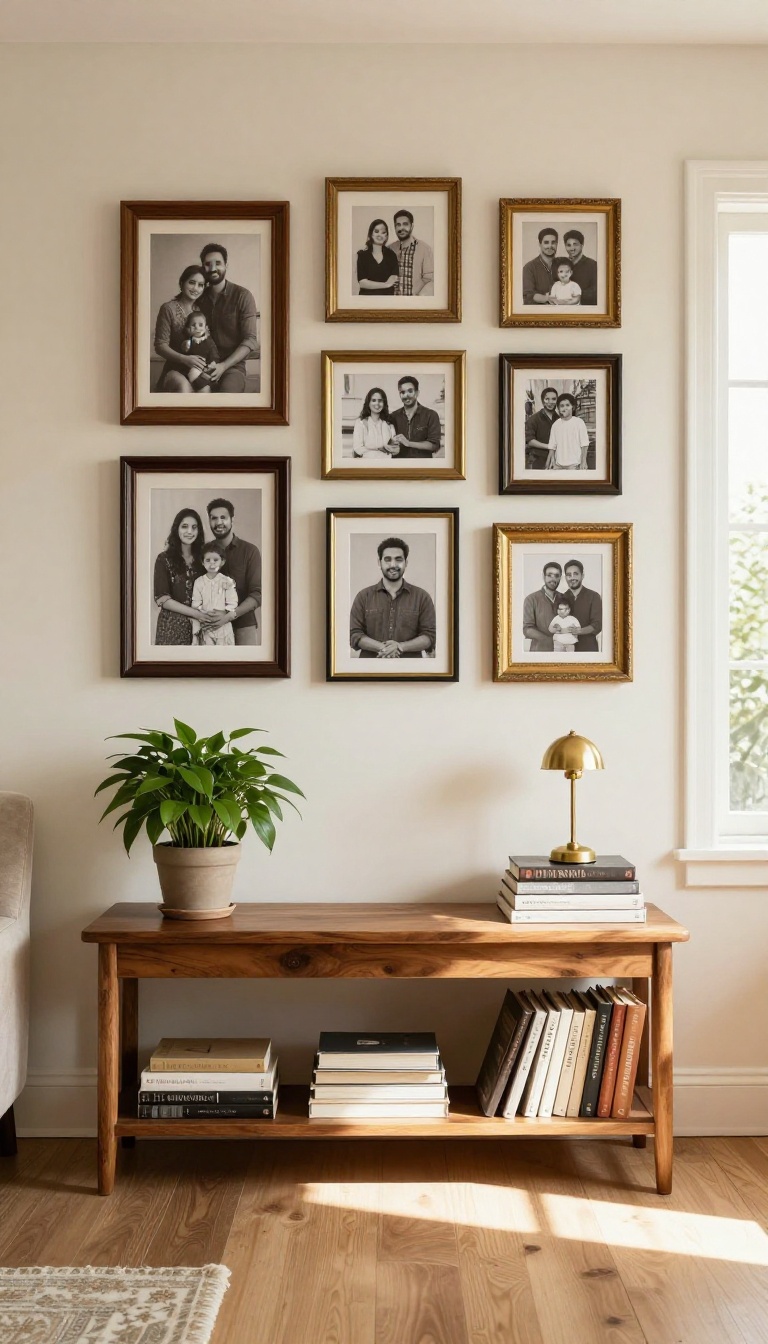
A gallery wall is a beautiful way to turn memories into decor. Instead of buying generic art, use your own family photos to create a wall that feels uniquely yours. Mixing vintage frames with black-and-white prints adds a timeless, nostalgic touch that blends perfectly with Indian interiors.
Start by collecting frames of different sizes and finishes—wood, brass, or even painted ones. Look for vintage frames at flea markets or repurpose old ones from home. Arrange them on the floor first to plan the layout.
A balanced mix of large and small frames works best. Use black-and-white photos for a cohesive look, or add a sepia tone for extra warmth. Hang them at eye level, and don't be afraid to lean a few on a shelf or mantel for a casual feel.
Choosing The Right Frames
Vintage frames don't have to be expensive. Check thrift stores, garage sales, or even your own attic. Look for frames with intricate carvings or a distressed finish—they add character.
If you find mismatched frames, spray paint them in a uniform color like black or gold to tie them together. The key is to mix old and new, so don't worry about perfection.
Arranging Your Gallery Wall
Before hammering nails, trace each frame on paper and tape the outlines to the wall. This lets you experiment with layouts without making holes. A common approach is to start with the largest frame in the center and work outward.
Keep about 2-3 inches between frames for a balanced look. For a more relaxed vibe, lean frames on a console table or against the wall—this works especially well in smaller spaces.
Making It Personal
Choose photos that tell a story—wedding pictures, childhood shots, or candid moments with grandparents. Black-and-white prints give a classic feel, but you can also add a few color photos for contrast. Mix in other elements like a small mirror, a vintage clock, or a piece of embroidered fabric to break up the frames.
This adds depth and makes the wall truly yours.
10. Add a Pop of Color with a Bold Painted Wall
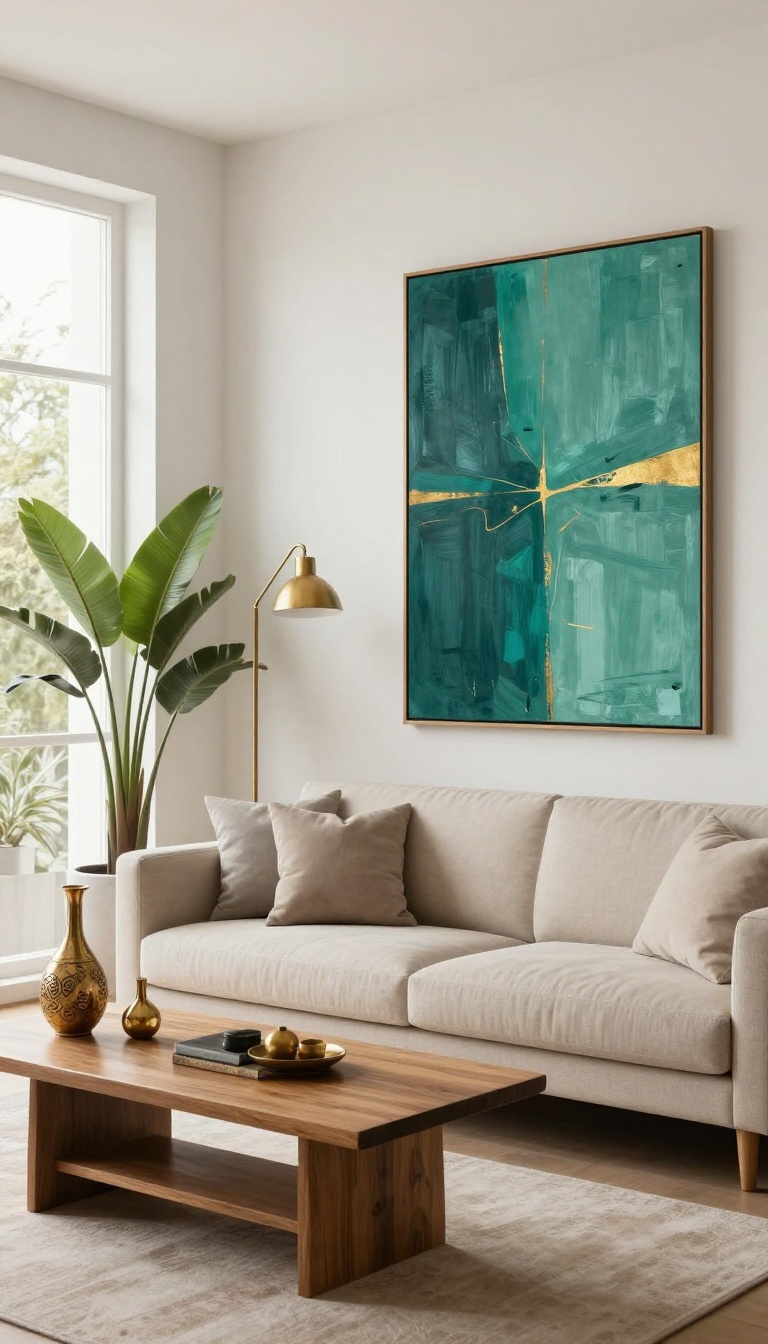
Sometimes all a room needs is a single bold stroke. A deep teal, a warm mustard, or a rich terracotta on one wall can completely change the energy of your living room. It’s a simple, affordable way to add personality and make the rest of your decor pop.
A bold accent wall is a classic trick that works wonders in Indian homes. It gives the eye a place to rest and instantly makes the space feel more curated. The best part?
You don’t need to repaint the whole room—just one wall is enough to make a statement.
Choosing The Right Shade
Think about the mood you want to create. Deep teal feels calming and sophisticated, while mustard adds warmth and energy. Terracotta brings a earthy, grounded vibe that pairs beautifully with wooden furniture and brass accents.
Pick a color that complements your existing decor and doesn’t clash with the rest of the room.
Where To Paint
The best wall to paint is the one you see first when you enter the room. It could be the wall behind your sofa, the one with the TV, or even the wall with a window. Avoid painting a wall with too many doors or windows—you want the color to feel solid and intentional.
Styling Around The Bold Wall
Once your wall is painted, let it shine. Keep furniture and decor on that side simple and neutral. Add a few contrasting cushions or a piece of art that picks up the accent color.
This creates a cohesive look without overwhelming the space.
11. Incorporate a Bar Cart with a Desi Twist
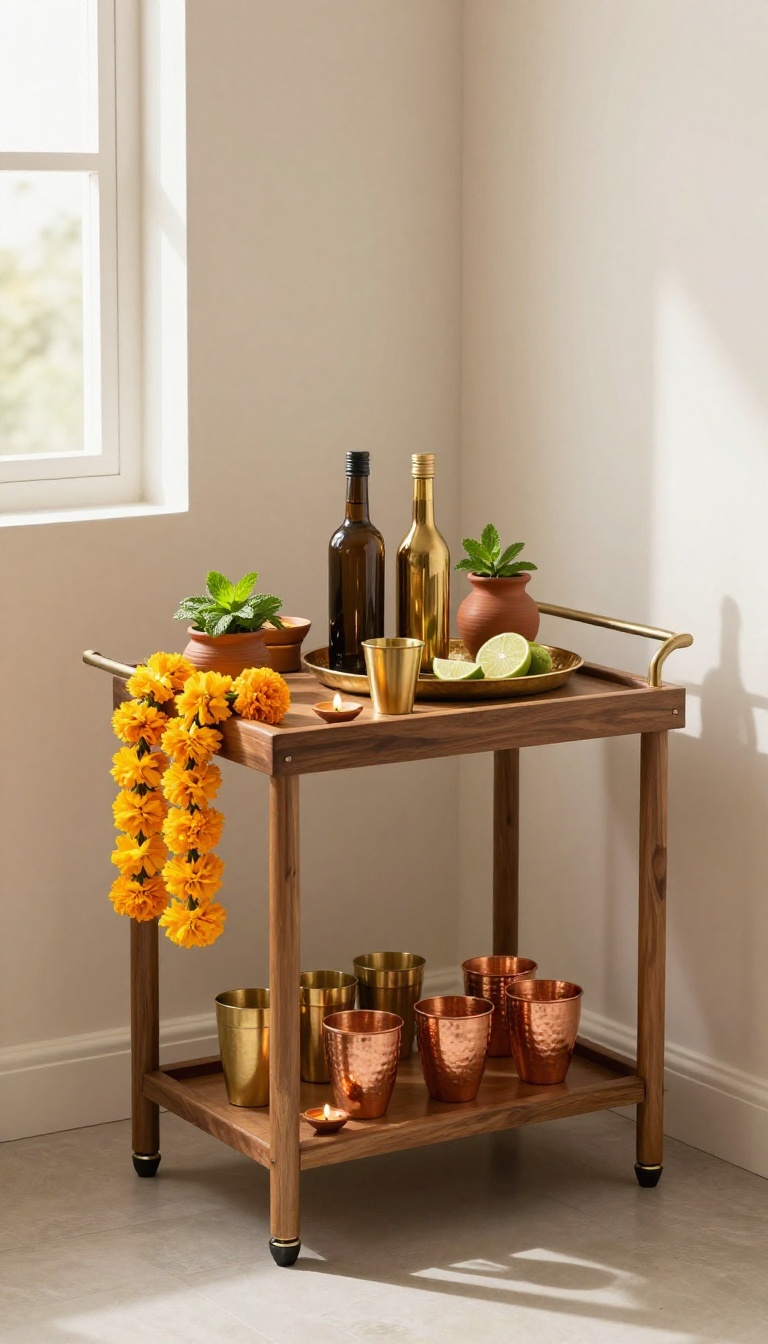
A bar cart isn't just for cocktails—it can be a stylish showcase of Indian craftsmanship. With a few thoughtful swaps, it becomes a conversation starter that blends function with heritage. The key is to mix traditional elements with modern utility, creating a piece that feels both personal and purposeful.
Start with a sturdy cart or a repurposed wooden trolley. Instead of standard glassware, use brass tumblers or copper cups that add a warm glow. A puja thali, with its intricate engravings, makes an unexpected but perfect tray for holding bottles and mixers.
Small clay pots or brass bowls can hold fresh mint, curry leaves, or lime wedges for garnishes. Finish with a string of marigolds or a small diya to tie the look together. This setup isn't just practical—it's a nod to tradition that feels fresh and inviting.
Why Brass Works
Brass has a timeless appeal that instantly elevates any surface. It catches the light beautifully and pairs well with both wood and marble. Plus, it's durable and easy to maintain—just a quick polish keeps it gleaming.
Using brass tumblers or a brass tray adds a touch of old-world charm without feeling outdated.
Repurposing The Puja Thali
A puja thali is often reserved for rituals, but it can shine as a stylish tray. Its raised edges and decorative patterns make it perfect for holding bottles, glasses, and small accessories. Choose one with a hammered finish or floral motifs to add texture.
It's a clever way to honor tradition while giving it a new purpose.
Garnish With Fresh Herbs
Fresh herbs aren't just for cooking—they double as decor. Place small pots of mint, coriander, or curry leaves on the cart. They add a pop of green and a pleasant aroma.
When you're hosting, snip a few leaves to garnish drinks or snacks. It's a simple touch that makes the cart feel alive and functional.
Styling Tips For Small Spaces
If you're tight on space, choose a slim cart with two tiers. Use the top for bottles and glasses, the bottom for extra supplies or a stack of coasters. Keep the styling minimal to avoid clutter.
A single brass accent or a small framed photo can tie the look together without overwhelming the area.
FAQ
What are some budget-friendly Indian living room ideas?
Start with small changes like swapping cushion covers, adding a jhula, or painting an accent wall. Thrift for vintage brass items and use floor seating to save on furniture costs.
How can I make a small Indian living room look bigger?
Use light colors on walls, keep furniture low and minimal, and incorporate mirrors to reflect light. Choose multi-functional pieces like storage ottomans or a diwan with hidden storage.
What are popular Indian living room color schemes?
Warm neutrals like beige and cream with pops of terracotta, mustard, or deep green. You can also go bold with jewel tones like royal blue or emerald, balanced with earthy accents.
How do I mix traditional Indian decor with modern style?
Pair modern furniture with traditional textiles, art, and accessories. For example, a sleek sofa with block-print cushions, or a contemporary rug layered with a dhurrie.
What are some easy ways to add Indian character to a rental living room?
Use removable items like floor cushions, rugs, wall art, and plants. Add temporary wallpaper or fabric drapes, and avoid permanent changes like painting without permission.
Conclusion
Your living room can feel like a fresh, personal retreat without a full makeover. Pick one idea that speaks to your space—maybe a warm accent wall or a clever seating swap—and let it lead the way. Small, thoughtful changes stack up quickly, turning everyday comfort into something you genuinely love.
Start with what excites you most, and let the rest follow naturally. Before you know it, your home will feel more like you, and that’s the best kind of transformation.