10 Small Hot Tub Ideas Backyard Retreats Can Use Beautifully
A hot tub that swallows your whole yard isn't a retreat, it's a problem. Most backyards can't spare eight feet of open space, and the usual answer is to skip the tub entirely. That's a shame, because the fix is usually smarter placement, not more square footage.
A corner tub, a sunken build, or a round model tucked against a fence can deliver the same soak in half the footprint. The ten ideas below lean on tight layouts, clever storage, and materials that make small feel deliberate.
None of them require a full remodel. Pick the one that fits your space and start planning the soak.
1. Corner Hot Tub with Built-In Bench Seating
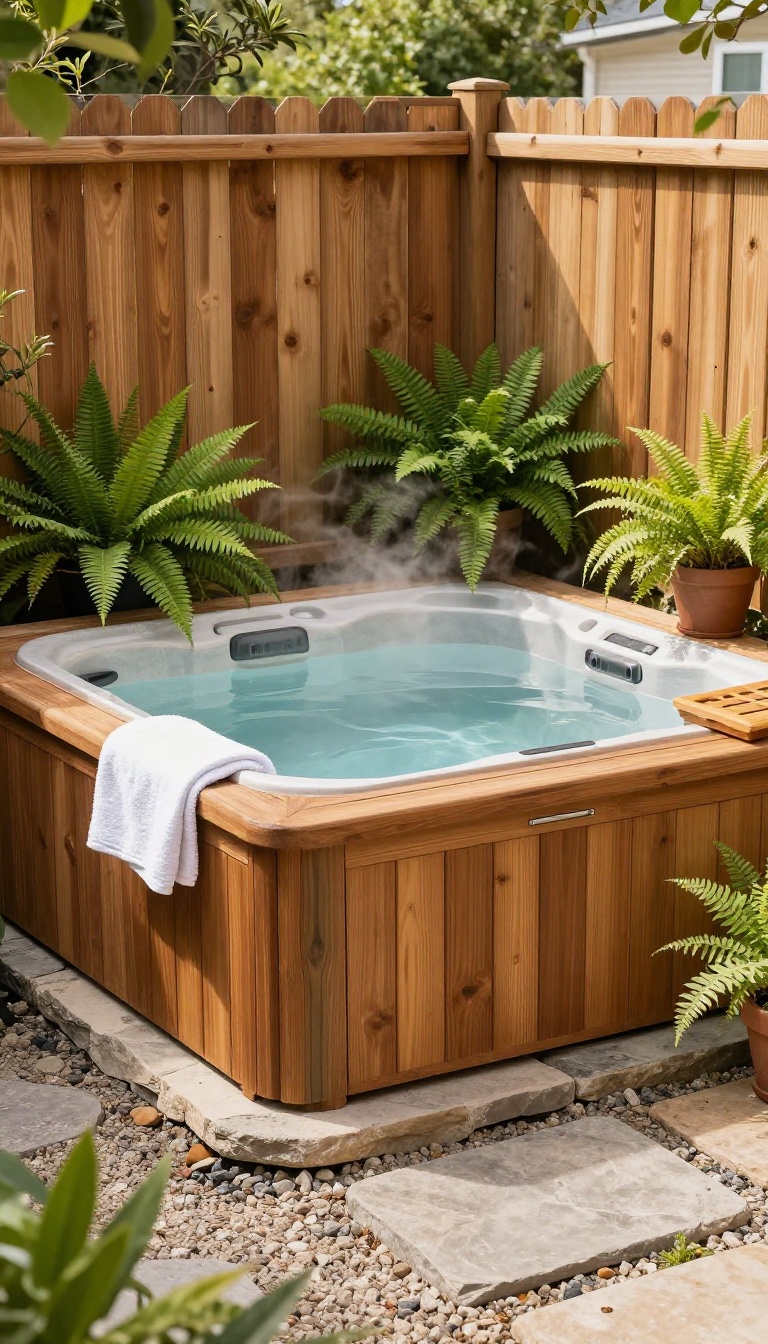
A corner is dead space in most yards, which makes it the perfect spot for a hot tub. Tuck a square or triangular model into that unused nook and you free up the center of your patio for everything else. The trick is adding a wraparound bench that turns the tub into a real destination, not just a soak.
The bench does double duty. It gives you a place to sit while you dry off, and it hides the pump and plumbing behind a clean wood or composite face. You get storage without a separate shed, and the tub looks built-in instead of dropped in.
Measure the corner first. A 5- to 6-foot square tub fits most residential corners, while a triangular model can squeeze into tighter angles. Leave at least 18 inches of clearance on the open sides for steps and filter access.
Why The Corner Works
Corners already have two walls or fences, so you only need to screen one side. That cuts material costs and keeps the tub from dominating the view. It also creates a natural windbreak, which means warmer soaks in cooler months.
Bench Materials That Last
Cedar and teak handle splash and sun without rotting, but they need yearly sealing. Composite decking costs more upfront and skips the maintenance. For a budget build, pressure-treated lumber with a good stain works fine if you reapply every couple of years.
Storage Without Clutter
Build the bench with a lift-up lid or removable panels. Inside, stash chemicals, towels, and a skimmer in plastic bins. Keep the space ventilated so moisture doesn't turn into mildew.
A small vent gap at the base solves most of that.
Lighting And Plant Pairings
A warm LED strip under the bench lip makes the tub glow without glare. Pair it with tall grasses or a small Japanese maple in the opposite corner. The greenery softens the hard lines and makes the corner feel intentional.
2. Deck-Mounted Tub with Underneath Storage
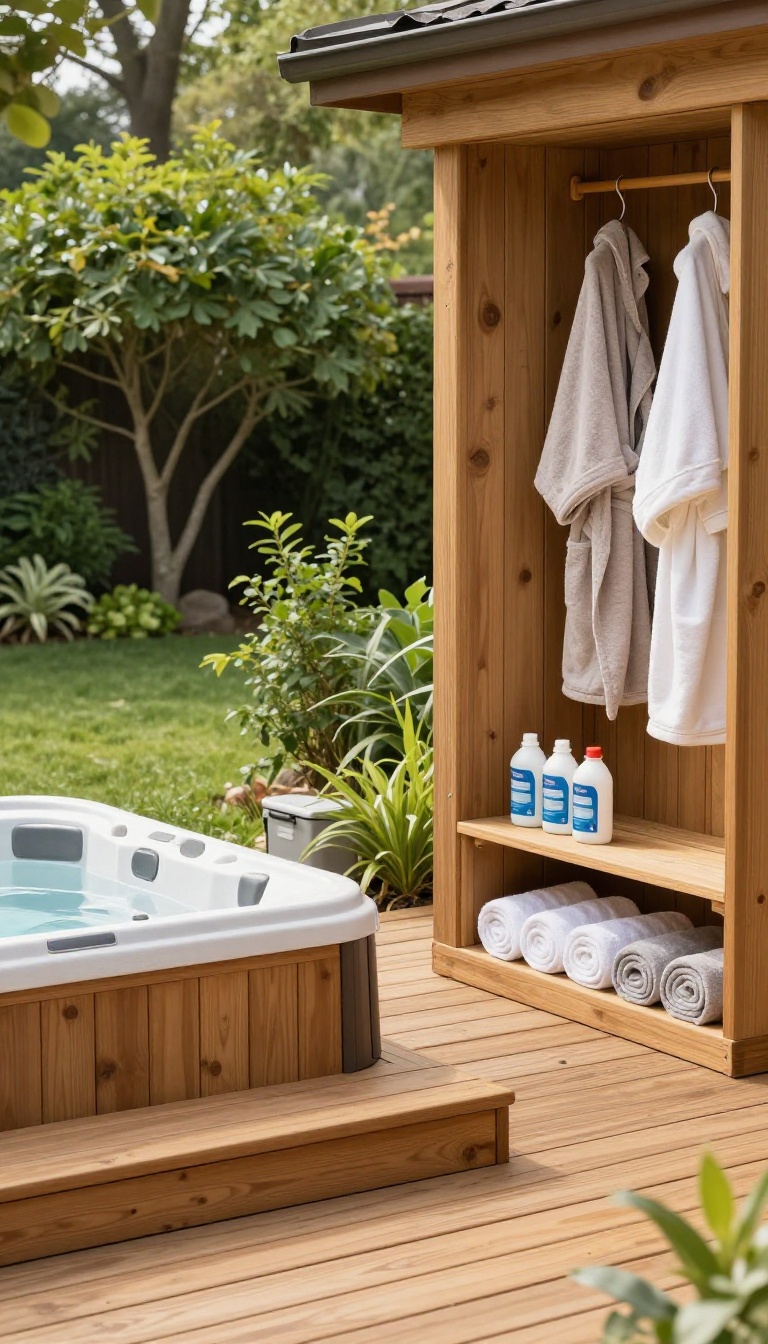
A hot tub doesn't have to sit on the ground. Mount it at deck level and you instantly gain a whole storage zone underneath. That space can hold towels, chemicals, or even a small cooler.
It's a simple trick that keeps your backyard looking tidy and your soak sessions stress-free.
Raising the tub to deck height does more than look good. It turns wasted space into a functional part of your setup. You get easy access to supplies without cluttering the deck surface.
And because the tub sits flush with the deck, it feels built-in rather than plopped down. The result is a tight footprint that works hard for you.
Why It Works In Small Yards
When every square foot counts, stacking functions is key. A deck-mounted tub uses vertical space instead of spreading out. The area below becomes a bonus room for storage.
You don't need a shed or extra shelving. Everything stays within arm's reach, which makes maintenance quicker. Plus, the tub looks intentional, not like an afterthought.
What To Store Underneath
Think about what you reach for most. Towels, test strips, and shock are obvious choices. A small cooler keeps drinks cold without a trip inside.
You can add hooks for robes or a bin for flip-flops. Just make sure chemicals are sealed and away from kids and pets. A little planning keeps the space safe and useful.
Building It Right
The deck frame needs to support the tub's weight when filled. That means beefy joists and proper footings. Leave enough clearance for the cover lifter and access panels.
Ventilation matters too, so moisture doesn't get trapped. If you're not handy, hire a pro. A solid build means you can enjoy the tub without worry.
3. Privacy Screen Made from Reclaimed Wood
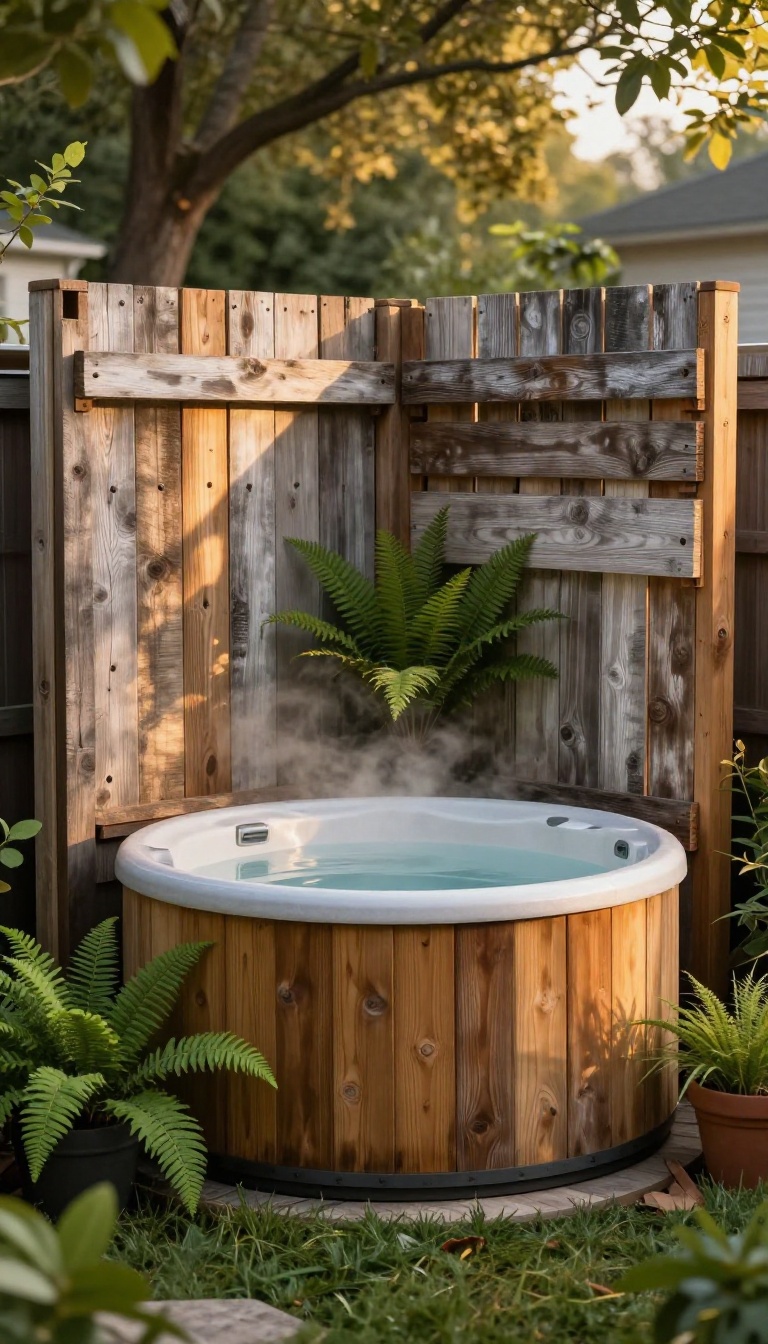
A hot tub should feel like a hideaway, not a stage for the neighbors. A privacy screen built from reclaimed wood solves that without a custom carpentry bill. Old pallets, fence boards, and salvaged planks can create a warm, rustic barrier that blocks sightlines and wind.
The materials often cost little or nothing if you know where to look. The result looks intentional and fits the relaxed vibe of a small backyard retreat.
Reclaimed wood brings texture that new lumber can't match. Weathered gray boards, nail holes, and slight color shifts make the screen feel like it belongs. It also keeps usable material out of the landfill, which is a nice bonus.
You don't need perfect boards. In fact, mismatched widths and lengths often look better because they break up the surface. The goal is a solid visual block, not furniture-grade joinery.
Where To Find Free Or Cheap Wood
Start with local pallet yards, construction sites, and ReStore outlets. Ask fencing companies about damaged panels they plan to discard. Social media marketplace listings often have free pallets or old fence sections if you haul them away.
Avoid wood that's treated with heavy chemicals or shows rot. A quick check with a screwdriver will tell you if the wood is solid. If it crumbles or feels soft, leave it.
A Simple Frame That Stands Up To Weather
Set four-by-four posts in concrete or use metal post bases on a deck. Space them four to six feet apart, then nail or screw horizontal boards across the front. Leave a small gap between boards for airflow so the wood can dry out.
For extra stability, add a diagonal brace at the top corners. A coat of exterior sealer or clear deck stain will slow graying and protect the wood without hiding its character.
Height, Placement, And Wind Control
Six feet is usually enough to block a standing neighbor's view. If your tub sits on a raised deck, measure from the tub's edge, not the ground. Place the screen on the side that catches the most wind or the most eyes.
Angle the screen slightly if you want to block a specific window or patio. A small gap at the bottom keeps air moving and prevents moisture from getting trapped behind the wood.
4. Round Tub Surrounded by Gravel and Pavers
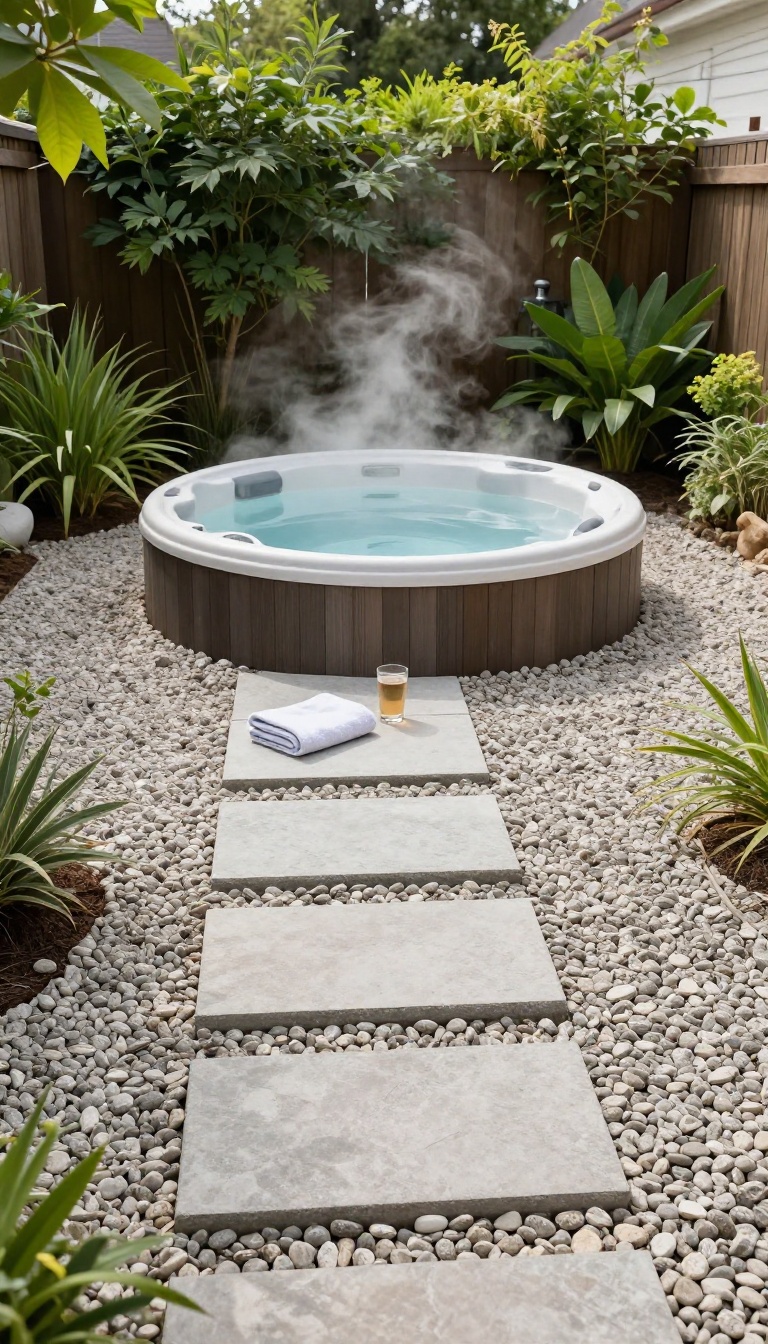
A round hot tub already looks intentional. Pair it with a gravel bed and a few pavers, and the whole setup feels like it was designed for the space, not squeezed into it. Gravel drains water away fast, so you won't deal with muddy puddles or slippery concrete.
It also softens the tub's edges and keeps the footprint small. This is one of the easiest bases to install, and it holds up well in tight yards where every inch counts.
A round tub on gravel is a classic small-yard move. The gravel handles splash-out and rain without turning into a swamp. Pavers give you a clean path to the steps and a spot to set a towel or a drink.
You don't need a concrete pad or a deck. A compacted gravel base with a few strategically placed pavers does the job. It's low-maintenance, and it looks like you planned it that way.
Best of all, the materials are cheap and easy to source. You can adjust the layout as you go, which is perfect for renters or anyone who likes to tweak things.
Why Gravel Works In Small Yards
Gravel lets water drain instead of pooling. That means no slippery concrete and no mud tracked into the tub. It also conforms to uneven ground, so you spend less time leveling.
In a small yard, gravel reads as texture, not clutter. It visually breaks up the space and makes the tub feel like a focal point rather than an afterthought.
Pavers For Access And Style
You only need a few pavers: one at the entry step, maybe two more as a small landing. Choose a color that contrasts with the gravel so the path is obvious. Set them flush with the gravel or slightly raised.
Either way, they give you a stable spot to step and a place to set things down. They also keep the tub from looking like it's floating in a sea of rocks.
Installation Tips That Save Time
Start with a weed barrier. It keeps gravel from sinking into the soil and stops weeds from popping up. Then add two to three inches of gravel and compact it.
Level the tub on the gravel, then place your pavers. Check the tub's manual for any specific base requirements. Most round tubs are fine with this setup, but a quick look never hurts.
Keeping It Clean And Tidy
A leaf blower or a stiff broom handles most debris. Once or twice a year, top off the gravel and re-level any pavers that have shifted. If you notice water pooling, add a little more gravel or dig a shallow drainage trench.
A well-draining base is the whole point, so don't skip this step.
5. Hot Tub and Planter Combo for Greenery
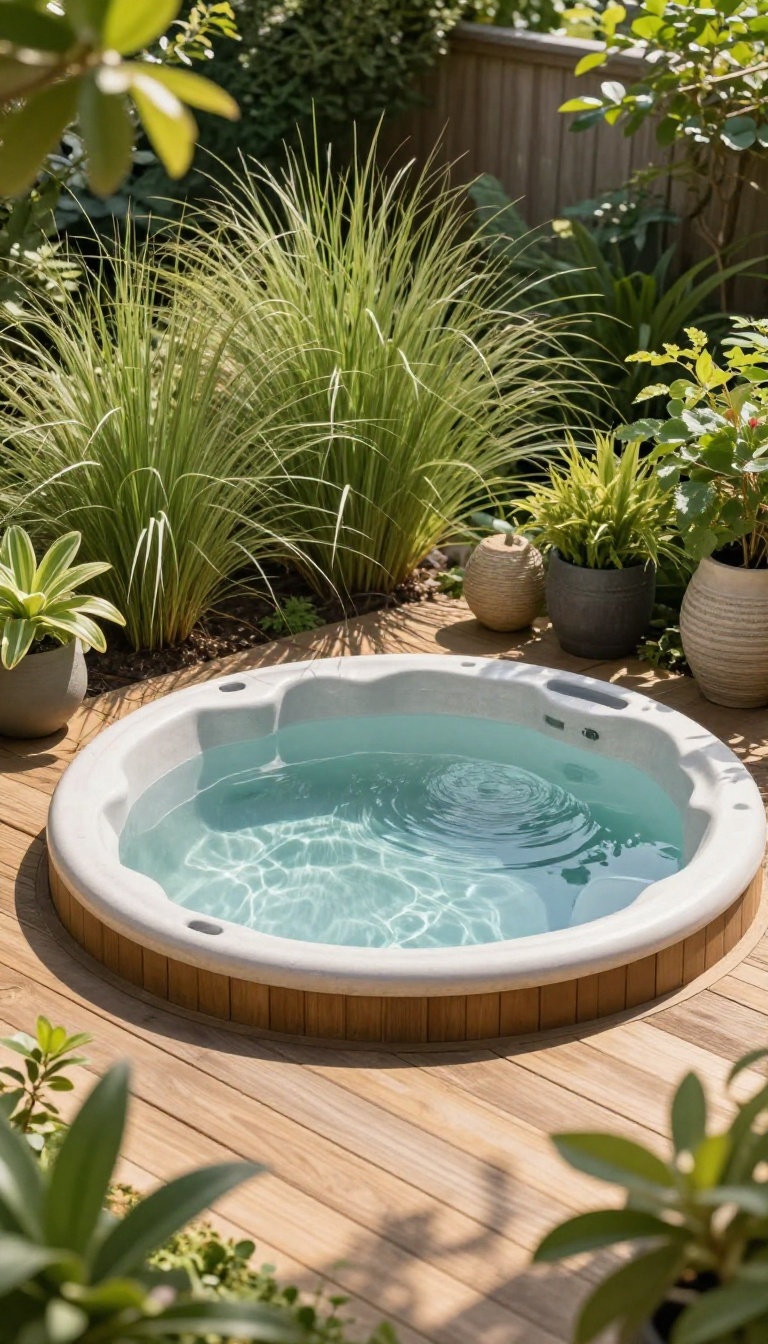
A hot tub can look a little lonely in a small yard, like a big plastic tub dropped on the grass. Surround it with planters and suddenly it belongs. The greenery softens the edges, hides the pump and heater, and gives you something nice to look at while you soak.
This combo works in any size space because planters come in every shape and height. You can line them along one side, tuck them in corners, or build a full ring. The key is picking the right plants and the right pots so everything survives the splashes and the sun.
You don't need a green thumb. You just need a plan that keeps the plants happy and the equipment out of sight.
The basic idea is simple: place tall planters around the tub to create a soft border. They act like a screen, but a living one. Instead of a fence or a wall, you get leaves and color that move with the breeze.
Planters also solve a common problem. Most hot tubs have a pump, heater, and control panel that aren't pretty. A few well-placed pots can hide all of that without blocking access for maintenance.
The trick is to choose plants that can handle heat, humidity, and the occasional splash of chlorinated water. Not every plant loves those conditions, but plenty do. Once you pick the right ones, the setup practically takes care of itself.
Pick Plants That Can Take A Splash
Hot tub water isn't kind to every plant. Chlorine and bromine can burn leaves, and hot water can shock roots. Look for tough, forgiving plants that don't mind a little chemical drift.
Ornamental grasses like fountain grass or liriope are great choices. They're hardy, they sway in the wind, and they don't mind getting wet. Succulents like agave or aloe also work if you live in a warm climate, since they handle sun and dry out quickly.
If you want flowers, try daylilies or blanket flower. Both are tough as nails and can handle splashes. Just avoid delicate plants like ferns or hostas, which will fry near a hot tub.
Use Tall Planters To Hide The Equipment
The equipment side of a hot tub is usually the ugly side. That's where tall planters earn their keep. A row of 24- to 36-inch pots can completely block the view of the pump and heater.
Choose lightweight planters if you might need to move them for service. Resin or fiberglass pots are easy to shift and won't rot. If you want a more solid look, go with wood or composite, but leave a little gap so you can still reach the panel.
Stack the heights for interest. Put taller plants in back and shorter ones in front. This creates a layered screen that looks intentional, not like you're just hiding something.
Arrange Planters For Privacy And Flow
Planters can do more than hide equipment. They can also give you privacy from neighbors or block wind. Place them on the side where you feel most exposed.
Don't ring the tub completely, though. Leave an open side for entry and exit, and keep a clear path to the steps. You want the space to feel cozy, not cramped.
A good rule of thumb: leave at least 18 inches between the tub and the planters. That gives you room to walk, clean, and enjoy the greenery without feeling boxed in.
Keep Maintenance Simple
Plants around a hot tub need a little extra care. The heat and moisture can make soil dry out faster, so check the soil every few days. A drip irrigation line can save you time if you have several pots.
Use saucers under the planters to catch runoff and protect your deck or patio. If you have a wooden deck, elevate the pots slightly so air can circulate underneath. Trim plants regularly to keep them from growing into the tub or blocking the cover.
A quick prune every few weeks keeps everything looking tidy and prevents pests from moving in.
6. Inflatable Hot Tub on a Compact Patio
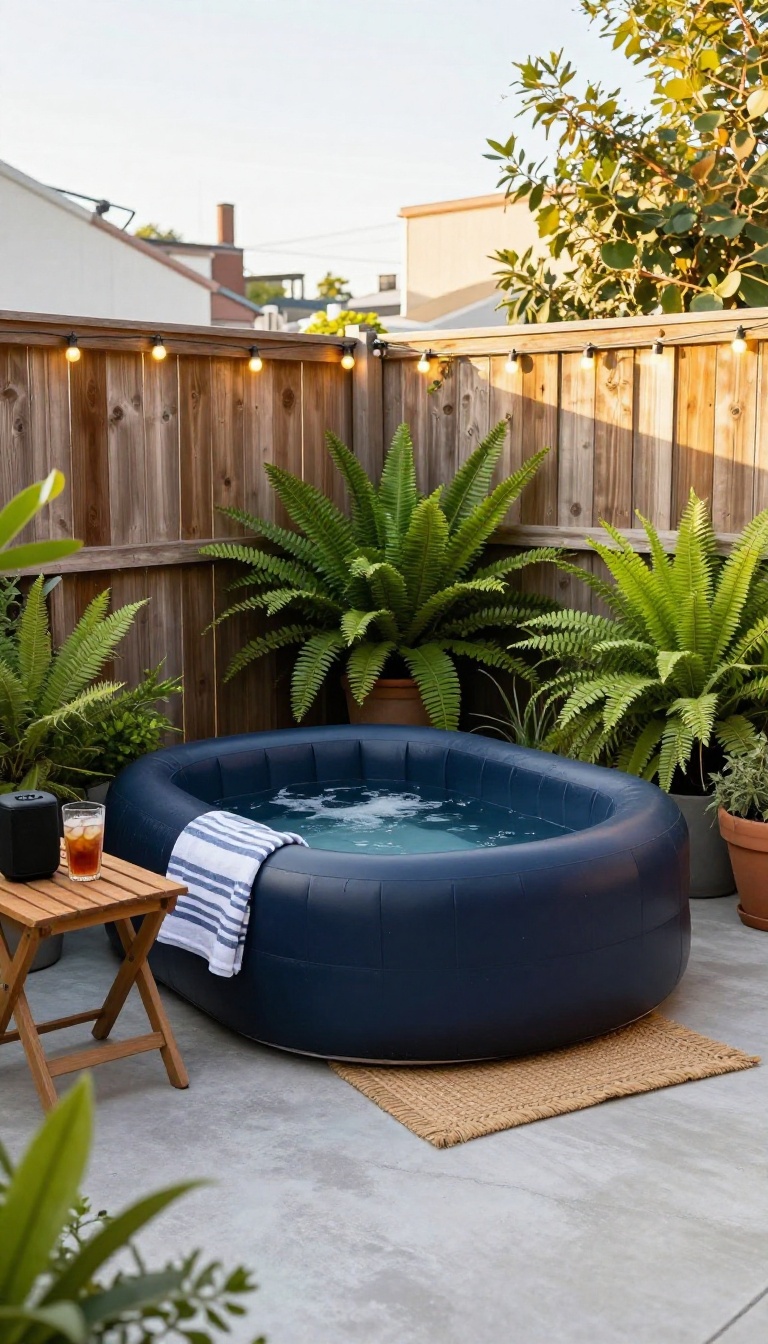
Not every backyard can handle a permanent hot tub, and not every budget can either. An inflatable model solves both problems at once. It weighs almost nothing when empty, plugs into a standard outlet, and sets up in under an hour.
That makes it perfect for renters, small patios, or anyone who wants to test the hot tub life before committing. The trick is making it look intentional instead of temporary. A few smart accessories turn a blow-up tub into a legit retreat.
The first thing people notice about an inflatable hot tub is that it looks, well, inflatable. The second thing they notice is how good it feels after a long day. You can fix the first part with a little styling.
The second part takes care of itself. Start by picking the right spot. You want a flat, solid surface—concrete, decking, or pavers.
Grass gets muddy and uneven, and dirt will find its way into the water. A compact patio corner is ideal because it feels tucked away without being cramped. Once it's filled, the tub stays put until you drain it.
That means you can treat the area around it like a real outdoor room. A small mat underneath protects the tub's bottom and gives it a cleaner look. A side table holds drinks, a speaker, and a towel.
Add a couple of plants or a string of lights, and suddenly it's not a blow-up tub anymore—it's your evening spot.
Pick A Level Spot With Room To Move
Inflatable tubs need a flat surface, but they also need breathing room. Leave at least two feet on all sides so you can walk around, lift the cover, and get in without stepping over stuff. If your patio is tight, slide the tub into a corner and keep the open side facing your seating area.
That way the tub feels like part of the patio, not an obstacle.
Add A Mat And A Side Table For Instant Coziness
A rubber or foam mat under the tub does two things: it cushions the bottom and hides the fact that you're basically sitting in a giant pool toy. Look for one that's slightly larger than the tub's footprint. A small side table is the other game-changer.
It gives you a place for drinks, phones, and a candle. Choose something weather-resistant and light enough to move when you drain the tub.
Keep It Clean And Ready To Soak
Inflatable tubs lose heat faster than hard-shell models, so a good cover is non-negotiable. Use the one that came with it, and add a thermal blanket if you plan to use it in cooler months. Change the water every few weeks, and rinse the filter often.
A quick wipe-down of the interior keeps it from feeling grimy. When it's clean and covered, you'll actually use it—and that's the whole point.
7. Sunken Hot Tub with a Wooden Surround
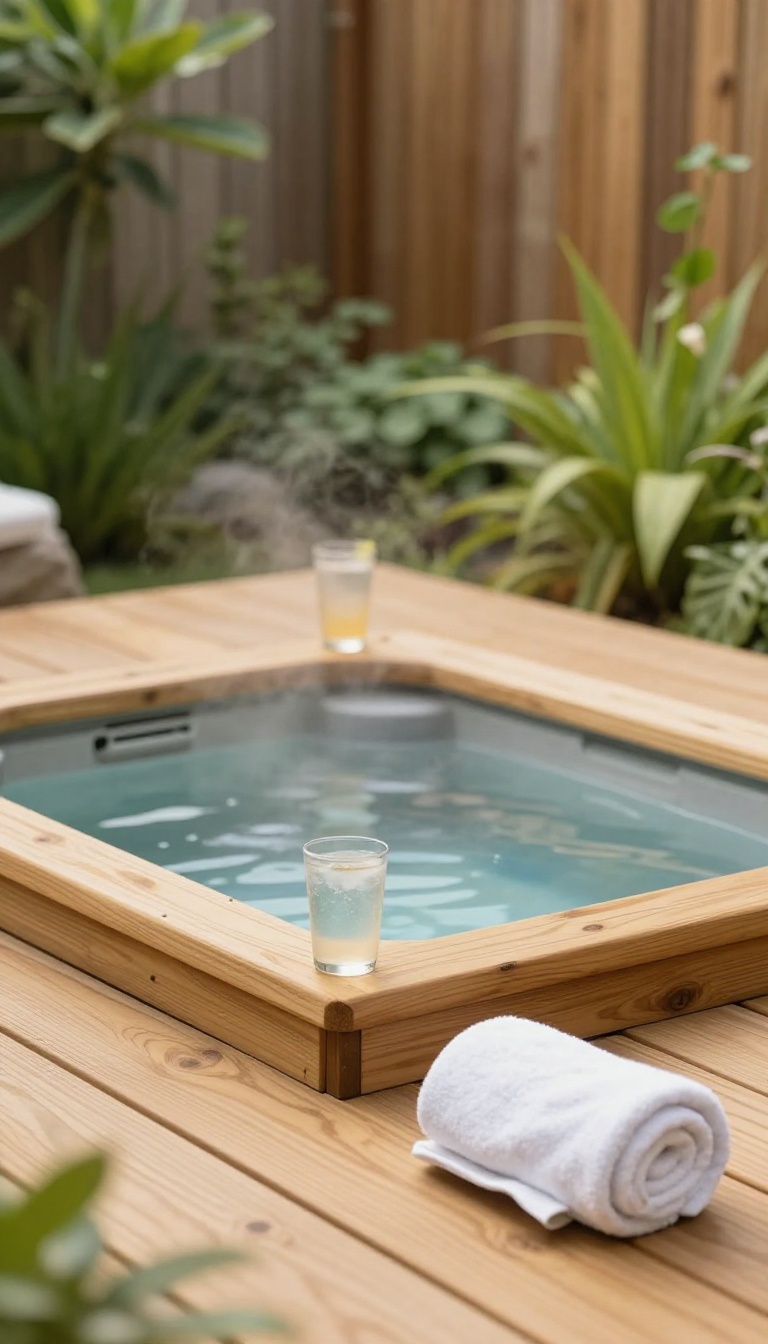
Dropping a hot tub into the ground changes how it sits in your yard. Instead of a bulky object plopped on the grass, you get a clean, built-in look that blends with the landscape. Finish the edge with wood and you get a warm, custom feel without a custom price tag.
The best part? That wooden surround doubles as a bench when the cover is on, so it earns its keep even when you're not soaking.
A sunken tub works in almost any small yard because it removes the visual bulk. You can sink it flush with a deck, a patio, or even a raised platform. The wood surround hides the shell and gives you a place to set a drink or rest a towel.
It's a simple trick that makes a compact space feel intentional and high-end.
Why It Works In Tight Spaces
When a tub sits above ground, it eats up prime real estate and blocks sightlines. Sinking it means you only see the top edge, so your yard feels bigger. You can tuck it into a corner or along a fence and still have room for a small seating area.
The wooden surround ties it all together and keeps the footprint tight.
Choosing The Right Wood
Not all wood handles moisture the same way. Cedar and teak are classic picks because they resist rot and look great as they age. If you want a budget-friendly option, pressure-treated pine works fine as long as you seal it well.
Composite decking is another choice—it's low-maintenance and won't splinter. Whatever you pick, make sure it's rated for outdoor use and feels comfortable on bare skin.
Building The Surround
You don't need a contractor to pull this off. Start by setting the tub on a level base—concrete pavers or a gravel bed work well. Then frame the surround with pressure-treated lumber and top it with your chosen wood.
Leave a small gap between the tub and the frame for ventilation and drainage. Add a hinged section if you need access to the equipment panel.
Making It Double As A Bench
The surround should be wide enough to sit on comfortably—at least 12 to 16 inches. Round the edges so they're easy on your legs. When the cover is on, the whole thing becomes a bench for drying off or just hanging out.
Add a few outdoor cushions and it feels like a built-in lounge. Just make sure the cover is sturdy enough to support weight.
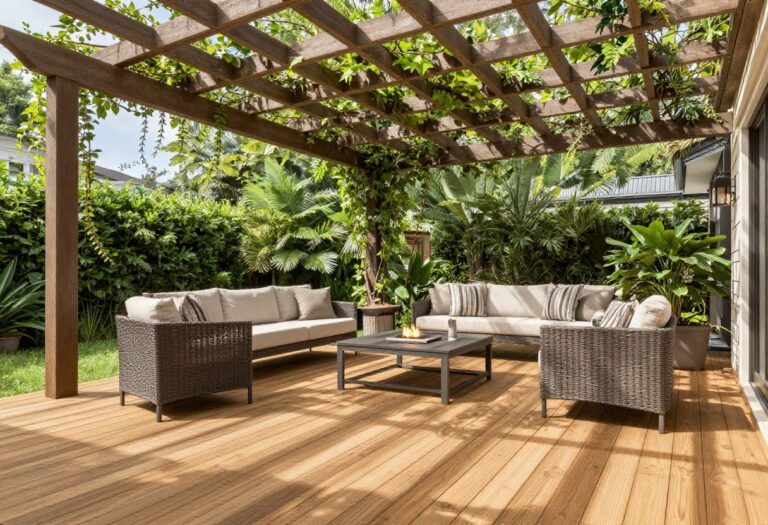
8. Hot Tub Under a Pergola for Shade and Style
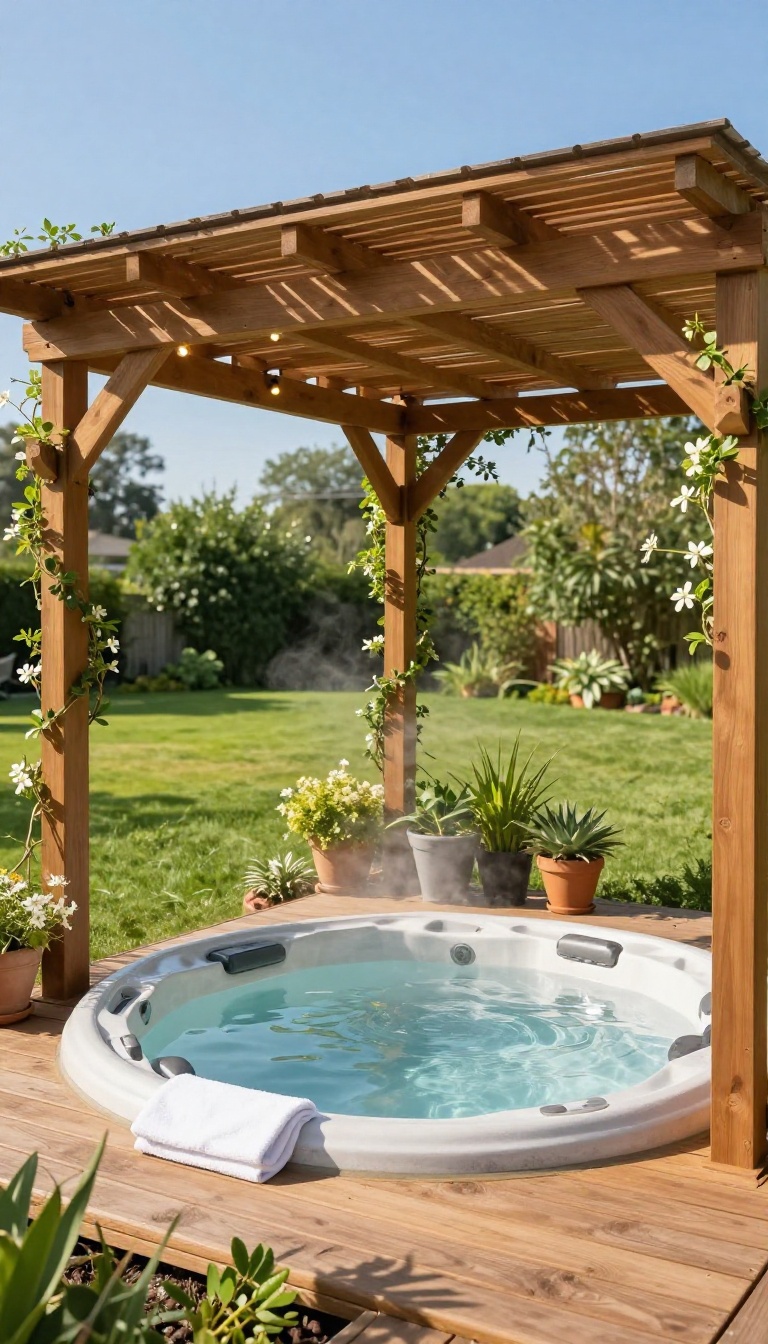
A pergola gives your hot tub a sense of place without boxing it in. It filters harsh sun, adds vertical interest, and makes even a tiny corner feel like a destination. The open slats keep the sky visible, so you get shade without losing the breeze or the view.
Place the tub directly under the pergola or let it extend slightly beyond for easy access. Choose a pergola sized to your tub—usually a few feet wider on each side feels right. This structure also defines the soaking zone, so the rest of the yard still feels open.
Choosing The Right Pergola
Wood pergolas bring warmth and pair well with most hot tub surrounds. Aluminum or vinyl options hold up better in wet climates and need less upkeep. Match the material to your fence or deck for a cohesive look.
A freestanding pergola works if you don't want to attach it to the house.
Shade Control That Works
Adjustable louvers let you dial in the shade from morning to late afternoon. If you go with fixed slats, orient them to block the strongest sun while letting softer light through. A retractable canopy adds flexibility for peak summer days.
Just make sure any cover clears the tub lid when it opens.
Lighting And Greenery
String lights woven through the beams create a warm glow after dark. Battery or solar options avoid running new wiring. Climbing vines like jasmine or ivy soften the structure and add privacy over time.
Keep plants trimmed so they don't drop leaves into the water.
9. Two-Person Tub with a Fold-Down Bar Shelf
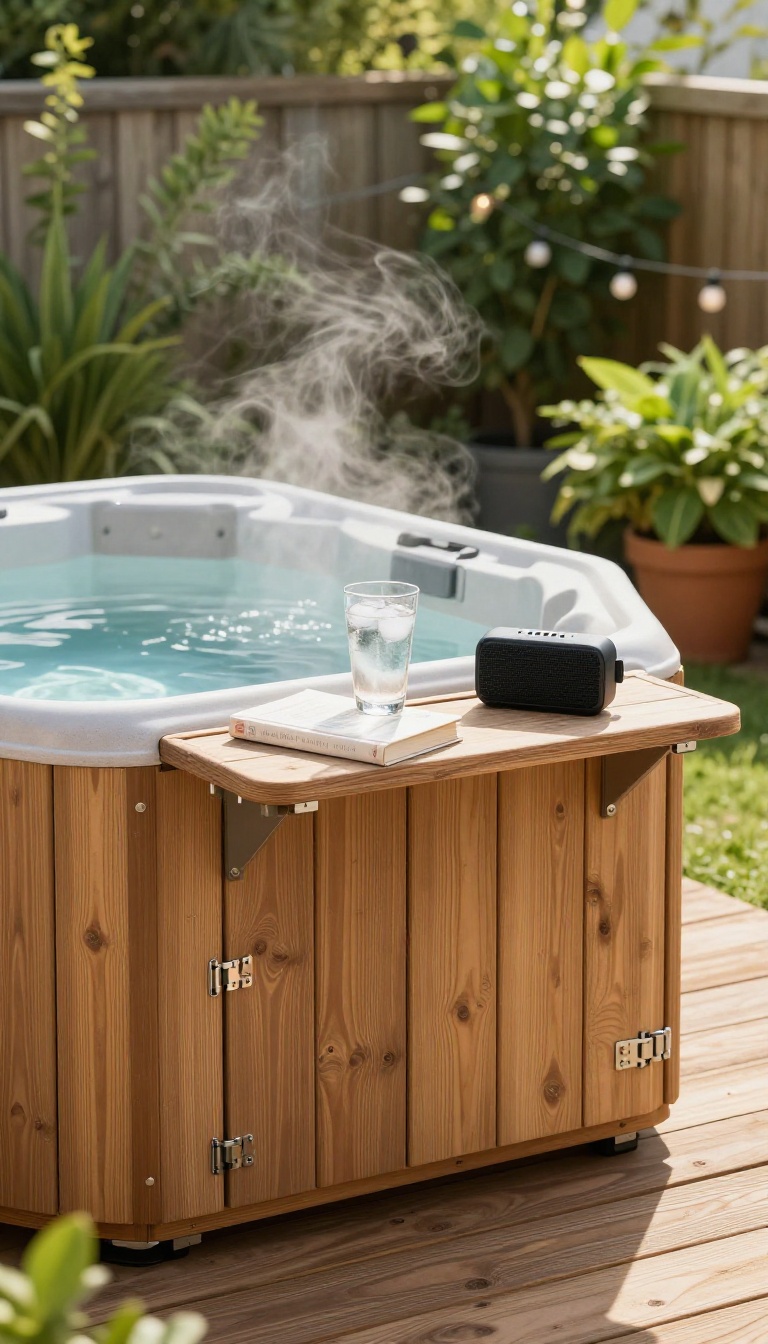
A two-person tub already keeps things intimate, but adding a fold-down bar shelf turns it into a proper little hangout. You get a spot for drinks, a phone, or a small speaker without a bulky side table eating up your deck space. When the soak is over, the shelf folds flat and disappears.
The shelf itself is simple. It's a hinged panel that mounts to the tub's cabinet or a nearby rail, and it flips up when you need it and drops out of the way when you don't. Most models use marine-grade hardware and a weatherproof top, so rain and splash don't ruin it.
You can buy a ready-made version or build one from a scrap of composite decking and a pair of stainless hinges. Either way, it costs less than a decent side table and takes up zero floor space. A two-person tub is the right size for this trick.
Larger tubs have room for built-in cup holders and ledges, but small ones usually don't. The fold-down shelf adds that function without adding width. It also keeps your drink from sitting on the tub rim, where it's easy to knock into the water.
If you like to soak with a book or a tablet, the shelf gives you a dry landing spot that's still within arm's reach. Placement matters more than the shelf itself. Mount it on the side you naturally face when you're sitting in your favorite seat.
That way you're not twisting around to grab your drink. If your tub sits against a wall or fence, mount the shelf on the open side so it doesn't bump into anything when it folds down. And leave a few inches of clearance below it so wet hands don't drip onto whatever is underneath.
One small caution: don't overload it. A couple of drinks and a phone are fine. A full pitcher and a plate of snacks are not.
Check the weight limit that comes with the shelf, or if you're building your own, use hinges rated for at least 20 pounds. That's plenty for the essentials and keeps the whole setup safe.
Pick The Right Spot To Mount It
Mount the shelf on the side you face most often when sitting in the tub. If your tub is against a fence, put it on the open side so it can fold down without hitting anything. Keep it within easy reach but not so close that you bump it every time you move.
Keep The Load Light
A drink, a phone, and a small speaker are about all you need. Skip heavy platters or glass bottles that could tip. Check the weight rating on store-bought shelves, or use sturdy stainless hinges if you DIY.
A 20-pound limit is more than enough.
Make It Weather-friendly
Choose marine-grade hinges and a top that can handle sun and water. Teak, composite, or powder-coated aluminum all hold up well. Wipe it down now and then, and tighten the screws once a season.
It'll last as long as the tub.
10. Hot Tub on a Trailer for Flexible Placement
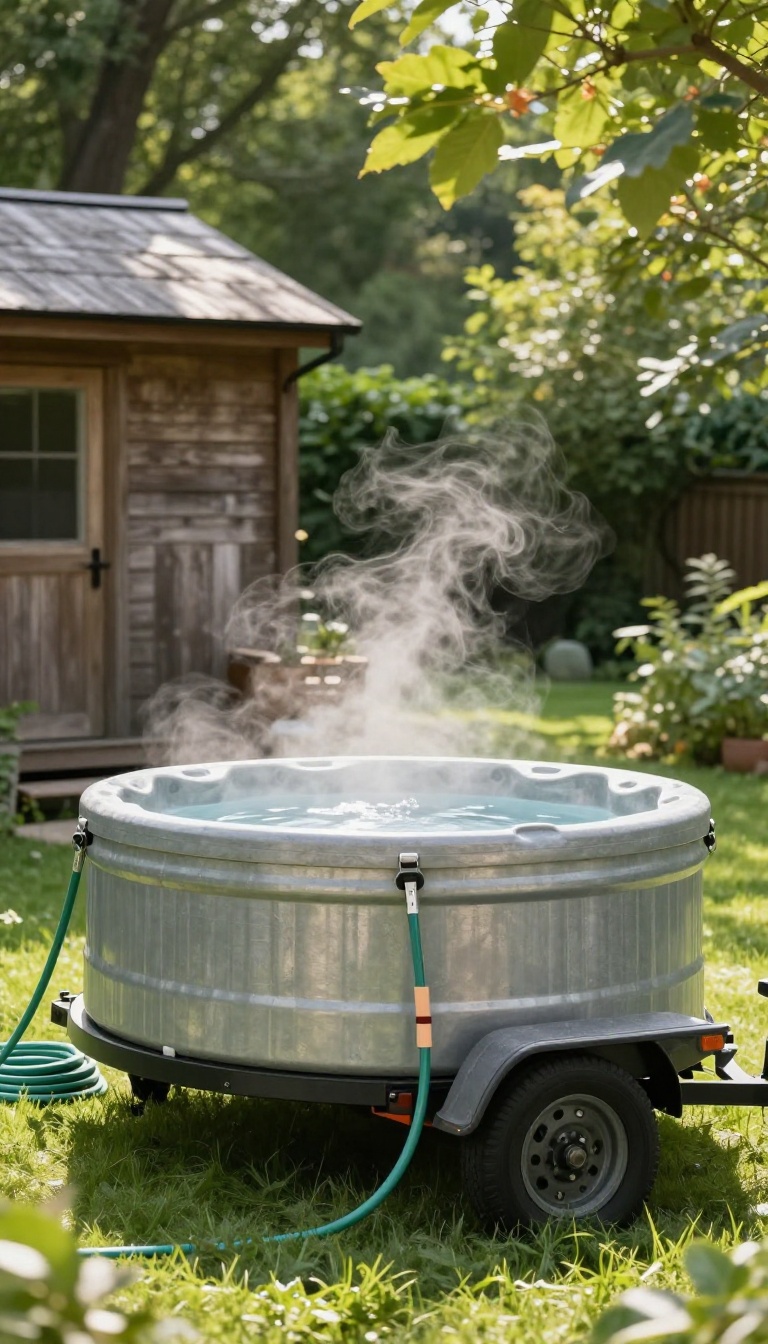
A hot tub doesn't have to live in one spot forever. Mount a small tub on a trailer and you can roll it to the sunny side of the yard, stash it behind the shed, or haul it to a campsite for the weekend. It's a smart move for renters who can't dig up the lawn and for tiny lots where every foot gets used twice.
The trailer does the heavy lifting, so you get the soak without the permanent footprint.
The setup is simpler than it sounds. You're basically pairing a lightweight tub with a utility trailer rated for the loaded weight, then wiring it for power and water. Most people use a small 2- to 4-person tub, often a rotomolded model, because those weigh less and hold heat well.
The trailer becomes the foundation, and the tub stays put once it's strapped down. You gain mobility, and you keep the option to sell or repurpose the trailer later.
Picking The Right Tub And Trailer Combo
Start with weight. A filled 2-person tub can run 1, 500 to 2, 500 pounds, so your trailer needs a capacity that covers the tub, the water, and a couple of adults. A 5×8 utility trailer with a 2, 000- to 3, 500-pound axle is a common sweet spot.
Look for a tub with a flat base and no built-in cabinet, since those are easier to strap down. Rotomolded tubs are popular here because they're lighter and more forgiving on the road.
Power, Water, And Drainage On The Move
You'll need a power source wherever the trailer parks. A 120V plug works for many small tubs, but check the amperage and don't overload an outdoor circuit. For water, a standard garden hose fills most models in under an hour.
Drainage is the part people forget. Park near a slope or a gravel area so you can drain without flooding the patio. If you plan to travel, a small pump and a portable filter keep the water clean between stops.
Making It Look Intentional, Not Temporary
A tub on a trailer can look like a project if you leave it bare. Add a simple wood deck or a set of steps on the trailer frame, and it reads as a tiny spa. Skirt the sides with removable panels or weather-resistant fabric, and the wheels disappear from view.
A small umbrella or a pop-up canopy gives you shade and privacy. When you want to move it, the panels come off and the trailer rolls free.
Where This Setup Works Best
Renters love it because nothing is permanent. Tiny lots love it because the tub can live in the driveway, then move to the side yard when guests come over. Campers and tailgaters use the same idea to bring a soak to the lake or the game.
The one catch is local rules. Some HOAs and campgrounds restrict trailers or hot tubs, so check before you buy. If you're clear on that, the flexibility is hard to beat.
FAQ
What is the smallest hot tub size for a tiny backyard?
Two-person tubs can be as small as 5 feet by 5 feet. Inflatable models are often even smaller and can fit on a small patio.
Do I need a concrete pad for a small hot tub?
Not always. Many small tubs work on a reinforced deck, gravel, or a rubber mat. Check the manufacturer's requirements for your specific model.
How can I hide the hot tub equipment in a small space?
Use a small screen, a planter box, or a bench with removable panels. Just make sure the equipment still has airflow for ventilation.
Are inflatable hot tubs good for small backyards?
Yes, they're lightweight, affordable, and easy to store. They work well on patios and can be moved when not in use.
What plants can I put near a hot tub?
Choose plants that tolerate moisture and sun, like ornamental grasses, ferns, or small shrubs. Avoid plants with thorns or heavy shedding.
Conclusion
A small hot tub does not need a perfect setup to earn its keep. Pick one idea from this list that solves your biggest headache, whether that is privacy, storage, or a spot to set your drink. Get that piece right before adding anything else.
Then use the tub for a few weeks and see what actually bugs you. You will figure out fast what to add next, and you will spend less on things you never needed. The best backyard retreats grow from real use, not a shopping spree.