How to Clean a Bathtub in 13 Easy Home Scrubbing Ways
A grimy bathtub can turn your relaxing soak into a gross experience. You don't need a pro or pricey products to get it sparkling—just 13 easy methods using stuff you probably already have.
From baking soda fizz to pumice stones, each technique targets a specific problem like soap scum or hard water rings. No fluff, just practical steps that save you time and elbow grease.
Ready to make your tub shine without breaking the bank? Let's scrub in.
1. Baking Soda and Vinegar Fizz
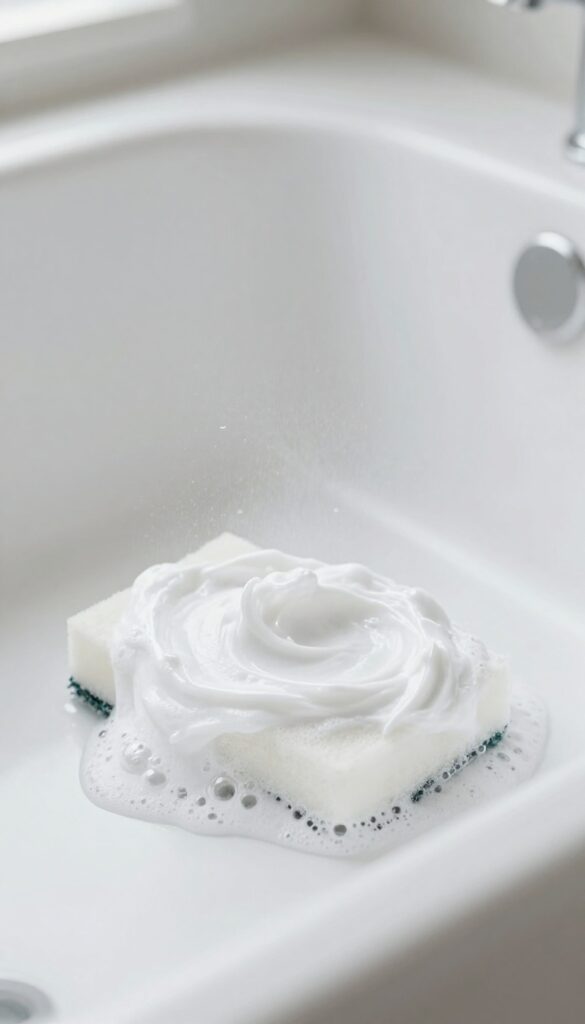
This classic combo is a powerhouse for breaking down everyday grime and mild soap scum. The chemical reaction between baking soda and vinegar creates a gentle fizzing action that helps lift dirt without harsh scrubbing. It's safe for most tub surfaces and costs pennies per use.
Start by wetting your bathtub surface with warm water. Sprinkle a generous layer of baking soda over the entire tub, focusing on areas with visible buildup. Fill a spray bottle with white vinegar and mist the baking soda until it starts to fizz.
Let the mixture sit for about 10 minutes to allow the reaction to work on the grime. Then, using a non-abrasive sponge or cloth, scrub in circular motions. Rinse thoroughly with warm water and wipe dry with a clean towel.
Why It Works So Well
Baking soda is a mild alkali that helps dissolve dirt and grease, while vinegar is a weak acid that cuts through soap scum and hard water deposits. When combined, they create carbon dioxide bubbles that help lift debris from the surface, making it easier to wipe away.
Best Surfaces To Use This On
This method is ideal for acrylic, fiberglass, and porcelain tubs. Avoid using it on natural stone or marble, as the acid in vinegar can etch the surface. Always test a small, hidden area first if you're unsure about your tub's material.
Pro Tips For Extra Power
For stubborn stains, let the paste sit longer—up to 20 minutes—before scrubbing. You can also add a few drops of dish soap to the vinegar spray for extra grease-cutting power. Rinse well to avoid any residue that might make the tub slippery.
2. Cream of Tartar Paste for Hard Water Rings
Hard water rings can be stubborn, but cream of tartar is a gentle acid that cuts through mineral deposits without scratching your tub. When mixed with hydrogen peroxide, it forms a paste that lifts even the toughest rings. This method is especially useful for fiberglass or acrylic tubs where harsh abrasives might cause damage.
Why This Combo Works
Cream of tartar is a mild acid that dissolves calcium and lime deposits. Hydrogen peroxide adds a gentle bleaching effect to brighten the surface. Together, they create a non-abrasive paste that targets hard water stains without harming your tub's finish.
How To Make And Apply
Mix 2 tablespoons of cream of tartar with enough hydrogen peroxide to form a thick paste. Apply it directly to the hard water rings using a sponge or cloth. Let it sit for 15 minutes—don't let it dry completely.
Then scrub gently with a soft brush or sponge and rinse thoroughly with warm water.
Tips For Stubborn Rings
For thick or old rings, let the paste sit for up to 30 minutes. If the paste dries out, reapply a fresh layer. You can also add a few drops of dish soap to the mixture for extra grease-cutting power.
Always test on a small hidden area first to ensure compatibility with your tub's surface.
3. Dish Soap and Warm Water for Daily Grime
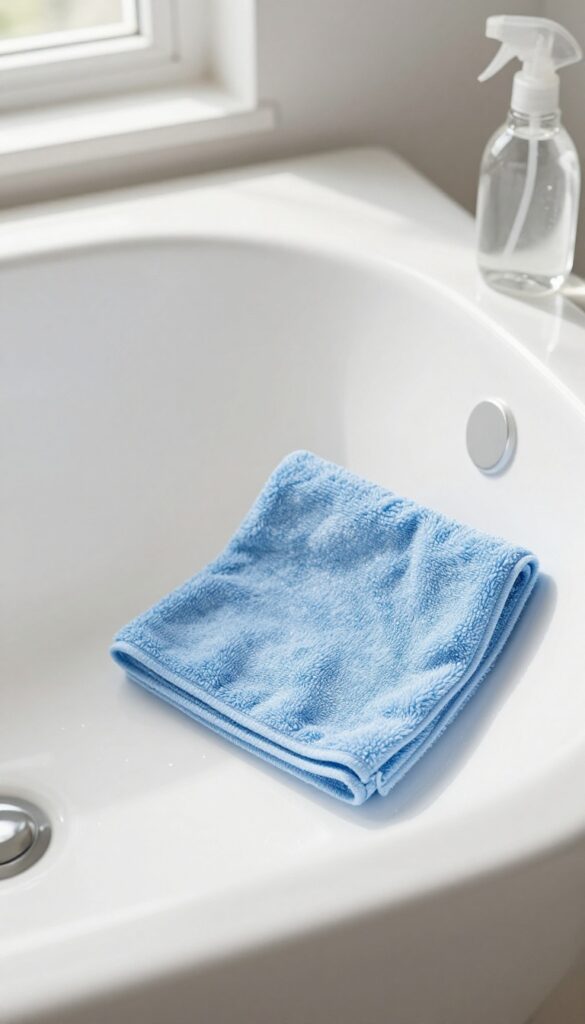
Not every tub cleaning session needs a heavy-duty scrub. For everyday grime—the kind that builds up from body oils, loose dirt, and product residue—a simple mix of dish soap and warm water does the trick. This gentle approach keeps your bathtub fresh without wearing down the finish, and it takes just a few minutes after each use.
Dish soap is designed to cut through grease and oils, making it perfect for the film that clings to your tub after a shower or bath. Warm water helps activate the soap and loosens any light residue. A soft sponge or microfiber cloth is all you need to wipe down the surfaces, leaving them clean and streak-free.
This method works best when done regularly, preventing grime from hardening into stubborn stains.
Why Dish Soap Works So Well
Dish soap contains surfactants that break down oils and lift dirt away from surfaces. Unlike harsh cleaners, it’s gentle on most tub materials—acrylic, fiberglass, porcelain, and enamel—so you can use it daily without worrying about damage. Plus, it rinses off easily, leaving no residue behind.
How To Do It Right
Fill a spray bottle with warm water and add a few drops of dish soap. Shake gently to mix. After each bath or shower, spray the solution over the tub surfaces, then wipe with a soft sponge or cloth.
Focus on areas where water pools and soap scum tends to form. Rinse thoroughly with warm water and let the tub air dry or pat dry with a clean towel.
When To Upgrade To A Stronger Cleaner
This method is ideal for daily maintenance, but it won’t tackle tough soap scum, hard water stains, or mold. If you notice buildup that doesn’t come off with dish soap, switch to a more powerful cleaner for a deeper clean. Use this routine to extend the time between heavy scrubbing sessions.
4. Bleach Spray for Mold and Mildew
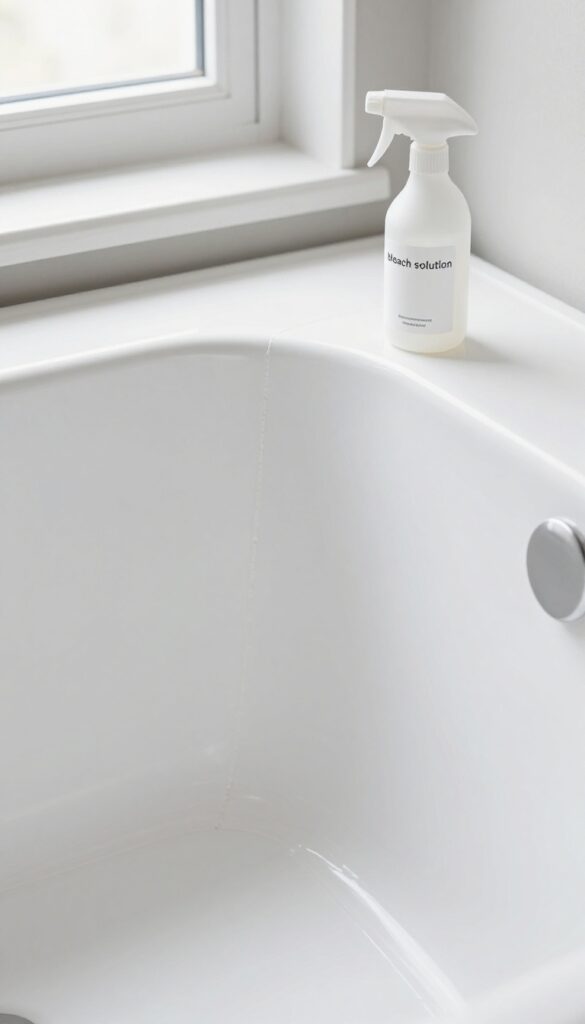
Mold and mildew love dark, damp corners of your bathtub. A bleach spray is one of the fastest ways to kill them and whiten grout. Just remember: bleach is strong stuff, so use it carefully.
Bleach is a powerful disinfectant that kills mold spores on contact. The key is diluting it properly so it's effective without damaging your tub's finish. Always work in a well-ventilated area and wear gloves to protect your skin.
Mixing The Right Solution
Combine one part bleach with ten parts water in a spray bottle. Shake gently to mix. This ratio is strong enough to kill mold but safe for most bathtub surfaces.
For tough mold, you can increase the bleach slightly, but never use it full strength.
Application And Dwell Time
Spray the solution directly onto moldy areas, especially along caulking and grout lines. Let it sit for 10 minutes so the bleach can penetrate and kill the mold. Don't let it dry out—if needed, respray to keep the area wet.
Scrubbing And Rinsing
After the dwell time, scrub the area with a soft brush or sponge. For stubborn spots, a toothbrush works great on grout. Rinse thoroughly with warm water to remove all bleach residue.
Wipe dry to prevent new mold growth.
Safety Precautions
Open a window or turn on the exhaust fan before you start. Never mix bleach with ammonia or other cleaners—it creates toxic fumes. Wear old clothes and gloves, as bleach can stain fabrics and irritate skin.
Keep the area ventilated until dry.
5. Hydrogen Peroxide and Baking Soda for Stubborn Stains
Some stains just won't budge with regular cleaners. Yellowing around the drain or set-in dirt from months of neglect need something stronger. That's where hydrogen peroxide and baking soda come in.
This duo creates a gentle bleaching paste that lifts stains without harsh fumes.
Mix baking soda with enough hydrogen peroxide to form a thick paste. Apply it directly to stained areas, especially around the drain, faucet, or waterline. Let it sit for 30 minutes—the peroxide works to break down organic stains while the baking soda provides gentle abrasion.
Scrub with a soft brush or sponge, then rinse thoroughly. For extra stubborn spots, let the paste sit longer or apply a second coat.
Why This Combo Works
Hydrogen peroxide is a mild bleach that oxidizes stains without the strong smell of chlorine bleach. Baking soda is a gentle abrasive that won't scratch your tub's finish. Together, they tackle yellowing, soap scum buildup, and discoloration from hard water or mildew.
It's safe for most tub materials, including acrylic, fiberglass, and porcelain.
Application Tips
Always test on a small hidden area first to check for color fastness. Use a brush with soft bristles to avoid scratching. For vertical surfaces, make the paste a bit thicker so it sticks.
Cover the paste with plastic wrap to keep it moist and active during the 30-minute wait. Rinse with warm water and wipe dry.
When To Use This Method
This is ideal for yellowed tubs, especially older ones with set-in stains. It's also great for brightening up a tub that looks dull from years of use. Avoid using on painted or coated surfaces unless you've tested it.
For fresh stains, a quicker scrub with baking soda and vinegar might be enough.
6. Lemon Juice and Salt for a Natural Scrub
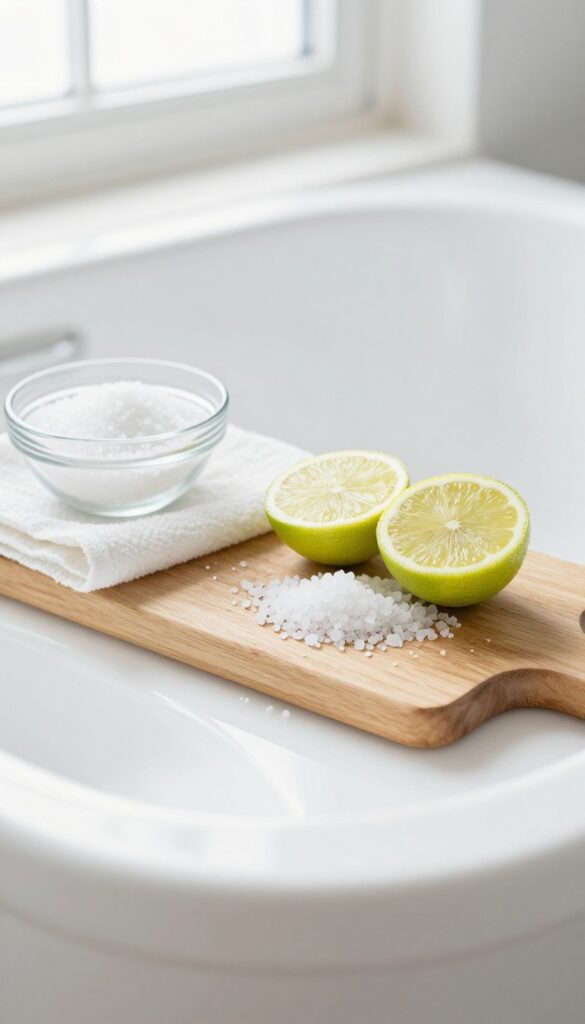
If you prefer a chemical-free approach, lemon juice and salt make a surprisingly effective scrub. The natural acidity of lemon cuts through soap scum and hard water deposits, while salt provides gentle abrasion to lift grime without scratching. Plus, your bathroom will smell fresh and citrusy.
This method is perfect for light to moderate buildup. It's also a great option for those with sensitive skin or allergies to harsh chemicals.
How To Prepare The Lemon And Salt Scrub
Cut a fresh lemon in half crosswise. Pour a small amount of coarse salt (like kosher or sea salt) onto a plate or directly onto the cut lemon surface. The salt will stick to the lemon's flesh.
Scrubbing Technique For Best Results
Use the lemon half like a sponge, scrubbing the tub surface in circular motions. Focus on areas with soap scum or water spots. The lemon juice will foam slightly as it reacts with grime.
Apply gentle pressure—the salt does the work. For extra stubborn spots, let the juice sit for a few minutes before scrubbing.
Rinsing And Aftercare
Rinse the tub thoroughly with warm water to remove all salt and lemon residue. Dry with a soft cloth to prevent water spots. This method is safe for most tub surfaces, but test on a small hidden area first if you have a delicate finish.
7. Borax and Lemon Juice for Deep Cleaning
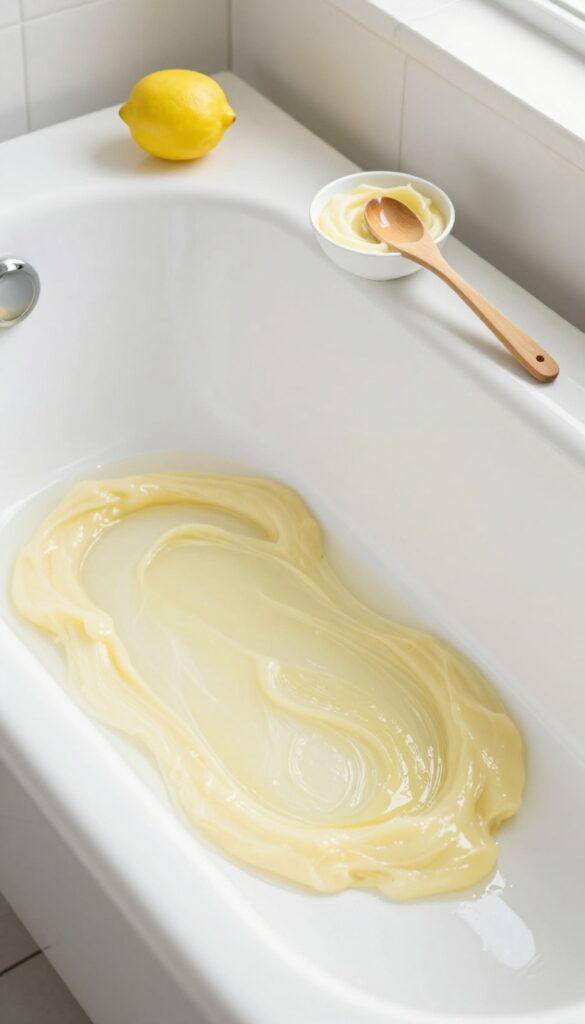
When your bathtub needs more than a quick wipe, borax and lemon juice team up for serious deep cleaning. Borax is a natural mineral that boosts the power of any cleaner, while lemon juice cuts through grease and leaves a fresh scent. Together, they form a paste that tackles tough grime without harsh chemicals.
Making The Paste
Mix equal parts borax and fresh lemon juice in a small bowl until you get a thick, spreadable paste. You'll need about half a cup of borax and enough lemon juice to bind it. Stir well to avoid lumps.
The paste should be easy to apply but not runny.
Application And Wait Time
Spread the paste over the stained areas of your tub using a sponge or your hands (wear gloves if you prefer). Focus on soap scum, hard water rings, and any yellowing. Let it sit for 20 minutes so the borax can break down the grime and the lemon acid can dissolve mineral deposits.
Scrubbing And Rinsing
After 20 minutes, scrub the paste with a non-abrasive sponge or a soft brush. You'll see the grime lift away easily. Rinse thoroughly with warm water.
For stubborn spots, scrub a little longer or apply a second round. The tub will look brighter and smell like citrus.
8. Magic Eraser for Quick Spot Cleaning
Sometimes you just need to zap a single scuff mark or a thin soap scum line without pulling out the heavy artillery. That's where a melamine sponge—often sold as Magic Eraser—shines. It's a dry, white block that becomes a gentle abrasive when dampened.
No extra chemicals required, just water and a little elbow grease. Perfect for those moments when a full scrub feels like overkill.
Dampen the sponge until it's soft but not dripping. Gently rub the affected area in short strokes. The foam acts like ultra-fine sandpaper, lifting dirt without scratching most surfaces.
Rinse the tub thoroughly afterward to remove any residue. This method works best on fiberglass, acrylic, and enamel tubs. Avoid it on polished stone or antique fixtures, as it can dull the finish.
Where It Works Best
Magic Eraser is ideal for spot-treating scuff marks from shoes or bath toys, soap scum rings along the waterline, and light dirt buildup around the drain. It can also tackle marker stains or crayon marks if kids have been creative in the tub. The key is to use light pressure and test a small hidden area first.
Tips For Best Results
Always dampen the sponge before use—dry melamine can scratch. Cut the sponge into smaller pieces to make it last longer. Rinse the sponge frequently while cleaning to avoid redepositing dirt.
After you're done, wipe the tub with a damp cloth to remove any foam particles, then dry with a towel to prevent water spots.
9. Vinegar Soak for Mineral Buildup
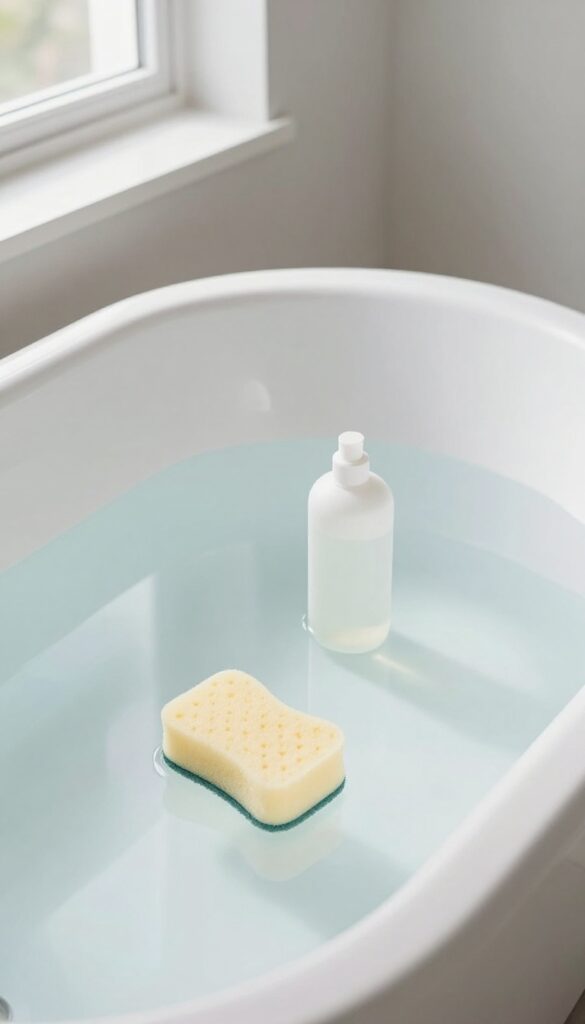
Hard water leaves behind chalky white deposits that cling to your tub's surface. These mineral buildups don't respond well to ordinary scrubbing, but a long vinegar soak dissolves them effortlessly. White vinegar's mild acidity breaks down calcium and lime without harsh chemicals.
Fill the tub with the hottest water possible, then add 2 cups of white vinegar. Let it sit for at least 4 hours—overnight is even better. The heat and acid work together to loosen stubborn deposits.
After soaking, drain the water and give the tub a light scrub with a soft sponge. Rinse thoroughly. You'll notice the difference immediately, especially around faucets and the waterline.
Why It Works So Well
Vinegar is a mild acid that reacts with alkaline mineral deposits, turning them into soluble salts that rinse away. The hot water opens up the pores of the buildup, allowing the vinegar to penetrate deeper. This method tackles even thick crusts without damaging acrylic or porcelain finishes.
Best Practices For A Successful Soak
Use distilled white vinegar for consistent results—avoid balsamic or apple cider varieties. Plug the drain securely and run the hot water until the tub is about halfway full. Add the vinegar and top off with more hot water.
Check the temperature after an hour; if it's cooled too much, add more hot water to keep the reaction active.
What To Do After The Soak
Drain the tub completely and rinse with cool water. Use a non-abrasive sponge to gently wipe away any remaining residue. For stubborn spots, make a paste of baking soda and a little vinegar and scrub gently.
Finally, dry the tub with a microfiber cloth to prevent new water spots.
10. Toothpaste for Small Scratches and Scuffs
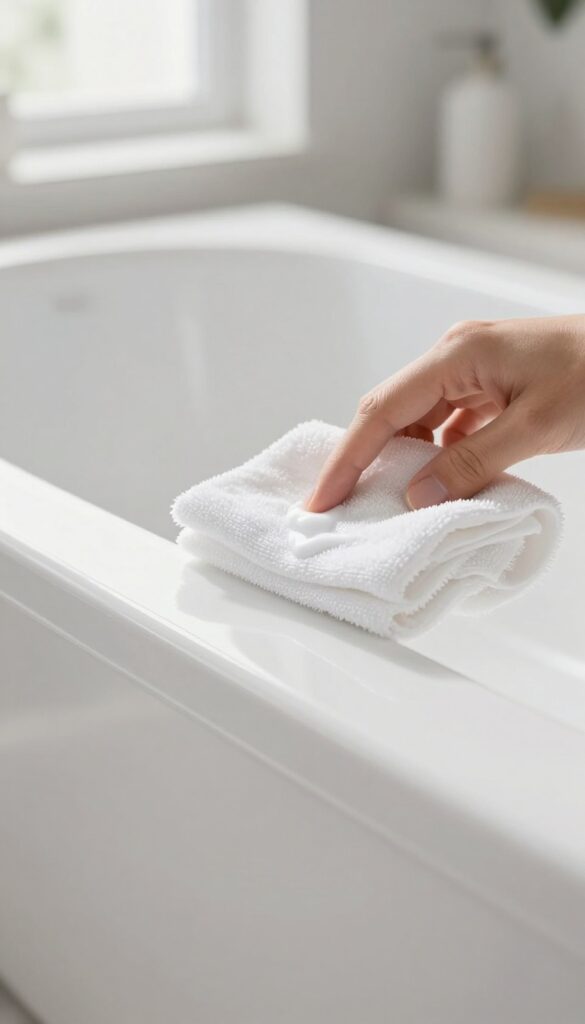
Scratches and scuffs on your bathtub can make it look older than it really is. Before you think about replacing the tub, grab a tube of white toothpaste from your bathroom cabinet. This gentle abrasive can buff out minor imperfections on acrylic and fiberglass surfaces without causing further damage.
Toothpaste works because it contains mild abrasives like calcium carbonate or silica that polish away fine scratches. The key is using the right type—white, non-gel toothpaste without whitening agents or baking soda, which may be too harsh. Apply a pea-sized amount to a soft, clean cloth and rub it into the scuff or scratch in a circular motion for about 30 seconds.
Wipe off the residue with a damp cloth, and repeat if necessary. This method is best for light surface marks; deeper gouges may require a specialized repair kit. Always test on an inconspicuous area first to ensure compatibility with your tub's finish.
Why Toothpaste Works On Bathtub Scratches
Toothpaste's mild abrasive action is similar to that of a fine polishing compound. It gently removes a thin layer of the tub's surface, leveling out the scratch or scuff. This works especially well on glossy acrylic and fiberglass because those materials are somewhat soft and respond to light polishing.
Just avoid gel or whitening toothpastes, which can be too harsh or contain chemicals that may stain the tub.
Step-by-step: Buffing Out Scuffs
Start by cleaning the area around the scratch to remove any dirt. Squeeze a small amount of white toothpaste onto a soft microfiber cloth. Rub the toothpaste into the mark using small circular motions for about 30 seconds.
Wipe away the paste with a damp cloth and inspect the result. If the scratch is still visible, repeat the process once more. Finish by rinsing the area with water and drying it with a clean towel.
When To Skip This Method
Toothpaste is not a cure-all. Deep scratches that catch your fingernail will not be removed by toothpaste alone. For those, you might need a bathtub repair kit or professional help.
Also, avoid using toothpaste on porcelain or enamel tubs, as the abrasives can damage the glossy finish. Stick to acrylic and fiberglass for best results.
11. Rubbing Alcohol for Soap Scum
Soap scum loves to build up in layers, especially around the waterline. Rubbing alcohol cuts through that greasy film like magic. It evaporates fast, so you're left with a streak-free shine and zero residue.
Spray rubbing alcohol directly on soap scum, let sit for 5 minutes, then wipe with a microfiber cloth. Evaporates quickly and leaves a streak-free shine.
Why It Works
Rubbing alcohol is a solvent that breaks down the fatty acids in soap scum. It also kills mold and mildew spores on contact. Because it evaporates so fast, it won't leave water spots or streaks behind.
Best Surfaces
This method is safe for ceramic, porcelain, fiberglass, and acrylic tubs. Avoid using it on painted or sealed surfaces, as it may strip the finish. Test in an inconspicuous spot first.
Pro Tips
Use 70% isopropyl alcohol for the best balance of effectiveness and evaporation time. For thick buildup, spray and let it sit for up to 10 minutes. Wipe with a clean, dry microfiber cloth in circular motions.
Follow with a rinse if you prefer, but it's not necessary.
12. Pumice Stone for Tough Hard Water Rings
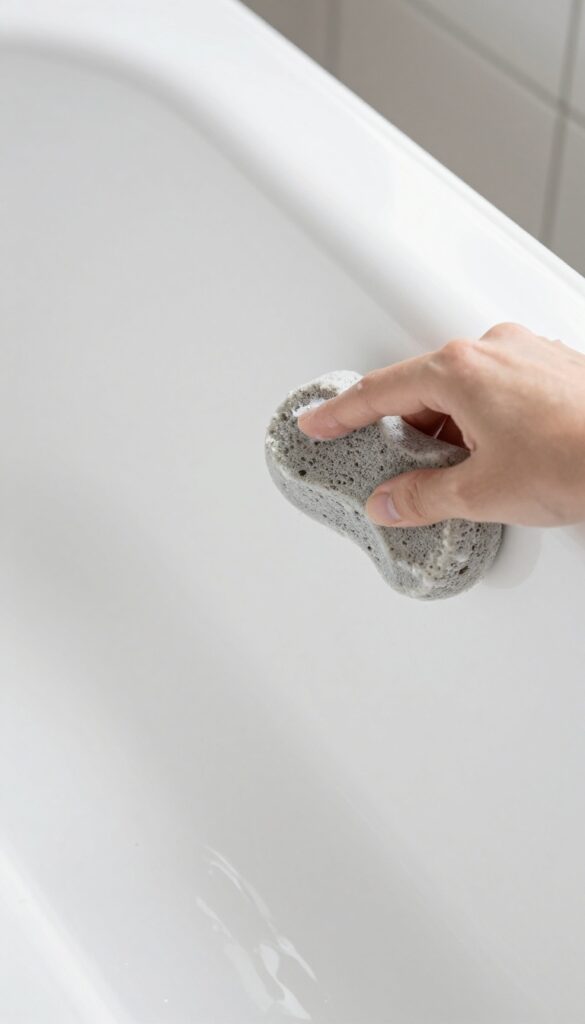
Hard water rings can be stubborn, but a pumice stone is a game-changer for porcelain tubs. This natural volcanic rock is abrasive enough to scrub away mineral deposits without damaging the surface when used correctly. The key is keeping the stone wet and working gently.
Pumice stones are ideal for tackling those white, crusty rings left by hard water. They work by gently abrading the deposit without scratching the porcelain. Always wet the stone first and keep it moist while scrubbing—dry pumice can cause scratches.
Use a light touch and circular motions. Rinse frequently to check progress. After the ring is gone, wipe the area clean with a damp cloth.
This method is only safe for non-acrylic surfaces; avoid it on fiberglass or acrylic tubs.
Why Pumice Works On Porcelain
Pumice is porous and slightly abrasive, making it perfect for removing hard water scale without damaging the glossy finish of porcelain. The stone wears down as you scrub, so it's self-limiting. Just make sure your tub is porcelain—test in an inconspicuous spot first.
Step-by-step: Using A Pumice Stone
- Wet the pumice stone thoroughly. 2.
Gently rub the hard water ring with light pressure, keeping the stone and surface wet. 3. Rinse the area and stone often to see progress and prevent scratching.
- Once the ring is gone, wipe the tub with a damp cloth and dry.
Surfaces To Avoid
Never use a pumice stone on acrylic, fiberglass, or enameled steel tubs—it will scratch them. Stick to genuine porcelain or ceramic. If you're unsure, check your tub's material or test on a hidden spot.
13. Commercial Tub Cleaner for Heavy-Duty Jobs
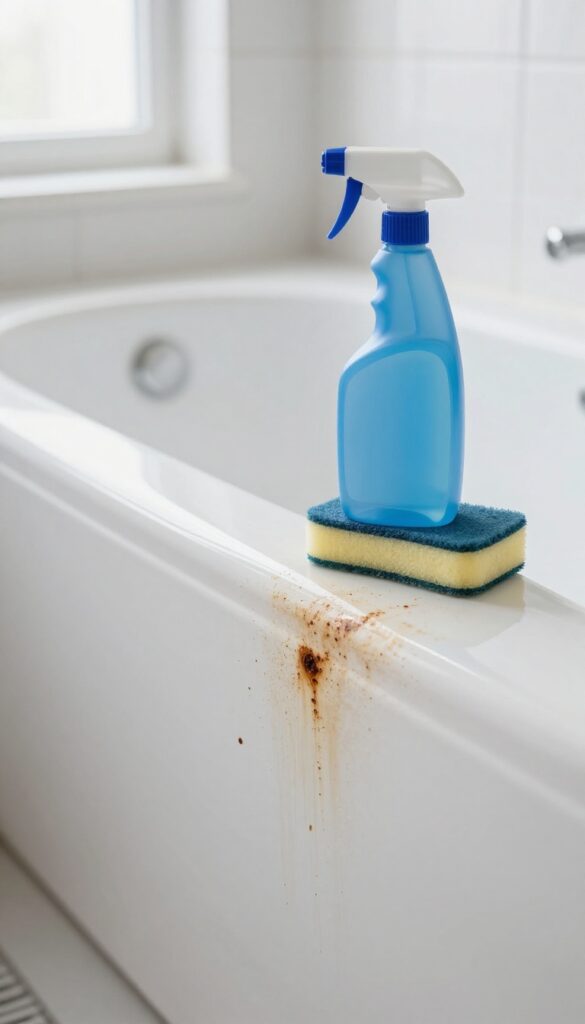
When everyday cleaners won't cut it, it's time to bring in the big guns. Commercial tub cleaners are formulated to tackle tough grime, rust, and buildup that natural methods can't budge. The key is matching the cleaner to your tub's material to avoid damage.
For porcelain or enamel tubs, Bar Keepers Friend (a mild abrasive) works wonders on stains and rust. For acrylic or fiberglass, Scrubbing Bubbles or a dedicated acrylic cleaner is safer and prevents scratching. Always spot-test in an inconspicuous area first.
Follow the label: usually spray, let sit for a few minutes, scrub with a non-abrasive sponge, and rinse thoroughly. Wear gloves and ensure ventilation. These products are powerful—use them sparingly and only when needed.
Choosing The Right Cleaner
Check your tub's material before buying. Porcelain and enamel can handle mild abrasives like Bar Keepers Friend or Soft Scrub. Acrylic and fiberglass need gentler options like Scrubbing Bubbles or Method Tub & Tile.
Using the wrong product can cause dulling or etching.
How To Apply For Best Results
Apply the cleaner evenly, focusing on stained areas. Let it sit for the recommended time—usually 3-5 minutes—to break down grime. Scrub with a soft sponge or brush in circular motions.
Rinse with warm water and wipe dry to prevent residue.
Safety And Ventilation Tips
Always work in a well-ventilated bathroom. Open a window or turn on the exhaust fan. Wear rubber gloves to protect your skin.
Avoid mixing cleaners, especially with bleach or ammonia, which can create toxic fumes.
FAQ
How often should I clean my bathtub?
For light use, a weekly wipe-down with dish soap and water is enough. For heavy use or if you have hard water, a deeper clean every two weeks helps prevent buildup.
Can I use bleach on an acrylic tub?
Yes, but dilute it well (1 part bleach to 10 parts water) and rinse thoroughly. Avoid letting bleach sit too long, as it can damage the surface over time.
What's the best way to remove soap scum?
Baking soda and vinegar work well for light scum. For heavy buildup, try rubbing alcohol or a commercial tub cleaner. Regular cleaning prevents scum from hardening.
How do I clean a bathtub without harsh chemicals?
Use natural ingredients like baking soda, vinegar, lemon juice, and hydrogen peroxide. These are effective and safe for most tub surfaces when used correctly.
Why does my bathtub have a yellow stain?
Yellow stains often come from hard water minerals, rust, or soap residue. Hydrogen peroxide and baking soda paste can help, or use a cleaner specifically for rust removal.
Conclusion
No need to overthink bathtub cleaning—these 13 methods cover everything from quick daily wipes to tackling stubborn grime. Pick the scrubbing approach that best fits your schedule and supplies, and stick with it.
A little consistency keeps your tub looking fresh without turning it into a chore. Your bathroom will feel cleaner, and you'll save time and effort in the long run.