11 Simple Navy Blue Kitchen Ideas for a Fresh, Pulled-Together Look
Navy blue brings a sense of calm and confidence to a kitchen without feeling cold or stark. The trick is using it in doses that feel intentional, not overwhelming.
These eleven ideas range from quick swaps like bar stools and hardware to bigger commitments like painting cabinets or an accent wall. Each one works on its own, or you can mix a few for a more layered look.
Start with the changes that fit your space and budget, then build from there.
1. Paint Lower Cabinets Navy for a Grounded Look
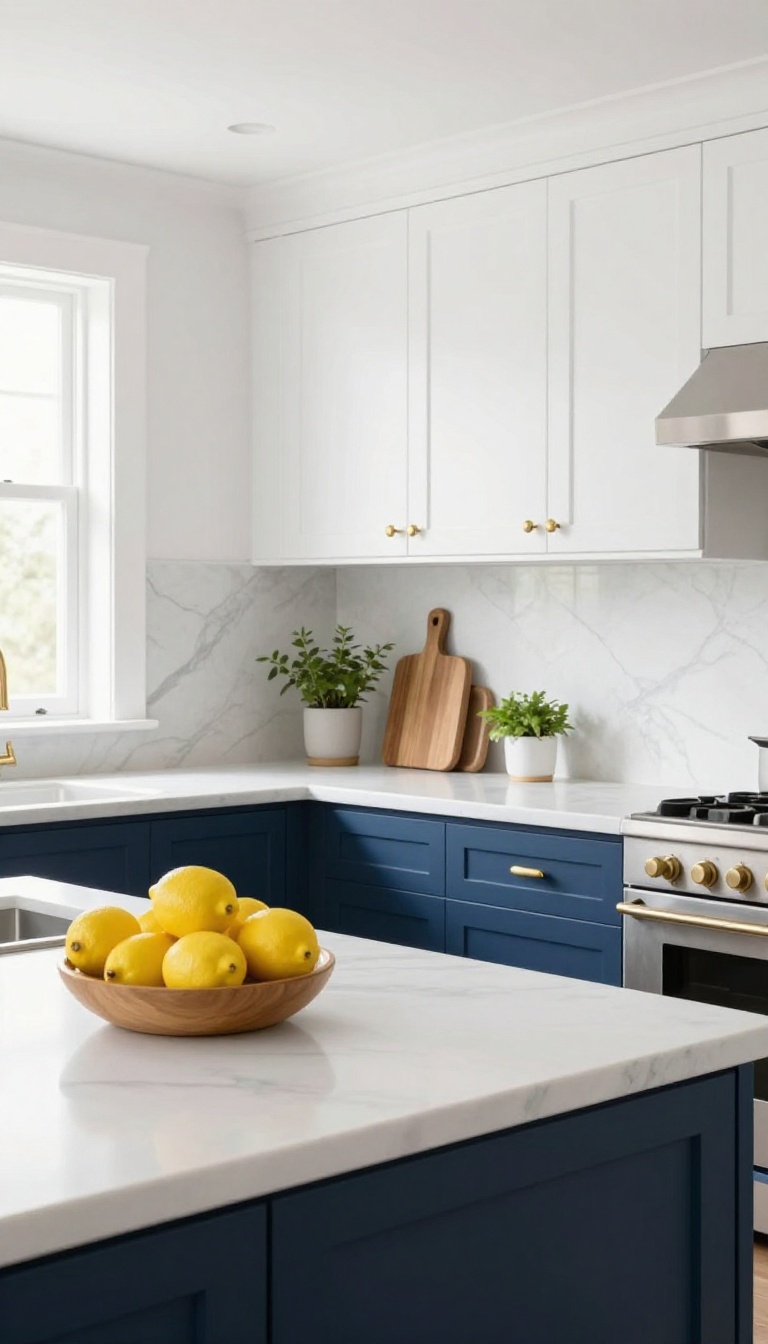
Going two-tone with your cabinets is one of the smartest ways to bring navy into your kitchen. By keeping the uppers white or a light neutral, you get that rich, grounded feel without making the room feel like a cave. It’s a look that works in both modern and traditional spaces, and it’s surprisingly easy to pull off.
Painting only the lower cabinets navy creates a visual anchor that makes the kitchen feel stable and well-designed. The contrast with lighter uppers draws the eye upward, making the ceiling feel higher and the space more open. Plus, navy hides everyday smudges and splatters better than white, so it’s a practical choice for busy kitchens.
Why Two-tone Works So Well
The key is balance. Navy below, white above—this classic combination keeps the room bright while adding depth. The dark base grounds the design, while the light uppers keep things airy.
It’s a trick that interior designers use all the time, and it works in any size kitchen.
Choosing The Right Navy
Not all navies are the same. Some lean blue, some lean gray, and some have a hint of green. Test a few samples on your lower cabinets and look at them at different times of day.
A true navy with a slight gray undertone tends to be the most versatile, but your lighting will ultimately decide.
Pairing Hardware And Countertops
Once your cabinets are painted, think about the details. Brass or gold hardware pops beautifully against navy, while brushed nickel or matte black keeps things understated. For countertops, white quartz or marble brightens the space, while butcher block adds warmth.
Choose one metal finish and stick with it for a cohesive look.
2. Add a Navy Backsplash for Instant Contrast
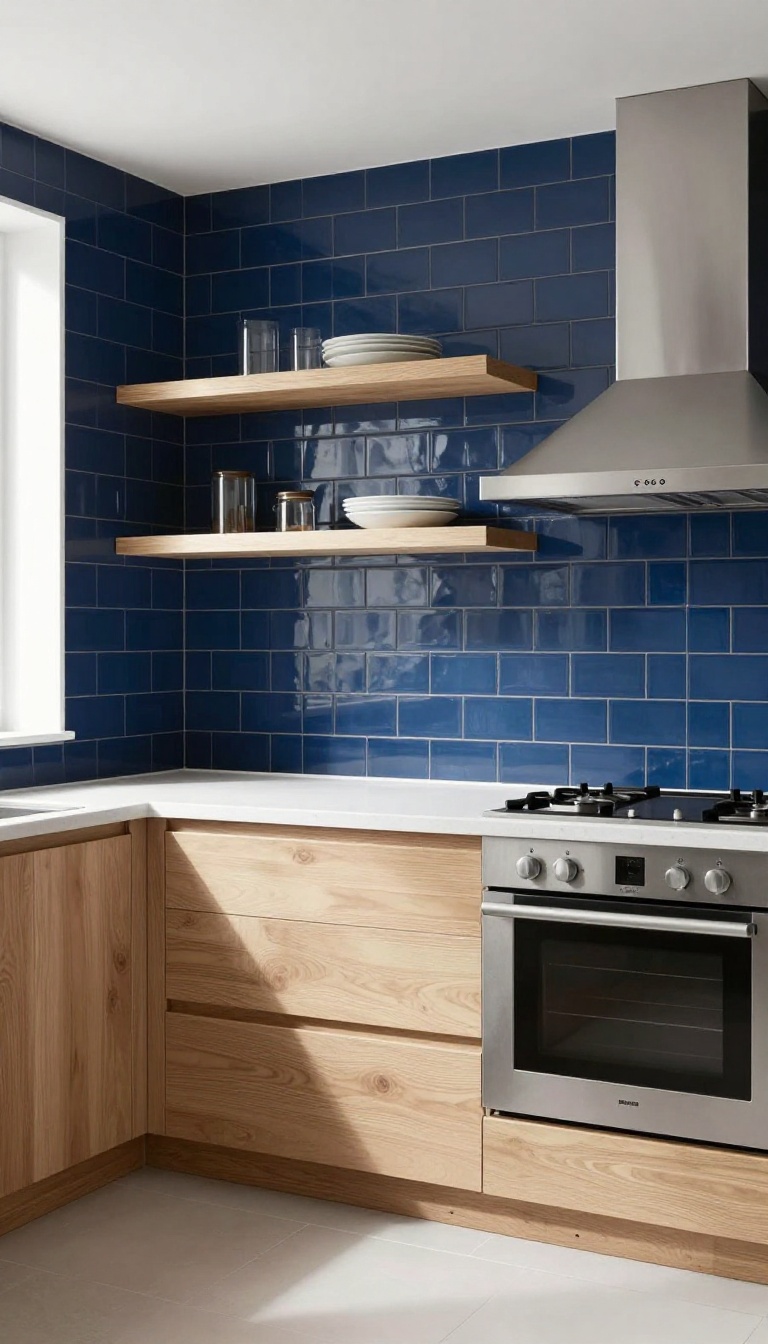
A navy backsplash is one of the quickest ways to change the entire mood of your kitchen. It brings depth and a sense of calm, especially when paired with lighter counters and cabinets. Plus, it gives you a chance to play with texture and pattern without committing to a full renovation.
Subway tile is a classic choice, but don't be afraid to try herringbone or a geometric pattern. The key is to pick a finish that complements your countertops—matte tiles work well with wood, while glossy tiles can add a bit of shine next to white quartz. Start by testing a few samples against your existing surfaces to see what feels right.
Choose The Right Tile Shape
Subway tiles are timeless, but herringbone adds a dynamic touch that draws the eye. If you want something more modern, consider hexagonal or arabesque shapes. Each shape changes the feel of the space, so think about the overall vibe you're going for—classic, contemporary, or somewhere in between.
Play With Grout Color
Grout might seem like a small detail, but it can make a big difference. White grout with navy tiles creates a crisp, clean look, while a darker grout blends everything for a more seamless appearance. If you're feeling bold, a contrasting grout like light gray can highlight the tile pattern.
Mix With Other Materials
A navy backsplash doesn't have to cover the entire wall. You can combine it with open shelving, a stainless steel range, or a wood countertop to break up the color. This approach keeps the space from feeling too heavy and lets the navy stand out as a focal point.
3. Swap in Navy Bar Stools for a Quick Update
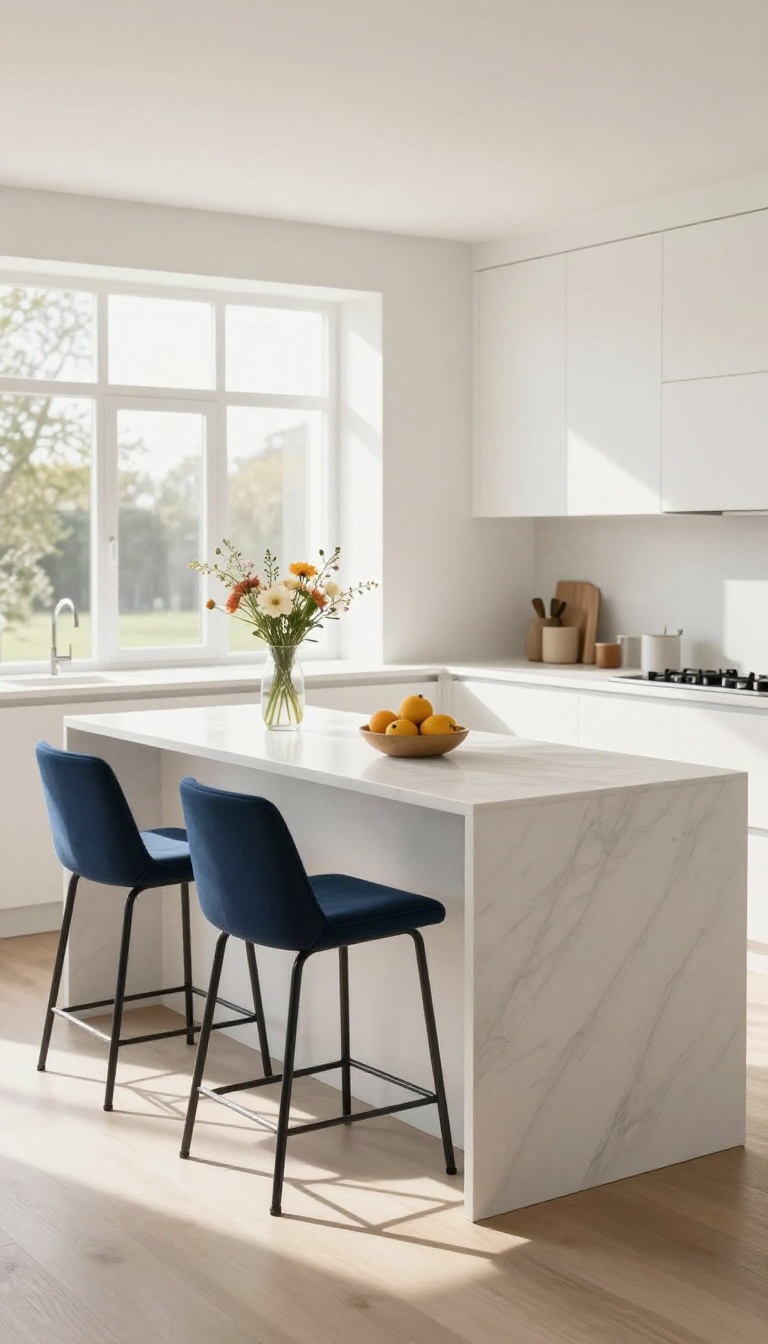
Bar stools are one of those pieces that get noticed every single day, so swapping them out for a navy set can instantly refresh your kitchen. It's a low-commitment change that brings color and function to an island or counter. Plus, you can easily move them to another room if you ever change your mind.
Navy bar stools work because they add a solid block of color without touching your walls or cabinets. They also create a natural focal point, especially if your kitchen is mostly neutral. The best part?
You have plenty of options to match your style, from sleek metal to cozy fabric.
Pick The Right Material
Think about how much wear and tear your stools will see. If you have kids or pets, a durable fabric like performance velvet or a wipeable faux leather might be your best bet. For a more rustic or coastal vibe, wood stools in a navy stain or painted finish add warmth.
Metal stools with a navy powder coat feel more industrial and are super easy to clean.
Match Your Kitchen's Personality
Consider the overall feel of your kitchen. If it's modern and minimal, go for sleek navy stools with clean lines and no extra fuss. If your kitchen leans traditional, a tufted navy stool with nailhead trim adds a classic touch.
For a farmhouse look, try a navy stool with a wooden seat and a simple backrest.
Think About Height And Comfort
Measure your counter or island height first, then choose stools that fit comfortably underneath. Counter height is usually around 36 inches, while bar height is about 42 inches. Don't forget to leave enough legroom, and consider stools with a footrest for extra comfort.
If you'll be sitting for long periods, a padded seat makes a big difference.
4. Go Bold with Navy Upper Cabinets
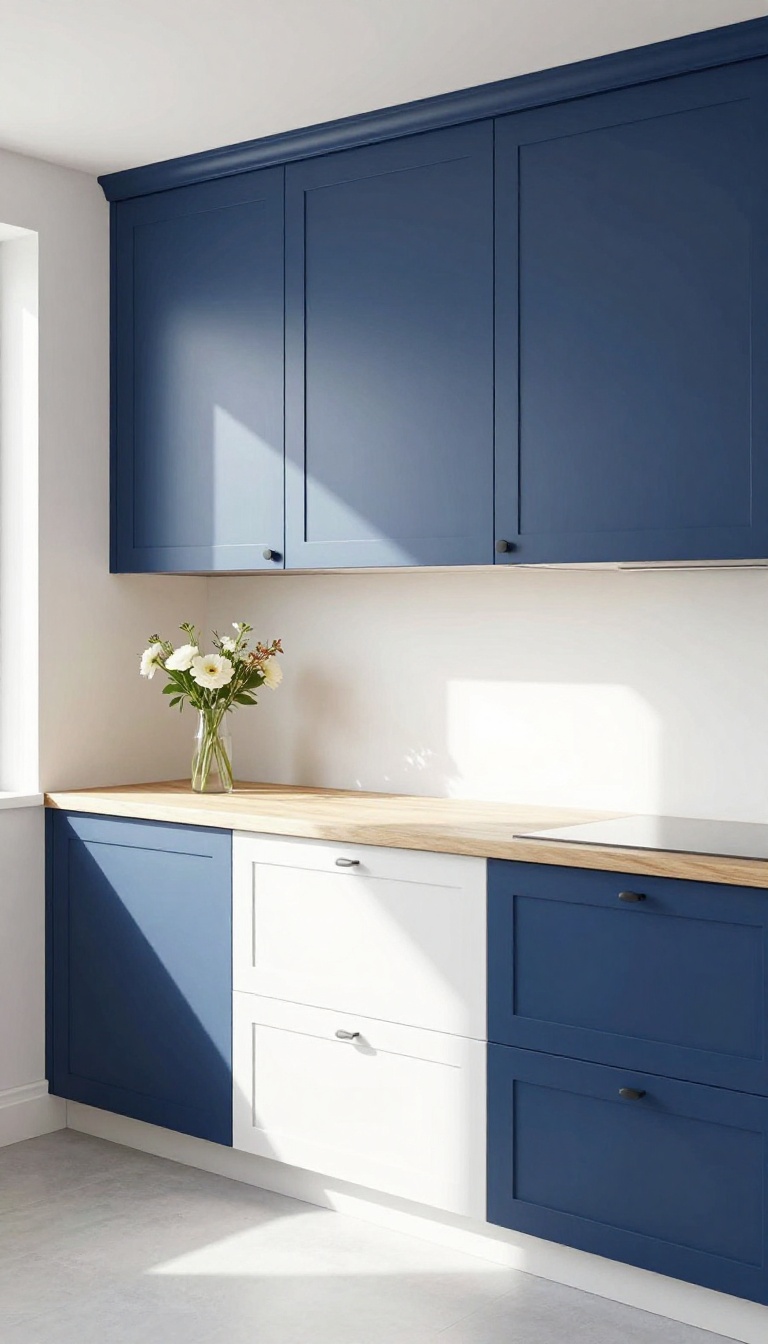
Painting just the upper cabinets navy is a clever way to add drama without overwhelming the room. The contrast between the dark uppers and lighter lowers creates a striking focal point that naturally draws the eye upward, making the ceiling feel higher and the space more open. It’s a bold move, but one that pays off with a fresh, pulled-together look.
This two-tone approach works especially well in kitchens with a lot of natural light or where you want to anchor the room without going full dark. The key is to balance the navy with a lighter lower cabinet color, like white, cream, or a natural wood tone. The result is a kitchen that feels both classic and current, with a touch of sophistication that’s hard to miss.
Why It Works
Navy upper cabinets create a visual anchor that draws the eye upward, making the ceiling feel taller and the space more open. The contrast with lighter lowers adds depth and dimension, preventing the kitchen from feeling flat or monotonous. It’s a simple yet effective way to make a statement without committing to a full navy kitchen.
Choosing The Right Navy
Not all navy blues are the same. Some have a green undertone, others lean more purple or gray. For a classic look, stick with a true navy like Hale Navy or Naval.
If you want something softer, a blue-gray like Slate Blue can be easier to live with. Test a few swatches on your cabinets to see how they look in your lighting before committing.
Balancing The Rest Of The Kitchen
When you go bold with navy uppers, keep the lower cabinets and counters relatively neutral. White or light wood lowers let the navy stand out without competing for attention. For the backsplash, consider a simple white subway tile or a light marble to keep the space feeling airy.
Hardware in brushed brass or matte black can add a nice finishing touch.
5. Use Navy Open Shelving to Display Style
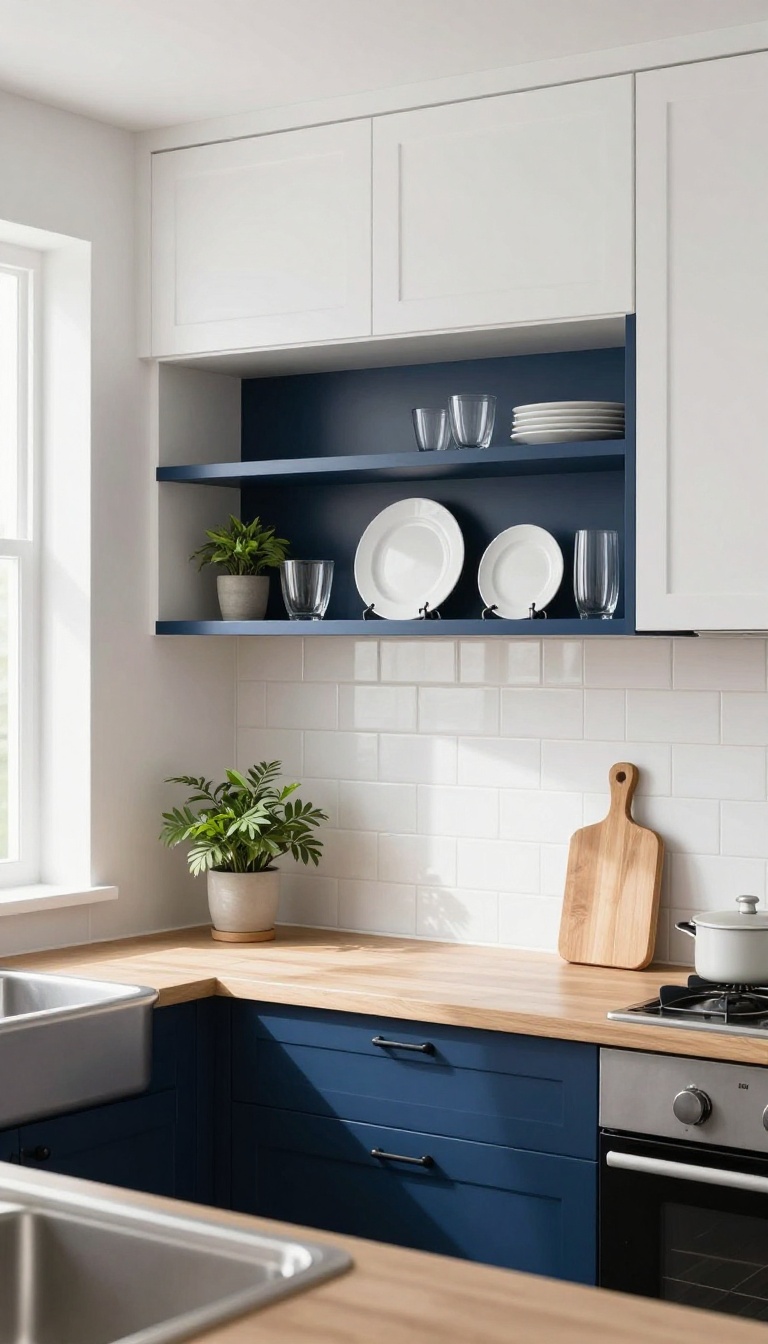
Open shelving is a great way to break up the monotony of upper cabinets and add a personal touch. When you choose navy for those shelves, they become a focal point that draws the eye and adds depth. The key is to keep the styling simple so the color shines without looking cluttered.
Replacing a few upper cabinets with navy open shelves can instantly change the feel of your kitchen. The deep color provides a striking backdrop for your dishes, glasses, and decorative pieces. It’s a practical choice too, as open shelves make everyday items easier to reach and put away.
Choosing The Right Shelves
When selecting open shelving, consider the material and style. Solid wood shelves in a matte navy finish offer a classic look, while metal brackets can add an industrial edge. Make sure the shelves are sturdy enough to hold your dishware, and measure your wall space carefully to ensure a balanced arrangement.
Styling Your Shelves
Keep styling intentional and uncluttered. Group similar items together, like white plates or clear glasses, to create a cohesive display. Add a few plants or small decorative objects for warmth, but avoid overcrowding.
Leave some negative space so the navy color can stand out.
Mixing With Other Storage
You don’t have to replace all your upper cabinets. Mixing navy open shelves with closed cabinets in a complementary color creates visual interest. Use open shelves for items you use daily, and keep less attractive essentials behind closed doors.
This balance keeps your kitchen functional and stylish.
6. Introduce Navy Appliances for a Vintage Touch
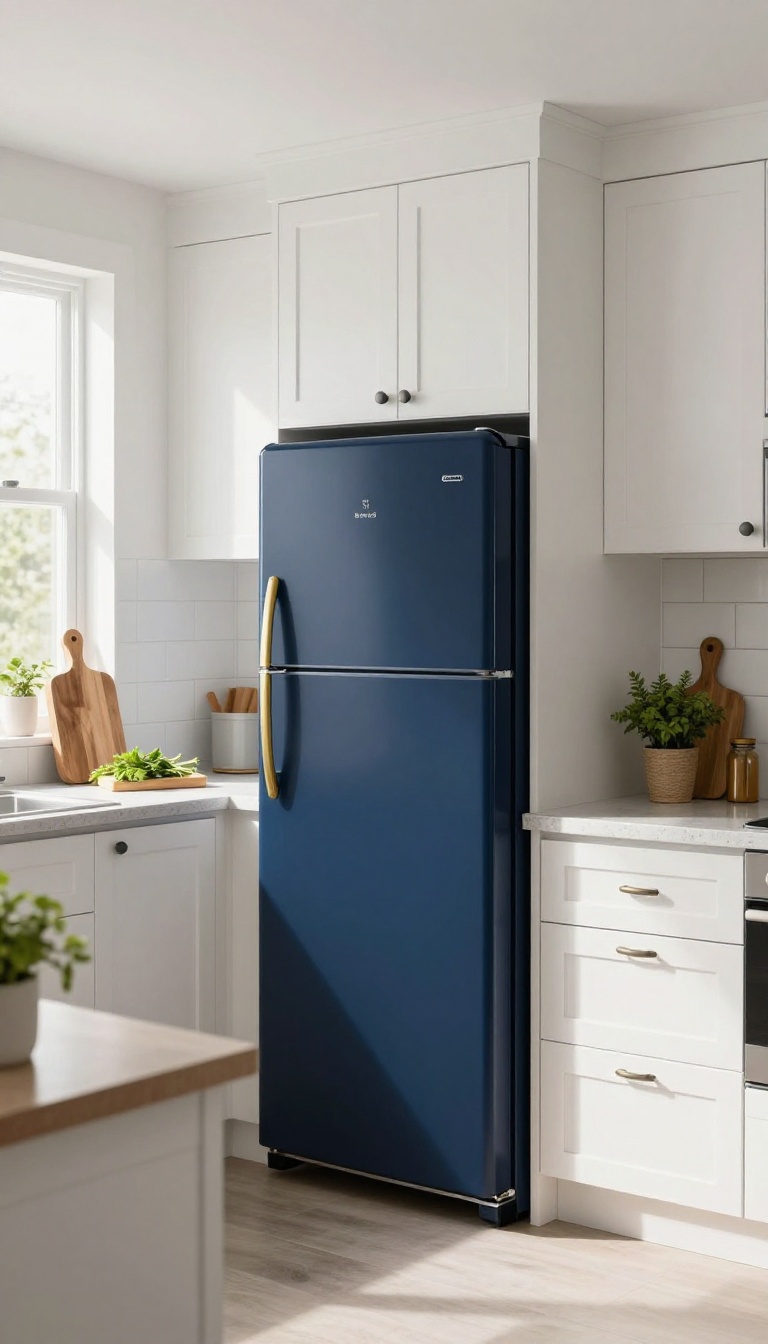
A navy refrigerator, range, or dishwasher can instantly give your kitchen a retro yet modern vibe. It’s a bold move that pays off if you love a cohesive, character-filled space. And if new appliances aren’t in the budget, you can still achieve the look with appliance paint or vinyl wraps.
Navy appliances are a fantastic way to anchor your kitchen’s color scheme. They become a focal point that draws the eye, especially when paired with lighter countertops and backsplashes. This idea works particularly well in kitchens with a vintage or farmhouse aesthetic, but it can also add a playful twist to modern spaces.
Choosing The Right Appliance
Start with the appliance that gets the most use or has the most visual impact. A refrigerator is a natural choice because it’s large and central. A range or dishwasher can also work, especially if they’re visible from the main living area.
Consider the finish: matte navy hides fingerprints better than glossy, and it pairs well with brass or chrome hardware.
Budget-friendly Alternatives
If replacing appliances isn’t possible, consider painting them. Use a high-quality appliance paint designed for metal surfaces. Clean the surface thoroughly, apply a primer, then paint in thin, even coats.
Vinyl wraps are another option—they come in various shades of navy and can be applied without permanent commitment. Both methods can transform the look for under $100.
Styling Around Navy Appliances
Once your navy appliance is in place, let it shine. Keep surrounding countertops and cabinets in lighter tones, like white or light gray, to create contrast. Add warm wood accents or brass fixtures to enhance the vintage feel.
Avoid adding too many other dark colors nearby, or the space may feel heavy.
7. Layer Navy Textiles for Softness
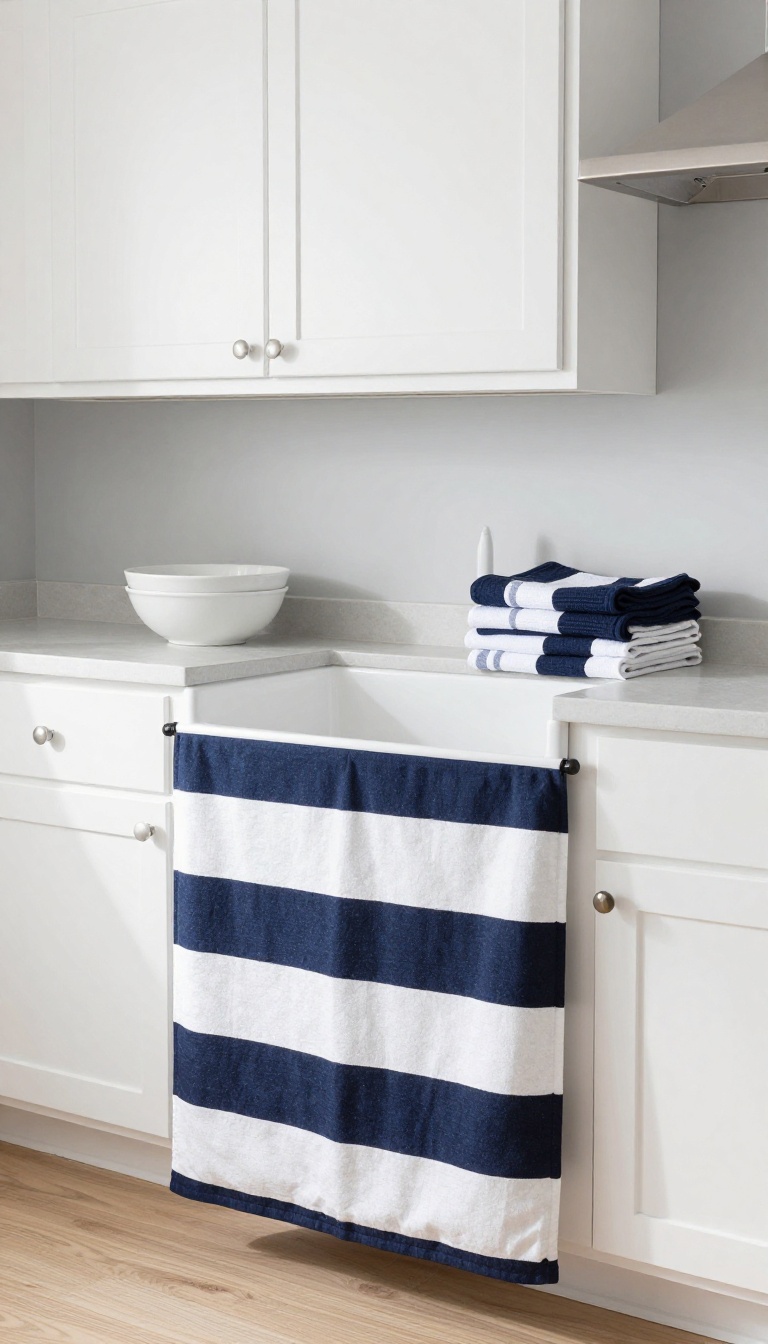
Textiles are the easiest way to bring navy into your kitchen without committing to paint or tile. A few well-chosen pieces can soften hard surfaces and add a cozy, lived-in feel. Think dish towels, rugs, curtains, and even chair cushions.
When you mix navy with white or light gray, the color stays fresh and airy instead of feeling heavy.
Start With Small Swaps
Swap plain kitchen towels for navy ones with subtle stripes or a textured weave. They’re functional, but they also add a pop of color that’s easy to change with the seasons. Add a navy runner in front of the sink or stove.
It breaks up the floor and gives your feet a softer place to stand while you cook.
Mix Patterns With Neutrals
Don’t be afraid to mix a navy floral or geometric pattern with white or light gray. The contrast keeps the space from feeling monotone. Use a navy valance or curtains on a window.
If you have open shelving, fold a few navy napkins or placemats to add layers of color without clutter.
Balance With Light Tones
The key to navy textiles is balance. Pair them with white countertops, light wood floors, or gray walls so the room doesn’t feel closed in. If you have a navy rug, keep the surrounding furniture and accessories light.
That way, the textiles stand out as accents rather than dominating the space.
8. Paint the Island Navy as a Focal Point
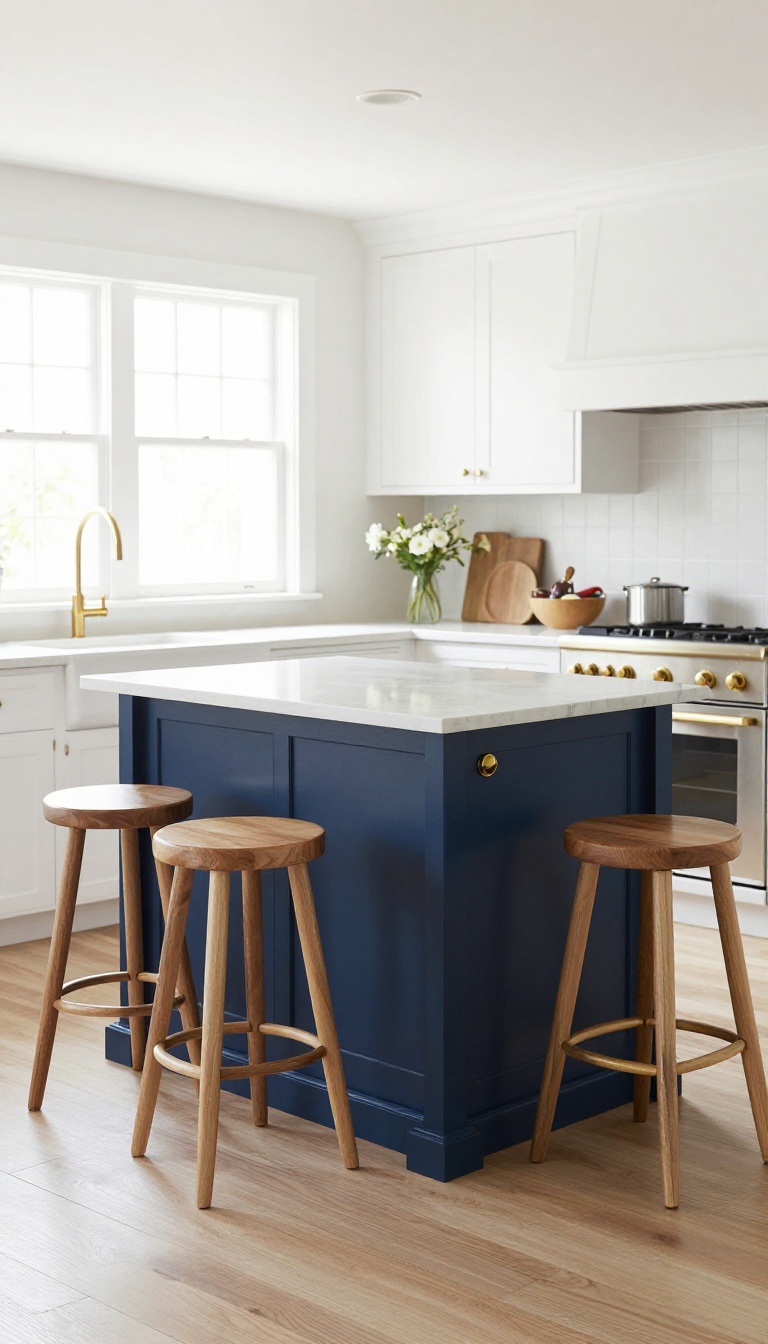
The kitchen island is often the busiest spot in the room, so giving it a bold color makes sense. A navy island instantly becomes the anchor of the space, drawing the eye and adding depth. The best part?
You don't have to repaint the whole kitchen to get a dramatic update.
When you paint just the island navy, you create a strong focal point without overwhelming the rest of the room. The contrast between the island and the surrounding cabinets makes the space feel more dynamic and intentional. It's a move that works in both modern and traditional kitchens, and it's surprisingly easy to pull off.
Why Navy Works For Islands
Navy is a versatile color that pairs well with almost any cabinet finish, from white to wood to gray. It adds a sense of sophistication and grounding, making the island feel like a solid, built-in piece. Plus, navy hides everyday wear and tear better than lighter colors, so it's a practical choice for a high-traffic area.
How To Choose The Right Shade
Not all navy is the same. Some have a more blue tone, while others lean toward gray or even green. Test a few swatches on your island to see how they look in your lighting.
A darker navy works well in bright kitchens, while a softer navy can be better for smaller or darker spaces.
Finishing Touches To Complete The Look
Once your island is painted, think about the hardware and accessories. Brass or gold handles pop beautifully against navy, while matte black keeps it sleek. Add a few bar stools in a contrasting color, like white or natural wood, to make the island stand out even more.
9. Add Navy Hardware for a Subtle Pop
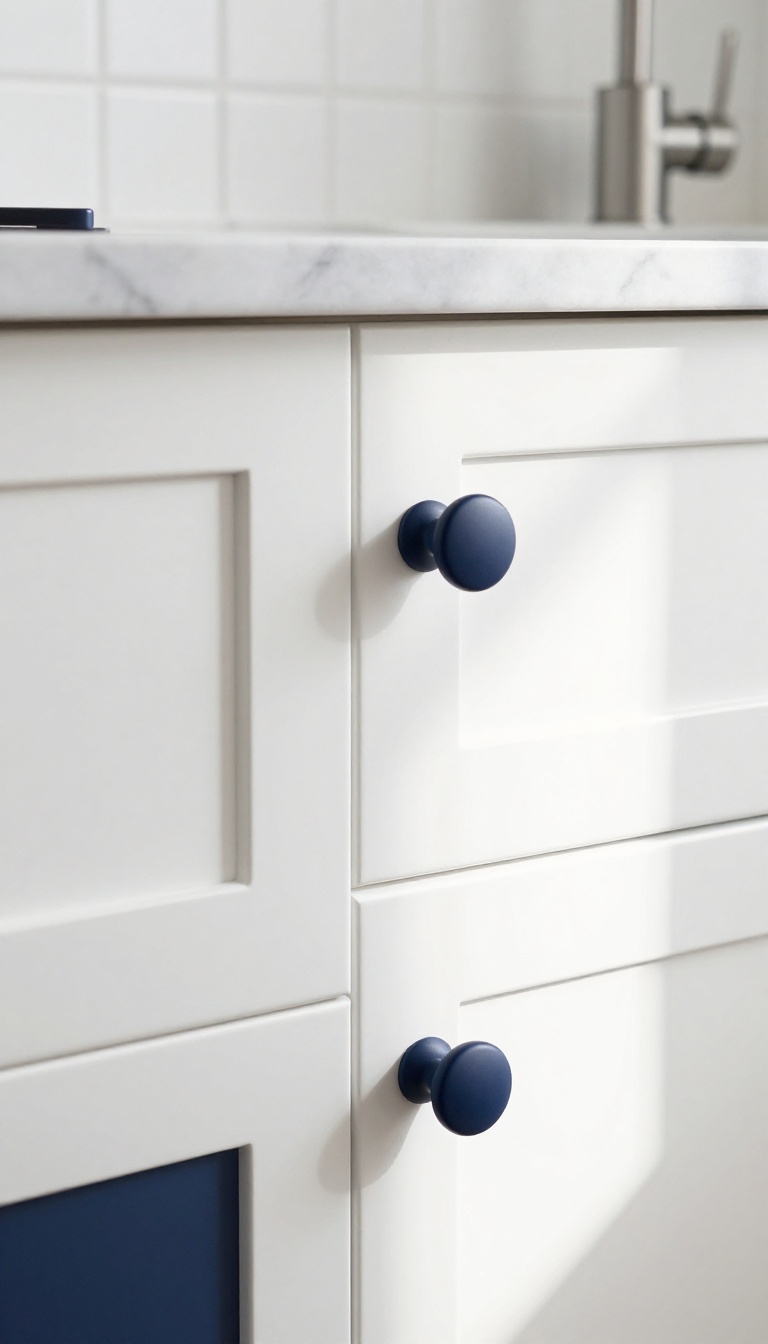
Cabinet hardware might be small, but it’s something you touch every single day. Swapping out standard knobs and pulls for navy-colored or navy-enameled versions is a low-commitment way to introduce the color without repainting anything. It’s a detail that guests notice even if they can’t quite pinpoint why the kitchen feels different.
Navy hardware works beautifully on white, gray, or natural wood cabinets. The contrast is crisp and modern, while staying softer than black hardware. It’s also a smart choice if you’re renting or just not ready to commit to a bigger change—swapping back takes minutes.
Choose The Right Finish
Navy hardware comes in several finishes, from matte to glossy enamel. Matte navy feels understated and blends well with farmhouse or modern styles. Glossy enamel adds a bit of shine and works nicely in more traditional kitchens.
Pick a finish that matches your existing fixtures, like your faucet or lighting, to keep everything cohesive.
Mix And Match With Metals
You don’t have to replace every piece of hardware. Try navy knobs on the upper cabinets and keep brushed nickel pulls on the drawers. Or use navy pulls on the drawers and keep the knobs as they are.
Mixing metals and colors adds depth and makes the space feel curated, not uniform.
Where To Use Navy Hardware
The most obvious spot is on cabinet doors and drawers. But don’t stop there—navy hardware can also upgrade a pantry door, a built-in desk, or even a kitchen cart. If you have an island, using navy pulls on the island drawers creates a subtle focal point without painting the whole island.
10. Style with Navy Decor and Accessories
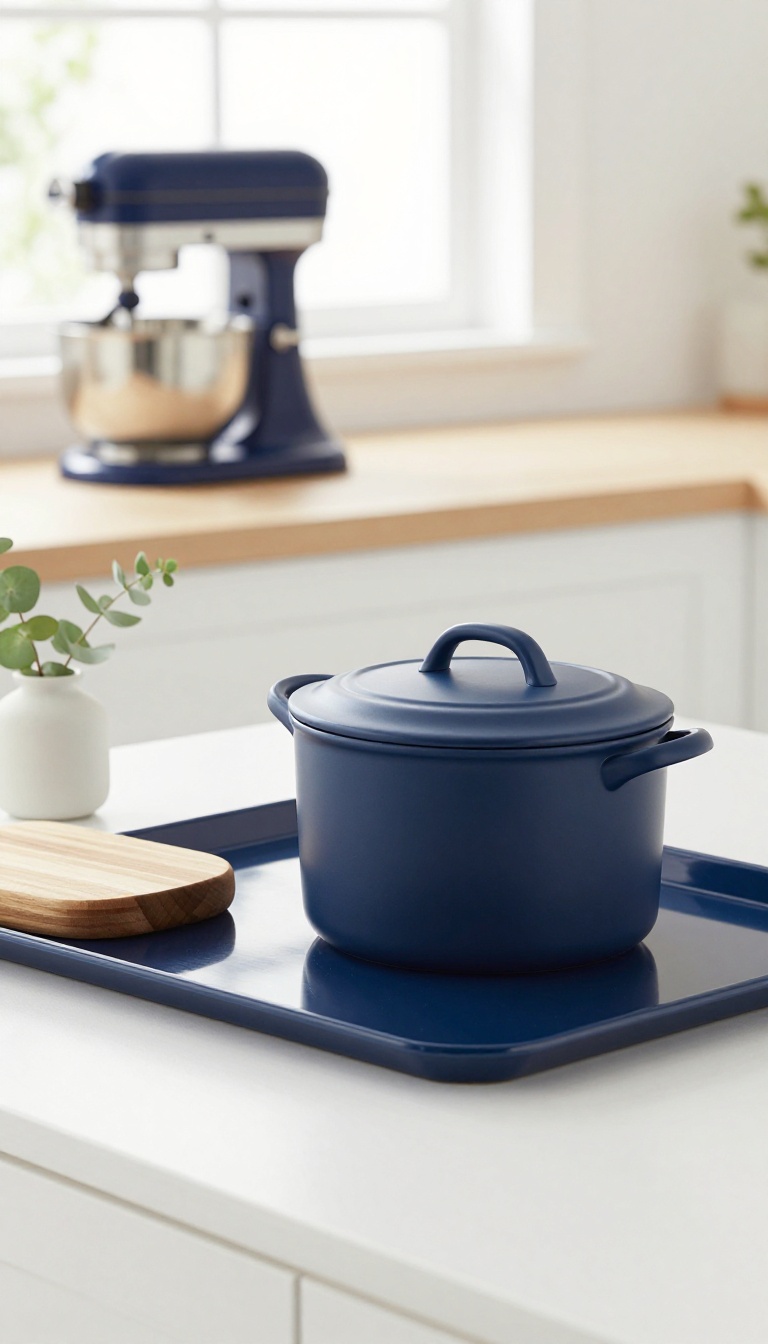
When painting or committing to navy feels too permanent, decor and accessories offer a flexible way to bring the color into your kitchen. Small touches like vases, canisters, cutting boards, or even a stand mixer can add that rich hue without a big renovation. Plus, these pieces are easy to swap out seasonally, so you can refresh the look whenever you like.
Navy accessories work best when they’re purposeful, not just decorative. Think about items you use daily—like a kettle, utensil holder, or fruit bowl—and let those carry the color. A few well-chosen pieces in navy can tie the room together without feeling cluttered.
Pick Functional Navy Pieces
Look for navy items that earn their keep: a ceramic canister set for flour and sugar, a sturdy cutting board, or a stylish toaster. These pieces blend form and function, so the color feels intentional. Keep them on the counter where you’ll see them often, and they’ll become part of the kitchen’s rhythm.
Mix Textures And Finishes
Navy comes in many textures—matte, glossy, woven, or hammered metal. Mixing these adds depth and prevents the color from looking flat. Pair a matte navy vase with a glossy navy tray, or add a woven navy basket for storage.
The variety keeps the eye moving and makes the decor feel curated.
Rotate With The Seasons
One of the best parts of using decor is how easily you can change it. In summer, swap in light linen napkins and a navy pitcher; in fall, bring out navy ceramic pumpkins or a cozy throw. This keeps your kitchen feeling fresh without repainting or buying new furniture.
It’s a low-commitment way to enjoy navy all year.
11. Create a Navy Accent Wall
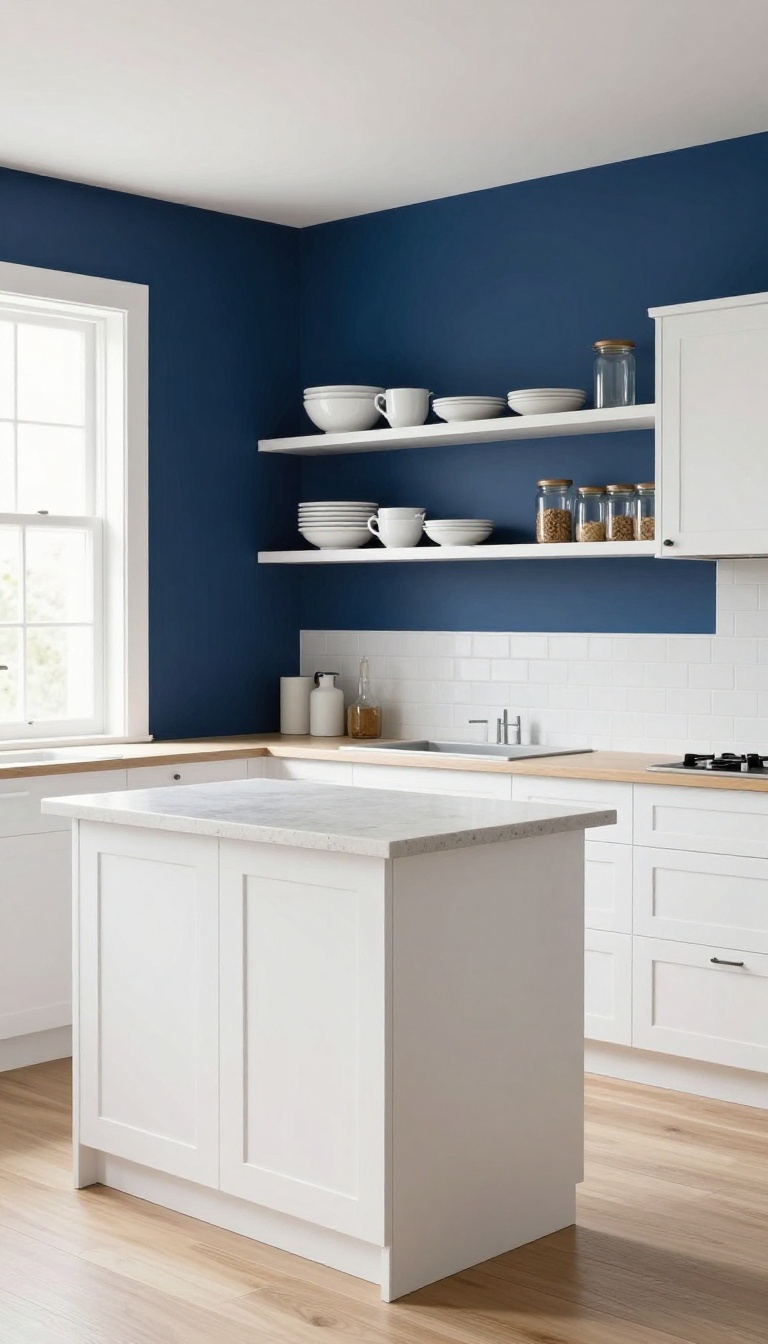
If you love the idea of navy but aren't ready to paint all your cabinets, an accent wall is a perfect middle ground. It adds a bold splash of color without taking over the whole room. Plus, it's a project you can easily tackle in a weekend.
An accent wall in navy can anchor your kitchen and make it feel more polished. It works especially well in open-concept spaces where it can define the cooking area without closing it off. The key is to choose the right wall—usually the one that's most visible or has a natural focal point like a window or range hood.
Pick The Right Wall
Not every wall is a good candidate. Look for a wall that's not interrupted by too many windows or doorways. A large, unbroken surface will let the color shine.
If you have a kitchen island, painting the wall behind it can create a nice backdrop. Also, consider the light—north-facing rooms can make navy feel darker, so you might want to go a shade lighter.
Pair With White Trim
White trim against a navy wall creates a crisp, clean contrast that feels fresh and classic. It also helps the color pop without being too heavy. If your trim is already white, you're good to go.
If not, painting the trim white before you do the wall will make a huge difference. You can also add white shelving or open cabinets to break up the navy and add visual interest.
Balance With Light Elements
To keep the room from feeling too dark, balance the navy with lighter elements. Use light-colored countertops, backsplash, or even a pale wood floor. Add some open shelving with white dishes or glass jars.
This mix of dark and light keeps the space airy and inviting. You can also incorporate metallic accents like brass or chrome to add a touch of warmth.
FAQ
Does navy blue make a kitchen look smaller?
Not necessarily. Dark colors can make a space feel cozier, but if you use navy on just one element—like an island or lower cabinets—and keep the rest light, it won’t shrink the room visually.
What colors go well with navy blue in a kitchen?
White, cream, light gray, and natural wood tones are classic partners. Brass or gold hardware adds warmth, while silver or chrome gives a cooler, modern feel.
Can I use navy blue in a small kitchen?
Yes, but use it sparingly. Try navy on a backsplash, bar stools, or open shelving instead of full cabinets. Pair with plenty of white and good lighting to keep it open.
Is navy blue a good choice for kitchen cabinets?
Absolutely. Navy cabinets are durable and timeless. They hide stains well and work with many styles, from farmhouse to modern.
How do I keep a navy kitchen from feeling too dark?
Balance navy with light colors, add under-cabinet lighting, and use reflective surfaces like glass or metal. Open shelving and white countertops also help brighten the space.
Conclusion
Navy blue kitchens work because they feel grounded without being boring. Whether you start with a bold island or just swap in a few accessories, these ideas let you test the color at your own pace.
Pick the one that fits your space best and let it guide the rest of the room. Small changes can still make a big impact, so don't overthink it—just go with what feels right.