9 Cozy Olive Kitchen Ideas for a More Pulled-Together Look
Olive green is having a moment in kitchens, and it's easy to see why. This earthy, calming hue brings warmth without overwhelming the space, making it a favorite for anyone craving a cozy yet polished look.
Whether you're planning a full remodel or just want to refresh a few details, olive works beautifully with wood, brass, and natural textures. The nine ideas ahead range from bold cabinetry to subtle accessories, so there's something for every style and budget.
Pick one or mix a few—your kitchen will feel more inviting in no time.
1. Olive Cabinetry: A Bold Yet Grounding Choice
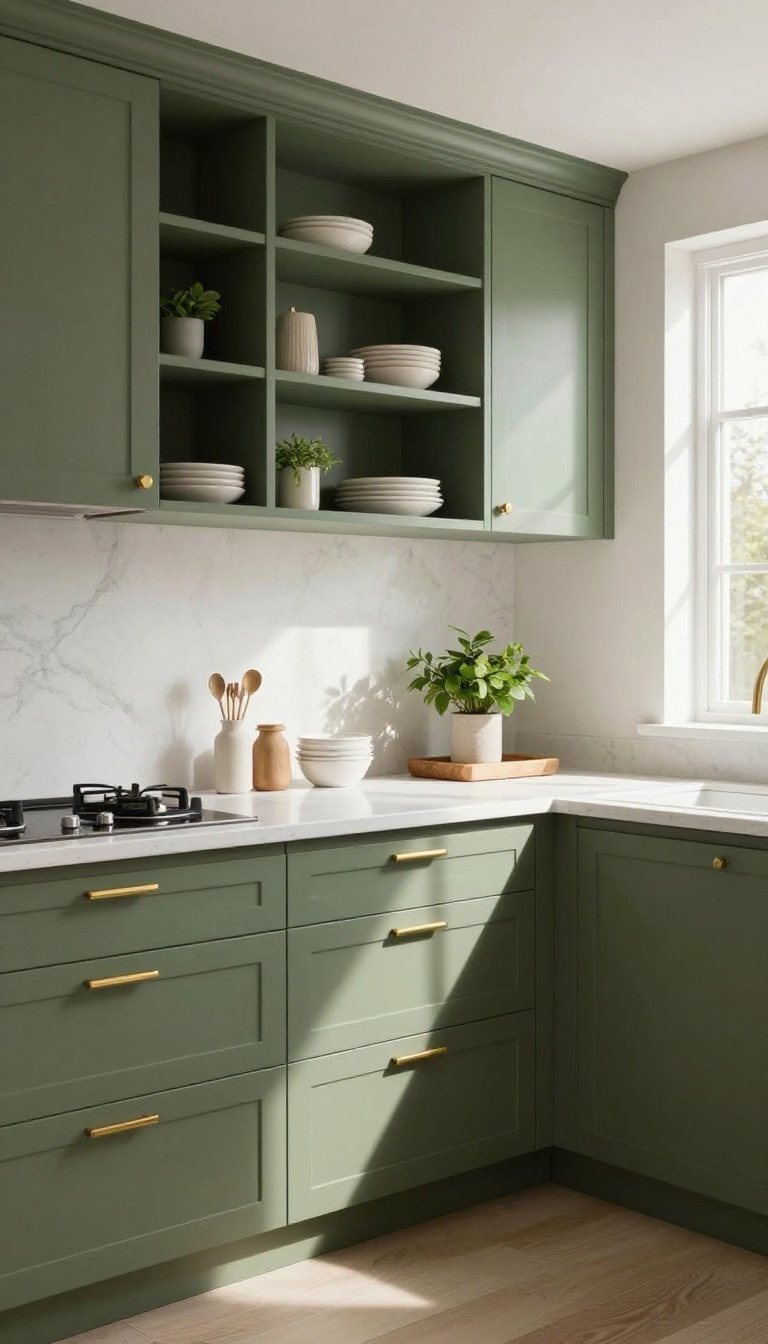
If you're ready to commit to olive, cabinets are the most impactful way to go. The color wraps your kitchen in a warm, earthy embrace that feels both grounded and inviting. It's a bold move, but one that pays off with a space that feels custom and full of character.
Olive cabinets aren't just a color choice—they set the entire mood of your kitchen. Unlike stark white or dark navy, olive brings a natural, organic feel that pairs beautifully with wood, brass, and stone. The key is to balance the richness of the green with lighter elements so the room doesn't feel heavy or cave-like.
Pair With Brass Hardware
Brass hardware is the perfect companion to olive cabinets. The warm, golden tones of brass pick up the yellow undertones in olive, creating a cohesive, upscale look. Go for brushed brass knobs and pulls for a subtle shine that won't compete with the cabinets.
This combo instantly adds a touch of elegance without feeling overly formal.
Light Countertops Keep It Airy
To prevent olive cabinets from darkening the room, choose light countertops like white quartz or marble. The contrast keeps the space feeling open and bright while letting the cabinets stay the star. A veined countertop adds a bit of movement and softness, making the kitchen feel more organic and less flat.
Open Shelving To Break It Up
If you have upper cabinets in olive, consider swapping a few for open shelving. This breaks up the mass of green and gives you a chance to display pretty dishes or plants. The visual gaps create breathing room, making the kitchen feel larger and more curated.
Plus, it's a great way to add personal style.
2. Olive Backsplash: Subtle Texture, Big Impact
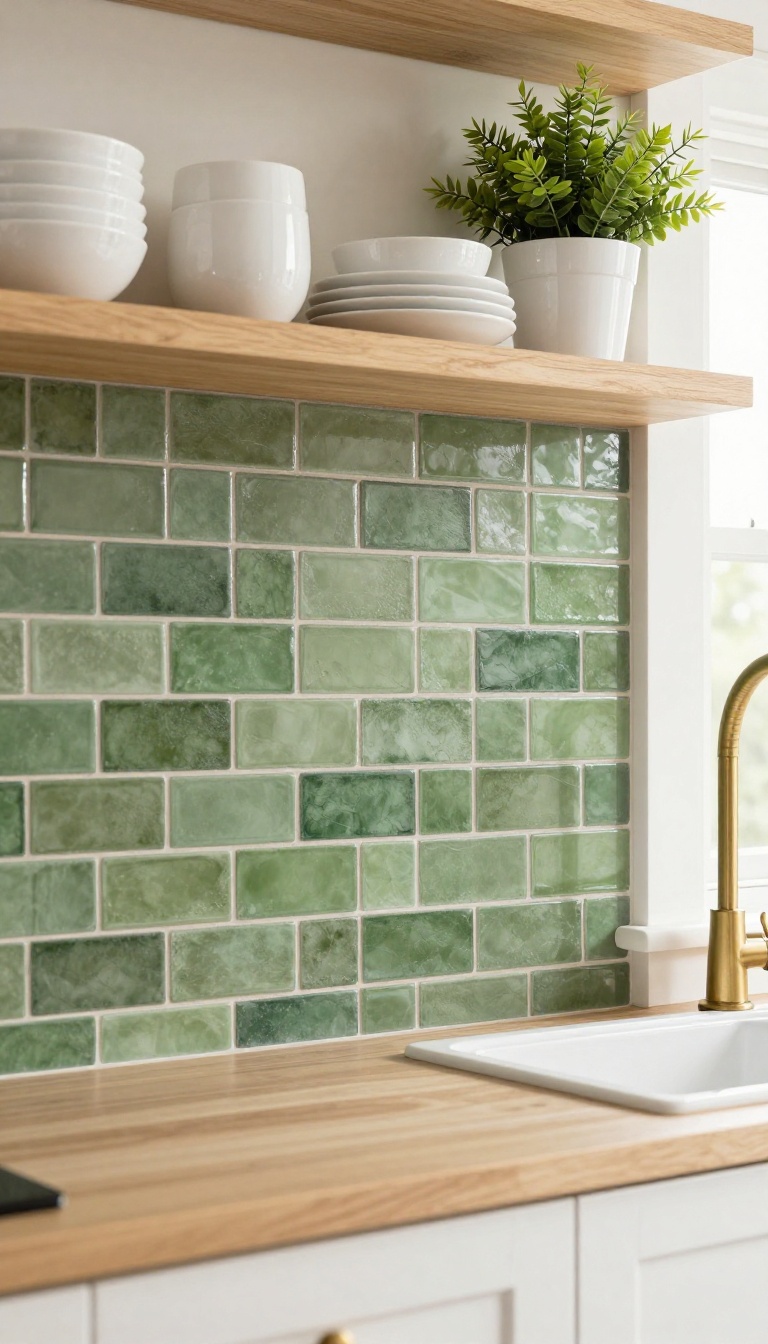
A backsplash is one of those spots where you can experiment without committing to a full wall of color. Olive tiles bring a quiet, organic feel that pairs well with nearly any countertop or cabinet finish. Matte finishes and handmade shapes add texture and depth, making the kitchen feel more layered and lived-in.
It's a small change that can completely shift the room's personality.
Why Olive Works As A Backsplash
Olive sits between green and neutral, so it doesn't fight for attention. It anchors the space with earthy warmth while letting other materials shine. Unlike bold blues or bright whites, olive feels grounded and timeless.
It also hides water spots and fingerprints better than glossy surfaces, which is a practical bonus.
Choosing The Right Tile Shape And Finish
Handmade subway tiles with slight variations in color and texture give that artisanal, cozy look. If you prefer something more uniform, a matte zellige or ceramic tile in a classic rectangle works beautifully. Avoid high-gloss finishes if you want a softer, more muted vibe.
A matte or satin finish reflects less light and lets the color feel more like a natural part of the room.
Pairing Olive Tile With Other Materials
Olive backsplashes love warm wood shelves, brass fixtures, and white or cream cabinetry. The contrast keeps the space from feeling too monochromatic. For a modern twist, pair olive tile with black hardware and concrete countertops.
The mix of earthy and industrial elements creates a balanced, inviting look.
3. Olive Accent Wall: A Focal Point That Warms
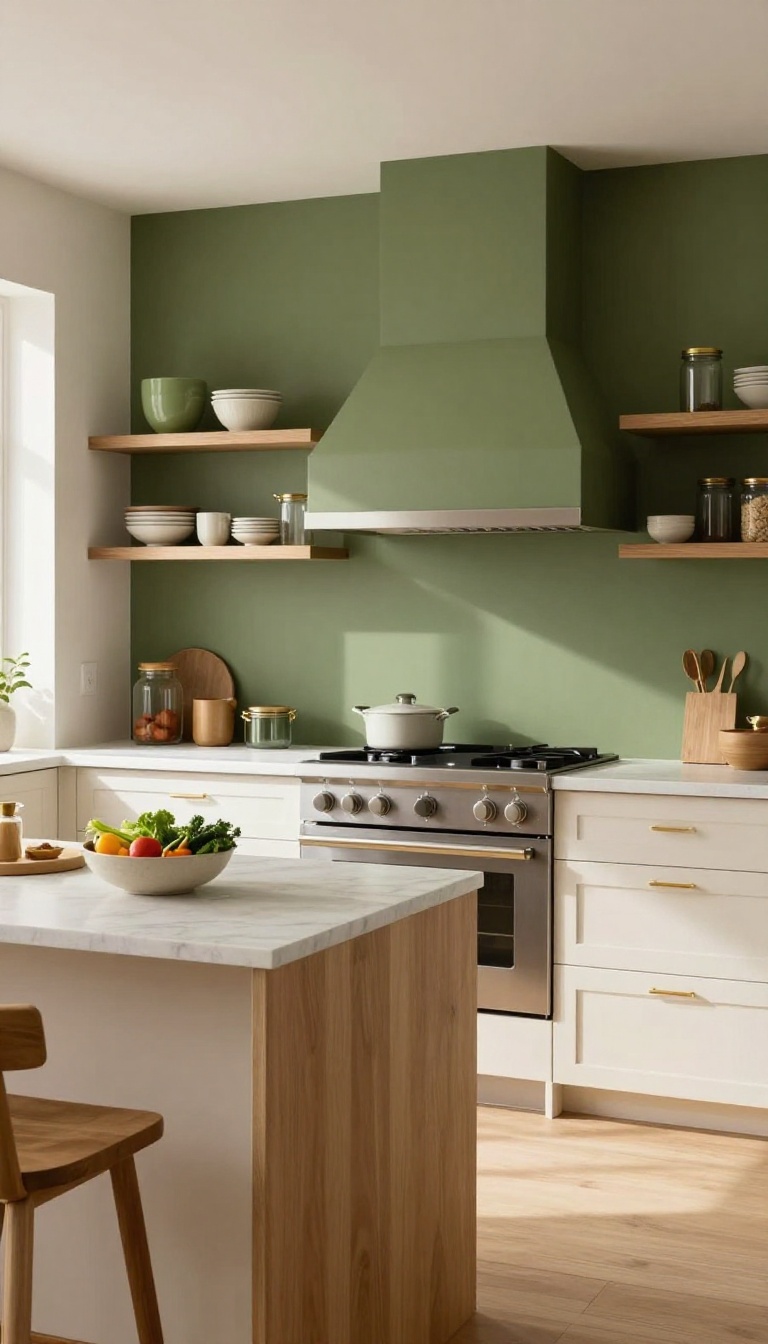
An accent wall is a smart middle ground between a full olive kitchen and just a few accessories. It gives you a big dose of color where you want it most, without the commitment of painting every cabinet or wall. Choose the wall that already draws the eye—maybe behind your stove, a breakfast nook, or open shelving—and let olive do the rest.
The beauty of an accent wall is that it instantly anchors the room. Olive, in particular, feels like a natural extension of the outdoors, bringing a calm, grounded energy. It pairs effortlessly with wood tones, brass fixtures, and creamy whites, so you don't have to overhaul your existing decor to make it work.
Plus, if you ever tire of it, a fresh coat of paint is all it takes to change the mood.
Choosing The Right Wall
Not every wall is created equal when it comes to accent walls. The best candidate is one that’s already a focal point—like the wall behind your range, a built-in bench, or a stretch of open shelving. Avoid walls that are broken up by windows or doors, as the color can feel choppy.
A solid, uninterrupted surface gives olive the space to shine and makes the room feel more cohesive.
Pairing With Textures And Tones
Olive is a chameleon—it can look rustic, modern, or even a bit moody depending on what you pair with it. For a cozy, farmhouse vibe, combine it with natural wood shelves and woven baskets. For a more polished look, add brass or matte black fixtures and marble or quartz countertops.
Don’t forget about textiles: a linen curtain or a chunky knit throw in a nearby dining nook can soften the wall and make it feel even more inviting.
Lighting Makes The Difference
Lighting can make or break an accent wall. Olive greens can appear darker in low light, so make sure the room gets plenty of natural light during the day. In the evening, layer warm ambient lighting—like pendant lights or sconces—to highlight the wall’s color and texture.
If the wall feels too dark, consider a lighter olive shade or add a mirror opposite to bounce light around.
4. Olive and Wood: A Natural Pairing
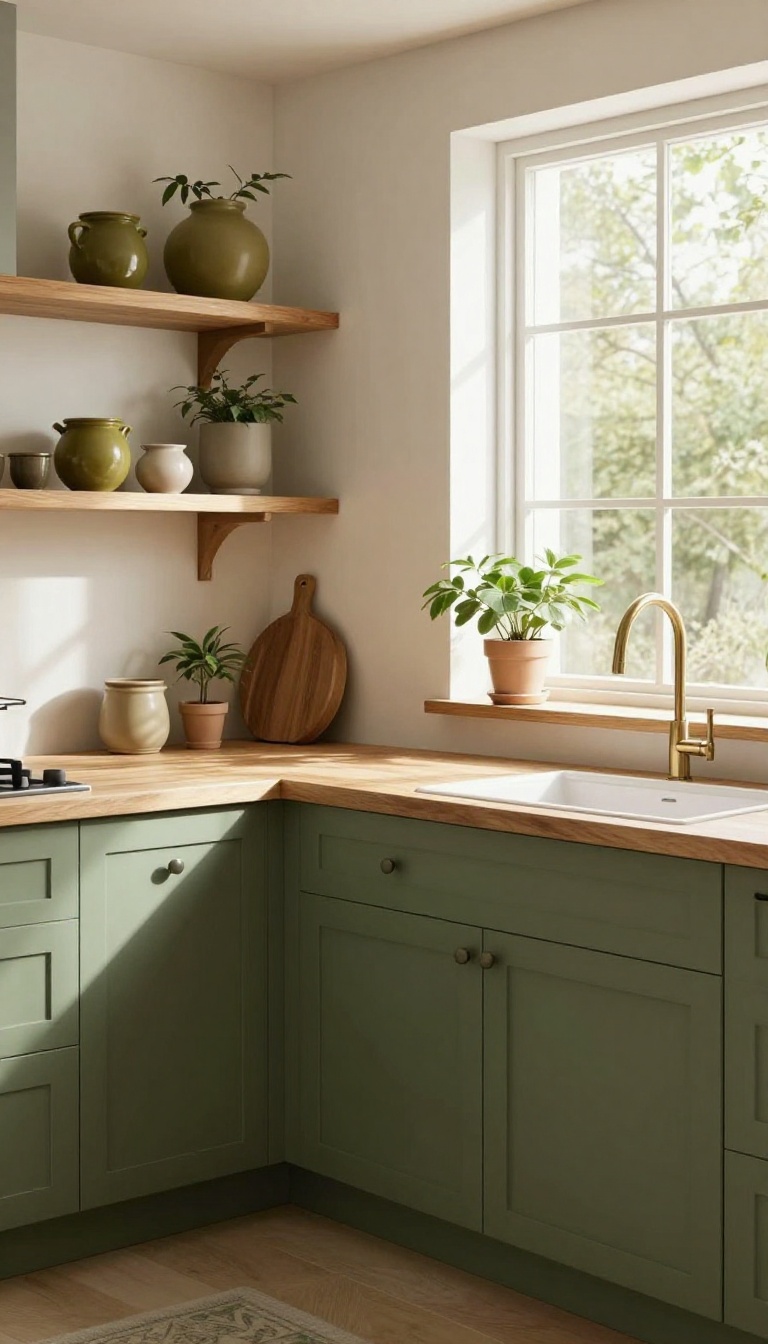
There's something almost magical about the way olive green and wood get along. The green brings a calm, grounded energy, while wood adds warmth and texture. Together, they create a kitchen that feels both earthy and refined, like a cozy cabin with a modern twist.
Mixing olive with wood is one of the easiest ways to make your kitchen feel pulled together without trying too hard. The key is balancing the two so neither overpowers the other. Start with a dominant wood tone—maybe rich walnut or light oak—and let olive play off it in cabinetry, tiles, or even just small decor.
The result is a space that feels organic and inviting, with a natural flow that’s hard to beat.
Butcher Block Counters
Butcher block counters are a fantastic way to introduce wood into an olive kitchen. The warm, honeyed tones of maple or oak contrast beautifully with olive cabinetry, adding a rustic yet polished feel. Plus, butcher block is practical—great for chopping, baking, and adding a touch of nature to your daily routine.
If you’re not ready to replace your counters, try a butcher block island top or a portable cutting board that echoes the look.
Open Wooden Shelving
Open shelving in natural wood is another simple way to bring the two together. Swap out upper cabinets for a couple of floating shelves in oak or teak, and style them with olive-toned dishware or small plants. The wood adds warmth and texture, while the olive accents tie the whole look together.
It’s a great option for small kitchens too, as it opens up the space and makes it feel airier.
Wooden Accents And Decor
If you’re not ready to commit to big changes, start with wooden accents. Think cutting boards, utensil holders, or even a wooden fruit bowl on the counter. These small touches bring in the natural pairing without overwhelming the space.
You can also add wooden bar stools or a wooden table if you have a breakfast nook. The idea is to let wood appear in a few key spots, so the olive feels grounded and connected to nature.
5. Olive Textiles: Soften the Space
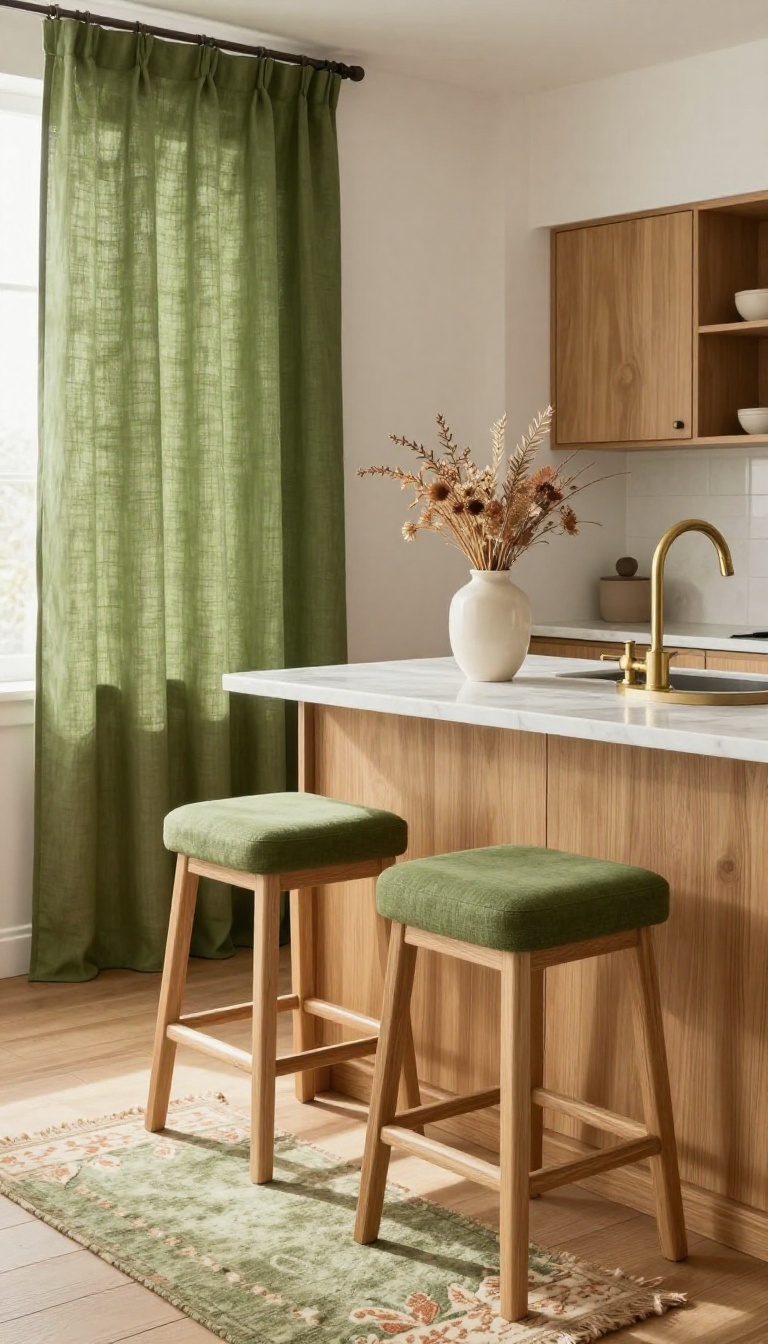
Textiles are the easiest way to test the olive waters without any permanent changes. A few well-placed pieces can instantly warm up your kitchen and make it feel more lived-in. Plus, swapping them out seasonally is a breeze, so you can refresh the look whenever the mood strikes.
Olive textiles bring softness and texture to a room that's often full of hard surfaces. Curtains, rugs, and seat cushions are the perfect candidates for introducing this earthy hue. They add a layer of comfort while tying the whole design together, and they're simple to change if you ever want a different vibe.
Curtains That Frame The View
If your kitchen has windows, olive curtains can soften the natural light and add a cozy feel. Choose a light, breathable fabric like linen to keep the space airy. For a more dramatic look, go with a heavier material like velvet—it will add warmth and richness, especially in the evenings.
Rugs That Anchor The Room
A rug under the sink or in front of the stove can define the space and make it more comfortable underfoot. Olive rugs work well with neutral floors and wooden cabinets. Look for patterns that incorporate olive with cream, beige, or terracotta for a balanced, organic look.
Just make sure it's easy to clean—kitchens get messy.
Cushions For A Quick Change
Swapping out seat cushions is one of the fastest ways to update your kitchen. Olive cushions on bar stools or dining chairs instantly add a pop of color and comfort. Mix and match with other earthy tones like rust or mustard for a playful yet cohesive feel.
And since they're small, you can experiment with different textures like woven or quilted fabrics.
6. Olive Appliances: Retro Charm Meets Modern Function
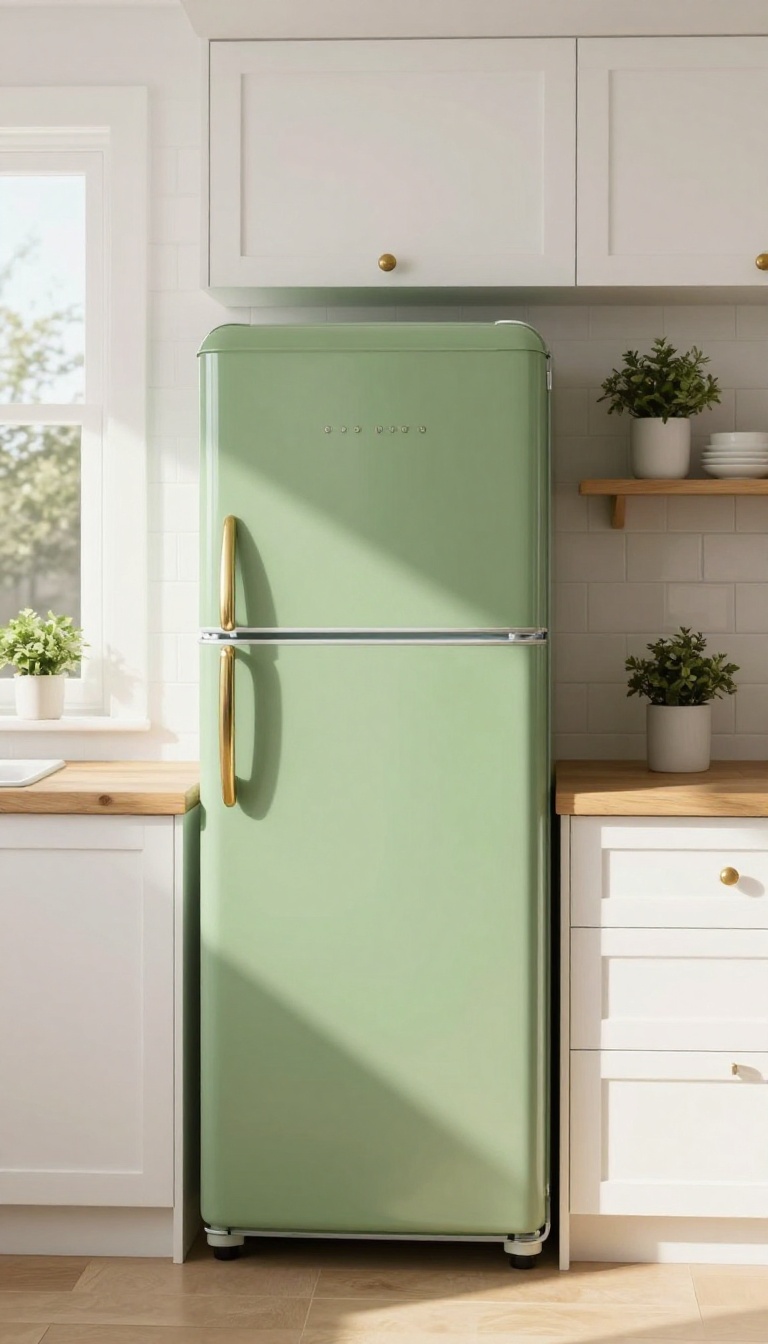
If you're not ready to paint the walls or swap out cabinets, let an appliance do the talking. A olive green refrigerator or range instantly becomes the focal point, bringing a playful, vintage vibe that feels both nostalgic and fresh. The trick is to let it shine by keeping the rest of the kitchen calm and neutral.
Olive appliances work best when they're the star of the show. Surround them with soft whites, warm woods, and simple hardware to avoid visual chaos. This approach lets the color pop without overwhelming the space, creating a balanced, cozy atmosphere that feels intentional.
Choosing The Right Appliance
Not every appliance needs to be olive. Pick one statement piece—a refrigerator, a range, or even a dishwasher—and let it anchor the room. Think about what you use most and what will have the most visual impact.
A fridge is a natural choice because it's large and central, but a range can be just as striking, especially with a matching hood.
Balancing With Neutrals
To keep the look cohesive, pair olive appliances with neutral cabinetry and countertops. White, cream, or light gray cabinets let the color breathe, while wood tones add warmth. Avoid adding too many other bold colors—stick to earthy accents like brass or black hardware to tie the retro vibe together.
Styling Around The Appliance
Once your olive appliance is in place, style around it to enhance the charm. Add open shelving with simple white dishes, a wooden cutting board, or a few plants to soften the look. Keep countertops clutter-free so the appliance remains the hero.
A vintage-inspired rug or a few retro canisters can reinforce the nostalgic feel without going overboard.
7. Olive and Brass: A Match Made in Heaven
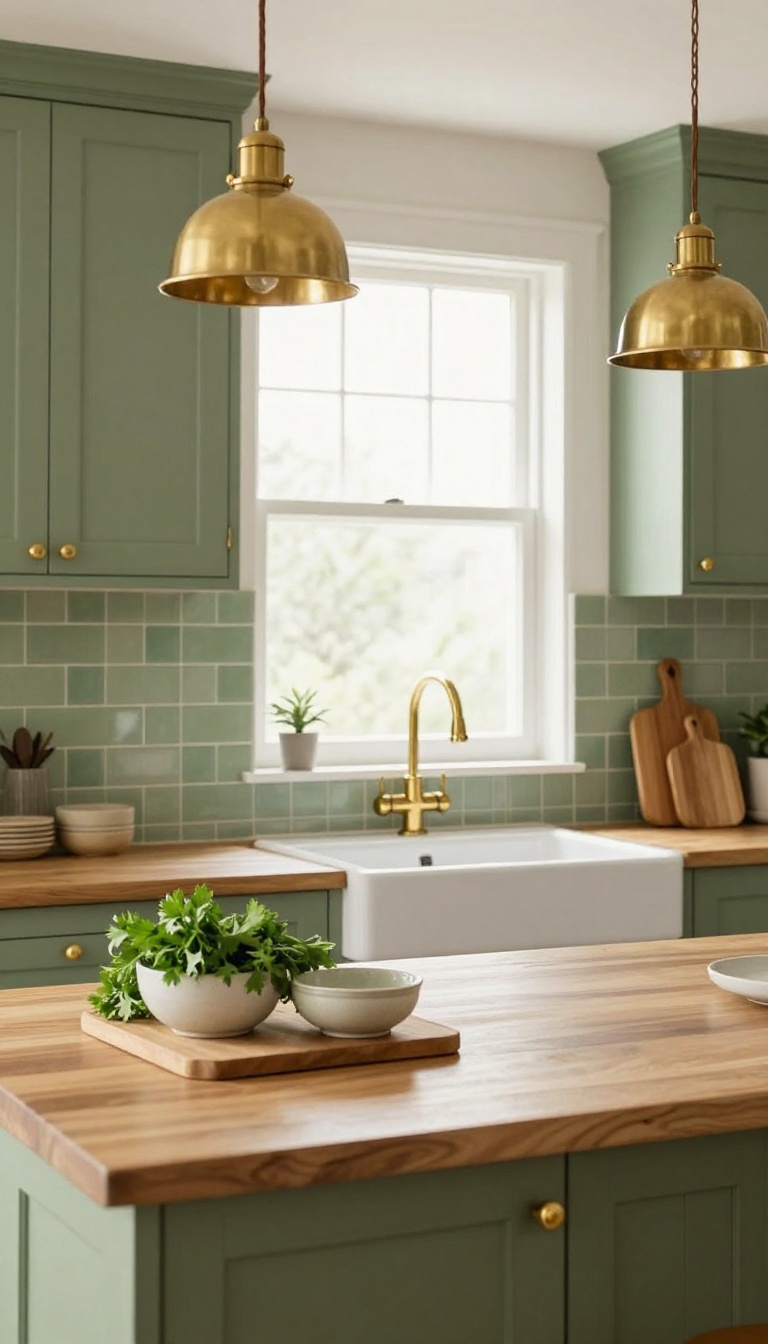
Brass and olive green are a pairing that feels both timeless and fresh. The warm, golden tones of brass bring out the richness of olive, while the green keeps the metal from feeling too flashy. Together, they create a kitchen that feels elegant yet inviting.
You don't need to overhaul the whole room to get this look. Swapping out a few key fixtures and hardware pieces can make a noticeable difference. It's a simple upgrade that adds a layer of sophistication without going overboard.
Start with the faucet. A brass faucet instantly becomes the focal point of the sink area, especially against olive cabinetry or a green tile backsplash. Pair it with brass cabinet knobs and pulls for a cohesive look.
Even small touches like a brass pot rack or a brass soap dispenser can tie the theme together. If you're hesitant about too much brass, pick one or two statement pieces. A brass pendant light over the island or a brass range hood can do the heavy lifting.
The key is balance—let the olive be the star and let brass play the supporting role.
Choose The Right Brass Finish
Not all brass is created equal. Polished brass has a shiny, reflective surface that feels more formal, while brushed or antique brass has a softer, more muted tone that works well with olive's earthy vibe. For a cozy feel, go with unlacquered brass that will develop a natural patina over time.
It adds character and depth.
Where To Add Brass
Think about the areas you use most: the sink, the stove, and the cabinet fronts. A brass faucet is a classic choice, but don't overlook the details. Brass drawer pulls, cabinet hinges, and even a brass towel ring can subtly reinforce the look.
If you have open shelving, brass brackets are a lovely way to incorporate the metal without overwhelming the space.
Mix Brass With Other Metals
You don't have to commit to brass exclusively. Mixing brass with matte black or stainless steel can add visual interest and prevent the kitchen from feeling too one-note. For example, pair a brass faucet with a black sink or use brass hardware on olive cabinets alongside stainless steel appliances.
The key is to keep the mix intentional and balanced.
8. Olive Open Shelving: Display and Function
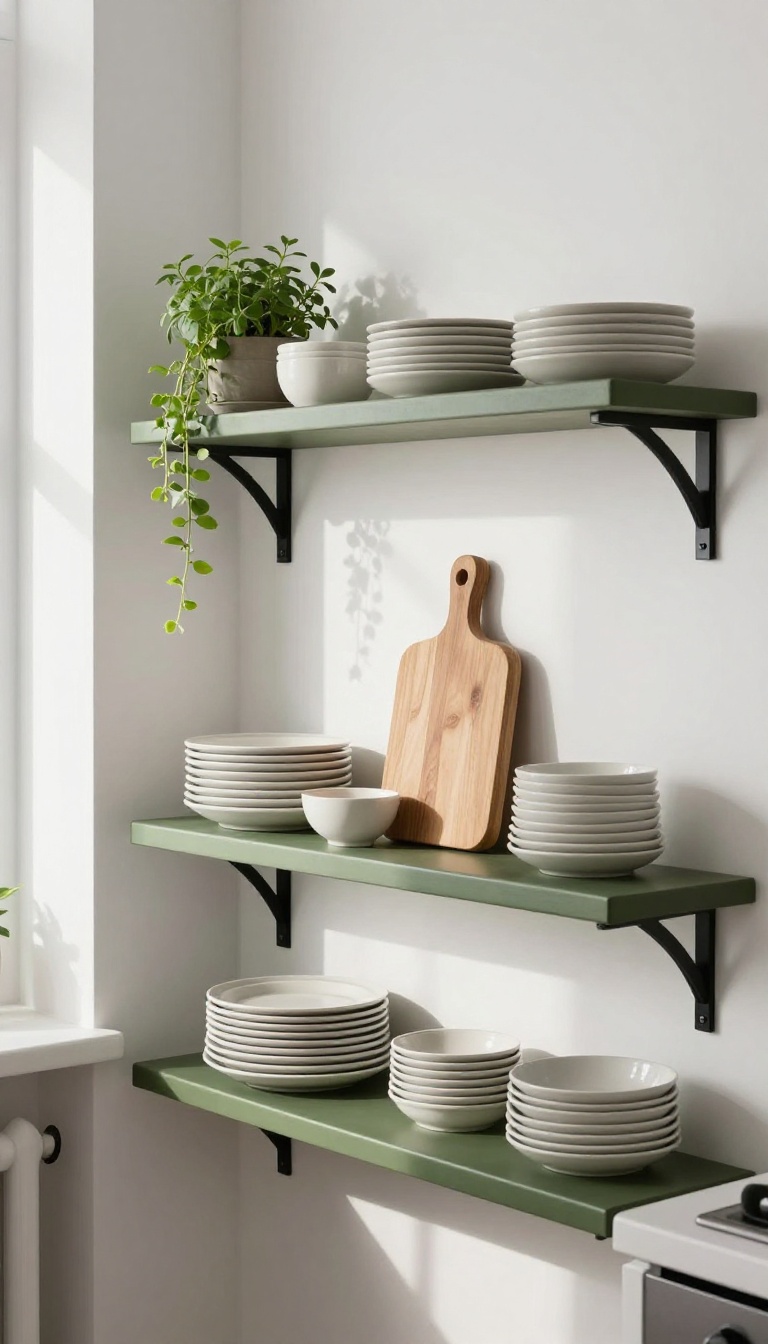
Open shelving is a chance to show off your style, and painting the shelves themselves in olive makes the display even more intentional. It's a simple change that turns everyday storage into a design feature, especially when you mix in natural textures and a few personal touches. The color adds depth without closing off the room, keeping the kitchen airy while still feeling grounded.
Open shelving painted olive gives you the best of both worlds: easy access to your daily items and a pop of color that ties the whole kitchen together. Unlike closed cabinets, these shelves invite you to curate what you see, so every dish and plant becomes part of the décor. The olive tone works as a neutral backdrop that makes ceramics, glass, and greenery stand out, while also adding a cozy, lived-in feel.
Plus, it's a budget-friendly way to introduce the color if you're not ready to commit to full cabinetry.
Pick The Right Shelves
Start with sturdy shelves that can handle the weight of dishes and plants. Solid wood in a natural finish or a matte metal bracket both work well with olive. If you're handy, you can even paint your existing shelves—just sand lightly and use a primer made for the material.
The goal is to have a surface that feels solid and intentional, not flimsy or temporary.
Style With Intention
Arrange items in small clusters, mixing heights and textures. Stack everyday plates on one side, lean a cutting board against the back, and tuck a small herb pot or trailing plant on the edge. Keep the most-used items within easy reach, and leave a little breathing room so the shelf doesn't look cluttered.
Rotate seasonal pieces or new finds to keep the display feeling fresh.
Balance Color And Neutrality
Olive is a strong color, so balance it with plenty of neutrals. White or cream dishes, natural wood, and clear glass will keep the look light. Add a few darker accents, like black iron or brass, for contrast.
If you have a lot of colorful items, consider painting only the back of the shelf or using olive on just one section to avoid overwhelming the space.
9. Olive Accessories: Small Touches, Big Difference
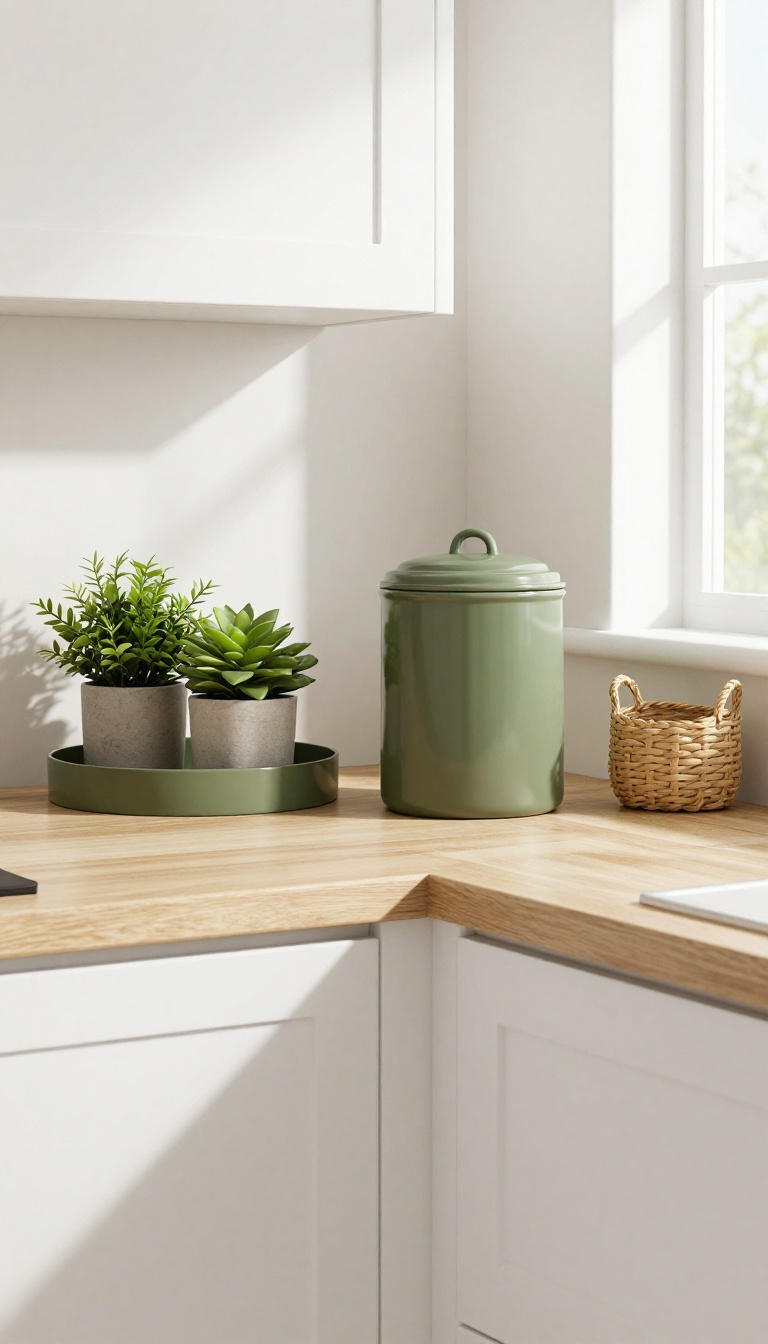
Sometimes the smallest details make the biggest impact. Adding olive through accessories is a low-commitment way to bring the color into your kitchen without painting a single wall. It's perfect for renters or anyone who likes to switch things up with the seasons.
Olive accessories work because they add a subtle layer of warmth that ties the whole room together. A few well-placed pieces can make your kitchen feel more intentional and cozy, even if the rest of the decor is neutral. The key is to choose items that blend function with style, so they earn their spot on the counter or shelf.
Start With Everyday Items
Think about the things you use daily: a canister for flour, a bowl for fruit, a pitcher for water. Swap them out for olive versions and you'll see an instant change. These pieces don't just look good—they're practical, so they never feel like clutter.
Mix Textures For Depth
Olive looks even better when you play with textures. A matte ceramic vase, a glossy olive tray, or a woven olive-toned basket each add a different feel. Mixing them creates a rich, layered look that's more interesting than a single flat color.
Keep It Balanced
You don't need to go overboard. A few olive accessories scattered around—on the counter, a shelf, or the dining table—are enough to make a difference. Too many can start to feel heavy, so let the olive breathe and pair it with neutrals like white, beige, or wood tones.
FAQ
What colors go well with olive green in a kitchen?
Olive green pairs beautifully with warm neutrals like cream, beige, and tan, as well as natural wood tones. Brass, copper, and matte black accents also complement olive nicely.
Is olive green a good color for kitchen cabinets?
Yes, olive green cabinets are a stylish and versatile choice. They add warmth and depth, and they work well with a variety of countertop materials and hardware finishes.
How can I add olive green to my kitchen without painting cabinets?
You can introduce olive through textiles like curtains or rugs, accessories like vases and canisters, or even a painted accent wall. These options are easy to change and less permanent.
Does olive green make a kitchen look smaller?
Olive green is a darker color, so it can make a small kitchen feel cozier, but it might also make it feel more enclosed. To avoid that, use olive on an accent wall or in accessories, and pair it with plenty of light.
What undertones does olive green have?
Olive green typically has yellow and green undertones, which give it a warm, earthy feel. Some shades may also have a hint of gray, making them more muted and sophisticated.
Conclusion
Olive kitchens can feel both grounded and inviting when you layer in the right textures and tones. Whether you start with a soft green island or swap out your hardware, each small choice moves you closer to that pulled-together look. Mix in warm woods, brass details, and natural light to keep the space from feeling flat.
Pick the ideas that match your daily routine and tackle them one at a time. Before long, your kitchen will have that calm, cohesive vibe you have been after—no full remodel required.