10 Cozy Attic Kitchen Ideas That Make the Space Feel Finished
Attic kitchens often get the short end of the design stick—awkward slopes, low ceilings, and that unfinished vibe. But with the right touches, that quirky space can become the coziest room in the house.
You don't need a full remodel to make it feel intentional and warm. These ten ideas focus on smart storage, clever lighting, and simple styling that work with the architecture, not against it.
Whether you're dealing with a cramped nook or a spacious loft, each tip is practical, budget-friendly, and easy to pull off. Let's turn that neglected attic into a kitchen you'll actually love spending time in.
1. Embrace the Slopes with Custom Built-Ins
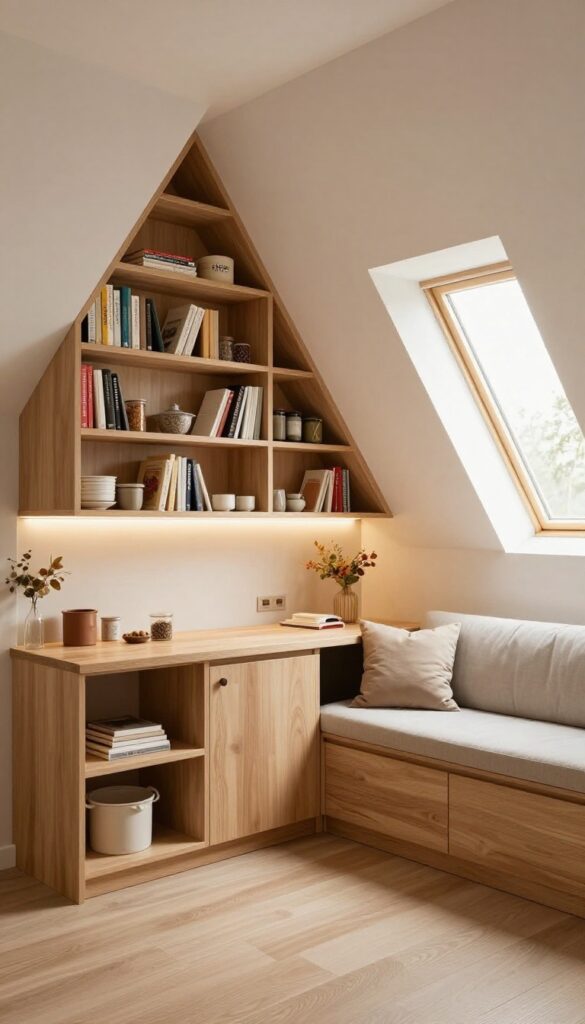
Those angled ceilings and nooks under the eaves can feel like a design headache, but they're actually a gift. Instead of fighting the architecture, work with it by adding custom built-ins that fit snugly into every cranny. This approach not only solves storage problems but also gives your attic kitchen a polished, finished look that feels intentional.
Custom built-ins are the ultimate way to tame awkward attic angles. They turn dead space into functional areas, whether it's a cozy breakfast nook, a pantry with pull-out shelves, or a window seat with hidden storage. The key is to measure carefully and design pieces that follow the roofline, making the most of every inch.
Built-in Seating That Hugs The Walls
A banquette tucked under a sloped window is a classic attic kitchen move. It creates a snug dining spot that feels like a secret hideaway. Add cushions in a durable fabric and lift-up seats for extra storage inside.
This turns a tricky corner into the most inviting place in the house.
Shelving That Follows The Roofline
Instead of standard wall shelves, have custom shelving cut to match the angle of your ceiling. This looks seamless and provides plenty of room for cookbooks, spices, and decorative pieces. You can even add under-shelf lighting to brighten up the darkest corners.
Pull-out Pantry For Narrow Nooks
That skinny gap between the wall and the chimney? Make it a pull-out pantry. A tall, narrow cabinet on wheels can slide out to reveal shelves for canned goods, oils, and snacks.
It's a clever way to add storage without taking up floor space, and it makes everything easy to reach.
2. Warm Up with Wood Accents
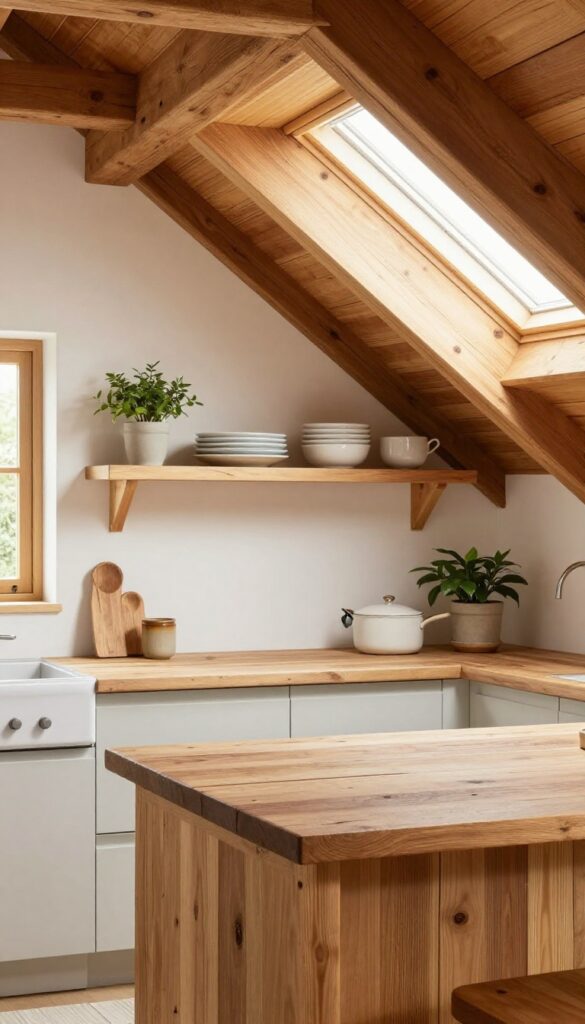
Wood has a way of making any space feel instantly more inviting, and it works especially well in an attic kitchen. The natural grain and warm tones soften the sharp angles and add a rustic charm that blends beautifully with the character of the room. Plus, wood is durable and practical, so it can handle the wear and tear of a busy kitchen while still looking great.
Adding wood accents doesn't mean you have to rip everything out and start over. Simple swaps like butcher block countertops, open wooden shelves, or a reclaimed wood island can transform the look and feel of your attic kitchen. These elements bring warmth and texture, making the space feel more finished and less like an afterthought.
And because wood pairs well with almost any color scheme, you can easily mix it with your existing decor.
Beam Them Up
If your attic has exposed beams, consider staining them a warm honey or walnut tone instead of painting them white. This draws the eye upward and adds a cozy, cabin-like feel. If you don't have beams, you can install faux wood beams that are lightweight and easy to put up.
They'll give the ceiling instant character without the structural work.
Counter Culture
Butcher block counters are a budget-friendly alternative to stone or quartz. They're warm to the touch, great for rolling dough, and they age beautifully. You can choose from different wood types like maple, oak, or walnut to match your style.
Just remember to seal them properly to protect against moisture and stains.
Shelve It
Open shelving made of wood is a perfect way to display your favorite dishes, mugs, or cookbooks while keeping everything within reach. It also makes the kitchen feel more open and airy, which is a bonus in a space with low ceilings. You can mix wood tones or paint the shelves to match your cabinets for a cohesive look.
Island Time
A wooden kitchen island can become the focal point of your attic kitchen. If you have the space, a rolling cart or a repurposed table with a wood top adds extra prep area and storage. It also gives you a spot for quick meals or a place where guests can gather while you cook.
Add a few stools, and you've got a cozy breakfast nook.
3. Layer Lighting for a Soft Glow
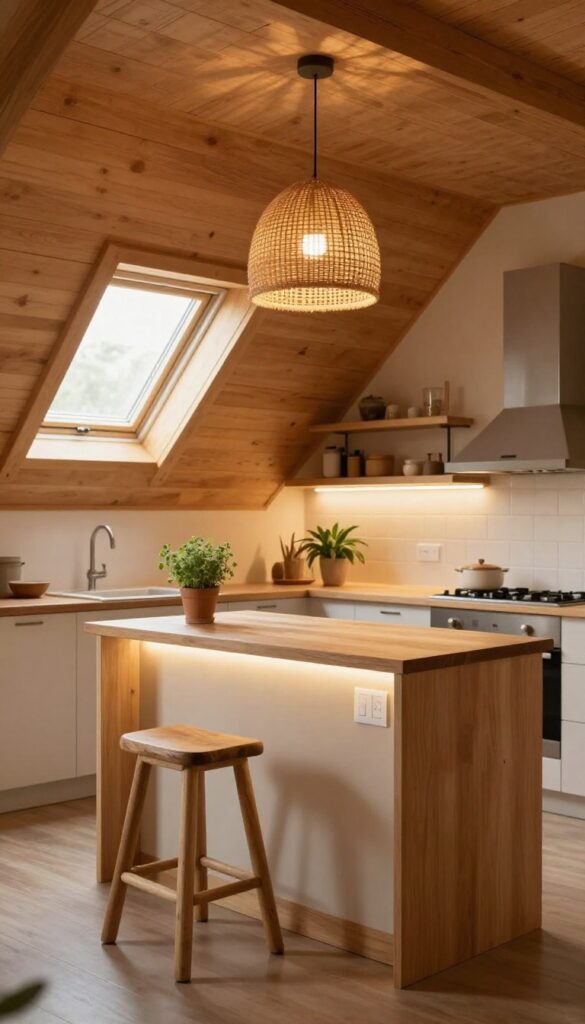
Attic kitchens often suffer from harsh shadows and gloomy corners, especially under those sloped ceilings. The trick to making the space feel finished is layering light at different heights and intensities. With the right mix, you can turn a dull nook into a warm, inviting spot that works for everything from morning coffee to late-night snacks.
Start with a central pendant light that hangs low over your main work area—it adds personality and focuses light where you need it most. Then, tuck under-cabinet LEDs along the counters to banish shadows and make food prep easier. Finally, install a dimmer switch so you can dial the brightness up for cooking or down for a relaxed dinner.
This trio creates a soft, layered glow that flatters the room and your mood.
Pick The Right Pendant
Choose a pendant that fits the attic’s scale—something compact but characterful, like a rattan shade or a simple metal dome. Hang it about 30 inches above the counter or island so it feels intentional without blocking sightlines. A warm bulb (2700K–3000K) keeps the glow cozy, not clinical.
Tuck Leds Under Cabinets
Under-cabinet strip lights are a game-changer in an attic kitchen. They illuminate the countertop directly, making tasks easier and reducing eye strain. Look for adhesive, plug-in options that are easy to install—no electrician needed.
Place them toward the front edge so they highlight the work surface without glare.
Add A Dimmer For Flexibility
A dimmer switch is a small upgrade with a big payoff. It lets you adjust the lighting to match the time of day or activity—bright for chopping veggies, soft for a glass of wine. Pair it with smart bulbs if you want voice control or scheduling.
This simple addition makes the attic kitchen feel more polished and livable.
4. Choose a Compact, Efficient Layout
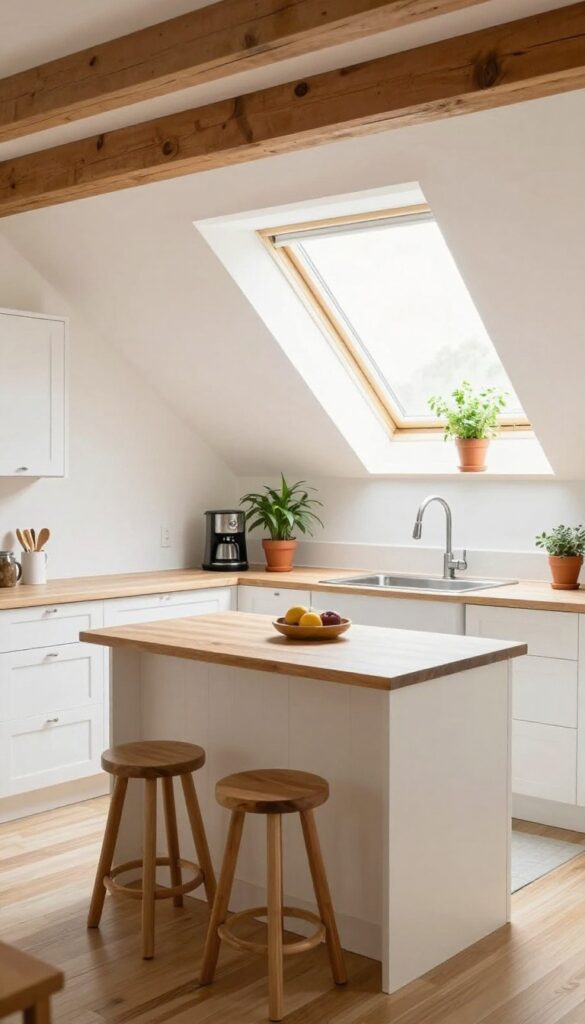
Attic kitchens rarely have the luxury of sprawling countertops, so the layout has to work overtime. A galley or L-shaped arrangement can turn a narrow footprint into a hardworking cooking zone without making you feel boxed in. The trick is to keep the essentials close and the traffic flow smooth.
Start by mapping out your daily routine. If you're a coffee-first person, position the brewer near the sink and fridge. If you bake, carve out a dedicated pastry area with a lower counter.
The goal is to minimize steps between prep, cooking, and cleanup, especially when the ceiling forces you to work in a straight line.
Galley Layouts: Maximize The Middle
A galley layout runs two parallel counters with a walkway in between. It's a classic for small spaces because it puts everything within arm's reach. In an attic, this works best when the counters sit along the longer walls, leaving the center open for movement.
Keep the aisle at least 36 inches wide so you can open cabinets and the oven without bumping into anything.
L-shaped Layouts: Use The Corners
If your attic has a corner that's otherwise wasted, an L-shaped layout can turn it into a functional cooking triangle. This design gives you more counter space and lets you tuck a small table or island into the open leg. It's also easier to zone: prep on one side, cook on the other.
Just be mindful of the knee wall—place the stove or sink where you can stand upright.
Keep The Triangle Tight
The classic kitchen triangle—stove, sink, fridge—should be compact but not cramped. In an attic, aim for a triangle with sides between 4 and 9 feet. That keeps you from shuffling back and forth too much.
If space is really tight, consider a one-wall layout with the sink in the middle and the stove and fridge on either side. It's a simple, efficient setup that leaves room for a small dining nook.
5. Add a Pop of Color with Painted Cabinets
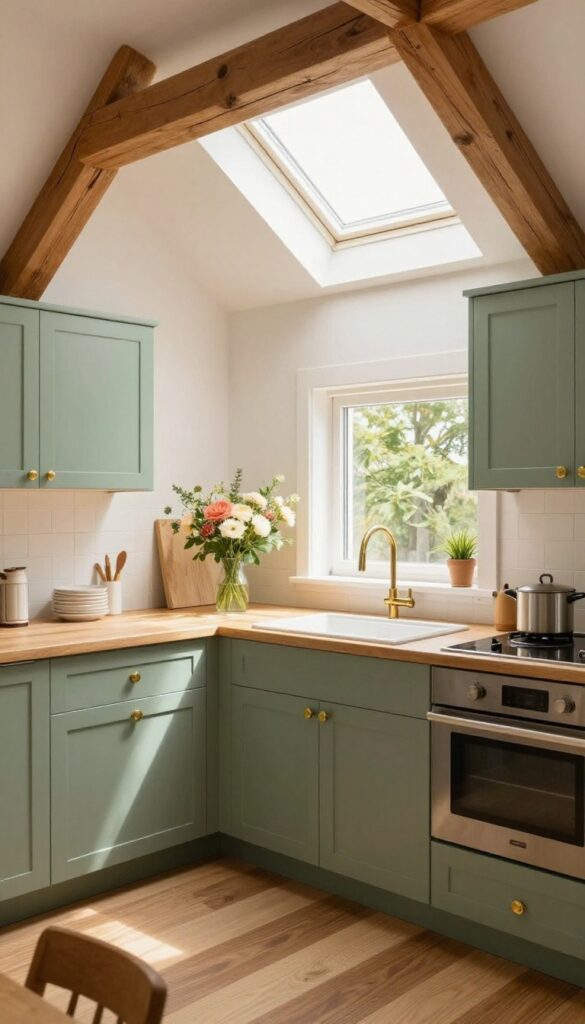
Cabinet color can make or break the vibe of an attic kitchen. Since the architecture already brings so much character, a fresh coat of paint is one of the fastest ways to tie it all together. It’s a weekend project that instantly upgrades the space and gives it that finished, intentional feel.
Painting your cabinets is a budget-friendly way to add personality without a full renovation. In an attic, where natural light can be tricky, the right color can brighten things up or add a cozy depth. Whether you go bold or soothing, the key is to pick a shade that complements the room’s angles and your own style.
Choosing The Right Shade For Your Attic
Start by considering the amount of light your attic gets. If it's on the darker side, a lighter color like sage green or pale blue can open things up. For a sunnier space, deeper tones like navy or forest green add a snug, intimate feel.
Don’t forget to test samples on the cabinet doors and live with them for a day or two—light changes everything.
Prep Work Is Everything
A smooth, durable finish comes down to prep. Clean the cabinets thoroughly to remove grease, sand them lightly to help the paint stick, and use a good primer. This extra effort pays off—you’ll avoid chipping and peeling down the road.
If you’re short on time, consider a paint sprayer for a flawless, factory-like finish.
Finishing Touches That Make It Pop
Once the paint dries, swap out the hardware for something that matches the new vibe—brass for a classic look, matte black for modern, or ceramic knobs for a cottage feel. You can also paint the inside of glass-front cabinets a contrasting color for a surprise detail. These small touches make the space feel thoughtfully designed.
6. Install Skylights for Natural Light
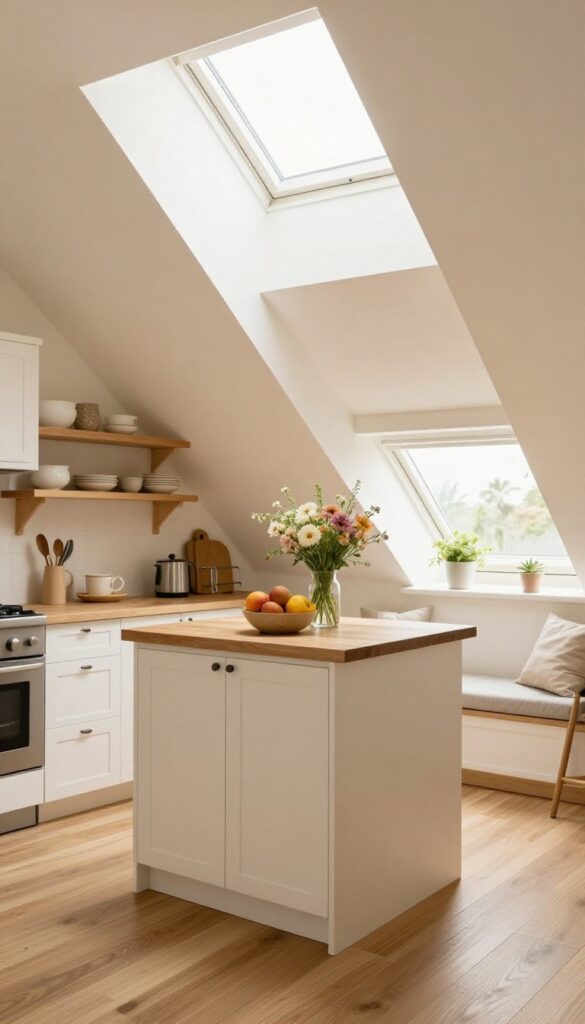
Sunlight can transform an attic kitchen from a cave-like nook into a bright, airy space. Skylights are a game-changer, especially when the roof slope is working against you. They bring in daylight, make the room feel larger, and even help with ventilation if you choose the opening kind.
Adding skylights or tubular daylighting devices is one of the most effective ways to brighten up an attic kitchen. Not only do they flood the space with natural light, but they also create a visual connection to the sky, making the room feel more open and less confined. Plus, they can reduce your reliance on artificial lighting during the day, saving energy and softening the overall ambiance.
Pick The Right Spot
Placement is everything. Look for areas where the sun hits the roof most of the day, usually south-facing slopes. Avoid spots where the roof meets the wall, as that's harder to seal and less effective.
A professional can help you assess the angle and size to maximize light without overheating the room.
Choose Between Fixed And Venting
Fixed skylights are great for letting in light, but if you want to let out steam and heat from cooking, consider venting skylights. They open up to let fresh air in, which is a lifesaver in a small attic space. Tubular skylights are a budget-friendly alternative that works wonders in tight corners where a full skylight won't fit.
Control Glare And Heat
Too much sun can make the kitchen uncomfortable. Use skylight shades or blinds to diffuse the light and keep the room cool. Low-E glass is another smart choice—it blocks harmful UV rays and reduces heat gain while still letting in plenty of brightness.
That way, you get the best of both worlds.
7. Use Rugs and Textiles for Softness
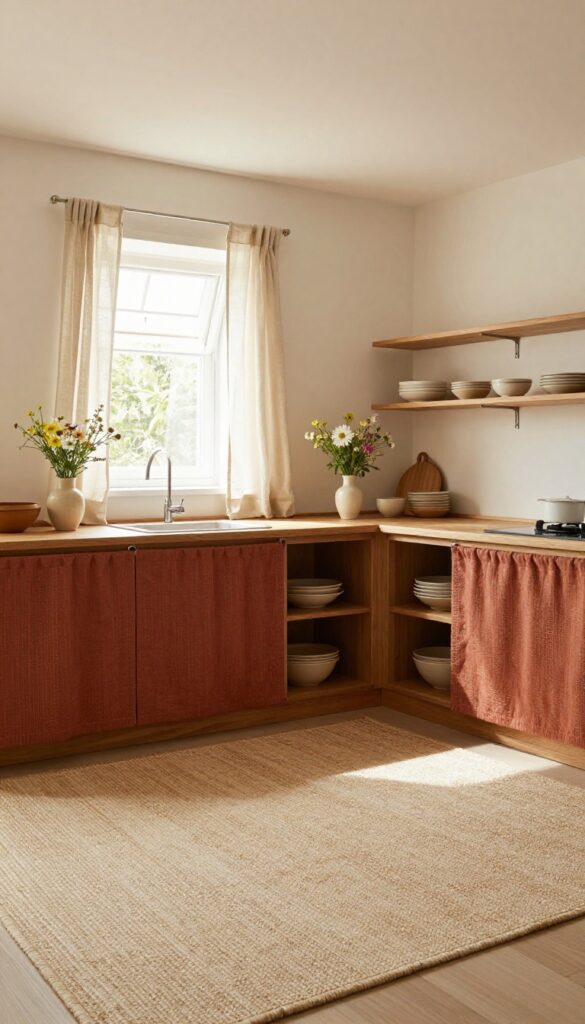
Hard floors and bare windows can make an attic kitchen feel cold and echoey. Adding layers of fabric is one of the quickest ways to soften the space and bring in warmth. Rugs, runners, and curtains not only look cozy but also help absorb sound and make the room feel more inviting.
Start with a plush rug in the main work zone—under a small table or in front of the sink. Choose a low-pile or flat-weave option that’s easy to clean, and add a cushioned mat where you stand most. Woven runners along countertops or in walkways add texture and protect the floor.
Finally, hang textured curtains or Roman shades to soften the angles and keep the space feeling warm.
Layering For Comfort And Style
Mix materials like wool, cotton, and jute to create depth without clashing. A soft wool rug over a natural fiber mat adds warmth, while a cotton runner in a complementary color ties the look together. Don’t be afraid to layer—it’s a simple way to make the floor feel more luxurious and inviting.
Sound And Warmth Benefits
Attic kitchens often have hard surfaces that bounce sound around. Rugs and textiles absorb noise, making the room feel quieter and more intimate. They also add insulation, keeping your feet warm on chilly mornings.
This is especially helpful in a space that might otherwise feel drafty.
Choosing The Right Fabrics
Go for durable, stain-resistant fabrics that can handle kitchen spills. Look for indoor-outdoor rugs or washable runners for easy maintenance. For curtains, opt for cotton or linen blends that let in light while providing privacy.
Avoid heavy materials that might trap odors or be hard to clean.
8. Incorporate Open Shelving with Style
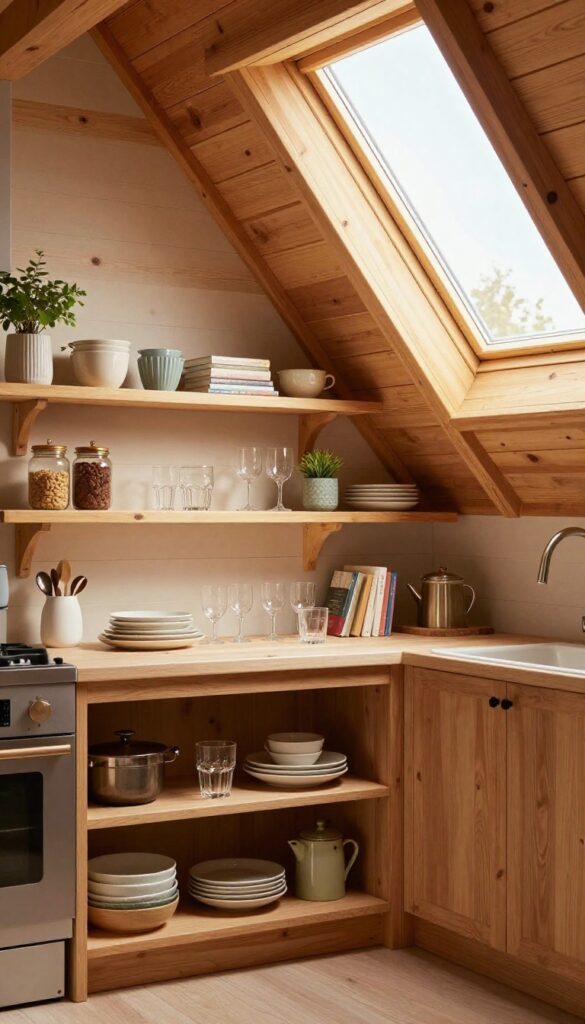
Open shelving is a natural fit for attic kitchens, where wall space is often limited and every inch counts. Instead of hiding everything behind closed doors, let your everyday dishes and favorite glassware become part of the decor. It's a simple way to add warmth and personality without spending a dime.
Open shelves make the most of awkward nooks and sloped walls, turning them into display areas that feel intentional. They also keep your most-used items within easy reach, which is a huge plus when counter space is tight. Plus, seeing your pretty plates and mugs can make the whole room feel more inviting.
Work With The Slopes
Don't fight the angled ceilings—use them. Install floating shelves that follow the roofline, or place a low shelf under a dormer for a cozy, nook-like feel. This way, you turn an awkward spot into a functional and charming feature.
Mix Function And Decor
Keep everyday dishes and glasses on the lower shelves, and save the top ones for decorative pieces like cookbooks, plants, or vintage jars. This mix of practical and pretty keeps the shelves looking styled, not cluttered.
Choose The Right Material
Wooden shelves add warmth and blend well with attic beams, while metal or glass can give a more modern edge. Whatever you pick, make sure it's sturdy enough for daily use and matches the overall vibe of your kitchen.
9. Create a Coffee or Tea Nook
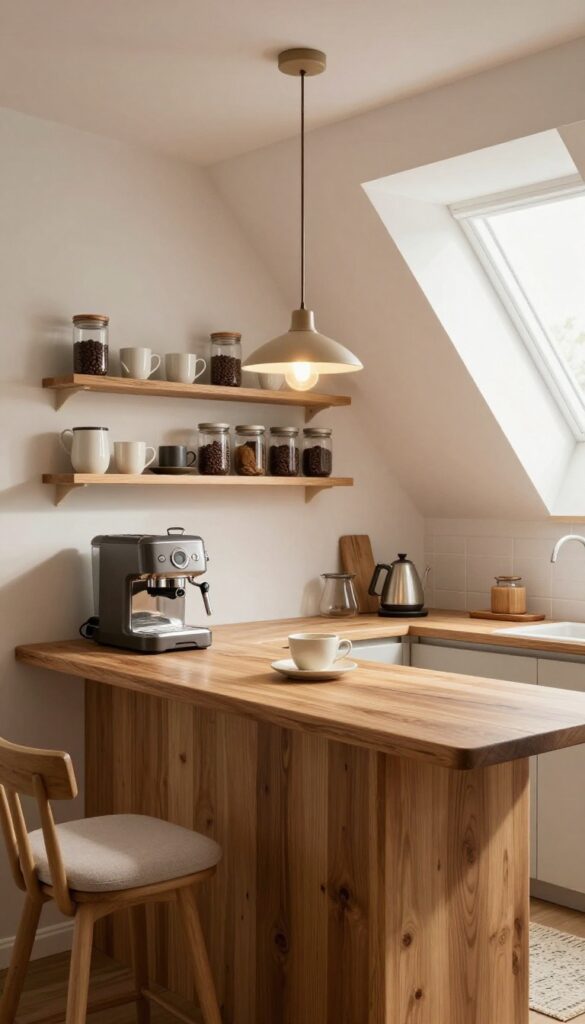
Morning rituals deserve a dedicated spot, especially in a cozy attic kitchen where counter space is often tight. A coffee or tea nook turns a neglected corner into a functional, inviting focal point. It’s all about carving out a small zone that feels intentional—your own little café counter tucked under the eaves.
Start by picking a corner that’s close to your main prep area but out of the main traffic flow. An awkward nook under a sloped ceiling works perfectly. Add a slim counter or a repurposed console table, then layer in the essentials: a coffee maker, a kettle, and a few favorite mugs.
The key is to keep everything within arm’s reach so your morning routine feels effortless.
Choose The Right Spot
Look for a spot with a bit of wall space, ideally near a window for natural light. If you’re short on floor space, a wall-mounted shelf can serve as a mini counter. Just make sure there’s an outlet nearby for your coffee maker or electric kettle—no one wants to run an extension cord across the room.
Smart Storage For Mugs And Supplies
Use open shelving or a hanging mug rack to keep your favorite cups visible and easy to grab. Small baskets or jars can corral coffee beans, tea bags, and sweeteners. If you have a deep cabinet, install a pull-out drawer or a lazy Susan to make the most of the space.
The goal is to have everything you need without cluttering the counter.
Add Warm Lighting And Comfort
A small pendant light or a clip-on lamp adds a warm glow that makes the nook feel cozy, especially in the early morning. Throw in a soft cushion on a stool or a small rug underfoot to make the area inviting. A little personal touch—like a plant or a framed photo—makes the nook feel like yours.
10. Add Greenery for Life and Freshness
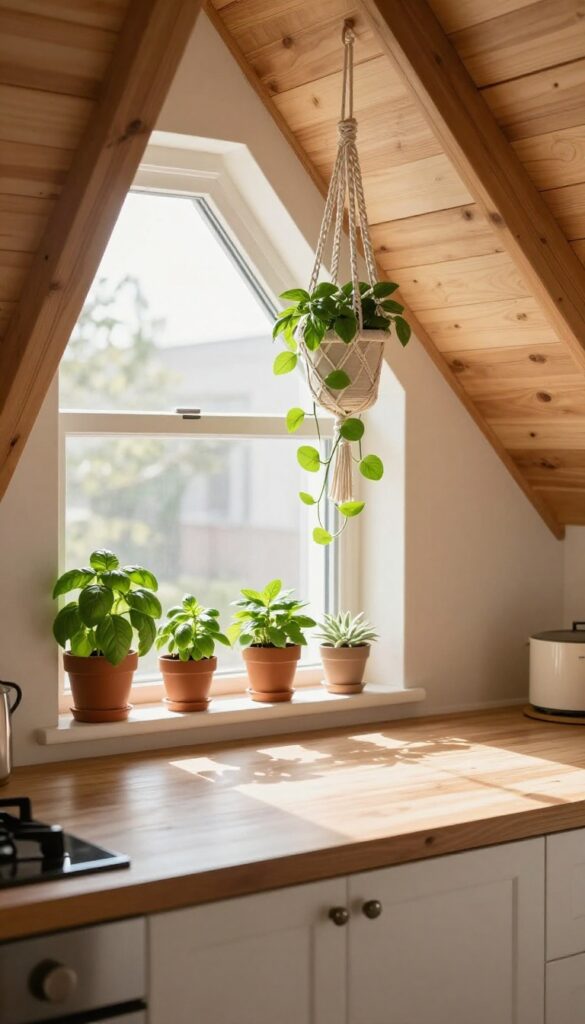
Plants have a way of making any space feel more alive, and an attic kitchen is no exception. The sloped ceilings and tucked-away location can sometimes feel a bit closed off, but a few well-placed greens change that instantly. They soften the hard lines of cabinetry and bring a natural, calming element that ties the whole room together.
Even if you don't have a green thumb, there are plenty of low-maintenance options that thrive in the conditions an attic kitchen typically offers. Herbs like basil, mint, and rosemary are not only forgiving but also handy for cooking. Trailing plants such as pothos or string of pearls add visual interest without taking up precious counter space.
Place them on windowsills, open shelves, or even hang them from ceiling hooks to draw the eye upward and make the most of the vertical space.
Pick The Right Plants For The Light
Attic kitchens often have limited natural light, especially if the windows are small or angled. Choose plants that tolerate lower light conditions, like snake plants, ZZ plants, or ferns. If you're lucky enough to have a skylight or a dormer window, you can experiment with sun-loving herbs or succulents.
Just observe how much light each spot gets throughout the day and match the plant to that spot.
Use Vertical Space For Greenery
Counter space is usually at a premium in an attic kitchen, so go vertical. Install a few floating shelves and line them with small pots of herbs or trailing vines. You can also hang a macramé plant holder from a beam or a sturdy hook on the wall.
This keeps the plants out of the way while adding a soft, organic texture to the room.
Keep Maintenance Simple
The goal is to enjoy your plants, not to stress over them. Group plants with similar watering needs together so you can care for them in one go. Use pots with good drainage to avoid overwatering, and consider self-watering containers for extra ease.
A quick weekly check is usually all it takes to keep everything looking lush and healthy.
FAQ
Is it practical to have a kitchen in the attic?
Yes, if you plan the layout carefully. Attic kitchens can be highly functional with compact appliances, smart storage, and proper ventilation.
How do I make a small attic kitchen feel bigger?
Use light colors, maximize natural light with skylights, and keep the design uncluttered. Mirrors and glass-front cabinets also help create an airy feel.
What are the best flooring options for an attic kitchen?
Opt for durable, moisture-resistant materials like luxury vinyl tile, engineered wood, or laminate that can handle temperature fluctuations and occasional spills.
Can I install a full kitchen in an attic with sloped ceilings?
Absolutely. Custom cabinetry and built-ins can be designed to fit under slopes, making the most of every inch while maintaining a cohesive look.
How do I add ventilation to an attic kitchen?
Install a range hood that vents to the outside, and consider adding an exhaust fan. Proper ventilation is crucial to remove cooking odors and moisture.
Conclusion
Finishing an attic kitchen is more about layering warmth than chasing trends. Start with the change that solves your biggest pain point—whether that's better lighting or smarter storage—and build from there. Each small upgrade, from a butcher block counter to a cozy window seat, makes the space feel intentional rather than leftover.
The best attic kitchens aren't perfect; they're personal. Pick the ideas that match how you actually cook and relax, and let the room evolve with you. Before long, that sloped-ceiling corner will feel like the most inviting spot in the house.