17 Cleaning Shower Doors Tips for Clear Glass Shine
You step into the shower expecting a fresh start, but the glass door looks like it's been through a storm. Hard water stains, soap scum, and grime build up fast, turning clear glass into a cloudy mess. The good news?
You don't need harsh chemicals or expensive products to restore that sparkling transparency. These 17 tips cover everything from everyday habits to deep-cleaning techniques that actually work. Whether you're dealing with stubborn mineral deposits or just want to keep your doors looking new, you'll find simple, effective solutions here.
No fluff, just practical advice that delivers real results. Let's get those doors so clear you'll forget they're there.
1. Squeegee After Every Shower
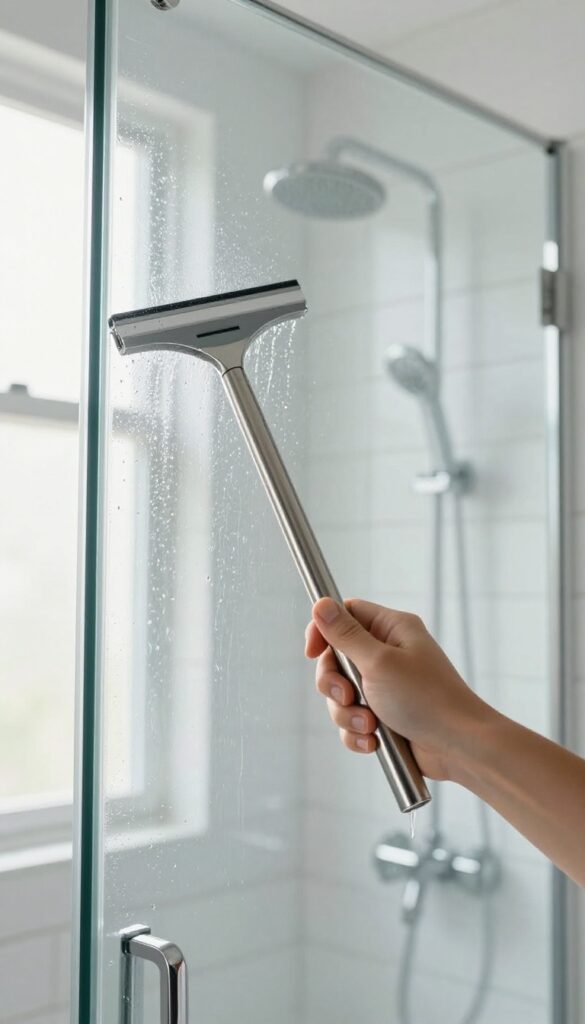
Getting into the habit of squeegeeing your shower doors right after you turn off the water is the single most effective way to keep them spotless. It takes less than a minute and stops water spots and soap scum before they even have a chance to form.
When you squeegee while the glass is still wet, you remove the water droplets that would otherwise dry into mineral deposits. Over time, those deposits build up into a stubborn haze that requires more elbow grease to remove. A daily squeegee keeps the glass clear with almost no effort.
Why It Works So Well
Hard water contains calcium and magnesium that leave white spots when water evaporates. By wiping the water away immediately, you prevent those minerals from bonding to the glass. Soap residue also gets swept away before it can dry into a film.
Choosing The Right Squeegee
A good squeegee makes a difference. Look for one with a rubber blade that's soft but firm, and a handle that's comfortable to grip. Stainless steel or plastic options both work fine.
Replace the blade every few months if it starts leaving streaks.
Where To Keep Your Squeegee
Store your squeegee inside the shower or hang it on a hook nearby so it's always within reach. A suction cup holder on the tile or a hook over the showerhead works great. The easier it is to grab, the more likely you'll use it every time.
2. Use a Vinegar and Water Solution
White vinegar is a powerhouse when it comes to cutting through grime on glass. It's cheap, natural, and surprisingly effective against hard water stains and soap scum. The best part?
You probably already have a bottle under your sink.
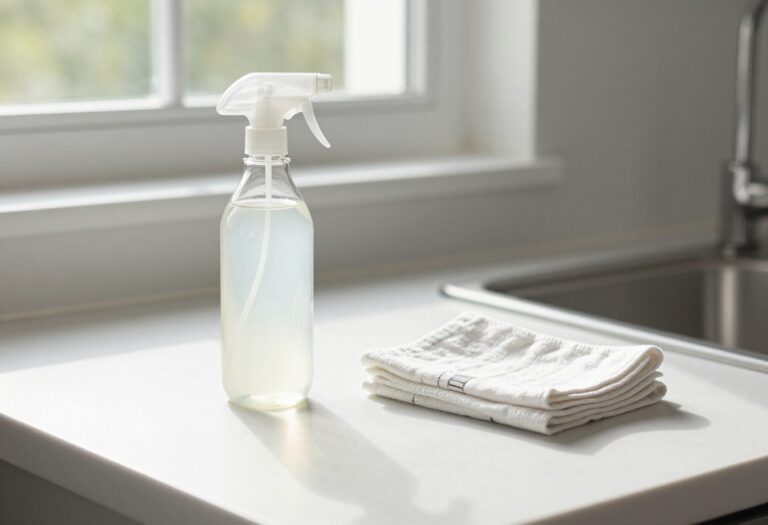
Mix equal parts white vinegar and water in a spray bottle. Spray the solution generously onto the glass door, making sure to cover all cloudy areas. Let it sit for about five minutes so the acidity can break down mineral deposits.
Then wipe with a microfiber cloth in circular motions. For tough spots, let it soak longer or scrub gently with a soft sponge. Rinse with water and dry with a clean cloth to prevent streaks.
Why Vinegar Works So Well
Vinegar is acidic, which naturally dissolves alkaline mineral deposits like calcium and lime. It also breaks down soap residue without leaving harsh chemical fumes. It's gentle enough for regular use but strong enough for stubborn buildup.
Best Practices For Application
Use a spray bottle with a fine mist for even coverage. Work in sections if your door is large. Avoid letting the solution dry on the glass, as it can leave a film.
Always follow with a rinse and dry for a streak-free shine.
When To Avoid Vinegar
Don't use vinegar on natural stone surfaces like marble or granite, as the acid can etch them. Also avoid it on metal frames if you have unsealed or sensitive finishes. Stick to glass only for best results.
3. Try a Dish Soap and Warm Water Mix
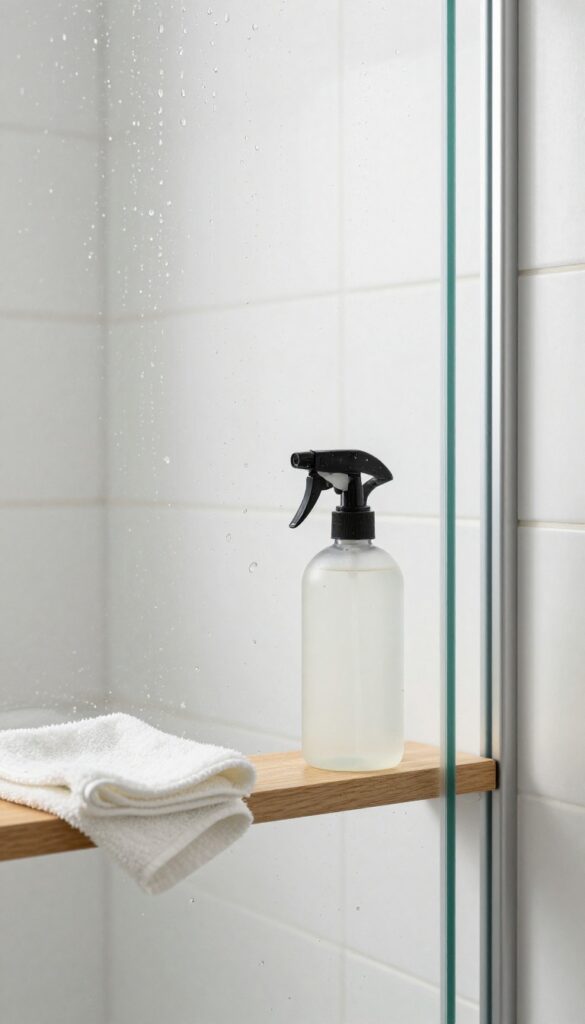
Sometimes the simplest solutions are the most effective. A few drops of dish soap in warm water create a gentle yet powerful cleaner that cuts through everyday grime without damaging the glass. This method is perfect for quick cleanups between deeper treatments.
Why Dish Soap Works
Dish soap is designed to break down grease and oils, which are major components of soap scum. When mixed with warm water, it creates a solution that lifts dirt and residue from the glass surface without harsh scrubbing. Plus, it's gentle enough for daily use.
How To Apply It
Fill a spray bottle with warm water and add a few drops of dish soap. Shake gently to mix. Spray the solution onto the glass door, let it sit for a minute, then wipe with a soft sponge or microfiber cloth.
Rinse thoroughly with clean water to avoid streaks.
Tips For Best Results
Use a non-abrasive sponge to prevent scratching. For stubborn spots, let the solution sit a bit longer. Always rinse well – leftover soap can attract more grime.
This method works best when done after each shower to maintain clarity.
4. Apply a Rain Repellent
Think about how water beads up and rolls off your car's windshield after a fresh coat of wax. That same principle works wonders on shower doors. A hydrophobic barrier forces water to form tight beads that slide right off, taking soap residue and minerals with them.
The result? Less spotting, less scrubbing, and glass that stays clearer for longer.
Rain repellents aren't just for cars—they're a game-changer for shower glass. By creating a slick, water-repellent surface, these products prevent water from clinging and drying into those stubborn white spots. You'll notice an immediate difference in how easily water runs off, and over time, you'll spend far less time cleaning.
Car Wax Works, But Choose Wisely
A high-quality carnauba car wax can be applied to shower glass with great results. Just make sure it's a clear, non-abrasive wax without any colored tint. Apply a thin layer with a soft cloth, let it haze, then buff it off.
The shine and water beading will last for weeks. Avoid waxes with cleaners or polishes—they can leave a residue or scratch the glass.
Commercial Glass Sealants Are Even Easier
Products like Rain-X or dedicated glass sealants are formulated specifically for glass surfaces. They're spray-on and wipe-off, requiring less elbow grease than wax. Some are designed for shower use and include anti-microbial properties.
Follow the instructions carefully—usually a clean, dry surface and a few minutes of curing time. One application can last a month or more.
How Often Should You Reapply?
For best results, reapply your rain repellent every three to four weeks. You'll know it's time when water stops beading and starts sheeting or leaving spots. Regular reapplication maintains the barrier and keeps cleaning effortless.
Mark it on your calendar so you don't forget—it's a small habit that pays off big.
5. Use a Magic Eraser for Stubborn Spots
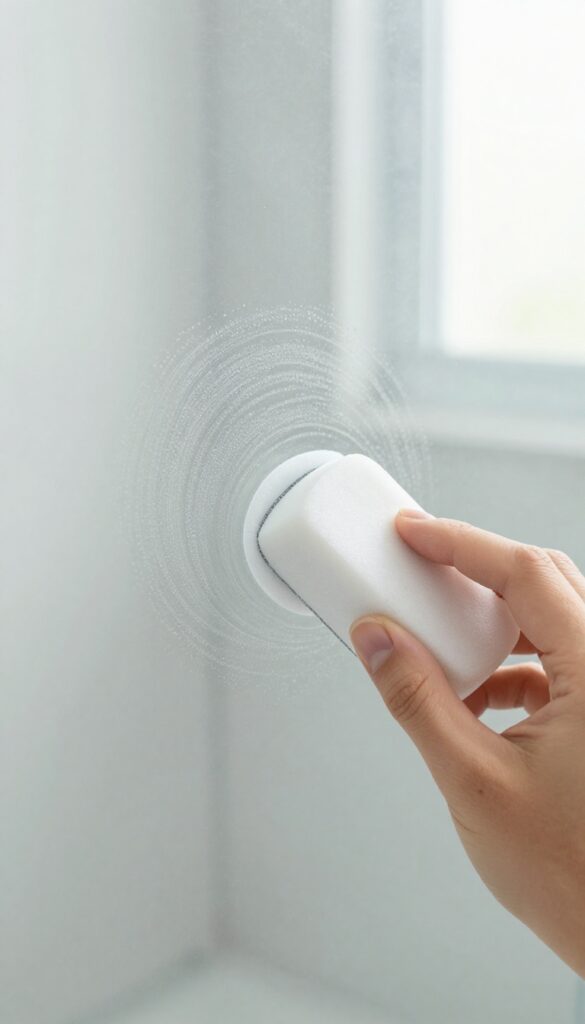
Sometimes a little extra muscle is needed for those stubborn spots that vinegar and baking soda just won't budge. That's where a melamine foam eraser—often sold as a Magic Eraser—comes in. It's like a gentle sandpaper that lifts grime without scratching glass, as long as you use it lightly.
This trick is perfect for tackling dried-on soap scum or hard water rings that have been sitting for a while.
Dampen the eraser and wring out excess water so it's just moist. Gently rub the stained area in small circles—no need to press hard. The foam will start to break down as it works, so you'll see it wearing away.
That's normal. Rinse the glass thoroughly afterward to remove any residue, then dry with a microfiber cloth for a streak-free finish. Avoid using this method on tinted or etched glass, as it can damage the finish.
When To Reach For The Eraser
Use the Magic Eraser for isolated tough spots, not for entire door cleaning. It's ideal for hard water rings near the bottom of the door or soap scum buildup around handles. If you have a large area of buildup, stick to vinegar or a dedicated glass cleaner first, then spot-treat with the eraser.
How To Avoid Damage
Always test on a small, inconspicuous area first. Use light pressure—the eraser is abrasive enough to remove buildup but can also dull the glass if you scrub too hard. Never use it on frosted, etched, or coated glass, as it will strip the finish.
Stick to plain clear glass for best results.
Rinse And Dry Thoroughly
After using the eraser, rinse the glass well with water to remove any foam particles. Leftover residue can dry into a hazy film. Follow up with a clean microfiber cloth to buff the glass dry.
This step ensures your doors look crystal clear, not cloudy.
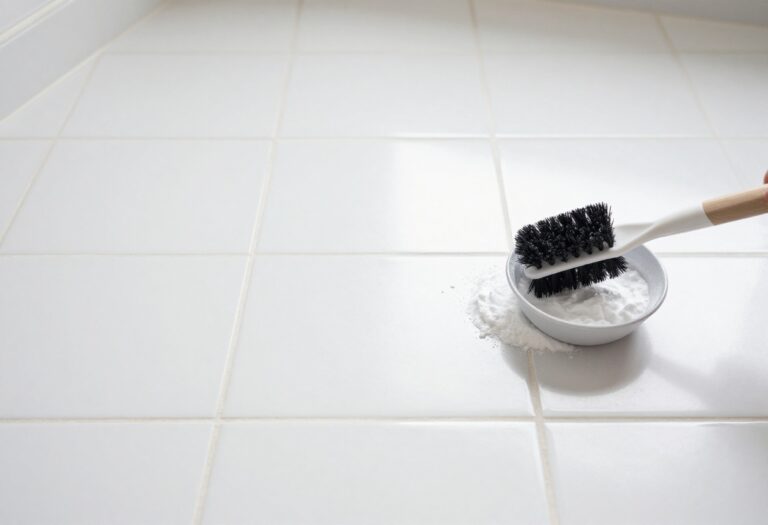
6. Make a Paste with Baking Soda
Baking soda is a gentle abrasive that can tackle tough soap scum without scratching glass. When mixed with water, it forms a paste that clings to vertical surfaces and breaks down grime. This method is especially effective for spots that have been building up for weeks.
For dried-on soap scum and hard water spots, a baking soda paste offers the right amount of scrubbing power. It's safe, cheap, and works on most glass types. Just be sure to rinse thoroughly to avoid any residue.
How To Make The Paste
Mix three parts baking soda with one part water in a small bowl. Stir until you get a thick, spreadable consistency—think peanut butter. Add a few drops of dish soap if you want extra grease-cutting power.
Application Tips
Use a soft sponge or microfiber cloth to apply the paste directly onto the glass. Focus on areas with visible buildup. Let it sit for 15 minutes—this gives the baking soda time to loosen the scum.
Don't let it dry completely; if it starts to harden, spritz a little water on it.
Scrubbing And Rinsing
After the wait, scrub gently in circular motions with a soft-bristle brush or non-abrasive pad. Rinse thoroughly with warm water. Wipe dry with a clean microfiber cloth to prevent new spots from forming.
7. Clean Tracks and Frames Regularly
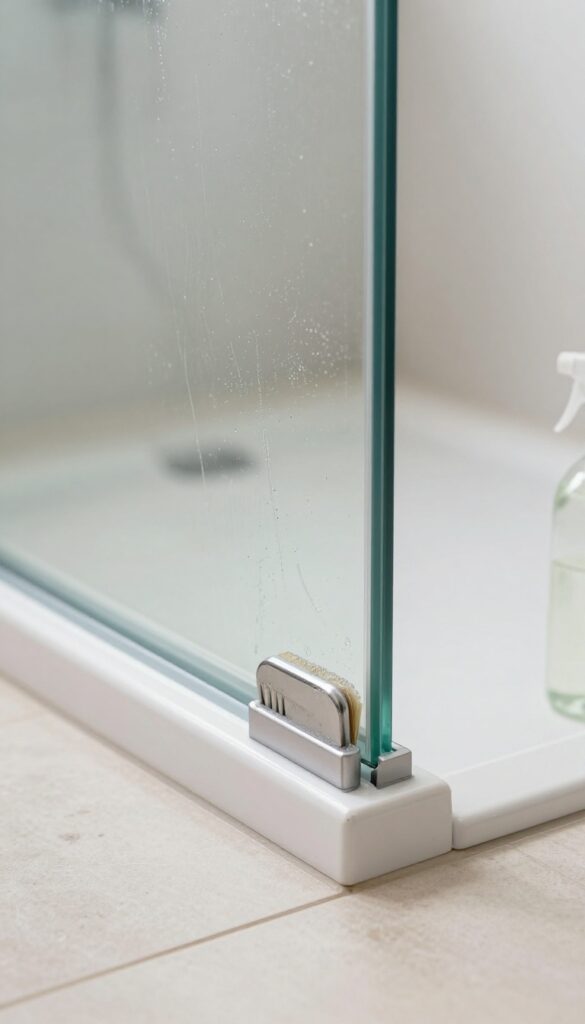
Most people focus on the glass and forget where the real grime hides. The tracks and frames of your shower door are prime real estate for mold, mildew, and soap scum buildup. Over time, that gunk can actually affect how smoothly the door slides and even cause permanent staining.
A little regular attention here makes a big difference.
You don't need fancy tools to get the job done. An old toothbrush is perfect for scrubbing into those tight corners. Pair it with a simple vinegar solution—equal parts white vinegar and warm water—and you'll break down the grime without harsh chemicals.
Spray the solution onto the tracks and frames, let it sit for five minutes, then scrub with the toothbrush. Finish by rinsing thoroughly with warm water. For stubborn buildup, a paste of baking soda and vinegar can add extra scrubbing power.
Make this a monthly habit, and you'll keep mold and mildew at bay while extending the life of your shower door hardware.
Why Tracks And Frames Matter
The tracks and frames are often overlooked because they're not as visible as the glass. But they collect moisture, soap residue, and dead skin cells—a perfect breeding ground for mold. If you notice a musty smell or dark spots along the edges, it's time to act.
Keeping these areas clean also ensures your door slides smoothly and prevents rust or corrosion on metal parts.
The Right Tools For The Job
A standard toothbrush works well for narrow tracks, but for wider frames, a soft-bristle scrub brush or an old makeup brush can reach deeper. Avoid metal brushes or abrasive pads that could scratch the finish. A spray bottle with your vinegar solution makes application easy.
For extra stubborn spots, a plastic scraper or an old credit card can help lift grime without damage.
How Often To Clean
Aim to clean tracks and frames at least once a month. If you have hard water or live in a humid area, every two weeks is better. A quick wipe-down after each shower—just running a dry cloth along the tracks—can reduce buildup between deep cleans.
Consistency is key to preventing that stubborn grime from taking hold.
8. Dry with a Microfiber Cloth
Squeegeeing gets most of the water off, but a few droplets always linger. Those leftover beads are what dry into those annoying spots and streaks. A quick pass with a microfiber cloth after each shower will keep your glass looking streak-free and crystal clear.
Microfiber is the MVP of cleaning tools because it traps water and minerals instead of pushing them around. Unlike cotton towels that can leave lint or streaks, microfiber absorbs moisture without scratching the glass. Keep a dedicated cloth near your shower and give the door a quick wipe after squeegeeing.
It takes less than a minute and makes a huge difference.
Why Microfiber Works Best
Microfiber fibers are split into tiny wedges that create a static charge, pulling in water and particles. This means you're not just smearing the water around—you're actually lifting it off the glass. Plus, microfiber is super absorbent, so it can handle the moisture left behind by a squeegee without leaving streaks.
How To Use It Right
Use a clean, dry microfiber cloth for drying. Fold it into quarters so you have multiple clean surfaces to work with. Wipe the glass in one direction—top to bottom or side to side—to avoid redepositing water.
Don't use the same cloth for cleaning products or other surfaces, as residues can transfer and cause smearing.
Keeping Your Cloths Effective
Wash microfiber cloths separately from cotton or linty fabrics. Use a mild detergent without fabric softener, which clogs the fibers and ruins their absorbency. Air dry or tumble dry on low heat.
Replace cloths once they start to feel less absorbent or leave streaks.
9. Use Lemon Juice for a Natural Shine
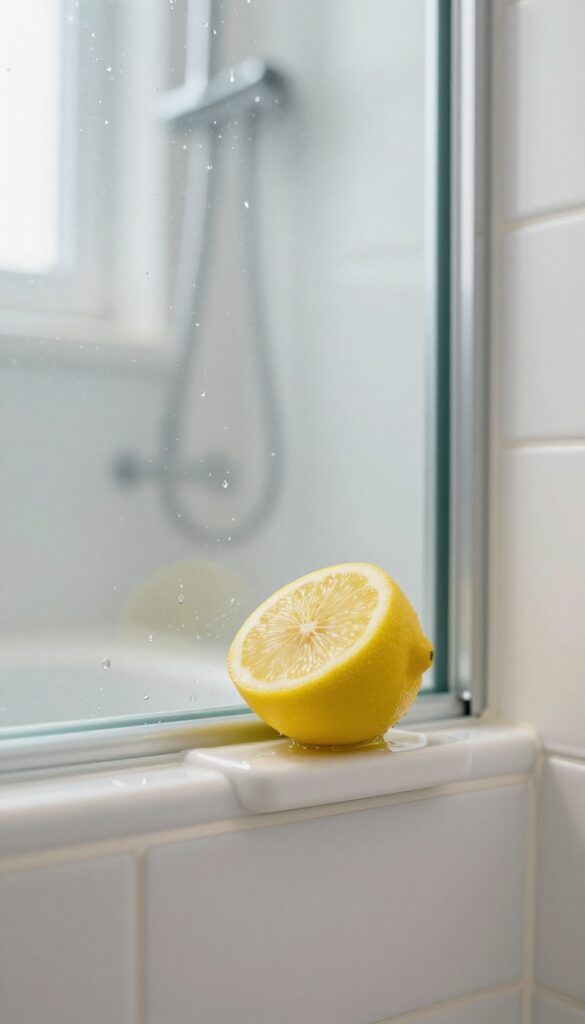
If you prefer a natural, chemical-free approach to cleaning, lemon juice is a fantastic option. The citric acid in lemons works wonders on mineral deposits and soap scum, breaking them down without harsh fumes. Plus, your shower will smell amazing.
Lemon juice is a gentle yet effective cleaner that leaves glass sparkling. Its acidity dissolves hard water stains and adds a streak-free shine. Best of all, it's safe for the environment and your skin.
How To Apply Lemon Juice
Cut a fresh lemon in half and rub it directly onto the glass, squeezing gently to release the juice. Let it sit for about 10 minutes to break down deposits. For larger areas, mix equal parts lemon juice and water in a spray bottle, spray liberally, and wait.
Rinsing And Drying
After the lemon juice has done its work, rinse the glass thoroughly with warm water. Use a microfiber cloth to dry the surface, buffing in circular motions to prevent streaks. You'll be left with a brilliant, natural shine.
Tips For Best Results
Use fresh lemons for maximum acidity. Avoid letting the juice dry on the glass, as it can leave a sticky residue. For tough spots, sprinkle a little baking soda on the lemon half before scrubbing for extra grit.
10. Try a Commercial Glass Cleaner
Not every cleaning session needs to be a DIY science experiment. Sometimes you just want a quick, reliable fix that cuts through the grime without any extra effort. That's where a good commercial glass cleaner comes in handy.
Why It Works So Well
Commercial glass cleaners are formulated with surfactants and solvents that dissolve soap scum, hard water spots, and body oils on contact. They also contain ingredients that prevent streaking, so you get a crystal-clear finish every time. Unlike homemade solutions, these products are designed specifically for glass, so they dry fast and leave no residue.
How To Use It For Best Results
Spray the cleaner generously onto the glass door, covering all areas. Let it sit for about 30 seconds to break down the grime. Then, wipe with a lint-free microfiber cloth in a zigzag or circular motion.
Avoid paper towels, which can leave lint behind. For extra shine, buff the glass with a dry section of the cloth.
When To Reach For Commercial Cleaners
These products are perfect for maintenance cleaning between deep scrubs. Use them weekly to keep your shower doors looking fresh. They're also great for a quick touch-up before guests arrive or when you just want a streak-free shine without the hassle.
11. Soak with a Vinegar Bag for Heavy Buildup
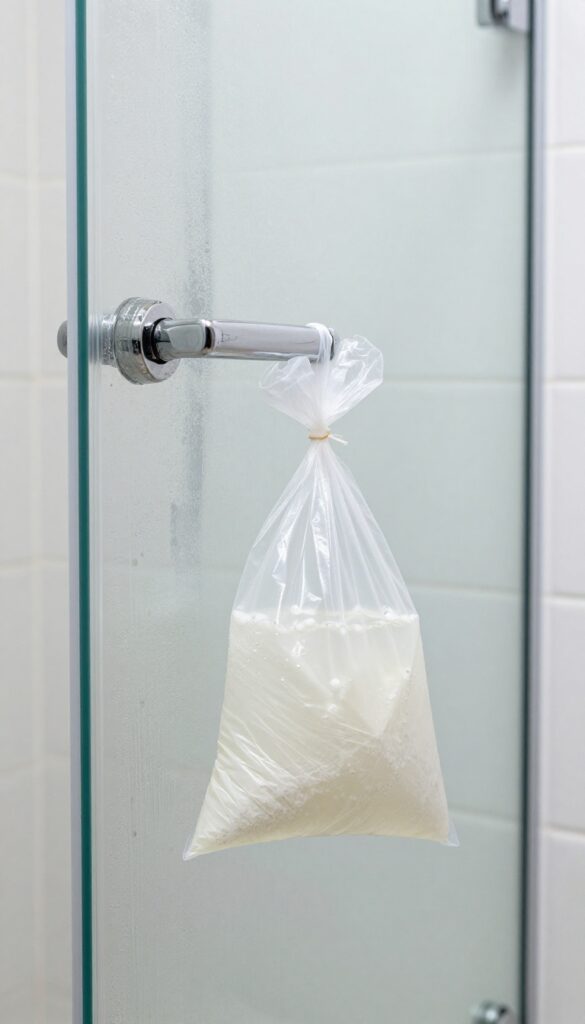
When mineral deposits have turned your shower door into a foggy mess, scrubbing alone won't cut it. A vinegar bag soak delivers a deep, no-scrub clean that dissolves thick buildup right where it lives.
Here's how to set it up: Fill a sturdy plastic bag with plain white vinegar (distilled works best). Tie the bag around the shower head or door handle so the vinegar fully covers the affected area. Use a rubber band or zip tie to secure it.
Let it soak overnight—at least 8 hours. In the morning, remove the bag and rinse the glass with warm water. The acid in the vinegar breaks down calcium and lime deposits, leaving the surface smooth and clear.
For extra-stubborn spots, give the area a gentle wipe with a soft cloth after rinsing. This method is especially effective for shower heads with clogged nozzles or door hinges crusted with scale. Just be careful not to let the bag leak onto metal fixtures for too long, as vinegar can dull certain finishes.
Why Vinegar Works So Well
White vinegar is a mild acid—acetic acid to be exact. It reacts with the alkaline minerals in hard water, turning solid deposits into soluble compounds that rinse away easily. Unlike abrasive cleaners, vinegar won't scratch glass or damage seals.
It's cheap, non-toxic, and safe for most surfaces when used correctly.
Tips For A Leak-free Soak
Use a thick freezer bag to avoid punctures. Double-bag if the buildup is near sharp edges. Secure the bag with a zip tie or strong rubber band, and position it so the vinegar stays in contact with the deposits.
Place a towel underneath to catch any drips. If the area is vertical, tilt the bag slightly so the vinegar pools against the problem spot.
When To Skip This Method
Avoid vinegar soaks on natural stone, unsealed grout, or anodized aluminum. The acid can etch or discolor these materials. Also, don't leave the bag on for more than 12 hours—prolonged exposure might weaken rubber seals or gaskets.
For regular maintenance, a quick weekly vinegar spray is enough.
12. Use a Pumice Stone on Stubborn Stains
Sometimes, even the best cleaners can't budge those stubborn hard water rings or thick calcium deposits. That's where a pumice stone comes in. It might sound harsh, but when used correctly, it's a gentle yet effective tool for restoring your glass door's clarity.
A pumice stone is a natural, porous abrasive that can tackle mineral buildup without scratching glass. The key is to wet the stone thoroughly before use—this softens it and prevents scratching. Gently rub the stained area in a circular motion, and you'll see the deposits lift away.
It works best on flat glass surfaces, so avoid textured or frosted glass. Always test on a small, hidden area first. After scrubbing, rinse well and dry with a microfiber cloth for a streak-free finish.
How To Choose The Right Pumice Stone
Look for a pumice stone specifically labeled for cleaning, not for foot care. These are finer-grained and less likely to scratch. You can find them at hardware stores or online.
Avoid stones with large pores or rough edges.
Step-by-step Technique For Best Results
Soak the pumice stone in water for at least 5 minutes. Wet the glass surface too. Hold the stone at a slight angle and apply light pressure.
Let the stone do the work—don't press hard. Rinse frequently to check progress and remove loosened residue. Once the stain is gone, rinse thoroughly and dry the glass.
When Not To Use A Pumice Stone
Avoid using a pumice stone on tempered glass that has a coating, like anti-lime or hydrophobic layers. It can wear away the coating. Also, skip it on acrylic or plastic shower doors—it will scratch them.
Stick to glass only.
13. Install a Water Softener

Hard water is the main culprit behind stubborn stains. A whole-house water softener reduces mineral content, making cleaning easier and preventing future buildup. It's a long-term solution that saves time and effort on scrubbing.
Hard water contains high levels of calcium and magnesium, which leave white, chalky deposits on glass. A water softener exchanges these minerals for sodium, effectively eliminating the source of stains. This not only keeps shower doors clearer but also extends the life of your fixtures and appliances.
How It Works
A water softener uses ion exchange to remove calcium and magnesium. As water passes through resin beads, the minerals are swapped for sodium ions. The result is soft water that doesn't leave deposits on glass or other surfaces.
Installation Options
You can install a whole-house system at the main water line or opt for a point-of-use unit under the sink. For shower doors, a whole-house system is most effective. Professional installation is recommended for best results.
Maintenance Tips
Regularly add salt to the brine tank and clean the resin bed as per manufacturer instructions. Check for salt bridges and ensure the system regenerates properly. With proper care, a water softener can last 10-15 years.
14. Use a Mixture of Rubbing Alcohol and Water
Sometimes the simplest solution is the most effective. A mix of rubbing alcohol and water cuts through soap scum and dries without streaks, leaving your glass doors crystal clear. It's a go-to for a quick, no-fuss clean.
Combine 1 cup rubbing alcohol, 1 cup water, and 1 tablespoon vinegar in a spray bottle. Shake gently to mix. Spray the solution generously onto the glass, then wipe with a clean microfiber cloth.
The alcohol evaporates rapidly, preventing streaks and water spots. For best results, work in small sections and buff dry immediately.
Why It Works So Well
Rubbing alcohol is a powerful solvent that dissolves soap scum and oils, while vinegar tackles hard water minerals. The quick evaporation means no residue is left behind, giving you that professional-grade shine without extra effort.
When To Use This Method
This mixture is perfect for regular maintenance between deep cleans. Use it weekly to keep your shower doors looking spotless. It's also great for a quick touch-up before guests arrive.
Pro Tips For Best Results
Always use a clean microfiber cloth to avoid lint. If you have stubborn buildup, let the solution sit for a minute before wiping. For extra shine, finish with a dry cloth.
Avoid using paper towels, as they can leave scratches.
15. Clean with a Toothbrush for Detail Work
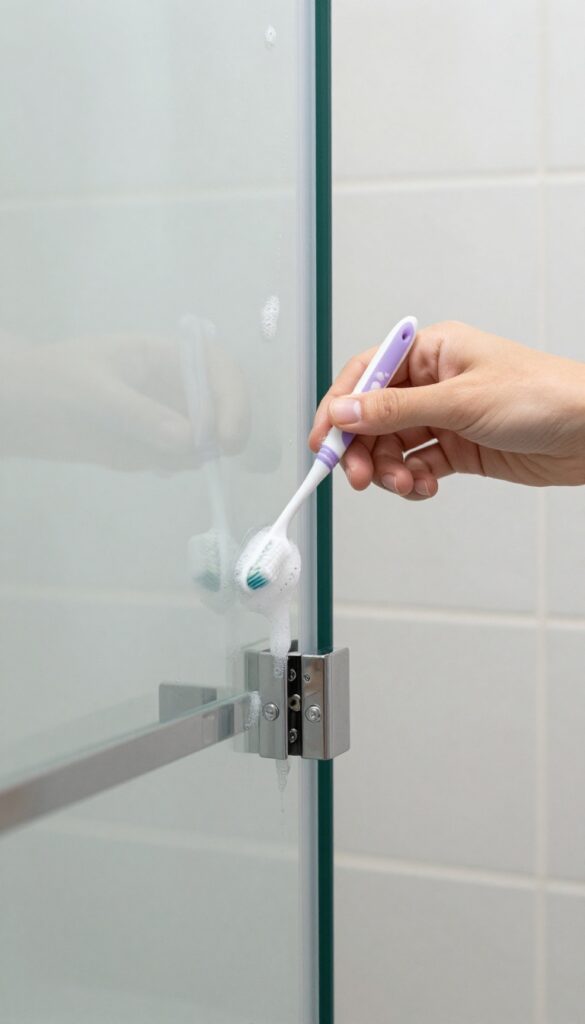
Your shower door has plenty of nooks and crannies that a sponge or cloth just can't reach. Corners, edges, and the area around handles and hinges collect grime over time, and ignoring them makes the whole door look dirty. That's where an old toothbrush becomes your best tool.
A soft-bristled toothbrush dipped in your cleaning solution can get into those tight spaces without scratching the glass or damaging seals. Gently scrub along the edges where the door meets the frame, around the handle, and at the bottom track. This targeted approach removes built-up soap scum and mildew that regular cleaning misses, leaving every inch of your shower door spotless.
Why A Toothbrush Works Best
The small head and soft bristles let you apply pressure exactly where it's needed without harming rubber seals or metal hardware. It's gentle enough for daily use but effective enough to dislodge stubborn deposits in crevices.
Best Cleaning Solution To Use
Mix equal parts white vinegar and water, or use a mild dish soap solution. Avoid harsh abrasives that could scratch the glass or wear down seals. Dip the toothbrush and tap off excess liquid before scrubbing.
Areas You Might Overlook
Focus on the hinge side, the bottom edge where water pools, and around any decorative trim. Don't forget the small gap between the door and the frame—mold loves to hide there.
16. Use a Commercial Hard Water Stain Remover
Sometimes, DIY solutions just aren't strong enough to tackle thick, crusty mineral deposits that have been building up for months. That's when you bring in the big guns: commercial hard water stain removers. Products like CLR, Lime-A-Way, or specialized glass cleaners are formulated to dissolve calcium, lime, and rust on contact.
They work fast, but they also require a bit of caution to avoid damaging your shower fixtures or the glass itself.
Choose The Right Product
Not all hard water removers are created equal. CLR (Calcium, Lime, and Rust) is a popular all-purpose option that works on multiple surfaces. Lime-A-Way is specifically designed for calcium and lime deposits and is often stronger.
For glass doors, look for a product labeled safe for glass and follow the instructions for the specific type of stain you're dealing with. Avoid products with harsh acids if your shower has any metal or painted surfaces nearby.
Apply Safely And Thoroughly
Always wear gloves and ensure the bathroom is well-ventilated. Spray or apply the remover directly onto the dry glass, focusing on the stained areas. Let it sit for the recommended time—usually a few minutes—but don't let it dry completely.
Use a soft sponge or microfiber cloth to gently scrub in circular motions. Rinse thoroughly with warm water to remove all chemical residue. If stains persist, repeat the process.
Protect Surrounding Surfaces
Commercial removers are potent and can etch metal, damage paint, or discolor caulk. Before applying, cover any metal fixtures, handles, or hinges with plastic wrap or painter's tape. Also, protect the shower floor and nearby tiles by wiping up any drips immediately.
After rinsing, dry the glass with a clean towel to prevent new water spots from forming.
17. Maintain with a Weekly Quick Clean
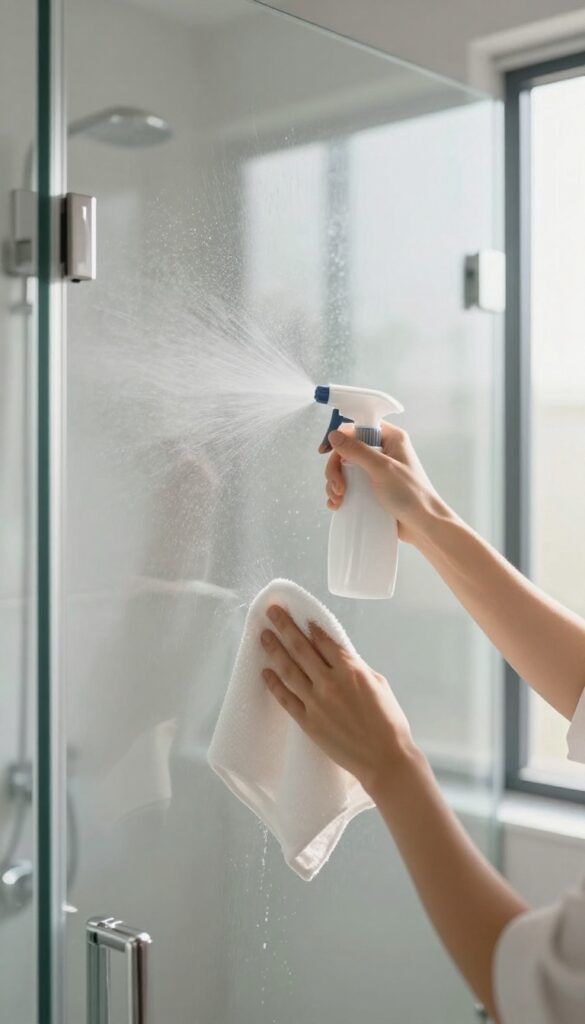
You've put in the effort to get your shower doors spotless. Now, the trick is keeping them that way without turning cleaning into a weekend chore. A quick weekly wipe-down is all it takes to stay ahead of soap scum and hard water buildup.
Think of it as a five-minute reset. You spray, you wipe, you're done. No scrubbing, no soaking, no heavy-duty chemicals.
Just a simple habit that saves you from ever needing a deep clean again.
What You'll Need
Grab a spray bottle filled with a daily cleaner—either a store-bought one or a simple mix of water and a few drops of dish soap. A microfiber cloth is your best friend here; it lifts grime without scratching the glass. Keep both within arm's reach of your shower so there's no excuse to skip it.
The Two-minute Spray Down
After your last shower of the week, give the entire glass door a generous misting with your cleaner. Let it sit for about a minute to break down any fresh residue. Then, using your microfiber cloth, wipe from top to bottom in straight lines.
This prevents streaks and ensures you cover every inch.
The Squeegee Shortcut
If you really want to speed things up, replace the spray-and-wipe step with a quick squeegee pass after every shower. It takes 30 seconds and removes most of the water before it can dry into spots. For the weekly clean, just give the door a quick spray and a once-over with a dry microfiber cloth to catch any lingering film.
Why Consistency Matters
Soap scum and hard water stains build up gradually. When you clean weekly, you're always working with a thin layer of residue, not a crusty coating that requires elbow grease. This gentle routine also protects the glass from etching over time, keeping it clear and shiny for years.
FAQ
How often should I clean my shower doors?
For best results, squeegee after every shower and do a quick wipe-down weekly. A deep clean with vinegar or baking soda every month keeps buildup at bay.
Can I use bleach on shower doors?
Bleach can damage glass seals and frames over time. Stick to vinegar, baking soda, or mild dish soap for safe, effective cleaning.
What's the best way to remove hard water stains?
White vinegar is highly effective for hard water stains. For heavy buildup, soak with a vinegar bag overnight or use a commercial hard water remover.
Will a squeegee scratch my glass doors?
No, a quality rubber squeegee is safe for glass. Just make sure the blade is clean and free of debris to avoid scratches.
How do I prevent soap scum from forming?
Switch to liquid soap or body wash instead of bar soap, which leaves more residue. Also, squeegee after each use and apply a rain repellent monthly.
Conclusion
Keeping your shower doors crystal clear doesn't have to be a chore. With these 17 tips, you can tackle everything from daily maintenance to deep cleaning without harsh chemicals or expensive tools. The key is consistency—a few minutes of care each day saves you hours of scrubbing later.
Pick the tips that fit your routine and watch your glass shine like new. Your bathroom will feel fresher, and you'll enjoy that spa-like clarity every time you step in. Happy cleaning!