13 Pottery Barn Bedroom Ideas for Elegant Relaxed Spaces
A bedroom should feel calm the moment you walk in, not like a showroom you're afraid to touch. Pottery Barn gets that balance right, mixing soft neutrals with lived-in textures and pieces that actually hold up. The trick is knowing which moves matter most and where you can save a little.
You don't need a full overhaul either. Swapping bedding, adding a rug, or rethinking your lighting can shift the whole mood in a weekend.
These thirteen ideas cover the details that make a room feel elegant and relaxed at the same time. Pick a few that fit your space and budget, then build from there.
1. Start with a Neutral Base
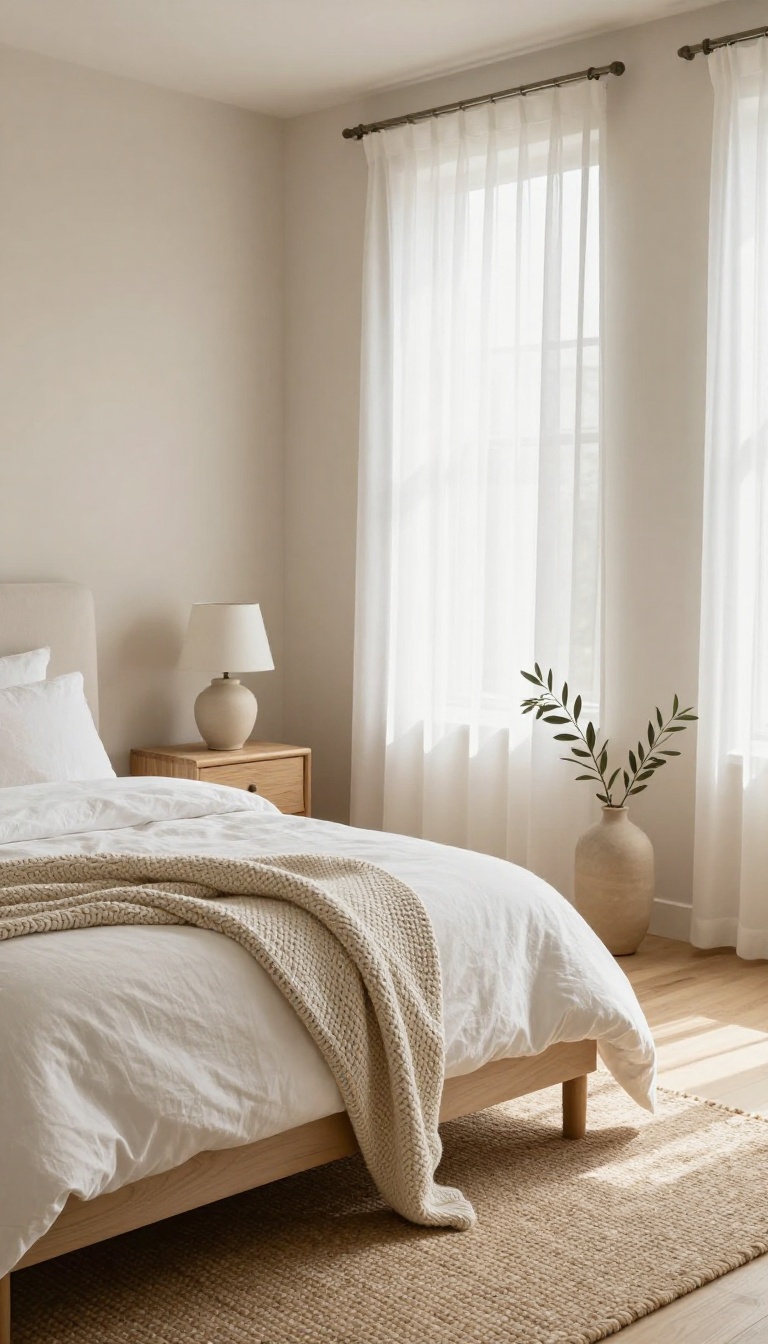
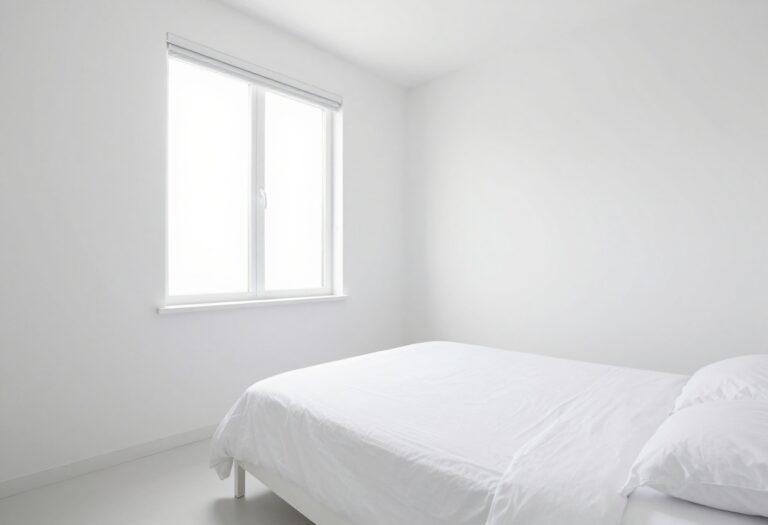
The fastest way to make a bedroom feel elegant and relaxed is to start with a calm, neutral foundation. Think soft whites, warm beiges, or gentle greiges on the walls, paired with furniture in similar tones. This creates a versatile backdrop that makes layering textures and colors feel effortless.
It also keeps the room open and airy, which is key for that relaxed vibe.
A neutral base doesn't mean boring. It means you have a canvas that works with almost anything you add later. Pottery Barn excels at this—their core furniture pieces often come in neutral finishes like white, ivory, or natural wood.
When your walls and big pieces are neutral, you can swap bedding, add a colorful throw, or change up art without redoing the whole room. Plus, neutrals reflect light better, making even small bedrooms feel larger and more inviting.
Pick A Wall Color That Feels Like A Deep Breath
Go for shades like soft white, oatmeal, or pale gray. These colors don't compete with your furniture or decor. They also create a seamless flow from room to room if you use the same color in hallways or adjacent spaces.
Test a few swatches on different walls to see how the light hits them throughout the day. The right neutral will make the room feel instantly calmer.
Choose Foundational Furniture In Coordinating Tones
Your bed, nightstands, and dresser set the tone. Stick to a tight color palette—like white and light wood, or cream and warm gray. Pottery Barn's collections often mix finishes intentionally, so you can pair a white bed with a natural wood nightstand without it looking mismatched.
The goal is cohesion, not perfect matching. This makes the room feel collected over time, not bought all at once.
Keep The Palette Flexible For Seasonal Swaps
A neutral base lets you change accessories with the seasons or your mood. In summer, add crisp white linens and a jute rug. In winter, layer in chunky knits and a faux fur throw.
Because your walls and furniture are neutral, these swaps feel intentional and fresh. You won't have to repaint or replace big pieces—just rotate the smaller stuff.
2. Layer Your Bedding Like a Stylist
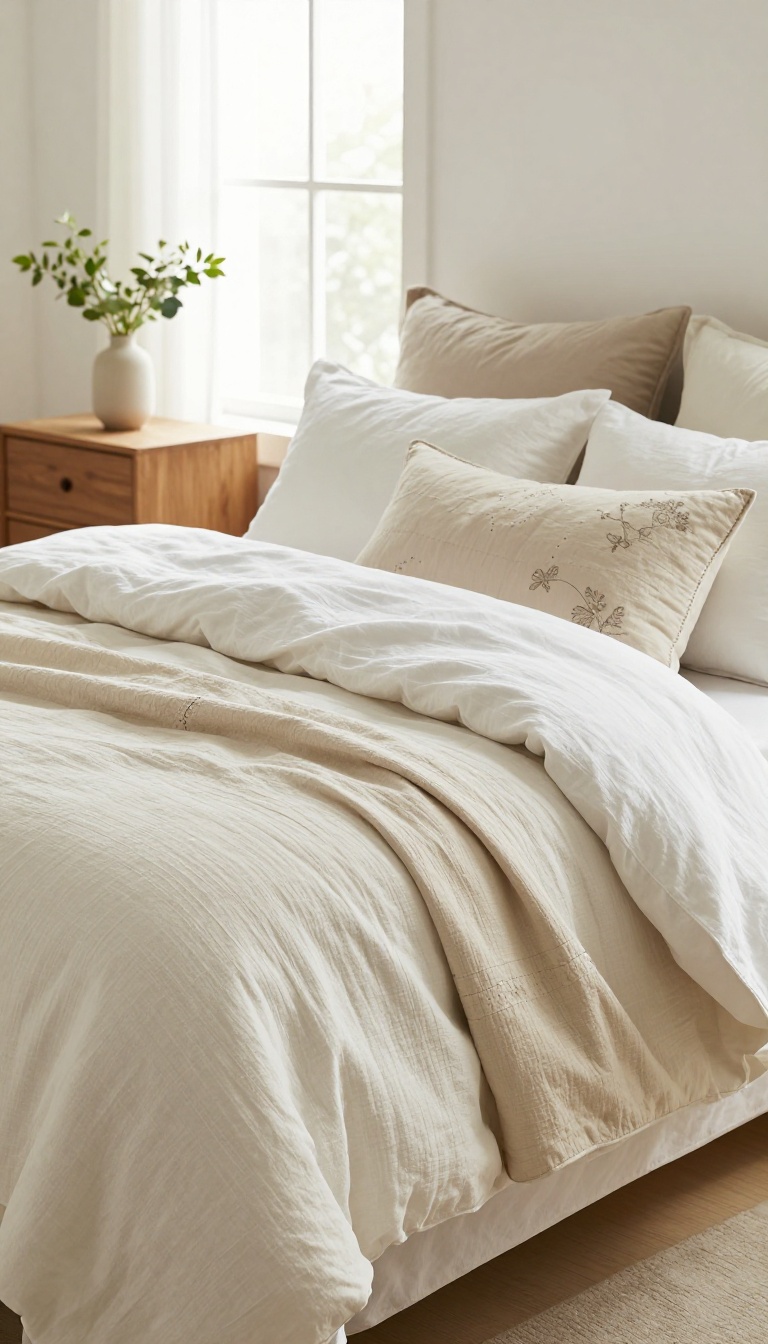
A bed that looks like it belongs in a catalog doesn't happen by accident. It comes from layering different weights, textures, and tones in a way that feels effortless but actually follows a few simple rules. Start with a soft linen duvet as your base, then add a quilt or coverlet for that relaxed, lived-in look.
Finish with a mix of pillows in complementary fabrics and colors, and you've got a bed that invites you to sink in.
The key is to think in threes: a base layer, a middle layer, and a top layer. Your base is the fitted sheet and duvet cover, which should be in a neutral or muted tone. The middle layer is where you add interest—a quilt, a textured blanket, or a lightweight throw.
The top layer is your pillows, which can be a mix of sizes and shapes. Don't be afraid to mix patterns, but keep them in the same color family so it doesn't feel chaotic.
Start With A Linen Duvet
Linen is the secret to that relaxed, slightly rumpled look. It breathes well, gets softer with every wash, and doesn't need to be perfectly ironed. Choose a duvet cover in a soft white, oatmeal, or pale gray.
If you want a bit more warmth, go for a linen-cotton blend. The natural texture of linen adds depth without trying too hard.
Add A Quilt Or Coverlet
A quilt or coverlet folded at the foot of the bed adds both warmth and visual interest. Pick one with a subtle pattern, like a simple stitch or a faded floral, to keep things elegant. Drape it across the bottom third of the bed, letting it hang slightly over the sides.
This layer is what makes the bed look inviting rather than stiff.
Mix Your Pillows
Pillows are where you can have a little fun. Start with two large European shams in a solid color, then add two standard pillows in a complementary pattern. Finish with a lumbar pillow or a small accent pillow in a contrasting texture, like velvet or chunky knit.
Stick to three or four colors max, and vary the sizes so the arrangement feels collected, not cluttered.
3. Mix Wood Tones for Warmth
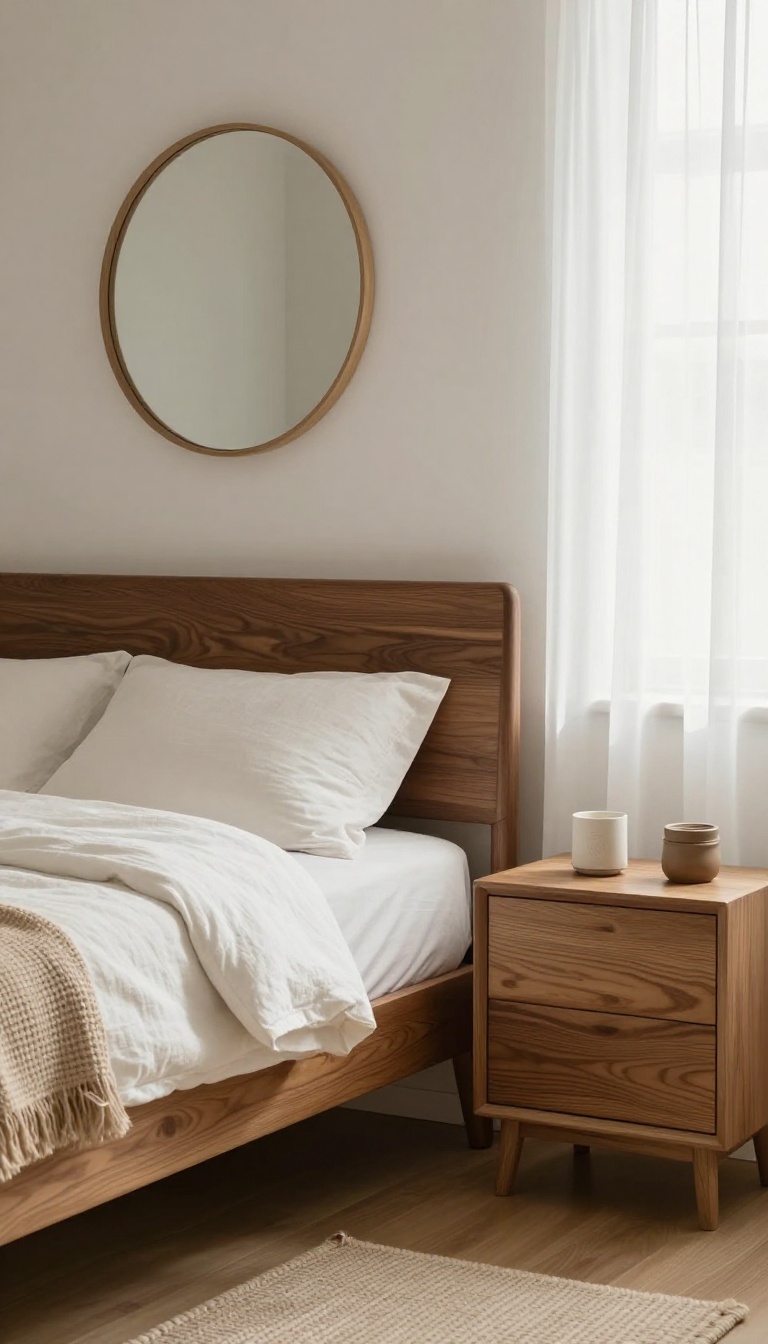
Matching every piece of wood in your bedroom can feel safe, but it often reads as flat. Mixing tones—like a light oak nightstand beside a darker bed frame—adds depth and a collected-over-time feel. The goal isn't chaos; it's a room that looks like it evolved instead of arriving in one truckload.
Start by anchoring the room with one dominant wood tone. That could be your bed, your dresser, or even a built-in. Then layer in a second tone that's either noticeably lighter or darker.
The contrast is what creates warmth and visual interest. You don't need to overthink it. Two or three tones are plenty.
A third can come through a small accent like a mirror frame or a tray. Just keep the undertones compatible—warm with warm, cool with cool—so nothing clashes. Pottery Barn does this well in their own styling.
They'll pair a rustic reclaimed wood bed with a painted or metal nightstand, then soften it with a woven bench or a linen headboard. The mix feels intentional but not fussy.
Pick A Lead Tone
Choose the piece that takes up the most visual space—usually the bed or a large dresser. That's your lead. Everything else should relate to it, either by matching the undertone or contrasting just enough to stand out.
If your lead is a warm honey oak, a deep walnut nightstand will feel rich, not random.
Add Contrast With Purpose
A light oak nightstand next to a dark bed frame is a classic move. It draws the eye and keeps the room from feeling heavy. You can also contrast a wood bed with a painted or upholstered headboard.
The key is to repeat one of the tones somewhere else—like a lamp base or a picture frame—so the mix looks deliberate.
Keep The Finish Consistent
Different woods are fine, but different sheens can look off. If your bed has a matte, natural finish, avoid a high-gloss nightstand. Stick with similar levels of polish—matte with matte, satin with satin—so the variation comes from color, not shine.
That's what makes the mix feel cohesive.
4. Add a Slipcovered Chair or Bench
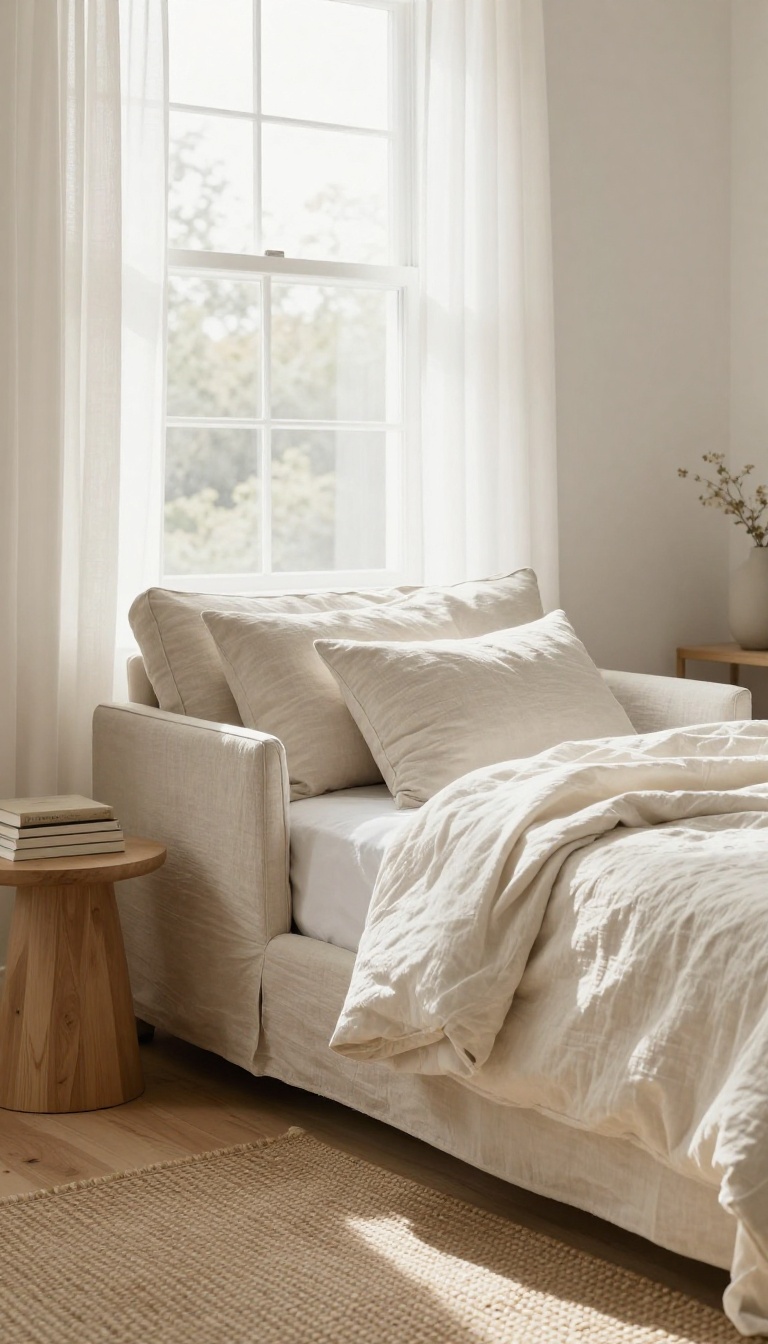
A bedroom needs a spot to sit that isn't the bed. A slipcovered chair or an upholstered bench gives you that without making the room feel formal. The slipcover keeps things soft and washable, so it works in real life, not just in photos.
You can place a chair in a reading corner or tuck a bench at the foot of the bed. Either one adds function and a relaxed layer. The key is choosing a fabric and shape that feel easy, not stiff.
Slipcovers come in linen, cotton, and blends that drape nicely. They also come off for cleaning, which matters in a bedroom. A bench with a simple skirt or straight legs keeps the look airy.
Pair it with a small throw and a pillow to tie it into the room. That little bit of styling makes it look intentional. It also gives you a place to set a book or a cup of tea.
Pick The Right Spot
A chair works best in an empty corner near a window. If your room is tight, a bench at the foot of the bed is the better call. Measure your walkway first so nothing feels cramped.
Choose Easy Fabrics
Linen and cotton blends look relaxed and age well. Performance fabrics are a smart pick if you have pets or kids. Stay away from heavy prints that fight with your bedding.
Style It Simply
Drape a soft throw over one arm or across the bench. Add one pillow that echoes a color from your bedding. Keep it light so the piece doesn't look cluttered.
5. Use Vintage-Inspired Lighting
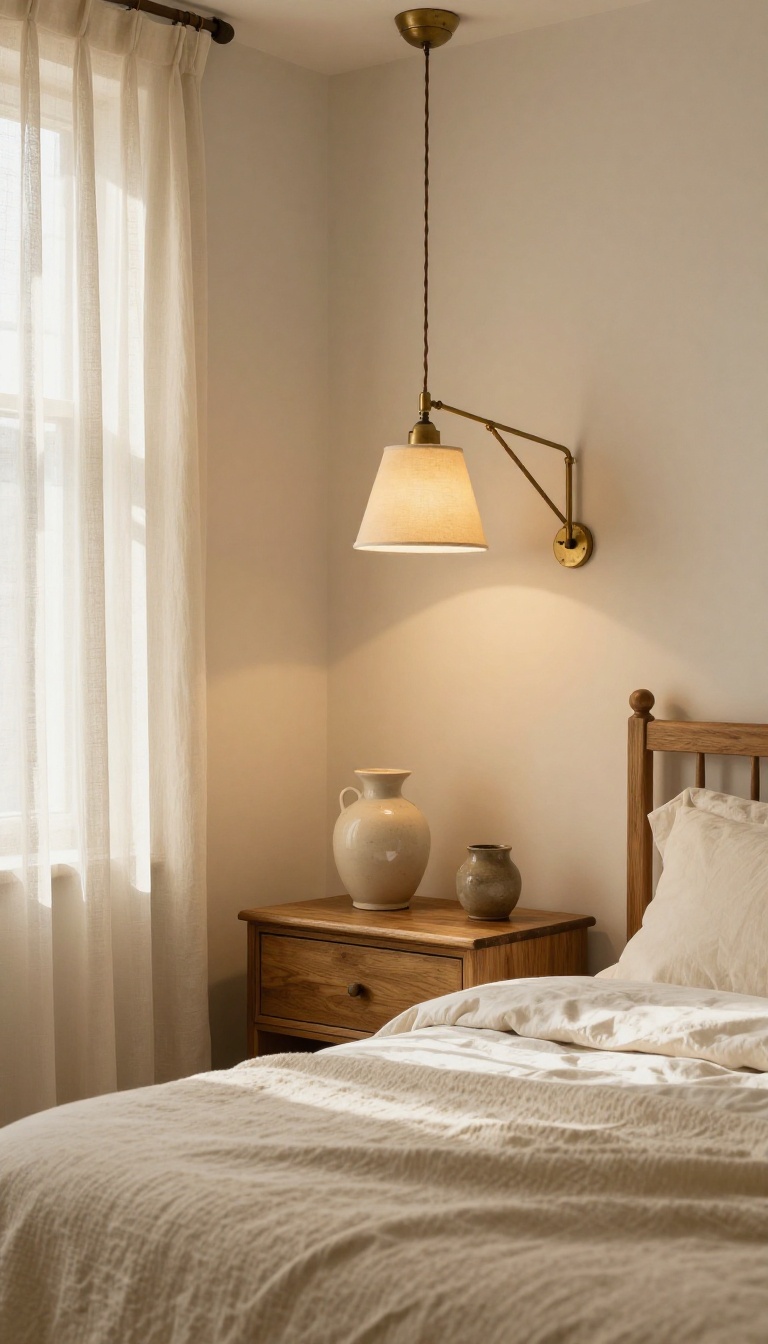
Overhead lights have their place, but they rarely make a bedroom feel warm and inviting. Swap that harsh ceiling fixture for vintage-inspired lamps and sconces that cast a softer, golden glow. The right mix of table lamps, swing-arm sconces, and maybe a simple pendant gives you layered light that feels collected over time, not bought all at once.
Vintage-inspired lighting works because it mimics the way older homes were lit—with multiple small sources instead of one bright beam. That approach creates pools of light and shadow, which instantly makes a room feel cozier and more elegant. Pottery Barn carries plenty of options that nod to classic styles without looking dusty or dated.
Start With Bedside Table Lamps
A pair of matching table lamps on your nightstands is the easiest place to begin. Look for ceramic bases with linen shades or metal finishes with a slight patina. Pottery Barn's vintage-style lamps often have details like turned wood, mercury glass, or aged brass that add character without being fussy.
Keep the shades light-colored so they diffuse a warm, even glow.
Add A Swing-arm Sconce For Reading
If you like to read in bed, a swing-arm sconce mounted above your nightstand is a game-changer. It saves surface space and directs light exactly where you need it. Choose an antique brass or bronze finish with a fabric shade to keep the look soft.
Pottery Barn has several styles that feel vintage without being overly ornate, so they work in both traditional and modern bedrooms.
Consider A Simple Pendant Or Chandelier
For the center of the room, skip the flush-mount dome and try a small pendant or a mini chandelier with a vintage feel. A lantern-style pendant or a candlestick chandelier with exposed bulbs can become a quiet focal point. Just make sure it's on a dimmer so you can lower the brightness in the evening.
The goal is ambiance, not a spotlight.
Layer Your Lighting Sources
The real secret is layering—use at least three light sources at different heights. Combine your table lamps, sconces, and pendant with a small accent lamp on a dresser or desk. Put them all on dimmers or smart plugs so you can adjust the mood with one tap.
That flexibility is what makes a bedroom feel truly relaxed and elegant.
6. Incorporate Natural Textures
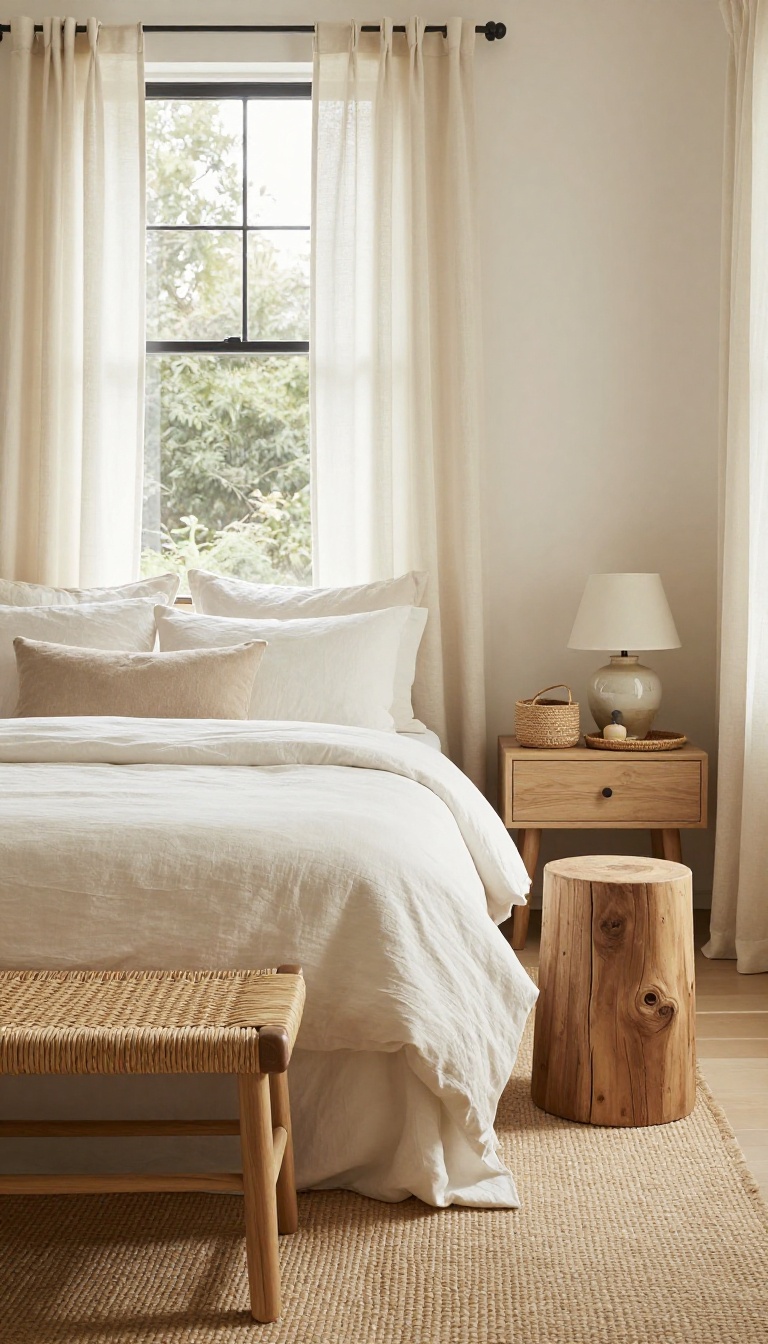
A room full of smooth surfaces and matching finishes can start to feel a little cold, even when the colors are warm. Natural textures break that up. Jute, rattan, wicker, and raw wood add depth you can see and feel, and they keep a polished bedroom from tipping into stiff territory.
You do not have to go full coastal or rustic to make this work. The goal is contrast. When a crisp linen duvet sits next to a nubby jute rug, both materials look better.
When a woven basket lands beside a clean-lined nightstand, the room feels collected instead of staged. Pottery Barn leans on this mix constantly, and it is one of the easiest things to copy at home.
Start With The Floor
A jute or sisal rug is the simplest way to warm up a bedroom. Lay a large one under the bed so it peeks out on all sides, or go smaller with runners along each side if you have wall-to-wall carpet. Just add a rug pad so it stays put and feels softer underfoot.
If jute feels too scratchy, look for a jute-and-cotton blend. You get the same look with a gentler touch.
Swap In Woven Accents
Baskets do double duty in a bedroom. A woven hamper corrals laundry, a lidded basket hides extra blankets, and a shallow tray on the nightstand keeps small items from scattering. Rattan and wicker furniture works too, especially for a bench at the foot of the bed or a small chair in the corner.
Keep the weave tight and the finish neutral so it reads elegant rather than beachy.
Mix In Raw And Organic Materials
Wood, stone, and clay all count here. A raw wood stool used as a side table, a ceramic lamp base with a visible glaze, or a simple stone tray on the dresser adds a quiet organic note. You do not need many pieces.
Two or three are enough to keep the room from feeling too polished. Let them look a little imperfect. That is the point.
7. Choose a Statement Mirror
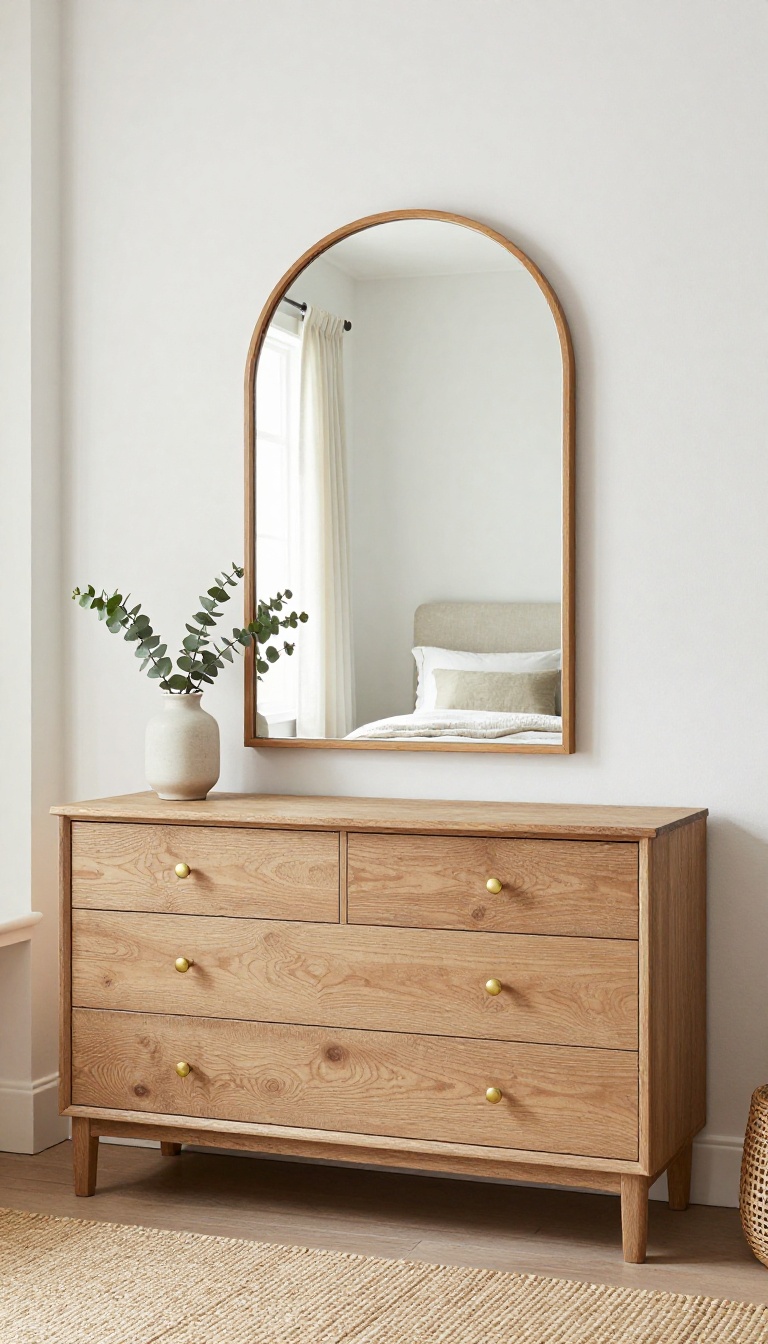
A mirror does more than let you check your outfit. It bounces light around the room, makes tight corners feel bigger, and gives the eye a place to land. In a Pottery Barn bedroom, a big, simple mirror with a wood or metal frame can be the quiet hero above a dresser or console.
You don't need a gallery wall or a bold paint color to create a focal point. One well-placed mirror can do the heavy lifting. It adds polish without shouting, and it works with almost any style—from coastal to modern farmhouse.
The key is scale and simplicity. A mirror that's too small gets lost. A frame that's too busy competes with the rest of the room.
Go large, keep the lines clean, and let the reflection bring in light and depth.
Pick The Right Size And Shape
A mirror should feel like it belongs on the wall, not like it's floating there. As a rule, aim for a mirror that's at least two-thirds the width of the furniture below it. For a dresser, a rectangular or arched mirror works well.
For a console or narrow wall, a round or oval mirror softens the edges. Height matters too. Hang it so the center of the mirror is around eye level, or about 60 to 65 inches from the floor.
That keeps it functional and balanced.
Choose A Frame That Blends
Pottery Barn mirrors often come in wood, metal, or a mix of both. A wood frame—think oak, ash, or a weathered finish—adds warmth and pairs nicely with natural textures. A slim metal frame in black, brass, or antique silver feels a little more tailored.
Match the frame to your other hardware. If your drawer pulls are brass, a brass mirror ties things together. If your room leans rustic, a chunky wood frame feels right at home.
Style Around It Without Clutter
A statement mirror doesn't need much company. On a dresser, keep the surface simple: a small lamp, a ceramic vase, maybe a stack of books. On a console, a pair of candlesticks or a trailing plant is plenty.
Avoid hanging the mirror directly across from a window if you don't want glare. And skip placing it opposite a cluttered area—the reflection will double the mess. Instead, angle it toward a clean wall or a pretty view.
8. Keep Nightstands Functional and Pretty
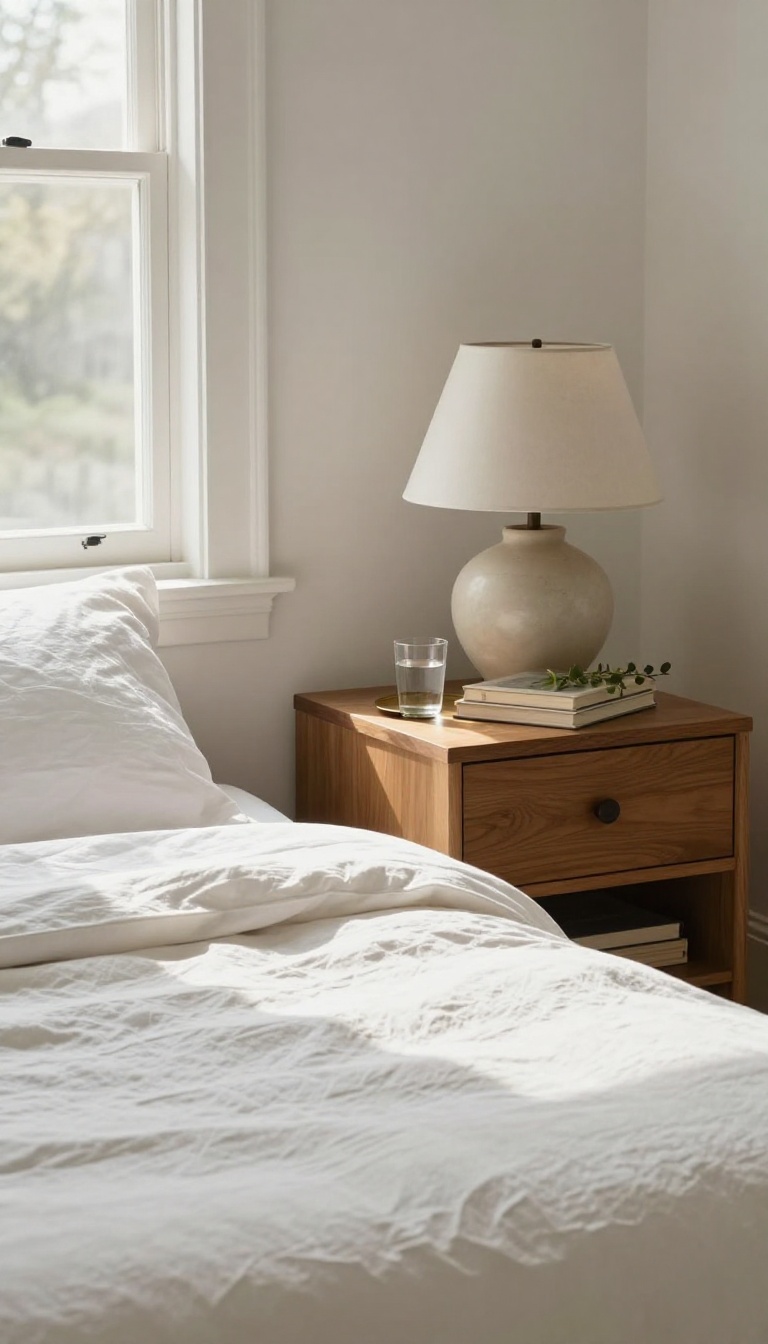
Nightstands are the hardest-working pieces in a bedroom. They hold your water glass, your phone, and whatever book you're pretending to finish. But they're also right at eye level when you're lying in bed, so they need to look good, too.
The trick is balancing what you actually use with what makes the space feel calm and collected.
A cluttered nightstand can make even a tidy bedroom feel messy. A bare one can feel cold. Pottery Barn's styling leans on a simple formula: one practical item, one soft touch, and one small detail that makes you smile.
That's it. No need to overthink it or buy a dozen accessories. The goal is a surface that works for your nightly routine and still looks intentional.
You should be able to reach for a book, turn on a lamp, and set down your tea without knocking anything over. Pretty and practical can absolutely live together.
Start With A Lamp That Earns Its Spot
A lamp is the anchor of any nightstand. Choose one that's tall enough to cast a warm glow over your shoulder while you read, but not so tall it blocks your view of the room. A ceramic base in a soft neutral or a clear glass option keeps things airy.
Pottery Barn's classic silhouettes—think simple drum shades and subtle curves—work because they don't fight with your bedding or art. If you have the space, a slightly oversized lamp can add a nice bit of presence. Just make sure the shade sits below eye level when you're sitting up in bed.
Add A Stack Of Books You Actually Like
Books bring warmth and personality without any effort. Stack two or three horizontally, and top them with a small object like a brass clock or a tiny dish for your rings. Mix hardcovers and paperbacks, and don't worry about matching colors—a little variety looks more collected than a perfectly coordinated set.
If you're not a big reader, use magazines or a beautiful box instead. The point is to add height and texture, not to prove you're well-read.
Finish With A Tiny Vase Or Tray
A small vase with a single stem or a few dried sprigs adds life and softness. A simple tray corrals your keys, glasses, and lip balm so they don't scatter. Both are small moves that make a big difference.
Choose a tray in a material that ties to your room—woven rattan, aged brass, or matte ceramic. For the vase, keep it low so it doesn't compete with the lamp. A tiny bud vase with one fresh flower feels elegant and relaxed, which is exactly the vibe you're after.
9. Add a Soft Area Rug
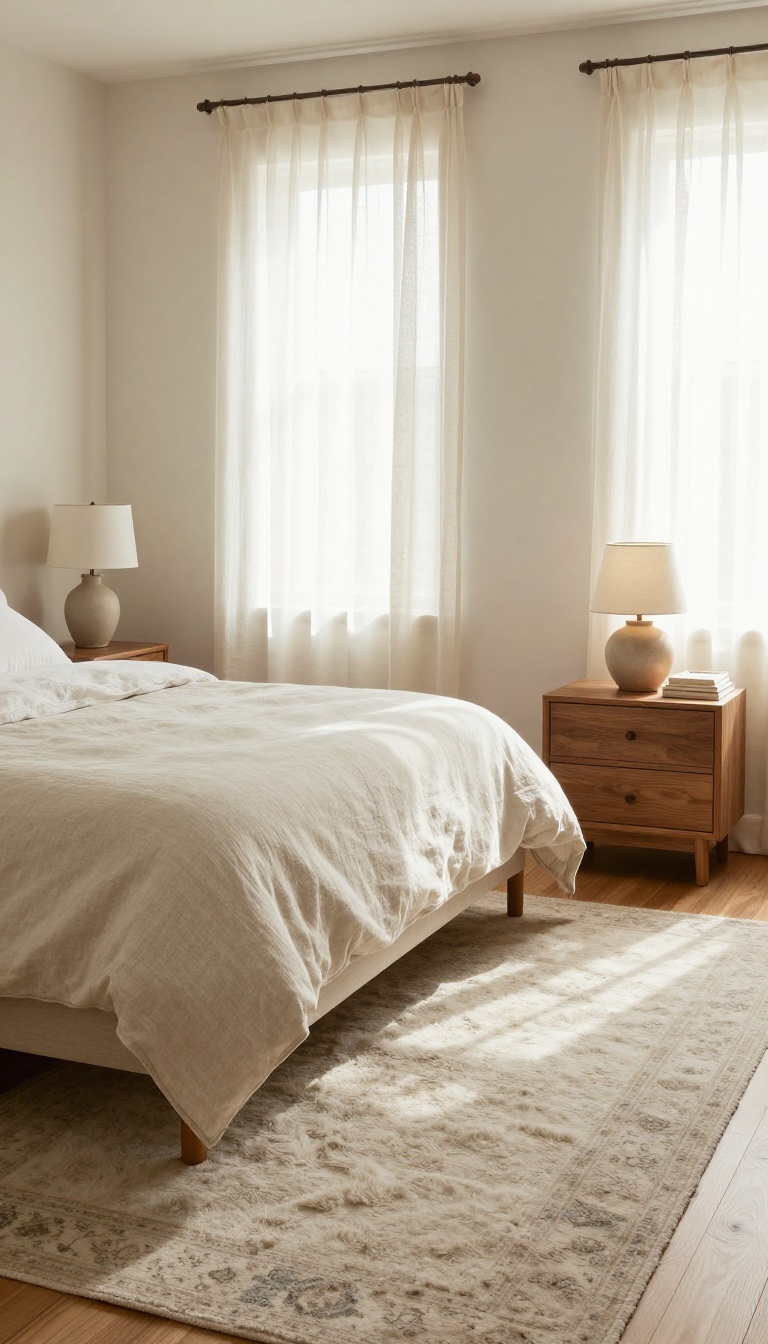
A rug does more for a bedroom than most people give it credit for. It softens the echo, warms up cold floors, and gives the bed a clear place to sit. Without one, even a beautifully made bed can feel like it's floating in a big empty space.
Pottery Barn leans on this trick constantly. Their bedrooms almost always have a rug that ties the bedding, walls, and furniture together without shouting for attention. You can get the same effect with a plush wool rug or a vintage-inspired pattern that looks like you found it on a weekend trip.
The key is picking something that feels good underfoot and works with what you already own. It doesn't need to be expensive, just intentional.
Start by thinking about size. A rug that's too small makes the bed look oversized and awkward. You want at least the front legs of your nightstands and the bottom third of the bed to sit on the rug.
In a primary bedroom, that usually means an 8×10 or 9×12, depending on your bed size. For a queen bed, an 8×10 works well if you place it horizontally so the longer side runs parallel to the headboard. For a king, go with a 9×12.
If you have a smaller guest room, a 5×8 can work, but center it under the bed so it peeks out on both sides. Material matters too. Wool is durable and feels luxurious, but it can be pricey.
A wool blend or a polypropylene rug with a soft hand is a solid budget-friendly option. If you want that vintage look, try a low-pile rug with a faded pattern in muted colors like sage, rust, or dusty blue. Layering is another Pottery Barn staple.
Put a smaller, patterned rug on top of a larger, neutral jute or sisal rug. It adds texture and depth without overwhelming the room. Just make sure the top rug is thin enough that it doesn't create a tripping hazard.
Color-wise, pull one or two shades from your bedding or artwork. A rug that repeats a color from your pillows or curtains makes the whole room feel cohesive. If your bedding is all white and your walls are neutral, a rug with a subtle pattern can add interest without breaking the calm.
Don't forget the rug pad. It keeps the rug from sliding, adds cushioning, and extends the life of the rug. A felt and rubber pad is best for bedrooms because it's quiet and soft.
Finally, think about placement. If you have a bench at the foot of the bed, the rug should extend beyond it so your feet land on softness when you get up. If you have a sitting area, a separate rug can define that zone, but keep the colors related so the room doesn't feel choppy.
Get The Size Right
Measure your bed and nightstands before you shop. A rug that's too small will make the room feel off, no matter how pretty it is. For a queen, aim for 8×10; for a king, 9×12.
In a tight room, a 5×8 centered under the bed works if you skip nightstands or use small ones.
Pick A Material That Feels Good
Wool is the gold standard for softness and durability, but blends and synthetics can look just as good for less. A low-pile vintage-style rug hides dirt and feels smooth underfoot. If you want extra coziness, layer a plush rug over a flatweave.
Tie It To Your Colors
Choose a rug that echoes a color from your bedding, curtains, or art. A faded pattern in muted tones keeps things relaxed. If your room is mostly neutral, a rug with a subtle geometric or floral motif adds just enough visual interest.
Don't Skip The Pad
A good rug pad keeps the rug in place and makes it feel thicker. Look for a felt and rubber pad, which is quiet and won't damage your floors. It's a small investment that makes a big difference in comfort.
10. Use Curtains to Soften the Room
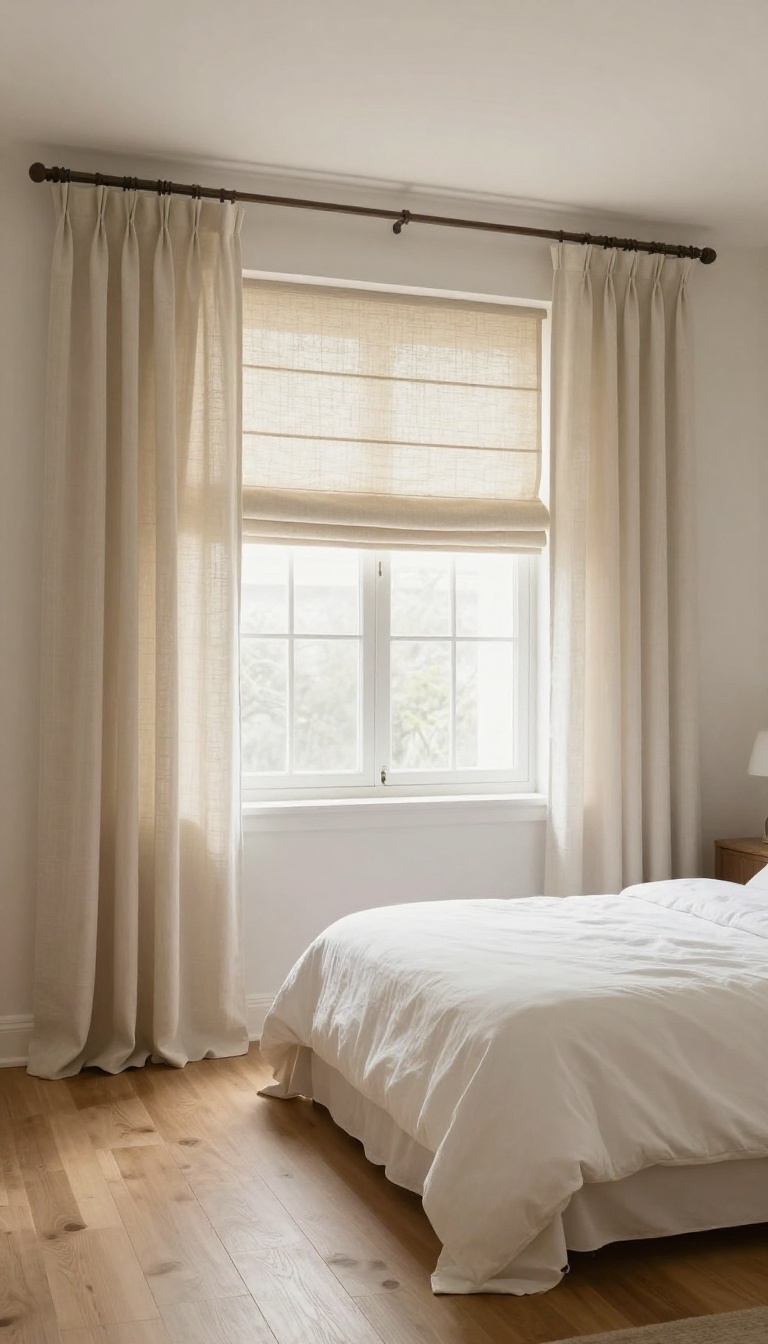
Windows are often the last thing people think about in a bedroom, but they can make or break the mood. Bare glass feels harsh, especially at night when the room should feel cozy. Curtains change that instantly by adding softness, height, and a gentle filter for light.
The right curtains do more than block the sun. They frame the window, draw the eye upward, and bring a layer of texture that makes the whole space feel more finished. Pottery Barn does this well with simple panels in breathable fabrics that hang just right.
Pick A Light, Airy Fabric
Heavy drapes can feel formal and stuffy in a bedroom. Instead, choose linen, cotton, or a linen blend that moves a little and lets some light through. Pottery Barn's Belgian flax linen is a favorite because it looks relaxed but still polished.
The fabric should feel soft to the touch and drape nicely without looking stiff.
Hang Them High And Wide
Mount the rod close to the ceiling and extend it a few inches past the window frame on each side. This tricks the eye into seeing taller windows and a higher ceiling. It also lets you pull the curtains back fully so you get maximum light during the day.
Floor-length panels that just kiss the floor look intentional and elegant.
Layer For Light Control
If you need darkness for sleep, add a sheer or blackout liner behind your main panels. You can also double up with a woven shade or Roman blind for extra texture. The layered look adds depth and lets you adjust the light throughout the day.
Just keep the hardware simple so it doesn't compete with the fabric.
11. Display Meaningful Art and Photos
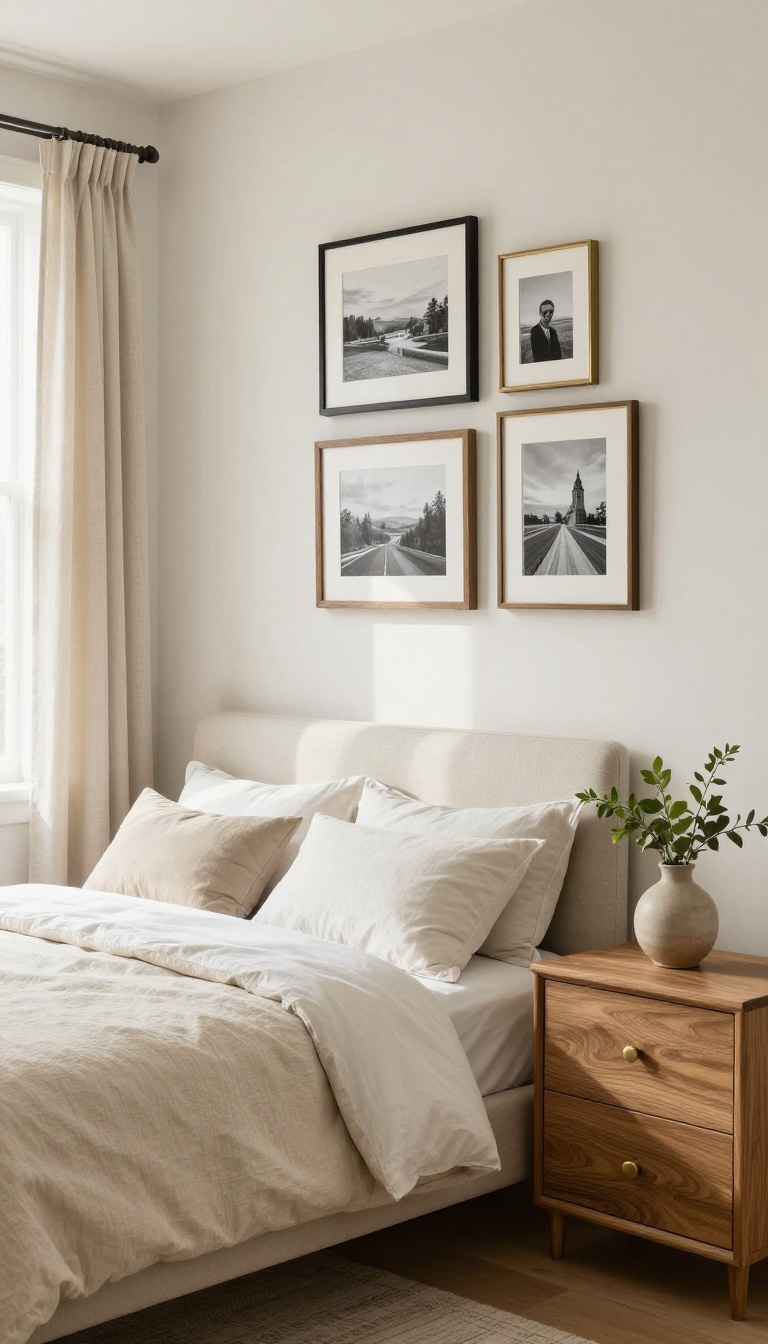
Art and photos are the quickest way to make a bedroom feel like yours. They tell a story without saying a word, and they soften all those clean Pottery Barn lines with a little soul. You don't need a gallery's worth of pieces either.
A few well-chosen frames can do more than a wall full of random prints.
The key is to mix what you love with what fits the room. Lean a framed photo on a dresser, hang a small collection above the bed, or create a mini gallery on a side wall. Pottery Barn's wood and metal frames come in finishes that blend with their furniture, so your art feels intentional, not tacked on.
Keep the arrangement simple and let each piece breathe. That's how you get personality without the clutter.
Choose Pieces That Matter
Start with art or photos that mean something to you. A black-and-white shot from a trip, a sketch your kid made, or a vintage landscape you found at a flea market. When the subject is personal, it automatically feels elegant because it's authentic.
Skip the generic prints that everyone has. A single meaningful piece beats five forgettable ones.
Mix Frames And Sizes
Variety keeps a gallery wall from looking flat. Pair a large statement piece with smaller ones, and mix frame finishes like natural wood, black, and brass. Pottery Barn's gallery frames are designed to work together, so you can build a set that feels cohesive.
Just keep the matting consistent or the color palette tight. That's the trick to making it look curated instead of chaotic.
Lean, Don't Always Hang
Leaning a few frames on a dresser or shelf adds a relaxed, collected vibe. It's also forgiving if you change your mind or want to rotate pieces. Use a mix of sizes and overlap them slightly for depth.
This works especially well on a long dresser or a console behind a bed. It's an easy way to add art without committing to nails and holes.
12. Bring in a Touch of Greenery
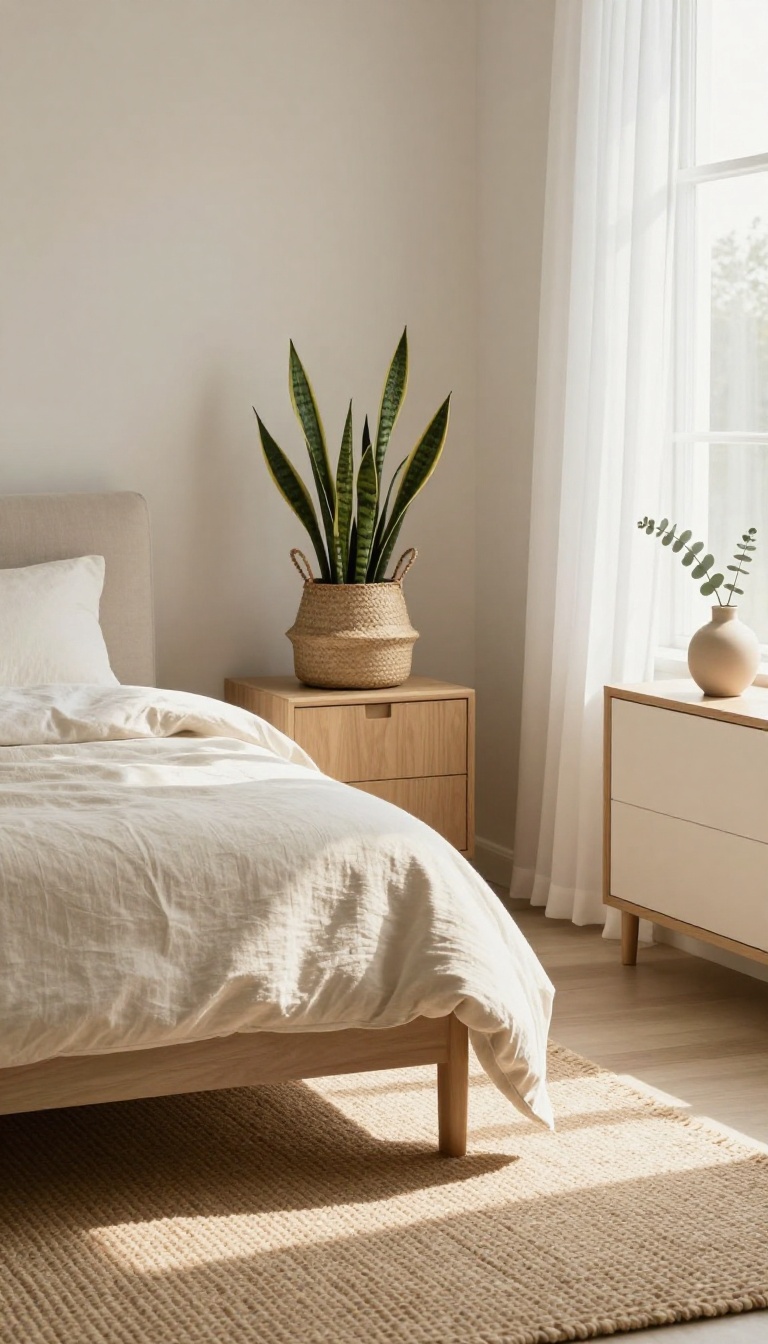
Rooms built on neutrals can start to feel a little too quiet. A plant fixes that in about thirty seconds. It adds color, texture, and a sense of something alive in the corner.
Pottery Barn leans on this trick constantly in its own styling, and it works because greenery never fights the calm. It just softens it.
You do not need a jungle. One well-placed plant or a few stems in a vase is usually enough to wake a room up without cluttering it. The goal is contrast, not volume.
Think of greenery as the punctuation mark on an otherwise smooth sentence.
Pick Plants That Suit Your Light
Before you fall for a fiddle leaf fig, check your window situation. A bedroom with bright morning light can handle a snake plant, a rubber tree, or a bird of paradise. Low-light rooms do better with a ZZ plant, a pothos, or a small philodendron.
Choosing the right plant for the light you actually have saves you from watching leaves yellow out in a month. If real plants feel like too much upkeep, a high-quality faux olive tree or eucalyptus stem looks convincing and needs nothing from you.
Keep Containers Simple And Warm
The pot matters as much as the plant. A woven basket, a matte ceramic planter, or a simple terracotta vessel fits the relaxed Pottery Barn look better than anything shiny or bright. Stick to neutral tones like cream, sand, clay, or soft gray so the greenery does the talking.
Scale counts too. A tiny plant on a big nightstand looks lost, so match the pot to the surface it sits on.
Try Stems When Space Is Tight
Not every bedroom has room for a floor plant, and that is fine. A few fresh or dried stems in a clear glass vase on a dresser or nightstand gives you the same lift in a smaller footprint. Eucalyptus, olive branches, and dried pampas all work well and hold their shape for weeks.
Change the water on fresh stems every few days, or swap in a new bundle when the old one fades. It is a cheap way to keep the room feeling cared for.
13. Finish with Cozy Layers
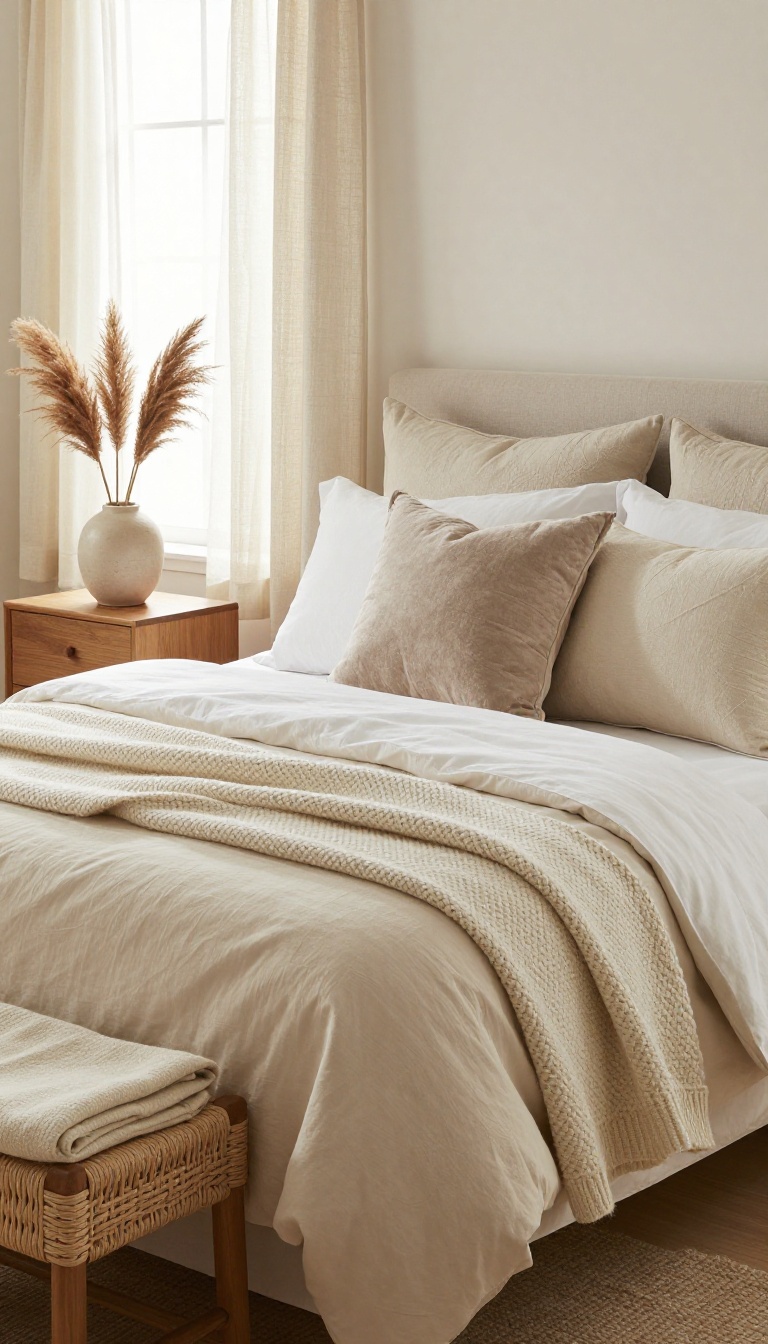
The final step in pulling a bedroom together is often the one people skip. A throw blanket and a couple of pillows can make the difference between a room that looks good and one that feels good. These layers add warmth, texture, and that relaxed vibe you're after.
Think of cozy layers as the finishing touch that invites you to linger. They soften hard edges, add visual interest, and make the bed look like somewhere you'd want to curl up. The best part?
You can change them with the seasons or your mood without much effort.
Drape A Soft Throw
A throw blanket is an easy win. Drape it over the back of a chair, across the foot of the bed, or even on a bench at the end of the bed. Choose a chunky knit or a soft cotton in a color that complements your bedding.
It adds instant texture and makes the space feel more lived-in.
Add Textured Pillows
Pillows are like jewelry for your bed. Mix a couple of textured options—maybe a boucle or a linen blend—with your existing pillows. Stick to two or three extra pillows so it doesn't feel cluttered.
They add depth and make the bed look inviting.
Mix And Match Materials
Don't be afraid to combine different fabrics. A velvet pillow next to a cotton throw, or a wool blanket with linen sheets, creates a rich, layered look. Just keep the color palette cohesive so it feels intentional, not chaotic.
FAQ
What defines a Pottery Barn bedroom style?
It's a mix of classic, comfortable pieces with natural textures and neutral tones. The look feels elegant but not overly formal, with an emphasis on layering and warmth.
How can I get the look on a budget?
Focus on a few key pieces like bedding and lighting, then mix in affordable finds from thrift stores or budget retailers. Neutral basics and DIY accents go a long way.
What colors work best for this style?
Stick to soft neutrals like white, cream, beige, and gray, with occasional muted blues or greens. These create a calm backdrop that lets textures stand out.
Do I need matching furniture?
No—mixing wood tones and styles actually adds character. Just keep the overall palette cohesive so the room still feels pulled together.
How do I make a small bedroom feel relaxed and elegant?
Use light colors, a large mirror, and multi-functional furniture. Keep clutter low and choose a few impactful pieces rather than filling every corner.
Conclusion
You do not need thirteen changes to make a bedroom feel calmer and more polished. Pick one idea that solves a real problem, like lighting or storage, and try it this month. Live with it for a week before buying anything else.
Pottery Barn looks work best when they feel collected, not ordered all at once. Let each piece settle in, notice how the room feels at night, then decide what comes next. Start with the idea you keep coming back to.