11 Green Living Room Ideas for Fresh Organic Style
Green has a way of making a room feel alive without shouting for attention. It’s the color of leaves, moss, and quiet mornings—perfect for a living room that wants to feel grounded but not boring.
Whether you lean toward deep forest tones or soft sage, green brings a natural calm that’s hard to beat. The trick is keeping it warm and lived-in.
You don’t want your space to look like a showroom or a botanical garden that’s too precious to touch. The best green rooms feel collected over time, with layers of texture, a mix of old and new, and plenty of places to sink in and relax.
1. Start with a Sage Green Accent Wall
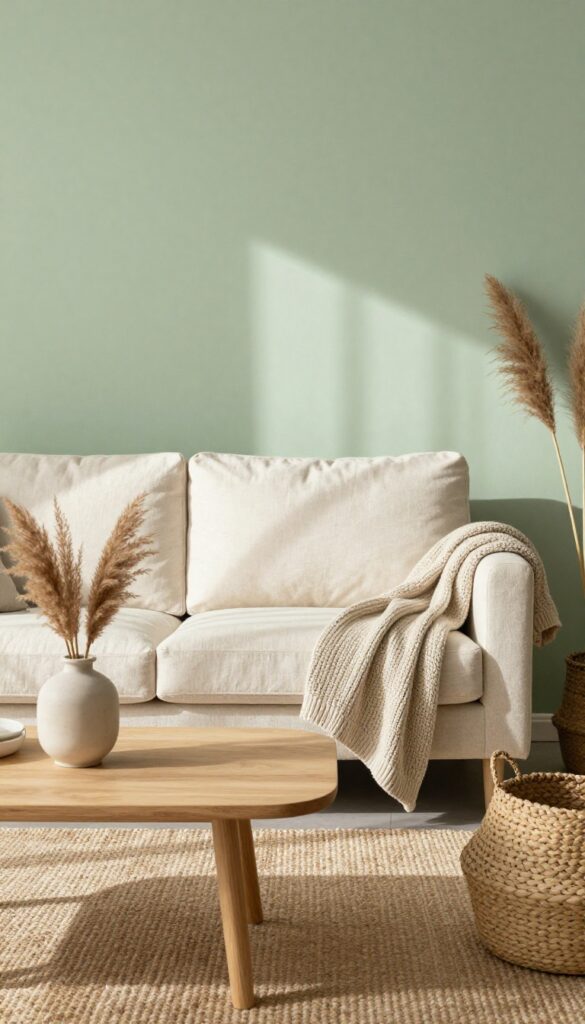
Sage green is having a serious moment in home decor, and for good reason. It’s soft enough to feel neutral but has enough personality to make a statement. Painting one wall in this earthy hue instantly gives your living room a grounded, organic feel without going full-on forest green.
It’s also a low-risk way to test the color trend before committing to all four walls. Plus, sage pairs beautifully with warm wood tones, creamy whites, and natural textures, making it a versatile backdrop for any style.
A sage green accent wall works best on the wall that naturally draws the eye, like the one behind your sofa or the fireplace wall. It creates a focal point that anchors the room and adds depth. Because sage is a muted color, it won’t overwhelm the space, even in smaller living rooms.
The key is to balance it with lighter elements, such as a white or cream sofa, light wood furniture, and plenty of natural light. This approach keeps the room feeling airy and fresh while still embracing the green trend.
Best Colors To Pair
- Sage green loves warm neutrals like beige, cream, and taupe. For a bolder look, try pairing it with dusty rose or terracotta accents. If you prefer a cooler palette, soft blues and whites create a serene, spa-like vibe.
- Avoid pairing sage with cool grays, which can make the room feel flat.
Texture Mix
To keep the accent wall from feeling one-dimensional, layer in different textures. A chunky knit throw, a linen sofa, and a jute rug all add visual interest and warmth. Wooden elements, like a reclaimed coffee table or floating shelves, enhance the organic feel.
Finishing Touch
Once the wall is painted, style it with a mix of art and mirrors. A large round mirror with a natural wood frame bounces light and softens the room. Add a few black-and-white prints or botanical art to keep the look curated and calm.
2. Layer in Olive Velvet Seating
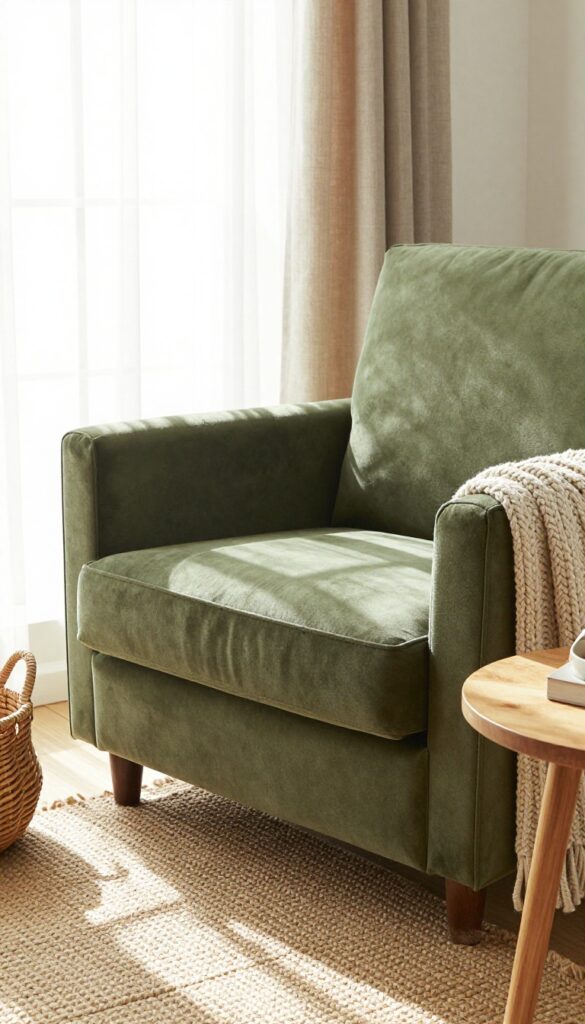
Olive green velvet seating is one of those pieces that instantly makes a room feel more grounded and inviting. The deep, earthy tone brings warmth without being overpowering, and the soft texture of velvet adds a layer of comfort that’s hard to beat. Whether you go for a full sofa or a single armchair, this piece becomes a natural anchor for the rest of your decor.
Velvet has a way of catching light and shadow, giving your seating a subtle depth that changes throughout the day. Olive green specifically pairs well with natural materials like wood, rattan, and linen, so it fits right into an organic, lived-in aesthetic. It’s also surprisingly versatile—it works with both warm and cool color palettes, from creamy whites and terracotta to soft blues and grays.
Best Colors To Pair
Olive velvet shines next to warm neutrals like cream, beige, and taupe. For a bolder look, try pairing it with rust or mustard accents. If you prefer a cooler scheme, soft blush or dusty blue can create a beautiful contrast without clashing.
Texture Mix
Balance the plush velvet with rougher textures like a chunky knit throw, a jute rug, or a wooden coffee table. This contrast keeps the room from feeling too formal or one-note. A linen curtain or a woven basket nearby adds to the relaxed vibe.
Small-space Fix
In a smaller living room, an olive velvet armchair or a loveseat can be just as impactful as a full sofa. Place it near a window with a small side table and a floor lamp to create a cozy reading nook that doesn’t crowd the room.
3. Bring in Organic Textures with Linen and Wool
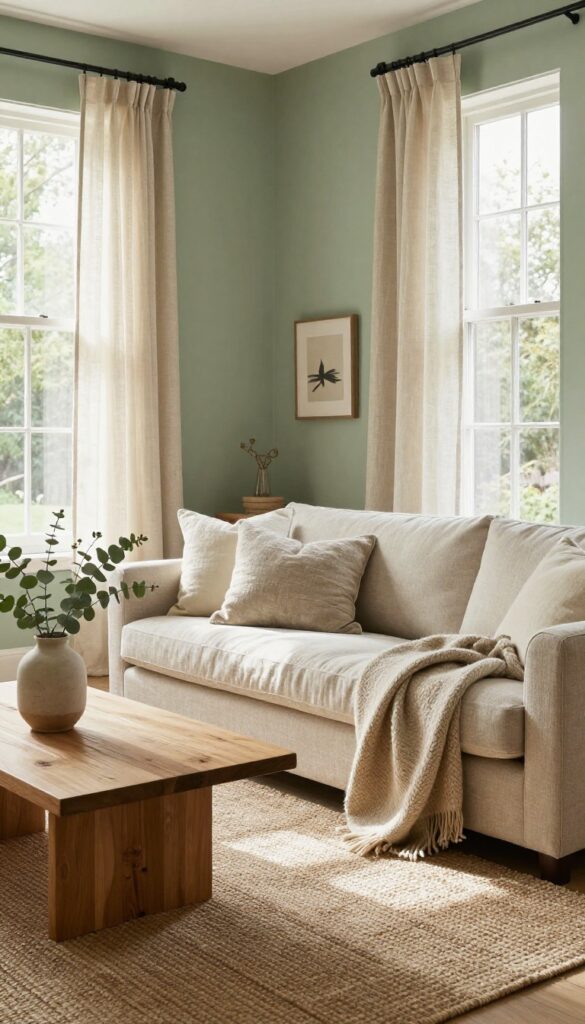
Green is a bold, beautiful choice, but it can feel a little flat if everything is smooth and shiny. That’s where organic textures come in. Linen, wool, and jute bring a soft, natural warmth that makes green feel grounded and inviting.
Think of it like pairing a crisp green apple with a cozy wool blanket—it’s a contrast that just works. These materials add depth and a lived-in feel that keeps the room from looking too staged or cold. Plus, they’re incredibly practical for everyday life, hiding dust and wrinkles with grace.
Start with your largest surfaces: the windows and floors. Linen curtains in a neutral tone like oatmeal or stone soften the green walls and filter light beautifully. On the floor, a jute rug adds earthy texture underfoot and anchors the seating area.
Then layer in wool throws and linen cushions on the sofa. These pieces invite you to touch and snuggle, making the room feel instantly more welcoming. The key is to mix textures without going overboard—stick to two or three natural materials and repeat them around the room for a cohesive look.
Best Materials To Mix With Green
- Linen, wool, jute, and cotton are your go-tos. Linen works well for curtains and cushion covers because it has a relaxed, crinkled look that doesn’t need ironing. Wool is perfect for throws and chunky knit blankets—it adds visual weight and warmth.
- Jute rugs are durable and affordable, ideal for high-traffic areas. For a softer touch underfoot, layer a wool or cotton rug over jute. Avoid synthetic fabrics like polyester or nylon; they can look too sleek and clash with the organic vibe.
Texture Mixing Tips
- Don’t be afraid to combine different textures in the same color family. A light green sofa can be dressed with a cream linen throw and a chunky wool cushion. Add a jute pouf or a wooden coffee table to break up the softness.
- The goal is to create contrast without chaos. For example, pair a smooth green wall with a rough jute rug and a soft wool blanket. This layering makes the room feel rich and curated, not flat.
Finishing Touches For Warmth
- Small details matter. Swap out plastic or metal planters for woven baskets or ceramic pots. Add a wooden tray on the coffee table to hold remotes and coasters.
- A sheepskin or faux fur throw over an armchair instantly adds coziness. Even your lighting fixtures can contribute—choose a rattan or paper pendant light instead of a glass one. These finishing touches tie the whole organic look together and make the space feel truly lived-in.
4. Add Potted Plants for Instant Life
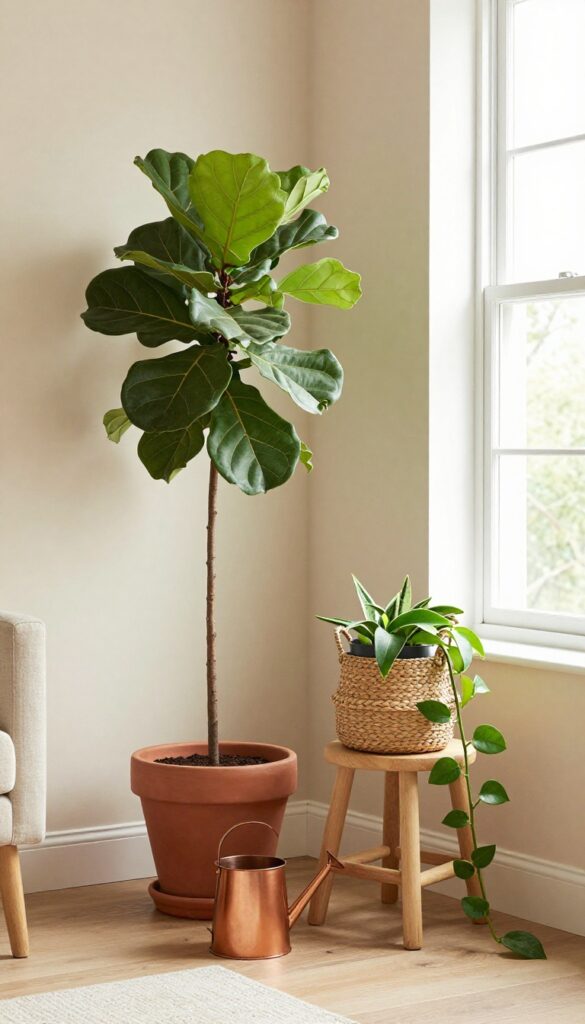
Nothing brings a living room to life quite like a cluster of houseplants. They soften hard edges, add organic texture, and make the space feel more like a home. Grouping a few in different heights creates a mini indoor garden that feels lush and intentional, not just an afterthought.
Start with a tall statement plant like a fiddle-leaf fig or a rubber tree, then layer in medium-height plants like a snake plant or a monstera. Finish with trailing plants like pothos or string of pearls that spill over the edges of their pots. Place the group near a window with good light, or use a grow light if your room is darker.
The mix of leaf shapes and sizes adds visual interest, while the varying heights create depth and movement. Keep the pots cohesive—same color family or material—to tie the look together without it feeling chaotic.
Best Plants For Low Maintenance
If you’re new to plant parenthood, stick with hardy varieties that forgive a little neglect. Snake plants, ZZ plants, and pothos thrive in low light and don’t need frequent watering. They still look sculptural and fresh, so you get the visual payoff without the stress.
Pot Pairing Tip
Choose pots in warm, earthy tones like terracotta, matte black, or natural woven baskets. These materials complement the green leaves and keep the look grounded. Avoid glossy or bright-colored pots unless you’re going for a more playful vibe.
Finishing Touch
Add a small watering can or a spray bottle as a decorative accent next to the plants. It’s both practical and visually charming, reminding you to care for your green friends while adding a lived-in feel.
5. Use Forest Green as a Bold Trim Color
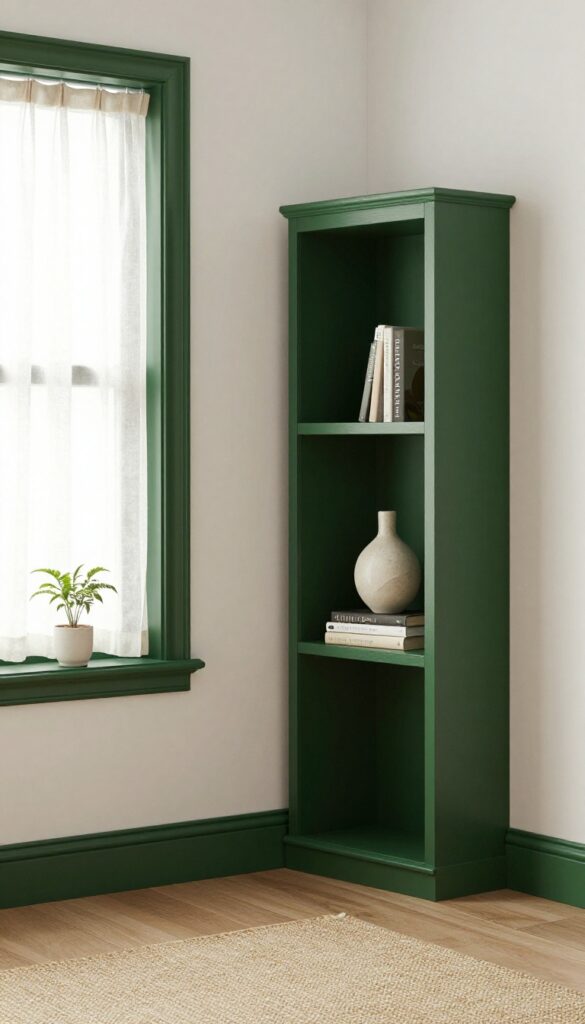
If you're drawn to green but worry it might overwhelm the room, try using it as an accent on your trim. Painting window frames, baseboards, or even the inside of a bookshelf in a deep forest green adds a surprising pop of color that frames your space beautifully. It's a low-commitment way to bring in that rich, earthy tone without repainting an entire wall.
This trick works especially well in rooms with neutral walls—think warm white, soft beige, or light gray. The forest green trim acts like a piece of art, drawing the eye and creating visual interest. It also helps define the architecture of the room, making windows and built-ins feel intentional and custom.
For a cohesive look, carry the same green onto a single accent wall or use it on the back of open shelving to tie everything together.
Best Colors To Pair
Forest green trim pairs beautifully with creamy whites, warm taupes, and soft blush tones. For a more dramatic look, try it with deep navy or charcoal walls. The key is to keep the surrounding palette muted so the green really stands out.
Where to Use It
Focus on high-impact spots: window frames, door casings, baseboards, or the inside of a built-in bookcase. You can also paint the back of a media console or the inner frame of a large mirror. These small surfaces deliver a big style payoff without overwhelming the space.
Finishing Touch
Balance the bold trim with natural textures like a jute rug, linen curtains, or a wooden coffee table. Add a few potted plants or dried eucalyptus to echo the green and keep the look grounded and organic.
6. Mix Green with Warm Wood Tones
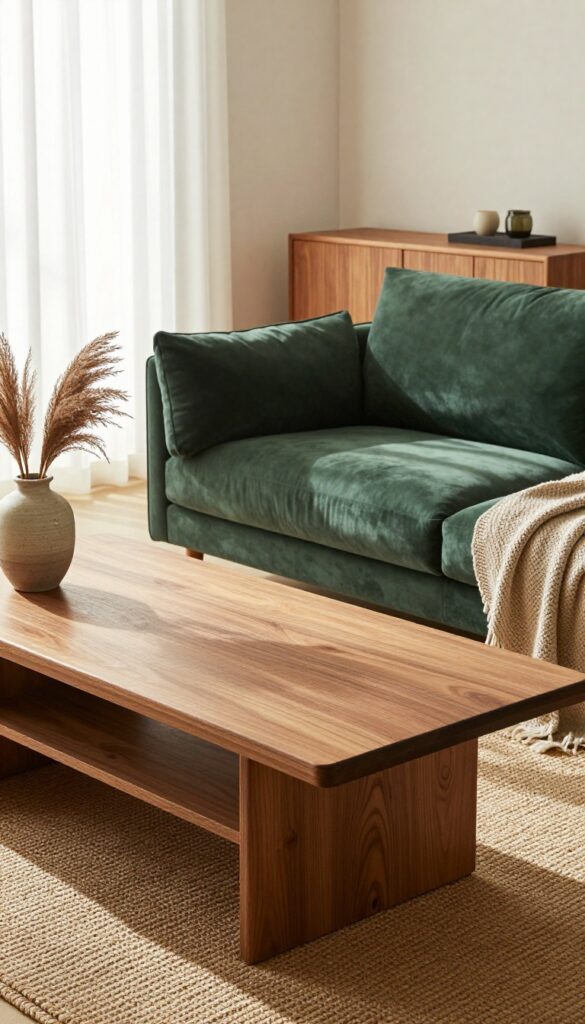
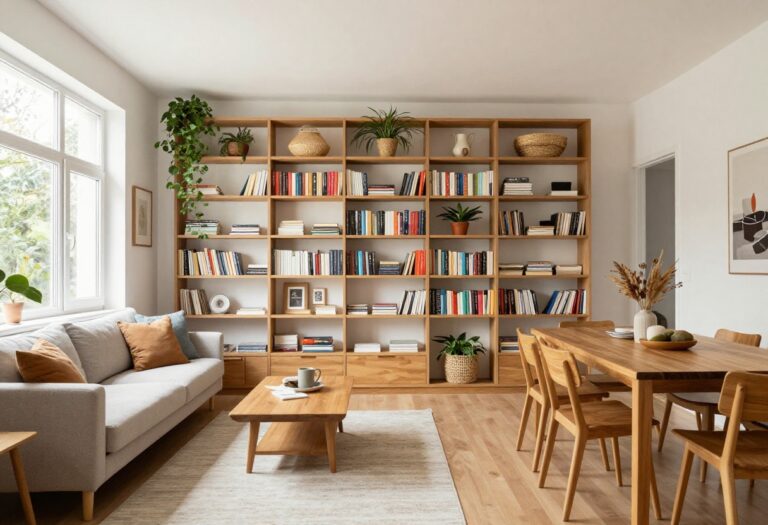
Green can sometimes feel a bit cool or stark on its own, especially if you go with a deeper emerald or a crisp sage. That’s where warm wood comes in. Natural wood furniture—think oak, walnut, or teak—adds a grounded, cozy energy that balances green beautifully.
It’s like bringing the outdoors inside in the most effortless way. This combo works in any living room, from a bright modern space to a snug cottage setup. The wood warms up the green and keeps the room from feeling cold or overly formal.
Pairing green walls or upholstery with natural wood furniture is one of the easiest ways to create a warm, lived-in feel. The contrast between the coolness of green and the warmth of wood adds depth without trying too hard. Whether you choose a green velvet sofa or a soft green accent wall, wood pieces like a coffee table, sideboard, or shelving unit will anchor the room and make it feel inviting.
This idea is especially effective in rooms that get a lot of natural light, as the wood tones will glow and the green will feel fresh rather than dark.
Best Wood Choices
- Oak is a safe bet for a light, airy look—it pairs well with sage or mint green. Walnut or teak bring richer contrast against deep greens like forest or olive. If you’re on a budget, look for acacia or mango wood, which have warm undertones without the high price tag.
- Avoid woods with gray or cool undertones, like bleached ash, as they can clash with the green and make the room feel flat.
Furniture Pairing Tips
- Start with one hero wood piece, like a chunky coffee table or a media console, and build around it. If your sofa is green, add wood-framed chairs or a wooden side table. For green walls, a wooden shelving unit filled with plants and ceramics ties everything together.
- Keep metal accents minimal—brass or copper work, but stick to warm tones to complement the wood.
Finishing Touch
Layer in textiles that echo the wood’s warmth, like a chunky knit throw in tan or a jute rug. Add a few wooden picture frames or a carved wood bowl on the coffee table. These small touches reinforce the organic feel without overwhelming the space.
7. Hang Botanical Art in Natural Frames
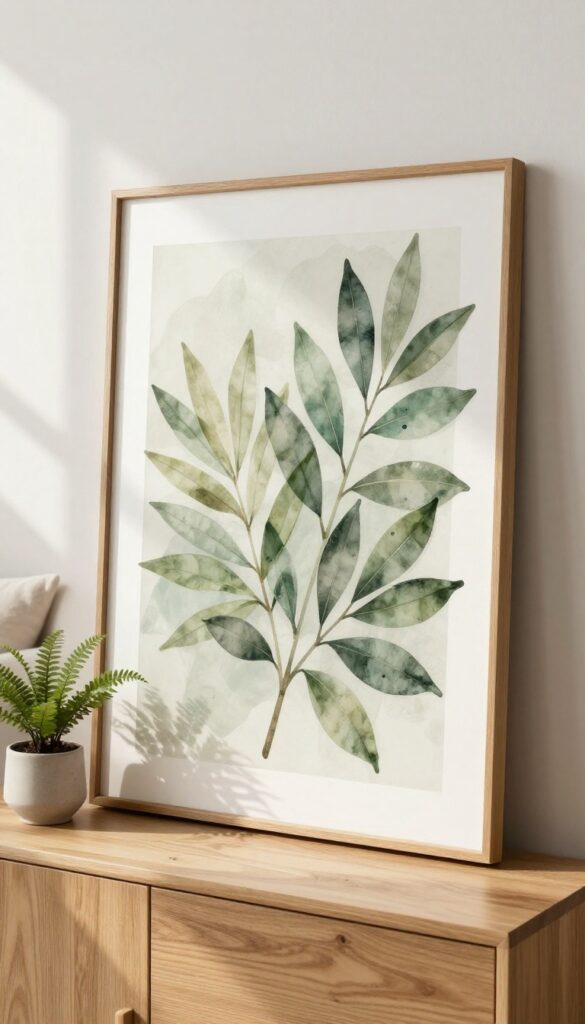
Bringing the outdoors in doesn't always mean piling on the houseplants. Sometimes, a well-chosen piece of botanical art can give you that fresh, organic feel without the watering schedule. Prints or paintings of leaves, ferns, or abstract greenery add a calm, natural focal point to any wall.
The trick is keeping the frames simple—think natural wood or matte black—so the art feels curated but not stiff.
Botanical art works in almost any living room because it’s versatile and easy to mix with other decor. You can go bold with a large single print behind the sofa, or create a relaxed gallery wall with a few smaller pieces. The key is to choose artwork that feels connected to nature without being too literal—abstract green shapes or line drawings of leaves often look more modern than a detailed botanical poster.
Stick with frames that have a slight texture or grain, like bamboo or reclaimed wood, to keep the look warm and lived-in. Black frames work too, especially if your room has other black accents like lamp bases or picture ledges. Avoid glossy or ornate frames here; they can make the art feel more formal than you want.
Best Placement
Hang your botanical art at eye level, but don’t be afraid to lean a larger piece on a console table or shelf for a more casual vibe. Over the sofa, aim for artwork that’s about two-thirds the width of the couch. In a reading nook, a cluster of small framed ferns can make the corner feel like a mini garden.
Color Flow
- Pull colors from the art into the rest of the room. If your print has soft sage greens, echo that in throw pillows or a ceramic vase. If it’s more monochrome with black line drawings, balance it with natural wood tones and creamy whites.
- This keeps the whole room feeling cohesive without being matchy-matchy.
Finishing Touch
Add a small real or faux plant nearby—like a potted snake plant or a trailing pothos—to bridge the gap between the art and the actual greenery. It makes the botanical theme feel intentional and layered, not just a one-off decoration.
8. Style a Green Throw Blanket Over a Neutral Sofa
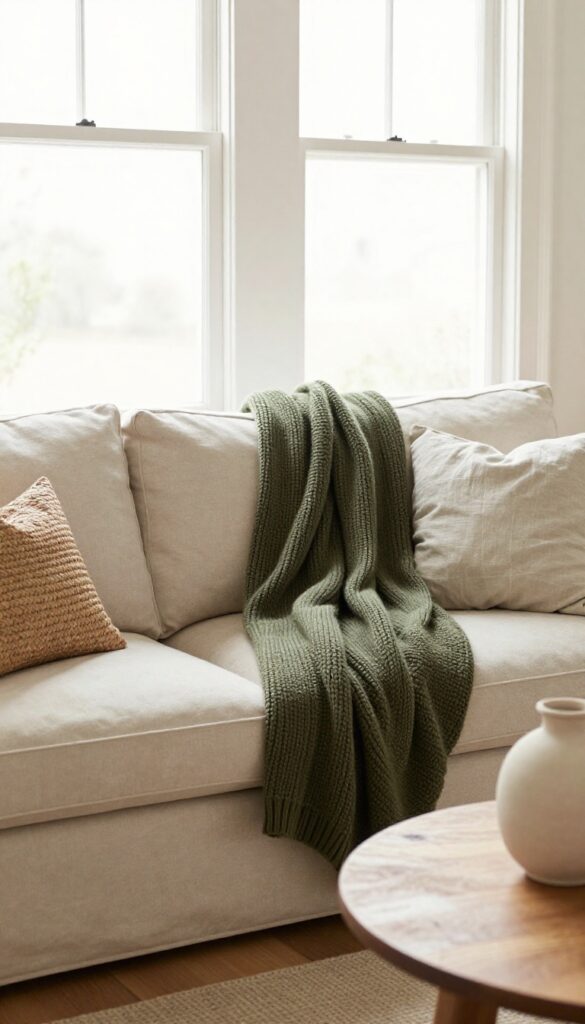
Not ready to commit to a green sofa? That’s totally fine. A throw blanket is the easiest way to test-drive the color without the pressure.
Drape a chunky knit or woven green throw over a beige or gray sofa, and suddenly the whole room feels refreshed. It’s a low-risk move that brings in that organic, earthy vibe you’re after—plus, you can swap it out whenever the mood strikes.
This trick works because it adds a pop of color without overwhelming the space. The neutral sofa grounds the room, while the green throw becomes the focal point. It’s especially effective in living rooms with lots of natural light, where the green can really sing.
Go for a sage or olive tone if you want something subtle, or try a deep forest green for more drama. Either way, you’ll get that fresh, organic feel without redoing your whole furniture setup.
Best Colors
- Stick with earthy greens like sage, olive, or moss for a warm, lived-in look. If your sofa is beige, a muted sage green blends beautifully. Gray sofas pair well with deeper forest greens or even a hint of teal.
- Avoid neon or overly bright greens—they can feel jarring against neutrals.
Texture Mix
The texture of the throw matters just as much as the color. A chunky knit adds coziness and visual weight, while a woven or linen throw feels lighter and more casual. Mix it with a soft velvet or cotton throw pillow in a complementary shade to pull the look together.
Styling Tip
Drape the throw casually over one arm of the sofa or fold it neatly across the back. For a relaxed vibe, let one end hang lower than the other. If you have a sectional, place the throw on the chaise or the corner seat to create a natural landing spot.
9. Incorporate Green Glassware and Ceramics
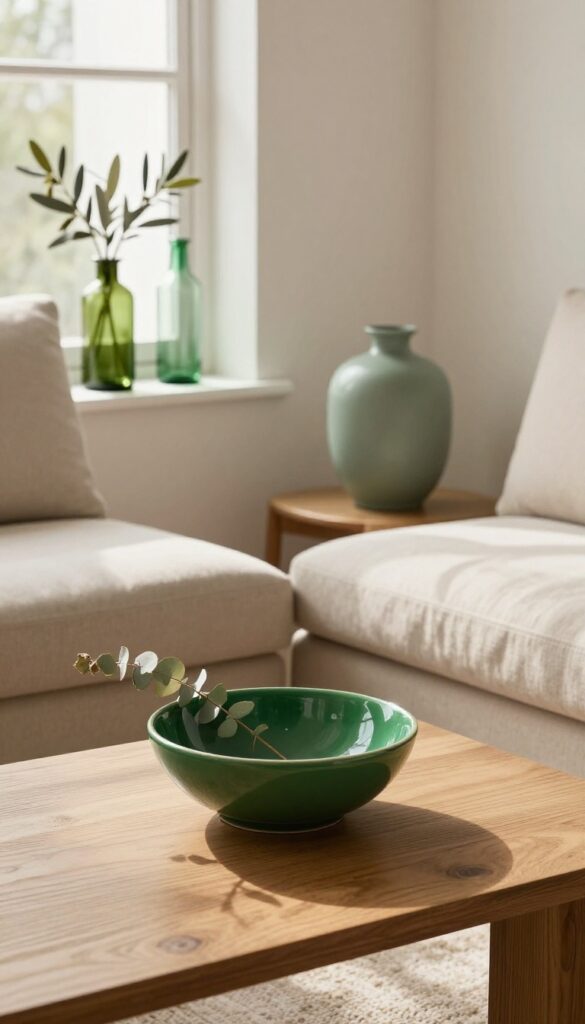
Adding green glassware and ceramics is one of the easiest ways to bring subtle color into your living room without repainting. Think of it as jewelry for your shelves and tables—small accents that catch the light and add a fresh, organic feel. The beauty of this approach is that you can mix glossy vases with matte ceramic bowls, creating layers of texture that feel collected over time rather than staged.
Green glassware and ceramics work especially well in rooms with neutral backdrops, where they pop without overwhelming the space. A cluster of green bottles on a windowsill, a ceramic bowl on the coffee table, or a set of small vases on a bookshelf all contribute to a calm, earthy vibe. The key is to vary the shades—olive, sage, emerald, mint—and to mix finishes for visual interest.
This idea is budget-friendly because you can start with just one piece and build your collection gradually.
Best Colors And Finishes
Stick to earthy greens like sage, olive, and moss for a warm, lived-in feel. Glossy finishes reflect light and work well near windows, while matte ceramics feel grounded and cozy on shelves. Mixing both adds depth without looking busy.
Shelf Styling Tip
Group glassware in odd numbers (three or five) on a shelf or tray. Vary heights by using stacked books or small wooden risers underneath. This creates a curated look that feels intentional but not stiff.
Placement Ideas
Use a large ceramic bowl as a catchall on the coffee table, or line a windowsill with small green bottles for a suncatcher effect. A single oversized vase on a side table makes a strong statement without clutter.
10. Choose a Green Patterned Rug as a Focal Point
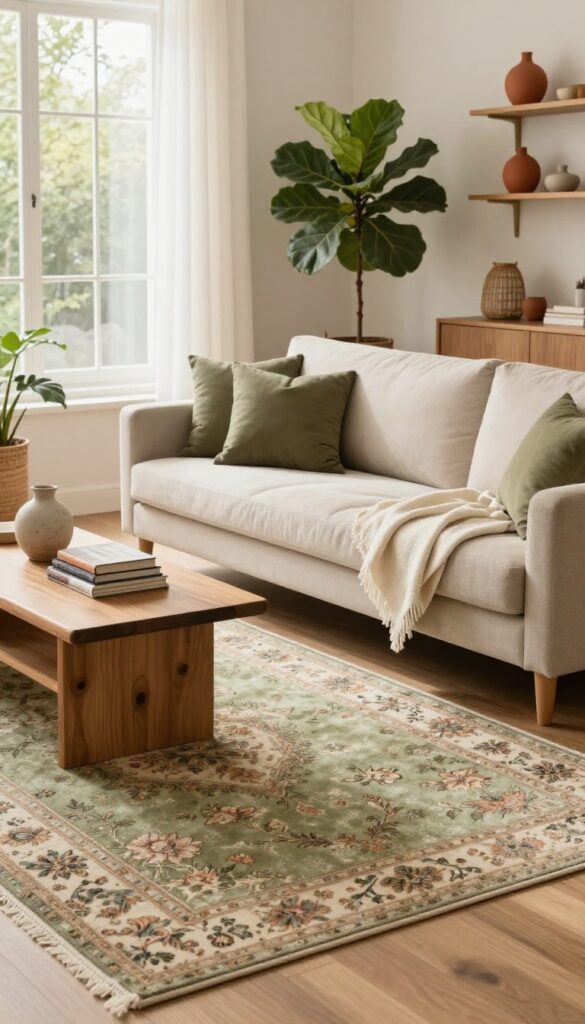
A rug might seem like a background player, but in a green living room, it can steal the show. The right patterned rug anchors your seating area, adds warmth underfoot, and introduces layers of green that feel intentional rather than accidental. Think of it as the foundation that ties your sofa, coffee table, and accent chairs together—without screaming for attention.
Whether you lean toward a vintage-inspired Persian design or a bold abstract print, a green rug brings that lived-in, collected-over-time feel that makes a room feel like home.
When you're building a warm, organic living room, a green patterned rug is one of the easiest ways to establish a cohesive color story. It doesn't have to be the star—it can be the quiet thread that connects your olive sofa, your sage throw pillows, and your fiddle leaf fig. The key is choosing a pattern that feels natural to your space.
A faded floral or a geometric repeat in muted greens can add depth without overwhelming the room. Place it under the coffee table, letting it extend past the front legs of your sofa for a pulled-together look. This simple layout trick makes the seating area feel grounded and intentional, even if the rest of the room is still coming together.
Best Colors To Pair With
A green rug plays beautifully with warm neutrals like cream, tan, and terracotta. If your rug has hints of blue or yellow, pull those out in your throw pillows or wall art. For a cohesive palette, stick to greens that share the same undertone—warm olive pairs well with mustard and rust, while cooler sage likes soft gray and dusty pink.
Layout Tip
- Make sure your rug is big enough to fit under the front legs of your sofa and any accent chairs. A rug that's too small can make the room feel disjointed. For a standard living room, an 8×10 or 9×12 rug works best.
- If your room is narrow, try a runner-style placement in front of the sofa instead.
Texture And Material
For a lived-in feel, choose a wool or wool-blend rug—it's durable, soft underfoot, and naturally stain-resistant. A low-pile or flatweave is easier to clean and works well in high-traffic areas. If you want extra coziness, a shag or high-pile rug in a subtle green pattern adds a luxurious touch, but keep it away from dining areas or entryways.
11. Paint the Ceiling a Soft Mint or Pale Green
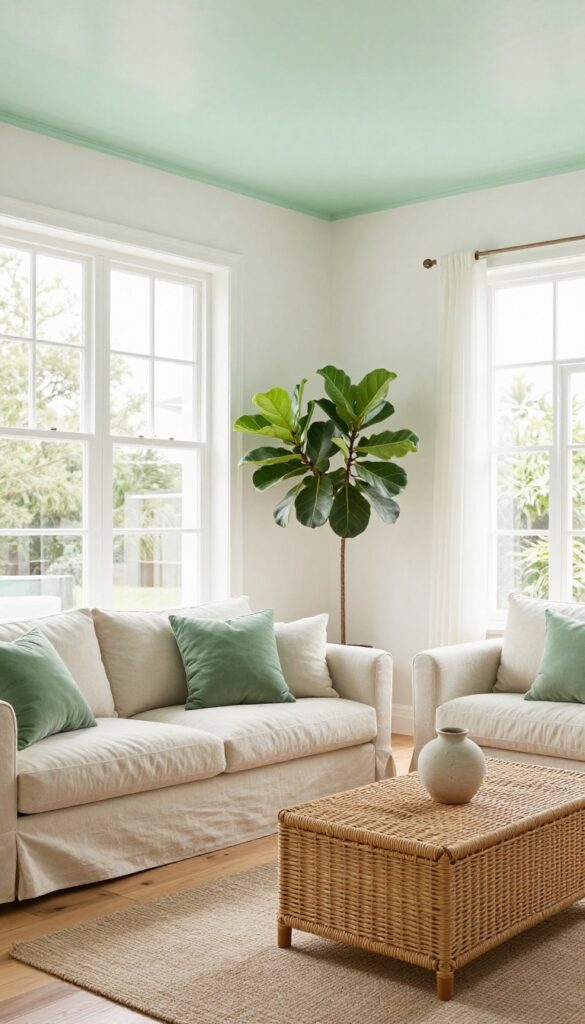
Ceilings often get left white out of habit, but giving yours a soft mint or pale green treatment can completely shift the mood of the room. It adds a subtle layer of color that feels airy and unexpected without overwhelming the space. The trick is keeping the shade light enough so it still reflects light and makes the ceiling feel higher rather than lower.
A pale green ceiling works especially well in living rooms with neutral walls and plenty of natural light. The color echoes nature and brings a calm, garden-like freshness indoors. It also pairs beautifully with warm wood tones, creamy whites, and natural textures like linen or rattan.
Because the color is on the ceiling, it stays in the background while still adding personality. You can tie it into the rest of the room with a few green accents—throw pillows, a vase, or a plant—so the ceiling feels intentional, not random.
Best Green Shades
- Stick with pale, muted greens that have a hint of gray or blue to keep the look soft and sophisticated. Think sage, seafoam, or a very light olive. Avoid bright or neon greens, which can feel jarring on a ceiling.
- Test a few samples on the ceiling and check how they look at different times of day—natural light changes the way the color reads.
Finishing Touch
Paint the ceiling trim the same color as the ceiling for a seamless, modern look, or keep the trim white for a crisp contrast that defines the edge. Either way, make sure the paint finish is flat or matte to minimize glare and keep the ceiling looking smooth and soft.
FAQ
What shades of green work best for a warm living room?
Sage, olive, and forest green are top choices for a warm feel. They have enough yellow or brown undertones to keep the room cozy rather than cold.
How can I add green without painting walls?
Try green throw pillows, a rug, curtains, or upholstered furniture. Plants and green decor like vases or art also bring in color without a permanent change.
What colors pair well with green in a living room?
Warm neutrals like beige, cream, and tan are natural partners. Wood tones, blush pink, and mustard yellow also complement green beautifully.
Can I mix different shades of green in one room?
Absolutely. Stick to shades within the same temperature—like warm greens with olive and sage—to keep the look cohesive. Varying textures help too.
How do I keep a green living room from feeling dark?
Balance deep greens with plenty of light neutrals, mirrors, and good lighting. Use sheer curtains to let in natural light and add lamps for warmth.
Conclusion
Green living rooms don’t have to be perfect or polished. The best ones feel like a breath of fresh air—calm, collected, and full of personality. Whether you go all in with a painted wall or just add a few green touches, the key is to make the space feel like yours.
Start with one idea that speaks to you, and let the rest follow naturally. Before you know it, your living room will have that fresh organic style you’ve been dreaming of—without losing its warm, lived-in soul.