11 Living Room Chandelier Ideas You’ll Want to Save
A chandelier can change how your living room feels before you move a single piece of furniture. It draws the eye up, sets the mood, and quietly tells guests what kind of room they just walked into. Get it right, and everything else looks more intentional.
The tricky part is that "chandelier" covers a huge range. Some rooms want sleek metal lines, others want crystal, rope, or a fixture you built yourself from flea market finds. Ceiling height and light quality matter just as much as style.
These eleven ideas run from modern minimalism to full-on glam, with a few budget-friendly DIY options mixed in. Each one includes what it works best for and what to watch out for.
1. Modern Minimalist Chandelier with Clean Lines
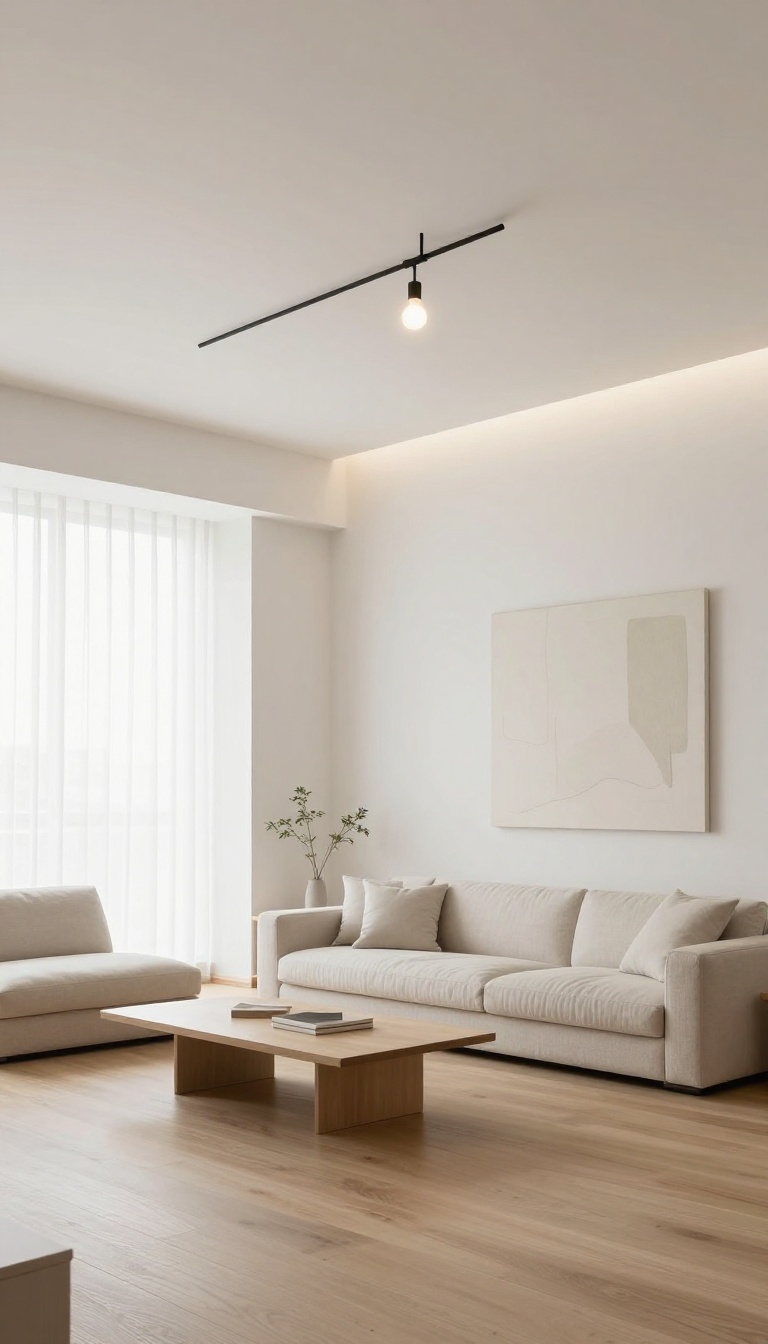
A modern minimalist chandelier strips away ornament and lets shape and light do the talking. Think slim metal arms, simple geometric forms, and a finish that disappears into the ceiling until you flip the switch. It’s the kind of fixture that makes an open-concept living room feel calm instead of crowded.
Minimalist chandeliers work because they don’t compete with the rest of your room. They add a vertical element without adding visual weight. In a space where the kitchen, dining area, and sofa all share one big footprint, that restraint matters more than you’d think.
What To Look For
Stick with fixtures that use negative space as part of the design. A few thin rods, a single horizontal bar, or a cluster of bare bulbs on a matte black frame all fit the bill. Avoid anything with dangling crystals, heavy scrollwork, or too many overlapping circles.
The goal is one clean gesture, not five.
Best Rooms And Ceilings
This style shines in open-concept layouts with ceilings around 9 to 11 feet. If your ceiling is lower, go with a flush-mount or semi-flush version so you don’t bonk your head. In a double-height space, a long linear fixture can bridge the gap between levels without feeling fussy.
Styling Tips
Keep the rest of the room just as edited. A neutral sofa, a low-profile coffee table, and one large piece of art will let the chandelier be the star. If you want warmth, choose a fixture with warm-white bulbs and a brass or bronze finish instead of chrome.
2. Vintage Crystal Chandelier for Timeless Elegance
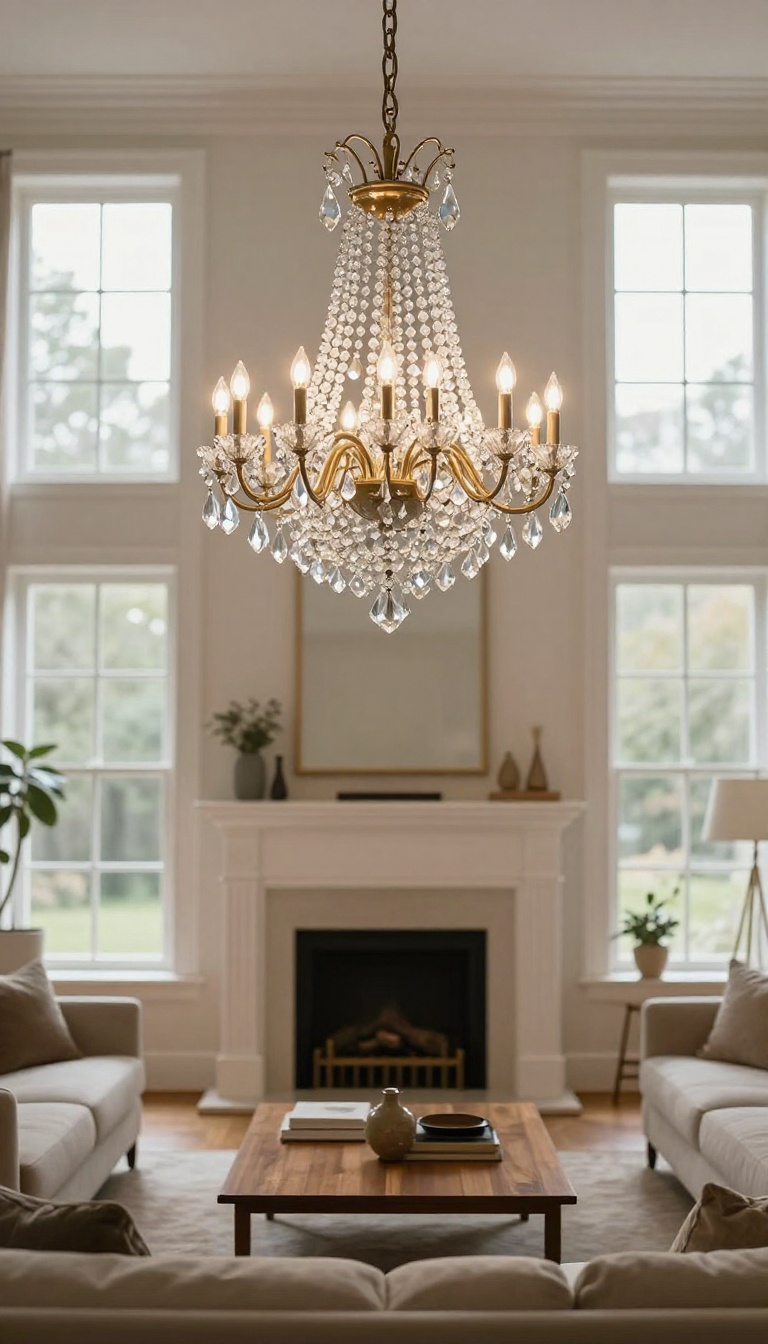
Crystal chandeliers have been dressing up living rooms for centuries, and they still hold their own. The right vintage piece brings a sense of history and quiet luxury that few modern fixtures can match. It’s not about flash—it’s about the way light scatters through those faceted drops and softens everything around it.
A vintage crystal chandelier works best in rooms with a bit of height and a traditional or transitional foundation. Think classic furniture silhouettes, warm wood tones, and maybe a fireplace as the focal point. The chandelier becomes the jewelry of the space—eye-catching but never competing with the rest of the room.
You don’t need a mansion to pull this off. A smaller tiered crystal fixture can bring the same charm to a standard living room, as long as you scale it right. The key is proportion: too big and it overwhelms, too small and it disappears.
What To Look For In A Vintage Piece
Original crystals often have a slight haze or tiny chips, which add character but can also dull the sparkle. Check that the frame is sturdy and the wiring is safe—rewiring an old chandelier is common and worth the cost. If you want a cleaner look, look for a piece with fewer, larger crystals rather than dense strands.
Hanging Height And Ceiling Considerations
In a living room, the bottom of the chandelier should hang about 7 to 8 feet above the floor if people walk under it. For higher ceilings, you can go a bit lower, but keep it at least 30 inches above any furniture below. If your ceiling is under 9 feet, a flush-mount crystal fixture or a small pendant-style chandelier is a safer bet.
Styling It Without Going Overboard
Let the chandelier be the star. Keep other lighting simple—maybe a pair of table lamps with linen shades—so the crystal can shine. Pair it with a muted rug and classic drapery to keep the room from feeling like a museum.
A little contrast, like a modern sofa, keeps the look fresh instead of dusty.
3. Industrial Chandelier with Edison Bulbs
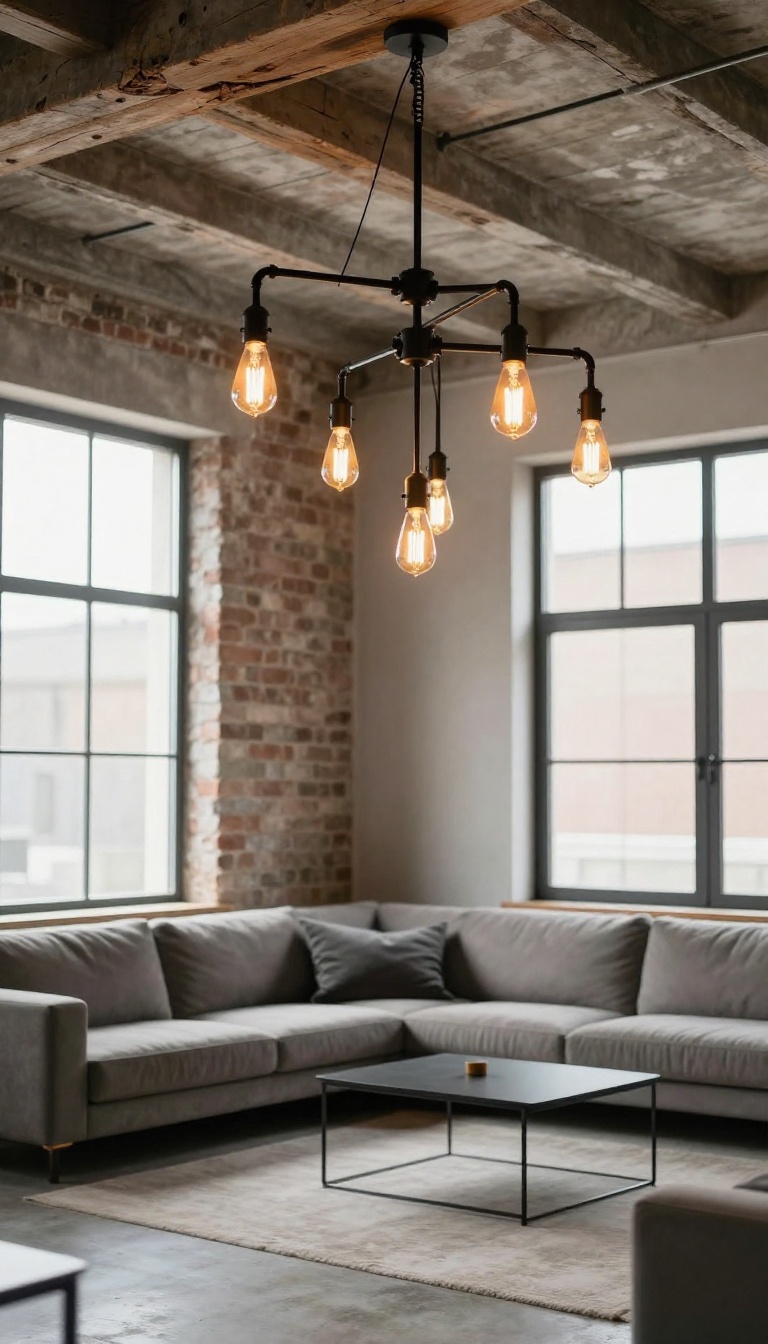
Industrial chandeliers bring a raw, urban edge to your living room. They're built from metal piping, exposed wiring, and vintage-style Edison bulbs that glow with a warm, amber light. This look works best in loft apartments, converted warehouses, or any space with a rustic-industrial theme.
The beauty of this style is its honesty. Nothing is hidden behind shades or crystals—you see every wire, every socket, every bulb. That's exactly what makes it feel so authentic and unpretentious.
An industrial chandelier isn't about polish. It's about character. The fixture often looks like it was assembled from parts you'd find in an old factory or hardware store.
That's the point. Edison bulbs are the star here. Their visible filaments and soft, warm glow set a relaxed, almost nostalgic mood.
Pair them with black or brushed metal piping, and you get a piece that feels both rugged and refined.
What Makes It Work
The magic is in the contrast. Sleek, modern furniture can feel cold, but an industrial chandelier adds warmth and texture. It also plays well with exposed brick, concrete walls, and reclaimed wood.
Edison bulbs typically run at 2200K to 2700K, giving off a cozy, amber light. That's perfect for evenings, though you might want a dimmer to control the intensity.
Where To Hang It
These fixtures shine in open-concept living rooms with high ceilings. If your ceiling is low, go for a flush-mount or semi-flush design to avoid head bumps. Loft apartments are a natural fit, but you can also use an industrial chandelier in a farmhouse-style room.
Just make sure the rest of your decor has some rough or vintage elements to tie it together.
What To Watch Out For
Exposed bulbs can be harsh if they're too bright or positioned at eye level. Look for fixtures with multiple bulbs on adjustable arms so you can direct the light. Also, check the weight.
Industrial chandeliers are often heavier than they look. You may need a reinforced ceiling box or a professional install.
4. Mid-Century Modern Sputnik Chandelier
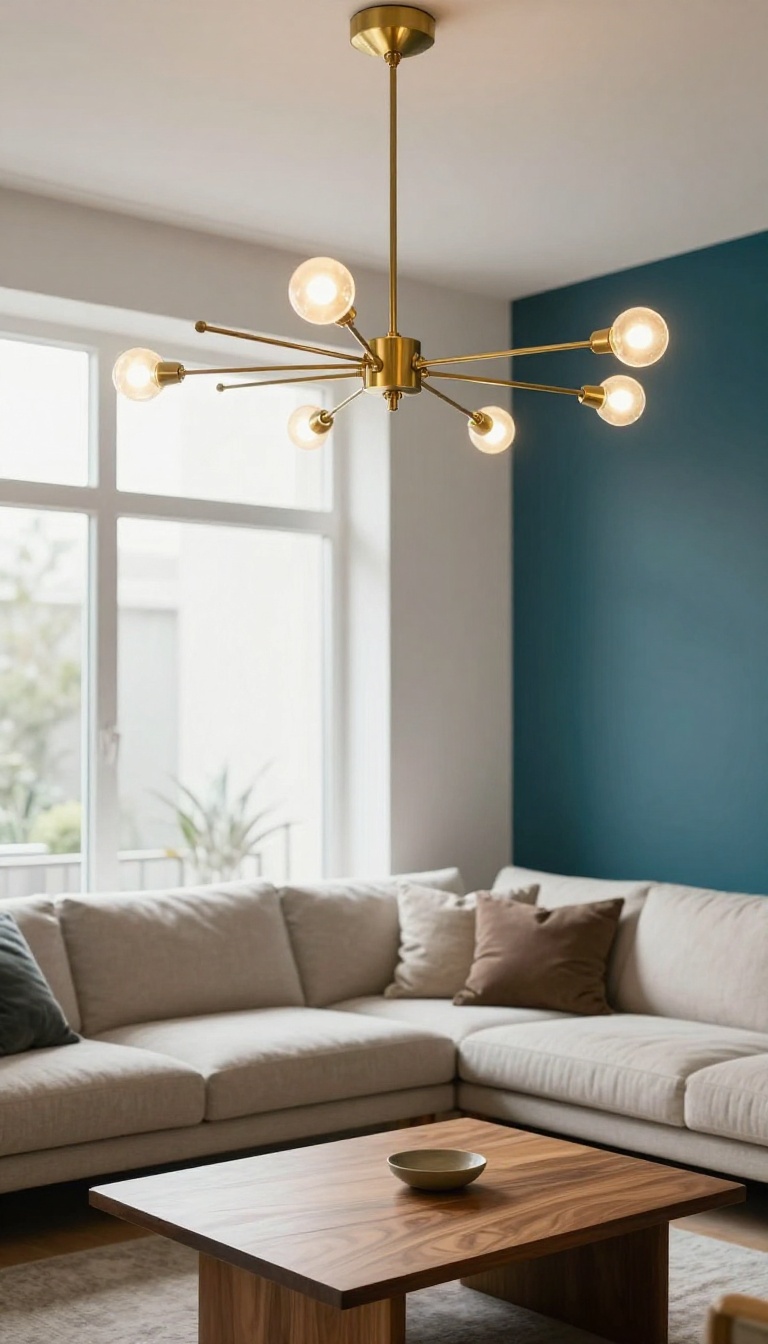
Mid-century modern design loves a little drama, and the Sputnik chandelier delivers it without trying too hard. Named after the first satellite, these fixtures feature a central core with arms shooting out in every direction, each tipped with a small globe. It's a look that feels both retro and surprisingly current, especially in living rooms that mix eras.
The magic of a Sputnik chandelier is its sense of motion. Even when it's completely still, those radiating arms make the room feel alive. It's a statement piece that doesn't rely on crystals or heavy ornament—just clean lines and a clever silhouette.
And because most versions use exposed bulbs, the light tends to be bright and evenly scattered, which works well in living rooms that need general illumination rather than a single focal glow.
Why It Works In A Living Room
Living rooms are multi-purpose spaces. You read, chat, watch TV, maybe even work from the couch. A Sputnik chandelier gives you broad, ambient light that covers all those activities without feeling harsh.
The open design also keeps sightlines clear, so even a large fixture doesn't visually crowd the room. It's a smart pick for lower ceilings, too, since most styles hug close to the ceiling and won't block your view.
Pairing It With Your Decor
This fixture shines against warm wood tones—think walnut, teak, or oak—and it loves a bold color moment. A deep teal or mustard yellow wall makes the brass or chrome arms pop. If your room leans neutral, let the chandelier be the one piece of bling.
Keep other metals in the room to a minimum so it doesn't compete. And don't be afraid to mix in a few mid-century classics, like a tapered leg sofa or a kidney-shaped coffee table.
What To Watch Out For
Because the bulbs are exposed, glare can be an issue if the fixture hangs too low or if you use clear, high-wattage bulbs. Opt for frosted or warm-white LEDs to soften the effect. Also, measure your ceiling height before buying.
You want at least 7 feet of clearance from the floor to the bottom of the fixture, and a little more if you have tall guests. Finally, check the arm span—some Sputniks are wide, and you don't want them bumping into a ceiling fan or a nearby wall.
5. Coastal Chandelier with Rope and Driftwood
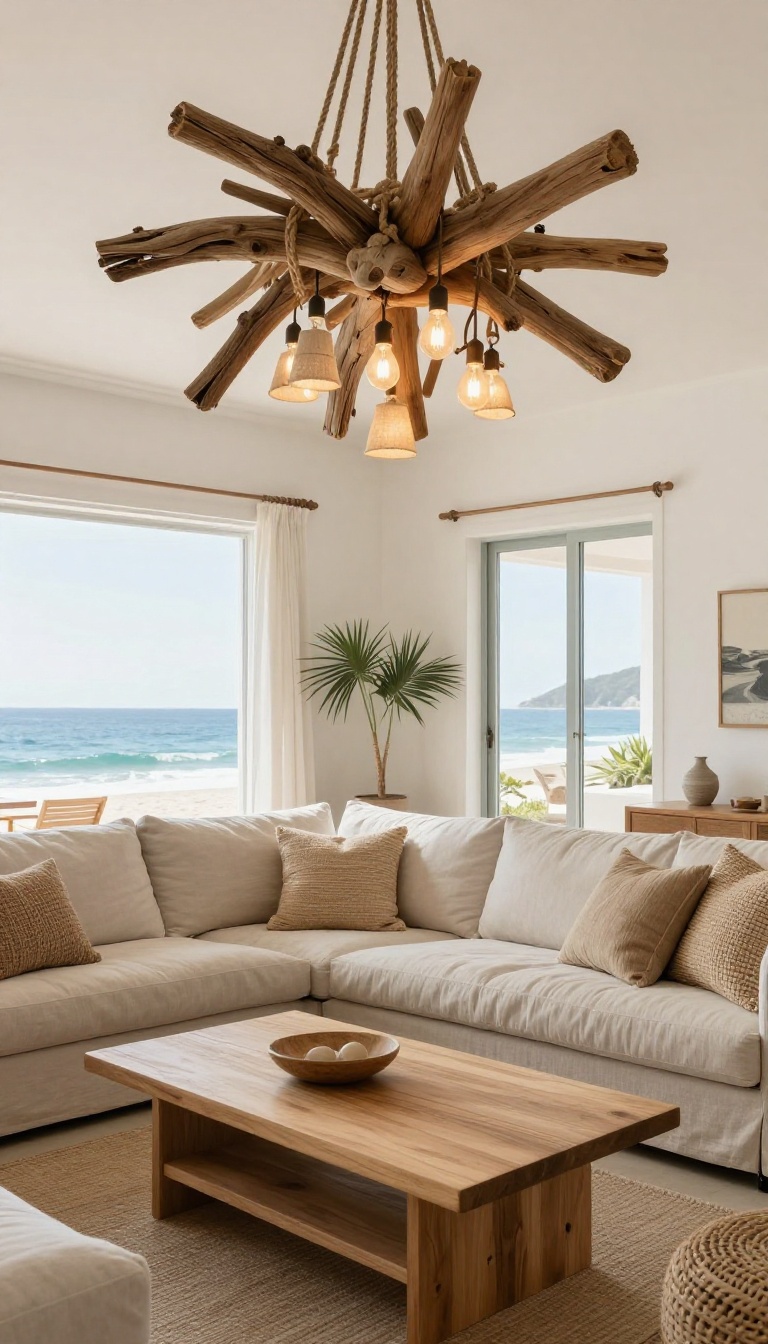
Coastal style isn't just for beach houses. A rope-and-driftwood chandelier brings that relaxed, salty-air feeling to any living room, even if the nearest ocean is hours away. It swaps polish for texture, and that's exactly the point.
The look works because it mixes rough natural materials with soft, diffused light. You get warmth without heaviness, and a shape that feels breezy rather than blocky. It's an easy way to loosen up a room that's feeling a little too stiff.
Most coastal chandeliers hang from thick manila or jute rope, with a frame made from weathered wood, driftwood branches, or a mix of both. Some are simple hoops wrapped in rope; others look like a piece of a ship's rigging. The light usually comes from exposed bulbs or small linen shades, which keeps the glow soft and even.
You don't need a nautical theme to pull this off. The trick is to treat it as a texture piece, not a costume. Pair it with neutral walls, natural fabrics, and a few woven accents, and it reads as calm rather than kitschy.
Where It Works Best
Open, airy rooms with high ceilings give rope chandeliers room to breathe. They also shine in sunrooms, covered porches, and living rooms with lots of windows. If your space leans modern or industrial, the raw materials can feel like a deliberate contrast instead of a mismatch.
Sizing And Hanging Tips
Rope fixtures tend to look larger than they measure, so go one size smaller than you would with a metal chandelier. Hang the bottom about 30 to 34 inches above a coffee table. Use a sturdy ceiling hook or canopy rated for the weight, since rope and wood can get heavy.
Styling Without The Theme Park Look
Skip the anchor prints and striped everything. Instead, echo the chandelier with one or two natural touches: a jute rug, a driftwood bowl, or linen curtains. Keep the rest of the room quiet so the fixture stays the star.
Care And Longevity
Dust rope with a soft brush or a vacuum on low. Keep the fixture away from damp spots and direct steam, which can weaken natural fibers over time. If you live in a humid climate, a sealed or synthetic rope version will hold up better.
6. Farmhouse Chandelier with Wood and Metal
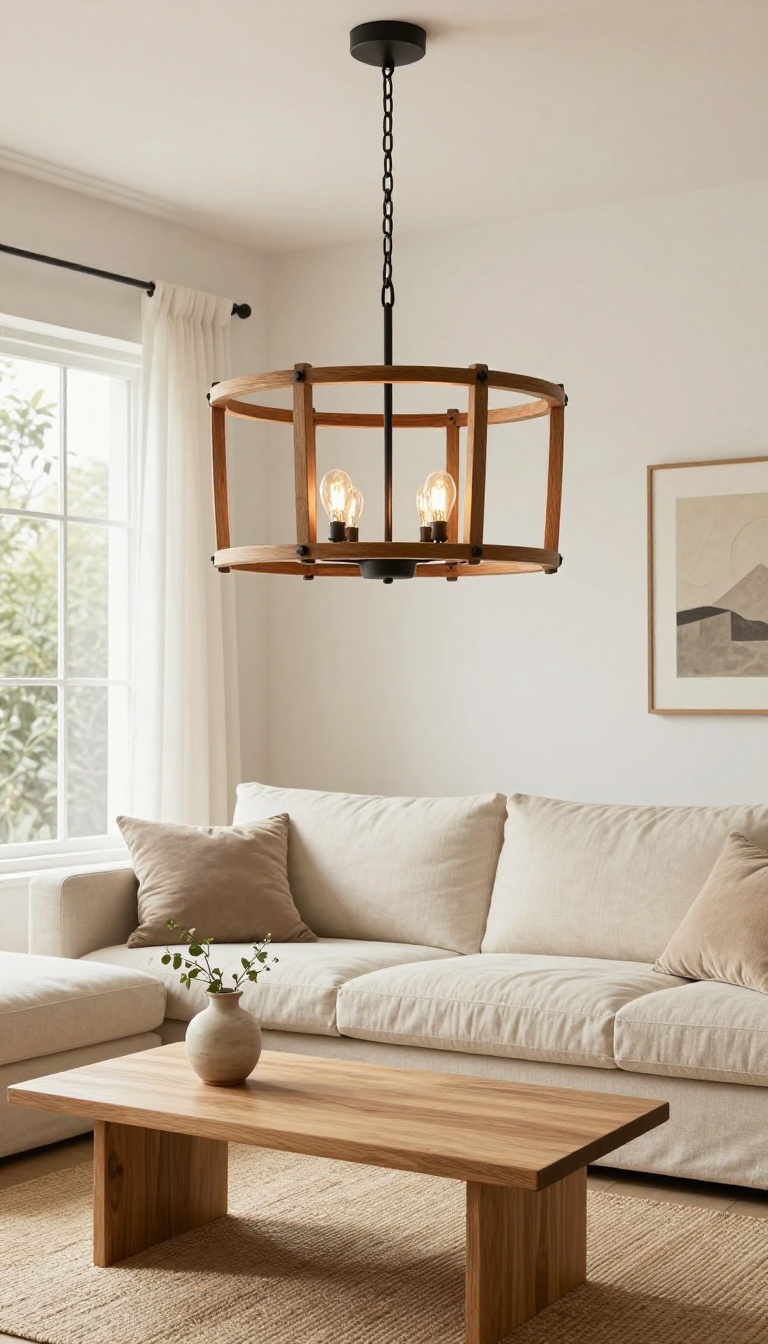
Farmhouse lighting works because it doesn't try too hard. A wood-and-metal chandelier brings in warmth from the wood and just enough structure from the metal to keep things from feeling too sweet. It's the kind of fixture that looks like it's always been there, even if you hung it last weekend.
The style fits a wide range of rooms, not just ones with shiplap walls. If your living room leans neutral, cozy, and a little lived-in, this is probably your match. The trick is balancing the wood tone with the metal finish so neither one takes over.
Most farmhouse chandeliers use a simple frame, often a ring, a rectangle, or a gentle wagon-wheel shape. Wood shows up on the body, the arms, or just as accents, while metal handles the chain, the canopy, and the small details. That mix keeps the fixture from reading as either too rustic or too industrial.
You'll see these in dining rooms a lot, but they work just as well over a living room seating area. The open frames let light move around the room instead of getting trapped in a heavy shade. That matters if your living room doesn't get a ton of natural light during the day.
Sizing follows the same rules as any chandelier. Hang it about 30 to 36 inches above a coffee table if you're centering it over one, and keep the bottom at least 7 feet off the floor so nobody bonks their head. For an open room, go a little wider than you think you need, since farmhouse fixtures tend to look smaller once they're up.
Wood Tones That Play Nice
Light woods like ash or white oak keep things airy and pair well with white or cream walls. Darker woods, like walnut or espresso, add weight and look great against warm neutrals or a painted brick wall. If you already have wood floors or beams, try to either match the tone closely or go clearly different, not somewhere in between.
Metal Finishes And Where They Fit
Black metal is the classic farmhouse choice and reads a little more modern. Aged brass or bronze warms things up and feels a touch more traditional. Galvanized or brushed nickel leans industrial, which is fine if your room already has some of that going on.
Pick one finish and stick with it for the chain and canopy so the fixture looks intentional.
What To Pair It With
Shiplap, reclaimed wood, and neutral linen all work without much effort. Add a jute rug, some woven baskets, and a few matte black accents, and the room basically styles itself. Skip heavy crystal or glossy finishes nearby, since they fight the relaxed feel this fixture is going for.
Watch The Bulbs And Brightness
Open farmhouse frames show off the bulbs, so pick ones you actually like looking at. Edison-style bulbs in warm white (around 2700K) give that soft, cozy glow. If the room needs more light, add a dimmer so you can go bright for tasks and low for evenings without swapping bulbs.
7. Glam Chandelier with Gold and Glass
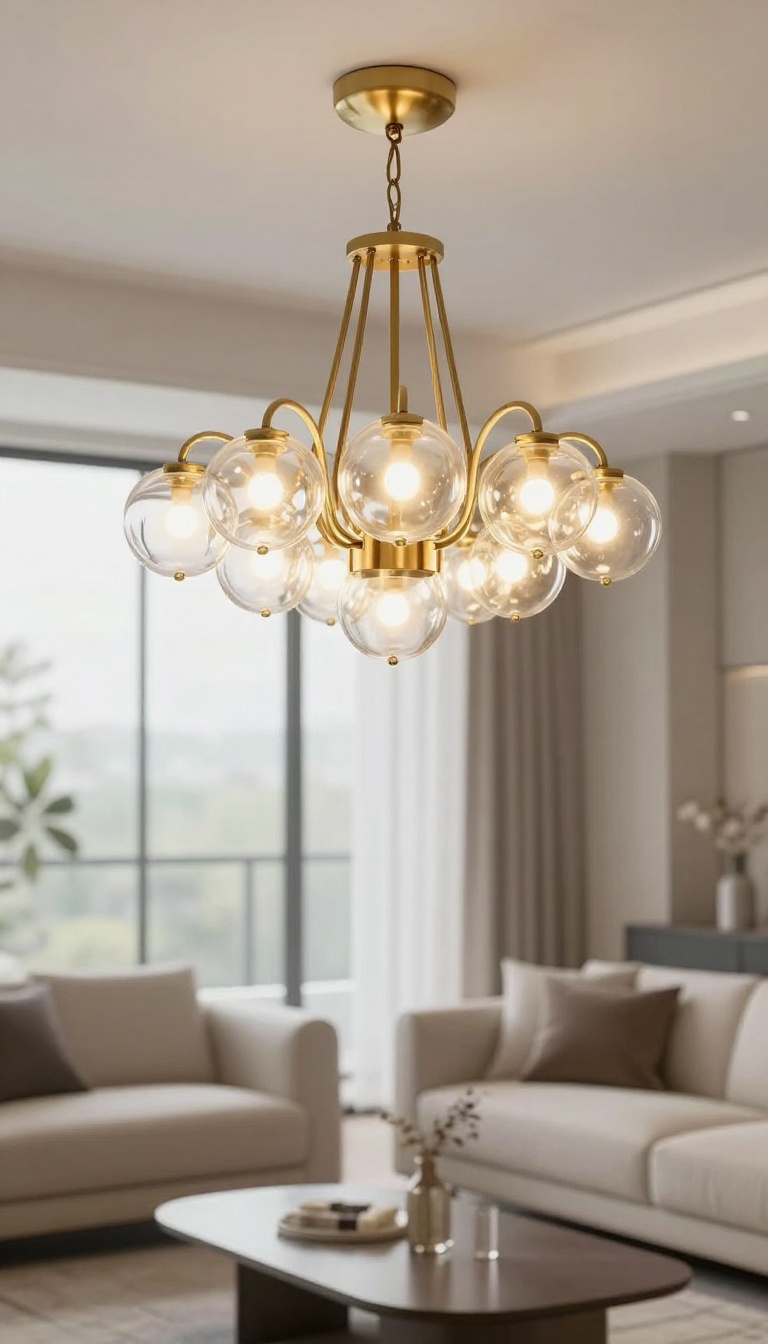
Gold and glass fixtures bring a polished, high-end look without feeling stuffy. The mix of warm metal and sculptural glass catches light in a way that makes a room feel instantly more expensive. This style works best when you want the chandelier to be the star.
It’s a natural fit for dining areas or formal living rooms where you want a little drama overhead.
A glam chandelier isn’t just about shine—it’s about shape. Look for brass or gold frames with curved arms, geometric glass shades, or clustered glass globes. The contrast between warm metal and clear or frosted glass keeps it from feeling like a disco ball.
Size matters here. Too small and it gets lost; too big and it overwhelms. Aim for a fixture that’s about one-third the width of your dining table or seating area.
Hang it so the bottom sits 30 to 36 inches above the table for dining, or 7 feet from the floor in a living room you walk under. Bulb choice can make or break the look. Warm white LEDs (2700K–3000K) keep the gold looking rich instead of brassy.
Dimmable bulbs let you go from bright and lively to soft and moody with a single switch. Cleaning is the trade-off. Glass shows dust and fingerprints, so plan on a quick wipe every couple of weeks.
A microfiber cloth and a little glass cleaner keep it looking sharp without much effort.
What To Look For
Check the frame material—solid brass or high-quality plated metal holds up better than thin finishes that flake. Glass shades should feel substantial, not paper-thin. If you can, see it lit in person; photos don’t always show how the glass diffuses light.
Where It Works Best
Formal living rooms, dining rooms, and entryways with higher ceilings. It also shines in open-concept spaces where you want to define a seating or dining zone without adding walls. Skip it in low-ceiling rooms or casual family spaces where it might feel out of place.
Styling Tips
Keep the rest of the room relatively calm so the chandelier can do its thing. Neutral walls, simple furniture lines, and a few metallic accents (like a gold mirror or brass lamp) tie it together. Avoid competing statement pieces nearby.
8. Drum Shade Chandelier for Soft, Diffused Light
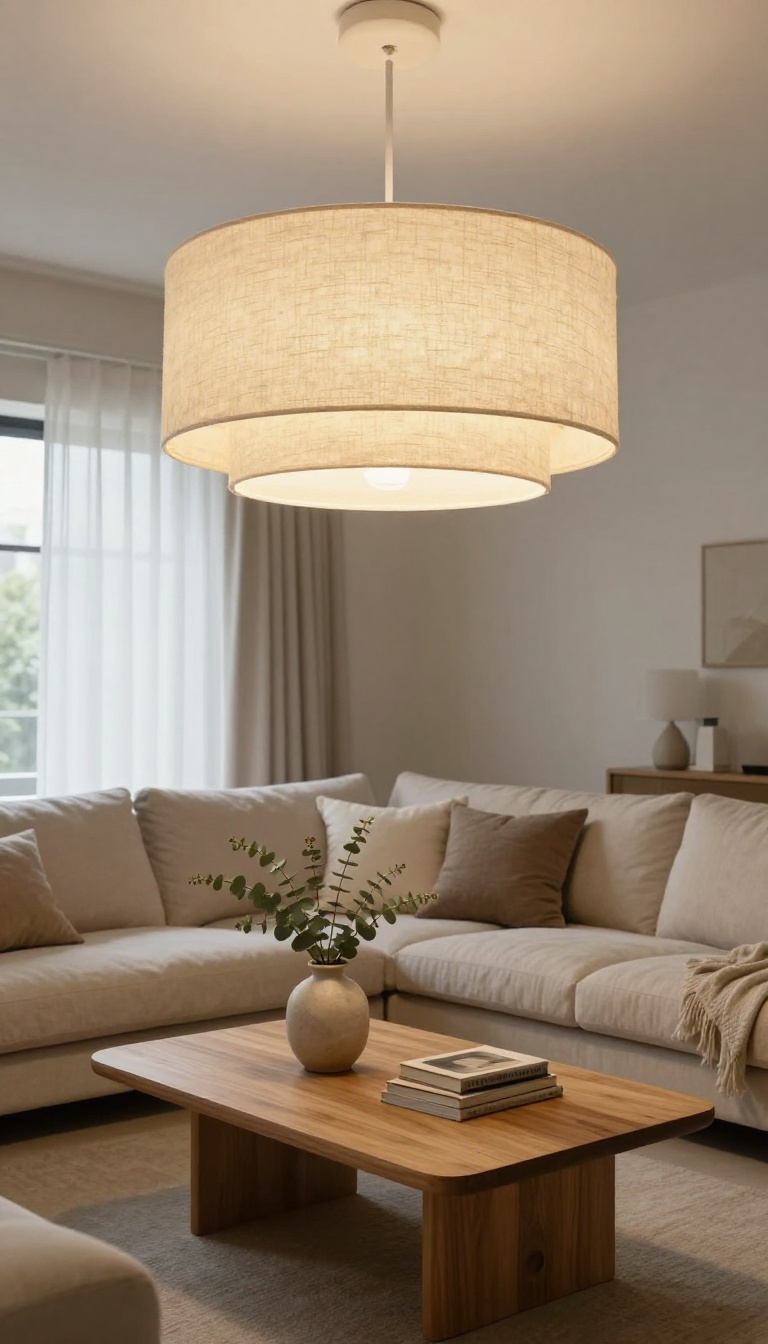
A drum shade chandelier wraps the bulbs in a fabric or paper cylinder, so light filters through instead of shooting straight out. That simple layer takes the harsh edge off a bright bulb and turns it into a warm, even glow. It’s a smart pick when you want cozy evenings without sitting in a spotlight.
Drum shades come in a huge range of sizes, textures, and colors, which makes them easy to match to almost any living room. The shade itself does the heavy lifting: it hides the bulbs, softens the beam, and adds a clean, finished shape overhead. You get the presence of a chandelier with the comfort of a lamp.
Because the light spreads sideways and down, drum fixtures work especially well in smaller rooms or rentals where you can’t add dimmers or extra lamps. They also pair nicely with warm LED bulbs, which stay cool and last for years. Just keep an eye on the shade’s bottom opening—too narrow and the light pools in one spot.
Why The Shade Changes Everything
Fabric and paper shades diffuse light by scattering it through tiny fibers. That’s what kills glare and creates that soft, almost candle-like feel. A white or cream shade keeps things bright and neutral, while a darker or textured shade adds mood and warmth.
If you want the room to feel calm, this is the easiest lever to pull.
Sizing It To Your Space
A drum shade should feel proportional to the room, not the ceiling. As a rule, keep the shade at least 30 inches above the coffee table so it doesn’t block sightlines. In a small living room, a 16- to 20-inch drum is usually plenty.
In a larger space, go wider or hang two smaller drums in a row for balance.
Bulbs, Dimming, And Everyday Use
Use warm-white LED bulbs around 2700K to 3000K for that soft, inviting tone. If your fixture supports dimming, a dimmer switch lets you go from bright task light to low evening glow without swapping bulbs. And because the shade traps some heat, stick with LEDs—they run cool and won’t fade the fabric over time.
9. Tiered Chandelier for High Ceilings
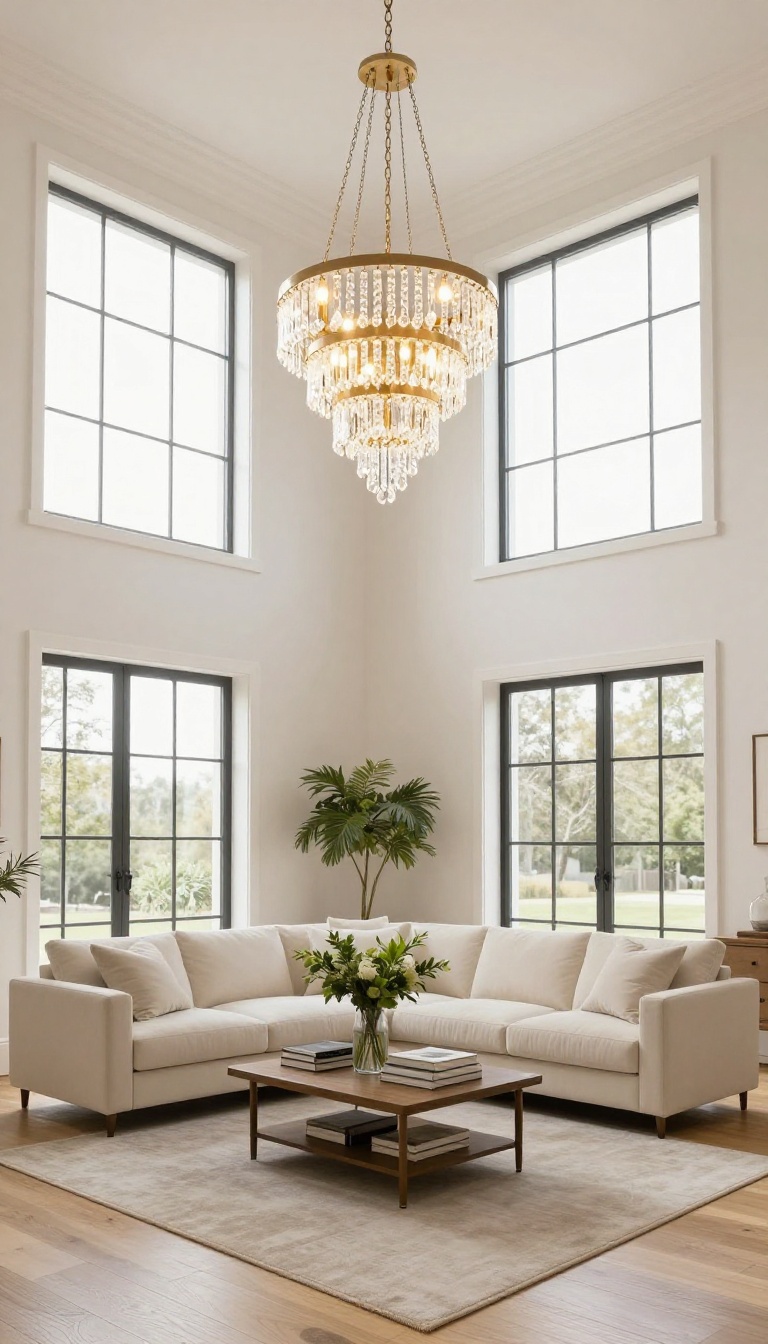
High ceilings can make a living room feel grand, but they can also leave the space feeling a bit empty up top. A tiered chandelier solves that by stacking light sources in layers, pulling the eye upward and filling the vertical gap. It's a practical way to add drama without overwhelming the room.
Tiered chandeliers come in all shapes and sizes, from classic crystal cascades to modern metal rings. The key is that they have multiple levels, which means they spread light across a larger area than a single-tier fixture. That makes them perfect for two-story living rooms, grand foyers, or any space where a standard chandelier would look lost.
When you're shopping for one, think about scale first. A tiered chandelier should be proportional to the room's height and width. Too small, and it disappears; too large, and it dominates.
A good rule of thumb is to add the room's length and width in feet, then convert that number to inches for the chandelier's diameter. For high ceilings, you can go a bit bigger. Installation is another consideration.
These fixtures can be heavy, so you'll need a sturdy ceiling mount and possibly a professional electrician. Also, think about how you'll clean it. Tiered designs can collect dust, especially if they have lots of crystals or intricate details.
Regular dusting with a microfiber cloth or a quick pass with a hairdryer on cool can help.
Choosing The Right Number Of Tiers
Two tiers work well for most high-ceiling living rooms, adding interest without going overboard. Three or more tiers make a bolder statement and suit very tall spaces, like a two-story great room. Just keep the overall look balanced; too many tiers can feel busy.
Placement And Hanging Height
Hang a tiered chandelier so the lowest point sits at least 7 feet above the floor, or 8 feet if people will walk under it. In a foyer, center it in the space and make sure it's the first thing guests see. In a living room, position it over the main seating area to anchor the room.
Style And Material Options
Crystal tiers add glamour and sparkle, while metal tiers give a modern, industrial edge. Wood or rope tiers bring a rustic, natural feel. Pick a material that matches your room's vibe, and don't be afraid to mix finishes for a curated look.
10. Reversible Chandelier for Low Ceilings
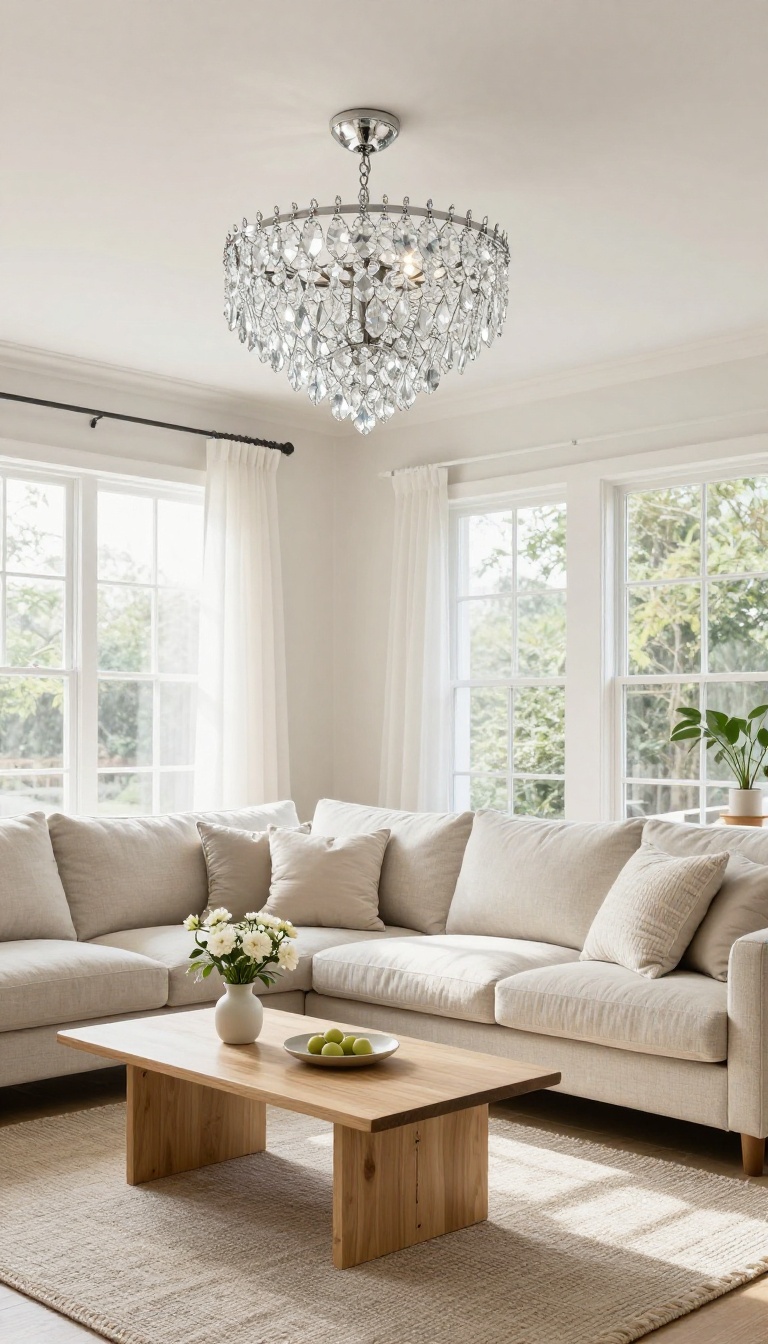
Low ceilings don't have to mean boring lighting. A reversible chandelier—one that can be mounted as a flush mount or semi-flush—gives you flexibility without sacrificing style. It's a smart pick for basements, apartments, or any room where a standard hanging fixture would feel cramped.
These fixtures sit close to the ceiling, so you get the look of a chandelier without the risk of bumping your head. Many models come with adjustable rods or chains, letting you switch between flush and semi-flush depending on your space. That versatility makes them a practical choice for renters or anyone who might move the fixture later.
Why They Work
Flush and semi-flush mounts keep the fixture tight to the ceiling, which is essential when you have eight feet or less. They still offer plenty of style—think crystal, metal, or even modern geometric designs. And because they don't hang down, they won't block sightlines or make the room feel smaller.
Where To Use Them
Basements, apartments, and standard-height living rooms are ideal. They're also great in hallways or bedrooms with low ceilings. If you have a ceiling fan, a reversible chandelier can be a stylish alternative that doesn't sacrifice headroom.
What To Watch For
Check the height of your ceiling and the fixture's dimensions before buying. You want at least seven feet of clearance from the floor to the bottom of the fixture. Also, make sure the reversible mechanism is easy to adjust—some models require rewiring, which can be a hassle.
11. DIY Chandelier with Repurposed Materials
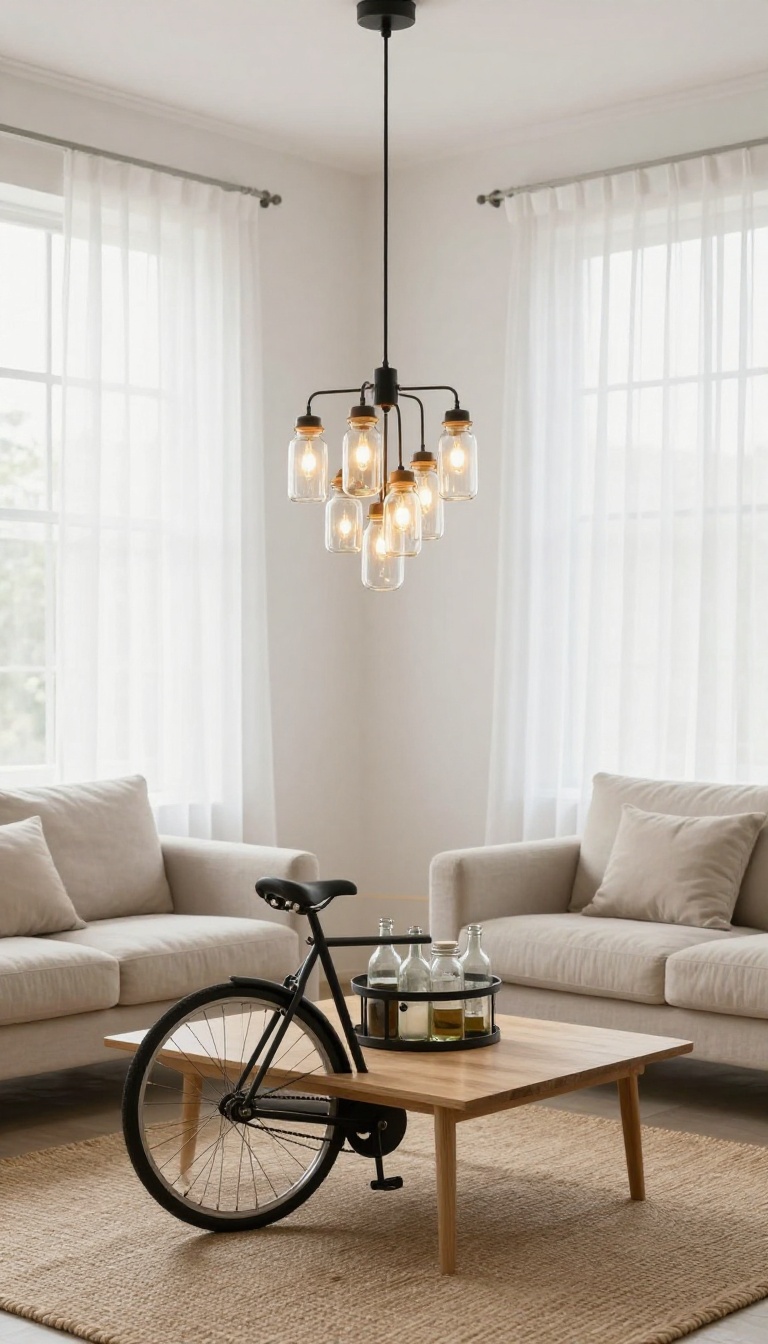
A DIY chandelier made from repurposed materials gives you a fixture that no one else has. It’s also a smart way to save money and keep useful things out of the landfill. You don’t need a workshop full of tools—just a little imagination and a few hours.
Start by hunting for a sturdy base. An old wooden crate lid, a wire basket, or even a bicycle wheel can work. Clean it up, remove loose parts, and give it a coat of paint or stain if you want a uniform look.
Then decide how the lights will attach. A simple pendant cord kit with a socket is cheap and easy to wire. If you’re not comfortable with electrical work, hire a pro for the final hookup.
Once the base and wiring are set, add your repurposed elements. Glass bottles, mason jars, metal funnels, or vintage teacups can become shades. Secure them with wire or heat-resistant adhesive, leaving enough space for heat to escape.
Use LED bulbs to keep things cool and energy-efficient. Hang the fixture at the right height—usually 30 to 34 inches above a coffee table, or 7 feet from the floor in open areas. The best part is that you can tweak it over time.
Swap out a shade, add a coat of metallic paint, or change the cord length. Your chandelier becomes a living piece that reflects your style and your resourcefulness.
Finding The Right Base
Look for something with a natural structure—a wheel, a ladder, a wooden frame. It should be lightweight enough to hang safely but sturdy enough to hold your shades. Thrift stores, flea markets, and your own garage are great places to start.
Wiring And Safety
Use a UL-listed cord kit and follow the instructions carefully. If you’re unsure, call an electrician. Always use LED bulbs to reduce heat, and make sure your ceiling can support the weight.
A swag hook or ceiling medallion can help distribute the load.
Adding Shades And Details
Repurposed shades can be almost anything: colanders, tin cans, paper lanterns, or even seashells. Attach them securely and leave gaps for airflow. A little spray paint or ribbon can tie the look together without much effort.
Styling And Placement
Hang your DIY chandelier where it can be the star—over a seating area or in a reading nook. Dimmer switches let you control the mood. And don’t be afraid to mix it with other light sources for a layered look.
FAQ
How do I choose the right size chandelier for my living room?
Add the room's length and width in feet, then convert that number to inches. That's the ideal diameter for your chandelier. For example, a 10×12 room needs a 22-inch fixture.
What's the best chandelier style for a low ceiling?
Go with a flush-mount or semi-flush chandelier. They sit close to the ceiling and won't crowd the space. Drum shades and compact designs work well too.
Can I install a chandelier myself or should I hire an electrician?
If you're comfortable with basic wiring and have a junction box rated for the weight, you can DIY. Otherwise, hire a licensed electrician to ensure safety and proper installation.
How high should I hang a chandelier above a coffee table?
Aim for 30 to 34 inches from the bottom of the fixture to the tabletop. That keeps it visually connected without blocking sightlines.
Are chandeliers still in style?
Yes, but the styles have evolved. Minimalist, industrial, and mixed-material designs are trending. Classic crystal remains timeless for formal spaces.
Conclusion
The right chandelier can pull a whole living room together, but you do not have to commit to the first one you see. Start with the idea that fits your ceiling height and the mood you actually want, then live with it for a week before deciding anything else.
Lighting is one of the easiest things to adjust later, so give yourself room to change your mind. Save the ideas that made you pause, measure twice, and let the room tell you what it needs next.