11 Teen Room Decor for Boys Small Spaces Bedroom Ideas
Walk into a typical teen boy's small bedroom and you'll usually spot the same problem: a bed that eats half the floor, clothes on the chair, and nowhere to actually hang out. The room isn't doomed, though. It just needs a different plan.
Boys in small spaces don't need less stuff, they need smarter places to put it. Wall space, vertical storage, and furniture that pulls double duty can turn a cramped box into a room that actually feels like his.
The eleven ideas below cover storage, lighting, layout, and the personal touches that make a space his own. Most are weekend projects, and none require a full remodel.
1. Go Vertical with Wall-Mounted Shelves and Hooks
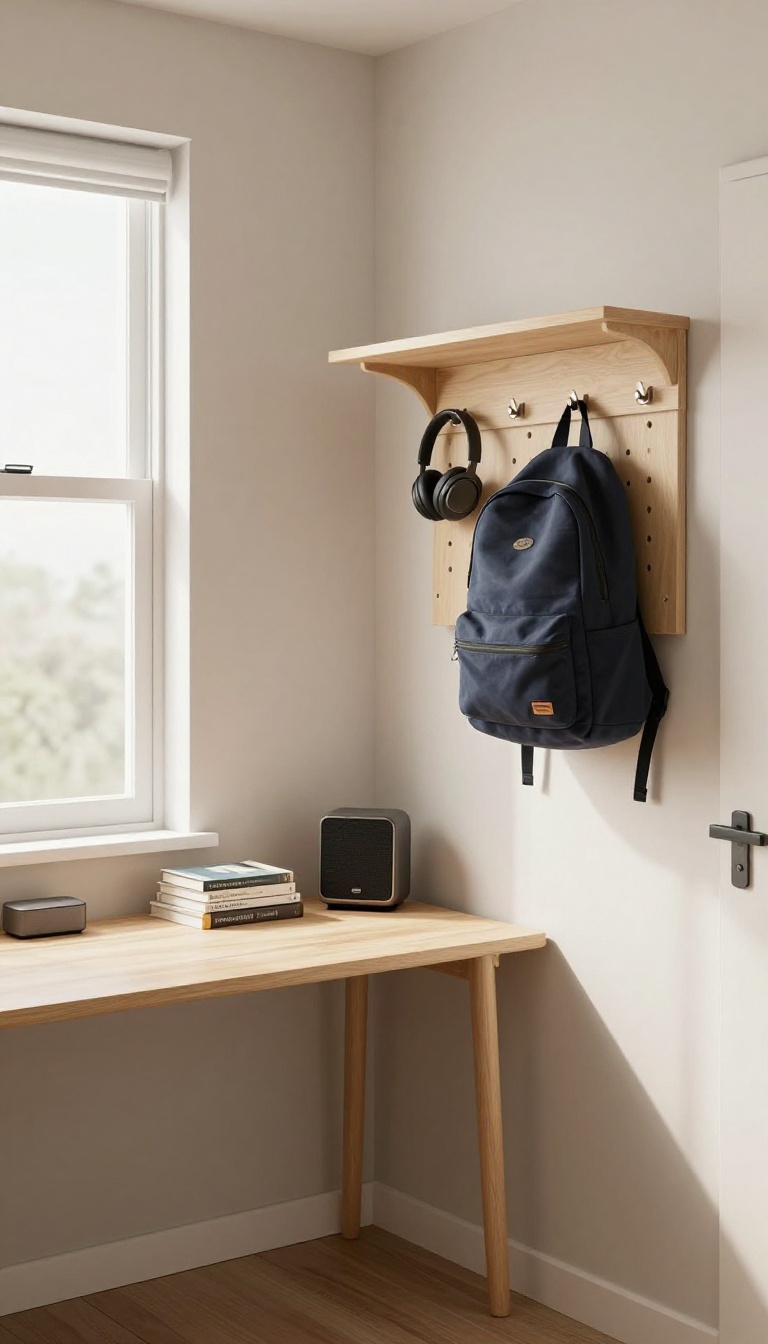
Floor space disappears fast in a small bedroom, but the walls stay wide open. That empty stretch above the bed, behind the door, and beside the desk is prime real estate for a teen boy's gear. Going vertical means moving shelves, hooks, and boards up where they can hold more without stealing an inch of walking room.
It's one of the cheapest and quickest ways to make a cramped room feel bigger.
Start with the spots that already annoy him. Backpacks dumped by the door, headphones tangled on the desk, hoodies draped over a chair. Each pile points to a wall that could be working harder.
You don't need a full carpentry setup either. A few brackets, a drill, and a Saturday afternoon cover most of this. Renting a drill from a hardware store is fine if you don't own one.
Measure first, then buy. Guessing leads to shelves that hit the light switch or hooks that crowd the closet door swing.
Shelves That Actually Get Used
Float two or three shelves at eye level above the desk for books, a speaker, and a charging dock. Keep the top shelf for display stuff like trophies, sneakers, or a signed ball. Corner shelves are the sneaky win here.
They tuck into dead space that no furniture can use and hold a surprising amount. A single tall corner unit can replace a whole nightstand. Skip the deep shelves.
Shallow ones hold just as much for small items and won't bonk his head when he sits up in bed.
Hooks, Pegboards, And Command Strips
A row of hooks behind the door handles hoodies, a backpack, and a towel without any floor space. Heavy-duty adhesive hooks work on painted walls and come off clean when he changes his mind. Pegboards are the upgrade move.
Mount one above the desk and he can hang headphones, cables, keys, and a controller on movable pegs. It looks intentional and doubles as wall art. Command strips handle the lightweight stuff: posters, a small mirror, string lights.
Save the drill for anything holding real weight.
Placement Rules That Save The Room
Hang shelves high enough that he can walk under them but low enough to reach without a stool. Around 12 to 18 inches above the desk usually lands right. Keep heavy items low and light items high.
A shelf full of textbooks above the bed is a bad idea for obvious reasons. Leave breathing room between pieces. A wall packed edge to edge feels smaller, not bigger.
A little empty space makes the whole room read as calmer.
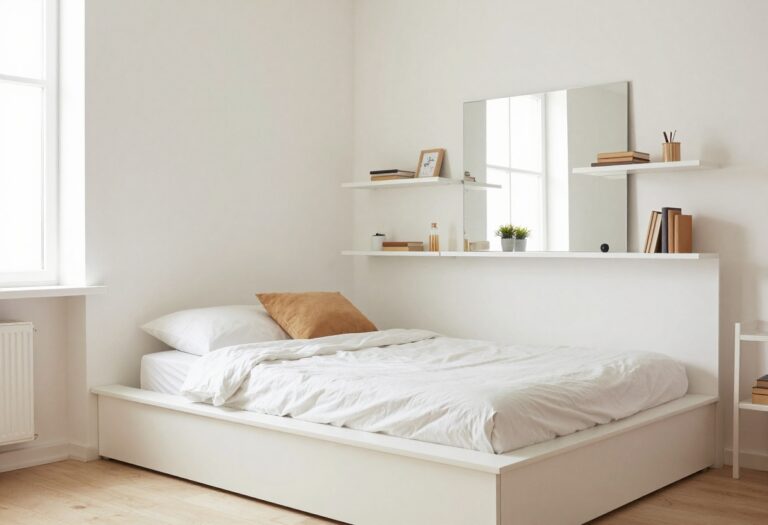
2. Choose a Bed with Built-In Storage or a Loft Setup
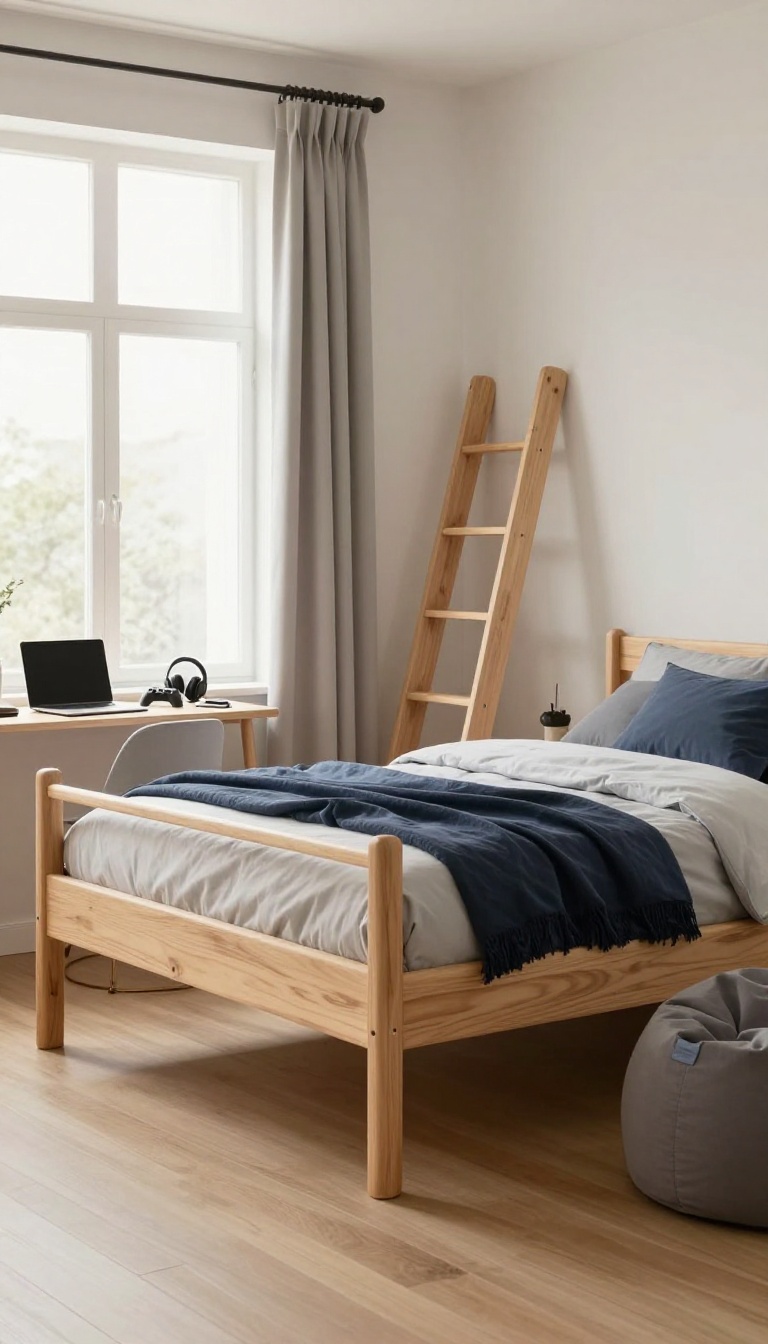
The bed takes up the most square footage in any small room, so it should work harder than just being a place to sleep. A frame with drawers underneath or a lofted design turns that dead space into real storage. You get a cleaner room without adding a single piece of furniture.
Think about what's currently under his bed: dust bunnies, lost socks, maybe a stray shoe. That's wasted real estate. Swap the basic frame for one with built-in drawers and you instantly gain spots for hoodies, extra blankets, or gaming controllers.
If the ceiling is high enough, a loft bed takes it further by lifting the sleep zone and freeing the entire floor below for a desk, beanbag, or shelves.
Storage Beds That Do The Heavy Lifting
A captain's bed or platform bed with drawers is the easiest upgrade because it looks like a normal bed. Look for models with at least two drawers on the side or footboard. They roll out smooth and hold a surprising amount.
Use them for jeans, gym clothes, or shoes he kicks off at night. Some even have a hidden compartment for a console or charging cables, which keeps cords off the floor.
Loft Beds For Maximum Floor Space
If the room has eight-foot ceilings or higher, a loft bed is a game-changer. It raises the mattress to create a hangout or study zone underneath. You can fit a small desk, a bookshelf, or a gaming chair in that footprint.
Just make sure the ladder or stairs feel sturdy and the guardrail is tall enough. Most teens love the cave-like feel of a loft, and parents love the extra room.
Safety And Setup Tips
Measure twice before buying. Check ceiling height, door swing, and how much space the drawers need to open. A loft bed needs a solid wall for stability, and you should anchor it if the kit includes hardware.
For storage beds, make sure the drawers slide on smooth glides, not cheap plastic tracks. Also, leave a few inches between the bed and the wall so air can flow and sheets don't get pinched.
3. Use a Floating Desk for Homework and Gaming
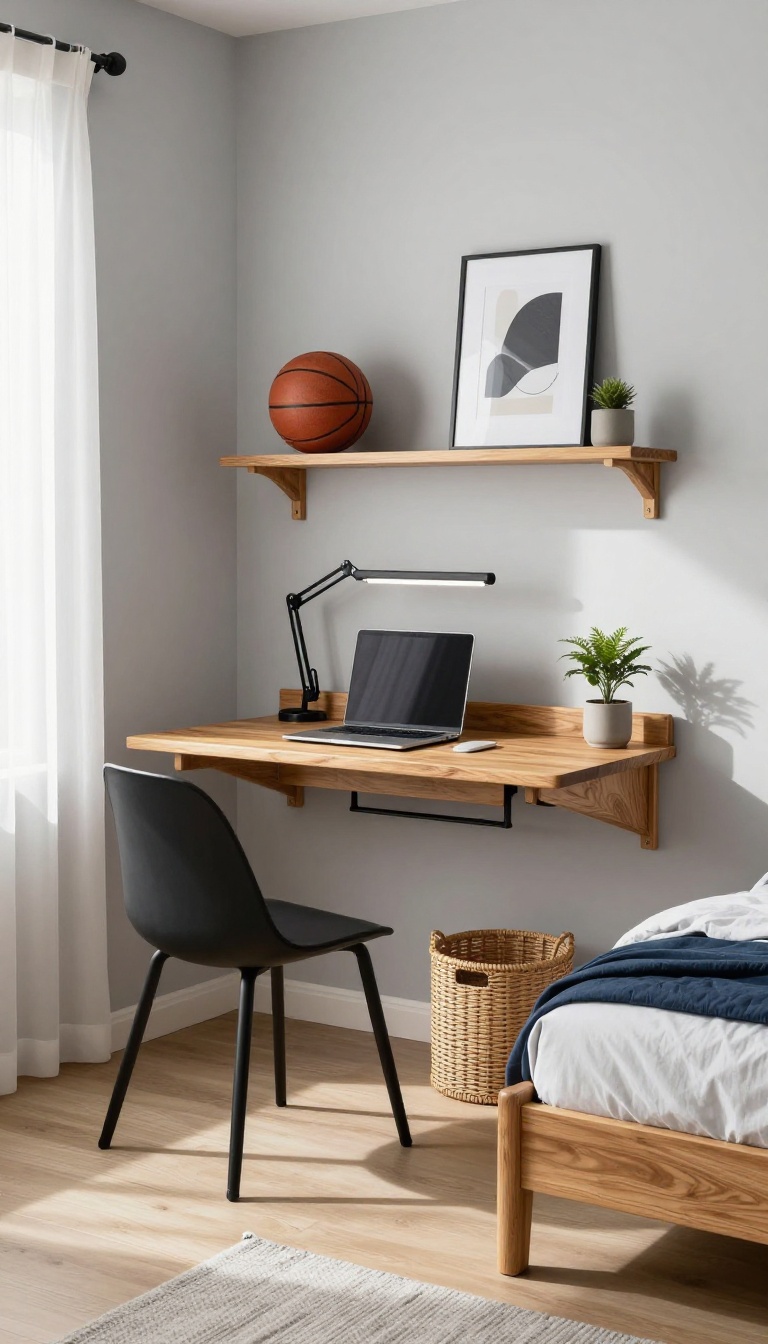
A bulky desk can swallow a small bedroom whole. But a floating desk mounts right to the wall, giving him a dedicated spot for homework, streaming, or PC gaming without stealing floor space. It’s a simple swap that makes the room feel bigger and more functional.
A floating desk is exactly what it sounds like: a shelf-like surface attached directly to the wall, often with hidden brackets or a cleat system. Because there are no legs, the floor underneath stays open. That means he can slide a chair, a storage bin, or even a small dresser right under it when not in use.
In a tight room, that reclaimed square footage is gold. Installation is straightforward for most DIYers. You’ll need to locate the wall studs, attach a sturdy cleat or bracket system, and secure the desktop.
Many big-box stores sell floating desk kits that include everything you need. If you’re handy, you can also build a custom one from a butcher block or plywood slab. Just make sure it’s deep enough for a laptop or monitor—18 to 24 inches is a good target.
For gaming, cable management is key. A wall-mounted desk keeps cords off the floor, but you’ll still want a way to route them neatly. Add a cable tray underneath or use adhesive clips along the back edge.
A power strip mounted under the desk keeps outlets within reach without a tangle of wires. If he’s into PC gaming, consider a monitor arm that clamps to the desk edge—it frees up surface area and looks clean. Lighting matters too.
A slim LED bar or a clip-on task light can attach to the desk or wall above it. Avoid bulky lamps that eat into the workspace. If he does homework during the day, position the desk near a window for natural light, but add a task light for evenings.
Finally, personalize the wall above the desk. A pegboard, a few floating shelves, or a corkboard can hold supplies, headphones, or favorite posters. That vertical storage keeps the desktop clear and makes the area feel like his own command center.
Why It Works In Small Rooms
Floating desks eliminate the legs and bulk of traditional desks, freeing up floor space for movement and storage. They also draw the eye upward, making the room feel taller and less cluttered.
Installation Tips
Find the studs, use a sturdy cleat or bracket, and choose a depth that fits his needs. Kits are available, or you can DIY with a solid wood slab. Make sure it’s level and secure before loading it up.
Cable And Gear Management
Keep cords tidy with under-desk trays and adhesive clips. Mount a power strip underneath for easy access. For gamers, a monitor arm and a headphone hook can keep the surface clear.
Lighting And Personal Touches
Add a slim LED task light or clip-on lamp. Use the wall above for pegboards, shelves, or a corkboard to store supplies and show off his style without cluttering the desk.
4. Add Smart LED Strip Lighting for Instant Vibe
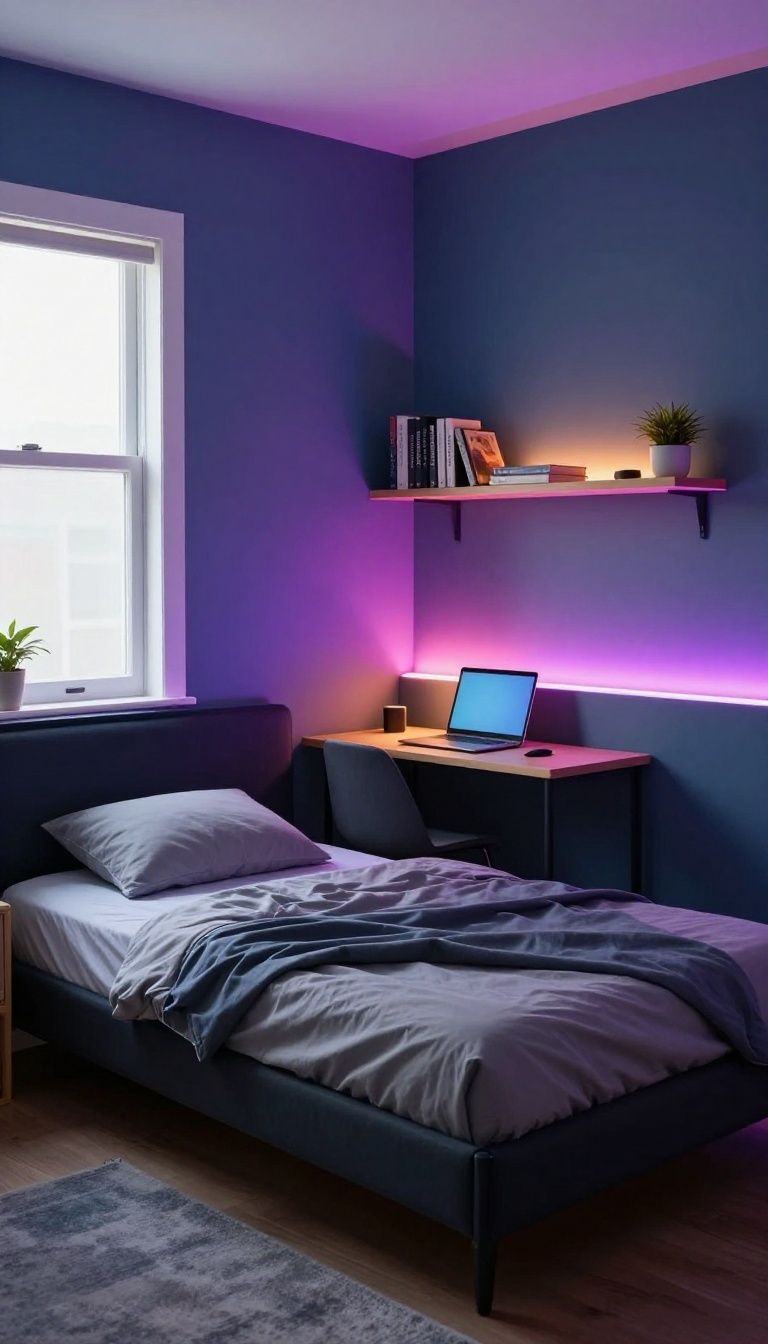
LED strip lights are one of the easiest upgrades for a small teen bedroom. They stick behind furniture, so they don't steal any floor or desk space. Plus, they let him change the whole mood with a tap on his phone.
You've probably seen LED strips in gaming setups or behind TVs. They're affordable, simple to install, and they make a room feel instantly cooler. For a small space, they're a game-changer because they add personality without adding clutter.
Most strips come with adhesive backing and a remote or app control. You can cut them to length, so they fit almost anywhere. The best part?
They're plug-and-play, so no wiring skills needed.
Where To Stick Them
The most popular spots are behind the bed headboard, under a desk, or along a shelf edge. Behind the bed creates a soft glow that makes the room feel bigger. Under the desk adds task lighting for homework or gaming.
Along shelves highlights his stuff and adds depth.
Pick The Right Strip
Look for strips with 16 million colors and music sync if he's into that. Wi-Fi or Bluetooth control lets him change colors from his phone. Make sure the length matches your space—most kits come in 16.
4 feet, which is plenty for a small room.
Install Without Damage
Clean the surface first so the adhesive sticks. If you're worried about paint, use mounting clips or tape designed for delicate surfaces. Run the strip along edges and corners to hide the strip itself and just show the glow.
5. Pick a Bold Accent Wall Instead of Full Repainting
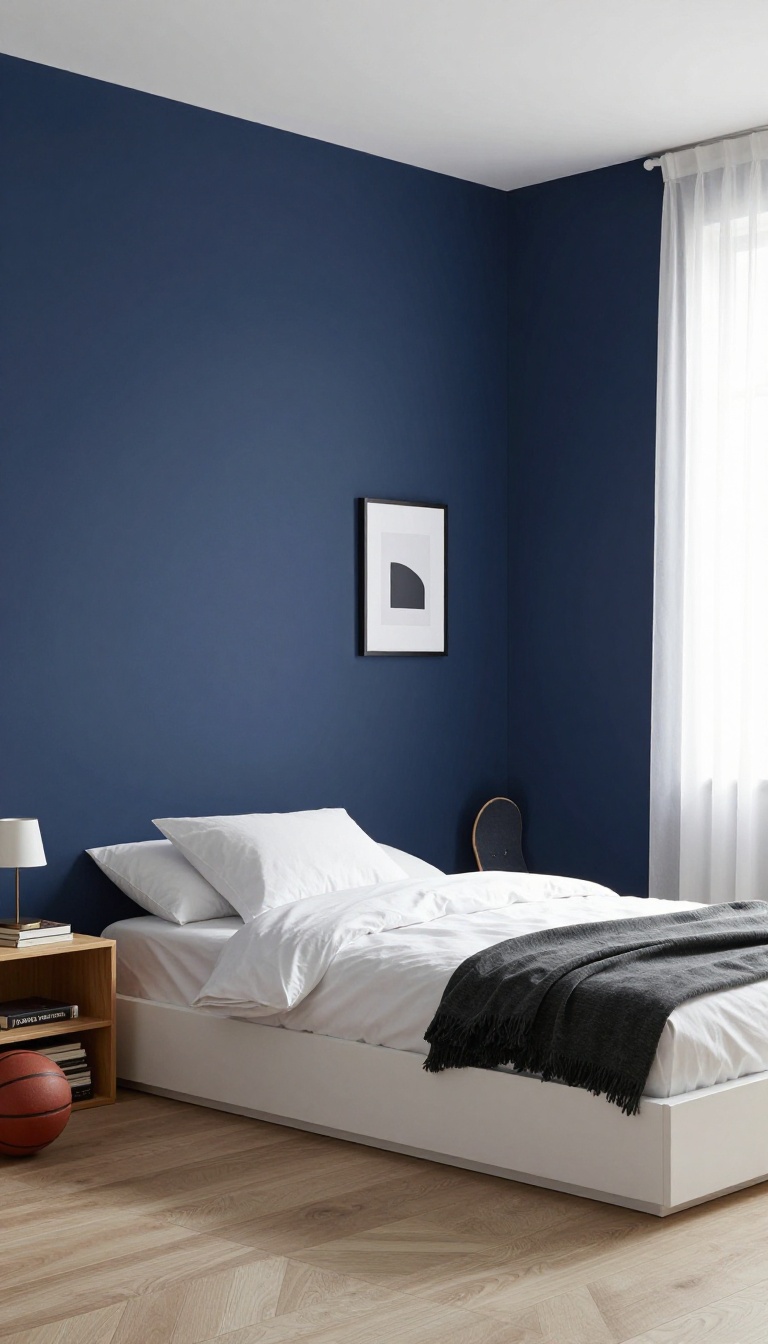
Painting an entire small bedroom can feel like a weekend you'll never get back. The prep work, the furniture moving, the second coat—it adds up fast. But one bold accent wall gives you the same style punch with half the effort and a fraction of the paint.
An accent wall is exactly what it sounds like: one wall that stands out while the rest stay neutral. In a small room, that contrast creates depth and draws the eye, making the space feel intentional instead of boxy. You can go dark, graphic, or textured—whatever matches his vibe.
The best part? You only need one can of paint, a few hours, and maybe some painter's tape. No need to empty the whole room or hire help.
Just clear the wall, cover the floor, and get rolling.
Why One Wall Works
A single dark or patterned wall adds visual interest without making the room feel like a cave. It anchors the space and gives the eye a place to land, which actually makes small rooms feel bigger. Plus, it's a low-commitment way to try a bold color he might not want on all four walls.
Best Colors For Small Rooms
Deep navy, charcoal, forest green, and even black can work beautifully on one wall. These shades absorb light and create a cozy, grown-up feel. If he wants something brighter, try a muted olive or a rich burgundy.
Just keep the other walls light to balance it out.
Easy Ways To Add Pattern
Not into solid paint? Use removable wallpaper, stencils, or even a large decal to create a graphic accent wall. Geometric shapes, stripes, or a map mural can all work.
Removable options are great for renters or anyone who changes their mind often.
Prep And Paint Without The Mess
Clear the wall, wipe it down, and tape off trim and outlets. Use a drop cloth or old sheet to protect the floor. Roll on two thin coats instead of one thick one for even coverage.
Let it dry overnight, then move everything back. Done.
6. Use a Storage Ottoman or Bench as a Dual-Purpose Seat
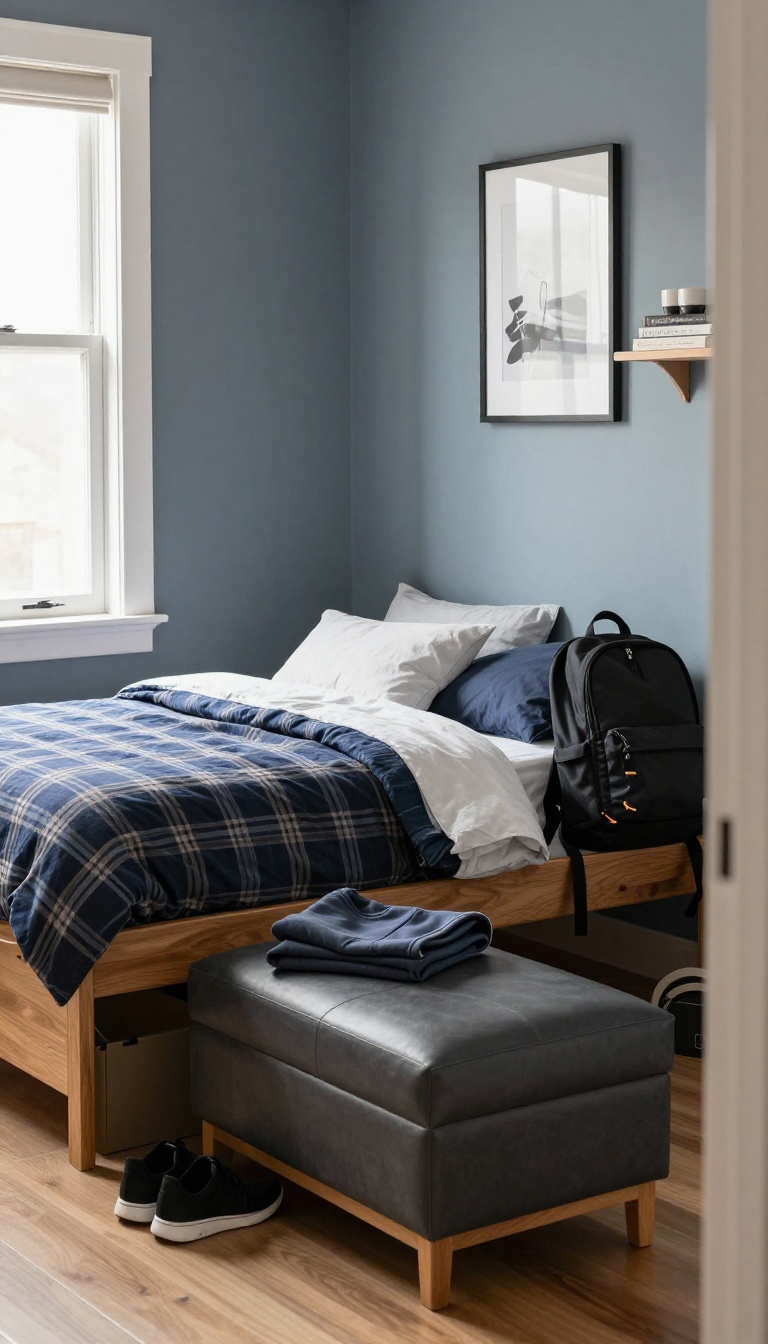
Floor space is precious in a small bedroom, so any piece of furniture that does two jobs at once is a win. A storage ottoman or bench gives your teen a spot to sit, tie shoes, or drop a backpack, and it hides the stuff that usually ends up on the floor. It’s one of those quiet upgrades that makes the whole room feel more put-together without adding clutter.
Think of it as a seat that swallows mess. Instead of a plain chair that only holds a person, an ottoman or bench holds people and their things. That means fewer piles, less visual noise, and a room that resets faster when friends come over.
Pick The Right Size And Shape
Measure the wall or floor spot first. A bench works best at the foot of the bed or under a window, while a cube ottoman fits into tight corners. Aim for something 30 to 48 inches wide for a bench, or 18 to 24 inches square for an ottoman.
Leave at least 24 inches of walking space around it so the room doesn’t feel blocked.
Choose Storage That Actually Gets Used
Lift-top lids are easy for quick drop-ins like controllers, chargers, or a hoodie. Removable lids or open shelves work better for bulky items like extra blankets or laundry. If your teen won’t bother lifting a heavy lid, go with a flip-top or a bench with open cubbies underneath.
The easier it is to use, the more likely it stays tidy.
Make It Comfortable And Durable
Look for a padded top with a wipeable fabric like faux leather or a tight-weave upholstery. Guys in their teens aren’t gentle, so avoid light-colored fabrics that show every stain. A bench with a solid wood or metal frame holds up better than particleboard.
Add a small tray on top for a lamp or phone, and it becomes a mini nightstand too.
7. Install a Magnetic Board or Corkboard for Quick Organization
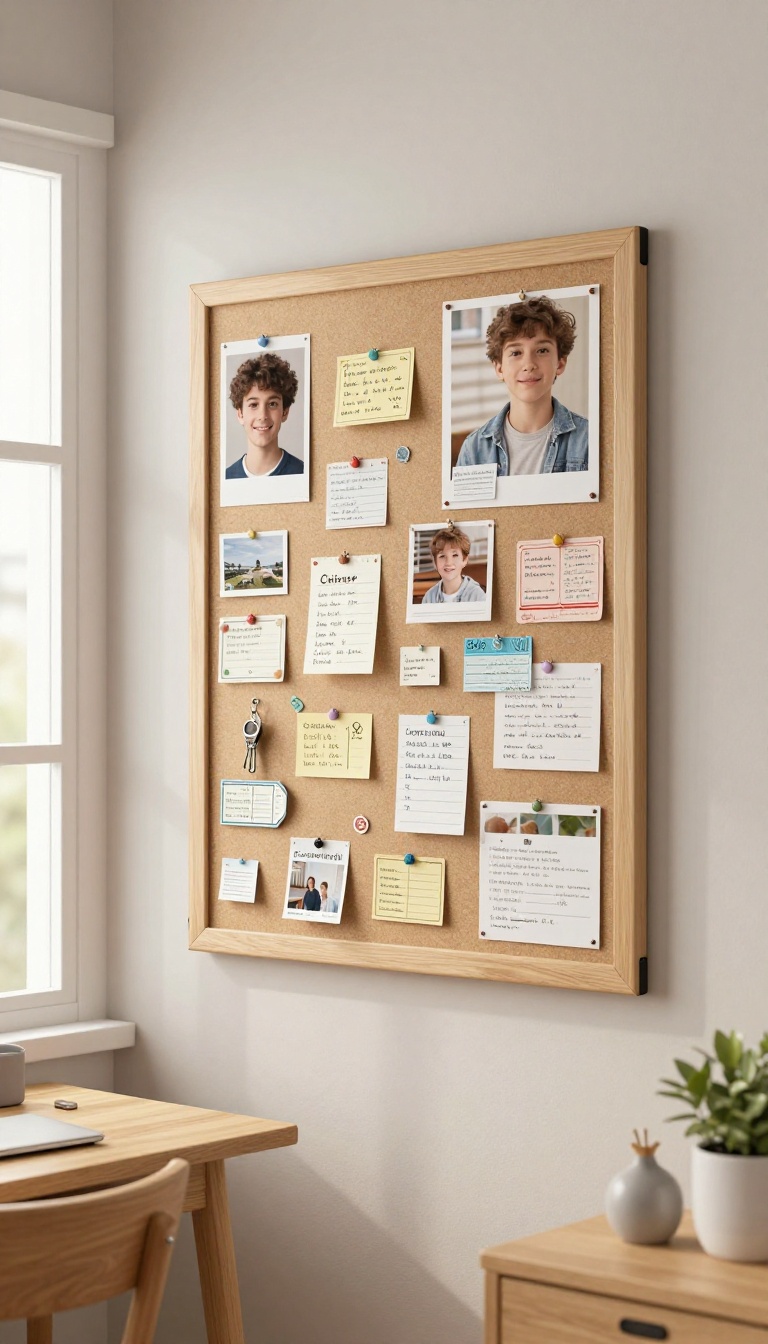
A magnetic board or corkboard turns a blank wall into a functional command center. It gives all those random papers, photos, and small items a home so they stop piling up on the dresser. For a teen boy in a small room, this is a simple way to add storage without taking up floor space.
It also lets him show off his personality, whether that's ticket stubs, a favorite quote, or a photo of his friends. Best of all, installation is easy and won't break the bank. You can mount it, lean it, or even use a peel-and-stick option if drilling isn't an option.
A magnetic board or corkboard is one of those small additions that makes a big difference in a cramped room. It keeps the surfaces clear and gives him a spot to pin up whatever matters to him right now. The key is picking the right type and placing it where it actually gets used. ### Magnetic vs.
Cork: Which One Works Better? Magnetic boards are great for holding papers, photos, and notes with strong magnets. They also work with magnetic hooks and bins, so you can hang keys, lanyards, or small accessories.
Corkboards are better if he likes the look of pushpins and wants a more classic, textured feel. Some boards combine both materials, giving you the best of each. Think about what he'll actually stick on it.
If it's mostly papers and schedules, a magnetic board is more versatile. If it's photos and ticket stubs, cork might be the better vibe. ### Where to Put It So It Gets Used Placement matters more than size. Mount it near the desk or door, where he'll see it every day.
A board above the desk keeps homework and reminders in view, while one by the door works for keys, permission slips, and outgoing mail. If wall space is tight, go vertical. A tall, narrow board fits between shelves or on the side of a wardrobe.
You can also hang it on the back of the door if the door is solid and you use the right hardware. ### Easy Installation Without Damaging Walls Not everyone can drill into walls, especially in a rental. Command strips and adhesive hooks can hold lightweight boards securely. For heavier boards, look for over-the-door hooks or a freestanding easel-style board that leans against the wall.
If you do drill, use wall anchors for drywall and make sure to hit a stud if possible. A small level helps keep it straight. And don't forget to check the weight limit on any adhesive you use. ### Keep It Useful, Not Cluttered A board only helps if it stays organized.
Use small magnetic bins or a cork cup to hold pins, clips, and pens. Group similar items together, like a corner for schedules and another for photos. Once a week, clear off anything outdated.
A little maintenance keeps it from becoming another pile. Plus, it gives him a reason to actually use it instead of tossing stuff on the bed.
Magnetic Vs. Cork: Which One Works Better?
Magnetic boards are great for holding papers, photos, and notes with strong magnets. They also work with magnetic hooks and bins, so you can hang keys, lanyards, or small accessories. Corkboards are better if he likes the look of pushpins and wants a more classic, textured feel.
Some boards combine both materials, giving you the best of each. Think about what he'll actually stick on it. If it's mostly papers and schedules, a magnetic board is more versatile.
If it's photos and ticket stubs, cork might be the better vibe.
Where To Put It So It Gets Used
Placement matters more than size. Mount it near the desk or door, where he'll see it every day. A board above the desk keeps homework and reminders in view, while one by the door works for keys, permission slips, and outgoing mail.
If wall space is tight, go vertical. A tall, narrow board fits between shelves or on the side of a wardrobe. You can also hang it on the back of the door if the door is solid and you use the right hardware.
Easy Installation Without Damaging Walls
Not everyone can drill into walls, especially in a rental. Command strips and adhesive hooks can hold lightweight boards securely. For heavier boards, look for over-the-door hooks or a freestanding easel-style board that leans against the wall.
If you do drill, use wall anchors for drywall and make sure to hit a stud if possible. A small level helps keep it straight. And don't forget to check the weight limit on any adhesive you use.
Keep It Useful, Not Cluttered
A board only helps if it stays organized. Use small magnetic bins or a cork cup to hold pins, clips, and pens. Group similar items together, like a corner for schedules and another for photos.
Once a week, clear off anything outdated. A little maintenance keeps it from becoming another pile. Plus, it gives him a reason to actually use it instead of tossing stuff on the bed.
8. Swap Bulky Furniture for Slim, Multi-Functional Pieces
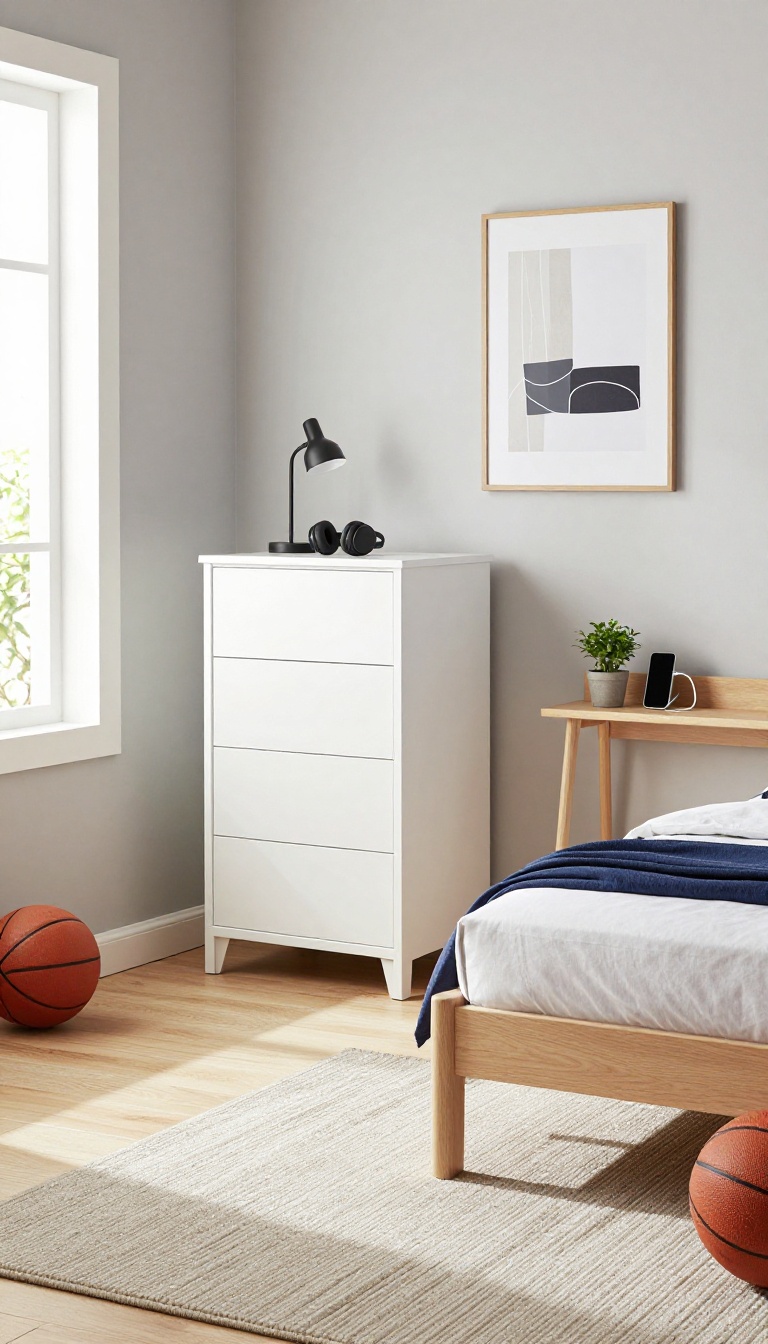
That heavy oak dresser from your old guest room might hold a lot, but it also eats a huge chunk of floor. In a small teen bedroom, every piece of furniture needs to earn its spot. Slim, multi-functional pieces solve two problems at once: they free up walking room and give your teen more ways to use the space.
Think narrow consoles, storage benches, and wall-mounted units that pull double duty.
The goal is simple: keep the function, lose the bulk. You can replace a wide dresser with a tall, narrow one that uses vertical space instead of spreading out. A storage bench at the foot of the bed can hold blankets, shoes, or sports gear, and it gives him a spot to sit while tying sneakers.
Even a slim console table behind the bed can act as a headboard shelf and a place for a lamp or phone. These swaps don't just save space, they make the room feel less crowded and more intentional.
Go Tall, Not Wide
A tall, narrow dresser or shelving unit takes up less floor space while still offering plenty of storage. Look for pieces that are 18 to 24 inches deep and at least four feet tall. That way, he can keep clothes, books, and gadgets organized without blocking traffic flow.
Bonus: taller furniture draws the eye upward, making the ceiling feel higher.
Pick Pieces That Pull Double Duty
A storage ottoman can be a seat, a footrest, and a place to stash video games. A wall-mounted desk folds down when not in use and disappears when he needs floor space for friends. A bed with drawers underneath replaces a whole dresser.
Each of these pieces does at least two jobs, so you get more function from less furniture.
Use Slim Consoles And Floating Shelves
A narrow console table behind the bed or along a wall can hold a lamp, alarm clock, and a few books without sticking out into the room. Floating shelves do the same job as a bookcase but take up zero floor space. Mount them at eye level or higher to keep the floor clear and the room feeling open.
9. Use a Curtain or Room Divider to Zone the Space
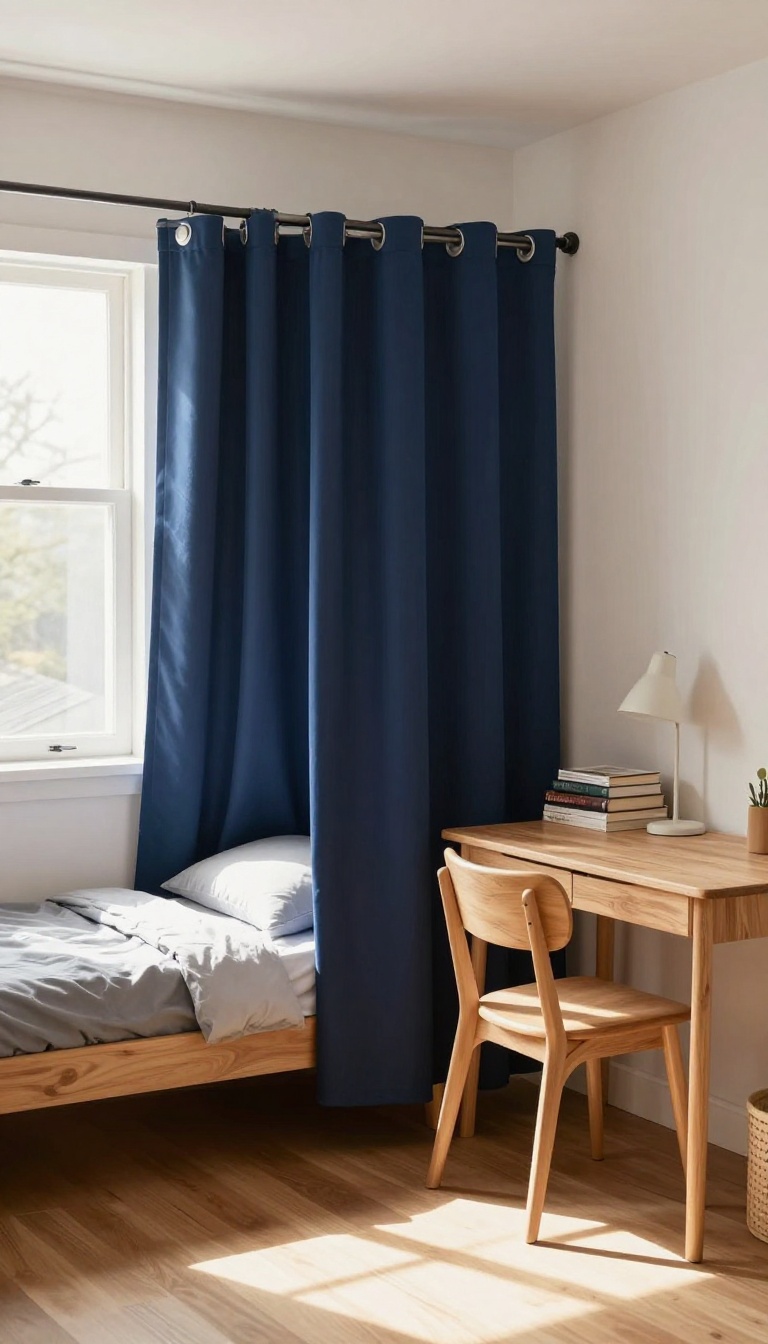
A small room can feel even smaller when everything happens in one spot. Sleeping, studying, and hanging out all blur together, and the space never feels fully yours. A simple curtain or room divider fixes that by carving out separate zones without adding a single square foot.
You don't need a bigger room—you just need better boundaries. A divider gives each part of the room a job, so your brain knows when it's time to chill and when it's time to focus. Plus, it adds a cool design element that makes the space feel intentional.
Pick The Right Divider For Your Room
Not all dividers are created equal. For tight spaces, a tension rod with a floor-length curtain is a budget-friendly winner. It's soft, easy to install, and you can swap it out when his style changes.
If you want something sturdier, a folding screen or a bookshelf divider adds storage and separation. Just measure your space first—you want it to feel open, not cramped.
Where To Place It For Maximum Impact
The best spot is usually between the bed and the study area. That way, the bed feels like a cozy cave and the desk feels like a workspace. If the door is in the middle, try dividing the room front-to-back instead.
Play around with placement before you commit—sometimes just shifting the divider a few feet makes a huge difference.
Make It Functional And Cool
A plain curtain can look a little blah, so choose a pattern or color that matches his vibe. Blackout curtains are great for sleeping in, while a sheer curtain keeps things light. You can also hang string lights or clip photos to a fabric divider for a personal touch.
And if you go with a shelving unit, use the shelves for books, trophies, or gear—double duty at its finest.
10. Add a Clip-On or Wall-Mounted Fan for Airflow
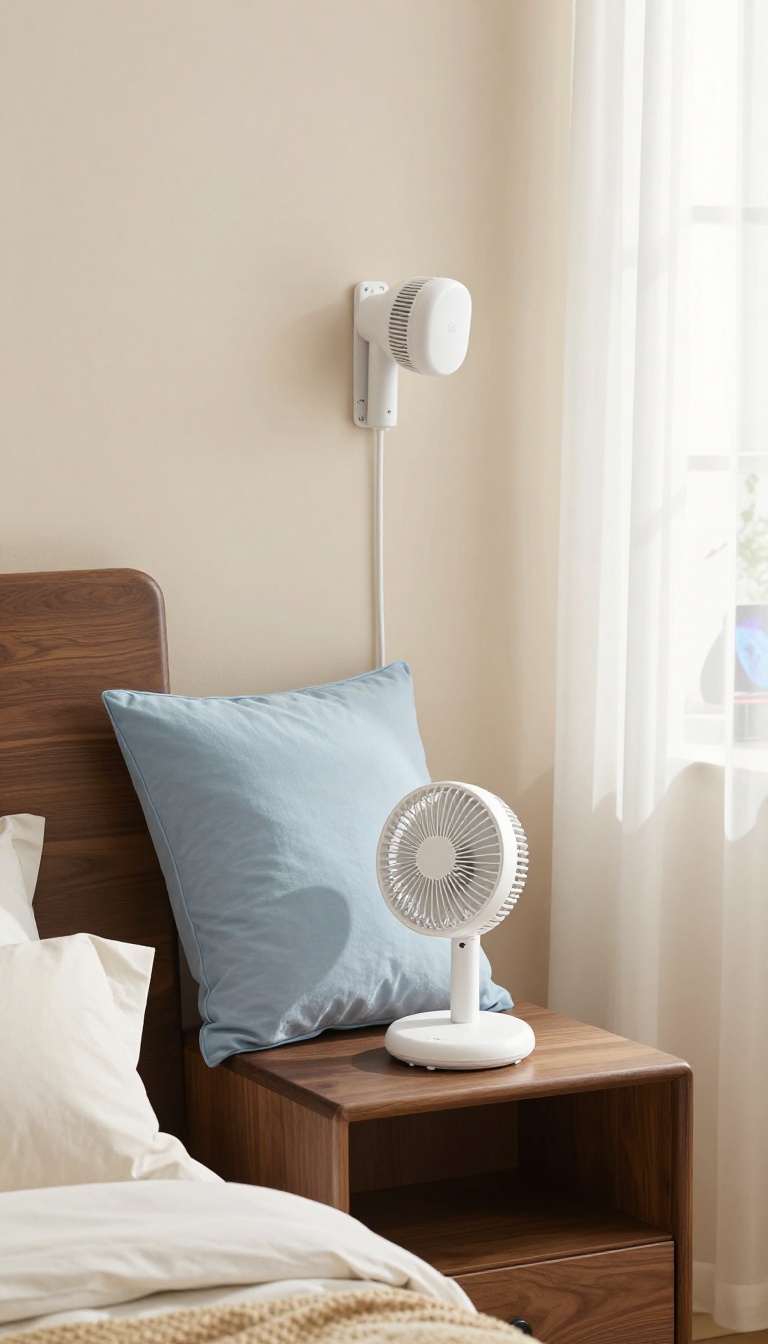
Small bedrooms turn stuffy fast, especially when a teen boy keeps the door shut and the gaming session runs long. A standing fan helps, but it also claims a chunk of floor he doesn't have to spare. A clip-on or wall-mounted fan solves both problems at once by moving air without stealing square footage.
These fans attach to bed frames, shelves, desks, or directly to the wall, so the breeze goes where he needs it. They're affordable, easy to install, and quiet enough for homework or sleep. For a room that already feels tight, that's a lot of comfort for very little space.
Clip It Where The Air Matters
A clip-on fan is the simplest option because it grabs onto almost anything. Clamp it to the headboard for overnight airflow, the desk edge during study time, or a shelf near the window to pull in cooler evening air. Look for a model with a padded clamp so it doesn't scratch wood or metal, and a tilting head so he can aim it exactly where he wants.
Mount It High And Out Of The Way
Wall-mounted fans sit above the action, which keeps them clear of furniture and cords. A basic oscillating wall fan moves air across the whole room, while a small corner-mounted unit fits tight spots. Mount it near the ceiling on the side where the bed sits, and angle it slightly downward so the breeze reaches him instead of the wall.
Most come with hardware, but a stud finder makes the job easier and safer.
Keep It Quiet And Easy To Control
Noise matters in a small room, so check the decibel rating before buying. Fans labeled quiet or whisper run around 30 to 40 decibels, which is about the level of a soft conversation. A remote or wall switch means he doesn't have to climb over furniture to change the speed.
If the room gets really warm, a fan with a timer can run for an hour after he falls asleep and then shut off on its own.
11. Personalize with Posters, Decals, and Removable Wall Art
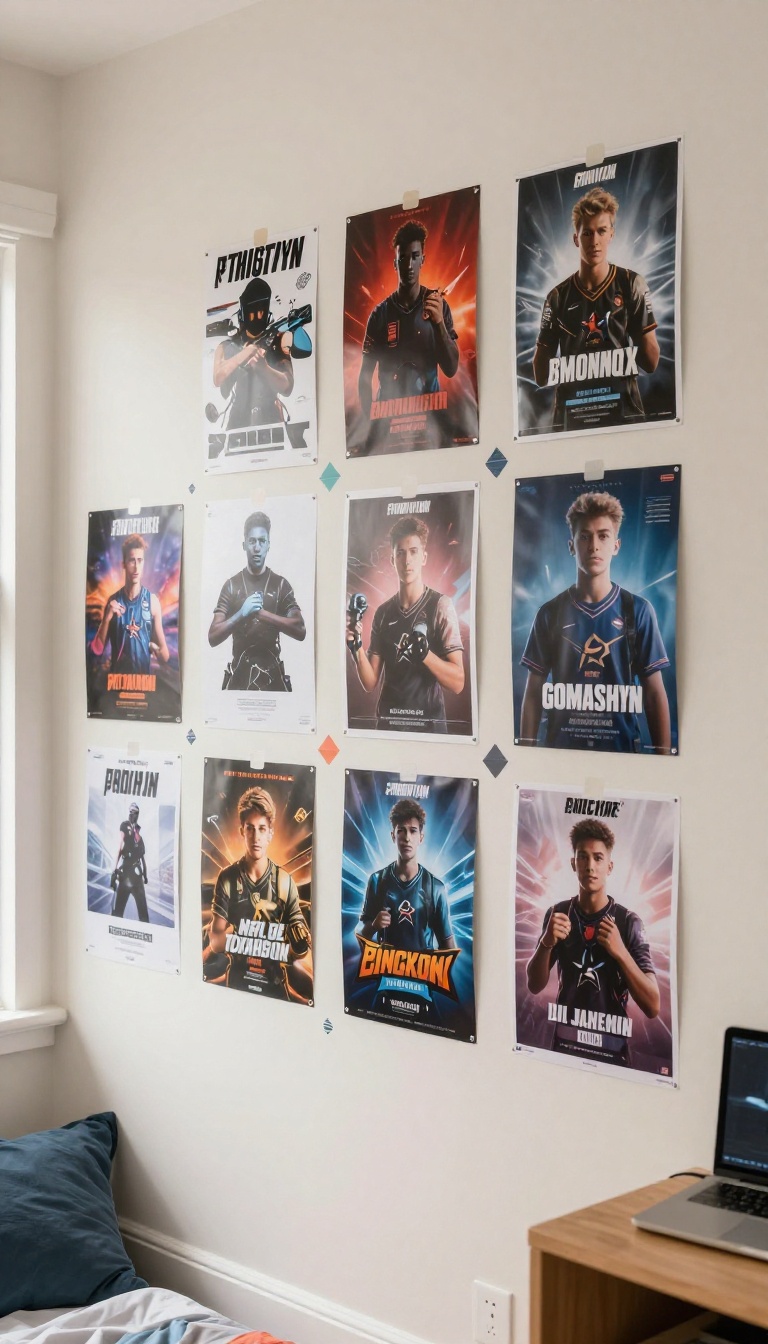
Blank walls can make a small room feel like a cell. But filling them with permanent paint or heavy frames isn't the answer, especially when his taste changes every few months. Removable wall art solves that problem.
It lets him show off what he's into right now without wrecking the walls or taking up an inch of floor space.
Posters, decals, and peel-and-stick art give a teen boy a way to make the room his own without a big commitment. They're cheap, easy to swap out, and they don't require tools or a landlord's permission. The best part?
They add personality without adding clutter.
Posters That Pack A Punch
A few well-placed posters can transform a wall. But don't just tape them up haphazardly. Use removable adhesive putty or poster strips to keep them flat and damage-free.
Group them by theme—gaming, sports, music—to create a gallery wall that looks intentional. Mix sizes for visual interest, and leave some breathing room between them so the wall doesn't feel chaotic.
Decals For Instant Character
Wall decals are like stickers for grown-up spaces. They come in everything from geometric shapes to sports logos to abstract designs. Peel and stick them on a whim, then remove them without leaving residue.
They're perfect for renters or for teens who change their minds often. Apply them to a clean, smooth surface, and smooth out air bubbles as you go.
Removable Wall Art That Grows With Him
Peel-and-stick canvas prints or fabric wall hangings offer a step up from posters. They look more polished but still come off easily when he's ready for a change. Look for lightweight options that won't pull on paint.
Command strips or velcro tabs work great for hanging them. This way, his wall can evolve as his interests do.
Smart Placement For Small Spaces
In a tiny room, every wall is prime real estate. Use the space above his bed or desk for a focal point. Keep the art scaled to the wall—too many small pieces can feel cluttered, while one large piece can overwhelm.
Balance is key. And don't forget the door or the side of a wardrobe; those are fair game for decals or a small poster.
FAQ
What is the best way to add storage to a small teen boy's bedroom?
Use vertical space with wall shelves, hooks, and a bed with built-in drawers. Floating desks and storage ottomans also help without crowding the floor.
How can I make a small bedroom look bigger for a teenage boy?
Stick to a light color palette, use mirrors to reflect light, and choose multi-functional furniture. Keeping surfaces clear and using vertical storage also opens up the room.
Are LED strip lights a good idea for a teen boy's room?
Yes, LED strips are affordable, easy to install, and add adjustable mood lighting. They also take up zero floor space, which is perfect for small rooms.
What kind of desk works best in a small teen bedroom?
A floating or wall-mounted desk is ideal because it saves floor space. Look for one with a small shelf or drawer for storing supplies and devices.
How do I decorate a small teen boy's room on a budget?
Focus on affordable upgrades like removable wall decals, LED lights, and storage baskets. Thrift stores and online marketplaces are great for finding slim furniture at low prices.
Conclusion
You don't have to tackle all eleven ideas in one weekend. Start with the one that solves your biggest headache, whether that's a bed eating the floor or clothes never finding a home. Give it a week before you judge it.
Once that change settles, add the next piece. Small rooms reward patience and smart choices, not a frantic shopping spree. Let the space evolve, notice what still bugs you, and build from there.