9 Simple Dark Wood Kitchen Ideas That Look Thoughtful, Not Overdone
Dark wood cabinets bring a sense of depth and warmth that lighter finishes often miss. But if you're not careful, they can also make a kitchen feel heavy or dated. The trick is to let the wood shine while keeping the rest of the room light and airy.
You don't need a full remodel to get this look right. Small changes—like swapping hardware, adding open shelving, or choosing the right backsplash—can make a big difference.
These nine ideas are simple, budget-friendly, and designed to help you embrace dark wood without going overboard. Whether you're working with existing cabinets or planning a new kitchen, these tips will guide you toward a space that feels both grounded and inviting.
1. Pair Dark Wood with Light Countertops
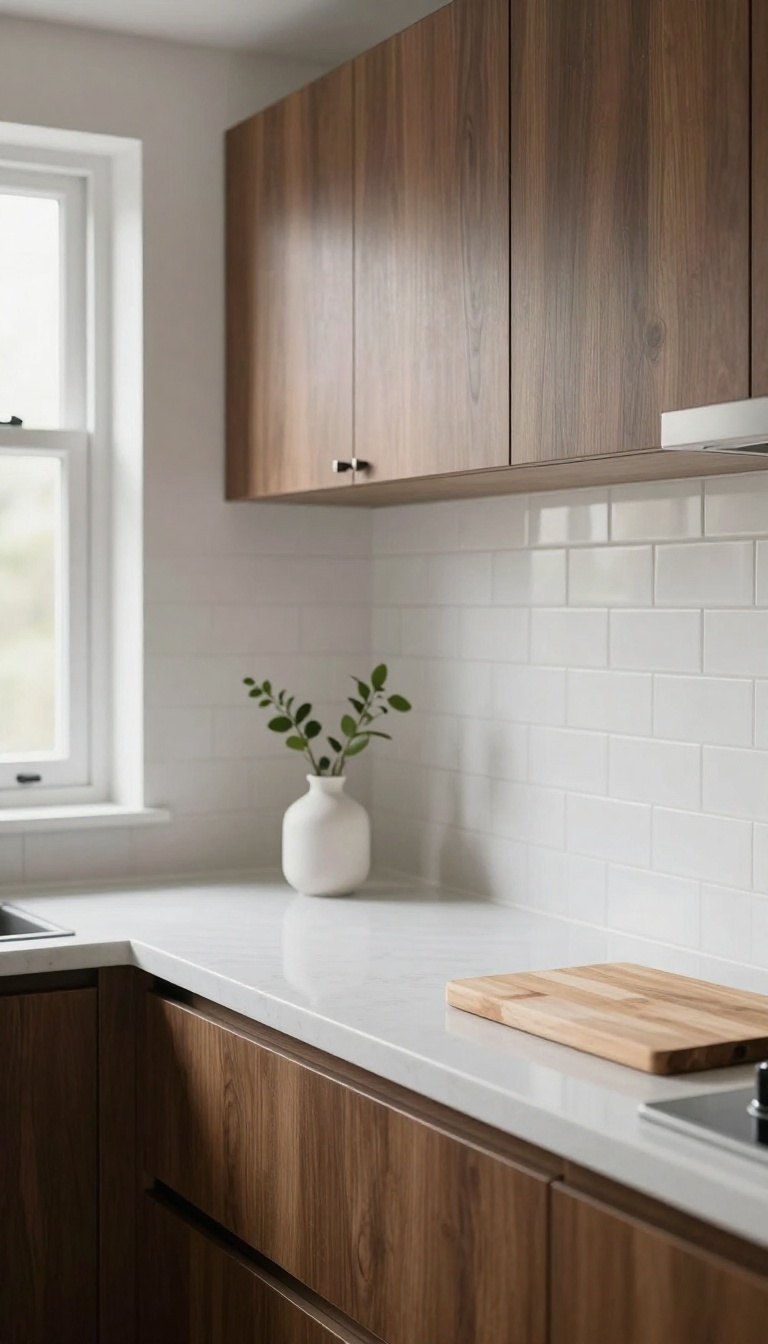
A surefire way to keep dark wood from feeling heavy is to let light countertops do the heavy lifting. White quartz or marble offers a crisp contrast that instantly brightens the space, making the cabinets feel grounded rather than overwhelming. This pairing is a classic for a reason—it balances warmth with clean, modern lines.
When you place a light countertop against dark cabinetry, you create a visual anchor that draws the eye upward. The brightness reflects natural and artificial light, softening the wood's richness. It's a simple swap that works whether you're remodeling or just updating your surfaces.
Choose The Right White
Not all whites are the same. A pure white quartz gives a crisp, contemporary look, while a warmer white with subtle veining adds depth without feeling sterile. Test samples in your kitchen's lighting—north-facing rooms may need a brighter white to compensate for less sun.
Add A Subtle Backsplash
Extend the light countertop material up the wall for a seamless, airy feel. Or, if you prefer a bit of texture, opt for a white subway tile with light gray grout. This keeps the focus on the contrast while adding a touch of personality.
Balance With Hardware And Accessories
Use brushed nickel or matte black hardware to tie the light and dark elements together. Keep countertop accessories minimal—a light wood cutting board or a white ceramic vase can enhance the look without cluttering the space.
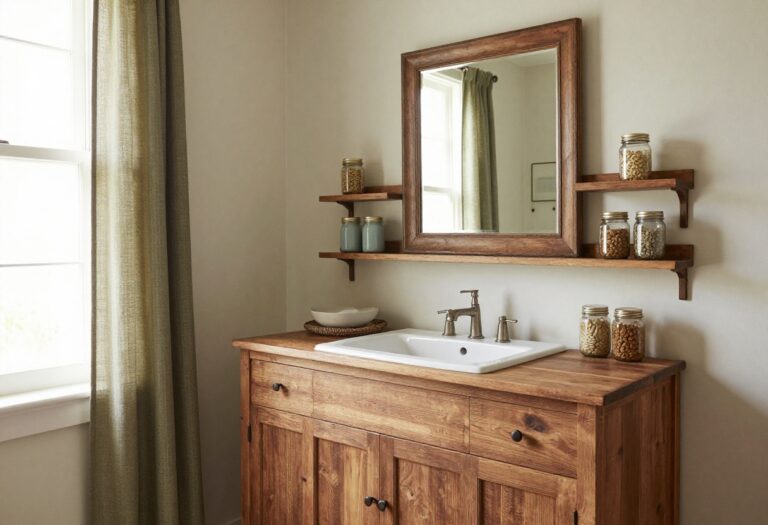
2. Add Open Shelving to Break Up the Mass
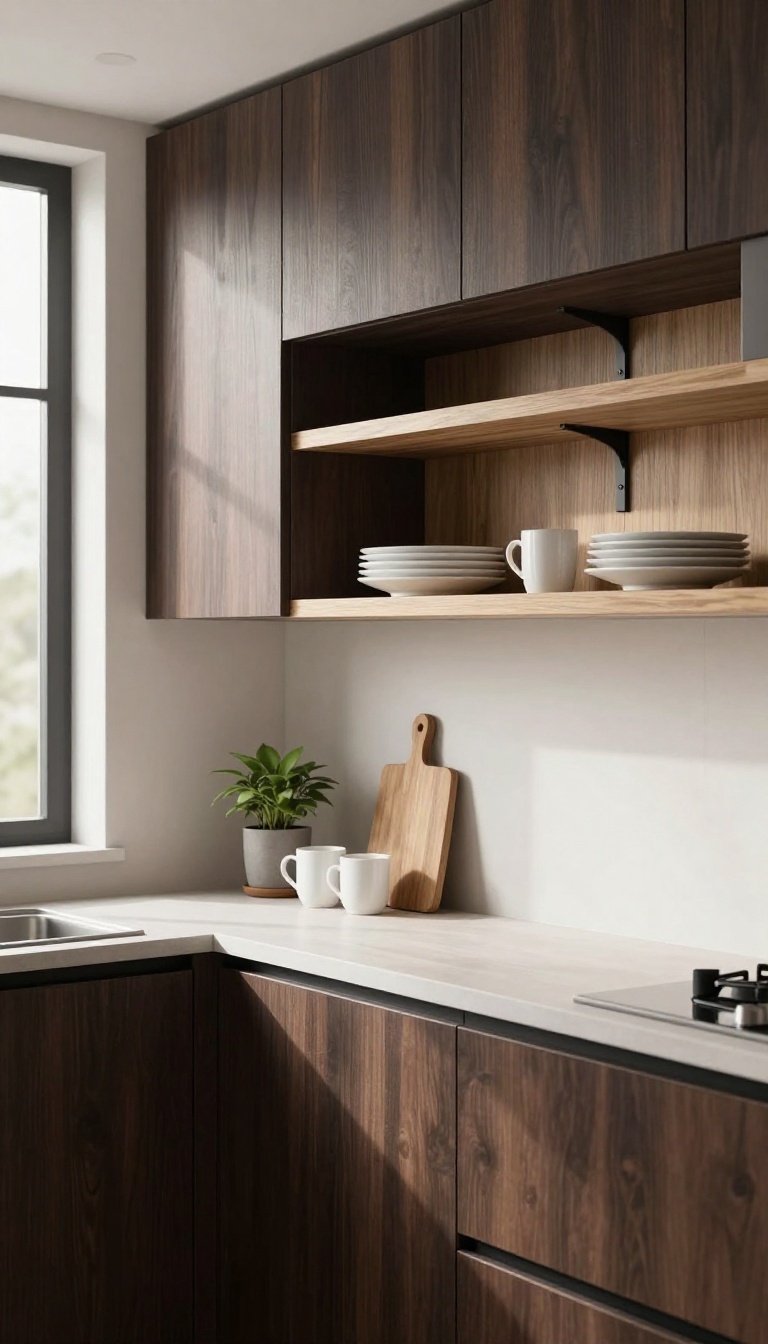
Dark cabinets can dominate a room, making it feel closed in. Open shelving is a simple way to introduce visual relief without losing storage. By swapping a few upper cabinet doors for open shelves, you create a natural focal point that draws the eye upward and adds a sense of airiness.
Open shelves in a lighter wood or metal give the eye a place to rest and break up large runs of dark cabinetry. Use them to display everyday dishes or a few plants for a casual, lived-in feel. The key is to keep the shelves styled simply—don't overcrowd them.
Choose The Right Shelf Material
If your cabinets are dark, go with shelves in a contrasting material. Light oak, white-painted wood, or black metal brackets all work well. These materials reflect light and prevent the shelving from blending into the cabinets.
For a more industrial look, pair dark wood with iron pipes or steel brackets.
Style With Purpose
Resist the urge to fill every inch. Instead, group items in odd numbers—three plates, two mugs, a small plant. Mix functional pieces with a few decorative ones, like a wooden cutting board or a ceramic vase.
Leave some empty space to keep the display feeling intentional and uncluttered.
Placement Matters
Install open shelves on a wall that's visible from the main work area, but avoid putting them right next to the stove where grease can settle. A good spot is beside a window or above a coffee station. This way, they serve a purpose without becoming a maintenance headache.
3. Choose a Light or Textured Backsplash
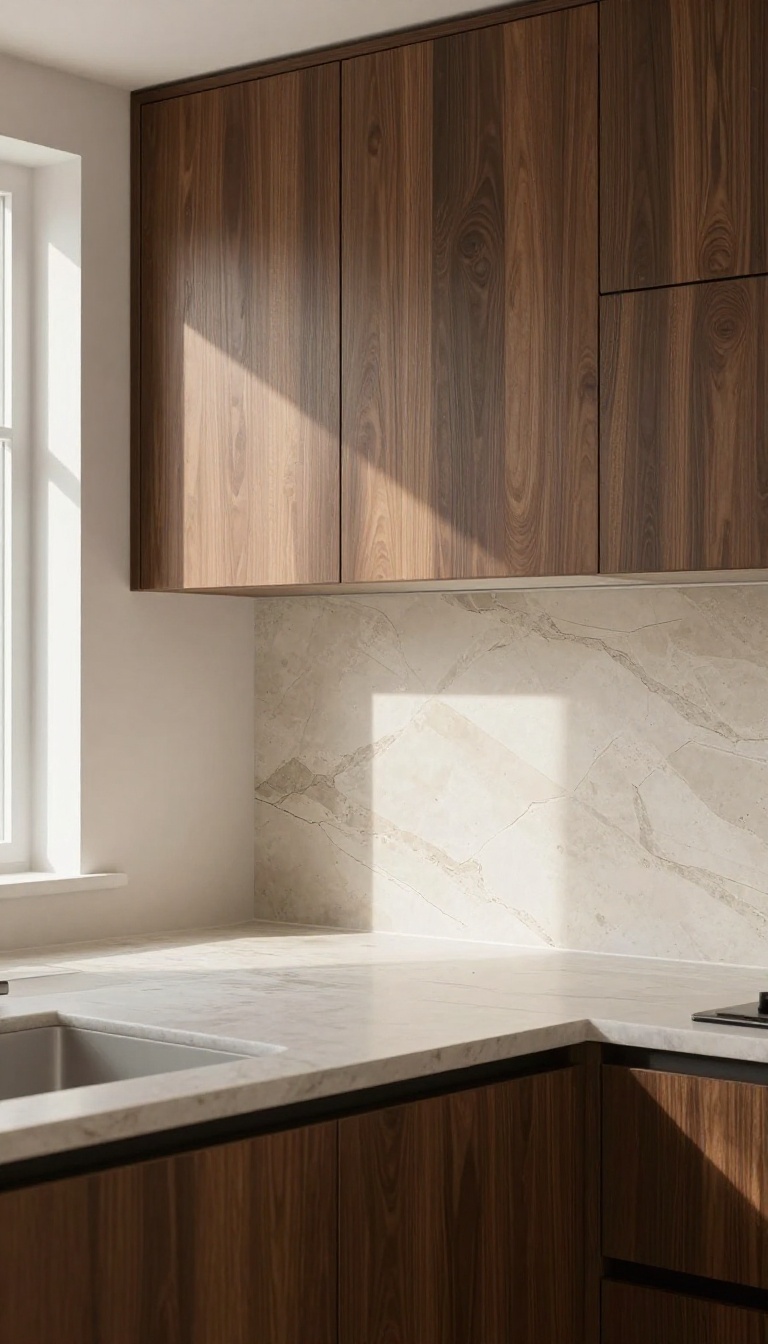
A backsplash is one of the first things your eye lands on, so it's a prime spot to balance dark wood. Going light or adding texture here can instantly lift the whole room. It's a simple swap that doesn't require touching your cabinets.
The right backsplash can make dark cabinets feel grounded rather than heavy. Light colors reflect natural and artificial light, opening up the space. Texture adds depth without adding visual clutter, keeping the kitchen interesting without competing with the wood.
Classic White Subway Tile
White subway tile is a timeless choice that brightens the room and pairs effortlessly with dark wood. Its glossy finish bounces light around, making the kitchen feel larger. The clean lines also offer a crisp contrast that keeps the look fresh and uncluttered.
Textured Stone For Depth
If you want more character, consider a textured stone backsplash like travertine or slate. The uneven surface catches light in subtle ways, adding warmth and dimension. This works especially well if your countertops are on the darker side, as the texture prevents the space from feeling flat.
Soft Neutrals With A Twist
Don't limit yourself to pure white. Soft greys, warm beiges, or even pale greens can complement dark wood without stealing the show. A matte finish in these tones adds a modern, understated feel.
Just keep the color muted so it doesn't fight with the cabinetry.
4. Incorporate Warm Metals for Hardware and Fixtures
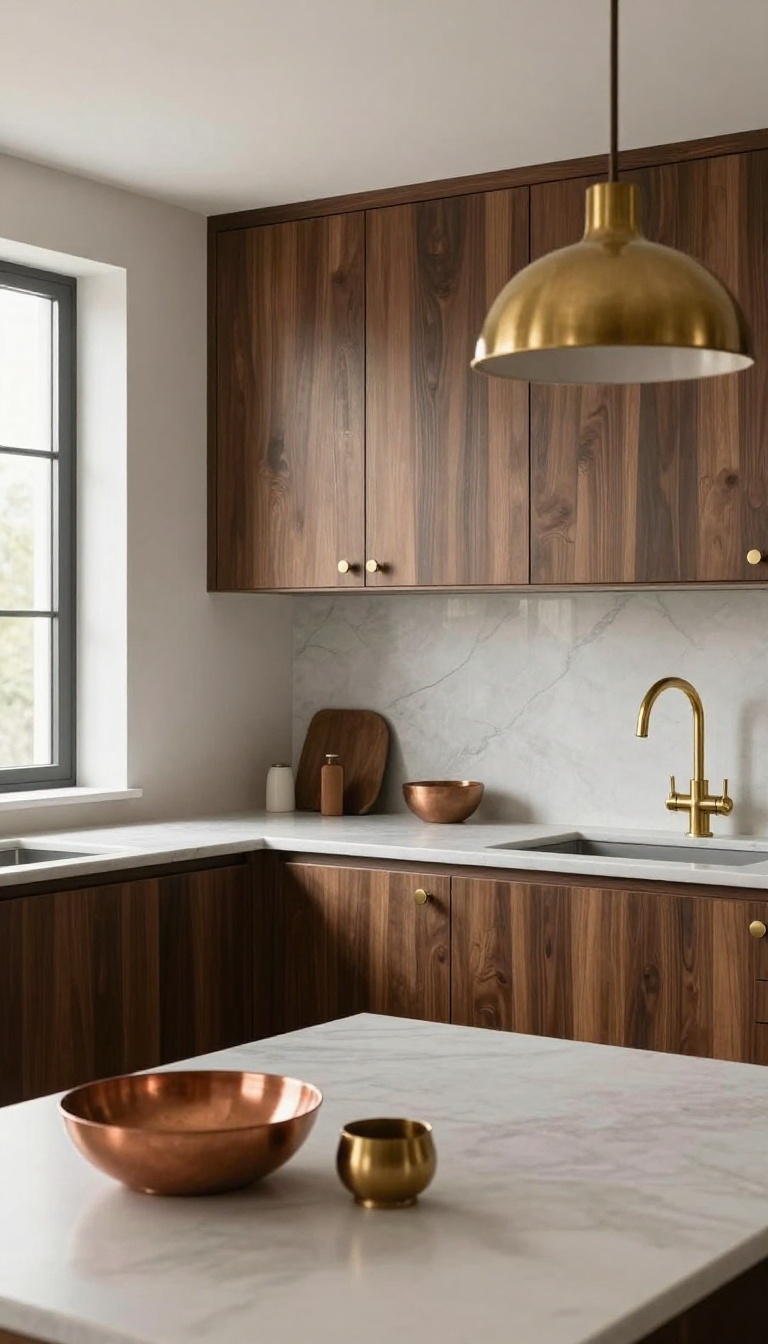
Dark wood has a natural richness that can feel a bit somber if everything around it is cool-toned. Warm metals—brass, copper, or gold—are like a soft spotlight that highlights the beauty of the grain without shouting. They add a subtle glow that makes the space feel more inviting and polished, not stiff or formal.
Start by swapping out your cabinet pulls and knobs. Even a small change like this can shift the whole mood of the room. Then look at your faucet, lighting fixtures, and even the legs of your bar stools.
Each piece of warm metal works together to create a cohesive, thoughtful look.
Start With Cabinet Hardware
Cabinet hardware is the easiest place to begin. Choose brushed brass or unlacquered copper for a finish that will develop a nice patina over time. Mixing a few finishes—like brass knobs on upper cabinets and matte black pulls on lower ones—adds visual interest without going overboard.
Extend Warmth To Lighting And Faucets
A brass faucet instantly becomes the focal point of the sink area. Pair it with matching pendant lights or a chandelier over the island. Warm metal shades reflect light beautifully, making the dark wood feel richer rather than heavier.
Add Small Accents For Balance
If you're not ready to commit to a full brass faucet, try smaller touches. A copper fruit bowl, gold-framed bar stools, or even a brass soap dispenser can tie the look together. These little details make the space feel curated, not accidental.
5. Use Under-Cabinet Lighting to Brighten Work Areas
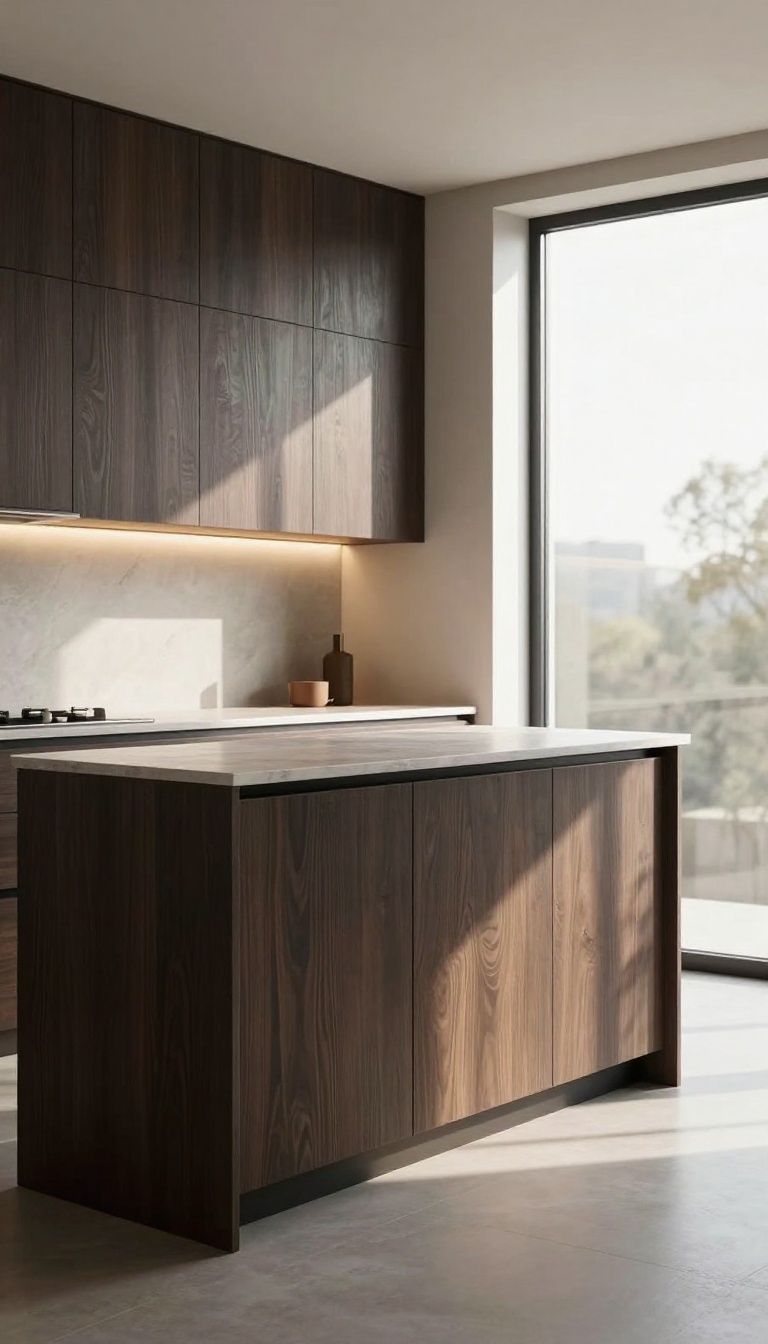
Dark wood can swallow light, especially in the corners where shadows gather. Under-cabinet lighting solves that by putting light exactly where you need it—on the countertops. It makes food prep safer and easier, and it also brings out the rich grain of the wood, making the cabinets look more intentional and less imposing.
When you install under-cabinet lighting, you're not just adding function—you're changing the whole mood of the kitchen. The soft glow eliminates harsh shadows and creates a warm, inviting atmosphere. Plus, it highlights the natural texture of the wood, so the cabinets feel like a feature, not a heavy block.
Choose The Right Light Temperature
Warm white LEDs (2700K–3000K) complement dark wood beautifully, enhancing its reddish or brown tones. Cooler lights can make the wood look gray or dull. Stick with warm tones to keep the space cozy and cohesive.
Install Under The Upper Cabinets
Place strips or puck lights under the upper cabinets, close to the front edge. This directs light onto the countertop and prevents glare. Make sure the fixtures are hidden—you want to see the light, not the source.
Add Dimmers For Flexibility
A dimmer switch lets you adjust the brightness for different times of day. Bright for morning prep, softer for evening winding down. This simple addition gives you control and keeps the kitchen from feeling like a showroom.
6. Mix in Lighter Wood Tones for Contrast
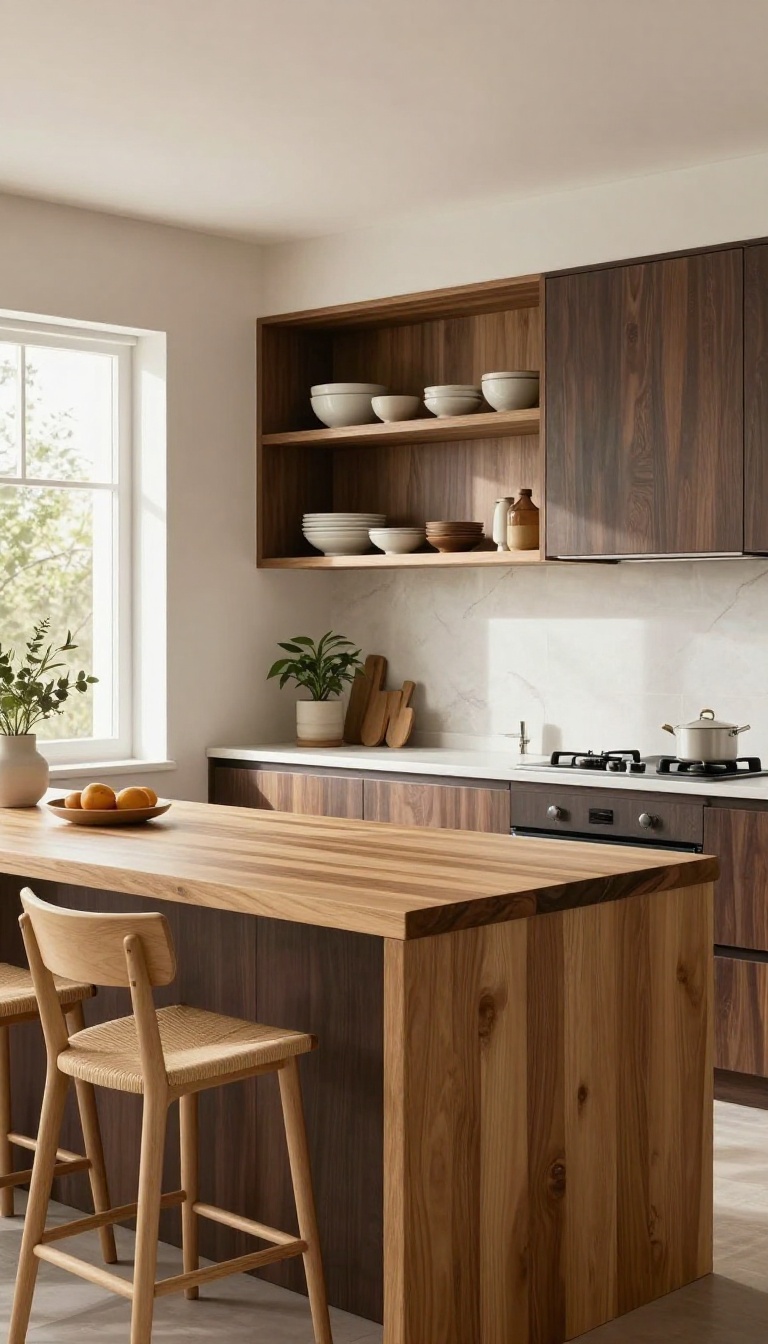
Dark wood can feel like a heavy blanket if it covers every surface. Adding lighter wood tones breaks that weight and introduces a natural rhythm. It's a simple way to add depth without losing the warmth you love.
Pairing dark cabinets with lighter wood elements creates a layered, organic look. The contrast keeps the eye moving and prevents the kitchen from feeling like a dark cave. Whether it's a butcher block island or open oak shelves, the mix feels intentional and fresh.
Start With A Butcher Block Island
A butcher block island is one of the easiest ways to bring in lighter wood. It gives you a sturdy work surface that contrasts beautifully with dark cabinetry. Plus, it adds a warm, rustic touch that softens the overall feel.
Add Open Shelving In Light Oak
Swap a few upper cabinets for open shelves in light oak. This not only lightens the visual load but also gives you a spot to display dishes or plants. The lighter wood draws the eye upward and makes the room feel taller.
Try Light Wood Bar Stools Or Seating
If you have a breakfast bar or island, choose bar stools with light wood frames. They bring the contrast to seating level, which helps balance the dark cabinetry. It's a small change that makes a big difference in how airy the space feels.
Mix In A Light Wood Accent Wall Or Ceiling
For a bolder move, consider a light wood accent wall or a wood plank ceiling. This adds texture and warmth while clearly separating the dark cabinets from the rest of the room. It's a great way to make the contrast a focal point.
7. Add Greenery or Natural Elements
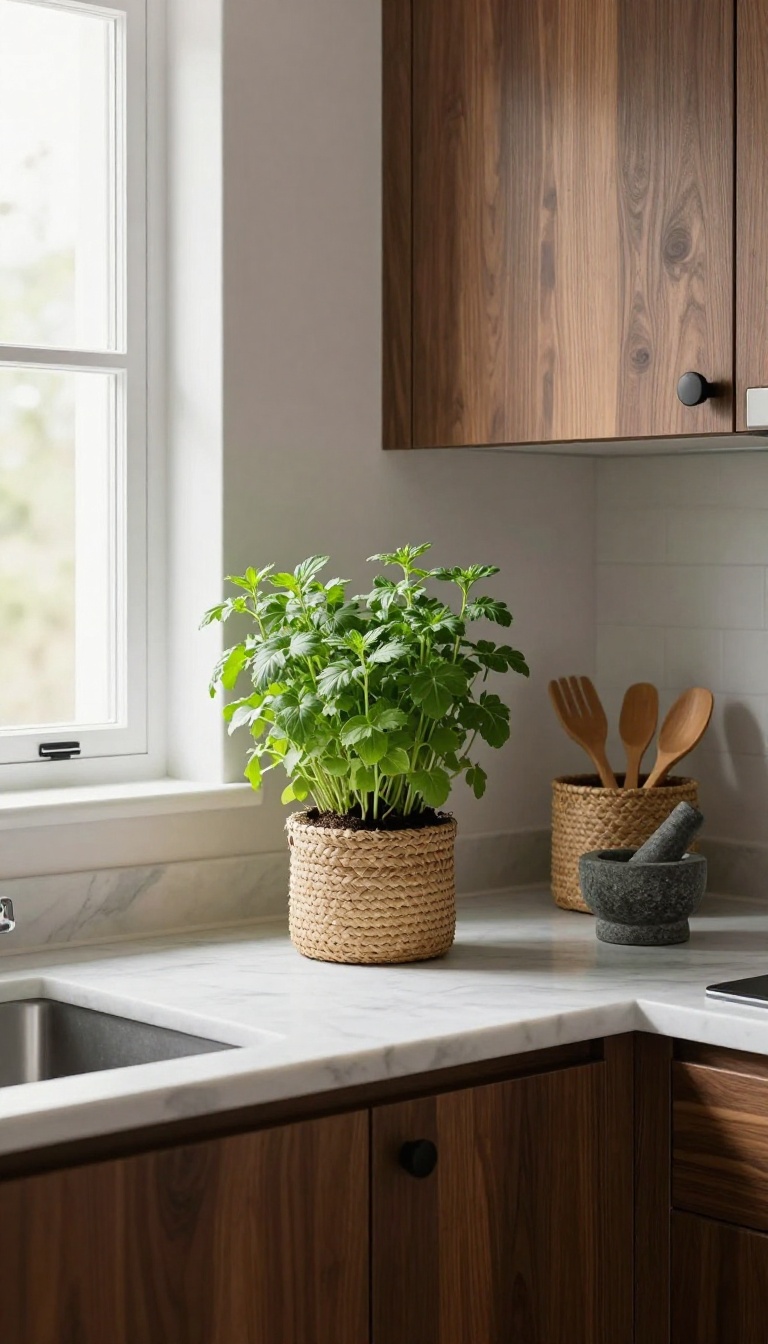
Plants and natural textures like stone or woven baskets soften the richness of dark wood. They bring a bit of the outdoors in and make the kitchen feel more relaxed and approachable. Even a small touch of green can break up the heaviness and add a fresh, lively contrast.
Greenery is the easiest way to breathe life into a dark wood kitchen. A few potted herbs on the windowsill or a trailing vine on an open shelf can instantly brighten the space. Natural materials like a stone fruit bowl, a wooden cutting board, or a jute rug add warmth without competing with the cabinetry.
Choose The Right Plants
Not all plants thrive in a kitchen, so pick ones that handle humidity and low light well. Herbs like basil, mint, and rosemary are practical and smell great. For low-maintenance options, go with pothos, snake plants, or ZZ plants—they're forgiving and add a lush green pop.
Mix Textures, Not Colors
You don't need bright flowers to make an impact. Instead, focus on texture. A woven seagrass basket holding kitchen tools, a rough-hewn stone mortar, or a linen dish towel can all add organic contrast.
These natural elements feel grounded and complement the wood's grain.
Placement Matters
Think about where your eye naturally lands. A small plant on the counter near the sink, a hanging herb garden by the window, or a tall potted plant in an empty corner can draw attention away from heavy cabinetry. Keep it simple—one or two well-placed pieces are enough.
8. Keep the Walls and Trim Light
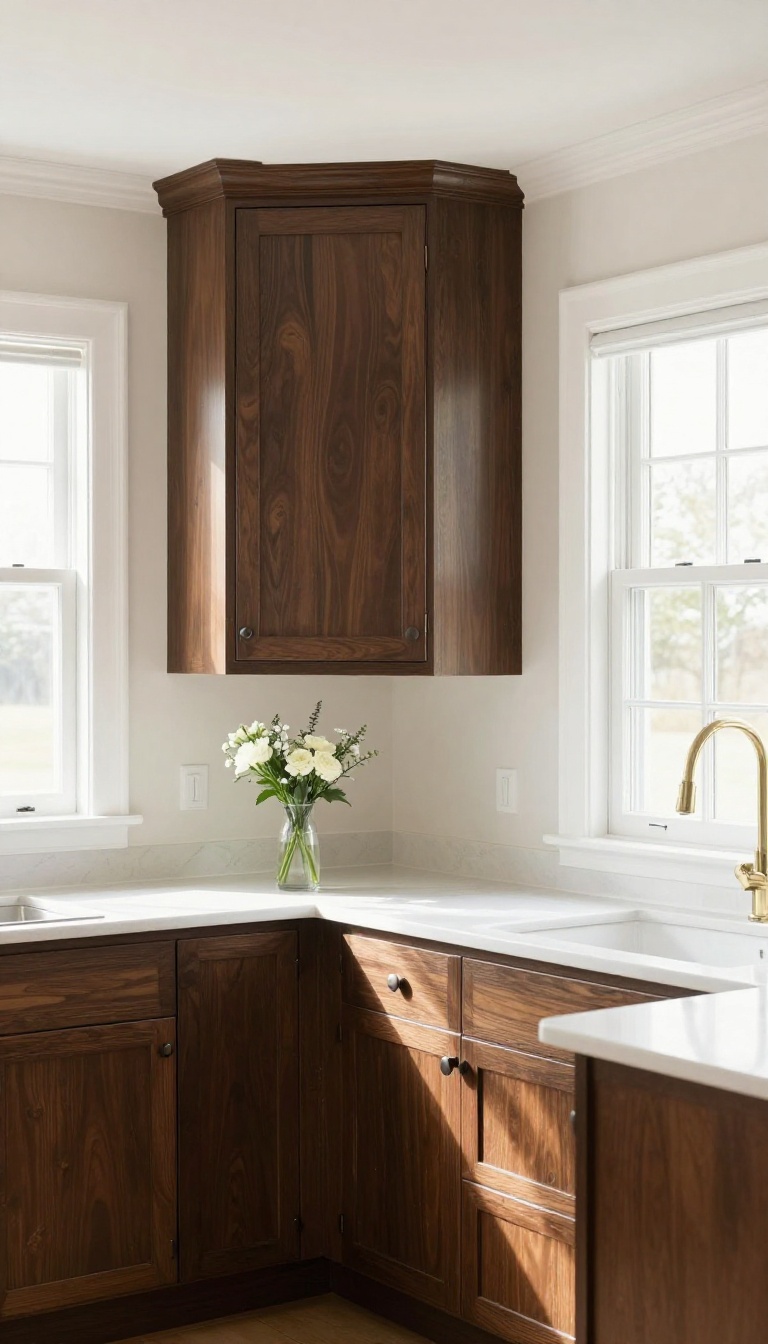
Dark wood cabinets can dominate a room if the surrounding surfaces are equally dark. The simplest way to let them breathe is to keep your walls and trim light. This creates contrast that makes the wood feel intentional rather than overwhelming.
Light walls also reflect natural light, which helps the kitchen feel bigger and more open. White or soft gray are the go-to choices because they're neutral and let the wood's grain stand out. You don't have to go stark white—warm off-whites or pale greige work beautifully too.
When your walls are light, the eye naturally focuses on the cabinetry, which is exactly what you want. The contrast between dark wood and light walls adds depth and dimension, making the space feel layered and designed. Plus, light trim—like baseboards, window casings, and crown molding—frames the room and gives it a crisp, clean finish.
If you're unsure about painting your walls, start with the trim. White trim against dark wood cabinets instantly brightens the room and makes the wood look richer. Then, gradually lighten the wall color until you find the balance that feels right.
Choose The Right White Or Gray
Not all whites are created equal. A pure white can feel stark, especially if your cabinets have warm undertones. Instead, try a warm white like Alabaster or Swiss Coffee, which has a hint of cream that pairs beautifully with wood.
If you prefer gray, go with a soft, greige-toned gray like Agreeable Gray or Repose Gray—these have enough warmth to complement the wood without feeling cold.
Extend The Light To The Ceiling And Floor
Don't stop at the walls. Painting the ceiling the same light color as the walls creates a seamless, airy feel. For the floor, if you have dark wood or tile, consider a light area rug to break up the darkness and add a soft layer.
This helps the eye travel around the room without getting stuck on heavy surfaces.
Let Natural Light Do Its Job
Light walls are only half the battle. Make sure your windows aren't blocked by heavy curtains or blinds. Opt for sheer or light-colored window treatments that let in as much natural light as possible.
If your kitchen lacks windows, add under-cabinet lighting or pendant lights to brighten the space and highlight the contrast between the wood and the walls.
9. Use a Rug or Runner to Add Softness
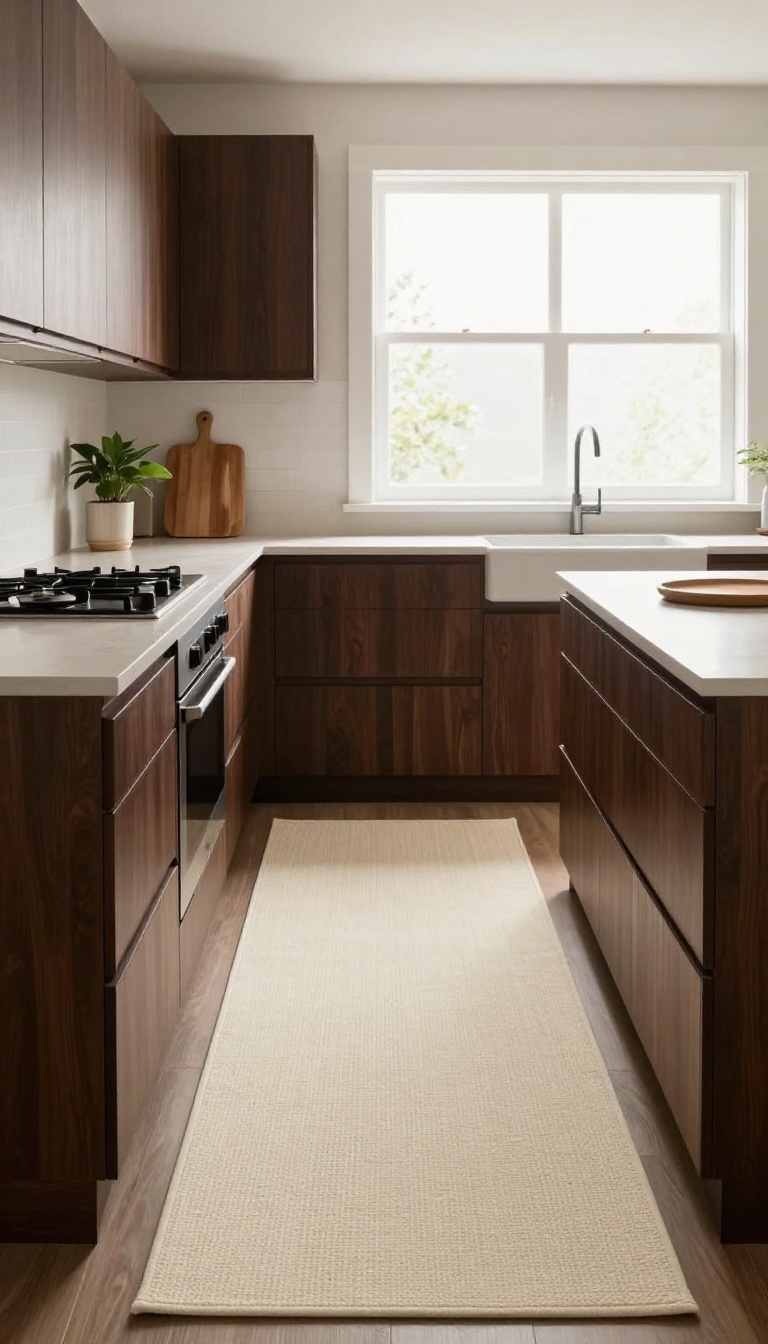
A rug might not be the first thing you think of when planning a kitchen, but it can be a game-changer with dark wood. The contrast between a soft, light-colored rug and rich cabinetry instantly lifts the room. It also gives your feet a break, especially if you spend a lot of time standing at the counter.
Runners are perfect for galley kitchens or in front of the sink, while a larger area rug can anchor a dining nook or island. Choose a flat-weave or low-pile option that's easy to clean—you'll be glad you did when spills happen. Stick to neutral tones like cream, beige, or soft gray to keep the space feeling airy, or add a subtle pattern for visual interest without overwhelming the wood.
Pick The Right Size And Placement
Measure your space before buying. A runner should extend about two feet beyond the sink or stove on each side. For an island, leave at least 18 inches of bare floor on all sides so the rug doesn't look cramped.
In a dining area, make sure chairs can pull out without catching the rug's edge.
Choose A Material That Handles Traffic
Kitchens need durable materials. Cotton and wool are great for comfort, but synthetic blends like polypropylene resist stains and fading. If you're worried about moisture, look for a rug with a rubber or non-slip backing.
Avoid high-pile shag—it traps crumbs and is a nightmare to clean.
Layer With Texture For Extra Warmth
A flat rug can be layered with a smaller woven or braided mat for a cozy, collected look. This works especially well in front of a farmhouse sink or under a breakfast table. Mixing textures adds depth without introducing more dark colors, keeping the space light and inviting.
FAQ
Does dark wood make a kitchen look smaller?
It can, but only if you don't balance it with light colors and good lighting. By pairing dark cabinets with light countertops, backsplashes, and walls, you can keep the space feeling open and airy.
What countertop colors go best with dark wood cabinets?
White, cream, and light gray countertops are popular choices because they create a strong contrast. You can also try light-colored quartz or marble for a bright, clean look.
How can I make my dark wood kitchen feel more modern?
Add modern touches like sleek hardware, flat-panel cabinet doors, or a minimalist backsplash. Mixing in lighter wood tones and warm metals also helps update the look.
Is dark wood going out of style?
Dark wood is a timeless choice, but it's all about how you style it. With the right balance of light and texture, dark wood kitchens remain classic and elegant.
What type of lighting is best for a dark wood kitchen?
Layered lighting works best—combine overhead fixtures with under-cabinet lights and maybe a pendant over the island. This ensures the space is well-lit and highlights the wood's natural beauty.
Conclusion
Dark wood kitchens don't have to feel heavy or dated. The trick is balancing them with lighter tones, natural textures, and a few personal touches. Start with one idea that fits your space and budget, then build from there.
Whether you go for open shelving, a matte black faucet, or warm brass accents, small changes can make a big difference. The goal is a kitchen that feels grounded and welcoming, not overdone. Pick what resonates with you, and let your dark wood cabinetry shine without trying too hard.