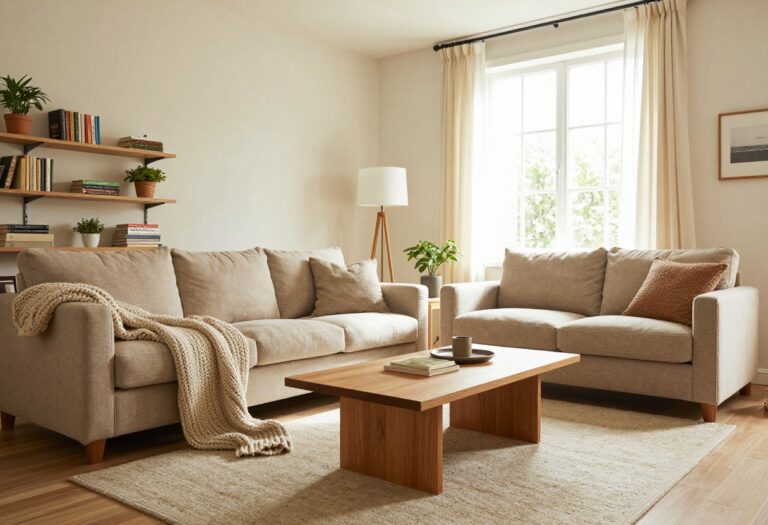
11 Sims 4 Living Room Ideas for Cozy Realistic Builds
Building a living room in Sims 4 that actually feels cozy and realistic takes more than just plopping down a sofa and a TV. It's about creating a space that looks like someone really lives there—with layers, warmth, and a bit of personality.
Whether you're working with a tiny apartment or a sprawling family home, these 11 ideas will help you design a living room that feels snug, stylish, and totally livable.
From clever lighting tricks to smart furniture placement, each tip is meant to be practical and easy to apply in your own builds.
1. Start with a Warm Color Palette
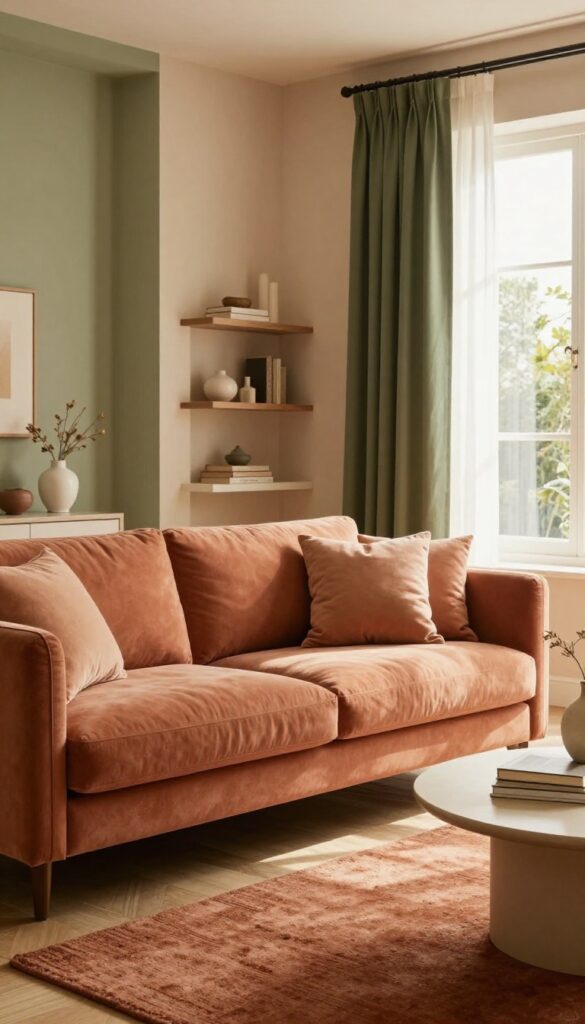
Color sets the emotional temperature of a room, and in a Sims 4 build—or a real living room—nothing says cozy like a warm palette. Earthy tones like terracotta, warm beige, and soft olive create a grounded, inviting foundation that makes you want to curl up on the couch. Avoid stark whites or cold grays; they can make a space feel sterile and uninviting.
Instead, layer similar hues for depth without overwhelming the eye.
Building a cozy living room starts with choosing the right colors. Warm neutrals and muted earth tones instantly make a space feel lived-in and relaxed. Think of colors found in nature: clay, sand, sage, and rust.
These shades work well on walls, furniture, and accessories, creating a cohesive backdrop that feels both stylish and comforting. The key is to avoid high-contrast combinations—stick to a monochromatic or analogous scheme for a seamless, serene look.
Best Colors To Use
- Terracotta, warm beige, soft olive, mustard yellow, and deep rust are excellent choices. These colors have warm undertones that reflect light in a flattering way. Use terracotta on an accent wall or in large furniture pieces, and balance it with beige or cream on the other walls.
- Soft olive works beautifully on built-in shelves or as a sofa color.
Layering Tip
- To add depth without clutter, layer shades of the same color family. For example, pair a terracotta sofa with lighter peach throw pillows and a deeper rust rug. Add olive green curtains and a beige coffee table.
- This keeps the room visually interesting while maintaining a calm, cohesive feel.
Finishing Touch
Incorporate natural textures like linen, wool, and wood to enhance the warmth of your color palette. A chunky knit blanket in a warm cream or a jute rug with terracotta accents ties everything together. Avoid glossy finishes—matte surfaces absorb light and add to the cozy vibe.
2. Layer Rugs for Texture and Warmth
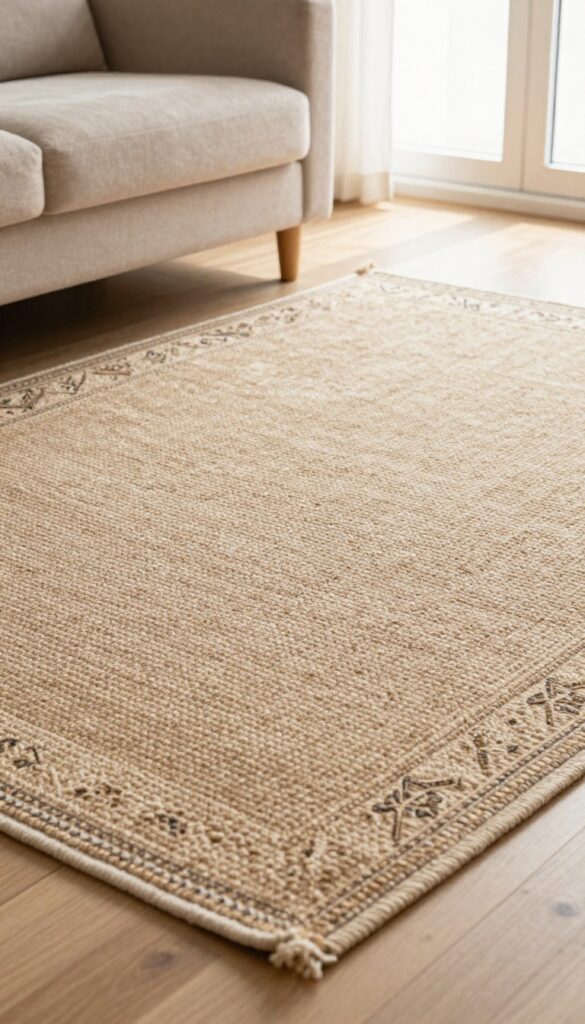
Nothing makes a Sims 4 living room feel more lived-in than a layered rug setup. It’s a simple trick that adds instant depth, softness, and a cozy, curated vibe. Instead of one flat rug, try overlapping two rugs or placing a smaller one on top of a larger neutral base.
This creates visual breaks on the floor and makes the space feel intentionally styled, not just decorated.
Layering rugs works especially well in open-plan rooms where you want to define a seating area without building walls. The contrast between textures—like a chunky wool rug under a flat-weave kilim—adds warmth and makes the floor feel softer underfoot. It’s also a budget-friendly way to update a room: keep your large neutral rug and swap out the smaller top rug seasonally for a fresh look.
For a realistic Sims 4 build, use rugs with slightly different patterns or colors that tie into your overall palette. A jute or sisal base with a patterned wool or cotton rug on top gives that cozy, layered feel without looking messy.
Best Rug Pairings
- Stick with one neutral base rug—like a beige, gray, or cream wool or jute—and layer a smaller patterned rug on top. Moroccan, kilim, or geometric designs work well. Keep the top rug about two-thirds the size of the base for a balanced overlap.
- If you're going for a boho look, try a shaggy base with a flat-weave top.
Layout Tip
Position the layered rugs so the front legs of your sofa and armchairs sit on the top rug, while the base rug extends further out. This anchors the seating group and makes the room feel grounded. In a small living room, angle the top rug slightly for a casual, relaxed vibe.
Cozy Detail
Add a faux fur or sheepskin rug on top of a woven base for extra softness near the coffee table or fireplace. This small touch makes the room feel instantly more inviting and adds a tactile element that Sims (and real-life guests) will love.
3. Use Soft, Diffused Lighting
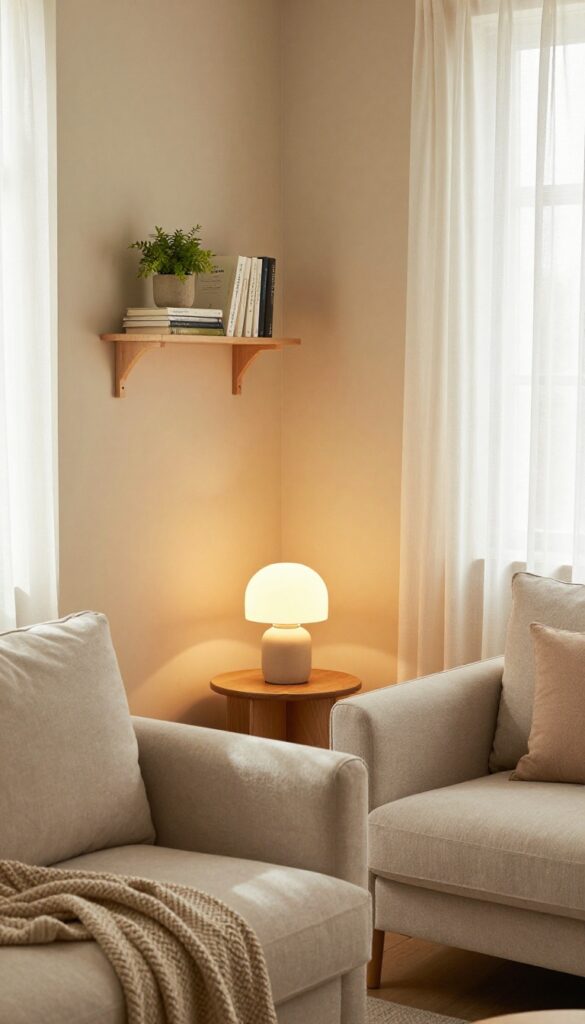
Harsh overhead lights can kill the cozy vibe you're going for. Instead, think about layering light sources at different heights to create a warm, inviting glow that feels natural and lived-in. Floor lamps, table lamps, and wall sconces with warm bulbs let you control the mood and highlight your favorite spots.
Skip the ceiling light and build your lighting from the ground up. Place a floor lamp in a corner to cast a soft wash of light, add a table lamp on a side table for reading, and mount a sconce above a shelf to draw the eye upward. The key is using warm bulbs (2700K–3000K) and shades that diffuse the light—think fabric or frosted glass.
This layered approach mimics real home lighting and makes the room feel instantly cozier.
Lighting Tip
Aim for at least three light sources in the room, each at a different height. Use dimmers where possible to adjust brightness throughout the day.
Best Bulbs
Stick with warm white LEDs (2700K–3000K) for a soft amber glow. Avoid cool white or daylight bulbs—they feel clinical and ruin the cozy mood.
Finishing Touch
Add a small accent light inside a bookshelf or behind a plant to create depth. Even a tiny LED strip can make the room feel more layered.
4. Incorporate Plenty of Throw Pillows and Blankets
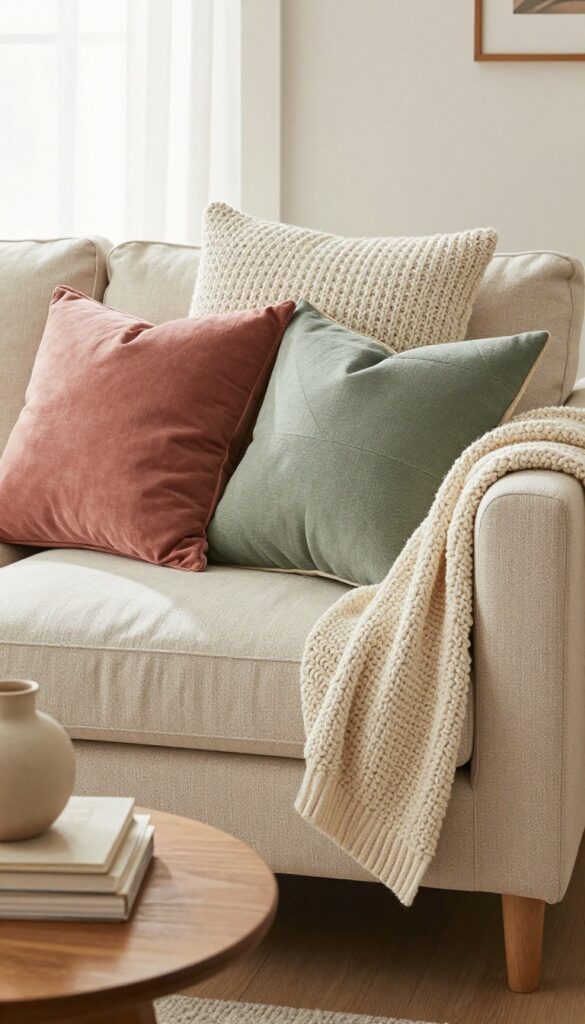
Nothing says cozy like a sofa piled high with soft layers. Throw pillows and blankets are the quickest way to transform a stiff, showroom-style living room into a lived-in retreat. The key is to mix sizes, textures, and patterns so the arrangement feels curated, not chaotic.
Chunky knits, velvet squares, and woven cotton all play well together when you stick to a cohesive color palette.
Drape a chunky knit blanket over the back or arm of the sofa, then arrange pillows in odd numbers—three or five works best. Start with larger 20-inch squares in the back, then layer smaller 18-inch or lumbar pillows in front. Mix solids with subtle patterns like stripes or geometric prints to keep it interesting.
This layered look not only adds visual warmth but also invites guests to sink in and stay awhile.
Best Colors
Stick to warm neutrals like cream, taupe, and soft beige as your base, then add one or two accent colors like dusty rose, sage green, or terracotta. This keeps the look sophisticated and easy to change out seasonally. If your sofa is already neutral, go bolder with pillows in deep navy or burnt orange for contrast.
Texture Mix
Combine at least three textures: a chunky knit throw, a velvet pillow, and a linen or cotton one. The contrast makes each piece stand out and adds depth without needing more color. Faux fur or sheepskin pillows also work well for extra coziness, especially in colder months.
Finishing Touch
Don't just toss pillows on—fluff them and arrange them so they overlap slightly. Fold a throw blanket in thirds and drape it diagonally over one corner of the sofa. This casual, undone look feels more inviting than a perfectly symmetrical setup.
5. Add a Coffee Table with Storage
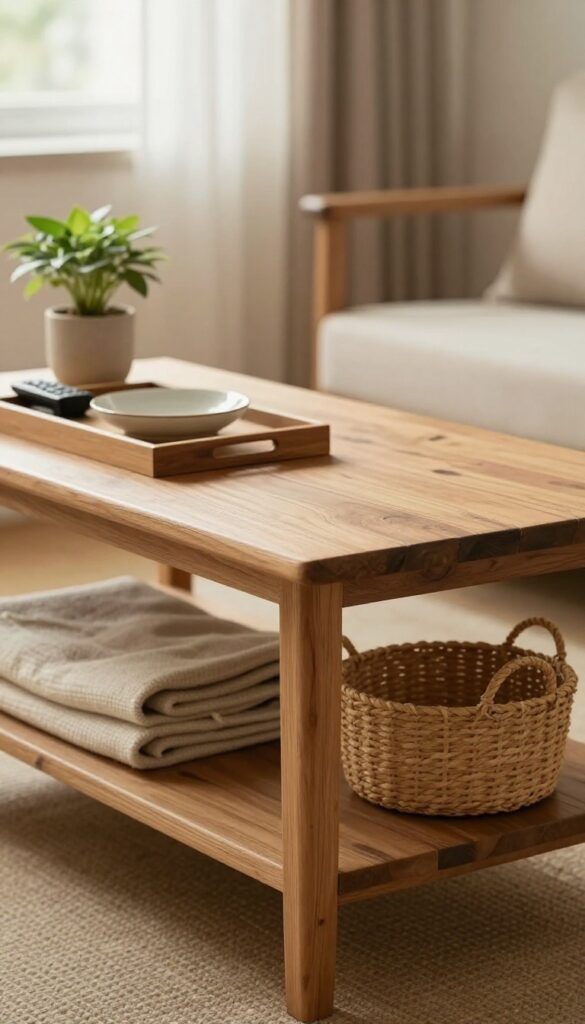
A coffee table can make or break your living room’s cozy factor. When it’s cluttered with remotes, magazines, and coasters, the whole space feels messy instead of inviting. That’s why choosing one with built-in storage—like a lift-top, drawers, or a lower shelf—keeps surfaces clean while still giving you a spot to set down your drink.
It’s a small swap that makes a big difference in how relaxed the room feels.
The right coffee table does double duty: it anchors the seating area and hides everyday clutter. Look for designs that match your style—wood for warmth, metal for an industrial edge, or a soft oval shape to keep the flow open. A table with a lower shelf is perfect for stacking books or baskets, while a lift-top version lets you work or eat without moving anything.
The key is to keep the top mostly clear, with just a tray or a small plant for visual interest.
Best Materials For A Cozy Look
- Warm woods like oak or walnut instantly make a room feel cozier. If you prefer a lighter feel, try a whitewashed finish or a soft painted piece. Avoid glass tops if you want a relaxed vibe—they can feel cold and show every fingerprint.
- For a touch of texture, consider a woven rattan or seagrass table that adds natural warmth without overwhelming the space.
Storage Tip: Baskets And Trays
- Use a large woven basket on the lower shelf to corral blankets or extra pillows. On the tabletop, a shallow tray keeps remotes and coasters organized and easy to grab. This way, you still have everything within reach, but it looks intentional rather than scattered.
- A small ceramic dish for jewelry or keys adds a personal touch without adding clutter.
Layout Tip: Leave Room To Breathe
Make sure your coffee table is within easy reach of the sofa—about 16 to 18 inches away—so you don’t have to stretch. If your table has storage, keep the most-used items on top and stash backups inside. For small spaces, a nesting set of tables gives you extra surface area when needed and tucks away neatly.
6. Create a Focal Point with a Fireplace or TV
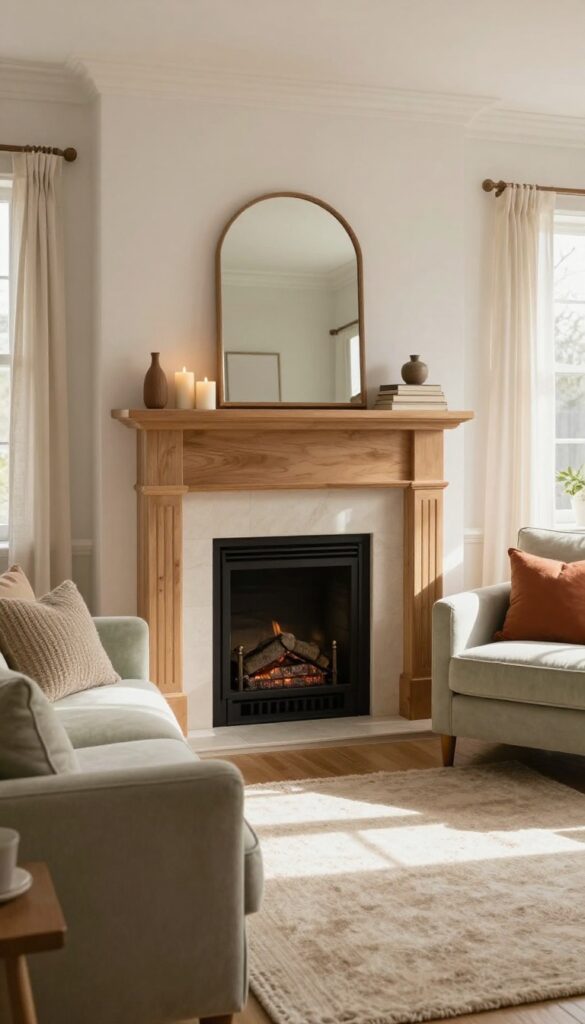
Every cozy living room needs a natural anchor—something that draws the eye and tells you where to settle in. A fireplace, even a faux electric one, does this effortlessly, adding warmth and a built-in sense of hygge. If a fireplace isn't your style, a TV mounted at eye level can serve the same purpose, especially when surrounded by a thoughtful gallery wall or a low console with layered decor.
The key is arranging your seating to face this focal point, which instantly makes the layout feel intentional and inviting.
Think of your focal point as the heart of the room. It doesn't have to be grand—a simple mantel with candles, a mirror, and a few books can create that cozy pull. For TV-focused rooms, mount it at a comfortable height (center of the screen at seated eye level) and avoid placing it above the fireplace if you want to prevent neck strain.
Then, angle your sofa and chairs toward it, leaving enough space for side tables and a coffee table. This setup not only looks polished but also encourages conversation and relaxation.
Best Placement For Cozy Vibes
- Position your fireplace or TV on the longest wall to maximize seating options. If using a fireplace, consider a corner unit to save space and create a snug nook. For small rooms, a wall-mounted TV with a slim console underneath keeps the floor clear and the room feeling open.
- Always leave at least 18 inches of clearance around the fireplace for safety and visual breathing room.
Layout Tip: Face The Focus
Arrange your main sofa directly opposite the focal point, then add accent chairs at a 45-degree angle to create a conversation-friendly U-shape. Avoid pushing all furniture against the walls—pulling pieces closer together fosters intimacy. A round coffee table in the center softens the lines and makes the layout feel more organic.
Finishing Touch: Layer The Mantel Or Console
- Style your mantel or TV console with a mix of heights and textures. Stack a few hardcover books, add a small plant or vase, and lean a piece of art. For TV consoles, hide cords with a cable management box and use baskets for remote controls.
- A warm-toned lamp on one end adds a soft glow that balances the screen's cool light.
7. Bring in Greenery for Life
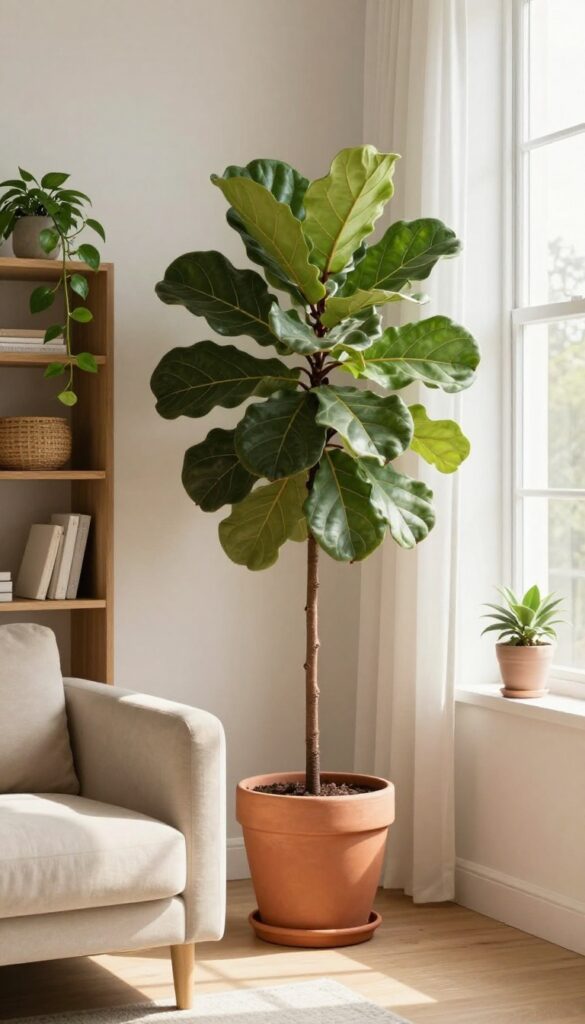
Nothing softens a room quite like a well-placed plant. Whether you go with a towering fiddle leaf fig or a cluster of small succulents on a shelf, greenery adds that breath of life that makes a space feel lived in and relaxing. In a cozy Sims 4 build, plants also help break up sharp lines and fill empty corners without adding clutter.
The trick is choosing pots that match your room’s palette—think warm terracotta, matte black, or woven baskets—so the plants feel intentional, not like an afterthought.
Plants are one of the easiest ways to layer texture and color into a living room without overwhelming the space. A tall plant in a corner draws the eye upward and makes ceilings feel higher, while trailing vines on a bookshelf add softness to hard edges. For a realistic Sims 4 look, mix a few different leaf shapes and pot styles, but keep the color scheme cohesive.
Stick to two or three pot finishes—like ceramic white, natural rattan, and a muted clay—so the arrangement feels curated, not chaotic. Even if you're not great at keeping real plants alive, the fake ones in the game look surprisingly good when styled right.
Best Spots For Greenery
- The most impactful spots are often empty corners, next to the sofa, or on either side of a media console. A tall plant like a fiddle leaf fig or a rubber tree fills vertical space nicely. For shelves and tabletops, go with smaller trailing plants like pothos or string of pearls.
- In a small living room, one larger plant plus two or three small ones is plenty—you don't want it to feel like a jungle.
Pot Pairing Tip
- Match your pot material to the room's style. For a cozy, layered look, woven baskets or warm terracotta work well. If your build leans modern, try sleek concrete or matte black pots.
- A simple trick: keep the pot color neutral so the plant's green stands out. Avoid busy patterns on pots unless you're going for a very eclectic vibe.
Layering With Other Textures
Greenery pairs beautifully with natural textures like wood, linen, and wool. Place a plant next to a chunky knit throw or a wooden coffee table to enhance the cozy feel. In a Sims 4 build, you can also use plants to bridge different color zones—for example, a plant with variegated leaves can tie together a warm beige sofa and a cool gray rug.
8. Use Curtains to Frame Windows
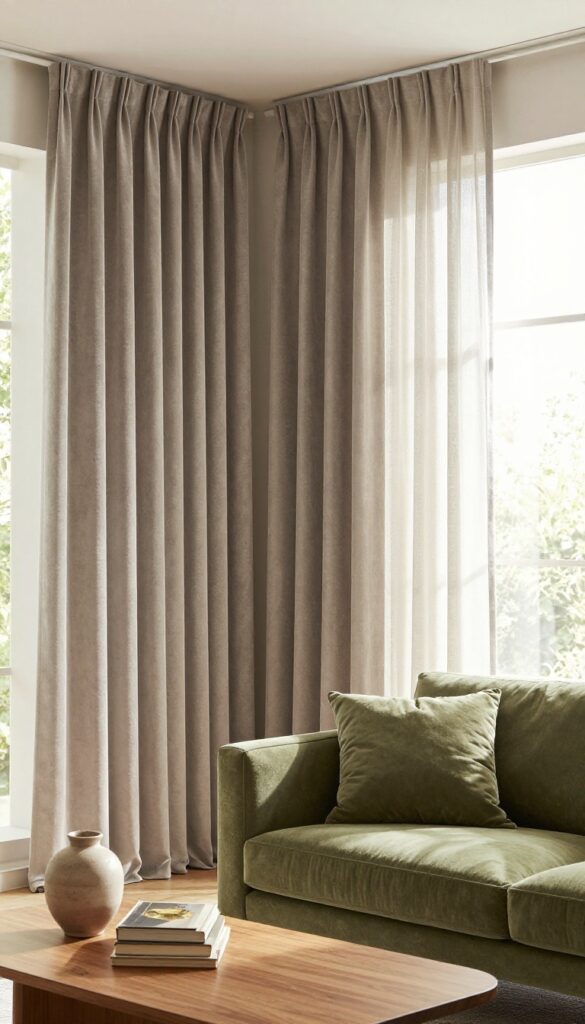
Windows often get treated as just a source of light, but they can be so much more in a cozy living room. Floor-length curtains in warm fabrics like linen or velvet instantly soften the space and make windows feel larger and more intentional. The right drapes add that finished, layered look that turns a room from bare to beautifully enclosed.
Curtains do more than cover glass—they anchor the room with texture and color. For a cozy vibe, choose fabrics that feel good to touch and hang them high and wide to maximize the window's presence. This trick makes the room feel taller and more spacious, while the soft folds create a sense of warmth and privacy.
Best Fabrics For Cozy Drapes
- Velvet and linen are top choices for a warm, layered look. Velvet adds richness and absorbs sound, making the room feel quieter and more intimate. Linen brings a relaxed, airy feel that still feels polished.
- Both fabrics hang beautifully and come in a range of earthy tones like rust, olive, or deep taupe.
Hanging Height And Width
Mount the curtain rod as close to the ceiling as possible and extend it past the window frame by several inches on each side. This makes the window appear larger and lets in more light when the curtains are open. Floor-length panels that just kiss the floor create a clean, tailored finish that feels intentional.
Layering Sheers And Drapes
For extra coziness, layer sheer curtains under your main drapes. Sheers filter harsh sunlight during the day while still offering privacy, and the heavier outer layer can be drawn at night for warmth and seclusion. This combination gives you control over light and mood without sacrificing style.
9. Incorporate Open Shelving with Personal Items
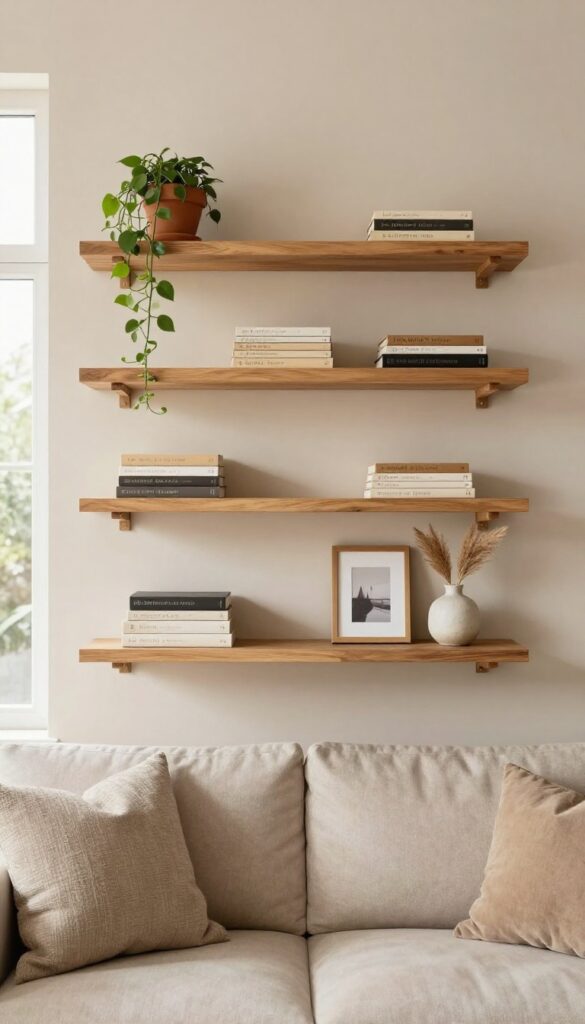
Open shelving is one of those design choices that instantly makes a room feel more personal. Instead of hiding everything behind cabinet doors, you get to display the things that matter—books you love, ceramics you've collected, or plants that add life. The trick is to keep it curated but not stiff.
You want it to look like someone actually lives there, not like a showroom display. In a Sims 4 build, this is the difference between a house that feels sterile and one that feels like a home.
Floating shelves are a great way to add storage without taking up floor space. They work especially well above a desk, next to a window, or flanking a TV unit. The key is to mix functional items with decorative ones.
Stack a few books horizontally, add a small trailing plant, and lean a framed photo. Avoid overcrowding—leave some breathing room between objects so the eye can rest. This creates a layered, collected look that feels cozy and intentional.
Shelf Styling Tip
- Group items in odd numbers—three or five objects per shelf feels more balanced. Vary the heights by using book stacks as risers for smaller decor. Add a small vase or candle for warmth.
- Keep the color palette cohesive with your room's scheme to avoid visual chaos.
Best Materials
Wood shelves in a warm oak or walnut tone add natural texture. If your room leans modern, try black metal brackets for an industrial touch. For a lighter feel, white floating shelves keep the focus on the items themselves.
Small-space Fix
In a tight living room, install shelves above a sofa or along an empty wall to draw the eye upward. This tricks the space into feeling taller and more open. Use slim shelves to avoid protruding too far into the room.
10. Choose Comfortable, Overstuffed Furniture
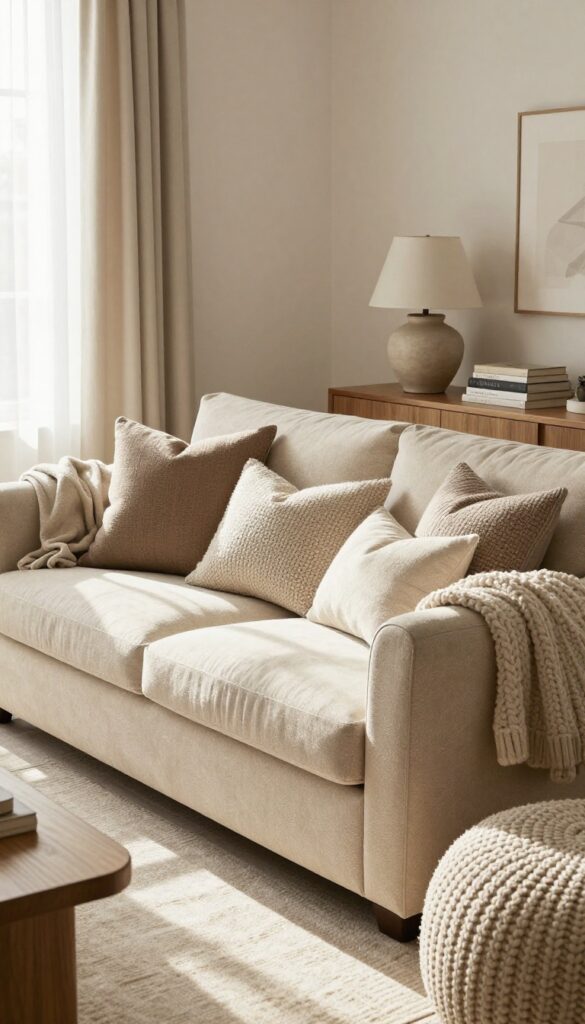
Nothing says cozy quite like sinking into a sofa that feels more like a cloud than a piece of furniture. Overstuffed sofas and armchairs with plush cushions and soft upholstery instantly make a room feel lived-in and welcoming. A slightly oversized piece—think deep seats and rolled arms—invites you to curl up with a book or stretch out for a nap, which is exactly the kind of energy a relaxed living room needs.
Adding a pouf or ottoman not only gives you extra seating for guests but also a spot to kick up your feet after a long day.
When you're aiming for a cozy, layered look, furniture that feels generous and soft is key. Look for sofas with down-filled cushions or high-resilience foam wrapped in fiber for that sink-in feel. Fabrics like cotton velvet, chenille, or a soft bouclé add tactile warmth and hold up well to daily use.
Stick to neutral or earthy tones—warm beige, taupe, or a muted olive—so the furniture anchors the room without overwhelming it. Then layer in textured throw blankets and a mix of pillows to amp up the comfort factor.
Best Fabrics For That Plush Feel
Velvet and chenille are top picks for a soft, luxurious touch that still feels durable. Bouclé adds a chunky, cozy texture that's very on-trend. Avoid stiff leather or tight-weave cottons—they won't give you that overstuffed look you're after.
Layout Tip: Keep It Open
Even with oversized furniture, you don't want the room to feel cramped. Float the sofa away from the wall by a few inches and use a slim console table behind it for lamps or books. Pair with a lightweight coffee table—like a glass or acrylic top—to keep the visual weight balanced.
Finishing Touch: Add A Pouf Or Ottoman
A pouf in a contrasting texture (think knitted wool or leather) adds visual interest and extra seating. Place it near the sofa or armchair so it's easy to pull over when you need it. Bonus: it doubles as a footrest for movie nights.
11. Add Personal Touches Like Art and Photos
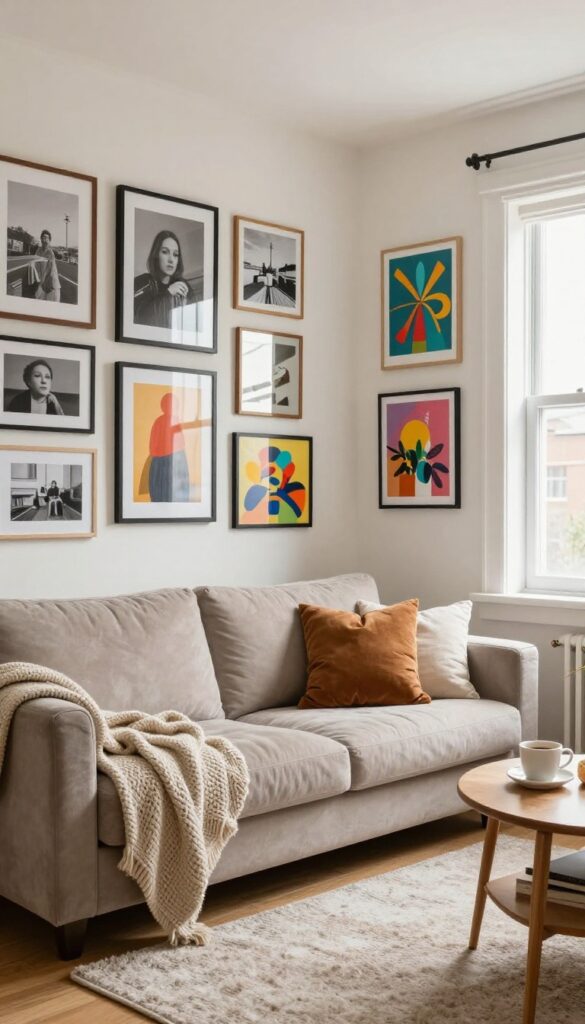
A room that feels truly lived-in needs more than just stylish furniture—it needs a sense of identity. That's where personal decor comes in. Gallery walls, framed photos, and your Sim's own paintings add layers of meaning and make the space feel uniquely theirs.
For cozy, realistic builds, these personal touches are the secret ingredient that turns a house into a home.
When you walk into a room, the items on the walls are often what catch your eye first. A carefully curated gallery wall can tell a story about the Sim who lives there—their travels, their hobbies, their favorite memories. Mix in different frame styles and sizes for an eclectic, collected-over-time look.
Don't forget to include a few of your Sim's own masterpieces; even a clumsy painting adds character. The key is to arrange them thoughtfully, balancing colors and spacing so the wall feels intentional, not cluttered.
Gallery Wall Layout Tips
Start by laying your frames out on the floor to experiment with arrangements. Keep a consistent gap of about two to three inches between frames for a polished look. Mix horizontal and vertical orientations, and include a mix of art styles—black-and-white photos, colorful prints, and a small mirror can break things up nicely.
Best Spots For Personal Decor
Above the sofa is a classic choice, but don't overlook other walls. A narrow hallway leading into the living room, the space above a console table, or even a corner near a reading nook can become a mini gallery. In smaller rooms, a single large statement piece can have the same impact without overwhelming the space.
Cozy Finishing Touches
To keep the gallery wall feeling cozy, lean a few frames on shelves or the mantel instead of hanging everything. This adds a casual, relaxed vibe. Also, consider the lighting: a small picture light above a favorite print or a nearby floor lamp can highlight the art and create a warm glow in the evening.
FAQ
What color palette works best for a cozy Sims 4 living room?
Warm earthy tones like terracotta, beige, olive green, and soft browns create a cozy feel. Avoid cool grays or stark whites unless balanced with warm accents.
How can I make a small living room look cozy in Sims 4?
Use smaller-scale furniture, add a large rug to define the space, and rely on warm lighting. Mirrors can also make the room feel bigger while keeping it cozy.
What lighting should I use for a realistic cozy vibe?
Layer multiple light sources like floor lamps, table lamps, and wall sconces with warm bulbs. Avoid using only the ceiling light—it creates harsh shadows.
How do I avoid clutter while still making the room feel lived-in?
Use furniture with built-in storage, like a coffee table with drawers or an ottoman that opens. Display a few curated items on shelves instead of filling every surface.
Can I achieve a cozy look without using custom content?
Absolutely. Base game and expansion packs offer plenty of warm-toned furniture, rugs, and decor. Focus on layering textures and using the right colors and lighting.
Conclusion
Building a cozy, realistic living room in Sims 4 is all about layering—colors, textures, lighting, and personal touches. You don't need a ton of custom content or complex building skills to make a space feel warm and lived-in.
Start with one or two of these ideas and build from there. Soon you'll have a living room that your Sims will never want to leave.